The thought of an interview can be nerve-wracking, but the right preparation can make all the difference. Explore this comprehensive guide to Performance Qualification interview questions and gain the confidence you need to showcase your abilities and secure the role.
Questions Asked in Performance Qualification Interview
Q 1. Define Performance Qualification (PQ).
Performance Qualification (PQ) is the final stage of equipment qualification in regulated industries like pharmaceuticals and biotechnology. It’s a systematic process designed to verify that the equipment, after installation and operational qualification, consistently performs according to predetermined specifications and requirements throughout its intended operational life. Think of it as the ‘final exam’ for a piece of equipment before it’s used for production.
Essentially, PQ demonstrates that the equipment, under normal operating conditions, can reliably and repeatedly produce the desired results. It confirms the equipment’s capability to meet its defined specifications and delivers consistent, high-quality output.
Q 2. What are the key objectives of PQ?
The key objectives of PQ are to:
- Verify Equipment Functionality: Confirm that the equipment operates as intended and meets all pre-defined performance criteria under normal and stressed conditions.
- Ensure Consistent Output: Demonstrate that the equipment produces consistent, repeatable results over time.
- Validate Design Specifications: Verify that the equipment’s design and installation meet the operational requirements.
- Demonstrate Compliance: Provide documented evidence to regulatory authorities (e.g., FDA) that the equipment meets required standards and regulations.
- Prevent Production Issues: Identify and resolve any potential performance problems before they impact production, saving time, resources, and potentially preventing product recalls.
Q 3. Describe the difference between Installation Qualification (IQ), Operational Qualification (OQ), and PQ.
Installation Qualification (IQ), Operational Qualification (OQ), and Performance Qualification (PQ) are three sequential stages of equipment qualification. They represent a tiered approach to ensuring equipment readiness:
- IQ (Installation Qualification): Verifies that the equipment has been correctly installed according to the manufacturer’s instructions and site specifications. Think of it as checking if the equipment is set up correctly. Example: Confirming that all components of an autoclave are installed and wired per the specifications.
- OQ (Operational Qualification): Verifies that the equipment operates within its pre-defined parameters. This is the ‘does it work as intended?’ check. Example: Testing an autoclave’s temperature and pressure sensors to make sure they’re accurate and that the pressure and temperature reach the set points.
- PQ (Performance Qualification): Demonstrates the equipment’s ability to consistently produce high-quality results under normal and stressed operating conditions over time. It’s the ‘can it do the job consistently?’ check. Example: Running multiple batches of a product in the autoclave to check for consistent sterilization and to ensure there’s no product degradation.
In essence, IQ confirms the correct setup, OQ confirms proper function, and PQ confirms consistent performance.
Q 4. What are the critical parameters considered during PQ?
The critical parameters considered during PQ depend heavily on the type of equipment. However, common parameters include:
- Accuracy: How close the equipment’s measurements are to the true value.
- Precision: How repeatable the measurements are.
- Linearity: How consistent the response of the equipment is across its operating range.
- Sensitivity: The smallest change the equipment can detect.
- Resolution: The smallest increment that can be displayed or measured.
- Recovery Time: The time it takes for the equipment to return to its normal operating state after a change.
- Throughput: The rate at which the equipment produces results.
- Uniformity: Consistency of output across different areas of the equipment (e.g., temperature uniformity in an oven).
For instance, PQ of a high-performance liquid chromatograph (HPLC) would focus on parameters like retention time, peak area, and resolution, while PQ of a freeze dryer would concentrate on temperature uniformity, pressure, and vacuum levels.
Q 5. How do you establish acceptance criteria for PQ?
Establishing acceptance criteria for PQ is crucial. These criteria should be:
- Specific: Clearly defined and measurable parameters, avoiding vague terms.
- Measurable: Quantifiable with numerical values and units.
- Achievable: Realistic and attainable based on the equipment’s capabilities.
- Relevant: Directly related to the equipment’s intended use and critical quality attributes.
- Time-Bound: Specify a timeframe for the evaluation.
These criteria are usually derived from the equipment’s specifications, regulatory guidelines, and the intended application. For example, an HPLC might require peak area reproducibility within 2% across multiple runs, while an autoclave’s sterilization cycle should consistently achieve a specific temperature and duration.
The acceptance criteria should be documented in a PQ protocol before the testing begins.
Q 6. Explain the documentation requirements for PQ.
Comprehensive documentation is essential for PQ. This typically includes:
- PQ Protocol: A detailed plan outlining the methods, parameters, acceptance criteria, and testing procedures.
- Raw Data: All the data collected during the PQ testing, including charts, graphs, and instrument readouts. This should be traceable and auditable.
- Calculations and Analysis: Calculations made to determine if the acceptance criteria are met. This includes statistical analysis where relevant.
- Deviation Reports: Documentation of any deviations from the protocol and the corrective actions taken.
- PQ Report: A summary report that states whether the equipment passed or failed PQ, with supporting data and conclusions.
- Approval Signatures: Signatures from authorized personnel attesting to the validity of the data and the conclusions drawn.
All this documentation should be stored in a secure, organized manner and be readily available for audits.
Q 7. What are the common methods used to perform PQ?
The methods used for PQ vary depending on the equipment. Common methods include:
- Direct Measurement: Using calibrated instruments to measure key parameters like temperature, pressure, flow rate, and weight. This might involve the use of reference standards.
- Challenge Testing: Subjecting the equipment to extreme or stressed conditions to ensure it can still perform within specifications. For example, running an autoclave with a highly resistant biological indicator.
- Statistical Analysis: Using statistical methods like ANOVA (Analysis of Variance) or regression analysis to analyze the data and determine consistency and reproducibility.
- Process Simulation: Simulating the actual process conditions the equipment will be used for, such as simulating a full production run with a surrogate product.
It’s often a combination of these methods that ensures comprehensive PQ. The choice depends on the equipment and the risks associated with its failure.
Q 8. How do you handle deviations during PQ?
Handling deviations during Performance Qualification (PQ) is crucial for maintaining data integrity and ensuring the process meets predefined acceptance criteria. Deviations are any unplanned event that occurs during the PQ process that could potentially affect the results. My approach involves a systematic investigation, documentation, and corrective action process.
- Immediate Action: Upon discovering a deviation, the process is immediately halted to prevent further issues. The deviation is documented with precise details, including time, location, observation, and personnel involved.
- Investigation: A thorough investigation is conducted to determine the root cause of the deviation. This often involves reviewing standard operating procedures (SOPs), equipment logs, and interviewing personnel.
- Assessment of Impact: The impact of the deviation on the overall PQ results is carefully assessed. This might involve statistical analysis to determine if the deviation significantly affects the validity of the data.
- Corrective and Preventative Actions (CAPA): Based on the root cause analysis, appropriate corrective actions are implemented to address the immediate problem. Preventative actions are also implemented to minimize the likelihood of similar deviations occurring in the future. These actions are documented and reviewed.
- Documentation: All deviations, investigations, CAPAs, and their effectiveness are meticulously documented in a deviation report, which becomes part of the overall PQ documentation.
For instance, if a temperature fluctuation is observed during a stability study (part of PQ for a pharmaceutical product), we would immediately record the deviation, investigate the cause (e.g., malfunctioning equipment, inadequate insulation), implement corrective action (e.g., equipment repair, improved insulation), and document everything. The impact on the stability data would then be evaluated. If the data remains within acceptable limits despite the deviation, it might be deemed acceptable. However, if the deviation significantly impacts the data, further investigation and testing may be required.
Q 9. How do you ensure the reproducibility of PQ results?
Reproducibility in PQ is paramount to demonstrate the consistent performance of a process or equipment. We ensure reproducibility through several key strategies:
- Standardized Procedures: Detailed, validated SOPs are crucial. These SOPs outline every step of the PQ process, leaving no room for ambiguity. Everyone involved adheres strictly to these procedures.
- Equipment Calibration & Maintenance: All equipment used in the PQ must be regularly calibrated and maintained according to a schedule. This ensures accuracy and reliability. Calibration certificates are kept on file.
- Qualified Personnel: The personnel executing the PQ should be adequately trained and experienced. Their competence ensures consistent procedures and reliable observations.
- Control of Materials: Using materials with consistent quality and specifications is vital. This includes using appropriately sourced raw materials, reagents, and standards.
- Environmental Controls: Factors like temperature, humidity, and light can affect results, therefore maintaining a controlled environment is crucial during the PQ process.
- Replicate Runs: Conducting multiple replicate runs of the PQ protocol provides statistical evidence of the process’s reproducibility. The results are then analyzed statistically, typically using ANOVA or similar tests, to determine reproducibility.
For example, in a PQ for an automated dispensing system, we would perform multiple dispensing cycles with the same parameters, documenting the weight and count of each dispensed unit. Consistent results across these cycles would demonstrate reproducibility.
Q 10. Describe your experience with PQ protocols and reports.
I possess extensive experience in developing, executing, and reviewing PQ protocols and reports. I’ve been involved in PQ activities for diverse equipment and processes, including but not limited to:
- Automated dispensing systems: PQ protocols ensure accuracy, precision, and repeatability of dispensing.
- Cleanrooms: PQ establishes that the cleanroom achieves and maintains the required cleanliness levels.
- HVAC systems: PQ ensures that the HVAC system maintains the required temperature and humidity parameters within specified limits.
- Sterilizers: PQ ensures that the sterilization process achieves the desired sterility assurance level.
PQ reports I have prepared include detailed descriptions of the methodology, raw data, calculations, statistical analysis, and conclusions. These reports always clearly state whether the process/equipment passed or failed the PQ, with supporting evidence. They are formatted to meet regulatory requirements, with all relevant information readily accessible.
One memorable project involved the PQ of a new high-speed tablet press. The protocol was complex, requiring rigorous testing across various parameters like tablet weight uniformity, hardness, and disintegration time. The detailed report, including all test results and statistical analysis, was critical in obtaining regulatory approval.
Q 11. What are some common challenges encountered during PQ?
Several common challenges arise during PQ. These include:
- Equipment Issues: Malfunctioning equipment can lead to inconsistent results or delays. Regular preventive maintenance and calibration are crucial to mitigate this.
- Inadequate Protocols: Poorly designed or ambiguous protocols can create confusion and lead to errors. A well-defined, clear protocol is necessary.
- Lack of Resources: Insufficient resources, such as personnel, time, or materials, can hinder effective PQ execution. Proper planning and resource allocation are essential.
- Data Interpretation: Accurately interpreting data and applying appropriate statistical analysis require expertise. Misinterpretation can lead to incorrect conclusions.
- Regulatory Compliance: Staying compliant with ever-evolving regulatory guidelines presents an ongoing challenge. Continuous review of updated regulations and best practices is crucial.
For example, during a PQ of a large-scale bioreactor, we experienced an unexpected power outage, leading to a deviation. Addressing this required careful documentation, thorough investigation, and ultimately, additional validation runs to ensure the PQ data was reliable.
Q 12. How do you address deviations from established acceptance criteria during PQ?
Addressing deviations from established acceptance criteria during PQ necessitates a systematic approach. It’s not simply a matter of accepting or rejecting results; a thorough investigation is crucial:
- Investigate the Root Cause: The first step involves a meticulous investigation to uncover the root cause of the deviation. This may involve reviewing data logs, equipment records, and interviewing personnel involved in the PQ process.
- Assess the Impact: Evaluate the extent to which the deviation influenced the overall PQ results. Statistical analysis may be needed to determine if the deviation is significant.
- Implement Corrective Actions: Based on the root cause analysis, corrective actions are implemented to fix the identified issues. These actions should address the immediate problem and prevent its recurrence.
- Re-testing or Retesting: Depending on the severity and impact of the deviation, re-testing or retesting of the process or equipment may be necessary to confirm that the corrective actions were effective. The extent of retesting is determined by risk assessment.
- Documentation: All aspects of the deviation, investigation, corrective actions, and re-testing are meticulously documented in a deviation report, which is included in the overall PQ documentation.
Imagine a deviation in the fill volume of a pharmaceutical product during PQ. A thorough investigation might reveal a problem with the filling machine’s calibration. Corrective action would involve recalibrating the machine, followed by retesting to verify that the deviation is resolved and the fill volume meets the established acceptance criteria.
Q 13. What is the role of risk assessment in PQ?
Risk assessment plays a vital role in PQ by identifying potential issues and prioritizing actions to mitigate them. Before commencing PQ, a thorough risk assessment should be performed:
- Identify Hazards: This involves identifying potential hazards that could negatively impact PQ results, such as equipment failure, variations in materials, or human error.
- Evaluate Risks: For each hazard, a risk assessment considers the likelihood and potential impact of the hazard on the PQ results.
- Mitigate Risks: Based on the risk evaluation, control measures are implemented to mitigate the identified risks. These might involve additional training for personnel, improved equipment maintenance procedures, or changes to the PQ protocol itself.
- Document Risks and Mitigation Strategies: A risk assessment document is created to record the identified hazards, risks, and mitigation strategies, thus providing transparency and traceability.
For instance, in a PQ for a sterile compounding process, risk assessment may identify the risk of contamination. Mitigation strategies would involve using appropriate aseptic techniques, implementing environmental monitoring procedures, and performing sterility testing. The risk assessment ensures that appropriate controls are in place to minimize the likelihood of a deviation that could impact the process’s sterility.
Q 14. How do you ensure the PQ process is compliant with regulatory requirements (e.g., FDA, EMA)?
Ensuring PQ compliance with regulatory requirements (like FDA and EMA guidelines) is paramount. This is achieved through:
- Following Good Practices: Adhering to Good Manufacturing Practices (GMP), Good Laboratory Practices (GLP), or other relevant guidelines is fundamental.
- Validated Methods: Only validated methods and equipment are used during PQ. Validation ensures the accuracy, precision, and reliability of the methods and equipment used.
- Documented Procedures: All aspects of the PQ process, from protocol development to reporting, are meticulously documented. This includes detailed SOPs, deviation reports, and comprehensive PQ reports.
- Data Integrity: Maintaining data integrity is critical. This involves ensuring that data is accurate, complete, and reliable. It requires using secure systems, implementing audit trails, and regularly backing up data.
- Regulatory Submissions: PQ reports and other relevant documentation are prepared to meet regulatory requirements for submissions to agencies like the FDA or EMA. This ensures that the PQ process is thoroughly documented and auditable.
For example, when performing PQ for a pharmaceutical manufacturing process, we would ensure that all aspects of the process adhere to cGMP principles, maintaining meticulous records for compliance with FDA regulations. This includes detailed documentation of equipment calibration, personnel training, material specifications, and process parameters. The PQ report would be structured to provide a clear and concise summary of the process’s performance against the established acceptance criteria and regulatory expectations.
Q 15. Explain the importance of change control in relation to PQ.
Change control in Performance Qualification (PQ) is paramount. It ensures that any modifications to equipment, processes, or methodologies during PQ don’t compromise the validity of the results. Think of it like building a house – if you change the blueprints mid-construction, you risk structural instability. Similarly, unexpected changes in a PQ can invalidate the entire qualification.
A robust change control system involves a documented procedure for proposing, reviewing, approving, and implementing changes. This includes a thorough impact assessment to determine if the change affects the PQ protocols, and subsequent re-qualification activities may be necessary. For instance, if a new software version is installed on an analytical instrument during PQ, a documented change control process ensures the impact on the instrument’s performance is assessed and documented, potentially requiring additional testing or recalibration before continuing.
- Documentation: All changes, regardless of size, should be meticulously documented, including the reason for the change, impact assessment, approval signatures, and any subsequent actions taken.
- Risk Assessment: A detailed risk assessment should be performed for each proposed change, weighing the potential impact on PQ objectives. This enables prioritizing critical changes and mitigating potential risks.
- Deviation Management: Any deviations from the approved PQ protocol must be documented and investigated. This includes deviations in operational parameters, equipment malfunctions, or unexpected results.
Career Expert Tips:
- Ace those interviews! Prepare effectively by reviewing the Top 50 Most Common Interview Questions on ResumeGemini.
- Navigate your job search with confidence! Explore a wide range of Career Tips on ResumeGemini. Learn about common challenges and recommendations to overcome them.
- Craft the perfect resume! Master the Art of Resume Writing with ResumeGemini’s guide. Showcase your unique qualifications and achievements effectively.
- Don’t miss out on holiday savings! Build your dream resume with ResumeGemini’s ATS optimized templates.
Q 16. Describe your experience with different types of equipment validation (e.g., analytical instruments, manufacturing equipment).
My experience encompasses validating a wide range of equipment, both analytical and manufacturing. For analytical instruments like HPLC (High-Performance Liquid Chromatography) and UV-Vis spectrophotometers, validation focuses on accuracy, precision, linearity, and range. I’ve been involved in developing and executing validation protocols, performing qualification runs (IQ, OQ, PQ), and preparing comprehensive validation reports. These reports include detailed descriptions of the methodologies, raw data, calculated results, and conclusions regarding the instrument’s suitability for its intended use. For example, during the PQ of an HPLC, we systematically tested different concentrations of a reference standard to evaluate the instrument’s linearity and accuracy in meeting specified performance criteria.
With manufacturing equipment, such as autoclaves and freeze dryers, validation is broader, covering parameters like temperature uniformity, pressure cycles, and sterilization effectiveness. Here, we consider the impact of the equipment on the product’s quality, safety, and stability. During a PQ of an autoclave, we use biological indicators to confirm its sterilization capability, ensuring the equipment effectively eliminates microbial contamination. I’m also experienced in using risk assessment methodologies, like FMEA (Failure Mode and Effects Analysis), to proactively identify and mitigate potential risks in both analytical and manufacturing equipment.
Q 17. How do you ensure the integrity of data collected during PQ?
Data integrity is absolutely critical in PQ. It’s like the foundation of a building—without a solid foundation, the entire structure is unstable. We employ several strategies to maintain this integrity:
- ALCOA+ Principles: We strictly adhere to the ALCOA+ principles: Attributable, Legible, Contemporaneous, Original, Accurate, and complete, plus Enduring and Available. This framework guides our data handling from acquisition to archiving.
- Data Logging and Audit Trails: All data is electronically logged using validated systems with comprehensive audit trails. This allows for traceability and verification of all actions and changes made to the data. This is crucial for regulatory compliance and avoids any ambiguity in the PQ process.
- Standard Operating Procedures (SOPs): We have strict SOPs for data handling, including calibration, sampling, analysis, and reporting. This standardization minimizes variability and potential errors.
- Data Review and Verification: Multiple levels of data review are implemented to identify and correct any errors or inconsistencies. This includes peer review and managerial sign-off. We also perform statistical analysis of data to identify outliers or trends that may indicate issues with the equipment or the PQ process itself.
- Secure Data Storage and Archiving: Data is stored securely using validated systems, with appropriate backup and archival procedures to ensure long-term accessibility and integrity.
Q 18. What software or tools are you familiar with for managing PQ documentation?
I’m proficient in several software and tools for managing PQ documentation. My experience includes using electronic laboratory notebook (ELN) systems such as [mention specific ELN], which allow for secure storage, version control, and electronic signatures. I’ve also worked with document management systems like [mention specific DMS], which facilitate efficient document control and retrieval. For data analysis, I utilize software like [mention specific statistical software]. Finally, I’m familiar with LIMS (Laboratory Information Management Systems) for managing samples, tests, and results and integrating them with the PQ process.
The choice of software depends on the scale and complexity of the PQ project and the organization’s infrastructure. The key is to select a validated system that meets regulatory requirements for data integrity and security.
Q 19. How do you manage PQ projects within budget and timelines?
Managing PQ projects within budget and timelines requires careful planning and execution. I employ a structured approach that includes:
- Detailed Project Planning: A comprehensive project plan is developed at the outset, defining clear objectives, timelines, and resource allocation. This includes risk assessment and mitigation strategies to anticipate potential delays or cost overruns.
- Resource Management: Identifying and assigning appropriate personnel, equipment, and materials efficiently. This often involves coordination with other departments, optimizing lab capacity, and ensuring necessary training is provided.
- Budget Tracking: Regular monitoring of expenses against the approved budget, with early identification and addressing of any variances. This ensures that the project remains within financial constraints.
- Progress Monitoring and Reporting: Regular progress reports are generated and reviewed to track progress against the project plan. These reports highlight any potential issues or delays and allow for proactive corrective action.
- Risk Management: Proactive risk management, involving identifying potential problems early on and developing mitigation strategies to avoid significant cost increases or schedule slips. This frequently involves scenario planning.
For instance, in one PQ project, we identified a potential delay due to equipment unavailability. By proactively sourcing a backup instrument, we were able to avoid a significant impact on the project timeline.
Q 20. How do you collaborate with cross-functional teams during PQ execution?
Effective collaboration is essential for successful PQ execution. I work closely with cross-functional teams, including engineering, manufacturing, quality control, and regulatory affairs. This collaboration involves:
- Clearly Defined Roles and Responsibilities: Establishing clear roles and responsibilities for each team member, avoiding overlap and ensuring accountability. Regular team meetings are held to coordinate activities and address any issues.
- Open Communication: Maintaining open communication channels among team members, utilizing regular updates, email, and other communication tools to promptly address any questions or concerns.
- Shared Documentation: Utilizing shared document repositories and systems to enable easy access to all relevant documents, such as protocols, reports, and test results. This eliminates confusion and ensures all team members are working with the most up-to-date information.
- Regular Team Meetings: Scheduled team meetings facilitate progress tracking, risk mitigation, problem-solving, and maintaining a unified approach.
In one project, a collaborative effort between our team and manufacturing engineers resulted in optimization of the manufacturing process, which improved the equipment’s overall performance and shortened the PQ timeline.
Q 21. Describe your experience with audits and inspections related to PQ.
I have extensive experience with audits and inspections related to PQ. I’ve actively participated in numerous internal and external audits, working closely with auditors to demonstrate compliance with regulatory requirements (e.g., FDA, EMA, etc.). I understand the importance of maintaining detailed documentation and readily available evidence that supports the validity and integrity of our PQ processes.
During audits, I’m prepared to answer questions concerning protocol development, execution, data interpretation, deviation handling, and corrective and preventative actions (CAPA). I’m comfortable presenting our PQ documentation, justifying our methodology, and demonstrating adherence to regulatory guidelines. My experience in handling audit findings and implementing necessary CAPAs is invaluable in maintaining compliance and improving our PQ processes.
For example, during a recent FDA audit, we successfully demonstrated the integrity of our data through clear documentation and well-defined SOPs, which resulted in a positive outcome and strengthened our compliance posture.
Q 22. Explain the concept of lifecycle management in the context of PQ.
Lifecycle management in Performance Qualification (PQ) encompasses all activities from the initial planning and execution of PQ studies to ongoing maintenance and potential re-qualification. Think of it like a car’s lifecycle – it starts with design and testing (initial PQ), regular maintenance (ongoing monitoring), and eventual replacement (requalification or decommissioning).
- Planning and Design: This phase defines the scope, parameters, and acceptance criteria of the PQ. It involves selecting appropriate equipment and methodologies.
- Execution: This is where the actual PQ studies are conducted, adhering to the predefined protocols and procedures. Data is meticulously collected and analyzed.
- Reporting and Review: The results of the PQ are documented in a comprehensive report, reviewed by relevant stakeholders, and approved to demonstrate compliance.
- Ongoing Monitoring and Maintenance: Regular checks and calibrations of the equipment are performed to ensure continued performance and identify potential degradation. This may include periodic performance verification tests.
- Re-qualification: When significant changes occur (e.g., major repairs, equipment upgrades), a re-qualification study is necessary to ensure continued performance meets the defined acceptance criteria. This ensures the system remains fit for its intended purpose.
For example, consider a pharmaceutical manufacturing facility. The lifecycle management of a critical piece of equipment like a high-performance liquid chromatography (HPLC) system involves initial PQ demonstrating its ability to meet required specifications for resolution, accuracy, and precision. Regular preventative maintenance, documented calibration checks, and periodic performance verification tests ensure ongoing compliance. If a major component is replaced, requalification is needed to verify that the system continues to meet the specifications.
Q 23. How do you stay updated on current regulations and best practices related to PQ?
Staying current with PQ regulations and best practices is paramount. I employ a multi-faceted approach:
- Regulatory Agencies’ Websites: Regularly reviewing websites of agencies like the FDA (United States), EMA (Europe), and other relevant national authorities for updates to guidelines and regulations. This includes actively tracking any new guidance documents or enforcement actions.
- Professional Organizations: Active membership in professional organizations like the ISPE (International Society for Pharmaceutical Engineering) or PDA (Parenteral Drug Association) provides access to training, publications, and networking opportunities with other industry professionals, ensuring I’m abreast of current thinking and best practices.
- Industry Publications and Conferences: I attend industry conferences and trade shows and regularly read peer-reviewed journals and industry publications focused on pharmaceutical manufacturing and quality control. This offers insights into evolving techniques and challenges.
- Internal Training and Knowledge Sharing: Participation in internal training programs and workshops enhances knowledge within my organization. I also actively participate in knowledge-sharing sessions with colleagues to benefit from their expertise and disseminate my knowledge.
This proactive approach guarantees that my PQ practices remain compliant and up-to-date, reflecting the latest scientific and regulatory thinking.
Q 24. What is your approach to troubleshooting PQ issues?
My approach to troubleshooting PQ issues is systematic and data-driven. I employ a structured approach based on the scientific method:
- Define the Problem: Clearly articulate the nature of the PQ failure. What specific parameter failed to meet the acceptance criteria? What is the extent of the deviation?
- Gather Data: Collect all relevant data, including equipment logs, calibration records, PQ protocols, and raw data from the failed study. Review the complete data set for clues to identify potential issues.
- Hypothesis Generation: Develop potential explanations for the failure based on the collected data. Are there issues related to equipment malfunction, operator error, or environmental factors?
- Testing and Validation: Test these hypotheses through experiments or additional analysis to isolate the root cause. This might involve repeating parts of the study, further calibration checks, or analyzing the impact of specific process variables.
- Corrective Action and Preventative Measures: Once the root cause is identified, implement corrective actions to rectify the immediate problem and preventative measures to prevent recurrence. This includes updating SOPs, improving operator training, or replacing faulty equipment.
- Documentation: Meticulously document the entire troubleshooting process, including the problem definition, data collected, hypotheses tested, root cause analysis, corrective actions, and preventive measures. This serves as evidence for compliance and future reference.
This method allows for efficient and effective problem-solving, ensuring that any PQ failures are thoroughly investigated and resolved, with robust documentation.
Q 25. Describe a situation where a PQ failed; what was the root cause and how did you resolve it?
During a PQ of an automated liquid dispensing system, the precision of dispensing volumes failed to meet the predefined acceptance criteria. Initial investigation indicated that the dispensing system was delivering inconsistent volumes.
The root cause analysis revealed that the system’s internal pressure sensors had degraded over time, leading to inaccurate volume measurements and dispensing errors. This was compounded by a lack of regular calibration checks of the pressure sensors.
To resolve the issue, we replaced the faulty pressure sensors and implemented a stricter calibration schedule for all similar systems. We also updated our SOPs to explicitly include regular calibration checks as a preventative measure. The updated calibration procedures were also added to the updated PQ protocol for this equipment. This ensured that future PQ studies would identify any problems in pressure readings, ensuring the accuracy and precision of the dispensing system.
Q 26. How do you ensure the accuracy and reliability of PQ data?
Ensuring the accuracy and reliability of PQ data is crucial. My approach centers on several key principles:
- Calibration and Validation of Equipment: All equipment used in PQ studies must be calibrated and validated to ensure accuracy and reliability of measurements. Calibration certificates and validation reports must be reviewed and kept up to date.
- Standard Operating Procedures (SOPs): Adhering strictly to well-defined and validated SOPs to maintain consistency in testing methods. Clear SOPs are followed by all participants in PQ activities.
- Data Integrity: Maintaining the integrity of all collected data using electronic data capture systems and implementing appropriate data management systems to prevent data alteration or loss. Audit trails are maintained to track all changes to the data.
- Quality Control Checks: Implementing quality control checks at all stages of the study, including sample preparation, instrument operation, and data analysis, to identify and correct any errors promptly. Blind samples or external samples for comparison serve as a powerful check.
- Statistical Analysis: Using appropriate statistical methods to analyze data and interpret results. The statistical analysis plan is part of the PQ study design.
- Review and Approval: The complete data set, including the analysis and conclusions, are critically reviewed and approved by appropriately qualified personnel before finalization of the PQ report. The report should clearly identify any deviations from the plan and the justifications.
These measures collectively contribute to a high level of confidence in the accuracy and reliability of PQ data.
Q 27. Explain your understanding of the relationship between PQ and process validation.
Process Validation (PV) and Performance Qualification (PQ) are closely related but distinct aspects of ensuring product quality. PV demonstrates that a manufacturing process consistently produces a product meeting predetermined specifications. PQ, on the other hand, focuses on verifying that equipment or systems perform as intended. The relationship can be visualized as follows:
PV relies on PQ. If equipment doesn’t perform as expected (PQ failure), then the manufacturing process is likely to deviate from the established parameters, leading to a failed PV. Therefore, successful PQ is a prerequisite for successful PV. Imagine baking a cake (the process): the oven (equipment) needs to function correctly to get a consistent result (PQ). Only when the oven’s performance is consistently validated (PQ) can we validate the entire baking process (PV).
For instance, in pharmaceutical manufacturing, the PQ of an autoclave (to sterilize products) is essential before the PV of the sterilization process. The autoclave’s ability to achieve the required temperature and pressure profiles is critical to ensure product sterility. A failed PQ of the autoclave would immediately invalidate the PV of the sterilization process.
Q 28. What is your experience with computer system validation (CSV) in relation to PQ?
Computer System Validation (CSV) is directly relevant to PQ, especially when automated systems are involved. Many modern manufacturing systems heavily rely on computer-controlled equipment, meaning the software and hardware controlling these systems need to be validated to ensure they operate reliably and accurately. This is where CSV comes in.
In a PQ context, CSV ensures that the data generated by the automated systems is accurate, reliable, and trustworthy. For example, a chromatographic data system used to assess the purity of a pharmaceutical product during a PQ study must be validated to demonstrate its integrity, accuracy, and reliability. This includes aspects like ensuring the system’s software is free of errors, its data storage is secure, and user access is controlled. A failure in CSV could directly impact the validity of the PQ results. CSV provides confidence that the data used to evaluate equipment performance is accurate, making the PQ more robust.
My experience includes working with various CSV methodologies, including risk-based validation approaches, and integrating CSV into the PQ lifecycle. I understand the importance of aligning CSV activities with the PQ process, considering aspects such as design qualification, installation qualification, operational qualification, and performance qualification of the computer systems. This approach helps ensure that the entire process is compliant with relevant regulations.
Key Topics to Learn for Performance Qualification Interview
- Defining Performance Qualification: Understanding the core principles and objectives of performance qualification within your specific industry (e.g., pharmaceutical, manufacturing).
- Validation Methods: Exploring different approaches to validating equipment and processes, including IQ (Installation Qualification), OQ (Operational Qualification), and PQ (Performance Qualification). This includes understanding the documentation requirements for each stage.
- Data Analysis & Interpretation: Mastering the skills to analyze collected data, identify trends, and draw meaningful conclusions to determine if performance meets pre-defined acceptance criteria. This includes understanding statistical methods relevant to your field.
- Deviation Management: Knowing how to handle deviations from established procedures or expected performance, including root cause analysis and corrective actions. Understanding documentation procedures for deviations is crucial.
- Risk Assessment & Mitigation: Understanding how to identify potential risks associated with equipment or processes and implementing strategies to mitigate them. This involves a practical understanding of risk management principles.
- Regulatory Compliance: Familiarizing yourself with relevant regulations and guidelines (e.g., GMP, FDA) that impact performance qualification within your area of expertise.
- Troubleshooting and Problem-Solving: Developing a structured approach to problem-solving, including identifying the root cause of performance issues and implementing effective solutions.
- Documentation and Reporting: Understanding the importance of accurate and comprehensive documentation, including the creation of qualification reports and protocols.
Next Steps
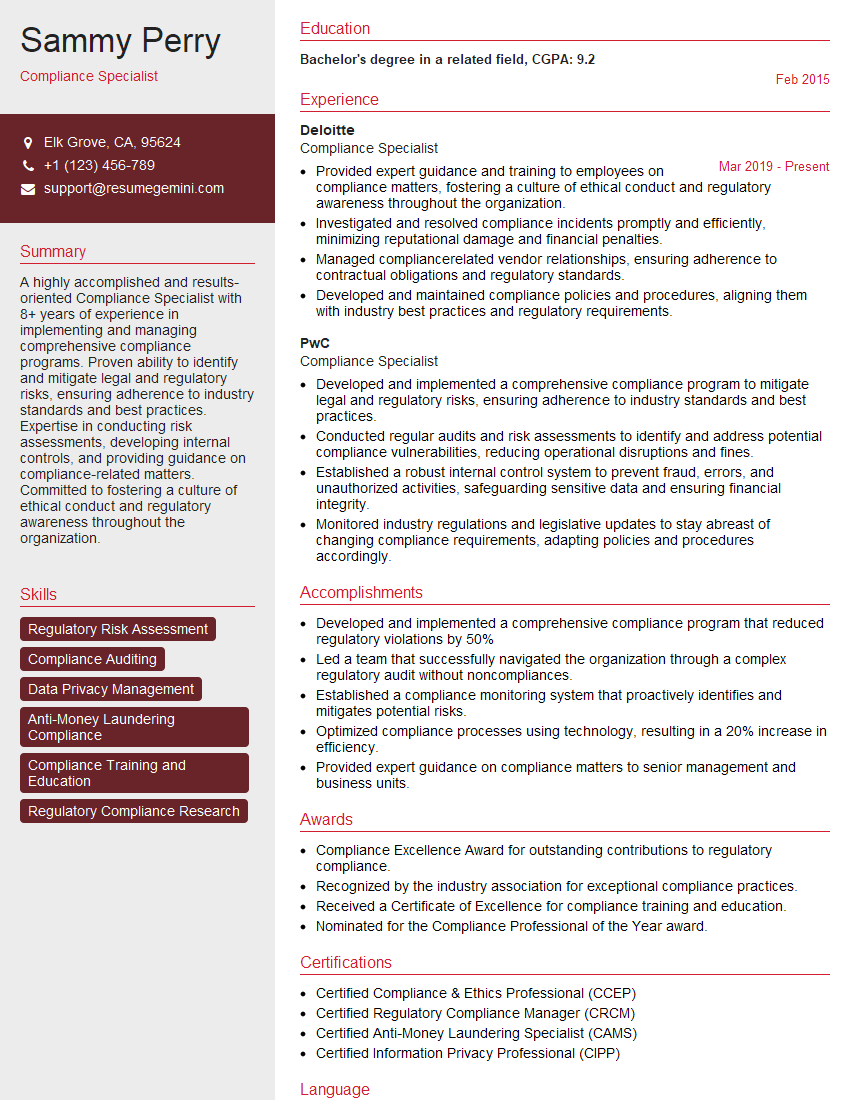
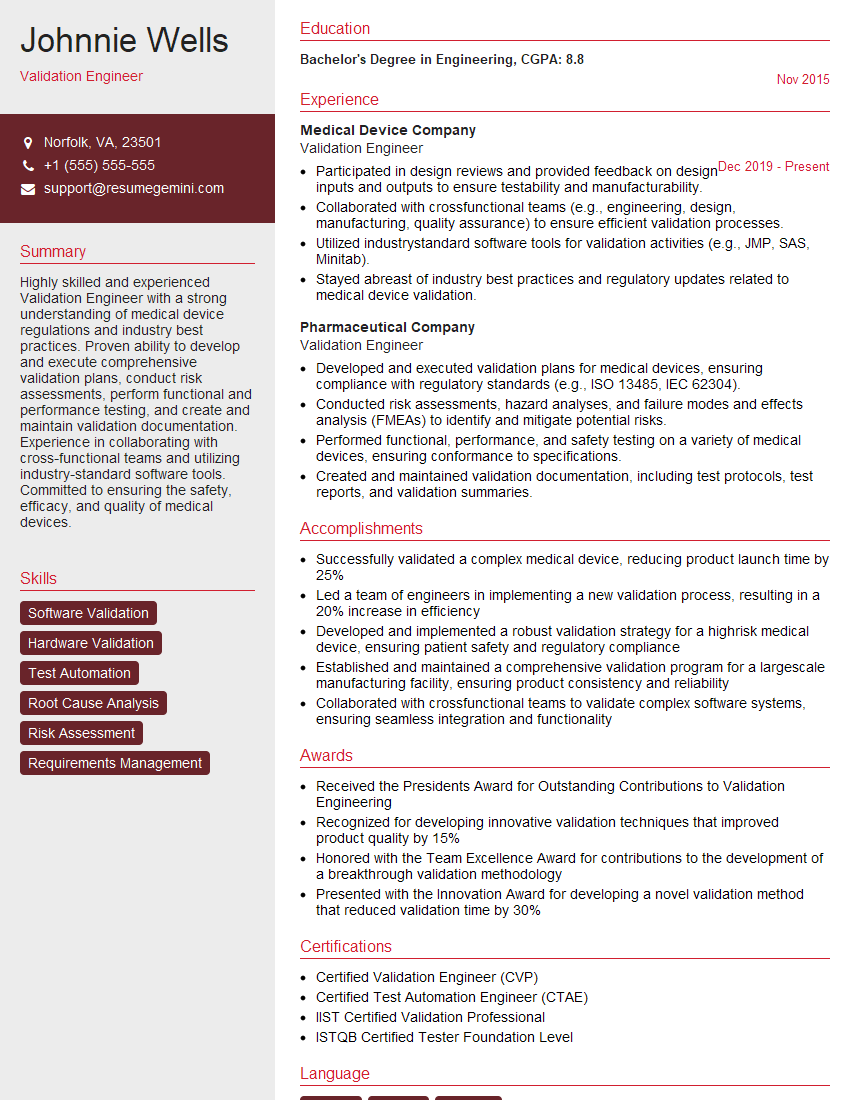
Mastering Performance Qualification is crucial for career advancement in highly regulated industries. A strong understanding of these principles demonstrates technical expertise and commitment to quality, opening doors to more challenging and rewarding roles. To maximize your job prospects, create an ATS-friendly resume that highlights your skills and experience effectively. ResumeGemini is a trusted resource to help you build a professional and impactful resume. We provide examples of resumes tailored to Performance Qualification to guide you in showcasing your qualifications effectively.

Explore more articles
Users Rating of Our Blogs
Share Your Experience
We value your feedback! Please rate our content and share your thoughts (optional).
What Readers Say About Our Blog
Very informative content, great job.
good