The right preparation can turn an interview into an opportunity to showcase your expertise. This guide to Performing Scheduled Maintenance and Inspections interview questions is your ultimate resource, providing key insights and tips to help you ace your responses and stand out as a top candidate.
Questions Asked in Performing Scheduled Maintenance and Inspections Interview
Q 1. Describe your experience with preventive maintenance schedules.
Preventive maintenance schedules are the backbone of any reliable operation. They’re essentially a roadmap outlining regular tasks to keep equipment running smoothly and prevent unexpected breakdowns. My experience involves developing and implementing these schedules for diverse equipment, ranging from sophisticated manufacturing machinery to simpler HVAC systems. I begin by thoroughly understanding the equipment’s operational requirements, consulting manuals, and identifying manufacturer recommendations. Then, I create a schedule based on factors like operational hours, environmental conditions, and the equipment’s criticality to the overall process. This schedule is not static; it’s regularly reviewed and adjusted based on actual performance data and any identified vulnerabilities.
For instance, in a previous role, I managed the maintenance of a large fleet of forklifts. Instead of a generic schedule, I segmented the maintenance based on usage hours. Forklifts with high usage had more frequent checks (daily lubrication, weekly inspections), while those with lower use had less frequent, but still scheduled, preventative maintenance.
- Equipment-Specific Checks: Each piece of equipment has unique maintenance needs. For example, a conveyor belt system requires regular lubrication, tension checks and alignment verification, whereas a robotic arm may need calibration and software updates.
- Frequency Optimization: The frequency of maintenance tasks is crucial. Too frequent and it’s wasteful, too infrequent and risk of failure rises. Data analysis and historical records are invaluable in determining optimal frequencies.
- Spare Parts Management: A crucial part of the preventive maintenance schedule involves predicting needed spare parts and ensuring they’re available. This minimizes downtime caused by missing components.
Q 2. How do you prioritize maintenance tasks?
Prioritizing maintenance tasks is critical for efficient resource allocation and minimizing downtime. I utilize a risk-based prioritization approach, combining several factors. Criticality of the equipment, potential impact of failure, and the likelihood of failure are all weighed. I use a system that assigns a priority score to each task. This score is based on a formula that considers:
- Criticality: How essential is this equipment to overall operations? A critical piece of equipment (like a primary power generator) receives higher priority than a less critical one (like a breakroom coffee machine).
- Probability of Failure: What is the likelihood of this equipment failing? This is based on historical data, manufacturer recommendations, and operational conditions.
- Consequences of Failure: What are the potential consequences if the equipment fails? This includes financial losses, safety risks, and production disruptions.
A simple scoring system could be: Criticality (1-5), Probability (1-5), Consequences (1-5). The total score determines the priority. A high score indicates high priority, demanding immediate attention. I often use spreadsheets and CMMS software to manage this prioritization and track progress.
Q 3. Explain your process for identifying and addressing equipment malfunctions.
My process for identifying and addressing equipment malfunctions is systematic and proactive. It starts with establishing a robust monitoring system which can include visual inspections, automated sensors, and data logging. When a malfunction is detected, I follow a structured troubleshooting process:
- Identify the Problem: Gather information about the malfunction – what is not working, when did it start, what were the preceding events?
- Analyze the Symptoms: Examine the equipment for any visible signs of damage or unusual behavior. Consult historical maintenance records for similar issues.
- Isolate the Cause: Use diagnostic tools, schematics, and technical documentation to pinpoint the root cause of the malfunction. This might involve testing components, checking wiring, or running diagnostic software.
- Implement Corrective Actions: Once the root cause is identified, the necessary repairs or replacements are made. This often includes documenting the corrective actions taken and the parts used.
- Verify the Repair: Thoroughly test the equipment to ensure the malfunction has been resolved and the equipment is operating correctly. This may involve performance testing to verify that it’s back within specification.
- Prevent Recurrence: Analyze the root cause to determine how to prevent similar problems in the future. This could involve adjusting operational procedures, improving maintenance practices, or upgrading the equipment.
For example, if a conveyor belt frequently stops due to jamming, we might investigate the material flow, optimize the belt tension, or even install sensors to detect jams early.
Q 4. What are some common causes of equipment failure and how can they be prevented?
Equipment failures often stem from predictable causes. Understanding these allows for effective prevention. Common causes include:
- Lack of Preventive Maintenance: Neglecting scheduled maintenance leads to wear and tear, ultimately resulting in failure. Regular lubrication, inspections, and part replacements are crucial.
- Improper Operation: Operating equipment outside of its design parameters or using it incorrectly can cause damage and premature failure. Proper training for operators is paramount.
- Environmental Factors: Extreme temperatures, humidity, and dust can accelerate equipment degradation. Appropriate environmental controls or protective measures can mitigate these risks.
- Component Wear and Tear: Even with preventive maintenance, components will eventually wear out. Implementing a predictive maintenance program, using techniques like vibration analysis, helps identify components nearing the end of their lifespan, allowing for planned replacements.
- Electrical Issues: Short circuits, power surges, and faulty wiring can cause significant damage. Regular electrical inspections and surge protection are essential.
Prevention Strategies: Implementing a comprehensive preventive maintenance program, operator training, environmental protection, predictive maintenance techniques, and robust electrical safety protocols are all crucial steps in preventing equipment failure.
Q 5. How do you utilize CMMS (Computerized Maintenance Management Systems)?
Computerized Maintenance Management Systems (CMMS) are indispensable for efficient maintenance operations. I utilize CMMS to streamline various aspects of my work, including:
- Scheduling and Tracking: CMMS allows for efficient scheduling of preventive maintenance tasks, work orders, and inspections. It tracks the status of each task and provides alerts for upcoming deadlines.
- Inventory Management: CMMS helps manage spare parts inventory, tracking stock levels and automatically generating purchase requests when levels are low. This helps to prevent delays due to missing parts.
- Work Order Management: CMMS facilitates the creation, assignment, and tracking of work orders. It records the time spent on each task and the associated costs. This improves work efficiency and ensures accountability.
- Reporting and Analysis: CMMS generates reports on maintenance costs, downtime, and equipment performance. These reports are crucial for identifying areas for improvement and optimizing maintenance strategies. For example, I might use reports to identify patterns of failures, such as frequent failures of a certain component, allowing me to delve deeper into the cause and implement preventative measures.
- Data-Driven Decision Making: CMMS provides the data needed for data-driven decision making regarding maintenance strategies, resource allocation, and budgeting. This allows for proactive decision-making to prevent future issues.
In essence, a CMMS transforms maintenance from a reactive to a proactive activity, leading to cost savings and increased operational efficiency.
Q 6. Describe your experience with different types of inspections (visual, functional, etc.).
Various inspection types are necessary for thorough equipment assessment. My experience includes:
- Visual Inspections: This involves a visual examination of the equipment for any visible signs of damage, wear, leaks, or corrosion. It’s a fundamental part of any inspection. I’ll check for things like cracks, loose bolts, damaged insulation, and other obvious problems.
- Functional Inspections: This involves testing the equipment to verify that all components are working correctly. This might include running operational tests and verifying that the output meets specifications. For example, checking the accuracy of a measurement device or the output of a pump.
- Performance Inspections: This goes beyond functionality and measures the equipment’s performance against predetermined benchmarks. This often involves collecting data on key performance indicators (KPIs) such as efficiency, throughput, and power consumption. This is often where data loggers and sensors become valuable.
- Non-Destructive Testing (NDT): For more complex situations, we might employ NDT techniques such as ultrasonic testing, magnetic particle inspection, or radiographic testing to detect internal flaws or defects without damaging the equipment.
The specific types of inspections and their frequency depend on the equipment’s criticality, complexity, and operating environment.
Q 7. How do you document maintenance activities and inspection findings?
Accurate documentation is vital for maintaining a history of equipment performance, ensuring accountability, and facilitating future maintenance. My documentation process is meticulous and utilizes both digital and physical records:
- Maintenance Logs: Every maintenance activity, including preventive maintenance, repairs, and inspections, is meticulously recorded in a maintenance log. This includes the date, time, performed tasks, parts used, and any relevant observations. We typically use CMMS for this.
- Inspection Reports: Formal inspection reports are generated for each inspection, detailing the findings, any identified issues, and the recommended corrective actions. Photographs or videos are frequently included for clarity.
- Work Order Completion Forms: For each work order, a completion form is filled out, verifying that the work was completed as specified, confirming the parts used and the time taken. Digital signatures can help with accountability.
- Digital Data Storage: CMMS and other digital platforms are invaluable in centralizing and organizing documentation. This provides easy access to historical data for analysis and future reference.
Clear and consistent documentation ensures that everyone involved has access to the information they need and that future maintenance tasks can be planned effectively. This minimizes repeated issues and enhances overall efficiency.
Q 8. Explain your approach to troubleshooting complex equipment issues.
My approach to troubleshooting complex equipment issues is systematic and methodical. I follow a structured process that prioritizes safety and efficiency. First, I thoroughly assess the situation, gathering all relevant information about the malfunction. This includes reviewing operational logs, speaking with operators to understand the circumstances leading to the failure, and visually inspecting the equipment for obvious signs of damage. Next, I develop a hypothesis based on my observations and experience. This step often involves eliminating possible causes through a process of elimination. For instance, if a motor is not running, I’d systematically check power supply, fuses, wiring, and finally the motor itself. Once a potential cause is identified, I perform targeted tests using diagnostic tools to verify my hypothesis. If the initial hypothesis proves incorrect, I iterate the process, refining my understanding until the root cause is pinpointed. Finally, I implement the necessary repairs or replacements, meticulously documenting each step and the parts used. A crucial part of this process is testing the equipment thoroughly to ensure the repair was successful and that the issue won’t recur.
For example, I once encountered a malfunction in a large industrial conveyor system. After initial inspection, I suspected a faulty sensor was causing intermittent stoppages. Using a multimeter, I confirmed the sensor was not delivering consistent readings. Replacing the sensor immediately resolved the issue, proving the effectiveness of my systematic approach.
Q 9. How familiar are you with safety regulations and procedures related to maintenance?
Safety is paramount in my work. I am intimately familiar with OSHA regulations (or equivalent in other jurisdictions), including lockout/tagout procedures, personal protective equipment (PPE) requirements, and hazard communication standards. I always follow established safety protocols before commencing any maintenance task. This includes risk assessments, proper use of safety equipment like gloves, eye protection, and hearing protection, and understanding the potential hazards associated with the equipment I’m working on. I regularly participate in safety training to stay updated on best practices and emerging regulations. My adherence to safety regulations is not simply compliance, but a fundamental aspect of my work ethic ensuring both my safety and the safety of my colleagues.
Q 10. How do you ensure compliance with maintenance standards and regulations?
Ensuring compliance with maintenance standards and regulations involves a multi-faceted approach. Firstly, I meticulously follow all manufacturer’s recommendations for scheduled maintenance, which are often outlined in detailed manuals. Secondly, I maintain accurate and detailed records of all maintenance activities, including dates, tasks performed, parts used, and any observations. These records are essential for demonstrating compliance during audits. Thirdly, I actively participate in regular training and updates to remain informed of any changes to industry standards or regulations. Finally, I utilize computerized maintenance management systems (CMMS) to help schedule and track maintenance activities, ensuring that preventative maintenance tasks are carried out on time and that equipment is maintained according to established best practices. For example, a regular review of our CMMS system ensures we are proactive in replacing parts nearing the end of their expected lifespan, thereby avoiding unexpected failures.
Q 11. Describe your experience working with different types of equipment.
Throughout my career, I’ve worked with a wide range of equipment, including: hydraulic and pneumatic systems, electrical motors and control systems, conveyor belts and material handling systems, HVAC units, and various types of machinery used in manufacturing and industrial settings. My experience extends to both troubleshooting and preventative maintenance tasks. I’m comfortable working on both sophisticated, automated equipment and simpler, mechanical systems. Each type requires a unique approach to maintenance, and I have adapted my skills to accommodate the specific needs of each type of equipment.
For instance, working on a robotic arm required understanding its complex programmable logic controller (PLC) programming, while maintaining a basic pump merely involved checking its pressure and lubrication. My versatility in handling different equipment types is a significant strength.
Q 12. How do you handle unexpected equipment failures?
Unexpected equipment failures require a swift and decisive response. My immediate priority is to ensure the safety of personnel and prevent further damage. This often involves isolating the malfunctioning equipment to prevent cascading failures. Next, I assess the severity of the failure and its impact on overall operations. Based on this assessment, I prioritize repairs: critical failures requiring immediate attention take precedence. In many cases, temporary workarounds might be implemented to get systems partially operational while a permanent repair is underway. Finally, a thorough investigation into the root cause of the failure is undertaken to prevent future occurrences. This investigation may involve consulting technical manuals, reviewing operational logs, or contacting the equipment manufacturer for technical assistance.
For example, a sudden power outage once shut down a crucial part of our production line. Immediately, I implemented an emergency shutdown, prioritizing safety. Then, by using a backup generator and rerouting power, I managed to restore partial functionality while troubleshooting the main power supply issue, minimizing production downtime.
Q 13. What are your skills in using diagnostic tools and equipment?
I am proficient in using a variety of diagnostic tools and equipment. This includes multimeters for electrical testing, pressure gauges for hydraulic and pneumatic systems, infrared thermometers for detecting overheating components, vibration analyzers for identifying mechanical issues, and specialized diagnostic software for advanced control systems such as PLCs. I also have experience using oscilloscopes for more detailed electrical waveform analysis. My experience with these tools allows me to efficiently identify the source of malfunctions, thereby reducing downtime and repair costs. Proper use of these tools, combined with a strong theoretical understanding of the underlying systems, is crucial for effective troubleshooting.
Q 14. How do you manage your workload and prioritize tasks effectively?
Effective workload management and task prioritization are essential in my role. I use a combination of techniques. I begin by creating a prioritized list of tasks based on urgency, importance, and potential impact of any delays. This often involves a blend of preventative and corrective maintenance tasks. I also utilize CMMS software to schedule routine maintenance tasks and to track progress on active work orders. Time management techniques, such as time blocking and the Pomodoro Technique, help me allocate time efficiently. Finally, I communicate regularly with my team and supervisors to ensure everyone is aligned on priorities and to request assistance if needed. Flexibility is also key; unexpected events frequently necessitate adjusting schedules to handle urgent issues.
Q 15. Describe your experience with root cause analysis.
Root cause analysis (RCA) is a systematic process for identifying the underlying cause of a problem, not just its symptoms. It’s crucial for preventing recurrence and improving overall system reliability. My approach involves a structured methodology, often using techniques like the ‘5 Whys’ or Fishbone diagrams.
For example, if a production line stops due to a motor failure, simply replacing the motor is treating the symptom. RCA would delve deeper: Why did the motor fail? (Overheating). Why did it overheat? (Insufficient lubrication). Why was there insufficient lubrication? (Failed lubrication pump). Why did the pump fail? (Lack of preventative maintenance). This process reveals the root cause – neglected preventative maintenance – allowing us to implement corrective actions such as improved lubrication schedules and enhanced monitoring systems.
I also utilize Fault Tree Analysis (FTA) for complex systems where multiple contributing factors might exist. FTA visually maps potential failures and their contributing causes, allowing for a thorough investigation and identification of critical failure points.
Career Expert Tips:
- Ace those interviews! Prepare effectively by reviewing the Top 50 Most Common Interview Questions on ResumeGemini.
- Navigate your job search with confidence! Explore a wide range of Career Tips on ResumeGemini. Learn about common challenges and recommendations to overcome them.
- Craft the perfect resume! Master the Art of Resume Writing with ResumeGemini’s guide. Showcase your unique qualifications and achievements effectively.
- Don’t miss out on holiday savings! Build your dream resume with ResumeGemini’s ATS optimized templates.
Q 16. How do you ensure the accuracy and reliability of your inspection reports?
Accuracy and reliability in inspection reports are paramount. I ensure this through several key practices. First, I utilize standardized checklists and forms tailored to the specific equipment or system being inspected. This guarantees consistency and avoids overlooking crucial aspects.
Second, I employ calibrated measuring instruments and adhere to strict measurement protocols. Regular calibration checks are documented to ensure data accuracy. For example, I might use a calibrated infrared thermometer to check bearing temperatures, documenting both the temperature reading and the calibration date of the thermometer.
Third, all findings are meticulously documented with clear descriptions, photographs, and supporting evidence. I cross-reference data with previous inspection reports to identify trends and potential issues. Finally, reports are reviewed by a peer before submission to ensure accuracy and completeness. This double-checking prevents errors and inconsistencies, improving report quality.
Q 17. How do you communicate effectively with maintenance teams and other stakeholders?
Effective communication is crucial. I use a multi-faceted approach to communicate with maintenance teams and stakeholders. For routine updates, I use clear, concise email updates or short meetings. For complex issues or significant findings, I prepare detailed reports with visual aids like diagrams and photos.
During maintenance activities, I ensure open communication channels. I use daily briefings to coordinate tasks and address any unforeseen issues. I actively listen to the concerns and feedback of the maintenance team, as they often possess valuable insights based on hands-on experience. For instance, if a recurring problem emerges, I discuss it with the team, brainstorming solutions collaboratively.
With senior management and clients, I use presentations and tailored reports to highlight key findings, risks, and proposed solutions. I make sure to present complex information in a clear and understandable manner, avoiding technical jargon wherever possible.
Q 18. What is your experience with predictive maintenance techniques?
Predictive maintenance is about anticipating equipment failures before they occur, maximizing uptime and reducing costs. I have extensive experience in implementing various predictive maintenance techniques. This includes vibration analysis (using accelerometers to detect bearing wear), thermal imaging (identifying hotspots indicating potential failures), oil analysis (checking for contaminants or degradation), and ultrasound testing (detecting leaks or partial discharges).
For example, by analyzing vibration data from a motor’s bearings, I can detect subtle changes that signal impending failure, allowing for proactive replacement and preventing costly downtime. Similarly, thermal imaging can reveal overheating components in electrical panels, enabling preventative repairs before a fire hazard arises.
I also leverage data analytics and condition monitoring systems to automate the process. This involves collecting sensor data from various equipment, using software to analyze trends, and generating alerts when anomalies are detected. This allows for more efficient proactive maintenance planning.
Q 19. How do you develop and improve maintenance procedures?
Improving maintenance procedures is an ongoing process. I use a cyclical approach: review, revise, implement, and evaluate. I regularly review existing procedures for inefficiencies, safety risks, and compliance issues. This often involves reviewing past maintenance records, incident reports, and feedback from the maintenance team.
Revisions might include streamlining workflows, incorporating new technologies or techniques (e.g., implementing computerized maintenance management systems (CMMS)), or enhancing safety protocols. I then pilot the revised procedures, documenting any challenges or unforeseen issues.
Finally, I thoroughly evaluate the effectiveness of the improved procedures by tracking key metrics such as maintenance time, equipment downtime, and the frequency of equipment failures. This data-driven approach allows for continuous improvement and optimization of the entire maintenance program.
Q 20. Describe a time you had to make a critical maintenance decision under pressure.
During a major storm, a crucial piece of equipment in a water treatment plant malfunctioned, threatening the town’s water supply. Under significant time pressure, I had to make a critical decision. The initial assessment suggested a complex repair, requiring specialized parts and a skilled technician, which would take at least 24 hours.
However, considering the urgency and potential consequences, I opted for a temporary workaround – a simpler fix that would restore partial functionality immediately. This involved utilizing readily available components and skilled members of the existing team, buying us crucial time while ordering the necessary specialized parts for a complete repair.
This decision, made under pressure, prioritized the immediate needs of the community and avoided widespread water disruption. While the temporary fix wasn’t ideal, it minimized negative consequences. The complete repair was subsequently performed without incident, demonstrating the importance of quick, decisive action in critical situations.
Q 21. What is your experience with inventory management for maintenance parts?
Effective inventory management for maintenance parts is essential for minimizing downtime and optimizing costs. I utilize a CMMS (Computerized Maintenance Management System) to track inventory levels, monitor parts usage, and predict future needs. This system provides real-time visibility into inventory status and helps us avoid stockouts and excess inventory.
I also implement strategies like ABC analysis (categorizing parts based on their value and criticality), just-in-time (JIT) inventory for frequently used parts, and vendor-managed inventory (VMI) for certain high-volume components. JIT minimizes storage costs for commonly used parts while VMI relies on suppliers to manage stock levels and automatically replenish as needed.
Regular inventory audits are conducted to verify stock levels and identify discrepancies. This also helps detect any potential issues, such as parts nearing their expiration dates or damaged items. The data collected is used to refine our inventory management strategies, optimizing stock levels and minimizing costs.
Q 22. How do you stay current with new maintenance technologies and best practices?
Staying current in the dynamic field of maintenance requires a multi-pronged approach. It’s not enough to rely solely on past experience; continuous learning is key. I actively engage with several strategies to stay updated on the latest technologies and best practices.
Professional Organizations: I’m a member of organizations like the Society for Maintenance & Reliability Professionals (SMRP), where I access webinars, conferences, and publications showcasing cutting-edge maintenance techniques and industry trends. For example, recent conferences have highlighted the increasing use of predictive maintenance leveraging AI and machine learning.
Industry Publications and Journals: I regularly read industry journals and publications such as Uptime Magazine and Maintenance Technology to stay abreast of new developments in areas like predictive maintenance, robotics in maintenance, and the use of IoT sensors for condition monitoring. This allows me to understand the practical applications of new technologies in real-world scenarios.
Online Courses and Webinars: Platforms like Coursera and LinkedIn Learning offer excellent courses on various maintenance-related topics. I’ve recently completed a course on implementing Reliability Centered Maintenance (RCM), a methodology that helps prioritize maintenance tasks based on their criticality and potential impact on system reliability.
Networking: Attending industry events and connecting with colleagues through professional networks allows me to learn from their experiences and insights. Sharing knowledge and best practices is a crucial aspect of continuous professional development.
Q 23. How do you handle conflicting priorities in maintenance scheduling?
Conflicting priorities are a common challenge in maintenance scheduling. Effective prioritization requires a structured approach and a clear understanding of the consequences of delaying specific tasks. I typically employ a multi-step process:
Risk Assessment: I assess the potential risks associated with delaying each task. This involves considering factors like safety hazards, production downtime, and potential equipment damage. A higher risk translates to a higher priority.
Criticality Analysis: I determine the criticality of each piece of equipment based on its importance to overall operations. Critical equipment requiring immediate attention will always supersede tasks on less critical systems.
Resource Allocation: I analyze available resources, including personnel, tools, and budget, to determine the feasibility of performing tasks simultaneously or prioritizing them based on resource availability.
Communication: Open communication with stakeholders, including production managers and operations teams, is crucial for understanding their priorities and ensuring everyone is aligned on the scheduling decisions. Transparency and collaboration are essential.
Prioritization Matrix: I often utilize a prioritization matrix (like a risk-vs-impact matrix) to visually represent the relative importance of different maintenance tasks, which enables a more objective and data-driven decision-making process.
For example, if a critical pump is showing signs of failure and a less critical machine requires routine maintenance, I would prioritize the pump repair due to the immediate potential for catastrophic production downtime.
Q 24. Describe your experience with the development and implementation of maintenance budgets.
Developing and implementing maintenance budgets requires a thorough understanding of the organization’s financial goals and the specific maintenance needs of the equipment. My approach is typically data-driven and involves the following steps:
Needs Assessment: I start by conducting a comprehensive assessment of the maintenance needs of all equipment. This involves analyzing historical maintenance data, equipment specifications, and reliability reports to identify potential areas of concern and anticipate future maintenance requirements.
Cost Estimation: I then develop detailed cost estimates for each maintenance activity. This includes labor costs, materials costs, and any external contractor expenses. I use historical data and current pricing to ensure the accuracy of these estimates. Software tools are often used for this phase.
Budget Allocation: Based on the cost estimates and the prioritization matrix, I allocate budget resources to different maintenance activities. This typically involves balancing preventative maintenance, corrective maintenance, and improvement projects.
Budget Tracking and Reporting: I regularly track actual expenses against the budget and generate reports to monitor progress and identify any potential variances. This enables proactive adjustments to the budget as needed.
Justification and Communication: I prepare a well-justified maintenance budget proposal to present to management, highlighting the key investments, return on investment (ROI), and risk mitigation associated with the plan. This ensures alignment and buy-in from stakeholders.
For instance, I successfully developed a budget that prioritized predictive maintenance on critical production lines, resulting in a 15% reduction in unplanned downtime within the next year. The ROI was clear, justifying the increased investment in predictive maintenance technology and training.
Q 25. What are your skills in using data analysis for maintenance optimization?
Data analysis is indispensable for maintenance optimization. I possess significant skills in utilizing data analysis techniques to improve maintenance efficiency and reduce costs. My expertise spans several areas:
Predictive Maintenance: I use data from various sources, including vibration sensors, temperature sensors, and operational data, to predict potential equipment failures and schedule maintenance proactively. This allows for minimizing downtime and optimizing maintenance schedules.
Root Cause Analysis (RCA): When equipment failures occur, I employ RCA techniques to identify the underlying causes. Statistical analysis and data visualization tools help to pinpoint contributing factors, preventing similar failures in the future.
Mean Time Between Failures (MTBF) and Mean Time To Repair (MTTR): I analyze MTBF and MTTR data to identify trends and patterns in equipment reliability and maintenance performance. This allows for identifying areas needing improvement and optimizing maintenance strategies.
Software Proficiency: I’m proficient in using data analysis software such as Microsoft Excel, Minitab, and specialized CMMS (Computerized Maintenance Management System) software to process and analyze large datasets, create reports, and visualize maintenance data. For example, I’ve used CMMS to analyze historical failure data and predict future failures, leading to improved maintenance scheduling and reduced downtime.
Q 26. How do you ensure the safety of personnel during maintenance activities?
Safety is paramount during maintenance activities. I adhere to strict safety protocols and procedures to ensure the well-being of all personnel involved. My approach encompasses:
Lockout/Tagout (LOTO) Procedures: I rigorously enforce LOTO procedures to prevent accidental energization of equipment during maintenance. This involves properly locking and tagging out equipment to isolate energy sources, preventing potential injuries.
Risk Assessments: I perform thorough risk assessments before any maintenance activity begins to identify potential hazards and develop mitigation strategies. This includes identifying potential hazards like confined space entry, working at heights, and exposure to hazardous materials.
Personal Protective Equipment (PPE): I ensure that all personnel involved in maintenance activities use appropriate PPE, such as safety glasses, gloves, hard hats, and safety shoes, depending on the specific hazards involved.
Safety Training: I provide comprehensive safety training to all maintenance personnel, covering topics such as LOTO procedures, hazard recognition, and emergency response. Regular refresher training ensures that everyone stays up-to-date on safety protocols.
Permit-to-Work Systems: Where appropriate, I implement permit-to-work systems to formally authorize and control hazardous work, ensuring that all necessary safety precautions have been taken before the work commences.
I treat safety not as a checklist, but as a continuous, evolving process requiring constant vigilance and attention to detail.
Q 27. What is your experience with contract management for outsourced maintenance services?
I have extensive experience in managing outsourced maintenance services, including developing contracts, overseeing contractor performance, and ensuring compliance with contractual obligations. My approach involves:
Contract Development: I work with legal counsel to develop comprehensive and legally sound contracts that clearly define the scope of work, payment terms, performance metrics, and liability provisions. Specific Key Performance Indicators (KPIs) are included to measure contractor performance.
Vendor Selection: I carefully select vendors based on their experience, qualifications, safety record, and financial stability. A thorough vetting process ensures we partner with reliable and competent contractors.
Performance Monitoring: I regularly monitor contractor performance against the agreed-upon KPIs and take corrective action as needed. This may involve performance reviews, contract modifications, or even termination of the contract if necessary.
Communication and Collaboration: I maintain open and proactive communication with contractors to address any issues promptly and ensure smooth collaboration. Regular meetings and progress reports are essential for effective contract management.
Dispute Resolution: I have experience in resolving disputes with contractors through negotiation, mediation, or arbitration, always prioritizing a fair and equitable outcome for all parties.
For example, I successfully managed a contract with a specialized contractor to overhaul critical machinery, resulting in significant cost savings and improved equipment reliability compared to previous in-house efforts.
Q 28. Describe your experience with the development and implementation of a maintenance plan.
Developing and implementing a comprehensive maintenance plan is crucial for maximizing equipment uptime and minimizing maintenance costs. My experience involves a structured approach:
Equipment Inventory and Assessment: I begin by creating a detailed inventory of all equipment, including specifications, age, and criticality. A thorough assessment identifies potential maintenance needs and areas for improvement.
Maintenance Strategy Selection: Based on the equipment assessment, I select appropriate maintenance strategies, such as preventative maintenance, predictive maintenance, or corrective maintenance. The choice depends on equipment criticality, cost, and risk.
Maintenance Schedules: I develop detailed maintenance schedules, specifying the frequency, type, and scope of maintenance tasks for each piece of equipment. This involves determining optimal maintenance intervals based on manufacturer recommendations, historical data, and risk assessment.
Resource Allocation: I allocate the necessary resources, including personnel, tools, and materials, to effectively execute the maintenance plan. This includes considering the skills and availability of maintenance staff.
Implementation and Monitoring: I oversee the implementation of the maintenance plan and regularly monitor its effectiveness, tracking key performance indicators such as MTBF, MTTR, and maintenance costs. This provides valuable data for continuous improvement.
Documentation and Training: I ensure proper documentation of all maintenance activities, including work orders, maintenance logs, and spare parts inventories. Thorough training for maintenance personnel is crucial for effective plan execution.
For example, I implemented a new maintenance plan for a manufacturing facility that reduced unplanned downtime by 20% and lowered maintenance costs by 15% within six months. This was achieved through the implementation of a predictive maintenance program for critical production machinery.
Key Topics to Learn for Performing Scheduled Maintenance and Inspections Interview
- Safety Procedures and Regulations: Understanding and adhering to relevant safety protocols, including lockout/tagout procedures, hazard identification, and personal protective equipment (PPE) requirements. Practical application: Describing your experience with specific safety protocols and how you ensured team compliance.
- Preventive Maintenance Schedules: Developing and implementing effective preventive maintenance schedules based on equipment type, manufacturer recommendations, and operational needs. Practical application: Explaining how you’ve optimized a maintenance schedule to minimize downtime and extend equipment lifespan.
- Inspection Techniques and Reporting: Mastering various inspection methods (visual, functional, diagnostic) and accurately documenting findings through comprehensive reports. Practical application: Describing your experience using specific inspection tools and software, and detailing the process of generating a clear and concise report.
- Troubleshooting and Repair Strategies: Identifying and resolving equipment malfunctions efficiently and effectively, leveraging diagnostic tools and technical manuals. Practical application: Sharing examples of troubleshooting complex equipment issues and the systematic approach you employed to diagnose and fix the problem.
- Record Keeping and Documentation: Maintaining accurate and up-to-date records of maintenance activities, inspections, and repairs, adhering to company policies and industry best practices. Practical application: Describing your experience with different record-keeping systems and how you ensured data integrity and accessibility.
- Equipment Specific Knowledge: Demonstrating a thorough understanding of the specific equipment relevant to the role (e.g., HVAC systems, industrial machinery, vehicles). Practical application: Detailing your experience working with specific equipment types and your proficiency in their maintenance and repair.
- Teamwork and Communication: Highlighting your ability to collaborate effectively with colleagues, communicate technical information clearly, and work within a team environment. Practical application: Providing examples where teamwork and clear communication were crucial in successfully completing maintenance or inspection tasks.
Next Steps
Mastering Performing Scheduled Maintenance and Inspections is crucial for career advancement in many industries. It demonstrates your commitment to safety, efficiency, and problem-solving – highly valued skills in today’s competitive job market. To significantly increase your job prospects, focus on building an ATS-friendly resume that highlights your key skills and accomplishments. ResumeGemini is a trusted resource to help you craft a professional and impactful resume that stands out to recruiters. Examples of resumes tailored to Performing Scheduled Maintenance and Inspections are available to guide you.
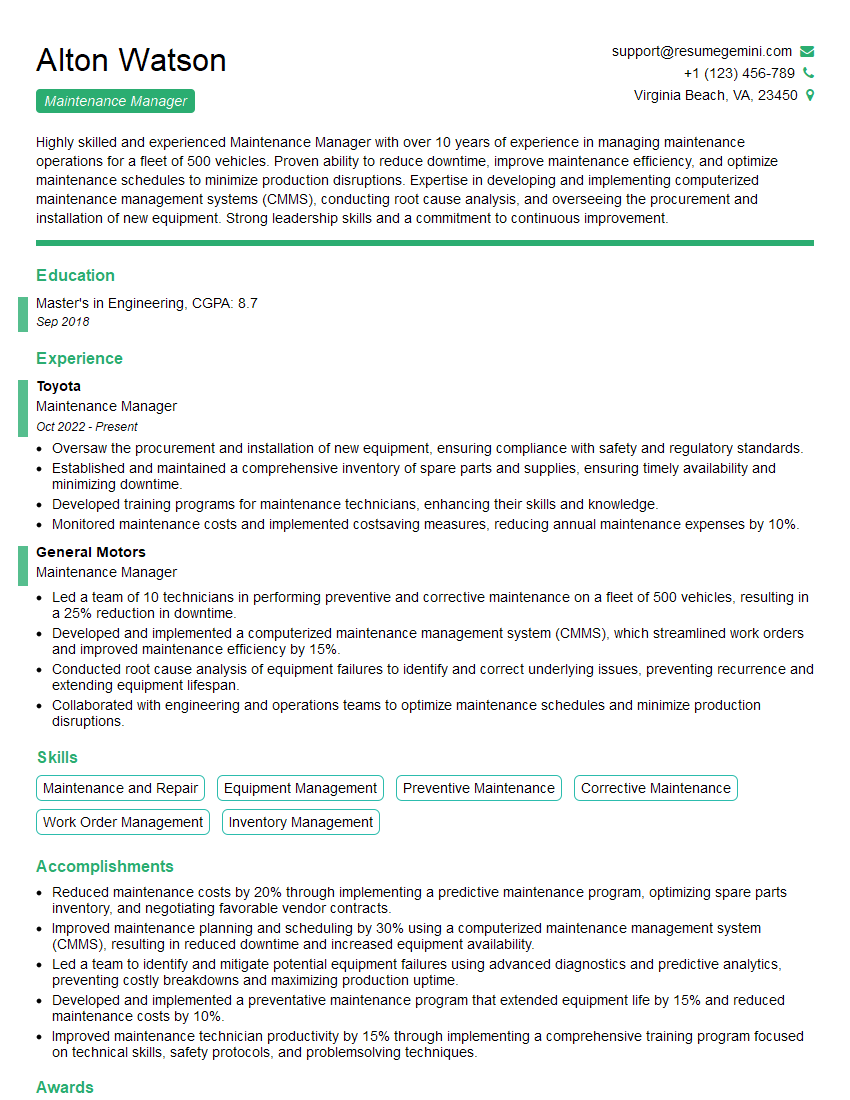
Maintenance Manager Resume Sample
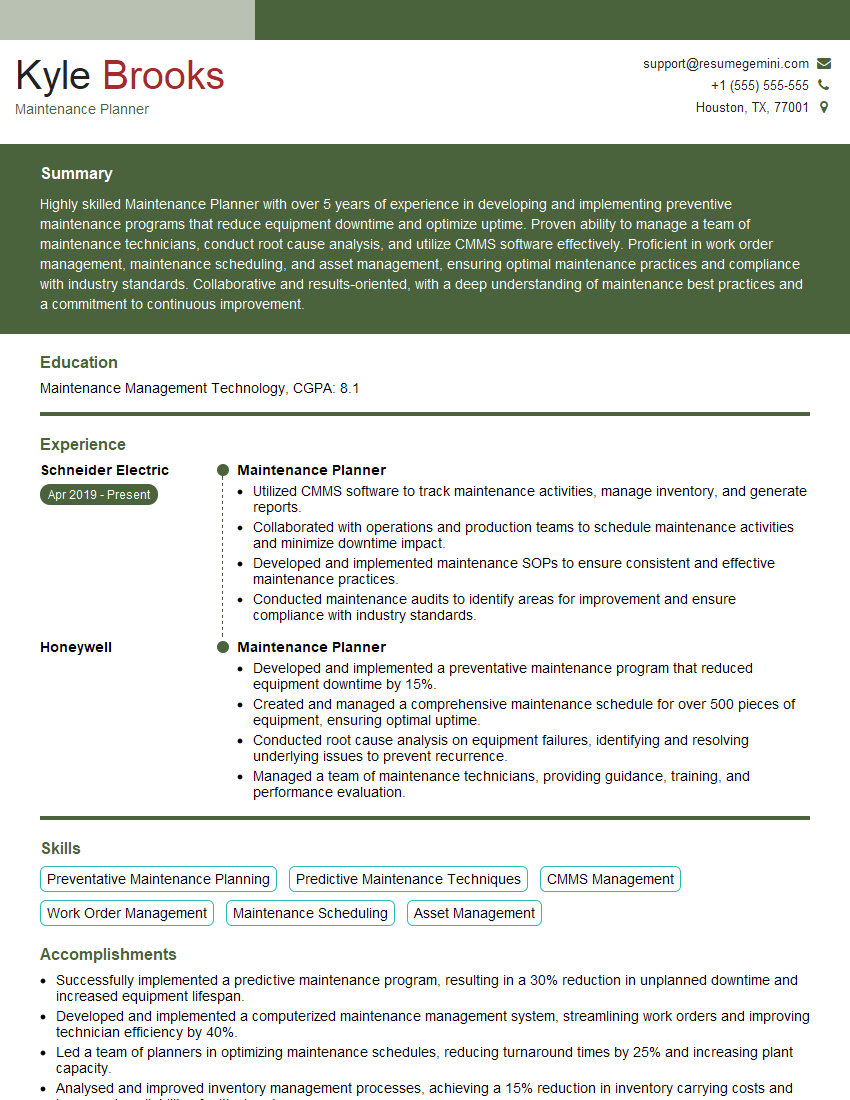
Maintenance Planner Resume Sample
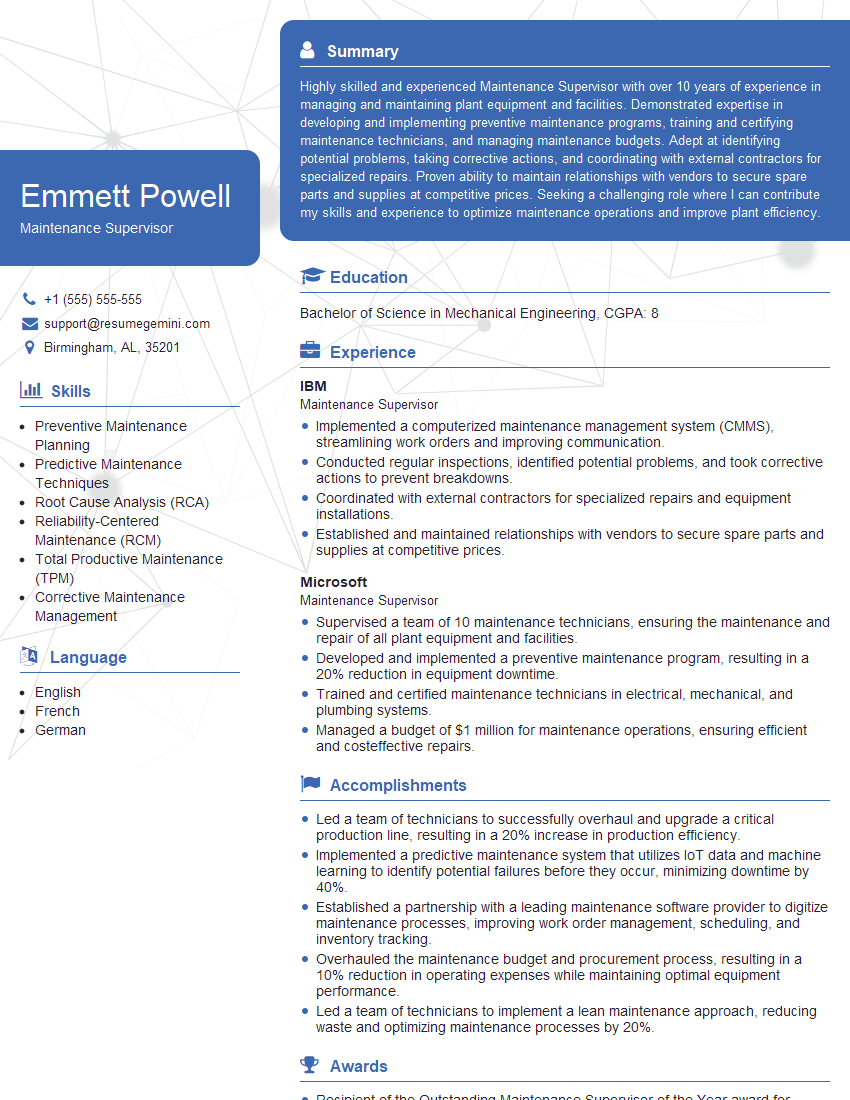
Maintenance Supervisor Resume Sample
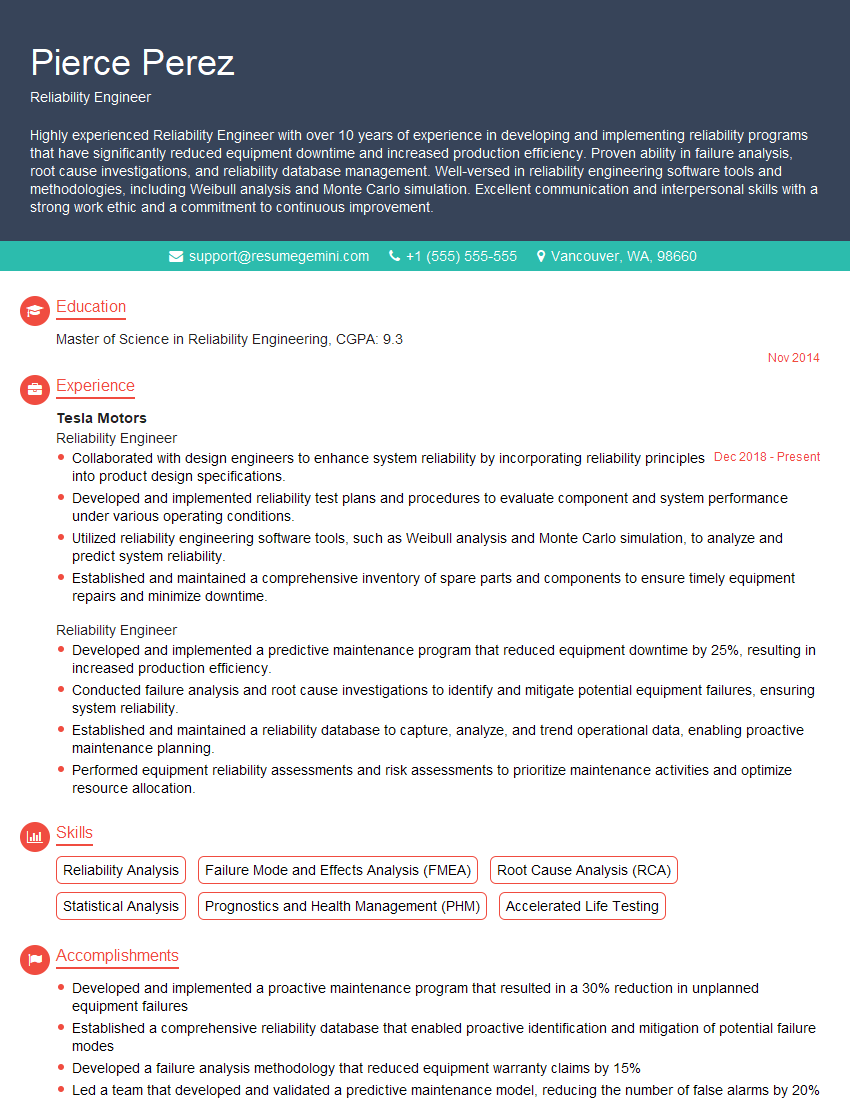
Reliability Engineer Resume Sample
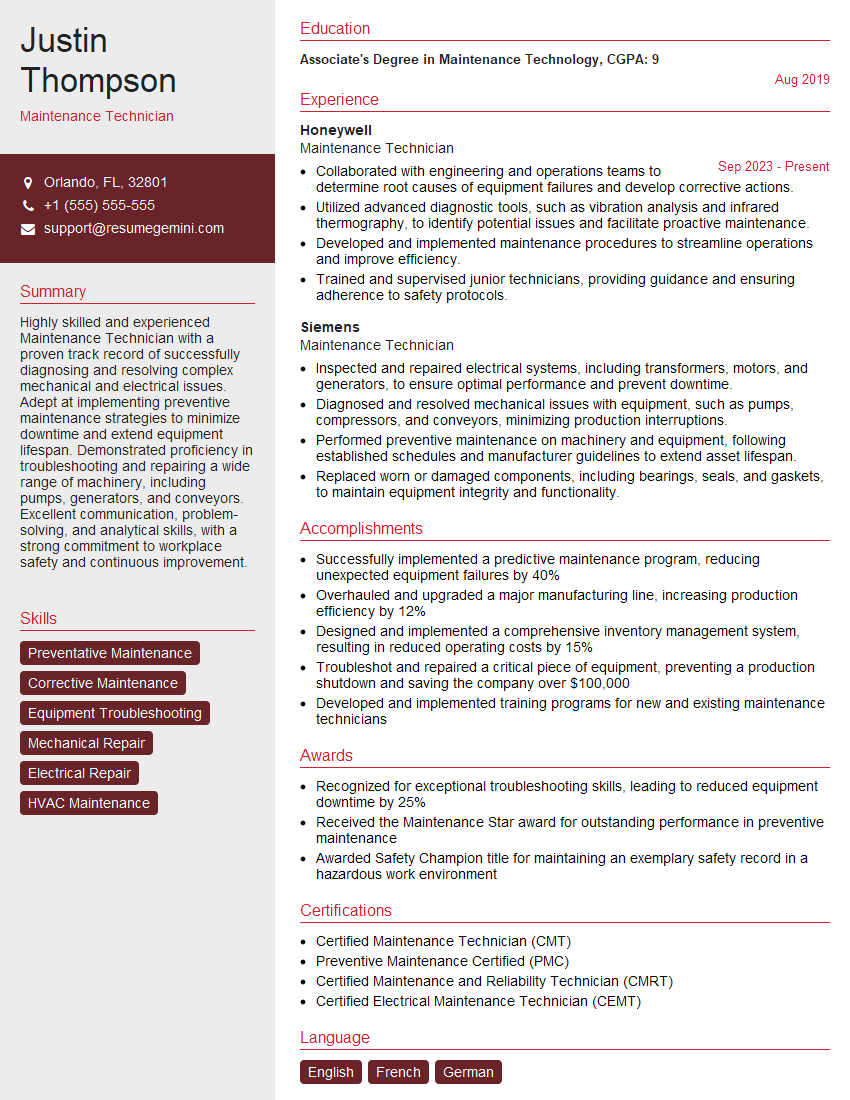
Maintenance Technician Resume Sample
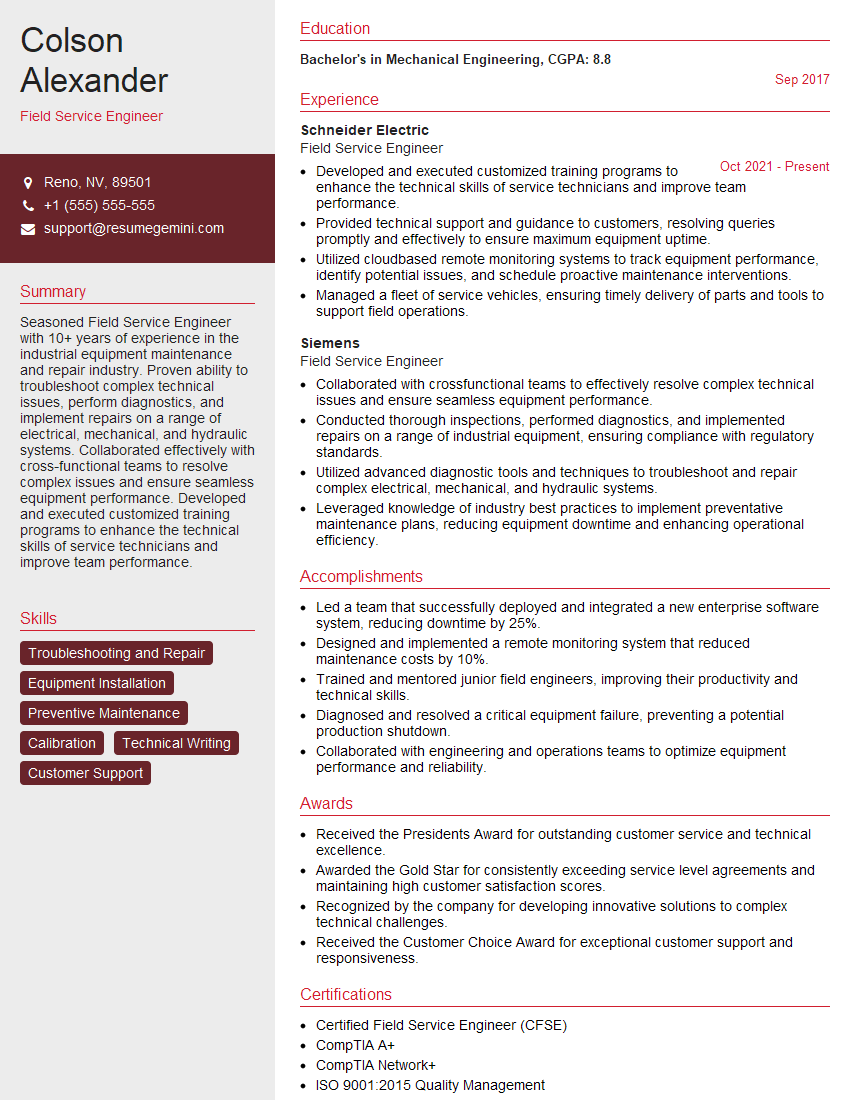
Field Service Engineer Resume Sample
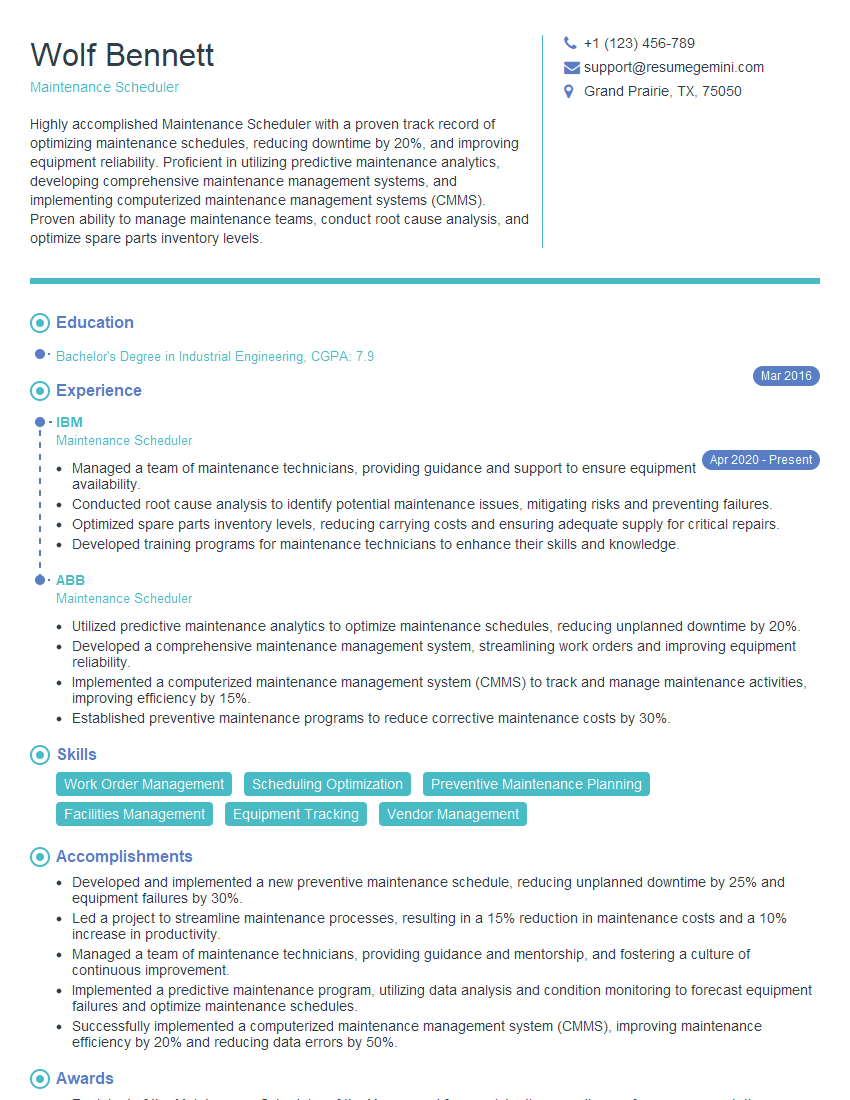
Maintenance Scheduler Resume Sample
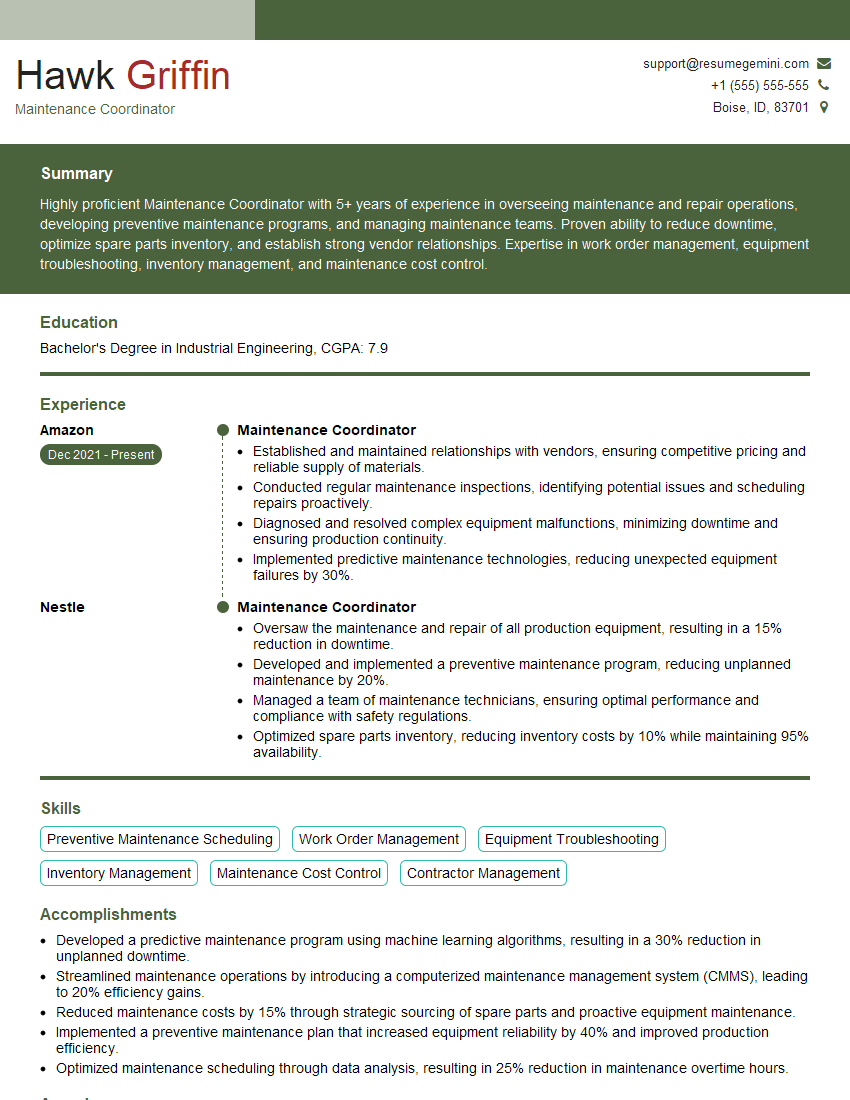
Maintenance Coordinator Resume Sample
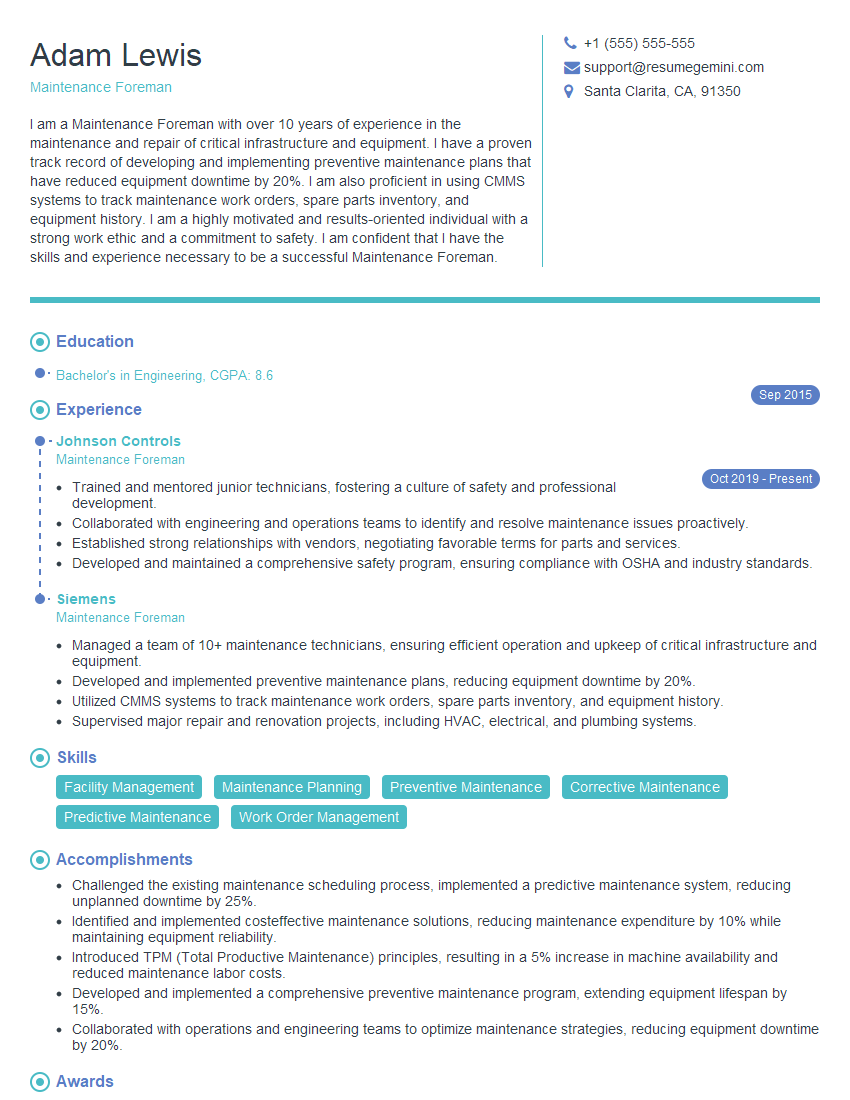
Maintenance Foreman Resume Sample

Electrical Maintenance Technician Resume Sample
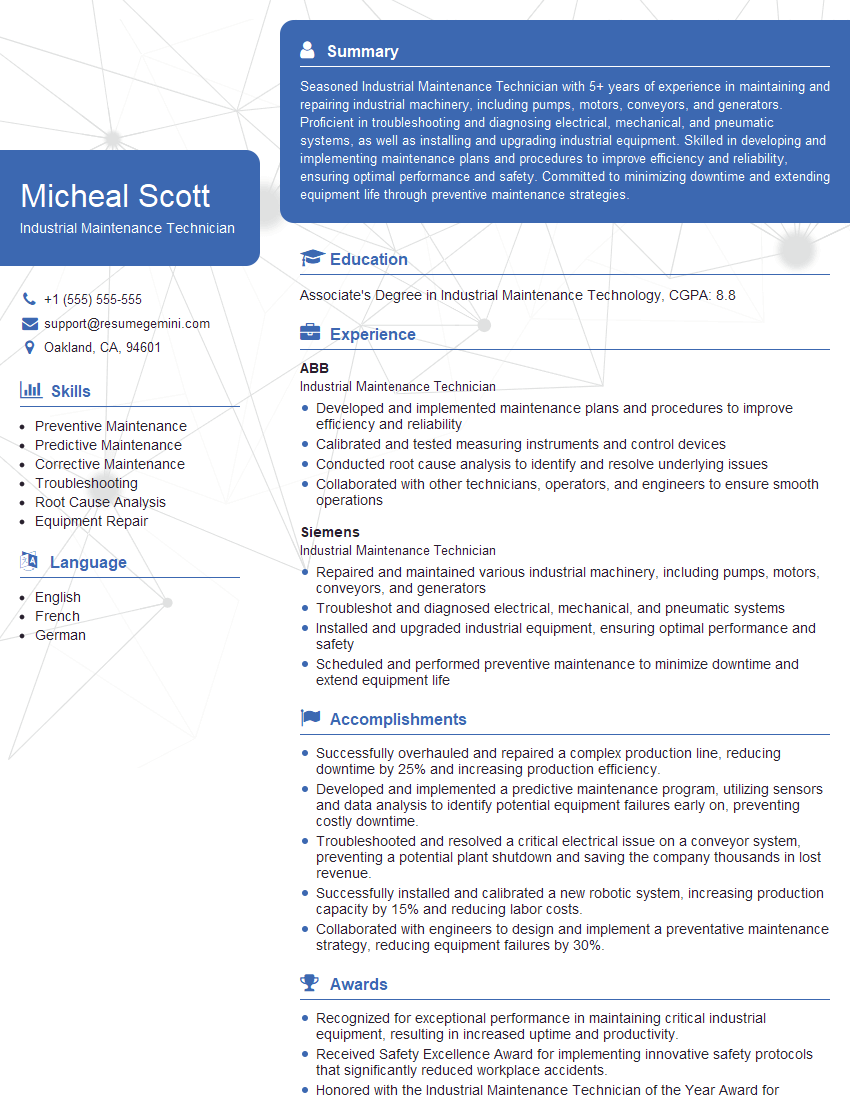
Industrial Maintenance Technician Resume Sample
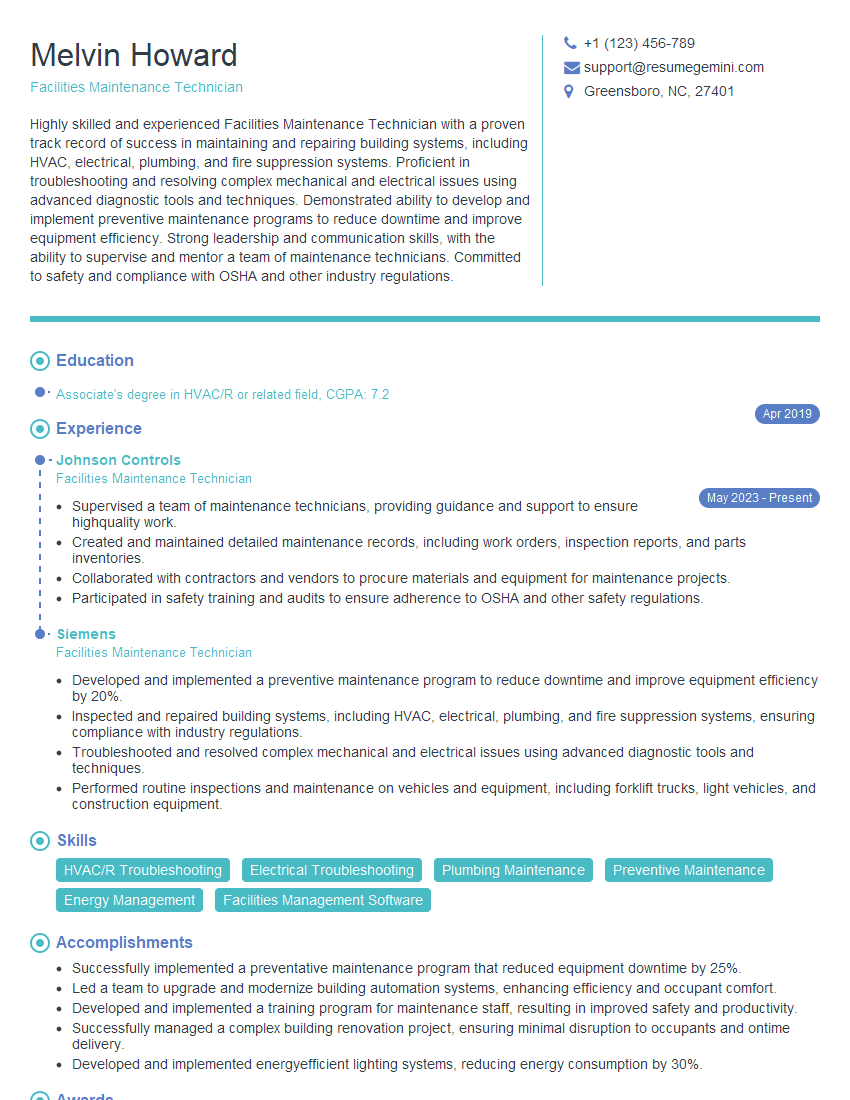
Facilities Maintenance Technician Resume Sample
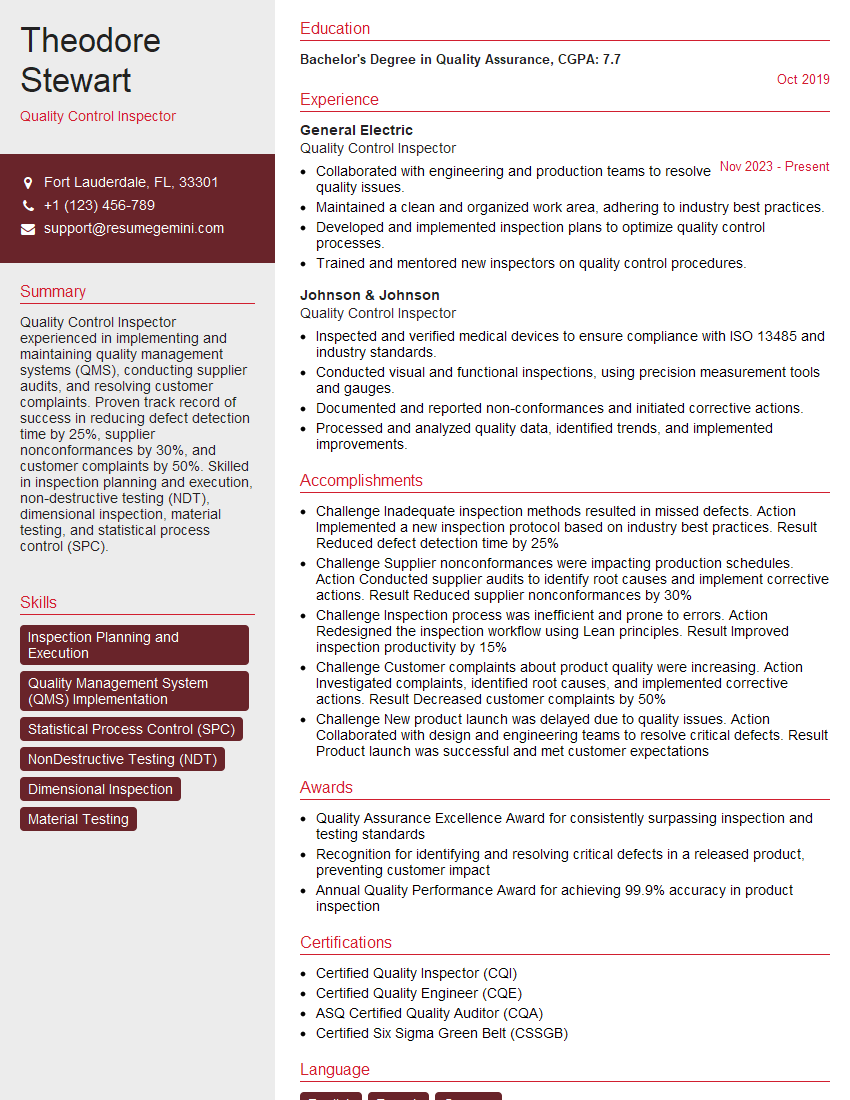
Quality Control Inspector Resume Sample
- Maintenance Manager
- Maintenance Planner
- Maintenance Supervisor
- Reliability Engineer
- Maintenance Technician
- Field Service Engineer
- Maintenance Scheduler
- Maintenance Coordinator
- Maintenance Foreman
- Electrical Maintenance Technician
- Industrial Maintenance Technician
- Facilities Maintenance Technician
- Quality Control Inspector
Explore more articles
Users Rating of Our Blogs
Share Your Experience
We value your feedback! Please rate our content and share your thoughts (optional).
What Readers Say About Our Blog
Very informative content, great job.
good