Are you ready to stand out in your next interview? Understanding and preparing for Pest and Predator Control interview questions is a game-changer. In this blog, we’ve compiled key questions and expert advice to help you showcase your skills with confidence and precision. Let’s get started on your journey to acing the interview.
Questions Asked in Pest and Predator Control Interview
Q 1. Describe your experience with integrated pest management (IPM) techniques.
Integrated Pest Management (IPM) is a sustainable approach to pest control that prioritizes prevention and minimizes pesticide use. Instead of relying solely on chemical treatments, IPM employs a holistic strategy that combines various methods to manage pest populations. This includes monitoring pest activity, identifying the root cause of infestations, and implementing a combination of cultural, biological, and chemical controls.
My experience with IPM spans over 15 years, working on both residential and commercial projects. I’ve successfully implemented IPM strategies for everything from controlling aphids in a community garden using beneficial insects like ladybugs, to managing rodent populations in a large warehouse by focusing on sanitation and exclusion techniques before resorting to traps or rodenticides. A key success story involved a residential client experiencing recurring ant infestations. Instead of simply spraying insecticide, we identified their entry points (cracks in the foundation) and sealed them. We also addressed a potential food source by implementing proper food storage. This resulted in a long-term solution with minimal pesticide use. It’s about finding the least toxic and most effective method for each situation.
Q 2. What are the common pests found in residential settings and their control methods?
Common residential pests vary greatly depending on location and climate, but some frequent offenders include ants, cockroaches, rodents (mice and rats), spiders, and bed bugs. Control methods should also be tailored to the specific pest and location.
- Ants: Identifying the species is crucial. Some treatments involve eliminating food sources and water, sealing entry points, and using targeted baits. For larger infestations, professional help may be needed.
- Cockroaches: Sanitation is key. This includes cleaning up spills, storing food properly, and eliminating moisture sources. Baits, traps, and insecticides can be used as supplemental control measures.
- Rodents: Rodent control involves trapping, poisoning (with appropriate safety measures), and exclusion (sealing entry points). Regular monitoring is important to prevent reinfestation.
- Spiders: Most spiders are beneficial, but if they are a nuisance, removing webs, eliminating insect prey, and sealing entry points will help. Insecticides can be used as a last resort.
- Bed Bugs: These require professional intervention. Effective control involves a combination of heat treatments, insecticide applications, and thorough cleaning.
Q 3. Explain the different types of traps used for rodent control.
Several types of traps are used for rodent control, each with its own advantages and disadvantages:
- Snap traps: These are the most common, using a spring-loaded mechanism to kill the rodent instantly. They are effective but require regular monitoring and bait replacement.
- Multi-catch traps: These traps can capture multiple rodents before requiring resetting. They are good for larger infestations but require more space.
- Glue traps: These traps use a sticky adhesive to trap the rodent. While effective, they can be inhumane and require careful disposal.
- Live traps: These traps capture the rodent alive, allowing for relocation. They are humane but require careful handling to avoid injury to the animal and yourself.
The choice of trap depends on factors such as the type of rodent, the severity of the infestation, and personal preference regarding humane trapping methods. Always follow safety precautions when handling traps.
Q 4. How do you identify and control termite infestations?
Termite infestations require professional identification and control. Termites are highly destructive wood-destroying insects. Identification involves visual inspection for signs like mud tubes (tunnels built by subterranean termites), damaged wood, and discarded wings (from swarmers).
Control methods typically involve a combination of techniques:
- Liquid Termiticides: These chemicals are injected into the soil to create a barrier around the structure, preventing termites from entering.
- Baiting Systems: These involve placing bait stations containing termiticides that termites carry back to the colony, effectively eliminating the entire infestation.
- Fumigation: In severe cases, fumigation may be necessary, which involves sealing the structure and introducing a gaseous insecticide to kill all termites.
Preventative measures include maintaining proper drainage around the foundation, removing wood-to-soil contact, and regular termite inspections.
Q 5. What are the safety precautions you take when handling pesticides?
Safety is paramount when handling pesticides. I always adhere to the following precautions:
- Read and follow label instructions carefully: This includes understanding the specific pesticide, application methods, safety precautions, and potential hazards.
- Wear appropriate personal protective equipment (PPE): This typically includes gloves, eye protection, a respirator, and protective clothing to prevent skin and respiratory exposure.
- Proper ventilation: Ensure adequate ventilation during application to minimize inhalation exposure.
- Storage: Pesticides should be stored in a secure, locked location, away from children and pets.
- Disposal: Pesticides and containers should be disposed of properly according to local regulations.
I’ve witnessed firsthand the consequences of neglecting these precautions, from minor skin irritation to more serious health problems. Always prioritize safety when working with these chemicals.
Q 6. What are the legal regulations surrounding pesticide use in your area?
Pesticide use is strictly regulated in my area. Regulations vary by location but generally cover the following aspects:
- Licensing and certification: Applicators must be licensed and certified to handle and apply specific pesticides.
- Labeling and registration: Only registered pesticides can be used, and the label instructions must be followed precisely.
- Restricted-use pesticides: Some pesticides are restricted to licensed professionals due to their higher toxicity.
- Record-keeping: Detailed records of pesticide applications must be maintained.
- Environmental protection: Regulations are in place to minimize environmental impact and protect sensitive areas.
I am fully compliant with all relevant local, state, and federal regulations and stay updated on any changes to ensure responsible and legal pesticide use.
Q 7. Describe your experience with wildlife removal and relocation.
Wildlife removal and relocation require specialized knowledge and techniques, emphasizing humane and legal practices. My experience includes removing various animals from residential and commercial properties, including raccoons, squirrels, bats, and birds.
The process typically involves:
- Identifying the animal and the entry point: Correct identification ensures appropriate removal techniques.
- Exclusion: This involves sealing entry points to prevent future access.
- Trapping and relocation: Traps are used to capture animals safely, and relocation is only done to suitable habitats, following all local regulations and permits.
- Sanitation: Cleaning up droppings and other animal waste is crucial to deter future infestations.
A memorable instance involved a family whose attic was infested with squirrels. We safely trapped and relocated the squirrels to a nearby wooded area while ensuring the attic was properly sealed to prevent future entry. Successful wildlife removal is not just about getting rid of the animal but also preventing future problems.
Q 8. How do you handle aggressive animals during wildlife control operations?
Handling aggressive animals requires a calm, strategic approach prioritizing safety. My first step is always to assess the situation from a safe distance, identifying the species and its immediate behavior. This informs my choice of equipment and strategy. For example, a cornered raccoon might be more aggressive than one calmly foraging.
Non-lethal methods are always my preference. This includes using hazing techniques like loud noises (air horns, for example) or bright lights to deter the animal. If the animal is cornered, creating an escape route can significantly reduce aggression. In some instances, the use of specialized tools like catch poles might be necessary, but even then, the goal is to minimize stress and ensure the animal’s safety. Finally, if all else fails, and the animal poses an immediate threat to public safety, lethal force may be a last resort, and is always carried out in accordance with all applicable regulations and permits.
I’ve personally had to handle aggressive skunks on numerous occasions. In these cases, using a long-handled net and a sturdy container for relocation proved the most effective and safe way to remove the animals without injury to either the skunk or myself.
Q 9. What are the ethical considerations in wildlife control?
Ethical wildlife control hinges on minimizing harm to animals and the environment. We must adhere to strict legal guidelines and best practices. This includes selecting the least invasive method possible, prioritizing humane treatment, and minimizing the disruption to the animal’s natural habitat. We should only intervene when necessary, for instance when an animal poses a direct threat to public safety or property. Relocation should be done carefully, ensuring the animal is released into a suitable habitat where it can thrive without causing further issues.
For example, rather than killing a family of raccoons living in an attic, the ethical approach would involve using exclusion techniques to seal entry points, while carefully removing the animals to a more appropriate environment and providing education to the homeowner on preventing future problems. The concept of ‘least harm’ guides every decision.
Q 10. Explain your knowledge of various pesticide types and their applications.
Pesticides are categorized into various types, each suited for specific pests and situations. Understanding their properties is crucial for effective and responsible pest control.
- Insecticides: Target insects. These can be further classified into organophosphates (e.g., malathion), carbamates (e.g., carbaryl), pyrethroids (e.g., permethrin), and neonicotinoids. Each has different toxicity levels and modes of action. For example, Pyrethroids work by disrupting the nervous system of insects.
- Rodentides: Used to control rodents. Anticoagulants, like brodifacoum, are common. They interfere with blood clotting, leading to internal bleeding. Other rodenticides might act as neurotoxins.
- Herbicides: Control unwanted plants. They can be selective, targeting specific weeds, or non-selective, killing all vegetation. Examples include glyphosate and 2,4-D.
- Fungicides: Combat fungal diseases in plants.
Application methods vary greatly, from direct spraying to baiting and fumigation. Choosing the right pesticide and application method depends on several factors, including the type of pest, the environment, and the level of infestation. Always follow label instructions carefully, considering safety measures like personal protective equipment (PPE).
Q 11. How do you assess the severity of a pest infestation?
Assessing infestation severity involves a multi-faceted approach. I start by identifying the pest and the extent of its presence. This might involve visual inspections, looking for signs of damage or fecal matter. For instance, rodent infestations are typically assessed by observing droppings, gnaw marks, and nesting materials. Insect infestations may be evidenced by the insects themselves, holes in wood, or damage to stored products.
Beyond visual inspection, I might use monitoring tools like traps or sticky cards to quantify the pest population. The level of damage is also a crucial factor: a few insect larvae in a pantry is a minor issue compared to widespread damage to a building’s structure. Finally, I consider the health risks associated with the infestation – some pests carry diseases, making them a more serious concern.
For example, finding a few cockroach droppings in a kitchen is a minor infestation, requiring a thorough cleaning. However, numerous sightings coupled with visible damage to food products suggests a more serious infestation needing professional treatment.
Q 12. Describe your experience with developing and implementing pest control plans.
Developing and implementing pest control plans requires a systematic approach. First, I conduct a thorough site inspection to identify the pests, their habitats, and the extent of the infestation. Then I create a customized plan tailored to the specific situation. The plan outlines the chosen methods, the timeline for treatment, monitoring procedures, and preventive measures.
For example, a plan for a restaurant might include regular sanitation, insect monitoring traps, and targeted insecticide application where necessary. A residential pest control plan might involve rodent exclusion, bait stations, and regular inspections. The plan also takes into account environmental factors and potential risks to people and pets.
I carefully document every step of the process, providing regular updates to the client. Following up is crucial to ensure the plan’s effectiveness and adapt as needed.
Q 13. How do you monitor the effectiveness of pest control treatments?
Monitoring the effectiveness of treatments is crucial. This involves regular inspections after treatment, utilizing the same techniques used during the initial assessment: visual inspection for signs of pest activity, trap monitoring, and checking for any damage. The frequency of these checks depends on the type of pest and the treatment applied.
For example, after a rodent treatment, I would check bait stations regularly for activity, noting the consumption rate. If bait is not consumed, it suggests the effectiveness of the treatment. If signs of continued rodent activity persist, adjustments to the plan may be needed. Data collection and analysis helps determine the success of the chosen approach and guides future interventions.
Q 14. What are the common signs of rodent activity?
Identifying rodent activity involves recognizing several key signs:
- Droppings: Rodent droppings vary in size and shape depending on the species. They are a clear indicator of presence.
- Gnaw marks: Rodents have constantly growing teeth and leave behind gnaw marks on various materials like wood, cables, and food packaging.
- Nests: Rodents create nests using shredded materials like paper, cloth, or insulation.
- Tracks and Rub Marks: These can be visible on dusty surfaces or floors.
- Unusual Noises: Scuttling sounds, especially at night, might indicate rodent activity.
- Smell: A musky odor might suggest rodent presence, particularly in concealed areas.
The combination of these signs helps to pinpoint rodent activity and their potential nesting areas. A single sign might not be conclusive, but multiple indicators strongly suggest an infestation.
Q 15. How do you prevent cross-contamination during pesticide application?
Preventing cross-contamination during pesticide application is paramount for safety and efficacy. It’s like meticulously preparing a gourmet meal – you wouldn’t want to taint your delicate dessert with the flavors of your savory main course! We achieve this through a multi-pronged approach:
- Dedicated Equipment: We use separate spray tanks and application equipment for different pesticides. For example, a tank solely for insecticides would never be used for herbicides, avoiding any accidental mixing.
- Thorough Cleaning: After each application, equipment is meticulously cleaned with appropriate detergents and rinsed thoroughly with clean water. We follow manufacturer’s instructions precisely to ensure complete removal of residual pesticides.
- Protective Gear: Proper personal protective equipment (PPE) is crucial. This includes chemical-resistant suits, gloves, respirators, and eye protection. This prevents any accidental exposure and ensures the safety of the applicator.
- Labeling and Storage: Pesticides are stored in their original containers with clear labels, preventing confusion and misapplication. Storage areas are secured and ventilated properly.
- Spill Response Plan: We have a detailed plan for handling accidental spills, involving immediate containment, cleanup using appropriate absorbents, and disposal following regulatory guidelines. This prevents contamination of the surrounding environment.
By following these steps, we ensure that each pesticide application is targeted and doesn’t unintentionally affect other areas or contaminate our equipment for future applications.
Career Expert Tips:
- Ace those interviews! Prepare effectively by reviewing the Top 50 Most Common Interview Questions on ResumeGemini.
- Navigate your job search with confidence! Explore a wide range of Career Tips on ResumeGemini. Learn about common challenges and recommendations to overcome them.
- Craft the perfect resume! Master the Art of Resume Writing with ResumeGemini’s guide. Showcase your unique qualifications and achievements effectively.
- Don’t miss out on holiday savings! Build your dream resume with ResumeGemini’s ATS optimized templates.
Q 16. Describe your experience with using different types of pest control equipment.
My experience with pest control equipment is extensive, ranging from traditional methods to the latest technologies. I’m proficient in using various sprayers, including backpack sprayers for smaller areas, and larger motorized sprayers for broader coverage. I’ve also worked with specialized equipment such as bait stations for rodents, foggers for flying insects, and even thermal foggers for large-scale treatments. Beyond spraying, I’m comfortable using monitoring traps (sticky traps, pheromone traps) to assess pest populations and adjust treatment strategies accordingly.
For example, during a recent termite treatment, I utilized a specialized drill and injection system to deliver the termiticide directly into the infested wood, minimizing disruption and maximizing effectiveness. Similarly, in managing a large ant infestation in a commercial building, I employed bait stations strategically placed to control the colony without harming the building’s occupants.
My experience encompasses not only the practical application of the equipment, but also the important aspects of proper maintenance and calibration to ensure accurate application and optimal results. I am meticulous about following safety protocols during operation and maintenance of all equipment.
Q 17. How do you manage customer expectations regarding pest control services?
Managing customer expectations is key to building trust and providing excellent service. It’s like setting the stage for a successful performance – the audience needs to know what to expect! We begin by clearly explaining the treatment process, potential results, and limitations. We discuss the type of pests being targeted, the treatment methods, the frequency of visits, and the expected timeframe for control. Realistic expectations are crucial; we don’t promise eradication, but rather effective control and prevention.
We emphasize the importance of proactive measures, such as sanitation and preventative steps, to complement our services. Open communication is maintained throughout the process. Regular follow-up calls or visits allow us to address any concerns, adjust strategies if needed, and ensure our clients are satisfied with the progress. We always provide a detailed written plan outlining our strategy and expected outcomes before commencing work.
Q 18. How do you handle customer complaints effectively?
Handling customer complaints effectively is a critical skill. It’s about turning a negative experience into an opportunity to improve and strengthen the customer relationship. Our process involves active listening, empathy, and a commitment to finding a solution.
- Active Listening: We carefully listen to the customer’s concerns without interruption, ensuring they feel heard and understood.
- Empathy: We acknowledge their frustration and validate their feelings. Even if the issue isn’t solely our fault, showing empathy builds trust.
- Investigate: We thoroughly investigate the complaint, gathering all necessary information to understand the root cause of the problem.
- Solution: We propose a solution, which could involve re-treatment, adjusting the treatment plan, or offering a partial refund.
- Follow-up: We follow up with the client to ensure the solution was satisfactory and that their concerns have been addressed.
A recent example involved a client who was dissatisfied with the speed of ant control. After investigating, we discovered that the client had inadvertently left food out overnight, which attracted more ants. By explaining the situation and providing extra training on preventative measures, we were able to regain their trust and solve the problem.
Q 19. How do you maintain accurate records of pest control treatments?
Accurate record-keeping is essential for accountability, tracking treatment effectiveness, and complying with regulations. Think of it as the detailed scorecard for our pest control ‘game.’ We maintain comprehensive records using a combination of digital and paper-based systems. Our records include:
- Client Information: Contact details, property address, and a history of services provided.
- Pest Identification: Detailed identification of the pest species, including images when possible.
- Treatment Details: Date of service, pesticides used (including product name, concentration, and application method), areas treated, and amount applied.
- Observations and Notes: Detailed observations about the infestation, including the severity, location, and any other relevant information. Any unusual findings are meticulously documented.
- Follow-up: Records of all follow-up visits, including adjustments to the treatment plan and client feedback.
This detailed approach helps us to track our effectiveness, identify trends, improve our strategies, and meet regulatory requirements. We also use this data to provide clients with transparent reports on the progress made in managing their pest infestations.
Q 20. Describe your experience with working in a team environment.
Teamwork is fundamental in pest control. We’re often working in diverse locations with varying conditions. My experience working in teams has emphasized the importance of clear communication, shared responsibility, and mutual respect.
I’ve collaborated with colleagues on large-scale projects such as commercial building treatments, involving coordinated efforts to assess, plan, and execute treatments safely and efficiently. This included briefing the team before the treatment, clear division of tasks based on individual expertise, and careful coordination during the execution to avoid any overlap or conflicts. This often includes regular communication with supervisors, technicians and clients.
My role in these collaborations has often involved assisting less experienced team members, offering guidance, and fostering a cooperative environment. The success of these complex projects relies heavily on a coordinated team effort, and I take pride in contributing to these successful outcomes.
Q 21. How do you stay updated on the latest advancements in pest control technology?
Staying updated on advancements in pest control technology is crucial for providing the most effective and sustainable services. This is an ongoing process, similar to a doctor staying abreast of the latest medical research! My approach is multi-faceted:
- Professional Organizations: I’m an active member of relevant professional organizations such as [mention relevant organizations], attending conferences, workshops, and webinars to learn about the latest research, techniques, and regulations.
- Industry Publications: I regularly read industry publications and journals to stay informed about new developments in pest control methods, integrated pest management strategies, and new pest species.
- Manufacturer Training: I participate in training programs offered by pesticide manufacturers to learn about the latest products and their safe and effective applications.
- Online Resources: I utilize reputable online resources to stay up-to-date on regulatory changes and research findings.
- Continuing Education: I actively participate in continuing education courses to maintain my certifications and enhance my knowledge base.
This commitment to ongoing learning ensures that I’m equipped to offer cutting-edge, effective, and environmentally responsible pest control solutions to my clients.
Q 22. Describe your problem-solving skills within the context of pest control.
My problem-solving approach in pest control is systematic and data-driven. It starts with a thorough inspection to identify the pest, its location, and the extent of the infestation. I then analyze the environment, considering factors like food sources, moisture levels, and entry points. This helps determine the root cause of the infestation. Based on this analysis, I develop a customized plan, selecting appropriate control methods – this could range from simple sanitation practices to more complex integrated pest management (IPM) strategies. I regularly monitor the effectiveness of the plan and adjust it as needed, ensuring a sustainable solution. For example, if I find ants in a kitchen, I wouldn’t just spray insecticide. I’d first look for and eliminate food sources, seal cracks and crevices where they’re entering, and then consider targeted bait stations as a more environmentally friendly and effective long-term solution.
Q 23. What are your strategies for dealing with recurring pest infestations?
Recurring infestations require a more strategic approach than a single treatment. My strategy centers around identifying and eliminating the root cause of the problem. This often involves a comprehensive inspection to pinpoint the source of the infestation and potential entry points. Then, I implement a multi-pronged approach, which may include sanitation, exclusion (sealing entry points), and targeted treatments only where necessary. Regular monitoring is crucial; I schedule follow-up visits to check the effectiveness of the implemented control measures and address any new developments. For instance, if we have recurring rodent problems, we’d examine the building’s structure for gaps, implement rodent-proofing measures, and use traps strategically, rather than just relying on rodenticides.
Q 24. How do you ensure the safety of your team during pest control operations?
Safety is paramount. Before any operation, my team and I undergo a comprehensive risk assessment, identifying potential hazards associated with the specific pest and location. We utilize appropriate personal protective equipment (PPE), including gloves, eye protection, respirators, and protective clothing, depending on the pesticides used and the nature of the pests. We adhere strictly to pesticide label instructions and follow all relevant safety regulations. We also implement clear communication protocols, ensuring everyone knows their roles and responsibilities. Regular training and refresher courses on safe handling of pesticides and pest control techniques are mandatory to ensure everyone is always up-to-date on best practices.
Q 25. Explain your understanding of different pest life cycles.
Understanding pest life cycles is fundamental to effective control. Different pests have varying life cycles, each with vulnerable stages. For example, cockroaches go through egg, nymph, and adult stages. Knowing this helps us target our interventions at the most vulnerable point. Understanding the egg-laying habits of termites helps in preventing infestations. Similarly, the life cycle of rodents helps in predicting their movements and choosing the most effective traps. By targeting the vulnerable stages of a pest’s life cycle, we can achieve better control with minimal environmental impact.
Q 26. Describe a challenging pest control situation you encountered and how you resolved it.
One challenging situation involved a severe bed bug infestation in a large apartment building. Initial attempts using standard treatments proved ineffective. The challenge was identifying the source of the recurring infestation and ensuring complete eradication without displacing tenants. We implemented a multi-phased approach, starting with a thorough inspection of every unit, identifying the most heavily infested areas. We used a combination of heat treatment, insecticide application with targeted residual sprays, and encasements for mattresses and box springs. We collaborated closely with the building management to ensure strict cleaning protocols were followed, and we also educated residents on preventing future infestations. Through this comprehensive and coordinated strategy, we successfully eradicated the bed bugs, and the problem hasn’t recurred.
Q 27. How do you identify the root cause of pest infestations?
Identifying the root cause of a pest infestation is critical. It’s not just about eliminating the visible pests; it’s about addressing the underlying conditions that attract them. I use a systematic approach, starting with a detailed visual inspection of the property, identifying potential food sources, water sources, harborage areas (places where pests live and hide), and entry points. I may also use monitoring devices like sticky traps or pheromone traps to identify the specific pest species and their activity patterns. This detailed information is crucial for developing an effective, long-term solution. For example, discovering a leak in plumbing will help in addressing a potential source of moisture which could attract insects and rodents.
Q 28. What are your strategies for preventing future pest infestations?
Preventing future infestations involves a proactive, multi-faceted strategy. This includes implementing exclusion techniques such as sealing cracks and crevices, repairing leaks, and maintaining proper sanitation. Regular inspections are crucial to detect early signs of infestation. Educating clients on proper waste disposal, storage of food, and other preventative measures is also essential. For example, installing mesh screens on windows and doors, keeping gutters clean to prevent water accumulation, and removing clutter can help prevent a variety of pest infestations. A well-maintained and clean environment is the best defense against pests.
Key Topics to Learn for Pest and Predator Control Interview
- Pest Identification & Biology: Understanding the life cycles, behaviors, and vulnerabilities of common pests (rodents, insects, birds, etc.) and their impact on various environments.
- Integrated Pest Management (IPM): Applying IPM principles, including prevention, monitoring, and control strategies, emphasizing environmentally responsible methods.
- Predator Control Techniques: Safe and humane methods for managing predator populations, including exclusion, habitat modification, and non-lethal deterrents. Understanding legal and ethical considerations.
- Rodent Control: Specific techniques for rodent identification, prevention, and control, including trapping, baiting, and sanitation practices.
- Insect Control: Understanding different insect control methods, from pesticides (safe handling and application) to biological controls and environmental modifications.
- Wildlife Damage Management: Addressing damage caused by wildlife, such as birds, deer, or other animals, using appropriate and humane control techniques.
- Safety and Regulations: Knowledge of relevant safety regulations, handling of pesticides and other control agents, and adherence to local, state, and federal laws.
- Problem-Solving & Decision-Making: Demonstrate your ability to analyze pest situations, develop effective control strategies, and adapt to unforeseen challenges.
- Equipment & Technology: Familiarity with common pest and predator control equipment, tools, and technologies used in the field.
- Communication & Client Interaction: How to effectively communicate with clients, addressing their concerns, explaining control methods, and ensuring customer satisfaction.
Next Steps
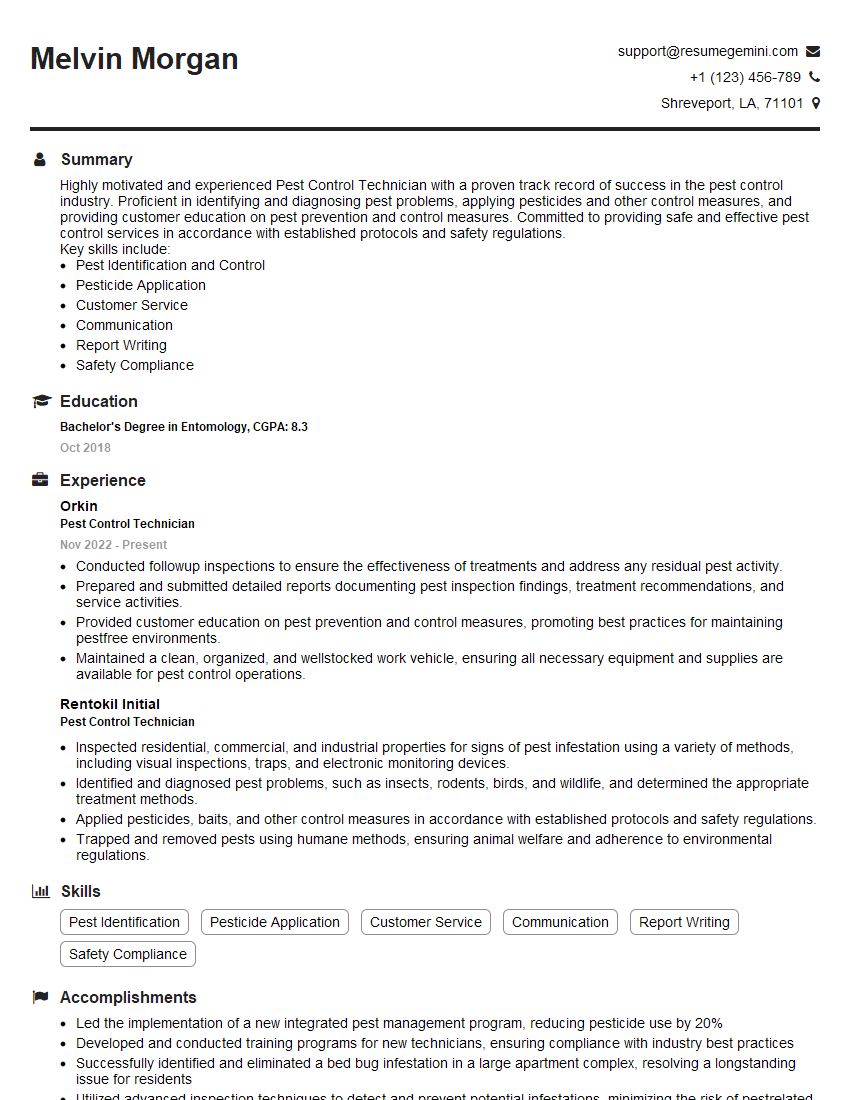
Mastering Pest and Predator Control opens doors to a rewarding career with diverse opportunities for growth and specialization. Building a strong foundation in these key areas will significantly increase your interview success. To enhance your job prospects, creating an ATS-friendly resume is crucial. ResumeGemini is a trusted resource that can help you craft a professional resume tailored to highlight your skills and experience. Examples of resumes specifically designed for Pest and Predator Control professionals are available to guide you.

Explore more articles
Users Rating of Our Blogs
Share Your Experience
We value your feedback! Please rate our content and share your thoughts (optional).
What Readers Say About Our Blog
Very informative content, great job.
good