Interviews are opportunities to demonstrate your expertise, and this guide is here to help you shine. Explore the essential Pesticide and Herbicide Application interview questions that employers frequently ask, paired with strategies for crafting responses that set you apart from the competition.
Questions Asked in Pesticide and Herbicide Application Interview
Q 1. What are the different types of pesticide formulations?
Pesticide formulations are essentially different ways of delivering the active ingredient to the target pest. The choice of formulation impacts application method, effectiveness, and environmental impact. Common types include:
- Emulsifiable Concentrates (EC): These are liquids that mix with water to form an emulsion. They’re convenient for mixing but require careful measurement and thorough mixing to avoid uneven application. Example: Many broad-spectrum insecticides are available as ECs.
- Wettable Powders (WP): These are powders that are mixed with water to form a suspension. They tend to settle, requiring constant agitation during application. Example: Some fungicides and herbicides come as WPs.
- Soluble Powders (SP): Similar to WPs, but dissolve completely in water. Less settling issues than WPs. Example: Certain systemic insecticides are formulated as SPs.
- Granules (G): These are small solid particles that are applied directly to the soil or plant surface. They’re less likely to drift but application may be less precise. Example: Some herbicides for weed control in lawns are granules.
- Water-Dispersible Granules (WDG): These granules dissolve readily in water and offer convenience. Example: Certain herbicides for broadleaf weed control.
- Ultra-Low Volume (ULV): Highly concentrated formulations applied with minimal water. Often used for aerial spraying. Requires specialized equipment and careful handling. Example: Insecticides for large-scale applications.
Choosing the right formulation depends on factors like the target pest, application method, environmental conditions, and the specific pesticide’s label instructions.
Q 2. Explain the difference between systemic and contact herbicides.
The key difference between systemic and contact herbicides lies in how they affect plants.
- Contact herbicides kill only the plant parts they directly touch. They don’t translocate (move) within the plant. For example, if you spray a contact herbicide on a weed’s leaves, only those leaves will die. Reapplication is often necessary for complete eradication. Example: Paraquat.
- Systemic herbicides are absorbed by the plant and translocated throughout its tissues. This means the herbicide moves from the point of application (leaves, roots, or stem) to other parts of the plant, leading to its eventual death. One application can often control the whole plant. Example: Glyphosate.
Imagine painting a fence (contact herbicide): only the painted part changes. Compare that to drinking medicine (systemic herbicide): the medicine affects your entire body.
Q 3. Describe the process of calibrating a pesticide application sprayer.
Calibrating a sprayer ensures that the correct amount of pesticide is applied per unit area, preventing under-application (ineffective pest control) or over-application (environmental damage and potential health risks). The process usually involves these steps:
- Measure the spray swath width: Determine the width of the area covered by the spray nozzles.
- Measure the sprayer output: Collect the spray solution discharged over a specific time (e.g., one minute) and measure its volume.
- Calculate the application rate: Use the following formula: Application rate (gallons/acre) = (gallons of spray solution/time) × (time in minutes/acre)
- Adjust the sprayer: Based on the calculated application rate and the desired rate specified on the pesticide label, adjust the sprayer settings (e.g., speed, nozzle pressure, or solution concentration).
- Repeat the process: Re-check the output until the application rate matches the desired rate.
Example: If your sprayer delivers 5 gallons in 1 minute over a 20-foot swath, and you need to cover an acre (43,560 square feet), you can calculate the application rate. You’ll need further calculations factoring in speed and overlap to get a final accurate result.
Accurate calibration is essential for efficient and responsible pesticide application.
Q 4. What safety precautions must be taken when handling pesticides?
Handling pesticides requires stringent safety measures to minimize exposure risks. These include:
- Read and understand the pesticide label: This provides crucial information on handling, application, and safety precautions.
- Wear appropriate personal protective equipment (PPE): This includes gloves, goggles, respirators, and protective clothing.
- Mix and load pesticides in well-ventilated areas: Avoid spraying in windy conditions.
- Avoid skin and eye contact: Wash thoroughly with soap and water after handling.
- Store pesticides securely: Keep them in their original containers, locked away from children and pets.
- Dispose of empty containers properly: Follow the label instructions for disposal.
- Never eat, drink, or smoke while handling pesticides.
A single careless mistake can have serious consequences. Always prioritize safety when handling pesticides.
Q 5. What is the importance of proper PPE (Personal Protective Equipment)?
Proper PPE is critical for protecting your health and safety during pesticide application. Exposure to pesticides can cause a range of adverse health effects, from skin irritation to severe respiratory problems or long-term health issues. PPE acts as a barrier between your body and the pesticide, significantly reducing the risk of exposure. The specific PPE required depends on the pesticide, its formulation, and the application method. For instance, handling highly toxic pesticides may require a full-body suit, respirator, and gloves resistant to chemical penetration.
Think of PPE as your armor in battle against pesticide exposure.
Q 6. How do you identify target pests and weeds accurately?
Accurate pest and weed identification is crucial for effective and targeted pest management. This process involves several steps:
- Visual inspection: Closely examine the plants, looking for damage, discoloration, unusual growth, or the presence of insects, diseases, or weeds.
- Use field guides or online resources: Consult resources with pictures and descriptions of common pests and weeds in your region to confirm identification.
- Collect samples: Collect samples of the pests or weeds for further analysis if necessary.
- Consult with experts: If you are unsure of the identification, consult with a local agricultural extension agent or pest control professional.
Misidentification can lead to ineffective or inappropriate pesticide application, wasting time, resources, and potentially harming beneficial organisms or the environment. Taking your time and making certain is essential.
Q 7. Explain the concept of Integrated Pest Management (IPM).
Integrated Pest Management (IPM) is a holistic approach to pest control that emphasizes prevention and minimizing pesticide use. It integrates multiple strategies to manage pest populations while protecting human health and the environment. Key principles include:
- Monitoring: Regularly monitor for pest presence and activity.
- Prevention: Implement cultural, mechanical, or biological control measures to prevent pest outbreaks.
- Economic thresholds: Determine the pest population level at which control measures are economically justified.
- Targeted control: Use pesticides only when necessary and choose the least toxic option.
IPM prioritizes long-term sustainability and aims to minimize environmental disruption, unlike traditional methods that solely rely on chemical control. Think of it as a multi-faceted strategy, not a single-pronged attack.
Q 8. What are the environmental considerations when applying pesticides?
Environmental considerations in pesticide application are paramount to minimizing harm to non-target organisms and ecosystems. This involves understanding the potential impacts on water bodies, soil, air quality, and wildlife. For example, runoff from treated fields can contaminate streams and rivers, harming aquatic life. Similarly, pesticide drift can affect neighboring properties and pollute the air. To mitigate these risks, we must consider:
- Target Specificity: Choosing pesticides that specifically target the pest while minimizing impact on beneficial insects, birds, or other wildlife. For instance, using biopesticides which are naturally occurring substances, or products with specific modes of action that are less likely to harm pollinators.
- Application Methods: Opting for application methods that minimize drift and runoff, such as directed spraying or soil incorporation. For example, using precision application technologies like GPS-guided sprayers can reduce pesticide usage and improve accuracy.
- Buffer Zones: Establishing buffer zones around sensitive areas like water bodies or protected habitats to prevent pesticide drift or runoff. For example, maintaining a strip of unsprayed vegetation along a stream bank.
- Integrated Pest Management (IPM): Implementing IPM strategies, which prioritize preventative measures, biological control, and other less toxic methods before resorting to chemical pesticides. This could include crop rotation, the use of resistant varieties, and encouraging natural predators.
- Monitoring and Assessment: Regularly monitoring the environment for any adverse effects of pesticide use and making adjustments to application practices as needed. This might involve water quality testing or assessing pollinator populations.
Q 9. How do you select the appropriate pesticide for a specific pest or weed?
Selecting the right pesticide is crucial for effective pest or weed control while minimizing risks. The process involves identifying the pest or weed, determining its life cycle and susceptibility to various pesticides, and considering environmental factors. It’s like choosing the right tool for a specific job – a hammer won’t fix a leaky pipe!
Here’s a step-by-step approach:
- Pest Identification: Accurate identification is key. Incorrect identification leads to ineffective treatment and potential environmental damage. We use visual inspections, trapping, or laboratory analysis to confirm the identity.
- Pesticide Selection: Consider the mode of action, toxicity, and environmental impact of different pesticides. Consult pesticide labels and databases for information on efficacy and safety. Some pesticides are systemic, absorbed by the plant, while others act as contact poisons.
- Resistance Management: Rotate pesticides with different modes of action to prevent the development of pest resistance. Using the same pesticide repeatedly can select for resistant strains.
- Environmental Factors: Account for factors such as weather conditions, soil type, and the presence of sensitive organisms. For example, avoid spraying in windy conditions to minimize drift.
- Legal and Regulatory Compliance: Ensure that the chosen pesticide is legal and registered for use in the target area. Regulations vary depending on location and the pest being controlled.
Q 10. What are the potential health risks associated with pesticide exposure?
Pesticide exposure can pose significant health risks, ranging from mild irritation to severe illness or even death. The severity depends on factors like the pesticide’s toxicity, the amount of exposure, the route of exposure (dermal, inhalation, ingestion), and individual susceptibility. Some common health risks include:
- Acute Effects: Immediate symptoms following exposure, such as skin irritation, nausea, headaches, dizziness, or respiratory problems. These are often reversible if treated promptly.
- Chronic Effects: Long-term health problems resulting from repeated or prolonged exposure, such as cancer, neurological disorders, reproductive issues, or birth defects. These effects can be subtle and difficult to diagnose.
- Specific Pesticide Risks: Certain pesticides pose unique health risks. For example, organophosphates can inhibit the enzyme cholinesterase, leading to nerve damage. Glyphosate, while generally considered low toxicity, has been the subject of ongoing research concerning potential long-term effects.
Protecting oneself involves using appropriate personal protective equipment (PPE), such as gloves, masks, and coveralls, and following label instructions carefully. Regular health checkups are also recommended for those who work with pesticides.
Q 11. Describe the process of mixing and loading pesticides.
Mixing and loading pesticides requires meticulous attention to safety and accuracy. Improper handling can lead to contamination, exposure, and ineffective application. A step-by-step process is essential:
- Preparation: Wear appropriate PPE, including gloves, eye protection, and a respirator. Choose a well-ventilated area away from water sources and food preparation areas.
- Measuring: Use a calibrated measuring device (e.g., graduated cylinder) to accurately measure the pesticide and water. Never use household measuring cups or spoons.
- Mixing: Add the pesticide to the water slowly while stirring gently. Never add water to the pesticide; it can cause splashing and increase the risk of exposure.
- Loading: Carefully transfer the mixed pesticide into the application equipment. Ensure that the equipment is clean and in good working order.
- Cleaning: Thoroughly clean all equipment and containers immediately after use, following label instructions. Triple rinse containers before disposal.
It’s crucial to follow label instructions precisely for mixing ratios and application procedures. Incorrect mixing can lead to ineffective pest control or damage to the target crop.
Q 12. How do you ensure accurate application rates?
Accurate application rates are critical for effective pest control and minimizing environmental impact. Over-application wastes resources, increases environmental risks, and can harm the target crop. Under-application leads to ineffective control. Here’s how to ensure accuracy:
- Calibration: Regularly calibrate application equipment to ensure that it delivers the correct amount of pesticide per unit area. This often involves measuring the output of the sprayer over a specific time and distance.
- Measurement: Use accurate measuring devices to determine the amount of pesticide needed based on the area to be treated and the recommended application rate specified on the label.
- Technology: Utilize technology such as GPS-guided sprayers or drone technology for precise application, reducing overlap and minimizing pesticide use.
- Nozzles: Select appropriate nozzles for the application method and target. Different nozzles produce different spray patterns and droplet sizes, influencing the effectiveness and drift potential.
- Monitoring: Regularly monitor application rates during the process to ensure consistent delivery. This may involve checking the pressure gauge and flow rate of the sprayer.
Q 13. What are the different methods of pesticide application?
Various methods exist for pesticide application, each with its advantages and disadvantages concerning efficacy, environmental impact, and cost. The choice depends on the target pest, the crop or area being treated, and environmental conditions:
- Spraying: This is the most common method, using various types of sprayers, from handheld to large-scale aerial applications. Different nozzles provide various spray patterns (e.g., cone, flat fan).
- Dusting: Applying pesticide as a fine powder. This method is suitable for some crops and pests but can be affected by wind and may pose respiratory hazards.
- Granular Application: Applying pesticides as granules that are broadcast or incorporated into the soil. This method reduces drift but may be less effective for some pests.
- Soil Incorporation: Mixing the pesticide into the soil. This approach is effective for soilborne pests but requires specialized equipment.
- Seed Treatments: Applying pesticides directly to seeds before planting. This method protects the seedlings from early-stage pests.
- Foliar Application: Spraying directly onto the foliage of plants. This method is effective for pests that feed on leaves or stems.
Q 14. How do you dispose of leftover pesticides and containers responsibly?
Responsible disposal of leftover pesticides and containers is critical for protecting human health and the environment. Improper disposal can lead to water contamination, soil pollution, and accidental poisoning. Never pour pesticides down the drain or into the trash.
- Container Disposal: Triple rinse pesticide containers and puncture them to prevent reuse. Check with local authorities for approved disposal methods, which might involve a designated hazardous waste collection site.
- Pesticide Disposal: For leftover pesticides, contact your local waste management agency or a licensed pesticide disposal company. They will have procedures for safely handling and disposing of these materials. Many municipalities offer programs for the safe disposal of household hazardous waste.
- Preventative Measures: Avoid purchasing more pesticide than necessary. Accurate application rates and effective pest management practices will minimize the amount of leftover material.
Always follow label instructions and local regulations for pesticide disposal. Failure to do so can result in legal penalties and harm to the environment and human health.
Q 15. Explain the importance of maintaining application equipment.
Maintaining application equipment is crucial for ensuring accurate and effective pesticide and herbicide application, minimizing environmental impact, and preventing costly repairs or replacements. Neglecting maintenance can lead to inaccurate application rates, drift, equipment failure, and ultimately, ineffective pest or weed control. Think of it like maintaining your car – regular servicing prevents major breakdowns down the road.
- Calibration: Regular calibration ensures the correct amount of pesticide is applied, preventing under-application (ineffective control) or over-application (environmental damage and potential health risks). This involves checking nozzle output and adjusting settings as needed.
- Cleaning: Thorough cleaning after each use prevents clogging, corrosion, and the mixing of different chemicals. Failure to clean properly can lead to reduced efficacy or application of the wrong chemical.
- Inspection: Regularly inspect hoses, nozzles, pumps, and other components for wear and tear. Replacing worn parts prevents leaks and ensures consistent application. A cracked hose, for example, can lead to significant chemical loss and environmental contamination.
- Maintenance Schedule: Develop and follow a detailed maintenance schedule, including lubrication, adjustments, and repairs. This preventative approach prevents major problems and extends the lifespan of your equipment.
For example, imagine a sprayer with a clogged nozzle. The pesticide won’t be dispersed effectively, resulting in patchy application and reduced efficacy. Regular cleaning would prevent this.
Career Expert Tips:
- Ace those interviews! Prepare effectively by reviewing the Top 50 Most Common Interview Questions on ResumeGemini.
- Navigate your job search with confidence! Explore a wide range of Career Tips on ResumeGemini. Learn about common challenges and recommendations to overcome them.
- Craft the perfect resume! Master the Art of Resume Writing with ResumeGemini’s guide. Showcase your unique qualifications and achievements effectively.
- Don’t miss out on holiday savings! Build your dream resume with ResumeGemini’s ATS optimized templates.
Q 16. What is the role of a pesticide label and how do you interpret it?
The pesticide label is your bible. It’s a legally mandated document containing all the necessary information for safe and effective use. It’s not just a bunch of words; it’s a roadmap for responsible pesticide application. Ignoring it can lead to serious legal consequences and environmental damage.
Interpreting a label involves understanding several key sections:
- Active Ingredients: This lists the chemicals controlling the pest, along with their concentration.
- Signal Words: Words like ‘Danger’, ‘Warning’, or ‘Caution’ indicate the toxicity level. ‘Danger’ signals the highest toxicity requiring extra caution.
- Precautionary Statements: These highlight potential hazards and necessary safety precautions, such as wearing protective gear or avoiding application near water sources.
- Directions for Use: This section outlines the recommended application rates, methods, and target pests or weeds. It’s crucial to follow these instructions precisely.
- Environmental Hazards: Information on potential environmental impacts, such as toxicity to bees, fish, or birds. This guides responsible application to minimize environmental harm.
For example, the label might specify that a certain herbicide should not be applied near water bodies to prevent runoff and contamination. Carefully reviewing this section is crucial for environmental protection.
Q 17. Describe the different types of spray nozzles and their uses.
Different spray nozzles are designed for various application needs, affecting the droplet size, pattern, and coverage. Choosing the right nozzle is vital for effective and uniform pesticide distribution.
- Flat Fan Nozzles: These produce a wide, flat spray pattern ideal for covering large areas uniformly. They are commonly used in field applications.
- Cone Nozzles: They create a cone-shaped spray pattern, suitable for spot treatments or smaller areas.
- Hollow Cone Nozzles: Produce a hollow cone spray, often used for applying herbicides to tall weeds.
- Air Induction Nozzles: These mix air into the spray stream to create larger droplets, reducing drift, and are beneficial in windy conditions.
- Extended Range Nozzles: These nozzles are designed for long-range applications and often used for aerial spraying.
For instance, using a flat fan nozzle for applying herbicide to a large field ensures even coverage and avoids missed spots. Conversely, a cone nozzle might be better suited for treating individual weeds in a garden.
Q 18. How do you handle pesticide spills or accidental exposures?
Handling pesticide spills and accidental exposures requires immediate and decisive action to minimize risk. Speed and the right procedures are key to mitigating harm.
- Spills: Contain the spill immediately using absorbent materials like sand or kitty litter. Prevent the spread by creating a perimeter. Consult the pesticide label for specific cleanup instructions. Notify relevant authorities (environmental agencies, etc.) as required. Never attempt to wash away a spill into drains or water bodies.
- Accidental Exposures (Skin): Remove contaminated clothing immediately and wash the affected area thoroughly with soap and water. If exposure is severe, seek immediate medical attention.
- Accidental Exposures (Eyes): Flush the eyes with plenty of clean water for at least 15 minutes while holding the eyelids open. Seek medical advice promptly.
- Accidental Exposures (Inhalation): Move the person to fresh air immediately. Administer first aid as needed and seek medical attention without delay.
Always have an emergency response plan in place, including emergency contact numbers and procedures for handling spills and exposures. A spill kit with the necessary absorbent materials, gloves, and protective eyewear should always be readily available.
Q 19. What are the common weed control strategies?
Weed control strategies involve a combination of approaches, aiming for integrated weed management rather than relying solely on herbicides. A holistic approach is usually more sustainable and effective.
- Cultural Control: This involves manipulating environmental factors to suppress weed growth. Examples include crop rotation, proper tillage, mulching, and adjusting planting dates.
- Mechanical Control: Physically removing weeds through methods like hand weeding, mowing, or hoeing. This is labor-intensive but effective for smaller areas.
- Biological Control: Using natural enemies of weeds, such as insects or pathogens, to control their populations. This is a more environmentally friendly approach but requires careful planning and implementation.
- Chemical Control (Herbicides): Applying herbicides to kill or inhibit weed growth. This approach requires careful selection of the herbicide based on the type of weed and environmental factors. It’s crucial to follow label instructions precisely.
- Integrated Weed Management (IWM): This is a comprehensive approach combining all the above strategies for sustainable and effective weed control. It minimizes reliance on herbicides and promotes long-term weed suppression.
For example, in a large field, a combination of pre-emergent herbicides (applied before weed emergence), crop rotation, and timely cultivation might be an effective integrated weed management approach.
Q 20. How do you monitor the effectiveness of pesticide applications?
Monitoring the effectiveness of pesticide applications is essential to ensure pest or weed control and to refine future strategies. This involves a combination of observation and data collection.
- Visual Inspection: Regularly inspect treated areas to assess the level of pest or weed control. Note the percentage of reduction in pest or weed population.
- Quantitative Data: Count the number of pests or weeds before and after treatment to obtain quantitative data on effectiveness. This provides a numerical measure of control success.
- Sampling: Collect representative samples of plants and soil to analyze pest or weed populations, determining if the treatment was effective. Lab analysis can provide more precise information.
- Follow-up Treatments: Based on monitoring results, determine if follow-up treatments are necessary to maintain control. This might involve adjusting application rates or switching to a different pesticide.
For example, if a herbicide treatment doesn’t achieve sufficient weed control, this might indicate the need for a different herbicide, a higher application rate, or a combination of chemical and cultural control methods.
Q 21. What are the legal requirements for pesticide application in your region?
Legal requirements for pesticide application vary significantly by region and are constantly updated. It’s crucial to stay informed and compliant with all applicable laws. Failure to comply can result in heavy fines and legal repercussions.
These requirements generally include:
- Licensing and Certification: In many regions, pesticide applicators must obtain a license or certification demonstrating competency and knowledge of safe application practices.
- Label Compliance: Strict adherence to label instructions is mandatory. This includes application rates, methods, and safety precautions.
- Record Keeping: Detailed records of pesticide applications must be maintained, including the pesticide used, application date, location, rate, and weather conditions. These records are essential for traceability and regulatory compliance.
- Environmental Protection: Regulations concerning pesticide use near water bodies, sensitive habitats, and other environmentally sensitive areas must be followed precisely. Buffer zones and other restrictions are common.
- Worker Protection Standards (WPS): Measures protecting pesticide applicators and other workers from exposure, including personal protective equipment requirements and restricted-entry intervals.
It’s essential to consult the relevant regulatory bodies in your region for the specific legal requirements. These agencies often provide training and resources to help applicators comply with the law.
Q 22. How do you comply with local, state, and federal pesticide regulations?
Compliance with pesticide regulations is paramount for safe and effective pest management. It involves understanding and adhering to a multi-tiered system of rules. At the federal level, the Environmental Protection Agency (EPA) registers pesticides and sets tolerance levels for residues on food and feed crops. These regulations dictate proper handling, storage, application methods, and safety precautions. State regulations often build upon federal guidelines, adding specific requirements based on local environmental conditions and agricultural practices. For example, states may have stricter rules on buffer zones around sensitive areas like waterways or schools. Finally, local regulations, implemented by counties or municipalities, might further restrict application timings or types of pesticides based on local ordinances. My compliance strategy involves regularly reviewing these regulations, obtaining necessary licenses and certifications (such as a pesticide applicator’s license), maintaining detailed application records, and ensuring my practices always meet or exceed the most stringent requirements. I also participate in continuing education programs to stay updated on any changes.
Q 23. What are the potential impacts of pesticide drift?
Pesticide drift refers to the unintentional movement of pesticides away from the target area via wind, water, or other means. The impacts can be significant and far-reaching. Environmental impacts include damage to non-target plants and animals, contamination of water sources, and harm to beneficial insects like pollinators. Human health impacts can range from mild skin irritation to severe respiratory problems, depending on the pesticide and level of exposure. Drift can also affect agricultural productivity by damaging neighboring crops or harming livestock. For example, drift onto a neighboring beehive can decimate a bee population, impacting honey production and pollination services. The severity of the impact depends on several factors, including wind speed and direction, application method, pesticide formulation, and the sensitivity of the affected organisms. Minimizing drift is crucial and involves careful attention to weather conditions, proper application equipment, and following best practices for pesticide use.
Q 24. Describe your experience with different types of sprayers.
My experience encompasses a wide range of sprayers, each suited to different applications and target areas. I’m proficient with ground sprayers, including backpack sprayers ideal for smaller areas, boom sprayers for large fields, and handgun sprayers for precise spot treatments. I’m also experienced with aerial application, having worked with helicopters and fixed-wing aircraft, which are efficient for large-scale treatments. For more targeted applications, I have experience using low-volume sprayers, which minimize pesticide usage and drift. I’m familiar with the calibration and maintenance procedures for each type, ensuring optimal performance and minimizing environmental impact. For example, when treating a large orchard, a boom sprayer offers superior efficiency compared to a backpack sprayer. The selection of the appropriate sprayer is vital for effective and responsible pesticide application.
Q 25. Explain your understanding of pesticide resistance.
Pesticide resistance is the ability of a pest population to survive exposure to a pesticide that was previously effective. This occurs through natural selection; pesticide application kills susceptible individuals, leaving resistant ones to reproduce and pass on their resistance genes. This resistance can evolve rapidly, particularly with the overuse of a single pesticide or similar chemical classes. Over time, the pesticide becomes ineffective, requiring higher doses or different pesticides, which can lead to increased environmental and health risks. For example, a repeated application of the same insecticide can lead to the development of resistant insects in a crop field, rendering the insecticide useless and necessitating a change in pest management strategy.
Q 26. How do you prevent pesticide resistance?
Preventing pesticide resistance requires a multi-faceted approach that focuses on Integrated Pest Management (IPM). This strategy prioritizes prevention and monitoring of pest populations. Key strategies include:
- Rotating pesticides: Alternating different classes of pesticides prevents the selection pressure that favors resistant pests.
- Using pesticides judiciously: Applying pesticides only when necessary and at the lowest effective rate minimizes the selection pressure.
- Combining pesticides: Using a combination of pesticides with different modes of action can overcome resistance.
- Implementing cultural controls: Using crop rotation, resistant varieties, and sanitation practices to minimize pest populations.
- Biological control: Utilizing natural enemies of pests, like predators or parasites, to reduce pest populations.
Q 27. Describe a situation where you had to troubleshoot a pesticide application problem.
During a large-scale application of herbicide to a soybean field, we encountered unexpected poor efficacy. Initially, we suspected incorrect calibration of the sprayer. After thorough recalibration, the problem persisted. We then investigated other factors, including soil conditions, application timing, and herbicide formulation. We discovered that unusually heavy rainfall immediately following application had washed much of the herbicide from the leaves, significantly reducing its effectiveness. This highlighted the importance of precise timing and careful consideration of weather forecasts in pesticide applications. To rectify the situation, we re-applied the herbicide after a period of dry weather, ensuring proper coverage and efficacy. This experience underscores the need for a systematic troubleshooting approach, considering various factors and adapting strategies as needed.
Q 28. How do you stay up-to-date on the latest pesticide application techniques and regulations?
Staying current in this field is critical. I actively participate in professional organizations such as the Pesticide Safety Education Program (PSEP) and attend workshops and conferences to learn about new application techniques and regulatory changes. I subscribe to relevant industry journals and newsletters, and I regularly review the EPA website for updates on pesticide registrations and safety information. Furthermore, I engage in peer-to-peer learning, discussing best practices and challenges with other experienced applicators. This continuous learning ensures that I consistently maintain the highest standards of professionalism and safety in my work.
Key Topics to Learn for Pesticide and Herbicide Application Interview
- Pesticide and Herbicide Classification: Understand the different chemical classes, modes of action, and target pests/weeds. Be prepared to discuss the advantages and disadvantages of various formulations.
- Application Methods and Equipment: Master the practical aspects of application, including calibration techniques for various sprayers (boom sprayers, knapsack sprayers, etc.), understanding nozzle types and their impact on spray pattern and drift, and safe handling procedures.
- Integrated Pest Management (IPM): Demonstrate your knowledge of IPM strategies and how to integrate pesticide and herbicide application into a broader pest control plan. Discuss preventative measures and the importance of monitoring pest populations.
- Safety Regulations and Handling: Showcase your understanding of relevant safety regulations, including Personal Protective Equipment (PPE) requirements, proper storage and disposal procedures, and emergency response protocols.
- Environmental Impact: Be prepared to discuss the environmental impact of pesticide and herbicide use, including potential effects on non-target organisms and water quality. Discuss strategies for minimizing environmental risks.
- Resistance Management: Explain strategies for preventing and managing pesticide and herbicide resistance in target pests and weeds.
- Legal and Regulatory Compliance: Demonstrate your understanding of relevant local, state, and federal regulations governing pesticide and herbicide application.
- Data Analysis and Record Keeping: Discuss the importance of accurate record-keeping for application rates, dates, and locations. Be prepared to discuss how to analyze data to evaluate the effectiveness of application strategies.
Next Steps
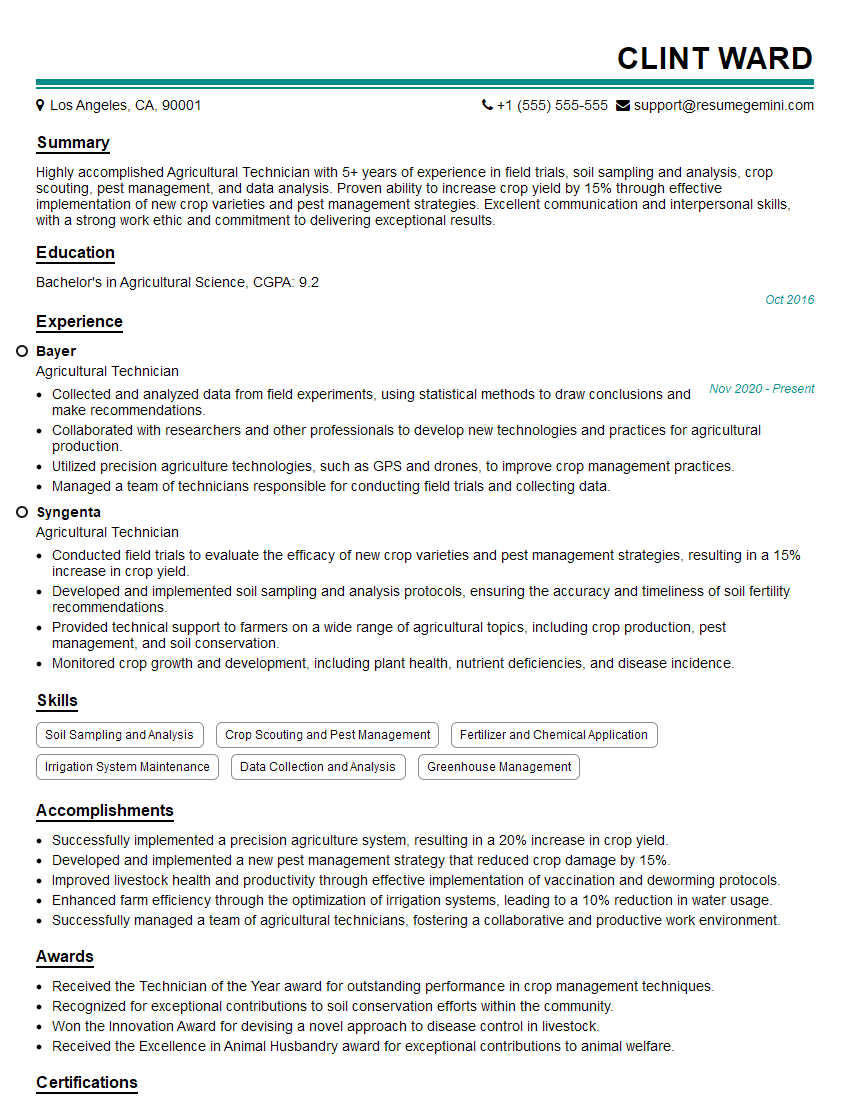
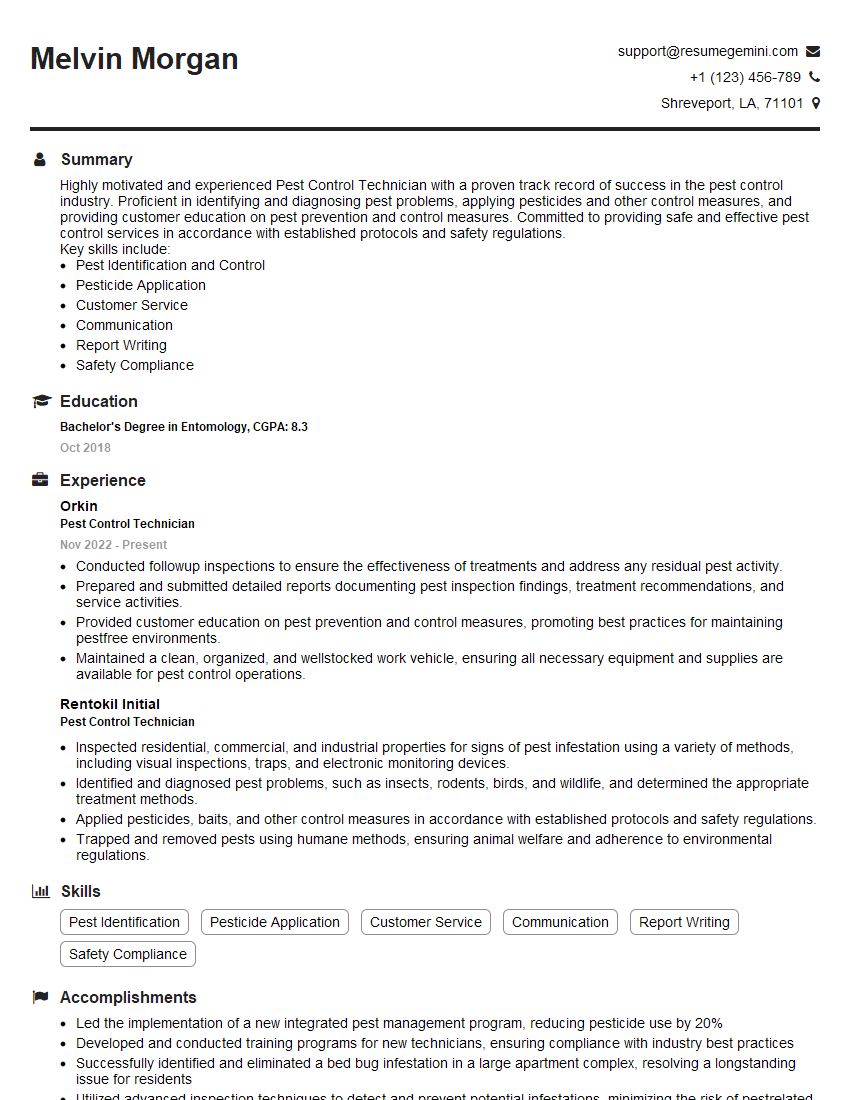
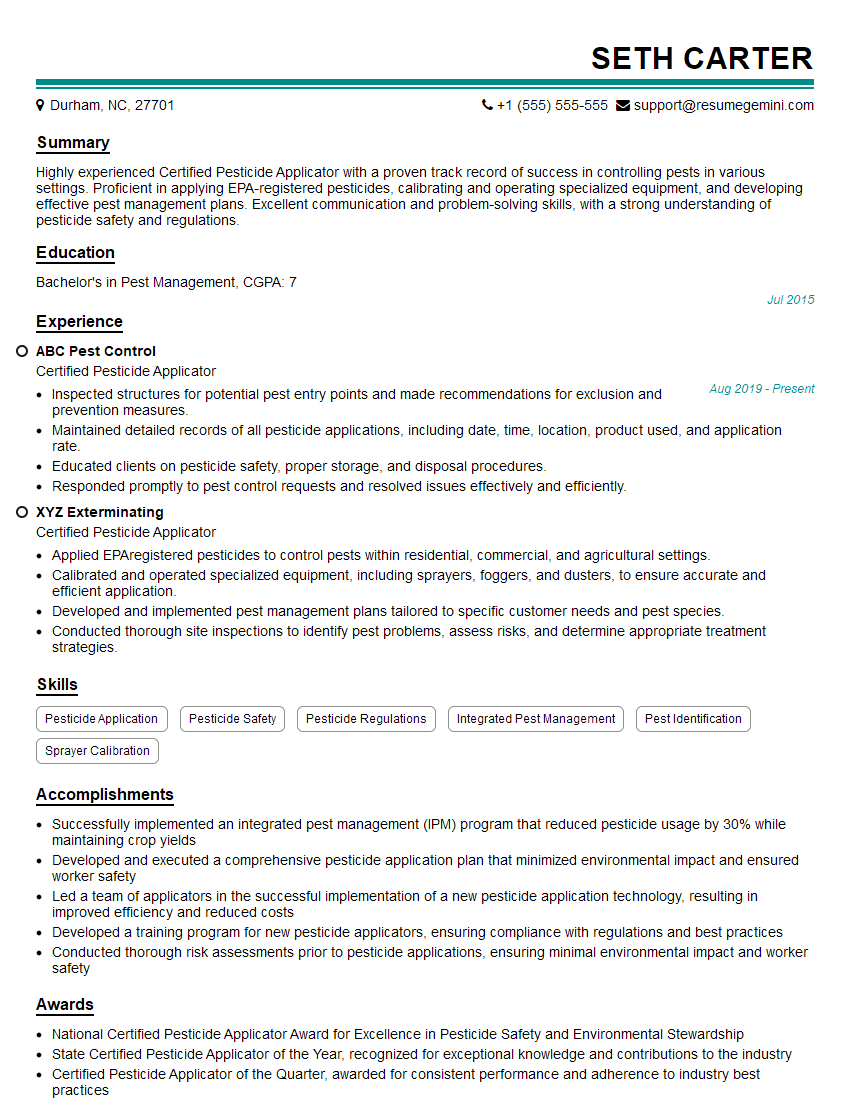
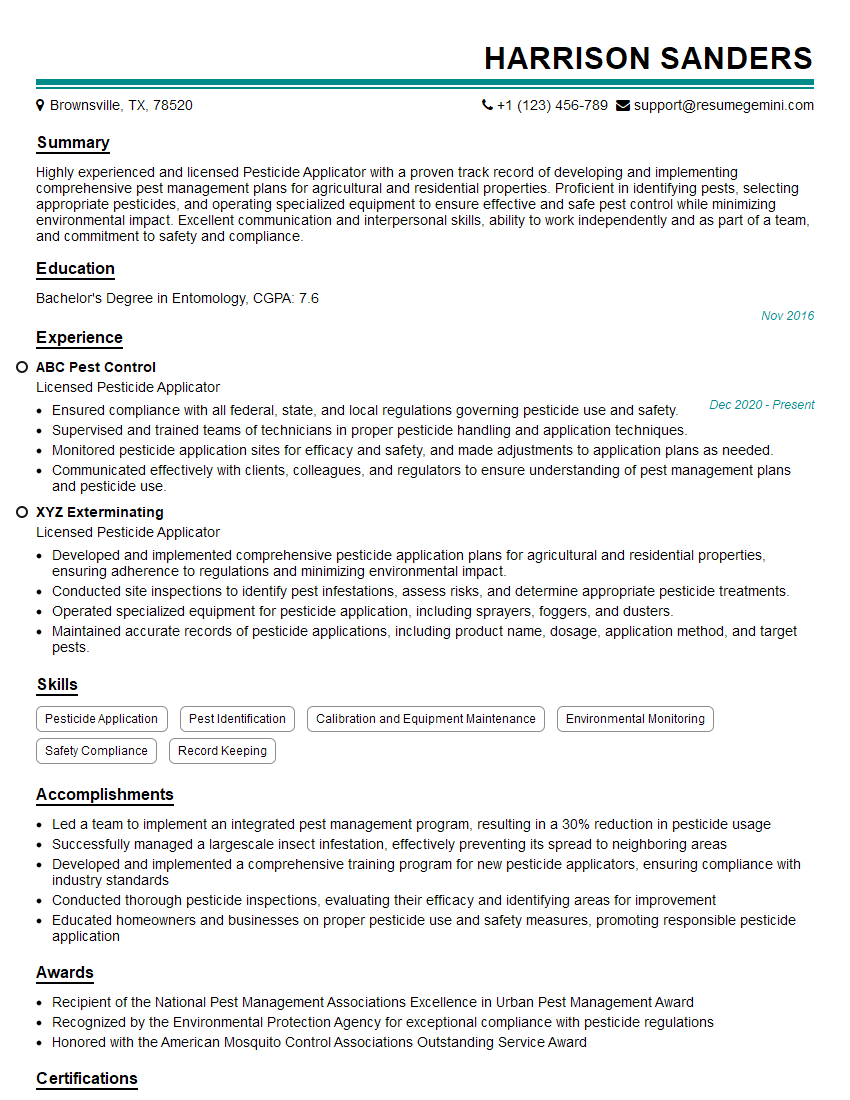
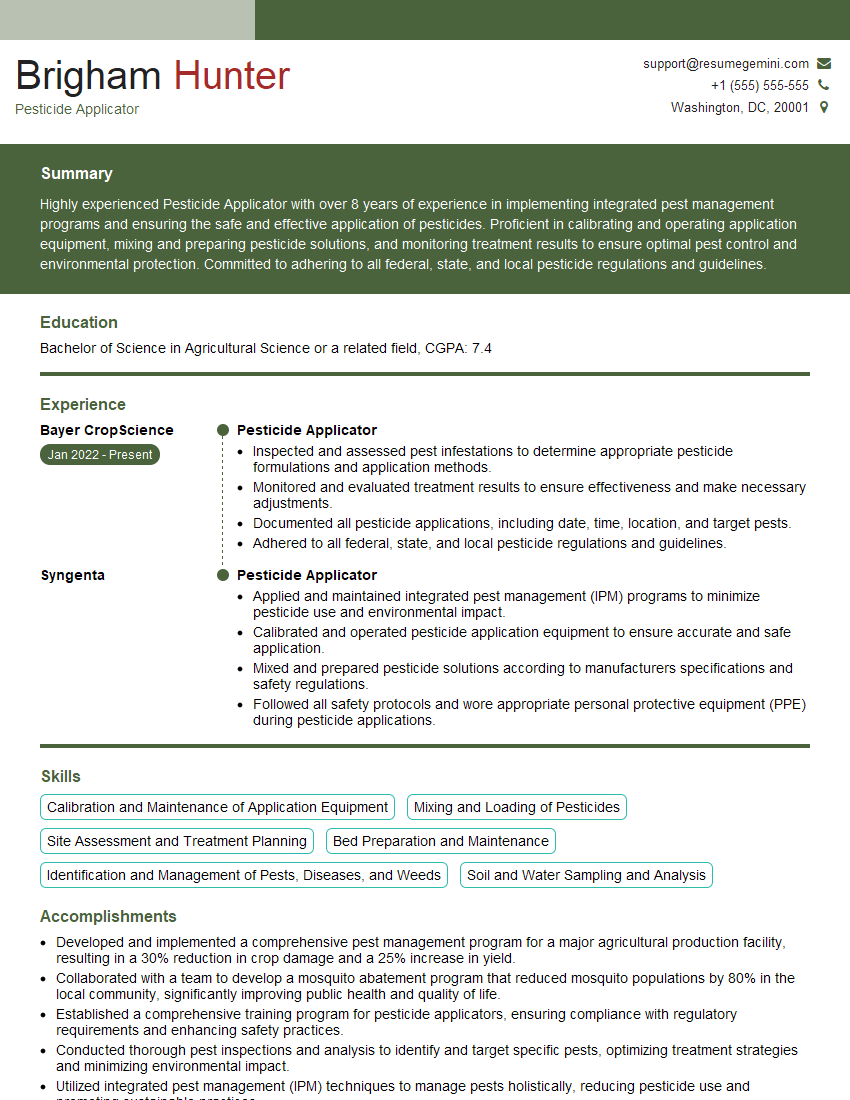
Mastering pesticide and herbicide application opens doors to exciting career opportunities in agriculture, landscaping, and pest control. A strong understanding of these principles demonstrates your commitment to safety, environmental responsibility, and effective pest management, making you a highly desirable candidate. To maximize your job prospects, focus on building an ATS-friendly resume that highlights your skills and experience. ResumeGemini is a trusted resource that can help you craft a professional and impactful resume. Examples of resumes tailored to Pesticide and Herbicide Application are available to guide you. Take the next step and create a resume that showcases your expertise!


Explore more articles
Users Rating of Our Blogs
Share Your Experience
We value your feedback! Please rate our content and share your thoughts (optional).
What Readers Say About Our Blog
Very informative content, great job.
good