Every successful interview starts with knowing what to expect. In this blog, we’ll take you through the top Pet first aid interview questions, breaking them down with expert tips to help you deliver impactful answers. Step into your next interview fully prepared and ready to succeed.
Questions Asked in Pet first aid Interview
Q 1. Describe the steps involved in performing pet CPR.
Pet CPR is a life-saving technique used when a pet’s heart and breathing have stopped. It’s crucial to remember that this is a temporary measure until professional veterinary help arrives. Improper CPR can cause harm, so ideally, you should have received formal training.
Check for responsiveness: Gently shake your pet and call their name. If there’s no response, proceed.
Check for breathing and a heartbeat: Feel for a pulse (in dogs, check the femoral artery on the inside of the thigh; in cats, check the femoral artery or the heart beat directly behind the elbow). Look for chest movements indicating breathing. If absent, start CPR.
Start chest compressions: Position your pet on their right side. For small pets, use two fingers to compress the chest at a rate of 100-120 compressions per minute, just behind the elbow. For larger pets, use both hands, covering approximately one-third of the chest width. Compress about 1/3 to 1/2 the depth of the chest and allow for full recoil.
Rescue breathing: After every 30 chest compressions (for small animals), give two rescue breaths. Seal the pet’s mouth and nose and gently blow air in for one to two seconds. Watch for chest rise. Repeat.
Continue CPR: Continue CPR until your pet shows signs of life (breathing, heartbeat) or until professional veterinary help arrives.
Example: Imagine finding your small dog unresponsive. You would check for a pulse, and if absent, begin CPR using two fingers, ensuring to give the chest time to fully recoil between compressions. After every 30 compressions, you’d provide two rescue breaths.
Q 2. How would you treat a dog experiencing heatstroke?
Heatstroke is a life-threatening emergency. It occurs when a pet’s body temperature rises dangerously high, often due to prolonged exposure to heat. Immediate action is critical.
Move your pet to a cool place: Get them out of the sun immediately.
Cool them down gradually: Don’t use ice water; this can cause shock. Instead, use cool (not cold) water to wet their fur, focusing on areas like the paws, armpits, and groin. You can also use cool, wet towels.
Fan your pet: Use a fan to circulate air and help with evaporative cooling.
Provide cool water: Offer small amounts of cool water to drink if your pet is conscious.
Monitor their temperature: If possible, monitor your pet’s temperature.
Seek veterinary attention immediately: Heatstroke is a serious condition that requires prompt veterinary care. Even if your pet seems to improve, take them to the vet.
Example: If you leave your dog in a parked car on a hot day and they become lethargic and panting excessively, immediately move them to a shady spot, apply cool water to their fur, and seek veterinary help right away.
Q 3. What are the signs of shock in a cat?
Shock is a life-threatening condition where the body’s circulatory system fails to deliver enough blood to vital organs. In cats, the signs can be subtle but can progress rapidly.
Weakness and collapse: Your cat may appear weak, unsteady, or collapse completely.
Rapid, weak pulse: Their pulse will be faster and weaker than normal.
Pale gums: Check their gums; they will appear pale or white rather than pink.
Cold extremities: Their paws and ears may feel unusually cold.
Rapid breathing: They may breathe rapidly and shallowly.
Lethargy or unconsciousness: Your cat may become unresponsive or unconscious.
Example: A cat hit by a car might exhibit pale gums, rapid breathing, weakness, and cold extremities. These are clear signs of shock.
Q 4. Explain how to control bleeding from a wound in a pet.
Controlling bleeding is crucial to prevent blood loss and shock. The method depends on the severity and location of the wound.
Apply direct pressure: Use a clean cloth or bandage to apply firm, direct pressure to the wound for at least 10 minutes, even if it soaks through. This helps form a clot.
Elevate the injured limb: If possible, raise the injured limb above the heart to slow blood flow.
Do not remove embedded objects: Do not remove any objects that are deeply embedded in the wound, as this could cause further bleeding.
Seek veterinary attention: Even with seemingly minor bleeding, take your pet to a vet for proper cleaning and assessment.
Example: A dog with a laceration on its leg should have a clean cloth firmly applied, and the leg elevated. The vet needs to stitch the wound and assess for internal injuries.
Q 5. How would you handle a pet choking on an object?
A choking pet is a terrifying situation requiring immediate action. The approach depends on the size of the pet and the object.
Check the mouth: Carefully check your pet’s mouth for a visible object. If you can easily grasp it, gently remove it.
Heimlich maneuver (for dogs and larger cats): If the object is not visible, place your pet on its side. Place your fist just behind the rib cage. Put your other hand around your fist and firmly thrust upward and inward toward the diaphragm. Repeat until the object is dislodged.
Smaller animals: For smaller animals, the Heimlich is modified. Hold the animal securely and firmly press gently on the abdomen just behind the ribs. Repeat.
Seek veterinary attention: Even if you dislodge the object, take your pet to a vet for a checkup to rule out any damage to the airway.
Example: If your cat is choking on a small toy, you would first check its mouth and if unsuccessful, use modified abdominal thrusts to help remove it. Immediate vet care is necessary afterwards.
Q 6. What are the signs of poisoning in animals?
Poisoning can manifest in various ways, making it challenging to diagnose. Symptoms vary greatly depending on the type and amount of poison ingested.
Gastrointestinal upset: Vomiting, diarrhea, abdominal pain.
Neurological symptoms: Tremors, seizures, weakness, incoordination, unusual behavior.
Respiratory distress: Difficulty breathing, coughing, wheezing.
Cardiovascular issues: Changes in heart rate, collapse.
Skin changes: Burns, irritation, discoloration.
Example: A dog who has ingested rat poison might exhibit vomiting, diarrhea, and internal bleeding. A cat who’s licked a toxic substance off its fur may show skin irritation.
Important: If you suspect poisoning, immediately contact your veterinarian or an animal poison control center. Attempting to induce vomiting or giving home remedies without veterinary guidance can be dangerous.
Q 7. How would you immobilize a pet with a suspected broken leg?
Immobilizing a pet with a suspected broken leg prevents further injury and reduces pain. Improper immobilization can worsen the injury.
Minimize movement: Keep the pet calm and as still as possible.
Use appropriate materials: Splints or improvised materials (like cardboard or rolled-up towels) can be used, ensuring they are adequately padded to avoid pressure points.
Proper splinting technique: Extend the splint beyond both the joints above and below the injury site. Secure the splint firmly with bandages or tape, ensuring it’s snug but not constricting.
Transport carefully: Use a sturdy carrier or improvised stretcher to transport your pet to the veterinary hospital.
Example: If your dog has a broken leg, use padded boards or towels to support the leg above and below the injury. Secure it firmly with bandages to prevent movement, and get it to the vet ASAP. Never attempt to manipulate the leg.
Q 8. Explain the importance of maintaining a clean and safe environment for injured animals.
Maintaining a clean and safe environment is paramount in pet first aid because it minimizes the risk of further injury or infection. Think of it like this: if your pet is already injured, a dirty environment adds insult to injury. Bacteria, parasites, and other harmful substances can easily contaminate wounds, leading to complications like infections, delaying healing, and potentially worsening the pet’s condition.
- Cleanliness: Regularly disinfect surfaces where your pet spends time, especially after an accident or illness. This includes bedding, food and water bowls, and toys.
- Safety: Remove any hazards that could cause further injury. This includes sharp objects, toxic substances, and electrical cords. Secure any loose items that your pet could potentially ingest or get tangled in.
- Prevention: Proactive measures are key. Regularly grooming your pet helps prevent matting that could harbour dirt and parasites. A safe and secure environment reduces the chances of accidents happening in the first place.
For example, a dog with a laceration on its paw is much more likely to develop a serious infection if it’s constantly walking on a dirty floor than if it’s resting on a clean, disinfected surface.
Q 9. How would you recognize and treat a seizure in a pet?
Recognizing a seizure in a pet is crucial for providing timely assistance. Seizures manifest as periods of involuntary muscle contractions, often accompanied by loss of consciousness. You might observe stiffening of the body, paddling movements of the limbs, excessive salivation, or loss of bladder/bowel control.
- What to do: Your priority is ensuring your pet’s safety during the seizure. Gently move them to a safe, padded area to prevent injury from hitting objects. Do NOT restrain them during the seizure. Time the seizure; note the duration and any other symptoms observed.
- After the seizure: Once the seizure subsides, remain calm and monitor your pet closely. They might be disoriented or lethargic. Provide a quiet and comfortable environment.
- Veterinary care: Seizures require veterinary attention. Even a single seizure is cause for concern. Document the event (duration, symptoms) and contact your veterinarian or an emergency animal hospital immediately.
Example: Imagine your dog suddenly collapses, its body stiffening and limbs paddling. Foam may appear at the mouth. This is a classic sign of a seizure, and immediate action is needed to protect the animal from self-harm and to seek professional veterinary help.
Q 10. What is the appropriate way to transport an injured animal?
Transporting an injured animal requires careful handling to avoid exacerbating their injuries. The method depends on the animal’s size, the severity of the injury, and the distance to the veterinary clinic.
- Small animals: Small pets can often be transported in a sturdy carrier or box lined with soft bedding. Ensure proper ventilation.
- Large animals: Larger animals might require a pet carrier or even a stretcher, particularly if they are unable to walk. Support their neck and body to prevent further trauma during transit.
- Immobilization: For injuries involving the spine or limbs, careful immobilization is essential. This often involves using towels or blankets to support the injured area and prevent movement. Consider using improvised splints for broken limbs.
- Emergency vehicles: For severe injuries, calling for emergency veterinary services is the best option; they have specialized equipment for safe and stable transport.
For instance, a cat with a fractured leg should be carefully placed in a carrier with its leg supported by soft padding and carefully transported to prevent further damage during the journey.
Q 11. How would you handle a dog bite wound?
Dog bite wounds require immediate and careful attention. The risk of infection is high, and proper treatment is essential.
- Clean the wound: Gently clean the wound with mild soap and water, but avoid scrubbing vigorously. Rinse the area thoroughly.
- Control bleeding: Apply gentle pressure to any bleeding areas using a clean cloth. If the bleeding is profuse or uncontrolled, seek immediate veterinary care.
- Assess the wound: Note the depth and extent of the wound. Deep wounds often require stitches and professional veterinary care.
- Veterinary care: Even minor bites should be evaluated by a vet. There’s a risk of infection, and the vet can assess for underlying damage. Rabies vaccination history of the biting dog is also crucial information.
Example: If a dog bites another dog, causing a deep puncture wound, immediately clean the wound, control bleeding and seek veterinary attention to assess for nerve or tendon damage, infection, and the need for antibiotics and possibly surgery.
Q 12. Describe the steps to take if a pet is hit by a car.
A pet hit by a car is a serious emergency. Act quickly and carefully.
- Assess the scene: Ensure your own safety before approaching the injured animal. Check for traffic hazards.
- Check for responsiveness: Gently approach the pet and assess its level of consciousness. If the animal is unresponsive or severely injured, do NOT move it.
- Minimize movement: Moving an injured pet could exacerbate injuries. If possible, cover the pet with a blanket to provide warmth and minimize shock.
- Call for emergency services: Contact a veterinarian or animal emergency service immediately. Give them as much information as possible about the pet and its injuries.
- Transport: Only attempt to transport if absolutely necessary and only if you can do so safely without causing further injury. Use a sturdy carrier or improvise a stretcher if needed, carefully supporting the injured areas.
Scenario: If your cat is hit by a car and lying on the road, don’t rush to move it. First, ensure you are safe and then call an emergency vet; they can instruct you on how to proceed safely.
Q 13. How would you assess the respiratory rate of a pet?
Assessing respiratory rate is a vital component of pet first aid. It provides insights into the animal’s overall health and condition.
- Count the breaths: Observe the rise and fall of the pet’s chest or abdomen for 15 seconds, then multiply by 4 to get the breaths per minute.
- Normal range: The normal respiratory rate varies depending on the pet’s species, size, and age. For example, a small dog may have a rate of 15-30 breaths per minute, while a large dog may be in the range of 10-24.
- Abnormal findings: A significantly increased or decreased respiratory rate can indicate underlying problems like pneumonia, heart failure, or shock.
For example, if your dog is breathing rapidly and shallowly after being in an accident, it could signify that it’s in shock. Counting the breaths provides a key piece of information to relay to the veterinarian.
Q 14. What are the differences between treating a small dog and a large dog?
Treating small and large dogs involves similar principles, but there are practical differences in handling and techniques.
- Physical handling: Small dogs are easier to lift and restrain, while large dogs require more assistance and potentially specialized equipment.
- Medication dosage: Dosage calculations differ drastically. Medication doses are calculated based on weight, and a large dog will require a significantly larger dose than a small dog for the same effect.
- Emergency care: In emergency situations, such as CPR, the techniques remain similar but the strength and pressure required will vary significantly. A larger dog will require more force.
- Transport: Small dogs may fit in a standard pet carrier, whereas large dogs might require a specialized stretcher or may need transport in a vehicle designed to accommodate them safely.
Example: Applying CPR to a chihuahua would require significantly less force than to a Great Dane, while a chihuahua’s medication dose would be substantially smaller. Always consult the veterinarian or relevant guidelines regarding appropriate procedures and doses.
Q 15. What is your experience with administering oral medications to pets?
Administering oral medication to pets requires careful technique to ensure the pet takes the medication safely and effectively. It’s crucial to understand the specific medication and its dosage as prescribed by a veterinarian. Never guess or self-medicate.
Methods:
- Pills: For smaller pills, you can often hide them in a small amount of high-value food like peanut butter (check for allergies first!), soft cheese, or meat. For larger pills, a pill-popper can be helpful. Always ensure the pet swallows the pill completely.
- Liquids: Liquids are usually administered with a syringe (without the needle) directly into the cheek pouch, allowing the pet to swallow at its own pace. Avoid forcing the liquid down the throat, as this can lead to aspiration (inhalation into the lungs).
Important Considerations:
- Pet’s temperament: A calm approach is crucial, especially with anxious or aggressive animals. Positive reinforcement with treats and praise is highly recommended.
- Medication type: Some medications need to be given with food, while others need to be given on an empty stomach. Always follow your vet’s instructions precisely.
- Observation: After administering medication, monitor your pet for any adverse reactions such as vomiting, diarrhea, or lethargy. Contact your vet immediately if you observe any.
Career Expert Tips:
- Ace those interviews! Prepare effectively by reviewing the Top 50 Most Common Interview Questions on ResumeGemini.
- Navigate your job search with confidence! Explore a wide range of Career Tips on ResumeGemini. Learn about common challenges and recommendations to overcome them.
- Craft the perfect resume! Master the Art of Resume Writing with ResumeGemini’s guide. Showcase your unique qualifications and achievements effectively.
- Don’t miss out on holiday savings! Build your dream resume with ResumeGemini’s ATS optimized templates.
Q 16. How do you stay updated on the latest pet first aid techniques?
Staying current with pet first aid techniques is essential for providing the best care. I maintain my knowledge through a multi-pronged approach:
- Continuing Education Courses: I regularly participate in certified pet first aid and CPR courses offered by reputable organizations like the American Red Cross or veterinary colleges. These courses provide updates on the latest techniques and protocols.
- Professional Journals and Publications: I subscribe to veterinary journals and read publications focusing on animal health and emergency care. This keeps me abreast of new research and advancements in the field.
- Veterinary Conferences and Webinars: Attending conferences and webinars allows for interaction with other professionals and exposure to new ideas and techniques in a dynamic learning environment.
- Online Resources: Reputable online resources from veterinary schools and animal welfare organizations provide valuable information and updates on pet first aid practices. However, it’s crucial to be discerning and only utilize trustworthy sources.
Q 17. What are some common mistakes to avoid when providing pet first aid?
Several common mistakes can compromise the effectiveness of pet first aid or even worsen the situation. Avoiding these is crucial:
- Improper assessment: Failing to accurately assess the animal’s condition before administering any first aid. Proper assessment is the cornerstone of effective treatment.
- Delaying professional veterinary care: Pet first aid is just that – first aid. It is not a replacement for professional veterinary care. Always seek immediate veterinary attention after providing first aid, especially for serious injuries.
- Giving incorrect medication or dosage: Always follow a veterinarian’s instructions explicitly. Giving the wrong medicine or dosage can be dangerous and even fatal.
- Ignoring the ABCs: Neglecting to check the airway, breathing, and circulation (ABCs) initially. This is vital in any emergency situation.
- Improper handling of injuries: Incorrectly handling a wound, potentially causing further damage or infection. Proper wound cleaning and bandaging techniques are critical.
Q 18. Describe a situation where you used your pet first aid knowledge to help an animal.
During a neighborhood dog walk, I witnessed a dog collapse after being hit by a car. The dog was conscious but clearly in distress, whimpering and bleeding from a leg wound. I immediately assessed the scene for safety, approached the dog calmly, and checked for immediate life threats. After confirming no broken bones in the leg, I carefully controlled the bleeding with a clean cloth and applied direct pressure. I contacted emergency veterinary services, keeping the dog calm and providing reassurance until they arrived. The vet later confirmed my initial assessment and treatment significantly aided in the dog’s recovery.
Q 19. How would you handle a distressed or aggressive animal during first aid?
Handling a distressed or aggressive animal during first aid requires a calm and cautious approach. Safety is paramount, for both the animal and the person providing aid.
- Approach Slowly and Calmly: Avoid sudden movements or loud noises. Speak in a soothing, low voice.
- Use a Towel or Blanket: If possible, gently cover the animal with a towel or blanket to provide a sense of security and reduce anxiety.
- Avoid Direct Eye Contact: Direct eye contact can be interpreted as a challenge by some animals. Maintain a calm and non-threatening posture.
- Seek Assistance: If the animal is extremely aggressive or you feel unsafe, immediately seek assistance from a trained professional like an animal control officer or veterinarian.
- Use Muzzle (If Safe To Do So): In cases where the animal may bite, a muzzle (applied carefully and correctly) can help protect both the animal and the caregiver during treatment.
Q 20. What types of supplies should be included in a pet first aid kit?
A comprehensive pet first aid kit should contain various essential supplies:
- Gauze pads and bandages: Various sizes for different wound types.
- Adhesive tape: For securing bandages.
- Antiseptic wipes or solution: For cleaning wounds.
- Scissors: For cutting bandages or removing clothing.
- Tweezers: For removing splinters or foreign objects.
- Thermometer (rectal): To check the pet’s temperature.
- Emergency blanket: To provide warmth or protect from the elements.
- Gloves: To protect both the pet and the caregiver.
- Syringe (without needle): For administering liquid medications.
- Muzzle: For aggressive or anxious animals (use with caution and training).
- Pet’s medical records: Including allergies, vaccinations, and current medications.
- Contact information: For your veterinarian and emergency veterinary services.
Q 21. What are the signs of internal bleeding?
Recognizing the signs of internal bleeding is crucial for prompt veterinary intervention, as it can be life-threatening. The signs may vary depending on the severity and location of the bleeding but generally include:
- Weakness and lethargy: The pet may seem unusually tired or weak.
- Pale gums: Healthy gums are pink; pale or white gums indicate reduced blood flow.
- Rapid heart rate: The heart will often beat faster to compensate for blood loss.
- Rapid breathing: Similar to the increased heart rate, this reflects the body’s attempt to compensate.
- Cold extremities: The paws and ears may feel cold due to decreased blood circulation.
- Restlessness and anxiety: The pet might exhibit unusual agitation or distress.
- Vomiting or coughing up blood: This is a critical sign, requiring immediate veterinary care.
- Dark, tarry stool: Indicative of internal bleeding in the digestive tract.
- Abdominal swelling or distension: This could indicate internal bleeding in the abdominal cavity.
If you suspect internal bleeding, seek immediate veterinary attention. This is a critical emergency.
Q 22. How would you handle a pet that has swallowed a toxic substance?
Handling a pet that has ingested a toxic substance requires immediate action. Your first step is to identify the toxin if possible – this will significantly help the veterinarian. Then, call your veterinarian or an animal poison control center immediately. Do not induce vomiting unless specifically instructed by a veterinary professional; some toxins are more dangerous when vomited. Keep the pet calm and comfortable while waiting for veterinary care. If possible, take a picture of the substance or its container to give to the vet.
For example, if your dog has eaten chocolate, you’ll need to provide details like the type of chocolate and the amount consumed to the vet or poison control. Never attempt home remedies; they can be dangerous and delay appropriate veterinary care. Time is crucial in these situations.
Q 23. Explain the concept of triage in pet first aid.
Triage in pet first aid is like a first responder prioritizing patients. It involves quickly assessing the pet’s condition to determine the severity of its injuries or illness and prioritizing treatment accordingly. We use a system to categorize pets into three levels: Urgent (immediate veterinary attention), High Priority (needs veterinary care soon) and Low Priority (can wait for veterinary care). This prioritization ensures that pets with life-threatening conditions receive immediate care, while those with less critical problems receive appropriate attention without delaying the treatment of more urgent cases. For example, a pet with severe bleeding needs immediate attention (Urgent), whereas a minor cut can be addressed later (High Priority).
Q 24. How would you determine if a pet needs immediate veterinary attention?
Determining if a pet needs immediate veterinary attention involves recognizing signs of severe distress or life-threatening conditions. These include but are not limited to: difficulty breathing; severe bleeding; unconsciousness; seizures; pale gums; shock (cold extremities, weak pulse); profound weakness; vomiting blood or black, tarry stool; sudden paralysis; suspected poisoning. If you observe any of these symptoms, seek immediate veterinary attention. For example, a dog choking on a toy needs immediate help to clear its airway.
Q 25. Describe different methods for bandaging wounds in different areas of a pet’s body.
Bandaging techniques vary depending on the wound location and severity. For a leg wound, you’d use a Robert Jones bandage – a supportive bandage providing stability. For a head wound, a simple, non-restrictive bandage might be used, carefully avoiding covering the eyes or nose to allow for breathing and vision. A chest wound, particularly a puncture wound, might require a more complex, occlusive dressing to prevent air from entering the chest cavity (pneumothorax). Always ensure the bandage is clean, snug but not too tight (you should be able to slip a finger underneath), and doesn’t impede circulation. Improper bandaging can worsen the injury, so it’s important to either be properly trained or seek immediate veterinary care.
Q 26. What are the ethical considerations involved in providing pet first aid?
Ethical considerations in pet first aid center around avoiding causing further harm. We must act within the limits of our training and expertise, recognizing our limitations. Attempting procedures beyond our capabilities can result in harm. We must ensure the pet’s comfort and minimize its pain and distress. If unsure about a procedure, the best course of action is to seek veterinary assistance. For example, it’s unethical to attempt a complex surgical procedure without proper training.
Q 27. How would you deal with a situation where you are unsure about the best course of action?
When uncertain about the best course of action, always err on the side of caution and seek professional veterinary help immediately. Document the situation clearly – what happened, what you observed – and relay this information to the veterinarian. Never hesitate to seek assistance. The safety and well-being of the pet should always be the top priority. This demonstrates responsible pet ownership and helps ensure the best possible outcome.
Q 28. What resources would you consult for guidance in a complex pet first aid situation?
In complex situations, I would consult several resources, including my own continuing education materials and veterinary textbooks. I would also contact an animal poison control center (if poisoning is suspected) and a veterinary emergency service. Reputable veterinary websites and online resources from professional veterinary organizations can also offer helpful information, but these should not replace professional veterinary advice. Always verify the credibility of any online source before relying on it.
Key Topics to Learn for Your Pet First Aid Interview
- Recognizing and Assessing Emergencies: Understanding common pet emergencies (e.g., choking, bleeding, seizures), prioritizing threats, and performing a quick initial assessment.
- Cardiopulmonary Resuscitation (CPR): Mastering the techniques of pet CPR, including chest compressions and rescue breaths, adapted for different animal sizes and breeds.
- Wound Management: Learning how to control bleeding, clean wounds, and apply appropriate bandages for various injuries, recognizing when professional veterinary care is crucial.
- Shock Recognition and Treatment: Identifying the signs of shock, understanding its causes, and implementing basic first aid measures to stabilize the pet until veterinary attention is available.
- Fracture and Joint Injuries: Recognizing potential fractures and dislocations, providing temporary immobilization, and understanding the limits of first aid in such situations.
- Poisoning and Toxin Exposure: Identifying potential toxins (household cleaners, medications, plants), taking appropriate safety precautions, and knowing when to contact a poison control center or veterinarian.
- Heatstroke and Hypothermia: Recognizing the symptoms of both conditions, implementing cooling or warming measures, and knowing when immediate veterinary intervention is necessary.
- Practical Application: Consider case studies and scenarios to practice your decision-making and problem-solving skills related to pet first aid. Role-playing can also be incredibly beneficial.
- Legal and Ethical Considerations: Understanding the limits of your abilities and the importance of seeking professional veterinary care promptly. Knowing your legal responsibilities when providing first aid.
Next Steps: Launch Your Pet First Aid Career
Mastering pet first aid significantly enhances your value to potential employers, demonstrating a commitment to animal welfare and a practical skill set highly sought after in veterinary clinics, animal shelters, and related fields. To maximize your job prospects, create an ATS-friendly resume that highlights your skills and experience effectively. ResumeGemini is a trusted resource that can help you build a professional and impactful resume, ensuring your qualifications shine. They even provide examples of resumes tailored to the pet first aid field to help you get started. Take the next step towards your dream career – build a resume that gets noticed!
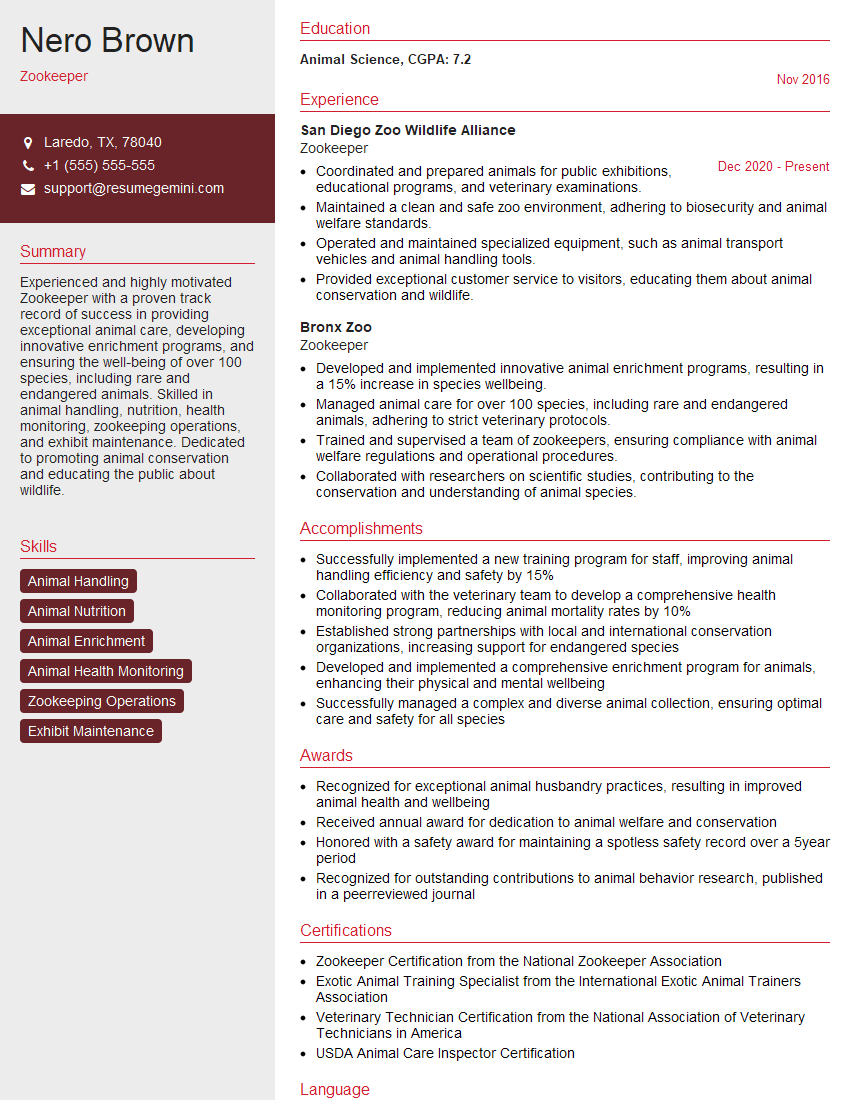
Zookeeper Resume Sample
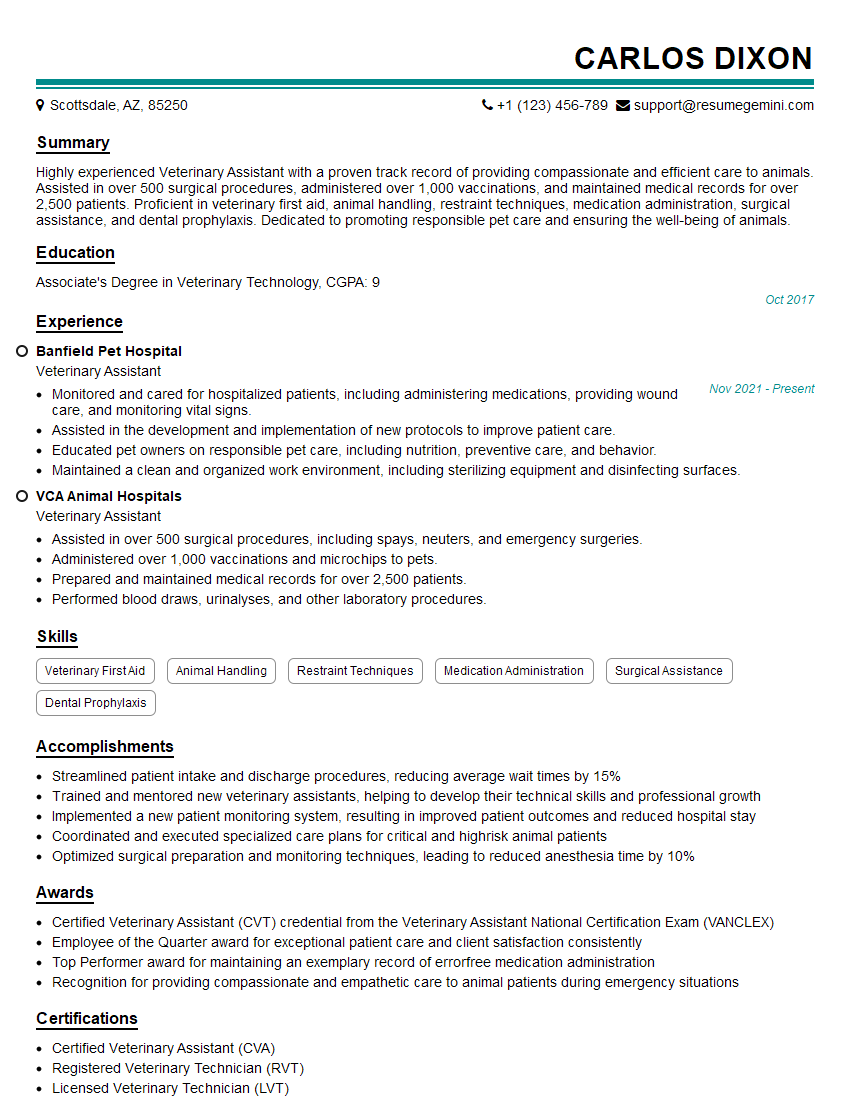
Veterinary Assistant Resume Sample
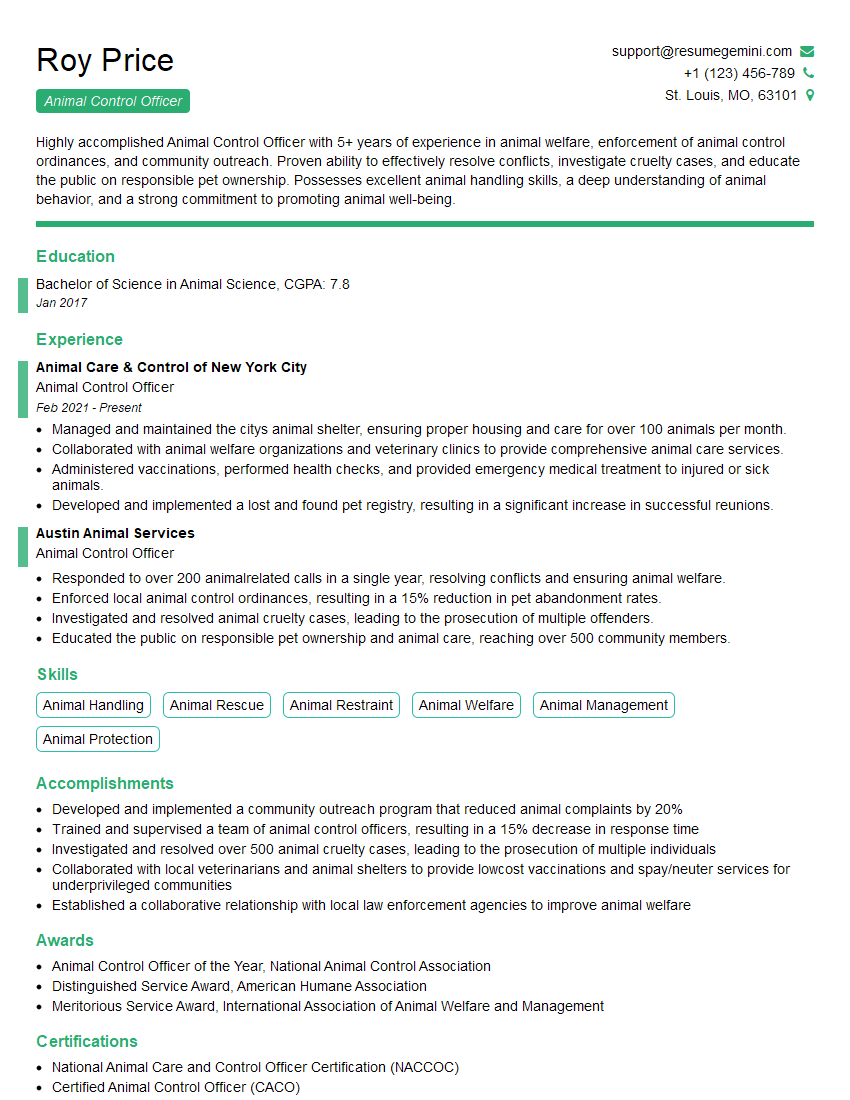
Animal Control Officer Resume Sample
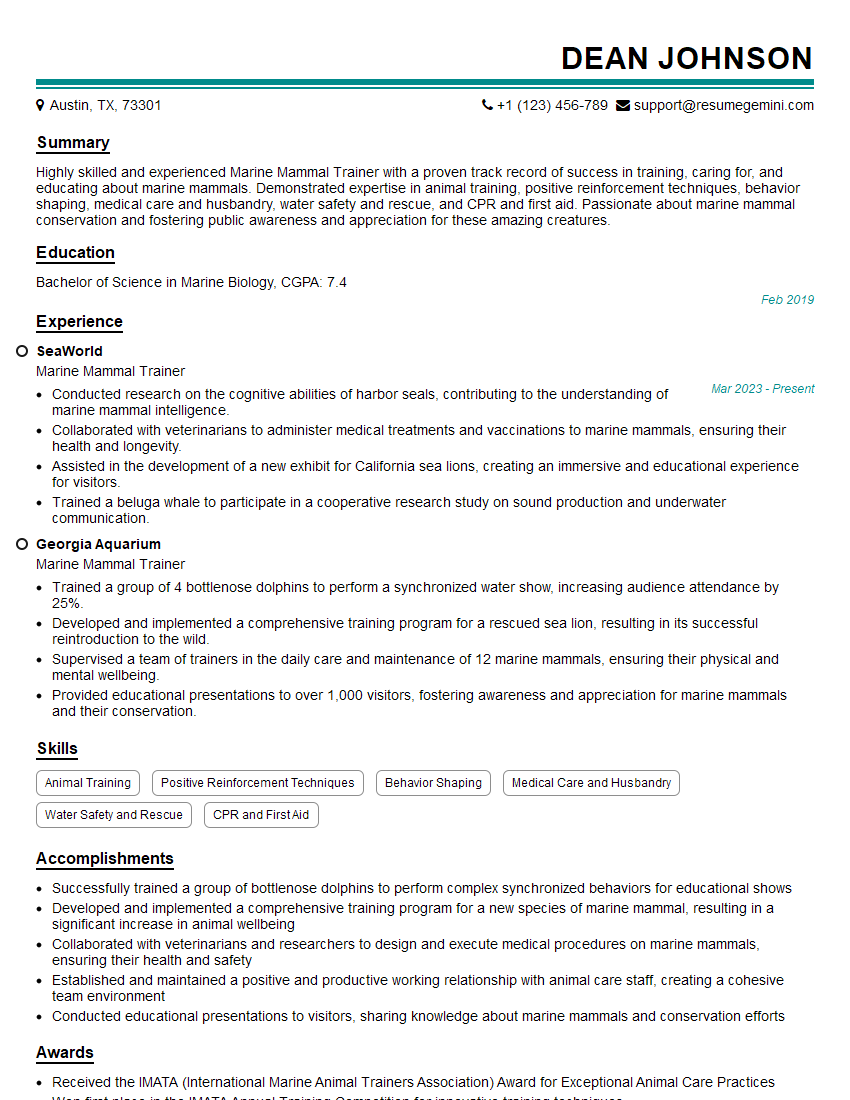
Marine Mammal Trainer Resume Sample
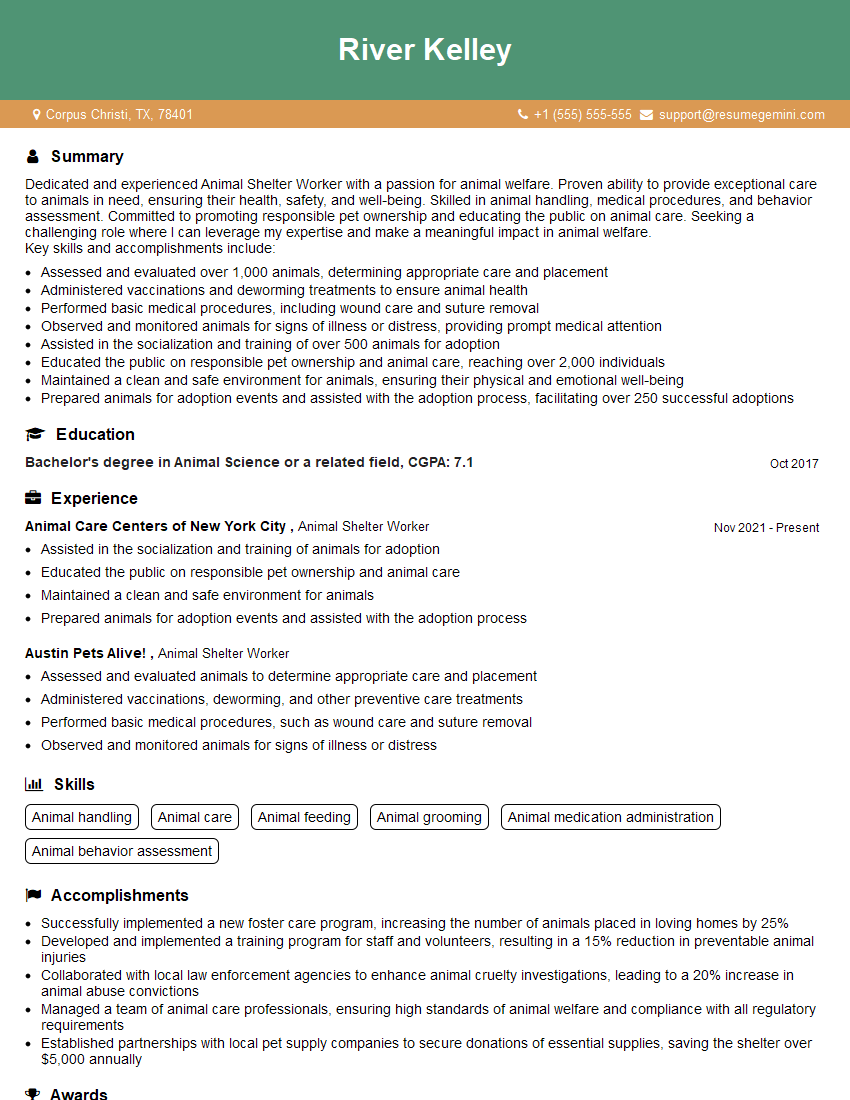
Animal Shelter Worker Resume Sample
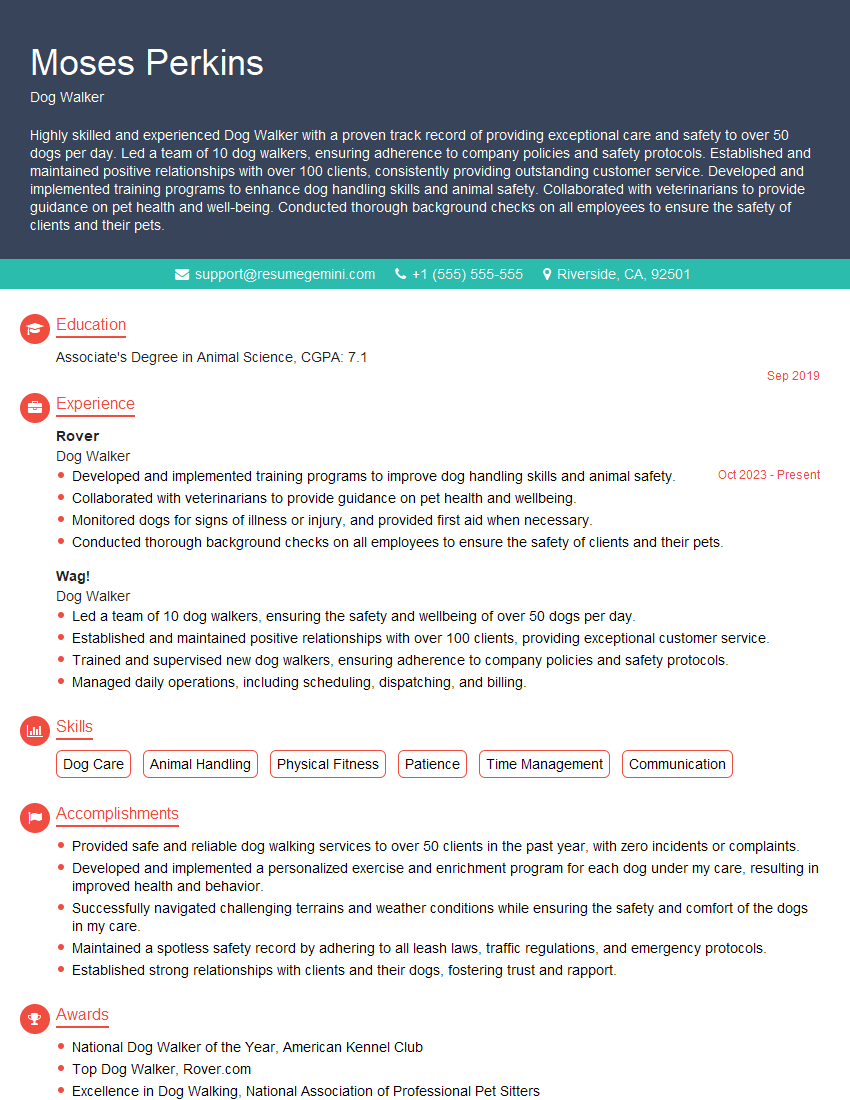
Dog Walker Resume Sample
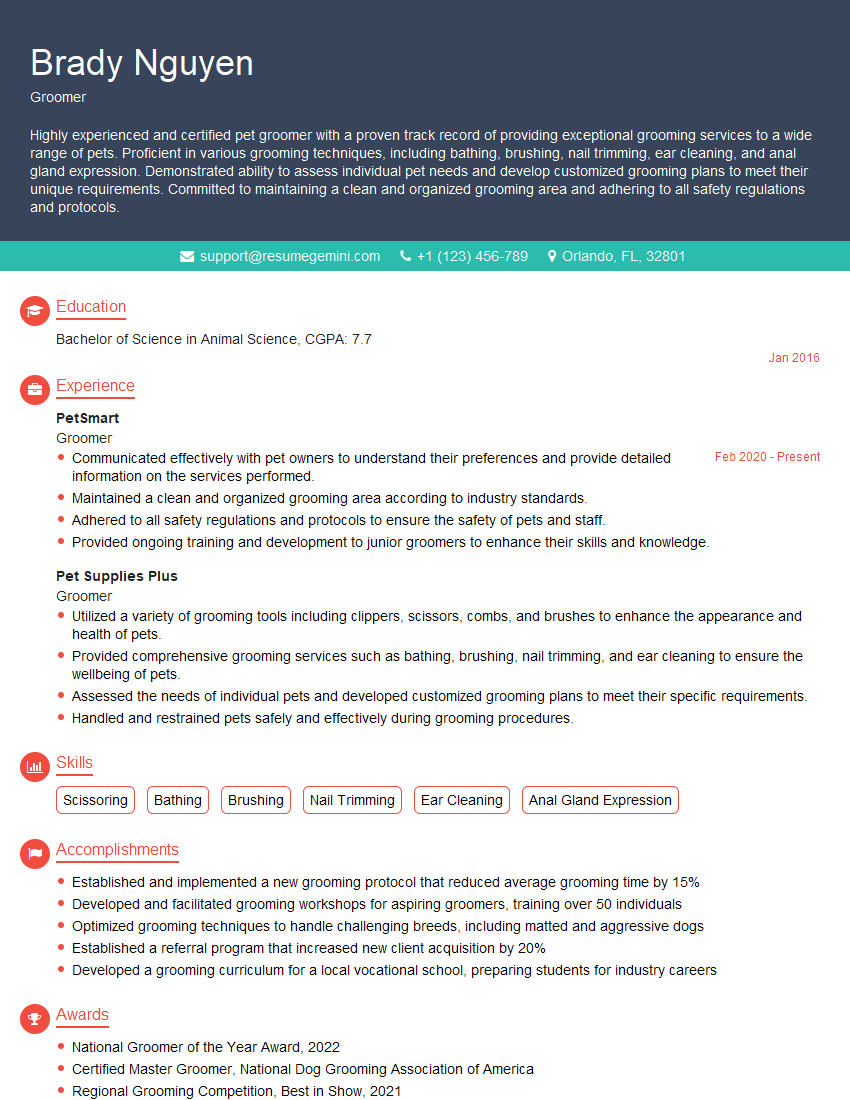
Groomer Resume Sample
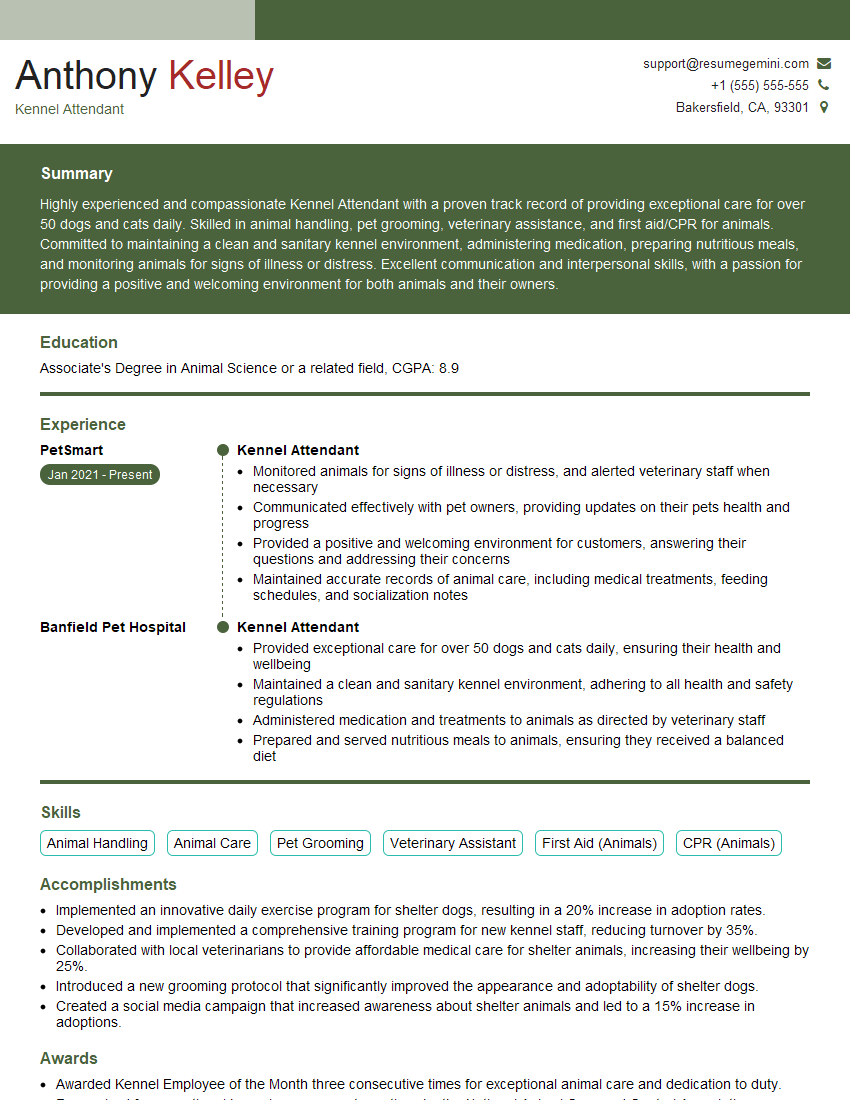
Kennel Attendant Resume Sample
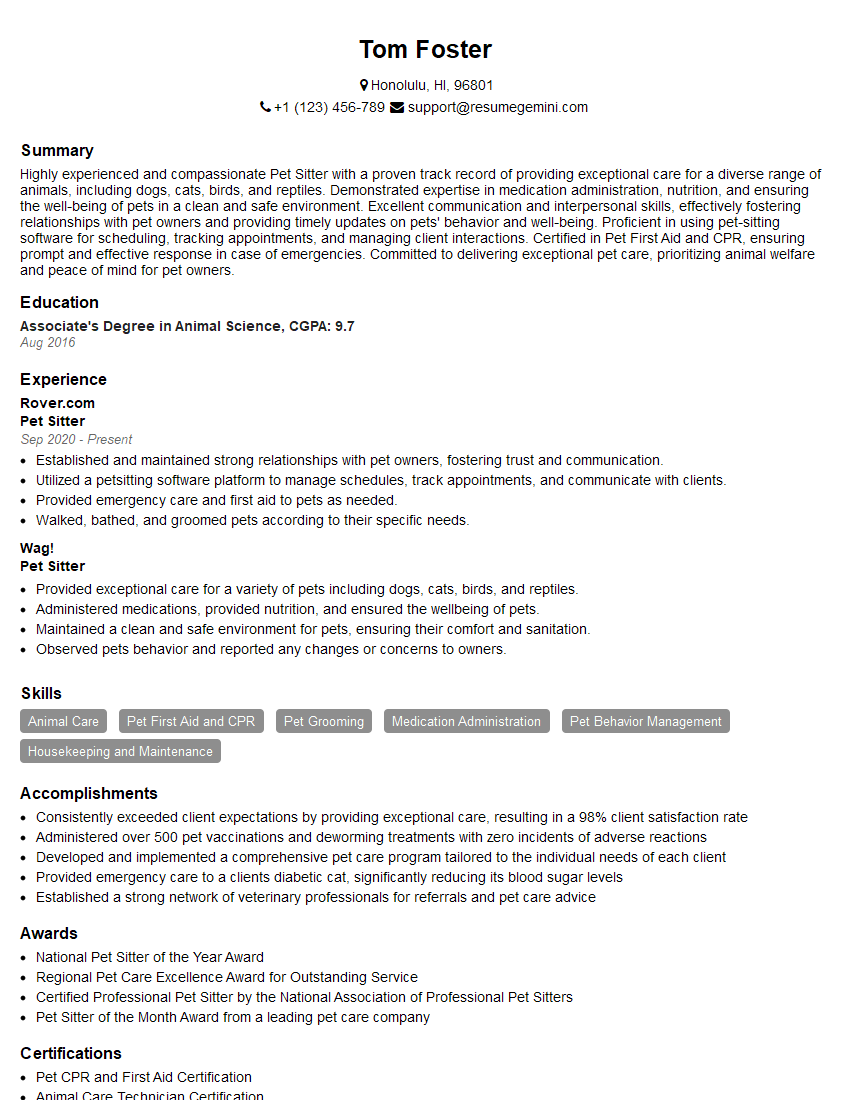
Pet Sitter Resume Sample
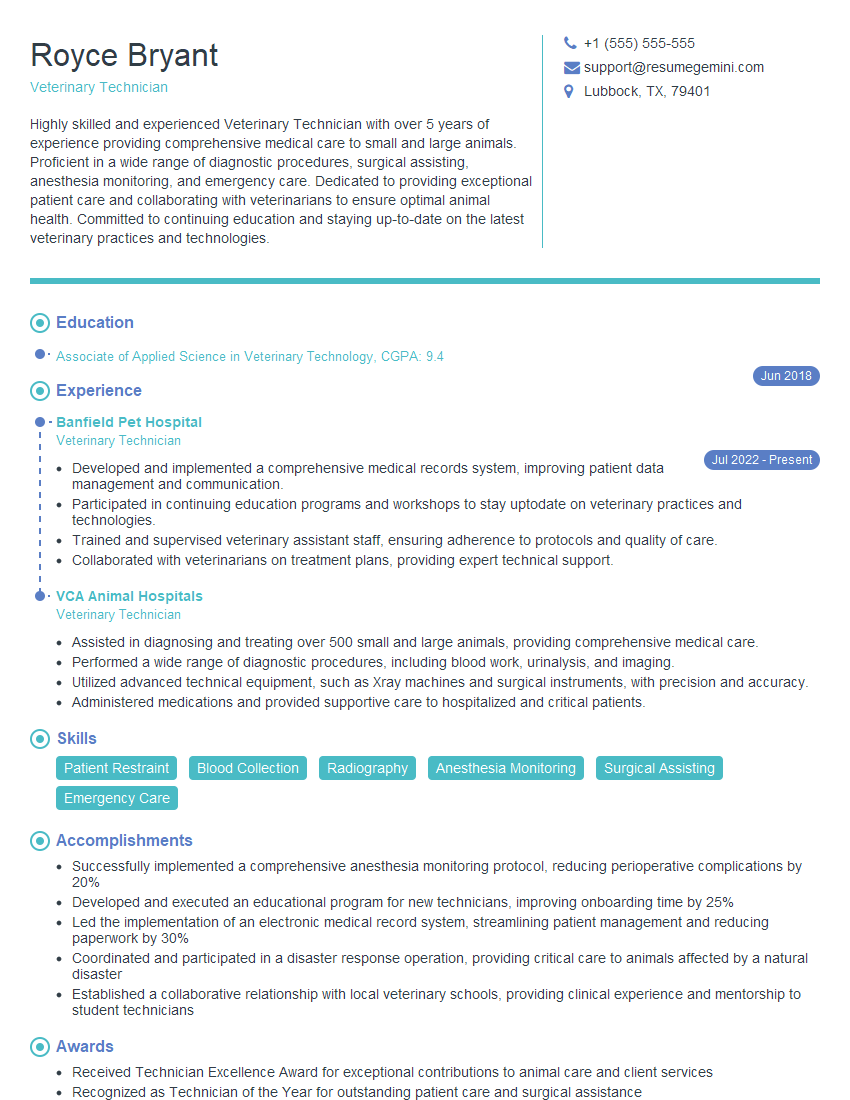
Veterinary Technician Resume Sample

Wildlife Rehabilitator Resume Sample
Explore more articles
Users Rating of Our Blogs
Share Your Experience
We value your feedback! Please rate our content and share your thoughts (optional).
What Readers Say About Our Blog
Very informative content, great job.
good