Interviews are more than just a Q&A session—they’re a chance to prove your worth. This blog dives into essential Photographic Styling interview questions and expert tips to help you align your answers with what hiring managers are looking for. Start preparing to shine!
Questions Asked in Photographic Styling Interview
Q 1. Describe your experience with different photographic styling techniques.
My experience encompasses a wide range of photographic styling techniques, from minimalist and modern aesthetics to elaborate, richly textured compositions. I’m proficient in various styling approaches, including:
- Prop Styling: Selecting and arranging objects to create visually appealing scenes, considering color palettes, texture contrasts, and overall composition. For example, I recently styled a product shoot for a new line of artisanal candles, using natural elements like driftwood and dried flowers to evoke a sense of calm and sophistication.
- Set Design: Creating the overall environment for the shoot, including background choices, lighting considerations, and the arrangement of furniture or other large elements. This might involve building a miniature cityscape for a toy advertisement or designing a rustic kitchen setting for a cookbook.
- Food Styling: A specialized area I’m passionate about, focusing on making food look its absolute best for the camera. This often involves techniques like using substitutes to maintain freshness throughout the shoot or employing specialized tools to achieve a specific visual effect, such as creating a realistic steam effect. I once spent hours meticulously arranging individual grains of rice to make a bowl of sushi look exceptionally appealing.
- Fabric Styling: Working with textiles to create folds, textures, and drapes that are both visually interesting and enhance the product’s presentation. I often use steam and various pinning techniques to achieve the desired effect, such as creating soft, romantic folds for a lingerie shoot or sharp, precise creases for a men’s suit campaign.
I adapt my approach based on the project’s specific needs and creative direction, ensuring the style aligns perfectly with the brand’s identity and the intended message.
Q 2. How do you handle tight deadlines and unexpected challenges on a photoshoot?
Tight deadlines and unexpected challenges are par for the course in photography. My approach is proactive and solution-oriented. Firstly, I meticulously plan every detail beforehand, creating comprehensive mood boards and shot lists. This helps to anticipate potential issues and prepare contingency plans. For example, if a specific prop is unavailable, I have backups ready. Secondly, I prioritize communication. Keeping the photographer, art director, and client informed about potential roadblocks allows for collaborative problem-solving. Finally, I’m adept at adapting quickly. I have the experience to troubleshoot on the fly, whether it’s finding a replacement for a damaged prop or adjusting the styling to compensate for unexpected lighting changes. My focus always remains on delivering high-quality results, even under pressure.
For example, on one shoot, a key prop arrived damaged just hours before the shoot. Instead of panicking, I quickly sourced a replacement from a local craft store, and adjusted the overall scene composition subtly to integrate it seamlessly. The client was never aware of the setback.
Q 3. Explain your process for selecting props and creating a cohesive visual narrative.
My process for selecting props and creating a cohesive visual narrative is a multi-step process that begins with a deep understanding of the client’s brand and the creative brief. I create a mood board, incorporating color palettes, textures, and visual references that reflect the desired aesthetic. Then, I meticulously source props – sometimes from vintage stores, prop houses, or even nature – that align with this vision. The selection isn’t random; every prop has a deliberate purpose in telling the story. I carefully consider factors like scale, color harmony, and texture contrast, ensuring each element contributes to a unified whole.
For instance, if I’m styling a shoot for a luxury skincare brand emphasizing natural ingredients, I might incorporate elements like smooth river stones, lush greenery, and minimalist ceramic containers. These props are not merely decorative; they help communicate the brand’s values and product attributes.
After selecting props, the arrangement is crucial. I carefully place each item to guide the viewer’s eye, creating visual pathways and points of focus. This stage involves a lot of experimentation and refinement until the composition is perfect.
Q 4. How do you collaborate effectively with photographers and other members of a production team?
Effective collaboration is paramount. I believe in open and proactive communication with photographers and other team members. Before the shoot, I have detailed discussions with the photographer to understand their vision, lighting style, and technical requirements. This ensures the styling complements their photographic approach. I’m comfortable receiving feedback and incorporating suggestions to achieve a shared vision.
During the shoot, I maintain a collaborative spirit, constantly communicating with the photographer to ensure the styling is working effectively with the lighting and composition. I might subtly adjust props or textures based on the photographer’s feedback to optimize the results. This collaborative approach fosters trust and leads to creative synergy.
With other team members, such as art directors or clients, my communication involves regular updates, clear expectations, and the sharing of progress. I am comfortable explaining my creative choices and justifying my decisions to ensure everyone understands and approves of the styling direction.
Q 5. What software or tools are you proficient in for photographic styling?
My proficiency extends to various software and tools relevant to photographic styling. I’m adept at using:
- Adobe Photoshop: For image editing and retouching, enhancing textures, and making subtle adjustments to the overall look and feel of the styled image.
- Adobe Lightroom: For color grading and overall image management.
- Pinterest and other visual platforms: For mood board creation, sourcing inspiration, and collaborating with the team visually.
- Various 3D modeling and rendering software (basic proficiency): This allows me to prototype set designs and visualize the overall aesthetic before the actual shoot, enhancing efficiency and minimizing potential issues.
While I am not a technical expert in 3D rendering, having a basic understanding allows me to communicate effectively with those who are and ensures a smooth collaborative process.
Q 6. Describe your experience with food styling or other specialized areas of photographic styling.
Food styling holds a prominent place in my expertise. I understand the nuances of working with perishable items, employing techniques such as using substitutes (e.g., mashed potatoes instead of ice cream to prevent melting) or employing specialized tools (like a blowtorch for creating a realistic “grilled” effect). I’m also proficient in styling beverages, creating enticing foam, or precise droplets on glassware. Beyond food, I have experience in styling products such as cosmetics, jewelry, and fashion accessories, each requiring specific techniques to present them appealingly.
For example, in a recent food styling project for a pasta brand, I used a variety of techniques to make the pasta appear perfectly cooked and glistening, employing techniques like oiling and using a small brush to separate the strands. I even used various lighting techniques to emphasize the texture and color of the sauce.
Q 7. How do you maintain the integrity and quality of products during a photoshoot?
Maintaining product integrity and quality is crucial. I utilize various methods to ensure products remain pristine throughout the shoot. For delicate items, I use protective materials like clear acrylic sheets or custom-made stands. I’m careful about handling products, avoiding excessive touching or placing them in harmful positions. Regular checks ensure there are no damages or deteriorations, and I have contingency plans, like backup products, in place. When dealing with food, I maintain proper temperatures and hygiene to preserve freshness and prevent spoilage.
For instance, when styling delicate glassware for a drink campaign, I ensured each glass was handled with extreme care using padded gloves and carefully placed onto custom-made stands. This meticulous approach prevents any damage and ensures the products look their best in the final photographs.
Q 8. How familiar are you with various lighting setups and their impact on styling?
Lighting is absolutely fundamental to photographic styling. It dictates mood, highlights texture, and shapes the overall visual narrative. My familiarity spans a wide range, from the classic three-point lighting setup (key, fill, and back) to more complex arrangements using multiple lights, modifiers like softboxes and umbrellas, and even natural light manipulation. For example, using a harsh, direct light source can create dramatic shadows, ideal for high-fashion product photography, whereas softer, diffused light works beautifully for showcasing delicate details in jewelry or cosmetics. Understanding the interplay between light and shadow allows me to strategically highlight desirable product features and downplay less attractive aspects. I also consider the color temperature of the light source, adjusting it to complement the overall aesthetic and brand identity. A warm light can evoke comfort and nostalgia, while a cool light can lend a more modern and sleek feel. In essence, my lighting choices are always intentional, meticulously planned to achieve the desired visual effect.
Q 9. Describe your approach to creating a mood board for a photoshoot.
Creating a mood board is a crucial first step for any photoshoot. It’s essentially a visual roadmap that guides the entire creative process. My approach is collaborative, starting with a thorough discussion with the client to establish their vision, brand identity, target audience, and desired aesthetic. I then begin collecting images, textures, and color palettes that reflect these elements. This might involve searching online databases, flipping through magazines, and gathering physical samples. I use a digital mood board platform that allows for easy organization and sharing. The board isn’t just about pretty pictures; it meticulously details the overall mood, color story, lighting concepts, and prop ideas. For instance, if we’re styling a rustic, farmhouse-themed product shoot, my mood board will incorporate earthy tones, textured fabrics, weathered wood, and natural light imagery. This shared visual resource ensures everyone is on the same page, minimizing miscommunication and ensuring a cohesive final product.
Q 10. How do you incorporate client feedback into your styling decisions?
Client feedback is essential, and I actively encourage it throughout the entire styling process. I believe in a transparent and collaborative approach. Early in the project, I present initial styling concepts and mood boards for client review, seeking their input on everything from color schemes and prop choices to overall mood and direction. This allows for adjustments before committing to a specific direction, saving time and resources. Throughout the process, I’m open to iterative feedback, making necessary changes and adjustments based on their comments. For example, if a client expresses concern about a particular prop not aligning with their brand’s aesthetic, I’ll readily explore alternatives. It’s a continuous dialogue; I aim to translate their vision while applying my expertise to ensure a high-quality, visually appealing outcome. The goal is a final product that reflects both the client’s vision and my professional styling skills.
Q 11. Explain your process for sourcing props and where you typically find them.
Sourcing props is a significant part of my work, and my approach is multifaceted. I maintain a curated collection of frequently used props – textiles, tableware, vintage objects, and other elements – that I’ve collected over years of experience. Beyond my personal collection, I tap into a variety of resources. Antique shops and flea markets often yield unique and characterful pieces. Online marketplaces, both general sites and specialized vintage stores, are excellent for finding specific items. I also collaborate with prop houses, which offer a vast range of items for rental. When sourcing, I consider the product’s characteristics and the overall aesthetic direction. For example, photographing delicate jewelry might require sourcing props with clean lines and minimalist aesthetics, whereas a rustic product would benefit from weathered wood, natural fibers, and earthy textures. Location scouting also plays a role; the setting itself can provide inspiration for prop selection.
Q 12. What are your preferred materials and tools for styling different products?
The materials and tools I use vary greatly depending on the product being styled. For food styling, I might use sculpting tools to enhance textures, edible glues for holding items in place, and various types of spray to enhance shine or create a dewy look. For fashion styling, I’ll use fabric steamers, pins, and various forms of padding and shaping to create the perfect drape and silhouette. In general, I prefer high-quality, versatile tools. I also prioritize sustainability whenever possible, choosing reusable materials over disposables. For instance, instead of using plastic wrap, I use reusable fabric cloths or silicone mats. Maintaining a well-organized collection of tools ensures efficiency during shoots and helps me respond quickly to creative needs.
Q 13. How do you ensure the safety and proper handling of props and materials?
Safety and proper handling of props and materials are paramount. I maintain a safe and organized workspace, keeping sharp objects and potentially hazardous materials out of reach. When working with fragile props, I handle them with care and take precautions to prevent breakage. Food styling, for example, often involves working with sharp knives and potentially perishable ingredients; I prioritize safe handling techniques and sanitation practices. I’m meticulous about cleaning up spills and properly disposing of any waste to ensure a clean and safe work environment for both myself and the team. Clear communication regarding potential hazards is also key; informing the photographer and assistants about any special precautions necessary for handling specific props.
Q 14. Describe a time you had to solve a complex styling problem on a photoshoot.
During a shoot for a high-end watch brand, we encountered a challenge with the watch’s reflection. The polished surface was reflecting unwanted elements from the studio environment. Our initial lighting setup wasn’t eliminating these unwanted reflections. The solution involved a multi-pronged approach: We first adjusted the lighting angles, using a combination of diffusers and reflectors to soften the light and minimize harsh reflections. Then, we carefully repositioned the watch, experimenting with different angles and surfaces to find one that minimized reflections. Finally, we employed post-production techniques to subtly edit out any remaining unwanted reflections. This problem highlighted the importance of meticulous planning and the need to be adaptable and resourceful during a photoshoot. The successful outcome reinforced the value of collaboration and problem-solving in achieving a high-quality result, even when faced with unexpected challenges.
Q 15. What is your understanding of color theory and its relevance to photographic styling?
Color theory is the foundational understanding of how colors interact, their relationships, and the effects they create. In photographic styling, it’s crucial for achieving the desired mood, conveying specific messages, and ensuring visual harmony. Think of it as the painter’s palette, but for images. We use it to guide decisions about everything from background color to product placement and even the clothing of models.
For instance, understanding complementary colors (colors opposite each other on the color wheel, like blue and orange) allows me to create vibrant and eye-catching images. Conversely, using analogous colors (colors next to each other on the color wheel, like blues and greens) creates a more serene and calming feeling. I might use a warm color palette to evoke feelings of comfort and happiness, or a cool palette to create a sophisticated and modern look. The careful selection and arrangement of colors dramatically impacts the viewer’s emotional response to an image.
- Example 1: A food shoot for a healthy breakfast cereal might utilize bright, cheerful yellows and oranges to highlight freshness and energy.
- Example 2: A campaign for a luxury skincare line might employ muted, sophisticated tones like greys, creams, and soft blues to project elegance and exclusivity.
Career Expert Tips:
- Ace those interviews! Prepare effectively by reviewing the Top 50 Most Common Interview Questions on ResumeGemini.
- Navigate your job search with confidence! Explore a wide range of Career Tips on ResumeGemini. Learn about common challenges and recommendations to overcome them.
- Craft the perfect resume! Master the Art of Resume Writing with ResumeGemini’s guide. Showcase your unique qualifications and achievements effectively.
- Don’t miss out on holiday savings! Build your dream resume with ResumeGemini’s ATS optimized templates.
Q 16. How do you maintain a consistent style while adapting to different client briefs?
Maintaining a consistent style while adapting to different client briefs is a delicate balancing act. My approach involves understanding my core aesthetic – which is characterized by [insert your own style description, e.g., clean lines, natural light, minimalist approach] – while remaining flexible enough to incorporate the client’s specific needs and brand identity.
I achieve this through a detailed briefing process. This involves discussions with clients to pinpoint their vision, target audience, and brand values. I then translate these into a visual mood board, which acts as a guiding document for the entire shoot. The mood board includes color palettes, texture samples, illustrative imagery, and references to past work that aligns with the desired direction. This allows me to personalize my signature style while remaining true to the client’s objectives.
For example, if a client wants a rustic feel, I’ll adapt my usual minimalist approach by incorporating natural textures like wood and linen, but I’ll still maintain my signature clean lines in the overall composition.
Q 17. Explain your experience working with various budgets and resource constraints.
Experience with varied budgets is crucial in photographic styling. I’ve worked on high-budget shoots with extensive resources and detailed set designs, as well as projects with tight budgets requiring resourceful solutions. In high-budget projects, I can access premium props, locations, and talent, allowing for greater creative control and detailed execution.
However, resourcefulness is key when working with limited budgets. This involves exploring cost-effective alternatives such as utilizing readily available items as props, leveraging natural light to minimize lighting equipment costs, and collaborating with skilled, yet cost-conscious, teams. For instance, instead of purchasing expensive props, I may utilize items I already own or borrow from friends, or even source unique, affordable props from local antique shops or flea markets. Creativity often flourishes under constraints, pushing me to think outside the box and discover innovative solutions.
Q 18. How do you ensure the visual consistency across multiple shots in a photoshoot?
Maintaining visual consistency across multiple shots requires meticulous planning and execution. This starts with creating a comprehensive shot list and detailed mood board, ensuring everyone on the team – photographers, assistants, and myself – has a clear understanding of the desired look and feel. We carefully maintain lighting consistency using light meters and keeping track of light temperature. We also pay close attention to background, prop placement, and styling elements, ensuring they are repeated or subtly varied to maintain cohesion across all images.
Furthermore, using a consistent color palette and maintaining similar compositions contributes significantly to a cohesive set. Regularly reviewing the progress during the shoot and communicating any adjustments allows for real-time corrections, ensuring the final images maintain the visual consistency.
Q 19. How do you stay up-to-date with current trends and techniques in photographic styling?
Staying current in the dynamic field of photographic styling requires continuous learning and engagement. I actively follow industry blogs, magazines, and social media platforms dedicated to photography and styling. I also attend workshops, conferences, and webinars focusing on emerging trends, new techniques, and innovative tools. Reviewing the work of prominent photographers and stylists is also an invaluable way to gain inspiration and insights into current practices.
Experimentation is key; I constantly explore new styling methods and incorporate them into my own projects. Being part of online and in-person communities allows me to connect with other stylists, share knowledge and learn from collective experiences. Continuous learning ensures I can adapt to changes, adopt new methodologies, and maintain a cutting edge in my professional craft.
Q 20. Describe your process for communicating your styling vision to a team.
Communicating my styling vision effectively involves clear and concise communication, using multiple methods to ensure understanding. This begins with a detailed briefing to the team before the shoot, explaining my creative concept, the intended mood, and the specifics of the style. This usually involves presentations with a mood board, shot list, and visual references.
During the shoot, I use visual aids, like sketches or annotated images, to illustrate my ideas precisely, especially if there are specific angles or details that need to be highlighted. Open communication is crucial throughout the process; I actively encourage questions and feedback, fostering collaboration and clarifying any uncertainties. This ensures the team understands and interprets my vision effectively, resulting in a consistent and unified final product.
Q 21. What is your approach to creating realistic and believable scenes in photographic styling?
Creating realistic and believable scenes hinges on attention to detail and understanding the narrative you’re trying to convey. This includes meticulously researching the setting and context of the photograph. If it’s a lifestyle shoot, I immerse myself in understanding the daily routines, habits, and preferences of the target audience to create a setting they can relate to.
I focus on authentic prop selection; props should not only look the part but also feel authentic and believable. This includes paying attention to textures, wear and tear, and placement of items. I use natural lighting as much as possible, to enhance the realism and create a believable environment. Attention to seemingly minor details, such as the way fabric drapes or the way light falls on a surface, collectively contributes to the overall believability of the scene. The more thoughtfulness put into each detail, the more authentic and compelling the photograph becomes.
Q 22. How do you address potential copyright issues regarding props or materials?
Addressing copyright concerns regarding props and materials is paramount in photographic styling. It’s a matter of legal compliance and ethical practice. My approach involves a multi-step process:
- Source Verification: I meticulously document the origin of each prop. If purchasing, I retain invoices. If borrowing, I obtain written permission. For items sourced from online marketplaces, I ensure the seller has the right to resell or license the items for commercial use.
- Usage Rights Clarification: Before using any prop, especially those with recognizable branding or unique designs, I clarify usage rights with the owner. This might involve directly contacting the designer, manufacturer, or copyright holder to secure permission for the specific use case – the photoshoot, its intended platform (e.g., website, magazine), and the duration of use. I always obtain this in writing.
- Model Releases: If the shoot features identifiable people, model releases are essential. This protects against unauthorized use of their likeness. These forms clearly outline how their image will be utilized.
- Creative Commons Licensing: When using publicly available materials under a Creative Commons license, I always adhere strictly to the terms of the license. Understanding these different types of licenses—Attribution, Non-Commercial, Share-Alike—is critical. I always attribute the source appropriately.
- Professional Representation: For shoots with a significant budget or involving high-profile brands, I may consult with a legal professional specializing in intellectual property to ensure complete compliance.
Essentially, proactive communication and thorough documentation are my key strategies to prevent copyright infringement.
Q 23. How do you manage your time and prioritize tasks during a busy photoshoot?
Time management is crucial in photography, especially during high-pressure photoshoots. I employ a combination of strategies:
- Detailed Shot List: A well-defined shot list, created collaboratively with the client and photographer, is my cornerstone. This list outlines each shot, its specifics (lighting, props, angles), and the estimated time required.
- Pre-Production Planning: Thorough pre-production is paramount. This includes sourcing and organizing all props, selecting locations, and conducting test shoots to resolve any unforeseen issues.
- Prioritization Matrix: I prioritize tasks based on their urgency and importance. Essential shots take precedence, with less crucial elements addressed if time permits. A simple matrix helps visualize this.
- Time Blocking: I allocate specific time blocks for each stage of the photoshoot: setup, shooting, styling adjustments, breaks, and wrap-up. This promotes focus and prevents task creep.
- Teamwork: Effective communication with the photographer and assistants ensures smooth workflow. Delegating tasks efficiently maximizes productivity.
For example, in a recent product shoot, I used time-blocking to dedicate the first two hours to setup, the next three to shooting, and an hour for final adjustments and wrap-up. This structured approach significantly improved efficiency.
Q 24. How would you handle a situation where a key prop breaks during a shoot?
A broken prop during a shoot is an unexpected challenge that requires quick thinking and problem-solving. My response is guided by these steps:
- Assess the Damage: First, I carefully assess the extent of the damage. Is it repairable, or is a replacement needed?
- Immediate Solutions: If minor, and fixable quickly, I’ll try to repair it on the spot (e.g., using glue, tape). I’ll always assess the effect on the image quality before proceeding.
- Replacement Strategy: If a replacement is necessary, I consider alternatives already on-set. Do I have a similar prop that can fill in? Is it possible to modify an existing prop to work? If not, I need to act quickly and source a comparable replacement. I have a network of contacts from where I can quickly obtain alternative solutions.
- Communication: I immediately communicate the issue to the photographer and client. Transparency is critical. We discuss alternative solutions or adjusting the shot list to avoid the broken prop altogether. This collaborative decision-making process is key.
- Contingency Planning: Moving forward, I always include backup props or materials in my pre-production planning to mitigate the risk of similar incidents. This is especially crucial for fragile or antique items.
For example, in a food styling shoot, a delicate cake toppled. Instead of panicking, I quickly improvised using the same cake layers but arranged them differently, leading to a uniquely different, and perhaps even better, final shot.
Q 25. Describe your experience with different types of photography, e.g., product, fashion, food.
My experience spans several photography genres, each requiring a unique stylistic approach:
- Product Photography: This focuses on showcasing products’ features and benefits effectively. I excel at creating visually appealing setups that highlight the product’s design, texture, and functionality, paying close attention to lighting and angles. This requires deep understanding of the product itself and its intended audience.
- Fashion Photography: This genre involves creating aesthetically pleasing images that complement the clothing and the brand’s identity. I pay attention to the styling elements, including clothing, accessories, and even the models’ hair and makeup, to convey a specific mood or aesthetic. Understanding current fashion trends is essential here.
- Food Photography: Food styling requires attention to detail, ensuring food appears fresh, appetizing, and visually appealing, even using techniques to enhance its visual appeal beyond real life. I’m adept at using props, lighting, and composition to create inviting images. Knowledge of food handling and presentation is key.
I’ve successfully styled shoots for a diverse range of clients, from small businesses to large corporations. My experience has honed my adaptability and problem-solving skills in different contexts. For example, in one food shoot, I had to work with a limited amount of daylight; my knowledge of lighting techniques ensured the shots remained crisp and vibrant.
Q 26. How do you handle client revisions and feedback effectively?
Handling client revisions and feedback efficiently and professionally is critical. My approach involves:
- Active Listening: I listen attentively to understand the client’s concerns and desired changes precisely. I ask clarifying questions to ensure I grasp their vision completely.
- Organized Documentation: I meticulously document all feedback and revisions, maintaining a record of all changes made. This helps maintain transparency and ensures all parties are on the same page.
- Collaborative Approach: I engage the client in a collaborative discussion to explore options and solutions that satisfy their requirements and maintain the aesthetic vision of the shoot. This may involve discussing how to improve the visuals based on the feedback without compromising the initial intent.
- Realistic Expectations: I manage client expectations by being upfront about time constraints and the feasibility of certain revisions. Open and honest communication avoids unnecessary delays and disappointments.
- Presentation of Revisions: I present revisions clearly and concisely, using annotated images or videos to highlight the changes. This ensures the client understands exactly what is being altered.
I aim to exceed client expectations, turning feedback into an opportunity for creating even better results. For example, on a recent project, client feedback on color palettes led to a final image much more vibrant than the initial concept.
Q 27. What are your salary expectations for this role?
My salary expectations for this role are commensurate with my experience, skills, and the responsibilities involved. Considering my extensive background in photographic styling across diverse genres and my proven ability to manage complex projects and client relations, I am seeking a competitive salary in the range of [Insert Salary Range Here]. This is, of course, negotiable based on a detailed discussion of the role and its requirements.
Q 28. Do you have a portfolio you can share with us?
Yes, I have a comprehensive portfolio showcasing my work in product, fashion, and food photography. It includes high-resolution images and detailed descriptions of each project, including client testimonials. I’d be delighted to share it with you. [Mention how you would share it – either by providing a physical portfolio or an online link].
Key Topics to Learn for Photographic Styling Interview
- Understanding Light and Shadow: Mastering the interplay of light and shadow to create mood and highlight key features of the product or subject. Practical application: Knowing how to use reflectors, diffusers, and other lighting modifiers to achieve desired effects.
- Color Theory and Palette Selection: Developing a strong understanding of color harmony and contrast to create visually appealing compositions. Practical application: Choosing color palettes that complement the product and brand identity, considering both trending aesthetics and timeless design principles.
- Composition and Visual Storytelling: Applying principles of visual design like the rule of thirds, leading lines, and negative space to create impactful and engaging images. Practical application: Arranging products and props to create a narrative and evoke emotion in the viewer.
- Prop Selection and Styling: Choosing and arranging props to enhance the product and create context. Practical application: Selecting props that complement the product’s style and tell a story, avoiding visual clutter.
- Working with Different Product Types: Understanding the specific styling challenges associated with various product categories (e.g., food, fashion, beauty). Practical application: Adapting your styling techniques to suit the unique characteristics of different products.
- Client Communication and Collaboration: Effectively communicating creative vision and adapting to client feedback. Practical application: Presenting mood boards and style guides, actively listening to client needs and offering creative solutions.
- Post-Production and Image Editing: Basic understanding of retouching and image manipulation techniques to enhance the final image. Practical application: Knowing when and how to subtly adjust colors, lighting, and sharpness to optimize the photograph.
Next Steps
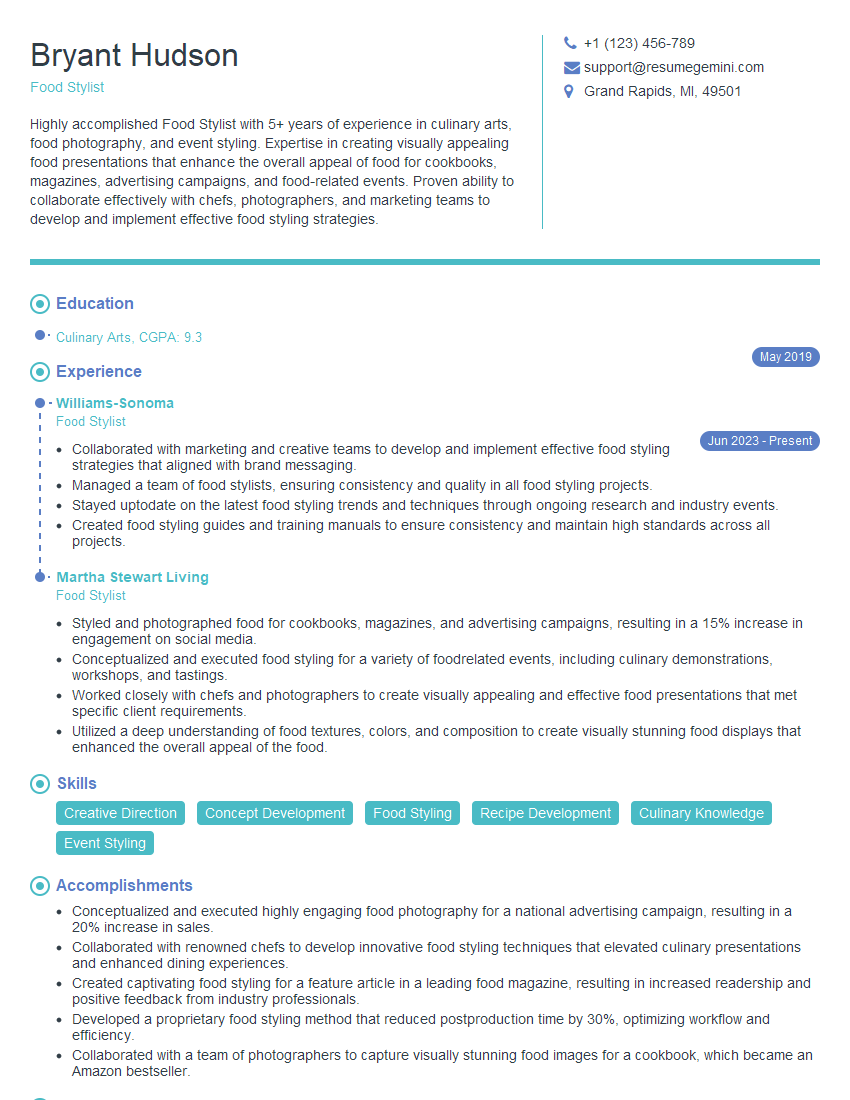
Mastering Photographic Styling opens doors to exciting and rewarding career opportunities in advertising, e-commerce, and editorial photography. To maximize your job prospects, creating a strong, ATS-friendly resume is crucial. ResumeGemini is a trusted resource that can help you build a professional and impactful resume tailored to the specific requirements of Photographic Styling roles. Examples of resumes tailored to this field are available for your review, providing valuable insights into creating a winning application. Invest the time to craft a compelling resume—it’s your first impression and a key to unlocking your career potential.
Explore more articles
Users Rating of Our Blogs
Share Your Experience
We value your feedback! Please rate our content and share your thoughts (optional).
What Readers Say About Our Blog
Very informative content, great job.
good