Every successful interview starts with knowing what to expect. In this blog, we’ll take you through the top Piano Cleaning and Maintenance interview questions, breaking them down with expert tips to help you deliver impactful answers. Step into your next interview fully prepared and ready to succeed.
Questions Asked in Piano Cleaning and Maintenance Interview
Q 1. What are the different types of piano cleaning solutions and when would you use each?
Choosing the right cleaning solution for your piano is crucial to avoid damage. Different materials require different approaches. I typically use several solutions depending on the area and the level of soiling.
Distilled Water: This is my go-to for most cleaning tasks, especially for wiping down the polished surfaces of the piano. It’s gentle and prevents mineral deposits from tap water that can leave streaks or damage the finish.
Mild Dish Soap Solution: For slightly dirtier areas, a solution of mild dish soap (like Dawn) and distilled water is effective. Always use a very diluted solution and test it on an inconspicuous area first. Never use harsh chemicals or abrasive cleaners.
Specialized Piano Cleaning Products: There are commercially available piano cleaning products designed specifically for the delicate finishes of pianos. These often contain gentle cleaners and polishes that help restore shine without harming the instrument.
Isopropyl Alcohol (70%): This is useful for sanitizing the keys, but it’s crucial to use it sparingly and only on the key surfaces, avoiding the ivory or plastic itself as it can damage the finish over time. Always test in an inconspicuous area first.
For example, I would use distilled water to wipe down the polished wood case, a diluted dish soap solution for sticky spots on the key surfaces, and isopropyl alcohol for disinfecting after a particularly germy performance.
Q 2. Describe your process for cleaning piano keys.
Cleaning piano keys requires a gentle touch and the right tools. I begin by assessing the keys’ condition—identifying dirt, grime, or sticky residue. I then carefully prepare my cleaning solution, often a mixture of distilled water and a tiny amount of mild dish soap. I use microfiber cloths to avoid scratching the finish.
Preparation: I protect the surrounding areas with cloths or masking tape to prevent accidental spills.
Cleaning: I dampen a microfiber cloth with my cleaning solution, wringing it out thoroughly to avoid excess moisture. I gently wipe each key individually, working from the top of the keyboard down. I pay particular attention to crevices and gaps where dirt tends to collect. If any sticky residues are present, I make sure to loosen these and wipe clean.
Drying: After cleaning, I use a dry microfiber cloth to thoroughly dry each key, ensuring no moisture remains, especially between the keys. Excess moisture can seep into the mechanisms and damage the instrument.
Sanitizing (Optional): If needed, I can use a slightly damp cloth with 70% isopropyl alcohol to sanitize the key surfaces, again being careful to avoid excessive moisture.
Remember, always test any solution on an inconspicuous area first before proceeding with the full cleaning.
Q 3. How do you clean a piano’s soundboard?
Cleaning a piano’s soundboard is a delicate operation that should only be undertaken by experienced technicians. The soundboard is highly sensitive to moisture and any damage can significantly impact the instrument’s tone and resonance. I usually only clean it if there is visible dust or debris which is infrequent.
My approach involves:
Assessment: Carefully examine the soundboard for loose debris or any signs of damage. This is best done with a magnifying glass.
Gentle Brushing: Use a very soft brush, such as a camel hair brush or a specialized piano dust brush, to gently remove loose dust and debris. The motion should be light and in the direction of the wood grain. Avoid applying any pressure that could damage the delicate wood.
Avoid Moisture: Never use any liquids or cleaning solutions directly on the soundboard. Excess moisture can cause irreparable damage to the wood and affect the instrument’s sound.
Professional Advice: If there are any significant issues or concerns, consulting a professional piano technician is crucial. It’s best to leave this task to experts to prevent potential harm.
Think of the soundboard as the heart of the piano. Any damage here is costly to repair and could seriously alter the piano’s musical integrity.
Q 4. What are the common problems associated with a neglected piano?
Neglecting a piano can lead to several problems, significantly impacting its sound, playability, and longevity. Some common issues include:
Dust Accumulation: Dust can clog moving parts, leading to sticking keys, sluggish action, and reduced sound quality.
Pest Infestation: Wood-boring insects can damage the structure of the piano, while rodents can chew on wires and felt parts.
Moisture Damage: Fluctuations in humidity can cause the wood to warp, crack, or swell, affecting tuning and playability.
Rust and Corrosion: Metal parts can rust, especially in humid conditions. This affects mechanisms and tuning pins.
Hammer Deterioration: Hammers can become hard and lose their ability to produce a clear tone.
Key Cracking or Damage: Ivory or plastic keys can crack or chip due to wear and tear, impacting their functionality and appearance.
Regular maintenance, including cleaning, tuning, and humidification, is crucial to avoid these problems and extend the piano’s lifespan. Just like a car, a piano requires regular check-ups and maintenance to remain in optimal condition.
Q 5. Explain the process of cleaning and lubricating piano action parts.
Cleaning and lubricating the piano action requires precision and care. The action is the complex mechanism that transmits the key press to the hammers. Disassembling and reassembling it is a specialized skill.
My process includes:
Disassembly: Carefully remove relevant parts of the action, following a systematic approach to avoid damaging components or losing small parts. I often photograph each step for reference.
Cleaning: Using compressed air, I remove dust and debris from all moving parts. For stubborn dirt, I may use a small brush or cotton swabs. I always work in a clean, well-lit area to prevent parts from being misplaced or damaged.
Lubrication: I apply specialized piano action lubricants to appropriate points using a small brush or applicator. The type of lubricant varies depending on the part (e.g., felt, wood, metal). Over-lubrication is as bad as under-lubrication, so I meticulously adhere to manufacturer’s recommendations.
Reassembly: The parts are reassembled in reverse order, carefully ensuring proper alignment and function. I pay particular attention to the precise positions of each component.
Testing: After reassembly, I test the action’s functionality, adjusting any parts as needed to ensure smooth key movement and a responsive touch.
This is a delicate process best left to experienced piano technicians. Incorrect lubrication or assembly can harm the instrument.
Q 6. How do you identify and address problems with piano hammers?
Piano hammers are crucial for tone quality. Problems can manifest in several ways.
Hardening: Over time, hammers can harden, resulting in a harsh, brittle tone. This often requires voicing, a specialized process that involves needling the felt to restore its elasticity.
Wearing: Uneven wear can cause inconsistencies in tone and volume across the keyboard. This can be caused by playing habits, and may require replacement.
Damage: Hammers can become damaged through impact or accidental contact, potentially requiring repair or replacement.
Identifying problems involves:
Visual Inspection: Closely examining the hammers for any signs of wear, damage, or hardening.
Sound Testing: Listening to the tone produced by each hammer to identify inconsistencies or harshness.
Playing Test: Playing the keyboard to assess the overall responsiveness and consistency of tone.
Addressing these issues typically requires the expertise of a piano technician, who can perform voicing, repair, or replacement as needed. I often photograph the hammers before and after any treatment for reference.
Q 7. Describe your experience with piano key regulation and repair.
Piano key regulation and repair is a specialized area requiring extensive knowledge and experience. Key regulation involves adjusting the key mechanism to ensure even touch weight, consistent response, and proper voicing across the keyboard.
My experience includes:
Diagnosing problems: Identifying issues such as sticking keys, uneven touch weight, and noisy action parts.
Adjusting regulation screws: Using specialized tools, I adjust various screws and components within the action to achieve optimal key regulation.
Repairing broken keys: Replacing or repairing cracked keys, broken key bushings, and other components of the action. This includes working with both ivory and plastic keys, using appropriate adhesives and repair techniques.
Addressing key dip: Correcting excessive key dip, which results in an uneven touch and compromised playability. This usually requires careful adjustment of the key levers and their associated mechanisms.
Addressing key balance: Ensuring that the keys are correctly balanced and return evenly to their rest position.
This detailed work requires meticulous attention to detail and a deep understanding of the piano’s mechanics. It is a critical component in restoring and maintaining a piano’s playability and musical expression. I’ve worked on a wide range of pianos, from antique instruments to modern grands, honing my skills over many years. I always document my work meticulously.
Q 8. What are the signs of damage to a piano’s case, and how do you address them?
Assessing damage to a piano’s case requires a keen eye for detail. Common signs include scratches, dents, cracks in the wood, veneer lifting or peeling, water damage (indicated by swelling, discoloration, or warping), and loose or broken parts like hinges, legs, or casters. Addressing these issues varies greatly depending on the severity and type of damage.
- Minor Scratches: These can often be buffed out with appropriate wood polish and a soft cloth. For deeper scratches, a touch-up pen matching the finish might be necessary.
- Dents: Small dents in solid wood might be carefully steamed and coaxed back into place using a damp cloth and gentle pressure. Larger dents usually require more involved wood repair by a specialist.
- Cracks: Small cracks can sometimes be stabilized with wood glue, clamping the pieces together until dry. Larger cracks often require professional repair involving wood filling and refinishing.
- Veneer Issues: Lifting or peeling veneer necessitates careful regluing, ideally by an expert, to avoid further damage. This requires specialized adhesive and techniques.
- Water Damage: This is the most serious, often requiring extensive restoration, sometimes including complete refinishing or even replacement of sections of the case. Early detection and professional intervention are crucial.
- Loose Parts: Tightening screws, re-gluing joints, or replacing broken parts are usually straightforward repairs, but care must be taken not to over-tighten.
Always start with the least invasive approach. If unsure, consult a qualified piano technician or restorer.
Q 9. How do you handle different types of piano finishes during cleaning?
Piano finishes vary greatly, and using the wrong cleaning method can cause irreversible damage. Careful assessment is crucial before beginning any cleaning. The most common types are:
- Polished Finish: This high-gloss finish is delicate and requires gentle cleaning. Use a specialized piano polish and a soft, lint-free cloth, working in the direction of the wood grain. Avoid abrasive cleaners.
- Satin Finish: This semi-gloss finish is more durable than a polished finish but still requires gentle treatment. Use a slightly damp cloth (only damp, not wet) and a mild cleaner specifically designed for wood, followed by a dry cloth.
- Matte Finish: This low-gloss finish tends to be more durable, and it may be cleaned with a damp cloth and mild wood cleaner. Always test any cleaner in an inconspicuous area first.
- Lacquered Finish: Lacquered finishes are more resistant to damage and may tolerate a slightly more vigorous approach, but abrasive cleaners should still be avoided. Use a soft cloth and a suitable wood cleaner.
For heavily soiled areas, consider using a soft brush to gently remove loose dirt before applying any cleaner. Always test your chosen cleaner in an inconspicuous area first to ensure it doesn’t damage the finish. Remember to work in sections and frequently change the cleaning cloth to avoid spreading dirt.
Q 10. What safety precautions do you take when working with piano cleaning chemicals?
Safety is paramount when using cleaning chemicals. Many piano cleaning solutions contain solvents or other potentially harmful substances. Therefore, it’s crucial to always follow these precautions:
- Ventilation: Work in a well-ventilated area to minimize inhalation of fumes. Open windows or use a fan.
- Gloves: Always wear appropriate protective gloves to prevent skin irritation or absorption of chemicals.
- Eye Protection: Safety glasses or goggles should be worn to protect your eyes from splashes.
- Proper Storage: Store all cleaning chemicals according to the manufacturer’s instructions, keeping them out of reach of children and pets.
- Read Labels Carefully: Before using any chemical, carefully read the safety data sheet (SDS) and follow all instructions and warnings.
- First Aid: Be aware of the first aid procedures in case of accidental exposure. Have a first-aid kit readily available.
If you are unsure about the safety of a particular cleaning agent, consult the manufacturer or a professional piano technician.
Q 11. What tools and equipment are essential for piano cleaning and maintenance?
Having the right tools is essential for efficient and safe piano cleaning and maintenance. My essential toolkit includes:
- Microfiber Cloths: Several lint-free microfiber cloths for cleaning and polishing.
- Soft Brushes: Soft-bristled brushes (e.g., a detail brush, a soft paint brush) for removing dust and debris from crevices.
- Vacuum Cleaner with Attachments: A vacuum with crevice and brush attachments to remove dust and dirt from hard-to-reach areas.
- Piano Polish: A high-quality, specialized piano polish for restoring shine and protecting the finish.
- Wood Cleaner: A mild wood cleaner appropriate for the piano’s finish. Always test in an inconspicuous area first.
- Damp Cloths: Several cloths that can be dampened with clean water, wrung out thoroughly, for spot cleaning.
- Protective Gloves: To protect hands from chemicals and abrasions.
- Safety Glasses: For protection from splashes.
- Cotton Swabs: For detailed cleaning of intricate areas.
In addition to these, specialized tools like a felt block for polishing might be helpful for more extensive projects.
Q 12. How do you assess the overall condition of a piano before beginning any work?
A thorough assessment is crucial before any work begins. I start by visually inspecting the entire piano, noting the condition of the case, keys, pedals, and internal components. This involves:
- Case Inspection: Checking for scratches, dents, cracks, veneer issues, water damage, and loose parts (as discussed in question 1).
- Key Inspection: Examining the keys for cracks, chips, or discoloration. Checking for proper alignment and movement.
- Pedal Inspection: Testing pedal functionality and checking for any damage or wear.
- Action Inspection: (Requires some technical knowledge) Checking the working parts of the action (hammers, dampers, etc.) for wear or damage, though usually not done during a simple cleaning.
- Soundboard Inspection: A visual check for cracks or damage to the soundboard, which is a crucial component and requires specialized expertise to fix.
- Internal Inspection: Assessing the interior for dust accumulation, pest infestation, or other signs of damage or neglect.
This process helps me determine the scope of work needed and whether specialized repairs or restoration are required beyond cleaning and maintenance.
Q 13. Describe your experience with piano restoration projects.
I’ve been fortunate to work on several piano restoration projects, ranging from minor repairs to complete overhauls. One memorable project involved a 1920s upright piano that had sustained significant water damage. The case was severely warped, the veneer was peeling in multiple places, and the soundboard had begun to crack. The restoration involved a multi-stage process:
- Case Repair: Careful removal of damaged wood, reconstruction using matching lumber, and precise refinishing to restore the original finish.
- Veneer Repair: Carefully regluing and patching damaged veneer sections, and matching the finish as closely as possible.
- Soundboard Repair: Stabilizing cracks in the soundboard using specialized glue and techniques to ensure the integrity of the instrument’s resonance.
- Action Overhaul: Replacing worn parts and regulating the action mechanism to ensure proper key function and tone.
This project was incredibly challenging, but seeing the restored piano played and enjoyed brought immense satisfaction. It demonstrated the importance of patience, precision, and a deep understanding of both the piano’s construction and the materials involved.
Q 14. What is your process for tuning a piano after cleaning?
Tuning a piano after cleaning isn’t always necessary but is highly recommended, especially if significant dust has accumulated inside the piano. Dust can affect the tension of the strings, slightly altering the tuning. My process involves:
- Preparation: Ensure the piano is at a stable room temperature and humidity for at least 24 hours prior to tuning.
- Tuning: Using a professional electronic tuner, I systematically adjust each string to the correct pitch.
- Regulation: This is a more involved process (often done by specialized technicians) that ensures the hammers hit the strings correctly and evenly; this can be impacted by the cleaning process, potentially causing subtle inconsistencies in tone.
- Voicing: (Optional, depending on the piano’s condition) This involves adjusting the hammers to produce a balanced and consistent tone across the keyboard. This is more of a fine-tuning process and isn’t generally done immediately after a cleaning.
Tuning a piano is a specialized skill. If you are not experienced, it’s best to leave tuning to a qualified piano tuner. Improper tuning can cause significant damage to the instrument.
Q 15. How do you determine the appropriate cleaning frequency for a piano?
Determining the right cleaning frequency for your piano depends on several factors: its location, how often it’s played, and the environment it’s in. A piano in a dusty environment or a heavily used recital hall will require more frequent cleaning than one kept in a climate-controlled, rarely-used room.
As a general guideline, a light dusting of the exterior (case and keys) should be done weekly or bi-weekly. A more thorough cleaning, potentially involving specialized cleaning solutions for the keys and interior, should be done at least annually, or more often if needed. Think of it like your car: a quick wipe-down is frequent, but a deep clean is less often.
Consider professional cleaning every 3-5 years for a comprehensive cleaning and assessment of the instrument’s overall condition. This includes a meticulous cleaning of the action, the intricate mechanism that transmits keystrokes to the strings.
Career Expert Tips:
- Ace those interviews! Prepare effectively by reviewing the Top 50 Most Common Interview Questions on ResumeGemini.
- Navigate your job search with confidence! Explore a wide range of Career Tips on ResumeGemini. Learn about common challenges and recommendations to overcome them.
- Craft the perfect resume! Master the Art of Resume Writing with ResumeGemini’s guide. Showcase your unique qualifications and achievements effectively.
- Don’t miss out on holiday savings! Build your dream resume with ResumeGemini’s ATS optimized templates.
Q 16. What are the common causes of sticking or unresponsive piano keys?
Sticking or unresponsive keys are common piano problems, usually stemming from a few key culprits (pun intended!). The most frequent causes are:
- Dust and Debris: Dust and dirt accumulate between the keys and the action, causing friction and sticking. This is particularly common in older pianos or those in dusty environments.
- Sticky Key Dip: The key dip (the small felt pads under the keys) can become sticky or compressed over time, hindering smooth key return.
- Humidity Issues: Extreme humidity or dryness can cause wood to swell or shrink, affecting the action’s movement and causing sticking keys.
- Worn or Damaged Parts: Worn-out felt bushings, damaged key bushings, or other parts within the action can impede key movement.
- Old or Dried Lubricant: Old lubricants can gum up the action mechanism, leading to sluggish response and squeaks.
Identifying the precise cause requires careful examination of the piano’s action. In many cases, a simple cleaning or lubrication is sufficient. However, if the problem persists, you should seek the advice of a professional piano technician.
Q 17. How do you remove stains from ivory or synthetic piano keys?
Cleaning ivory or synthetic keys requires a gentle touch and specialized products to avoid damage. Never use harsh chemicals or abrasive cleaners.
For ivory keys, a slightly damp (not soaking wet) lint-free cloth is often sufficient for removing surface dust and grime. You can use a very mild soap solution if needed, but rinse thoroughly and dry immediately with another clean, dry cloth.
For synthetic keys, a similar approach works well; however, be more cautious with any cleaning solution. Always test a small, inconspicuous area first to ensure the cleaner doesn’t damage the finish. For stubborn stains, a specialized piano key cleaner designed for synthetic keys might be necessary. Remember to thoroughly dry the keys afterward to prevent moisture damage. For particularly difficult stains, it is best to call a professional piano technician.
Q 18. How do you deal with water damage on a piano?
Water damage to a piano is a serious issue that can lead to irreparable harm if not addressed promptly. The extent of the damage depends on the amount of water, the duration of exposure, and the affected areas.
Immediate Actions:
- Disconnect the power: This prevents electrical shock and further damage.
- Remove excess water: Gently blot up excess water using absorbent cloths or towels. Avoid scrubbing, which can damage the finish.
- Open the lid and case: This promotes airflow and drying.
- Contact a professional piano technician immediately: A technician can assess the extent of the damage, perform necessary repairs, and prevent mold or mildew growth.
Do not attempt to dry the piano using heat sources or fans directly, as this can cause further damage. Let the piano air dry naturally under controlled conditions, with the help of your professional technician.
Q 19. How would you address a squeak coming from the piano’s action?
A squeaking piano action is often caused by friction between moving parts. The source can be various points within the intricate action mechanism, such as moving parts in the key levers, the hammer action, or damper mechanism.
Addressing the Squeak:
- Identify the location: Play the keys while carefully listening to pinpoint the source of the squeak.
- Lubrication: A piano technician typically uses specialized piano lubricants to alleviate friction between parts. These lubricants are specifically formulated to be non-damaging to the action components.
- Professional Help: Attempting to lubricate the action yourself can lead to further problems unless you have extensive experience with piano mechanics. It’s usually best to let a professional address this issue.
Improper lubrication can attract dust and other debris and harm the delicate mechanics of the instrument, so professional help is usually the best course of action.
Q 20. Explain the importance of humidity control in piano maintenance.
Humidity control is paramount for piano maintenance because wood, the primary component of a piano, is highly sensitive to changes in moisture content. Fluctuations in humidity can cause the soundboard (the large wooden plate that vibrates to produce sound) to crack, warp, or lose its resonance. Similarly, the keys, bridges, and other wooden parts can swell or shrink, impacting the piano’s tuning and playability.
Ideal Humidity Range: The optimal humidity range for a piano is generally between 40% and 60%. Maintaining this range prevents excessive expansion and contraction of the wooden parts, preserving the instrument’s structural integrity and sound quality. Devices like humidifiers or dehumidifiers can help maintain the optimal humidity range in the room where the piano is kept.
Q 21. What are some preventative maintenance tips for piano owners?
Preventative maintenance is crucial for keeping your piano in optimal condition and extending its lifespan. Here are some tips:
- Regular Dusting: Dust the exterior regularly to prevent dust from accumulating within the piano’s mechanism.
- Humidity Control: Use a hygrometer (a device that measures humidity) to monitor humidity levels and use a humidifier or dehumidifier as needed to maintain the ideal range (40-60%).
- Avoid Direct Sunlight and Heat: Keep the piano away from direct sunlight and heat sources, which can cause the wood to dry out and crack.
- Annual Tuning: Schedule an annual tuning by a qualified piano technician. This ensures the piano remains properly in tune and helps identify potential problems early on.
- Periodic Professional Cleaning: Consider professional cleaning every 3-5 years for a more thorough cleaning and inspection of internal components.
- Protect from Pests: Keep the piano in a clean and well-ventilated area to prevent insect infestations.
By adopting these preventative measures, you can ensure your piano remains a source of musical enjoyment for years to come.
Q 22. What types of piano finishes are you experienced with?
My experience encompasses a wide range of piano finishes, from the most common to the more specialized. I’m proficient in working with high-gloss polished finishes, often found on newer pianos, which require gentle cleaning techniques to avoid scratching. I also have extensive experience with satin finishes, which are less prone to showing scratches but require different cleaning solutions. Furthermore, I’m skilled in handling antique pianos with their unique finishes, which may include various types of lacquer, varnish, and even ebonized finishes that require specialized care to prevent damage. Each finish type demands a unique approach, and I tailor my cleaning methods accordingly to ensure the piano’s longevity and aesthetic appeal.
- High-gloss polished: Requires careful dusting and cleaning with specialized polish.
- Satin: Can tolerate slightly more robust cleaning but still needs gentle handling.
- Antique finishes (lacquer, varnish, ebonized): Demand careful assessment and the use of historically appropriate cleaning products.
Q 23. What are the common problems encountered when cleaning antique pianos?
Antique pianos present unique challenges. One common issue is the deterioration of the finish due to age and exposure to environmental factors. Cracks, chips, and discoloration are often present, requiring careful assessment and sometimes specialized restoration techniques. Another common problem is the accumulation of grime and dirt in hard-to-reach areas, necessitating meticulous cleaning using appropriate tools and solutions to prevent damage. Furthermore, insect infestation (such as woodworm) can be a serious problem requiring expert intervention. Finally, the internal mechanisms can be fragile and require careful attention to avoid further damage during cleaning.
For example, I once worked on a 1920s upright piano with a severely cracked finish. Rather than attempting a full refinishing, which could devalue the piece, I carefully repaired the cracks using a conservation-grade glue and a meticulously matched color to blend seamlessly with the existing finish. The result was a visually pleasing and historically accurate restoration.
Q 24. How do you identify and address issues with piano pedals?
Piano pedal issues range from simple adjustments to more complex repairs. I start by carefully inspecting the entire pedal mechanism, checking for loose screws, worn parts, or broken linkages. Common problems include sticking pedals, unresponsive pedals, and uneven pedal action. I assess whether the issue is mechanical (like a broken spring or lever) or functional (like a misalignment). For simple adjustments, I might tighten screws, lubricate moving parts, or realign linkages. More involved repairs could necessitate replacing broken parts or even rebuilding sections of the mechanism. Identifying the exact problem requires a systematic approach, ruling out the simplest causes first before moving on to more complex solutions.
For example, a customer once complained about a sticking middle pedal (the sostenuto). Upon inspection, I found a small piece of debris lodged in the mechanism, causing friction. A simple cleaning resolved the issue, demonstrating the importance of thorough examination before undertaking extensive repairs.
Q 25. What is your approach to customer communication regarding piano cleaning and maintenance?
Clear and proactive communication is crucial. I begin by conducting a thorough assessment of the piano, explaining my findings clearly and answering all client questions. I provide a detailed estimate of the cost and timeframe for the cleaning and/or maintenance, ensuring that there are no surprises. I keep the client updated throughout the process, informing them of any unexpected issues that arise and discussing potential solutions together. After the work is completed, I offer a follow-up to address any concerns and ensure they are completely satisfied with the service.
I use plain language and avoid technical jargon unless specifically requested. I believe in treating every piano and client with the utmost respect, ensuring a comfortable and transparent experience.
Q 26. How do you price your piano cleaning and maintenance services?
My pricing is determined by several factors including the type of piano (upright, grand, size), the condition of the piano (minor cleaning versus major restoration), the extent of the service required (e.g., simple cleaning vs. deep cleaning and tuning), and the geographic location. I typically provide a detailed, itemized quote after a thorough assessment of the piano’s needs. My aim is to provide fair and competitive pricing while reflecting the quality of my expertise and the level of work involved.
For example, a simple cleaning of an upright piano might cost less than a deep cleaning and tuning of a grand piano. Any necessary repairs are quoted separately.
Q 27. What are your professional affiliations or certifications (if any)?
While I don’t hold formal certifications specific to piano cleaning (as that’s often a specialized area within the broader field of piano technology), I have many years of practical experience and continuous professional development. I regularly attend workshops and seminars to stay updated on the latest techniques and best practices in piano care and restoration. My affiliations include networking with other piano technicians and restorers to share knowledge and resources. My reputation and positive client testimonials are a testament to my expertise and commitment to providing high-quality services.
Q 28. Describe a challenging piano repair or restoration project and how you overcame it.
One challenging project involved a late 19th-century grand piano that had been severely neglected for decades. The finish was heavily damaged with deep scratches, discoloration, and significant water damage. The internal mechanism was also heavily deteriorated, with many parts rusted and broken. The challenge was not only restoring the piano’s visual appeal but also ensuring its functionality and structural integrity. This required a multi-faceted approach: meticulous cleaning and repair of the damaged finish, using appropriate conservation methods; careful restoration of the internal mechanism, involving sourcing replacement parts and painstaking repair of damaged components; and finally, a complete retuning and regulation to ensure optimal playability.
Overcoming this challenge required a combination of technical expertise, patience, and attention to detail. I collaborated with a specialist woodworker for specific finish repairs, and sourced some rare parts from antique piano suppliers. The result was a stunning transformation—a beautifully restored piano brought back to life, preserving its historical significance while ensuring its continued use for many years to come.
Key Topics to Learn for Piano Cleaning and Maintenance Interview
- Exterior Cleaning: Understanding appropriate cleaning solutions and techniques for various piano finishes (polished, matte, etc.), including dust removal, stain treatment, and scratch repair basics.
- Interior Cleaning: Safe and effective methods for cleaning the piano’s internal mechanisms, including removing dust and debris from the action, hammers, and strings. Practical application: Knowing how to identify and address potential damage during this process.
- Tuning and Regulation Basics: While not directly cleaning, a basic understanding of tuning and regulation demonstrates a holistic approach to piano care. This includes familiarity with common tuning issues and their impact on the instrument’s sound and playability.
- Hammer Maintenance: Understanding hammer voicing and the importance of maintaining consistent hammer hardness for optimal sound production. Problem-solving approach: Knowing how to identify and address issues like uneven hammer wear or voicing discrepancies.
- Keybed Maintenance: Proper cleaning and lubrication of keys and key bushings to ensure smooth and responsive key action. Practical application: Diagnosing and rectifying issues such as sticking keys or uneven key response.
- Pest Control and Prevention: Identifying potential threats like woodworm and developing strategies for prevention and treatment. Problem-solving approach: Recognizing signs of infestation and implementing appropriate control measures.
- Health and Safety: Safe handling of cleaning chemicals, proper disposal of waste, and awareness of potential health risks associated with working with older pianos (e.g., lead paint).
- Tools and Equipment: Familiarity with common tools and equipment used in piano cleaning and maintenance, including appropriate brushes, cloths, vacuums, and specialized cleaning solutions.
Next Steps
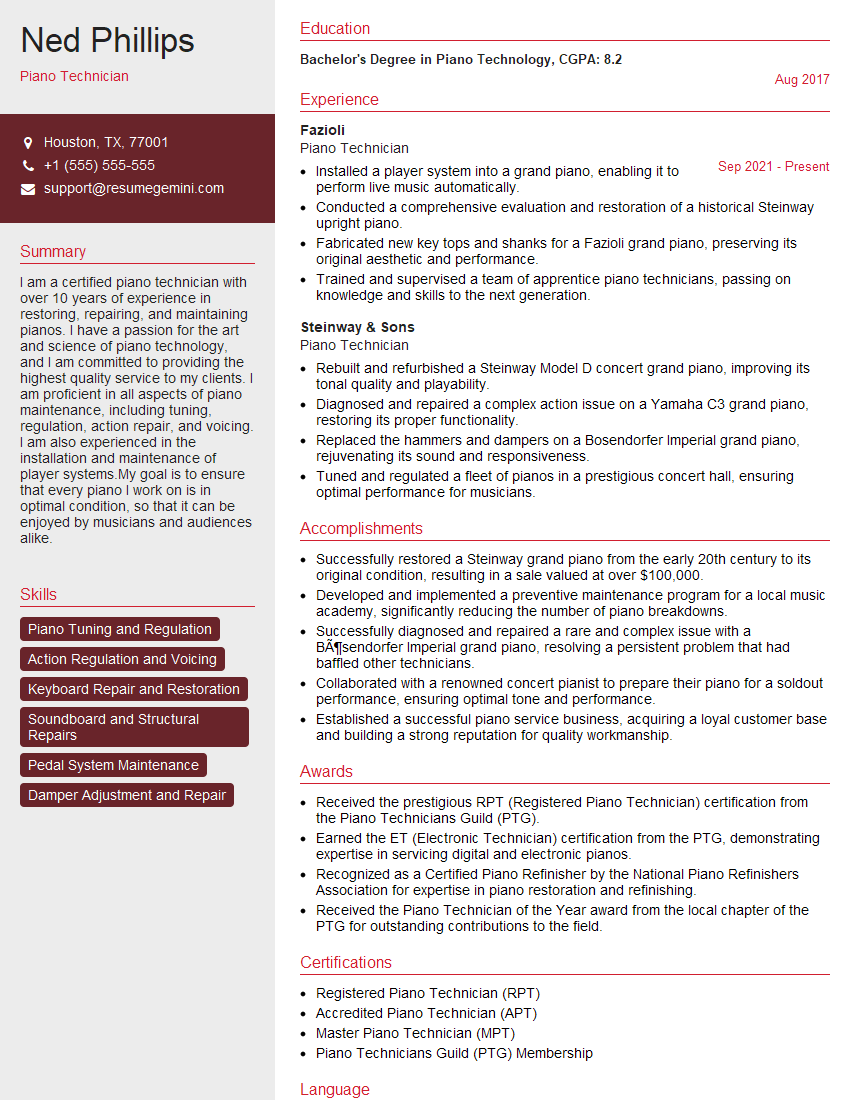
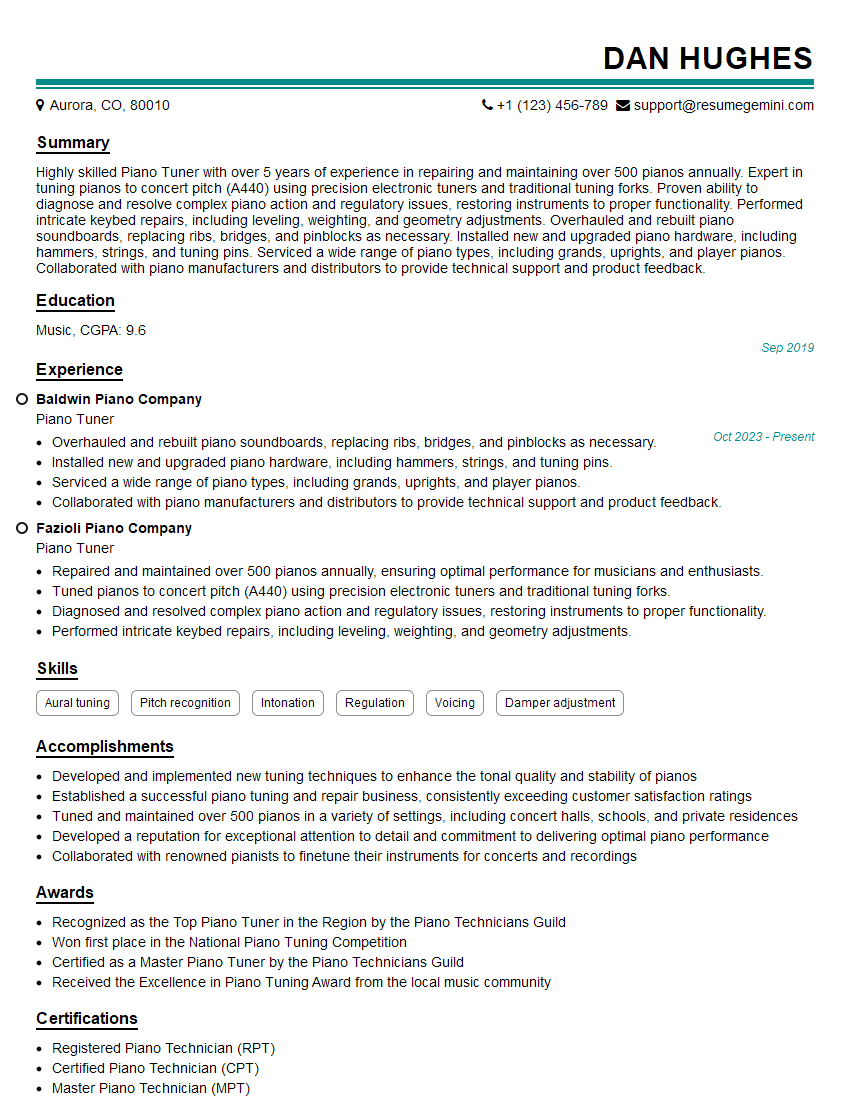
Mastering piano cleaning and maintenance opens doors to a fulfilling career, offering opportunities for specialization and growth within the music industry. To maximize your job prospects, it’s crucial to create a compelling and ATS-friendly resume that highlights your skills and experience effectively. We strongly encourage you to utilize ResumeGemini, a trusted resource for building professional resumes, to craft a document that showcases your expertise in this field. Examples of resumes tailored to Piano Cleaning and Maintenance are available to help you get started.

Explore more articles
Users Rating of Our Blogs
Share Your Experience
We value your feedback! Please rate our content and share your thoughts (optional).
What Readers Say About Our Blog
Very informative content, great job.
good