The thought of an interview can be nerve-wracking, but the right preparation can make all the difference. Explore this comprehensive guide to Pike Pole interview questions and gain the confidence you need to showcase your abilities and secure the role.
Questions Asked in Pike Pole Interview
Q 1. Describe the different types of pike poles and their applications.
Pike poles come in various types, each designed for specific tasks. The key differences lie in the hook shape, handle length, and overall material strength.
- Standard Pike Pole: This is the most common type, featuring a single, sharp hook at the end of a long handle. It’s versatile and used for a wide range of tasks, from moving logs and debris to pulling down branches.
- Double-Ended Pike Pole: As the name suggests, it has hooks on both ends, increasing efficiency when working with multiple objects or needing quick directional changes. Imagine using this to maneuver large pieces of timber in a confined space – significantly faster than constantly turning a single-ended pole.
- Grappling Hook Pike Pole: This type has multiple smaller hooks or claws, ideal for grasping and securing irregularly shaped objects or items in tricky locations. Think about rescuing a heavy piece of equipment that has fallen into a ditch – the multiple hooks provide a stronger, more secure grip.
- Aluminum Pike Pole: Lighter than steel counterparts, these are preferred where weight is a concern, such as working at height or in areas with restricted access. However, they are generally less durable than steel poles.
The choice of pike pole depends entirely on the task. For instance, a standard pike pole is suitable for general debris removal, while a grappling hook pike pole might be necessary for recovering submerged objects.
Q 2. Explain the safety procedures involved in using a pike pole.
Safety is paramount when using a pike pole. Here’s a breakdown of crucial procedures:
- Proper PPE: Always wear appropriate personal protective equipment (PPE), including safety glasses, gloves, and sturdy work boots. Steel-toed boots are especially important to protect your feet from falling objects.
- Clear the Area: Ensure the work area is clear of obstructions and that no one is in the vicinity of the swinging pole. Communication with colleagues is vital to prevent accidents.
- Secure Grip: Maintain a firm grip on the handle at all times, using both hands for better control. Avoid using excessive force that could cause you to lose your balance.
- Controlled Movements: Move the pole in a slow and controlled manner, avoiding sudden jerks or rapid movements. Remember, momentum can quickly become dangerous.
- Check for Overhead Hazards: Before using the pike pole, check for overhead power lines or other potential hazards. Contact with power lines is potentially lethal.
- Proper Lifting Techniques: When lifting heavy objects, use proper lifting techniques to avoid straining your back. Use your legs to lift and keep your back straight. Never lift beyond your capacity.
Regular safety training and awareness are essential to prevent accidents. Treat every pike pole operation as if it were potentially hazardous.
Q 3. How do you inspect a pike pole before use?
Inspecting a pike pole before use is crucial for ensuring safe and efficient operation. This pre-use check should become second nature:
- Handle Inspection: Check the handle for cracks, splinters, or any signs of damage. A damaged handle can compromise control and lead to injury.
- Hook Inspection: Examine the hook for sharpness, bends, or wear. A dull or damaged hook can slip, making it difficult to secure objects. Ensure the hook is securely fastened to the shaft.
- Shaft Inspection: Check the shaft for bends, cracks, or rust. A bent or cracked shaft weakens the pole, potentially causing failure during use.
- Ferrule Check: Inspect the ferrule (the metal tip protecting the end of the handle) for damage or looseness. A loose or damaged ferrule can compromise the handle’s integrity.
- Overall Condition: Assess the overall condition of the pike pole, looking for any signs of damage or wear that might compromise its integrity or stability.
If any damage is detected, the pike pole should be removed from service and replaced immediately. Ignoring a damaged pike pole is extremely dangerous and could result in serious accidents.
Q 4. What are the signs of a damaged or worn pike pole?
Several signs indicate damage or wear in a pike pole:
- Cracks or Splits in the Handle: These are significant indicators of weakening and potential failure, requiring immediate replacement.
- Bends or Warps in the Shaft: This significantly reduces the pole’s strength and reliability. It’s unsafe to use a bent pole.
- Dull or Damaged Hook: A dull hook reduces gripping power and increases the risk of the object slipping. A damaged or bent hook should be repaired or replaced.
- Loose Ferrule: A loose ferrule can lead to handle damage and weakening.
- Excessive Rust or Corrosion: This weakens the structural integrity of the pole and increases the risk of failure.
- Significant Wear on the Hook Point: If the hook is noticeably worn down, it significantly reduces its ability to securely grab and hold objects.
Any of these signs should prompt immediate removal of the pike pole from service. Remember, using a damaged pike pole puts yourself and others at risk.
Q 5. How would you handle a pike pole in strong winds?
Strong winds present a significant challenge when using a pike pole. The key is to mitigate the pole’s susceptibility to wind forces:
- Avoid Use in High Winds: If possible, postpone work until the winds subside. High winds can make controlling the pole extremely difficult and dangerous.
- Lower Your Center of Gravity: Maintain a low center of gravity by bending your knees slightly. This improves stability and reduces the effect of wind on the pole.
- Use a Shorter Pike Pole: A shorter pole is less affected by wind than a longer one. If possible, opt for a shorter pole in windy conditions.
- Work with a Partner: A partner can assist in stabilizing the pole and help prevent it from being blown around.
- Monitor Wind Conditions: Continuously monitor wind conditions and stop work immediately if the wind becomes too strong or unpredictable.
Remember, safety is paramount. It’s better to delay work than to risk an accident caused by strong winds.
Q 6. Explain the proper technique for using a pike pole to move heavy objects.
Moving heavy objects with a pike pole requires a precise technique to avoid accidents and damage:
- Assess the Object: Before attempting to move the object, carefully assess its weight, shape, and center of gravity. This helps you determine the best approach.
- Secure a Firm Grip: Grip the handle firmly with both hands, maintaining a balanced stance.
- Hook Placement: Position the hook securely into a strong point on the object. Avoid hooking onto weak points or unstable areas.
- Controlled Leverage: Use controlled leverage to move the object gradually. Avoid sudden jerks or forceful movements that could damage the object or cause you to lose control.
- Maintain Balance: Always maintain a balanced stance, keeping your weight centered. This helps prevent you from being thrown off balance by the movement of the object.
- Guide the Object: Guide the object’s movement smoothly and carefully, keeping a clear path free of obstructions. Communicate with any colleagues who are assisting.
Practice and experience are essential for mastering this technique. Start with lighter objects to develop your skills and confidence before moving heavier items.
Q 7. How do you ensure the stability of an object being moved with a pike pole?
Ensuring stability when moving an object with a pike pole is critical to prevent accidents. Here’s how:
- Solid Foothold: Ensure you have a solid and stable foothold before attempting to move the object. Avoid uneven or slippery surfaces.
- Proper Hook Placement: Position the hook securely in a strong point on the object, ideally near the object’s center of gravity. This will provide the most stable leverage point.
- Controlled Movements: Move the object slowly and deliberately, avoiding sudden jerks or forceful movements. This helps maintain control and prevents the object from tipping over.
- Additional Support: If needed, use additional support such as ropes, straps, or other tools to further secure the object and enhance stability. Two people are often better than one.
- Assess for Obstacles: Clear the path of any obstacles that could cause the object to tip over or become unstable during the movement.
- Use a Partner: Working with a partner allows for better control and stability, especially with heavier or more awkward objects.
Remember that safety should always be the top priority. If you are unsure about the stability of the object, it’s always better to err on the side of caution and seek assistance or alternative methods.
Q 8. What are the limitations of a pike pole?
Pike poles, while versatile, have limitations. Their primary weakness is their relative lack of precision compared to other tools. The long length and pointed hook make it difficult to perform delicate maneuvers or handle small, fragile objects. The leverage offered, while beneficial for moving heavy items, can also lead to accidental damage if not controlled carefully. Furthermore, a pike pole’s effectiveness is significantly reduced when dealing with objects that are smooth, rounded, or lack suitable points for hooking. Think of trying to lift a perfectly smooth, heavy sphere with a pike pole – it’s nearly impossible. Finally, their length can make them unwieldy in confined spaces or when working around obstacles.
Q 9. What are the potential hazards associated with using a pike pole?
Pike pole use presents several hazards. The most significant is the risk of injury from the pole itself. A swinging pike pole can cause serious lacerations or blunt force trauma. Working at heights increases the risk of falling, leading to potentially fatal consequences. The long lever arm can cause strain and fatigue for the user, especially during prolonged use. Improper use can also lead to damage to the load being moved, or even structural damage to the surrounding environment. Finally, there’s the risk of the pike pole slipping, causing the load to fall unexpectedly. This is particularly dangerous when handling heavy or sharp objects.
Q 10. How would you use a pike pole in a confined space?
Using a pike pole in a confined space requires extra caution. First, assess the space thoroughly to identify potential obstructions or hazards. A shorter pike pole might be necessary, or a different tool entirely. Your movements must be slow and deliberate to avoid striking walls or equipment. Always maintain a firm grip and keep a clear understanding of the pole’s position at all times. If possible, utilize a spotter to assist with visibility and maintain a safe working distance from other personnel. Remember to use proper body mechanics to avoid fatigue and injury. For example, when moving an object in a narrow corridor, I would use short, controlled jabs rather than large swinging motions to minimize the risk of collision.
Q 11. Describe how you would secure a load using a pike pole.
Securing a load with a pike pole depends heavily on the nature of the load. For example, if securing a log, I would hook the pole securely under one end of the log. If the log is particularly heavy or long, I’d employ a second pike pole or ask for assistance to gain better control. Once the load is hooked, ensure a secure and balanced grip. Movement should be slow and controlled. For lighter loads, it may be sufficient to simply hook and lift. For heavier loads, a controlled lifting system might be needed, or at least the assistance of a teammate. It’s crucial to check the load and hook placement throughout the process to avoid accidents. Safety straps or other load-securing methods might be necessary to increase stability and prevent slippage. Never rely solely on a pike pole for securing a heavy or unstable load.
Q 12. How do you manage a pike pole in wet or slippery conditions?
Wet or slippery conditions dramatically increase the risk when using a pike pole. The first step is to assess the conditions. If the surface is excessively slippery, consider using a different method of moving the load. If pike pole use is unavoidable, ensure the pole is clean and dry, as much as possible. Wear appropriate footwear with good traction. Use extra caution in your movements, employing shorter, more controlled movements. If possible, use extra personnel for added safety and stability. Remember that your grip may become compromised, so be extra aware of maintaining firm contact with the pole. Consider using gripping gloves for added security. Never attempt to use a pike pole in conditions you deem unsafe.
Q 13. How would you react to a pike pole malfunction during operation?
A pike pole malfunction can range from a simple bent hook to a complete shaft failure. In case of a malfunction, immediately cease operation. Assess the damage and the risk it poses to you and those nearby. If the damage is minor, such as a slightly bent hook, and the situation allows, a repair attempt might be possible. Otherwise, the pike pole needs to be immediately replaced. Never attempt to continue using a damaged pike pole; this could lead to serious injury. If a large load is at risk of falling, immediately alert nearby personnel and implement emergency procedures. Document the malfunction and the steps taken to ensure future prevention.
Q 14. Describe your experience using a pike pole in different types of environments.
I’ve used pike poles in various environments, from dense forests during logging operations to open construction sites. In forests, I’ve employed them to maneuver logs, being especially careful of uneven terrain and potential obstacles like undergrowth. On construction sites, pike poles are useful for moving beams and other materials. The environment here often presented challenges involving the need for precision and coordinated efforts with other workers. I’ve also utilized them during demolition work, again emphasizing careful control to avoid collateral damage. Each environment presents unique challenges and safety considerations; adaptability and a strong understanding of both the tool and environment are crucial for safe and effective use. My experience has consistently highlighted the importance of proper training and risk assessment prior to any pike pole operation.
Q 15. What are the differences between using a pike pole in construction vs. marine environments?
While the fundamental purpose of a pike pole – leveraging its length and hook to manipulate objects – remains consistent across construction and marine environments, the specific applications and challenges differ significantly.
Construction: In construction, pike poles are frequently used for demolition, handling heavy materials like lumber or rebar, and moving debris. The terrain is typically more stable, and the tasks involve less exposure to water or unstable surfaces. For example, a construction worker might use a pike pole to pull down sections of a demolished wall or to move large timbers without bending or straining their back.
Marine Environments: In marine settings, pike poles play a crucial role in mooring, boat handling, and recovering equipment from the water. The working environment is significantly more challenging, dealing with slippery decks, strong currents, and the risk of falling overboard. The pole needs to be more robust to withstand the corrosive effects of saltwater. Consider a scenario where a sailor uses a pike pole to secure a large boat to a dock in rough seas or to retrieve a piece of fallen equipment from the water.
Therefore, while the tool itself might be similar, the specific design considerations, required strength, and safety protocols differ substantially.
Career Expert Tips:
- Ace those interviews! Prepare effectively by reviewing the Top 50 Most Common Interview Questions on ResumeGemini.
- Navigate your job search with confidence! Explore a wide range of Career Tips on ResumeGemini. Learn about common challenges and recommendations to overcome them.
- Craft the perfect resume! Master the Art of Resume Writing with ResumeGemini’s guide. Showcase your unique qualifications and achievements effectively.
- Don’t miss out on holiday savings! Build your dream resume with ResumeGemini’s ATS optimized templates.
Q 16. How do you maintain a pike pole to ensure its longevity and safety?
Maintaining a pike pole is critical for safety and longevity. It’s more than just a visual inspection; it’s a routine practice.
Regular Inspection: Check for cracks, splinters, or warping in the shaft, paying close attention to the hook and the point. A damaged pole is a hazard.
Cleaning: After each use, especially in marine environments, clean the pole thoroughly with freshwater and allow it to dry completely. Saltwater corrosion is a significant threat.
Lubrication: Apply a suitable lubricant (such as penetrating oil) to the hook’s joints to prevent seizing and corrosion.
Storage: Store the pike pole in a dry, protected area, away from direct sunlight and moisture. Proper storage minimizes wear and tear.
Repair or Replacement: If any significant damage is detected, such as a fractured shaft or a severely bent hook, the pole should be repaired by a qualified professional or replaced immediately.
Regular maintenance not only extends the life of the pike pole but also prevents accidents caused by equipment failure.
Q 17. What are the weight and size limitations when using a pike pole?
Weight and size limitations depend on the specific application and user’s physical capabilities. There’s no universal standard.
Weight: Heavier poles offer greater leverage but can be more difficult to handle. A lighter pole might be suitable for delicate tasks, while a heavier, more robust one is necessary for handling substantial weight.
Length: Pole length directly impacts reach and leverage. Longer poles allow for reaching farther but can become unwieldy and difficult to control. The user’s height and strength should be carefully considered when selecting pole length.
Practical Example: A worker handling light debris might use a relatively short and light pole, whereas someone removing large logs might need a much longer and heavier one. This necessitates proper risk assessment before task execution.
Always prioritize safe handling over reach. It’s better to use two shorter poles or find alternative methods than to risk injury by using a pole that’s too heavy or long for the user or the task.
Q 18. How do you handle a pike pole in an emergency situation?
In an emergency situation involving a pike pole, the priority is safety – both yours and those around you.
Assess the Situation: Quickly evaluate the emergency and determine the immediate danger. Is someone trapped? Is there a risk of fire or structural collapse?
Secure the Area: If possible, secure the area to prevent further harm or injury. Alert others to the danger.
Use the Pike Pole Strategically: Use the pike pole to stabilize or dislodge objects, create escape routes, or aid in rescue operations, always prioritizing safety.
Call for Assistance: Do not hesitate to call for professional assistance if the situation is beyond your capabilities.
Example: If a piece of heavy equipment is causing an immediate hazard, the pike pole could be used to push it out of the way, creating a safe passage.
Remember, in an emergency, sound judgment and prioritizing safety over speed are paramount.
Q 19. Describe your understanding of relevant safety regulations concerning pike pole usage.
Safety regulations concerning pike pole usage vary depending on the jurisdiction and specific workplace, but common themes include:
Proper Training: All users must receive thorough training on safe operation procedures before using a pike pole.
Personal Protective Equipment (PPE): Appropriate PPE, such as safety glasses, gloves, and sturdy footwear, should always be worn.
Safe Handling Procedures: Procedures should be in place to ensure safe handling, storage, and transportation of pike poles.
Regular Inspection: Regular inspection and maintenance of the equipment are essential.
Risk Assessment: Before any task involving a pike pole, a risk assessment should be conducted to identify and mitigate potential hazards.
Failure to adhere to these regulations can lead to serious injuries or accidents. Always consult relevant local, state, or federal regulations and your company’s safety manual.
Q 20. How would you train a new employee on safe pike pole operation?
Training a new employee on safe pike pole operation involves a multi-step approach:
Classroom Instruction: Begin with a classroom session covering the pike pole’s purpose, components, potential hazards, and safe handling techniques. Use visual aids like diagrams and videos.
Practical Demonstration: Demonstrate proper techniques, emphasizing posture, grip, and controlled movements. Show how to correctly hook, lift, and maneuver objects.
Hands-on Practice: Supervise the employee as they practice using the pike pole in a controlled environment. Start with simple tasks and gradually increase complexity.
Safety Briefing: Stress the importance of PPE, situational awareness, and reporting any equipment damage or unsafe conditions.
Assessment: Conduct a practical assessment to ensure the employee understands and can safely use the pike pole.
Continuous monitoring and refresher training are crucial to ensure the employee maintains safe working habits.
Q 21. Explain the proper technique for retrieving objects with a pike pole.
Retrieving objects with a pike pole requires a controlled and methodical approach.
Assess the Object: Evaluate the object’s size, weight, and position before attempting retrieval. Consider any potential hazards.
Approach Carefully: Approach the object cautiously, maintaining a stable footing and a firm grip on the pole. Avoid sudden movements.
Hook the Object: Carefully hook the object using the pike pole’s hook, ensuring a secure grip. For heavy or awkward objects, use a secure hooking point for greater stability.
Lift and Maneuver: Gently lift and maneuver the object using the pole’s leverage. Keep the weight balanced to prevent the object from slipping or falling.
Controlled Placement: Carefully place the retrieved object in a designated safe location.
Remember, safety is paramount. If the object is too heavy or difficult to handle, seek assistance or use alternative methods.
Q 22. What are some common mistakes to avoid when using a pike pole?
Common mistakes when using a pike pole often stem from a lack of awareness regarding leverage, balance, and the material’s properties. One frequent error is applying too much force too quickly, potentially leading to the pole snapping or losing control. Another is using the wrong grip for the task, resulting in reduced efficiency or increased risk of injury. Improper footing and failing to assess the surroundings before engaging with the pike pole are also significant concerns. Finally, neglecting proper maintenance, such as checking for splinters or damage before use, can lead to accidents.
- Example 1: Snapping a pike pole by applying too much force to a stubborn log. Instead, use controlled, incremental movements and leverage your body weight effectively.
- Example 2: Using a weak grip while attempting to lift a heavy object which can result in losing your grip and the object falling.
Q 23. How do you assess the risk involved before using a pike pole?
Risk assessment before using a pike pole is crucial. It begins with a thorough visual inspection of the area: Are there any overhead hazards like power lines or falling debris? Is the ground stable enough to support your weight and movements? Next, evaluate the material you’ll be manipulating: How heavy is it? Is it sharp, brittle, or unstable? Consider the forces involved; are you working close to others? Is there a safe escape route should things go wrong? Finally, assess your own physical capabilities: Are you fit enough for the job? Are you properly rested? Addressing these points helps minimize potential risks and ensures a safer working environment.
Q 24. Describe a situation where you had to use a pike pole effectively in problem-solving.
During a demolition project, we encountered a large, tangled pile of rebar protruding from a concrete slab. Simply pulling it out risked damaging surrounding structures. I used a pike pole to carefully disentangle each piece, using the hook to grasp and lift individual rebars while applying gentle, controlled leverage. This allowed us to remove the rebar safely and efficiently without causing further damage. The key was precision and patience; gradually working through the pile, avoiding sudden movements, and constantly reassessing my position. This showcased the pike pole’s versatility beyond simply moving objects; it allowed for precise control in a delicate demolition task.
Q 25. How would you adapt your pike pole technique based on the material being moved?
Adapting your pike pole technique depends heavily on the material. For heavy, solid objects like logs, a strong, forceful approach with a firm grip is often necessary. However, this would be inappropriate for fragile materials like glass or drywall. When dealing with delicate items, a softer touch is essential, along with adjusting your grip for better control. For example, I might use a lighter, more controlled approach for lifting delicate debris.
- Example: Moving a heavy log requires a powerful, controlled push or pull using a strong grip near the head of the pike pole. However, pulling a bundle of light materials might require a more careful grip further down the pole, and gentler pulling motions to avoid damaging the material.
Q 26. How do you prioritize safety when working with a pike pole near others?
Prioritizing safety around others involves clear communication and defined safety zones. Before starting any work with a pike pole, I’d communicate my intentions clearly to everyone in the vicinity, designating a safe distance for onlookers. I’d also ensure the area is clear of obstructions that could cause tripping or entanglement. During operation, maintaining constant awareness of my surroundings is key; avoiding sudden movements and maintaining a controlled pace. A verbal warning before any major movement is also good practice. It is important that any potential hazards are identified and mitigated, especially when others are nearby.
Q 27. What are the best practices for storing a pike pole?
Proper storage is vital for pike pole longevity and safety. The pole should be stored in a dry, secure location, away from direct sunlight and moisture, which can cause warping and rotting. It’s best to hang it vertically or lay it flat, avoiding leaning it against a wall which could cause damage. The point should be protected to prevent accidental injuries. Regular inspection for damage and the application of a protective sealant is also recommended.
Q 28. What are the different types of grips used when handling a pike pole?
Pike pole grips vary depending on the task. The most common is the ‘power grip,’ where the hand encircles the pole firmly, offering maximum control and strength for heavy lifting or pushing. A ‘pinch grip,’ using the thumb and fingers to hold the pole, provides more finesse and control for delicate tasks. There is also a ‘hook grip’ where the hook is used to grab and pull objects.
- Power Grip: Used for heavy lifting and pushing.
- Pinch Grip: Provides greater control for lighter materials.
- Hook Grip: Utilizes the hook to engage and move an object.
Key Topics to Learn for Pike Pole Interview
Ace your Pike Pole interview by mastering these essential areas. Focus on understanding both the theoretical foundations and practical applications to demonstrate a comprehensive understanding.
- Pike Pole Mechanics: Understand the principles of leverage, force application, and structural integrity within the context of pike pole operation. Explore different pike pole designs and their optimal applications.
- Safety Procedures and Regulations: Familiarize yourself with industry-standard safety protocols associated with pike pole usage. Be prepared to discuss risk assessment and mitigation strategies in various work environments.
- Practical Applications in Specific Industries: Research how pike poles are utilized in relevant fields like construction, demolition, marine operations, or forestry. Prepare examples illustrating your understanding of these applications.
- Troubleshooting and Problem-Solving: Consider common challenges encountered when using a pike pole. Practice articulating how you would approach and resolve issues related to equipment malfunction, environmental factors, or safety concerns.
- Teamwork and Communication: Highlight your ability to work effectively as part of a team, communicate clearly about safety procedures, and coordinate tasks efficiently using a pike pole.
Next Steps
Mastering Pike Pole skills significantly enhances your career prospects in various industries, demonstrating practical skills and a commitment to safety. To increase your chances of landing your dream job, creating a strong, ATS-friendly resume is crucial. ResumeGemini is a trusted resource to help you build a professional resume that highlights your skills and experience effectively. We provide examples of resumes tailored to the Pike Pole field to help you get started. Take advantage of these resources to showcase your preparedness and professionalism.

Marine Technician Resume Sample

Emergency Responder Resume Sample
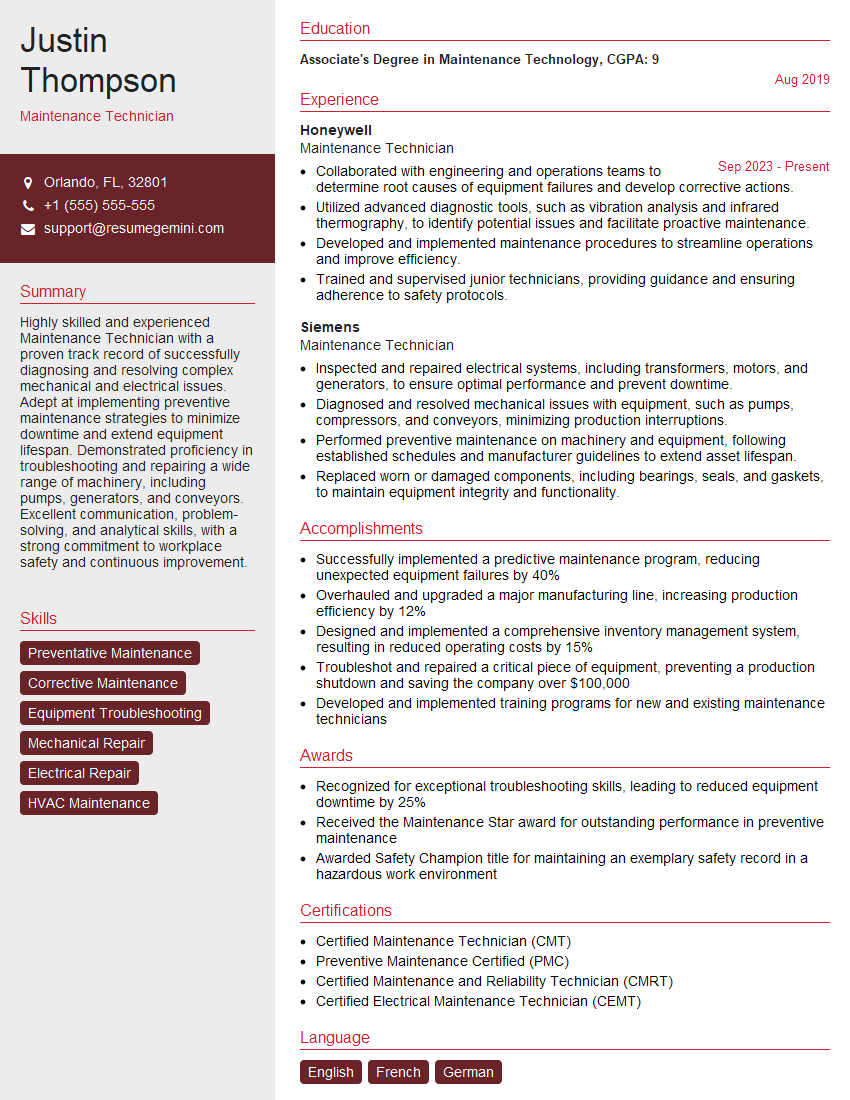
Maintenance Technician Resume Sample

Environmental Technician Resume Sample

Utility Worker Resume Sample

Crane Operator Resume Sample

Construction Worker Resume Sample
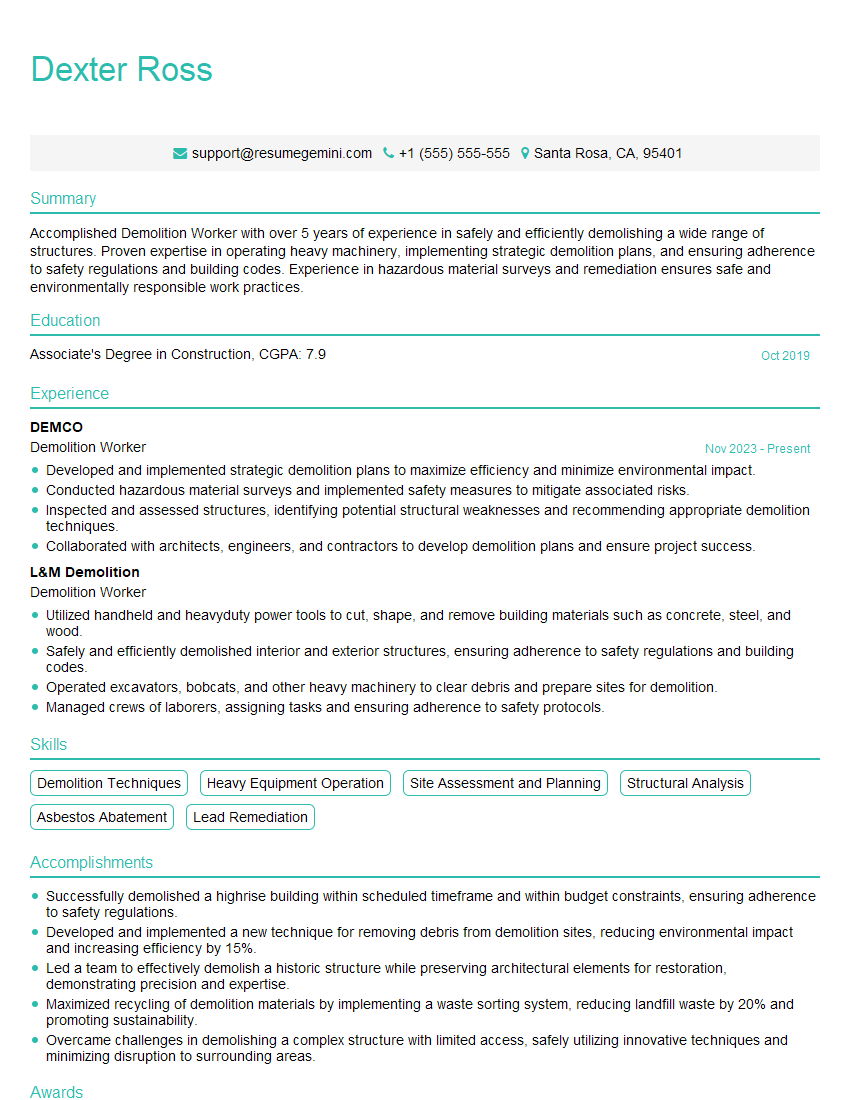
Demolition Worker Resume Sample

Heavy Equipment Operator Resume Sample
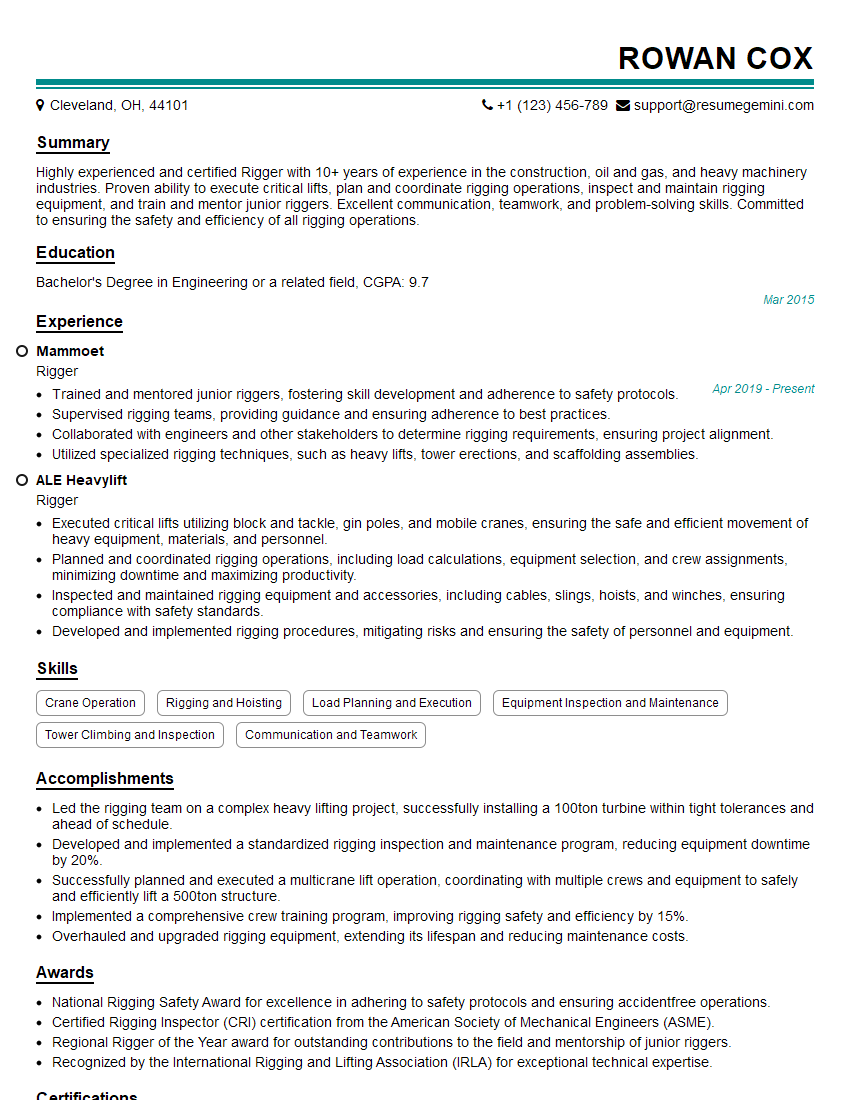
Rigger Resume Sample

Line Worker Resume Sample

Pier Worker Resume Sample

Wharf Worker Resume Sample
Explore more articles
Users Rating of Our Blogs
Share Your Experience
We value your feedback! Please rate our content and share your thoughts (optional).
What Readers Say About Our Blog
Very informative content, great job.
good