Unlock your full potential by mastering the most common Piping Fabrication interview questions. This blog offers a deep dive into the critical topics, ensuring you’re not only prepared to answer but to excel. With these insights, you’ll approach your interview with clarity and confidence.
Questions Asked in Piping Fabrication Interview
Q 1. Explain the different types of pipe welding techniques.
Pipe welding is crucial in piping fabrication, ensuring the integrity and leak-proof nature of the system. Several techniques exist, each chosen based on factors like pipe material, diameter, and application requirements.
- Shielded Metal Arc Welding (SMAW): Also known as stick welding, this method uses a consumable electrode coated with flux to protect the weld from atmospheric contamination. It’s versatile, relatively inexpensive, and portable, making it suitable for various field applications. However, it’s slower than other methods and produces a less aesthetically pleasing weld.
- Gas Metal Arc Welding (GMAW): Or MIG welding, this process uses a continuously fed consumable wire electrode and a shielding gas (usually Argon or CO2) to protect the weld. It’s faster and more efficient than SMAW, resulting in cleaner welds. It’s commonly used for thinner materials and high-speed production.
- Gas Tungsten Arc Welding (GTAW): Also known as TIG welding, this method utilizes a non-consumable tungsten electrode and a shielding gas (usually Argon) for high-quality welds. GTAW excels in precision and offers excellent penetration control, making it ideal for joining stainless steel and other critical applications. However, it’s generally a slower and more skilled-labor intensive process.
- Flux-Cored Arc Welding (FCAW): This process uses a tubular electrode filled with flux and a metal core. It combines advantages of both SMAW and GMAW – requiring less shielding gas while offering higher deposition rates compared to SMAW. It’s suited for outdoor environments due to its self-shielding capabilities but requires specialized equipment.
The choice of welding technique always considers factors such as the material being welded, the desired weld quality, the accessibility of the joint, and the overall project budget.
Q 2. Describe your experience with various pipe materials (e.g., carbon steel, stainless steel).
My experience encompasses a wide range of pipe materials, each demanding specific handling and welding techniques.
- Carbon Steel: This is the most common material due to its strength and cost-effectiveness. I’ve extensively worked with various grades of carbon steel pipes, including A53 and A106, in projects ranging from low-pressure water lines to high-pressure steam systems. Understanding the heat-affected zone (HAZ) during welding is crucial to prevent issues like cracking or embrittlement.
- Stainless Steel: My experience includes working with different grades of stainless steel (304, 316, etc.), focusing on maintaining cleanliness to prevent weld contamination. Stainless steel welding demands precision and expertise to ensure proper fusion and avoid corrosion.
- Other Materials: I have also worked with other materials including copper, cast iron, and occasionally duplex stainless steels, each requiring specialized techniques and safety precautions. For example, copper pipes need specific brazing or welding methods to avoid oxidation.
My understanding extends beyond material properties to include their behavior under stress, temperature fluctuations, and corrosive environments. This allows me to recommend the optimal material and welding procedure for any given application.
Q 3. How do you ensure the quality and accuracy of pipe fabrication?
Quality and accuracy are paramount in piping fabrication. My approach involves a multi-stage process:
- Strict adherence to drawings and specifications: This includes verifying dimensions, material grades, and welding symbols. Any discrepancies are immediately flagged and resolved before proceeding.
- Precision cutting and fitting: Utilizing advanced tools like CNC pipe cutting machines and precision measuring equipment ensures accurate dimensions and minimal waste.
- Qualified welders: All welding is performed by certified welders adhering to strict welding procedures and codes. Regular weld inspections using visual examination and non-destructive testing (NDT) methods (like radiography or ultrasonic testing) are essential.
- Rigorous quality control: This includes regular inspections throughout the fabrication process, from material arrival to final assembly. Documentation of each stage is maintained for traceability.
- Leak testing: The final fabricated assembly undergoes rigorous pressure testing to ensure complete leak-tightness before it’s commissioned.
In one project, we discovered a minor misalignment in a critical pipe section during the final inspection. Immediate corrective action, involving minor rework and re-testing, prevented a potential major failure in the system.
Q 4. What are the common codes and standards used in piping fabrication (e.g., ASME B31.1, ASME B31.3)?
Several codes and standards govern piping fabrication, ensuring safety, reliability, and consistency.
- ASME B31.1: Power Piping – This code covers the design, materials, fabrication, erection, testing, and inspection of power piping systems in power plants. Understanding this code is vital for ensuring the safe operation of high-pressure, high-temperature systems.
- ASME B31.3: Process Piping – This code applies to process piping systems in chemical, petroleum, and other industrial facilities. It dictates acceptable materials, design procedures, and fabrication techniques for a diverse range of process applications.
- ASME Section VIII: Pressure Vessels – While not directly about piping, this code is relevant because many piping systems interface with pressure vessels. Understanding this code ensures proper integration and compatibility.
- AWS D1.1: Structural Welding Code – This code is used for structural welding aspects in piping fabrication, especially when pipe supports and structures are involved.
My experience includes working with all of these codes, and I’m adept at interpreting their complex requirements to ensure compliance in every aspect of our fabrication projects.
Q 5. Explain your understanding of pipe fitting and assembly procedures.
Pipe fitting and assembly involve more than simply joining pipes; it requires precision and understanding of fluid dynamics.
- Proper selection of fittings: Elbows, tees, reducers, and flanges are selected based on factors like pipe size, pressure, and the type of fluid being transported. Understanding the pressure drop associated with various fitting types is critical.
- Alignment and support: Pipes must be correctly aligned to prevent stress concentration and ensure proper flow. Supports and hangers are crucial for preventing sag or undue stress on the piping system.
- Welding and bolting: Appropriate welding techniques, as discussed earlier, are used, along with proper torqueing of bolts on flanges. Precise bolting is crucial for creating leak-free connections.
- Inspection and testing: After assembly, thorough inspection for leaks, proper alignment, and correct support is essential before putting the system into operation.
For example, on one project involving a complex network of high-pressure steam lines, ensuring the precise alignment of elbows and the correct torque on the flange bolts was crucial in preventing steam leaks and ensuring system integrity.
Q 6. How do you handle discrepancies in piping fabrication drawings?
Discrepancies in piping drawings can lead to significant errors and rework. My approach to handling such situations involves:
- Immediate identification: Discrepancies are detected through careful review of drawings and comparison with actual site conditions.
- Documentation and communication: Any discrepancy found is documented, and the relevant stakeholders (engineers, clients, supervisors) are immediately notified.
- Resolution through engineering change orders (ECOs): In most cases, a formal ECO process is followed to rectify the drawing errors. This ensures proper documentation and authorization for any changes.
- On-site problem-solving: Depending on the nature and urgency of the discrepancy, on-site problem-solving may be required. This may involve temporary solutions while awaiting approval of formal ECOs.
- Quality control checks after correction: After implementing the changes, a thorough quality control inspection verifies the corrections and ensures compliance.
One instance involved a mismatched pipe diameter indicated in the drawings. By immediately flagging the discrepancy, we avoided the installation of the wrong pipe, potentially saving significant cost and preventing delays.
Q 7. Describe your experience with different types of pipe supports and hangers.
Pipe supports and hangers are critical for maintaining the integrity and safety of the piping system. My experience includes using a variety of support types:
- Rigid supports: These offer fixed support points, preventing movement and absorbing stress. Examples include weld-on supports, saddle supports, and anchor supports. They are crucial for preventing excessive vibration or displacement.
- Flexible supports: These allow for minor movement and thermal expansion, preventing stress on the pipe during temperature changes. Examples include spring hangers, constant support hangers, and snubbers.
- Guide supports: These constrain the movement of the pipe in a specific direction, preventing sway or lateral displacement.
- Seismic restraints: These are specialized supports designed to withstand seismic forces and prevent pipe damage during earthquakes.
The selection of the appropriate support depends on several factors including pipe size, material, operating conditions (temperature, pressure), and the overall layout of the piping system. I consider factors such as dynamic loading, thermal expansion, and seismic activity to ensure a properly designed support system.
Q 8. How do you ensure the proper alignment of pipes during fabrication?
Ensuring proper pipe alignment during fabrication is crucial for preventing stress concentrations, leaks, and overall system integrity. It’s achieved through a combination of careful planning, precise measurements, and the use of specialized tools.
We start with detailed shop drawings that specify the exact location and orientation of each pipe section. During the fabrication process, we use various alignment tools, such as laser levels, plumb bobs, and alignment clamps. For larger diameter pipes, we might even employ sophisticated laser trackers to ensure millimeter-level accuracy. Think of it like building a skyscraper – each beam needs to be perfectly aligned to support the entire structure. Incorrect alignment in piping systems can lead to similar catastrophic failures.
For instance, on a recent project involving high-pressure steam lines, we used a laser tracking system to meticulously align each pipe section. This ensured that the expansion loops were correctly positioned, preventing undue stress on the welds when the system was under pressure. Any deviation from the plan was immediately corrected, ensuring a leak-free and long-lasting system.
Q 9. Explain your familiarity with various pipe bending methods.
Pipe bending is a critical aspect of piping fabrication, and proficiency in various methods is essential. The choice of method depends on factors like pipe material, diameter, radius, and the desired bend accuracy.
- Hot Bending: This method involves heating the pipe to a specific temperature to increase its plasticity, making it easier to bend. It’s often used for larger diameter pipes or those made of materials that are difficult to bend cold. It’s like softening clay to shape it – the heat makes the metal more malleable.
- Cold Bending: This method uses a bending machine to bend the pipe at room temperature. It’s suitable for smaller diameter pipes and materials that are readily bendable. Specialized dies are used to ensure a consistent bend radius and prevent collapse or kinking. Think of it like carefully bending a coat hanger – a controlled and gradual process.
- Mandrel Bending: A mandrel – a precisely shaped tool – is inserted into the pipe before bending to support the inner wall, preventing collapse. This method is ideal for creating tight radius bends without compromising the pipe’s integrity. Imagine using a form to shape a cake; the mandrel acts as that form for the pipe.
My experience encompasses all three methods. I can select the most appropriate technique based on the project’s requirements, ensuring optimal results and minimizing the risk of defects.
Q 10. What are your preferred methods for inspecting welds?
Weld inspection is paramount to ensure the integrity and safety of the piping system. My preferred methods incorporate both visual inspection and non-destructive testing (NDT):
- Visual Inspection (VT): This is the first and most basic method, involving a thorough visual examination of the weld for surface defects, such as cracks, porosity, and undercuts. Good lighting and magnification tools are crucial. It’s like a meticulous proofread of your work – catching any immediately visible errors.
- Radiographic Testing (RT): This NDT method uses X-rays or gamma rays to detect internal weld defects, such as cracks, porosity, and inclusions. It provides a detailed image of the weld’s internal structure. It’s like getting an X-ray of the weld to see what’s inside.
- Ultrasonic Testing (UT): This uses high-frequency sound waves to detect internal defects. It’s particularly effective for detecting cracks and discontinuities. Think of it like sonar; it uses sound waves to reveal hidden flaws.
The choice of inspection method depends on the weld’s criticality and the project’s specific requirements. For high-pressure systems, I’d typically use a combination of VT, RT, and UT for complete assurance.
Q 11. How do you address weld defects?
Addressing weld defects involves a systematic approach that prioritizes safety and compliance with relevant codes and standards. The first step is to thoroughly document the defect’s nature, location, and size. The appropriate corrective action depends on the severity and type of defect.
- Minor Defects: Minor surface defects may be addressed through grinding or other surface cleaning techniques. This is a relatively simple repair that restores the surface integrity.
- Major Defects: Significant defects, such as cracks or incomplete penetration, require more extensive corrective action, potentially including weld removal and re-welding. This requires careful planning and execution, often with additional inspection after the repair.
The repaired weld is always subjected to re-inspection using the appropriate NDT method to confirm its integrity. This iterative process guarantees that the final product meets the required quality standards. Safety is paramount – a faulty weld can have serious consequences.
Q 12. Describe your experience with non-destructive testing (NDT) methods.
My experience with NDT methods is extensive. I’m proficient in various techniques, including:
- Radiographic Testing (RT): Interpreting radiographs to identify internal weld defects.
- Ultrasonic Testing (UT): Operating ultrasonic equipment and analyzing the resulting data to detect internal flaws.
- Magnetic Particle Testing (MT): Detecting surface and near-surface cracks in ferromagnetic materials.
- Liquid Penetrant Testing (PT): Identifying surface-breaking defects in various materials.
I understand the limitations of each method and can select the most appropriate technique for a given application. NDT is critical for ensuring the quality and safety of piping systems, especially in high-pressure, high-temperature, or critical service applications. I’ve used these methods to identify and address defects that could have led to potentially catastrophic failures.
Q 13. What safety procedures do you follow during piping fabrication?
Safety is my top priority. I meticulously follow a comprehensive set of safety procedures during piping fabrication, including:
- Personal Protective Equipment (PPE): Consistent use of safety glasses, hard hats, gloves, and appropriate respiratory protection.
- Lockout/Tagout Procedures: Ensuring that all power sources are properly isolated before performing any work on piping systems.
- Confined Space Entry Procedures: Following strict protocols for entering and working in confined spaces.
- Hot Work Permits: Obtaining the necessary permits and following all safety procedures for hot work activities, such as welding and cutting.
- Fall Protection: Implementing appropriate fall protection measures when working at heights.
Regular safety meetings and toolbox talks reinforce safe practices and address potential hazards. I actively participate in these meetings and encourage my team to report any safety concerns immediately. A safe work environment is not just a requirement; it’s a fundamental aspect of our work ethic.
Q 14. How do you manage and resolve conflicts on a piping fabrication project?
Conflict resolution is a critical skill in project management. My approach involves open communication, collaboration, and a focus on finding mutually beneficial solutions. I start by actively listening to all involved parties to understand their perspectives and concerns.
If the conflict involves technical issues, I use my expertise to provide factual information and objective analysis to help find a solution. If the conflict stems from scheduling or resource constraints, I collaborate with the project manager to develop a revised plan that accommodates everyone’s needs. I believe in approaching conflicts as opportunities to improve teamwork and project outcomes. For example, on a recent project with conflicting design specifications, I facilitated a meeting between the design team and the fabrication team, leading to a compromise that satisfied both parties while maintaining the project’s integrity and safety requirements.
My goal is always to create a collaborative and respectful environment where everyone feels heard and valued. Open communication and a willingness to compromise are key to resolving conflicts effectively and efficiently.
Q 15. Describe your experience with using fabrication software.
My experience with fabrication software spans several years and encompasses a range of programs. I’m proficient in AutoCAD Plant 3D, which I use extensively for 3D modeling, isometric generation, and material take-offs. I’m also familiar with PDMS (now AVEVA Plant), a powerful software suite commonly used for large-scale projects. I’ve utilized these tools to design, detail, and manage piping systems for various industrial settings, from chemical plants to power generation facilities. For example, on a recent project involving a complex refinery upgrade, I leveraged AutoCAD Plant 3D’s clash detection features to identify and resolve potential interference issues between piping systems and other plant equipment *before* fabrication, saving significant time and cost. I also have experience with other software like SolidWorks for smaller, more specialized components. I am always keen to learn and adapt to new software advancements within the industry.
Career Expert Tips:
- Ace those interviews! Prepare effectively by reviewing the Top 50 Most Common Interview Questions on ResumeGemini.
- Navigate your job search with confidence! Explore a wide range of Career Tips on ResumeGemini. Learn about common challenges and recommendations to overcome them.
- Craft the perfect resume! Master the Art of Resume Writing with ResumeGemini’s guide. Showcase your unique qualifications and achievements effectively.
- Don’t miss out on holiday savings! Build your dream resume with ResumeGemini’s ATS optimized templates.
Q 16. How do you interpret isometrics and piping and instrumentation diagrams (P&IDs)?
Interpreting isometrics and P&IDs is fundamental to my work. P&IDs (Piping and Instrumentation Diagrams) provide the overall process flow, showing the equipment layout and piping connections. They’re like the architectural blueprints of the piping system, illustrating the ‘what’ and ‘where’ of the piping. Isometrics, on the other hand, are detailed drawings showing the precise dimensions and routing of individual pipe runs. They are a 3D representation ‘unfolded’ into a 2D view. Think of them as construction plans, detailing the ‘how’ of the piping. I carefully study both documents concurrently. The P&ID helps me understand the system’s purpose and flow, while the isometric guides me through the fabrication process step-by-step, dictating pipe sizes, bends, fittings, and support requirements. For instance, if the P&ID indicates a specific valve type and location, I’ll cross-reference it with the isometric to ensure the correct valve is incorporated during fabrication and the routing accommodates its size and functionality. This ensures accuracy and minimizes errors.
Q 17. What is your experience with pipe stress analysis?
Pipe stress analysis is crucial for ensuring the integrity and longevity of piping systems, particularly in high-pressure or temperature applications. My experience includes using CAESAR II and AutoPIPE software for performing these analyses. These programs allow me to model the piping system, considering factors like pressure, temperature, weight, and support conditions. The analysis helps identify potential stress concentrations, vibrations, and thermal expansion issues. For instance, I recently used CAESAR II to analyze a high-temperature steam line. The analysis revealed a potential stress concentration at a specific elbow. By adjusting the support design and pipe routing, we mitigated the stress, preventing potential failures during operation and ensuring the safety of the plant. Understanding the results of a pipe stress analysis allows me to make informed decisions regarding material selection, support design, and overall system reliability.
Q 18. How do you manage project timelines and budgets?
Managing project timelines and budgets requires a structured approach. I use tools like Microsoft Project and Primavera P6 to create detailed schedules, breaking down projects into manageable tasks with assigned durations and resources. I regularly monitor progress against the schedule and budget, identifying any potential deviations early on. This proactive approach includes regular meetings with the project team to discuss progress, challenges, and solutions. For budgeting, I develop cost estimates based on material costs, labor hours, and equipment needs. I continuously track actual expenditures and compare them against the budget, identifying and addressing discrepancies. For example, on a recent project, we encountered an unexpected delay due to a supplier issue. By promptly communicating the delay to stakeholders and re-evaluating the schedule, we successfully minimized the impact on the overall project timeline and budget.
Q 19. Explain your understanding of different types of pipe joints and connections.
My understanding of pipe joints and connections is extensive. We use various types depending on the application, pressure, temperature, and material. Common types include:
- Butt welds: These create a strong, continuous joint, ideal for high-pressure applications. Proper weld procedures are crucial.
- Socket welds: Easier and faster to fabricate than butt welds, suitable for lower-pressure systems.
- Flanged joints: Allow for easy disassembly and maintenance, used where frequent access is needed. Gaskets are crucial for sealing.
- Threaded connections: Simple and quick to assemble, generally used for smaller diameter pipes and lower pressures.
- Compression fittings: Reliable and easy to install, often used in low-pressure applications.
The selection of the appropriate joint is a critical decision that directly affects the safety and reliability of the system. I consider all factors to ensure the chosen joint is fit for purpose.
Q 20. What are your experiences with different types of pipe insulation?
Pipe insulation is essential for maintaining process temperatures, preventing energy loss, and ensuring personnel safety. I’m familiar with a variety of insulation materials, including:
- Fiberglass: A common and cost-effective option, offering good thermal performance.
- Calcium silicate: Provides excellent thermal performance and fire resistance, suitable for high-temperature applications.
- Polyurethane foam: Offers superior insulation properties and is often used in pre-insulated pipes.
- Mineral wool: Good for both thermal and acoustic insulation.
The choice of insulation material depends on factors like temperature, environmental conditions, and regulatory requirements. Proper insulation installation is also critical to maintain its effectiveness and prevent condensation or other issues.
Q 21. How familiar are you with different types of pipe hangers and supports?
Pipe hangers and supports are vital for providing structural integrity and preventing excessive stress on piping systems. I’m experienced with various types, including:
- Constant support hangers: Provide constant support regardless of thermal expansion.
- Variable spring hangers: Accommodate thermal expansion and movement.
- Rigid supports: Provide fixed points for the piping system.
- Snubbers: Limit movement during seismic events or other dynamic loads.
Proper hanger selection and placement are crucial to minimize stress on the piping system. Misplacement can lead to leaks, failures, and safety hazards. I use software like AutoPIPE to ensure appropriate support design and placement.
Q 22. Describe your experience in working with different types of flanges.
My experience encompasses a wide range of flanges, from the common weld neck and slip-on types to more specialized designs like blind flanges, threaded flanges, and socket weld flanges. Each type has its own strengths and weaknesses, and the selection depends critically on the application’s pressure, temperature, and corrosive environment. For instance, weld neck flanges are preferred for high-pressure applications due to their robust design and full penetration weld, providing superior strength and leak tightness. Slip-on flanges, on the other hand, are easier and faster to install but might require more attention to ensure proper welding and alignment. I’ve worked extensively with ANSI and ASME flange standards, ensuring compliance and selecting the appropriate flange rating for each specific project. One project involved replacing corroded slip-on flanges in a chemical processing plant with weld neck flanges to enhance safety and longevity, highlighting the importance of selecting the right flange type for optimal performance and safety.
Furthermore, my experience extends to understanding the nuances of different materials used in flange construction, including carbon steel, stainless steel, and exotic alloys. The choice of material is critical for corrosion resistance and compatibility with the fluid being transported. I have personally overseen the inspection and testing of flanges to ensure they meet the required specifications, contributing to the overall success and safety of numerous piping systems.
Q 23. How do you ensure the structural integrity of a piping system?
Ensuring the structural integrity of a piping system is paramount and involves a multi-faceted approach. It begins with meticulous design, utilizing engineering software like AutoPIPE or Caesar II to analyze stress, pressure, and thermal effects on the system. This analysis helps determine appropriate pipe sizes, wall thicknesses, and support configurations. Proper support design, including anchors, guides, and restraints, is crucial to prevent excessive stress and vibration. Think of it like building a bridge – you need robust supports to ensure it can withstand the loads it’s designed to carry.
During fabrication, stringent quality control measures are implemented. This includes visual inspection of welds, non-destructive testing (NDT) techniques like radiography and ultrasonic testing to detect internal flaws, and hydrostatic testing to verify the system’s ability to withstand pressure. Material traceability and compliance with relevant codes and standards (like ASME B31.1 or B31.3) are also crucial. Regular inspection and maintenance of the piping system throughout its operational life are equally important to identify and address any potential issues early on, preventing catastrophic failures. A real-world example involved a project where a flawed weld was detected during radiographic inspection, preventing a potential major leak during operation.
Q 24. Describe your process for troubleshooting piping problems during construction.
Troubleshooting piping problems during construction often involves a systematic approach. First, I thoroughly document the problem, including location, symptoms, and any relevant circumstances. Then, I systematically investigate potential causes. This might involve checking design drawings, reviewing installation procedures, and visually inspecting the affected area. For example, leaks might indicate welding defects, misaligned components, or corrosion. If the problem involves complex issues like vibration or unusual stress, further analysis using engineering software might be needed.
My approach includes carefully evaluating available data, conducting additional testing if necessary, and involving other specialists as needed. Collaboration with engineers, welders, and inspectors is key to finding the root cause and implementing effective solutions. Effective communication and accurate documentation throughout the process are crucial for effective troubleshooting. In one instance, a seemingly simple leak was traced back to a faulty gasket, highlighting the importance of paying attention to even the smallest details.
Q 25. What is your experience with prefabrication of piping modules?
I have extensive experience in the prefabrication of piping modules. This involves the off-site fabrication of piping assemblies, including welding, insulation, and painting, before they are transported and installed at the project site. This approach significantly reduces on-site construction time, improves quality control, and minimizes disruptions to operational areas. Prefabs allow for better quality control in a controlled environment, making inspection and testing more efficient.
My experience includes working with various prefabrication techniques, from simple spool fabrication to complex, fully-assembled modules. I’m proficient in developing prefabrication drawings and schedules and overseeing the entire process, from material procurement to final inspection. One project involved prefabricating a significant portion of a refinery’s piping system, resulting in a significant reduction in overall project duration and improved safety.
Q 26. How do you ensure adherence to quality control procedures?
Adherence to quality control procedures is non-negotiable. It’s woven into every stage of the process, from material selection and fabrication to installation and testing. We follow established protocols, including regular inspections, NDT testing (as mentioned before), and meticulous documentation of all activities. This includes maintaining traceability records for materials and ensuring compliance with relevant codes and standards. We use checklists and standardized forms to maintain consistency and avoid errors. Regular audits and quality control meetings help ensure procedures are followed effectively and identify areas for improvement.
A key aspect is proactive identification and resolution of issues, rather than a reactive approach. This proactive method ensures that problems are addressed early before they escalate into major problems. A strong emphasis on training and competency of the workforce also contributes significantly to consistent quality output. In my experience, a rigorous quality control program not only enhances the final product’s quality but also reduces rework, delays, and costs.
Q 27. What software and tools are you familiar with?
I’m proficient in several software packages commonly used in piping fabrication and design. This includes AutoPIPE for stress analysis and piping system design, Caesar II for similar purposes, and various CAD software packages like AutoCAD and Inventor for drafting and 3D modeling. I’m also familiar with project management software such as Primavera P6 for scheduling and resource allocation. In addition, I’m comfortable using specialized software for material take-off and cost estimation. My skills also extend to the use of various hand tools and measuring instruments commonly used in piping fabrication, including measuring tapes, levels, and welding equipment. Proficiency in these tools ensures that the work is completed with accuracy and efficiency.
Q 28. Describe your approach to working in a team environment on a piping project.
My approach to teamwork on piping projects emphasizes open communication, collaboration, and mutual respect. I believe in clearly defining roles and responsibilities and maintaining transparent communication channels amongst team members. I’m adept at fostering a positive and collaborative work environment where everyone feels valued and can contribute their expertise. Active listening, constructive feedback, and conflict resolution skills are essential aspects of my approach.
I’ve found that regular team meetings, progress updates, and problem-solving sessions are vital for coordinating tasks, sharing information, and resolving potential issues proactively. On a large project, for example, I might take the lead on coordinating the work of welders, fitters, and inspectors, ensuring everyone’s efforts are aligned to meet project goals and deadlines while maintaining safety. A team’s success depends on efficient communication, collaboration and a shared understanding of project requirements.
Key Topics to Learn for Your Piping Fabrication Interview
- Materials and Specifications: Understanding different pipe materials (carbon steel, stainless steel, etc.), their properties, and relevant industry standards (ASME, ANSI, etc.) is crucial. Consider how material selection impacts project cost and longevity.
- Fabrication Processes: Become proficient in describing various fabrication techniques like cutting, bending, welding (different types and their applications), and joining methods. Be prepared to discuss the advantages and disadvantages of each process.
- Blueprint Reading and Interpretation: Demonstrate your ability to accurately read and interpret piping isometric drawings, P&IDs (Piping and Instrumentation Diagrams), and fabrication drawings. Practice identifying critical dimensions, specifications, and tolerances.
- Welding Techniques and Quality Control: Discuss different welding processes (MIG, TIG, SMAW), their applications, and quality control procedures (visual inspection, NDT methods). Understanding weld defects and their causes is vital.
- Safety Procedures and Regulations: Highlight your familiarity with OSHA regulations and safe working practices in a piping fabrication environment. This demonstrates your commitment to workplace safety.
- Project Management and Cost Estimation: Discuss your experience (if any) in project planning, scheduling, and cost estimation within piping fabrication projects. Even basic understanding demonstrates valuable skills.
- Troubleshooting and Problem-Solving: Be ready to discuss how you approach challenges during fabrication. Using examples from your experience (even personal projects) to showcase your problem-solving skills is beneficial.
Next Steps
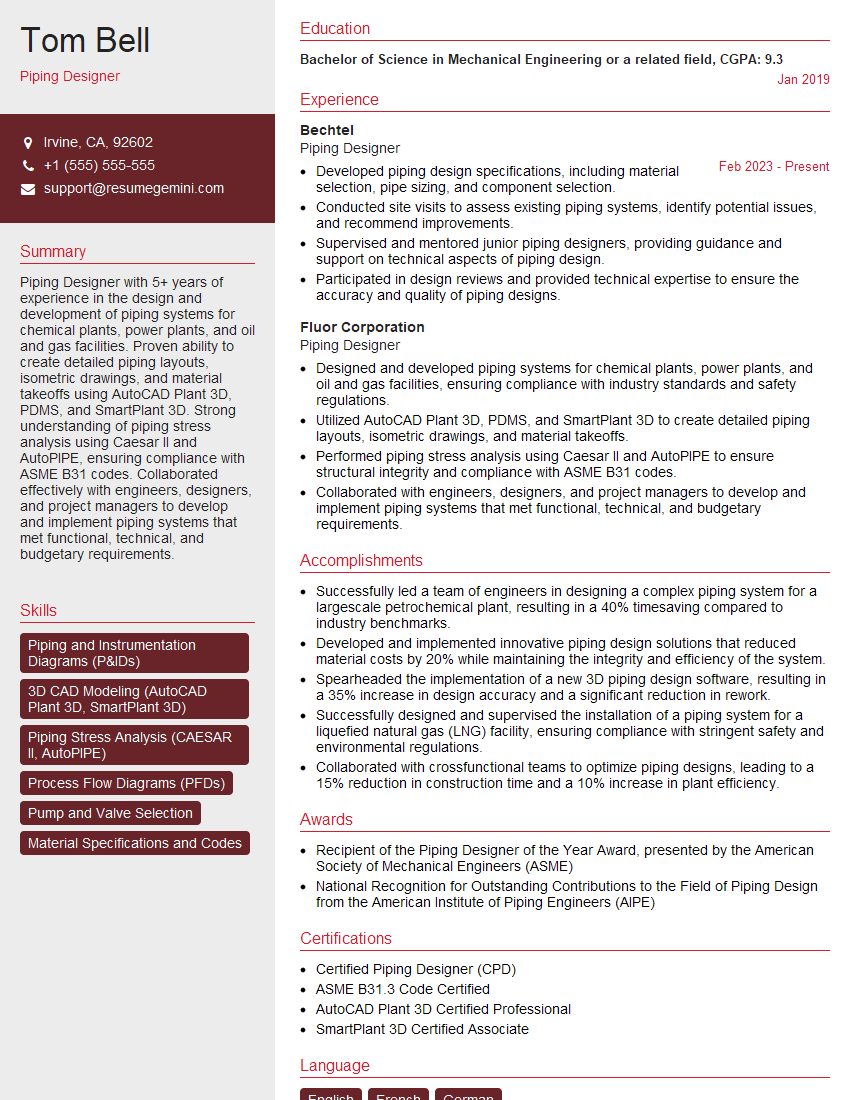
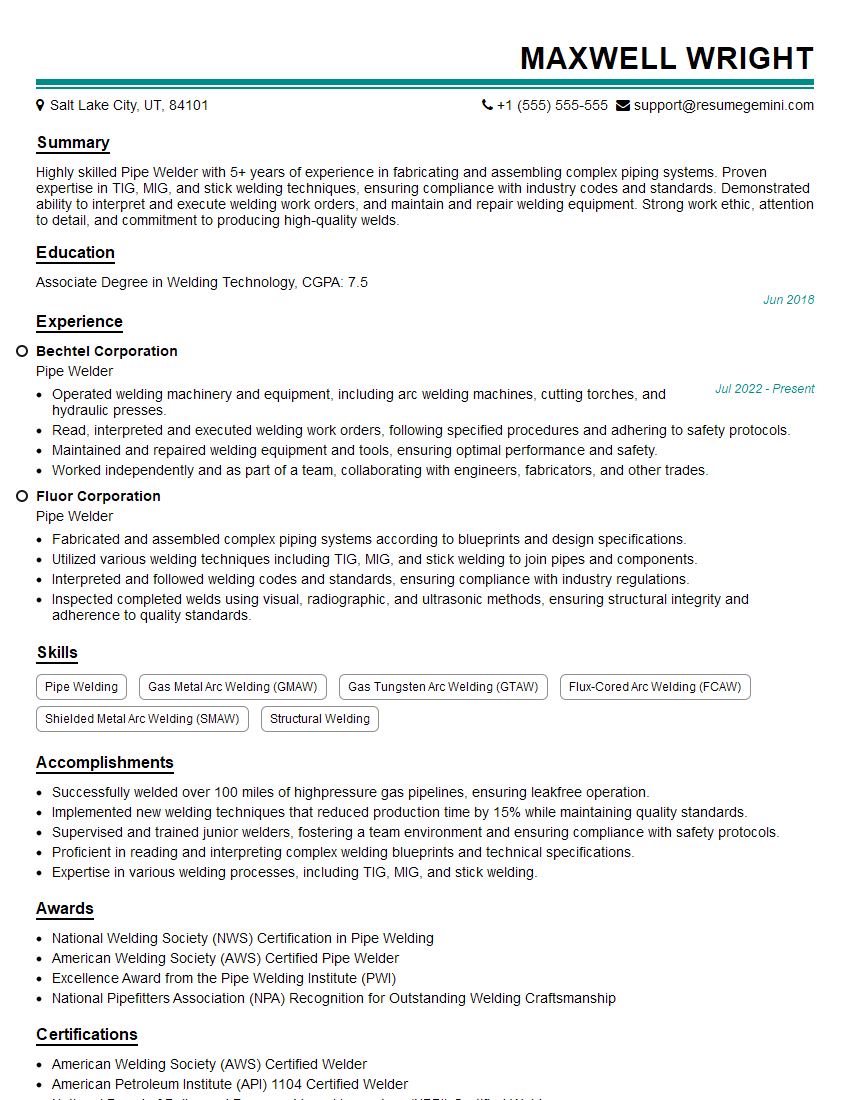
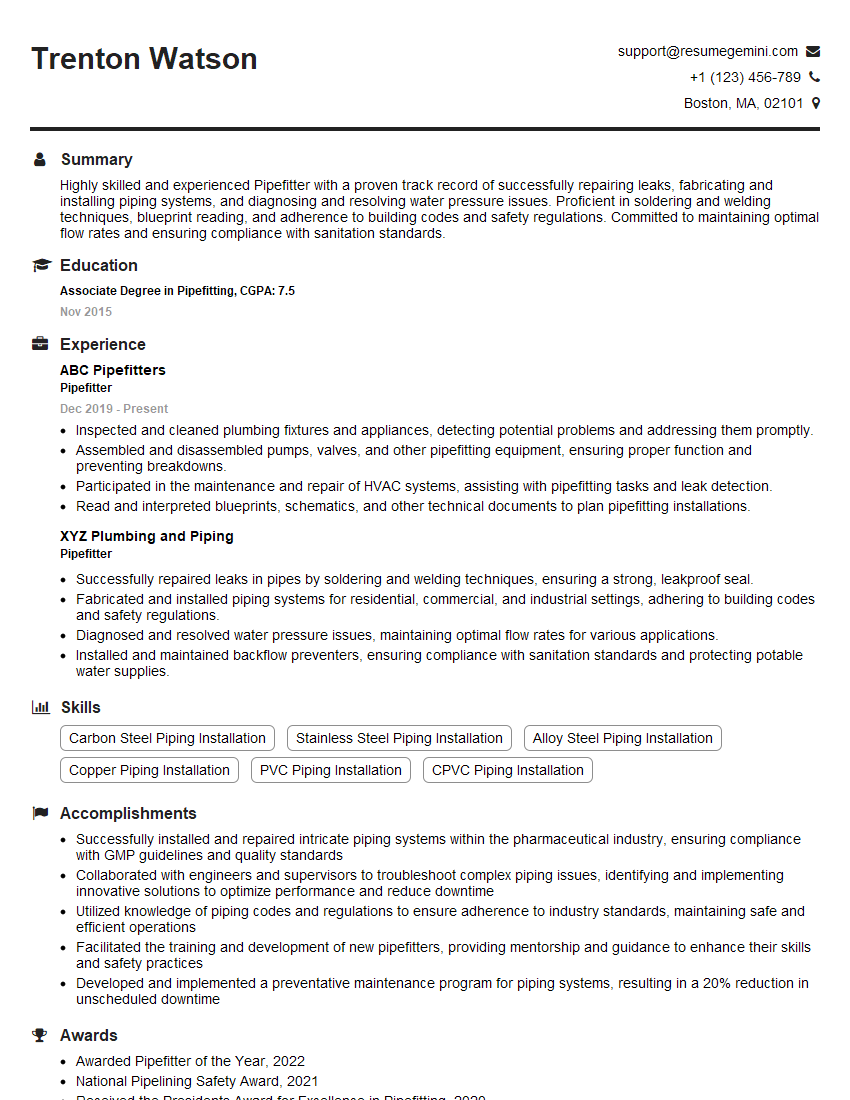
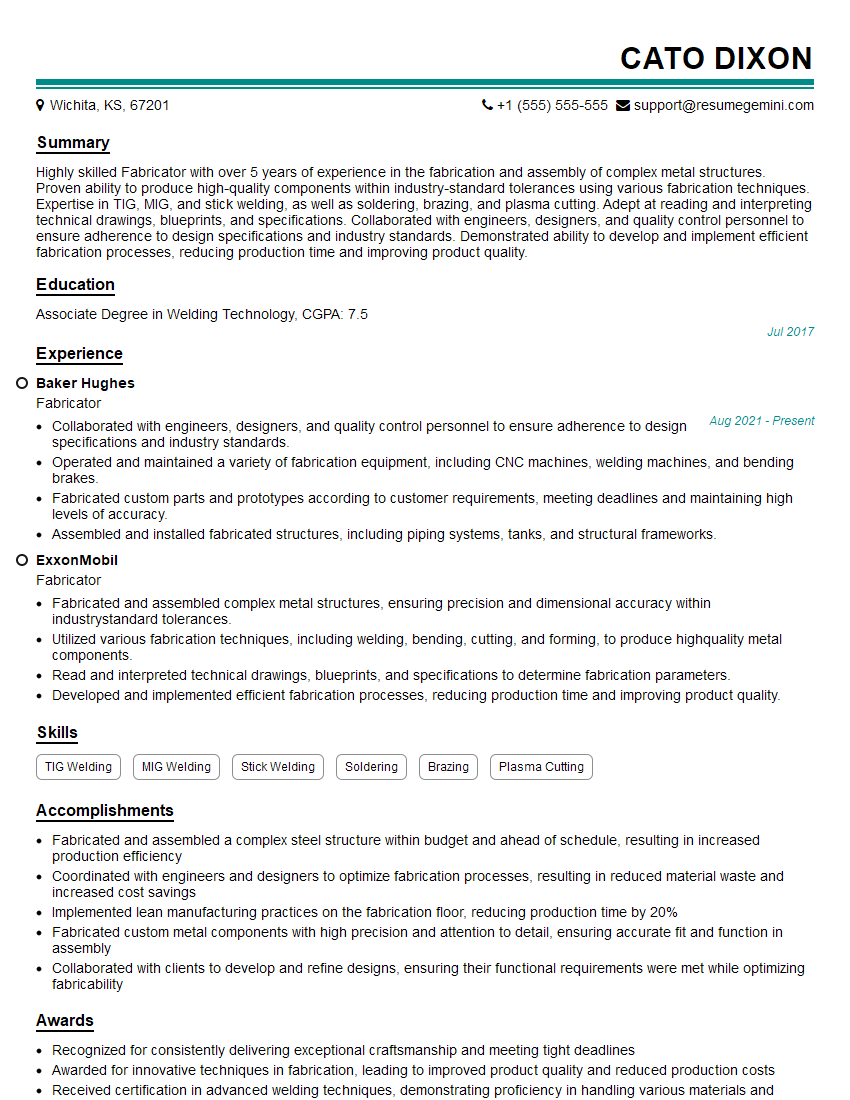
Mastering Piping Fabrication opens doors to a rewarding career with excellent growth potential in diverse industries. To maximize your job prospects, creating an ATS-friendly resume is paramount. A well-crafted resume helps your application stand out and increases your chances of landing an interview. We recommend using ResumeGemini, a trusted resource, to build a professional and impactful resume. ResumeGemini provides examples of resumes tailored to Piping Fabrication to help you create a winning application.
Explore more articles
Users Rating of Our Blogs
Share Your Experience
We value your feedback! Please rate our content and share your thoughts (optional).
What Readers Say About Our Blog
Very informative content, great job.
good