Every successful interview starts with knowing what to expect. In this blog, we’ll take you through the top Planning and Coordination interview questions, breaking them down with expert tips to help you deliver impactful answers. Step into your next interview fully prepared and ready to succeed.
Questions Asked in Planning and Coordination Interview
Q 1. Describe your experience with project planning methodologies (e.g., Agile, Waterfall).
My experience encompasses both Agile and Waterfall methodologies, and I tailor my approach to the specific project needs. Waterfall, with its sequential phases – requirements, design, implementation, testing, deployment, and maintenance – is best suited for projects with well-defined requirements and minimal expected changes. I’ve successfully used Waterfall on projects like developing a new internal inventory management system where the requirements were clearly established upfront. Agile, on the other hand, thrives in dynamic environments with evolving requirements. Its iterative approach, emphasizing collaboration and frequent feedback loops, allows for greater flexibility and adaptation. I’ve leveraged Agile, specifically Scrum, in projects involving software development for a rapidly changing market, allowing us to respond quickly to customer feedback and market trends. In essence, I’m proficient in both and choose the method that best fits the project’s complexity, risk tolerance, and client needs.
Q 2. How do you prioritize tasks in a high-pressure environment?
Prioritizing in high-pressure situations requires a structured approach. I use a combination of techniques, including the Eisenhower Matrix (urgent/important), MoSCoW method (must have/should have/could have/won’t have), and risk assessment. The Eisenhower Matrix helps categorize tasks based on urgency and importance, allowing me to focus on high-impact, time-sensitive tasks first. The MoSCoW method helps prioritize features or functionalities, ensuring critical elements are addressed first. A risk assessment matrix helps identify potential roadblocks and prioritize tasks that mitigate those risks. For example, if a project faces a looming deadline and a critical component is at risk, I’d prioritize addressing that component even if other tasks seem equally important, mitigating the risk of project failure. This structured approach ensures that I’m working on the most valuable tasks first while minimizing potential negative consequences.
Q 3. Explain your approach to managing multiple projects simultaneously.
Managing multiple projects concurrently requires meticulous organization and prioritization. I rely heavily on project management software (more on that later) to maintain a clear overview of all tasks, deadlines, and dependencies across projects. I allocate time blocks for specific projects, ensuring that I dedicate focused time to each. Regularly reviewing progress against timelines and resource allocation is crucial. I also prioritize communication across projects to identify and address potential conflicts or dependencies early on. Think of it like juggling – each project is a ball, and skillful coordination keeps them all in the air without dropping any. Effective delegation and team empowerment are also key to success in this scenario, ensuring that each project has dedicated support.
Q 4. Describe a time you had to adapt a plan due to unforeseen circumstances.
In one project, we were developing a new mobile application with a tight launch deadline. A week before the launch, a critical third-party API went down unexpectedly, impacting a significant portion of the app’s functionality. Immediately, we convened a crisis meeting, assessing the impact and available options. We couldn’t afford to delay the launch. We adapted by implementing a workaround using an alternative API, which, although not ideal, allowed us to launch the app with a reduced set of features. Post-launch, we prioritized rebuilding the functionality using the original API while actively communicating the temporary limitations to our users. This experience highlighted the importance of having a flexible plan, a strong team, and clear communication channels to adapt to unforeseen circumstances. The key takeaway was maintaining transparency and focusing on delivering value, even with limitations.
Q 5. How do you ensure effective communication within a team during a project?
Effective team communication is the bedrock of any successful project. I employ several strategies: regular team meetings (daily stand-ups in Agile projects), utilizing project management software for task updates and discussions, and leveraging collaboration tools like shared document repositories. Furthermore, I encourage open communication and feedback – fostering a culture of transparency where team members feel comfortable voicing concerns or suggestions. I actively listen to understand individual perspectives and challenges and promote a respectful dialogue among team members. Clear roles, responsibilities, and communication channels are also crucial. Think of it as building a bridge – clear communication keeps the team connected and working towards the same goal.
Q 6. What tools or software do you use for planning and coordination?
My toolset includes project management software like Asana, Jira, and Microsoft Project. Asana is excellent for task management, collaboration, and tracking progress. Jira is powerful for Agile projects, managing sprints, and tracking bugs. Microsoft Project is suitable for larger, more complex projects requiring detailed scheduling and resource allocation. I also utilize communication tools like Slack and Microsoft Teams for instant messaging and virtual meetings, and collaboration platforms like Google Workspace for document sharing and version control. The choice of tools depends on the project’s nature and the team’s preferences, but the focus is always on choosing tools that enhance efficiency and collaboration.
Q 7. How do you track progress and measure success in your projects?
Progress tracking and success measurement are integral parts of my approach. I utilize project management software to monitor task completion, milestones achieved, and resource utilization. Key performance indicators (KPIs) are defined at the beginning of each project, aligned with project goals. These KPIs can include factors like on-time delivery, budget adherence, quality metrics, and customer satisfaction. Regular progress reports and dashboards visualize progress against the KPIs, facilitating timely intervention if deviations are detected. Post-project reviews, involving the entire team, are essential for identifying areas of improvement and celebrating successes. This holistic approach ensures that we not only deliver the project but also learn and improve from each experience.
Q 8. How do you handle conflicting priorities or deadlines?
Conflicting priorities are a common challenge in project management. My approach involves a structured prioritization process. First, I clearly define the objectives and goals of each task, considering their impact on the overall project. I then use a prioritization matrix, often employing a system like MoSCoW (Must have, Should have, Could have, Won’t have) to rank tasks based on their importance and urgency. This matrix helps visualize dependencies and trade-offs. If deadlines conflict, I initiate open communication with stakeholders to discuss potential solutions. This might involve renegotiating deadlines, re-allocating resources, or adjusting project scope. For example, in a previous project, we faced a conflict between launching a critical feature and completing thorough user testing. Through stakeholder communication, we prioritized the feature launch with a revised testing schedule that incorporated user feedback post-launch.
- Clearly Define Objectives: Understanding the ‘why’ behind each task is crucial for effective prioritization.
- Prioritization Matrix (e.g., MoSCoW): A structured approach for ranking tasks based on their importance and urgency.
- Open Communication: Involving stakeholders in decision-making ensures buy-in and manages expectations.
Q 9. Describe your experience with risk management in project planning.
Risk management is integral to successful project planning. My experience involves proactively identifying, assessing, and mitigating potential risks. I typically use a risk register to document identified risks, their likelihood, their potential impact, and mitigation strategies. This register is a living document, updated regularly as the project progresses. For example, I once identified a potential risk of supplier delays in a software development project. We mitigated this by securing a secondary supplier and building buffer time into the schedule. We also developed contingency plans for various scenarios, such as alternative technologies or expedited delivery options. This proactive approach allowed us to effectively navigate unexpected challenges and keep the project on track.
- Risk Register: A centralized document for tracking and managing risks.
- Proactive Identification: Regularly assess potential risks throughout the project lifecycle.
- Mitigation Strategies: Develop plans to reduce the likelihood or impact of identified risks.
- Contingency Planning: Develop alternative plans to address unforeseen circumstances.
Q 10. How do you delegate tasks effectively?
Effective delegation is about assigning tasks to the right people, at the right time, with the right level of support. It’s not just about offloading work; it’s about empowering team members. I begin by clearly defining the task, including the expected outcomes, timelines, and required resources. I then assess each team member’s skills, experience, and workload to match the task to the most appropriate individual. I provide the necessary training and support, ensuring they have the tools and information they need to succeed. Regular check-ins and open communication are vital to monitor progress and provide guidance. For instance, in a previous project, I delegated a complex data analysis task to a team member with strong analytical skills but limited experience with the specific software. I provided them with a training session on the software and regular feedback during the process.
- Clear Task Definition: Ensure everyone understands the objective, expectations, and resources.
- Skill Matching: Assign tasks to individuals with the appropriate skills and experience.
- Training and Support: Provide necessary resources and guidance to ensure success.
- Regular Check-ins: Monitor progress and provide ongoing support and feedback.
Q 11. How do you monitor team performance and identify areas for improvement?
Monitoring team performance is ongoing, not a one-time activity. I use a combination of methods including regular progress meetings, reviewing deliverables, tracking key performance indicators (KPIs), and conducting informal check-ins. These methods provide insights into individual and team productivity, quality of work, and adherence to project plans. Areas for improvement are identified through analyzing data from these monitoring activities, seeking feedback from team members, and conducting regular performance reviews. For example, if we consistently miss deadlines in a specific area, we might need to re-evaluate resource allocation or provide additional training. Addressing issues promptly, fostering a culture of open feedback, and focusing on continuous improvement are key.
- Regular Progress Meetings: Track progress and address any roadblocks.
- KPI Tracking: Monitor key metrics to measure progress and identify areas of concern.
- Feedback Mechanisms: Encourage open communication and solicit feedback from team members.
- Performance Reviews: Conduct formal reviews to assess performance and identify areas for development.
Q 12. What is your experience with budget management in project planning?
Budget management is crucial for project success. My experience involves creating detailed budgets that include all anticipated costs, from personnel and materials to software licenses and travel. I utilize budgeting software and spreadsheets to track expenses and monitor variances against the budget. Regular budget reviews are conducted to identify potential overruns or underspends. For example, in a recent project, we anticipated a specific cost for a software license, but we found a more cost-effective alternative, leading to savings that we reallocated to other project needs. Proactive monitoring and transparent communication with stakeholders are vital for maintaining budget control.
- Detailed Budgeting: Include all anticipated costs and allocate resources effectively.
- Budgeting Software/Spreadsheets: Use tools to track expenses and monitor variances.
- Regular Budget Reviews: Identify potential overruns or underspends and make adjustments as needed.
- Transparent Communication: Keep stakeholders informed of budget status.
Q 13. How do you ensure projects stay on schedule and within budget?
Keeping projects on schedule and within budget requires a proactive and integrated approach. This involves rigorous planning, regular monitoring, and effective communication. I use project management software to track progress, manage tasks, and identify potential delays. Regular status meetings with the team and stakeholders help identify any issues early on. If deviations from the plan occur, I work with the team to develop corrective actions, which may involve re-prioritization of tasks, reallocation of resources, or adjusting the project scope. For example, if a task is running behind schedule, we might need to allocate additional resources or re-evaluate the task’s complexity. Continuous monitoring and adjustments are critical to maintaining control.
- Project Management Software: Use tools for task management, progress tracking, and reporting.
- Regular Status Meetings: Identify potential issues and develop corrective actions.
- Proactive Problem Solving: Address deviations from the plan promptly and effectively.
- Scope Management: Clearly define project scope and manage any changes effectively.
Q 14. Describe your experience with resource allocation in project planning.
Resource allocation involves strategically assigning personnel, equipment, and other resources to project tasks to optimize efficiency and productivity. This requires a clear understanding of resource availability, skills, and project requirements. I use resource allocation tools to visualize resource utilization and identify potential conflicts or shortages. For example, if multiple tasks require the same specialist at the same time, I may need to adjust the project schedule or assign additional resources. Effective resource allocation involves careful planning, clear communication, and a willingness to adjust plans as needed. It’s like a game of Tetris—fitting the right pieces together to create the most efficient and effective project execution.
- Resource Inventory: Understand the available resources, their skills, and their availability.
- Resource Allocation Tools: Use software to visualize resource utilization and identify potential conflicts.
- Demand Forecasting: Anticipate future resource needs and proactively address potential shortages.
- Flexibility: Adapt resource allocation plans as needed based on project progress and changing demands.
Q 15. How do you handle disagreements or conflicts within a team?
Disagreements are inevitable in teamwork, but they can be valuable opportunities for growth and innovation. My approach focuses on constructive conflict resolution. I start by creating a safe space where everyone feels comfortable expressing their opinions. I actively listen to understand each perspective, clarifying misunderstandings and identifying the root cause of the conflict. I then facilitate a collaborative discussion, focusing on finding common ground and exploring mutually acceptable solutions. Sometimes, this involves compromising or mediating between differing viewpoints. For example, in a past project, two team members had strongly opposing views on the best software to use. Instead of imposing a decision, I facilitated a discussion where they presented the pros and cons of their chosen software, leading to a compromise that leveraged the strengths of both options. Finally, I document the agreed-upon solution and ensure everyone understands their roles and responsibilities in implementing it. This process builds trust, improves team cohesion, and ultimately leads to better project outcomes.
Career Expert Tips:
- Ace those interviews! Prepare effectively by reviewing the Top 50 Most Common Interview Questions on ResumeGemini.
- Navigate your job search with confidence! Explore a wide range of Career Tips on ResumeGemini. Learn about common challenges and recommendations to overcome them.
- Craft the perfect resume! Master the Art of Resume Writing with ResumeGemini’s guide. Showcase your unique qualifications and achievements effectively.
- Don’t miss out on holiday savings! Build your dream resume with ResumeGemini’s ATS optimized templates.
Q 16. How do you ensure that all stakeholders are kept informed of project progress?
Keeping stakeholders informed is crucial for project success. My strategy involves a multi-pronged approach. First, I establish clear communication channels tailored to different stakeholder groups. This might involve regular email updates for broader audiences, detailed weekly reports for key stakeholders, and one-on-one meetings for critical stakeholders requiring personalized updates. Second, I utilize project management software to track progress and share updates in a central, accessible location. For example, I frequently use tools like Asana to create project timelines, assign tasks, and log progress. Third, I use a variety of communication mediums: regular status meetings, project dashboards visually illustrating progress, and proactive communication about potential roadblocks. In one instance, I used a weekly newsletter with relevant project visuals to keep executives informed while simultaneously leveraging a project management tool to keep the core team up-to-date on granular tasks and deadlines. This multifaceted strategy ensures transparency and builds confidence among stakeholders.
Q 17. Describe your experience with using project management software (e.g., Asana, Trello).
I have extensive experience using project management software, primarily Asana and Trello. I find Asana particularly useful for larger, more complex projects because of its robust task management capabilities, customizability, and reporting features. Its ability to create workflows, assign tasks with deadlines, and track progress is invaluable. Trello, on the other hand, works well for smaller projects and teams that prefer a Kanban-style workflow. Its visual appeal and simplicity make it easy to understand and use. I’ve successfully used both to manage projects ranging from software development to marketing campaigns. For example, in a recent software development project, I used Asana to create detailed task lists, assign responsibilities, and monitor progress against deadlines. The software’s reporting functionality allowed me to quickly identify bottlenecks and potential delays, enabling proactive mitigation strategies.
Q 18. How do you create and maintain project documentation?
Maintaining thorough project documentation is critical for accountability, transparency, and knowledge sharing. My process begins with establishing a clear documentation plan that identifies the types of documents needed (e.g., project charters, meeting minutes, risk registers, communication logs) and their owners. I then use a structured approach to document each phase of the project, including project initiation, planning, execution, monitoring and controlling, and closure. I leverage a combination of tools including shared online drives, version control systems (like Git for code-related documentation) and project management software for documentation storage and access control. All documentation is consistently updated, reviewed, and archived to maintain accuracy and ensure future reference. For instance, in a previous project, maintaining meticulous meeting minutes, detailed risk assessments, and change request logs helped me significantly in preparing for audits and resolving future project-related issues.
Q 19. Explain your process for defining project scope and objectives.
Defining project scope and objectives is the foundation of successful project management. I start with a collaborative process, involving all key stakeholders. This includes workshops or meetings to clearly define project goals, deliverables, and success criteria. We utilize techniques like SMART goals (Specific, Measurable, Achievable, Relevant, Time-bound) to ensure that objectives are well-defined and measurable. We then create a Work Breakdown Structure (WBS), a hierarchical decomposition of the project into smaller, manageable tasks. This WBS helps to clarify the scope and identify potential dependencies between tasks. For example, during a website redesign project, we used a WBS to break down the project into stages like design, development, testing, and deployment. Each stage had specific tasks and deliverables, ensuring everyone understood their role and the overall project scope.
Q 20. How do you identify and mitigate potential project risks?
Proactive risk management is crucial. I begin by identifying potential risks through brainstorming sessions, risk assessments, and reviewing past project experiences. Once risks are identified, I analyze their probability and impact, prioritizing those with high probability and high impact. For each identified risk, I develop mitigation strategies, contingency plans, and risk responses. These strategies might include avoiding the risk altogether, transferring the risk to a third party, mitigating the risk by reducing its probability or impact, or accepting the risk. I regularly monitor and update the risk register throughout the project, adjusting plans as needed. Imagine a project relying on a specific external vendor. Identifying the risk of vendor delay, I might implement a contingency plan by identifying an alternate vendor and having them on standby. Regular monitoring ensures I can adjust to changing circumstances and minimize disruptions.
Q 21. How do you ensure project deliverables meet quality standards?
Ensuring quality deliverables requires a multi-faceted approach. First, I establish clear quality standards and acceptance criteria early in the project, outlining the specific requirements that deliverables must meet. This often involves creating a detailed quality assurance plan. Next, I integrate quality control checks throughout the project lifecycle. This might include regular reviews, testing, and inspections. I encourage continuous improvement by implementing feedback mechanisms and regular team retrospectives to identify areas for improvement. Finally, I emphasize a culture of quality, empowering team members to take ownership of their work and strive for excellence. For example, in a marketing campaign, I might establish clear criteria for content quality, design consistency, and message accuracy, along with regular reviews and feedback loops to ensure the final deliverables met the agreed-upon standards.
Q 22. What are your strengths and weaknesses in planning and coordination?
My greatest strengths in planning and coordination lie in my proactive approach, meticulous attention to detail, and ability to anticipate potential roadblocks. I excel at breaking down complex projects into manageable tasks, creating clear timelines, and effectively communicating expectations to all stakeholders. I’m also adept at using various project management tools and methodologies to optimize workflows and ensure projects stay on track. A weakness I’m actively working on is delegating tasks effectively. While I’m capable of handling a large workload independently, I’m learning to trust my team more and empower them to take ownership, improving both efficiency and team morale.
Q 23. How do you handle unexpected changes or challenges during a project?
Unexpected changes are inevitable in project management. My approach involves first assessing the impact of the change on the overall project goals and timeline. This often involves a quick meeting with the key stakeholders to understand the new constraints and collaboratively brainstorm solutions. I utilize a risk assessment matrix to evaluate the severity and likelihood of potential problems, allowing me to prioritize responses. For instance, if a critical supplier delays delivery, we might explore alternative suppliers or adjust the project schedule to accommodate the delay. Transparency with the team is crucial – keeping them informed and involved ensures buy-in to any necessary adjustments.
Q 24. Describe a time you successfully completed a challenging project.
During my time at [Previous Company Name], we faced a significant challenge launching a new software product under a very tight deadline. The original timeline was unrealistic, and we encountered unexpected technical glitches during the testing phase. To overcome this, I implemented agile methodologies, breaking down the project into smaller sprints with regular reviews. This allowed us to adapt quickly to emerging issues and prioritize critical fixes. Through effective communication and collaboration, we rallied the team and even managed to launch the product ahead of the revised schedule, exceeding client expectations and achieving critical market share gains. This experience highlighted the importance of flexibility, adaptive planning, and transparent communication in tackling complex projects.
Q 25. How do you build and maintain strong relationships with stakeholders?
Building strong stakeholder relationships is paramount. I prioritize open communication, active listening, and consistent updates. This involves regular meetings, both formal and informal, where I solicit feedback, address concerns, and ensure everyone is aligned with project goals. I proactively manage expectations, ensuring that everyone understands their roles and responsibilities. I’ve found that building trust takes time and consistent effort, but the payoff is immense. A strong relationship allows for more open dialogue, helping to pre-empt potential issues and ensure smoother project execution.
Q 26. How do you measure the effectiveness of your planning and coordination efforts?
Measuring the effectiveness of planning and coordination efforts requires a multifaceted approach. Key Performance Indicators (KPIs) are essential. These might include on-time delivery, adherence to budget, stakeholder satisfaction (measured through surveys or feedback sessions), and quality of deliverables. I also track project efficiency metrics like the percentage of tasks completed on schedule, the number of issues identified and resolved, and the overall project cost variance. Regular analysis of these KPIs helps identify areas for improvement and refine our planning and coordination strategies for future projects. Ultimately, successful project completion, within budget and to a high standard, represents the most significant measure of success.
Q 27. Describe your experience with creating and managing project timelines.
I have extensive experience creating and managing project timelines using tools like Microsoft Project and Gantt charts. My approach involves first defining clear project milestones and deliverables. Then, I estimate the time and resources needed for each task, considering potential dependencies between tasks. I build a comprehensive timeline that visually represents the project schedule, including start and end dates for each task. Regularly updating and reviewing the timeline, and making necessary adjustments based on progress and unforeseen circumstances, is essential for effective project tracking. Critical path analysis is used to identify tasks that are crucial to project completion, allowing for focused attention and resource allocation to these key elements. This ensures efficient use of time and prevents delays.
Q 28. How do you stay organized and manage your workload effectively?
Staying organized and managing my workload effectively requires a combination of strategies. I use project management software to track tasks, deadlines, and progress. I prioritize tasks using methods like Eisenhower Matrix (urgent/important), ensuring that critical tasks are addressed first. Time blocking helps allocate specific time slots for focused work on different tasks. I also regularly review my to-do list, adjusting priorities as needed. Furthermore, I make use of calendar reminders and utilize effective file management systems to maintain a structured and accessible workspace. Regular breaks and self-care are equally important to maintain focus and prevent burnout. This holistic approach ensures that I can efficiently manage a diverse and demanding workload.
Key Topics to Learn for Planning and Coordination Interview
- Project Management Methodologies: Understanding Agile, Waterfall, Kanban, and other methodologies, including their strengths, weaknesses, and appropriate applications. Practical application: Describe a time you successfully adapted a methodology to a challenging project.
- Resource Allocation and Management: Optimizing resource utilization (budget, personnel, time) across multiple projects. Practical application: Explain your approach to prioritizing tasks and managing competing deadlines.
- Risk Management and Mitigation: Identifying, assessing, and developing strategies to mitigate potential project risks. Practical application: Provide an example of a time you proactively identified and addressed a potential project risk.
- Communication and Collaboration: Effectively communicating project updates, milestones, and challenges to stakeholders. Practical application: Describe your experience collaborating with diverse teams and stakeholders.
- Scheduling and Time Management: Developing and managing project schedules, tracking progress, and adapting to changes. Practical application: Explain your preferred methods for scheduling and time tracking, and how you manage unexpected delays.
- Prioritization and Decision-Making: Making informed decisions under pressure, prioritizing tasks effectively, and adapting to changing priorities. Practical application: Describe a situation where you had to make a difficult decision under pressure and explain your reasoning.
- Problem-Solving and Conflict Resolution: Identifying and resolving conflicts, proposing solutions to project roadblocks, and navigating challenging situations. Practical application: Share an example where you successfully resolved a conflict within a team setting.
- Stakeholder Management: Understanding and managing expectations of various stakeholders, including clients, team members, and management. Practical application: Describe how you have built and maintained positive relationships with stakeholders.
Next Steps
Mastering Planning and Coordination skills is crucial for career advancement, opening doors to leadership roles and higher earning potential. A well-crafted, ATS-friendly resume is your key to unlocking these opportunities. ResumeGemini can help you build a professional resume that showcases your skills and experience effectively. ResumeGemini provides examples of resumes tailored to Planning and Coordination roles, ensuring your application stands out from the competition. Invest time in crafting a compelling narrative that highlights your achievements and positions you as a strong candidate. Take control of your career trajectory – start building your winning resume today.
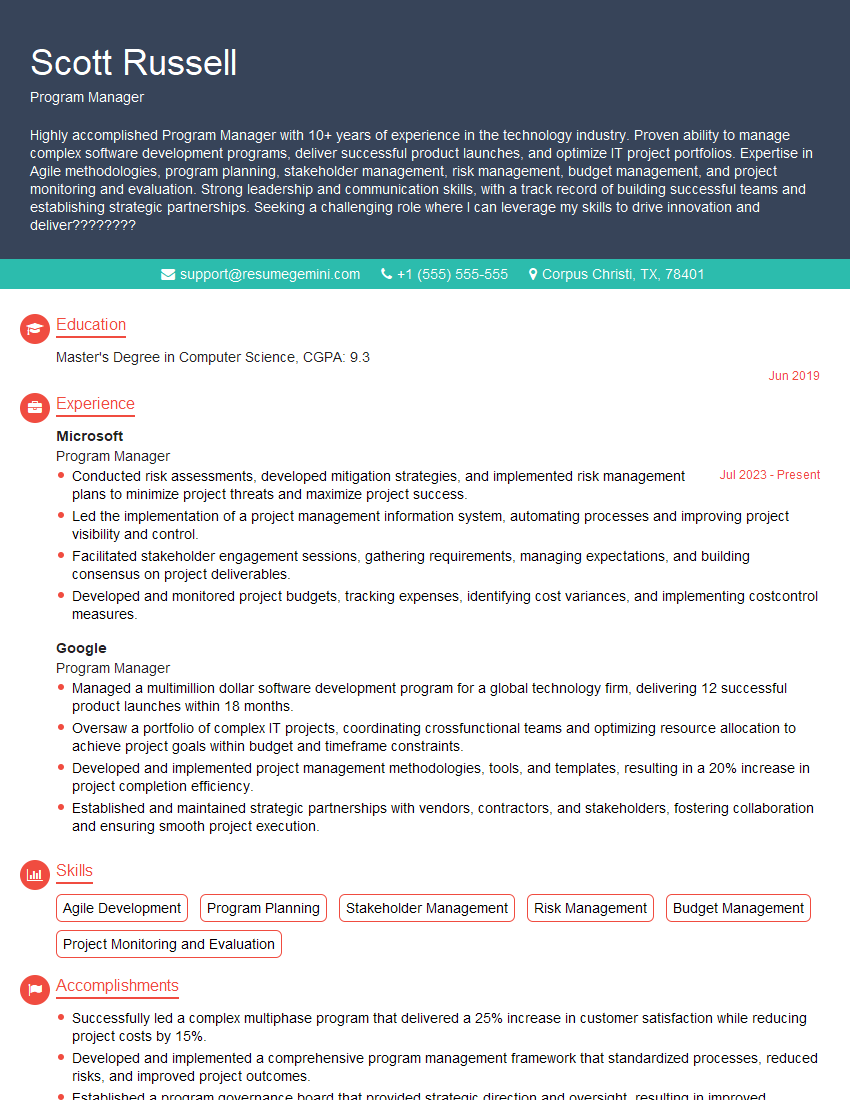
Program Manager Resume Sample
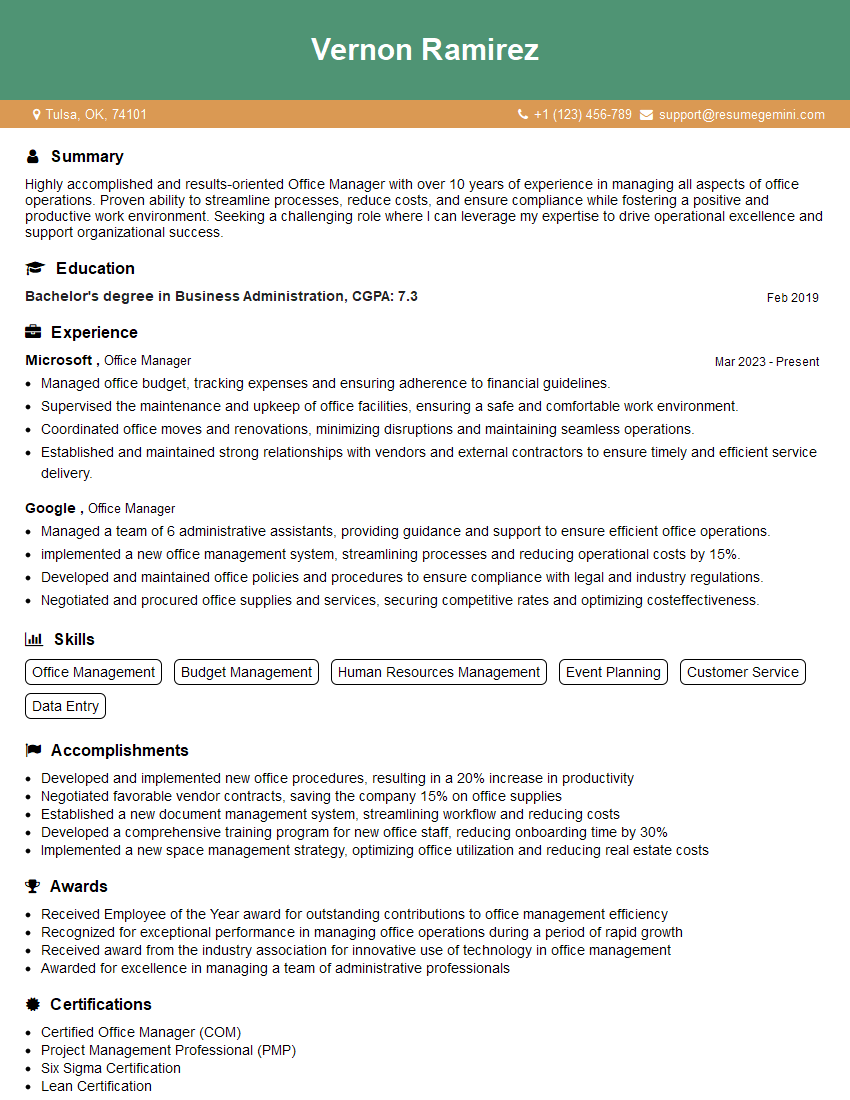
Office Manager Resume Sample
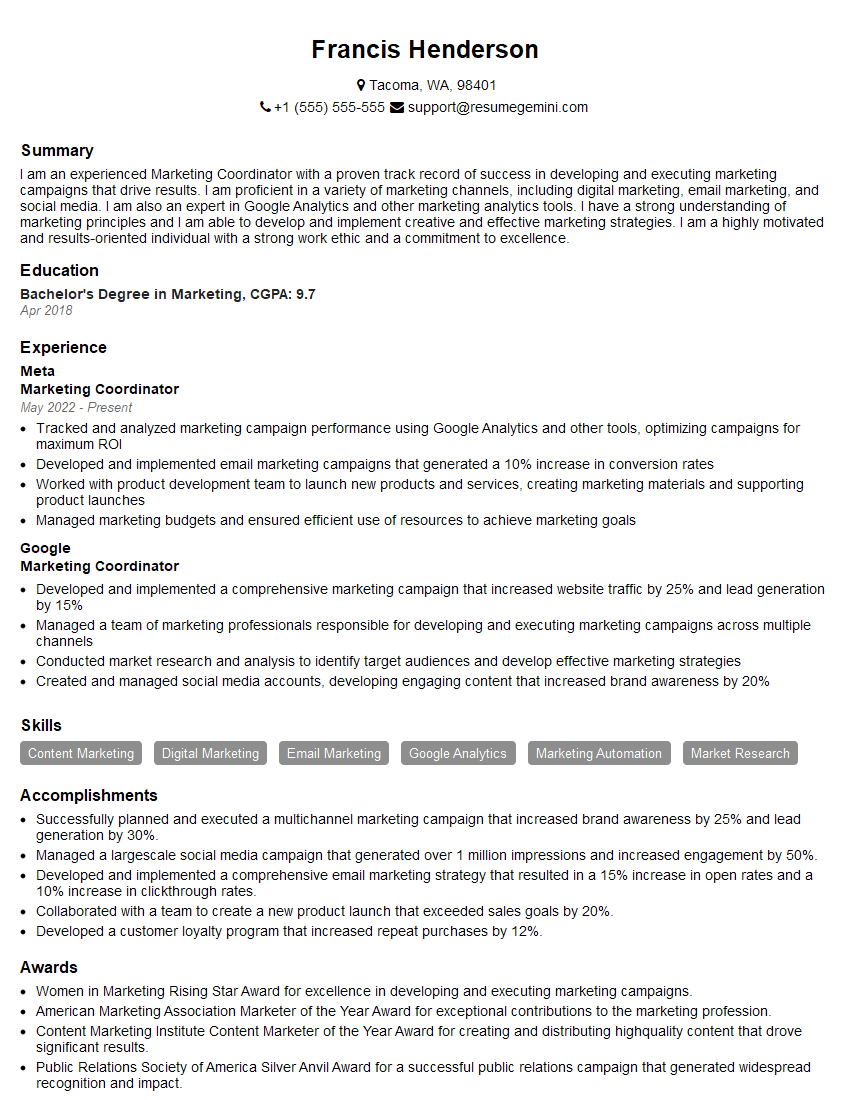
Marketing Coordinator Resume Sample
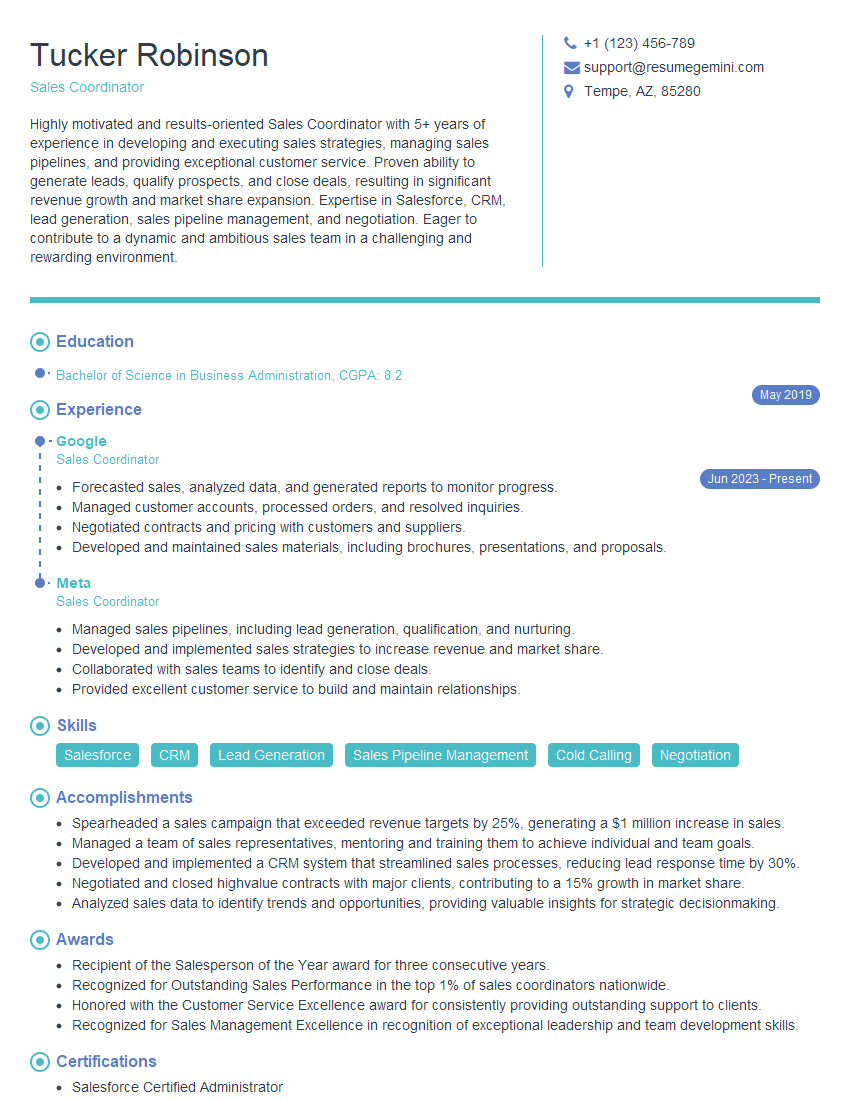
Sales Coordinator Resume Sample
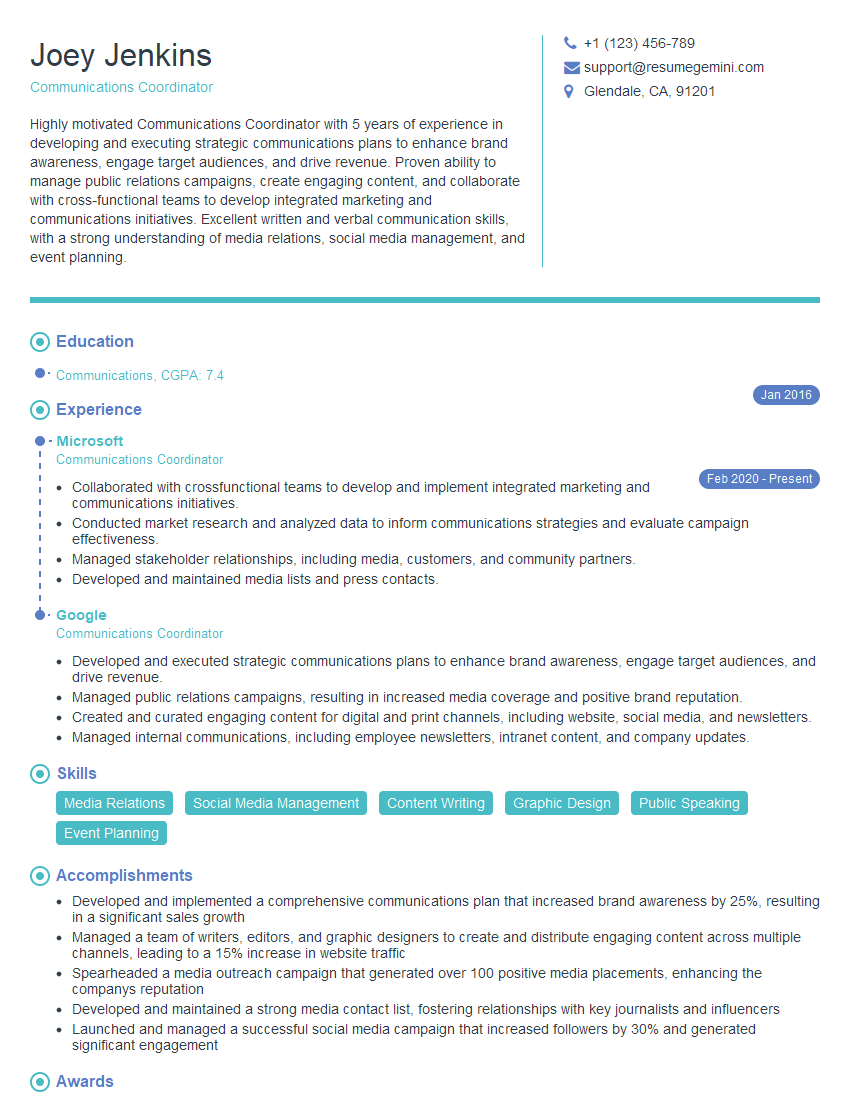
Communications Coordinator Resume Sample
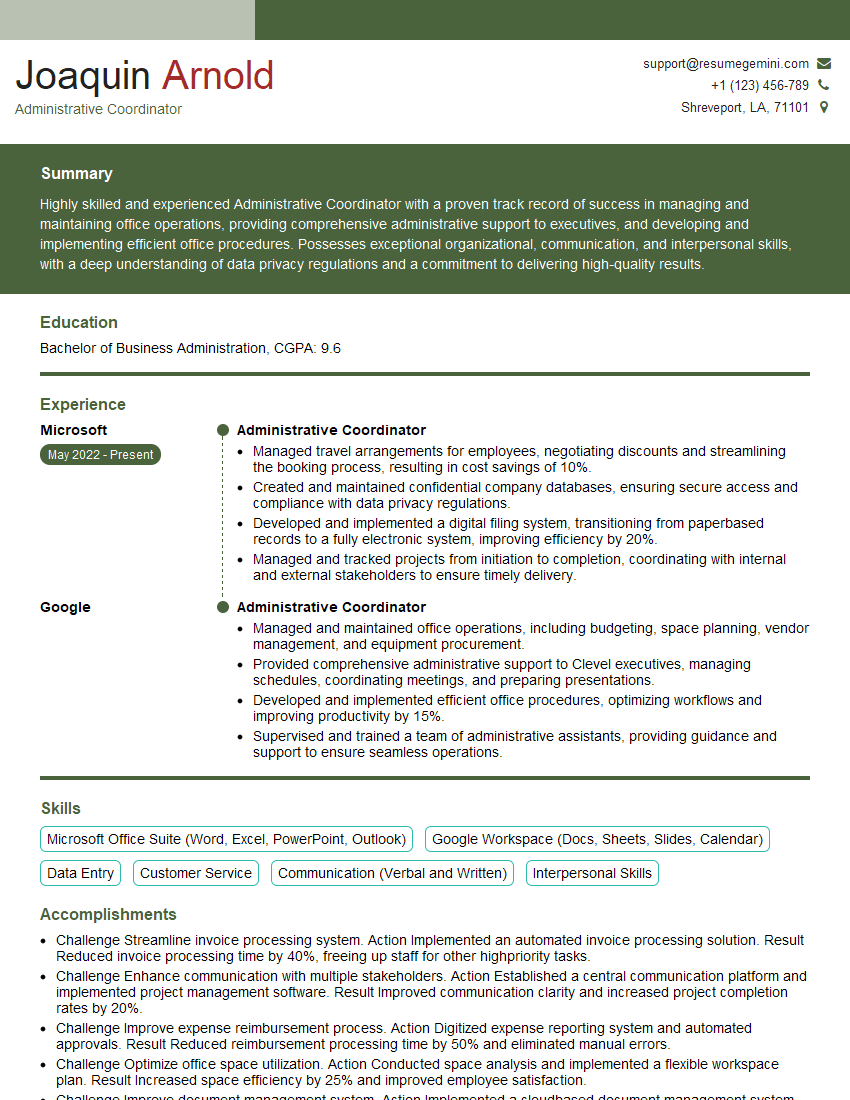
Administrative Coordinator Resume Sample
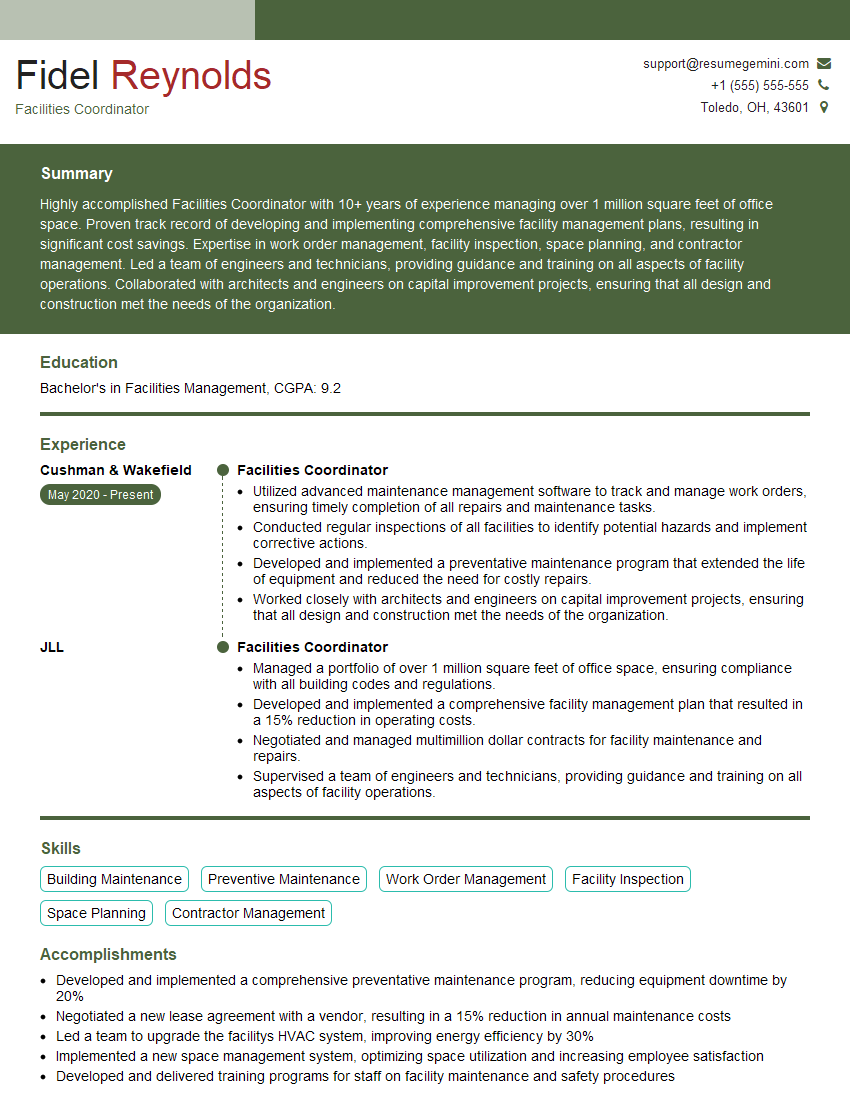
Facilities Coordinator Resume Sample
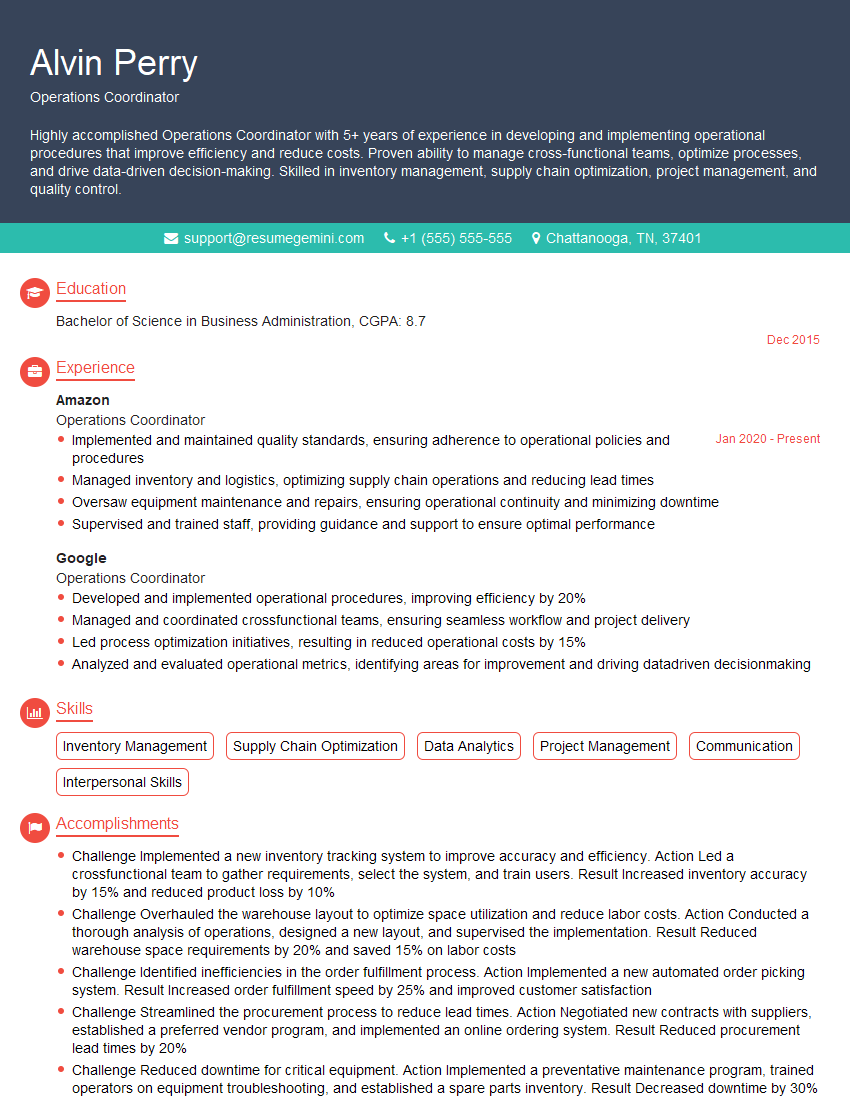
Operations Coordinator Resume Sample

Production Coordinator Resume Sample
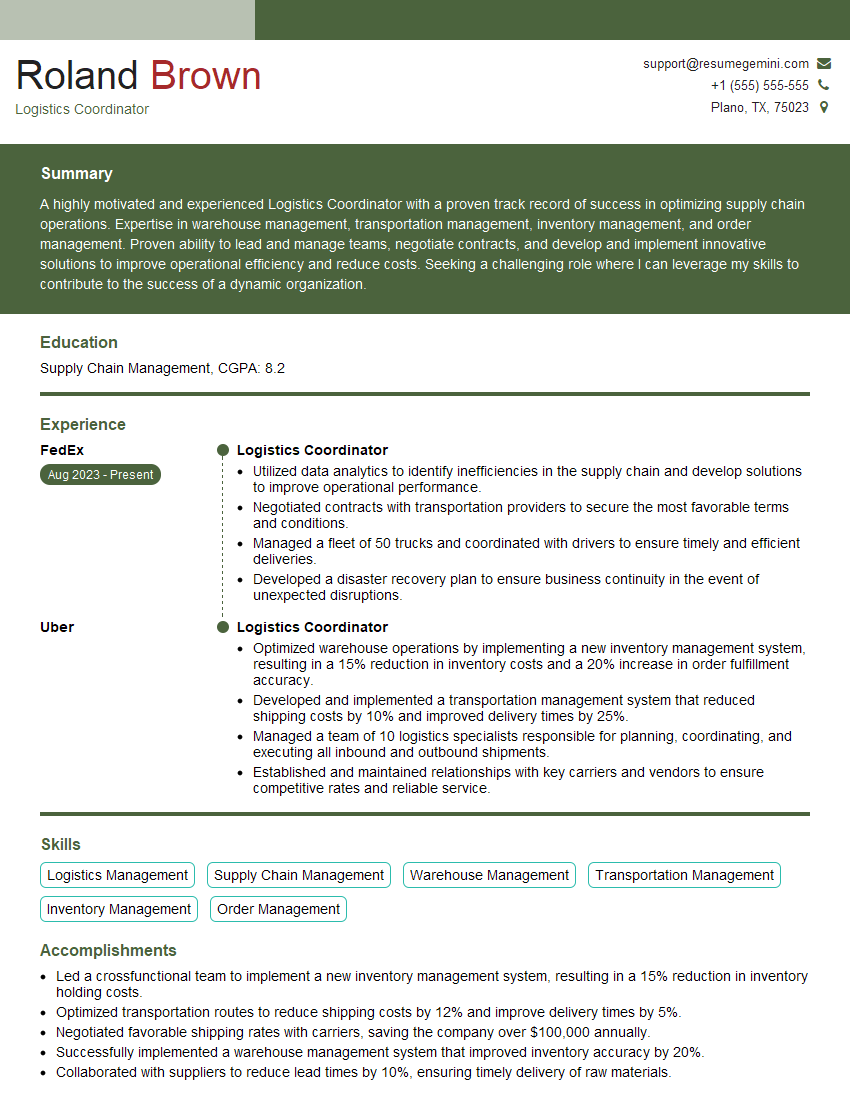
Logistics Coordinator Resume Sample

Project Manager Resume Sample
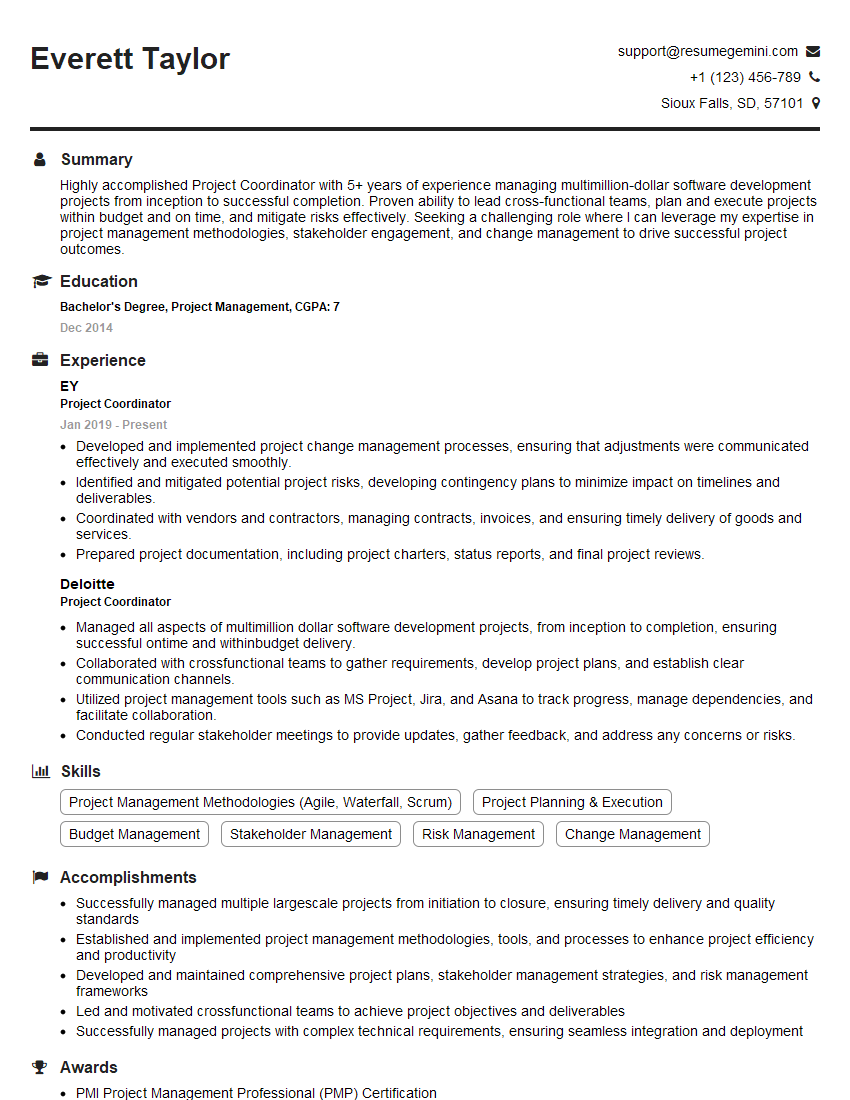
Project Coordinator Resume Sample
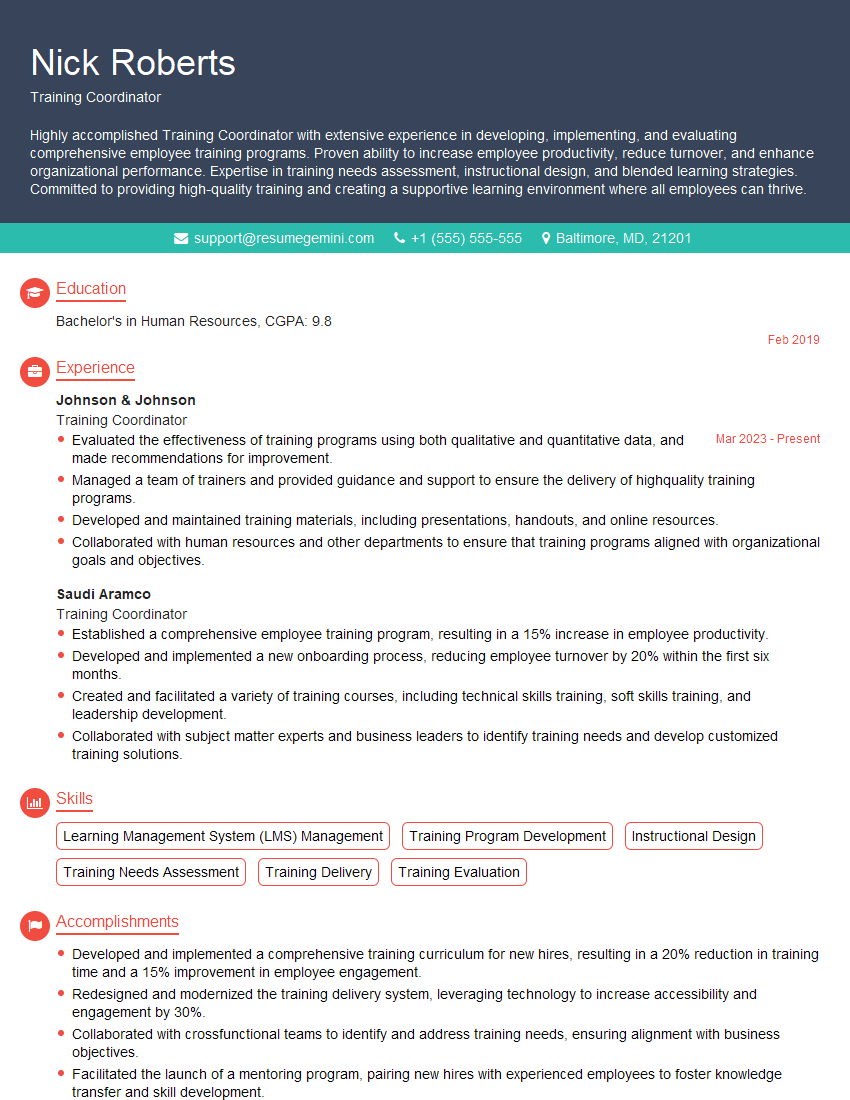
Training Coordinator Resume Sample
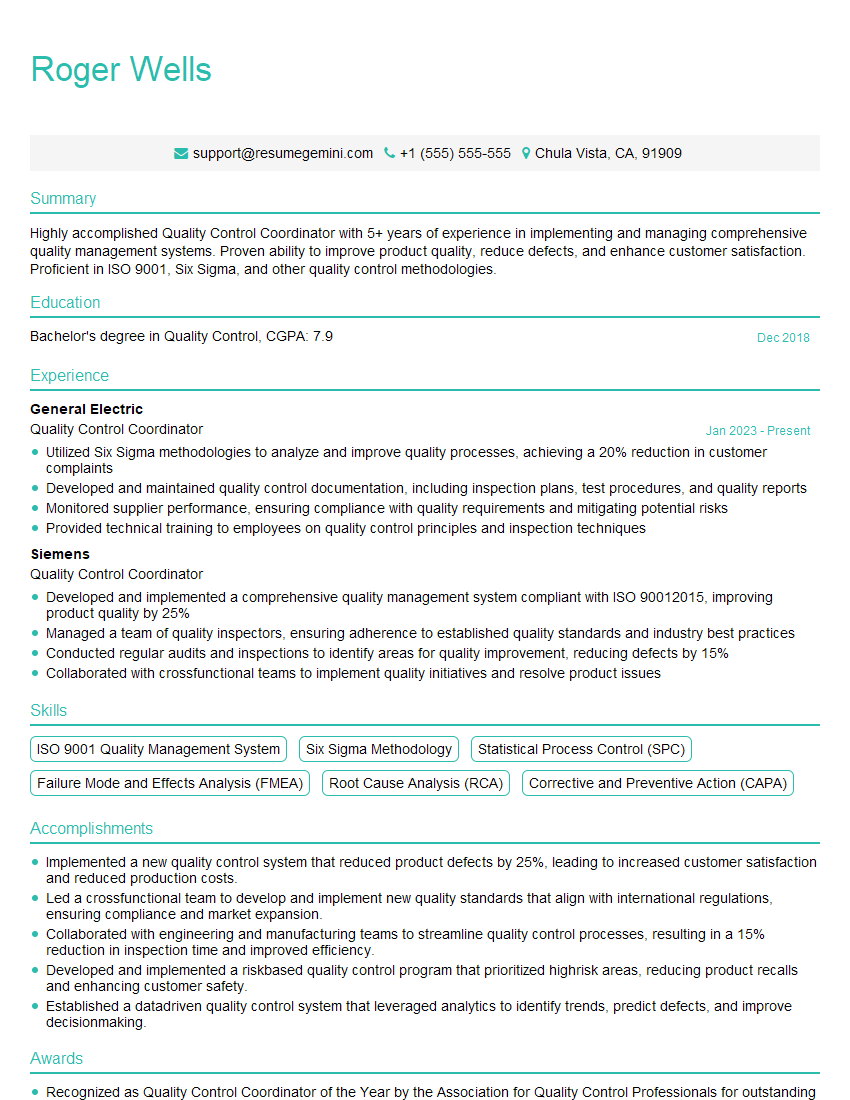
Quality Control Coordinator Resume Sample
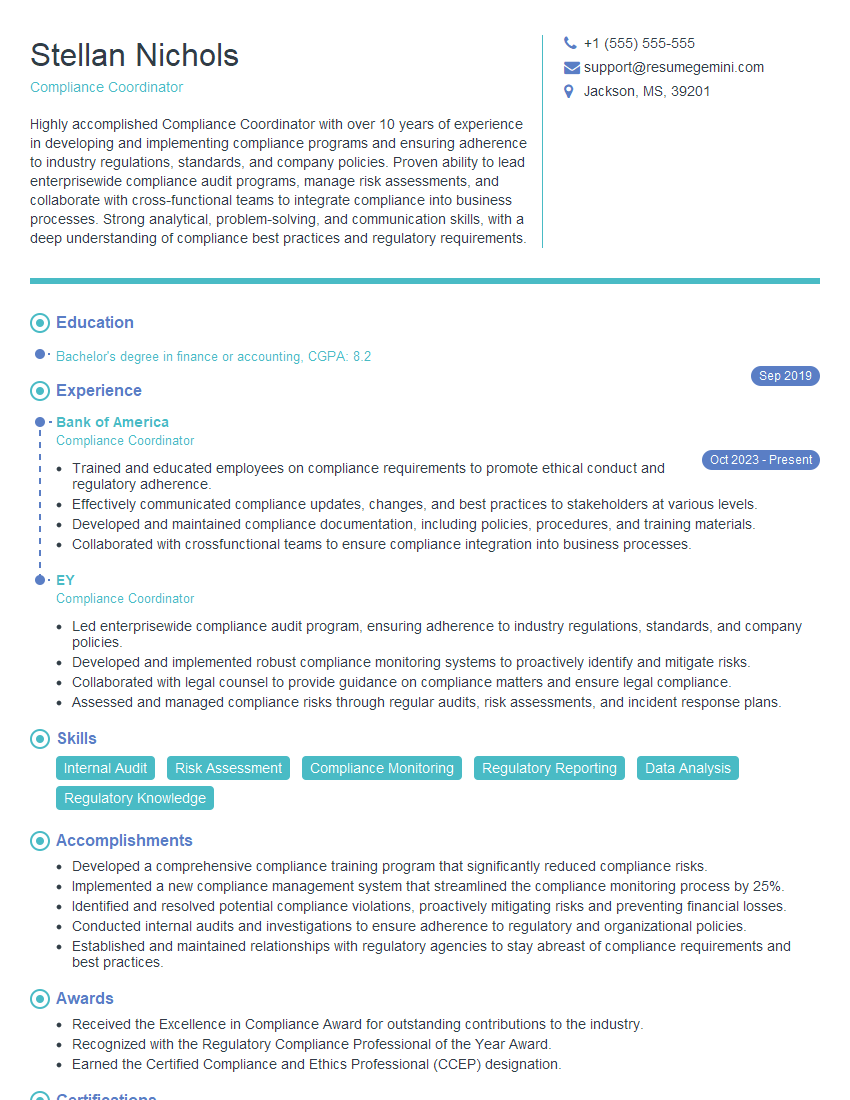
Compliance Coordinator Resume Sample
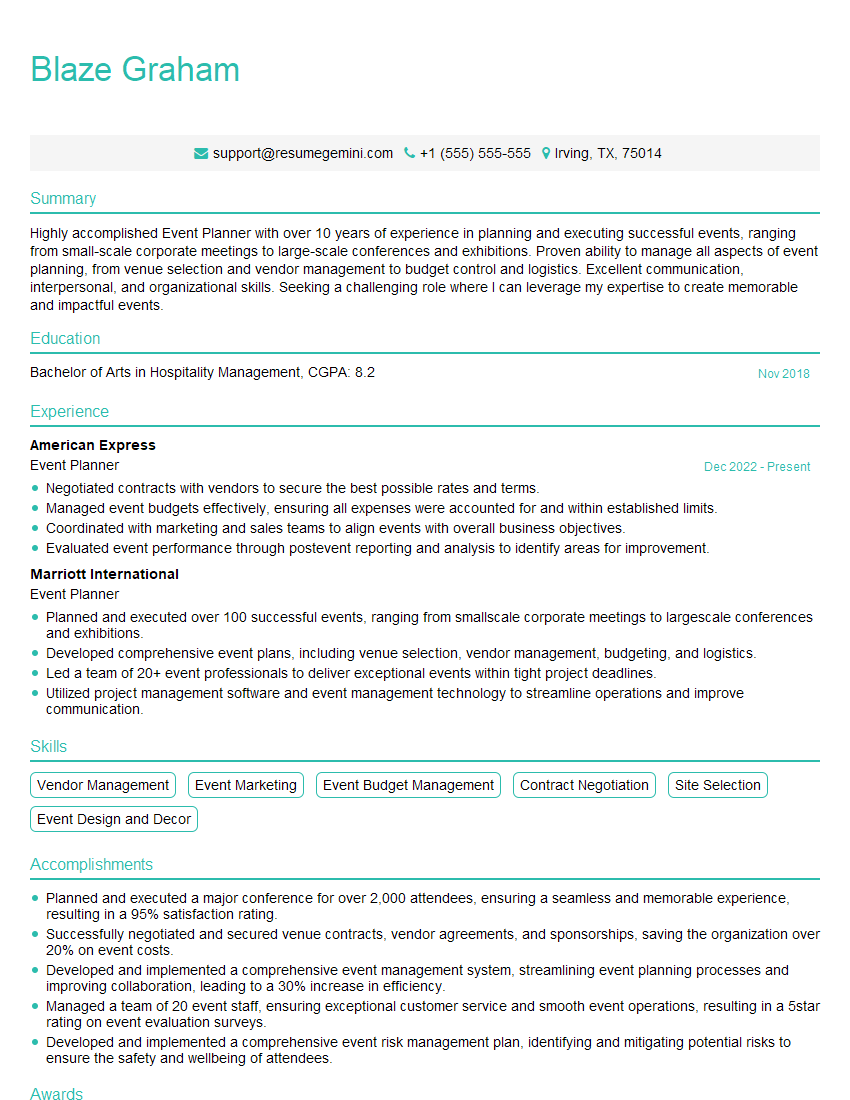
Event Planner Resume Sample

Scheduling Coordinator Resume Sample
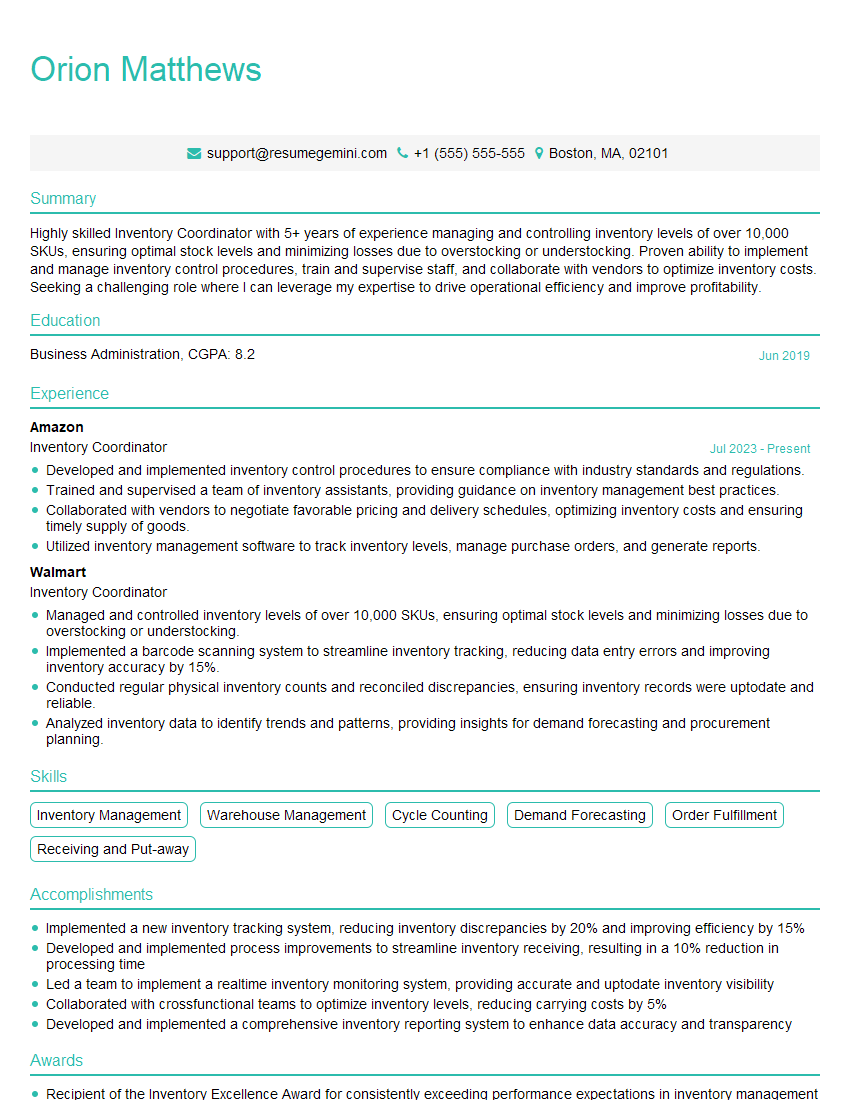
Inventory Coordinator Resume Sample
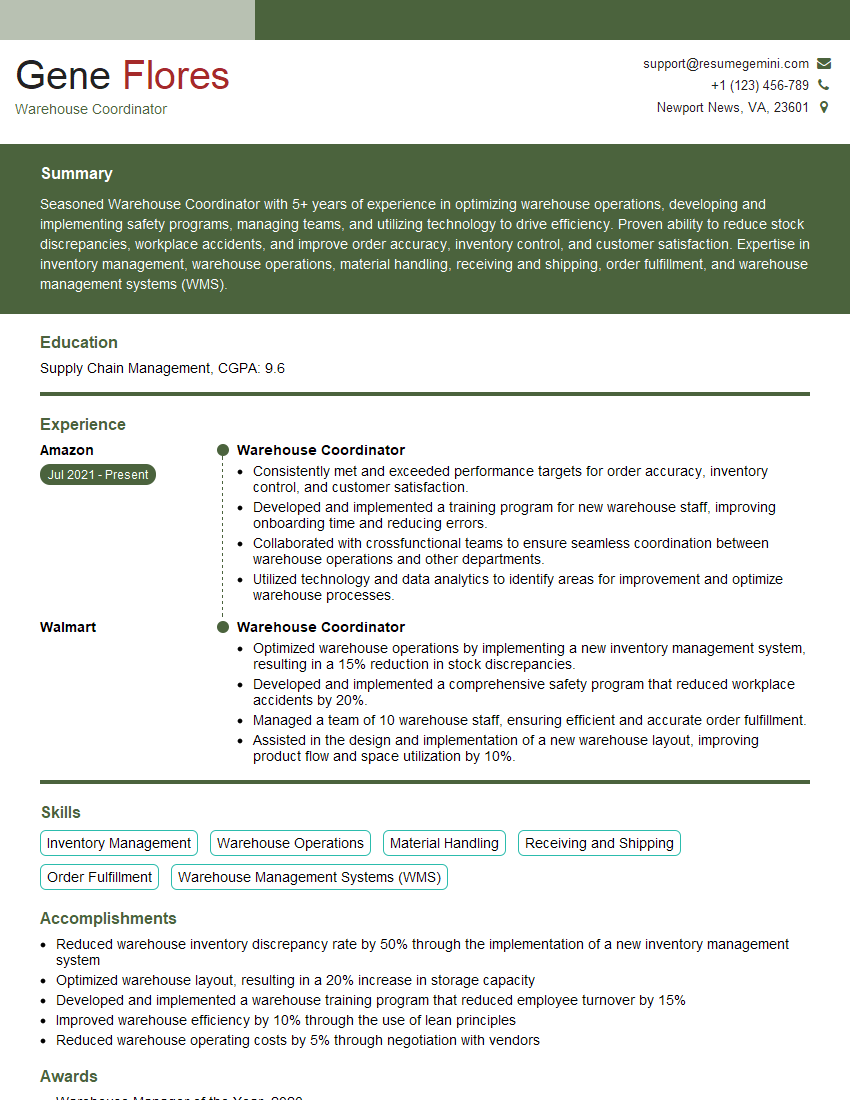
Warehouse Coordinator Resume Sample
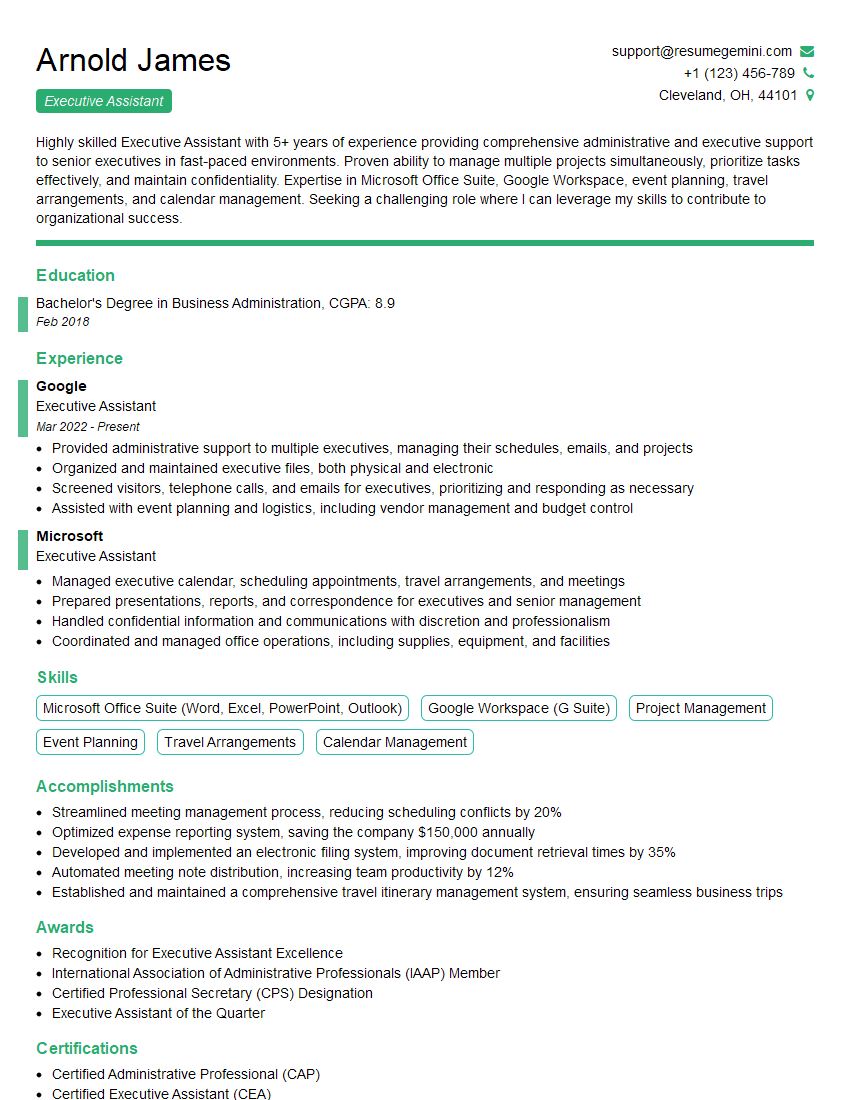
Executive Assistant Resume Sample
- Program Manager
- Office Manager
- Marketing Coordinator
- Sales Coordinator
- Communications Coordinator
- Administrative Coordinator
- Facilities Coordinator
- Operations Coordinator
- Production Coordinator
- Logistics Coordinator
- Project Manager
- Project Coordinator
- Training Coordinator
- Quality Control Coordinator
- Compliance Coordinator
- Event Planner
- Scheduling Coordinator
- Inventory Coordinator
- Warehouse Coordinator
- Executive Assistant
Explore more articles
Users Rating of Our Blogs
Share Your Experience
We value your feedback! Please rate our content and share your thoughts (optional).
What Readers Say About Our Blog
Very informative content, great job.
good