Interviews are opportunities to demonstrate your expertise, and this guide is here to help you shine. Explore the essential Planning and executing stunts interview questions that employers frequently ask, paired with strategies for crafting responses that set you apart from the competition.
Questions Asked in Planning and executing stunts Interview
Q 1. Describe your experience in risk assessment for stunt performance.
Risk assessment in stunt performance is paramount. It’s not just about identifying potential hazards; it’s about quantifying the risk and implementing mitigation strategies. My approach involves a multi-stage process. First, I meticulously analyze the stunt itself, breaking it down into individual actions and potential points of failure. This includes considering environmental factors like weather conditions, location specifics (terrain, obstacles), and equipment limitations. Second, I identify potential hazards associated with each action. This could range from simple slips and falls to more complex scenarios like equipment malfunction or unforeseen interactions between stunt performers. Third, I assess the likelihood and severity of each hazard. For example, a minor fall might have a high likelihood but low severity, while a high-speed car crash has a lower likelihood but potentially catastrophic severity. Finally, I develop a mitigation plan, detailing safety measures and contingency plans for each identified hazard. This might involve using specialized safety equipment, employing backup systems, or adjusting the stunt itself to reduce the risk.
For example, in a high-fall stunt, my risk assessment would encompass the integrity of the safety harness, the strength of the rigging points, the emergency response plan in case of failure, and the medical personnel on standby. Each element receives a detailed evaluation, and the overall risk is determined based on a combination of likelihood and severity scores. This allows for informed decisions on whether the stunt should proceed, be modified, or even be abandoned altogether.
Q 2. Explain your process for designing a safe stunt sequence.
Designing a safe stunt sequence is an iterative process that involves close collaboration with the stunt team, director, and other key personnel. I begin with a thorough understanding of the scene’s requirements and the director’s vision. Then, I develop multiple stunt options, ranging from low-risk alternatives to more ambitious, high-risk sequences. Each option undergoes a rigorous risk assessment. Once the preferred option is selected, we refine the details, incorporating specific actions, timing, and safety measures. This involves selecting appropriate safety equipment, designing the rigging system (if applicable), and defining clear communication protocols. The sequence is then rehearsed multiple times, allowing for adjustments based on feedback and unforeseen challenges. The rehearsals are crucial for identifying and mitigating any residual risks. Finally, we document the entire process, including detailed descriptions, diagrams, and safety protocols, which are shared with all team members before the actual performance.
For instance, a fight scene might initially involve complex, high-impact moves. During the design phase, we could opt for a more controlled approach with pre-choreographed movements and protective gear. Rehearsals allow us to fine-tune the timing and impact, making sure the performers are protected while maintaining the desired visual effect. This iterative approach balances artistic requirements with safety considerations.
Q 3. How do you manage a stunt team effectively under pressure?
Managing a stunt team under pressure requires strong leadership, clear communication, and a calm demeanor. I prioritize building trust and rapport with my team before any major production. This includes open communication channels, regular briefings, and providing opportunities for feedback. During a shoot, clear and concise instructions are vital. I utilize a combination of pre-established protocols and adapting to unforeseen circumstances. Maintaining a positive and supportive atmosphere, even under stress, is important for both safety and productivity. Delegation of tasks, effective time management, and proactive problem-solving are essential elements of my leadership style. Recognizing and rewarding good performance also contributes to a high-performing and collaborative team. In high-pressure situations, remaining calm and providing clear, direct guidance keeps the team focused and reduces the chance of errors.
For instance, during a complex wire-work sequence, a sudden weather change might require a quick adjustment to the plan. My role is to quickly assess the situation, make informed decisions, relay clear instructions to my team, and ensure everyone remains safe and focused on the revised plan. Open communication and trust, already established beforehand, are crucial for a successful adaptation in this scenario.
Q 4. What safety protocols do you implement on a stunt set?
Safety protocols on a stunt set are comprehensive and rigorously enforced. They start with a pre-production safety meeting where we review the stunt plan, identify potential hazards, and discuss safety procedures. Daily safety checks are mandatory for all equipment, including harnesses, rigging, vehicles, and protective gear. A designated safety officer is present at all times to oversee operations and enforce safety rules. Emergency medical personnel and equipment are always on standby. Clear communication protocols, including designated hand signals and radio communication, are established and practiced. We adhere to strict fall protection guidelines, utilizing appropriate padding and safety nets wherever necessary. All stunt performers undergo thorough training and are required to use proper safety gear at all times. Regular risk assessments are conducted throughout the production to identify and address any emerging safety concerns. A detailed incident report is filed for any accidents or near misses, allowing for continuous improvement of our safety procedures.
For instance, before every car stunt, a meticulous check of the vehicle’s safety systems, including brakes, steering, and fuel lines, is performed. The stunt driver undergoes a physical and mental fitness evaluation. The impact zone is carefully prepared with appropriate safety measures, such as crash barriers and padding. These protocols are crucial for ensuring that even potentially hazardous stunts are performed with minimal risk.
Q 5. Describe your experience with various stunt rigging techniques.
My experience with stunt rigging techniques spans a wide range, encompassing both simple and complex setups. I’m proficient in various rigging systems, including wire work, rope systems, and specialized mechanical devices. I understand the principles of load bearing, stress calculations, and material selection. This includes the use of different types of ropes, cables, and pulleys, choosing the right one based on the specific requirements of the stunt. I’m also skilled in knot tying and other techniques essential for ensuring secure and safe rigging. My experience includes working with both static and dynamic rigging systems, understanding the differences and choosing the right system based on the nature of the stunt. I’m comfortable working at heights and am familiar with all relevant safety regulations and best practices. I regularly update my knowledge and skills through training and professional development.
For example, in a scene involving a character swinging from a building, I would meticulously calculate the load-bearing capacity of the wires and ensure that the rigging points are secure and able to withstand the forces involved. This includes considering the weight of the performer, the swing arc, and any potential wind load.
Q 6. How do you ensure legal compliance in stunt planning?
Ensuring legal compliance in stunt planning is non-negotiable. It begins with obtaining the necessary permits and licenses for the stunt location and activities. This includes adhering to local regulations, industry standards, and any specific requirements set by the production company or governing bodies. We work closely with legal counsel to review contracts and ensure all safety protocols and insurance requirements are met. We maintain detailed records of all aspects of the stunt planning and execution, including risk assessments, safety protocols, and incident reports. This documentation is essential for demonstrating compliance with all applicable laws and regulations. We are meticulous in following all safety regulations, including those related to working at heights, using hazardous materials, and operating specialized equipment. We continuously stay updated on any changes or updates to relevant legislation and industry best practices.
For example, before filming a stunt involving a vehicle, we would obtain the necessary permits for road closures and ensure that the stunt is conducted in a manner that complies with all traffic laws and safety regulations. This includes adhering to speed limits, using appropriate safety equipment, and having appropriate insurance coverage.
Q 7. Explain your knowledge of different stunt equipment and its safe operation.
My knowledge of stunt equipment encompasses a wide range of tools and apparatus, from basic safety gear like harnesses and helmets to specialized equipment such as airbags, crash mats, and sophisticated rigging systems. I am proficient in the safe operation of all equipment used in stunts, understanding its limitations and potential hazards. This includes regular inspection and maintenance of all equipment to ensure it’s in top working condition. I’m familiar with the proper use and care of various types of vehicles, including cars, motorcycles, and boats, in stunt situations. I also have experience with pyrotechnics and special effects, adhering to strict safety guidelines and using appropriate protective measures. I understand the importance of choosing the right equipment for a specific stunt and ensuring that it’s properly set up and maintained. My training and experience allow me to recognize and address any potential malfunctions or safety issues with the equipment.
For instance, when utilizing airbags for a car stunt, I would carefully check the integrity of the airbag system, ensure it’s correctly positioned, and have a backup system in place. This includes understanding the limitations of the airbag and ensuring that other safety measures, such as crash mats, are also in place. Understanding the functionality and limitations of each piece of equipment is crucial in guaranteeing safety and successfully executing the stunt.
Q 8. How would you handle an unforeseen complication during a stunt?
Handling unforeseen complications during a stunt is paramount to safety and a successful production. My approach is based on a proactive risk assessment and a well-defined emergency protocol. First, I’d immediately assess the situation, prioritizing the safety of the performers. This involves a quick evaluation of the severity of the complication and its potential impact on the stunt’s execution. For instance, if a piece of equipment malfunctions mid-stunt, I’d immediately halt the action and instruct the performers to take cover or a designated safe position.
Secondly, communication is key. I’d clearly and calmly communicate the situation to the stunt team, actors, and the director, ensuring everyone is aware of the changes and the new plan. A clear chain of command is essential in these situations. If the complication is minor, such as a slight miscalculation in timing, I’d likely adjust the stunt on the fly, making small corrections to ensure a safe completion. However, if the complication is severe – like a significant equipment failure or an injury – I’d immediately activate the emergency protocols which include first aid, contacting emergency services if needed, and re-evaluating the remaining portion of the stunt or potentially abandoning it altogether.
For example, during a high-fall stunt, if the safety net malfunctions, my immediate response would involve bringing the performers to a safe place, assessing their injuries (if any), and contacting medical personnel immediately. Following a thorough investigation into the cause of the malfunction, a decision would be made on whether to proceed with the stunt, possibly with modifications, or abandon it completely. Post-incident reviews are essential to improve future procedures and prevent similar occurrences. The priority always remains on the safety and well-being of the stunt performers.
Q 9. What is your experience with pre-visualization for stunts?
Pre-visualization is an integral part of my stunt planning process. I extensively utilize 3D modeling software and animation techniques to create detailed simulations of planned stunts. This allows for identifying potential hazards and refining the stunt’s design before physical execution. The process involves detailed modeling of the environment, props, and performers, simulating movement and physics to anticipate possible outcomes. For example, I’ve used software like Maya or Blender to simulate a car chase sequence, meticulously modelling the vehicles, the road surface, and the expected path of the cars. This allows me to visualize potential collisions, the impact forces, and the necessary safety measures needed to make the stunt safe for everyone involved.
Beyond visual simulations, pre-visualization helps to create detailed storyboards and shot lists, aiding communication with the director and other crew members. By presenting these visual aids, potential issues can be identified and addressed before production, significantly reducing risk and saving valuable time and resources. It’s a comprehensive process that transforms a potentially dangerous, abstract plan into a tangible, predictable sequence of events, thereby increasing the safety and effectiveness of the stunt’s execution.
Q 10. Describe your familiarity with different types of stunt padding and protection.
My familiarity with stunt padding and protection extends across various types, tailored to specific needs. This includes different densities of foam padding, air-filled cushions, protective gear like helmets, body armor, and specialized pads for specific body parts. The choice depends on the type of stunt and the potential impact forces. For a low-impact fall, simple foam padding might suffice, whereas a high-impact stunt might require multiple layers of high-density padding or air-filled cushions.
I’m also knowledgeable about specialized protective gear, such as fire-retardant suits for fire stunts, breakaway props designed to safely break upon impact, and the latest advancements in impact-absorbing materials. Choosing the correct padding involves a thorough risk assessment, considering the forces involved, impact points, and the performer’s body type. For example, a stunt involving a car crash would necessitate specialized padding in strategic areas like the chest and head to mitigate the risk of serious injury. I always prioritize selecting materials that are comfortable and allow for a reasonable degree of movement while providing adequate protection. A well-padded stunt performer has significantly increased confidence and can perform better.
Q 11. How do you communicate effectively with actors and other crew members during a stunt?
Effective communication is crucial for stunt safety and success. I prioritize clear, concise, and unambiguous communication with both actors and the crew. Before a stunt, I conduct thorough briefings, explaining the sequence of events step-by-step, highlighting key safety procedures, and answering any questions. I use a combination of verbal explanations, visual aids like diagrams and pre-visualization footage, and rehearsals to ensure everyone understands their role and responsibilities.
During the stunt itself, clear and direct communication via hand signals or radio communication is paramount. This is especially important during high-pressure situations where verbal communication may be hindered by noise or other factors. For instance, a specific hand signal might indicate an unexpected change in the plan or a warning about an approaching hazard. Post-stunt, I debrief the team, discussing what went well, what could have been improved, and addressing any concerns or safety issues. Establishing trust and respect with the actors and the crew facilitates open communication and contributes to a safer and more efficient work environment. A collaborative atmosphere ensures everyone feels comfortable voicing concerns, which is vital for mitigating risks.
Q 12. What is your understanding of stunt insurance and liability?
Understanding stunt insurance and liability is vital for legal compliance and minimizing financial risk. I’m familiar with various types of insurance policies that cover stunt-related injuries, property damage, and potential lawsuits. These policies typically cover medical expenses for performers, liability for accidents, and damages to equipment or property. I work closely with insurance brokers to ensure that adequate coverage is in place, complying with all legal requirements and industry standards.
Beyond insurance, understanding liability involves meticulous risk assessment, the implementation of strict safety protocols, and maintaining detailed documentation of every aspect of the stunt. This includes pre-stunt inspections, safety plans, rehearsals, and incident reports. This comprehensive documentation serves as evidence of due diligence and assists in minimizing liability in the event of an accident. Negligence is a serious concern, and understanding liability limits, exclusions, and reporting procedures are crucial for protecting both the production and the individuals involved.
Q 13. How do you evaluate the physical capabilities of stunt performers?
Evaluating the physical capabilities of stunt performers is a critical part of my job. This involves a combination of physical assessments, medical evaluations, and a review of their previous work and experience. I look for performers with the necessary strength, agility, flexibility, and endurance required for specific stunts. A thorough medical evaluation is essential to rule out any pre-existing conditions that could pose a risk. This might include cardiovascular assessments, musculoskeletal evaluations, and assessments of any potential allergies or sensitivities.
Beyond physical fitness, I also assess the performer’s experience and skill level. I evaluate their previous stunt work, their training certifications, and their ability to follow instructions and work safely under pressure. For example, before assigning a performer to a high-fall stunt, I would carefully evaluate their experience with similar stunts, their training in fall techniques, and their physical capabilities to withstand the impact forces involved. The safety and success of a stunt depend heavily on the right performer with the appropriate skills and physical condition for the task. It’s a comprehensive evaluation that blends physical fitness, skill, experience and medical fitness to ensure the best possible match between performer and stunt.
Q 14. Explain your experience with coordinating multiple stunt performers simultaneously.
Coordinating multiple stunt performers simultaneously requires meticulous planning and precise execution. It involves carefully choreographing their movements, ensuring that their actions are synchronized and safe. This requires a deep understanding of timing, spatial awareness, and clear communication. I use a combination of rehearsals, detailed diagrams, and clear communication to ensure everyone is aware of their role and their interaction with other performers.
For example, in a fight sequence involving multiple performers, I’d meticulously map out each performer’s movements, considering their interaction with each other, their positioning relative to the camera, and the timing of each strike, block, and fall. Detailed storyboards and a well-rehearsed sequence of events are crucial to avoid collisions or accidental injuries. Clear communication during rehearsals and the actual execution of the stunt is vital to anticipate any unforeseen challenges and adapt accordingly. This involves a combination of verbal instructions, hand signals, and pre-arranged cues to ensure smooth coordination and seamless transitions between performers and elements of the scene. Safety is paramount, and well-rehearsed coordination is essential to preventing accidents and ensuring a successful outcome.
Q 15. Describe your familiarity with different camera angles and their impact on stunt performance.
Understanding camera angles is crucial for effective stunt choreography and storytelling. Different angles drastically alter the perception of a stunt’s risk, speed, and impact. For instance, a low-angle shot can make a jump appear much higher and more dangerous, emphasizing the performer’s skill. Conversely, a high-angle shot might downplay the height, focusing instead on the precision of the landing.
- Low Angle: Creates a sense of grandeur, power, and height. Think of a car chase where the camera is low to the ground, making the vehicles seem larger and faster.
- High Angle: Shows vulnerability, making the stunt performer seem smaller and less powerful. Useful for depicting the scale of a large set piece or the impact of a fall.
- Eye-Level: Provides a neutral perspective, letting the audience connect directly with the action. Ideal for close-ups showcasing expressions of determination or fear.
- Over-the-Shoulder: Adds intimacy and creates a sense of immediacy, often used in fight scenes to show the intensity of the action from a participant’s perspective.
I always collaborate closely with the director of photography to determine the best camera angles to enhance both the visual impact and the narrative of the stunt sequence. A well-planned shot list, considering the angles and their corresponding storytelling impact, is vital in pre-production.
Career Expert Tips:
- Ace those interviews! Prepare effectively by reviewing the Top 50 Most Common Interview Questions on ResumeGemini.
- Navigate your job search with confidence! Explore a wide range of Career Tips on ResumeGemini. Learn about common challenges and recommendations to overcome them.
- Craft the perfect resume! Master the Art of Resume Writing with ResumeGemini’s guide. Showcase your unique qualifications and achievements effectively.
- Don’t miss out on holiday savings! Build your dream resume with ResumeGemini’s ATS optimized templates.
Q 16. How do you manage a budget for a stunt sequence?
Budgeting for a stunt sequence is a meticulous process that involves detailed planning and cost estimation for each element. It’s not just about the stunt performer’s fee; it encompasses a wide range of expenses.
- Personnel: Stunt performers, safety personnel (riggers, medics), assistants, and specialized crew members.
- Equipment: Safety equipment (harnesses, airbags, crash mats), props (vehicles, weapons), rigging equipment, pyrotechnics.
- Location: Permits, location fees, security, and potential logistical costs related to transport of equipment and personnel.
- Post-Production: CGI, visual effects (VFX) to enhance or augment the stunts, and editing the final footage.
- Insurance: Liability insurance covering potential injuries or damages.
I begin with a comprehensive breakdown of the stunt, creating a detailed shot list and identifying every resource needed. Then, I obtain quotes from vendors, research equipment rental costs, and factor in contingency for unexpected expenses. Finally, I present a detailed budget proposal to the production team, explaining each cost item transparently. Open communication and realistic cost estimations are crucial for successful budget management.
Q 17. Explain your process for reviewing and approving stunt plans.
My review and approval process for stunt plans is a multi-stage procedure prioritizing safety and feasibility.
- Initial Plan Review: The stunt coordinator presents a detailed written plan outlining each stunt, including specifics about equipment, safety protocols, and performer qualifications. This is thoroughly reviewed by myself and the safety team.
- Risk Assessment: We identify potential hazards and implement mitigation strategies. This could involve anything from changing the stunt design to using specialized safety equipment.
- Rehearsal and Test Run: We conduct rehearsals with stand-ins to test the sequence’s flow and identify any unforeseen issues. This allows us to refine the plan before live performance.
- Final Approval: Only after all safety concerns are addressed and the plan is deemed safe and feasible, do I provide final approval. This approval is documented and signed off by all relevant parties.
- On-Set Monitoring: I’m present during the filming, ensuring the plan is followed precisely and safety protocols are maintained throughout the shoot.
This multi-layered approach minimizes risk, ensuring the safety of the stunt performers and the crew while still achieving the creative vision.
Q 18. Describe your experience with working with special effects during stunt sequences.
My experience with special effects (SFX) in stunt sequences is extensive. I understand the synergy between practical stunts and visual effects, believing both should enhance and complement each other. Often, we use practical effects as the foundation of a stunt, then enhance it with CGI for a more spectacular outcome.
- Example 1: For a car explosion, we might use a controlled explosion of a prepped vehicle for the primary visual element, then use CGI to enhance the flames, debris, and overall visual spectacle. This approach offers realism and maintains safety by minimizing uncontrolled elements.
- Example 2: In wire work, while performers are expertly rigged for safety, CGI can assist in masking wires or augmenting their movements to create a more seamless and visually impressive effect.
Clear communication with the VFX team is paramount. I provide them with detailed information on the practical stunt, including camera angles, performer movements, and desired outcomes. This allows the VFX team to seamlessly integrate their work with the live-action footage, creating a cohesive and breathtaking final result. I also work closely with them to ensure any digital enhancements do not compromise the perceived safety of the stunt in the final film.
Q 19. What are your skills in identifying and mitigating potential hazards in stunt work?
Hazard identification and mitigation are paramount to safe stunt work. My approach is proactive and multi-faceted.
- Pre-Production Risk Assessment: Thorough review of the stunt plan, identifying all potential hazards – environmental (weather, terrain), equipment (malfunction, failure), and human factors (fatigue, error).
- Safety Protocols: Implementing comprehensive safety protocols including safety checks of equipment, regular briefings for the team, and the use of appropriate safety gear.
- Contingency Planning: Developing backup plans and emergency procedures to deal with unforeseen circumstances.
- Communication: Maintaining clear and constant communication with all team members, ensuring everyone is aware of potential risks and safety procedures.
- Regular Inspections: Frequent inspections of the stunt set, equipment, and safety gear to identify and address any potential issues before they become problems.
I’ve developed a habit of meticulously visualizing potential issues. By thinking through each scenario from multiple angles, I can predict problems before they arise and implement proactive mitigation steps. This thoroughness helps keep the stunt safe and efficient.
Q 20. How do you handle conflicts or disagreements within the stunt team?
Conflict resolution is an essential skill in stunt coordination. Disagreements are inevitable, but they must be handled professionally and efficiently to ensure safety and productivity.
- Open Communication: Creating a safe space for team members to voice concerns and express their opinions. I always encourage open and honest dialogue.
- Mediation: If disagreements escalate, I act as a mediator, helping conflicting parties to find common ground. My focus is on solutions that are safe and meet the creative goals.
- Prioritize Safety: All decisions are made with safety as the utmost priority. If a disagreement compromises safety, the safer option always prevails.
- Professional Demeanor: I maintain a professional demeanor throughout, avoiding personal attacks and focusing on resolving the issue constructively.
Sometimes, this involves compromise. It might mean adjusting the stunt slightly or finding alternative approaches that address everyone’s concerns. The goal is always to build a collaborative environment where everyone feels respected and heard.
Q 21. What is your experience with post-production review of stunt footage?
Post-production review of stunt footage is crucial for assessing the success of the stunt and identifying areas for improvement. It also provides valuable feedback for future projects.
- Technical Review: I examine the footage to ensure the stunt was performed safely and effectively, checking for any technical flaws or areas where safety protocols could be improved.
- Artistic Review: I assess the visual impact of the stunt, considering camera angles, editing, and visual effects. This helps determine if the stunt achieved its creative goals.
- Feedback and Improvement: The review process helps identify areas for improvement in future stunt sequences. This might involve refining safety procedures, improving communication, or enhancing the artistic execution of the stunt.
I often use detailed notes and checklists during this process, documenting specific observations and feedback. This documented information forms a valuable resource for planning and executing future stunts, allowing for continuous learning and improvement. This iterative process enhances the quality and safety of my work over time.
Q 22. Describe your familiarity with different stunt choreography styles.
Stunt choreography styles vary widely depending on the genre, budget, and desired effect. I’m proficient in several, including:
- Traditional Martial Arts-based choreography: This focuses on realistic fight sequences, often incorporating elements of specific martial arts styles like kung fu, karate, or taekwondo. For example, a fight scene in a historical drama might utilize this style to emphasize believable combat techniques.
- Wirework and High-Fall choreography: This involves harnessing and rigging systems for spectacular aerial stunts and falls. The choreography needs precise timing and safety protocols, like those used in a superhero movie where the hero leaps from building to building.
- Vehicle-based choreography: This focuses on car chases, crashes, and other vehicular stunts. Precise driving skills and controlled collisions are crucial, as seen in action movies or crime thrillers.
- SFX-enhanced choreography: This integrates special effects, like CGI or practical effects, to augment or enhance the stunts. This is often used in larger-budget productions where a combination of real and digital action is needed.
- Gun Fu and Weapon choreography: This style emphasizes the use of firearms and other weapons in combat sequences, requiring meticulous planning for safety and realism, as in action films with intense shootouts.
My approach always prioritizes safety and realism while aligning with the director’s vision for the specific scene.
Q 23. How do you ensure the safety of the actors and crew during a stunt involving animals?
Safety is paramount when working with animals. My protocols include:
- Animal Handler Expertise: Only working with experienced and reputable animal handlers who understand the animal’s behavior and limitations. We always ensure handlers are present throughout the entire sequence.
- Animal Welfare: Prioritizing the animal’s well-being above all else. Stunts are carefully designed to avoid causing stress or harm. We have veterinary professionals on set to monitor the animals’ health.
- Rehearsal and Training: Extensive rehearsals with the animals and actors to build trust and ensure a smooth performance. This includes positive reinforcement training techniques, avoiding intimidation tactics.
- Safe Environment: Creating a controlled and secure environment for the animals, away from loud noises and crowds. This might involve building specific sets or utilizing specialized enclosures.
- Contingency Planning: Having clear escape routes and safety measures in place in case the animal becomes agitated or unpredictable. This could involve using barriers, breakaway structures, or even backup animals.
For instance, in a scene involving a horse, we’d ensure the horse is comfortable with the actor and the environment before filming commences. We’d use experienced handlers, and the stunt wouldn’t involve anything that could scare or harm the horse.
Q 24. What software or technology do you utilize in stunt planning and visualization?
I utilize a variety of software and technology for stunt planning and visualization:
- 3D Modeling Software (e.g., Autodesk Maya, 3ds Max): To create detailed 3D models of the set, stunt vehicles, and environments. This allows us to plan camera angles, stunt trajectories, and potential hazards before actual filming.
- Simulation Software: We can use physics engines to simulate collisions, explosions, and other high-impact events. This helps to identify potential safety risks and refine the choreography.
- Pre-visualization Software (e.g., Adobe After Effects, Nuke): To create pre-visualization videos that showcase the planned stunts. This is particularly helpful for conveying the sequence to the director and crew, ensuring everyone is on the same page.
- Project Management Software (e.g., Asana, Trello): To track progress, manage resources, and maintain communication throughout the planning and execution phases.
For example, if we’re planning a car chase sequence, we can use 3D modeling and simulation software to meticulously plan the car’s movements, avoiding obstacles and ensuring controlled collisions. The pre-visualization video would allow the director to review and approve the plan before actual filming takes place.
Q 25. Explain your experience with emergency procedures on a stunt set.
Emergency procedures are a critical aspect of stunt work. My experience includes:
- First Aid and CPR Certification: I’m certified in first aid and CPR, and our stunt team always includes qualified medical personnel on set.
- Emergency Response Plan: We have a detailed emergency response plan that covers various scenarios, including injuries, fires, and equipment malfunctions. This includes communication protocols and evacuation procedures.
- Safety Equipment and Protocols: Strict adherence to safety regulations and the use of appropriate safety equipment (helmets, harnesses, protective gear, etc.) is mandatory.
- Communication Systems: We utilize clear and reliable communication systems (radios, etc.) to ensure swift response in case of an emergency.
- Post-Incident Reporting: Thorough documentation and reporting of any incidents, injuries, or near misses to identify areas for improvement and prevent future occurrences.
For instance, during a high-fall stunt, we have paramedics on standby, ensuring that a medical team is immediately available in case of any injuries. Our communication protocols enable rapid responses to ensure immediate assistance.
Q 26. How do you maintain professional relationships with clients and directors?
Maintaining positive relationships with clients and directors is essential. My approach involves:
- Clear Communication: Open and honest communication throughout the project, ensuring that all parties are informed and understand the plan.
- Collaboration: Working closely with the director and client to understand their vision and incorporate their input into the stunt design.
- Professionalism: Maintaining a professional demeanor and adhering to deadlines and budgets.
- Problem-Solving: Proactively addressing any challenges or concerns that arise during the process.
- Follow-up: Maintaining contact with clients and directors after the project is completed, fostering long-term relationships.
I always prioritize building trust and transparency, treating each project as a collaborative effort to achieve a shared artistic vision. This is how I build long-term relationships within the industry.
Q 27. Describe your experience with various stunt vehicles and their handling.
My experience encompasses a wide range of stunt vehicles and their handling:
- Cars: Proficient in driving various types of cars, including muscle cars, sports cars, and off-road vehicles, executing controlled drifts, crashes, and jumps.
- Motorcycles: Experienced in operating motorcycles for chases, stunts, and controlled falls.
- Trucks and Heavy Equipment: Familiar with operating trucks, vans, and other heavy vehicles, often used in elaborate chase sequences or large-scale action scenes.
- Boats and Watercraft: Experienced in operating boats and other water vehicles for water-based stunts, ensuring safety and expertise in aquatic environments.
- Aircraft (limited): While often relying on specialized pilots, I have worked in coordination with pilots and understand the complexities and safety measures involved in aerial sequences.
Each vehicle requires specialized handling techniques and safety precautions. For example, performing a controlled crash in a car requires precise knowledge of the vehicle’s mechanics, the impact point, and safety measures to protect the driver and vehicle.
Q 28. How do you adapt your stunt plans to accommodate changes in weather or location?
Adaptability is key in stunt planning. Weather and location changes necessitate careful adjustments:
- Contingency Planning: Developing backup plans for various weather scenarios (rain, wind, extreme temperatures) and location limitations.
- Risk Assessment: Conducting thorough risk assessments to identify and mitigate potential hazards related to the changed conditions.
- Collaboration: Working closely with the weather team, location scouts, and other relevant personnel to obtain up-to-date information and make informed decisions.
- Flexibility: Being flexible and willing to adjust the schedule, choreography, and even the stunt itself to accommodate the changed circumstances.
- Safety First: Prioritizing safety and postponing or modifying stunts if the conditions are deemed unsafe.
For example, if heavy rain is forecast during an outdoor stunt, we might postpone filming, find an indoor alternative, or revise the stunt choreography to minimize the impact of rain. Safety always remains the ultimate priority.
Key Topics to Learn for Planning and Executing Stunts Interview
- Safety Protocols and Risk Assessment: Understanding and implementing comprehensive safety measures, including pre-stunt planning, on-set safety procedures, and emergency protocols. Practical application includes developing detailed risk assessments and contingency plans for various stunt scenarios.
- Stunt Design and Execution: Conceptualizing and designing stunts, considering factors like feasibility, budget, and desired impact. This involves practical skills in choreography, equipment selection, and collaboration with a stunt team.
- Legal and Insurance Considerations: Understanding the legal framework surrounding stunts, including permits, liability, and insurance requirements. Practical application includes navigating legal processes and ensuring proper documentation.
- Budgeting and Resource Management: Developing and managing budgets for stunts, including equipment, personnel, and location costs. This includes efficient resource allocation and cost-effective planning.
- Teamwork and Communication: Effective collaboration with directors, actors, safety personnel, and other crew members. This involves clear communication, delegation of tasks, and conflict resolution.
- Post-Production and Analysis: Reviewing stunt footage, analyzing performance, and identifying areas for improvement in future projects. This involves critical evaluation and continuous learning.
- Technological Advancements in Stunts: Staying updated on new technologies and techniques used in stunt work, such as special effects, wire work, and protective gear. This demonstrates adaptability and a commitment to professional development.
Next Steps
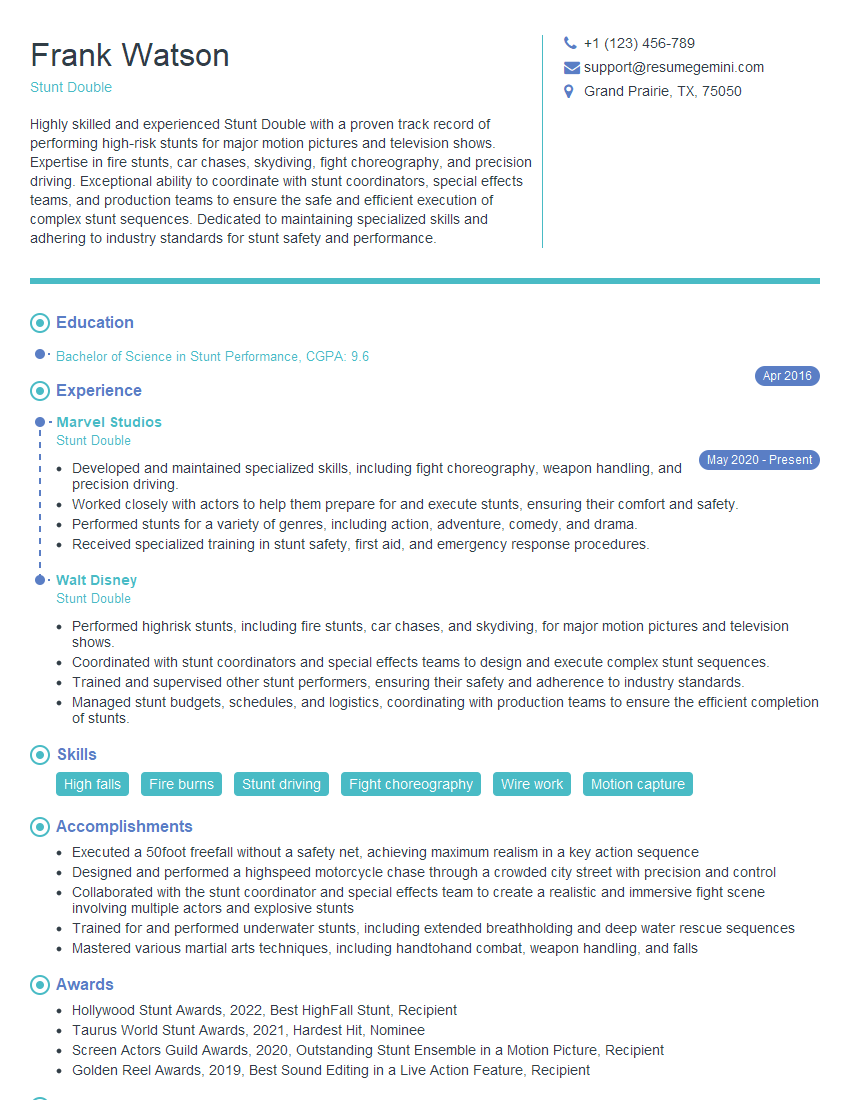
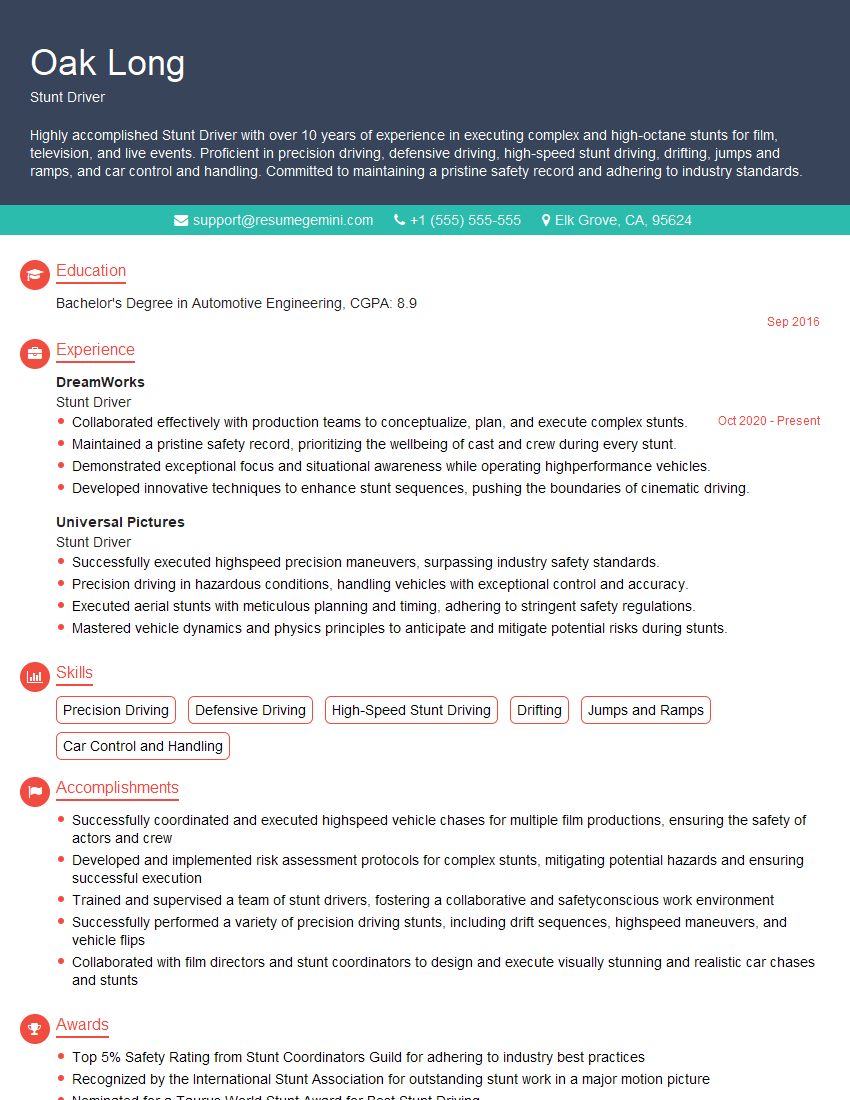
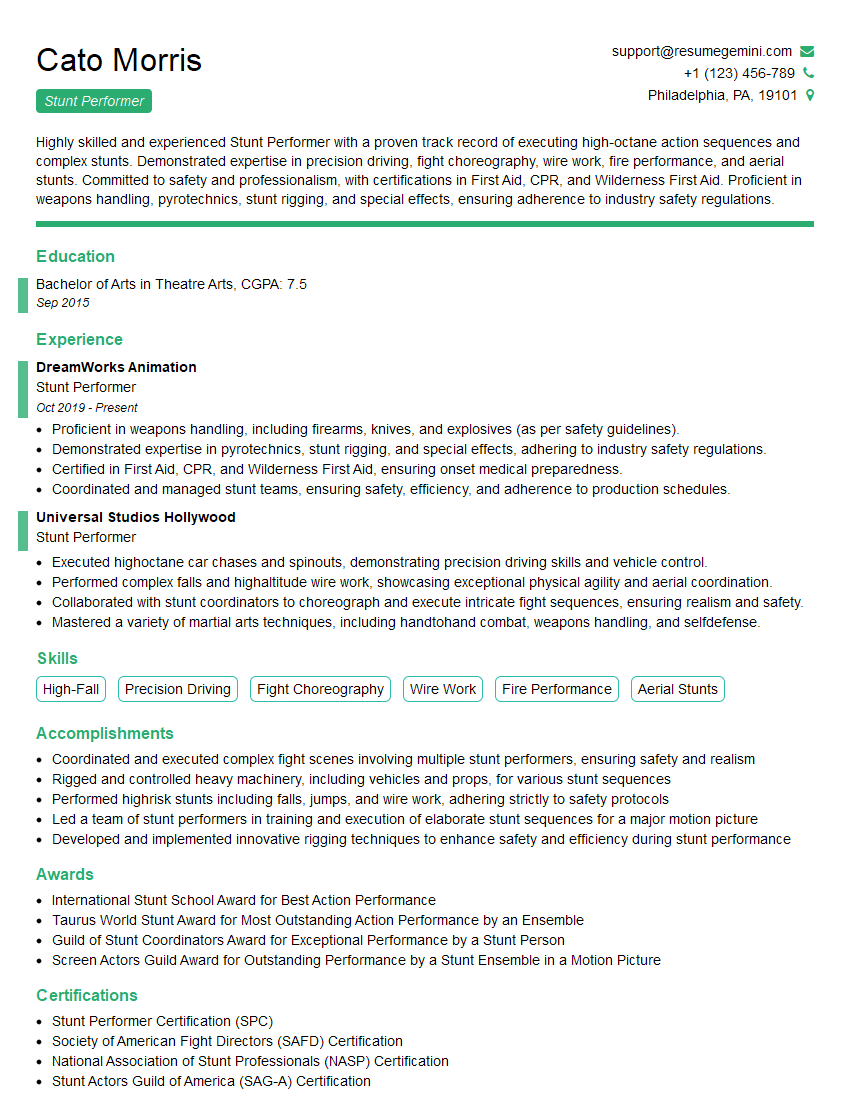
Mastering the planning and execution of stunts opens doors to exciting and rewarding careers in the film, television, and entertainment industries. A strong resume is crucial for showcasing your skills and experience to potential employers. To maximize your job prospects, create an ATS-friendly resume that highlights your key accomplishments and qualifications. ResumeGemini is a trusted resource that can help you build a professional and impactful resume, ensuring your application stands out. Examples of resumes tailored to Planning and executing stunts are available to guide you in creating your own compelling document.
Explore more articles
Users Rating of Our Blogs
Share Your Experience
We value your feedback! Please rate our content and share your thoughts (optional).
What Readers Say About Our Blog
Very informative content, great job.
good