The thought of an interview can be nerve-wracking, but the right preparation can make all the difference. Explore this comprehensive guide to Plant Maintenance and Reliability interview questions and gain the confidence you need to showcase your abilities and secure the role.
Questions Asked in Plant Maintenance and Reliability Interview
Q 1. Describe your experience with CMMS (Computerized Maintenance Management Systems).
My experience with CMMS systems spans over ten years, encompassing implementation, customization, and daily utilization. I’ve worked with various CMMS platforms, including IBM Maximo, SAP PM, and UpKeep, across diverse industrial settings—from manufacturing plants to large-scale infrastructure projects. My expertise extends beyond basic data entry; I’ve been actively involved in developing and optimizing maintenance strategies within these systems. For instance, in a previous role at a food processing plant, I spearheaded the implementation of a new CMMS, streamlining the preventive maintenance schedule and reducing downtime by 15% within the first year. This involved not only configuring the software but also training the maintenance team, establishing key performance indicators (KPIs), and developing customized reports for performance monitoring and continuous improvement.
I am proficient in using CMMS for work order management, inventory control, preventive maintenance scheduling, and generating reports for performance analysis. I understand the importance of data integrity and have experience in cleaning and validating data for accurate reporting and decision-making. I also possess skills in integrating CMMS with other enterprise systems such as ERP (Enterprise Resource Planning) for seamless data flow and improved operational efficiency.
Q 2. Explain the difference between preventive and predictive maintenance.
Preventive maintenance (PM) and predictive maintenance (PdM) are both crucial for maximizing equipment uptime, but they differ significantly in their approach. Preventive maintenance follows a predetermined schedule based on manufacturer recommendations or historical data. Think of it like regular car servicing – changing oil and filters at specific intervals, regardless of their current condition. This is proactive and helps prevent failures.
Predictive maintenance, however, utilizes advanced technologies like vibration analysis, oil analysis, and thermal imaging to predict potential equipment failures before they occur. Instead of scheduled interventions, PdM focuses on monitoring the equipment’s condition in real-time and performing maintenance only when necessary. Imagine a doctor using an X-ray to identify a potential problem before it becomes a major health issue. PdM is more data-driven and resource-efficient, optimizing maintenance efforts and reducing unnecessary downtime.
In practice, a blended approach combining both PM and PdM is often the most effective strategy. PM addresses routine tasks and catches minor issues before they escalate, while PdM focuses on critical assets and helps prevent catastrophic failures.
Q 3. What are your strategies for improving equipment uptime?
Improving equipment uptime requires a multi-faceted approach focusing on proactive maintenance, robust root cause analysis, and continuous improvement. My strategies involve:
- Optimizing Preventive Maintenance Schedules: Analyzing historical data to identify optimal intervals for PM tasks, minimizing unnecessary maintenance while ensuring equipment reliability.
- Implementing Predictive Maintenance: Utilizing condition-based monitoring technologies to predict potential failures and schedule maintenance proactively, reducing unexpected downtime.
- Enhancing Maintenance Skills and Training: Providing comprehensive training to maintenance personnel, enabling them to perform tasks efficiently and effectively.
- Improving Parts Management: Implementing a robust inventory management system to ensure that necessary spare parts are readily available when needed, reducing downtime due to part shortages.
- Data-Driven Decision Making: Utilizing CMMS data to identify trends, patterns, and areas for improvement, leading to more effective maintenance strategies.
- Streamlining Work Orders: Ensuring that work orders are clear, concise, and complete, facilitating efficient and accurate maintenance execution.
For example, at a previous manufacturing facility, I implemented a new lubrication program based on predictive analysis, reducing bearing failures by 40% and significantly increasing machine uptime.
Q 4. How do you prioritize maintenance tasks?
Prioritizing maintenance tasks is crucial for maximizing resource utilization and minimizing downtime. I employ a multi-criteria prioritization approach, combining several methods:
- Criticality Analysis: Assessing the impact of equipment failure on production, identifying critical equipment requiring immediate attention. This often involves a risk assessment matrix considering the likelihood and severity of failure.
- Urgency Assessment: Determining the immediacy of maintenance needs. Emergency repairs always take precedence, followed by urgent repairs preventing further damage.
- Cost-Benefit Analysis: Evaluating the cost of maintenance against the potential cost of equipment failure, ensuring that resources are allocated efficiently.
- Maintenance Backlog Management: Using a prioritized queue system (often within the CMMS) to manage all open work orders, ensuring that tasks are completed in a timely manner.
This might involve using a scoring system where each task receives a score based on its criticality and urgency. Tasks with the highest scores are prioritized.
Q 5. Describe your experience with root cause analysis.
Root cause analysis (RCA) is fundamental to preventing equipment failures. My experience involves applying various RCA techniques, including the ‘5 Whys,’ fishbone diagrams (Ishikawa diagrams), and Failure Mode and Effects Analysis (FMEA). The goal is to go beyond simply fixing the immediate problem and identify the underlying causes to prevent recurrence.
For instance, if a pump fails, simply replacing the pump doesn’t address the root cause. Using the ‘5 Whys’, we might ask: Why did the pump fail? (Overheating). Why did it overheat? (Insufficient lubrication). Why was there insufficient lubrication? (Faulty lubrication system). Why was the lubrication system faulty? (Lack of preventative maintenance). Why was there a lack of preventative maintenance? (Inadequate scheduling and training). This iterative questioning helps unearth the root cause and implement corrective actions—in this case, improving the lubrication system and preventative maintenance schedule.
I ensure a collaborative approach to RCA, involving maintenance personnel, operators, and engineers to gain diverse perspectives and create comprehensive solutions.
Q 6. How do you handle emergency maintenance situations?
Handling emergency maintenance requires swift action and efficient coordination. My approach involves:
- Rapid Response Team Activation: Having a pre-defined emergency response plan with clearly defined roles and responsibilities for a rapid response team.
- Immediate Assessment: Quickly assessing the situation to understand the extent of the damage and potential safety hazards.
- Prioritization of Safety: Ensuring the safety of personnel is the top priority, implementing appropriate safety precautions.
- Efficient Problem Solving: Using troubleshooting techniques to quickly identify the problem and implement temporary repairs to restore functionality.
- Documentation and Reporting: Thoroughly documenting the incident, including the cause, actions taken, and lessons learned for future prevention.
I use a structured communication system, often involving immediate notification to management and relevant personnel, keeping everyone updated on the progress. After the immediate crisis is over, a thorough RCA is performed to prevent similar incidents from occurring again.
Q 7. Explain your understanding of TPM (Total Productive Maintenance).
Total Productive Maintenance (TPM) is a holistic approach to equipment maintenance that engages all employees in maximizing equipment effectiveness. It moves beyond traditional reactive and preventive maintenance to a proactive, autonomous system of maintenance where every employee is responsible for the equipment they use. TPM emphasizes:
- Autonomous Maintenance: Empowering operators to perform basic maintenance tasks, freeing up skilled technicians for more complex issues. This builds ownership and improves early problem detection.
- Planned Maintenance: Implementing structured preventive maintenance schedules based on equipment condition and criticality.
- Preventive Maintenance: Regularly scheduled maintenance to prevent failures and improve equipment lifespan.
- Quality Maintenance: Implementing maintenance procedures to improve the quality and reliability of equipment.
- Early Equipment Management: Proactive strategies for new equipment implementation and early failure detection.
Successful TPM implementation requires strong leadership, cross-functional teamwork, and a commitment to continuous improvement. I’ve witnessed firsthand how TPM can significantly reduce downtime, improve product quality, and boost overall equipment effectiveness (OEE). It is about creating a culture of maintenance excellence across the entire organization.
Q 8. What are some common reliability metrics you use?
Reliability metrics are crucial for assessing the performance and effectiveness of plant maintenance strategies. They provide quantifiable data to track equipment health, identify areas for improvement, and justify investments in reliability programs. Common metrics I use include:
- Mean Time Between Failures (MTBF): This represents the average time a piece of equipment operates before a failure. A higher MTBF indicates greater reliability. For example, if a pump has an MTBF of 1000 hours, it’s expected to run for 1000 hours on average before requiring repair.
- Mean Time To Repair (MTTR): This measures the average time it takes to repair a failed piece of equipment. A lower MTTR indicates faster and more efficient repairs. A well-oiled maintenance program strives for a short MTTR. For example, a target of 4 hours MTTR for a critical conveyor belt ensures minimal production downtime.
- Availability: This metric expresses the percentage of time a piece of equipment is operational and available for use. It considers both MTBF and MTTR. The formula is typically: Availability = (MTBF / (MTBF + MTTR)) * 100%. An availability target of 98% for a critical compressor would mean only 2% downtime is acceptable.
- Overall Equipment Effectiveness (OEE): This holistic metric combines availability, performance efficiency (how well the equipment is producing at its rated capacity), and quality rate (percentage of good parts produced). OEE provides a comprehensive view of equipment effectiveness and identifies bottlenecks in production.
- Failure Rate: This simple metric shows the number of failures per unit of time, often expressed as failures per million operating hours (FMOH). A decreasing failure rate signifies an effective maintenance strategy.
By tracking these metrics over time, we can pinpoint trends, measure the impact of maintenance interventions, and make data-driven decisions to improve reliability.
Q 9. How do you develop and manage a maintenance budget?
Developing and managing a maintenance budget is a critical aspect of ensuring effective plant maintenance. It requires a strategic approach combining historical data analysis, future projections, and a clear understanding of priorities. My approach involves these steps:
- Data Analysis: I start by analyzing historical maintenance data, including repair costs, parts expenses, labor costs, and contract costs. This allows me to identify cost trends and predict future spending based on equipment age and anticipated maintenance needs.
- Prioritization: I prioritize maintenance activities based on their impact on production, safety, and environmental compliance. Critical equipment requiring high uptime receives a larger budget allocation. I employ techniques like criticality analysis and risk assessment matrices.
- Budget Allocation: I allocate the budget across different maintenance categories, such as preventive maintenance, corrective maintenance, predictive maintenance, and capital expenditures for equipment upgrades. This allocation reflects the organization’s risk tolerance and strategic objectives.
- Cost Control: I implement cost control measures, such as negotiating favorable contracts with suppliers, optimizing inventory levels, and implementing energy-efficient maintenance practices. Regular monitoring of spending against the budget is crucial.
- Performance Monitoring: The budget’s effectiveness is continuously monitored against key performance indicators (KPIs) like MTBF, MTTR, and OEE. This ensures that allocated funds are effectively utilized and contribute to improved equipment reliability.
For example, if historical data shows a high failure rate for a specific machine type, we may allocate more funds for preventive maintenance and spare parts to mitigate potential production disruptions. This process allows me to create a dynamic and responsive budget that adapts to changing needs and enhances reliability.
Q 10. Describe your experience with failure modes and effects analysis (FMEA).
Failure Modes and Effects Analysis (FMEA) is a structured approach to identifying potential failure modes in a system, analyzing their potential effects, and recommending actions to mitigate their risk. I have extensive experience utilizing FMEA in various plant settings.
My approach involves:
- Team Formation: Assembling a multidisciplinary team with expertise across engineering, maintenance, operations, and safety.
- System Definition: Clearly defining the system or process under analysis, identifying its functions and boundaries.
- Failure Mode Identification: Systematically brainstorming and documenting potential failure modes for each component or process step. This often involves using historical data, knowledge of similar systems, and expert judgment.
- Severity, Occurrence, and Detection Rating: Assigning ratings (usually on a scale of 1-10) to each failure mode’s severity (impact on the system), occurrence (likelihood of the failure), and detection (ease of detecting the failure before it occurs). These ratings are then multiplied to calculate a Risk Priority Number (RPN).
- Risk Priority Number (RPN) Analysis: Focusing on high-RPN failure modes, indicating a higher risk and requiring immediate attention. These are prioritized for corrective action.
- Recommended Actions: Developing and implementing actions to mitigate the identified risks. These may include design changes, improved maintenance procedures, increased monitoring, or additional safety measures.
- RPN Re-evaluation: Regularly reevaluating the RPNs after implementing corrective actions to ensure the effectiveness of the mitigation strategies.
For instance, in a recent FMEA of a critical processing line, we identified a high-RPN risk associated with a specific pump’s seal failure. The implemented actions included replacing the seals with a more robust design, enhancing the lubrication schedule, and implementing a vibration monitoring system to detect potential issues early.
Q 11. How do you ensure compliance with safety regulations in maintenance activities?
Ensuring compliance with safety regulations during maintenance activities is paramount. My approach is proactive and multi-faceted:
- Lockout/Tagout (LOTO) Procedures: Strict adherence to LOTO procedures is essential before starting any maintenance task involving potentially hazardous equipment. This includes properly locking out energy sources (electricity, hydraulics, pneumatics) and tagging the equipment to prevent accidental energization.
- Permit-to-Work System: Utilizing a permit-to-work system for high-risk activities ensures that all necessary safety precautions are in place before work commences. This system involves authorizing the work, verifying safety measures, and ensuring a safe work environment.
- Regular Safety Training: Providing regular and comprehensive safety training to all maintenance personnel on hazard identification, risk assessment, and safe work practices. This includes training on specific equipment and procedures.
- Personal Protective Equipment (PPE): Ensuring that all maintenance personnel use appropriate PPE, such as safety glasses, gloves, hearing protection, and respirators, depending on the task and environment.
- Regular Safety Audits and Inspections: Conducting regular safety audits and inspections to identify potential hazards and ensure compliance with regulations and best practices. These audits often involve checklists and documented findings.
- Incident Reporting and Investigation: Implementing a robust system for reporting and investigating safety incidents to identify root causes and implement corrective actions to prevent recurrence.
For example, before working on a high-voltage electrical panel, we strictly follow the LOTO procedure, ensuring the power is completely isolated and verified before any work begins. This comprehensive approach minimizes risks and ensures a safe working environment.
Q 12. What is your experience with spare parts management?
Effective spare parts management is vital for minimizing downtime and ensuring operational continuity. My experience encompasses all aspects, from inventory planning to obsolescence management:
- Inventory Optimization: Employing techniques like ABC analysis (classifying parts based on their value and criticality) and Economic Order Quantity (EOQ) calculations to determine optimal inventory levels. This balances the need to have parts readily available with the cost of holding excessive inventory.
- Vendor Management: Developing and maintaining strong relationships with reliable vendors to ensure timely procurement of spare parts at competitive prices. This includes negotiating favorable contracts and establishing clear communication channels.
- Warehouse Management: Implementing a well-organized warehouse system for efficient storage and retrieval of spare parts, including proper labeling, tracking, and bin locations.
- Inventory Tracking and Control: Using computerized maintenance management systems (CMMS) or enterprise resource planning (ERP) software to track inventory levels, monitor consumption rates, and generate automated re-ordering alerts. This ensures timely replenishment of critical parts.
- Obsolescence Management: Proactively identifying and managing obsolete parts, exploring options such as sourcing replacements, redesigning equipment, or establishing contingency plans.
For example, using a CMMS, we can track the usage rate of a particular motor bearing. When the inventory drops below a predetermined level, the system automatically generates a purchase requisition, ensuring timely replenishment and preventing potential downtime due to part shortage.
Q 13. Explain your understanding of different lubrication techniques.
Lubrication is a crucial aspect of plant maintenance, significantly impacting equipment lifespan and performance. Different lubrication techniques are selected based on the specific application and equipment requirements:
- Grease Lubrication: Grease provides excellent protection against wear and corrosion, especially in applications with high loads and slow speeds. It’s often used for bearings, gears, and other enclosed components. Different grease types are available, offering varying levels of viscosity and performance characteristics.
- Oil Lubrication: Oil is typically used in high-speed applications where excellent heat dissipation is crucial. It is effective for various types of machinery, including turbines, engines, and hydraulic systems. Oil lubrication systems can be simple gravity feed or complex circulation systems, often requiring filtration and monitoring.
- Oil Mist Lubrication: This technique involves atomizing oil into a fine mist and delivering it to the lubrication points. It’s useful for reaching hard-to-access areas and provides consistent lubrication with minimal waste.
- Automatic Lubrication Systems: These systems automate the lubrication process, reducing labor costs and improving consistency. They can be simple time-based systems or more sophisticated systems that adjust lubrication based on equipment operating conditions.
- Solid Film Lubrication: This involves applying a solid lubricant, such as graphite or molybdenum disulfide, to surfaces. This is particularly useful in high-temperature or extreme-pressure applications.
Choosing the right lubrication technique requires careful consideration of factors such as operating conditions, equipment design, and maintenance goals. For example, a high-speed bearing in a critical application may benefit from oil mist lubrication for consistent delivery and effective cooling, while a slow-speed, heavily loaded bearing might be better suited for grease lubrication for enhanced protection.
Q 14. How do you assess the effectiveness of maintenance programs?
Assessing the effectiveness of maintenance programs is crucial to ensure they are delivering the desired results. This involves several key approaches:
- Key Performance Indicator (KPI) Tracking: Regularly monitoring and analyzing KPIs, including MTBF, MTTR, OEE, and equipment availability. Trends in these metrics reveal the impact of maintenance activities and identify areas for improvement.
- Cost Analysis: Analyzing maintenance costs in relation to production output, identifying potential cost savings and optimizing resource allocation. Tracking cost per unit produced can reveal areas where maintenance is adding value and where costs can be managed better.
- Failure Analysis: Conducting root cause failure analyses to identify the underlying causes of equipment failures. This provides insights into areas needing improvements in preventive maintenance strategies, training, or equipment upgrades.
- Audits and Reviews: Conducting regular audits of maintenance procedures, safety protocols, and spare parts management practices. These audits ensure compliance and adherence to best practices.
- Employee Feedback: Gathering feedback from maintenance personnel on the effectiveness of programs, processes, and tools. Their experience and insight can identify operational challenges and suggest improvements.
- Benchmarking: Comparing the performance of the maintenance program against industry best practices and similar organizations. This helps to identify gaps and opportunities for improvement.
For example, if the MTBF for a specific machine is consistently decreasing, it suggests the preventive maintenance program may require adjustments, potentially necessitating more frequent inspections or a change in lubrication schedules. Continuous monitoring and analysis of these metrics allow for a data-driven approach to optimize maintenance programs and enhance overall plant reliability.
Q 15. Describe your experience with vibration analysis.
Vibration analysis is a crucial predictive maintenance technique used to detect developing mechanical problems in rotating equipment like pumps, motors, and turbines. It involves measuring the vibrations produced by the machinery and analyzing their frequency, amplitude, and phase to identify potential issues before they lead to catastrophic failures.
My experience spans over ten years, encompassing various industries including manufacturing and power generation. I’ve utilized both handheld data collectors and online monitoring systems. For example, I used a handheld analyzer to diagnose a bearing failure in a high-speed centrifugal pump. The analysis revealed a characteristic high-frequency vibration at a specific bearing location, allowing us to replace the bearing before a complete breakdown. In another instance, we implemented an online monitoring system for critical compressors, allowing us to continuously track vibration levels and receive alerts of impending issues, dramatically reducing downtime.
I am proficient in interpreting vibration spectra, understanding the various fault frequencies associated with different machine components (e.g., unbalance, misalignment, bearing defects), and generating reports for corrective actions. My expertise also includes using advanced signal processing techniques to filter out noise and enhance diagnostic accuracy.
Career Expert Tips:
- Ace those interviews! Prepare effectively by reviewing the Top 50 Most Common Interview Questions on ResumeGemini.
- Navigate your job search with confidence! Explore a wide range of Career Tips on ResumeGemini. Learn about common challenges and recommendations to overcome them.
- Craft the perfect resume! Master the Art of Resume Writing with ResumeGemini’s guide. Showcase your unique qualifications and achievements effectively.
- Don’t miss out on holiday savings! Build your dream resume with ResumeGemini’s ATS optimized templates.
Q 16. How do you train and manage maintenance personnel?
Training and managing maintenance personnel is paramount for effective plant operations. My approach is multifaceted, focusing on both technical skills and soft skills. I believe in a blended learning approach, combining classroom instruction, hands-on training, and on-the-job mentoring.
- Technical Training: This includes specific training on equipment operation, maintenance procedures, troubleshooting techniques, and the use of diagnostic tools such as vibration analyzers, infrared cameras, and lubrication analysis equipment. We use simulations and interactive training modules to enhance understanding and retention.
- Soft Skills Training: This encompasses crucial aspects like teamwork, communication, problem-solving, and safety. We hold regular team meetings and workshops to foster collaboration and address workplace challenges proactively.
- Mentorship Program: Experienced technicians mentor newer staff, providing hands-on guidance and transferring their expertise. This also helps build a strong team culture.
- Performance Management: We regularly review individual performance, provide constructive feedback, and identify opportunities for professional development. This includes setting clear expectations, providing regular performance reviews, and offering opportunities for advancement.
Furthermore, I leverage competency-based training programs to ensure that every technician possesses the necessary skills for their assigned tasks. This ensures consistent high-quality maintenance across the plant.
Q 17. What software or tools do you use for maintenance planning and scheduling?
For maintenance planning and scheduling, I’ve used a variety of software and tools, each tailored to specific needs. My experience includes utilizing Computerized Maintenance Management Systems (CMMS) such as SAP PM, Maximo, and Fiix. These systems allow for work order management, preventative maintenance scheduling, inventory tracking, and reporting. I also utilize specialized software for predictive maintenance tasks like vibration analysis software and reliability data analysis packages.
For example, in a previous role, we implemented SAP PM to manage our maintenance activities. This system enabled us to efficiently schedule preventative maintenance tasks, track equipment history, and analyze maintenance costs. We also integrated the system with our inventory management system to streamline parts procurement. For predictive maintenance, we integrated the vibration analysis data directly into the CMMS, creating a seamless workflow for identifying potential problems and scheduling corrective actions.
Q 18. Explain your experience with different types of maintenance strategies (e.g., RCM).
My experience encompasses various maintenance strategies, including Reactive, Preventative, Predictive, and Reliability-Centered Maintenance (RCM). Reactive maintenance, while cost-effective in the short term, leads to significant unplanned downtime and higher repair costs in the long run. Preventative maintenance, based on fixed time intervals, can be inefficient if intervals aren’t optimized. Predictive maintenance is far more effective, utilizing data to anticipate potential failures.
RCM, however, is the most sophisticated and effective strategy. It involves systematically analyzing equipment failures and their potential consequences, leading to the development of optimized maintenance plans. The RCM process identifies the critical functions of the equipment and determines the most effective maintenance tasks to prevent failures and minimize their consequences. For example, instead of replacing a bearing at a fixed interval, RCM might recommend vibration monitoring to detect bearing wear and schedule replacement only when necessary, saving costs and reducing unnecessary interventions.
In practice, I’ve successfully implemented RCM on several critical pieces of equipment, resulting in significant reductions in unplanned downtime and maintenance costs. This involves collaborating with operations and engineering teams to identify criticality levels of equipment, conduct failure mode and effects analysis (FMEA), and develop customized maintenance plans based on risk assessments.
Q 19. How do you utilize data analytics in plant maintenance?
Data analytics plays a pivotal role in modern plant maintenance. We leverage data from various sources, including CMMS, sensors, and other monitoring systems, to gain valuable insights into equipment performance and identify trends. This data-driven approach helps improve maintenance planning, optimize resource allocation, and reduce downtime.
For instance, we utilize data analytics to:
- Predict Equipment Failures: By analyzing historical maintenance data and sensor readings, we can identify patterns and predict potential failures before they occur. This allows for proactive maintenance actions and prevents costly unplanned downtime.
- Optimize Maintenance Schedules: We can optimize preventive maintenance intervals based on actual equipment performance and usage data, maximizing equipment lifespan and minimizing unnecessary maintenance.
- Analyze Maintenance Costs: Data analytics can pinpoint areas where maintenance costs are high, allowing for process improvements and cost reduction strategies.
- Improve Inventory Management: Analyzing parts usage data allows us to optimize inventory levels, reducing storage costs and minimizing stockouts.
We use statistical software packages and data visualization tools to analyze this data and generate actionable insights. The resulting information is crucial for decision-making related to maintenance strategies, resource allocation, and budget planning.
Q 20. Describe a time you had to troubleshoot a complex equipment failure.
One challenging situation involved a sudden and complete shutdown of a critical production line due to a malfunctioning main compressor. Initial diagnostics pointed towards a motor failure, but after a thorough inspection, the motor appeared to be in good condition. This indicated a deeper, more complex problem.
Our troubleshooting process involved the following steps:
- Gather Data: We collected data from various sources, including the CMMS (for historical maintenance records), the compressor’s control system (for operational parameters), and sensor readings (for temperature and vibration data). We also interviewed the operators to gather firsthand accounts of the failure.
- Analyze Data: Analyzing the data revealed unusual pressure fluctuations preceding the shutdown. This suggested a problem within the compressor itself, rather than the motor.
- Visual Inspection: A detailed visual inspection of the compressor revealed a hairline crack in a critical component. This crack was not easily visible, highlighting the importance of systematic inspection methods.
- Expert Consultation: We consulted with the equipment manufacturer’s specialists, who confirmed the diagnosis and provided guidance on repair procedures.
- Repair and Testing: The cracked component was replaced, and the compressor was thoroughly tested before reintegrating it into the production line.
This experience underscored the importance of a systematic approach to troubleshooting, involving data analysis, thorough visual inspections, and expert consultation, as well as the value of a strong team that works collaboratively.
Q 21. How do you improve communication and collaboration within the maintenance team?
Improving communication and collaboration within the maintenance team is crucial for operational efficiency and safety. My approach involves several key strategies:
- Regular Team Meetings: We hold regular meetings to discuss ongoing projects, address challenges, share best practices, and provide updates on key performance indicators (KPIs). This fosters a sense of team unity and shared responsibility.
- Open Communication Channels: We encourage open communication through various channels, including daily briefings, instant messaging, and email. This ensures everyone is informed and can access the information they need quickly.
- Effective Shift Handovers: Clear and concise shift handovers are essential for maintaining continuity and avoiding missed issues. This is supplemented by a well-maintained logbook and digital system for recording important details.
- Cross-Training: We implement cross-training programs to help team members understand different roles and responsibilities. This improves collaboration and provides backup support when needed.
- Team Building Activities: We occasionally engage in team building activities to foster camaraderie and strengthen relationships among team members. These activities can range from simple team lunches to more elaborate events.
- Feedback Mechanisms: We establish feedback mechanisms to encourage open communication and address any conflicts or issues promptly. This could involve anonymous surveys or regular one-on-one meetings with team members.
By actively promoting open communication and collaboration, we foster a positive team environment that enhances productivity, safety, and overall efficiency.
Q 22. What are your strategies for reducing maintenance costs?
Reducing maintenance costs requires a multifaceted approach focusing on preventative maintenance, optimized resource allocation, and data-driven decision-making. It’s not just about saving money; it’s about maximizing the lifespan and efficiency of your assets.
Preventative Maintenance Programs: Implementing a robust PM program is paramount. This involves scheduling regular inspections, lubrication, and minor repairs to prevent major breakdowns. Think of it like regular car maintenance – oil changes, tire rotations – preventing larger, more expensive repairs down the line. For example, a well-defined lubrication schedule for critical machinery can significantly extend its life and reduce the need for costly repairs.
Predictive Maintenance using Data Analytics: Utilizing sensors and data analysis to predict potential failures before they occur is crucial. This allows for timely interventions, minimizing downtime and preventing catastrophic failures. Imagine using vibration sensors on a pump to detect bearing wear before it leads to a complete failure and costly production stoppage. The data analysis helps us move from reactive to proactive maintenance.
Optimizing Spare Parts Inventory: Maintaining the right balance of spare parts is key. Too few parts lead to downtime, while too many tie up capital and increase storage costs. We need robust inventory management systems to track usage, predict demand, and optimize stock levels. Lean principles are invaluable here, reducing waste in every aspect.
Effective Training and Skill Development: Investing in the training and development of maintenance technicians is vital. A well-trained workforce is more efficient, makes fewer mistakes, and prolongs equipment life through proper operation and maintenance practices. This is akin to investing in professional development – it pays dividends in the long run.
Q 23. How do you ensure the accuracy and reliability of maintenance records?
Accuracy and reliability in maintenance records are fundamental for effective maintenance management. Inaccurate data leads to poor decision-making, increased costs, and potential safety hazards. This is achieved through a combination of technology and strict procedures.
CMMS (Computerized Maintenance Management System): Utilizing a CMMS is essential. A CMMS centralizes all maintenance data, from work orders and preventative maintenance schedules to parts inventory and equipment history. This eliminates manual record-keeping errors and inconsistencies. We’ve used several CMMS solutions, and the key is finding one that fits your specific needs and integrates well with your existing systems.
Standardized Procedures and Forms: Implementing standardized procedures and forms ensures consistency in data collection and reporting. This minimizes ambiguity and reduces the likelihood of errors. For example, every work order should follow a specific format, including clear descriptions of the work performed, materials used, and time spent.
Regular Data Audits and Validation: Periodic audits and validation of maintenance data are critical to identify and correct inaccuracies. This includes reviewing work orders for completeness and accuracy, verifying parts inventory against physical stock, and comparing planned vs. actual maintenance activities. This is a quality control process, ensuring the integrity of our maintenance data.
Training on Data Entry and System Usage: Providing thorough training to maintenance personnel on accurate data entry and CMMS usage is crucial. A well-trained team is less likely to make mistakes and will understand the importance of data accuracy. We emphasize continuous improvement through regular training sessions and updates.
Q 24. Explain your experience with project management in a maintenance setting.
My experience in project management within a maintenance setting centers on planning, executing, and managing maintenance projects efficiently and effectively. This involves careful budgeting, resource allocation, and adherence to schedules.
Project Planning and Scoping: The initial phase involves defining project objectives, scope, deliverables, and timelines. This includes thorough risk assessment and mitigation planning. For example, a large-scale overhaul of a critical piece of equipment needs meticulous planning to minimize downtime and disruptions to production.
Resource Allocation and Budgeting: This includes allocating personnel, equipment, materials, and budget effectively. This often requires negotiating with various departments and stakeholders to secure the necessary resources. Accurate cost estimation is critical to avoid budget overruns.
Project Execution and Monitoring: The execution phase involves monitoring progress against the plan, tracking costs, and addressing any issues or delays promptly. Regular progress meetings are crucial to keep stakeholders informed and identify potential problems early.
Project Completion and Documentation: The final phase involves project completion, documentation of all activities, lessons learned, and final cost reporting. This documentation is invaluable for future projects and continuous improvement.
For instance, I recently led a project to upgrade our plant’s HVAC system. Through detailed planning, resource allocation, and proactive monitoring, we completed the project on time and under budget, resulting in significant energy savings and improved working conditions.
Q 25. How do you integrate maintenance with production processes?
Integrating maintenance with production processes is vital for maximizing overall equipment effectiveness (OEE). It’s about finding the optimal balance between maximizing production and ensuring equipment reliability.
Scheduled Maintenance during Downtime: Scheduling preventative maintenance during planned production downtime minimizes disruption to production. This requires careful coordination between maintenance and production teams to schedule maintenance activities during less critical periods. We use a collaborative scheduling system to optimize this.
Real-time Monitoring and Alerting Systems: Utilizing real-time monitoring systems enables prompt detection and response to equipment issues. This minimizes downtime and prevents minor problems from escalating into major ones. Alerts can be triggered based on sensor data, providing early warnings of potential failures.
Total Productive Maintenance (TPM): TPM is a philosophy that involves empowering all employees to participate in maintenance activities. This collaborative approach fosters a culture of ownership and responsibility for equipment upkeep. It’s about everyone working together to improve overall productivity.
Maintenance Optimization through Lean Principles: Applying lean manufacturing principles, such as reducing waste and improving efficiency, can significantly streamline maintenance processes. This could include optimizing spare parts inventory, reducing maintenance cycle times, and eliminating unnecessary tasks. We use value stream mapping to identify and eliminate non-value-added activities in our maintenance processes.
Q 26. What are your experience with different types of pumps and their maintenance?
My experience encompasses various pump types, including centrifugal, positive displacement (rotary and reciprocating), and submersible pumps. Each type has unique maintenance requirements.
Centrifugal Pumps: Maintenance focuses on bearing lubrication, shaft alignment, impeller wear, and seal integrity. Regular inspections, vibration analysis, and pressure monitoring are crucial for early detection of problems. We regularly check for cavitation, which can cause significant damage.
Positive Displacement Pumps (Rotary): These pumps require attention to gear wear, seal integrity, and proper lubrication. Regular oil analysis is important to detect potential wear and tear. We often inspect for leaks and check for proper torque.
Positive Displacement Pumps (Reciprocating): Maintenance includes checking packing glands, valve operation, and piston/cylinder wear. Regular lubrication and attention to internal components are key. We pay close attention to the fluid being pumped as this can impact the pump life.
Submersible Pumps: These pumps require careful handling during installation and removal. Maintenance focuses on motor cooling, cable integrity, and seal condition. We take extra precautions to ensure watertight seals to prevent electrical issues.
I have a strong understanding of pump curves and operating characteristics. This allows me to optimize pump performance and identify potential problems based on operational data.
Q 27. How do you handle conflicts between maintenance and production demands?
Conflicts between maintenance and production demands are inevitable. Effective communication, prioritization, and a collaborative approach are crucial to resolving these conflicts. It’s about finding a balance that minimizes downtime while ensuring safety and equipment reliability.
Prioritization Based on Risk and Impact: This involves prioritizing maintenance tasks based on their potential impact on production and the associated risks. Critical equipment requiring immediate attention will take precedence over less critical tasks. We use a risk matrix to assess the severity and likelihood of failures.
Effective Communication and Collaboration: Open communication between maintenance and production teams is essential. Regular meetings, shared information systems, and clear escalation procedures help facilitate this. A collaborative approach helps avoid misunderstandings and fosters mutual understanding of goals.
Scheduled Maintenance during Planned Downtime: Prioritizing maintenance activities during planned downtime reduces disruptions to production and ensures timely completion of maintenance tasks. We carefully coordinate planned maintenance with production schedules to minimize downtime.
Negotiation and Compromise: Sometimes, compromises must be made to balance the needs of maintenance and production. This might involve negotiating timelines or adjusting priorities based on unforeseen circumstances. Flexibility and adaptability are key in these situations.
Q 28. Describe your experience working with contractors or vendors.
Working with contractors and vendors requires a structured approach to ensure quality, safety, and compliance. It’s crucial to establish clear expectations, communication channels, and performance metrics.
Clear Contracts and Service Level Agreements (SLAs): Formal contracts and SLAs outline the scope of work, payment terms, timelines, performance expectations, and safety regulations. This ensures a clear understanding of mutual responsibilities and avoids misunderstandings.
Vendor Selection and Qualification: Thorough vendor selection and qualification processes are critical to ensure the competence and reliability of contractors. This might involve background checks, reference checks, and assessments of their technical capabilities.
Regular Communication and Monitoring: Effective communication channels should be established to facilitate regular progress updates, address concerns, and resolve issues promptly. This might include daily reports, weekly meetings, or other reporting mechanisms.
Quality Control and Inspection: Regular quality control and inspections are necessary to ensure compliance with specifications and standards. This might involve on-site inspections, testing, and reviews of completed work.
Performance Evaluation and Feedback: Periodic performance evaluations and feedback mechanisms allow for continuous improvement and address areas for improvement. This provides insights into vendor performance and promotes ongoing improvement.
For example, when we outsourced a major electrical upgrade, we established a detailed contract specifying deliverables, timelines, safety protocols, and performance metrics. Regular inspections and communication ensured the project was completed on time and to the highest standards.
Key Topics to Learn for Plant Maintenance and Reliability Interview
- Preventive Maintenance Strategies: Understanding different PM schedules (time-based, condition-based, predictive), their implementation, and the benefits and drawbacks of each. Consider discussing CMMS (Computerized Maintenance Management Systems) integration.
- Predictive Maintenance Techniques: Explore vibration analysis, oil analysis, thermography, and other methods used to predict equipment failure and optimize maintenance schedules. Discuss practical application in identifying potential problems before they become major issues.
- Reliability-Centered Maintenance (RCM): Learn the principles of RCM, focusing on identifying critical equipment, understanding failure modes, and developing effective maintenance strategies to minimize downtime and optimize system reliability.
- Root Cause Analysis (RCA): Master techniques like 5 Whys, Fishbone diagrams, and Fault Tree Analysis to effectively diagnose equipment failures and implement corrective actions to prevent recurrence. Be prepared to discuss practical case studies.
- Maintenance Planning and Scheduling: Demonstrate understanding of work order management, resource allocation, and the importance of efficient scheduling to minimize downtime and maximize productivity. Consider discussing the impact of different scheduling methodologies.
- Safety and Compliance: Highlight knowledge of relevant safety regulations, lockout/tagout procedures, and permit-to-work systems. Emphasize your commitment to a safe work environment.
- Data Analysis and Reporting: Discuss your experience with collecting, analyzing, and interpreting maintenance data to identify trends, improve efficiency, and support decision-making. Mention specific software or tools you’re familiar with.
- Budgeting and Cost Control: Show understanding of maintenance budgeting processes, cost estimation techniques, and strategies for optimizing maintenance expenditures.
- Teamwork and Communication: Highlight your ability to collaborate effectively with cross-functional teams, including engineers, technicians, and operations personnel. Showcase your communication skills, particularly in explaining complex technical issues to non-technical audiences.
Next Steps
Mastering Plant Maintenance and Reliability is crucial for career advancement, offering opportunities for specialization, increased responsibility, and higher earning potential. An ATS-friendly resume is essential to maximizing your job prospects. To build a compelling and effective resume that highlights your skills and experience, we strongly recommend using ResumeGemini. ResumeGemini provides a streamlined process for creating professional resumes, and we offer examples of resumes tailored specifically to Plant Maintenance and Reliability roles to guide you.
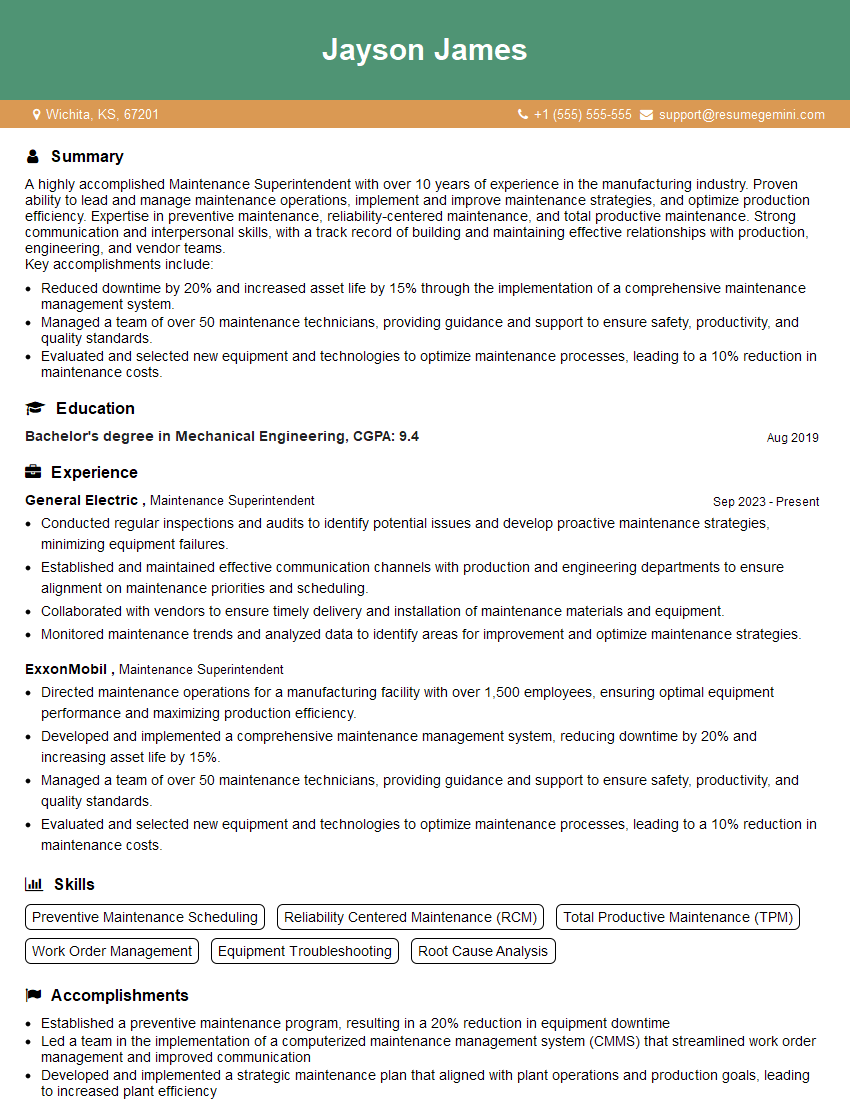
Maintenance Superintendent Resume Sample
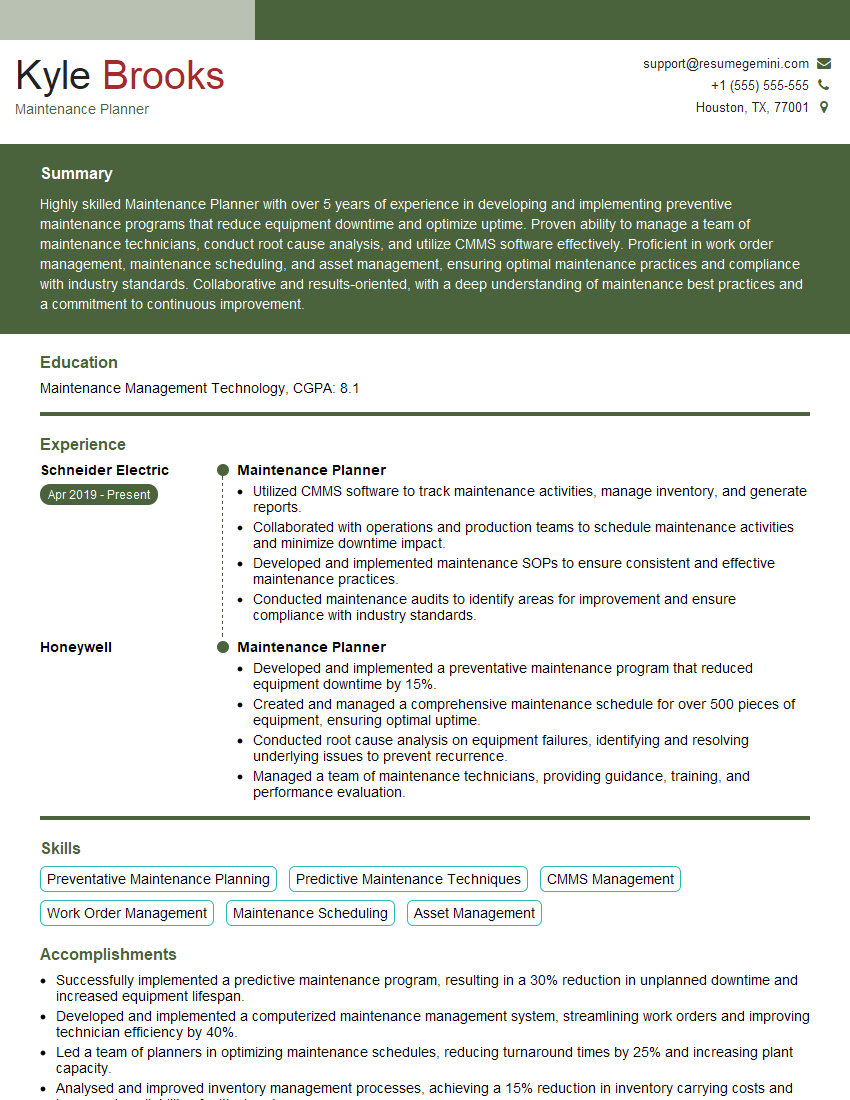
Maintenance Planner Resume Sample
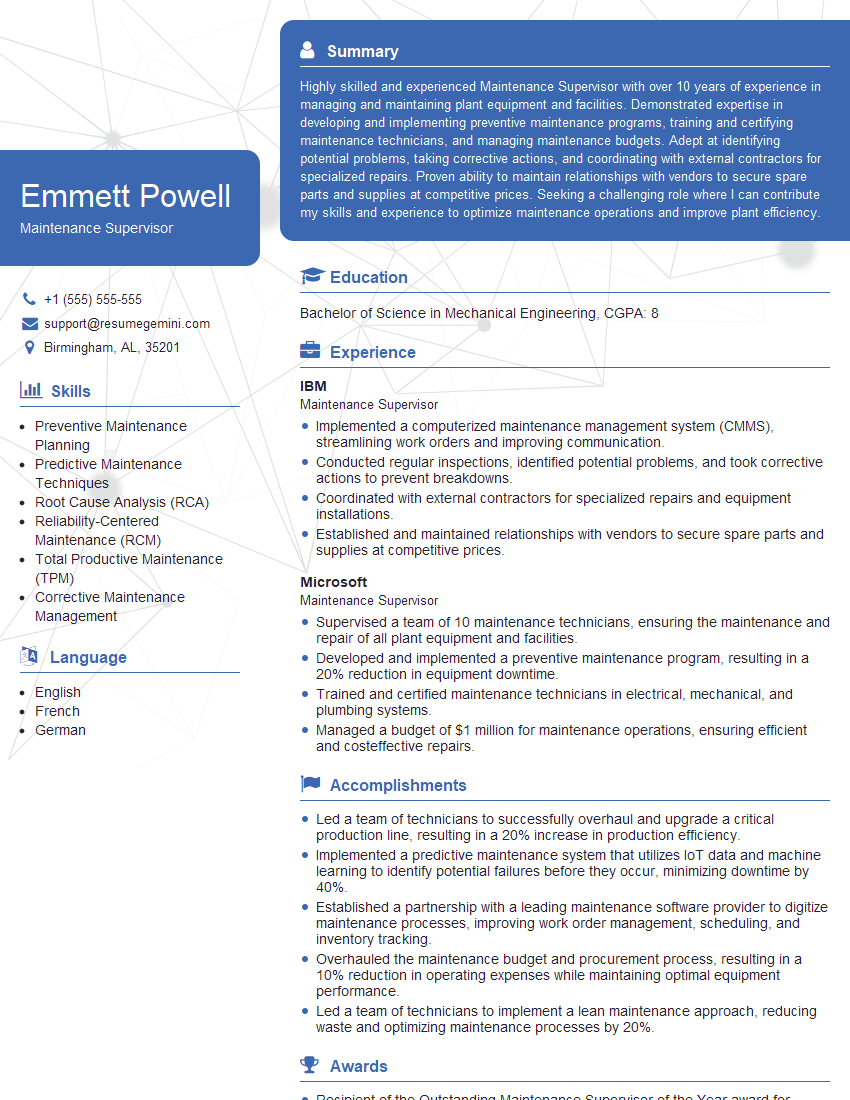
Maintenance Supervisor Resume Sample
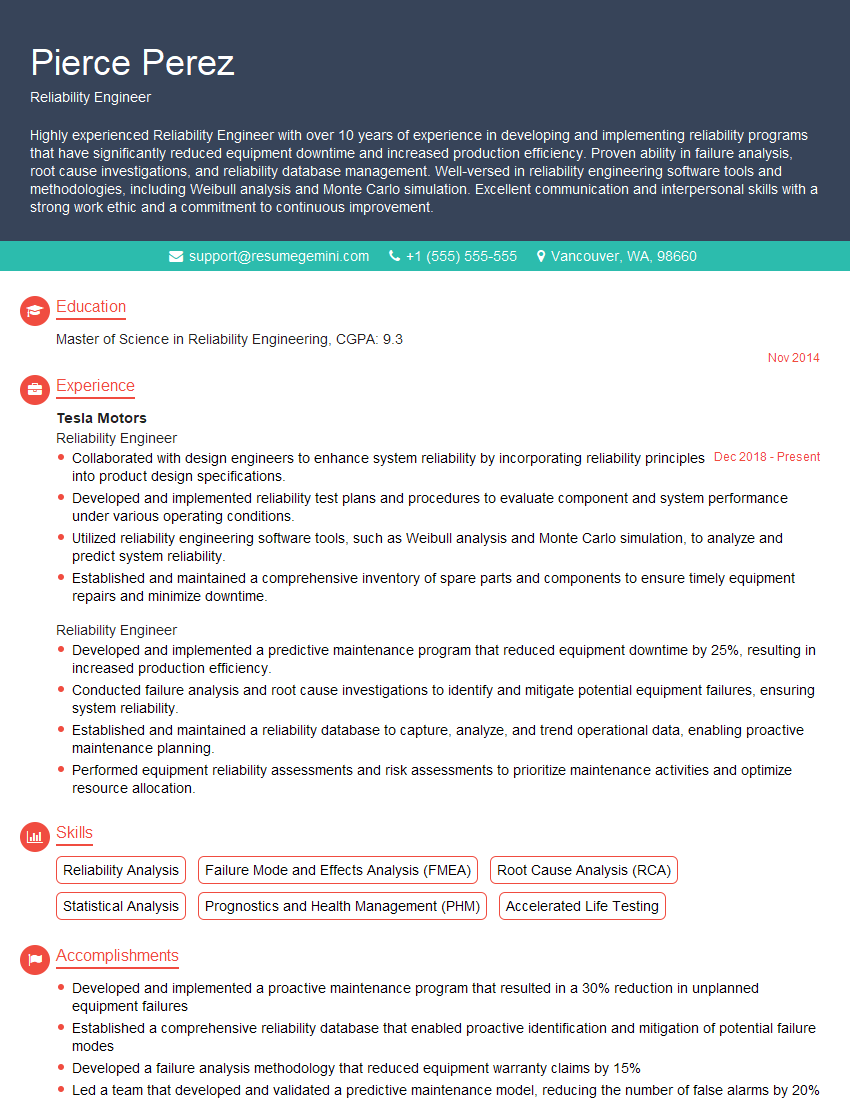
Reliability Engineer Resume Sample
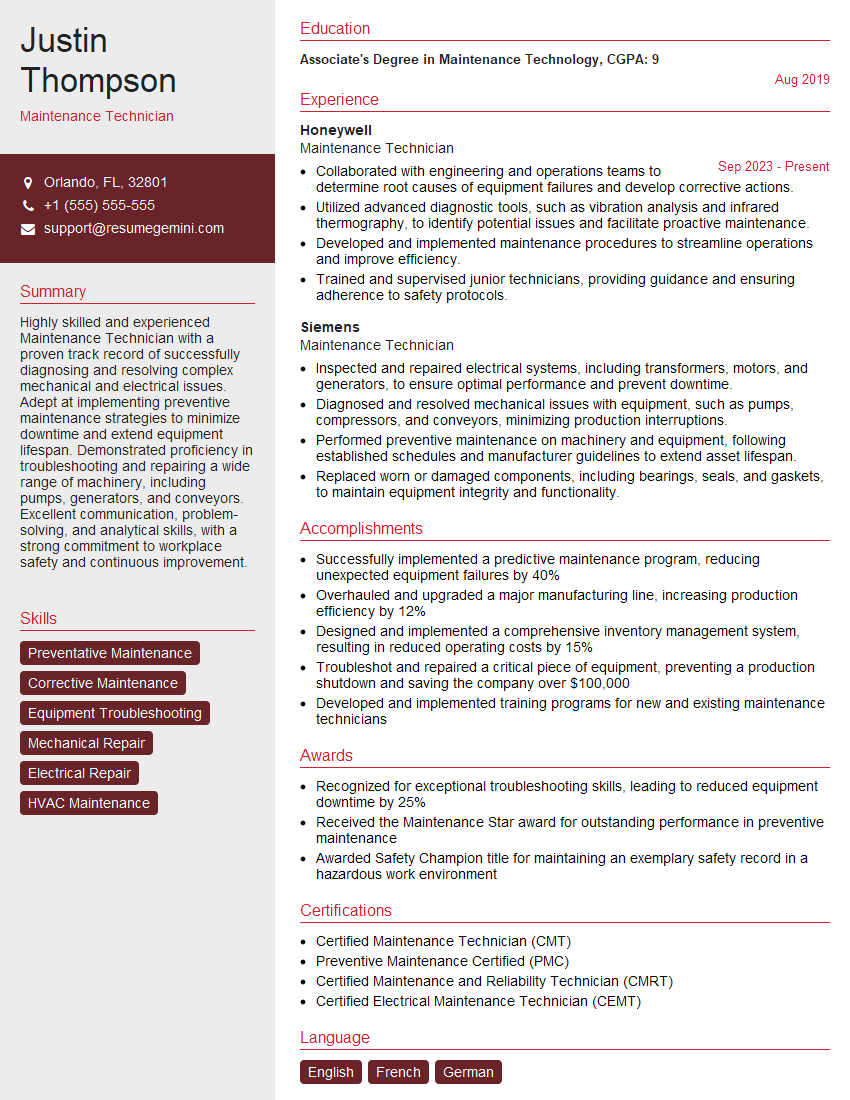
Maintenance Technician Resume Sample
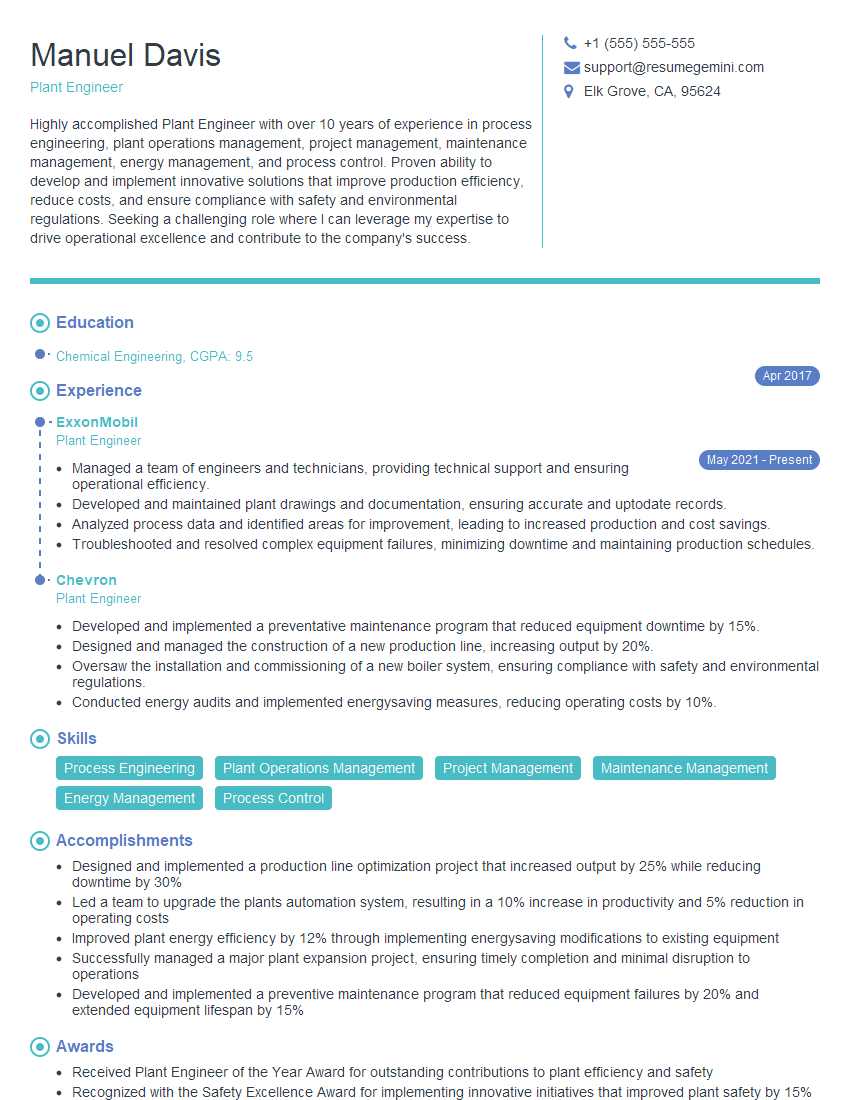
Plant Engineer Resume Sample
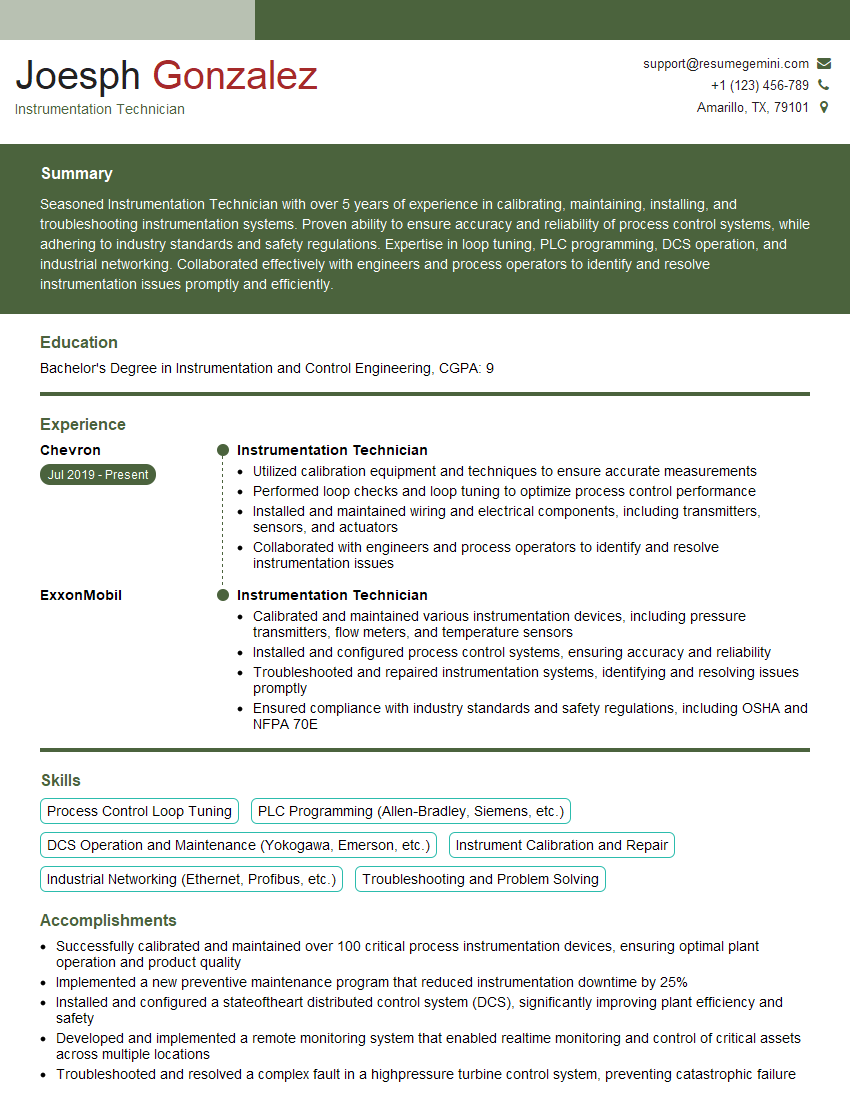
Instrumentation Technician Resume Sample
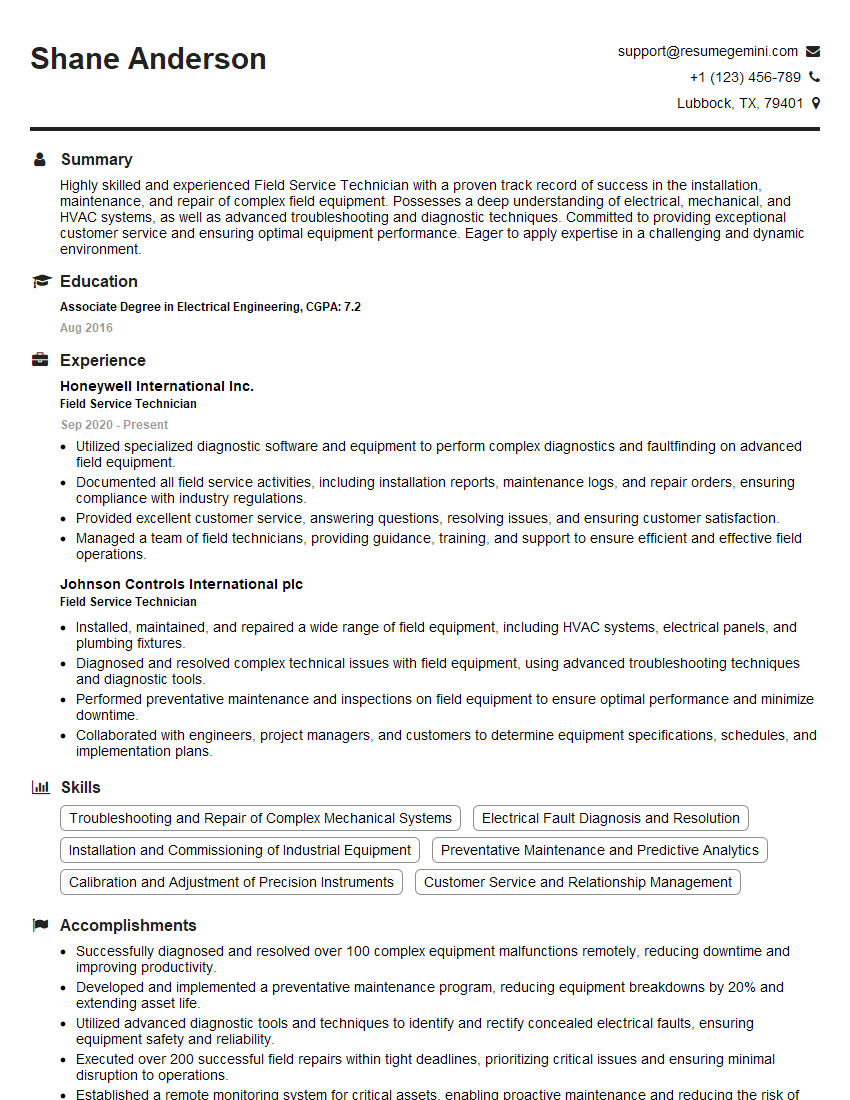
Field Service Technician Resume Sample
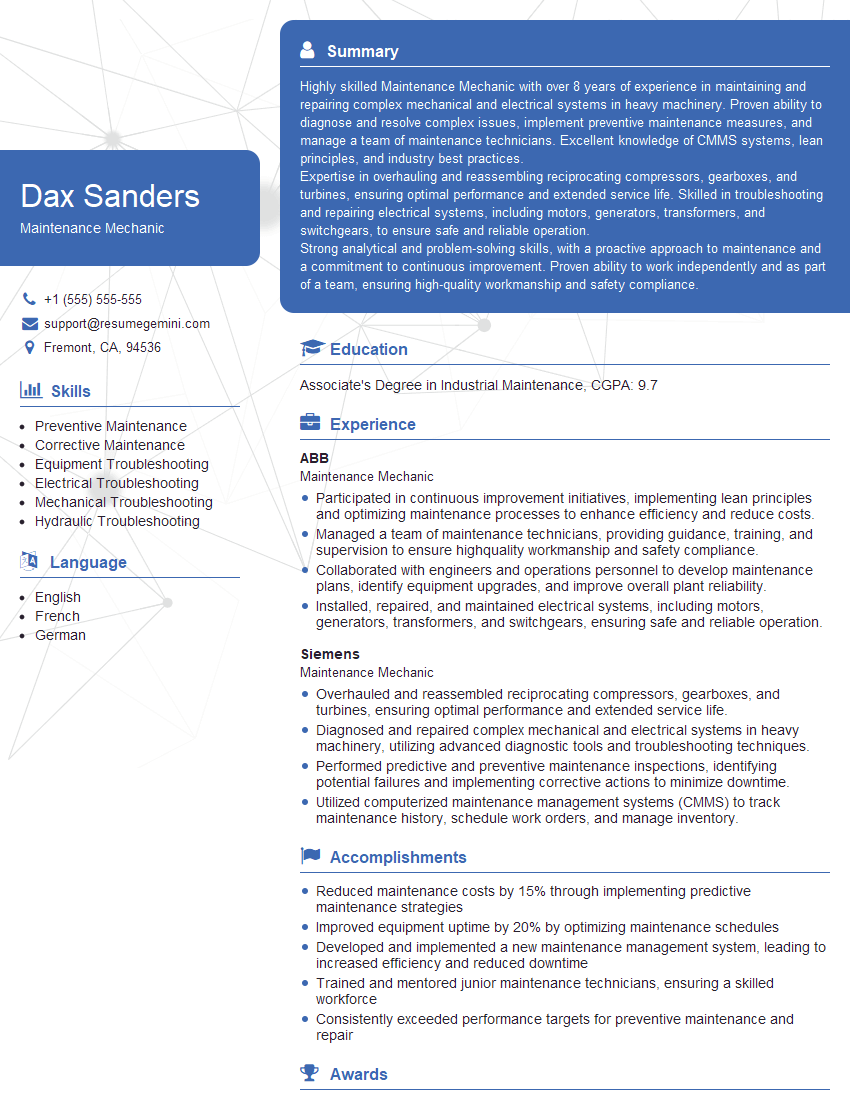
Maintenance Mechanic Resume Sample
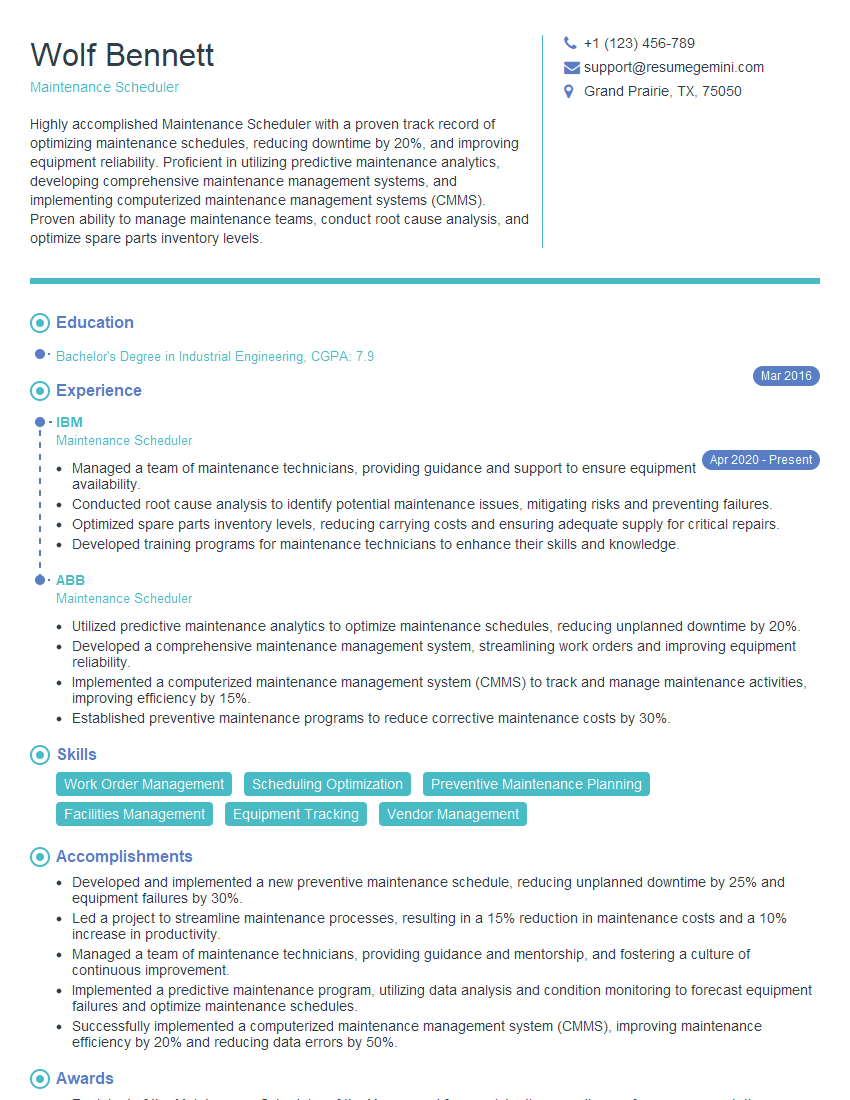
Maintenance Scheduler Resume Sample
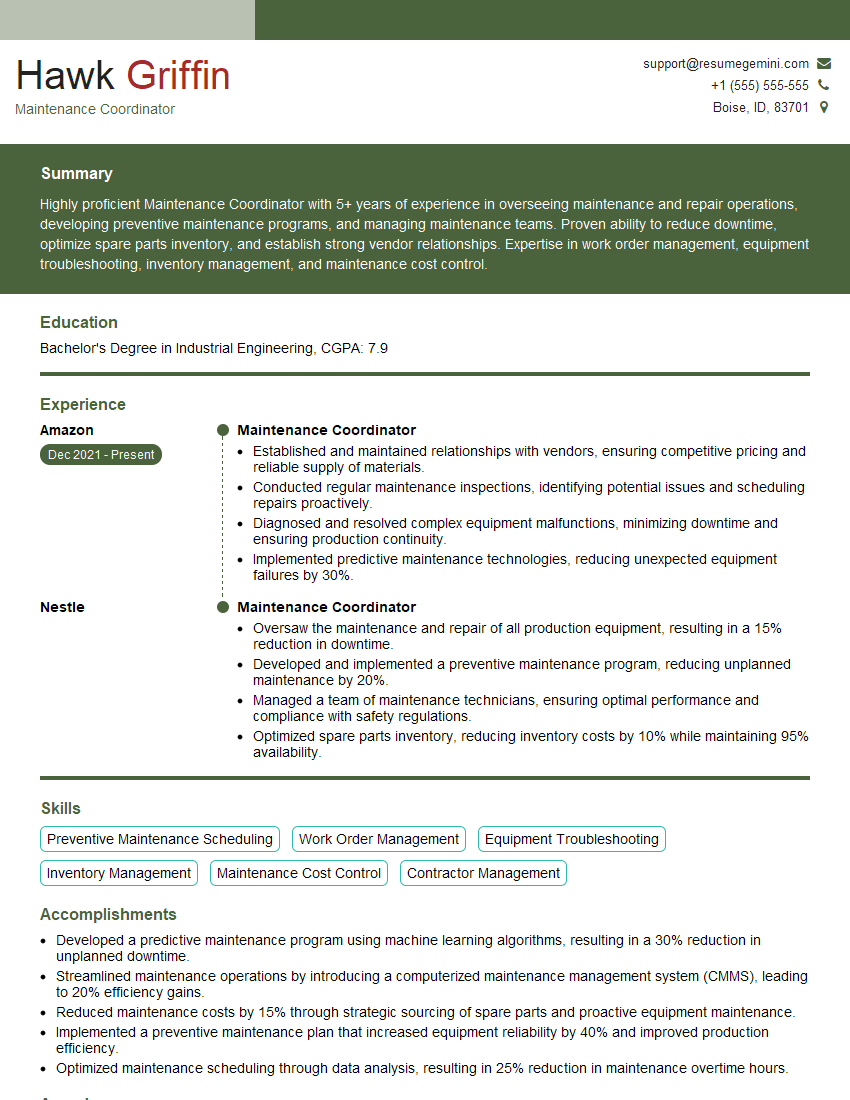
Maintenance Coordinator Resume Sample

Electrical Maintenance Technician Resume Sample
Explore more articles
Users Rating of Our Blogs
Share Your Experience
We value your feedback! Please rate our content and share your thoughts (optional).
What Readers Say About Our Blog
Very informative content, great job.
good