Unlock your full potential by mastering the most common Plate Making and Mounting interview questions. This blog offers a deep dive into the critical topics, ensuring you’re not only prepared to answer but to excel. With these insights, you’ll approach your interview with clarity and confidence.
Questions Asked in Plate Making and Mounting Interview
Q 1. Describe the different types of printing plates.
Printing plates come in various types, each suited for different printing methods and applications. The choice depends on factors like print run length, desired image quality, and budget.
- Offset Plates: These are the most common type, used in offset lithography. They’re typically aluminum sheets coated with a light-sensitive layer. We have variations like PS plates (photosensitive), CTP plates (computer-to-plate), and thermal plates. The choice often depends on the printing press capabilities and prepress workflow.
- Flexographic Plates: Used in flexographic printing (a relief printing process), these plates are made from photopolymer or rubber. They are highly durable and suitable for flexible substrates like plastic films and packaging materials.
- Gravure Plates: Employed in gravure printing (an intaglio process), these plates have etched or engraved cells that hold ink. They’re commonly made of copper or steel and are used for high-volume, high-quality printing like magazines and packaging.
- Screen Printing Stencils: These aren’t strictly ‘plates’ in the same sense, but they serve a similar function. They are made from various materials like polyester or nylon mesh and are used to create images through a stencil process. These are frequently used for textile printing or specialty applications.
For instance, a short-run job might use a less expensive thermal plate, whereas a large-scale magazine printing job would likely opt for a high-resolution CTP plate for offset printing or a durable gravure plate for its high print volume needs.
Q 2. Explain the process of plate making for offset printing.
Plate making for offset printing is a precise process that involves transferring an image from a digital file onto a metal plate. Think of it as creating a stencil for the printing press.
- Prepress Preparation: This begins with ensuring the digital file (artwork) is optimized for printing, considering color profiles, resolution, and trapping. This ensures the final printed product is accurate.
- Image Setting (CTP): Modern offset printing predominantly utilizes Computer-to-Plate (CTP) technology. The image data is directly transferred from the computer to the printing plate using lasers that expose the light-sensitive coating. This eliminates the need for film and is much more efficient.
- Plate Processing: After exposure, the plate goes through a series of washes and processing steps to remove the unexposed areas of the light-sensitive coating. This leaves behind the image area that will accept ink during printing. The choice of chemicals and processing steps depends on the plate type.
- Plate Inspection: A thorough inspection is vital before mounting. We check for defects like pinholes, scratches, or inconsistencies in the image. This ensures that the printing process will produce a high-quality result.
For example, a common problem during processing might be insufficient exposure, resulting in a weak image on the plate. This would require adjustments to the CTP parameters.
Q 3. What are the common materials used for printing plates?
The materials used for printing plates vary depending on the printing process and desired print quality and run length. Durability and cost are also significant considerations.
- Aluminum: The most common material for offset printing plates due to its lightweight nature, affordability, and ability to hold a fine image. Different alloys and thicknesses are available, based on the print requirements.
- Photopolymer: Used extensively in flexographic printing, offering flexibility and durability. It’s especially suitable for printing on various substrates.
- Steel and Copper: Often used for gravure printing, their robustness handles the high pressures involved in the process.
- Polyester and Nylon Mesh: Used for screen printing stencils, offering different degrees of permeability and durability.
Consider a scenario where a company prints on corrugated cardboard boxes; they would choose a robust, thick photopolymer plate that can withstand the pressure and rough texture of the substrate.
Q 4. How do you ensure proper plate registration?
Plate registration refers to the accurate alignment of multiple printing plates in a multi-color printing job. Improper registration leads to misaligned colors, a significant quality issue.
- Precise Plate Making: Using a high-precision CTP system minimizes initial registration errors. Regular calibration of the equipment is crucial.
- Accurate Mounting: Using a precise plate mounting system helps ensure proper plate alignment on the press. We use mounting tapes and systems that reduce shifting and warping.
- Press Calibration: Regular press maintenance and calibration are essential to ensure accurate registration during the printing process.
- Registration Marks: During the plate making stage, precise registration marks are incorporated onto each plate. These marks help the press operator accurately align the plates during setup.
Imagine a four-color print with misaligned colors. The result would look blurry and unprofessional, significantly impacting the quality and possibly rendering the print unacceptable. Therefore, precise registration is essential for a successful print job.
Q 5. What are the key quality control checks performed on printing plates?
Quality control checks are crucial throughout the plate-making process to ensure consistent, high-quality prints. These checks often involve visual inspection and potentially more technical methods.
- Visual Inspection: A thorough visual check of the plate for defects like scratches, pinholes, or other inconsistencies. This is often performed under magnification.
- Density Measurement: Measuring the density of the image areas on the plate to ensure consistent ink acceptance and color reproduction. This might involve a densitometer.
- Dot Gain Measurement: Measuring the dot gain (increase in dot size during printing) to ensure accurate color reproduction. This helps avoid color shifts during the actual print run.
- Proofing: A color proof is made from the plates before the main run to verify color accuracy and registration. This allows for adjustments before the printing of thousands of copies.
For instance, if the density of the cyan plate is off, it will result in a color shift in the final printed product. This step ensures that problems are corrected early in the process, saving time and materials.
Q 6. Explain the process of mounting a printing plate.
Mounting a printing plate involves securely attaching it to a printing cylinder on the press. It needs to be firmly attached and perfectly aligned for consistent printing.
- Plate Preparation: The plate is cleaned and inspected for any debris or imperfections that could interfere with mounting or printing.
- Choosing the Mounting System: We select the appropriate mounting system based on the plate size, material, and press type. This usually involves selecting a suitable adhesive tape or a more sophisticated mounting system.
- Applying Adhesive: The adhesive, usually a double-sided tape designed for plate mounting, is applied precisely to the back of the plate. This requires care and consistency to ensure proper adhesion.
- Attaching to Cylinder: The plate is carefully positioned and firmly adhered to the printing cylinder, ensuring proper registration with other plates (if applicable). We use tools to aid accurate placement and to remove any trapped air bubbles.
- Final Check: After mounting, a final inspection checks for proper alignment, secure adhesion, and the absence of any air bubbles or imperfections that could affect printing.
Incorrect mounting can lead to plate slippage during printing, resulting in blurred images or misregistration. The mounting process needs to be executed precisely.
Q 7. What are the different types of plate mounting systems?
Several systems are used to mount printing plates, each designed to ensure a secure fit and precise alignment on the printing cylinder.
- Adhesive Tapes: Double-sided tapes, specifically designed for plate mounting, offer a cost-effective and convenient solution for many applications. The choice of tape depends on the plate material and press speed.
- Plate Mounting Systems: These systems provide a more precise and robust mounting solution, often used for larger plates or high-speed printing. They can involve specialized tools and techniques to ensure precise positioning and clamping.
- Mechanical Clamps: Used in certain press types, these systems utilize clamps to secure the plates to the cylinder. They offer excellent stability and are often used with thicker plates.
- Vacuum Systems: Some presses incorporate vacuum systems for plate mounting. These systems hold the plate securely in place through suction, often allowing for quick and easy plate changes.
For example, a high-speed web press might utilize a specialized plate mounting system with vacuum assist to ensure quick and accurate plate changes with minimal downtime. On the other hand, a smaller sheetfed press might simply use high-quality double-sided tape for mounting.
Q 8. How do you troubleshoot common plate mounting issues?
Troubleshooting plate mounting issues requires a systematic approach. Often, problems stem from improper plate preparation, incorrect mounting procedures, or defects in the plate itself. Let’s look at common problems and solutions:
Problem: Plate not properly adhered to the cylinder.
Solution: Check for cleanliness of both the plate and the cylinder. Residue, ink, or debris can prevent proper adhesion. Ensure you’re using the correct adhesive and applying it evenly. If using a vacuum system, verify it’s functioning correctly and the cylinder is properly sealed. A poorly mounted plate might need to be removed and the process repeated with a new adhesive.
Problem: Plate ghosting or uneven ink transfer.
Solution: Ghosting suggests issues with plate processing (under-exposure in CTP or insufficient gumming in conventional platemaking). Uneven ink transfer could indicate problems with plate cleaning, improper pressure settings on the press, or plate defects (scratches, pinholes). Inspect the plate carefully, re-examine the press settings, and re-clean the plate if necessary.
Problem: Plate slippage during printing.
Solution: This points to insufficient adhesion or improper cylinder clamping. Ensure that the cylinder’s clamping mechanism is correctly engaged and provides sufficient pressure. Again, check for cleanliness and the suitability of the adhesive.
Problem: Plate damage during mounting.
Solution: Handle plates carefully to avoid scratching or bending. Use appropriate tools and avoid excessive force. Proper packaging and handling of plates are crucial to prevent this.
Remember, a thorough visual inspection of both the plate and the mounting cylinder before and after mounting is critical to successful troubleshooting.
Q 9. Describe the process of cleaning and storing printing plates.
Cleaning and storing printing plates correctly extends their lifespan and maintains print quality. The process varies slightly depending on the plate type (CTP, conventional), but the principles remain consistent.
Cleaning: Use plate cleaning solutions specifically designed for the plate type. Avoid harsh chemicals that can damage the plate surface. For CTP plates, gentle cleaning is usually sufficient as they’re generally more resistant to damage. Conventional plates often require more thorough cleaning to remove residual ink and gum. Follow the manufacturer’s instructions carefully. Avoid scrubbing aggressively.
Storage: Store plates in a cool, dry, dark place away from direct sunlight and extreme temperatures. Protect them from dust and moisture. Use plate sleeves or protective coverings to prevent scratches and damage. Proper stacking avoids warping.
Think of it like caring for a valuable piece of art – the more careful you are, the longer it will last and the better the results.
Q 10. What safety precautions should be followed when handling printing plates?
Safety is paramount when handling printing plates. These materials can contain chemicals that are harmful if mishandled. Always:
Wear appropriate personal protective equipment (PPE): This includes gloves, eye protection, and potentially a respirator, depending on the chemicals involved. The manufacturer’s safety data sheet (SDS) for the cleaning solutions and plates is crucial to determine necessary PPE.
Work in a well-ventilated area: Many plate cleaning solutions release fumes. Adequate ventilation prevents inhalation of harmful substances.
Handle plates carefully: Avoid sharp edges and prevent dropping plates, as they can easily break or become damaged. Use appropriate handling tools.
Dispose of waste properly: Follow all local and national regulations for proper disposal of chemicals and used plates.
Follow manufacturer instructions: Adhere to all safety warnings and guidelines provided by the plate and cleaning solution manufacturers.
Remember, safety is not just a procedure; it’s a responsibility.
Q 11. What is the difference between CTP and conventional platemaking?
Computer-to-plate (CTP) and conventional platemaking differ significantly in their processes and efficiency. Conventional platemaking involves creating a photographic film negative from a digital file, then using that film to expose a photosensitive plate. CTP eliminates the film step, exposing the plate directly from a digital file using a laser.
CTP (Computer-to-Plate): Offers higher precision, faster turnaround times, and reduced waste compared to conventional methods. It’s more environmentally friendly and produces consistent, high-quality plates. It requires specialized equipment like a CTP imager.
Conventional Platemaking: A more traditional process involving film processing and chemical baths. It’s generally less expensive to set up initially but more time-consuming, producing greater waste and less consistent results. It requires a darkroom and various chemicals.
Think of it like comparing hand-copying a document versus using a photocopier. CTP is the photocopier – faster, cleaner, and more accurate.
Q 12. Explain the concept of plate exposure in CTP.
In CTP, plate exposure involves using a laser to expose a photosensitive plate directly from a digital file. The laser creates an image by either ablating (removing) or altering the properties of the photosensitive layer based on the digital data. The process is controlled by the CTP imager.
Laser Types: Different laser types (violet, infrared) and intensities are employed based on the plate type and required resolution.
Exposure Parameters: Critical parameters like laser power, speed, and resolution are carefully set to ensure proper image formation and plate quality. These are controlled within the CTP imager software.
Plate Sensitivity: The photosensitivity of the plate dictates the required laser energy and exposure time.
The accuracy of exposure is critical. Under-exposure leads to weak image areas, while over-exposure may cause unwanted degradation of the plate.
Q 13. How do you identify and correct plate defects?
Identifying and correcting plate defects involves a careful inspection process. Common defects include scratches, pinholes, scumming, and mottling.
Scratches: These usually appear as linear marks on the plate surface and can cause ink to build up, resulting in uneven printing. They are often caused by careless handling. If minor, they might be manageable, but significant scratches usually necessitate plate replacement.
Pinholes: Small holes that allow ink to seep through, resulting in unwanted dots on the printed output. These often result from manufacturing defects or improper processing. Replacing the plate is usually required.
Scumming: A general term for ink appearing on non-image areas of the print. This suggests insufficient processing of the plate or improper ink/water balance on the press. It could require plate re-processing or adjustment of press settings.
Mottling: Uneven ink distribution, causing blotchy or mottled areas in the print. This is often caused by problems in the ink/water balance on the press, roller setting issues, or plate imperfections.
Regular and thorough inspection of plates, both before and after processing, is key to prevent print errors. A systematic approach and careful analysis of the defect’s nature will guide you towards the necessary corrections.
Q 14. What is the importance of proper plate thickness?
Proper plate thickness is crucial for consistent printing and to prevent problems such as plate buckling, ghosting, and uneven pressure during printing. The thickness is specifically designed to work optimally with the printing press’s components.
Buckling: A plate that is too thin might buckle under pressure, leading to uneven impression and poor print quality. This is more likely to occur with larger plates or those subject to significant press pressure.
Ghosting: Incorrect thickness can contribute to ghosting, the appearance of faint repeat images on the print due to uneven contact between the plate and the printing blanket.
Uneven Pressure: Inconsistent plate thickness will result in inconsistent pressure, leading to uneven ink transfer and print quality variations across the plate.
Always use the plate thickness specified by the press and plate manufacturer. A slight deviation could drastically impact the print results.
Q 15. How does plate material impact print quality?
The plate material significantly impacts print quality. Think of it like choosing the right canvas for a painting – the wrong one will ruin the masterpiece. Different materials offer varying levels of image sharpness, dot reproduction, and ink transfer. For example, aluminum plates are the industry standard due to their cost-effectiveness and ability to hold fine detail. However, their susceptibility to scratches and abrasion requires careful handling. On the other hand, polyester plates offer greater durability and are less prone to damage, but they might not produce the same level of fine detail as aluminum in some applications. The choice often depends on the printing press, the ink used, the desired print run length, and the budget. A high-end publication demanding exceptional image quality might opt for a higher-priced, more robust plate material, whereas a simple flyer might utilize a more cost-effective aluminum option.
Furthermore, the thickness of the plate influences its stability on the press and its ability to withstand the pressures involved in printing. Thicker plates are more resistant to bending and deformation, resulting in crisper, more consistent prints, especially during long runs. Finally, the surface treatment of the plate affects how well the ink accepts and transfers – a smoother surface might require specific inks and processes to achieve the desired print result.
Career Expert Tips:
- Ace those interviews! Prepare effectively by reviewing the Top 50 Most Common Interview Questions on ResumeGemini.
- Navigate your job search with confidence! Explore a wide range of Career Tips on ResumeGemini. Learn about common challenges and recommendations to overcome them.
- Craft the perfect resume! Master the Art of Resume Writing with ResumeGemini’s guide. Showcase your unique qualifications and achievements effectively.
- Don’t miss out on holiday savings! Build your dream resume with ResumeGemini’s ATS optimized templates.
Q 16. Explain the process of stripping plates.
Stripping plates involves assembling individual plates into a single printing form, ready for mounting on the press. Think of it like assembling a jigsaw puzzle, except each piece is a plate representing a color in the final print. The process begins with carefully inspecting each plate for any defects. Next, plates are accurately positioned according to a predetermined layout, ensuring perfect registration between colors – you don’t want your cyan to overlap your magenta by a millimeter! Special adhesives and tools are used to securely fasten plates onto a carrier, typically a sturdy sheet of metal or plastic. Accurate alignment and secure mounting are crucial to prevent image misregistration, blurry prints, and ultimately, wasted materials. We often use specialized software to plan the layout, minimizing waste and maximizing efficiency. After stripping, the assembled form undergoes a final quality check before heading to the press.
Q 17. What are the different types of plate imaging technologies?
Plate imaging technologies have evolved dramatically. We’ve moved from traditional film-based systems to entirely digital workflows. Common technologies include:
- Computer-to-plate (CTP): This is the dominant method, using digital files directly to expose the plate. It eliminates the need for film, reducing costs and improving efficiency. CTP variations include thermal, violet laser, and UV laser technologies, each with its strengths and weaknesses regarding speed, image quality, and plate material compatibility.
- Direct-to-plate (DTP): In this process, the digital file is directly written onto the plate without an intermediary step like a film. This offers the benefits of high-resolution printing and faster turnaround times.
- Hybrid Systems: Some systems use a combination of digital and analog techniques to achieve optimal results in terms of cost, speed, and quality. It is often a transition method to fully migrate from analog systems.
The selection of technology depends heavily on factors such as print volume, budget, required image quality, and available resources. A large-scale printing operation would likely invest in high-speed CTP systems, while a smaller business might choose a more cost-effective DTP solution.
Q 18. How do you manage plate inventory?
Managing plate inventory requires a robust system to avoid waste and ensure timely availability. We use a combination of strategies. First, accurate forecasting based on print schedules is vital. This involves analyzing past print jobs and predicting future demand, factoring in seasonal fluctuations or large campaigns. Second, a well-organized storage system is critical to prevent damage or misplacement of plates. We use a first-in, first-out (FIFO) approach, ensuring older plates are used first, reducing the risk of material degradation. A dedicated inventory management software tracks plate usage, stock levels, and expiration dates. This software also facilitates accurate reporting, helping us identify potential issues and optimize purchasing. Regular audits are conducted to ensure the accuracy of the inventory and identify any discrepancies. Finally, we have strict protocols for handling plates to minimize damage and extend their lifespan.
Q 19. Describe your experience with different types of plate processors.
My experience encompasses various plate processors, from traditional wet processors to automated, environmentally friendly systems. Wet processors involve chemical baths for developing and fixing the plates, requiring careful monitoring and disposal of chemicals. While more traditional, they offer precise control over the processing parameters. However, they are more labor-intensive and generate chemical waste. Automated processors are more efficient, reducing labor costs and environmental impact. They use less water and chemicals while providing consistent processing results. I’ve worked extensively with both types, learning their nuances and troubleshooting any issues that arise, such as improper chemical dilutions or mechanical malfunctions. My expertise also covers different processing chemistry types, each optimized for specific plate materials and imaging technologies. In choosing a processor, considerations include printing volume, budget, environmental concerns, and maintenance requirements.
Q 20. How do you maintain platemaking equipment?
Maintaining platemaking equipment is crucial for optimal performance and longevity. This involves a proactive approach, including regular cleaning and preventative maintenance. Daily checks should include verifying the functionality of all components, checking chemical levels (in wet processors), and inspecting for any signs of wear or damage. Preventive maintenance includes regular calibration of lasers (in CTP systems), replacing worn parts, and conducting thorough cleaning of rollers, rollers, and other moving parts. We follow manufacturer’s guidelines for maintenance schedules and adhere to strict safety procedures. Proper documentation of all maintenance activities is essential for tracking performance and ensuring compliance with regulations. Early detection of potential problems prevents costly downtime and ensures the consistent production of high-quality plates. We also have a scheduled maintenance program including annual check ups by professionals and keeping thorough logs and records for the lifetime of the equipment.
Q 21. What are the common causes of plate ghosting?
Plate ghosting, the appearance of a faint, unwanted image on subsequent prints, can stem from several sources. One common cause is insufficient cleaning of the plate after processing. Residual chemicals or ink can transfer to the blanket and cause ghosting on successive prints. Another culprit is insufficient exposure during the plate imaging process, leading to incomplete image formation and a ‘shadow’ image on later prints. Improper plate storage, allowing plates to come into contact with contaminants, can also contribute to ghosting. Additionally, problems within the press itself, such as blanket damage or improper cleaning, can lead to this issue. Diagnosing ghosting requires a systematic approach, checking all aspects of the platemaking and printing processes. It could be as simple as improving cleaning procedures or as complex as needing a blanket replacement on the press. Detailed analysis of each step is crucial for identifying and resolving this frustrating print defect.
Q 22. Explain the process of plate proofing.
Plate proofing is a crucial step in the platemaking process, ensuring the printed image will match the desired outcome before mass production. It’s like a test print, allowing for adjustments before committing to a large print run. We typically use a proofing press, which is a smaller version of the production press, or a digital proofing system. This involves creating a sample print from the newly made plate to assess its quality. We check for several key factors:
- Image accuracy: Ensuring the colors, sharpness, and details are correctly reproduced.
- Registration: Verifying that multiple colors align perfectly if it’s a multi-color job. Think of it like a perfectly aligned puzzle. If the pieces (colors) don’t fit together, it ruins the image.
- Ink density: Evaluating the richness and consistency of the ink across the plate.
- Dot gain: Measuring how much the dots of ink spread during printing (a natural phenomenon) – too much can lead to muddy colors.
If any issues arise during proofing, such as incorrect color balance or registration problems, we can adjust the plate’s exposure, ink settings, or even remake the plate.
Q 23. How do you troubleshoot problems related to ink adhesion?
Ink adhesion problems, where the ink doesn’t stick properly to the plate, can stem from several sources. It’s like trying to glue something to a greasy surface – it just won’t stick! Troubleshooting involves a systematic approach:
- Plate surface: Check for any damage or contamination on the plate’s printing surface. Scratches or residues can hinder adhesion. Cleaning the plate thoroughly is often the first step.
- Ink type and viscosity: The wrong ink for the plate type or ink that’s too thin or thick can cause issues. We often adjust the ink viscosity by adding specific additives as per the manufacturer’s recommendations.
- Press conditions: Factors like the press’s temperature and humidity can affect ink drying and adhesion. Ensuring the proper temperature and humidity levels in the pressroom is key.
- Plate processing: Insufficient exposure or improper processing chemicals can leave the plate surface inadequately receptive to the ink. Reviewing the platemaking process is essential.
For instance, I once encountered poor ink adhesion due to a batch of contaminated cleaning solvent. Identifying the source and switching solvents immediately resolved the problem. A detailed record-keeping system and regular maintenance of equipment significantly reduce such occurrences.
Q 24. What is your experience with different plate sizes and formats?
My experience encompasses a wide range of plate sizes and formats, from standard sizes like 20x24 inches used for large posters to smaller formats for business cards or labels (3.5x2 inches). I’ve worked with various shapes and sizes depending on the printing press and the job specifications. I’m proficient in handling both sheet-fed and web-fed plate formats. The challenge often lies in ensuring accurate plate mounting and registration regardless of the size or format. It’s not just about handling large or small plates; it’s about the precision involved in every size.
Q 25. How do you ensure the accuracy of plate dimensions?
Accuracy of plate dimensions is paramount for successful printing. Any discrepancy can lead to misalignment, wasted material, and overall poor quality. We use several methods to maintain precision:
- Precise measurements: We use calibrated measuring tools to verify the plate dimensions against the job specifications before mounting.
- Plate imposition software: This software helps create accurate layouts for multiple images on a single plate, optimizing space and minimizing waste.
- Accurate plate mounting: Using precise mounting techniques and equipment to ensure the plate is mounted correctly onto the printing cylinder.
- Regular equipment calibration: The platemaking equipment—exposure units, plate processors—needs to be regularly calibrated to ensure consistency and accuracy.
For example, a slight error in measuring a large format plate for a billboard could result in a significant misalignment, making the entire print unusable.
Q 26. What is your experience with different types of printing presses?
I have extensive experience working with various printing presses, including offset presses (both sheet-fed and web-fed), flexographic presses, and even some experience with digital printing. Each press type presents its own unique challenges in terms of plate requirements and mounting procedures. For example, offset presses typically use metal plates, while flexographic presses often utilize polymer plates. Understanding the specific needs of each press is crucial for optimal print quality.
My experience extends from older, manually operated presses to modern, highly automated systems. This includes troubleshooting press-related issues that impact plate performance. Each press is like a unique machine—understanding its nuances is vital for optimal plate performance.
Q 27. Describe your experience with waste management in platemaking.
Waste management in platemaking is crucial for environmental responsibility and cost efficiency. We follow a strict protocol involving:
- Chemical recycling: Used processing chemicals are collected and sent for proper recycling to minimize environmental impact.
- Plate recycling: Many plate types can be recycled, reducing landfill waste. We segregate plates according to their material type for efficient recycling.
- Waste reduction strategies: We use software to optimize plate layouts, minimizing plate size and thus waste. Accurate proofing reduces the number of plates needing remaking.
- Proper disposal: Any non-recyclable waste is disposed of according to local regulations and environmental guidelines.
Tracking waste generation helps identify areas for improvement and enhances our environmental consciousness. It’s not just about complying with regulations; it’s about actively seeking sustainable practices.
Q 28. How do you stay updated on the latest technologies and advancements in platemaking?
Staying updated is vital in this rapidly evolving field. I utilize several methods:
- Industry publications and journals: I regularly read trade magazines and journals dedicated to printing and platemaking technologies. This keeps me informed about new materials and equipment.
- Industry conferences and workshops: Attending conferences and workshops allows me to network with peers and learn from industry experts’ presentations on the latest advancements.
- Manufacturer training programs: Many plate and press manufacturers offer training programs on their latest products and technologies. This ensures I am proficient with the latest equipment.
- Online resources and webinars: I actively participate in online forums, webinars, and educational resources provided by industry associations.
Continuous learning is not just a professional goal; it’s a necessity to maintain proficiency in this dynamic industry.
Key Topics to Learn for Plate Making and Mounting Interview
- Plate Preparation: Understanding different plate materials (aluminum, polymer, etc.), their properties, and appropriate cleaning and pre-treatment methods for optimal imaging.
- Imaging Technologies: Familiarity with various imaging techniques (e.g., computer-to-plate (CTP), direct-to-plate (DTP), film output) and their respective advantages and limitations. Be prepared to discuss image resolution, screening, and color management.
- Plate Mounting: Mastering the process of accurately and efficiently mounting plates onto printing presses, including proper alignment, registration, and securing techniques to minimize waste and ensure print quality. Discuss different mounting systems and their applications.
- Quality Control: Demonstrate a thorough understanding of quality control procedures, including inspection techniques to identify defects (e.g., scratches, pinholes, blemishes) and troubleshooting common issues during plate making and mounting.
- Safety Procedures: Highlight knowledge of relevant safety regulations and best practices for handling chemicals, operating machinery, and maintaining a clean and organized workspace. This demonstrates responsibility and a commitment to workplace safety.
- Troubleshooting & Problem Solving: Be ready to discuss how you approach problem-solving in a practical setting. Examples could include addressing issues with plate registration, image defects, or press-related problems stemming from plate issues.
- Workflow Optimization: Understanding and discussing ways to improve efficiency and reduce downtime within the plate making and mounting process, contributing to overall productivity.
Next Steps
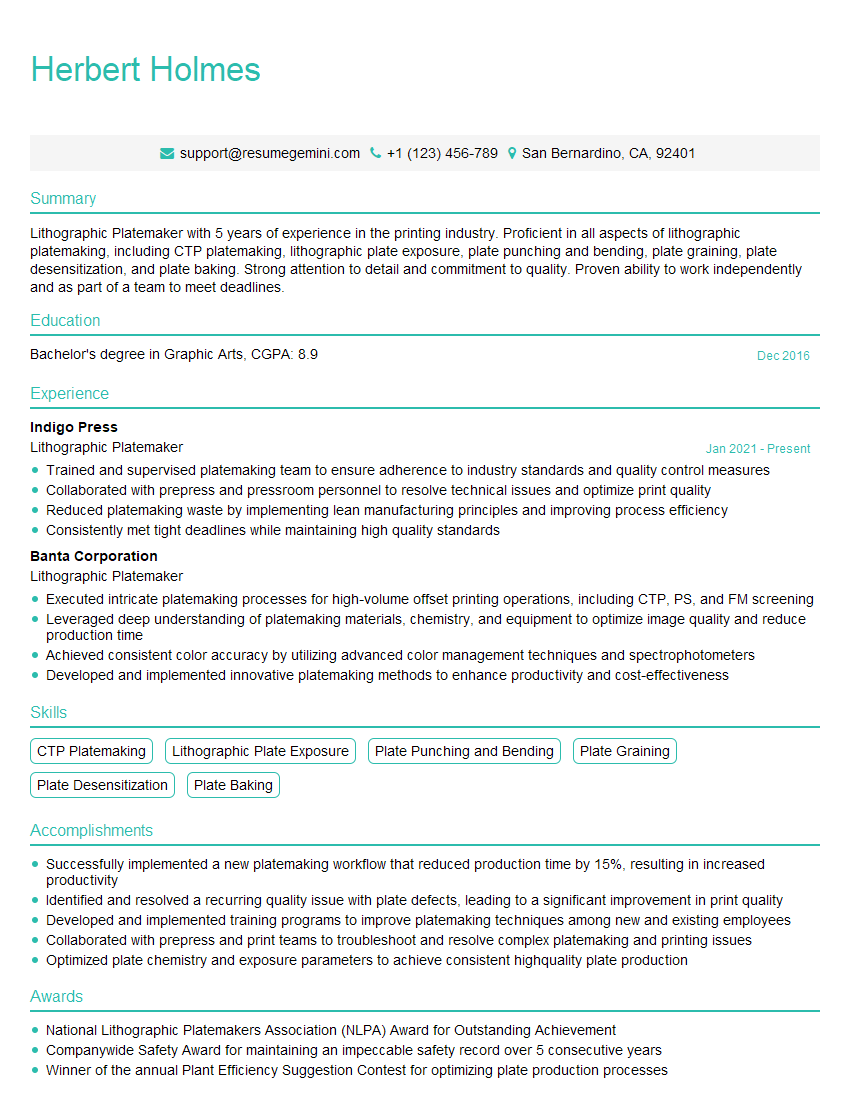
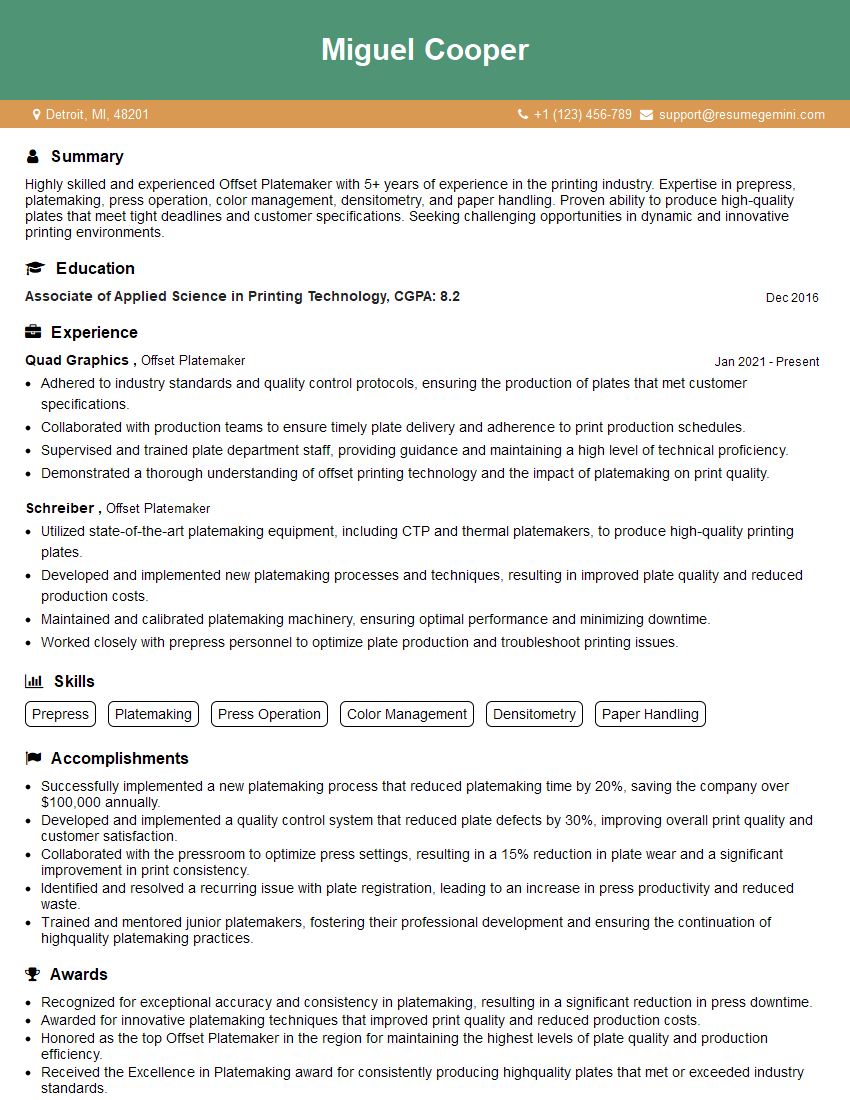
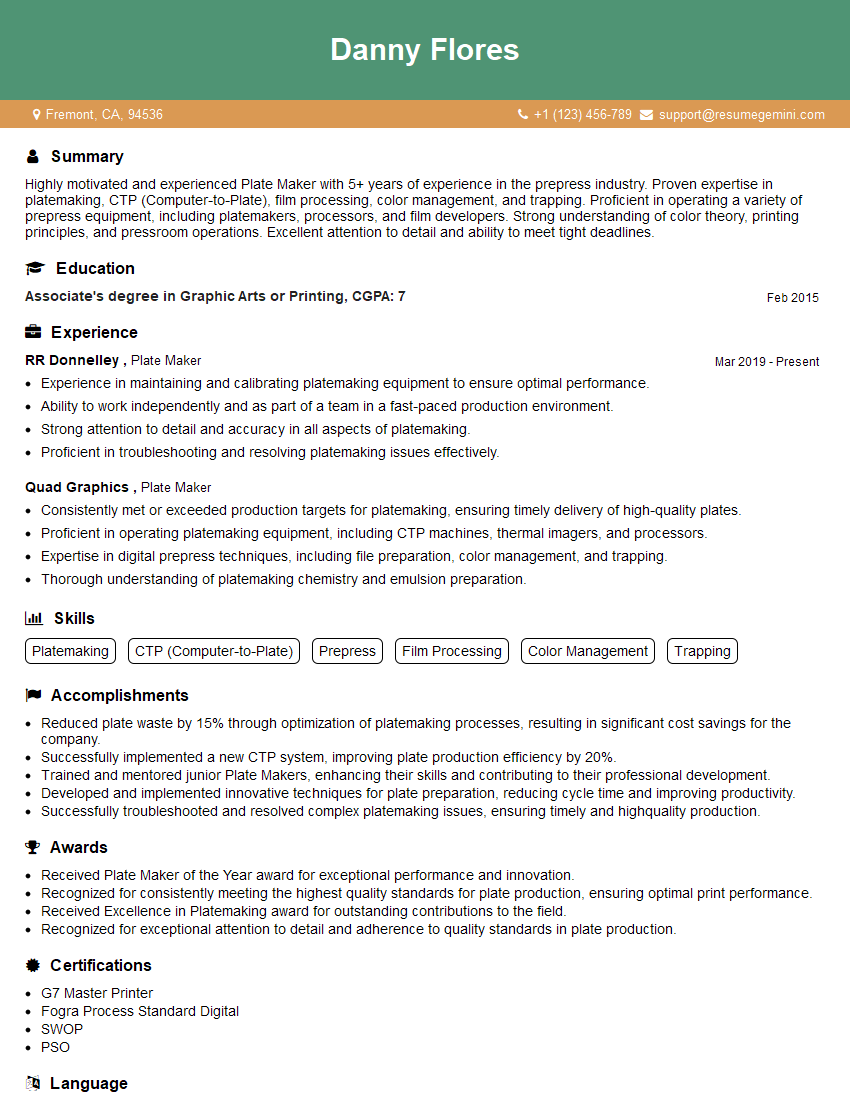
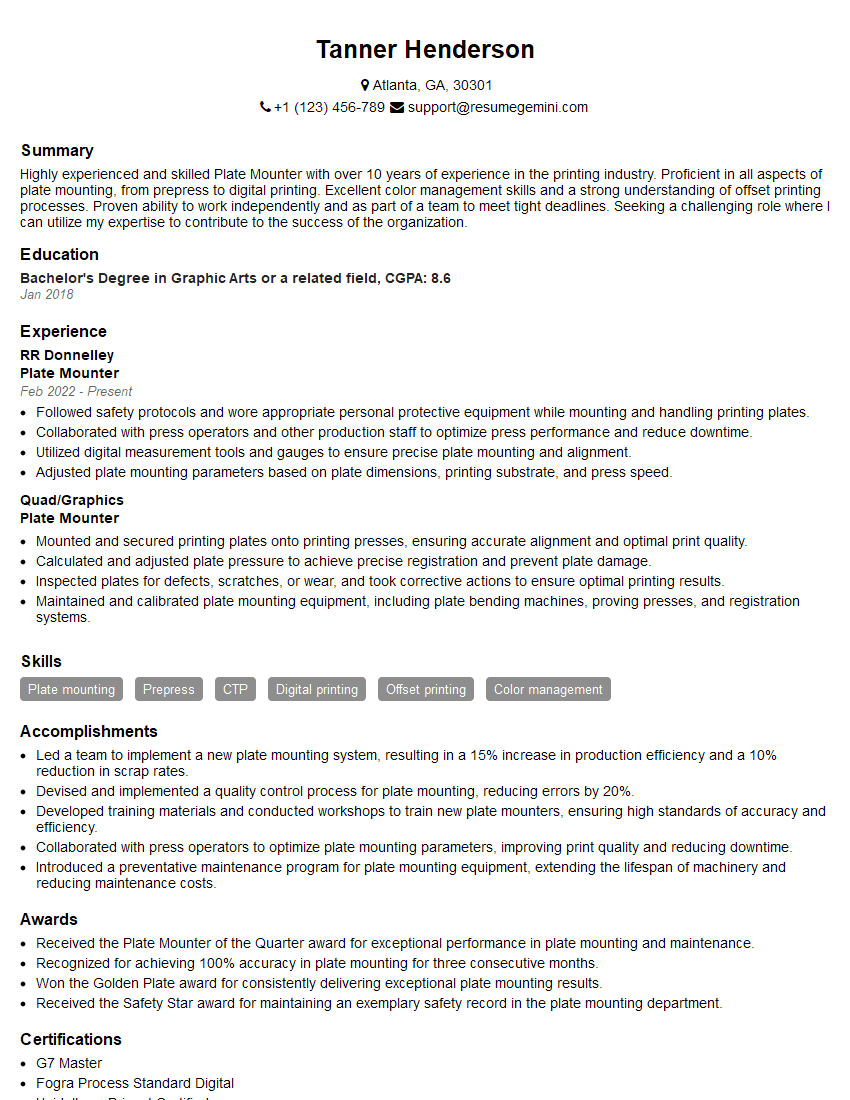
Mastering Plate Making and Mounting opens doors to exciting career opportunities in the printing industry, offering potential for growth and specialization. A strong resume is crucial for showcasing your skills and experience to potential employers. Creating an ATS-friendly resume significantly improves your chances of getting noticed by Applicant Tracking Systems. We highly recommend using ResumeGemini to build a professional and impactful resume tailored to the printing industry. ResumeGemini provides examples of resumes specifically designed for Plate Making and Mounting professionals, helping you present your qualifications effectively and stand out from the competition.



Explore more articles
Users Rating of Our Blogs
Share Your Experience
We value your feedback! Please rate our content and share your thoughts (optional).
What Readers Say About Our Blog
Very informative content, great job.
good