Interviews are opportunities to demonstrate your expertise, and this guide is here to help you shine. Explore the essential Player Evaluation Skills interview questions that employers frequently ask, paired with strategies for crafting responses that set you apart from the competition.
Questions Asked in Player Evaluation Skills Interview
Q 1. Describe your methodology for evaluating a player’s potential.
Evaluating a player’s potential is a multifaceted process that goes beyond simply looking at current stats. It requires a holistic assessment combining quantitative data with qualitative observation and informed prediction. My methodology involves a three-stage approach:
- Data Analysis: I begin by meticulously analyzing performance data, including statistics relevant to the player’s position and role (e.g., goals scored, assists, tackles won, passing accuracy). I use advanced statistical models, such as expected goals (xG) and expected assists (xA) to gain a deeper understanding beyond basic metrics. This helps to quantify performance and isolate factors that might be underperforming or exceeding expectations based on their role in the team.
- Qualitative Assessment: This involves watching extensive game footage and focusing on attributes that are harder to quantify, such as decision-making under pressure, work rate, tactical awareness, and coachability. I look for consistent patterns of behavior that can indicate future potential.
- Comparative Analysis: Finally, I compare the player’s performance and potential against other players at similar stages of their development. This benchmark helps to contextualize their achievements and identify areas where they excel or need improvement relative to their peers. I may also consider projecting their trajectory based on similar players’ development patterns.
For example, a young striker with relatively low goal numbers but consistently high xG might indicate a player with immense potential who just needs improved finishing technique. Conversely, a player with high goal numbers, but low xG, might be a lucky streak rather than a consistent performer.
Q 2. How do you assess a player’s strengths and weaknesses?
Assessing a player’s strengths and weaknesses is an iterative process requiring keen observation and critical analysis. I utilize a structured approach:
- Strengths Identification: I look for areas where the player consistently excels. These could be innate physical attributes (speed, power, agility), technical skills (passing accuracy, dribbling ability, shooting technique), tactical intelligence (positional awareness, reading the game), or mental fortitude (composure under pressure, leadership qualities). I document specific instances in games or training sessions that illustrate these strengths.
- Weaknesses Identification: Similarly, I pinpoint areas where the player struggles. This might involve technical deficiencies (weak foot, poor first touch), tactical flaws (decision-making errors, poor positioning), or physical limitations (lack of stamina, slow acceleration). Again, I support this assessment with concrete examples from games and training.
- Prioritization: I then prioritize these strengths and weaknesses based on their impact on the player’s overall performance and potential. A minor technical weakness might be less important than a major tactical flaw, especially considering the player’s position and role. This prioritization helps me focus on areas for improvement.
For instance, a midfielder might have exceptional passing accuracy as a strength, but a weakness in defensive positioning. This would lead me to focus on improving their tactical awareness and defensive positioning while leveraging their passing strength.
Q 3. What metrics do you prioritize when evaluating player performance?
While the specific metrics vary based on the player’s position and the level of competition, I prioritize a blend of advanced and traditional statistics. This helps create a complete picture of a player’s performance.
- Position-Specific Metrics: Goals and assists for forwards, tackles and interceptions for defenders, passing accuracy for midfielders, etc. These are the traditional metrics, but their context needs deeper analysis.
- Advanced Metrics: xG, xA, progressive carries, pass completion percentage under pressure, successful dribbles, tackles won in the defensive third. These provide a deeper understanding beyond simple counts.
- Qualitative Observations: Game intelligence, work rate, leadership qualities, tactical discipline. These are harder to quantify but crucial for a holistic evaluation.
For example, a defender with a high number of tackles but a low percentage of successful tackles might indicate aggressive but inaccurate defending, needing improvement in technique.
Q 4. How do you account for context when analyzing player data?
Context is paramount in player evaluation. Analyzing data in isolation can be misleading. My approach incorporates several contextual factors:
- Team Tactics and System: A player’s statistics might be affected by the team’s overall strategy. A forward in a possession-based team might have fewer shots than one in a counter-attacking team, even if their individual skill is comparable.
- Opponent Quality: Playing against stronger opponents naturally leads to lower individual statistics. I adjust for the strength of opposition when comparing players.
- Positional Role: A defensive midfielder will naturally have fewer attacking contributions than an attacking midfielder. I compare players against others in similar roles.
- Playing Time: Minutes played significantly impact statistics. I normalize data per 90 minutes to account for varying playing time across players.
For instance, a striker with a low goal-scoring rate might be playing for a team that dominates possession but creates fewer high-quality scoring chances. Considering this context, their performance shouldn’t be solely judged on goal numbers.
Q 5. Explain your process for identifying hidden talent.
Identifying hidden talent requires a keen eye for detail and an understanding of player development. My process includes:
- Scouting at Lower Levels: I actively scout players in youth leagues and lower divisions where raw talent often goes unnoticed. I look beyond immediate statistics and focus on potential.
- Focus on Intangibles: I assess characteristics such as work ethic, coachability, and attitude, which often predict long-term success better than raw talent alone.
- Advanced Statistical Modeling: I leverage statistical models to identify players who are underperforming based on their underlying metrics (e.g., high xG despite low goals). This helps spot players with untapped potential.
- Network and Collaboration: I build a strong network with coaches and scouts at various levels to gather insights and recommendations.
For example, a player with limited game time in a high-level youth league might still possess exceptional skill and potential that is not reflected in their limited statistics due to lack of opportunity. Identifying this potential requires detailed observation and contextual understanding.
Q 6. How do you differentiate between short-term and long-term potential?
Differentiating between short-term and long-term potential is crucial for effective player evaluation. My approach involves considering multiple factors:
- Current Performance: Short-term potential is largely based on a player’s current performance and immediate impact on the team. Can they contribute immediately?
- Physical Maturity: Younger players often have greater long-term potential for physical development, potentially increasing their athletic capacity significantly over time.
- Technical and Tactical Development: Long-term potential focuses on a player’s ability to improve their technical skills, tactical understanding, and overall game intelligence over time. Some players might be technically gifted but lack tactical maturity; this limits their short-term potential but highlights their long-term upside.
- Character and Work Ethic: Players with a strong work ethic and desire to improve are more likely to achieve their long-term potential.
A player with exceptional current performance but limited technical upside might have high short-term potential but lower long-term potential, while a player with raw talent and high coachability might have the opposite profile.
Q 7. How do you evaluate a player’s character and work ethic?
Evaluating a player’s character and work ethic requires going beyond on-field performance and involves multiple assessment methods:
- Observation: I observe a player’s behavior during training sessions, matches, and interactions with teammates and coaches. This provides insights into their attitude, dedication, and leadership qualities.
- Interviews: I conduct interviews with the player, coaches, and teammates to gather information about their personality, work ethic, and overall character.
- Background Checks: I gather information about the player’s history, including previous teams and coaches, to get a more comprehensive understanding of their character and development.
- References: I gather references from coaches, teammates, and other relevant individuals to corroborate information and gain different perspectives.
A player might be exceptionally skilled but have a poor attitude or lack of discipline; this would negatively affect their long-term potential, even if their current performance is high. I weigh these qualitative aspects heavily alongside quantitative performance data.
Q 8. How do you assess a player’s adaptability to different playing styles?
Assessing a player’s adaptability involves evaluating their ability to adjust their game based on various factors like opponent style, game situation, and coaching directives. It’s not just about skill, but also their mental flexibility and willingness to learn.
My process involves reviewing game footage across different match-ups. For example, I’d look at how a player performs against a zone defense compared to a man-to-man. Do they adjust their shot selection, passing lanes, or movement based on the defensive scheme? I also look for evidence of tactical flexibility in interviews and conversations with coaches – are they receptive to feedback and demonstrably implement changes on the field?
Beyond game footage, I analyze their training habits. Do they actively seek out new challenges? Are they comfortable experimenting with different roles or positions? A player who demonstrates a proactive approach to learning and a positive attitude toward change is more likely to adapt successfully.
Q 9. Explain your process for comparing players across different leagues or levels.
Comparing players across different leagues or levels requires a nuanced approach, accounting for the varying levels of competition, playing styles, and data availability. It’s not a simple apples-to-apples comparison.
My process begins with a thorough understanding of each league’s competitive context. I consider factors like the average player skill, pace of play, and tactical sophistication. For example, a player dominating a lower-level league might struggle in a higher-level one due to increased speed and opponent quality.
I then look at advanced statistics, but adjust them relative to league context. For instance, a high assist rate in a lower league might not translate directly to a high assist rate in a higher league, as the quality of passing and finishing might differ. I weight raw stats with qualitative observations like player movement and decision-making.
Finally, I use contextual analysis to compare apples to oranges; I might compare a player’s performance against a top-tier opponent in their league to another player’s performance against a comparable opponent in a different league.
Q 10. How do you handle conflicting information from multiple sources?
Handling conflicting information from multiple sources is a crucial skill in player evaluation. It’s rarely a case of unanimous agreement.
My approach is systematic. I first verify the source’s credibility and potential biases. A scout with a long history of accuracy holds more weight than a single, anonymous online comment. I also consider the context of the information; was it observed in a high-stakes game or a low-pressure practice?
I then look for corroborating evidence. If multiple reliable sources confirm a specific trait, it’s more likely to be accurate. Discrepancies are investigated further. Perhaps one source focuses on a specific aspect of the player’s game, while another focuses on a different one. Reconciling such differences often reveals a more complete picture.
Finally, I use a weighted average system. Reliable sources with consistent observations carry more weight in the final evaluation than less reliable or contradictory ones.
Q 11. Describe a situation where you had to make a difficult player evaluation decision.
I once had to evaluate a young goalkeeper with exceptional reflexes but inconsistent decision-making. He made spectacular saves but also committed costly errors due to poor positioning or judgment. Another candidate was more consistently reliable, but lacked the flashiness and potential upside of the first.
The decision was difficult because it hinged on the team’s needs and risk tolerance. Did we prioritize short-term stability or long-term potential? I carefully weighed the pros and cons of each player, considering the team’s current situation and coaching style.
Ultimately, I chose the more consistent goalkeeper, recognizing that the team’s immediate needs for stability outweighed the potential gains from developing the riskier, but more talented option. The decision was justified later in the season; the consistent keeper helped secure the team’s promotion.
Q 12. How do you use advanced analytics in your player evaluation process?
Advanced analytics play a significant role in my player evaluation. While I don’t rely solely on numbers, they provide a valuable quantitative layer to supplement qualitative observations.
I utilize metrics like expected goals (xG), expected assists (xA), pass completion percentage under pressure, and defensive actions leading to turnovers. These provide a more granular understanding of a player’s contributions beyond basic statistics like goals and assists.
Example: A player might have a low goal total but a high xG, suggesting they create many high-quality scoring opportunities but are unlucky in their finishing. This could be a valuable insight missed by looking at raw goals alone.
I combine these analytics with video analysis to understand the context of the data. For example, a low pass completion percentage might be due to intentional risk-taking in key moments, rather than poor passing ability.
Q 13. How do you identify players with high coachability?
Identifying players with high coachability involves assessing their willingness to learn, adapt, and improve. It’s about more than just skill; it’s their attitude and approach to development.
I look for players who actively seek feedback, demonstrate a willingness to experiment with new approaches, and show a positive response to constructive criticism. I also observe their interactions with coaches and teammates. Do they participate constructively in team discussions? Do they show frustration or defiance when challenged?
Game footage can also be revealing. Do they adjust their play based on coaching instructions during a game? Do they consistently attempt to improve aspects of their game highlighted in coaching sessions? A player’s commitment to self-improvement is a strong indicator of high coachability.
Q 14. What are the key indicators of a player’s injury risk?
Identifying a player’s injury risk involves a multi-faceted approach, combining physical assessments, medical history, and playing style analysis.
Key indicators include a history of previous injuries, especially recurring ones. I carefully review medical reports and speak with medical professionals to get a comprehensive understanding of the nature and severity of past injuries. Biomechanical analysis of movement patterns can also be revealing; inefficient or risky movements can predispose a player to injury.
Playing style is also relevant. Players with aggressive styles or those operating in high-contact positions are inherently at greater risk. Physical attributes such as muscle imbalances or flexibility limitations can also increase the likelihood of injury.
Finally, I consider the player’s training load and recovery strategies. Overtraining or inadequate recovery can significantly increase injury risk. A holistic approach that integrates all these factors is crucial for accurate injury risk assessment.
Q 15. How do you evaluate a player’s decision-making skills?
Evaluating a player’s decision-making involves assessing their ability to make sound judgments under pressure, considering various factors, and ultimately optimizing outcomes. It’s not just about the outcome of a single decision, but rather a pattern of choices over time.
- Analyzing Game Footage: I meticulously review game footage, looking for instances where a player faced a decision. Did they make the optimal choice given the context of the game (score, time remaining, opponent’s position, etc.)? For example, in basketball, did a point guard make the right pass in a fast break, considering teammates’ positions and defensive coverage?
- Statistical Analysis: While not a direct measure, statistics can offer clues. A high turnover rate might indicate poor decision-making, particularly if it’s not offset by high-risk, high-reward plays that succeed often. Conversely, consistently making smart passes leading to assists suggests good judgment.
- Situational Awareness: I look for evidence of a player’s awareness of the game’s flow and their teammates’ capabilities. Do they seem to anticipate what will happen next? Do their decisions reflect a good understanding of the overall strategy?
- Post-Game Interviews and Observations: Speaking with coaches and observing their training sessions offers invaluable insight into a player’s decision-making process. Do they understand why they made a certain decision, and can they articulate their reasoning? Are they coachable and willing to learn from mistakes?
Ultimately, it’s about identifying a consistent pattern of smart, effective choices that contribute to winning.
Career Expert Tips:
- Ace those interviews! Prepare effectively by reviewing the Top 50 Most Common Interview Questions on ResumeGemini.
- Navigate your job search with confidence! Explore a wide range of Career Tips on ResumeGemini. Learn about common challenges and recommendations to overcome them.
- Craft the perfect resume! Master the Art of Resume Writing with ResumeGemini’s guide. Showcase your unique qualifications and achievements effectively.
- Don’t miss out on holiday savings! Build your dream resume with ResumeGemini’s ATS optimized templates.
Q 16. Explain your understanding of player projection models.
Player projection models are statistical tools used to predict a player’s future performance. These models use historical data, such as past statistics, age, and even physiological data, to estimate what a player might achieve in the future. The more sophisticated models incorporate advanced statistical techniques and machine learning algorithms.
Simpler models might use a basic regression model, for example, predicting future points scored based on past points per game. More advanced models may leverage techniques like Bayesian methods to account for uncertainty and incorporate more variables. They may also incorporate qualitative factors (which we’ll discuss later) to improve prediction accuracy.
The key is understanding the limitations. These models are not crystal balls; they’re probabilistic predictions. Unexpected injuries, coaching changes, or even team dynamics can significantly impact a player’s performance and thus render any projection inaccurate.
Q 17. How do you incorporate qualitative factors into your quantitative analysis?
Integrating qualitative factors into quantitative analysis is crucial for a holistic evaluation. Quantitative data (statistics) provides a foundation, but qualitative insights add crucial context and nuance.
- Character and Work Ethic: Is the player dedicated and coachable? Do they exhibit leadership qualities or a positive team attitude? These are hard to quantify but significantly impact their potential.
- Injury History: While injury data is quantifiable (number of injuries, severity), the qualitative context—type of injury, recovery process, rehabilitation—offers a more comprehensive understanding of their long-term health prospects.
- Playing Style and Fit: Does the player’s playing style mesh with the team’s strategy and system? This is a qualitative assessment that affects their potential contributions, independent of their individual stats. For example, a highly skilled individual scorer might not be a good fit for a team that prioritizes ball movement and teamwork.
- Interview Feedback: Interviews with coaches, scouts, and the player themselves offer invaluable qualitative information that adds depth to the statistical picture. This can be incorporated into a weighted scoring system that incorporates both quantitative and qualitative factors.
The process often involves using a weighted scoring system, where quantitative data receives a certain weight (say 70%), and qualitative aspects comprise the remaining 30%. The weights are adjusted based on the context and importance of different factors for the specific situation. This ensures that qualitative observations have an appropriate impact on the final player evaluation.
Q 18. What software or tools do you use for player evaluation?
My workflow involves a combination of software and tools tailored to the specific needs of player evaluation.
- Statistical Software: I use packages like R and Python with libraries like
pandas,statsmodels, andscikit-learnfor data cleaning, analysis, and modeling. This allows me to build and test various player projection models. - Spreadsheets: Excel or Google Sheets remain essential for data organization, aggregation, and initial analysis. I also use them for creating reports and presentations to communicate my findings.
- Video Analysis Software: Software like Sportcode or Hudl allows detailed analysis of game film, facilitating the identification of specific plays and patterns of behavior relevant to decision-making and other key skills.
- Databases: I maintain databases for storing and managing player data from different sources, ensuring consistency and ease of access.
The selection of specific tools depends heavily on the nature of the data, the sport involved, and the specific aspects of player performance being evaluated.
Q 19. How do you stay up-to-date with the latest trends in player evaluation?
Staying current in this rapidly evolving field requires continuous learning.
- Professional Conferences and Workshops: Attending conferences and workshops focused on sports analytics offers a great opportunity to learn from experts and network with peers. I actively participate in these events.
- Academic Journals and Publications: I regularly review leading journals in sports analytics to stay abreast of the latest research and methodologies.
- Online Resources and Communities: I engage with online communities and forums dedicated to sports analytics, which provides exposure to various opinions and methodologies.
- Networking with Experts: Maintaining contact with other analysts, coaches, and scouts facilitates the exchange of ideas and insights. Discussions and collaborations often expose me to new tools and techniques.
It’s a continuous process; the field of player evaluation is constantly evolving with advancements in data collection, statistical modeling, and even physiological understanding of athlete performance.
Q 20. Describe your experience evaluating players in a specific sport.
My most extensive experience is in evaluating basketball players at the collegiate level. I worked with a university program for three years, focusing primarily on identifying promising recruits and assessing their potential to contribute to the team’s success.
My process involved a multi-faceted approach: reviewing game film from high school and AAU competitions, analyzing statistical data to identify key strengths and weaknesses, attending live games to evaluate their performance in real-time, and conducting interviews with players, coaches, and other evaluators.
One particular example involved a high school point guard with impressive assist numbers but a relatively high turnover rate. A purely statistical approach might have been discouraging, but detailed film analysis revealed that his high turnover rate stemmed from high-risk, high-reward passes that frequently resulted in high-percentage scoring opportunities for his teammates. In the context of his offensive role and team strategy, his high turnover rate was actually a positive indicator of his risk-taking ability and a willingness to make plays. This nuanced understanding, combined with strong leadership potential confirmed through interviews, ultimately led to him being ranked higher than a player with better raw statistics but less upside.
Q 21. How do you manage the pressure of making high-stakes player evaluation decisions?
High-stakes player evaluation decisions naturally involve pressure, but a structured approach helps mitigate it.
- Data-Driven Decisions: Relying on a comprehensive, data-driven process reduces reliance on gut feelings and minimizes bias. This creates a more objective and defensible basis for decisions.
- Collaboration and Peer Review: Working collaboratively with other evaluators and seeking peer review ensures a more thorough analysis and helps identify potential blind spots or biases in individual assessments.
- Transparency and Communication: Clearly articulating the rationale behind player evaluation decisions promotes understanding and buy-in from stakeholders, which reduces potential conflicts and pressure related to outcomes.
- Managing Expectations: It’s important to recognize that player evaluation is inherently probabilistic. There’s always an element of uncertainty, and it’s vital to communicate this candidly, setting realistic expectations for success.
Ultimately, focusing on the rigor of the evaluation process itself helps reduce the anxiety associated with the outcome. The confidence in the process itself helps manage the inevitable pressures.
Q 22. What are the limitations of your preferred player evaluation methodology?
My preferred player evaluation methodology relies heavily on a combination of statistical analysis and in-depth film study, supplemented by scouting reports and subjective assessments. While robust, this approach has limitations. One key limitation is the inherent difficulty in quantifying certain aspects of the game, such as leadership, coachability, and intangibles. Statistical data only tells part of the story; it can’t fully capture a player’s mental fortitude under pressure or their ability to adapt to changing game situations. Another limitation is the potential for skewed data due to sample size or the quality of the data itself. For instance, a small sample size of games might not accurately represent a player’s true skill level, while inaccurate or incomplete statistical data can lead to erroneous conclusions. Finally, relying solely on past performance doesn’t predict future performance perfectly. A player’s development, injuries, or changes in team dynamics can significantly impact their future contributions.
For example, a player might have excellent statistics in a less competitive league, but struggle to translate that success to a higher level of play. My process accounts for these limitations by incorporating multiple data sources and by emphasizing critical thinking and contextual understanding of the data.
Q 23. How do you handle bias in your player evaluation process?
Bias mitigation is paramount in player evaluation. I actively work to counteract potential biases through several strategies. Firstly, I use standardized evaluation criteria across all players, regardless of their background, team, or perceived potential. This ensures consistent application of the same standards. Secondly, I employ a ‘blind’ evaluation technique whenever possible, meaning I review player data without knowing their identity or team affiliation initially. This reduces the influence of preconceived notions. Thirdly, I regularly calibrate my assessments with other evaluators. Comparing notes and discussing evaluations helps identify and address individual biases. Finally, I continually seek diverse perspectives, including coaches, teammates, and other scouts, to get a more holistic view of the player. This helps to create a checks and balances system for individual biases.
For instance, when scouting a player from a smaller school, I make a conscious effort to compare their performance against the level of competition they faced. I avoid making direct comparisons to players from powerhouses without carefully considering context.
Q 24. How would you explain your player evaluation process to a non-technical audience?
Imagine evaluating a player like judging a recipe. We don’t just taste the final dish; we examine each ingredient (their skills), how they’re combined (their play style), and the final outcome (their on-field performance). I use numbers (statistics) and videos (film study) to see how a player performs in different situations. Then, I look at how well they fit with the team and their potential for growth. It’s a careful blend of objective data and subjective judgment, aiming to paint a complete picture of a player’s strengths, weaknesses, and potential.
Q 25. How do you measure the success of your player evaluations?
Measuring the success of player evaluations is a long-term process. I use several key indicators. Firstly, I track the on-field performance of players I’ve evaluated, comparing their actual achievements to my projected performance. I use statistical measures (e.g., comparing projected win-loss records to actual team performances) and qualitative assessments from coaches on player development. Secondly, I monitor the players’ career trajectories. Did they succeed as predicted, exceeding expectations, or falling short? Thirdly, I regularly solicit feedback from coaches and team management on the accuracy and usefulness of my evaluations in their decision-making processes. Finally, by analyzing draft picks and player acquisitions, I can assess whether the information and recommendations provided through player evaluations have yielded positive outcomes for the organization.
Q 26. Describe a time you had to revise your evaluation of a player.
I once significantly revised my evaluation of a young quarterback prospect. Initially, my assessment, based primarily on his impressive college statistics, was highly favorable. However, after extensive film study and discussions with his college coaches, I discovered that he struggled against strong blitzes and had some consistency issues with his decision-making under pressure. His statistics were impressive in a pass-happy offense. Yet, in a more balanced system, his limitations would likely be more apparent. I had to revise my initial assessment to reflect these previously overlooked weaknesses, revising my overall rating downward. This highlighted the importance of detailed film review and the need to account for contextual factors when evaluating player performance.
Q 27. What types of players are you most successful in evaluating?
I find I’m most successful evaluating players with a strong statistical foundation and readily apparent physical attributes. These players provide a clearer baseline for analysis. However, my methodology aims to uncover hidden potential, and I’m comfortable evaluating players across the spectrum, but the readily available data makes it easier to assess players with strong statistical profiles. Players who show consistent improvement over time, irrespective of initial statistical strength, are another area where my process excels. I can identify developmental trends and project future performance based on their trajectory of progress.
Q 28. How do you adapt your evaluation process to different player positions?
Adapting my evaluation process to different player positions is crucial. The key is understanding the position-specific skills and requirements. For quarterbacks, accuracy, decision-making, and leadership are paramount. My evaluation will heavily emphasize film study of their passing mechanics, reads, and pocket presence. For defensive linemen, physicality, quickness, and pass-rush technique will be the focus. I might even specialize metrics such as pressure rate and tackles for loss. For offensive linemen, run blocking, pass protection, and overall technique are key. I adjust my statistical analysis and film review accordingly, utilizing position-specific metrics and focusing on the critical skills and traits for each position. The core principles remain the same – combining objective and subjective data – but the specific elements and weightings are tailored to the position.
Key Topics to Learn for Player Evaluation Skills Interview
- Technical Skill Assessment: Understanding and applying various methods to evaluate a player’s technical abilities (e.g., passing accuracy, shooting efficiency, dribbling skills). Consider different metrics and their limitations.
- Tactical Awareness Evaluation: Analyzing a player’s understanding of game strategy, positioning, and decision-making within the flow of play. Practice analyzing game footage and identifying key tactical moments.
- Physical Attributes & Performance: Assessing speed, agility, strength, endurance, and their impact on overall player performance. Explore methods for objectively measuring these attributes and correlating them to on-field success.
- Mental Fortitude & Resilience: Evaluating a player’s mental strength, composure under pressure, and ability to recover from setbacks. Consider how to identify these traits during observation and interviews.
- Character & Teamwork: Assessing a player’s leadership qualities, work ethic, team spirit, and overall attitude. Develop strategies for observing and evaluating these often intangible qualities.
- Data Analysis & Interpretation: Utilizing statistics and performance data to support your evaluations. Focus on interpreting data effectively and drawing meaningful conclusions.
- Report Writing & Communication: Clearly and concisely communicating your player evaluations in written reports and presentations. Practice structuring your evaluations for maximum impact.
- Identifying Player Potential: Going beyond current performance to assess a player’s potential for future growth and improvement. Develop frameworks for predicting long-term success.
Next Steps
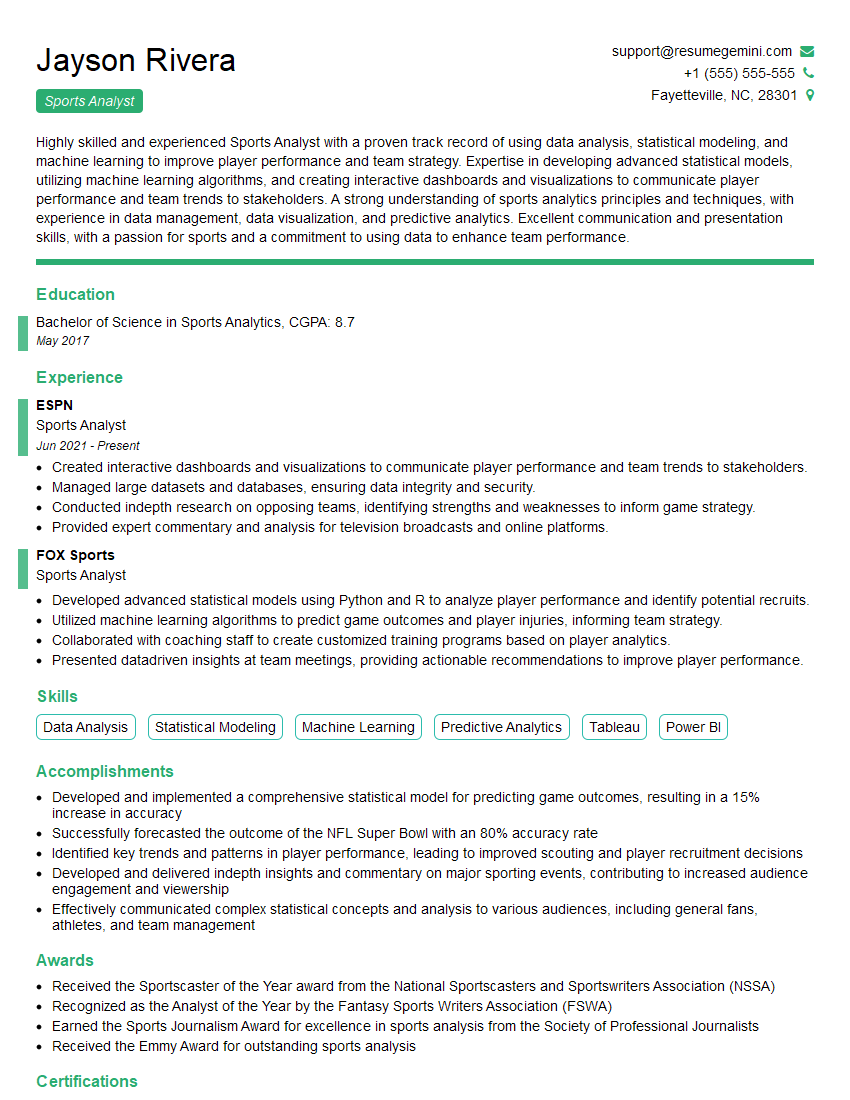
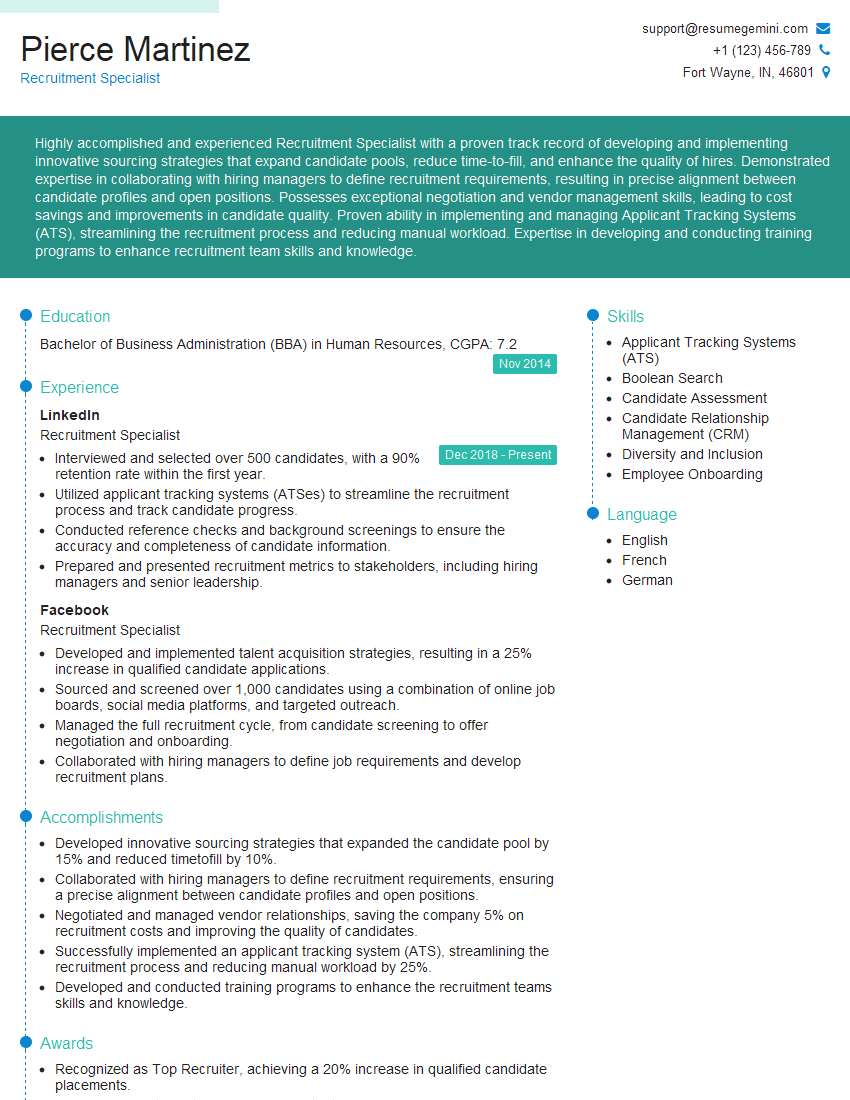
Mastering Player Evaluation Skills is crucial for career advancement in sports analysis, scouting, and coaching. A strong understanding of these skills demonstrates valuable expertise and opens doors to exciting opportunities. To maximize your job prospects, create an ATS-friendly resume that highlights your abilities. ResumeGemini is a trusted resource that can help you build a professional and impactful resume. We provide examples of resumes tailored to Player Evaluation Skills to guide you through the process. Take the next step toward your dream career today!
Explore more articles
Users Rating of Our Blogs
Share Your Experience
We value your feedback! Please rate our content and share your thoughts (optional).
What Readers Say About Our Blog
Very informative content, great job.
good