Interviews are more than just a Q&A session—they’re a chance to prove your worth. This blog dives into essential Tube capping interview questions and expert tips to help you align your answers with what hiring managers are looking for. Start preparing to shine!
Questions Asked in Tube capping Interview
Q 1. Describe your experience with different types of tube capping machines.
My experience encompasses a wide range of tube capping machines, from simple manual cappers to sophisticated automated systems. I’ve worked extensively with rotary cappers, which are highly efficient for high-volume production, and linear cappers, better suited for smaller batches or specialized cap types. I’m also familiar with chuck-type cappers, known for their versatility in handling different tube sizes and shapes, and servo-driven cappers, offering precise torque control for sensitive applications. For example, in one role, I oversaw the transition from a manual capping line to a fully automated rotary capper, resulting in a 300% increase in production output and a significant reduction in labor costs. In another project, I troubleshooted a faulty chuck-type capper, identifying and replacing a worn-out chuck component, which restored proper cap application and minimized downtime.
- Rotary Cappers: High-speed, continuous operation, ideal for large-scale production.
- Linear Cappers: Slower speed, often more versatile, suitable for smaller runs and diverse tube types.
- Chuck-Type Cappers: Adjustable chucks accommodate varying tube sizes and shapes.
- Servo-Driven Cappers: Precise torque control prevents damage to tubes or caps.
Q 2. Explain the process of setting up a tube capping machine for a new product.
Setting up a tube capping machine for a new product is a meticulous process that demands precision and attention to detail. It begins with a thorough understanding of the new tube’s dimensions and the cap’s specifications. This includes the tube diameter, height, and material, as well as the cap’s design, material, and intended torque. I’d first consult the machine’s operational manual to understand its adjustments and limitations. Then, I’d adjust the capping head to accommodate the tube diameter, ensuring a secure and consistent fit. The torque setting is critically important and must be carefully calibrated to avoid damaging the tube or applying insufficient force for a secure seal. I usually start with a lower torque setting and incrementally increase it while closely monitoring the capping process. Finally, rigorous testing with a sample batch is crucial to verify the quality of the capped tubes before commencing full-scale production.
For example, when we launched a new line of cosmetic tubes, we carefully calibrated the torque settings on the rotary capper. The tubes were made of a softer material than those we previously used, so we needed to ensure the caps were securely attached without crushing the tubes. We performed multiple test runs, adjusting the torque settings incrementally until we achieved perfect capping with no tube deformation.
Q 3. How do you ensure the quality and consistency of tube caps during production?
Quality and consistency are paramount in tube capping. We employ several strategies to achieve this. Regular monitoring of the capping process is key. This involves visually inspecting a sample of capped tubes at frequent intervals to check for proper cap application, any signs of damage to the tube or cap, and consistent torque. Torque testing is also crucial – using a torque gauge, we periodically check the torque applied to the caps to ensure it stays within the pre-determined specifications. Statistical Process Control (SPC) charts track key parameters over time, helping us identify trends and prevent problems. Additionally, we regularly calibrate the capping machine to maintain its accuracy and precision. Furthermore, we maintain detailed records of all production parameters and test results for traceability and quality assurance.
Think of it like baking a cake – you wouldn’t just toss the ingredients together and hope for the best. You follow a recipe, measure ingredients precisely, and check the cake regularly while it bakes to ensure it comes out perfectly. Tube capping is similar; consistent monitoring and control are key to achieving high-quality results.
Q 4. What are the common causes of tube capping malfunctions, and how do you troubleshoot them?
Malfunctions in tube capping machines can stem from various sources. Common issues include improper torque settings (leading to loose or crushed caps), faulty capping heads (due to wear or damage), incorrect tube feeding (causing jams or misalignment), and problems with the machine’s mechanical components (like worn gears or belts). Troubleshooting involves a systematic approach. I typically begin with visual inspection to identify any obvious problems. Then, I’d check the torque settings, adjust them as needed, and examine the capping head for signs of wear or damage. If the problem persists, I’d move on to inspecting the tube feeding mechanism and checking for obstructions or misalignment. If the issue persists, then a more in-depth mechanical check of the machine might be required, possibly involving calling in specialized maintenance personnel.
For example, we once experienced inconsistent capping due to a worn-out capping head. Visual inspection revealed wear on the jaws of the head. Replacing the capping head immediately resolved the issue. Another time, a jam in the tube feed mechanism was caused by a buildup of dust and debris which was cleaned promptly.
Q 5. What safety precautions do you follow while operating tube capping machinery?
Safety is paramount when operating tube capping machinery. Before starting any work, I always ensure the machine is properly grounded and all safety guards are in place. Loose clothing and jewelry are avoided to prevent entanglement. I never attempt to adjust or repair the machine while it’s running. Regular checks of the machine’s safety interlocks and emergency stop mechanisms are essential. Furthermore, proper training and adherence to the company’s safety protocols are non-negotiable. Hearing protection is often necessary due to the machine’s noise levels. Eye protection should always be used to guard against flying debris. In short, a proactive and cautious approach is critical to prevent accidents and ensure a safe working environment.
Q 6. How do you maintain and clean tube capping equipment?
Regular maintenance and cleaning are crucial for optimal performance and longevity of tube capping equipment. This includes daily cleaning to remove accumulated debris, dust, and product residue. This usually involves wiping down the machine’s surfaces, cleaning the capping head, and ensuring the tube feed mechanism is clear. More thorough cleaning and lubrication are performed on a scheduled basis, often weekly or monthly, depending on usage frequency. Lubrication of moving parts is key to minimizing wear and tear and ensuring smooth operation. Regular inspection of belts, gears, and other mechanical components is also important to identify any signs of wear or damage before they cause malfunctions. This prevents costly repairs and minimizes downtime. Preventative maintenance schedules should always be created and followed.
Q 7. Explain your understanding of GMP (Good Manufacturing Practices) in relation to tube capping.
GMP (Good Manufacturing Practices) are strictly followed in all aspects of tube capping to ensure product safety and quality. This involves maintaining a clean and sanitary production environment, following strict hygiene protocols for personnel, and regularly sanitizing equipment to prevent contamination. All materials and components used in tube capping must meet GMP standards. Traceability is paramount, so we maintain detailed records of all materials used, production parameters, and testing results. We adhere to rigorous quality control procedures to detect and eliminate any potential defects. Regular audits and inspections help ensure ongoing compliance with GMP guidelines and regulatory requirements. Failure to adhere to GMP could lead to product recalls, regulatory penalties, and damage to the company’s reputation.
Q 8. Describe your experience with different types of tube caps and their applications.
My experience encompasses a wide range of tube caps, each designed for specific applications. Think of it like choosing the right lid for a container – the material and design depend on the contents and intended use.
- Plastic Caps: These are common for cosmetic, pharmaceutical, and food products. They’re lightweight, cost-effective, and readily available in various colors and designs. For instance, a simple screw-on cap is ideal for a hand cream, while a flip-top cap might be better suited for a children’s medicine.
- Aluminum Caps: Often used for more demanding applications, aluminum caps provide superior barrier properties against moisture and oxygen, making them perfect for preserving sensitive products. Think toothpaste tubes or specialized medical ointments.
- Laminate Caps: These combine the benefits of different materials. For example, a laminate cap might have an aluminum layer for barrier protection and a plastic outer layer for improved aesthetics and ease of use. This is frequently seen in premium cosmetic lines.
- Specialized Caps: This category covers caps with additional features, like tamper-evident seals (to ensure product integrity), child-resistant closures (for safety), or dispensing mechanisms (for controlled product release).
My selection of a cap always considers factors like product compatibility, regulatory requirements, cost, and the desired consumer experience.
Q 9. How do you identify and resolve issues related to cap tightness or leakage?
Identifying and resolving cap tightness or leakage issues requires a systematic approach. It’s like detective work! First, we pinpoint the source using visual inspection for obvious defects, such as damaged caps or improper sealing. We then measure the torque (the twisting force applied to the cap) using a torque tester to ensure it’s within the specified range. Insufficient torque leads to loose caps and potential leakage, while excessive torque can damage the tube or cap.
Leakage issues can be more complex and may stem from several sources:
- Faulty Caps: Manufacturing defects in the cap itself, like cracks or inconsistencies in material thickness.
- Tube Defects: Issues with the tube’s opening, such as irregularities or burrs.
- Improper Sealing: Incorrect machine settings or inadequate sealing pressure during the capping process.
- Environmental Factors: Temperature and humidity can affect cap tightness.
Resolving these issues involves checking and adjusting machine parameters, examining the quality of both the caps and tubes, and optimizing the capping process itself. If problems persist, root-cause analysis using statistical process control (SPC) methods can be implemented to identify and permanently fix the underlying cause.
Q 10. What is your experience with different types of sealing mechanisms (e.g., roll-on, crimp, induction)?
I’m experienced with various sealing mechanisms, each with its own advantages and limitations. Think of them as different ways to securely close a package.
- Roll-on Sealing: This method uses friction and pressure to seal the cap onto the tube. It’s a simple and cost-effective solution often used for plastic tubes.
- Crimp Sealing: Involves crimping the tube’s opening tightly around the cap using specialized tooling. This creates a robust, tamper-evident seal, frequently seen in aluminum tubes.
- Induction Sealing: This employs electromagnetic induction to melt a liner material within the cap, forming a hermetic seal. This technique delivers excellent barrier protection, especially important for sensitive or shelf-stable products. It’s often seen in pharmaceutical and food applications.
The choice depends on the tube material, product characteristics, and the desired level of seal integrity and tamper evidence. Each method requires precise machine settings and regular maintenance to ensure consistent and effective sealing.
Q 11. How do you manage production targets and deadlines in a tube capping environment?
Managing production targets and deadlines in tube capping involves careful planning, efficient resource allocation, and effective communication. I approach this using a combination of techniques.
- Production Scheduling: Creating detailed schedules that optimize machine utilization and minimize downtime. This involves accurately forecasting demand and considering potential bottlenecks.
- Inventory Management: Maintaining sufficient stocks of tubes and caps to avoid production interruptions. This also helps prevent waste due to excess inventory.
- Quality Control: Implementing regular quality checks to ensure product integrity and avoid costly rework. This includes monitoring seal integrity and cap tightness.
- Teamwork and Communication: Maintaining open communication within the team to address any challenges promptly and efficiently. A collaborative environment is crucial for meeting deadlines.
I often utilize tools such as Kanban boards or project management software to visualize progress, track deadlines, and highlight potential issues.
Q 12. How familiar are you with various tube materials (e.g., plastic, aluminum, laminate)?
My familiarity with tube materials is extensive. The choice of tube material significantly impacts the capping process and the overall product quality. Think of it as choosing the right building material for a house – each has its advantages and disadvantages.
- Plastic Tubes: Commonly made from polyethylene (PE) or polypropylene (PP), they’re lightweight, flexible, and cost-effective. They’re often suitable for less demanding applications, like cosmetics or some food products.
- Aluminum Tubes: Offer excellent barrier properties against oxygen and moisture, making them ideal for sensitive products that require a longer shelf life. This is a popular choice for pharmaceuticals and high-value cosmetics.
- Laminate Tubes: Combine different materials, such as plastic, aluminum, and paper, to optimize performance. They offer flexibility in design and barrier properties, accommodating diverse product needs.
Understanding the properties of each material – its flexibility, rigidity, and susceptibility to damage – is crucial for selecting the appropriate capping method and machine settings to prevent issues such as tube deformation or leakage.
Q 13. Describe your experience with automated tube capping systems.
My experience with automated tube capping systems is significant. These systems drastically increase efficiency and consistency compared to manual capping. Think of it as an assembly line versus hand-crafting – much faster and more accurate. I’ve worked with various types of automated systems, from simple rotary cappers to complex, integrated lines that handle the entire filling and capping process.
My expertise includes:
- Troubleshooting and Maintenance: Identifying and resolving mechanical or electrical issues to minimize downtime.
- Programming and Setup: Configuring machine parameters such as torque, speed, and capping head adjustments.
- Process Optimization: Fine-tuning machine settings and processes to maximize efficiency and reduce waste.
- Safety Protocols: Ensuring adherence to safety regulations and implementing proper lockout/tagout procedures during maintenance.
I’m proficient in using various types of automation technologies, including programmable logic controllers (PLCs) and human-machine interfaces (HMIs) for machine control and monitoring.
Q 14. What are your strategies for improving efficiency and reducing waste in tube capping operations?
Improving efficiency and reducing waste in tube capping requires a holistic approach, focusing on several key areas:
- Process Optimization: Analyzing and streamlining the capping process to eliminate bottlenecks and reduce idle time. Lean manufacturing principles are extremely helpful here.
- Preventive Maintenance: Implementing a robust maintenance schedule to minimize unexpected downtime and equipment failures. Regular checks prevent costly repairs later.
- Quality Control: Implementing stringent quality checks to minimize defects and rework. Early detection of issues prevents wasted materials and time.
- Material Management: Optimizing the procurement and storage of tubes and caps to minimize waste and storage costs.
- Automation: Implementing or upgrading to automated capping systems to increase throughput and reduce labor costs. Robotics and AI are making great strides here.
- Employee Training: Ensuring that all employees are properly trained in safe and efficient operating procedures. A skilled team is essential for minimizing errors.
Continuous improvement methodologies like Kaizen or Six Sigma are valuable tools to identify and address areas for improvement in a systematic manner. The goal is not just to meet targets but to constantly find ways to perform better and more sustainably.
Q 15. How do you handle situations where there is a discrepancy between the capped tubes and the production count?
Discrepancies between capped tubes and production counts are a serious issue, indicating a potential problem in the capping process or counting mechanism. My approach involves a systematic investigation. First, I’d verify the accuracy of the counting system itself – are the sensors functioning correctly? Are there any calibration issues? I’d then inspect the capping machine for malfunctions: Are caps jamming? Is the capping head applying consistent pressure? Are there any signs of faulty caps? Next, I would visually inspect a sample of capped tubes to check for any improperly capped tubes that might not have been counted correctly. Finally, I’d compare the raw material usage with the finished product count to ensure no significant loss occurred before the capping stage. This systematic approach helps isolate the root cause, whether it’s a mechanical fault, a counting error, or a material loss.
For example, once I discovered a discrepancy due to a faulty sensor, I replaced it and recalibrated the system. This solved the issue and restored the accurate count.
Career Expert Tips:
- Ace those interviews! Prepare effectively by reviewing the Top 50 Most Common Interview Questions on ResumeGemini.
- Navigate your job search with confidence! Explore a wide range of Career Tips on ResumeGemini. Learn about common challenges and recommendations to overcome them.
- Craft the perfect resume! Master the Art of Resume Writing with ResumeGemini’s guide. Showcase your unique qualifications and achievements effectively.
- Don’t miss out on holiday savings! Build your dream resume with ResumeGemini’s ATS optimized templates.
Q 16. Explain your experience with different types of capping heads and their adjustments.
I’ve worked extensively with various capping heads, including screw-on, crimp-on, and induction sealing heads. Each type requires specific adjustments for optimal performance. Screw-on heads, for instance, need precise torque settings to ensure a secure seal without damaging the tube. Crimp-on heads require adjustments to the crimping force and the depth of the crimp to achieve a reliable seal. Induction sealing heads involve controlling the power and duration of the induction field to create a hermetic seal. Adjustments are often made using calibrated dials or digital displays on the capping machine, and fine-tuning is usually required based on the tube material, cap design, and desired seal strength. I’m adept at using various tools for these adjustments, including torque wrenches, micrometers, and multimeters. For instance, I once had to adjust the crimping depth on a crimp-on head because we switched to a different tube material with a slightly thinner wall, thus preventing tube damage during the capping process.
Q 17. Describe your proficiency in using relevant software or control systems for tube capping machines.
My experience encompasses using various software and control systems for tube capping machines, including PLC (Programmable Logic Controller) based systems, HMI (Human Machine Interface) panels, and SCADA (Supervisory Control and Data Acquisition) systems. I’m proficient in monitoring real-time production data, such as capping speed, torque values, and rejection rates, through these systems. I can also troubleshoot errors using diagnostic codes and implement necessary adjustments to the machine parameters. I understand the importance of data logging and using historical data to identify trends and prevent future issues. For example, I once used the HMI to remotely adjust the capping speed to optimize the output based on real-time production requirements.
Q 18. How do you ensure proper torque and seal integrity during the capping process?
Ensuring proper torque and seal integrity is critical for product quality and shelf life. We use torque sensors and seal testers to verify these parameters. Torque is controlled by adjusting the machine settings (often via PLC), and the target torque value is set based on tube and cap materials. We use in-line torque sensors to continuously monitor torque during operation. Seal integrity testing might involve visual inspection, leak testing, or more sophisticated methods depending on the product sensitivity. Regular calibration of torque sensors and seal testers are crucial to maintain accuracy. For sensitive products, a statistical process control (SPC) chart might be used to continuously monitor capping parameters and prevent deviations that could compromise seal integrity.
For example, we once discovered a slight drop in average torque which was caught by our SPC chart. This allowed us to address a minor machine setting before it led to widespread seal failures.
Q 19. How would you handle a situation where a machine malfunctions during peak production?
A machine malfunction during peak production is a critical situation requiring swift action. My response follows a structured approach: First, I’d immediately assess the situation to determine the nature of the malfunction. Is it a minor issue like a sensor error or a major problem like a broken part? Then, based on the assessment, I’d try to rectify the problem using my troubleshooting skills. If it’s a minor issue, I might be able to fix it quickly. If it’s more significant, I’d follow established protocols, which may involve contacting maintenance personnel, switching to a backup machine (if available), or temporarily halting production of the affected product line. Maintaining clear communication with the production supervisor and the team is essential during this process. Safety is always paramount – I’d ensure the machine is secured before any repairs are attempted.
For example, I once handled a sudden power surge that caused a sensor failure. By quickly identifying the faulty sensor and utilizing a spare, I was able to restore production within minutes, minimizing production downtime.
Q 20. What are the key performance indicators (KPIs) you monitor in tube capping operations?
Key performance indicators (KPIs) in tube capping operations include:
- Overall Equipment Effectiveness (OEE): Measures the percentage of time a machine is producing good parts.
- Throughput/Production Rate: The number of capped tubes produced per hour or per shift.
- Rejection Rate: The percentage of tubes rejected due to improper capping.
- Downtime: Time spent on machine maintenance, repairs, or adjustments.
- Mean Time Between Failures (MTBF): The average time between machine failures.
- Torque consistency: A measure of the uniformity of applied torque to each cap.
- Seal integrity: The percentage of tubes with successful seals (passed leak testing, if applicable).
Monitoring these KPIs allows us to track performance, identify areas for improvement, and optimize the capping process for efficiency and quality.
Q 21. How do you manage and resolve production line jams or stoppages related to capping?
Production line jams or stoppages related to capping require a systematic approach to resolve. I begin with a visual inspection to identify the cause of the jam – is it a cap jam, a tube jam, or a mechanical issue within the machine? I’ll then try to clear the jam safely, ensuring that all safety protocols are followed. If the jam is due to a more significant mechanical problem, I’ll attempt to troubleshoot the issue using my technical expertise and available diagnostic tools. This may involve checking for worn-out parts, incorrect settings, or other mechanical faults. Communication with the team is crucial – I need to keep the production supervisor informed of the situation and the steps taken to resolve it. If the problem can’t be fixed quickly, I’ll follow established protocols, which may involve seeking support from maintenance or engineering personnel.
For example, I once resolved a recurring jam caused by a slight misalignment of the cap feeder. A minor adjustment to the feeder resolved the issue, and we implemented a regular inspection routine to prevent future occurrences.
Q 22. Explain your understanding of different types of tube closures (e.g., screw caps, snap caps).
Tube closures are crucial for product integrity and consumer safety. They range from simple to highly sophisticated designs, each suited to different applications and product characteristics. Let’s explore a few common types:
- Screw Caps: These are the most ubiquitous, featuring a threaded design that screws onto the tube. They offer excellent sealing, tamper evidence (with appropriate liners), and are readily available in various materials (plastic, metal) and sizes. Think of the ubiquitous toothpaste tube – that’s a screw cap.
- Snap Caps: These closures use a simple push-on, snap-fit mechanism. They are generally less expensive and easier to apply than screw caps but may not offer the same level of tamper evidence or sealing integrity, particularly for products with high viscosity or those susceptible to leakage. Examples include many types of pharmaceutical ointment tubes.
- Flip-Top Caps: These feature a hinged cap that flips open and closed, offering convenient one-handed access. They are common in cosmetic and personal care products. The seal is usually a simple friction fit.
- Crimp Caps: Used for sterile applications, these caps are sealed onto the tube using a crimping machine, creating a hermetic seal. They are prevalent in pharmaceutical and medical device industries.
The choice of closure depends on factors like product characteristics (viscosity, shelf-life requirements), cost considerations, and the desired level of tamper evidence and ease of use.
Q 23. How do you contribute to a safe and efficient work environment in a tube capping facility?
Safety and efficiency are paramount in any tube capping facility. My contribution involves:
- Strict adherence to safety protocols: This includes proper use of personal protective equipment (PPE), like safety glasses and gloves, and understanding the safe operation of all machinery. I’d actively participate in safety training and promote a culture of safety among colleagues.
- Efficient machine operation: I ensure machines are properly calibrated and maintained to maximize output while minimizing downtime. This includes regular inspections and preventative maintenance.
- 5S Methodology Implementation: I believe in implementing the 5S methodology (Sort, Set in Order, Shine, Standardize, Sustain) to maintain a clean, organized, and efficient workspace. A well-organized workplace directly reduces the risk of accidents.
- Proactive identification and reporting of hazards: If I spot any potential safety hazards, I’d immediately report them to the supervisor, ensuring that corrective actions are promptly implemented.
- Teamwork and communication: Open communication and collaboration with colleagues are vital for a safe and productive work environment. I would contribute by sharing knowledge and best practices.
Q 24. What experience do you have with quality control checks and documentation for tube capping?
Throughout my career, I’ve been deeply involved in quality control for tube capping. This includes:
- Visual Inspection: I’m skilled at identifying defects such as improperly applied caps, damaged tubes, or leakage. This is often the first line of defense in quality control.
- Torque Testing: Using specialized equipment, I measure the torque applied to the caps to ensure they meet the specified standards. Insufficient torque can lead to leakage, while excessive torque can damage the tube.
- Leakage Testing: This involves subjecting capped tubes to various tests (pressure, vacuum) to verify seal integrity. I’m familiar with different testing methods and can interpret results effectively.
- Documentation and record-keeping: Meticulous record-keeping is essential. I’m proficient in using various quality control software and maintaining detailed logs of inspection results, any identified defects, and corrective actions taken. This documentation is crucial for traceability and continuous improvement.
- Statistical Process Control (SPC): I understand and apply SPC techniques to monitor the process and identify trends that could indicate potential quality issues before they become significant problems.
My experience also extends to working with various quality standards, such as ISO 9001 and GMP, ensuring compliance throughout the process.
Q 25. How do you stay updated on industry best practices and new technologies in tube capping?
Staying current in this dynamic field is crucial. My approach involves:
- Industry Publications and Journals: I regularly read trade publications and journals focused on packaging and tube capping technology. This keeps me abreast of the latest innovations and best practices.
- Trade Shows and Conferences: Attending industry events provides valuable networking opportunities and exposure to new technologies and trends.
- Online Resources and Webinars: I actively engage with online resources, including webinars and educational platforms, to enhance my knowledge.
- Professional Organizations: Membership in relevant professional organizations offers access to resources, training, and networking opportunities with other professionals.
- Manufacturer Training: Many equipment manufacturers offer training programs that are vital for learning about new machines and improving existing skills. I’ve actively participated in such programs throughout my career.
Q 26. Describe a time you had to adapt to a change in tube capping processes or equipment.
In a previous role, we transitioned from a manual tube capping process to a fully automated system. Initially, there was considerable resistance from some team members apprehensive about the change. My approach involved:
- Active Participation in the Transition: I actively participated in the training and familiarization process, fully understanding the new system’s capabilities and limitations.
- Mentoring and Support: I provided support and guidance to my colleagues, addressing their concerns and helping them adapt to the new technology. This included hands-on training and troubleshooting assistance.
- Identifying and Addressing Challenges: As we transitioned, we encountered initial challenges with machine calibration and speed optimization. We systematically addressed each issue, using data analysis to improve the process efficiency and product quality.
- Continuous Improvement: We regularly reviewed the process, making adjustments and improvements to maximize the benefits of the new system. This demonstrated a willingness to adapt and improve continuously.
The successful transition not only increased productivity significantly but also enhanced product consistency and reduced the risk of human error.
Q 27. How do you handle situations where you encounter unexpected issues during tube capping?
Unexpected issues are inevitable. My approach to handling such situations involves a systematic process:
- Immediate Assessment: First, I thoroughly assess the nature and extent of the problem to determine its impact on production and product quality.
- Troubleshooting: I leverage my knowledge and experience to troubleshoot the issue, systematically checking potential causes (e.g., machine malfunction, material defects, process parameters).
- Root Cause Analysis: Once the issue is identified, I perform a root cause analysis to determine the underlying cause and prevent recurrence. This often involves using tools like the 5 Whys.
- Corrective Action: I implement appropriate corrective actions to resolve the immediate issue, ensuring that production can resume safely and efficiently.
- Documentation and Reporting: I meticulously document all aspects of the issue, including the root cause, corrective actions taken, and preventative measures implemented. This information is vital for continuous improvement.
- Communication: Maintaining open communication with supervisors and team members is vital, ensuring everyone is informed of the situation and the actions taken.
Q 28. What are your salary expectations for this Tube Capping position?
My salary expectations are commensurate with my experience and skills in tube capping, and aligned with the industry standard for this position. I am open to discussing a competitive compensation package that fairly reflects my contributions to the organization.
Key Topics to Learn for Tube Capping Interview
- Tube Capping Materials and Selection: Understanding the properties of different capping materials (e.g., rubber, plastic, metal) and their suitability for various tube types and applications. This includes knowledge of material compatibility and regulatory compliance.
- Capping Methods and Techniques: Familiarity with different capping methods (e.g., crimping, sealing, screwing) and their respective advantages and disadvantages. This includes practical experience with various capping machinery and equipment.
- Quality Control and Inspection: Understanding quality control procedures for capped tubes, including visual inspection, leak testing, and dimensional checks. This involves knowing industry standards and best practices for ensuring product integrity.
- Troubleshooting and Problem Solving: Ability to identify and resolve common capping issues, such as leaks, improper seals, or equipment malfunctions. This requires a systematic approach to problem diagnosis and solution implementation.
- Safety Procedures and Regulations: Knowledge of relevant safety protocols and regulations related to tube capping processes and machinery operation. This includes understanding of personal protective equipment (PPE) and safe work practices.
- Production Efficiency and Optimization: Understanding techniques to maximize production efficiency and minimize waste in the tube capping process. This includes knowledge of lean manufacturing principles and continuous improvement methodologies.
- Automation and Technology: Familiarity with automated tube capping systems and their integration into larger production lines. This could include understanding PLC programming or other automation technologies.
Next Steps
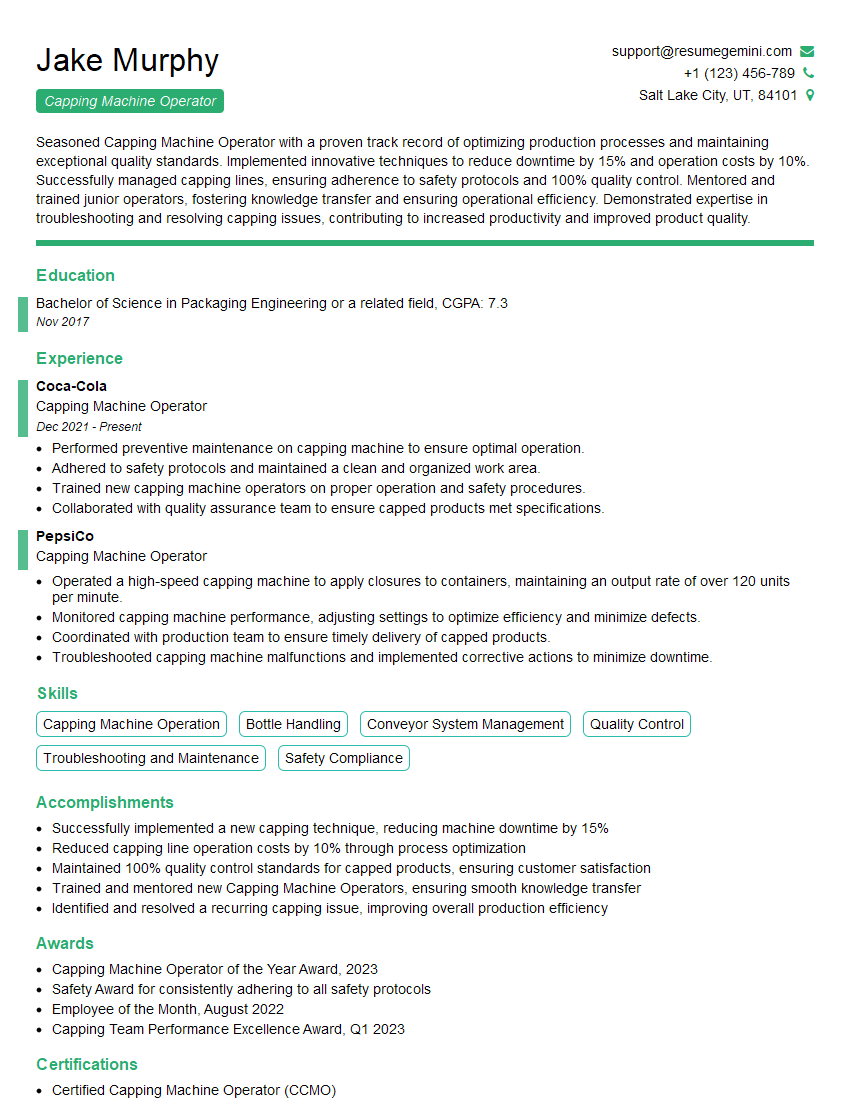
Mastering tube capping opens doors to diverse and rewarding opportunities within manufacturing and related industries. A strong understanding of these techniques is highly valued and contributes significantly to career advancement. To maximize your job prospects, it’s crucial to present your skills effectively. Creating an ATS-friendly resume is essential for getting your application noticed by recruiters and hiring managers. ResumeGemini is a trusted resource to help you build a professional and impactful resume that showcases your expertise in tube capping. Examples of resumes tailored to this specific field are available to guide you through the process.
Explore more articles
Users Rating of Our Blogs
Share Your Experience
We value your feedback! Please rate our content and share your thoughts (optional).
What Readers Say About Our Blog
Very informative content, great job.
good