The right preparation can turn an interview into an opportunity to showcase your expertise. This guide to Player Profiling interview questions is your ultimate resource, providing key insights and tips to help you ace your responses and stand out as a top candidate.
Questions Asked in Player Profiling Interview
Q 1. Describe your experience using statistical models for player evaluation.
My experience with statistical models for player evaluation is extensive. I’ve utilized a variety of techniques, from basic descriptive statistics to advanced machine learning algorithms, to assess player performance and predict future success. For example, I’ve used linear regression to model the relationship between a player’s shooting percentage and their points per game. I’ve also employed more complex models like random forests and gradient boosting machines to predict player performance based on a wider range of metrics, including defensive statistics, advanced metrics like Player Efficiency Rating (PER), and even contextual data like minutes played and team performance. The choice of model depends heavily on the data available and the specific question being asked. For instance, a simpler model might suffice when predicting a player’s scoring average, while a more sophisticated model may be needed to predict their overall impact on the game.
A practical example involves using a logistic regression model to predict the likelihood of a player making the All-Star team based on various performance statistics. By identifying statistically significant predictors, such as points per game, assists, and rebounds, we can build a model that helps us assess the probability of a player receiving this prestigious accolade. This allows for data-driven decision-making in player acquisition and contract negotiations.
Q 2. Explain the difference between qualitative and quantitative player profiling methods.
Qualitative and quantitative player profiling methods offer distinct yet complementary perspectives on player evaluation. Quantitative methods rely on numerical data, such as statistics from games and training sessions. This data can be statistically analyzed to reveal trends and correlations. Think of points per game, rebounds, assists – these are all quantifiable metrics. Quantitative methods provide objective measurements and allow for rigorous comparisons between players.
Qualitative methods, on the other hand, focus on subjective observations and assessments. This could include scouting reports detailing a player’s work ethic, leadership qualities, or playing style. Coaches’ feedback, interviews, and video analysis of intangibles like court awareness and decision-making fall under this category. Qualitative data enriches our understanding of a player beyond the numbers, providing context and insights into aspects that aren’t easily captured by statistics.
A strong player profile utilizes both approaches. For example, while a player may have high quantitative scores in certain categories, qualitative insights could reveal crucial weaknesses or potential for improvement. A holistic approach combining both perspectives provides a much more accurate and comprehensive evaluation.
Q 3. What key metrics would you prioritize when profiling a basketball player?
When profiling a basketball player, I prioritize a multifaceted approach that goes beyond basic box score statistics. While metrics like points per game (PPG), rebounds per game (RPG), and assists per game (APG) are essential, I also delve into advanced statistics and contextual factors. My key metrics would include:
- Advanced Statistics: Player Efficiency Rating (PER), True Shooting Percentage (TS%), Usage Rate, Win Shares, and Defensive Rating. These provide a more nuanced picture of a player’s impact on the game.
- Shooting Efficiency: Field Goal Percentage (FG%), Three-Point Percentage (3P%), and Free Throw Percentage (FT%). Efficiency is key in modern basketball.
- Defensive Metrics: Steals, blocks, defensive rebounds, and defensive rating. Defense is crucial, and these metrics help quantify a player’s contributions.
- Contextual Factors: Minutes played, pace of play, and team context. A player’s performance can be influenced by these factors, so it’s vital to consider them.
- Play-Type Metrics: Efficiency in specific situations such as pick-and-roll, isolation, or transition play. This can reveal strengths and weaknesses in different game scenarios.
Ultimately, the specific metrics prioritized depend on the player’s position and the team’s strategic needs. However, this comprehensive approach ensures a balanced and informed evaluation.
Q 4. How would you identify and assess potential biases in existing player data?
Identifying and assessing biases in player data is crucial for accurate player profiling. Biases can stem from various sources, including:
- Sampling Bias: Data might not accurately represent the entire population of players if it’s based on a non-representative sample (e.g., focusing only on elite players).
- Measurement Bias: The methods used to collect data might be flawed, leading to inaccurate or inconsistent measurements. For instance, inconsistent officiating could impact statistical outputs.
- Confirmation Bias: Analysts might interpret data in a way that confirms their pre-existing beliefs about a player.
- Reporting Bias: The way data is reported might be influenced by external factors, leading to distortions.
To address these, I employ several strategies:
- Data Cleaning and Validation: Thoroughly checking the data for inconsistencies and outliers.
- Robust Statistical Methods: Using statistical techniques that are less sensitive to outliers and extreme values.
- Multiple Data Sources: Combining data from various sources to reduce the impact of any single source’s bias.
- Blind Analysis: Analyzing data without prior knowledge of the players involved, reducing the influence of pre-existing beliefs.
- Critical Self-Reflection: Constantly questioning my own assumptions and biases during the analysis process.
By proactively addressing potential biases, I strive to ensure the objectivity and reliability of my player profiles.
Q 5. How do you handle incomplete or unreliable data in player profiling?
Handling incomplete or unreliable data is a common challenge in player profiling. Several techniques help mitigate this problem:
- Data Imputation: Replacing missing values with estimated values. This can involve simple methods like using the mean or median of the available data, or more sophisticated techniques like k-nearest neighbors imputation, which considers similar players’ data to estimate missing values.
- Data Cleaning: Identifying and correcting or removing unreliable data points. This involves flagging and investigating any outliers or data points that seem inconsistent with other information.
- Sensitivity Analysis: Assessing how sensitive the results are to changes in the handling of missing or unreliable data. This helps understand the uncertainty associated with the conclusions drawn.
- Model Selection: Choosing models that are robust to missing data, such as those employing regularization techniques that penalize complex models.
- Weighted Averages: Assigning weights to different data points based on their reliability. This allows more reliable data to contribute more significantly to the overall evaluation.
The approach taken depends on the nature and extent of the missing or unreliable data. For instance, if a small amount of data is missing, imputation might suffice. However, for extensive missing data or significant unreliability, a more cautious approach involving sensitivity analysis and model selection is crucial.
Q 6. Describe your experience with different statistical software packages relevant to player profiling (e.g., R, Python).
I’m proficient in several statistical software packages crucial for player profiling, including R and Python. In R, I frequently utilize packages like dplyr for data manipulation, ggplot2 for data visualization, and various machine learning packages such as caret and randomForest for model building. I’ve built complex models using these packages, analyzing large datasets of player statistics to identify key performance indicators and predict future success.
Python, with its powerful libraries like pandas (for data manipulation), scikit-learn (for machine learning), and matplotlib/seaborn (for visualization), also plays a significant role in my work. For instance, I’ve used scikit-learn‘s various regression and classification models to build predictive models, which help in identifying talent and evaluating potential trades.
My expertise extends to data visualization, where I effectively communicate insights from complex analyses through clear and concise charts and graphs, often using these packages’ capabilities. The combination of R and Python allows me to tackle diverse player profiling tasks effectively, ensuring a comprehensive and data-driven approach.
Q 7. Explain your understanding of different player profiling frameworks and methodologies.
My understanding of player profiling frameworks encompasses various methodologies, each with its strengths and limitations. These range from simple descriptive analyses to sophisticated predictive modeling techniques.
- Descriptive Analytics: This involves summarizing and visualizing player statistics to gain insights into their performance. This is a foundational step, providing a baseline understanding of a player’s strengths and weaknesses.
- Predictive Modeling: This utilizes statistical models to forecast future player performance based on historical data. Techniques like regression analysis, classification algorithms, and time series analysis are applied here. The choice of model depends on the specific prediction task (e.g., predicting points per game, probability of injury).
- Clustering and Segmentation: Grouping players based on similar characteristics to identify player archetypes or clusters with similar playing styles. This aids in player comparison and scouting.
- Network Analysis: Examining relationships between players on the court to understand team dynamics and player interactions. This is especially useful in identifying on-court synergy.
The best framework depends on the specific objectives of the profiling process. For example, a scout might primarily focus on descriptive analytics to evaluate a player’s past performance, while a general manager might employ predictive modeling to assess the potential value of a player based on projected future performance. I adapt my approach based on the context and resources available.
Q 8. How would you present your player profile findings to a coaching staff?
Presenting player profile findings to a coaching staff requires a clear, concise, and visually engaging approach. I wouldn’t just dump data; I’d focus on actionable insights. I start with a high-level summary highlighting key strengths and weaknesses of the team or individual players, using easily digestible visuals like radar charts or bar graphs comparing players to league averages or specific benchmarks.
Then, I’d delve into specific areas, such as tactical effectiveness. For example, if a player excels in progressive passes but struggles with defensive positioning, I would present this data alongside video clips demonstrating both. I’d emphasize how this information can be leveraged in training or game strategy. Finally, I’d encourage a collaborative discussion, inviting questions and feedback from the coaching staff to ensure they understand the data’s implications and can integrate it into their plans.
For example, I might show a radar chart comparing a midfielder’s passing accuracy, key passes, and tackles won to league averages, clearly illustrating their strengths in creative play and areas for improvement in defensive contributions. This allows for a targeted coaching approach.
Q 9. How would you use player profiling to inform player recruitment strategies?
Player profiling is crucial in recruitment. It allows us to move beyond basic scouting reports and identify players who truly fit our team’s style and needs. Instead of relying solely on subjective assessments, we leverage data-driven insights. For example, if we need a winger with exceptional crossing ability and high work rate, we wouldn’t just look at goals and assists. We’d analyze advanced metrics such as crosses completed, progressive carries, and sprints per game. This allows us to objectively compare potential recruits and identify hidden gems who might be overlooked using traditional scouting methods.
Our recruitment strategy would involve setting clear criteria based on our team’s playing style and positional requirements. We define what metrics are most important for each position. Then, we use player profiling tools and databases to screen players that match this profile, narrowing down our search to the most promising candidates. Finally, we would cross-reference this data with video analysis and live scouting to confirm our initial findings and assess intangibles like personality and work ethic.
Q 10. How do you stay up-to-date with advancements in player profiling techniques and technology?
Staying current in this field requires a multi-pronged approach. I regularly attend conferences and workshops focused on sports analytics and player performance. I actively participate in online forums and communities where researchers and practitioners share their findings and discuss the latest methodologies. Further, I subscribe to relevant journals and publications, keeping myself abreast of peer-reviewed research. Crucially, I closely follow the work of leading analytics companies and researchers who develop new data collection and analysis techniques. This allows me to adapt and refine my approach using the most up-to-date methods available.
Q 11. Describe a time you had to make a difficult decision based on player profiling data.
In a previous role, we had to decide whether to sign a highly talented but injury-prone striker. His player profile revealed exceptional finishing ability and key pass creation. However, his injury history, meticulously documented using data on minutes played, injury type, and recovery time, showed a recurring pattern of hamstring issues. The data suggested a high risk of future injuries, potentially impacting his availability and overall contribution to the team.
Making this decision required weighing the potential rewards against the risks. We used statistical modeling to predict his future availability and performance, factoring in his injury history. While the potential upside was significant, the predicted risk of extended absences led us to prioritize a more consistent, less injury-prone alternative. This was a difficult decision, but the data-driven analysis allowed us to make a rational and well-informed choice.
Q 12. What are some limitations of player profiling and how can they be mitigated?
Limitations of player profiling exist, primarily due to data availability and interpretation. For example, advanced metrics might not capture nuanced aspects of the game like leadership qualities or tactical intelligence. Another limitation is data bias; if a certain metric isn’t tracked consistently across leagues or levels, comparisons become inaccurate. Also, context is crucial; a statistic might be misleading without considering factors such as team style or opposition quality.
To mitigate these limitations, we use a holistic approach, combining quantitative data with qualitative assessments. This means supplementing our data analysis with video scouting and observations from experienced coaches and scouts. We also use context-aware statistical models that adjust for factors like team strength and opponent quality to gain a more accurate picture. Finally, it’s crucial to acknowledge the limitations of the data and present our findings with transparency, highlighting potential sources of error or bias.
Q 13. How do you incorporate video analysis into your player profiling process?
Video analysis is integral to player profiling. It provides the qualitative context needed to interpret the quantitative data from advanced metrics. For example, we might see a player with high passing completion rates but low key pass numbers. While the data suggests accurate passing, video analysis helps understand why. This might reveal that the player mostly makes safe, short passes instead of taking risks in the final third. This context significantly refines our understanding of their strengths and weaknesses.
My process usually involves coding specific events in video (e.g., passes, shots, tackles) using video annotation software. This allows me to generate detailed reports on player actions, and compare the frequency and quality of those actions against the advanced metrics. For example, I might annotate the type of pass, the outcome (completed or intercepted), and the area of the field, then correlate this to metrics like pass completion rate and expected assists. This richer, multi-faceted analysis leads to a more comprehensive and accurate player profile.
Q 14. How would you identify a player’s strengths and weaknesses based on advanced metrics?
Identifying strengths and weaknesses using advanced metrics depends heavily on the specific metrics and the context. There’s no one-size-fits-all approach. For a striker, goals, expected goals (xG), and shot accuracy are crucial. A high xG and low goals scored might indicate finishing issues, while high shots, low xG, suggests poor shot selection. A midfielder’s strengths and weaknesses could be evaluated using metrics like progressive carries, tackles won, pass completion percentage, and key passes. A defender might be analyzed using tackles, interceptions, aerial duels won, and passes completed under pressure.
To interpret these metrics effectively, we compare them to league averages, percentile rankings, and set benchmarks based on the player’s position and playing style. For example, a defender with a high interception rate might be a strength, but a low pass completion percentage could indicate weaknesses in ball distribution. We might then use video analysis to corroborate this data. Is the defender intercepting because they’re positioned well or due to other teammates making mistakes? By combining different data sources, we can get a nuanced picture of the player’s strengths and weaknesses.
Q 15. How do you measure the effectiveness of your player profiling process?
Measuring the effectiveness of a player profiling process is crucial for continuous improvement. We don’t simply look at one metric, but rather a holistic approach focusing on both short-term and long-term impact. This involves tracking several key performance indicators (KPIs).
- Recruitment Success Rate: We track the percentage of profiled players who successfully make the team and meet or exceed expectations. This helps us assess the accuracy of our profiles in identifying talent.
- Player Development: We monitor the on-field improvement of players post-profiling. Did their identified weaknesses improve? Did their strengths flourish? This gauges the effectiveness of the profile in guiding training and development.
- Team Performance: The ultimate test is the team’s overall performance. Did incorporating profiled players lead to improved team results? We analyze team statistics in conjunction with individual player performances to see the collective impact.
- Return on Investment (ROI): We calculate the financial return related to player recruitment and development based on the player profiles. This involves considering transfer fees, salaries, and the contribution to team revenue.
- Qualitative Feedback: We collect feedback from coaches, scouts, and players themselves. Their subjective insights provide valuable contextual information supplementing the quantitative data.
For example, a high recruitment success rate alongside positive player development and improved team performance indicates a highly effective player profiling process. Conversely, low success rates and lack of player development signal a need for refinement of our methods and data analysis.
Career Expert Tips:
- Ace those interviews! Prepare effectively by reviewing the Top 50 Most Common Interview Questions on ResumeGemini.
- Navigate your job search with confidence! Explore a wide range of Career Tips on ResumeGemini. Learn about common challenges and recommendations to overcome them.
- Craft the perfect resume! Master the Art of Resume Writing with ResumeGemini’s guide. Showcase your unique qualifications and achievements effectively.
- Don’t miss out on holiday savings! Build your dream resume with ResumeGemini’s ATS optimized templates.
Q 16. Explain your understanding of different scouting reports and how to interpret them.
Scouting reports are diverse, ranging from concise summaries to detailed analytical documents. Understanding them requires recognizing their different formats and interpreting the data within context.
- Basic Scouting Reports: These offer a quick overview of a player’s strengths, weaknesses, and overall potential. They might include basic physical attributes, position, and a general assessment. Think of it like a player’s ‘elevator pitch’.
- Advanced Scouting Reports: These reports delve deeper into tactical analysis, statistical data (e.g., passing accuracy, shot conversion rate), and performance trends. They might involve video analysis and detailed game-by-game breakdowns.
- Statistical Reports: These are primarily data-driven, focusing on quantifiable aspects of a player’s performance. They often utilize advanced metrics beyond basic stats, providing insights into a player’s efficiency and impact.
- Character Reports: These assess a player’s personality, work ethic, leadership qualities, and team dynamics – aspects often harder to quantify but critical for team cohesion. Think of interviews and observations here.
Interpreting reports requires critical thinking. Consider the source’s credibility, the methodology used (e.g., how was data collected?), and the context of the observation (e.g., was the game a high-pressure match or a friendly?). Cross-referencing multiple reports provides a more comprehensive understanding.
For instance, a player might have impressive statistical data (advanced scouting report) but a poor character report. This might highlight their talent but raise questions about their suitability for the team.
Q 17. What are the ethical considerations in utilizing player profiling data?
Ethical considerations in utilizing player profiling data are paramount. Transparency, fairness, and respect for individual rights are crucial.
- Data Privacy: We must ensure player data is handled responsibly and confidentially, complying with relevant data protection laws (like GDPR or CCPA). Players should have control over their data and understand how it’s being used.
- Bias Mitigation: Profiling systems can inadvertently perpetuate biases present in the data used to train them. We actively work to identify and mitigate bias related to race, gender, socioeconomic background, or other factors to ensure fair and equitable assessment.
- Transparency and Informed Consent: Players should be informed about the data collected, how it’s used, and who has access. They should provide explicit consent before their data is used for profiling.
- Avoiding Discrimination: The data should not be used to discriminate against players based on any protected characteristic. Decisions should be based on objective assessment and not prejudice.
- Responsible Use of Predictive Models: While predictive models can be useful, overreliance on them without considering other factors can lead to unfair evaluations. The output of any predictive model should be one element in a broader assessment, not the sole determinant.
For example, if our algorithm shows a bias towards taller players for a specific position, we must identify and correct this bias to avoid unfairly disadvantaging shorter, equally talented candidates.
Q 18. How do you ensure the confidentiality of player data?
Confidentiality of player data is a top priority, ensured through multiple layers of security.
- Data Encryption: All player data is encrypted both in transit and at rest, using strong encryption protocols.
- Access Control: Access to player data is strictly limited to authorized personnel only, using role-based access control (RBAC) to ensure only individuals with a legitimate need can access specific information.
- Secure Data Storage: We utilize secure cloud storage providers compliant with industry best practices for data security and protection.
- Regular Security Audits: We conduct regular security audits and penetration testing to identify and address any vulnerabilities in our systems.
- Data Minimization: We collect only the data necessary for player profiling, minimizing the volume of sensitive information stored.
- Data Retention Policies: We adhere to strict data retention policies, deleting data when it’s no longer required.
Our systems are designed to comply with all relevant data protection regulations. We implement rigorous security protocols and regularly train our staff on data security best practices to ensure the confidentiality and integrity of player data.
Q 19. Describe your experience with creating predictive models for player performance.
My experience in creating predictive models for player performance involves a combination of statistical modeling, machine learning, and domain expertise. We primarily use a combination of regression and classification models, depending on the specific prediction we’re trying to make.
- Data Collection and Preprocessing: This involves gathering comprehensive data, including performance statistics, injury history, and scouting reports, then cleaning, transforming, and preparing it for modeling.
- Feature Engineering: We carefully select and engineer relevant features that could influence player performance. This might involve creating composite variables from existing data or using advanced metrics derived from tracking data (e.g., expected goals (xG), expected assists (xA)).
- Model Selection and Training: We experiment with different machine learning algorithms (e.g., linear regression, random forest, gradient boosting) to find the model that best predicts player performance. The choice depends on the data characteristics and prediction goal. We use cross-validation techniques to avoid overfitting and ensure the model generalizes well to new data.
- Model Evaluation and Refinement: We evaluate the model’s performance using appropriate metrics (e.g., mean absolute error (MAE), root mean squared error (RMSE), accuracy) and refine it iteratively based on evaluation results.
For example, we might use a regression model to predict a player’s future goal-scoring ability based on past performance and other relevant features. Or a classification model to predict the probability of a player sustaining a specific type of injury based on their playing style and past injuries.
The process is iterative. We regularly update our models with new data to ensure their accuracy and relevance.
Q 20. How would you use player profiling to optimize team performance?
Player profiling is not just about individual talent; it’s a crucial tool for optimizing team performance. We can leverage it in several ways:
- Team Composition: By understanding the strengths and weaknesses of each player, we can build a team with a balanced skillset, creating synergies and minimizing vulnerabilities. This might involve selecting players who complement each other’s playing styles.
- Tactical Adjustments: Player profiles inform tactical decisions. If a team lacks pace on the wings, the profile data might suggest adapting the playing style to leverage existing strengths in other areas.
- Personalized Training Plans: We can use profiles to tailor training programs to individual needs, enhancing player development and maximizing their potential. A player with a weakness in passing accuracy would benefit from targeted training in that area.
- Recruitment Strategy: Profiling helps identify players who align with the team’s needs and playing philosophy, increasing the chances of successful signings. This helps to avoid costly mistakes in acquiring players who don’t fit the team’s needs.
- Injury Prevention and Management: Profiling can help identify players at higher risk of injury, enabling proactive interventions to reduce their injury risk. It also helps in tailoring recovery programs after an injury.
For example, if our profile reveals a lack of aerial ability in our strikers, we might adjust our tactical approach to focus on ground-based attacks and potentially look for a new striker who is strong in the air.
Q 21. What are the key elements of a comprehensive player profile?
A comprehensive player profile is more than just statistics; it’s a multi-faceted representation of a player’s capabilities and characteristics.
- Technical Skills: This encompasses the player’s proficiency in core skills like passing, shooting, dribbling, tackling, heading, etc., often quantified with statistical data and qualitative assessments from scouting reports.
- Physical Attributes: This includes height, weight, speed, agility, strength, and endurance. Data can be gathered through testing and performance analysis.
- Tactical Awareness: This assesses the player’s understanding of the game, their decision-making skills, positioning, and ability to read the game. Video analysis is often used for this evaluation.
- Mental Attributes: This explores aspects like work ethic, resilience, leadership qualities, temperament, and composure under pressure. This requires observations from coaches and team members and possibly psychological assessments.
- Medical History: This includes injury history, overall health, and fitness level, essential for assessing player reliability and longevity.
- Character and Personality: This qualitative aspect looks at their attitude, team spirit, professionalism, and coachability. It relies on observations and interactions.
- Performance Data: This is crucial and includes not only the basic stats (goals, assists, tackles) but also more advanced metrics that provide a more nuanced understanding of their impact (xG, xA, key passes, etc.).
A strong profile combines quantitative and qualitative data, providing a holistic picture of the player and mitigating reliance on a single data source. It’s a living document that evolves with the player’s development and performance.
Q 22. How would you use player profiling to identify potential future stars?
Identifying future stars relies on predicting future performance based on current attributes and developmental potential. It’s not just about current skill level, but also about a player’s capacity for improvement, their work ethic, and their physical and mental resilience.
My approach involves a multi-faceted analysis. Firstly, I analyze advanced statistics that go beyond basic metrics. For example, in basketball, I’d look at things like assist-to-turnover ratio, free-throw rate, and shooting efficiency from different areas on the court. These provide a more nuanced picture than simply points scored. Secondly, I’d incorporate physical testing data like speed, agility, and vertical leap. Thirdly, I’d leverage video analysis to assess skills, decision-making under pressure, and overall playing style. Finally, and critically, I’d factor in the player’s age and developmental trajectory. A younger player showing exceptional potential in several key areas would be ranked higher than a more mature player already at their peak.
For instance, a young basketball player with a high assist-to-turnover ratio, excellent court vision demonstrated through video analysis, and impressive speed and agility would be a strong candidate. These factors suggest not only current talent but also the potential to develop further into a playmaking leader.
Q 23. How do you differentiate between potential and current performance?
Differentiating potential from current performance involves focusing on factors that predict future success rather than simply reflecting past achievements. This is where advanced statistical modeling and a deep understanding of player development come into play.
Current performance is easily measured by looking at statistics from past games or seasons. However, potential requires a different lens. We might use statistical projections to forecast future performance based on current trends and the player’s growth trajectory. We could also examine the player’s performance against players of higher caliber. For example, a player might have high scoring averages against weaker opponents but struggle against elite defenses; this suggests room for improvement in their overall skillset, and highlights a discrepancy between current performance and potential.
Furthermore, I assess ‘efficiency’ metrics. A player with high raw numbers but low efficiency might have a higher potential if their skill execution improves. Analyzing their weaknesses and assessing the potential for improvement in these areas is crucial for differentiating potential from current performance.
Q 24. Explain your experience with different data visualization techniques for player profiling.
Data visualization is critical for effectively communicating complex player profiles. I’ve extensive experience with various techniques, choosing the most appropriate method based on the specific data and the intended audience.
- Radar charts effectively compare a player’s strengths and weaknesses across multiple attributes. For example, a radar chart might compare a basketball player’s scoring, rebounding, passing, and defensive abilities, immediately highlighting their relative strengths and weaknesses compared to league averages or other players.
- Scatter plots are useful to illustrate correlations between variables, such as points scored versus minutes played or assists versus turnovers. This can reveal relationships that might be missed through simple statistical analysis.
- Heatmaps are very effective for visualizing spatial data. In sports like soccer or basketball, heatmaps can show areas of the field or court where a player is most active, offering insights into their playing style and positional tendencies.
- Interactive dashboards allow for dynamic exploration of player data. Users can filter and sort data, focus on specific metrics, and compare multiple players simultaneously. This offers a deeper level of insight for coaches, scouts, or analysts.
The choice of visualization depends heavily on the context and the question we’re trying to answer. For example, a quick comparison of a few players might use a simple radar chart, whereas a detailed analysis of a single player’s performance might involve an interactive dashboard with multiple charts and graphs.
Q 25. How do you incorporate psychological factors into your player profiles?
Incorporating psychological factors is crucial for a complete player profile, as mental fortitude and emotional intelligence significantly impact performance. It is vital to evaluate a player’s resilience, leadership qualities, and ability to handle pressure.
I incorporate psychological factors through several approaches. Firstly, I consult with sports psychologists who conduct assessments and provide insights into a player’s personality traits and mental resilience. Secondly, I review game footage and player interviews, focusing on body language, decision-making under pressure, and their reactions to both success and failure. Thirdly, I conduct interviews with coaches and teammates to gather qualitative information on the player’s work ethic, interpersonal skills and leadership qualities. For example, a player’s ability to bounce back after a critical error, or their tendency to encourage and support teammates reveals much about their psychological profile.
This multi-faceted approach allows for a more holistic view of the player, going beyond just their physical and technical skills.
Q 26. How would you handle conflicting data from different sources?
Conflicting data from different sources is a common challenge in player profiling. Handling this requires a systematic approach that prioritizes reliability and consistency.
My strategy involves the following steps:
- Source Evaluation: I carefully assess the reliability and methodology of each data source. Some sources might be more accurate or relevant than others. For instance, advanced metrics from a reputable analytics platform would generally be considered more reliable than fan-generated stats.
- Data Triangulation: I look for corroboration between different sources. If multiple independent sources confirm a trend or finding, it strengthens the validity of the information. Conversely, contradictory findings require further investigation.
- Statistical Analysis: I apply statistical methods to identify outliers or anomalies in the data. This helps to isolate unreliable or potentially inaccurate information. For example, a simple statistical test for consistency can flag unusually high or low performance in a given period.
- Qualitative Input: I consult with coaches, scouts, and other experts to gain context and interpret conflicting data. Their insights can shed light on inconsistencies and provide additional information to help resolve conflicts.
- Weighted Averaging: When different sources provide different numerical values for the same variable, I assign weights based on the perceived reliability of each source. This produces a weighted average, creating a more robust estimate.
This process ensures that inconsistencies are addressed, leading to more accurate and dependable player profiles.
Q 27. Describe your experience working with large datasets for player analysis.
I possess significant experience working with large datasets for player analysis. This involves utilizing programming languages like Python and statistical software such as R along with database management systems to efficiently process and analyze vast quantities of information.
My workflow typically includes data cleaning, transformation, and feature engineering. This involves handling missing values, correcting errors, and creating new features that enhance the predictive power of the model. I also use machine learning techniques like regression analysis and clustering algorithms to discover patterns and relationships within the data. For example, a clustering algorithm could group players with similar playing styles, offering valuable insights for team building.
Managing large datasets efficiently requires a strong understanding of database principles and optimization techniques to ensure query efficiency and avoid performance bottlenecks.
Q 28. How would you adapt your player profiling approach to different sports?
Adapting player profiling to different sports requires understanding the unique characteristics and scoring systems of each sport. While the core principles of statistical analysis and data visualization remain the same, the specific metrics and techniques used will vary significantly.
For example, in baseball, I would focus on metrics such as on-base percentage, slugging percentage, and ERA (for pitchers). In soccer, I’d analyze passing accuracy, tackle success rate, and key passes, alongside advanced metrics like expected goals (xG). In American football, I would consider statistics like quarterback rating, yards per carry, and tackles for loss. The key is to select metrics that are relevant to the specific sport and provide insights into a player’s contributions to the team’s success.
Beyond the specific metrics, the data sources and analysis techniques might also adapt. In some sports, there might be a larger reliance on video analysis to assess qualitative aspects of player performance, such as positioning, strategy and decision-making. The adaptability of the methods ensures accurate and insightful player profiles regardless of the sport in question.
Key Topics to Learn for Player Profiling Interview
- Data Collection & Analysis: Understanding various data sources (e.g., scouting reports, statistical databases, video analysis) and applying appropriate statistical methods for analysis.
- Skill Assessment & Evaluation: Developing frameworks for objectively assessing player skills, both technical and physical, and quantifying performance metrics.
- Player Attributes & Personality: Identifying key attributes that contribute to on-field success and understanding the importance of personality traits in team dynamics.
- Comparative Analysis & Ranking: Effectively comparing players across different leagues, positions, and skillsets to establish relative value and potential.
- Predictive Modeling & Forecasting: Exploring techniques to predict future performance based on historical data and player characteristics.
- Technology & Tools: Familiarity with relevant software and technologies used in player profiling (e.g., statistical packages, video analysis software).
- Communication & Presentation: Clearly articulating player profiles and insights to coaches, management, and other stakeholders.
- Ethical Considerations: Understanding the ethical implications of data use and ensuring fair and unbiased player evaluation.
- Problem-Solving & Critical Thinking: Applying analytical skills to address complex challenges related to player assessment and selection.
Next Steps
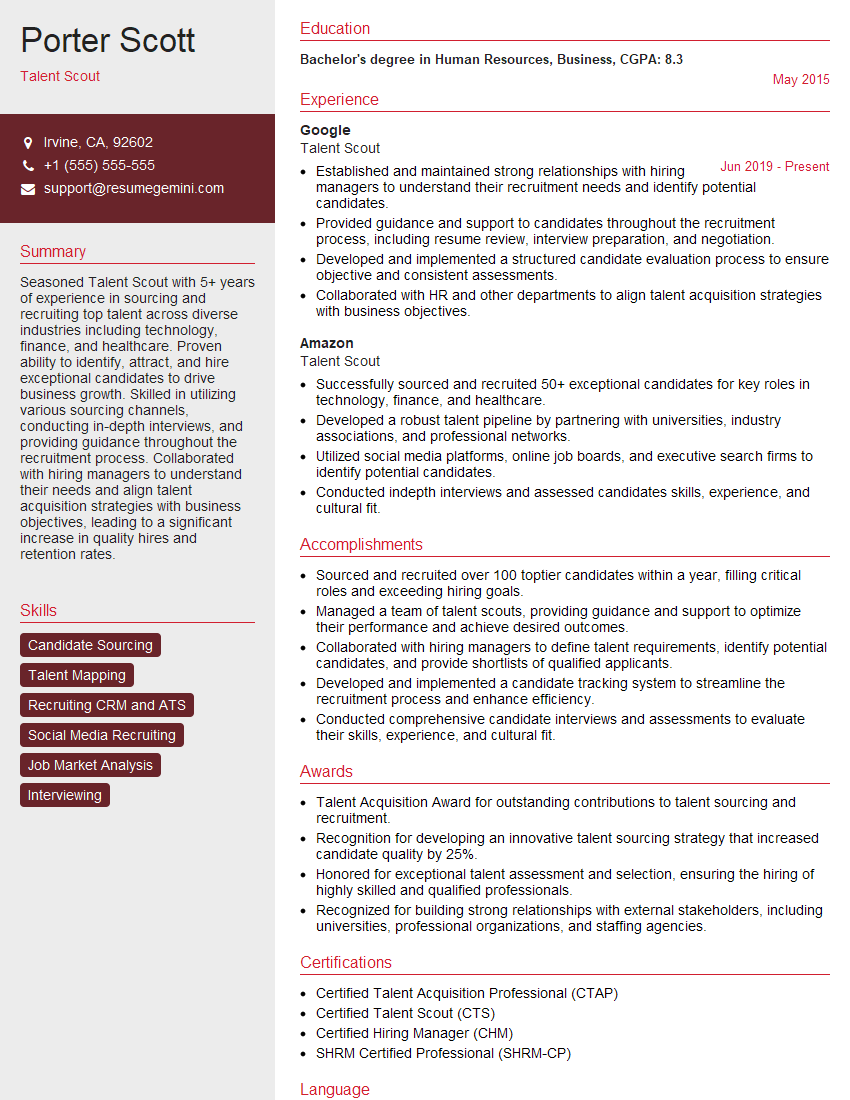
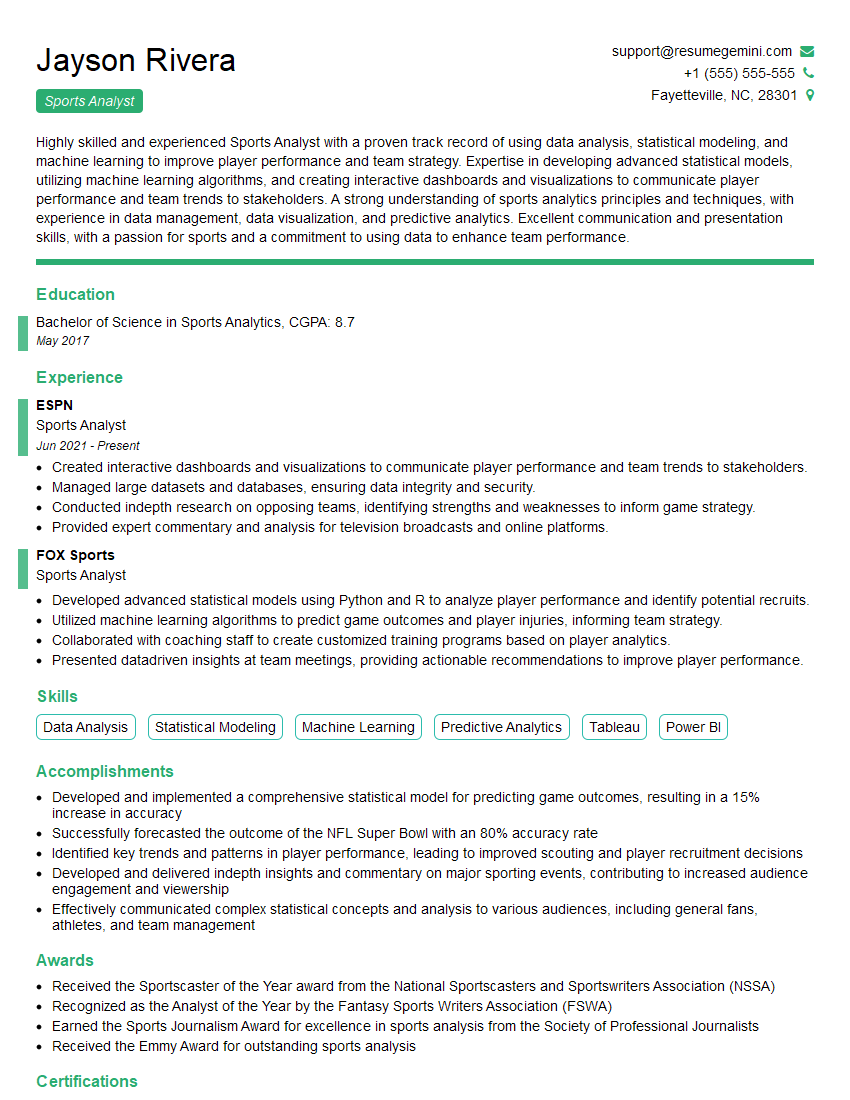
Mastering Player Profiling opens doors to exciting career opportunities in sports analytics, scouting, and talent management. A strong understanding of this field significantly enhances your marketability and competitive edge. To maximize your job prospects, creating an Applicant Tracking System (ATS)-friendly resume is crucial. ResumeGemini is a trusted resource to help you build a professional and impactful resume that highlights your skills and experience effectively. Examples of resumes tailored to Player Profiling are available to guide you. Invest time in crafting a compelling resume—it’s your first impression and a key step in securing your dream role.
Explore more articles
Users Rating of Our Blogs
Share Your Experience
We value your feedback! Please rate our content and share your thoughts (optional).
What Readers Say About Our Blog
Very informative content, great job.
good