Every successful interview starts with knowing what to expect. In this blog, we’ll take you through the top Strategic Planning and Policy Development interview questions, breaking them down with expert tips to help you deliver impactful answers. Step into your next interview fully prepared and ready to succeed.
Questions Asked in Strategic Planning and Policy Development Interview
Q 1. Describe your experience in developing strategic plans.
Developing strategic plans involves a structured process that begins with a deep understanding of the organization’s current state, vision, and goals. This includes analyzing the internal and external environments, identifying key stakeholders, and defining measurable objectives. I’ve been involved in developing numerous strategic plans across diverse sectors, from crafting a five-year growth strategy for a tech startup to designing a long-term sustainability plan for a large non-profit organization. My approach consistently emphasizes collaboration, data-driven insights, and iterative refinement. For instance, in my work with the tech startup, we employed a collaborative workshop model involving various departments, which resulted in a robust plan encompassing marketing, product development, and resource allocation. The plan was then regularly reviewed and adjusted based on performance data and market shifts.
This iterative approach ensured the plan remained relevant and effective. In another project, I helped a non-profit organization streamline its operations and prioritize its programs through a strategic planning process that involved stakeholder interviews, surveys, and a thorough market analysis. The resulting plan has significantly improved the organization’s efficiency and impact.
Q 2. Explain your process for conducting a SWOT analysis.
A SWOT analysis is a crucial tool for evaluating an organization’s position. It’s a structured planning method used to identify Strengths, Weaknesses, Opportunities, and Threats. My process is thorough and collaborative. I begin by facilitating brainstorming sessions with key stakeholders from different departments to ensure a comprehensive perspective. We use techniques like mind-mapping to capture a wide range of ideas.
- Strengths: Internal positive attributes that give a competitive advantage (e.g., strong brand reputation, skilled workforce).
- Weaknesses: Internal negative attributes hindering performance (e.g., outdated technology, inefficient processes).
- Opportunities: External factors that could be exploited for advantage (e.g., emerging markets, new technologies).
- Threats: External factors that could negatively impact the organization (e.g., increased competition, economic downturn).
After identifying these factors, we prioritize them based on their impact and likelihood. This prioritization helps focus efforts on addressing critical issues and capitalizing on significant opportunities. For example, during a SWOT analysis for a retail company, we identified a strong online presence as a strength and growing competition from e-commerce giants as a threat. This informed the strategic decision to invest in improving the omnichannel customer experience.
Q 3. How do you prioritize competing strategic objectives?
Prioritizing competing strategic objectives requires a clear framework and a balanced approach. I typically use a combination of methods, including:
- Prioritization Matrices: These use criteria such as impact, urgency, feasibility, and alignment with the overall vision to rank objectives. A simple example is a 2×2 matrix plotting impact vs. effort, allowing easy visualization of which objectives offer the greatest return for the least investment.
- Weighted Scoring Systems: Assigning weights to different criteria allows for a more nuanced comparison. For instance, if market share is a crucial objective, it receives a higher weight compared to employee satisfaction.
- Resource Allocation: Considering available resources (budget, time, personnel) guides prioritization. Objectives requiring significant resources might be deferred unless they are deemed absolutely critical.
Open communication and collaboration are essential throughout this process to ensure buy-in from stakeholders. For example, I recently led a team through a prioritization exercise for a client’s new product launch. Using a weighted scoring system, we identified three key objectives: market penetration, brand awareness, and customer satisfaction. This allowed us to allocate resources effectively, aligning them with the most impactful strategies.
Q 4. How do you measure the success of a strategic plan?
Measuring the success of a strategic plan requires defining key performance indicators (KPIs) upfront. These KPIs should directly align with the strategic objectives and be measurable, achievable, relevant, and time-bound (SMART).
Examples of KPIs might include:
- Financial KPIs: Revenue growth, profit margins, return on investment.
- Market KPIs: Market share, customer acquisition cost, customer lifetime value.
- Operational KPIs: Efficiency improvements, process cycle time, employee satisfaction.
Regular monitoring and reporting are crucial to track progress and identify areas needing adjustment. I often use dashboards and reporting tools to visualize KPIs and provide timely insights. For instance, in a recent project, we tracked the progress of a marketing campaign using real-time data on website traffic, lead generation, and conversion rates. This allowed us to make data-driven adjustments and optimize the campaign for better results.
Q 5. Describe a time you had to adapt a strategic plan due to unforeseen circumstances.
During a project for a manufacturing company, we developed a strategic plan focused on expanding into a new international market. The plan included detailed market research, supply chain setup, and marketing strategies. However, unforeseen global supply chain disruptions due to a pandemic significantly impacted our initial projections and timelines.
To adapt, we immediately convened a team meeting to assess the situation. We used a scenario planning approach to explore various potential outcomes and developed contingency plans for each. This included negotiating with alternative suppliers, adjusting our marketing messages to address potential customer concerns, and securing additional financing. We also re-prioritized certain objectives, focusing on strengthening our existing market presence until the supply chain issues eased. Although the initial timeline was significantly impacted, our proactive response and adaptation mitigated the overall negative effects and allowed us to eventually achieve our strategic goals.
Q 6. How familiar are you with PESTLE analysis?
I am very familiar with PESTLE analysis. It’s a framework for analyzing macro-environmental factors that can influence an organization’s strategic direction. PESTLE stands for Political, Economic, Social, Technological, Legal, and Environmental factors.
Understanding these factors is critical for anticipating potential opportunities and threats. For example:
- Political: Government regulations, trade policies, political stability.
- Economic: Economic growth, inflation, interest rates, unemployment.
- Social: Cultural trends, demographics, consumer behavior.
- Technological: Technological advancements, automation, digitalization.
- Legal: Laws, regulations, intellectual property rights.
- Environmental: Climate change, sustainability concerns, resource availability.
A thorough PESTLE analysis informs strategic decisions, ensuring that the organization is well-prepared for future challenges and can capitalize on emerging trends. For example, a PESTLE analysis might reveal that increasing environmental regulations necessitate a shift toward sustainable manufacturing practices, which would then become a key component of the organization’s strategic plan.
Q 7. How do you identify and manage risks associated with strategic initiatives?
Identifying and managing risks associated with strategic initiatives is crucial for successful implementation. My approach involves a multi-step process:
- Risk Identification: We brainstorm potential risks across all aspects of the initiative using techniques such as risk registers and checklists. This involves engaging various stakeholders to obtain a holistic view.
- Risk Assessment: We analyze the likelihood and potential impact of each identified risk. This often involves assigning probabilities and severity scores to prioritize risks.
- Risk Response Planning: For each risk, we develop mitigation strategies, including avoidance, reduction, transfer, or acceptance. We establish contingency plans for high-impact, high-likelihood risks.
- Risk Monitoring and Control: Throughout the implementation, we continuously monitor the identified risks and adapt our response plans as needed. We utilize regular progress reports and risk reviews to stay informed and make necessary adjustments.
For instance, in a recent project involving a major system upgrade, we identified risks related to data loss, project delays, and user resistance. We developed mitigation strategies, including data backups, phased implementation, and comprehensive user training. Regular progress monitoring ensured early detection and resolution of emerging issues, preventing escalation and minimizing project impact.
Q 8. Explain your understanding of Porter’s Five Forces.
Porter’s Five Forces is a framework for analyzing the competitive intensity and attractiveness of an industry. It helps businesses understand the forces that shape profitability and make strategic decisions. These five forces are:
- Threat of New Entrants: How easy is it for new competitors to enter the market? High barriers to entry (e.g., high capital investment, strong brand loyalty) reduce this threat.
- Bargaining Power of Suppliers: How much power do suppliers have to raise prices or reduce quality? If there are few suppliers or switching costs are high, supplier power is strong.
- Bargaining Power of Buyers: How much power do customers have to negotiate lower prices or demand better quality? If there are many buyers with similar needs or low switching costs, buyer power is high.
- Threat of Substitute Products or Services: How easily can customers switch to alternative products or services? The presence of close substitutes reduces industry attractiveness.
- Rivalry Among Existing Competitors: How intense is the competition among existing firms? High rivalry, often driven by many competitors, slow growth, and low switching costs, leads to price wars and reduced profitability.
Example: Consider the airline industry. The threat of new entrants is relatively low due to high capital costs. However, the bargaining power of buyers is high due to many options and price comparison websites. The threat of substitutes is also high, with options like trains or cars for shorter distances. Analyzing these forces helps airlines understand their competitive landscape and make strategic choices about pricing, routes, and services.
Q 9. How do you ensure alignment between strategic plans and operational activities?
Aligning strategic plans with operational activities requires a clear, cascaded approach. The strategic plan should be broken down into actionable steps and objectives that are communicated and understood at all levels of the organization. This involves:
- Setting Key Performance Indicators (KPIs): Translating strategic goals into measurable KPIs ensures everyone is working towards the same targets. For example, if the strategic goal is to improve customer satisfaction, a KPI could be the average customer satisfaction score.
- Resource Allocation: Ensuring adequate resources (budget, personnel, technology) are allocated to support operational activities aligned with strategic objectives. This may involve prioritizing projects and reallocating resources based on their contribution to strategic goals.
- Regular Monitoring and Review: Tracking progress against KPIs and reviewing performance regularly provides opportunities for adjustments and course correction. This could involve monthly progress reports, quarterly reviews, and annual strategic planning sessions.
- Feedback Loops: Establishing mechanisms for feedback from operational teams to ensure the strategic plan remains relevant and adaptable to changing circumstances. This may involve regular communication channels, surveys, and performance reviews.
- Effective Communication: Communicating the strategic plan and its connection to day-to-day operations in a clear, concise, and engaging manner. This helps employees understand how their work contributes to the overall organizational goals.
Example: A company with a strategic goal of expanding into a new market might set KPIs related to market research, product development for that market, sales targets, and market share. Operational teams would then work towards achieving those specific KPIs, contributing to the overall strategic objective.
Q 10. How do you effectively communicate strategic plans to stakeholders?
Effective communication of strategic plans involves tailoring the message to different stakeholders and using various communication channels. It’s crucial to ensure transparency and inclusivity.
- Identify Key Stakeholders: Begin by identifying all relevant stakeholders, including employees, investors, customers, partners, and the community.
- Tailor the Message: Frame the strategic plan differently for each stakeholder group. For employees, focus on their roles and responsibilities. For investors, highlight financial implications and returns.
- Choose Appropriate Channels: Utilize various channels such as town hall meetings, emails, intranet postings, presentations, videos, and reports to reach a broader audience and enhance comprehension.
- Use Clear and Concise Language: Avoid jargon and technical terms that may not be understood by all stakeholders. Use visuals like charts and graphs to simplify complex information.
- Seek Feedback and Engage in Dialogue: Create opportunities for stakeholders to ask questions, provide feedback, and engage in discussions. This ensures a two-way communication flow and builds buy-in.
- Regular Updates: Provide regular updates on progress and any changes to the strategic plan to maintain transparency and keep stakeholders informed.
Example: A company launching a new product might use a press release for media, a dedicated website for customers, internal memos for employees, and presentations for investors to communicate the launch strategy effectively.
Q 11. Describe your experience in developing policy recommendations.
In my experience, developing policy recommendations involves a rigorous process that combines research, analysis, and stakeholder engagement. It begins with clearly defining the problem or opportunity, then conducting thorough research to understand the context, exploring potential solutions, and evaluating their feasibility and impact. I’ve worked on policies related to [mention specific area, e.g., environmental sustainability, employee wellness, or diversity and inclusion].
My approach involves:
- Problem Definition: Clearly articulating the problem and its scope, including the context and underlying causes.
- Research and Analysis: Conducting thorough research, including analyzing data, reviewing existing literature, and consulting with experts.
- Option Generation: Brainstorming and evaluating a range of potential policy options, considering their potential benefits, costs, and unintended consequences.
- Stakeholder Engagement: Consulting with relevant stakeholders to gather feedback, identify concerns, and build consensus.
- Impact Assessment: Conducting an impact assessment to evaluate the potential effects of each policy option on different stakeholder groups.
- Recommendation Development: Formulating clear, concise, and well-supported policy recommendations, including justifications and implementation plans.
For example, in developing a policy on employee wellness, I conducted surveys, reviewed best practices, and consulted with HR professionals and employees before formulating recommendations on programs, resources, and initiatives.
Q 12. How do you analyze the impact of policies on different stakeholders?
Analyzing the impact of policies on different stakeholders requires a systematic approach that considers both intended and unintended consequences. This involves:
- Identifying Stakeholders: Clearly identifying all stakeholders who might be affected by the policy, directly or indirectly.
- Impact Assessment Framework: Using a structured framework to analyze the potential impacts, including economic, social, and environmental considerations.
- Quantitative and Qualitative Data: Gathering both quantitative (e.g., statistical data) and qualitative (e.g., interviews, focus groups) data to get a comprehensive understanding of the impacts.
- Scenario Planning: Developing different scenarios to anticipate potential outcomes under various conditions.
- Stakeholder Consultation: Engaging with stakeholders to understand their perspectives and concerns.
- Equity and Fairness: Assessing the fairness and equity of the policy’s impact on different groups, addressing potential disparities.
Example: When analyzing the impact of a new environmental regulation on businesses, I would consider its effects on different business sizes, industries, and regions. I would also consider the potential impact on jobs, competitiveness, and innovation.
Q 13. How do you identify and address potential policy conflicts?
Identifying and addressing potential policy conflicts requires careful analysis and a proactive approach. Conflicts can arise when different policies have conflicting goals or when a policy has unintended consequences that negatively affect other areas.
My approach involves:
- Policy Mapping: Creating a map of existing policies to identify potential overlaps, contradictions, or conflicts.
- Stakeholder Analysis: Identifying stakeholders affected by the policies and their interests.
- Conflict Assessment: Analyzing the nature and severity of the conflict, including the potential impacts.
- Negotiation and Mediation: Facilitating discussions and negotiations between conflicting parties to find mutually acceptable solutions.
- Policy Revision: Revising policies to resolve conflicts or mitigate unintended consequences.
- Prioritization: Establishing priorities when conflicts cannot be completely resolved, balancing the goals of different policies.
Example: A conflict might arise between a policy promoting economic growth and a policy protecting the environment. Addressing this might involve finding ways to promote sustainable economic growth that minimizes environmental impact, possibly through incentives or regulations.
Q 14. Explain your experience in the policy implementation process.
Policy implementation is a crucial stage that requires careful planning, resource allocation, and monitoring. My experience includes [mention specific examples, e.g., overseeing the rollout of a new environmental program, leading a team in implementing a new employee training initiative]. Successful implementation requires:
- Clear Objectives and Goals: Setting clear, measurable, achievable, relevant, and time-bound (SMART) objectives for the implementation process.
- Resource Mobilization: Securing the necessary resources, including funding, personnel, and technology.
- Implementation Plan: Developing a detailed implementation plan with timelines, responsibilities, and milestones.
- Communication and Engagement: Maintaining effective communication with stakeholders throughout the implementation process.
- Monitoring and Evaluation: Regularly monitoring progress and evaluating the effectiveness of the implementation strategy.
- Adaptive Management: Adapting the implementation strategy based on feedback and monitoring results.
Example: When implementing a new environmental program, I would develop a detailed plan outlining the different phases, assigning responsibilities to team members, setting clear milestones, and establishing a monitoring system to track progress and identify challenges.
Q 15. How do you evaluate the effectiveness of implemented policies?
Evaluating the effectiveness of implemented policies is a crucial aspect of strategic planning. It’s not simply about measuring whether a policy was enacted, but whether it achieved its intended goals and produced the desired outcomes. This involves a multi-faceted approach encompassing various methods.
- Performance Measurement: Establishing clear, measurable indicators (KPIs) before policy implementation is vital. For example, if a policy aims to reduce unemployment, KPIs might include the unemployment rate, number of jobs created, and participation rate. Regular monitoring of these KPIs against pre-set targets allows for objective assessment.
- Impact Assessment: This goes beyond simple measurement and delves into the broader consequences – both intended and unintended – of the policy. Qualitative data, such as stakeholder interviews and case studies, can provide valuable insights alongside quantitative data. For instance, a policy aiming to improve air quality might also impact local businesses, requiring a comprehensive assessment of its economic effects.
- Comparative Analysis: Comparing outcomes with similar policies in other jurisdictions or with a control group (if applicable) provides valuable context and helps determine whether the achieved results are truly attributable to the policy. For example, comparing the success rate of a crime reduction policy in one city to a similar city without the policy provides critical comparative data.
- Feedback Mechanisms: Regular feedback loops through surveys, focus groups, and stakeholder consultations provide valuable insights into policy effectiveness from the perspectives of those directly affected. This allows for adaptive management, where policies are adjusted based on real-world feedback.
By using a combination of these methods, a comprehensive understanding of policy effectiveness can be obtained, leading to more informed future policy decisions.
Career Expert Tips:
- Ace those interviews! Prepare effectively by reviewing the Top 50 Most Common Interview Questions on ResumeGemini.
- Navigate your job search with confidence! Explore a wide range of Career Tips on ResumeGemini. Learn about common challenges and recommendations to overcome them.
- Craft the perfect resume! Master the Art of Resume Writing with ResumeGemini’s guide. Showcase your unique qualifications and achievements effectively.
- Don’t miss out on holiday savings! Build your dream resume with ResumeGemini’s ATS optimized templates.
Q 16. Describe a time you had to influence stakeholders to adopt a new policy.
In my previous role, I spearheaded the implementation of a new sustainability policy for our company. Initial resistance from certain departments – particularly production – was significant. They felt the new regulations would increase costs and hinder productivity. To address this, I implemented a multi-pronged strategy:
- Data-Driven Argument: I presented data demonstrating the long-term cost savings associated with sustainable practices (e.g., reduced energy consumption, waste reduction). I presented this information in easily digestible charts and graphs.
- Stakeholder Engagement: I organized workshops and meetings involving all stakeholders. This provided a platform for open dialogue, addressing concerns and misconceptions. I actively listened to their concerns and worked collaboratively to find solutions.
- Pilot Program: We implemented a pilot program in one department, demonstrating the feasibility and benefits of the new policy. The successful results from the pilot program helped alleviate concerns and showcased the policy’s effectiveness in a real-world setting.
- Incentives and Support: I secured additional funding to support the transition to sustainable practices, offering incentives for departments to adopt the new policy and providing training to employees.
This combined approach effectively addressed stakeholders’ concerns, building consensus and leading to successful adoption of the new policy.
Q 17. How do you stay abreast of changes in relevant regulations and legislation?
Staying current with relevant regulations and legislation is an ongoing process requiring a proactive and multi-faceted approach.
- Subscription Services: I subscribe to relevant legal and regulatory databases and newsletters that provide updates on changes in legislation and case law.
- Professional Networks: I actively participate in professional organizations and attend conferences and seminars, providing opportunities to network with peers and experts, learn about emerging trends, and discuss policy developments.
- Government Websites: I regularly monitor the websites of relevant government agencies and departments for updates on new regulations, guidance documents, and announcements.
- Legal Counsel: Consulting with legal experts provides assurance that our policies are compliant with all relevant laws and regulations. This is particularly important when dealing with complex or rapidly changing legal landscapes.
This multi-layered approach ensures that I remain well-informed about changes that could impact policy development and implementation.
Q 18. How do you use data to inform strategic planning and policy development?
Data is the cornerstone of effective strategic planning and policy development. It provides objective insights, allowing for evidence-based decision-making. I utilize data in several ways:
- Needs Assessment: Data helps identify the problems and challenges the policy aims to address. For example, crime statistics inform crime prevention policies, while health data helps shape public health initiatives.
- Target Setting: Data informs the setting of realistic and measurable targets. For example, understanding historical trends in energy consumption helps set achievable goals for energy efficiency policies.
- Policy Design: Data informs the design of the policy itself. Understanding the characteristics of the population affected by a policy helps tailor interventions to be effective and equitable.
- Impact Evaluation: As discussed previously, data is crucial in measuring the effectiveness of a policy once implemented. This feedback loop is vital for iterative improvements.
I employ various data analysis techniques, including statistical modeling and visualization, to ensure data is effectively communicated and used in decision-making processes.
Q 19. Describe your experience in using forecasting models.
I have extensive experience using forecasting models, primarily time series analysis and econometric modeling, to predict future trends and inform strategic planning. For example, I’ve used ARIMA models to forecast demand for healthcare services, helping a hospital system plan for resource allocation and staffing. These models are useful, but understanding their limitations is crucial.
The process generally involves:
- Data Collection: Gathering relevant historical data, ensuring its accuracy and completeness.
- Model Selection: Choosing the appropriate forecasting model based on the nature of the data and the forecasting horizon. Different models are suited to different types of data and time horizons.
- Model Calibration: Adjusting the model parameters to optimize its accuracy and fit to the historical data.
- Model Validation: Testing the model’s accuracy using techniques like backtesting, ensuring the model’s predictions are reliable.
- Scenario Planning: Developing different scenarios based on various assumptions about future conditions, testing the robustness of the model’s predictions.
It’s important to acknowledge that forecasting models are not perfect and should be used in conjunction with qualitative insights and expert judgment. The results are probabilities, not certainties, and should be interpreted cautiously.
Q 20. How do you handle conflicting priorities in strategic planning?
Conflicting priorities in strategic planning are inevitable. A structured approach is necessary to navigate these challenges:
- Prioritization Framework: Employing a prioritization framework, such as a weighted scoring system or decision matrix, helps objectively assess the relative importance of different priorities. This involves assigning weights to various criteria (e.g., impact, feasibility, urgency).
- Resource Allocation: Once priorities are established, resources (financial, human, and time) must be allocated accordingly. This often involves making difficult trade-offs.
- Trade-off Analysis: Clearly identifying the trade-offs associated with prioritizing one initiative over another is essential for transparency and accountability. Documenting these trade-offs ensures that decisions are well-informed and defensible.
- Adaptive Planning: Recognize that priorities may shift over time due to changing circumstances. Building flexibility into the strategic plan allows for adjustments as needed. Regular review and monitoring of progress are critical to adapting to new circumstances.
Open communication and collaboration among stakeholders are critical during this process to ensure buy-in and effective implementation of decisions.
Q 21. How do you build consensus among diverse stakeholders in policy development?
Building consensus among diverse stakeholders requires a facilitative approach centered on communication, collaboration, and compromise:
- Stakeholder Analysis: Identifying and understanding the interests, perspectives, and potential influence of different stakeholders is the first step. This involves mapping out stakeholders and their relationships.
- Collaborative Platforms: Establishing platforms for open dialogue and participation, such as workshops, roundtables, or online forums, encourages collaboration and mutual understanding.
- Active Listening and Empathy: Actively listening to stakeholders’ concerns and demonstrating empathy helps build trust and rapport. This involves actively seeking to understand their viewpoints, even if they differ from your own.
- Negotiation and Compromise: Negotiation is inevitable when dealing with diverse stakeholders. Finding mutually acceptable solutions requires compromise and a willingness to adapt positions.
- Transparency and Accountability: Maintaining transparency throughout the process and being accountable for decisions made fosters trust and ensures that stakeholders feel heard and valued.
Ultimately, building consensus is a process of building relationships and finding common ground. It requires patience, persistence, and a commitment to inclusivity.
Q 22. What is your approach to stakeholder engagement?
My approach to stakeholder engagement is multifaceted and prioritizes building trust and fostering collaborative relationships. I believe effective engagement isn’t just about informing stakeholders, but actively involving them in the planning process. This involves several key steps:
- Identifying Key Stakeholders: I begin by meticulously identifying all individuals and groups who will be impacted by or have influence over the strategic plan. This includes internal stakeholders like employees, managers, and departments, as well as external stakeholders such as customers, suppliers, community groups, and government agencies.
- Tailored Communication: I understand that different stakeholders have varying levels of interest and understanding. My communication strategy is therefore tailored to each group, using appropriate language and channels. This might include presentations, workshops, surveys, focus groups, or one-on-one meetings.
- Active Listening and Feedback Incorporation: I prioritize active listening to understand stakeholders’ concerns, perspectives, and ideas. This feedback is crucial in shaping the strategic plan, ensuring it is realistic, relevant, and supported. I actively incorporate their input into the plan and clearly communicate how their feedback has been considered.
- Transparency and Accountability: Maintaining transparency throughout the process is vital. Stakeholders need to understand the rationale behind decisions and the progress being made. Regular updates and clear communication channels are crucial in building and maintaining trust.
- Ongoing Engagement: Stakeholder engagement is not a one-time event but an ongoing process. I establish mechanisms for continuous feedback and communication, ensuring the plan remains relevant and responsive to changes in the environment.
For example, during a recent project for a city council, I conducted a series of public forums, online surveys, and individual meetings with community leaders to understand their priorities for urban development. This participatory approach resulted in a strategic plan that was widely accepted and supported, leading to its successful implementation.
Q 23. How do you ensure the sustainability of strategic plans?
Ensuring the sustainability of strategic plans requires a proactive and adaptive approach. It’s not enough to create a document; the plan needs to be ‘living’ and responsive to change. Here’s how I approach this:
- Flexibility and Adaptability: The plan must be designed to accommodate unforeseen circumstances. This involves incorporating contingency plans and mechanisms for regular review and revision. Regular monitoring of the external environment (e.g., market trends, competitor actions, regulatory changes) is essential.
- Clear Ownership and Accountability: Specific individuals or teams need clear responsibility for implementing the plan. Regular progress reports and accountability mechanisms keep everyone focused and on track.
- Resource Allocation: Sustainable plans require the allocation of sufficient resources – financial, human, and technological – throughout their lifespan. This often involves securing ongoing funding or demonstrating the plan’s ongoing value proposition.
- Performance Measurement and Evaluation: Regular monitoring and evaluation of progress towards goals are essential. This allows for early identification of issues and adjustments to the plan as needed. A system for measuring key performance indicators (KPIs) is fundamental to this process.
- Communication and Training: The plan’s goals and objectives need to be clearly communicated to all stakeholders. Training and development programs may be necessary to equip individuals with the skills and knowledge needed to execute the plan effectively.
- Integration with Organizational Culture: A successful strategic plan needs to be integrated into the organization’s culture and values. This involves aligning the plan with organizational goals and encouraging employees to actively participate in its implementation.
In a previous role, we ensured the sustainability of our marketing strategy by building in a flexible budget, a quarterly review process, and a system for A/B testing our campaigns, allowing us to adapt to changing market conditions and maximize our return on investment.
Q 24. What metrics do you use to track progress towards strategic goals?
The metrics used to track progress toward strategic goals should be SMART: Specific, Measurable, Achievable, Relevant, and Time-bound. The choice of metrics depends heavily on the specific strategic goals. However, some common examples include:
- Financial Metrics: Revenue growth, profit margins, return on investment (ROI), cost reduction.
- Market Share Metrics: Market penetration, customer acquisition cost, customer churn rate.
- Operational Metrics: Efficiency improvements, process cycle times, defect rates.
- Customer Satisfaction Metrics: Customer satisfaction scores (CSAT), Net Promoter Score (NPS), customer retention rate.
- Employee Engagement Metrics: Employee satisfaction, employee turnover rate, productivity.
These metrics should be linked directly to the strategic goals, providing a clear indication of progress. Regular reporting and analysis of these metrics are vital to identifying any areas needing corrective action. A dashboard visualizing key performance indicators (KPIs) is a very useful tool in this regard. For instance, a dashboard showing our progress toward revenue targets, market share growth, and customer satisfaction will quickly provide a holistic view of our strategic progress.
Q 25. Describe your experience working within a political environment (if applicable).
In my previous role advising a state government agency, I gained significant experience navigating the complexities of the political environment. This involved:
- Understanding Political Dynamics: I learned to appreciate the various interests and perspectives within the government and the influence of political pressures on policy decisions. Building relationships with key political figures and understanding their priorities was crucial.
- Building Consensus: The success of any policy initiative often hinges on the ability to build consensus among diverse stakeholders. This requires negotiation, compromise, and the art of persuasion.
- Strategic Communication: Effective communication is essential to gain support for policy proposals. This involves tailoring messages to different audiences and anticipating potential objections.
- Managing Expectations: It’s important to manage expectations realistically, acknowledging the constraints and limitations inherent in the political process. This involves clearly communicating the potential risks and benefits associated with a particular policy.
- Adaptability and Flexibility: The political landscape is dynamic and constantly evolving. The ability to adapt and respond to changing circumstances is crucial for success.
For example, in advocating for a new environmental protection policy, I worked closely with key legislators to refine the proposal, addressing their concerns and securing their support. This involved a series of meetings, presentations, and negotiations that ultimately led to the successful passage of the legislation.
Q 26. How do you manage competing demands on resources in strategic planning?
Managing competing demands on resources in strategic planning is a common challenge. My approach involves a structured and prioritized process:
- Prioritization Based on Strategic Alignment: Resources should be allocated to initiatives that directly support the achievement of the organization’s strategic goals. This requires a clear understanding of the strategic priorities and a robust evaluation of each initiative’s potential impact.
- Resource Allocation Matrix: Creating a matrix that maps initiatives against available resources (financial, human, technological) is incredibly helpful. This allows for a visual assessment of potential resource conflicts and facilitates informed decisions.
- Trade-off Analysis: Difficult choices are often inevitable. A clear trade-off analysis, weighing the benefits and costs of each initiative, helps in making informed decisions about which initiatives to prioritize and which to defer or eliminate.
- Scenario Planning: Exploring different scenarios helps anticipate potential resource constraints and develop contingency plans. This proactive approach ensures flexibility and allows for adjustments as needed.
- Continuous Monitoring and Adjustment: Regularly monitoring resource utilization and adjusting allocation as needed is essential. This iterative approach ensures resources are used effectively and efficiently.
For example, during a period of budget constraints, we used a resource allocation matrix to prioritize initiatives that would deliver the greatest return on investment, aligning with our strategic goals of revenue growth and market share expansion.
Q 27. How do you deal with ambiguity and uncertainty in strategic planning?
Ambiguity and uncertainty are inherent in strategic planning. My approach involves:
- Scenario Planning: Developing multiple scenarios based on different assumptions about the future allows for a more robust and flexible plan. This helps anticipate potential challenges and opportunities.
- Sensitivity Analysis: Analyzing how changes in key variables (e.g., market demand, competitor actions, regulatory changes) would impact the plan helps identify vulnerabilities and potential risks.
- Adaptive Management: Building flexibility and adaptability into the plan is essential. Regular monitoring of the environment and adjustments to the plan as needed are crucial for success.
- Agile Methodology: Adopting an agile approach allows for iterative planning and adaptation. Regular feedback loops and shorter planning cycles help to adjust the plan in response to changing conditions.
- Data-Driven Decision Making: Reliance on data and evidence-based insights helps minimize uncertainty and inform decision-making. This includes collecting relevant data, conducting market research, and using analytical tools to gain a clearer understanding of the situation.
For instance, when faced with uncertainty about future regulatory changes, we developed multiple scenarios, each assuming different regulatory outcomes. This enabled us to identify potential risks and develop contingency plans for each scenario, ensuring that our strategy would remain viable regardless of the actual regulatory outcome.
Q 28. Describe your experience using scenario planning.
Scenario planning is a crucial tool in my strategic planning toolkit. It’s a process of developing multiple plausible futures to help organizations prepare for uncertainty and make better decisions. My experience with scenario planning includes:
- Identifying Key Drivers of Change: This involves identifying the key factors (e.g., technological advancements, economic conditions, political events) that are likely to shape the future. We brainstorm and research these factors to understand their potential impact.
- Developing Plausible Scenarios: Based on the key drivers, we develop several distinct scenarios, each representing a plausible future. These scenarios are not predictions, but rather possible outcomes. We might develop optimistic, pessimistic, and most likely scenarios.
- Analyzing Implications for the Organization: Each scenario is then analyzed to assess its potential impact on the organization. This involves evaluating the opportunities and threats each scenario presents and how they might affect the organization’s strategic goals.
- Developing Strategic Options: Based on the scenario analysis, we develop strategic options that are robust across different scenarios. This involves developing strategies that can be adapted to different future outcomes.
- Monitoring and Adaptation: Scenario planning is not a one-time exercise. Regular monitoring of the environment is necessary to assess the likelihood of each scenario and adapt the strategy as needed.
For example, in a previous project for a technology company, we developed four scenarios based on different levels of technological disruption and market competition. This allowed us to develop a strategy that was adaptable to a range of potential future outcomes, ensuring the company’s long-term success regardless of the actual path the market took.
Key Topics to Learn for Strategic Planning and Policy Development Interview
- Strategic Foresight & Environmental Scanning: Understanding PESTLE analysis, scenario planning, and identifying emerging trends to inform strategic direction. Practical application: Analyzing market trends to anticipate future challenges and opportunities for a specific organization.
- Strategic Goal Setting & Prioritization: Defining SMART goals, aligning organizational objectives, and resource allocation. Practical application: Developing a feasible implementation plan with clear milestones and metrics for a complex policy initiative.
- Policy Analysis & Formulation: Understanding policy frameworks, cost-benefit analysis, stakeholder engagement, and effective policy communication. Practical application: Evaluating the impact of a proposed policy change on different stakeholder groups and developing mitigation strategies.
- Implementation & Monitoring: Developing implementation plans, monitoring progress, evaluating outcomes, and adapting strategies based on feedback. Practical application: Designing a robust monitoring and evaluation framework to assess the effectiveness of a policy intervention.
- Risk Management & Contingency Planning: Identifying potential risks and developing mitigation strategies for unforeseen circumstances. Practical application: Developing a risk register and contingency plans for a large-scale strategic project.
- Data Analysis & Decision-Making: Utilizing data to inform strategic decisions, interpreting quantitative and qualitative data, and presenting findings effectively. Practical application: Using data to justify policy recommendations and support resource allocation decisions.
- Communication & Collaboration: Effectively communicating strategic plans and policy recommendations to diverse stakeholders, fostering collaboration and building consensus. Practical application: Presenting complex policy proposals to senior management and securing buy-in for implementation.
Next Steps
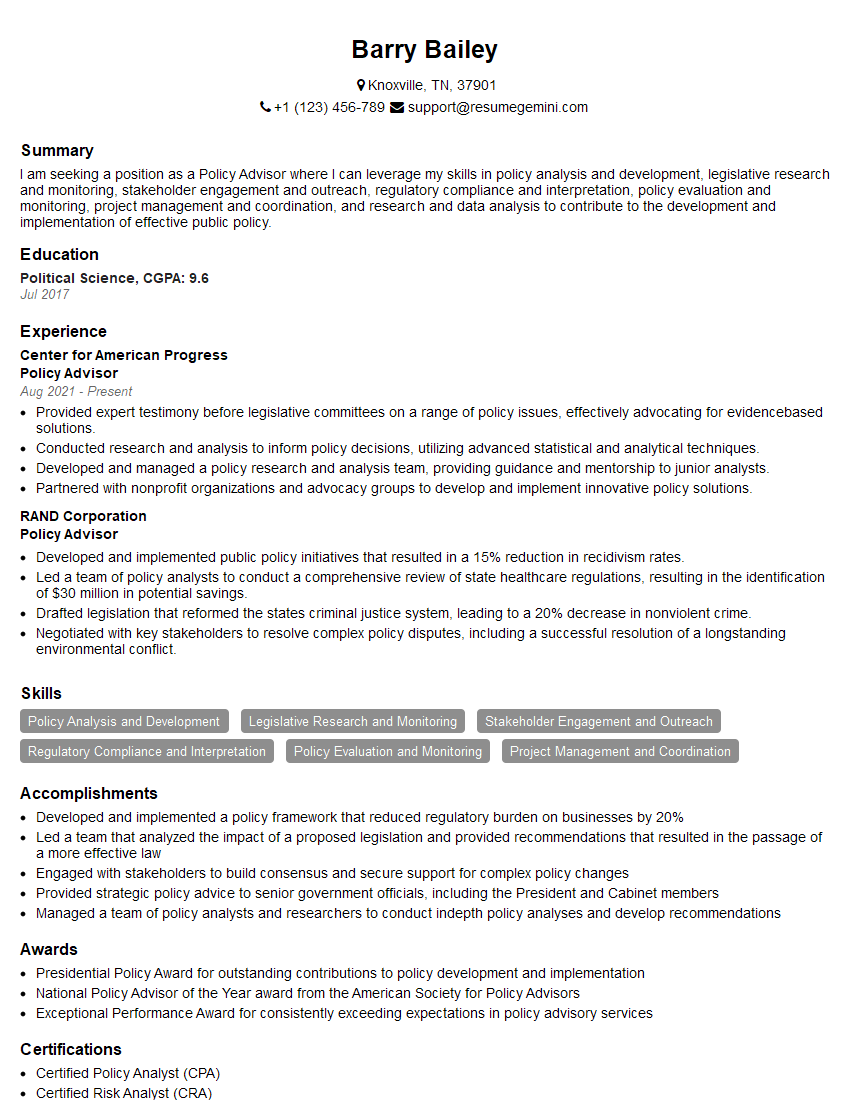
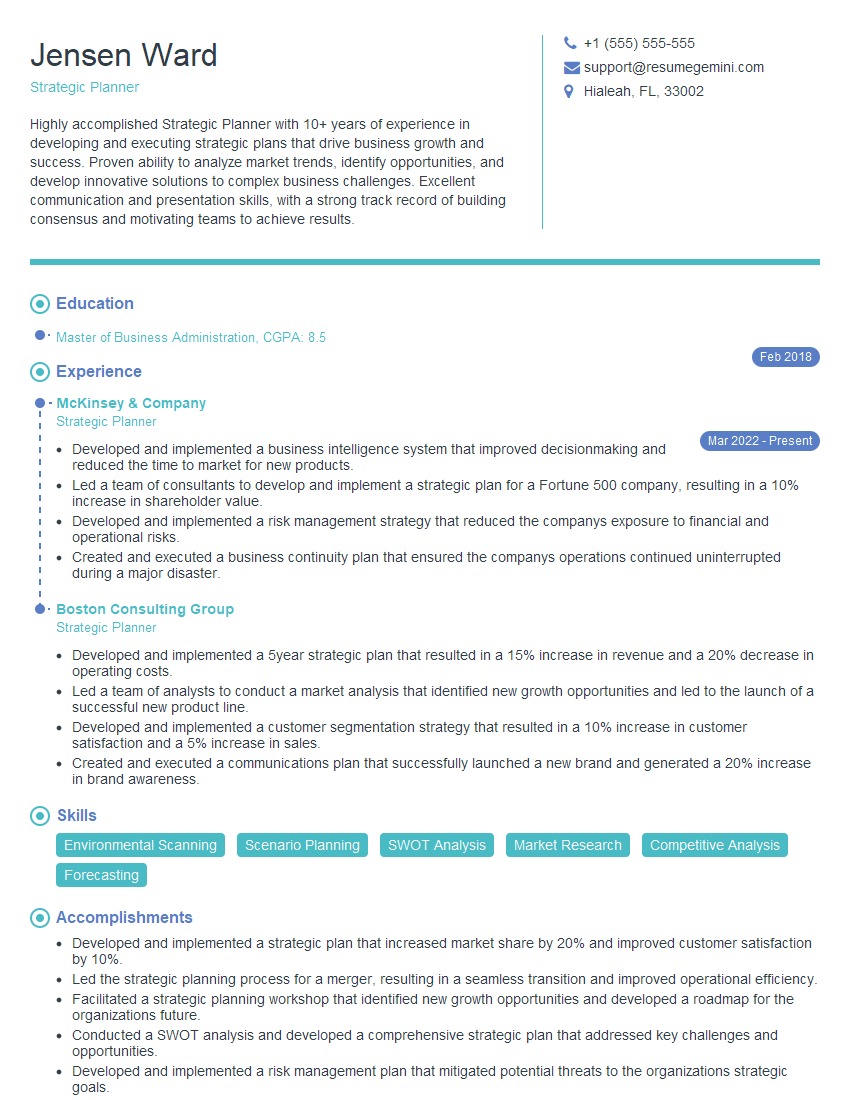
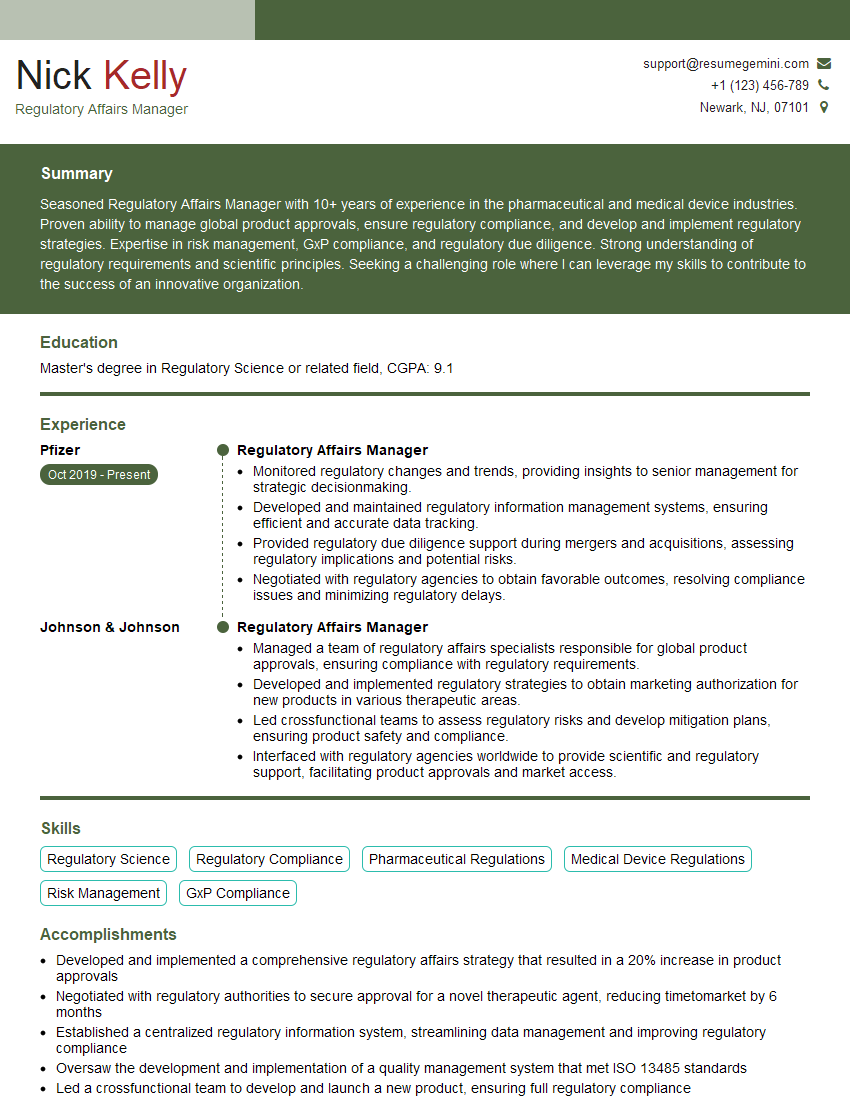
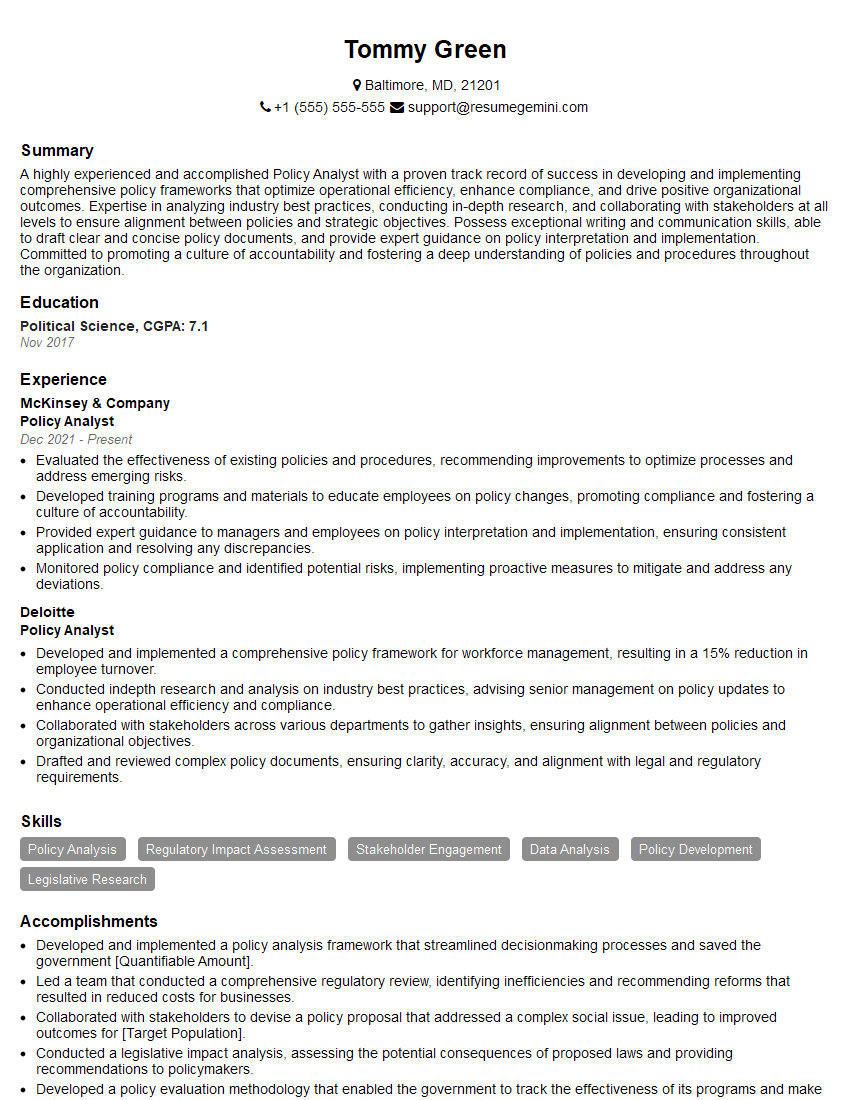
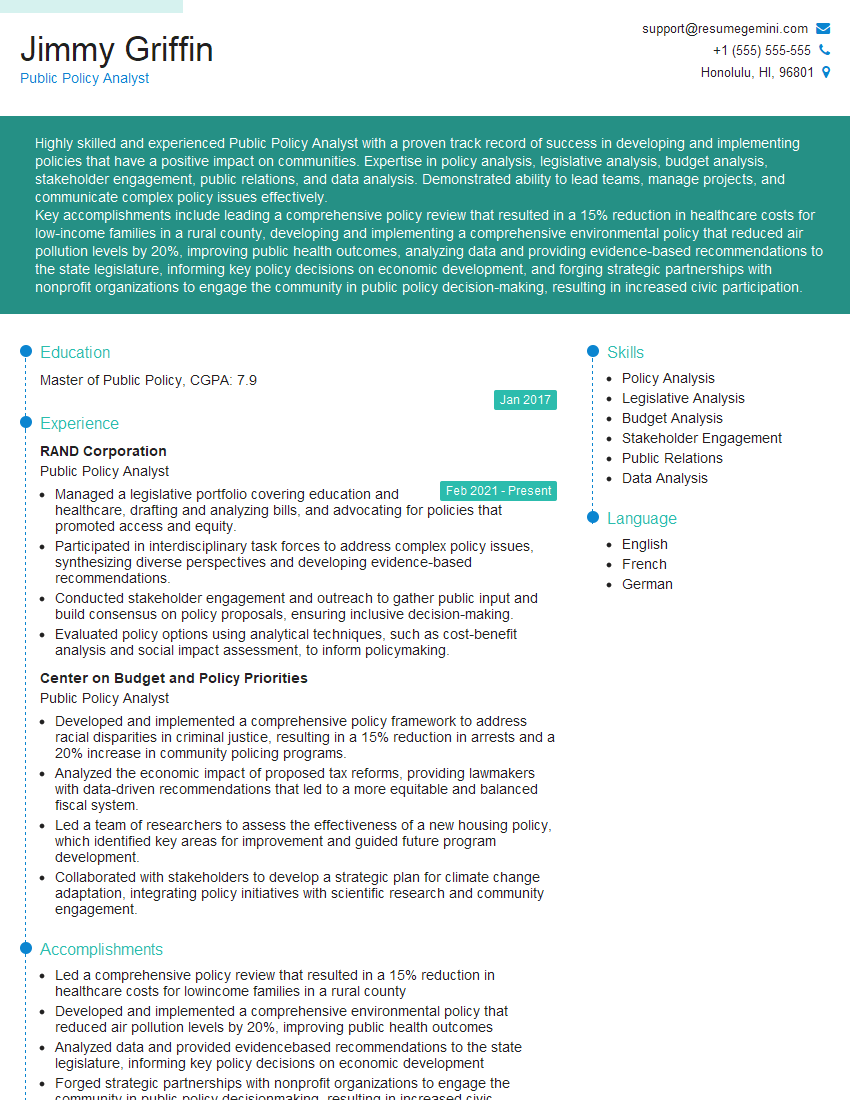
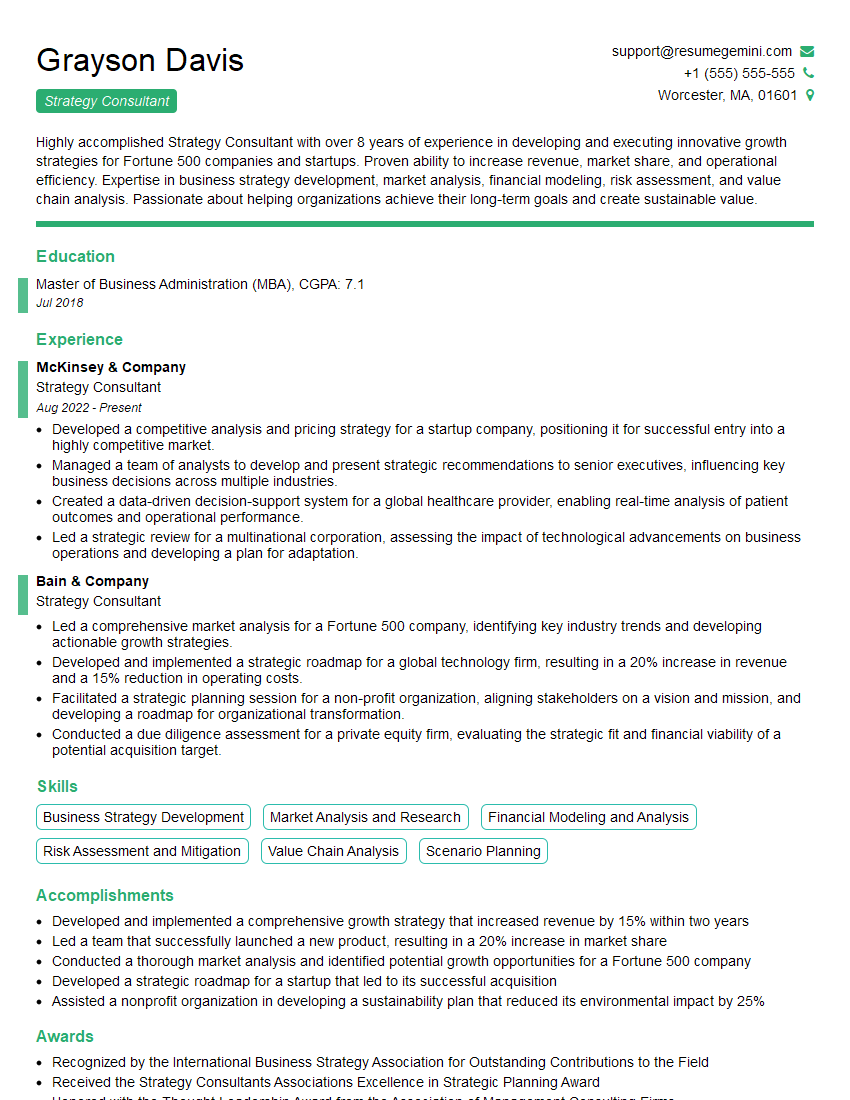
Mastering Strategic Planning and Policy Development is crucial for career advancement in today’s dynamic environment. Proficiency in these areas demonstrates valuable skills highly sought after by organizations across various sectors. To significantly boost your job prospects, creating a compelling and ATS-friendly resume is paramount. ResumeGemini offers a trusted and efficient platform to build a professional resume that highlights your unique skills and experiences. We provide examples of resumes tailored to Strategic Planning and Policy Development to guide you in crafting a winning application. Invest in your future – build a strong resume with ResumeGemini today.

Explore more articles
Users Rating of Our Blogs
Share Your Experience
We value your feedback! Please rate our content and share your thoughts (optional).
What Readers Say About Our Blog
Very informative content, great job.
good