Are you ready to stand out in your next interview? Understanding and preparing for Pocket Management interview questions is a game-changer. In this blog, we’ve compiled key questions and expert advice to help you showcase your skills with confidence and precision. Let’s get started on your journey to acing the interview.
Questions Asked in Pocket Management Interview
Q 1. Explain your understanding of pocket management principles.
Pocket management, at its core, is about effectively controlling and utilizing your personal or business finances. It’s not just about saving money; it’s about strategically allocating resources to meet short-term and long-term financial goals. Key principles include:
- Goal Setting: Defining clear, measurable, achievable, relevant, and time-bound (SMART) financial goals. For example, saving for a down payment on a house or paying off debt within a specific timeframe.
- Budgeting: Creating a detailed plan for how you’ll spend your money each month, ensuring expenses stay within your income limits. This involves categorizing income and expenses (housing, food, transportation, entertainment, etc.).
- Tracking & Monitoring: Regularly reviewing your spending habits to identify areas where you can save or adjust your budget. This can involve using budgeting apps, spreadsheets, or even a simple notebook.
- Financial Planning: Considering your future financial needs, such as retirement or education, and planning accordingly. This might involve investing, contributing to retirement accounts, or setting up a college savings plan.
- Risk Management: Identifying and mitigating potential financial risks, such as unexpected job loss or medical emergencies. This often involves building an emergency fund and carrying appropriate insurance.
Successful pocket management requires discipline, consistency, and a proactive approach to financial planning.
Q 2. Describe your experience with budget creation and management.
My experience with budget creation and management spans several years and diverse contexts. I’ve created and managed budgets for both personal finances and small business ventures. For personal budgets, I utilize the 50/30/20 rule as a starting point: 50% of income goes to needs (housing, food, utilities), 30% to wants (entertainment, dining out), and 20% to savings and debt repayment. For businesses, I’ve used more sophisticated methods, involving forecasting revenue based on historical data and market trends, detailed expense categorization, and regular performance reviews against the budget.
For example, I once helped a small bakery create a budget that projected monthly sales, considered seasonal variations, and accounted for fluctuations in ingredient costs. This budget included detailed line items for rent, utilities, salaries, marketing, and ingredient purchases, allowing them to monitor their profitability and make data-driven decisions.
Q 3. How do you track and monitor expenses effectively?
Effective expense tracking involves a combination of tools and techniques. I leverage both digital and manual methods, depending on the context. For personal expenses, I often use budgeting apps like Mint or YNAB (You Need A Budget), which automatically categorize transactions and provide visual representations of spending patterns. For business expenses, I rely on accounting software like QuickBooks, which integrates with bank accounts and credit cards to provide a more comprehensive and detailed record.
Regardless of the tool used, the key is consistency. I recommend reviewing expenses weekly or monthly to identify potential overspending or areas for improvement. Regularly comparing actual expenses against the budgeted amounts helps to identify variances and take corrective actions.
Q 4. What methods do you use to forecast future financial needs?
Forecasting future financial needs involves analyzing historical data, considering current trends, and making informed projections. For personal finances, this may involve estimating future income based on salary expectations and anticipated raises, projecting expenses based on inflation and lifestyle changes, and accounting for significant events like home purchases or education costs.
For businesses, forecasting is more complex and often involves sophisticated techniques like regression analysis, time series forecasting, and scenario planning. I utilize a combination of quantitative data (sales figures, market research) and qualitative data (market trends, economic forecasts) to create realistic and robust financial projections. For instance, when forecasting revenue for a new product launch, I’d analyze similar product launches, conduct market research to gauge demand, and consider factors like marketing campaigns and competition.
Q 5. How do you identify and mitigate potential financial risks?
Identifying and mitigating financial risks is crucial for sound pocket management. This starts with identifying potential risks, such as job loss, unexpected medical expenses, or economic downturns. Mitigation strategies include:
- Emergency Fund: Building a savings account with 3-6 months’ worth of living expenses to cover unexpected events.
- Insurance: Obtaining appropriate health, life, disability, and property insurance to protect against unforeseen circumstances.
- Diversification: Spreading investments across different asset classes to reduce risk. This principle applies to both investment portfolios and business strategies.
- Debt Management: Strategically managing debt by prioritizing high-interest debt and developing a repayment plan.
For example, a business might mitigate the risk of supply chain disruptions by diversifying its suppliers or building up inventory. A person might mitigate the risk of job loss by acquiring new skills, networking, and having a diversified skillset.
Q 6. Explain your experience with variance analysis.
Variance analysis is the process of comparing actual results against planned or budgeted figures to identify deviations and their underlying causes. It helps to understand why performance deviated from expectations and inform future planning. I perform variance analysis regularly, both for personal and business finances. I analyze variances in revenue, expenses, and other key performance indicators (KPIs).
For example, if actual sales were lower than budgeted sales, I would investigate possible causes. This might involve examining marketing effectiveness, competition, seasonal factors, or pricing strategies. Similarly, if expenses exceeded the budget, I would investigate the reasons, such as unexpected repairs, increased material costs, or changes in staffing levels. Identifying the root causes allows for corrective action and improved future budgeting.
Q 7. How do you manage cash flow effectively?
Effective cash flow management is essential for maintaining financial stability. It involves ensuring there’s enough cash on hand to meet immediate obligations while strategically managing inflows and outflows. This involves:
- Cash Flow Forecasting: Predicting future cash inflows and outflows to anticipate potential shortfalls or surpluses.
- Accounts Receivable Management: Efficiently collecting payments from customers to ensure timely cash inflows.
- Accounts Payable Management: Strategically managing payments to vendors to optimize cash outflows.
- Inventory Management (for businesses): Optimizing inventory levels to minimize storage costs while ensuring sufficient stock to meet customer demand.
- Line of Credit: Having access to a line of credit or other short-term financing options as a safety net for unexpected expenses.
For example, a business might improve cash flow by offering early payment discounts to customers or negotiating longer payment terms with suppliers.
Q 8. Describe your experience with financial reporting.
Financial reporting is the cornerstone of effective pocket management. It involves systematically recording, summarizing, and presenting financial transactions to provide a clear picture of one’s financial health. My experience encompasses creating comprehensive personal balance sheets, income statements, and cash flow statements. I’ve used these reports to track spending habits, identify areas for improvement, and make informed decisions about budgeting and saving. For example, a detailed income statement allowed me to pinpoint that dining out was a significant portion of my discretionary spending, leading me to reduce this expense and increase savings.
I also have experience using these reports for more complex scenarios, such as analyzing the impact of major purchases (like a car or a home) on my long-term financial goals, and forecasting future income and expenses based on historical data and projected changes.
Q 9. How do you ensure compliance with financial regulations?
Compliance with financial regulations, while less critical for personal finance than for businesses, is still important for maintaining accurate records and avoiding potential problems. This means ensuring all financial information is recorded accurately, consistently, and in a timely manner. For example, maintaining accurate records for tax purposes is crucial for avoiding penalties. While personal finance doesn’t have the same strict reporting requirements as businesses, best practices include using accounting software that facilitates proper record-keeping and helps organize receipts and documents.
Additionally, I stay updated on relevant tax laws and regulations to ensure my reporting methods remain compliant. I regularly review my financial records to verify accuracy and identify any potential inconsistencies or areas requiring further attention.
Q 10. What software or tools are you proficient in for pocket management?
I’m proficient in several software and tools for pocket management. I’m highly skilled with spreadsheet software like Microsoft Excel and Google Sheets, which I utilize for budgeting, creating financial reports, and tracking investments. I also have experience using personal finance apps like Mint and YNAB (You Need A Budget). These applications offer features like automated transaction categorization, budgeting tools, and insightful financial reports. For example, using Mint’s automated transaction categorization saves me significant time in manually categorizing expenses, allowing me to focus on analyzing my spending patterns and making informed financial decisions.
The choice of tool depends on individual needs and preferences. Spreadsheets offer maximum flexibility and customization, while apps often provide user-friendly interfaces and automated features. I’m comfortable utilizing either, or a combination, depending on the specific needs of the situation.
Q 11. How do you prioritize competing financial demands?
Prioritizing competing financial demands requires a structured approach. I typically use a combination of techniques, including the creation of a prioritized to-do list, a budget that allocates funds to essential expenses and savings, and the setting of short-term and long-term financial goals. I consider the urgency and importance of each demand, assessing potential consequences of delaying actions. For example, paying essential bills (rent, utilities) takes priority over discretionary spending (eating out, entertainment).
I also employ a framework that considers the time sensitivity of the demands. Emergency situations, such as unexpected medical expenses, necessitate immediate attention and resource allocation, whereas long-term goals like retirement savings require consistent, though perhaps smaller, contributions.
Q 12. Describe your experience with developing and implementing financial policies.
Developing and implementing financial policies is crucial for maintaining consistent financial health. My experience includes establishing personal budgeting guidelines, defining savings goals, and creating plans for debt repayment. For example, I’ve created a detailed budget that allocates a specific percentage of my income to essential expenses, savings, and debt repayment. This policy ensures consistent contributions to savings and accelerated debt reduction. I regularly review and adjust these policies based on my changing financial circumstances and goals.
I’ve also developed policies around investment strategies, determining the asset allocation based on my risk tolerance and investment timeline. This policy dictates the types of investments I pursue and the proportion of my portfolio dedicated to each asset class.
Q 13. How do you handle unexpected financial challenges?
Handling unexpected financial challenges requires a proactive and organized approach. My strategy involves having an emergency fund to cover unforeseen expenses. When faced with unexpected challenges, I first assess the severity of the situation and identify potential solutions. For example, if an unexpected car repair arises, I’d use funds from my emergency fund, rather than incurring high-interest debt.
If the challenge exceeds the emergency fund’s capacity, I explore options such as negotiating with creditors for payment extensions or seeking financial advice from a professional. Transparency and proactive communication are key to effectively navigating such situations.
Q 14. How do you communicate financial information clearly and concisely?
Clear and concise communication of financial information is vital. I use various methods to achieve this. For instance, when presenting a budget, I’d use charts and graphs to visually represent data alongside clear written explanations to illustrate key trends and insights. I avoid jargon and use simple language to ensure everyone understands the information.
For complex situations, I create concise summaries highlighting key takeaways and actionable steps. I always tailor my communication to the audience, ensuring the level of detail is appropriate for their understanding and the context of the situation. This may involve simplifying complex financial terms or providing additional explanations for those less familiar with financial concepts.
Q 15. Explain your approach to financial problem-solving.
My approach to financial problem-solving is systematic and data-driven. I begin by clearly defining the problem, gathering all relevant financial data, and analyzing it to identify the root cause. This often involves creating financial models to project potential outcomes under different scenarios. Once I understand the problem, I develop multiple solutions, weighing their pros and cons against my predefined criteria (e.g., cost-effectiveness, risk mitigation, time constraints). Finally, I implement the chosen solution, monitor its effectiveness, and make adjustments as needed. Think of it like diagnosing a medical issue: you need the correct diagnosis before you can prescribe the right treatment.
For example, if a project is over budget, I wouldn’t just cut costs arbitrarily. I’d investigate *why* it’s over budget – were there unforeseen expenses, inaccurate estimations, or inefficiencies? Once I identify the cause, I can tailor a solution, which might involve negotiating with vendors, optimizing resource allocation, or adjusting the project scope.
Career Expert Tips:
- Ace those interviews! Prepare effectively by reviewing the Top 50 Most Common Interview Questions on ResumeGemini.
- Navigate your job search with confidence! Explore a wide range of Career Tips on ResumeGemini. Learn about common challenges and recommendations to overcome them.
- Craft the perfect resume! Master the Art of Resume Writing with ResumeGemini’s guide. Showcase your unique qualifications and achievements effectively.
- Don’t miss out on holiday savings! Build your dream resume with ResumeGemini’s ATS optimized templates.
Q 16. Describe a time you successfully managed a tight budget.
During my time at [Previous Company Name], we faced a significant budget reduction midway through a key project. To navigate this, I implemented a three-pronged strategy: First, I meticulously reviewed all expenses, identifying areas where we could reduce costs without compromising quality. This involved renegotiating contracts with suppliers and streamlining internal processes. Second, I prioritized tasks based on their impact and urgency, focusing resources on the most critical aspects of the project. Finally, I increased transparency by regularly communicating the budget constraints and our mitigation strategies to the team, fostering collaboration and buy-in. We successfully completed the project on time and within the revised budget, showcasing the power of proactive planning and team communication.
Q 17. How do you stay updated on changes in financial regulations?
Staying updated on financial regulations is crucial. I utilize a multi-faceted approach: I subscribe to reputable financial news sources and journals (e.g., the Wall Street Journal, The Financial Times), attend industry conferences and webinars, and actively engage with professional organizations like [mention relevant professional organizations]. I also leverage online resources and government websites to access official updates and guidance. It’s not just about reading; I actively analyze the implications of changes for my work and our organization, proactively adapting our strategies as needed. This ensures we maintain compliance and operate with best practices.
Q 18. How do you collaborate with other departments on financial matters?
Collaboration is essential in pocket management. I foster effective communication and transparency with other departments by actively participating in cross-functional meetings, clearly articulating financial implications of decisions, and providing regular updates on budget performance. I utilize collaborative tools like shared spreadsheets and project management software to ensure everyone has access to the necessary financial information. For example, when working with the marketing department on a new campaign, I collaboratively develop a detailed budget, factoring in their projected costs and demonstrating how ROI will be measured. This ensures alignment and prevents misunderstandings.
Q 19. How do you measure the success of your pocket management strategies?
Measuring the success of pocket management strategies involves using both quantitative and qualitative metrics. Quantitatively, I track key performance indicators (KPIs) such as budget adherence, return on investment (ROI), cost savings, and efficiency improvements. Qualitative measures involve assessing factors like improved forecasting accuracy, enhanced team morale, and strengthened stakeholder relationships. For example, if a new budgeting system leads to improved forecasting accuracy (measured by reduction in variance between projected and actual costs) *and* leads to higher team morale due to increased transparency, then I know the system is a success, not just from a numerical perspective but holistically.
Q 20. What are your strengths and weaknesses in pocket management?
My strengths lie in my analytical skills, attention to detail, and proactive approach to problem-solving. I’m adept at building financial models, interpreting data, and identifying areas for improvement. However, like everyone, I have areas for development. One area I’m actively working on is enhancing my communication skills to ensure complex financial information is clearly understood by non-financial stakeholders. I’m participating in communication workshops to improve this.
Q 21. Describe your experience with financial modeling.
I have extensive experience in financial modeling using various software packages including Excel and [mention specific software, e.g., Financial Modeling Prep, or other relevant software]. I’ve developed models for diverse purposes, including budget forecasting, project valuation, scenario planning, and risk assessment. For example, in a previous role, I built a detailed financial model to evaluate the feasibility of a new product launch, considering different market scenarios and pricing strategies. The model helped us to make data-driven decisions about resource allocation and go-to-market strategy, ultimately leading to a successful product launch.
Q 22. How do you handle discrepancies in financial data?
Discrepancies in financial data are inevitable, but addressing them promptly and accurately is crucial. My approach involves a multi-step process starting with identification. I use data analytics tools and regular account reviews to pinpoint inconsistencies. For example, if the bank statement shows a different balance than the accounting records, I immediately flag this as a discrepancy. Next, investigation is key. I meticulously trace the source of the error. This might involve reviewing supporting documentation like invoices, receipts, or bank transaction details. Let’s say the discrepancy is a missing deposit. I would examine the deposit slip, check for potential processing delays, or contact the bank for clarification. Once the root cause is found, correction follows. This involves adjusting the relevant entries in the accounting system, ensuring that all accounts balance correctly. Finally, prevention is crucial. To prevent future discrepancies, I analyze the causes and implement corrective actions such as improving data entry processes, strengthening internal controls, and automating reconciliation procedures.
Q 23. Explain your process for reconciling accounts.
Reconciling accounts is a fundamental process for maintaining accurate financial records. My process typically involves these steps: First, I gather relevant data – bank statements, credit card statements, and internal accounting records. Next, I compare the data, line by line, identifying any differences between the bank’s records and my company’s records. If discrepancies arise (as they often do!), I thoroughly investigate each one, as outlined in the previous answer. For example, outstanding checks might explain a difference between the book balance and the bank balance. Once all discrepancies are explained and accounted for, I prepare a reconciliation statement, documenting all adjustments and the resulting reconciled balance. This statement serves as evidence of the accuracy of the account balances. Finally, I file and maintain the reconciliation, adhering to established record-keeping policies. Regularly reviewing and reconciling accounts strengthens financial control and improves the accuracy of financial reporting.
Q 24. What is your experience with auditing financial statements?
I have extensive experience with auditing financial statements, both from a preparation and review standpoint. I understand auditing standards, including generally accepted accounting principles (GAAP). My experience includes collaborating with external auditors, providing them with necessary documentation, and addressing their queries. I am familiar with various audit techniques, such as substantive testing and internal controls testing. For example, I’ve assisted in verifying the accuracy of inventory records by performing physical counts and comparing them to accounting records. My proficiency in this area ensures the reliability and integrity of our financial statements.
Q 25. How do you ensure data accuracy in your financial reports?
Data accuracy is paramount. I employ several strategies to ensure this. Firstly, robust internal controls are essential. These include segregation of duties, authorization processes, and regular account reconciliations. Secondly, I promote accurate data entry through training and the use of data validation tools that help to prevent errors like incorrect entries or duplicate entries. Thirdly, regular data validation and cleansing is a key part of my routine. This involves reviewing reports for inconsistencies, identifying outliers, and resolving issues promptly. Regular data backups provide a safety net in case of errors or data loss. Finally, using accounting software with audit trails helps to track all changes and maintain a clear history of financial transactions, which is invaluable for identifying and correcting errors.
Q 26. Describe your experience with investment analysis.
My investment analysis experience encompasses various aspects, from fundamental analysis to technical analysis. Fundamental analysis involves assessing the intrinsic value of an investment by reviewing financial statements, industry trends, and macroeconomic factors. For example, I might evaluate a company’s profitability, its debt levels, and its growth prospects to determine its investment potential. Technical analysis, on the other hand, focuses on historical price and volume data to identify patterns and predict future price movements. I use this to create trading strategies to maximize potential returns. I am proficient in using financial modeling software and statistical tools to support my analysis and make data-driven investment decisions. My experience spans various asset classes, including stocks, bonds, and mutual funds.
Q 27. How do you contribute to the overall financial health of an organization?
My contributions to an organization’s financial health are multifaceted. Firstly, I ensure the accuracy and timeliness of financial reporting, which is essential for effective decision-making. Secondly, I actively participate in budgeting and forecasting processes, helping to optimize resource allocation and achieve organizational goals. For instance, I might analyze past performance to predict future revenue and expenses. Thirdly, I contribute to cost control by identifying areas for improvement and implementing cost-saving measures. This might involve negotiating better deals with vendors or streamlining operational processes. Lastly, I help to maintain compliance with regulatory requirements, protecting the organization from potential penalties and reputational damage. My work directly contributes to the organization’s financial stability and success.
Q 28. How do you adapt your pocket management strategies to different organizational contexts?
Adaptability is crucial in pocket management. My strategies adjust based on the organization’s size, industry, and specific needs. For example, a small startup might require a simpler accounting system with a focus on cash flow management, whereas a large corporation would need a more sophisticated system with robust internal controls and detailed financial reporting. The level of automation employed also varies; a larger organization can benefit from enterprise resource planning (ERP) systems, while smaller organizations might utilize simpler accounting software. I adapt my approach by carefully analyzing the organization’s context, understanding its unique challenges, and tailoring my strategies to effectively support its financial goals and objectives. This may involve recommending process improvements, new technologies, or adjustments to reporting practices to better suit the context.
Key Topics to Learn for Pocket Management Interview
- Budgeting & Forecasting: Understanding principles of budgeting, forecasting techniques (e.g., zero-based budgeting), and variance analysis. Practical application: Developing a budget for a hypothetical project and explaining your rationale.
- Expense Management: Strategies for controlling and optimizing expenses, including expense tracking, reporting, and identifying cost-saving opportunities. Practical application: Analyzing a sample expense report and suggesting improvements.
- Financial Reporting & Analysis: Interpreting key financial statements (income statement, balance sheet, cash flow statement) and using this information for decision-making. Practical application: Analyzing financial data to identify trends and potential risks.
- Inventory Management (if applicable): Principles of inventory control, including methods for tracking inventory levels, minimizing waste, and optimizing stock levels. Practical application: Discussing strategies for managing inventory in a specific industry context.
- Performance Metrics & KPIs: Identifying and tracking key performance indicators (KPIs) relevant to pocket management, such as ROI, cost per unit, and efficiency ratios. Practical application: Explaining how to use KPIs to measure the success of a project or initiative.
- Risk Management: Identifying and mitigating potential financial risks associated with pocket management. Practical application: Developing a risk management plan for a hypothetical scenario.
- Software & Tools: Familiarity with relevant software and tools used in pocket management (e.g., accounting software, budgeting tools). Practical application: Discussing your experience with specific software or tools.
Next Steps
Mastering pocket management skills significantly enhances your career prospects, opening doors to diverse and rewarding roles across various industries. A strong understanding of these concepts demonstrates your financial acumen and problem-solving abilities, making you a valuable asset to any organization. To maximize your job search success, create an ATS-friendly resume that highlights your relevant skills and experience. We highly recommend using ResumeGemini to build a professional and impactful resume. ResumeGemini provides tools and examples of resumes tailored to Pocket Management roles to help you present your qualifications effectively.
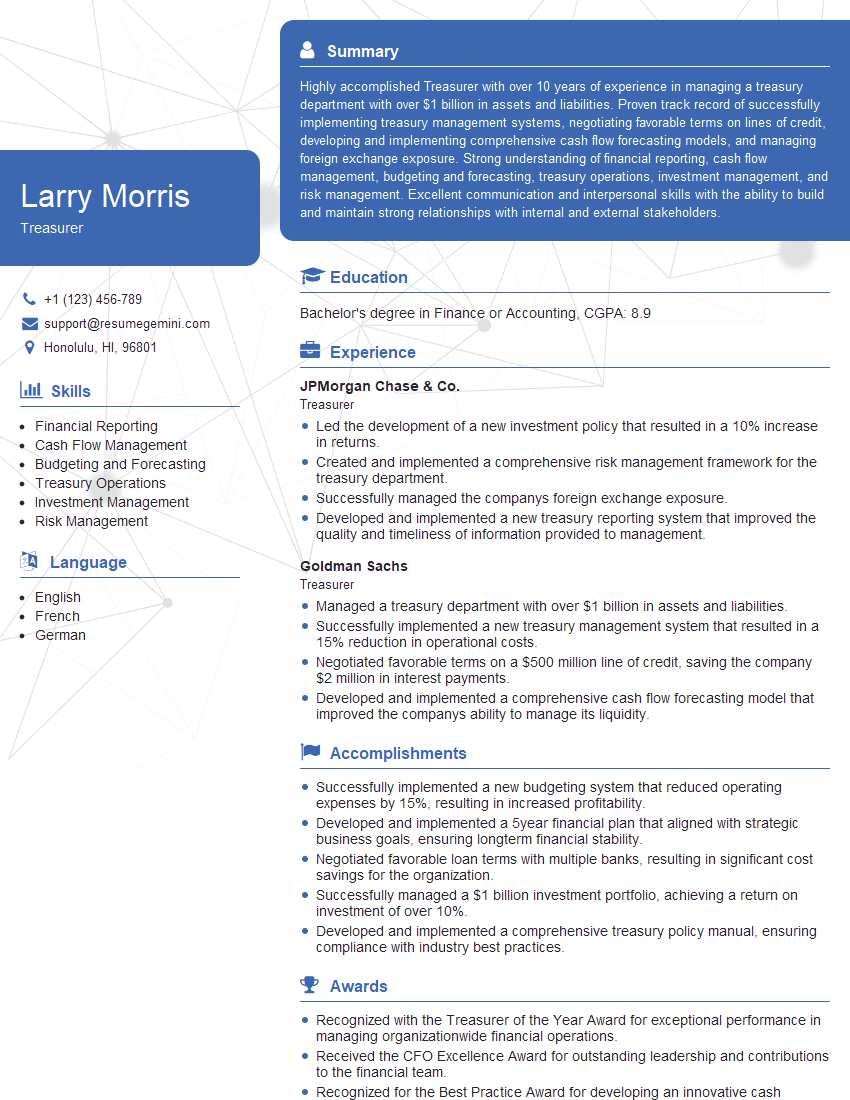
Treasurer Resume Sample
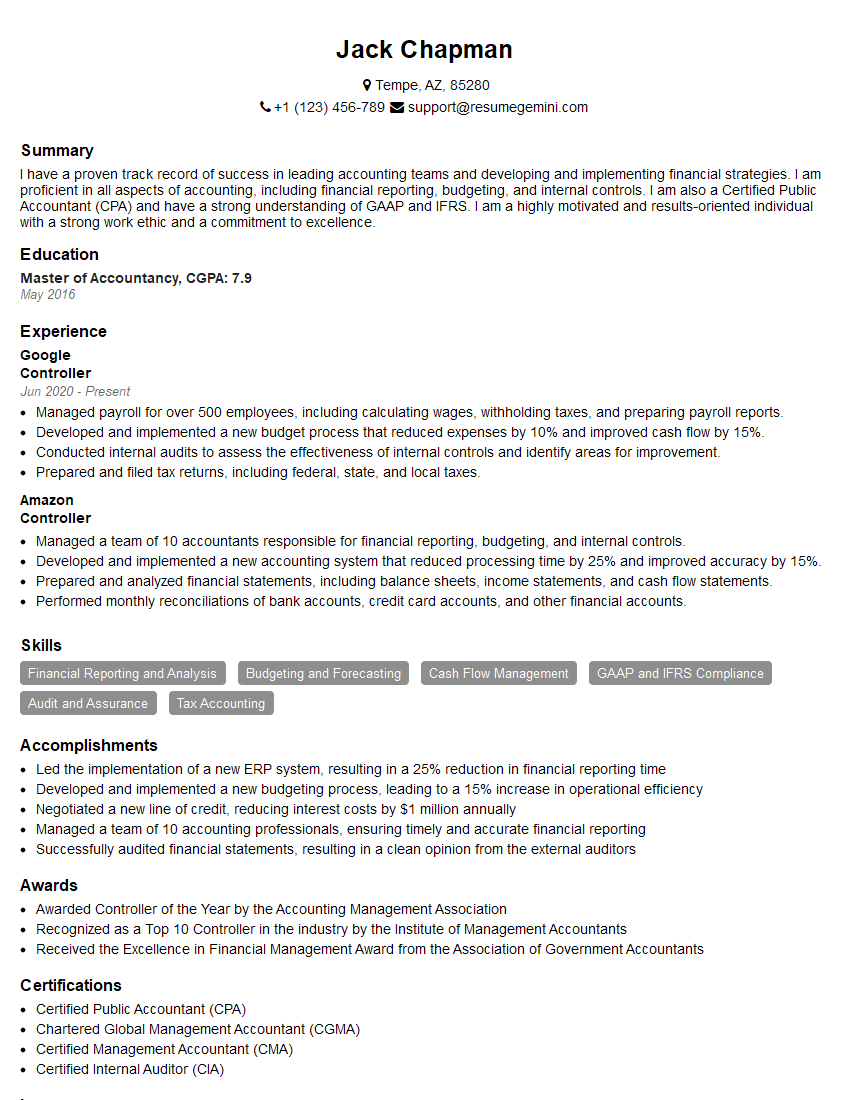
Controller Resume Sample
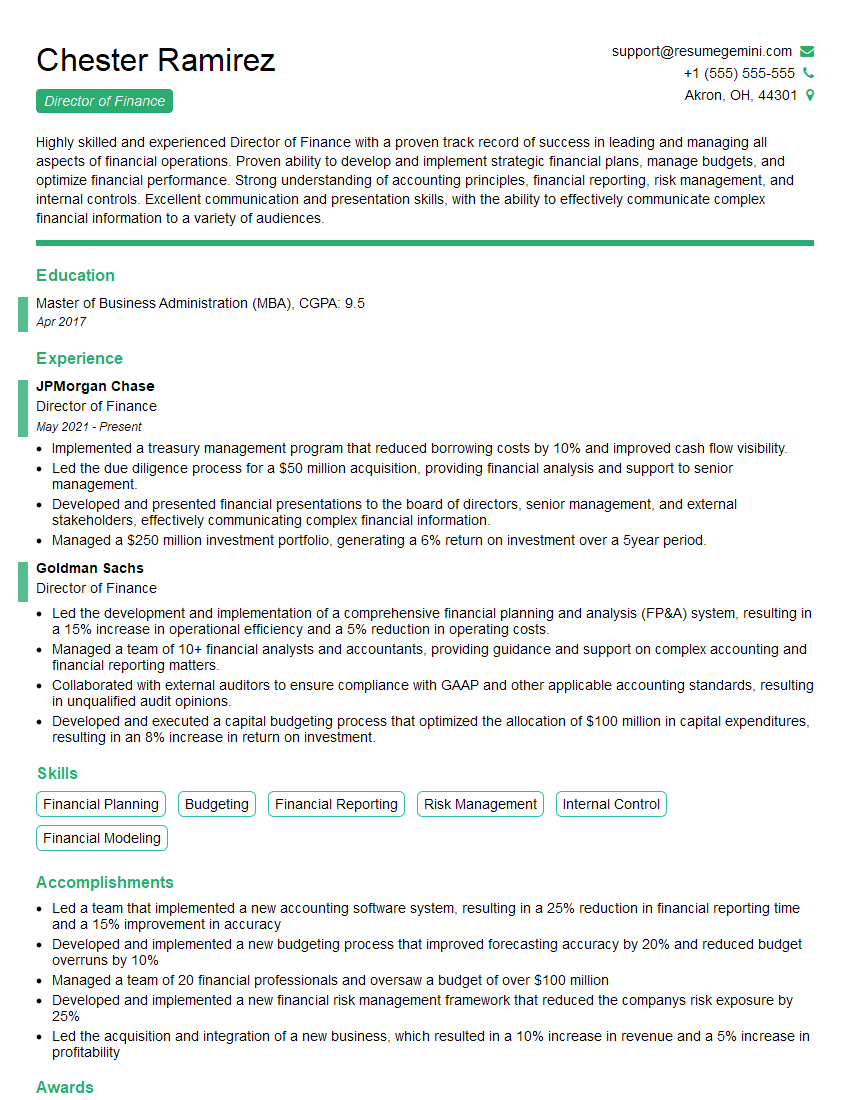
Director of Finance Resume Sample
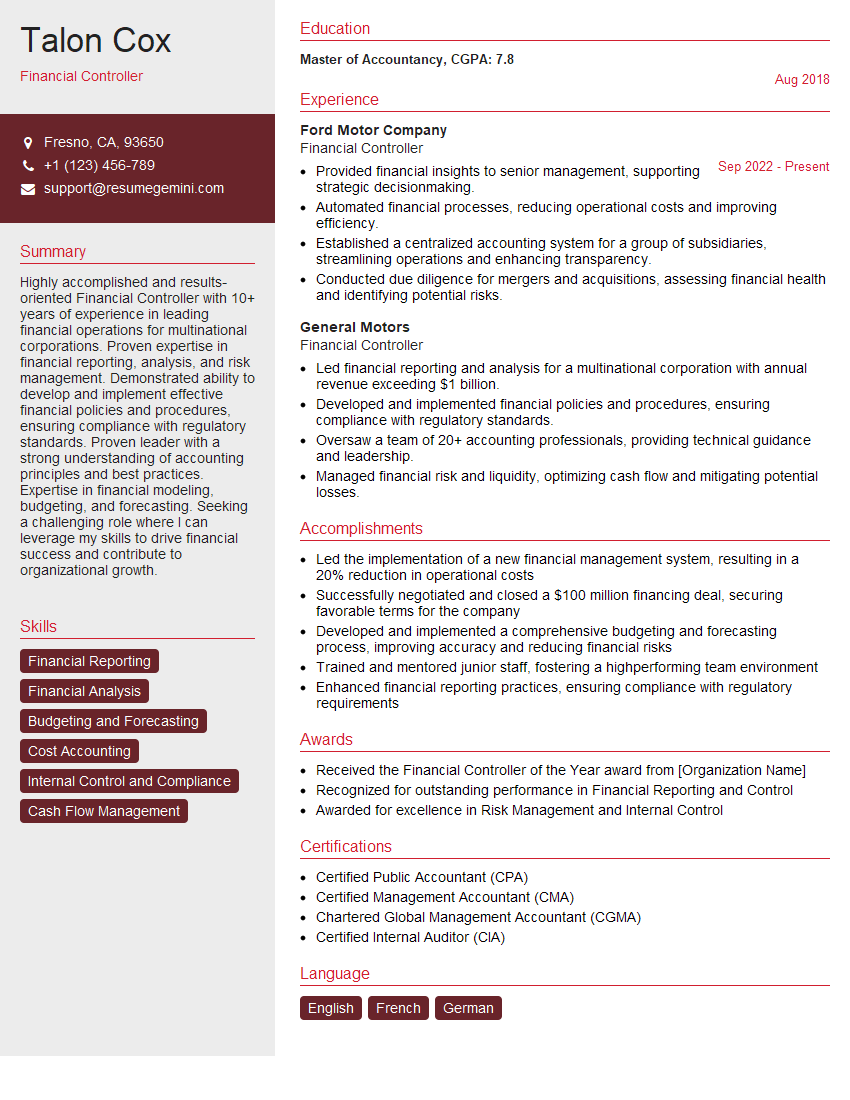
Financial Controller Resume Sample
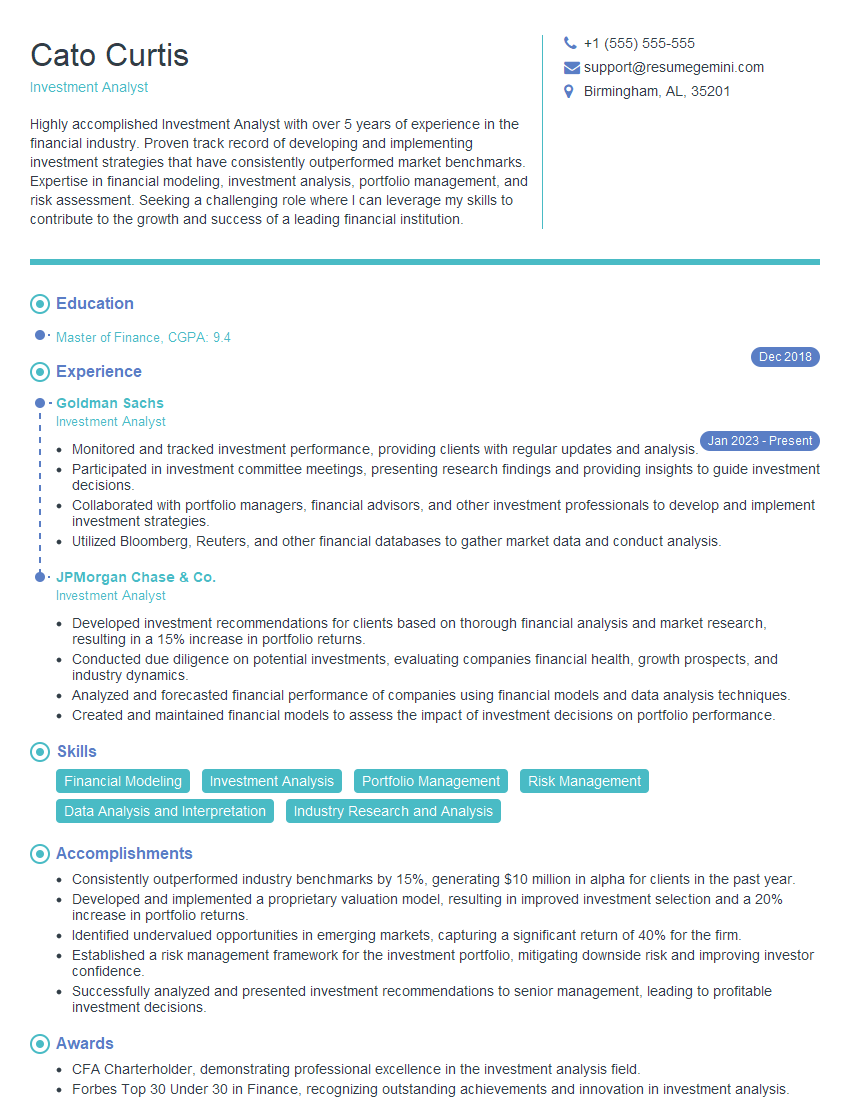
Investment Analyst Resume Sample
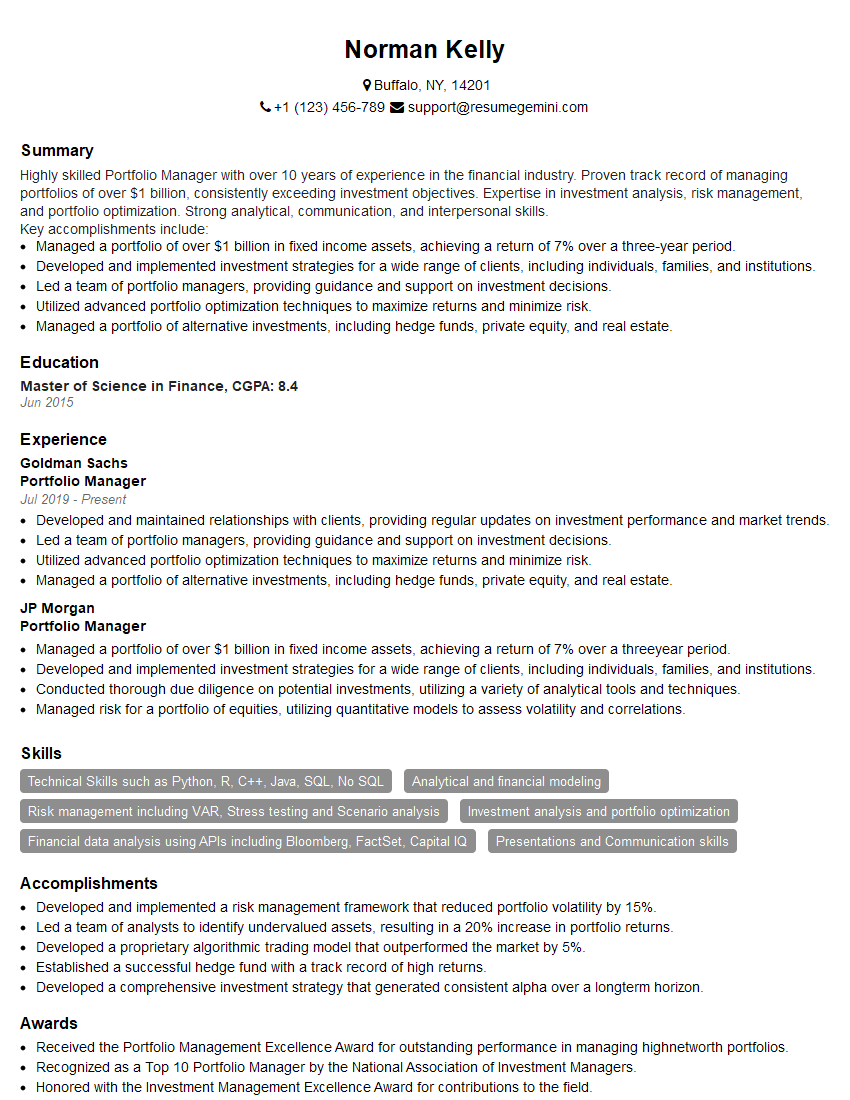
Portfolio Manager Resume Sample
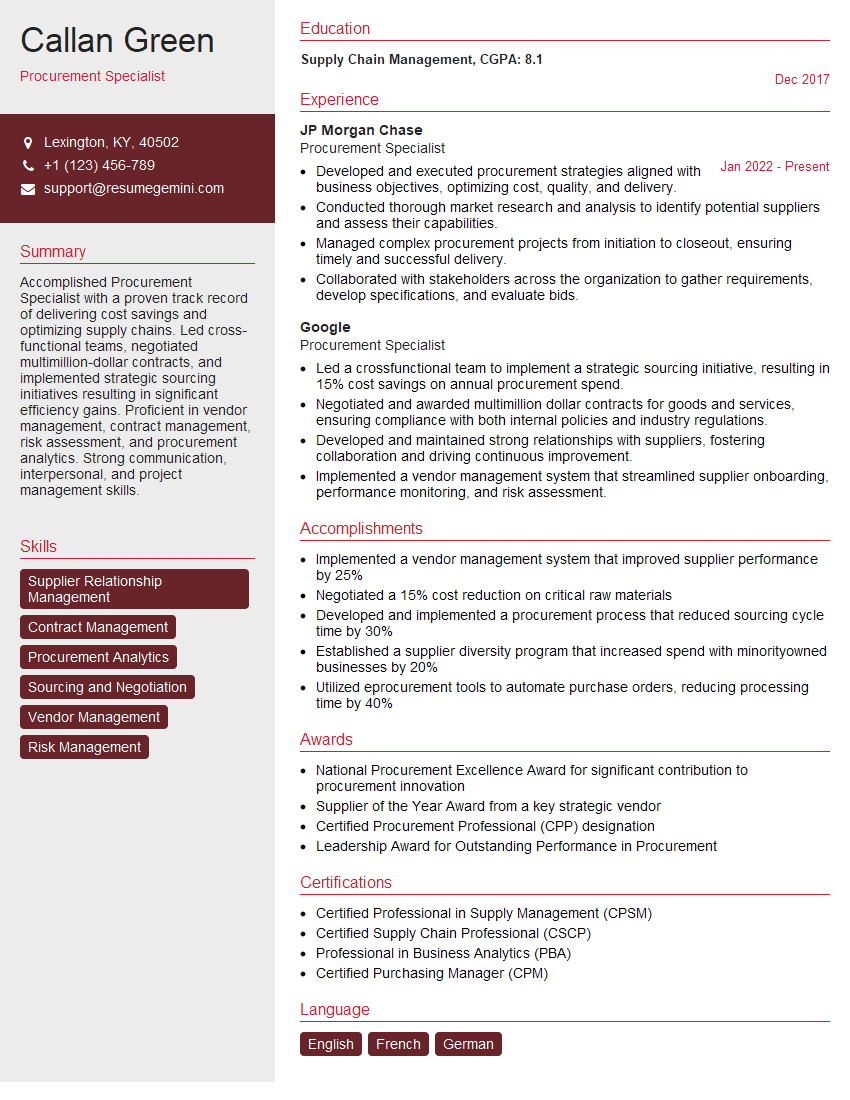
Procurement Specialist Resume Sample

Inventory Manager Resume Sample
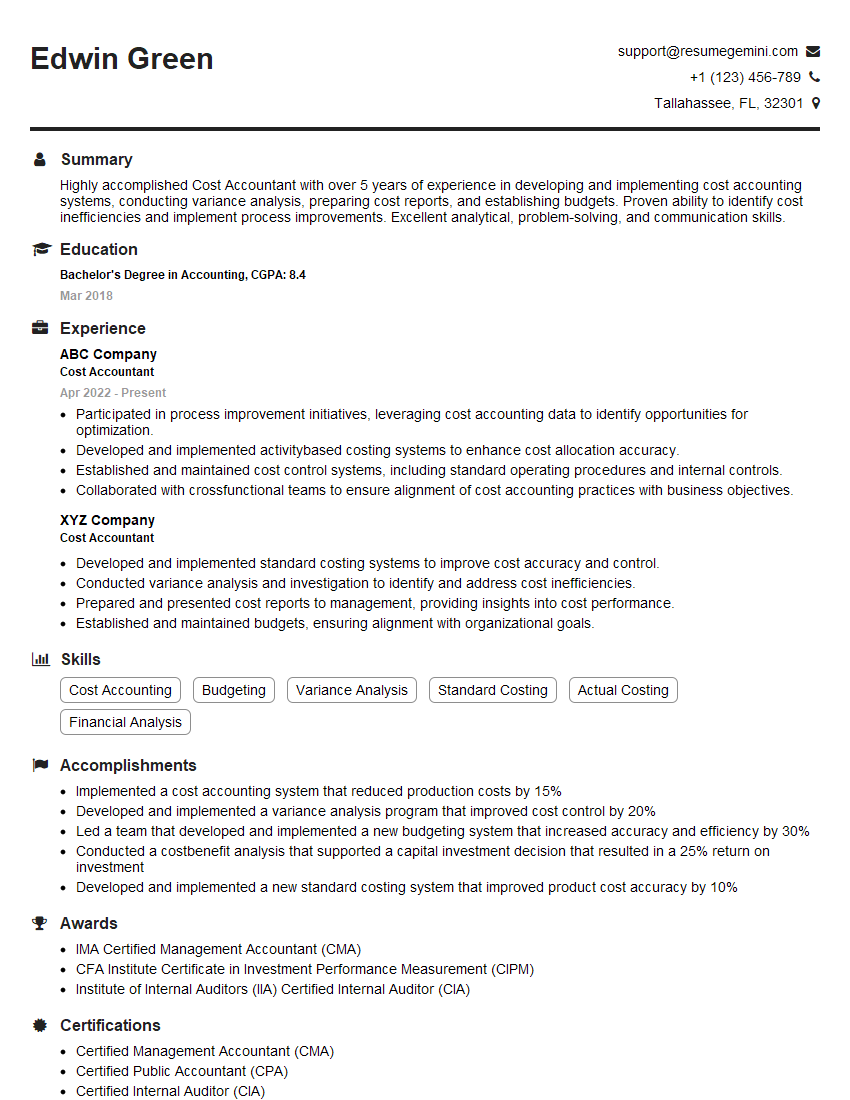
Cost Accountant Resume Sample
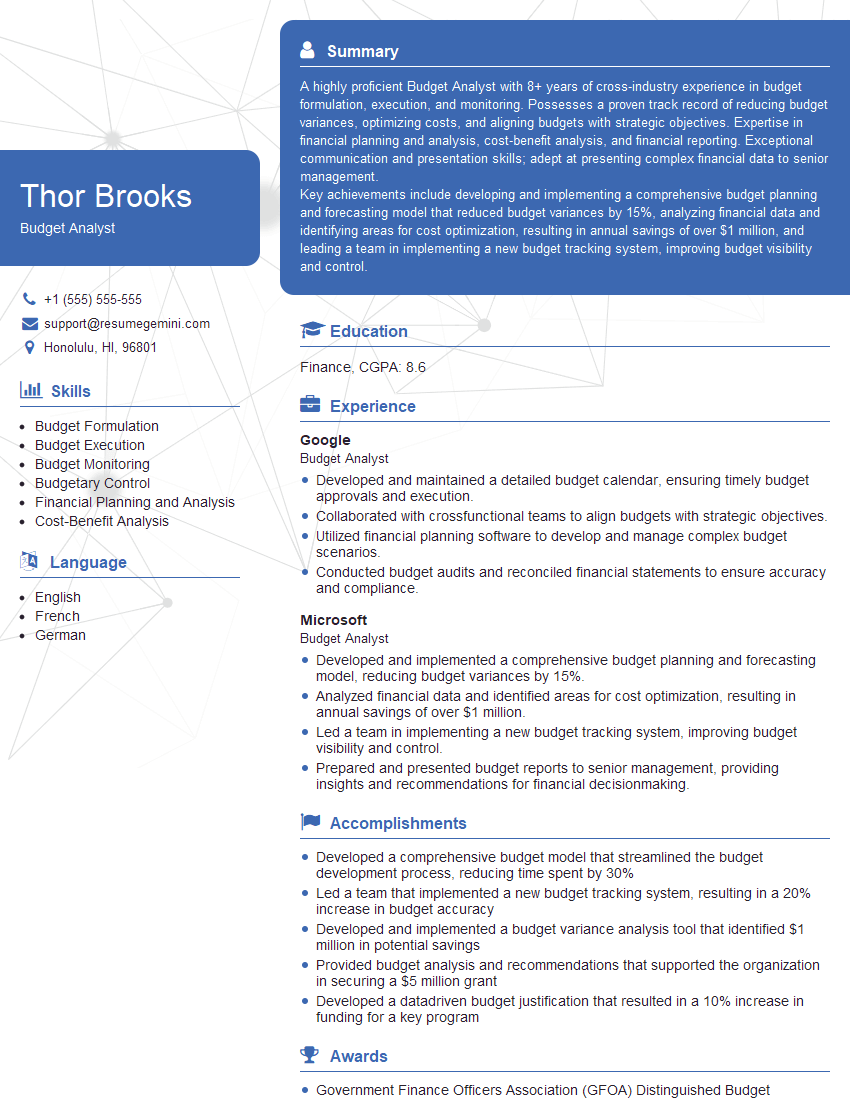
Budget Analyst Resume Sample
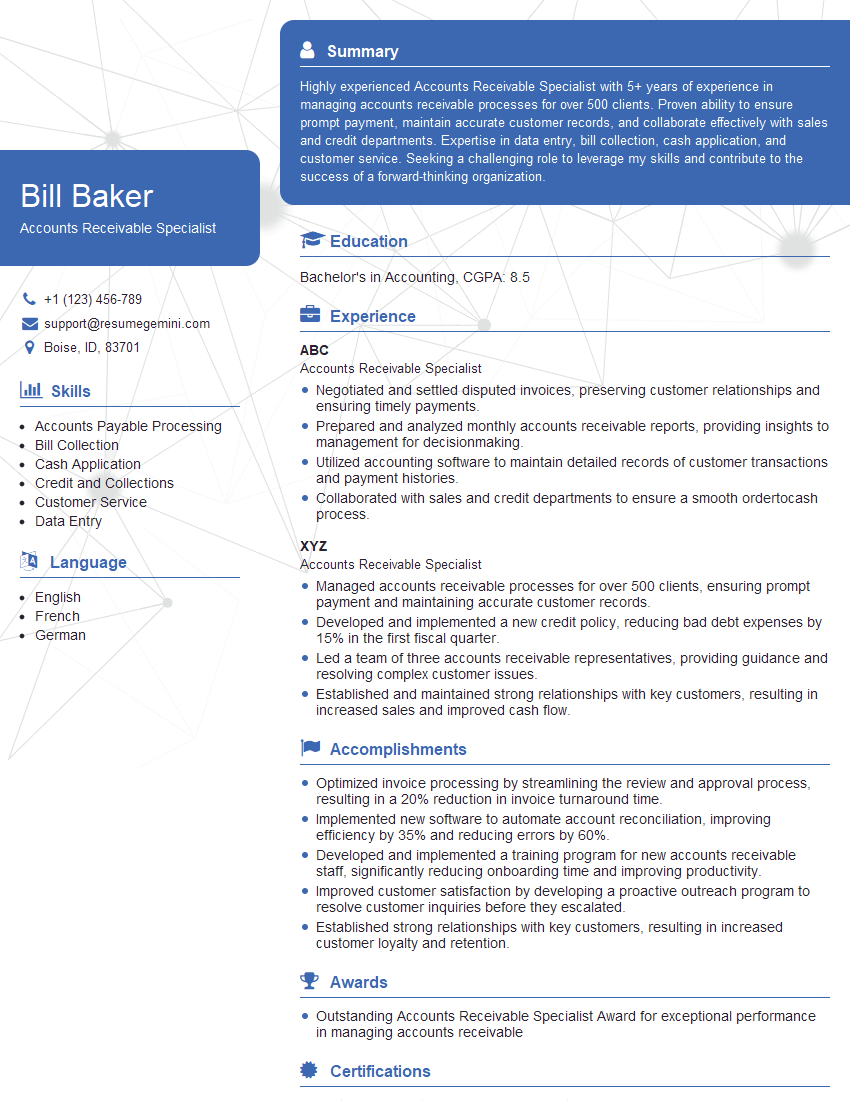
Accounts Receivable Specialist Resume Sample
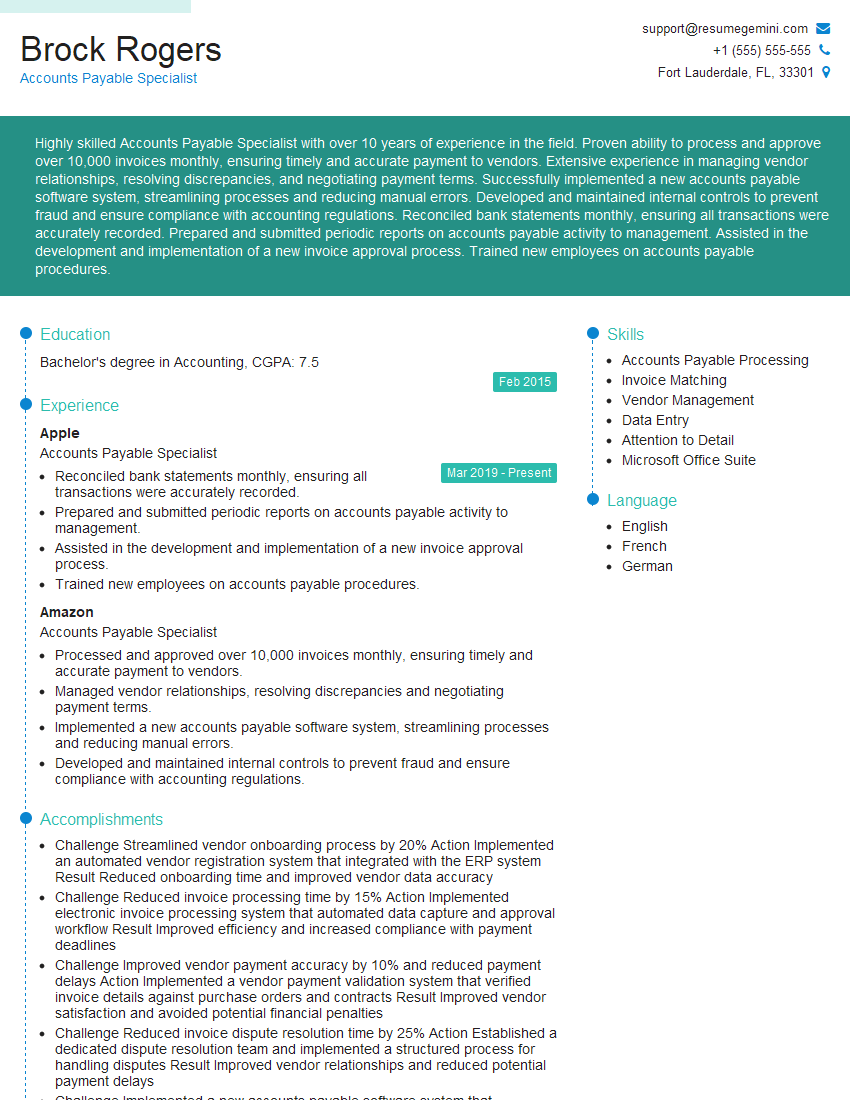
Accounts Payable Specialist Resume Sample
Explore more articles
Users Rating of Our Blogs
Share Your Experience
We value your feedback! Please rate our content and share your thoughts (optional).
What Readers Say About Our Blog
Very informative content, great job.
good