Cracking a skill-specific interview, like one for Point and Finish Joints, requires understanding the nuances of the role. In this blog, we present the questions you’re most likely to encounter, along with insights into how to answer them effectively. Let’s ensure you’re ready to make a strong impression.
Questions Asked in Point and Finish Joints Interview
Q 1. Describe the different types of joint compound used in Point and Finish work.
Joint compound, also known as drywall mud, comes in several types, each suited for different stages of the Point and Finish process. The most common are:
- All-Purpose Compound: This is a versatile compound suitable for both the initial ‘point’ coat and the final ‘finish’ coats. It offers a good balance of working time and drying speed.
- Lightweight Compound: Lighter than all-purpose compound, it’s easier to sand and ideal for larger areas or multiple coats. It’s less prone to cracking, which is beneficial in areas with potential movement.
- Setting-Type Compound: This compound sets up quickly and is often used for taping, allowing for faster workflow. However, it requires quicker application and skillful blending to avoid visible seams.
- Taping Compound: Specifically designed for embedding the drywall tape, it’s usually thicker and stronger than all-purpose compound ensuring the tape adheres firmly.
Choosing the right compound depends on the project’s scale, your experience, and the desired finish. For beginners, all-purpose compound is usually recommended for its ease of use.
Q 2. Explain the process of applying the first coat of joint compound (the ‘point’).
Applying the first coat, the ‘point,’ involves embedding the drywall tape and building a solid base for subsequent coats. It’s crucial to get this right; a poorly applied point coat can lead to visible seams and cracking.
- Apply Tape: Press the drywall tape firmly onto the joint, ensuring complete adhesion. Use a taping knife to smooth out any air bubbles or wrinkles.
- Apply the Point Coat: Using a 6-inch taping knife, apply a generous amount of joint compound over the tape, covering it completely. The goal is to completely bed the tape into the compound, creating a smooth, even surface. Don’t skimp on the compound at this stage.
- Smooth the Surface: Use a smooth, even stroke to level the compound, slightly feathering the edges out onto the drywall surface. Don’t worry about achieving a perfect finish at this stage. The point coat is primarily about embedding the tape and creating a solid foundation.
- Let it Dry: Allow the compound to dry completely before sanding and applying subsequent coats. Drying time varies based on the type of compound, humidity, and temperature.
Think of the point coat as the foundation of a house – it needs to be strong and stable to support the finish coats.
Q 3. What tools are essential for achieving a smooth, seamless finish?
Achieving a smooth, seamless finish requires the right tools. Here’s a list of essentials:
- Taping Knives: A set of taping knives in various sizes (4, 6, 8, and 12 inches) is crucial. The size of the knife depends on the area being covered. Smaller knives are used for corners and smaller areas, larger ones for larger surfaces.
- Putty Knife: For scraping away excess compound and for fine detailing.
- Sanding Sponge or Block: To smooth out imperfections and prepare for subsequent coats. A sanding block provides more consistent pressure and prevents uneven sanding.
- Sandpaper: Different grit levels (e.g., 100, 120, 220) are needed for different stages of sanding. Start with a coarser grit and work your way to finer grits for a smoother finish.
- Bucket and Mixing Tray: These are essential for keeping your compound in a workable state and ensuring even mixing.
- Drop Cloths: Protects the floor from splatters.
Investing in quality tools will not only make the job easier but also significantly improve the final result.
Q 4. How do you prepare the drywall surface before applying joint compound?
Proper surface preparation is paramount to prevent issues later. Before applying any joint compound, ensure the drywall surface is clean, dry, and free of debris. This includes:
- Dust Removal: Thoroughly clean the surface using a vacuum cleaner or a tack cloth. Even small amounts of dust can affect adhesion and create imperfections.
- Repairing Damage: Fill any large holes or gaps with the appropriate patching compound before starting the taping and finishing process.
- Priming: Depending on the surface’s condition, priming might be necessary to enhance adhesion and create a uniform base. This is particularly helpful with absorbent drywall surfaces.
A well-prepared surface ensures better adhesion of the joint compound, resulting in a smoother, more durable finish.
Q 5. What is the proper technique for feathering the edges of the joint compound?
Feathering is the technique of gradually blending the edges of the joint compound into the surrounding drywall, creating an invisible seam. It’s a crucial step for achieving a seamless finish. The key is to use long, smooth strokes, gradually reducing the amount of compound as you move away from the tape.
- Start Wide: Begin with a wider taping knife (8-12 inches) to create a wide, even layer extending several inches beyond the joint tape.
- Gradually Reduce the Amount: As you move further from the joint, reduce the amount of pressure on the knife and the thickness of the compound, ensuring a smooth transition to the undamaged drywall.
- Use Multiple Coats: For larger joints, multiple thin coats may be necessary, ensuring each coat is completely dry before applying the next. This technique helps prevent cracking and unevenness.
- Overlap Coats: Slightly overlap each coat to ensure complete coverage and a smooth transition. This will help prevent noticeable ridges or transitions.
Imagine feathering as a painter blending colors – the goal is a seamless transition, invisible to the eye.
Q 6. How do you avoid common problems such as cracking or ridges in the finished surface?
Cracking and ridging are common problems in drywall finishing, often caused by poor application techniques or inappropriate materials. Here’s how to avoid them:
- Use the Right Compound: Choose the appropriate joint compound for the task. Lightweight compound is less prone to cracking, especially in areas with movement.
- Apply Thin Coats: Thick coats are more prone to cracking and shrinkage. Always apply multiple thin coats, allowing each coat to dry completely before applying the next.
- Proper Feathering: Ensure proper feathering of the edges to avoid ridges and abrupt transitions.
- Avoid Over-Sanding: Over-sanding can weaken the compound layer, leading to cracking. Use light pressure and avoid aggressive sanding.
- Consider the Environment: Extreme temperature fluctuations or high humidity can affect drying time and increase the risk of cracking. Work in a stable temperature and humidity environment whenever possible.
- Use Mesh Tape in High-Movement Areas: For high-movement areas like corners, consider using fiberglass mesh tape for added reinforcement and crack prevention.
Careful application, proper material selection and attention to environmental factors greatly reduces the risk of these common problems.
Q 7. Explain the difference between taping and bedding.
Taping and bedding are two distinct steps in the initial application of joint compound. They both involve applying compound, but their purposes differ:
- Taping: This refers to the process of embedding the drywall tape into the joint using a thin layer of joint compound. The goal is to create a solid bond between the tape and the drywall, preventing cracking and ensuring a smooth surface. This is typically the first coat.
- Bedding: This refers to applying a thicker layer of joint compound over the embedded tape. It covers the tape completely and provides a solid base for subsequent coats. Bedding creates the structural integrity for the finishing coats.
Think of it like building a wall – taping is like laying the foundation and bedding is like building the first layer of bricks. Both are essential for a strong and durable wall (or drywall finish).
Q 8. What is the ideal drying time between coats of joint compound?
The ideal drying time between coats of joint compound is crucial for achieving a smooth, flawless finish. It depends on several factors, including the type of compound (all-purpose, lightweight, topping), the humidity and temperature of the room, and the thickness of the applied coat. Generally, you should allow the previous coat to dry completely to the touch before applying the next. This usually translates to anywhere from 2 to 4 hours for lightweight compound in ideal conditions, but could extend to 6-8 hours or even overnight for thicker applications or in humid environments. Rushing the process can lead to cracking, peeling, or an uneven surface. It’s always better to err on the side of caution and wait a little longer than to risk compromising the quality of the finish. I always use a moisture meter to check if the surface is totally dry before applying another coat, which has helped tremendously in preventing issues with my work.
Q 9. How do you handle various types of drywall joints (e.g., butt joints, inside corners, outside corners)?
Handling different drywall joints requires specific techniques. Butt joints, where two drywall sheets meet edge-to-edge, require careful alignment and a generous application of compound, usually in multiple coats, embedded with tape. For inside corners, a flexible corner bead is essential to prevent cracking and create a sharp, clean edge. The compound is applied to both sides of the bead, creating a smooth, even finish. Outside corners also benefit from using a corner bead, though this time a rigid or flexible bead depending on the angle and wall type. Similar to the inside corner, multiple thin coats are key to prevent cracking. I always ensure the bead is firmly seated and the compound is fully feathered into the wall to create a seamless transition. Precise application and attention to detail are key for all joint types to achieve a professional and lasting finish. Think of it like baking a cake; each layer needs time to set before the next is applied.
Q 10. Describe your experience with different types of joint tape.
My experience encompasses various joint tapes, each with its strengths and weaknesses. Paper tape is a classic choice, economical and easy to work with, though it can sometimes show through if not applied and finished perfectly. Mesh tape, on the other hand, provides excellent strength and is less prone to showing through, especially useful on high-stress areas or areas that require a lot of sanding. I’ve also worked with self-adhesive tapes, which offer convenience but require careful application to prevent bubbles or wrinkles. The choice depends on the project’s needs and budget. For instance, in high-moisture areas, I would opt for a highly durable mesh tape. The key is to select the appropriate tape for the situation and to apply it properly to ensure a smooth, durable finish. Choosing the right tape is critical to ensure the overall joint integrity and durability, just like choosing the right screws for a piece of furniture.
Q 11. How do you ensure a consistent finish across large areas?
Consistency across large areas is achieved through meticulous planning and execution. This involves using a consistent application technique, maintaining a wet edge, and working in manageable sections. Always start at one corner and work your way across, ensuring each section is properly feathered into the next. This prevents visible lap marks or inconsistencies in the finish. Regularly checking your work with a good light source can also catch inconsistencies immediately, allowing for corrections before the compound dries. A consistent technique, along with proper lighting, helps achieve a professional look, much like a painter uses consistent brush strokes for a uniform finish.
Q 12. What techniques do you use to minimize sanding?
Minimizing sanding is a key aspect of efficient and high-quality finishing. The most effective technique is to apply multiple thin coats of compound rather than one thick coat. This allows each layer to dry properly and minimizes the amount of excess material that needs to be sanded. Using the right tools, such as a wide taping knife for even spreading, also significantly reduces the need for sanding. Furthermore, taking your time and paying close attention to detail during application helps you to avoid creating imperfections that would require sanding in the first place. Think of it as sculpting; the smoother your initial application, the less you have to chisel away later.
Q 13. How do you deal with difficult or irregular surfaces?
Difficult or irregular surfaces require a more patient and adaptable approach. For example, dealing with uneven wall surfaces often involves applying a skim coat to create a uniform base before taping and finishing. This involves applying a thin layer of compound to level the surface out. For severely damaged areas, you may need to use additional patching materials before applying the joint compound. Understanding the underlying issues and taking the necessary corrective steps is critical to achieving a flawless result, rather than simply applying a plaster over the problem. It’s like building a foundation; you can’t build a strong house on a weak foundation.
Q 14. Explain your experience working with different types of wall coverings (e.g., paint, wallpaper).
My experience with wall coverings extends to both paint and wallpaper. A properly finished drywall joint is the perfect base for both. For paint, a smooth, even surface is key to achieving a professional look. Imperfections will be highlighted by paint, so careful finishing is essential. With wallpaper, a clean, smooth surface is similarly crucial to ensure the wallpaper adheres properly and looks its best. Any imperfections in the drywall can show through, causing unsightly bumps or wrinkles. Thus a properly finished wall is a foundation for both paint and wallpaper and will ensure the best results.
Q 15. How do you ensure the quality of your work meets or exceeds building codes and standards?
Ensuring quality in Point and Finish work, which involves applying a smooth, even finish to drywall joints, hinges on meticulous adherence to building codes and industry best practices. This begins with understanding the relevant codes – for instance, the International Building Code (IBC) often dictates the required joint smoothness and the acceptable level of imperfections.
My approach involves several key steps:
- Careful Preparation: Properly preparing the joint – ensuring the tape is embedded smoothly, using the right amount of compound, and allowing sufficient drying time between coats – is crucial. Rushing this stage is a common cause of defects.
- Consistent Application: I use consistent pressure and technique when applying the joint compound, aiming for smooth, even layers. This requires practice and a keen eye for detail.
- Multiple Coats: Multiple thin coats are always better than one thick coat, allowing for better drying and a smoother final finish. Each coat is carefully sanded before the next is applied.
- Quality Materials: I use high-quality joint compound and taping materials, chosen based on the specific project needs and the surface being finished. Using inferior products will directly impact the final quality.
- Regular Inspection: Throughout the process, I regularly inspect my work under various lighting conditions, looking for imperfections such as ridges, dips, or inconsistencies. This allows for early correction and prevents larger problems later on.
Finally, a thorough final inspection ensures that the finished product meets or exceeds the required standards. This includes checking for appropriate adhesion, smoothness, and the absence of any visible imperfections. I am meticulous in my work and believe in exceeding client expectations, producing a finished product that stands the test of time.
Career Expert Tips:
- Ace those interviews! Prepare effectively by reviewing the Top 50 Most Common Interview Questions on ResumeGemini.
- Navigate your job search with confidence! Explore a wide range of Career Tips on ResumeGemini. Learn about common challenges and recommendations to overcome them.
- Craft the perfect resume! Master the Art of Resume Writing with ResumeGemini’s guide. Showcase your unique qualifications and achievements effectively.
- Don’t miss out on holiday savings! Build your dream resume with ResumeGemini’s ATS optimized templates.
Q 16. What safety precautions do you take when performing Point and Finish work?
Safety is paramount in Point and Finish work. The process involves handling sharp tools and potentially hazardous materials, so I prioritize safety protocols throughout the job.
- Personal Protective Equipment (PPE): This includes wearing safety glasses to protect my eyes from dust and debris, a dust mask to prevent inhaling harmful particles, and gloves to protect my hands from irritants. Hearing protection might also be necessary depending on the tools used.
- Tool Safety: I ensure all tools are in good working order, with sharp blades properly secured. Knives are always handled with care, and power tools like sanders are used with appropriate guards in place.
- Work Area Safety: I keep the work area clean and organized, removing obstacles to prevent falls or trips. Proper lighting is essential to avoid eye strain and to ensure I can see any potential hazards.
- Material Handling: Joint compound and other materials are handled according to manufacturer’s instructions. Proper ventilation is crucial when using materials that release fumes.
- Fall Protection: When working at heights, I use appropriate fall protection equipment like harnesses and safety lines, complying with all relevant safety regulations.
Regular safety checks are conducted throughout the day to maintain a safe working environment. I follow all site-specific safety guidelines provided by the project manager or contractor, and I am always conscious of my surroundings and potential risks.
Q 17. How do you clean your tools and equipment after completing a job?
Cleaning my tools and equipment is crucial for maintaining their longevity and ensuring the quality of future work. Thorough cleaning prevents the build-up of dried joint compound which can affect the performance and lifespan of the tools.
- Immediate Cleaning: As soon as I finish a job, I remove excess joint compound from tools using a putty knife or scraper. This prevents the compound from hardening.
- Water and Soap: For tools like putty knives and trowels, I wash them thoroughly with warm soapy water, scrubbing off any remaining compound. This removes residue and keeps them clean.
- Drying: I thoroughly dry the tools before storing them, preventing rust and corrosion.
- Power Tool Maintenance: Power tools, such as sanders, require specific cleaning instructions. I follow the manufacturer’s guidelines, which usually involve removing dust bags and cleaning out dust and debris with compressed air or brushes. Regular lubrication might also be required.
- Storage: Clean tools are properly stored to prevent damage or accidental injury. This helps in extending the life of the tools and maintaining their condition.
Keeping my tools clean is not just about maintaining their functionality; it’s a reflection of my professionalism and commitment to delivering high-quality workmanship.
Q 18. How do you manage your time effectively to meet project deadlines?
Effective time management is crucial in meeting project deadlines, particularly in Point and Finish work where many projects are time-sensitive. My approach involves a combination of planning, prioritization, and efficient execution.
- Detailed Planning: I begin by carefully reviewing the project scope and specifications, identifying the tasks involved and estimating the time required for each. This often includes creating a detailed timeline.
- Prioritization: I prioritize tasks based on urgency and dependencies. Critical tasks that could affect the overall project schedule are tackled first.
- Efficient Execution: I work methodically, focusing on one task at a time to avoid distractions and ensure quality. Using efficient techniques and taking breaks strategically enhances both focus and efficiency.
- Communication: Regular communication with the project manager helps to identify potential delays or challenges early on, allowing for proactive solutions and adjustments to the timeline.
- Contingency Planning: I always include a buffer in my schedule to account for unforeseen delays or complications. This prevents rushing and compromise of quality to meet deadlines.
Through meticulous planning, prioritization, and efficient execution, I consistently deliver projects on time and within budget, maintaining a reputation for reliability and high-quality work.
Q 19. How do you work effectively as part of a team?
Effective teamwork is essential in construction, and Point and Finish work is no exception. My experience involves collaborating seamlessly with various tradespeople on many projects.
- Clear Communication: I believe in open and honest communication with my team members. This includes proactively updating my colleagues on my progress, as well as openly communicating any potential issues or challenges I might encounter.
- Respectful Collaboration: I treat all team members with respect, recognizing their expertise and contributions. This fosters a collaborative and supportive environment.
- Shared Goals: I focus on the shared goal of successfully completing the project on time and to the required standards. Individual goals are always seen in the context of the overall project objectives.
- Flexibility and Adaptability: I am flexible and adaptable, willing to adjust my schedule or tasks as needed to support the team and the project as a whole.
- Problem-Solving: I actively participate in problem-solving sessions, offering solutions and contributing ideas to address any challenges or obstacles the team faces.
Working effectively as part of a team requires excellent communication and a collaborative spirit, always prioritizing the overall project success above individual contributions. My collaborative approach has allowed me to contribute effectively and deliver high-quality results on various team projects.
Q 20. Describe a time you had to troubleshoot a problem in Point and Finish work.
One time, I encountered a problem where the joint compound was not adhering properly to the drywall in a particular section of a large project. The wall was newly constructed, and I suspected moisture issues might be present.
My troubleshooting steps were:
- Inspection: I carefully inspected the area, noting the lack of adhesion and the presence of any visible moisture or inconsistencies in the drywall.
- Moisture Testing: Using a moisture meter, I tested the drywall to confirm my suspicion of elevated moisture levels in the affected area.
- Consultation: I consulted with the project manager and the drywall installer to discuss possible causes and solutions. We confirmed a delay in the drying process of the drywall.
- Solution: We decided to allow the wall to dry completely before proceeding with the Point and Finish work. Once dry, the joint compound adhered perfectly without any issues.
This situation highlighted the importance of thoroughly inspecting the substrate before beginning work, the use of appropriate tools for investigation (moisture meter), and the value of collaboration to find effective solutions. The ability to address and resolve unexpected challenges highlights my problem-solving skills and attention to detail.
Q 21. What are the common causes of imperfections in Point and Finish work?
Imperfections in Point and Finish work are often due to preventable errors, although some are related to the substrate. Here are some common causes:
- Improper Preparation: Insufficient cleaning of the joint area, inadequate embedding of the tape, or uneven application of the first coat of compound are frequent causes of imperfections.
- Incorrect Technique: Using too much or too little compound in a single coat, applying uneven pressure, or failing to feather the edges properly will result in noticeable defects.
- Insufficient Drying Time: Rushing the process and not allowing sufficient drying time between coats leads to cracking, peeling, or sanding issues.
- Poor Quality Materials: Using low-quality joint compound or taping materials can significantly impact the final finish.
- Inadequate Sanding: Insufficient sanding between coats or overly aggressive sanding will create imperfections.
- Substrate Issues: Problems with the drywall itself, such as uneven surfaces or moisture issues, can also cause imperfections.
- Environmental Factors: Extreme temperatures or humidity can affect the drying process and lead to problems.
Preventing imperfections starts with meticulous preparation and the use of quality materials. Consistent application, patience during the drying process, and careful sanding are crucial steps to producing flawless results. Addressing substrate issues before starting is crucial for a successful finish.
Q 22. Describe your experience using power tools (e.g., sanding tools, putty knives).
My experience with power tools, particularly those relevant to point and finish joints, is extensive. I’m proficient with various sanding tools, from random orbital sanders for achieving smooth, even surfaces to detail sanders for intricate areas around joints. I understand the importance of selecting the right grit for each stage of the process – coarser grits for initial smoothing and finer grits for a final, flawless finish. My experience also includes using putty knives of various sizes and flexibilities, mastering techniques for applying joint compound smoothly and efficiently, creating clean, feathered edges to minimize the visibility of repairs. I’ve worked with both electric and pneumatic tools, understanding the nuances of each and adjusting my technique accordingly to prevent tool marks and achieve optimal results. For instance, I’ve learned to control the speed and pressure of a random orbital sander to avoid burning through drywall or creating uneven surfaces. Similarly, I’ve developed a light touch with putty knives to achieve a consistent thickness of compound without leaving ridges or tool marks.
Q 23. What are the pros and cons of using different joint compound types (e.g., all-purpose, lightweight)?
Different joint compound types offer distinct advantages and disadvantages. All-purpose compounds are versatile and work well for most applications, offering a good balance of strength and ease of application. However, they can be heavier than other options, potentially adding extra weight to the finished wall. Lightweight compounds, on the other hand, are easier to work with, especially for larger projects, reducing fatigue and improving efficiency. However, they might not be as durable as all-purpose compounds, potentially requiring extra coats for certain applications. I typically choose all-purpose for areas needing higher durability, and lightweight for large, less-stressed areas. The choice often depends on factors such as the substrate material, the size of the joint, and the desired finish. For example, in a high-traffic commercial space, I’d opt for a stronger all-purpose compound, while in a residential setting with smaller joints, a lightweight compound may suffice. Pre-mixed compounds offer convenience, but require careful consideration of the open time and drying conditions.
Q 24. How do you adapt your techniques to different types of construction materials?
Adapting my techniques to different construction materials is crucial for achieving high-quality finishes. Working with drywall requires different techniques than working with plaster or wood. For instance, the type of joint compound I use, the application method, and the sanding techniques all vary. Drywall often requires a specialized joint tape and multiple coats of compound to create a seamless finish. Working with plaster often involves using a different type of compound that adheres well to the existing surface, requiring patience and a lighter touch to avoid cracking or damaging the delicate surface. With wood, I might use wood filler instead of joint compound and apply it in a way that is compatible with the wood’s grain. For example, on old plaster, I might pre-wet the surface to improve adhesion before applying the compound. My approach is always to understand the material’s characteristics and choose the most appropriate techniques to ensure a durable and aesthetically pleasing result.
Q 25. Describe your experience working in different environments (e.g., residential, commercial).
I have experience working in both residential and commercial settings. Residential projects often involve smaller-scale repairs and renovations, focusing on precision and attention to detail in creating a flawless aesthetic within smaller spaces. Commercial projects, on the other hand, typically involve larger-scale work requiring efficient, fast-paced execution while maintaining the high standards of quality and attention to the overall impact. The pace and scale differ significantly, but the core principles of proper joint preparation, compound application, and sanding remain the same. In commercial settings, teamwork and efficient scheduling are crucial. For example, I’ve been part of a team that was tasked with finishing the interior of a large office building in a tight timeframe. Through careful planning and coordination, we were able to successfully complete the job on schedule.
Q 26. What are your salary expectations?
My salary expectations are commensurate with my experience and skills, and I’m open to discussing a competitive compensation package based on the specifics of the position and its responsibilities. I am confident that my expertise and efficiency would be a valuable asset to your team.
Q 27. What are your career goals?
My career goals include becoming a highly skilled and respected professional in the finishing trade. I aim to continuously improve my skills and stay updated with the latest techniques and materials. I am eager to take on increasing responsibility and leadership roles within a company, contributing to larger-scale projects and mentoring newer team members. Ultimately, I hope to establish a reputation for consistently high-quality work and reliable service.
Q 28. Why are you interested in this position?
I’m interested in this position because it aligns perfectly with my skills and experience. The opportunity to contribute to a company known for its quality craftsmanship and attention to detail is highly appealing. Your company’s reputation and focus on [mention company specific details if known, e.g., sustainable practices, innovative techniques] resonate strongly with my values. I believe my proven ability to deliver high-quality results efficiently, coupled with my enthusiasm for continuous learning, makes me an ideal candidate for this role.
Key Topics to Learn for Point and Finish Joints Interview
- Joint Geometry and Design: Understanding the various types of point and finish joints, their strengths, weaknesses, and suitability for different applications. Consider factors like material properties and load bearing capabilities.
- Fabrication Techniques: Explore the practical aspects of creating these joints, including welding, brazing, adhesive bonding, and mechanical fastening. Be prepared to discuss the advantages and disadvantages of each method.
- Quality Control and Inspection: Understand the importance of non-destructive testing (NDT) methods used to ensure the integrity of point and finish joints. Familiarize yourself with relevant standards and specifications.
- Stress Analysis and Failure Mechanisms: Be able to discuss potential failure modes in point and finish joints and how to mitigate them through design and fabrication choices. Understanding concepts like stress concentration and fatigue is crucial.
- Material Selection: Discuss the influence of material properties (e.g., ductility, strength, weldability) on the performance and longevity of point and finish joints. Be ready to justify material choices based on specific application requirements.
- Cost Optimization and Manufacturing Considerations: Analyze the cost implications of different joint designs and fabrication methods. Discuss strategies for efficient and cost-effective production.
- Troubleshooting and Problem Solving: Develop your ability to identify and resolve common issues related to the design, fabrication, and inspection of point and finish joints. Practical experience and case studies are invaluable here.
Next Steps
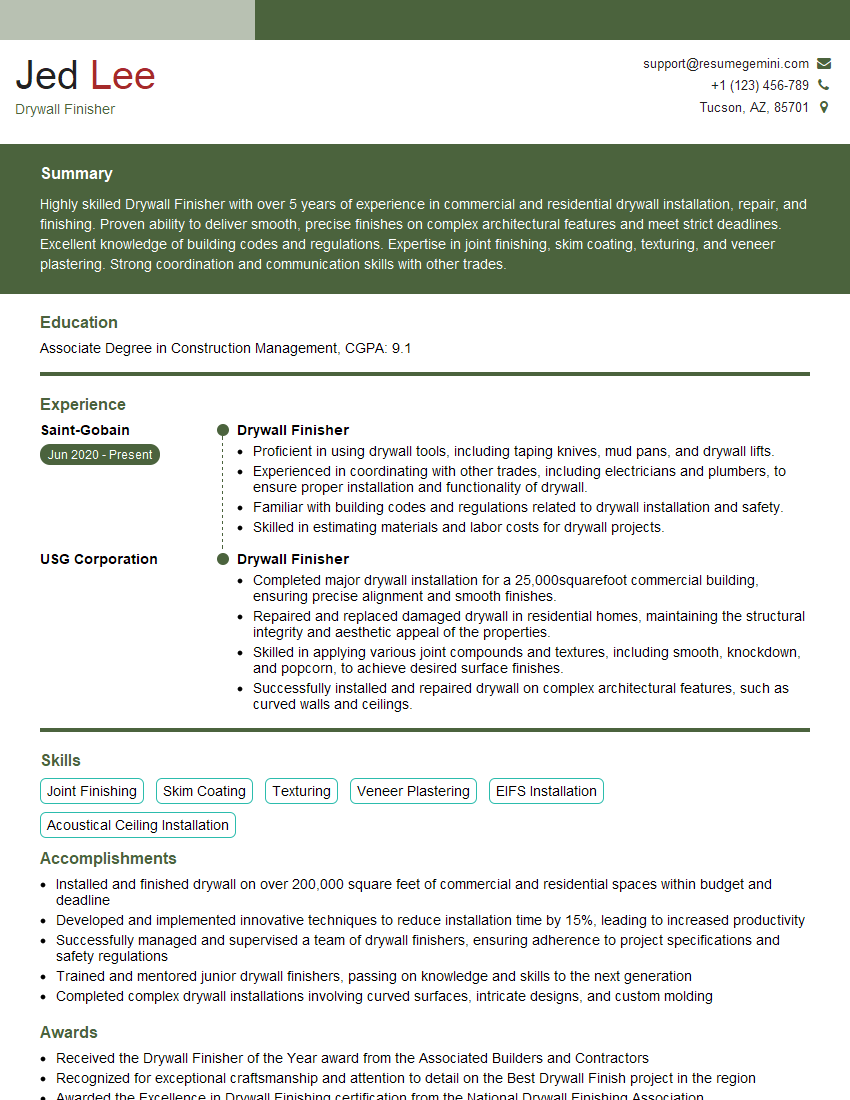
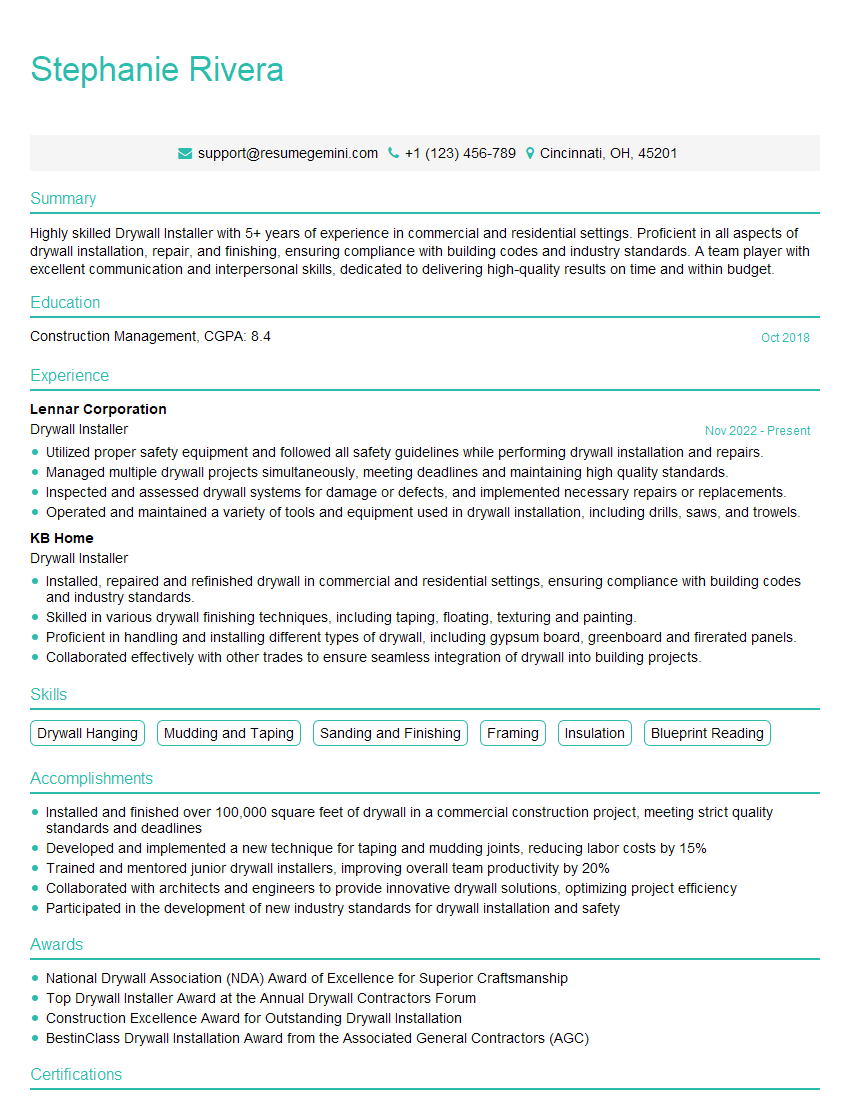
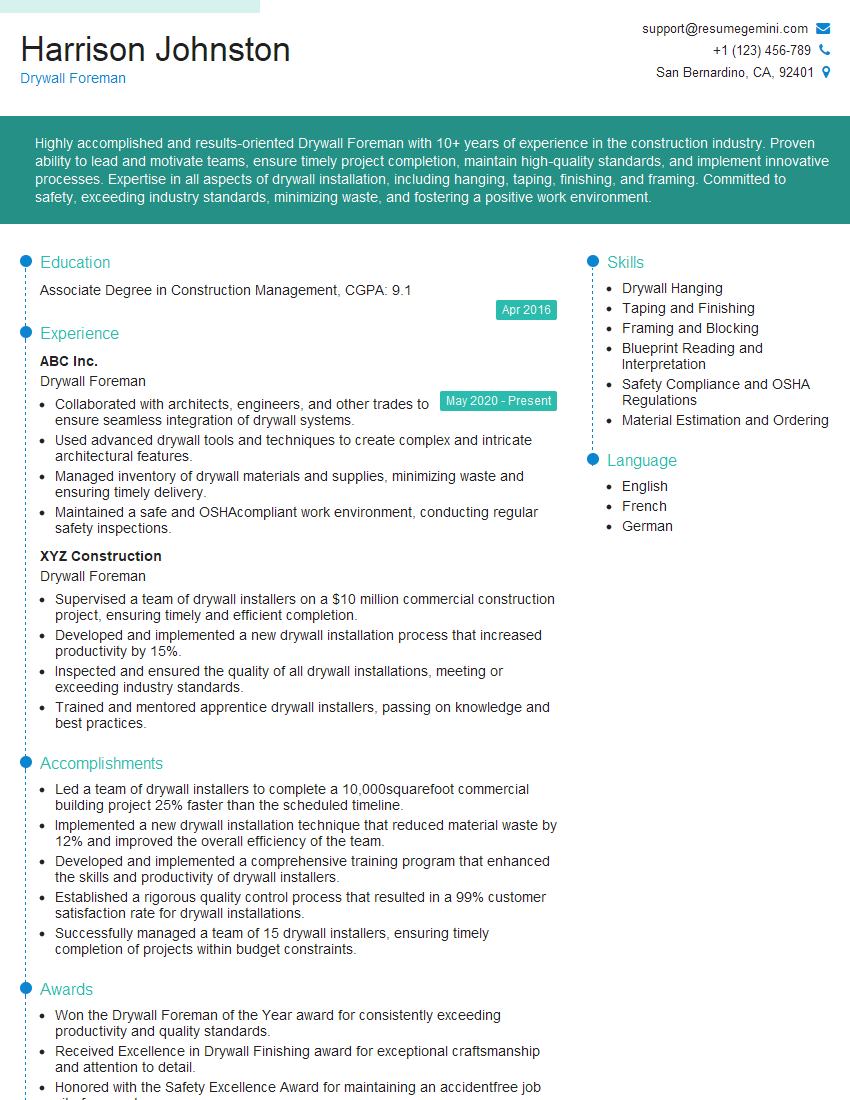
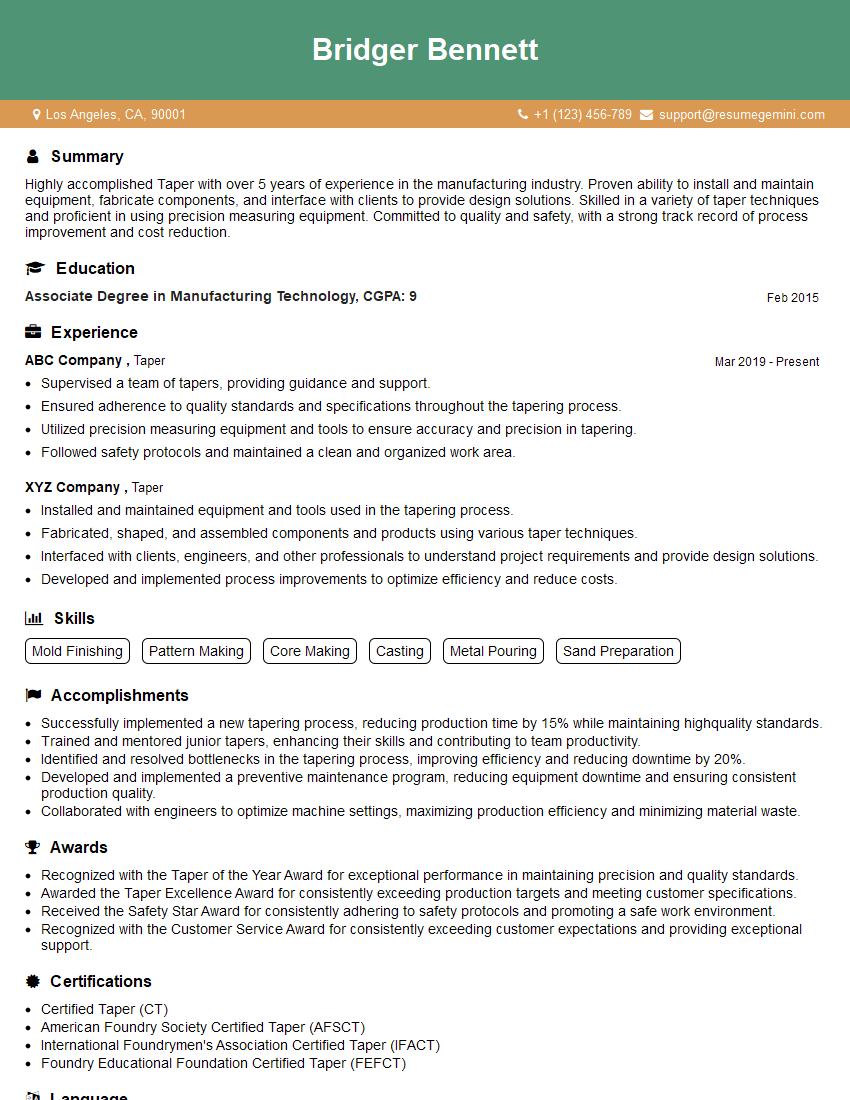
Mastering Point and Finish Joints opens doors to exciting career opportunities in diverse engineering fields. A strong understanding of these crucial concepts significantly enhances your marketability and positions you for success. To maximize your job prospects, creating an ATS-friendly resume is essential. ResumeGemini is a trusted resource that can help you craft a professional and impactful resume, highlighting your skills and experience in a way that resonates with recruiters. Examples of resumes tailored to Point and Finish Joints are provided to help guide your resume-building process. Take the next step towards your dream career today!

Explore more articles
Users Rating of Our Blogs
Share Your Experience
We value your feedback! Please rate our content and share your thoughts (optional).
What Readers Say About Our Blog
Very informative content, great job.
good