Interviews are opportunities to demonstrate your expertise, and this guide is here to help you shine. Explore the essential Polishing Operation interview questions that employers frequently ask, paired with strategies for crafting responses that set you apart from the competition.
Questions Asked in Polishing Operation Interview
Q 1. Describe your experience with different polishing methods (e.g., hand polishing, machine polishing, vibratory polishing).
My experience encompasses a wide range of polishing methods, each chosen based on the material, desired finish, and production scale. Hand polishing, while labor-intensive, offers unparalleled control and precision for intricate details or small batches. I’ve used it extensively on delicate jewelry components and prototypes requiring a very fine finish. Machine polishing, on the other hand, is ideal for mass production, providing consistent results at a higher speed. I’m proficient with various types of machine polishers, from belt polishers for coarser work to rotary polishers for finer finishes. Vibratory polishing, a finishing technique, is my go-to method for deburring and smoothing large quantities of small parts simultaneously. It’s particularly effective for achieving a uniform, matte finish. For example, I utilized vibratory polishing for a recent project involving hundreds of tiny metal fasteners, achieving a consistent finish impossible with hand polishing within the given timeframe.
Q 2. What types of abrasive materials are you familiar with and how do you select the appropriate one for a specific application?
I’m familiar with a wide spectrum of abrasive materials, including diamond compounds, aluminum oxide, silicon carbide, cerium oxide, and various polishing compounds. The selection process depends entirely on the material being polished, the desired finish, and the aggressiveness needed. For instance, diamond compounds are extremely hard and used for polishing very hard materials like tungsten carbide, while softer abrasives like cerium oxide are better for delicate materials like glass or softer metals to achieve a high gloss. When choosing, I consider factors like particle size (grit), hardness, and the material’s compatibility. Finer grits are used for finer finishes. A crucial aspect is understanding the material removal rate; a harder abrasive will remove material faster but could also damage the surface if not used carefully.
Q 3. Explain the importance of proper surface preparation before polishing.
Proper surface preparation is paramount to achieving a high-quality polish. Think of it like preparing a canvas before painting – a poor foundation will lead to a poor final product. This involves several steps, starting with cleaning the workpiece to remove any dirt, grease, or other contaminants that could interfere with the polishing process. This might involve degreasing solvents or ultrasonic cleaning. Next, any surface imperfections, like scratches or burrs, need to be addressed. This might involve grinding, sanding, or other machining operations, progressively using finer grits to achieve a smoother surface before the final polishing stage. Neglecting this step can lead to uneven polishing, embedded contaminants, and ultimately, a substandard finish. I always emphasize this stage, as it directly impacts the quality and efficiency of the entire polishing process.
Q 4. How do you ensure consistent surface finish across multiple parts?
Ensuring consistent surface finish across multiple parts requires meticulous attention to detail and process control. First, I meticulously calibrate and maintain the polishing equipment – ensuring consistent speed, pressure, and abrasive feed. Second, I establish standardized operating procedures (SOPs), including precise timings for each polishing stage and rigorous quality checks at each step. Third, I implement a jigging or fixturing system whenever possible. This holds the parts uniformly in place during polishing, preventing variations in pressure and contact. For example, in a recent project involving polishing hundreds of stainless steel components, the jig ensured that each part received consistent pressure, resulting in uniform surface finish. Finally, regular monitoring and adjustments are essential to maintain the consistency throughout the entire batch. Regular spot checks are performed to catch any deviations early on.
Q 5. What are the common causes of polishing defects and how do you troubleshoot them?
Common polishing defects include scratches, pitting, burnishing, and uneven finishes. Scratches usually arise from improper surface preparation or using abrasives that are too coarse. Pitting might indicate imperfections in the workpiece or the use of contaminated abrasives. Burnishing occurs due to excessive pressure or heat during polishing. Uneven finishes typically result from inconsistent application of the polishing compound or pressure. Troubleshooting involves a systematic approach. First, I analyze the defect’s characteristics to identify the root cause. Then, I adjust the parameters of the polishing process accordingly, such as changing the abrasive, adjusting the pressure, or modifying the polishing time. For example, if I notice scratches, I’ll go back to a previous stage of surface preparation or switch to a finer grit. Maintaining a clean working environment is also crucial in avoiding many defects.
Q 6. Describe your experience with different types of polishing machines (e.g., belt polishers, rotary polishers).
My experience includes working with a variety of polishing machines, each suited for different tasks. Belt polishers are powerful and effective for removing significant material quickly, typically for rougher stages of polishing or larger parts. They are often used for shaping or initial smoothing. Rotary polishers provide more control and precision, allowing for finer finishes. They are better suited for smaller components or creating high-gloss surfaces. I’m also familiar with other specialized machines, like vibratory finishers (as mentioned earlier) and automatic polishing machines used for high-volume production. The choice of machine is always dictated by the specific application requirements.
Q 7. How do you maintain and clean polishing equipment?
Regular maintenance and cleaning of polishing equipment are vital for ensuring both safety and quality of the final product. This includes regular cleaning to remove accumulated abrasive residue, which can dull the polishing surface and impact the finished product quality. The frequency of cleaning depends on the type of equipment and the intensity of use. Lubrication of moving parts is essential to prevent wear and tear, especially in belt polishers and rotary polishers. I also inspect for any damage or wear and take timely actions for replacement or repair to prevent accidents. Sharp abrasive particles and spinning components pose significant safety hazards, making regular maintenance a top priority.
Q 8. What safety precautions do you follow while operating polishing machinery?
Safety is paramount in polishing operations. Before even touching the machinery, I always ensure I’m wearing appropriate personal protective equipment (PPE), including safety glasses with side shields to protect against flying debris, hearing protection to mitigate the high noise levels, and work gloves to prevent cuts and chemical exposure. Long hair is always tied back, and loose clothing is avoided to prevent entanglement in moving parts.
I thoroughly inspect the machinery before each use, checking for any loose parts, worn-out components, or damaged safety guards. I ensure all safety guards are in place and functioning correctly. During operation, I maintain a safe distance from moving parts and never reach into the machine while it’s running. I’m also trained to recognize and respond to malfunctions, immediately shutting down the equipment and reporting any issues. For example, if I notice a strange vibration or unusual noise, I’d stop the machine immediately and investigate before resuming operation. Regular machine maintenance is crucial – scheduled lubrication and part replacements help prevent malfunctions and promote safety.
Q 9. How do you measure surface finish (e.g., using a surface roughness tester)?
Measuring surface finish involves using a surface roughness tester, often a profilometer. These instruments typically use a diamond stylus that traverses the surface, measuring the vertical deviations from a mean line. The tester then processes this data to calculate various surface roughness parameters. The process starts with selecting the appropriate measuring parameters based on material and application. I clean the surface thoroughly to ensure accurate measurements, as any debris could interfere with readings. Then, I firmly place the stylus on the surface, ensuring the stylus’s path is consistent with the intended measurement area. The tester displays the results, which are typically expressed in micrometers (µm).
For instance, to measure the surface finish of a precision-machined metal part, I might use a contact-type profilometer with a small stylus radius. For softer materials like plastics, I’d select a lighter stylus to avoid surface damage. After the measurement, I always carefully review the data to ensure it aligns with the expected surface quality and make adjustments to the polishing process as needed.
Q 10. Explain your understanding of different surface finish specifications (e.g., Ra, Rz).
Surface finish specifications define the texture of a polished surface. Common parameters include Ra (average roughness) and Rz (maximum peak-to-valley height). Ra represents the average deviation of the profile from the mean line. Rz represents the difference between the highest peak and the lowest valley within the measured length. Both are expressed in micrometers (µm). A lower Ra value signifies a smoother surface. For example, a mirror-like finish might have an Ra of less than 0.025 µm, whereas a coarser finish might have an Ra of 0.8 µm.
Understanding these specifications is crucial for ensuring a finished part meets its design requirements. Different applications demand different surface finishes. For instance, a medical implant requires a very smooth surface (low Ra) to minimize tissue irritation, while a functional component might only need a moderately smooth finish (higher Ra). I often consult detailed specifications provided in the design documentation, and ensure that the final polish aligns with the standards. This may involve adjusting polishing parameters and using appropriate abrasives throughout the process.
Q 11. Describe your experience with polishing various materials (e.g., metals, plastics, wood).
My experience spans a wide range of materials. I’ve polished various metals such as stainless steel, aluminum, and brass, employing different techniques based on the material’s hardness and desired finish. For example, stainless steel often requires multiple stages with progressively finer abrasives to achieve a mirror-like polish. I’ve worked with plastics like acrylics and ABS, where I use specialized compounds and techniques to avoid scratching or heat damage. I’ve also polished wood, employing techniques like French polishing to achieve a high-gloss finish, carefully selecting compounds to match the wood’s type and porosity. Each material requires a different approach, encompassing varying abrasive selections, pressure application, and polishing times. For instance, polishing wood requires gentler methods and less pressure than polishing harder metals, to avoid damaging the surface.
Q 12. How do you determine the appropriate polishing compound or paste for a given material?
Choosing the right polishing compound or paste depends heavily on the material being polished and the desired finish. The hardness and chemical properties of the material are crucial considerations. For softer materials, I’d use finer, less aggressive compounds to avoid scratching or damaging the surface. For harder materials, I might start with coarser compounds to remove significant imperfections before moving to finer compounds for the final polish. The type of compound, whether it’s a diamond paste, cerium oxide, or aluminum oxide, also plays a significant role. Each compound has different abrasive characteristics.
For instance, when polishing stainless steel to a mirror finish, I might begin with a coarse diamond paste, followed by progressively finer diamond pastes, and finally finish with a cerium oxide polishing compound. For acrylic plastics, I’d opt for softer compounds to avoid overheating and scratching. Experience, along with material datasheets, is invaluable in this process; it lets me identify appropriate polishing agents and strategies for different materials.
Q 13. What is your experience with electro-polishing or other specialized polishing techniques?
I have experience with electro-polishing, a specialized technique used to achieve extremely smooth and corrosion-resistant finishes on metallic components. Electro-polishing involves immersing the part in an electrolyte solution and applying a controlled electric current. This process removes a very thin layer of material, leaving behind a highly polished surface. I’m proficient in selecting appropriate electrolytes, controlling current parameters, and monitoring the process to ensure consistent results. Safety is critically important here, due to the use of corrosive chemicals and electrical currents. I’m well-versed in safety protocols for handling the chemicals involved and electrical safety measures to minimize the risk of accident.
Beyond electro-polishing, I’ve also worked with other specialized techniques like vibratory finishing, which is used for mass polishing of smaller parts. Each specialized method is chosen based on part geometry, material properties, and required surface finish. For example, electro-polishing is ideal for parts requiring a very high level of surface smoothness and corrosion resistance, while vibratory finishing is well-suited for mass production of smaller components.
Q 14. How do you ensure the quality and consistency of polished surfaces?
Maintaining consistent polished surface quality relies on several factors, starting with careful process control. This includes meticulous control of variables like polishing compound selection, pressure, speed, and time. I use standardized procedures and checklists to ensure consistency in each step. I monitor the polishing process closely, visually inspecting the surface at each stage. Regular calibration of measuring equipment, such as surface roughness testers, is essential for accurate and reliable measurements. Maintaining cleanliness of the work area and tools is critical in preventing contamination and scratching. By carefully recording parameters, observations, and measurements in detailed logs, I ensure that quality control can be consistently assessed and improved, allowing continuous monitoring of the surface finish quality.
For example, a statistical process control (SPC) chart can be used to track Ra values over time. This helps in identifying trends and potential issues before they significantly affect the quality of the output. Regularly performing quality checks using calibrated tools such as a surface roughness tester ensures that the produced surfaces consistently meet specifications.
Q 15. Describe your experience with quality control procedures in a polishing operation.
Quality control in polishing is paramount to ensuring a consistently high-quality surface finish. My approach involves a multi-stage process, beginning with meticulous inspection of the workpiece before polishing. This initial assessment identifies existing flaws or imperfections that need attention. During the polishing process itself, I regularly monitor the surface finish using various techniques, such as visual inspection under magnification, and tactile examination for smoothness.
For precise measurement of surface roughness, I utilize instruments like surface roughness testers, which provide numerical data on the Ra (average roughness) and Rz (maximum roughness) values. These measurements are compared against predefined specifications to ensure the final product meets the required standards. Finally, after the polishing is complete, a final rigorous inspection is conducted, often including measurements with a profilometer for advanced quality checks. Any defects or deviations are documented, and corrective actions are implemented immediately to prevent recurrence.
For instance, in one project involving the polishing of highly reflective optical components, I implemented a strict control chart system to monitor surface roughness. By plotting the Ra values of each component, we were able to identify a slight drift in the process and adjust the polishing parameters to maintain the desired level of precision.
Career Expert Tips:
- Ace those interviews! Prepare effectively by reviewing the Top 50 Most Common Interview Questions on ResumeGemini.
- Navigate your job search with confidence! Explore a wide range of Career Tips on ResumeGemini. Learn about common challenges and recommendations to overcome them.
- Craft the perfect resume! Master the Art of Resume Writing with ResumeGemini’s guide. Showcase your unique qualifications and achievements effectively.
- Don’t miss out on holiday savings! Build your dream resume with ResumeGemini’s ATS optimized templates.
Q 16. How do you handle and dispose of polishing waste materials responsibly?
Responsible handling and disposal of polishing waste is crucial for environmental protection and worker safety. My experience encompasses several key strategies. Firstly, I segregate waste materials based on their composition – for instance, separating spent polishing compounds, abrasive slurries, and metal shavings. This allows for efficient and appropriate recycling or disposal methods.
Spent polishing compounds are often hazardous and must be treated accordingly. I am familiar with local regulations regarding the disposal of these materials and ensure adherence to all guidelines. In some instances, recycling is possible; for example, certain polishing compounds can be reclaimed and reused after proper processing. Metal shavings are usually collected and recycled, reducing the environmental impact of waste generation.
For liquid polishing slurries, appropriate filtration and neutralization procedures are followed, minimizing the risk of environmental contamination. All waste handling procedures are meticulously documented, ensuring full traceability and compliance with all relevant safety and environmental regulations.
Q 17. Describe your experience with using various polishing tools and accessories.
My expertise extends to a wide range of polishing tools and accessories, selected based on the specific application and material being polished. I am proficient in using various types of polishing wheels, including felt wheels, cotton wheels, and sisal wheels, each suited for different polishing tasks and materials. I also have experience using different abrasive compounds, ranging from diamond pastes for extremely fine polishing to coarser compounds for initial surface preparation.
For precision polishing of intricate parts, I utilize specialized tools like polishing laps and mandrels. I’m adept at selecting the appropriate grit size and type of abrasive compound to achieve the desired surface finish, depending on factors such as hardness of the material being polished and the desired level of surface smoothness. I’m also skilled in the use of vibratory polishers for mass polishing of smaller components, and the operation of rotary polishers for larger-scale projects. Maintenance and care of these tools are a critical part of ensuring their effectiveness and longevity.
For instance, working with a delicate titanium alloy component, I carefully selected a soft felt wheel and a micron-sized diamond paste to achieve a mirror-like finish without damaging the substrate.
Q 18. How do you adapt your polishing techniques to different part geometries?
Adapting polishing techniques to different part geometries is essential for achieving consistent results. My approach involves a thorough analysis of the part’s geometry before selecting the appropriate tools and techniques. For complex shapes with intricate details, I often utilize hand polishing methods, allowing for precise control and access to hard-to-reach areas. I carefully consider the curvature, angles, and any delicate features to prevent damage during the process.
For parts with simpler geometries, such as flat surfaces or cylindrical shapes, I can employ automated polishing techniques using CNC machines or rotary polishing equipment. However, even with automation, careful fixture design is crucial to ensure even pressure and consistent polishing across the entire surface area.
I use masking techniques strategically to protect specific areas while polishing others. For example, in polishing a watch casing, I would use masking tape to shield the crystal and other delicate components, ensuring only the desired areas receive the polishing treatment. The selection of appropriate polishing compounds and pressure is also critical, preventing the creation of uneven surfaces due to improper technique.
Q 19. What are your skills in identifying and addressing polishing defects?
Identifying and addressing polishing defects requires a keen eye and understanding of the underlying causes. Common defects include scratches, pits, waviness, and burnishing. I use a combination of visual inspection (often with magnification), tactile examination, and measurement tools to detect these imperfections.
Understanding the cause of a defect is vital for correcting it. Scratches often indicate improper tool usage or excessive pressure. Pits might point to inclusions in the material or aggressive polishing. Waviness can be caused by inconsistencies in the polishing process or uneven pressure. Burnishing results from excessive heat and pressure, altering the material’s surface.
Addressing defects involves using appropriate corrective actions such as changing the polishing compound, adjusting the pressure, selecting a different polishing tool, or reworking the affected areas. In some cases, it may be necessary to start the polishing process again from a previous step. For instance, if deep scratches are present, it may be necessary to utilize coarser abrasives to remove them before proceeding to finer polishing stages.
Q 20. Explain your experience with using computer numerical control (CNC) polishing machines.
My experience with CNC polishing machines is extensive. I’m proficient in programming and operating these machines for high-precision and repeatable polishing processes. This involves creating CNC programs using CAM software, defining toolpaths based on the part geometry and desired surface finish, and setting up the machine for optimal performance.
I understand the importance of selecting appropriate tooling, fixture design for part holding, and process parameters (such as feed rate, spindle speed, and pressure) to achieve high-quality results. I’m familiar with various CNC polishing techniques, including planar polishing, contour polishing, and freeform surface polishing. Regular maintenance and calibration of the machine are also key to consistent accuracy and high-quality output.
For example, I was responsible for setting up and operating a CNC polishing machine to polish the surface of complex curved lenses for a high-end optical instrument. The precise control offered by the CNC machine ensured a consistent, high-quality finish that met the stringent requirements of the application.
Q 21. Describe your experience with setting up and operating different types of polishing machines.
Setting up and operating various types of polishing machines requires a comprehensive understanding of their mechanics and operating principles. My experience encompasses a wide range of equipment, including rotary polishers, vibratory polishers, and CNC polishing machines.
Setting up a machine involves several steps: selecting the correct polishing tools and accessories (wheels, compounds, etc.), properly securing the workpiece, and configuring the machine parameters based on the material, desired finish, and part geometry. Safe operating procedures must always be followed, including the proper use of personal protective equipment (PPE).
Operation involves monitoring the polishing process closely to detect any issues, such as excessive heat build-up, uneven polishing, or tool wear. Regular maintenance is crucial, including lubrication, cleaning, and tool replacement, to ensure optimal machine performance and prevent damage. For example, when setting up a vibratory polisher for a batch of small metal parts, I carefully select the appropriate media and compound to prevent damage and ensure a consistent surface finish across all components. I also monitor the machine’s operation and the condition of the media during the polishing cycle to maintain consistent quality.
Q 22. What is your experience with automated polishing systems?
My experience with automated polishing systems spans over eight years, encompassing various technologies from robotic arms with integrated polishing heads to CNC-controlled polishing machines. I’ve worked with systems utilizing different abrasive methods, including vibratory finishing, magnetic polishing, and automated buffing. For instance, in my previous role at Precision Manufacturing, I oversaw the implementation and optimization of a robotic polishing cell for high-precision stainless steel components. This involved programming the robot’s movements, selecting appropriate polishing pads and compounds, and developing quality control procedures to ensure consistent surface finish and dimensional accuracy. I’m proficient in troubleshooting automated systems, identifying and resolving issues related to programming, tooling, and process parameters.
I’m also familiar with data acquisition and analysis within automated systems. This allows me to track key performance indicators (KPIs) such as cycle time, material usage, and reject rates, leading to continuous improvement initiatives. This expertise allows me to not only operate these systems but also to proactively identify areas for optimization and enhance overall productivity.
Q 23. How do you optimize the polishing process for efficiency and productivity?
Optimizing the polishing process hinges on a multi-faceted approach encompassing process parameters, material selection, and efficient workflow management. Let’s start with process parameters. Factors like pressure, speed, and the type of abrasive used significantly influence the final surface finish and cycle time. Through experimentation and data analysis, I’ve found that carefully adjusting these parameters based on the material and desired finish is crucial. For example, using a lower pressure and higher speed might be appropriate for a delicate material while a higher pressure and slower speed might be needed for a harder material. This fine-tuning often requires employing Design of Experiments (DOE) methodologies to identify the optimal settings.
Material selection plays a key role. Choosing the right polishing compounds and pads based on the material being polished and the desired finish is essential. Using the incorrect compound or pad can lead to unsatisfactory results, increased cycle times, and even material damage. Finally, workflow optimization is critical. This involves streamlining the process flow, minimizing handling times, and effectively utilizing resources to maximize throughput. Employing lean manufacturing principles like 5S (Sort, Set in Order, Shine, Standardize, Sustain) can significantly enhance efficiency in the polishing operation.
Q 24. Describe your experience with working under pressure and meeting tight deadlines.
I thrive under pressure and consistently meet tight deadlines. In one instance, we had a critical order of 5000 precision optical components with a deadline of just two weeks. This required us to run the polishing operation around the clock, and I played a key role in coordinating the teams and troubleshooting any arising issues. This involved carefully scheduling the workflow, ensuring consistent quality, and working extended hours to meet the challenging deadline. Effective communication and prioritization of tasks were crucial in successfully completing this high-pressure project on time and to the client’s specifications. This experience highlighted my ability to remain calm, focus on solutions, and delegate tasks effectively under immense pressure.
Q 25. How do you manage your time effectively in a fast-paced polishing operation?
Effective time management in a fast-paced environment relies on a structured approach. I use a combination of techniques, starting with daily task prioritization. I utilize a Kanban board or similar system to visually track tasks, ensuring I focus on the most urgent and critical items first. I also break down complex tasks into smaller, manageable steps, making them less daunting and easier to track progress on. Furthermore, I allocate specific time blocks for each task, minimizing interruptions and maximizing efficiency. Regular meetings with the team to discuss progress and address roadblocks are equally important to ensure smooth workflow and prevent delays. Finally, continuous monitoring of KPIs allows me to proactively identify and address potential bottlenecks before they impact deadlines.
Q 26. What steps do you take to ensure the safety of yourself and others in the polishing operation?
Safety is paramount in any polishing operation. My approach involves a multi-layered safety strategy. This starts with adhering strictly to all safety regulations and company policies, including wearing appropriate personal protective equipment (PPE) like safety glasses, gloves, and respirators. Regular safety training and refresher courses are essential for maintaining awareness of potential hazards. I actively participate in safety inspections, reporting any potential hazards and recommending corrective actions. Furthermore, I emphasize a culture of safety within the team, encouraging colleagues to report any unsafe practices or conditions. Proper machine guarding and regular maintenance of equipment are crucial to prevent accidents. Additionally, I ensure that all polishing compounds and chemicals are handled and stored according to manufacturer’s instructions, minimizing the risk of exposure to harmful substances.
Q 27. How do you maintain and improve your polishing skills?
Maintaining and improving my polishing skills is an ongoing process. I stay updated with the latest advancements in polishing technologies and techniques by attending industry conferences, workshops, and webinars. I actively seek opportunities to work on diverse projects, challenging myself to polish various materials and achieve different surface finishes. I also regularly review polishing manuals and technical documents to reinforce my knowledge and learn new approaches. Seeking feedback from colleagues and supervisors provides valuable insights into my work and allows me to identify areas for improvement. Continuous learning and self-improvement are essential for remaining competitive in this field.
Q 28. Describe your experience with troubleshooting polishing problems and providing solutions.
Troubleshooting polishing problems requires a systematic and analytical approach. I start by carefully observing the problem, gathering all relevant information, including the material being polished, the polishing process parameters, and the nature of the defect. This often involves visually inspecting the workpiece, analyzing the surface finish, and examining the polishing tools and compounds. Based on my observations, I develop a hypothesis regarding the root cause of the problem. For instance, if the surface finish is uneven, it might be due to improper pressure application, an unsuitable polishing compound, or a faulty polishing tool. I then test my hypothesis by systematically changing the process parameters, materials, or tools, while meticulously documenting the results. Through this iterative process, I pinpoint the root cause and implement a solution. Documentation of the troubleshooting process is essential for learning from past experiences and preventing similar issues in the future.
Key Topics to Learn for Polishing Operation Interview
- Abrasive Materials and Selection: Understanding the properties of different abrasives (e.g., diamond, silicon carbide), their applications in various polishing processes, and selecting the optimal abrasive for specific materials and surface finishes.
- Polishing Techniques and Processes: Familiarity with various polishing techniques such as vibratory finishing, centrifugal barrel polishing, belt polishing, and manual polishing. Understanding the practical application of each technique and its limitations.
- Surface Preparation and Finishing: Knowledge of pre-polishing steps like cleaning, deburring, and masking. Understanding how to achieve desired surface finishes (e.g., mirror finish, satin finish) and quality control measures.
- Equipment Operation and Maintenance: Safe and efficient operation of polishing machines, including preventative maintenance procedures, troubleshooting common equipment malfunctions, and adhering to safety protocols.
- Material Properties and Their Impact on Polishing: Understanding how the properties of different materials (e.g., hardness, ductility) affect the polishing process and the selection of appropriate techniques and abrasives.
- Quality Control and Inspection: Implementing quality control measures to ensure consistent surface finish and adherence to specifications. Proficiency in using various inspection tools and techniques to assess the quality of the polished surfaces.
- Process Optimization and Efficiency: Identifying areas for improvement in polishing processes to enhance efficiency, reduce waste, and improve overall productivity. Analyzing and interpreting data to optimize polishing parameters.
- Health and Safety Regulations: Understanding and adhering to all relevant health and safety regulations related to the use of abrasive materials and polishing equipment.
Next Steps
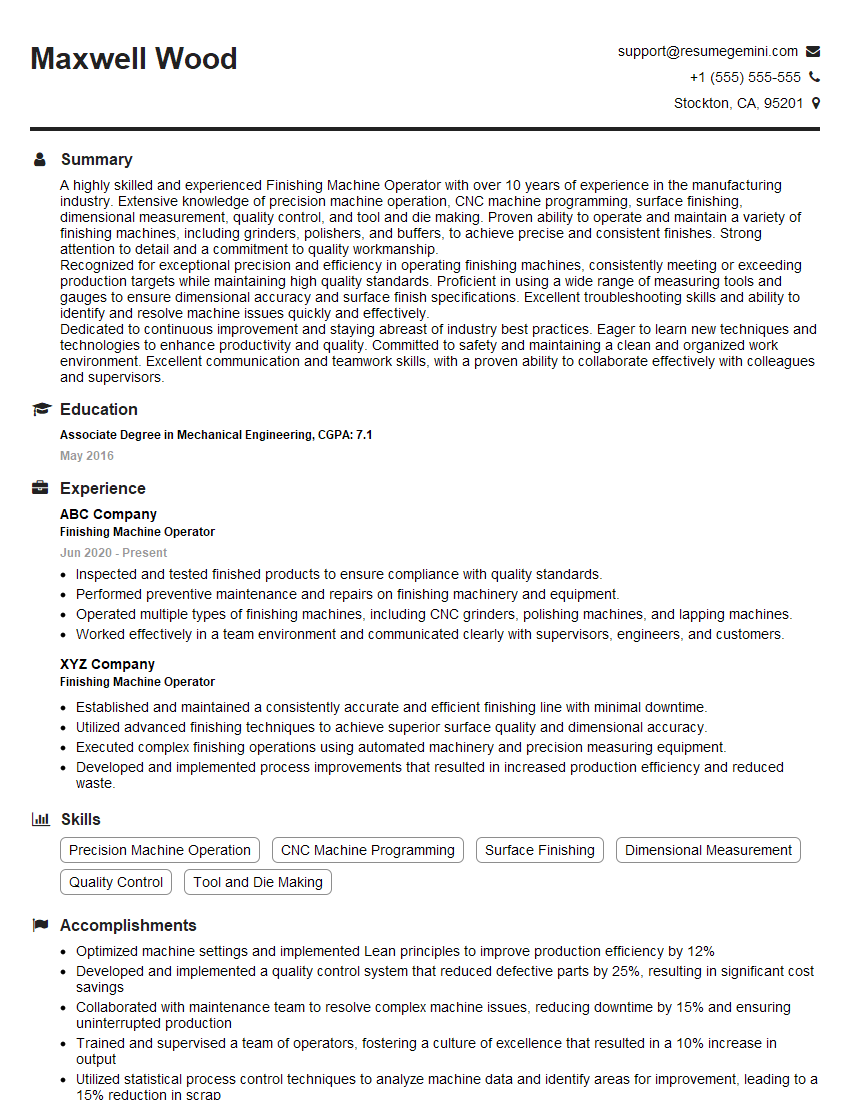
Mastering Polishing Operation techniques opens doors to exciting career advancements, offering opportunities for specialization and increased earning potential. A well-crafted resume is crucial for showcasing your skills and experience to potential employers. To maximize your job prospects, focus on building an ATS-friendly resume that highlights your achievements and keywords relevant to the Polishing Operation field. ResumeGemini is a trusted resource that can help you create a professional and impactful resume. Examples of resumes tailored to Polishing Operation are available to guide you, ensuring your application stands out.
Explore more articles
Users Rating of Our Blogs
Share Your Experience
We value your feedback! Please rate our content and share your thoughts (optional).
What Readers Say About Our Blog
Very informative content, great job.
good