Unlock your full potential by mastering the most common Polyurethane Mold Making interview questions. This blog offers a deep dive into the critical topics, ensuring you’re not only prepared to answer but to excel. With these insights, you’ll approach your interview with clarity and confidence.
Questions Asked in Polyurethane Mold Making Interview
Q 1. Explain the different types of polyurethane systems used in mold making.
Polyurethane systems used in mold making are broadly classified based on their chemistry and curing mechanisms. The most common types are:
- Polyurethane RIM (Reaction Injection Molding) systems: These are fast-reacting, high-pressure systems ideal for large, complex molds. They offer excellent detail reproduction and dimensional stability. Think of car bumpers or large appliance housings – these often use RIM polyurethane molds.
- Polyurethane casting systems: These are slower-reacting, lower-pressure systems, often preferred for smaller, more intricate molds. They are easier to work with and require less specialized equipment. A great example is making molds for jewelry or small figurines.
- Rigid polyurethane foam systems: While less common for the mold itself, rigid foams are often incorporated into mold structures for insulation or support, particularly in larger-scale applications.
- Flexible polyurethane systems: Though less frequently used for the *primary* mold structure, these systems find application in creating flexible molds or mold components, particularly for casting parts with undercuts or complex geometries.
The choice of system depends on factors like the size and complexity of the part being molded, the desired surface finish, and the available equipment. Each system has specific properties – viscosity, pot life (working time), and demolding time – that need careful consideration.
Q 2. Describe the process of preparing a polyurethane mold for casting.
Preparing a polyurethane mold for casting involves several crucial steps. First, the mold cavity must be meticulously cleaned and prepared. This might involve using a release agent (see question 7). The next step is to mix the polyurethane components according to the manufacturer’s instructions; this is critical, as incorrect mixing ratios can lead to poor performance. This often involves using a calibrated measuring device and mixing thoroughly to ensure homogeneous distribution of reactants. The mixed polyurethane is then poured or injected into the prepared mold cavity, taking care to avoid introducing air bubbles. This often involves techniques like degassing under vacuum. Finally, the mold is allowed to cure completely, usually at room temperature or a slightly elevated temperature, depending on the system. The cure time varies depending on the specific polyurethane system and environmental conditions.
Q 3. What are the common causes of defects in polyurethane molds?
Defects in polyurethane molds can stem from several sources:
- Improper mixing: Inconsistent mixing ratios lead to incomplete curing or weak areas in the mold.
- Air entrapment: Air bubbles cause surface imperfections and weaken the mold structure.
- Moisture contamination: Moisture in the components or the environment can inhibit curing or cause blistering.
- Improper demolding: Forceful demolding can damage the mold or the cast part.
- Temperature variations: Extreme temperatures during curing can affect the mold’s properties.
- Catalyst issues: Insufficient or excessive catalyst can lead to incomplete or rapid curing, impacting the mold’s integrity.
Preventing these defects requires meticulous attention to detail in every stage of the process, from material selection and preparation to careful handling during curing and demolding.
Q 4. How do you troubleshoot air bubbles in a polyurethane casting?
Troubleshooting air bubbles in a polyurethane casting requires a multi-pronged approach. Prevention is key. Before pouring, degassing the mixed polyurethane under vacuum is highly effective. Gentle pouring techniques, avoiding splashing, help minimize air incorporation. If bubbles still persist, consider:
- Using a pressure pot: Applying pressure during curing can help compress bubbles, reducing their visibility.
- Adjusting the pouring technique: Experiment with different pouring methods to identify any potential sources of air entrainment.
- Using a higher viscosity resin: This can reduce bubble formation during pouring, but may increase difficulty in filling intricate details.
- Adding a defoamer: Certain defoamers are compatible with polyurethane systems, but their use requires careful attention to the manufacturer’s recommendations, as they may affect the final properties of the cured material.
Understanding the cause of the bubbles (e.g., pouring technique, insufficient degassing) is vital for effective troubleshooting.
Q 5. Explain the importance of proper demolding techniques.
Proper demolding techniques are essential to prevent damage to both the mold and the cast part. Forceful removal can lead to cracks, warping, and surface defects. The ideal demolding procedure depends on the mold design and the material being cast. Key aspects include:
- Allowing sufficient cure time: Ensuring the polyurethane is fully cured prevents premature demolding and potential damage.
- Using appropriate tools: Employing gentle, non-abrasive tools minimizes the risk of scratching the surface.
- Applying release agents: A properly selected release agent facilitates easy demolding and prevents adhesion between the mold and the casting. (See Question 7).
- Understanding mold design: Molds with undercut designs may require specialized demolding techniques.
A smooth, controlled demolding process is crucial for efficient production and the preservation of both the mold and the casting’s quality. Rushing this process can lead to costly rework or even irrecoverable damage.
Q 6. What safety precautions are necessary when working with polyurethane systems?
Working with polyurethane systems necessitates strict adherence to safety precautions. Polyurethanes, especially isocyanates, can be harmful. Key precautions include:
- Respiratory protection: Use appropriate respirators, especially when working with isocyanates.
- Eye protection: Wear safety goggles or face shields to protect your eyes from splashes.
- Skin protection: Wear gloves and protective clothing to prevent skin contact.
- Ventilation: Work in a well-ventilated area or use a dedicated ventilation system to remove fumes.
- Fire safety: Polyurethane systems can be flammable. Keep fire extinguishers readily available and follow appropriate fire safety protocols.
- Proper handling: Follow manufacturer’s instructions carefully regarding mixing ratios, cure times, and handling procedures.
Prioritising safety is paramount. Ignoring these precautions can lead to serious health issues or workplace accidents.
Q 7. Describe your experience with different mold release agents.
My experience encompasses a range of mold release agents, each with specific advantages and disadvantages. The choice depends on the polyurethane system, the mold material, and the cast material. I have worked extensively with:
- Silicone-based release agents: These are widely used and offer good release properties, but can leave a slight residue. They are often a good general-purpose choice.
- Fluorocarbon-based release agents: These provide excellent release and leave minimal residue, but are typically more expensive.
- Wax-based release agents: These are cost-effective but can sometimes leave a heavier residue requiring more cleaning. They’re suitable for simpler molds.
- PTFE (Teflon)-based sprays: These are excellent for preventing sticking and are easily applied but may require more frequent reapplication depending on the number of castings.
In practice, I always test a small batch with different agents before committing to a large-scale project. I meticulously document the performance of each release agent to build a database for future reference, optimizing the selection based on factors like ease of application, release properties, residue left behind and overall cost-effectiveness. Proper cleaning after demolding is crucial regardless of the chosen agent.
Q 8. How do you determine the appropriate cure time for a polyurethane system?
Determining the appropriate cure time for a polyurethane system is crucial for achieving the desired properties of the final product. It’s not a one-size-fits-all answer; it depends on several factors, primarily the specific polyurethane chemistry used (e.g., reaction injection molding (RIM) systems cure faster than castable systems), the ambient temperature and humidity, and the desired final mechanical properties.
Factors Affecting Cure Time:
- Polyurethane Chemistry: Different polyurethane systems have different cure kinetics. Some are fast-curing, ideal for high-volume production, while others are slow-curing, allowing for more complex mold designs and larger castings.
- Temperature: Higher temperatures generally accelerate the curing process. Conversely, lower temperatures slow it down. This is why controlled temperature environments, often using ovens or temperature-controlled rooms, are common in polyurethane molding.
- Humidity: Humidity can affect the curing process, especially for certain polyurethane formulations. High humidity can sometimes interfere with proper crosslinking, leading to weaker parts.
- Mold Design: The size and complexity of the mold will affect the heat dissipation and curing time. Thicker sections take longer to cure.
Determining Cure Time:
- Manufacturer’s Data Sheet: The most reliable information comes directly from the manufacturer’s technical data sheet for the specific polyurethane resin. This sheet provides recommended cure times under specific conditions.
- Testing: Conducting trial runs with small samples is essential to determine the optimal cure time for your specific setup. Use a calibrated thermometer and measure the temperature at various points within the mold to ensure consistent curing.
- Visual Inspection: Experienced mold makers can often visually assess the cure based on the appearance of the polyurethane (e.g., change in color, tackiness). However, this should be used as a secondary method.
Example: Imagine I’m making a small, intricate part using a fast-curing polyurethane system. The manufacturer’s data sheet suggests a cure time of 30 minutes at 70°F (21°C). I’ll conduct a test run, monitoring the temperature and checking the part’s properties after 30 minutes to verify that cure is complete and the desired properties are achieved. If not, I adjust accordingly.
Q 9. What are the key factors to consider when selecting a polyurethane resin for a specific application?
Selecting the right polyurethane resin is critical to the success of a mold-making project. The choice hinges on several key factors, carefully considered to ensure compatibility with the intended application and desired properties.
- Application Requirements: What will the mold be used for? High-temperature applications require heat-resistant polyurethanes. Food-grade applications demand resins certified for food contact. High-impact resistance might require a more durable polyurethane system.
- Mechanical Properties: Consider the necessary tensile strength, flexural strength, hardness (Shore A or D), elongation, and impact resistance. Different polyurethanes offer varying levels of these properties.
- Chemical Resistance: Will the mold be exposed to specific chemicals? Some polyurethanes are resistant to acids, bases, solvents, or oils, while others are not. The resin choice must provide compatibility with the materials that will come in contact with the mold.
- Viscosity and Pot Life: Viscosity determines how easily the polyurethane can be poured or injected into the mold. Pot life refers to the time the mixture remains usable before beginning to cure. These need to align with the molding process and mold design.
- Color and Appearance: While often secondary, the final appearance might be important depending on the application.
- Cost: Different polyurethane systems have varying costs, affecting the overall budget of the project.
Example: For a high-temperature mold used in a foundry, I would choose a high-temperature polyurethane resin capable of withstanding the heat of molten metal. Conversely, for a food-grade mold for candy making, I would opt for a food-safe polyurethane resin that meets regulatory requirements.
Q 10. Explain the process of cleaning and maintaining polyurethane molds.
Cleaning and maintaining polyurethane molds is essential to extend their lifespan and ensure consistent product quality. The process depends on the type of polyurethane, the mold material, and the material cast in the mold. The goal is to remove any residual material and prevent degradation.
Cleaning Process:
- Immediate Cleaning: Remove excess material as soon as the part is demolded. For some flexible urethanes, this can be easily done by hand. Others might require specialized tools.
- Solvent Cleaning: Often, a suitable solvent is used to dissolve any residual material. The choice of solvent is critical and should be compatible with the polyurethane. Check the resin manufacturer’s recommendations.
- Abrasive Cleaning: In cases of stubborn residues, careful abrasive cleaning using soft brushes or abrasive materials (always test on an inconspicuous area first) might be necessary. Avoid harsh abrasives that could damage the mold surface.
- High-Pressure Cleaning: For certain mold types, high-pressure cleaning can be effective but must be done cautiously to avoid damaging the mold.
- Ultrasonic Cleaning: Ultrasonic cleaning is an effective method for removing fine particles and residues from intricate mold designs.
Maintenance:
- Proper Storage: Store molds in a clean, dry, and temperature-controlled environment to prevent degradation. UV exposure can degrade some polyurethanes.
- Regular Inspection: Regularly inspect molds for any damage, wear, or signs of degradation. Repair or replace damaged molds as needed.
- Mold Release Agents: The use of appropriate mold release agents during production can minimize the adherence of cured material and facilitate easier cleaning.
Example: After casting a plastic part in a polyurethane mold, I would first remove excess plastic while it’s still soft. Then I’d clean the mold with a recommended solvent, followed by thorough rinsing and drying before storing it in a designated area. Regular inspections would ensure the mold’s integrity and longevity.
Q 11. How do you measure the viscosity and density of polyurethane resin?
Measuring the viscosity and density of polyurethane resin is crucial for quality control and ensuring consistent results in mold making. These properties significantly impact the mold-filling process and the final product’s properties.
Viscosity Measurement:
- Viscometer: The most accurate method is using a viscometer, which measures the resistance of the fluid to flow. Various types of viscometers exist, such as rotational viscometers and capillary viscometers. The choice depends on the viscosity range and the desired precision.
- Flow Cups: Flow cups are simpler, less expensive tools used for quick estimations of viscosity. They measure the time it takes for a specific volume of resin to flow through an orifice.
Density Measurement:
- Pycnometer: A pycnometer is a precise instrument for determining the density of liquids. It involves measuring the mass of a known volume of the resin.
- Hydrometer: A hydrometer is a simpler tool that floats in the liquid; its depth of immersion indicates the density. It’s suitable for quick estimations, but less precise than a pycnometer.
Importance of Measurements:
Accurate viscosity measurements help determine the appropriate pouring or injection methods. Density measurements are critical for calculating the amount of resin needed for a particular mold.
Example: Before pouring polyurethane resin into a mold, I would use a rotational viscometer to precisely measure its viscosity. This ensures that the resin flows smoothly into the mold, preventing air pockets or incomplete filling. A pycnometer would be used to verify that the density is within the manufacturer’s specified range to ensure consistent part quality.
Q 12. Describe your experience with different types of molding equipment.
My experience encompasses a range of molding equipment, from simple hand-pouring setups to automated high-pressure injection molding machines. Each type has its own advantages and limitations, suited to different applications and production volumes.
- Hand Pouring: Ideal for small-scale projects and prototyping. It’s relatively inexpensive and easy to learn but less efficient for large-scale production.
- Pressure Pot Casting: Used for larger castings and to eliminate air bubbles. It involves using a pressure pot to apply pressure during the curing process, ensuring better density and fewer voids.
- Reaction Injection Molding (RIM): This high-pressure process is used for high-volume production of large parts. It offers fast cycle times but requires specialized and expensive equipment.
- Vacuum Casting: Removes trapped air during the pouring process, resulting in high-quality castings. This is particularly useful for making molds with fine details.
- CNC Machining: While not directly polyurethane molding, CNC machining plays a significant role in creating the mold itself. It offers high precision and can be used to create very intricate mold designs.
Example: In a recent project requiring a high-volume production run of automotive parts, I utilized a RIM system. Its speed and precision ensured optimal efficiency. For a smaller, more intricate prototype, I used vacuum casting to achieve a very high-quality mold with fine details.
Q 13. How do you interpret technical drawings and specifications for mold making?
Interpreting technical drawings and specifications is a fundamental skill in mold making. It ensures the mold is produced accurately and meets the required dimensions and tolerances.
Key Aspects of Interpretation:
- Dimensions and Tolerances: Precisely measuring and adhering to the specified dimensions and tolerances is essential. Understanding the symbols and notations for tolerances (e.g., ±0.1 mm) is critical.
- Material Specifications: The drawings should specify the materials required for the mold and the part to be cast. This includes identifying the polyurethane resin and any other materials used in the mold construction.
- Surface Finish Requirements: The drawings may specify the surface finish required on the final part. This dictates the surface finish requirements for the mold itself.
- Draft Angles: Correctly understanding and implementing draft angles is critical for easy demolding of the part. Insufficient draft angles can lead to difficulty in removing the part from the mold, potentially damaging it.
- Feature Details: Detailed examination of the drawings is essential to ensure all features, such as undercuts, internal cavities, and intricate details, are correctly captured in the mold design.
Tools and Techniques:
- CAD Software: Many mold makers use CAD software to create 3D models from the technical drawings, facilitating better visualization and ensuring accuracy.
- Measurement Tools: Precision measurement tools, such as calipers and micrometers, are used to verify the dimensions of the mold during and after the manufacturing process.
Example: I once worked on a project where a critical dimension was missed in the initial interpretation of the drawings, leading to a flawed mold. This highlighted the importance of thorough review and double-checking of all specifications before starting the mold-making process.
Q 14. Explain the process of creating a mold from a 3D model.
Creating a mold from a 3D model typically involves several steps, requiring expertise in both CAD/CAM software and polyurethane mold-making techniques. The process allows for the production of highly accurate and complex molds.
Steps Involved:
- 3D Model Evaluation: The first step is carefully evaluating the 3D model for manufacturability. This involves checking for any issues such as insufficient draft angles, undercuts, or complex geometries that could hinder the mold-making process.
- Mold Design: A suitable mold design is created based on the 3D model. This often involves creating a two-part mold (or more, depending on the complexity) to allow for easy demolding of the part. Considerations include material selection, ease of manufacture, and mold longevity.
- CAM Programming (CNC Machining): For complex mold designs, CNC machining is often employed. CAM software is used to generate the necessary toolpaths for the CNC machine to carve out the mold from a suitable material (e.g., aluminum, steel, or plastic).
- Mold Construction: The mold is constructed using the specified materials and techniques. This might involve machining, casting, 3D printing, or a combination of techniques.
- Mold Finishing: The mold’s surface is carefully finished to ensure a smooth and accurate casting. This might involve polishing, sanding, or other surface treatments.
- Mold Testing: A test casting is performed to validate the mold’s functionality and identify any potential issues. This allows for corrections or adjustments before full-scale production.
Example: I recently created a mold for a complex biomechanical part from a 3D model. After evaluating the model and designing the two-part mold, we used a five-axis CNC machine to precisely machine the mold cavities from aluminum. Following surface finishing and rigorous testing, the mold produced high-quality castings consistently.
Q 15. What are the advantages and disadvantages of using polyurethane in mold making?
Polyurethane offers several advantages in mold making, primarily its versatility and relatively low cost. It can be cast in intricate shapes, cures relatively quickly, and offers good dimensional stability with proper formulation and processing. However, polyurethane’s susceptibility to shrinkage and its limited temperature resistance compared to other materials like metal are significant drawbacks. For example, while a polyurethane mold might be ideal for a single, short-run production of a small, intricate plastic part, it wouldn’t be suitable for high-volume production of items requiring high-temperature curing or extreme durability.
- Advantages: Versatility, relatively low cost, fast curing time, good dimensional stability (with proper techniques).
- Disadvantages: Susceptibility to shrinkage and warping, lower temperature resistance compared to metal or some other polymers, limited lifespan for high-volume production.
Career Expert Tips:
- Ace those interviews! Prepare effectively by reviewing the Top 50 Most Common Interview Questions on ResumeGemini.
- Navigate your job search with confidence! Explore a wide range of Career Tips on ResumeGemini. Learn about common challenges and recommendations to overcome them.
- Craft the perfect resume! Master the Art of Resume Writing with ResumeGemini’s guide. Showcase your unique qualifications and achievements effectively.
- Don’t miss out on holiday savings! Build your dream resume with ResumeGemini’s ATS optimized templates.
Q 16. How do you ensure the dimensional accuracy of polyurethane molds?
Ensuring dimensional accuracy in polyurethane molds requires a meticulous approach starting with the master model. The master model must itself be precisely dimensioned. We use high-precision CNC machining for creating master models when accuracy is critical. Next, the selection of the polyurethane system is crucial. Low-viscosity polyurethane systems are preferred to minimize air entrapment which can lead to dimensional inconsistencies. The casting process needs to be controlled carefully, maintaining a consistent temperature and pressure during the pour and cure cycles. A properly designed mold box is essential to prevent warping during cure. Finally, post-curing procedures, including controlled temperature and humidity conditions, help minimize shrinkage. Regularly checking dimensions with calibrated measuring tools throughout the process, including comparing the final mold to the original design specifications is essential to catch any deviations early.
Q 17. Describe your experience with different types of mold materials (e.g., silicone, aluminum).
My experience spans various mold-making materials. Silicone offers excellent flexibility and release properties, making it ideal for intricate designs and low-volume production, especially where undercuts are present. However, silicone can be relatively expensive and its tear strength can be a concern for molds intended for long-term use. Aluminum, on the other hand, offers exceptional durability and heat resistance, suitable for high-volume production and high-temperature applications. But its cost is significantly higher and it requires more specialized machining expertise compared to polyurethane or silicone. Polyurethane sits in the middle, offering a balance between cost, ease of use, and dimensional accuracy, making it my go-to choice for a wide range of projects unless the application requires the extreme durability of aluminum or the flexibility of silicone.
I’ve found that the optimal material selection depends heavily on the specific project requirements, including the number of castings needed, the complexity of the design, the required dimensional accuracy, and the budget available.
Q 18. How do you handle and dispose of waste polyurethane materials responsibly?
Responsible handling and disposal of waste polyurethane are critical for environmental protection and worker safety. We employ several strategies. Firstly, we minimize waste through careful planning and precise material usage. Leftover polyurethane is often used in less demanding applications or for testing purposes. For solid waste, we comply with local regulations and often use licensed waste disposal companies specialized in handling hazardous materials (as some polyurethane formulations may be). Liquid waste, such as uncured polyurethane, requires extra care. We use designated containers for collection and neutralize any remaining reactive components following manufacturer guidelines before disposal through authorized channels. Safety data sheets (SDS) are reviewed carefully for each polyurethane system used to understand and follow the appropriate handling and waste disposal procedures.
Q 19. Explain the concept of Shore hardness and its relevance to polyurethane mold making.
Shore hardness is a measure of the resistance of a material to indentation. In polyurethane mold making, it’s crucial because it directly impacts the mold’s durability, flexibility, and ability to release the casting. A higher Shore hardness (e.g., 90A) indicates a harder, more rigid material, better suited for molds requiring more resistance to wear and tear during repeated use. A lower Shore hardness (e.g., 30A) implies a softer, more flexible material that’s ideal for intricate parts or those with undercuts, where flexibility aids in the release of the casting. The choice of Shore hardness depends heavily on the intended application. For example, a mold for a delicate resin casting would use a lower Shore hardness than a mold for a hard plastic part.
Q 20. How do you identify and address shrinkage or warping in polyurethane castings?
Shrinkage and warping in polyurethane castings are common issues stemming from factors such as improper mixing ratios, variations in temperature during curing, and insufficient degassing of the polyurethane mixture. Identifying these issues involves careful visual inspection of the casting, comparing dimensions to the original design, and potentially using advanced measurement tools like 3D scanning. Addressing these problems requires a multi-pronged approach. We first review the mixing process to ensure precise adherence to the manufacturer’s specifications. We then carefully monitor the temperature and humidity of the curing environment, keeping it consistent to prevent uneven shrinkage. Improved degassing techniques, like vacuum degassing, can minimize air bubbles that can later lead to inconsistencies. In some cases, slight adjustments to the mold design can also help minimize warping tendencies.
Q 21. What are the different types of polyurethane foam and their applications in mold making?
Polyurethane foams come in various types, each with unique properties. Rigid polyurethane foams are very strong and offer excellent insulation, though less flexibility. They find limited application in mold making, typically used for creating supportive structures or in specialized mold designs. Flexible polyurethane foams are more commonly used, providing cushioning and shock absorption, although not directly for mold surfaces. In mold making, the focus is less on foam and more on liquid cast polyurethane systems, including those that cure to a solid, rubbery state. These are used to create the mold cavity itself; they can be cast as a single piece or multiple layers depending on the complexity of the part.
Q 22. Describe your experience with quality control processes in polyurethane mold making.
Quality control in polyurethane mold making is paramount. It’s a multi-stage process starting even before the mold is created. We begin with rigorous inspection of raw materials – ensuring the polyurethane resin components meet the specified viscosity, density, and reactivity. Throughout the mold-making process, we utilize dimensional inspection tools such as calipers and CMM (Coordinate Measuring Machines) to verify that the mold cavity conforms precisely to the CAD model. This minimizes casting defects like underfills or flash. During the curing process, temperature and humidity are closely monitored to prevent premature or uneven curing. Finally, we conduct trial runs with the mold to assess the ease of part ejection and surface finish of the cast polyurethane part. Any deviations from the standards necessitate investigation and corrective action, which might include adjusting the curing parameters or refining the mold design itself. For example, I once identified a recurring issue of sink marks in a complex automotive part. Through meticulous analysis, we traced it back to a slight imperfection in the mold’s cooling channels and corrected the issue by improving the design and implementing a revised curing protocol.
Q 23. How do you troubleshoot problems with mold adhesion or release?
Mold adhesion or release problems are common, but usually solvable. Adhesion issues, where the polyurethane sticks stubbornly to the mold, often stem from incorrect release agent application, improper mold surface preparation (lack of polishing or contamination), or using a resin that’s too reactive for the mold material. Release problems, conversely, where the cast part separates prematurely from the mold, can result from using too much release agent, incomplete curing of the polyurethane, or inadequate mold design. Troubleshooting typically starts with identifying the root cause. We systematically examine the mold surface for imperfections or contamination, assess the release agent application technique and concentration, and check the polyurethane resin’s processing parameters. Solutions can involve switching to a more compatible release agent, adjusting the curing cycle, polishing the mold surface to a higher finish, or even redesigning problematic mold sections. For example, I once encountered consistent adhesion issues with a silicone mold. By switching to a fluorinated release agent and pre-treating the mold surface with a specialized primer, we solved the problem completely.
Q 24. What are the different types of mold designs used in polyurethane casting?
Polyurethane casting utilizes diverse mold designs, tailored to the application and complexity of the part. Common types include:
- Open molds: Simple, two-part molds suitable for flat or relatively simple shapes. Think of making a simple slab of polyurethane.
- Closed molds: More complex molds with multiple parts, allowing for intricate geometries and undercuts. These are common for making intricate components.
- Two-part molds: The most basic closed mold type, featuring a top and bottom half. Ideal for parts with symmetrical designs.
- Multiple-part molds: Used for very complex shapes with multiple undercuts or internal features. This may require sophisticated mechanisms for mold opening and part extraction.
- Injection molds: High-pressure molds for injecting liquid polyurethane, commonly used for high-volume production and precise parts. Think of car parts manufacturing.
- Rotational molds: Used to create hollow parts by rotating the mold with liquid polyurethane inside. Common for making decorative or hollow items.
The choice of mold design depends on factors like the part’s complexity, production volume, and budget. Each design offers a different trade-off between cost, complexity, and production efficiency.
Q 25. Explain your experience with different mixing techniques for polyurethane resins.
Mixing polyurethane resins requires precision and control, as the chemical reaction between the isocyanate and polyol components is time-sensitive and exothermic (heat-producing). I’ve experience with various methods:
- Manual mixing: Using appropriately sized containers and mixing sticks, this method is suitable for small batches but lacks the consistency of automated methods. It’s vital to ensure thorough mixing to prevent uneven curing.
- Mechanical mixing: Utilizes specialized equipment like planetary mixers or high-shear mixers to ensure uniform blending. This method is ideal for larger batches and offers greater control over the mixing process.
- Metering machines: These automated systems precisely measure and dispense the resin components. This eliminates variations caused by manual mixing and optimizes the process for greater repeatability.
The choice of mixing technique depends largely on the scale of production. With large-scale production, automated metering machines are preferred for consistency and efficiency. However, for small-scale projects or prototyping, manual mixing may suffice. Regardless of the method, maintaining strict cleanliness and adhering to the manufacturer’s recommended mixing ratios are crucial to achieve desired results and prevent catastrophic reactions.
Q 26. How do you manage multiple projects and deadlines in a fast-paced manufacturing environment?
Managing multiple projects and deadlines in a fast-paced manufacturing setting necessitates effective organization and prioritization. I use project management tools and strategies like:
- Prioritization Matrix: I rank projects based on urgency and importance, focusing on high-priority tasks first. This helps ensure the most critical projects are completed on time.
- Gantt Charts: These visual tools help track project timelines, identify potential bottlenecks, and monitor progress. This keeps everyone informed and helps avoid delays.
- Regular Team Meetings: Frequent communication with team members keeps everyone aligned and facilitates problem-solving. This proactive approach helps prevent minor issues from escalating into major delays.
- Time Blocking: Allocating specific time slots for different tasks enhances focus and improves productivity.
Moreover, effective delegation and clear communication are essential for handling multiple projects simultaneously. This helps ensure tasks are completed efficiently and within the designated timelines. I’ve successfully managed numerous concurrent projects, often with tight deadlines, by implementing these strategies.
Q 27. Describe your experience using Computer-Aided Design (CAD) software for mold design.
I’m proficient in several CAD software packages, including SolidWorks and Autodesk Inventor. My expertise extends beyond just creating 3D models; I understand how to design for manufacturability, incorporating features that simplify mold creation and part ejection. This includes carefully designing parting lines, draft angles, and cooling channels. For example, I once designed a complex mold with internal cavities using SolidWorks. By employing advanced surfacing techniques and FEA (Finite Element Analysis), I optimized the mold design for structural integrity and minimized the risk of warping during the curing process. The resulting mold consistently produced high-quality parts and significantly reduced manufacturing lead times. I also use CAD to generate CNC machining instructions for rapid prototyping and mold fabrication.
Q 28. Explain your understanding of the different types of tooling used in polyurethane molding.
The choice of tooling in polyurethane molding significantly impacts the quality, efficiency, and cost of production. Common tooling materials include:
- Aluminum: Relatively inexpensive and easy to machine, ideal for prototyping or low-volume production. However, it wears more quickly than harder materials.
- Steel: Durable and resistant to wear, suitable for high-volume production. Requires more specialized machining and is more expensive than aluminum.
- Silicone rubber: Flexible and easy to create complex shapes, often used for creating prototypes or making molds for small batch production. Less durable than metal tools.
- Epoxy: A relatively low-cost option for creating simpler molds, especially for low volume production.
The selection of tooling material depends on factors such as the number of parts to be produced, the complexity of the mold, and the budget. For instance, a high-volume production run might utilize steel tooling for its longevity, while a prototype could be cost-effectively made using aluminum or silicone rubber tooling. Proper tool selection is vital for optimizing the overall manufacturing process.
Key Topics to Learn for Your Polyurethane Mold Making Interview
- Polyurethane Chemistry Fundamentals: Understanding isocyanate and polyol reactions, catalyst systems, and the influence of different chemical components on final product properties.
- Mold Design and Construction: Knowledge of various mold materials (aluminum, steel, silicone), design considerations for efficient casting, gating systems, and venting strategies. Practical application includes analyzing existing mold designs for potential improvements.
- Mixing and Metering Systems: Understanding different mixing techniques (high-pressure, low-pressure), the importance of precise metering ratios, and troubleshooting common mixing issues. Practical experience with various metering equipment is highly valuable.
- Casting Techniques and Processes: Familiarity with different casting methods (reaction injection molding (RIM), resin transfer molding (RTM), etc.), understanding cure cycles, and demolding procedures. Troubleshooting common casting defects is crucial.
- Quality Control and Testing: Knowledge of various testing methods (dimensional accuracy, hardness testing, tensile strength) to ensure product quality and meet specifications. Understanding statistical process control (SPC) is beneficial.
- Safety Procedures and Regulations: Familiarity with relevant safety regulations and handling procedures for isocyanates and other hazardous materials. Demonstrating a commitment to safety is vital.
- Troubleshooting and Problem-Solving: Ability to diagnose and resolve common issues encountered during the molding process, such as air entrapment, incomplete curing, and dimensional inaccuracies. This often involves applying theoretical knowledge to practical scenarios.
- Maintenance and Repair of Molding Equipment: Understanding preventative maintenance schedules and troubleshooting common equipment malfunctions. Practical experience is highly valued.
Next Steps
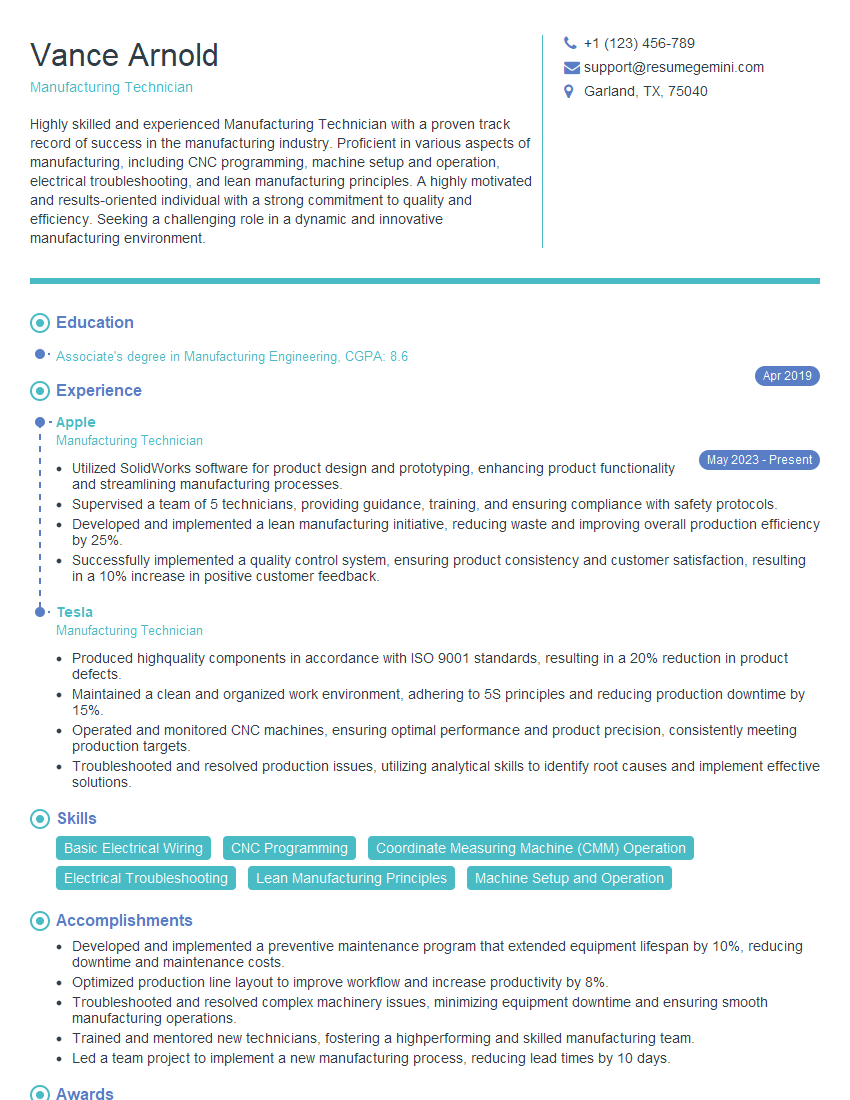
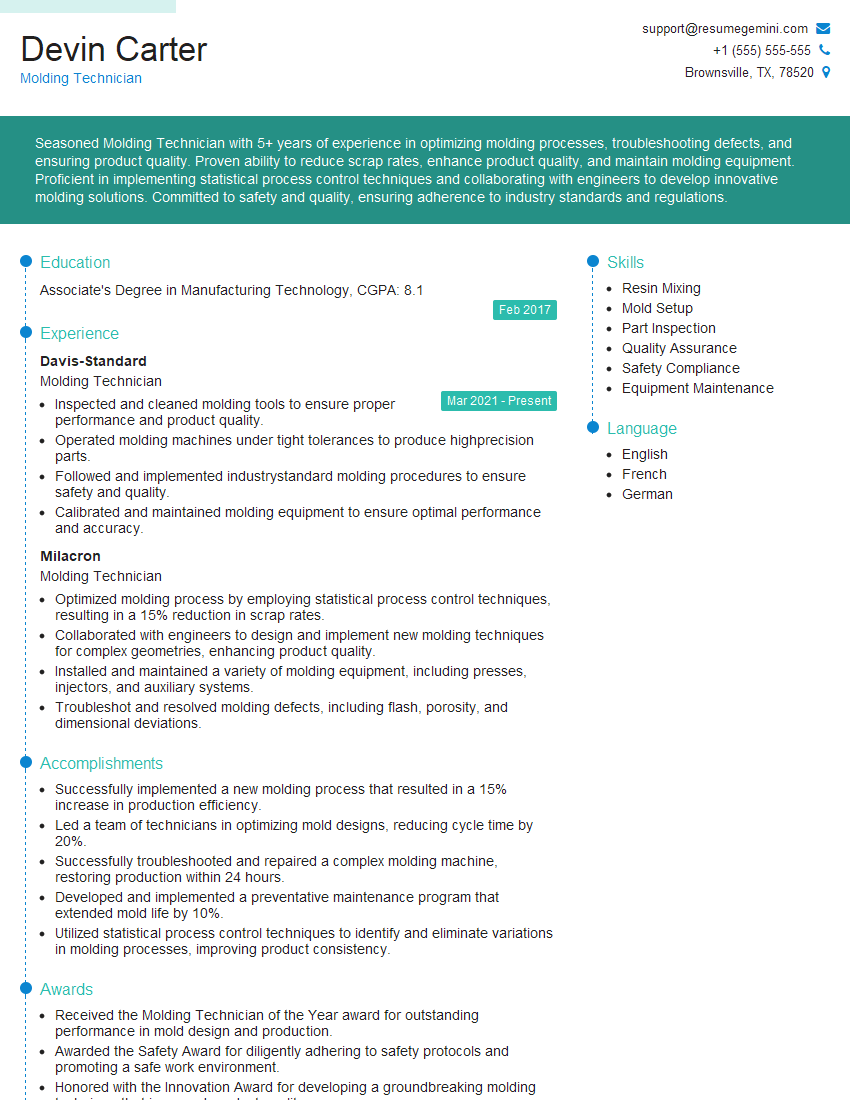
Mastering polyurethane mold making opens doors to exciting career opportunities with significant growth potential in diverse industries. To maximize your job prospects, create an ATS-friendly resume that effectively highlights your skills and experience. ResumeGemini is a trusted resource that can help you build a professional and impactful resume tailored to the specific requirements of polyurethane mold making positions. Examples of resumes tailored to this field are available to help you showcase your qualifications effectively.
Explore more articles
Users Rating of Our Blogs
Share Your Experience
We value your feedback! Please rate our content and share your thoughts (optional).
What Readers Say About Our Blog
Very informative content, great job.
good