The right preparation can turn an interview into an opportunity to showcase your expertise. This guide to Post Driving interview questions is your ultimate resource, providing key insights and tips to help you ace your responses and stand out as a top candidate.
Questions Asked in Post Driving Interview
Q 1. Describe your experience operating a postal delivery vehicle.
My experience operating postal delivery vehicles spans over seven years, encompassing various vehicle types, from small vans to larger trucks. I’m proficient in operating both manual and automatic transmissions, and I’m well-versed in pre-trip vehicle inspections, ensuring safety and operational efficiency. I’ve consistently maintained a clean driving record and have a thorough understanding of traffic laws and regulations pertaining to commercial vehicle operation. For example, I routinely check tire pressure, fluid levels, and lights before each route, and I’m adept at navigating tight city streets and rural roads alike.
Beyond the technical aspects, I’ve developed a keen sense of spatial awareness and route optimization, allowing me to deliver mail efficiently and safely, even under pressure. I am also familiar with using GPS navigation systems, along with maintaining accurate logbooks detailing mileage and fuel consumption.
Q 2. How do you prioritize your delivery route for maximum efficiency?
Prioritizing a delivery route for maximum efficiency involves a multi-step process. First, I utilize the provided route optimization software, which typically organizes deliveries geographically. This software often accounts for one-way streets, traffic patterns, and delivery times. However, I don’t solely rely on this software. My experience allows me to make adjustments based on real-time conditions. For instance, I might re-sequence deliveries to avoid known traffic congestion areas or incorporate time-sensitive parcels earlier in the route.
Secondly, I group deliveries based on proximity and type. For instance, I’ll cluster apartment buildings or business parks together to minimize travel time between stops. Similarly, I’ll prioritize express mail or parcels requiring special handling, ensuring their timely delivery. Think of it like a puzzle – I’m constantly rearranging the pieces to create the most efficient path.
Q 3. Explain your process for handling undeliverable mail.
Handling undeliverable mail involves a systematic approach. When a piece of mail cannot be delivered due to an incorrect address, the recipient being absent, or refusal, I follow a specific protocol. First, I carefully document the reason for non-delivery on the mail piece itself. This might include noting ‘addressee unknown,’ ‘no such address,’ or ‘refused.’ Then, I return the mail to the post office, where it undergoes a process of further attempts at delivery, before potentially being returned to the sender or disposed of according to postal regulations.
If there’s an opportunity to leave a notice for the recipient (like a forwarding address or safe place to leave the mail), I’ll do so, carefully documenting this action as well. This is critical for maintaining accurate records and ensuring accountability.
Q 4. How do you maintain accurate records of deliveries?
Maintaining accurate delivery records is paramount. We use handheld scanners to record each delivery. These scanners automatically log the time and date of delivery, along with the recipient’s signature (where applicable). The data is then uploaded to the central system, providing a comprehensive audit trail of every delivery made. This electronic system is backed up by physical documentation, including delivery manifests, which list all mail pieces assigned to a specific route. These manifests are compared with the electronic records at the end of the day to ensure complete accuracy. If a discrepancy occurs, we have a robust process for reconciliation and investigation.
For example, I’ve used this system to quickly resolve minor issues like a missing signature by referring back to the scanned delivery confirmation. The accuracy of these records is not only crucial for postal operations but also protects both the sender and receiver in case of any disputes.
Q 5. Describe your experience navigating unfamiliar routes.
Navigating unfamiliar routes requires careful planning and resourcefulness. My primary tool is GPS navigation, but I also rely on my knowledge of street patterns and landmarks. Before starting a new route, I spend time familiarizing myself with the area’s map, anticipating potential challenges such as one-way streets or areas with limited access. I always allow extra time for unexpected delays or detours. I’ve found that a proactive approach, coupled with adaptability, helps me to navigate new areas safely and efficiently, even with limited experience in that specific region.
In the absence of a GPS signal, which can happen in remote areas, I always carry a paper map as a backup. Using a combination of these resources ensures I can successfully complete deliveries in both familiar and unfamiliar territories.
Q 6. How do you manage your time effectively during peak delivery periods?
Managing time effectively during peak delivery periods requires meticulous planning and efficient execution. This often involves prioritizing time-sensitive mail and parcels. For example, express mail will always take precedence. I optimize my route even more rigorously during peak times, utilizing all the tools and strategies mentioned earlier. I also make sure to take short, planned breaks throughout the day to avoid burnout and maintain focus. Prioritization is key; if I find myself falling behind schedule, I re-evaluate my route to determine where adjustments can be made without compromising delivery deadlines.
Clear communication with the postal depot is also critical during peak periods. If unforeseen circumstances arise, such as traffic accidents or severe weather, I immediately inform my supervisor to allow for appropriate adjustments to the delivery schedule and to avoid unnecessary delays.
Q 7. How do you handle challenging weather conditions during deliveries?
Handling challenging weather conditions, such as snow, ice, or heavy rain, requires a cautious and adaptable approach. Safety is my primary concern. Before venturing out in inclement weather, I always check the forecast and assess the road conditions. If conditions are hazardous, I might request alternate delivery arrangements or delays, prioritizing the safety of myself and others. When operating in adverse weather, I drive at reduced speeds, maintain a greater following distance, and exercise extra caution around pedestrians and other vehicles.
My vehicle is equipped with appropriate safety features such as winter tires (when required) and good wipers, and I always ensure the vehicle is in optimal working order. Furthermore, I am very familiar with winter driving techniques, such as using appropriate braking and steering methods to maintain vehicle control on slippery surfaces.
Q 8. How do you ensure the safety and security of mail and packages?
Ensuring the safety and security of mail and packages is paramount in postal delivery. My approach is multifaceted and incorporates several key strategies. First, I meticulously follow all company procedures for handling and securing packages, which includes verifying addresses, ensuring proper packaging, and using appropriate security seals where necessary. This minimizes the risk of damage or loss during transit.
Secondly, I am vigilant about my surroundings. I avoid leaving packages unattended, particularly in high-risk areas, and I am aware of my immediate environment for any potential threats. For example, if I notice suspicious activity near a drop-off location, I will adjust my approach to ensure the safety of the package and myself. Thirdly, I regularly inspect my vehicle to ensure that all packages are securely stowed and cannot be easily accessed. This involves using appropriate restraints and compartmentalizing items based on size and fragility.
Finally, I am trained in recognizing and reporting suspicious behavior or security breaches. This proactive approach contributes to a safer environment for both myself and the items I deliver.
Q 9. What is your experience with GPS navigation systems?
I have extensive experience using GPS navigation systems, both in-vehicle and on handheld devices. My experience goes beyond simply following directions; it encompasses utilizing these systems to optimize delivery routes, accounting for traffic conditions, road closures, and construction delays. This allows me to efficiently plan my day, ensuring timely delivery and minimizing fuel consumption. I’m proficient in using various mapping applications and am comfortable interpreting real-time traffic updates to adjust my route dynamically.
For instance, during peak hours, the GPS might suggest an alternate route to avoid congestion, which saves me time and ensures I meet my delivery deadlines. I also utilize GPS to track my mileage and ensure accurate reporting of my daily travels for reimbursement and logistical purposes.
Q 10. How do you handle customer inquiries and complaints?
Handling customer inquiries and complaints requires patience, empathy, and a problem-solving approach. My strategy involves active listening to fully understand the customer’s concern. I then clearly and concisely explain the situation, offering solutions where possible. If I cannot resolve the issue immediately, I escalate the problem to the appropriate department, keeping the customer informed every step of the way. I always aim to leave the customer feeling heard and respected, even if the outcome isn’t perfectly satisfactory.
For example, if a customer complains about a late delivery, I first apologize for the inconvenience. Then, I would investigate the reason for the delay, perhaps referencing delivery tracking information. Depending on the cause, I might offer a partial refund, or explain steps to prevent future delays. Maintaining a professional and understanding demeanor is critical in building positive customer relationships.
Q 11. Describe your experience with different types of postal vehicles.
Throughout my career, I’ve operated a variety of postal vehicles, ranging from small vans ideal for city delivery to larger trucks suited for rural routes. I’m experienced with both gasoline and diesel-powered vehicles, and I understand the operational differences and maintenance requirements of each. Furthermore, I am familiar with vehicles equipped with specialized features such as liftgates for heavier packages or temperature-controlled compartments for sensitive items.
I’ve found that the vehicle type greatly influences delivery efficiency. Smaller vans provide better maneuverability in congested urban areas, while larger trucks offer greater cargo capacity for less frequent, but higher-volume rural deliveries. Understanding these nuances allows me to adapt my delivery approach based on the vehicle and route assigned.
Q 12. What are your strategies for staying organized and managing your workload?
Staying organized and managing my workload effectively involves a combination of techniques. First, I prioritize tasks based on delivery deadlines and geographical location. This helps me optimize my route and avoid unnecessary travel. Second, I utilize electronic devices and mobile applications to track my progress and receive real-time updates on delivery schedules and route adjustments. Third, I maintain a clean and organized vehicle to ensure quick and easy access to packages.
For example, I might begin my day by reviewing my digital manifest, grouping packages based on delivery zones. Then, I meticulously load my vehicle, placing frequently accessed packages in easily accessible locations. This methodical approach reduces wasted time searching for items and allows for a smooth and efficient delivery process.
Q 13. How do you maintain a clean and well-maintained delivery vehicle?
Maintaining a clean and well-maintained delivery vehicle is essential for both safety and efficiency. My routine includes daily cleaning, emptying trash, and removing any debris. I regularly check the vehicle’s fluid levels (oil, coolant, etc.), tire pressure, and lights to ensure everything is functioning correctly. Additionally, I report any mechanical issues immediately to avoid potential breakdowns. I also perform regular inspections of the vehicle’s interior and exterior for damage. This proactive approach helps prevent problems and prolongs the vehicle’s lifespan.
Think of it like this: a clean and organized vehicle is like a well-organized workspace – it contributes to a more efficient and productive work day. A well-maintained vehicle also ensures my safety and the safety of others on the road.
Q 14. Explain your process for identifying and reporting potential hazards.
Identifying and reporting potential hazards is a critical aspect of my job. My process starts with being observant. I look out for things like potholes, road debris, construction zones, aggressive drivers, or anything that could potentially cause an accident or impede delivery. Once I identify a hazard, I immediately report it to my supervisor using the company’s designated reporting system. This usually involves providing details about the location, type of hazard, and any potential safety concerns.
For instance, if I encounter a significant pothole, I would note its location using GPS coordinates, describe its size and depth, and report it immediately. Reporting hazards promptly contributes to a safer working environment for everyone and helps prevent accidents.
Q 15. How familiar are you with postal regulations and procedures?
My familiarity with postal regulations and procedures is extensive. I’ve spent years working in this field and have a deep understanding of the Postal Service Manual, including addressing, package handling, hazardous materials regulations, and delivery protocols. This includes knowledge of specific regulations concerning different mail classes (First-Class Mail, Priority Mail, Package Services), weight and size restrictions, and prohibited items. I understand the importance of accurate record-keeping and following all procedures to ensure timely and compliant delivery of mail and packages.
For example, I am proficient in using the postal scanning devices to track package movement and ensure accurate delivery confirmation. I also understand the procedures for handling undeliverable mail, including return to sender and forwarding procedures.
Career Expert Tips:
- Ace those interviews! Prepare effectively by reviewing the Top 50 Most Common Interview Questions on ResumeGemini.
- Navigate your job search with confidence! Explore a wide range of Career Tips on ResumeGemini. Learn about common challenges and recommendations to overcome them.
- Craft the perfect resume! Master the Art of Resume Writing with ResumeGemini’s guide. Showcase your unique qualifications and achievements effectively.
- Don’t miss out on holiday savings! Build your dream resume with ResumeGemini’s ATS optimized templates.
Q 16. How do you handle unexpected delays or disruptions to your route?
Unexpected delays or disruptions are a part of the job. My approach involves a combination of proactive planning and reactive problem-solving. If I encounter road closures, for example, I immediately assess alternative routes, utilizing GPS and my knowledge of local streets. I communicate these changes to my supervisor, providing estimated time adjustments. If a vehicle malfunction occurs, I follow established procedures – safely securing the vehicle and contacting the appropriate maintenance team. In case of severe weather conditions, I prioritize safety, seeking shelter if necessary, and reporting the situation to my supervisor for instructions. Keeping clear communication throughout is vital in maintaining efficiency and safety.
For instance, during a snowstorm, I rerouted a portion of my route to avoid impassable roads, informing my supervisor and adjusting my delivery schedule accordingly. This ensured timely delivery of essential items while prioritizing safety.
Q 17. How do you maintain a professional and courteous demeanor while interacting with customers?
Maintaining a professional and courteous demeanor is paramount. I believe in treating every customer with respect and empathy, regardless of the situation. This includes greeting customers politely, clearly explaining any issues that might arise, and listening attentively to their concerns. Even during stressful moments, like heavy delivery volume or addressing customer complaints, I strive to maintain a calm and positive attitude, resolving issues efficiently and effectively. I always aim to reflect the positive image of the postal service.
For example, I once had to explain a slight delay in a package delivery due to unforeseen circumstances. I did so with a sincere apology, providing a clear explanation, and offering alternative solutions if possible, resulting in a positive interaction despite the initial disappointment.
Q 18. What is your understanding of safety regulations related to driving a postal vehicle?
Safety is my top priority. My understanding of safety regulations includes adhering to all traffic laws, performing regular vehicle inspections (checking tires, lights, brakes), and following defensive driving techniques to avoid accidents. I am familiar with the proper procedures for handling hazardous materials, and I know when to seek assistance from supervisors in complex situations. I am also trained in safe loading and unloading practices to prevent injuries. Regular training sessions on safety procedures reinforce my commitment to safety standards.
Specifically, I am aware of the regulations surrounding the use of seatbelts, the proper use of warning lights, and safe driving practices during different weather conditions. I consistently adhere to these regulations, ensuring both my safety and the safety of others.
Q 19. How do you ensure compliance with all company policies and procedures?
Ensuring compliance with company policies and procedures is essential for effective and responsible postal service delivery. This includes strict adherence to schedules, proper handling of mail and packages, wearing the correct uniform, and following all safety regulations. I regularly review company updates and maintain familiarity with all protocols. If any questions or ambiguities arise, I actively seek clarification from supervisors or managers to avoid any non-compliance. Honest and open communication is key in ensuring adherence to all organizational regulations.
For instance, when new procedures for handling sensitive mail were implemented, I actively sought training and clarification to ensure I understood and implemented them correctly.
Q 20. Describe a time you had to overcome a significant challenge during a delivery route.
During a severe ice storm, many roads in my delivery route were impassable. This presented a significant challenge as I had a large volume of time-sensitive packages. My solution involved prioritizing deliveries based on urgency and accessibility. I contacted my supervisor to report the situation and request assistance, if possible. I used alternative routes where safe and possible, walking portions of the route where necessary to ensure timely delivery of essential packages such as medical supplies and other time-sensitive items. I documented all challenges and delays encountered in my delivery report. Though it required extra effort and time, I successfully completed the majority of my route, ensuring crucial deliveries reached their destinations.
Q 21. How do you prioritize efficiency while maintaining safety standards?
Prioritizing efficiency while maintaining safety is a delicate balance, requiring careful planning and execution. I optimize my route using efficient planning tools while acknowledging potential obstacles such as traffic congestion or road closures. This involves familiarizing myself with the delivery area, utilizing GPS technology, and prioritizing deliveries strategically based on location and urgency. Safety is never compromised; if a shortcut appears unsafe, I always opt for the safer, albeit slightly longer route. Consistent vehicle maintenance and defensive driving techniques are crucial to efficient and safe delivery. It’s about proactive route planning and reactive adjustments to ensure both productivity and safety.
For example, I efficiently organize packages in my vehicle to optimize loading and unloading, saving valuable time without sacrificing safety. I regularly check my vehicle to ensure optimal performance reducing the chance of breakdowns and delays.
Q 22. What are your strategies for preventing accidents or injuries?
Preventing accidents and injuries while driving for postal services is paramount. My strategy is multifaceted, encompassing proactive measures and reactive responses.
- Defensive Driving Techniques: I consistently practice defensive driving, anticipating potential hazards like pedestrians, cyclists, and other vehicles. This includes maintaining a safe following distance, scanning intersections thoroughly, and adjusting speed based on weather conditions and road visibility. For example, during heavy rain, I significantly reduce my speed and increase following distance to allow for increased braking time and prevent hydroplaning.
- Vehicle Maintenance: Regular vehicle checks are crucial. I meticulously inspect tires, lights, brakes, and mirrors before each shift to ensure optimal functionality and safety. A simple thing like ensuring the wipers are working correctly in inclement weather could prevent a serious accident.
- Ergonomics and Physical Fitness: Maintaining good physical health is essential for safe driving. Proper posture, regular breaks, and stretching help reduce fatigue and improve focus. This reduces the likelihood of micro-sleeps and ensures alertness throughout the day.
- Route Planning and Familiarity: Thorough route planning and familiarity with delivery areas are key. Knowing the routes beforehand minimizes unexpected turns and reduces the chances of encountering unfamiliar or hazardous locations.
- Following Safety Regulations: I strictly adhere to all traffic laws and company regulations concerning speed limits, seatbelt use, and load securing. This shows responsibility and commitment to safety, minimizing potential risks.
Q 23. Describe your experience with using scanning technology for package tracking.
My experience with package tracking technology involves utilizing handheld scanners that integrate with delivery management systems. These scanners allow me to quickly and accurately scan each package’s barcode, updating its status in real-time. This ensures efficient tracking and provides immediate feedback to customers and the postal service about the location and delivery status of their parcels.
For example, once I scan a package, the system automatically updates its status to ‘Out for Delivery’ and then, upon successful delivery, to ‘Delivered.’ This eliminates manual data entry and reduces the margin for error significantly. The system also provides optimized routes based on the scanned packages’ delivery locations, which increases efficiency and reduces wasted time.
Q 24. How do you handle situations where you are unable to locate a delivery address?
When I encounter an undeliverable address, I follow a systematic approach. First, I carefully review the address information on the package, ensuring there are no typos or missing details. If there are ambiguities, I try to locate additional information, such as a building number or cross-street, on the package label or in my delivery management system.
- Phone Call Attempts: Next, I attempt to contact the recipient via the phone number listed. If unsuccessful, I may try to reach them through any other contact information available.
- Neighbor Inquiries: If phone contact fails, I discreetly ask neighbors if they know the recipient or can help identify the correct location.
- Return to Depot: If all attempts fail to locate the correct address, I return the package to the depot with a note detailing my efforts and why delivery was unsuccessful. The depot will then make the necessary decision on next steps, like attempting redelivery or notifying the sender.
- Address Verification System: Many postal services employ address verification systems to help find addresses and minimize errors. I am adept at utilizing such systems to locate and verify addresses.
Q 25. How do you handle large volumes of mail or packages during peak seasons?
Handling peak seasons, like the holidays, requires efficient time management and prioritization. My approach involves careful planning and adapting to the increased workload. This includes familiarizing myself with anticipated delivery volumes and peak delivery times for my specific routes.
- Early Preparation: I prepare in advance for the increased volume by reviewing route maps, organizing my delivery materials, and ensuring the vehicle is adequately equipped to handle the increased number of packages.
- Prioritization and Time Management: I prioritize deliveries based on urgency or delivery deadlines, focusing on time-sensitive packages first. This ensures that important items are delivered promptly.
- Flexibility and Adaptability: I remain flexible and adaptable to changes in workload or unexpected delays. This includes being prepared to work extended hours when needed.
- Maintaining Efficiency: During peak seasons, maintaining consistent, efficient delivery processes is essential. Using technology efficiently, optimizing routes and handling packages systematically minimizes delays.
Q 26. What are your strengths and weaknesses as a Post Driver?
My strengths as a post driver lie in my dedication to safety, my reliability, and my organizational skills. I am a highly organized individual with a keen eye for detail. I pride myself on my punctual delivery of packages, making sure to follow all safety regulations and procedures. My ability to work independently and solve problems is also a strong asset.
My weakness, however, is sometimes getting bogged down in details when faced with a high volume of deliveries. While this ensures accuracy, it might sometimes slow down the overall pace. I am actively working on improving my time management skills under pressure to mitigate this.
Q 27. Why are you interested in this Post Driving position?
I am interested in this Post Driving position because I value the opportunity to provide a vital service to the community. The role allows me to utilize my organizational skills, my driving expertise, and my commitment to timely and efficient service. It aligns perfectly with my desire for a stable and responsible job that offers a sense of purpose and contributes to the smooth functioning of daily life.
Moreover, I am drawn to the potential for growth and development within the company. I am eager to learn more about logistics and contribute to a team-oriented environment focused on delivering excellent customer service.
Q 28. What are your salary expectations for this role?
My salary expectations are in line with the industry standard for this position, taking into account my experience and qualifications. I am open to discussing a competitive compensation package that fairly reflects the demands and responsibilities of the role. I am more interested in a position with good benefits and growth opportunities than solely focusing on a high salary.
Key Topics to Learn for Post Driving Interview
- Route Planning & Optimization: Understanding efficient route planning techniques, considering factors like traffic, delivery schedules, and fuel efficiency. Practical application: Describe how you would optimize a route for multiple deliveries in a time-constrained environment.
- Vehicle Maintenance & Safety: Knowledge of basic vehicle maintenance, including pre-trip inspections, recognizing potential mechanical issues, and adhering to safety regulations. Practical application: Explain your approach to identifying and reporting a potential vehicle malfunction.
- Load Securement & Handling: Proper techniques for securing cargo to prevent damage or accidents during transit. Practical application: Describe how you would secure different types of cargo based on their size and weight.
- Customer Service & Communication: Professional interaction with clients, handling deliveries effectively, and resolving any delivery issues. Practical application: Explain how you would handle a situation where a delivery is delayed or damaged.
- Logistics & Delivery Procedures: Understanding standard operating procedures for deliveries, tracking systems, and paperwork completion. Practical application: Describe your experience with using delivery tracking software or completing delivery documentation accurately.
- Regulations & Compliance: Familiarity with relevant driving regulations, hours of service limitations, and documentation requirements. Practical application: Explain how you maintain compliance with relevant transportation regulations.
- Defensive Driving Techniques: Applying safe driving practices to minimize risks and prevent accidents. Practical application: Discuss your experience with defensive driving techniques and how they have helped you avoid accidents.
Next Steps
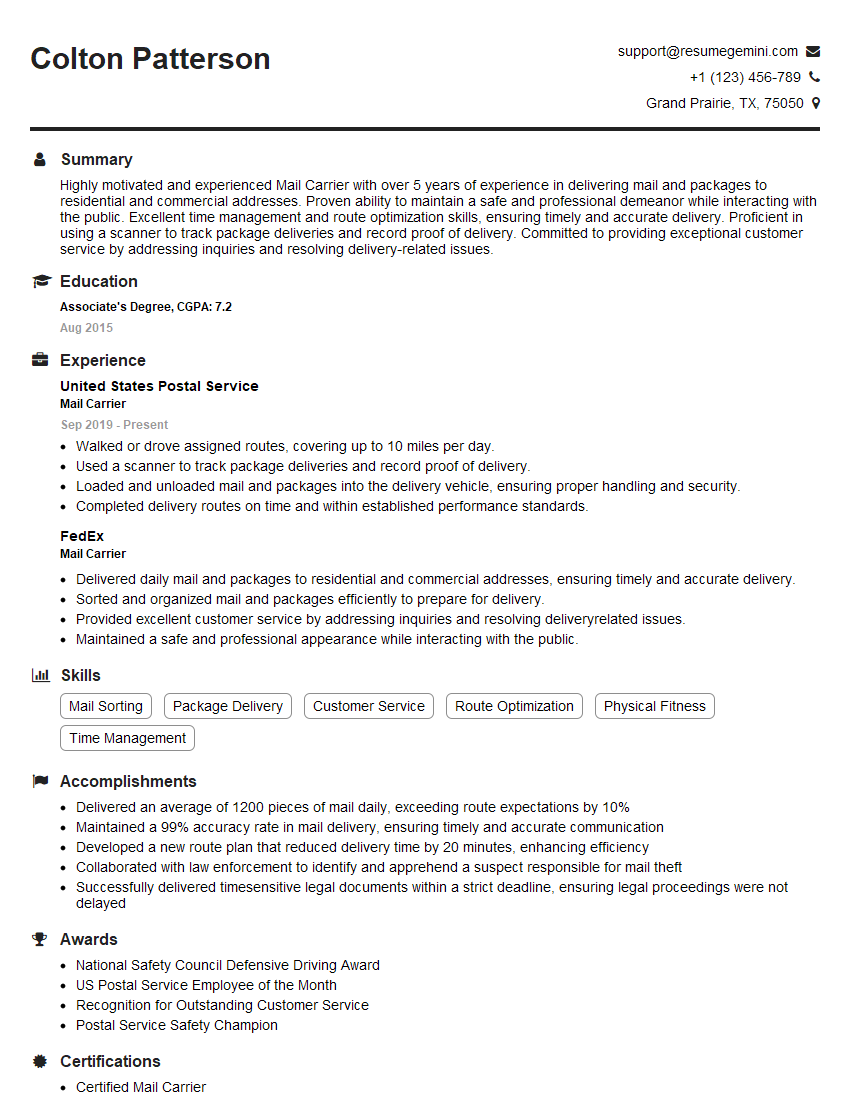
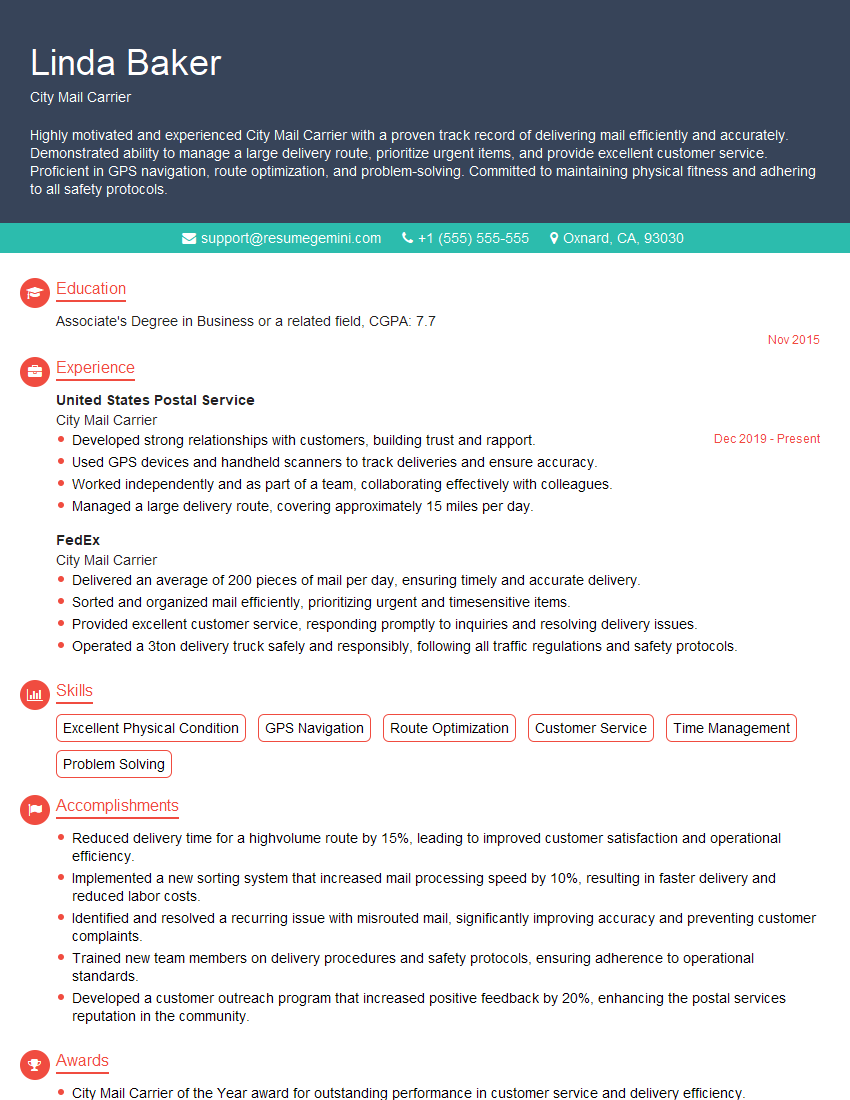
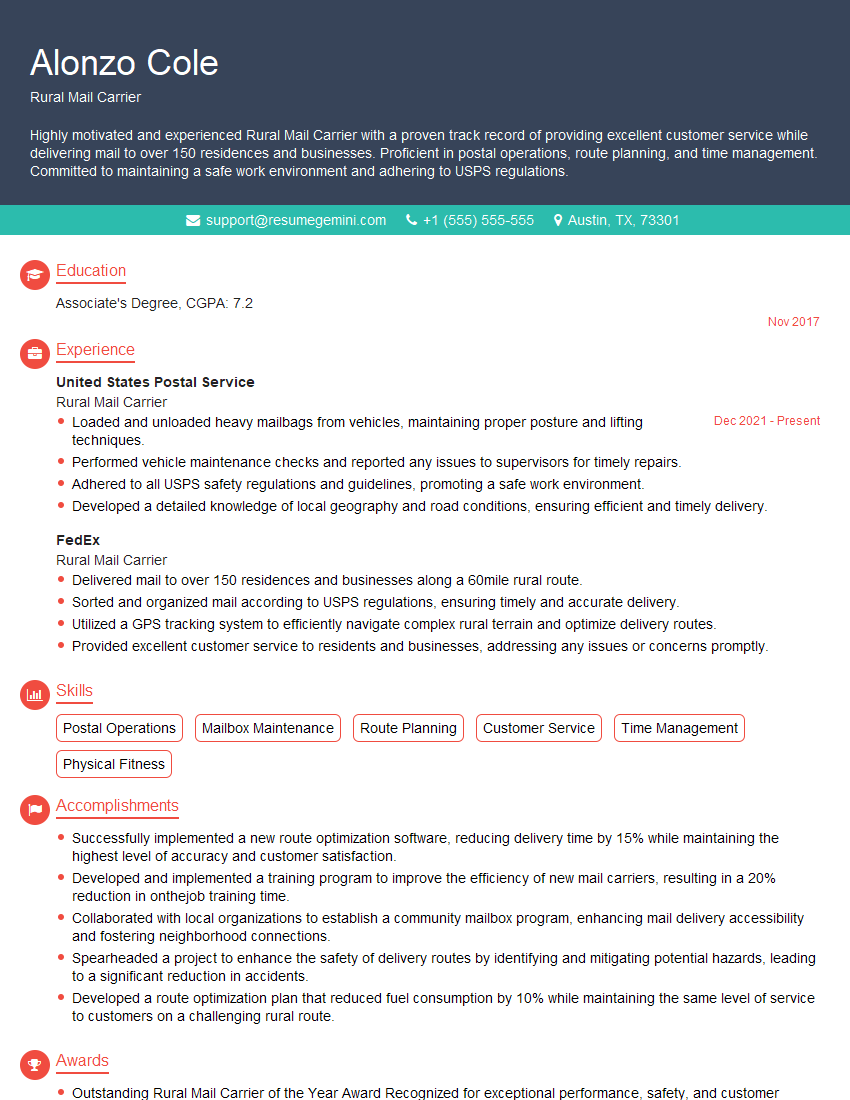
Mastering Post Driving opens doors to a rewarding career with opportunities for growth and advancement within the logistics and transportation industry. A strong resume is crucial for showcasing your skills and experience to potential employers. Creating an ATS-friendly resume significantly increases your chances of getting your application noticed. ResumeGemini is a trusted resource to help you build a professional and effective resume that highlights your unique qualifications. Examples of resumes tailored to Post Driving are available to help guide you.
Explore more articles
Users Rating of Our Blogs
Share Your Experience
We value your feedback! Please rate our content and share your thoughts (optional).
What Readers Say About Our Blog
Very informative content, great job.
good