The right preparation can turn an interview into an opportunity to showcase your expertise. This guide to Power System Economics interview questions is your ultimate resource, providing key insights and tips to help you ace your responses and stand out as a top candidate.
Questions Asked in Power System Economics Interview
Q 1. Explain the difference between marginal cost and average cost in power system economics.
In power system economics, both marginal cost and average cost are crucial for understanding the cost of electricity generation, but they represent different aspects.
Average cost (AC) is the total cost of producing electricity divided by the total quantity produced. Think of it like your average spending on gas – the total amount spent divided by the total gallons filled. It includes fixed costs (like the initial investment in a power plant) and variable costs (like fuel). A high average cost might indicate inefficiencies in the plant’s operation.
Marginal cost (MC), on the other hand, represents the cost of producing one additional unit of electricity. It’s the cost of generating that *next* kilowatt-hour. Imagine it as the cost of filling just one more gallon of gas at the gas station. It primarily focuses on variable costs, like fuel, since fixed costs remain the same regardless of production level. In power markets, the marginal cost is critical because it determines the price of electricity.
The difference is crucial for efficient resource allocation. While average cost helps understand overall efficiency, marginal cost dictates the optimal production level in a competitive market. A power plant should only increase its generation if the marginal cost is less than the market price; otherwise, it’s more cost-effective to let other plants with lower marginal costs supply electricity.
Q 2. Describe the role of electricity markets in ensuring efficient resource allocation.
Electricity markets play a vital role in ensuring efficient resource allocation by facilitating competition among generators and matching supply with demand. A well-designed market creates a transparent and competitive environment where generators bid their marginal costs, incentivizing them to operate efficiently.
Efficient resource allocation is achieved through price signals. When demand increases, the price of electricity rises, signaling generators to increase their output. Conversely, lower demand leads to lower prices, discouraging generation from less efficient plants. This dynamic process ensures that the most cost-effective resources are utilized first, minimizing the overall cost of electricity generation.
Markets also encourage investment in new generation capacity. Higher prices signal profitability, prompting investment in new power plants, which in turn increases supply and eventually moderates prices. This creates a self-regulating mechanism that balances supply and demand while promoting cost efficiency and innovation. Without markets, resource allocation might be arbitrary, inefficient, and subject to political intervention.
Q 3. What are the key challenges in integrating renewable energy sources into the power grid?
Integrating renewable energy sources like solar and wind power presents several key challenges to the power grid:
- Intermittency and variability: Unlike traditional power plants, renewable sources are not always available. Solar power is only generated during daylight hours, and wind power depends on wind speed. This variability makes it difficult to predict and manage supply, potentially leading to instability within the power system.
- Geographic limitations: The optimal locations for renewable energy resources might be far from load centers, requiring significant investments in transmission infrastructure to deliver the power to where it’s needed.
- Grid integration challenges: Renewable energy sources often have rapid fluctuations in output, which can stress the grid and potentially lead to system instability. Sophisticated grid management technologies are necessary to integrate them effectively.
- Lack of inherent inertia: Traditional synchronous generators provide inertia to the grid, helping to maintain stability during disturbances. Renewable sources, particularly those based on inverters, lack this inherent inertia, requiring additional measures to ensure system stability.
- Curtailment: Sometimes, the output of renewable energy sources exceeds the grid’s capacity to absorb it, leading to curtailment (wasteful reduction of production). This represents a loss of valuable renewable energy and poses a challenge for economic optimization.
Addressing these challenges requires a combination of technological advancements, such as smart grids and energy storage solutions, and innovative market designs that incentivize grid stability and efficient renewable energy integration.
Q 4. Explain the concept of locational marginal pricing (LMP).
Locational Marginal Pricing (LMP) is a pricing mechanism used in electricity markets to reflect the true cost of electricity at different locations within the grid. Instead of a single price for the entire system, LMP assigns a different price to each node (location) on the power grid.
LMP reflects the cost of delivering electricity from generation sources to specific load centers, taking into account transmission losses and congestion. A high LMP at a particular node indicates high demand or limited transmission capacity in that area, while a low LMP signifies ample supply or high transmission capacity. This location-specific pricing mechanism incentivizes generators to produce electricity where it is most needed and cost-effective.
For example, a node near a large generating facility might have a low LMP, while a node far from generation or with limited transmission capacity might have a significantly higher LMP. This accurately reflects the true cost of delivering electricity to consumers and promotes efficient use of transmission infrastructure.
LMP calculations involve solving complex optimization problems that consider the network topology, generation costs, and electricity demand across the entire system. Software tools are essential for accurately calculating LMPs in large power grids.
Q 5. How do you model the impact of demand-side management programs on power system operations?
Demand-side management (DSM) programs aim to influence electricity consumption patterns to better align with power system operations. Modeling their impact requires integrating various aspects of electricity demand into power system models.
Methods for modeling DSM programs include:
- Econometric models: These models use statistical techniques to relate electricity demand to various factors, including price, weather, and DSM program participation. This allows us to forecast the impact of different DSM initiatives on electricity demand.
- Agent-based models: These models simulate the behavior of individual consumers or businesses responding to price signals or DSM incentives. This can help understand how different DSM strategies influence overall demand and the distribution of electricity consumption.
- Optimization models: These models incorporate DSM programs into power system optimization frameworks. This allows us to evaluate the effectiveness of DSM in reducing peak demand, improving grid reliability, and lowering overall system costs.
Specific modeling techniques include incorporating price elasticity of demand, considering shifts in load curves due to DSM programs, and evaluating the effectiveness of different incentive schemes on consumer behavior. The choice of modeling approach depends on the specific objectives of the analysis and the availability of data.
A successful model captures the complex interactions between energy prices, consumer responses, and the impact on the power system’s performance. These models are essential in planning and designing efficient and cost-effective DSM programs.
Q 6. Describe various forecasting methods used in power system planning.
Power system planning relies on accurate forecasting of electricity demand and generation capacity. Several methods are employed, each with its strengths and weaknesses:
- Time series analysis: This approach uses historical data to identify patterns and trends in electricity demand or generation, extrapolating these trends into the future. Techniques like ARIMA (Autoregressive Integrated Moving Average) models are commonly used.
- Regression analysis: This method explores relationships between electricity demand and influencing factors like economic growth, population, temperature, and day of the week. A regression model can then forecast demand based on predicted values of these factors.
- Causal modeling: This approach aims to understand the underlying causes of electricity demand changes, building a detailed model of how various factors affect consumption. This helps in forecasting demand under different scenarios.
- Machine learning techniques: Recent advancements in machine learning provide powerful tools for forecasting. Algorithms like neural networks and support vector machines can identify complex patterns in data that might not be captured by simpler methods. They can handle large datasets and produce accurate forecasts.
- Scenario planning: This approach develops multiple scenarios for the future, reflecting different possibilities regarding economic growth, technological developments, and climate change. Each scenario is used to generate a separate demand forecast.
The choice of forecasting method depends on the planning horizon, data availability, and the desired level of accuracy. Often, a combination of methods is used to improve forecasting reliability.
Q 7. What are the different types of electricity markets, and what are their characteristics?
Electricity markets vary significantly in their structure and operation, but some common types include:
- Bilateral contracts: In these markets, generators and consumers negotiate and agree on prices and quantities of electricity directly, outside of a central market platform. This approach provides price certainty for both parties but lacks transparency and competition.
- Pool-based markets (day-ahead and real-time): These markets operate through a central entity that manages the clearing of electricity trades. Generators submit bids indicating how much electricity they can supply at different prices, while consumers submit bids indicating their demand. The market operator determines the optimal dispatch of generation to meet demand at the lowest possible cost. Day-ahead markets set prices for the following day, while real-time markets adjust for unforeseen changes in demand or supply.
- Capacity markets: These markets incentivize the development of new generating capacity to ensure grid reliability. They pay generators for having capacity available, even if it is not always used. This is particularly important in systems with significant renewable energy penetration.
- Ancillary services markets: These markets procure services that enhance grid reliability, such as frequency regulation, voltage support, and black start capability. Generators that can provide these services bid to offer them.
The specific characteristics of electricity markets (e.g., regulatory framework, market design, level of competition) vary significantly from one country or region to another, shaping the efficiency and reliability of the electricity system.
Q 8. Discuss the role of transmission and distribution networks in power system economics.
Transmission and distribution networks are the arteries of the power system, crucial for delivering electricity from generation sources to consumers. Their economic role is multifaceted. Efficient transmission networks minimize power losses during long-distance transport, reducing overall generation costs. A well-planned distribution network ensures reliable and affordable electricity supply to individual customers. The cost of building, maintaining, and upgrading these networks significantly influences electricity prices. Poorly designed or maintained networks lead to increased losses, higher operational costs, and even widespread outages, impacting economic productivity and consumer welfare. For example, investing in high-voltage direct current (HVDC) transmission lines can be economically advantageous for transporting large amounts of power over long distances with reduced losses compared to traditional alternating current (AC) lines. Similarly, smart grid technologies implemented in distribution networks can improve efficiency, reduce congestion, and facilitate the integration of renewable energy sources, ultimately impacting cost-effectiveness.
Q 9. Explain the concept of capacity markets and their importance in ensuring grid reliability.
Capacity markets are designed to ensure sufficient generation capacity is available to meet peak demand and maintain grid reliability. They work by procuring capacity from power plants in advance, usually through auctions. Generators are paid for the capacity they commit to provide, even if it’s not used. This incentivizes investments in new generation capacity, especially for dispatchable resources like gas turbines that can quickly respond to sudden demand surges. Without capacity markets, there’s a risk of capacity shortfalls during periods of high demand, leading to rolling blackouts and significant economic losses. Imagine a heatwave causing a surge in air conditioning use; a well-functioning capacity market guarantees sufficient power available to prevent widespread outages. The cost of capacity procured through these markets is reflected in electricity prices, ensuring that investment in grid reliability is appropriately priced and fairly shared among consumers.
Q 10. How do you assess the economic viability of a new power generation project?
Assessing the economic viability of a new power generation project involves a comprehensive cost-benefit analysis. This includes evaluating the capital costs (e.g., construction, equipment), operating costs (e.g., fuel, maintenance), and decommissioning costs. Revenue streams from electricity sales are projected, considering factors like energy prices, capacity payments from capacity markets, and potential carbon credits. The discounted cash flow (DCF) method is commonly used, where future cash flows are discounted to their present value to compare the project’s profitability. Critical factors include the project’s lifespan, the discount rate reflecting the risk profile, and the projected energy prices. Sensitivity analysis is essential to determine how the project’s profitability changes with variations in key parameters such as fuel prices or interest rates. A project is considered viable if the net present value (NPV) is positive, indicating that the present value of future earnings exceeds the initial investment.
Q 11. Describe the impact of energy storage on power system economics.
Energy storage technologies like batteries, pumped hydro, and compressed air are transforming power system economics. They enable better utilization of renewable energy sources by storing excess power generated during periods of low demand and releasing it when demand is high. This reduces the need for expensive peaking plants and enhances grid stability. By smoothing out renewable energy’s intermittency, storage reduces reliance on fossil fuel-based backup generation, leading to reduced greenhouse gas emissions and lower operating costs. However, the high initial capital costs of storage technologies are a significant barrier to widespread adoption. The economic viability depends on factors like the storage duration, charging and discharging rates, lifespan, and the value of grid services provided. The cost of storage is declining rapidly, making it an increasingly attractive option for grid operators and electricity suppliers.
Q 12. What are the different types of externalities associated with electricity generation?
Externalities are the indirect costs or benefits associated with electricity generation that are not reflected in the market price. For example, fossil fuel-based power plants generate air and water pollution, impacting public health and the environment. These are negative externalities that need to be addressed through regulations or carbon pricing mechanisms. On the other hand, renewable energy sources like solar and wind power have positive externalities such as reduced greenhouse gas emissions and improved air quality. Nuclear power presents both positive (reliable baseload power) and negative (nuclear waste disposal) externalities. These externalities affect society as a whole and need to be factored into the overall cost-benefit analysis of power generation projects to ensure a fair reflection of their true economic impact. Policymakers use various methods, like carbon taxes or emissions trading schemes, to internalize these externalities and promote cleaner generation sources.
Q 13. Explain the concept of peak demand and its implications for power system planning.
Peak demand refers to the highest level of electricity demand experienced within a specific time period, typically daily or annually. Power systems must have sufficient capacity to meet this peak demand, even though this level of demand may only exist for a short duration. Meeting peak demand is crucial for grid reliability, as insufficient capacity can lead to blackouts and substantial economic disruption. Power system planning needs to consider the growth of peak demand, driven by factors like population growth, economic activity, and changes in consumption patterns (e.g., increased use of air conditioning). Managing peak demand can involve strategies such as demand-side management programs (incentivizing consumers to shift their energy usage away from peak periods), investing in flexible generation resources, and developing advanced grid management technologies.
Q 14. How do you analyze the cost-benefit of different renewable energy technologies?
Analyzing the cost-benefit of different renewable energy technologies requires a similar approach to assessing conventional power plants, but with a few key differences. Levelized cost of energy (LCOE) is a frequently used metric, representing the average cost of generating electricity over the project’s lifespan. Factors included in LCOE calculations are capital costs, operating and maintenance costs, fuel costs (often negligible for solar and wind), and the discount rate. However, LCOE doesn’t fully capture all factors. Intermittency of solar and wind necessitates considering the costs associated with backup generation or energy storage. Furthermore, environmental and social benefits, such as reduced emissions and job creation, should be incorporated into a comprehensive cost-benefit analysis, potentially through monetization of these externalities. Life cycle assessments examining the environmental impacts throughout the entire supply chain are also important. Ultimately, the choice of renewable technology is dependent on location-specific factors such as resource availability, grid infrastructure, and policy support.
Q 15. What is the role of regulatory frameworks in shaping power system economics?
Regulatory frameworks are the backbone of a healthy power system economy. They define the rules of the game, influencing everything from investment decisions to electricity pricing. Think of them as the referee in a power market game, ensuring fair play and promoting efficiency. These frameworks determine how generators, distributors, and consumers interact, ultimately shaping the landscape of power generation and consumption. They typically address issues like market structure (e.g., competitive vs. monopolistic), pricing mechanisms (e.g., cost-plus vs. market-based), environmental regulations (e.g., carbon emission limits), and grid reliability standards. For example, a government might mandate renewable energy targets, incentivizing investments in wind and solar power through subsidies or tax breaks, directly affecting the economics of these technologies and driving the overall market shift towards cleaner energy. Conversely, lax regulations could lead to overreliance on fossil fuels, impacting air quality and long-term economic stability due to volatile fuel prices.
In practice, this translates to detailed regulations concerning licensing, permitting, interconnection procedures, and grid access rules. Regulatory bodies frequently conduct cost-benefit analyses of different generation options and implement policies to favor the most cost-effective solutions that also meet environmental goals. A well-designed regulatory framework fosters competition, innovation, and investment, leading to a more reliable, efficient, and environmentally sustainable power system.
Career Expert Tips:
- Ace those interviews! Prepare effectively by reviewing the Top 50 Most Common Interview Questions on ResumeGemini.
- Navigate your job search with confidence! Explore a wide range of Career Tips on ResumeGemini. Learn about common challenges and recommendations to overcome them.
- Craft the perfect resume! Master the Art of Resume Writing with ResumeGemini’s guide. Showcase your unique qualifications and achievements effectively.
- Don’t miss out on holiday savings! Build your dream resume with ResumeGemini’s ATS optimized templates.
Q 16. Explain the concept of system losses in power transmission and distribution.
System losses in power transmission and distribution refer to the energy lost during the journey of electricity from the generation point to the end-user. Imagine electricity flowing through a vast network of wires – some energy is inevitably lost as heat due to the resistance in these wires (I2R losses). This is analogous to water flowing through pipes; some water is lost due to friction and leakage. These losses are unavoidable but can be minimized through efficient grid management.
These losses occur in two primary stages:
- Transmission losses: Occur in high-voltage transmission lines that carry electricity over long distances from power plants to substations.
- Distribution losses: Occur in lower-voltage distribution lines that carry electricity from substations to individual consumers.
Several factors contribute to system losses: the length and condition of transmission and distribution lines, the load profile (peak demand amplifies losses), voltage levels, and the power factor (a measure of how efficiently electrical power is used). Power companies constantly monitor and manage these losses using various techniques such as optimal power flow calculations, reactive power compensation, and advanced grid technologies. Reducing these losses is crucial for economic efficiency as it directly translates to lower operating costs and improved resource utilization. For example, upgrading aging infrastructure or implementing advanced smart grid technologies can help reduce losses significantly, leading to considerable cost savings over time.
Q 17. How do you account for uncertainty in power system planning and forecasting?
Uncertainty is inherent in power system planning and forecasting, arising from fluctuating electricity demand, intermittent renewable energy sources, and unforeseen events like equipment failures or extreme weather. To account for this uncertainty, we employ probabilistic methods and sophisticated models. Imagine trying to predict the weather – it’s far from exact, but with advanced forecasting models, we can get a good idea of what to expect. Similarly, we utilize statistical tools and probability distributions to capture the range of possible outcomes.
Here’s how we handle uncertainty:
- Probabilistic forecasting: Instead of single-point forecasts (e.g., predicting exactly 100 MW of solar power), we develop probability distributions (e.g., a 90% chance of solar generation between 90 MW and 110 MW). This provides a broader picture of potential scenarios.
- Monte Carlo simulations: These simulations involve running numerous simulations with randomly generated inputs (based on probability distributions of uncertain parameters). This allows us to assess the risk associated with different planning decisions and optimize strategies to mitigate potential negative impacts.
- Scenario planning: We develop various plausible scenarios – best-case, worst-case, and likely-case – to test the robustness of power system plans under different conditions. This helps in preparing for potential disruptions and ensuring grid reliability.
- Stochastic optimization techniques: These advanced mathematical methods integrate uncertainty directly into optimization models used for power system planning, enabling decision-making under uncertainty.
By incorporating these methods, power system planners can make more informed decisions that minimize risks and maximize the long-term viability of the power system.
Q 18. What are the economic benefits of smart grids?
Smart grids offer significant economic benefits by improving efficiency, reliability, and integrating renewable energy sources. Think of a smart grid as a highly intelligent and responsive power network. It uses advanced sensors, communication technologies, and data analytics to optimize power flow, manage demand, and integrate distributed energy resources (DERs) like solar panels and home batteries. This modernization leads to various economic advantages:
- Reduced operational costs: Smart grids enable better grid management, reducing transmission and distribution losses, and optimizing energy dispatch. This directly translates to cost savings for utilities and consumers.
- Improved grid reliability: Advanced monitoring and control systems enhance the ability to detect and react quickly to faults, reducing outages and improving the reliability of power supply. This protects businesses from costly disruptions and avoids the significant costs associated with power outages.
- Increased renewable energy integration: Smart grids facilitate the seamless integration of intermittent renewable energy sources (solar, wind) by optimizing their output and managing variability. This accelerates the transition to cleaner energy, reducing reliance on fossil fuels and associated environmental costs.
- Demand-side management (DSM): Smart grids enable utilities to better manage electricity demand through time-of-use pricing and demand response programs, reducing peak demand and capital investments in power plants.
- Enhanced grid flexibility: Smart grids provide more flexibility and adaptability to accommodate changes in energy production and consumption patterns driven by electrification and decentralized generation.
In essence, the economic benefits of smart grids extend beyond cost savings to encompass improved grid resilience, reduced environmental impact, and a more efficient energy system. The long-term economic gains far outweigh the initial investment costs.
Q 19. Discuss the impact of carbon pricing on power system investment decisions.
Carbon pricing, such as carbon taxes or emissions trading schemes (ETS), significantly impacts power system investment decisions by increasing the cost of carbon-intensive power generation technologies like coal and natural gas. Think of it as a price tag on pollution. This price incentivizes a shift towards cleaner energy sources with lower carbon emissions.
The impact is multifaceted:
- Reduced investments in fossil fuels: High carbon prices make fossil fuel-based power plants less economically attractive, discouraging new investments and potentially accelerating the retirement of existing ones.
- Increased investments in renewables: Renewable energy technologies (solar, wind, hydro) benefit from carbon pricing as their inherent low or zero carbon emissions translate into a lower overall cost compared to fossil fuels. This makes them more competitive, attracting significant investment.
- Investment in carbon capture and storage (CCS): Carbon pricing can create an economic incentive to invest in CCS technologies, allowing continued use of fossil fuel plants while mitigating their emissions. However, the economic viability of CCS is highly dependent on the level of carbon price.
- Influence on grid infrastructure investment: The increased penetration of variable renewable energy sources necessitates investments in advanced grid infrastructure to improve grid stability and manage intermittency. Carbon pricing indirectly supports this necessary infrastructure upgrade.
The effectiveness of carbon pricing hinges on the level of the price, the design of the policy, and its interaction with other existing incentives or regulations. A well-designed carbon pricing mechanism is crucial for guiding investments towards a sustainable and economically efficient power system.
Q 20. Explain the role of energy efficiency programs in reducing electricity consumption.
Energy efficiency programs play a vital role in reducing electricity consumption by promoting the use of more energy-efficient appliances, technologies, and practices. It’s about getting more from less – maximizing the output of the power system while minimizing the amount of electricity consumed. These programs typically involve various strategies:
- Incentive programs: Offering rebates, tax credits, or other financial incentives to consumers who purchase or install energy-efficient equipment (e.g., high-efficiency heating and cooling systems, LED lighting).
- Energy audits and retrofits: Conducting energy audits to identify energy waste in buildings and implementing energy-saving measures through retrofits. This can involve insulation upgrades, window replacements, or HVAC system improvements.
- Public awareness campaigns: Educating the public about energy efficiency best practices, such as turning off lights when leaving a room, using energy-efficient appliances, and optimizing thermostat settings.
- Building codes and standards: Setting minimum energy efficiency standards for new buildings, incentivizing the construction of energy-efficient structures.
- Appliance standards: Implementing minimum efficiency standards for various appliances (e.g., refrigerators, washing machines), ensuring that only the most energy-efficient models are sold in the market.
By reducing electricity demand through energy efficiency measures, these programs relieve pressure on power generation infrastructure, decrease greenhouse gas emissions, and ultimately lead to lower electricity bills for consumers. The cost savings from these initiatives frequently offset the initial investment in energy efficiency improvements, creating a win-win scenario for both individuals and the power system as a whole.
Q 21. How do you evaluate the environmental impacts of power generation technologies?
Evaluating the environmental impacts of power generation technologies requires a comprehensive assessment considering the entire life cycle, from resource extraction to waste disposal. This assessment should go beyond just emissions during operation, encompassing the environmental footprint of manufacturing, transportation, and decommissioning. Think of it like evaluating the overall ecological cost of a product, not just its use.
We assess environmental impacts using several metrics:
- Greenhouse gas emissions (GHGs): Measuring the amount of CO2, methane, and other GHGs emitted throughout the life cycle of a power plant. This often relies on life cycle assessment (LCA) methodologies.
- Air pollution: Evaluating the emissions of pollutants like nitrogen oxides (NOx), sulfur dioxide (SO2), and particulate matter (PM), which contribute to air quality problems and respiratory illnesses.
- Water consumption and pollution: Assessing the amount of water used for cooling and other processes, as well as the potential for water pollution from wastewater discharge.
- Land use and habitat impacts: Evaluating the land area required for the power plant and associated infrastructure, including its impact on ecosystems and biodiversity.
- Waste generation: Assessing the amount and type of waste generated during the construction, operation, and decommissioning phases of the power plant and its impact on waste management systems.
By systematically quantifying these impacts and comparing them across different technologies, we can inform power system planning decisions and guide investments towards the most environmentally sustainable options. This process frequently involves sophisticated modelling tools and data analysis techniques to provide a comprehensive and robust environmental evaluation.
Q 22. Describe the concept of market power in electricity markets.
Market power in electricity markets refers to the ability of a market participant (generator, retailer, or even a large consumer) to influence market prices by manipulating its supply or demand. Think of it like a single powerful player in a game of monopoly – they can significantly impact the overall outcome.
For example, a generator with a large share of the generation capacity in a particular region might withhold supply to drive up prices. This behavior is often seen during periods of high demand or low supply. Regulators actively monitor market power through various means, including market monitoring, capacity market designs, and regulatory interventions to ensure fair pricing and prevent market manipulation. The key metrics used to assess market power include the Herfindahl-Hirschman Index (HHI) and Lerner Index, which quantify market concentration and the ability of firms to mark up prices above marginal cost, respectively.
One real-world example is the California energy crisis of 2000-2001, where market manipulation by some generators led to exorbitant electricity prices. Effective market design, including robust market monitoring and well-defined rules and regulations are crucial to mitigating market power.
Q 23. What are the key challenges in managing grid congestion?
Managing grid congestion, which occurs when the flow of electricity exceeds the capacity of transmission lines or transformers, presents several key challenges. Imagine a highway with too many cars trying to squeeze through a narrow bottleneck – that’s essentially what grid congestion is.
- Real-time operational challenges: Predicting and managing real-time variations in power flows due to fluctuating renewable generation and load demands is a constant balancing act. This requires sophisticated forecasting and control systems.
- Investment planning complexities: Determining the optimal location and timing of transmission upgrades to alleviate congestion is a complex problem involving economic analysis, environmental considerations, and stakeholder coordination. Finding the most cost-effective solution while considering long-term growth can be challenging.
- Market design implications: Congestion management often requires sophisticated pricing mechanisms (like Locational Marginal Prices or LMPs) to signal the scarcity of transmission capacity and incentivize efficient generation dispatch. These mechanisms can be complex to implement and may need to adapt dynamically.
- Data limitations: Accurate real-time data on power flows, generator outputs, and load demands are crucial for effective congestion management. However, obtaining reliable data from a wide range of sources can pose a challenge.
Effective congestion management involves a multi-faceted approach encompassing advanced forecasting, dynamic pricing mechanisms, and strategic investment in transmission infrastructure, all while considering the complexities of market design and regulatory frameworks.
Q 24. How do you model the impact of climate change on power system operations?
Modeling the impact of climate change on power system operations requires a holistic approach that considers various factors.
Firstly, we must model changes in weather patterns, including higher temperatures, increased frequency and intensity of extreme weather events (heat waves, droughts, storms), and changes in precipitation. This can impact electricity demand (increased air conditioning use during heatwaves) and renewable energy generation (reduced hydropower generation during droughts, variations in solar and wind generation due to weather patterns). Secondly, the increased frequency of extreme weather events necessitates the consideration of their impact on power system infrastructure, including damage to transmission lines, substations, and generation facilities. The reliability and resilience of the power system needs to be assessed.
For example, we can use climate models to predict future temperature and wind patterns, then integrate these projections into power system simulation tools to assess the impacts on load profiles and generation availability. Probabilistic methods such as Monte Carlo simulations are often used to capture the uncertainty associated with climate change predictions. This helps us to identify vulnerabilities and potential risks to the power system’s reliability and plan for adaptation and mitigation measures.
The output from such models helps power system operators, planners, and policymakers to make informed decisions about investments in resilient infrastructure, generation diversification, and grid modernization strategies to mitigate the risks of climate change.
Q 25. Explain the role of power purchase agreements (PPAs) in renewable energy development.
Power Purchase Agreements (PPAs) are long-term contracts between electricity generators (often renewable energy projects) and buyers (utilities, corporations, or other consumers). They are crucial for financing and developing renewable energy projects, providing a stable revenue stream for the generator.
Think of a PPA as a long-term lease agreement for electricity. The buyer guarantees a certain amount of electricity purchase over a defined period, providing the renewable energy generator with the predictability needed to secure financing from banks or investors. This predictability reduces the financial risk for the renewable energy developers, making projects more bankable.
PPAs play a vital role in driving renewable energy growth by de-risking investments and offering long-term price certainty. They’re particularly important for large-scale projects like solar and wind farms, which require substantial upfront investment. Different PPA structures exist, ranging from fixed-price contracts to those with price adjustments based on market indices or other variables. The specifics of a PPA will heavily depend on risk appetite and the negotiation between the buyer and the seller.
Q 26. Discuss the implications of distributed generation on power system planning.
Distributed generation (DG), such as rooftop solar panels or small-scale wind turbines, significantly impacts power system planning. It changes the traditional centralized model of electricity generation and distribution, bringing generation closer to the point of consumption.
The implications for power system planning include:
- Increased network complexity: Managing bidirectional power flows from DG units requires more sophisticated grid management and control systems.
- Voltage and stability challenges: Distributed generation can impact voltage levels and grid stability, requiring careful planning and integration strategies.
- Reduced transmission and distribution losses: Generating electricity closer to consumers reduces transmission and distribution losses.
- Improved reliability and resilience: DG can enhance system resilience by providing backup power during outages.
- Planning and forecasting challenges: The intermittent and unpredictable nature of many DG resources (like solar and wind) complicates load forecasting and grid operation planning.
Effective power system planning in the presence of DG requires advanced grid modeling techniques, incorporating distributed generation forecasts and considering its impact on various aspects of grid operation, including voltage regulation, frequency control and grid stability. Modern smart grids play a crucial role in integrating DG effectively.
Q 27. How do you analyze the financial risks associated with power system investments?
Analyzing financial risks associated with power system investments is critical to ensure projects’ viability and minimize potential losses. This involves a thorough assessment of various aspects of risk, using both quantitative and qualitative methods.
Key risk areas include:
- Regulatory risk: Changes in environmental regulations, energy policies, or tariff structures can significantly impact project profitability.
- Market risk: Fluctuations in electricity prices, fuel costs, and currency exchange rates affect revenues and project returns.
- Construction risk: Delays, cost overruns, and technical challenges during construction can lead to financial losses.
- Operational risk: Equipment failures, maintenance issues, and unexpected downtime can reduce energy output and increase operating costs.
- Financial risk: Difficulty securing financing, interest rate fluctuations, and credit risk influence project feasibility.
Risk analysis methods include sensitivity analysis, scenario planning, Monte Carlo simulations, and Discounted Cash Flow (DCF) analysis. These methods help to quantify and visualize the potential financial implications of different risks. Using appropriate risk mitigation strategies, such as insurance policies, hedging mechanisms, and contingency planning, is critical in reducing the impact of potential negative events.
Q 28. What are the key considerations in designing a competitive electricity market?
Designing a competitive electricity market requires a careful balance between ensuring fair competition, promoting efficiency, and guaranteeing reliable electricity supply. It’s a delicate ecosystem to engineer.
Key considerations include:
- Market structure: The choice of market structure (e.g., bilateral contracts, pool-based markets, or hybrid systems) significantly affects competition and price formation.
- Transparency and information disclosure: Open access to market information is crucial for fostering competition and efficient decision-making by participants.
- Independent system operator (ISO) or transmission system operator (TSO) role: An impartial and well-resourced ISO/TSO is essential for ensuring fair and efficient grid management.
- Pricing mechanisms: Appropriate pricing mechanisms (e.g., locational marginal pricing, day-ahead and real-time markets) are needed to reflect the scarcity of resources and incentivize efficient generation dispatch.
- Capacity mechanisms: Market designs need to incentivize investments in sufficient generation capacity to maintain system reliability.
- Rules and regulations: Clear and consistently enforced rules and regulations are needed to prevent market manipulation and ensure fair competition.
- Consumer protection: Mechanisms to protect consumers from price volatility and ensure access to affordable electricity are crucial.
A well-designed competitive market should balance the goals of fostering competition, ensuring reliable electricity supply, and protecting consumers, considering its long-term implications.
Key Topics to Learn for Power System Economics Interview
- Electricity Market Fundamentals: Understanding market structures (e.g., bilateral, poolco), pricing mechanisms (e.g., locational marginal pricing), and market power dynamics. Practical application: Analyzing the impact of renewable energy integration on electricity prices.
- Cost-Benefit Analysis & Investment Decisions: Evaluating the economic viability of power system projects (e.g., new generation, transmission lines) using discounted cash flow analysis, levelized cost of energy (LCOE), and other relevant metrics. Practical application: Justifying investments in smart grid technologies based on their economic benefits.
- Demand-Side Management (DSM) & Energy Efficiency: Exploring strategies for reducing electricity demand and improving energy efficiency, including pricing incentives and technological solutions. Practical application: Designing and evaluating DSM programs to optimize grid reliability and reduce costs.
- Renewable Energy Integration & Policy: Analyzing the economic impact of integrating renewable energy sources (e.g., solar, wind) into the power system, including the role of government policies and subsidies. Practical application: Modeling the impact of carbon pricing on the electricity market.
- Reliability & Risk Assessment: Evaluating the economic consequences of power system outages and developing strategies for improving reliability, including risk management techniques. Practical application: Performing cost-benefit analysis for grid modernization projects aimed at enhancing reliability.
- Power System Planning & Optimization: Utilizing optimization techniques (e.g., linear programming) to plan and optimize power system operations, considering economic factors alongside technical constraints. Practical application: Developing optimal generation dispatch schedules to minimize operating costs while meeting demand.
Next Steps
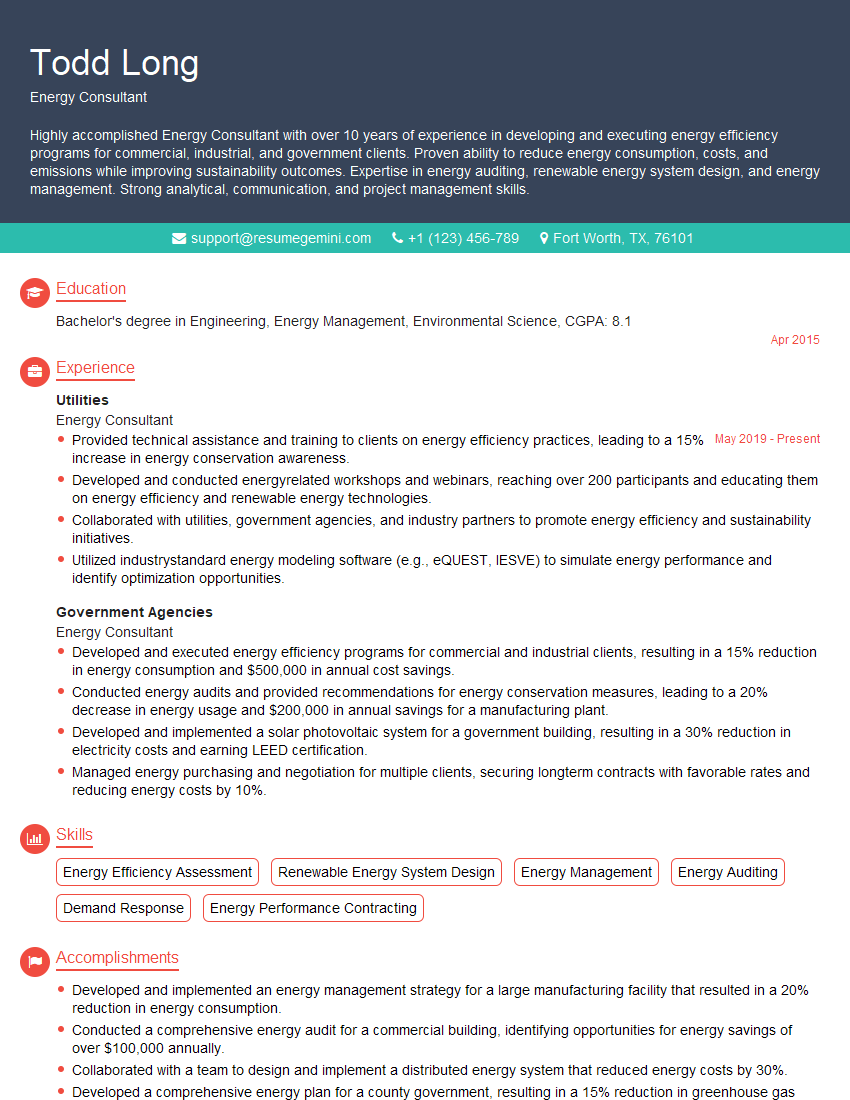
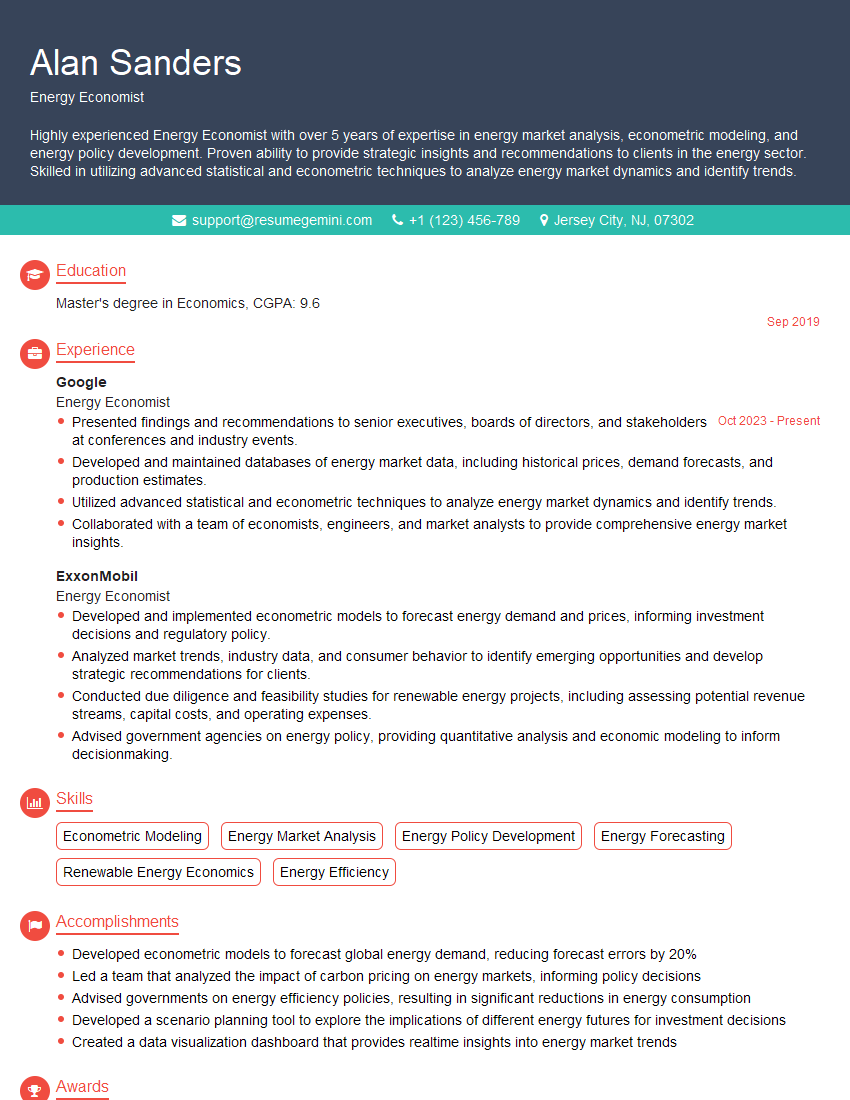
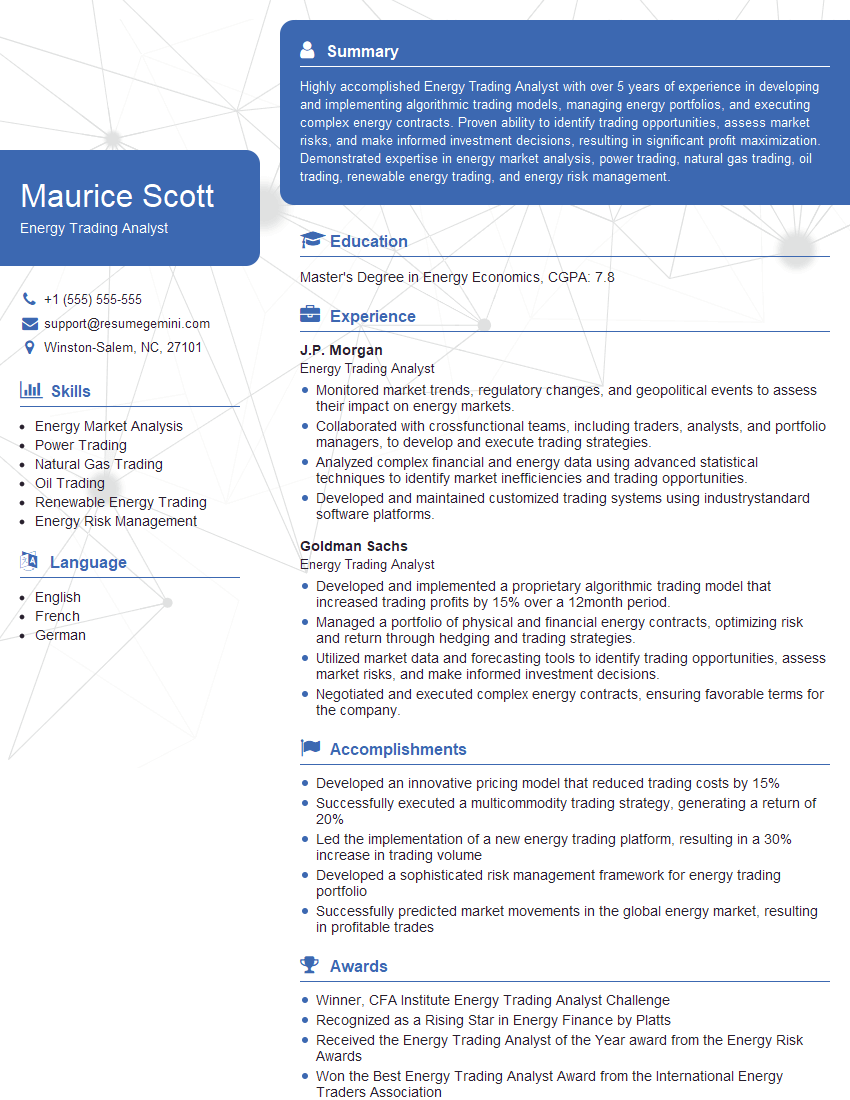
Mastering Power System Economics is crucial for career advancement in the energy sector, opening doors to exciting roles in consulting, utilities, and research. A strong understanding of these principles demonstrates your analytical abilities and strategic thinking, making you a highly sought-after candidate. To maximize your job prospects, it’s essential to create an ATS-friendly resume that highlights your relevant skills and experience. ResumeGemini is a trusted resource that can help you build a compelling and effective resume. They provide examples of resumes tailored to the Power System Economics field, ensuring your application stands out from the competition. Invest the time to craft a professional resume—it’s your first impression and a key step toward your dream career.
Explore more articles
Users Rating of Our Blogs
Share Your Experience
We value your feedback! Please rate our content and share your thoughts (optional).
What Readers Say About Our Blog
Very informative content, great job.
good