Unlock your full potential by mastering the most common Power Systems Modeling interview questions. This blog offers a deep dive into the critical topics, ensuring you’re not only prepared to answer but to excel. With these insights, you’ll approach your interview with clarity and confidence.
Questions Asked in Power Systems Modeling Interview
Q 1. Explain the difference between a power flow study and a transient stability study.
Power flow studies and transient stability studies are both crucial in power system analysis, but they address different aspects of system behavior. A power flow study, also known as a load flow study, determines the steady-state operating conditions of a power system under a given load and generation pattern. It calculates voltage magnitudes and angles at each bus, as well as real and reactive power flows on each line. Think of it like taking a snapshot of the system at a specific moment in time, assuming everything is operating smoothly. It’s used for planning and operation, determining optimal power dispatch, and assessing system loading.
In contrast, a transient stability study analyzes the system’s response to large disturbances, such as faults or sudden loss of generation. It examines how the system’s frequency and voltage change over time after such an event and determines whether the system will remain stable or experience a cascading failure. This is dynamic, looking at how the system reacts over seconds to minutes. It’s essential for ensuring the grid’s resilience and preventing widespread blackouts. Imagine it as watching a video of the system’s reaction after a major event – how it recovers or collapses. Power flow studies provide the initial conditions for transient stability studies.
Q 2. Describe the various types of power system models and their applications.
Power system models vary in complexity depending on the analysis required. Several types exist:
- Simplified Models (e.g., single-line diagrams): These are used for preliminary analysis and visualization, offering a high-level overview of the system’s structure. They’re helpful for quick assessments but lack detailed representation.
- Positive-sequence models: These consider only the positive-sequence components of the system, simplifying calculations for balanced three-phase systems under steady-state conditions. They are frequently used in power flow studies.
- Detailed Models (e.g., including synchronous machine models, transmission line parameters, transformers, loads): These models incorporate a wide range of components and their characteristics, providing greater accuracy. They are essential for transient stability and voltage stability studies and often involve sophisticated software.
- Equivalent Models: Large power systems are often simplified using equivalent models, representing a complex network with a smaller, more manageable model. These equivalents are created by aggregating components and maintaining similar system response.
The choice of model depends on the study’s objectives and desired level of accuracy. For instance, a simplified model might suffice for initial planning, while a detailed model is necessary to accurately assess the system’s response to a major disturbance.
Q 3. What are the assumptions made in a simplified power flow analysis?
Simplified power flow analysis relies on several key assumptions to make the calculations tractable:
- Balanced three-phase system: The system is assumed to be perfectly balanced, simplifying the analysis to a single-phase equivalent.
- Constant voltage magnitude at generator buses (PV buses): The voltage magnitudes at generator buses are assumed to be constant, controlled by automatic voltage regulators.
- Negligible shunt admittance on transmission lines: The shunt capacitance and conductance of transmission lines are often ignored, simplifying line modeling.
- Negligible line losses: Transmission line resistance is sometimes neglected, especially in preliminary studies.
- Static load models: Loads are modeled as constant impedance, constant current, or constant power, neglecting their dynamic behavior. This simplification is acceptable for many power flow applications but isn’t suitable for dynamic studies.
These assumptions are reasonable for many applications but introduce inaccuracies, particularly under heavy loading conditions or significant voltage variations. More detailed models are needed when these assumptions become unrealistic.
Q 4. How do you handle contingencies in power system modeling?
Contingencies, such as line outages, generator trips, or transformer failures, are major concerns in power system operation. They are handled in power system modeling using contingency analysis. This involves systematically examining the impact of each potential contingency on the system’s operation. The common approaches include:
- N-1 contingency analysis: This examines the system’s stability and security after the removal of any single component (line, generator, transformer). This approach is a standard practice for many power system operators.
- N-2 contingency analysis: Similar to N-1, but considers the simultaneous loss of two components. This is more computationally intensive but provides a more comprehensive assessment of the system’s robustness.
- Monte Carlo simulation: This approach uses probabilistic methods to simulate various combinations of contingencies and evaluate the system’s reliability under different scenarios. It is particularly useful when considering multiple simultaneous events.
Contingency analysis enables operators to identify critical components and vulnerabilities in the system and develop effective mitigation strategies, preventing major disruptions.
Q 5. Explain the concept of voltage stability and its importance.
Voltage stability refers to the ability of a power system to maintain acceptable voltage levels at all buses under normal operating conditions and after being subjected to disturbances. Loss of voltage stability can lead to voltage collapse, characterized by a rapid and uncontrolled decline in voltage magnitudes, which can cause widespread outages. It’s a critical aspect of system security.
Voltage stability is crucial because:
- Ensuring Equipment Operation: Equipment operates within specified voltage ranges. Voltage instability can damage equipment or cause it to malfunction.
- Maintaining System Integrity: Voltage collapse can cause cascading outages, leading to widespread blackouts.
- Preventing Economic Losses: Voltage instability can lead to significant economic losses due to interrupted power supply and equipment damage.
Maintaining voltage stability often involves reactive power management, appropriate generator voltage control, and the strategic placement of FACTS devices (discussed further below).
Q 6. What are the different methods for solving power flow equations?
Several methods exist for solving power flow equations, which aim to find the voltage magnitudes and angles at each bus in the system. The most common are:
- Gauss-Seidel method: This iterative method updates voltage magnitudes and angles sequentially until convergence is achieved. It’s relatively simple but can be slow to converge, especially for large systems.
- Newton-Raphson method: This iterative method employs linearization and matrix operations to solve the power flow equations. It’s more computationally intensive but converges faster than the Gauss-Seidel method, making it suitable for large systems. This is generally preferred for its efficiency and robustness.
- Fast Decoupled method: This is a simplified version of the Newton-Raphson method that makes some approximations to reduce computational complexity. It’s widely used in power system operation due to its speed and efficiency.
The choice of method depends on factors like system size, desired accuracy, and computational resources available. The Newton-Raphson and Fast Decoupled methods are generally favored due to their superior convergence characteristics for larger systems.
Q 7. Discuss the role of FACTS devices in enhancing power system stability.
Flexible AC Transmission Systems (FACTS) devices are power electronic-based controllers used to enhance power system controllability and stability. They improve power transfer capability, control voltage profiles, and mitigate oscillations. Key examples include:
- Thyristor-Controlled Series Compensators (TCSCs): These devices can dynamically adjust the impedance of transmission lines, improving power transfer capability and damping oscillations. They act like variable inductors or capacitors.
- Static Synchronous Compensators (STATCOMs): These devices provide fast reactive power support, regulating voltage and improving voltage stability. They act like controllable voltage sources.
- Static Synchronous Series Compensators (SSSCs): Similar to TCSCs, but with faster response times and greater controllability. They offer more precise control over the transmission line impedance.
FACTS devices play a critical role in enhancing power system stability by:
- Increasing power transfer limits: They allow more power to be transmitted over existing lines, delaying or preventing system overload.
- Improving voltage profiles: They help to maintain acceptable voltage levels at all buses, enhancing voltage stability.
- Damping power oscillations: They reduce the amplitude and frequency of oscillations, improving system dynamic stability.
The strategic placement and control of FACTS devices are essential for ensuring the reliability and security of modern power systems.
Q 8. How do you model renewable energy sources (solar, wind) in a power system?
Modeling renewable energy sources like solar and wind in a power system requires a nuanced approach because their output is inherently variable and intermittent. We can’t treat them like conventional generators with consistent power output. Instead, we use probabilistic methods and time-series data.
Stochastic Modeling: We often employ stochastic models, such as Weibull distributions for wind speed or solar irradiance models based on historical data and weather forecasts. These models generate probability distributions of power output at different time intervals (e.g., hourly, 15-minute). This allows us to simulate the variability and uncertainty associated with renewable generation.
Time-Series Data: Historical data on solar and wind power generation is crucial. We can use this data to create time-series models, such as ARIMA (Autoregressive Integrated Moving Average) or more advanced machine learning techniques, to predict future generation profiles. These predictions are then incorporated into power system simulations.
Integration into Power Flow Studies: The predicted power output from these models is then integrated into power flow studies and simulations. These studies help us assess the impact of renewable generation on the system’s voltage profiles, power flows, and stability. We might use software like PSS/E, PowerWorld Simulator, or DIgSILENT PowerFactory to perform these analyses.
Example: Imagine modeling a wind farm. We would use wind speed data, coupled with a power curve for the wind turbines (which relates wind speed to power output), to create a probabilistic model of the farm’s power output. This model would show the likelihood of the wind farm generating various amounts of power at different times of day.
Q 9. Explain the concept of state estimation in power system operation.
State estimation in power system operation is like taking a snapshot of the entire system’s health at a given moment. It uses measurements from various points in the grid (voltage, current, power) to estimate the system’s state – things like voltage magnitudes and angles at every bus (node) in the system. This is crucial for real-time monitoring and control.
Think of it like this: you have a complex network of pipes (transmission lines) carrying water (power). You have flow meters at some locations, but not all. State estimation uses the available meter readings to estimate the flow and pressure (voltage) at every point in the network, even where you don’t have direct measurements. This helps you identify potential bottlenecks or problems.
The process typically involves:
- Measurement Collection: Gathering data from various sources like SCADA (Supervisory Control and Data Acquisition) systems.
- Bad Data Detection and Filtering: Identifying and removing erroneous measurements due to sensor failures or noise. This is vital for accuracy.
- State Estimation Algorithm: Using weighted least squares (WLS) or other advanced techniques to compute the most likely state of the system given the measurements and the system’s topology (the way it’s connected).
- State Visualization: Presenting the estimated state in a user-friendly format for operators to monitor the system’s performance.
Practical Application: State estimation is critical for detecting faults, managing congestion, and ensuring the secure and reliable operation of the power system. It feeds into other applications like optimal power flow and contingency analysis.
Q 10. Describe the various types of protective relays used in power systems.
Protective relays are the first line of defense in power systems, automatically detecting and isolating faults to prevent widespread damage and outages. They’re essentially miniature computers that constantly monitor the system’s electrical parameters.
There are various types, each designed for different fault conditions:
- Overcurrent Relays: These are the most common, tripping when the current exceeds a preset threshold. They come in different types like instantaneous, time-delayed, and directional relays.
- Distance Relays: These measure the impedance to a fault along a transmission line and trip if the impedance is within a defined zone. They are effective for locating faults along long transmission lines.
- Differential Relays: These compare the currents entering and leaving a protected zone (e.g., a transformer). A significant difference indicates an internal fault.
- Pilot Relays: These are used on long transmission lines, communicating with relays at both ends to rapidly detect and isolate faults.
- Ground Fault Relays: These detect ground faults, which are particularly dangerous.
- Busbar Protection Relays: These protect busbars, which are critical points in the power system.
Example: A distance relay on a transmission line measures the impedance to the fault. If the impedance is within the relay’s zone of protection, it will initiate a trip signal, causing circuit breakers to open and isolate the faulted section.
Q 11. What are the challenges associated with integrating large-scale renewable energy into the grid?
Integrating large-scale renewable energy presents several significant challenges:
- Intermittency and Variability: Solar and wind power are inherently intermittent, meaning their output fluctuates significantly depending on weather conditions. This makes it difficult to maintain grid stability and reliability.
- Predictability Challenges: Accurately forecasting renewable energy generation is difficult, requiring sophisticated forecasting models and real-time monitoring. Inaccurate forecasts can lead to grid instability.
- Voltage and Frequency Control: The fluctuating nature of renewables can cause voltage and frequency deviations, requiring advanced control systems and grid infrastructure upgrades.
- Grid Infrastructure Limitations: Existing grids may not be designed to handle the decentralized nature of renewable energy sources, requiring investments in grid modernization and expansion.
- Ramp Rate Limits: Renewables can ramp up or down their power output quickly, which can stress the grid if not properly managed. Conventional power plants have slower ramp rates.
- Transmission Capacity: Renewable energy sources are often located remotely, necessitating the construction of new transmission lines to connect them to load centers.
Addressing these challenges requires: advanced forecasting techniques, smart grids with real-time monitoring and control, energy storage systems, demand-side management strategies, and grid modernization projects.
Q 12. How do you model the impact of load variations on power system stability?
Modeling the impact of load variations on power system stability is crucial for maintaining reliable operation. Load variations, both sudden and gradual, can significantly affect the system’s frequency, voltage, and stability.
Methods for Modeling Load Variations:
- Static Load Models: These represent loads as constant impedance, constant current, or constant power loads. These are simpler but less accurate for dynamic simulations.
- Dynamic Load Models: These incorporate the dynamic behavior of loads, such as the response of motors and electronic devices to voltage and frequency changes. They provide a more realistic representation and are crucial for transient stability studies.
- Probabilistic Load Models: These utilize historical data or statistical methods to represent the probabilistic nature of load variations over time. They help in assessing the likelihood of various load scenarios.
Simulation Tools: Software packages like PSS/E, PowerWorld Simulator, and ETAP are commonly used to simulate the impact of load variations on power system stability. These tools allow engineers to run different scenarios, such as sudden load increases or decreases, and analyze the system’s response.
Example: A sudden increase in load (e.g., a large factory starting up) can cause a dip in system frequency and voltage. Dynamic load models are essential for accurately predicting and mitigating the impact of such events.
Q 13. Explain the concept of power system frequency control.
Power system frequency control maintains the system frequency at its nominal value (typically 50 Hz or 60 Hz). This is critical for the reliable operation of all equipment connected to the grid. Deviations from the nominal frequency can cause significant problems, potentially leading to cascading outages.
Control Mechanisms:
- Primary Frequency Control (Load Frequency Control): This is a fast-acting, decentralized control mechanism that uses governors on generating units to automatically adjust their output in response to frequency deviations. Think of it as an immediate, automatic response.
- Secondary Frequency Control (Automatic Generation Control): This is a slower-acting control mechanism that restores the system frequency to its nominal value and corrects for any sustained imbalances in generation and load. This is a more deliberate, longer-term correction.
- Tertiary Frequency Control: This involves economic dispatch and unit commitment, adjusting the generation schedule over longer time horizons to balance supply and demand and optimize the system’s cost of operation.
Frequency Response: The system’s response to frequency changes is a crucial factor in determining its stability. The balance between generation and load must be maintained to prevent significant frequency deviations.
Example: If a large generator suddenly trips offline, the system frequency will drop. Primary frequency control will immediately kick in, increasing the output of other generators to compensate. Secondary frequency control will then gradually restore the frequency to its nominal value.
Q 14. What are the different types of power system stabilizers (PSS)?
Power system stabilizers (PSS) are supplementary control systems that enhance the damping of low-frequency oscillations in power systems. These oscillations can be caused by various factors, including changes in load, generator dynamics, and interactions between different parts of the system.
Types of PSS:
- Lead-Lag PSS: This is a simple and widely used type of PSS that uses lead-lag compensators to improve the damping of oscillations. It’s based on a simple model of the system’s dynamics.
- Power System Stabilizer based on machine learning: Recently, advanced AI techniques are being applied. This offers a data-driven approach, analyzing historical data to enhance damping control.
- Adaptive PSS: These PSS adjust their parameters automatically to adapt to changing system conditions. This increases robustness and effectiveness across a range of operating scenarios.
- Robust PSS: Designed to be effective even under uncertainties in the system parameters. They help maintain stability in unpredictable situations.
How PSS Works: A PSS typically uses a signal derived from the generator’s speed or power output to provide additional excitation to the generator’s voltage regulator. This improves the damping of oscillations and prevents them from growing out of control.
Example: A lead-lag PSS might use the generator’s speed deviation as input and produce an output that modifies the generator’s excitation system. This added excitation helps to damp oscillations and stabilize the system.
Q 15. Discuss the role of energy storage systems in improving grid reliability.
Energy storage systems (ESS) are crucial for enhancing grid reliability by addressing intermittency issues and improving grid stability. Think of them as giant batteries for the power grid. They can store excess energy generated during periods of low demand and release it during peak demand or when generation sources like solar and wind are unavailable. This helps to balance supply and demand, preventing outages and frequency fluctuations.
- Frequency Regulation: ESS can quickly respond to changes in grid frequency, providing a fast-acting reserve to maintain stability. Imagine a sudden drop in solar power due to cloud cover; the ESS can seamlessly compensate for this loss, preventing a widespread blackout.
- Peak Shaving: During peak demand periods, ESS can discharge stored energy, reducing the strain on the grid and preventing overloads. This is like having a backup generator for your home, only on a much larger scale.
- Spinning Reserve: ESS can act as a spinning reserve, immediately available to compensate for sudden generation losses or unexpected increases in demand. This is akin to having a readily available firefighter at the scene of a potential fire.
- Improved Grid Resilience: ESS can enhance the grid’s resilience to natural disasters and cyberattacks by providing backup power and maintaining critical services during outages.
For example, large-scale battery storage facilities are being deployed across the globe to integrate renewable energy sources, enhance grid stability, and provide ancillary services.
Career Expert Tips:
- Ace those interviews! Prepare effectively by reviewing the Top 50 Most Common Interview Questions on ResumeGemini.
- Navigate your job search with confidence! Explore a wide range of Career Tips on ResumeGemini. Learn about common challenges and recommendations to overcome them.
- Craft the perfect resume! Master the Art of Resume Writing with ResumeGemini’s guide. Showcase your unique qualifications and achievements effectively.
- Don’t miss out on holiday savings! Build your dream resume with ResumeGemini’s ATS optimized templates.
Q 16. Explain the concept of automatic generation control (AGC).
Automatic Generation Control (AGC) is a crucial control mechanism in power systems that maintains the system frequency and the interchange power schedules between different control areas within a grid. Imagine it as a sophisticated traffic controller for electricity flow. It continuously monitors the system frequency and adjusts the generation output of power plants to maintain it within acceptable limits (typically 59.95 Hz to 60.05 Hz in North America).
AGC works by measuring the frequency deviation from the nominal value. If the frequency is low (indicating excess demand), AGC increases the generation; conversely, if the frequency is high (indicating excess supply), it reduces the generation. This control action is typically achieved through proportional-integral (PI) controllers within each generating unit, which adjust the turbine valve position or other control parameters. The process involves sophisticated coordination between different generating units to ensure smooth and efficient frequency regulation, sharing the burden fairly among participants.
The control process typically incorporates a hierarchical structure, starting with primary frequency control (fast response), secondary frequency control (AGC, restoring frequency to the nominal value), and tertiary control (economic dispatch).
In real-world scenarios, AGC algorithms are implemented in Energy Management Systems (EMS) of power grids to manage real-time frequency and tie-line power flow, ensuring reliable and secure operation.
Q 17. How do you model the impact of faults on power system operation?
Modeling the impact of faults on power system operation is essential for assessing system reliability and security. We use fault analysis tools, often integrated into power system simulation software, to simulate the effects of various faults, including three-phase faults, single-line-to-ground faults, and line-to-line faults.
The modeling involves several steps:
- Fault Location and Type: First, we define the location and type of the fault. This might be a specific bus or transmission line within the power system model.
- Fault Impedance: We define the fault impedance, representing the resistance and reactance at the fault point. This affects the fault current magnitude.
- Network Model: We need an accurate representation of the power system network, including the impedances of lines, transformers, and generators. This is often represented using a Y-bus matrix.
- Fault Calculations: Fault analysis software utilizes techniques like symmetrical component transformation and Z-bus methods to calculate the fault currents, voltages, and power flows throughout the system.
- Relay Protection: The model also incorporates relay protection schemes to simulate the response of protection devices to faults. The model checks if the protective relays operate correctly to isolate the faulted component.
- Transient Stability: Advanced models will consider the transient stability aspects of fault occurrence to determine if the system remains stable after the fault and subsequent circuit breaker actions.
The results provide insights into fault current magnitudes, voltage dips, and the stability of the system following the fault. This information is critical for protection system design, equipment rating, and ensuring reliable power system operation. For instance, simulating a fault helps determine the required interrupting capacity of circuit breakers, providing information for preventing catastrophic failures.
Q 18. Describe the different types of power system simulations.
Power system simulations are categorized into several types, each serving a different purpose and timescale:
- Power Flow Analysis (Steady-State): This determines the steady-state voltage magnitudes and angles, real and reactive power flows in a system under normal operating conditions. It’s like taking a snapshot of the power system at a specific moment in time.
- Fault Analysis (Transient and Steady-State): This calculates fault currents, voltage dips, and system stability during faults. It’s crucial for protection system design and assessing system strength.
- Transient Stability Analysis: This studies the system’s response to large disturbances like faults, loss of generation, or sudden load changes over a period of seconds. It helps us determine if the system will remain stable and avoid cascading outages.
- Small Signal Stability Analysis: This examines the system’s response to small disturbances over longer periods, focusing on oscillatory behavior and potential instability issues. This is like assessing if the system is “wobbly”.
- Dynamic Simulation: This encompasses detailed modeling of generators, loads, and control systems, simulating the dynamic response of the entire power system to various disturbances. It’s very comprehensive but computationally intensive.
- Electromagnetic Transients Simulation (EMTP): This high-fidelity simulation tackles the very rapid changes of electrical quantities (microseconds to milliseconds) which is important for protection systems, particularly high-voltage DC (HVDC) lines.
The choice of simulation type depends on the specific analysis objective. For example, a power flow study is sufficient for planning purposes, while transient stability analysis is crucial for evaluating system security.
Q 19. What are the advantages and disadvantages of using different power system simulation software?
Various power system simulation software packages (e.g., PSS/E, PowerWorld Simulator, DIgSILENT PowerFactory) offer different capabilities and features. The choice depends on project needs, budget, and available expertise.
- Advantages and Disadvantages of PSS/E: PSS/E is a widely used industry standard known for its robustness, accuracy, and extensive modeling capabilities. However, it has a steeper learning curve and can be costly.
- Advantages and Disadvantages of PowerWorld Simulator: PowerWorld Simulator offers a user-friendly interface and excellent visualization capabilities, making it a good choice for education and smaller-scale projects. Its modeling capabilities might be less extensive than PSS/E for very large and complex systems.
- Advantages and Disadvantages of DIgSILENT PowerFactory: DigSilent PowerFactory offers comprehensive modeling capabilities for both AC and DC grids, along with advanced functionalities for dynamic simulation. Its strength is in its versatility, but it might require extensive training and licensing.
Other factors to consider include the software’s ability to model specific equipment (e.g., FACTS devices, HVDC systems), its integration with other tools, and the availability of technical support. Each software package has its strengths and weaknesses, making it crucial to evaluate them against the project requirements.
Q 20. How do you validate the accuracy of your power system model?
Validating the accuracy of a power system model is critical to ensure reliable results. It involves several steps:
- Data Validation: Ensure the input data (line parameters, generator data, load characteristics) is accurate and consistent. This often involves comparing data from different sources and resolving discrepancies.
- Model Verification: Check if the model correctly represents the physical system. This can include comparing the model’s results with simplified analytical calculations or using smaller-scale models to verify individual components.
- Comparison with Measured Data: The most robust validation involves comparing the model’s results with real-world measurements from the power system. This could involve comparing simulated power flows with SCADA data or comparing simulated voltage profiles with field measurements.
- Sensitivity Analysis: Perform a sensitivity analysis to assess the impact of uncertainties in input data on the model’s results. This helps identify critical parameters and quantify the uncertainty in the results.
- Peer Review: A thorough peer review by other power system engineers can identify potential errors or limitations in the model and its assumptions.
Without rigorous validation, the model’s results can be unreliable and lead to incorrect conclusions, potentially having serious consequences for system operation and planning.
Q 21. Explain the concept of optimal power flow (OPF).
Optimal Power Flow (OPF) is an optimization problem that aims to find the optimal operating point for a power system while satisfying various constraints. Think of it as finding the best way to distribute electricity throughout the system to minimize costs and losses while ensuring secure operation.
The objective function in OPF usually minimizes the generation cost, transmission losses, or a combination of both. The constraints include:
- Power Balance: Generation must equal demand plus losses at each bus.
- Voltage Limits: Voltage magnitudes at all buses must remain within acceptable limits.
- Generator Limits: Generator output must be within their capacity limits.
- Transformer Tap Settings: Transformer tap positions can be adjusted to control power flow.
OPF uses advanced optimization techniques, such as linear programming, nonlinear programming, or interior-point methods, to solve the optimization problem. The solution provides the optimal generation dispatch, voltage magnitudes, and reactive power compensation that minimizes the objective function while satisfying all the constraints.
In real-world applications, OPF is used for economic dispatch, voltage regulation, reactive power planning, and improving the overall efficiency and reliability of power systems. It helps power grid operators make informed decisions about how to operate the system most effectively and efficiently.
Q 22. How do you model the impact of distributed generation on power system operation?
Modeling the impact of distributed generation (DG), like solar panels or wind turbines, on power system operation requires a multifaceted approach. We can’t simply treat them as additional generators. Their intermittent nature and dispersed locations significantly affect grid stability and control.
Firstly, we need to accurately represent the DG’s power output profile. This often involves incorporating probabilistic models that account for weather patterns (for renewables) and load variations. For example, a solar farm’s output will drastically differ between sunny noon and cloudy evening. We use tools like Monte Carlo simulations to account for this variability.
Secondly, the DG’s location influences its impact. A large DG close to a load center will have a different effect than a small DG far from the main grid. We utilize power flow studies and fault analysis to assess voltage stability and protection coordination in the presence of DG. For instance, if a fault occurs near a large DG, its rapid response might cause voltage oscillations or instability if not properly coordinated with grid protection systems.
Thirdly, the control strategies of DG units are crucial. How quickly does the DG respond to grid frequency changes? Does it provide voltage support? Advanced control algorithms, such as droop control and voltage-reactive power control, are modeled to understand their effect on the overall system stability. Sophisticated models might even include communication delays and the effect of communication network failures.
Finally, we must consider the impact on the grid infrastructure. Upgrading existing transformers or transmission lines might be necessary to accommodate the influx of DG. These upgrades also need to be factored into our models.
Q 23. Discuss the role of advanced metering infrastructure (AMI) in power system management.
Advanced Metering Infrastructure (AMI) plays a vital role in modern power system management. Think of it as a highly sophisticated nervous system for the grid, providing real-time data visibility that was previously impossible. This allows for improved efficiency, enhanced grid management, and faster response to outages.
AMI uses smart meters to collect data on electricity usage at a granular level, including voltage, current, and power factor. This data is transmitted to a central control system, enabling utilities to monitor the grid’s health in real-time. This real-time visibility helps in:
- Load Forecasting: More accurate predictions of electricity demand based on aggregated data from numerous smart meters.
- Outage Management: Faster identification and localization of outages, leading to quicker restoration times.
- Grid Optimization: Real-time adjustments to voltage and power flow to improve efficiency and reduce losses.
- Demand-Side Management (DSM): Implementing time-of-use pricing or other incentive programs to influence customer consumption patterns.
- Theft Detection: Detecting anomalies in energy consumption patterns that could indicate theft.
For example, if a significant voltage drop is detected in a specific area using AMI data, utility operators can quickly investigate the cause, potentially avoiding a widespread outage. This rapid response capability significantly enhances grid resilience.
Q 24. Explain the concept of power system security assessment.
Power system security assessment is the process of evaluating the system’s ability to withstand disturbances and maintain stability. It’s like a thorough health check for the power grid. The goal is to identify potential vulnerabilities and prevent cascading failures. This assessment considers both steady-state and dynamic aspects of the system.
Steady-state assessments focus on aspects like voltage stability and overload conditions, typically using load flow analysis. We check if voltage levels remain within acceptable limits, if lines are overloaded, and if there’s sufficient reactive power support. Imagine this as checking if your car’s engine is running smoothly at a constant speed.
Dynamic assessments analyze the system’s response to large disturbances, such as faults or loss of generation. This often involves transient stability studies, which simulate the system’s response over a period of seconds following a major event. Here, we’re checking how well your car handles sudden braking or a sharp turn.
The assessment process typically involves:
- Defining the study system: Identifying the components and their characteristics.
- Running simulations: Using software like PSS/E or PowerWorld to analyze various scenarios.
- Evaluating results: Assessing if the system meets security criteria, such as voltage and frequency limits.
- Mitigation planning: Developing strategies to improve system security, such as installing additional equipment or upgrading existing infrastructure.
Ultimately, the goal is to ensure the grid remains reliable and robust against various threats.
Q 25. What are the challenges associated with modeling large-scale power systems?
Modeling large-scale power systems presents several significant challenges. The sheer size and complexity introduce computational limitations, data management issues, and uncertainties in predicting future conditions.
Computational burden: Solving power flow and stability studies for a vast interconnected network with millions of buses and branches demands significant computing power and time. We often use advanced numerical techniques and parallel processing to tackle this.
Data availability and accuracy: Collecting accurate and comprehensive data for all components of a large-scale system is challenging. This includes parameters for generators, transmission lines, transformers, and loads. Incomplete or inaccurate data can lead to flawed models and unreliable results.
Model complexity and accuracy trade-offs: Detailed models offer greater accuracy but are computationally expensive. Simplified models are faster but may not capture all relevant aspects of the system’s behavior. Striking the right balance between accuracy and computational efficiency is a crucial aspect of modeling large-scale systems. We may use reduced-order models or aggregation techniques to simplify the system while retaining sufficient accuracy for the study at hand.
Uncertainty and variability: Load demand, renewable generation output, and equipment failures are inherently uncertain. Probabilistic methods, such as Monte Carlo simulations, are essential for incorporating these uncertainties into the models.
Data management and visualization: Handling the vast amount of data involved in large-scale modeling requires robust data management techniques. Effective visualization tools are crucial for interpreting the results and communicating findings to stakeholders.
Q 26. Describe your experience with power system simulation software (e.g., PSS/E, PowerWorld Simulator).
I have extensive experience using both PSS/E and PowerWorld Simulator for various power system studies. PSS/E is known for its robust capabilities in transient stability analysis, particularly for large-scale systems. I’ve used it extensively for planning studies, evaluating the impact of new generation and transmission additions, and assessing system security under various fault scenarios. I have used it to model complex protection schemes and simulate their interactions with the power system.
PowerWorld Simulator is a user-friendly tool that I’ve found excellent for load flow analysis, optimal power flow studies, and state estimation. Its intuitive interface and visualization capabilities make it ideal for quickly assessing system conditions and identifying potential problems. For instance, I’ve used it to study the impact of distributed generation on voltage profiles in distribution networks, performing extensive sensitivity analyses to optimize placement and sizing of renewable energy resources.
In both cases, my proficiency extends beyond simply running simulations; I’m comfortable building and modifying models, validating results, and interpreting the output to provide practical recommendations for system operators and planners. My expertise includes scripting languages to automate complex analyses and post-processing of simulation results. I’m also familiar with other tools, such as DIgSILENT PowerFactory, though PSS/E and PowerWorld have been my primary tools for the majority of my professional work.
Q 27. How do you handle uncertainties in power system modeling?
Handling uncertainties in power system modeling is critical, as many factors are inherently stochastic. We can’t predict the exact load demand tomorrow, nor can we perfectly forecast the output of a wind farm. We address this using several techniques.
Probabilistic Load Flow (PLF): Instead of using single, deterministic values for loads, PLF uses probability distributions to represent load uncertainty. This allows us to calculate the probability of exceeding voltage limits or overloading transmission lines.
Monte Carlo Simulation: This method involves running multiple simulations, each with different random inputs based on the probability distributions of uncertain parameters. This yields a range of possible outcomes, providing a better understanding of the system’s behavior under uncertainty.
Scenario Analysis: We identify key scenarios that represent a range of possible system conditions (e.g., high load, low wind generation). This allows us to assess the system’s performance under different extreme conditions.
Robust Optimization: This method aims to find optimal solutions that are less sensitive to uncertainties. This approach uses optimization techniques to find solutions that perform well across a range of possible scenarios.
Interval Arithmetic: This approach propagates uncertainties through the calculations, providing intervals rather than point values for the results. This gives us a measure of the uncertainty associated with each output.
The choice of method depends on the specific application and the level of accuracy required. Often, we combine these methods to develop a comprehensive understanding of system behavior under uncertainty.
Q 28. Explain your experience with different types of power system studies (e.g., short-circuit, load flow, transient stability)
My experience encompasses a wide range of power system studies, each serving a different purpose:
- Short-circuit studies: I’ve performed numerous short-circuit analyses to determine the fault currents at various points in the system. This is crucial for designing protective relays and ensuring that equipment can withstand fault currents. These studies are vital for safety and equipment protection.
- Load flow studies: I routinely conduct load flow studies to analyze the steady-state operating conditions of the power system. This includes calculating voltage magnitudes and angles at various buses, power flows in transmission lines, and generator reactive power outputs. It helps in ensuring adequate voltage levels and preventing overloads.
- Transient stability studies: I’ve extensively performed transient stability studies to analyze the system’s response to large disturbances, such as faults or loss of generation. This involves simulating the system’s dynamic behavior over a period of seconds to minutes. This helps assess the system’s ability to maintain synchronism and prevent cascading outages. I’ve employed various models of generators, exciters, and governors to ensure accuracy.
- Small-signal stability studies: I’ve analyzed the system’s response to small disturbances. This involves calculating eigenvalues and assessing the damping of system modes of oscillation. This helps in identifying potential instability issues and designing appropriate control strategies.
- Optimal Power Flow (OPF): I’ve used OPF techniques to optimize system operation, minimizing losses and maximizing efficiency while maintaining security constraints. This often involves using advanced optimization algorithms.
My experience with these studies spans diverse power systems, including transmission and distribution networks, incorporating both conventional and renewable generation resources. I’m proficient in interpreting the results of these studies and providing actionable recommendations to improve system operation and reliability.
Key Topics to Learn for Power Systems Modeling Interview
- Power Flow Analysis: Understand different methods (e.g., Gauss-Seidel, Newton-Raphson) and their applications in analyzing steady-state power system operation. Consider the impact of different network configurations and load variations.
- Fault Analysis: Master symmetrical and unsymmetrical fault calculations, including short-circuit current determination and protective relay coordination. Explore practical applications in system protection and design.
- Transient Stability Analysis: Learn to model and analyze the dynamic behavior of power systems following disturbances, including generator dynamics and protection system responses. Understand the significance of stability limits and control strategies.
- State Estimation: Grasp the principles of power system state estimation, including bad data detection and handling. Explore its role in real-time monitoring and control of power grids.
- Optimal Power Flow (OPF): Understand the optimization techniques used in OPF to minimize operational costs while meeting system constraints. Explore the application of OPF in economic dispatch and voltage control.
- Renewable Energy Integration: Explore the challenges and solutions associated with integrating renewable energy sources (solar, wind) into power systems. Understand the impact on system stability and control.
- Power System Protection: Familiarize yourself with the principles of protective relaying, including different types of relays and their applications. Understand the coordination of protective devices to ensure system security.
- Modeling Software and Tools: Gain practical experience using industry-standard power system simulation software (mentioning specific software is avoided to keep it general).
Next Steps
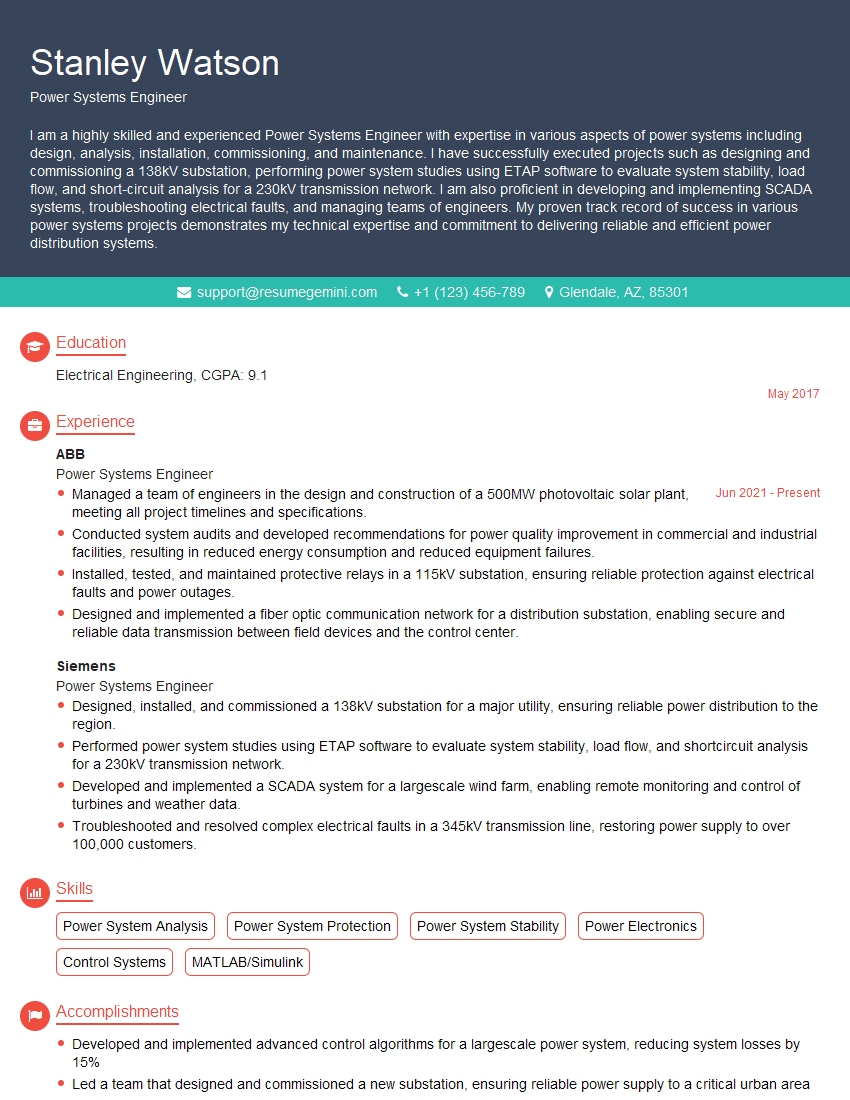
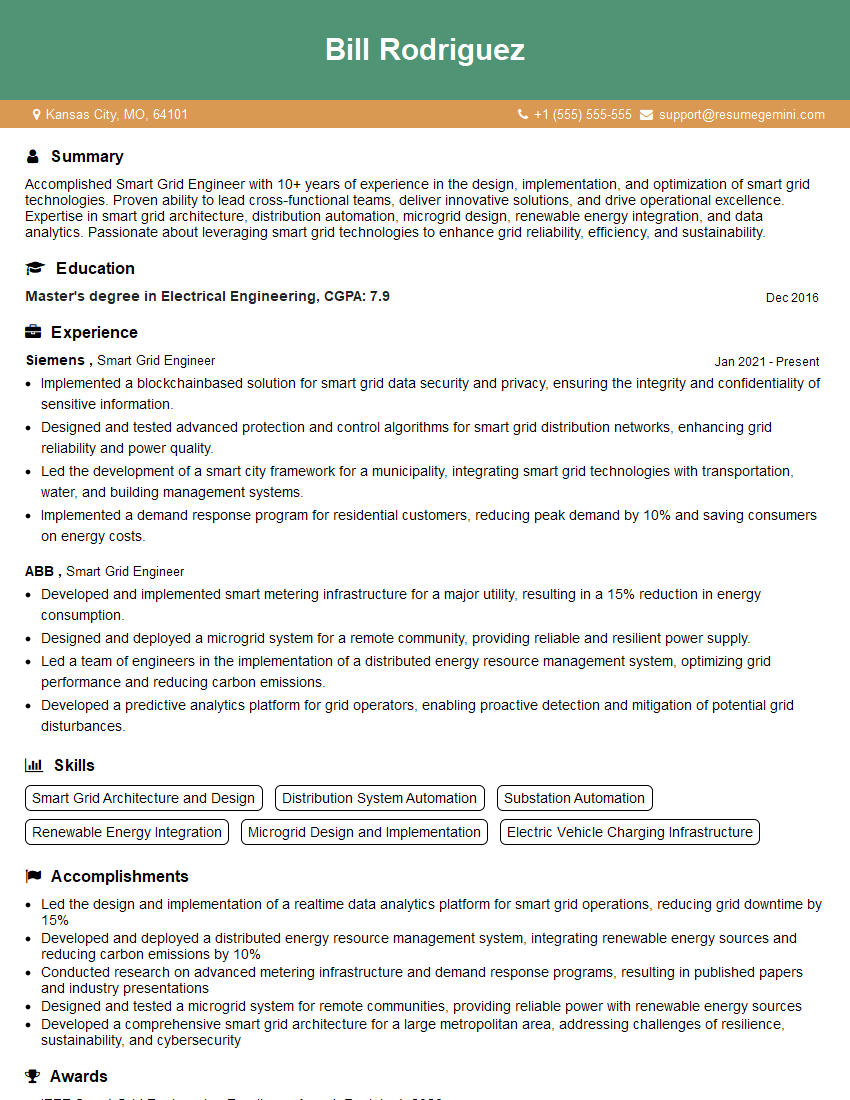
Mastering Power Systems Modeling is crucial for a successful career in the power industry, opening doors to exciting roles in planning, operation, and control of power grids. A strong understanding of these concepts will significantly enhance your interview performance and overall career prospects. To further strengthen your application, create an ATS-friendly resume that effectively showcases your skills and experience. We highly recommend using ResumeGemini to build a professional and impactful resume. ResumeGemini provides examples of resumes tailored to Power Systems Modeling, helping you create a document that stands out from the competition. This will significantly improve your chances of landing your dream job.
Explore more articles
Users Rating of Our Blogs
Share Your Experience
We value your feedback! Please rate our content and share your thoughts (optional).
What Readers Say About Our Blog
Very informative content, great job.
good