Are you ready to stand out in your next interview? Understanding and preparing for Wildlife Habitat Protection interview questions is a game-changer. In this blog, we’ve compiled key questions and expert advice to help you showcase your skills with confidence and precision. Let’s get started on your journey to acing the interview.
Questions Asked in Wildlife Habitat Protection Interview
Q 1. Explain the concept of habitat fragmentation and its impact on wildlife populations.
Habitat fragmentation is the breaking up of a continuous habitat into smaller, isolated patches. Imagine a vast forest being divided by roads, agriculture, or urban development. This process significantly impacts wildlife populations in several ways.
- Reduced population size: Smaller patches can only support smaller populations, making them more vulnerable to extinction due to factors like inbreeding and random events.
- Loss of genetic diversity: Isolation limits gene flow between populations, leading to reduced genetic variability and increased susceptibility to disease.
- Increased edge effects: The edges of habitat fragments experience different environmental conditions (e.g., increased sunlight, wind, and human disturbance) than the interior, impacting species that require specific microclimates.
- Disrupted movement and dispersal: Animals may struggle to find mates, food, or suitable breeding grounds, leading to reduced reproductive success.
For example, a fragmented forest might prevent a large predator like a jaguar from successfully hunting across its former range, leading to decreased survival rates and population decline.
Q 2. Describe different methods for assessing wildlife habitat quality.
Assessing wildlife habitat quality involves a multi-faceted approach, combining various methods to obtain a comprehensive picture. We assess things like:
- Vegetation surveys: Assessing the types, abundance, and structure of plants provides crucial information about food availability and cover for wildlife.
- Wildlife surveys: Direct observation (e.g., camera trapping, transect walks), indirect signs (e.g., scat, tracks), and mark-recapture studies provide data on species presence, abundance, and distribution.
- Habitat structural analysis: Measuring factors like canopy cover, tree density, understory vegetation, and water availability helps determine the suitability of the habitat for specific species.
- Soil analysis: Soil quality impacts plant growth and overall habitat productivity. Nutrient levels, moisture content, and erosion rates are all important factors.
- Water quality assessment: In aquatic habitats, water quality parameters (e.g., dissolved oxygen, pH, nutrient levels) determine species suitability.
For instance, we might use camera traps to assess the presence of a key species and then combine that data with vegetation surveys to determine if there is enough suitable foraging habitat.
Q 3. What are the key principles of habitat restoration?
Habitat restoration aims to reinstate degraded or destroyed habitats to their former ecological function and structure. Key principles include:
- Identifying the target ecosystem: Understanding the historical condition of the habitat is crucial for setting realistic restoration goals.
- Addressing limiting factors: Identifying and mitigating factors that hinder habitat recovery, such as invasive species, pollution, or lack of water, is essential.
- Reintroducing native species: Planting native vegetation and reintroducing native animal species can help restore the ecological balance.
- Monitoring and adaptive management: Ongoing monitoring allows for evaluation of restoration success and adaptation of strategies based on observed results.
- Community involvement: Engaging local communities in the restoration process increases ownership and sustainability.
An example could involve removing invasive weeds, planting native trees, and then monitoring the return of native bird species to a previously degraded wetland.
Q 4. How do you determine the carrying capacity of a specific habitat?
Carrying capacity refers to the maximum population size of a species that an environment can sustain indefinitely, given the available resources. Determining carrying capacity is complex and depends on several factors.
- Resource availability: Food, water, shelter, and breeding sites are all limiting resources that influence carrying capacity.
- Environmental conditions: Climate, topography, and other environmental factors can significantly impact carrying capacity.
- Species interactions: Competition, predation, and disease can all influence the carrying capacity of a given species.
We usually estimate carrying capacity using population models, integrating data on resource availability, birth and death rates, and other factors. For example, we might use a logistic growth model, which incorporates the carrying capacity (K) as a parameter: dN/dt = rN(1 - N/K), where N is population size, r is the per capita growth rate, and t is time. This model allows us to predict future population sizes based on our understanding of the habitat’s carrying capacity.
Q 5. Explain the role of GIS in wildlife habitat management.
Geographic Information Systems (GIS) are powerful tools for wildlife habitat management. GIS allows us to:
- Map habitat features: We can integrate various data layers (e.g., vegetation maps, elevation data, land-use maps) to create detailed maps of habitat types and their distribution.
- Analyze habitat connectivity: GIS helps identify corridors and barriers to movement, crucial for understanding species dispersal and gene flow.
- Model habitat suitability: We can combine data on environmental variables and species requirements to predict areas suitable for particular species.
- Monitor habitat change: GIS enables tracking of changes in habitat extent and quality over time, informing management decisions.
- Plan conservation strategies: GIS supports the design of protected areas, wildlife corridors, and restoration projects.
For instance, we might use GIS to identify suitable locations for establishing new wildlife corridors, linking fragmented habitat patches and ensuring gene flow between populations.
Q 6. What are the common threats to wildlife habitats and how can they be mitigated?
Wildlife habitats face numerous threats, many stemming from human activities. Key threats include:
- Habitat loss and fragmentation: Conversion of natural habitats for agriculture, urbanization, and infrastructure development.
- Climate change: Alterations in temperature, precipitation patterns, and extreme weather events affect species distribution and survival.
- Pollution: Water, air, and soil pollution can contaminate habitats and harm wildlife.
- Invasive species: Non-native species can outcompete native species for resources and disrupt ecosystem function.
- Overexploitation: Hunting, fishing, and poaching can deplete wildlife populations.
Mitigation strategies involve a variety of approaches: creating protected areas, implementing sustainable land-use practices, restoring degraded habitats, managing invasive species, and regulating hunting and fishing.
Q 7. Describe your experience with wildlife population monitoring techniques.
My experience encompasses a wide range of wildlife population monitoring techniques. I’ve extensively utilized:
- Camera trapping: A highly effective method for detecting and identifying elusive species, providing data on species abundance, distribution, and activity patterns.
- Transect surveys: Systematic walks along pre-defined routes, enabling estimation of animal abundance and distribution using distance sampling or other methods.
- Mark-recapture studies: Capturing, marking, and recapturing animals to estimate population size and other parameters.
- Acoustic monitoring: Recording and analyzing animal vocalizations to estimate abundance and distribution, particularly useful for nocturnal or cryptic species.
- Genetic monitoring: Using DNA analysis to assess genetic diversity, population structure, and gene flow within and between populations.
In a recent project, I used a combination of camera trapping and transect surveys to monitor the population dynamics of a rare primate species in a fragmented forest landscape. The data allowed us to assess the effectiveness of habitat restoration efforts and inform conservation strategies.
Q 8. How do you balance the needs of wildlife conservation with human development?
Balancing wildlife conservation and human development is a complex challenge requiring careful planning and innovative solutions. It’s not about choosing one over the other, but finding sustainable coexistence. This involves identifying areas crucial for wildlife that can be protected, while allowing responsible development in other areas. Key strategies include:
- Habitat Corridors: Creating protected pathways linking fragmented habitats allows animals to migrate, find mates, and access resources, even in developed landscapes. Imagine building wildlife overpasses over highways to allow safe passage for animals like deer or bears.
- Sustainable Land Use Planning: This involves zoning regulations that designate areas for conservation and development, minimizing habitat destruction. For example, designating certain areas as protected parks while allowing for low-impact development in surrounding regions.
- Mitigation and Compensation: When development impacts wildlife habitats, mitigation measures (e.g., restoring degraded areas) and compensation (e.g., creating new habitats elsewhere) must be implemented. If a wetland is destroyed for a road, a new wetland must be created of equal or greater ecological value.
- Community Involvement: Engaging local communities in conservation planning fosters understanding and buy-in, leading to more effective long-term solutions. For example, local farmers can be compensated for adopting sustainable farming practices that support biodiversity.
Q 9. What are the ethical considerations involved in wildlife habitat management?
Ethical considerations in wildlife habitat management are paramount. They revolve around principles of fairness, respect, and sustainability, recognizing that humans share the planet with other species. Key considerations include:
- Intrinsic Value of Wildlife: Recognizing the inherent right of all species to exist, regardless of their economic or utilitarian value to humans. This challenges anthropocentric views that prioritize human needs above all else.
- Animal Welfare: Minimizing harm to individual animals during conservation efforts, like during relocation or disease control. This involves using humane techniques and ethical standards.
- Intergenerational Equity: Ensuring that future generations inherit a healthy and diverse natural world, not a depleted one. This means considering long-term consequences of our actions today.
- Precautionary Principle: Taking action to prevent harm to wildlife, even when scientific certainty is limited. It’s better to err on the side of caution to protect biodiversity.
- Justice and Equity: Ensuring that conservation efforts don’t disproportionately impact marginalized communities. This involves inclusive decision-making processes and consideration of socio-economic factors.
Q 10. Explain the process of developing a wildlife habitat management plan.
Developing a wildlife habitat management plan is an iterative process requiring collaboration from various stakeholders. It typically involves these steps:
- Assessment: Conducting a thorough assessment of the habitat, including biodiversity surveys, habitat mapping, and identifying threats. This phase involves rigorous data collection and analysis.
- Goal Setting: Defining clear, measurable, achievable, relevant, and time-bound (SMART) goals for habitat conservation and restoration. For example, increasing the population of a specific endangered species by 20% in five years.
- Strategy Development: Designing specific strategies to achieve the goals, such as habitat restoration, invasive species control, and monitoring programs. This could involve techniques like prescribed burns to promote native plant growth.
- Implementation: Putting the plan into action, involving on-the-ground activities like habitat restoration, species reintroduction, and community engagement. This often requires securing funding and coordinating with various agencies and organizations.
- Monitoring and Evaluation: Regularly monitoring the effectiveness of the plan and adjusting strategies as needed. This involves ongoing data collection and analysis to track progress towards goals.
- Adaptive Management: This is a crucial aspect. The plan should be flexible and responsive to changing conditions and new information. This might involve adjusting strategies based on monitoring data or unexpected events.
Q 11. Describe your experience with endangered species recovery programs.
I’ve been involved in several endangered species recovery programs, focusing primarily on [Mention specific species or groups, e.g., California Condors, coastal wetland birds]. My work has involved:
- Population Monitoring: Using various techniques, like radio telemetry and camera traps, to track population size, distribution, and trends.
- Habitat Restoration: Implementing projects to restore critical habitats, such as replanting native vegetation and removing invasive species.
- Captive Breeding Programs: Participating in or advising on captive breeding programs to augment wild populations and enhance genetic diversity.
- Disease Management: Developing and implementing strategies to control diseases that affect endangered species. This might involve vaccination programs or habitat management practices.
- Threat Mitigation: Identifying and addressing threats to endangered species, such as habitat loss, poaching, and climate change. This often requires working with regulatory bodies and communities.
For instance, in the [Mention specific project, e.g., California Condor recovery project], I was involved in developing and implementing a program to reduce lead poisoning, a significant threat to the species. This involved educating hunters on the use of non-toxic ammunition and developing methods for monitoring lead levels in condor populations.
Q 12. What are the key legal and regulatory frameworks governing wildlife habitat protection?
Wildlife habitat protection is governed by a complex web of legal and regulatory frameworks, varying significantly across jurisdictions. However, some key common elements include:
- Endangered Species Acts: These are foundational laws (like the U.S. Endangered Species Act) that protect endangered and threatened species and their habitats. They often prohibit harming listed species and their habitats, and mandate recovery plans.
- Environmental Impact Assessments (EIAs): Before undertaking major development projects, EIAs evaluate potential environmental impacts, including impacts on wildlife habitats. This helps in making informed decisions to reduce or mitigate these impacts.
- National Parks and Protected Areas Legislation: Laws establishing national parks, wildlife refuges, and other protected areas provide legal frameworks for conserving biodiversity. These laws often restrict development and human activities within these zones.
- International Conventions: International treaties, like the Convention on Biological Diversity (CBD), provide a global framework for biodiversity conservation. These conventions encourage international cooperation in protecting habitats and species across borders.
- Land Use Planning Regulations: Local and regional land use regulations often incorporate provisions to protect wildlife habitats. This is achieved through zoning laws, building codes, and environmental guidelines.
Q 13. How do you prioritize conservation efforts when dealing with multiple threatened species?
Prioritizing conservation efforts among multiple threatened species requires a systematic approach. It’s not simply about picking the ‘cutest’ or most ‘charismatic’ species. A scientific and ethical framework is essential:
- Species-Specific Risk Assessment: Conducting thorough risk assessments for each species, considering factors like population size, habitat loss, threats, and resilience. This involves quantifying the risks faced by different species.
- Ecosystem Approach: Focusing on conservation actions that benefit multiple species simultaneously. Protecting a key habitat that supports many species is more efficient than targeting individual species in isolation.
- Umbrella Species Concept: Identifying ‘umbrella species’ whose conservation indirectly protects many other species that share the same habitat. Conserving a top predator, for example, may protect its prey and the habitat they share.
- Flagship Species Approach: Utilizing charismatic species to garner public support and funding for broader conservation efforts. This leverages the appeal of iconic species to generate public interest and conservation action.
- Cost-Effectiveness Analysis: Evaluating the cost-effectiveness of various conservation strategies. This involves determining which actions provide the greatest conservation benefits per unit of investment.
Often, a combination of these approaches is used. It’s a dynamic process, involving continuous monitoring and adjustments based on new data and insights.
Q 14. Describe your experience with community engagement in conservation projects.
Community engagement is crucial for successful conservation projects. It transforms conservation from a top-down approach to a collaborative effort. My experience involves:
- Participatory Planning: Involving local communities in the planning and decision-making processes, ensuring their needs and concerns are addressed. This often involves workshops, public forums, and interviews.
- Education and Awareness: Raising public awareness about the importance of wildlife conservation and the benefits of habitat protection. This is achieved using various tools such as educational programs, outreach events, and community-based conservation education.
- Capacity Building: Empowering local communities with the skills and resources to participate in conservation activities. This includes training programs and skill development sessions.
- Incentive Programs: Developing and implementing incentive programs to encourage community participation, such as payments for ecosystem services or community-based ecotourism initiatives.
- Conflict Resolution: Addressing conflicts between conservation goals and community needs, such as conflicts between wildlife and livestock. This might involve developing strategies like livestock guarding dogs to reduce human-wildlife conflict.
In one project, we worked with local farmers to develop sustainable agricultural practices that both supported biodiversity and increased their crop yields. This involved training them in techniques like agroforestry and integrated pest management, resulting in both ecological and economic benefits.
Q 15. What are the major challenges in restoring degraded habitats?
Restoring degraded habitats is a complex undertaking fraught with challenges. The primary hurdles often involve the interplay of multiple factors, making a singular solution inadequate.
- Soil degradation: Erosion, nutrient depletion, and compaction can hinder plant growth, disrupting the foundation of the ecosystem. Imagine trying to build a house on shifting sand – it’s unstable and unlikely to support life. Remediating this often requires soil amendments, terracing, or other erosion control techniques.
- Pollution: Chemical contaminants, heavy metals, and plastic pollution can poison the soil and water, negatively impacting organisms at all trophic levels. Cleaning up pollution can be expensive and time-consuming, requiring specialized techniques and often leading to long-term monitoring.
- Invasive species: Non-native plants and animals can outcompete native species for resources, disrupting established ecological balances. Think of it like an unwanted houseguest taking over your home. Managing invasive species often necessitates integrated pest management strategies, including biological control, physical removal, and chemical treatments.
- Climate change: Altered rainfall patterns, increased temperatures, and extreme weather events can further stress degraded habitats, delaying or hindering restoration efforts. It’s like trying to fix a leaky roof during a hurricane – the challenge is compounded by external forces.
- Funding and logistical limitations: Large-scale restoration projects require significant funding and skilled personnel, often making them resource-intensive.
Successfully restoring a degraded habitat demands a holistic approach, considering all interconnected factors and adopting adaptive management strategies that account for unforeseen challenges.
Career Expert Tips:
- Ace those interviews! Prepare effectively by reviewing the Top 50 Most Common Interview Questions on ResumeGemini.
- Navigate your job search with confidence! Explore a wide range of Career Tips on ResumeGemini. Learn about common challenges and recommendations to overcome them.
- Craft the perfect resume! Master the Art of Resume Writing with ResumeGemini’s guide. Showcase your unique qualifications and achievements effectively.
- Don’t miss out on holiday savings! Build your dream resume with ResumeGemini’s ATS optimized templates.
Q 16. How do you utilize remote sensing and other technological tools in habitat assessment?
Remote sensing and other technological tools are indispensable for efficient and accurate habitat assessment. They allow us to collect data over large areas, reducing the need for extensive and time-consuming fieldwork.
- Satellite imagery: Provides high-resolution images allowing for habitat mapping, identification of deforestation, and monitoring of land cover changes over time. We can use this to track the health of forests, wetlands, and grasslands, even in remote areas.
- LiDAR (Light Detection and Ranging): Generates detailed 3D models of terrain, enabling precise measurements of vegetation height, canopy density, and other structural attributes crucial for assessing habitat quality. This is particularly useful for mapping forest canopies and understanding habitat complexity.
- Unmanned Aerial Vehicles (UAVs or drones): Offer high-resolution imagery and data collection at a lower cost than satellite imagery, facilitating targeted surveys of specific areas or species. We use drones to monitor endangered species populations and assess habitat fragmentation.
- GIS (Geographic Information Systems): Integrates data from various sources, allowing for spatial analysis and visualization of habitat characteristics, species distributions, and human impacts. This is the central hub for organizing and analyzing all the collected data.
- Acoustic monitoring: Utilizes sensors to record animal vocalizations, providing insights into species presence, abundance, and behavior. We can use this to assess the population of elusive species without direct observation.
By integrating data from these diverse sources, we develop comprehensive habitat assessments that guide effective conservation strategies.
Q 17. Explain your understanding of biodiversity and its importance in habitat conservation.
Biodiversity, encompassing the variety of life at all levels from genes to ecosystems, is the cornerstone of healthy and resilient habitats. It’s not just about the number of species, but also their relative abundance and the interactions between them.
The importance of biodiversity in habitat conservation is multifaceted:
- Ecosystem services: Biodiversity underpins essential ecosystem services like clean air and water, pollination, nutrient cycling, and climate regulation. A diverse ecosystem is more resilient and productive.
- Resilience: A more diverse ecosystem is better able to withstand and recover from disturbances like disease outbreaks, extreme weather events, and invasive species. A monoculture (like a field of only corn) is far more susceptible to pests than a diverse forest.
- Genetic diversity: High genetic diversity within populations ensures adaptability to changing environmental conditions. This is crucial for long-term survival of species.
- Economic benefits: Biodiversity supports livelihoods through activities like tourism, fishing, forestry, and agriculture.
Conserving biodiversity is not just an environmental imperative; it is crucial for human well-being and economic stability.
Q 18. Describe different habitat types and their associated wildlife communities.
Habitats are incredibly diverse, each supporting unique wildlife communities. Here are a few examples:
- Forests: From temperate rainforests to boreal forests, these habitats are characterized by high tree density, providing shelter and food for a wide array of species, including birds, mammals, insects, and fungi. A tropical rainforest boasts incredible biodiversity, far exceeding that of a temperate deciduous forest.
- Grasslands: Dominated by grasses and herbaceous plants, grasslands support large grazing mammals like bison and zebras, along with a variety of birds, reptiles, and insects. The Serengeti Plains in Africa is a classic example of a grassland ecosystem.
- Wetlands: Including marshes, swamps, and bogs, wetlands are crucial for water filtration, flood control, and support a unique array of aquatic and semi-aquatic species, such as amphibians, waterfowl, and fish. The Everglades in Florida are a vital wetland ecosystem.
- Marine habitats: Encompassing oceans, coral reefs, estuaries, and coastal zones, marine habitats support a vast array of marine life, from microscopic plankton to massive whales. Coral reefs, while occupying a small area, support a disproportionately high number of species.
- Deserts: Characterized by arid conditions, deserts support specialized flora and fauna adapted to water scarcity. Many desert animals are nocturnal, avoiding the harsh daytime heat.
Each habitat type has its unique characteristics, supporting a specific assemblage of species with intricate ecological interactions.
Q 19. How do you use data analysis to inform wildlife habitat management decisions?
Data analysis is the backbone of informed wildlife habitat management. We use a variety of analytical techniques to interpret data collected through various methods (remote sensing, field surveys, etc.) and translate those insights into effective management strategies.
- Species distribution modeling: Predicting species occurrence based on environmental variables, allowing for identification of potential habitat areas and areas of overlap or conflict.
- Population viability analysis: Assessing the probability of a population persisting over time, considering factors like habitat loss, environmental change, and demographic stochasticity (random fluctuations in birth and death rates).
- Habitat suitability analysis: Determining the quality of habitat based on key features like vegetation cover, prey availability, and predator presence.
- Connectivity analysis: Identifying movement corridors crucial for gene flow and species dispersal, helping prioritize habitat restoration and protection efforts.
- Statistical modeling: Evaluating the impact of management interventions on habitat quality and species populations. This could involve analyzing the success rate of a reintroduction program or evaluating the effectiveness of a habitat restoration project.
By applying rigorous data analysis, we can move beyond anecdotal evidence and make evidence-based decisions that optimize conservation outcomes. For example, analyzing the success of a reintroduction program helps us refine our techniques for future projects.
Q 20. What are the key indicators of a healthy wildlife habitat?
A healthy wildlife habitat is characterized by a complex interplay of factors that contribute to the overall well-being of the species that depend on it. Key indicators include:
- High biodiversity: A rich variety of plant and animal species, reflecting a healthy and resilient ecosystem.
- Abundant resources: Sufficient food, water, and shelter for resident populations.
- Habitat connectivity: Presence of movement corridors that allow for dispersal and gene flow between populations.
- Low levels of disturbance: Minimal impact from human activities, pollution, or invasive species.
- Functional ecosystem processes: Intact nutrient cycling, pollination, and other essential ecosystem services.
- Stable population dynamics: Species populations maintaining relatively constant sizes, without significant declines or crashes. We also look for healthy population structures – good ratios of juveniles to adults.
- Resilience to disturbances: Ability to withstand and recover from environmental shocks, such as droughts, floods, or wildfires. A healthy ecosystem can often rebound from minor disturbances.
Monitoring these indicators over time is crucial for assessing the effectiveness of conservation efforts and adapting management strategies as needed.
Q 21. Describe your experience with invasive species management in relation to habitat protection.
Invasive species pose a significant threat to native biodiversity and habitat integrity. My experience includes various aspects of invasive species management, focusing on prevention, early detection, and control.
- Prevention: Implementing stringent border controls and quarantine measures to prevent the introduction of new invasive species is critical. This includes thorough inspections of imported goods and educating the public about the potential risks of introducing non-native species.
- Early detection: Establishing robust monitoring programs to detect the early establishment of invasive species is paramount. Rapid response to small infestations is much more cost-effective than managing larger, well-established populations.
- Control: Employing various control methods depending on the specific invasive species and the context. This may include mechanical removal, biological control (introducing natural predators or diseases), chemical control (herbicides or pesticides – used cautiously and strategically), and habitat manipulation. We carefully consider the ecological impacts of each method and prioritize techniques that minimize harm to native species and the surrounding ecosystem.
- Restoration: Following invasive species control, restoration efforts focus on restoring native vegetation and promoting ecosystem recovery. This may involve replanting native species, removing remaining invasive plant matter, and monitoring the re-establishment of native plant communities.
For instance, I was involved in a project controlling the spread of an invasive aquatic plant in a wetland ecosystem. Our approach involved an integrated strategy combining mechanical removal, targeted herbicide application, and subsequent replanting of native aquatic plants. Regular monitoring helped us assess the effectiveness of our efforts and adapt our strategy as needed. This multi-faceted approach led to a significant reduction in the invasive species and improvements in the overall health of the wetland ecosystem.
Q 22. Explain the role of climate change in altering wildlife habitats.
Climate change is fundamentally altering wildlife habitats through a variety of mechanisms. Think of it like shifting the foundation of a house – the impacts ripple throughout the entire structure.
- Changing Temperatures and Precipitation: Rising temperatures are causing shifts in species ranges, as animals and plants seek out more suitable climates. For example, many mountain species are being forced to higher altitudes, with nowhere left to go when they reach the peak. Changes in precipitation patterns lead to droughts or floods, impacting water availability and vegetation, which are crucial for wildlife.
- Increased Frequency and Intensity of Extreme Weather Events: More frequent and intense wildfires, storms, and floods directly destroy habitats and disrupt ecological processes. Imagine a coastal marsh being completely inundated by a hurricane – the habitat is devastated, and the animals relying on it are displaced.
- Sea Level Rise: Coastal habitats, such as mangroves and salt marshes, are particularly vulnerable. Rising sea levels inundate these areas, destroying breeding grounds and feeding areas for many species.
- Ocean Acidification: Increased CO2 in the atmosphere leads to ocean acidification, harming marine organisms like corals and shellfish, altering entire marine ecosystems.
Understanding these interconnected effects is crucial for developing effective conservation strategies that account for the dynamic nature of climate change impacts.
Q 23. How do you measure the success of a habitat restoration project?
Measuring the success of a habitat restoration project requires a multifaceted approach, moving beyond simply planting trees. We need to track both the structural and functional recovery of the ecosystem.
- Biodiversity Monitoring: We assess changes in species richness, abundance, and community composition. For instance, we might track the number and types of bird species returning to a restored wetland. Camera traps and acoustic monitoring are frequently used.
- Habitat Structure Assessment: We measure the physical characteristics of the restored habitat, such as vegetation cover, canopy height, and soil quality. This involves careful measurements and mapping techniques.
- Ecological Processes: We monitor key ecological processes like nutrient cycling, water flow, and pollination. For example, we might study the rates of decomposition in restored forest soils.
- Community Engagement: Successful projects also involve community participation and education. Tracking community involvement and satisfaction is a vital component of assessing broader success.
Data is analyzed statistically to assess whether the restored habitat is approaching its desired state and whether the project is achieving its intended ecological goals. We often use before-and-after comparisons and control sites for robust analysis.
Q 24. What are the key challenges in protecting migratory wildlife corridors?
Protecting migratory wildlife corridors presents significant challenges due to their extensive nature and the multitude of human influences along the way.
- Habitat Fragmentation: Development, agriculture, and infrastructure development break up continuous habitats, creating barriers to migration. Imagine a highway cutting through a crucial migratory route – this isolates populations and restricts gene flow.
- Human-Wildlife Conflict: Migratory animals often come into conflict with human activities, leading to injuries or deaths. For instance, collisions with vehicles are a major cause of mortality for many migrating species.
- Climate Change Impacts: Shifting climate patterns can alter the timing and routes of migration, potentially mismatching animals with available resources. If a species’ migration timing changes, but its food source remains on the old schedule, starvation can result.
- International Collaboration: Many migratory routes cross international borders, requiring collaboration across countries to establish effective conservation measures. This can involve negotiating agreements and harmonizing regulations, which is often complex and challenging.
Addressing these challenges requires a landscape-level approach, involving habitat restoration, mitigation of human impacts, international cooperation, and community engagement.
Q 25. Describe your understanding of ecosystem services and their relation to habitat conservation.
Ecosystem services are the myriad benefits that humans derive from healthy ecosystems. Think of them as the essential services nature provides to support human life and well-being. Habitat conservation is intrinsically linked to maintaining these services.
- Provisioning Services: These are tangible goods, such as food, water, timber, and fiber, all of which are directly affected by habitat degradation.
- Regulating Services: These involve the regulation of climate, water purification, disease control, and pollination – all reliant on functional ecosystems.
- Supporting Services: These are the fundamental ecological processes that underpin all other services, like nutrient cycling, primary production, and soil formation.
- Cultural Services: These are the non-material benefits, such as recreation, tourism, aesthetic appreciation, and spiritual enrichment, all intrinsically tied to healthy natural areas.
Habitat conservation is vital for maintaining these services. Protecting forests, for instance, not only safeguards biodiversity but also helps regulate climate, purify water, and provide timber resources.
Q 26. How do you adapt your management strategies to different habitat types?
Management strategies must be tailored to the specific characteristics of different habitat types. A one-size-fits-all approach simply won’t work.
- Forests: Management might focus on fire prevention, sustainable logging practices, and controlling invasive species. Different forest types require distinct approaches.
- Wetlands: Strategies may involve water level management, restoration of degraded areas, and control of invasive aquatic plants. The needs of coastal marshes are different from those of inland swamps.
- Grasslands: Management might involve prescribed burning to maintain grassland health, controlling grazing intensity, and protecting against agricultural encroachment.
- Marine Habitats: Strategies may include protecting coral reefs from destructive fishing practices, establishing marine protected areas, and reducing pollution.
Adapting strategies involves detailed ecological understanding of each habitat and the threats it faces. Effective conservation requires site-specific approaches, informed by science and local knowledge.
Q 27. Describe your experience with working with different stakeholders in conservation initiatives.
Successful conservation initiatives require collaboration among diverse stakeholders. My experience has involved working with landowners, government agencies, NGOs, local communities, and indigenous groups.
For example, in a recent project involving riparian habitat restoration, we collaborated with local farmers to implement buffer strips along streams, which benefited both water quality and agricultural productivity. This required building trust and understanding their concerns.
Effective stakeholder engagement involves open communication, shared decision-making, and finding solutions that meet multiple needs and goals. Respecting diverse perspectives and ensuring equitable benefit-sharing are crucial for long-term success.
Q 28. What are your future aspirations in the field of wildlife habitat protection?
My future aspirations involve advancing our understanding of the impacts of climate change on wildlife habitats and developing more adaptive and resilient conservation strategies. This includes exploring innovative technologies, such as remote sensing and predictive modeling, to improve monitoring and management.
I also aim to strengthen collaborative efforts across different sectors and scales, facilitating the integration of conservation into broader land-use planning and policy. Ultimately, I want to contribute to a future where wildlife habitats are protected and thriving, despite the challenges of a changing world.
Key Topics to Learn for Wildlife Habitat Protection Interview
- Habitat Assessment and Monitoring: Understanding methodologies for evaluating habitat quality, including vegetation surveys, wildlife surveys (camera trapping, scat analysis, etc.), and GIS mapping. Practical application: Designing a monitoring plan for a specific endangered species.
- Conservation Planning and Management: Developing and implementing strategies for habitat restoration, preservation, and sustainable use. Practical application: Creating a management plan for a protected area, addressing issues like invasive species control and human-wildlife conflict.
- Wildlife Ecology and Population Dynamics: Understanding the ecological principles governing wildlife populations and their interactions with their habitats. Practical application: Analyzing population trends to inform conservation decisions.
- Legislation and Policy: Familiarity with relevant environmental laws, regulations, and policies related to habitat protection (e.g., Endangered Species Act). Practical application: Evaluating the effectiveness of a particular conservation policy.
- Environmental Impact Assessment: Assessing the potential impacts of development projects on wildlife habitats. Practical application: Conducting an environmental impact assessment for a proposed road construction project.
- Communication and Collaboration: Effective communication with stakeholders (landowners, government agencies, the public) and collaboration in conservation efforts. Practical application: Presenting conservation findings to a diverse audience.
- Data Analysis and Interpretation: Analyzing ecological data using statistical software to draw meaningful conclusions for habitat management. Practical application: Using statistical methods to assess the success of a habitat restoration project.
Next Steps
Mastering Wildlife Habitat Protection opens doors to a fulfilling career dedicated to preserving biodiversity and protecting our planet. Your expertise in this field is highly valuable and in demand. To significantly boost your job prospects, creating a strong, ATS-friendly resume is crucial. ResumeGemini can help you build a compelling resume that showcases your skills and experience effectively. ResumeGemini provides examples of resumes tailored to Wildlife Habitat Protection, enabling you to craft a document that truly highlights your qualifications and secures you those crucial interviews.
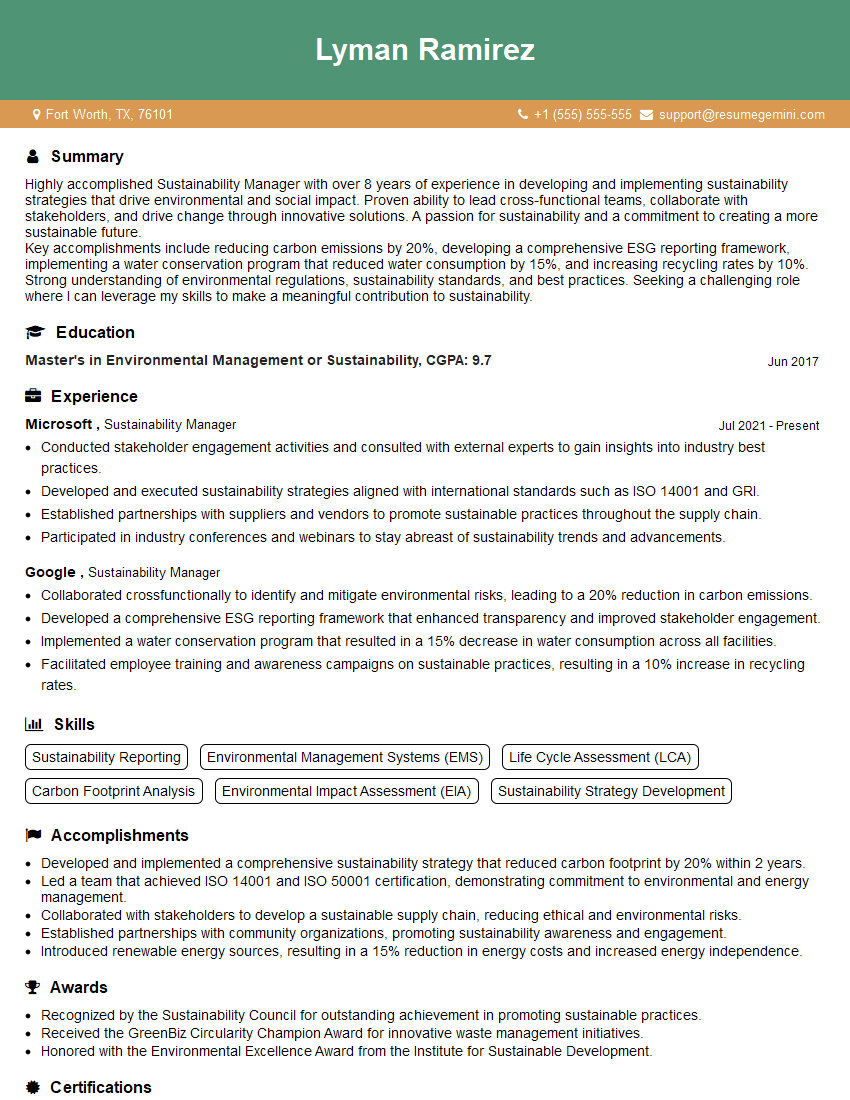
Sustainability Manager Resume Sample
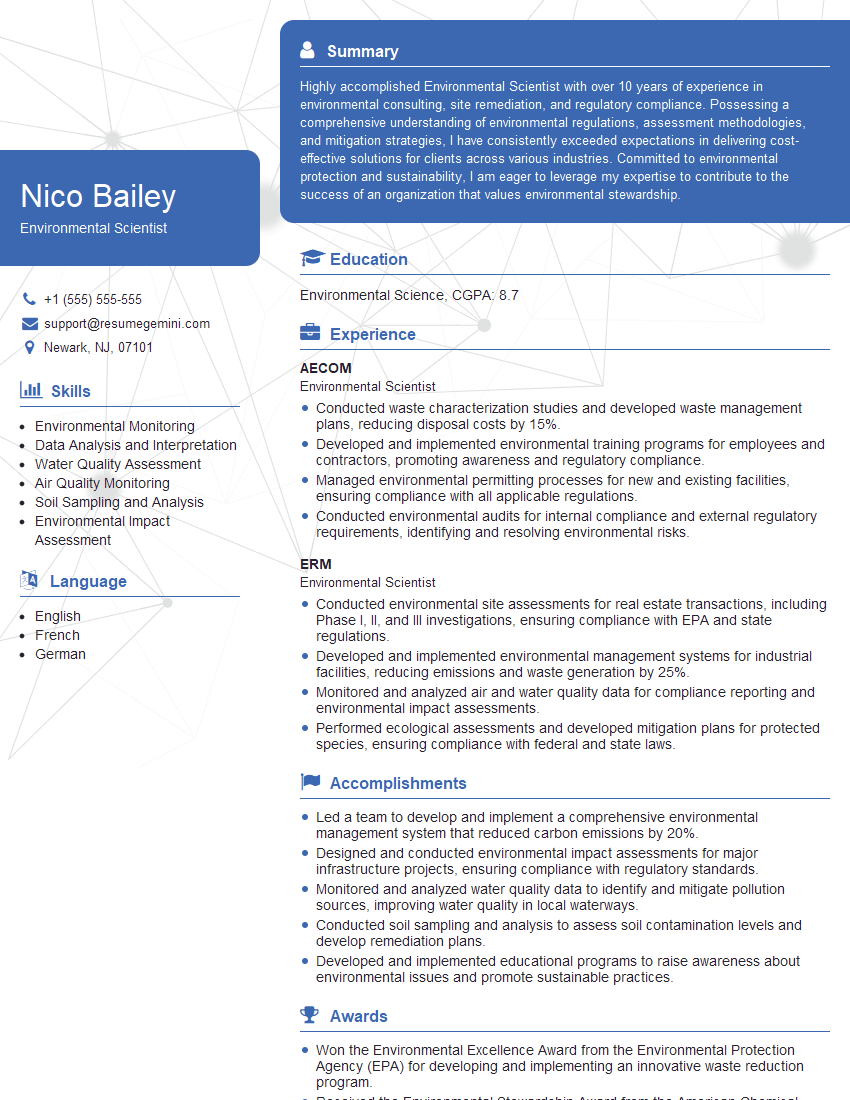
Environmental Scientist Resume Sample
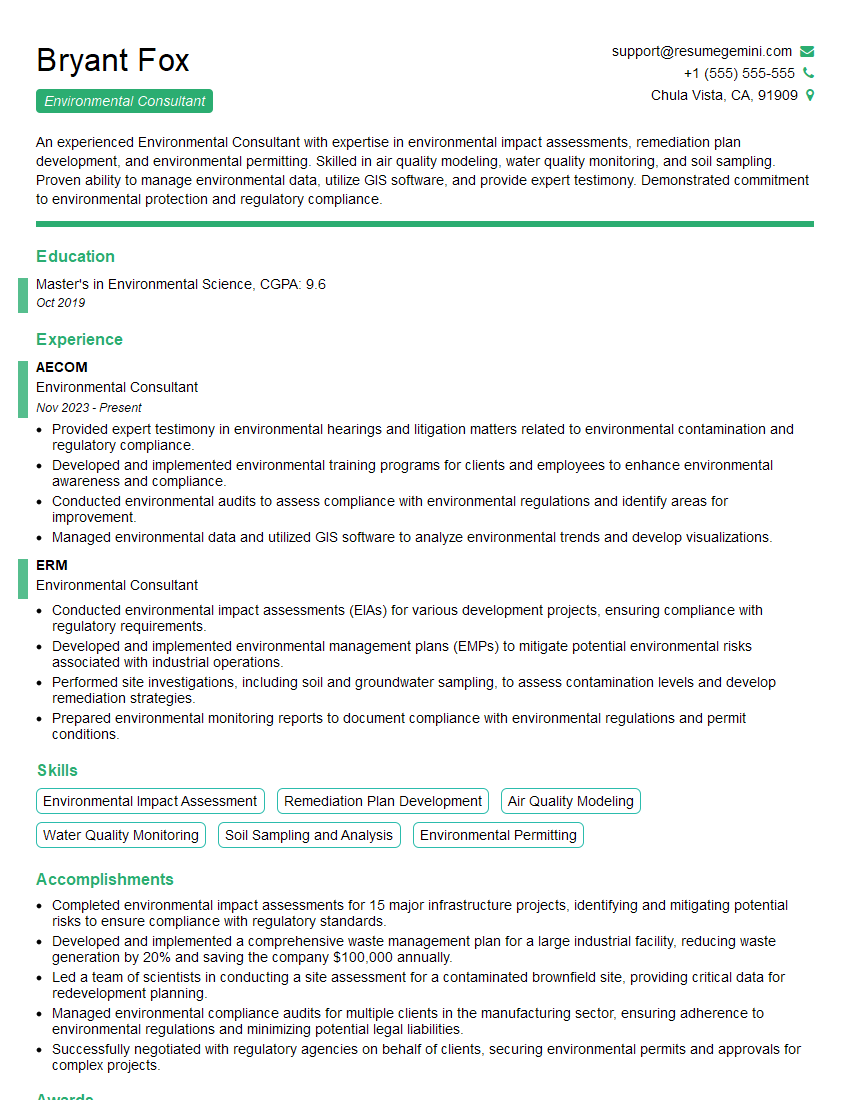
Environmental Consultant Resume Sample

Wildlife Biologist Resume Sample

Wildlife Ecologist Resume Sample

Wildlife Manager Resume Sample

Wildlife Technician Resume Sample
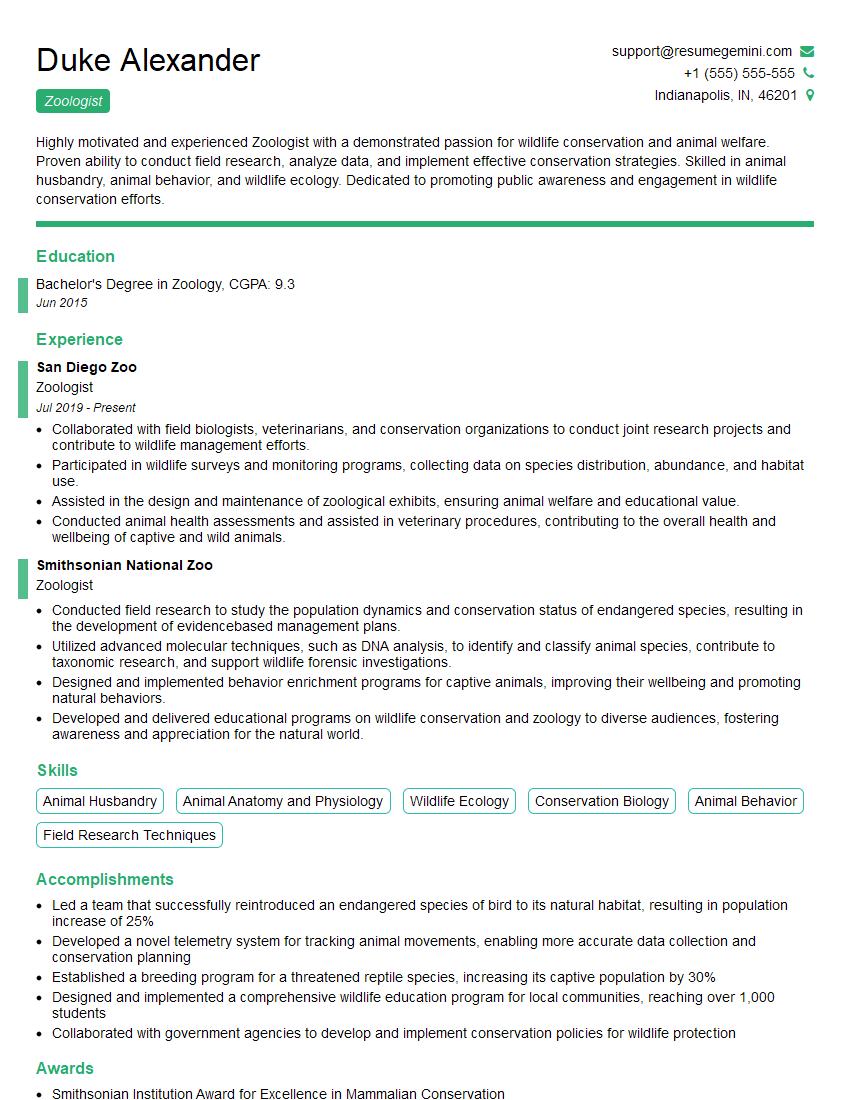
Zoologist Resume Sample
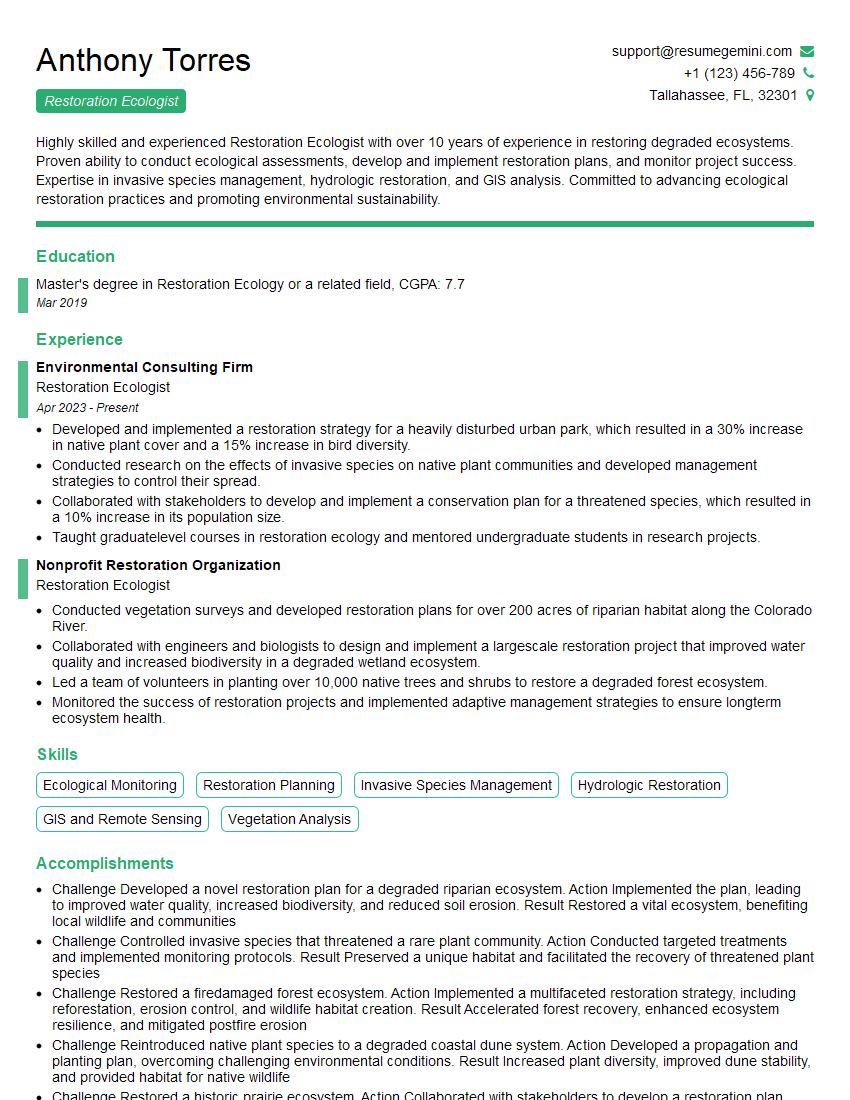
Restoration Ecologist Resume Sample

Environmental Educator Resume Sample
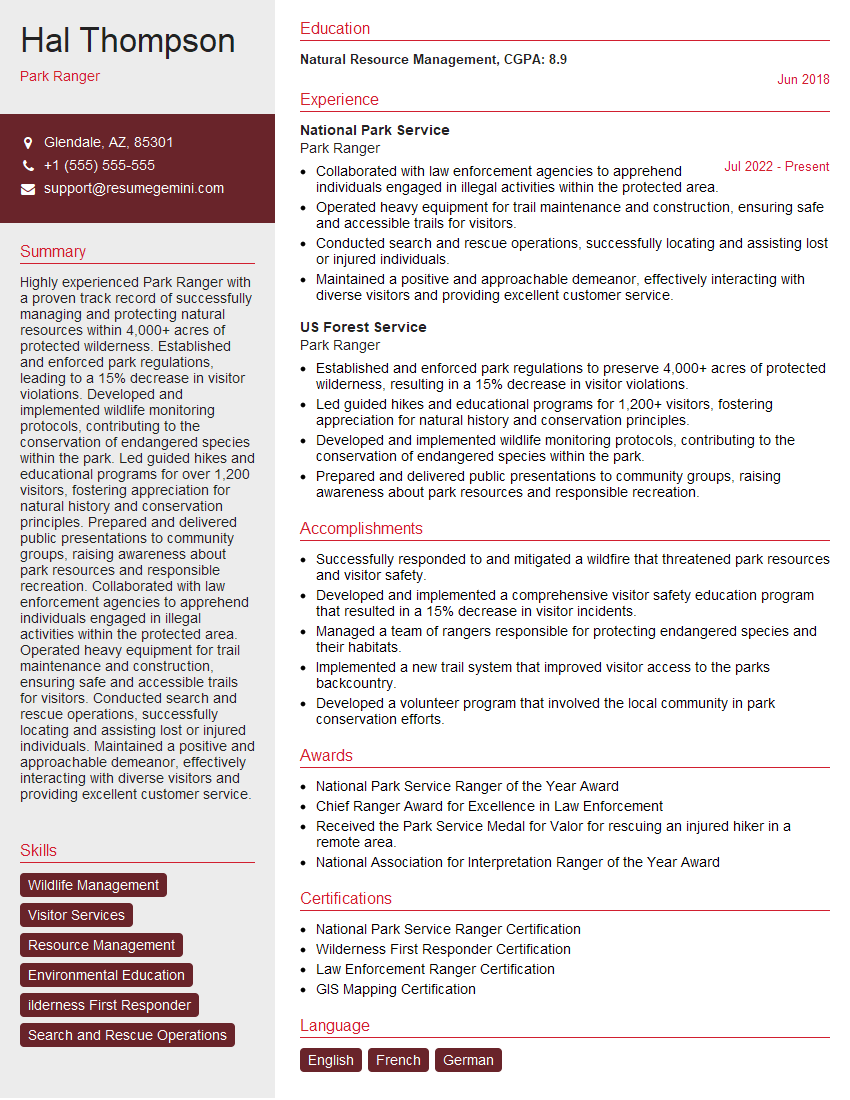
Park Ranger Resume Sample

Conservation Planner Resume Sample

Wildlife Rehabilitator Resume Sample
Explore more articles
Users Rating of Our Blogs
Share Your Experience
We value your feedback! Please rate our content and share your thoughts (optional).
What Readers Say About Our Blog
Very informative content, great job.
good