Feeling uncertain about what to expect in your upcoming interview? We’ve got you covered! This blog highlights the most important Precision Bombing interview questions and provides actionable advice to help you stand out as the ideal candidate. Let’s pave the way for your success.
Questions Asked in Precision Bombing Interview
Q 1. Explain the difference between GPS-guided and laser-guided munitions.
Both GPS-guided and laser-guided munitions are types of precision-guided munitions (PGMs), aiming to minimize collateral damage by accurately hitting a designated target. However, they achieve this accuracy through different mechanisms.
GPS-guided munitions rely on the Global Positioning System for navigation. They contain a GPS receiver that receives signals from multiple GPS satellites, calculating their precise location. The munition then uses this information to autonomously navigate to the pre-programmed target coordinates. Think of it like a highly accurate, self-driving car, but instead of a destination address, it’s targeting coordinates.
Laser-guided munitions, on the other hand, require a laser designator to illuminate the target. The munition’s seeker head detects the reflected laser energy, guiding the munition towards the source of the laser – the designated target. This is similar to a heat-seeking missile, but instead of heat, it follows the laser beam. The laser designator can be located on the ground, in an aircraft, or even another munition.
In essence, GPS-guided munitions are autonomous, while laser-guided munitions require external targeting.
Q 2. Describe the process of target acquisition and designation in precision bombing.
Target acquisition and designation is a crucial, multi-stage process in precision bombing, ensuring the munition hits the intended target. It begins with intelligence gathering to identify the target’s precise location, size, and surrounding environment. This intelligence might come from various sources like satellite imagery, human intelligence, or reconnaissance missions.
Next, the target must be designated. This usually involves illuminating the target with a laser designator (for laser-guided munitions) or pre-programming the GPS coordinates (for GPS-guided munitions) into the munition’s guidance system. The designator’s operator needs a clear line of sight to the target to ensure accurate illumination. This process requires careful coordination between the designator operator and the aircraft or launching platform.
Once the target is designated, the munition is launched and follows its programmed guidance system to impact the target. Post-strike assessment then verifies the accuracy of the strike and evaluates the effectiveness of the mission, helping to refine future targeting processes.
For example, a building needing demolition would require multiple imagery sources to verify its location, nearby structures and civilians. Then, the laser designator will be positioned to avoid friendly fire, providing a clear beam to the building, which is then followed by the munition.
Q 3. What are the limitations of precision-guided munitions?
Despite their high accuracy, precision-guided munitions have limitations:
- Environmental factors: Adverse weather conditions like fog, rain, or dust storms can significantly impact the accuracy of both GPS and laser-guided munitions.
- Electronic countermeasures (ECM): Enemy forces can employ jamming techniques to disrupt GPS signals or interfere with laser guidance systems.
- Target characteristics: The effectiveness of PGMs depends on the target’s characteristics. A small, rapidly moving target is harder to hit accurately than a large, stationary one.
- Cost: PGMs are significantly more expensive than unguided munitions, limiting their widespread use.
- Collateral damage risk: While intended to minimize collateral damage, unforeseen circumstances or errors in targeting can still lead to unintended casualties or damage.
These limitations emphasize the need for careful planning, thorough intelligence gathering, and robust risk assessment before employing precision bombing.
Q 4. How do atmospheric conditions affect the accuracy of precision bombing?
Atmospheric conditions play a critical role in the accuracy of precision bombing. For GPS-guided munitions, atmospheric effects such as ionospheric disturbances can affect the accuracy of the GPS signal, leading to navigational errors. Dense fog or heavy rain can also obscure the GPS signal, potentially causing the munition to miss the target or impacting the accuracy of its trajectory.
For laser-guided munitions, atmospheric conditions such as haze, fog, dust, or rain can scatter or absorb the laser beam, reducing its intensity and making it harder for the munition’s seeker head to accurately track the target. Atmospheric refraction (bending of light) can also affect the laser’s path.
Meteorological data is crucial in planning a precision bombing mission, allowing for adjustments in targeting parameters or even delaying the mission if the conditions are deemed too unfavorable. Models predicting atmospheric conditions are used to estimate potential errors and adjust for them. In extreme situations the mission may have to be aborted.
Q 5. Explain the concept of collateral damage and mitigation strategies.
Collateral damage refers to unintended harm to civilians, civilian infrastructure, or the environment during military operations. In precision bombing, the goal is to minimize collateral damage, but it’s not always entirely preventable. Factors like errors in targeting, unexpected target movement, or unforeseen environmental conditions can contribute to collateral damage.
Mitigation strategies aim to reduce the risk of collateral damage. These strategies include:
- Thorough target analysis: A detailed assessment of the target area to identify potential risks to civilians and civilian infrastructure.
- Precise targeting techniques: Employing advanced targeting techniques and munitions to increase accuracy.
- Real-time intelligence: Utilizing real-time intelligence gathering to ensure the target’s location and surroundings are constantly monitored.
- Rules of engagement (ROE): Strict adherence to rules of engagement to limit the risk of civilian casualties.
- Post-strike assessment: Evaluating the impact of the strike to assess the extent of collateral damage and inform future planning.
The ethical considerations surrounding collateral damage are paramount in modern warfare, demanding careful consideration and mitigation strategies.
Q 6. What are the different types of fuzes used in precision-guided munitions?
Precision-guided munitions utilize a variety of fuzes (detonation mechanisms) tailored to the specific mission requirements. The choice of fuze is crucial in determining when and how the munition explodes.
Some common types include:
- Contact fuzes: These detonate upon impact with the target, ensuring maximum damage but requiring a direct hit.
- Proximity fuzes: These detonate at a pre-set distance from the target, allowing for damage even if the munition doesn’t directly impact the target. This is useful for targets that might be buried or concealed.
- Time fuzes: These detonate after a predetermined time delay. They are less common in PGMs but can be used in specific situations.
- Laser fuzes: Used in conjunction with laser guidance systems, these detonate when the munition detects a laser beam reflected from the target.
Selecting the appropriate fuze type depends on the target’s characteristics (hardened, buried, etc.) and the desired effect (blast, fragmentation, etc.).
Q 7. Describe the role of intelligence in planning a precision bombing mission.
Intelligence plays a fundamental role in planning a precision bombing mission, providing the crucial information needed for accurate targeting and minimizing collateral damage. The intelligence process begins long before the mission itself and involves multiple stages:
- Target identification and location: Identifying the specific target, its coordinates, and its characteristics (size, structure, defenses, etc.). This may involve analysis of satellite imagery, aerial reconnaissance, human intelligence reports, and other sources.
- Surrounding environment analysis: Assessing the area surrounding the target, identifying potential collateral damage risks like civilian structures, infrastructure, or population density.
- Threat assessment: Evaluating potential threats in the target area, including air defenses, enemy personnel, and potential countermeasures.
- Weather analysis: Determining the prevailing weather conditions and their potential impact on the accuracy of the mission.
- Risk assessment: Weighing the potential benefits and risks of the mission, including the probability of collateral damage.
The intelligence gathered informs all aspects of mission planning, from target selection and munition choice to the timing and execution of the strike. Robust intelligence is crucial for the success and ethical conduct of a precision bombing mission.
Q 8. How does the Circular Error Probable (CEP) value impact mission planning?
Circular Error Probable (CEP) is a crucial metric in precision bombing, representing the radius of a circle within which 50% of bombs will land, given a specific aiming point. A smaller CEP indicates higher accuracy. In mission planning, CEP directly influences target selection and the number of munitions required. For instance, a target with high-value assets clustered closely together necessitates a smaller CEP to minimize collateral damage. Conversely, a larger CEP might necessitate using more bombs to ensure a higher probability of hitting the target, increasing the overall mission risk and cost. Mission planners carefully consider the CEP of available munitions alongside the target’s size, location, and surrounding environment to devise a successful and safe operation. A mission targeting a small, sensitive facility would require munitions with a much smaller CEP than one targeting a large, less sensitive industrial complex.
Q 9. Explain the importance of pre-strike reconnaissance in precision bombing.
Pre-strike reconnaissance is paramount to successful precision bombing. It involves gathering detailed intelligence about the target and its surroundings before the strike. This includes using various intelligence assets like satellites, drones, and human intelligence to confirm the target’s location, identify potential obstacles like nearby buildings or civilian presence, and assess the best approach for the attack. Without this critical step, there’s a significant risk of mission failure due to inaccurate targeting, unintended collateral damage, or even mission abort due to unforeseen circumstances. For example, a pre-strike reconnaissance mission might reveal a school adjacent to the target, leading to a reassessment of the mission or a change in tactics to minimize civilian casualties. A thorough reconnaissance reduces the uncertainty and improves the overall success rate of the mission significantly.
Q 10. What are the safety protocols involved in handling and deploying precision-guided munitions?
Safety protocols for handling and deploying precision-guided munitions are rigorous and multifaceted. These begin with stringent transportation, storage, and handling procedures to prevent accidental detonation. Personnel involved undergo extensive training on safe handling practices, including the proper use of safety equipment and emergency procedures. Before deployment, the munitions are thoroughly inspected for any defects or damage. During deployment, stringent communication protocols are followed to coordinate with all personnel involved, including the pilot, ground crew, and support staff. Clear communication channels and strict adherence to safety regulations help prevent accidents and ensure the safe delivery of the munitions to the target. Emergency procedures, including safe escape routes and contingency plans, are also in place to respond to any unforeseen issues.
Q 11. Discuss the various types of precision-guided bombs (e.g., JDAM, Paveway).
Several types of precision-guided bombs (PGBs) exist, each with its unique characteristics and capabilities. JDAM (Joint Direct Attack Munition) is a widely used kit that converts unguided ‘dumb’ bombs into precision-guided munitions using GPS guidance. Paveway series bombs use laser guidance, requiring a laser designator to illuminate the target. Other types include satellite-guided bombs and those employing image-based guidance systems. Each type has its strengths and weaknesses, making the selection dependent on factors like target type, weather conditions, and available supporting assets. For instance, JDAM is reliable in clear weather conditions, while Paveway can be effective even with limited visibility.
Q 12. How do you account for wind drift and other environmental factors during targeting?
Wind drift and other environmental factors like temperature and barometric pressure significantly affect the trajectory of a projectile. Sophisticated targeting systems incorporate real-time meteorological data obtained through weather stations, weather balloons, and meteorological satellites. This data is fed into ballistic calculators that compute adjustments for the bomb’s trajectory, ensuring a higher chance of accuracy. These calculations consider not only wind speed and direction but also changes in these factors along the bomb’s flight path. Additionally, GPS-guided munitions often use inertial navigation systems that further reduce reliance on external factors but still require adjustments based on prevailing environmental conditions.
Q 13. Explain the concept of coordinated targeting and its benefits.
Coordinated targeting involves combining various intelligence assets and attack platforms to ensure the successful engagement of multiple targets simultaneously or sequentially. This could include employing air, ground, or naval forces in a coordinated attack against several targets in a single operation. The benefits are increased effectiveness, reduced collateral damage, and the ability to engage multiple targets that might be mutually supporting. For example, a coordinated targeting strategy might involve using air power to destroy enemy air defenses while ground forces simultaneously take out critical infrastructure. Proper coordination is key to minimize friendly fire incidents and maximize mission effectiveness.
Q 14. What are some common challenges encountered during precision bombing operations?
Precision bombing operations face several challenges, including unexpected weather conditions that can affect the accuracy of guidance systems; the presence of electronic countermeasures designed to disrupt guidance signals; the difficulty in targeting moving or time-sensitive targets; and the challenges involved in properly identifying the target in complex environments. Moreover, the need for continuous improvements in accuracy and effectiveness, especially in densely populated areas, demands ongoing research, development, and training to mitigate these challenges and reduce collateral damage. Each challenge necessitates a tailored approach, combining technological advancements with refined operational procedures and well-trained personnel.
Q 15. Describe the process of post-strike damage assessment.
Post-strike damage assessment (PDA) is a crucial process following a precision bombing mission. It involves systematically evaluating the effectiveness of the strike against the intended target and assessing any unintended consequences. This isn’t just about confirming destruction; it’s about understanding the full impact of the mission.
The process typically involves several steps:
- Imagery Analysis: High-resolution imagery from satellites, drones, or manned aircraft is meticulously analyzed to determine the extent of damage to the target. This includes assessing the physical destruction of the target infrastructure, assessing collateral damage, and analyzing the effectiveness of the munitions used.
- Intelligence Gathering: Human intelligence (HUMINT), signals intelligence (SIGINT), and open-source intelligence (OSINT) are gathered to corroborate findings from imagery analysis. Reports from ground sources are particularly important in determining the impact on the target’s capabilities and any unintended effects on civilians.
- Data Fusion and Analysis: The information gathered from various sources is integrated and analyzed to create a comprehensive picture of the strike’s success. This often involves sophisticated software to overlay different data sets.
- Report Generation: A detailed report is generated summarizing the findings of the PDA. This report is crucial for informing future missions and refining targeting strategies. It also serves as an accountability measure, allowing for a thorough review of the mission’s planning, execution, and overall effect.
For example, in a mission targeting an enemy weapons depot, PDA might reveal not only the destruction of the depot itself but also the impact on surrounding infrastructure, the presence of unexploded ordnance, and any civilian casualties. This information is vital for planning subsequent operations and mitigating risks.
Career Expert Tips:
- Ace those interviews! Prepare effectively by reviewing the Top 50 Most Common Interview Questions on ResumeGemini.
- Navigate your job search with confidence! Explore a wide range of Career Tips on ResumeGemini. Learn about common challenges and recommendations to overcome them.
- Craft the perfect resume! Master the Art of Resume Writing with ResumeGemini’s guide. Showcase your unique qualifications and achievements effectively.
- Don’t miss out on holiday savings! Build your dream resume with ResumeGemini’s ATS optimized templates.
Q 16. How do you ensure the accuracy of target coordinates in a precision bombing mission?
Ensuring accuracy of target coordinates is paramount in precision bombing. Inaccurate coordinates lead to mission failure, collateral damage, and potential loss of life. The process relies on a multi-layered approach, employing a variety of technologies and techniques.
- Multiple Intelligence Sources: Target coordinates are never based on a single source. Instead, information is triangulated from multiple sources including satellite imagery, human intelligence, signals intelligence, and even ground-based reconnaissance.
- Geospatial Intelligence (GEOINT): High-resolution satellite and aerial imagery is crucial for accurate target location, shape, and size. GEOINT analysts use advanced software to precisely map target coordinates. Often, the process involves comparing multiple images taken over time to ensure the target remains in its predicted location.
- GPS and Inertial Navigation Systems (INS): Modern guided munitions employ GPS and INS for navigation. GPS provides the initial position and continues to update the weapon’s location, while INS offers redundancy and improved precision when GPS signals are degraded or unavailable.
- Target Confirmation and Cueing: Prior to munition release, the target is often visually confirmed by the weapons operator, sometimes utilizing laser designators or other targeting pods to ensure that the final location is accurate and that the intended target is still at the given coordinates.
- Post-Strike Analysis: The accuracy of coordinates isn’t simply a pre-strike consideration. Post-strike assessment uses the results of the strike to refine targeting procedures for future operations, feeding back into the targeting loop.
Imagine trying to hit a specific window in a high-rise building from miles away. Relying solely on a single source is impossible. The combination of satellite imagery confirming the building’s location, GPS guiding the munition, and final visual confirmation before release significantly improves the chance of hitting that precise target.
Q 17. What are the ethical considerations involved in precision bombing?
Precision bombing, while aiming for surgical strikes, inevitably raises significant ethical considerations. The inherent goal is to minimize civilian casualties and collateral damage, but this is rarely fully achievable. Ethical considerations fall into several key areas:
- Proportionality: The anticipated military advantage must outweigh the potential harm to civilians and civilian infrastructure. This requires a careful weighing of military objectives against the risk of unacceptable collateral damage.
- Distinction: A clear distinction must be made between military targets and civilians. This is often challenging in complex urban environments where military forces may be intermingled with civilians. Accurate target identification is paramount to uphold this principle.
- Precaution: All feasible precautions must be taken to avoid civilian harm. This includes careful target selection, thorough intelligence gathering, and the use of appropriate munitions. The assessment of potential collateral damage is a crucial part of this process.
- Accountability: Clear lines of accountability must be established for all decisions related to the selection and engagement of targets. This ensures that those responsible for planning and executing precision bombing missions are held accountable for their actions and potential consequences.
For example, a strike targeting a known enemy military command center located in a densely populated area presents a major ethical dilemma. While neutralizing the command center might offer a decisive military advantage, the potential for high civilian casualties must be carefully assessed and weighed against the strategic value of the target.
Q 18. Explain the role of technology in improving the accuracy of precision bombing.
Technology plays a pivotal role in enhancing the accuracy of precision bombing. Advances in several areas have dramatically improved the effectiveness and reduced the unintended consequences of these operations:
- Improved Guidance Systems: GPS-guided munitions, coupled with inertial navigation systems and advanced algorithms, provide pinpoint accuracy. This technology allows for strikes against highly specific targets with far greater precision than older unguided munitions.
- Enhanced Sensor Technology: Advanced sensors, including electro-optical (EO), infrared (IR), and synthetic aperture radar (SAR), provide real-time target information, allowing for better target identification and confirmation before the release of the munition.
- Data Fusion and Analytics: The ability to fuse data from multiple sensors and intelligence sources allows for a comprehensive understanding of the target environment, significantly enhancing targeting accuracy. Artificial intelligence (AI) and machine learning (ML) techniques are also being used to analyze massive data sets and automate aspects of target identification and selection.
- Network-Centric Warfare: Real-time information sharing across multiple platforms, including manned and unmanned aircraft, ground forces, and intelligence centers, facilitates a collaborative targeting process, leading to more informed and accurate decisions.
For instance, the development of laser-guided bombs dramatically improved accuracy by allowing the precise targeting of a designated point on a target. This technology minimized collateral damage compared to unguided bombs, which had a larger blast radius.
Q 19. How do you address target identification challenges in complex urban environments?
Target identification in complex urban environments presents significant challenges due to the density of buildings, infrastructure, and the presence of civilians. Overcoming these challenges requires a multi-faceted approach:
- High-Resolution Imagery and 3D Modeling: Utilizing high-resolution satellite and aerial imagery, combined with advanced 3D modeling techniques, allows for a detailed understanding of the urban landscape. This helps distinguish between potential targets and surrounding civilian infrastructure.
- Human Intelligence (HUMINT): Ground-based intelligence is crucial. HUMINT can provide valuable information about target location, activity patterns, and the presence of civilians in the area. This is often the most effective method for discerning the nuances of complex urban environments.
- Multiple Sensor Integration: Combining data from various sensors such as EO/IR and SAR improves the confidence of target identification, minimizing the risk of misidentification.
- Pre-Strike Reconnaissance: Conducting thorough pre-strike reconnaissance, potentially using unmanned aerial vehicles (UAVs), can provide valuable situational awareness, allowing for a more precise assessment of the target’s location and the surrounding environment.
- Real-time Confirmation: Utilizing technologies such as laser designators to get real-time confirmation of the target just before weapon release ensures accuracy and minimizes unintended consequences.
Imagine trying to identify a specific building in a dense city. Simple satellite imagery might not be sufficient. Combining high-resolution imagery with ground reports and potentially UAV reconnaissance allows for better understanding of the area, reducing the chance of hitting unintended targets.
Q 20. Describe the different types of sensors used in precision targeting systems.
Precision targeting systems rely on a variety of sensors to gather accurate and timely information about the target and its surroundings. These sensors integrate to provide a comprehensive picture before a strike.
- Electro-Optical (EO) Sensors: These sensors utilize visible light and near-infrared (NIR) wavelengths to provide high-resolution images of the target area. They are effective during daylight hours.
- Infrared (IR) Sensors: IR sensors detect heat signatures, allowing for target identification even at night or in poor visibility conditions. They are useful for detecting the heat signatures of vehicles and other equipment.
- Synthetic Aperture Radar (SAR): SAR sensors utilize radio waves to create high-resolution images, penetrating clouds and foliage. They are particularly useful in adverse weather conditions and allow for better ground penetration than EO or IR sensors.
- Laser Designators: Laser designators emit a laser beam that illuminates the target, guiding precision-guided munitions towards their intended location. Laser designation is crucial for pinpoint accuracy.
- Multispectral Sensors: These sensors combine data from multiple wavelengths of the electromagnetic spectrum, providing a more complete picture of the target area than single-sensor systems. This improves the ability to distinguish target features and assess the surrounding environment.
The combination of these sensors provides a far more comprehensive understanding of the target than relying on any single type. Think of it like using a combination of tools – a hammer, screwdriver, and saw – to build something complex. Each sensor adds a critical piece of information to guide the overall targeting process.
Q 21. Explain how you would respond to a malfunction of a precision-guided munition during flight.
A malfunction of a precision-guided munition during flight requires a swift and well-defined response, prioritizing safety and minimizing potential damage.
The response protocol depends on the nature of the malfunction and the stage of the flight. Here’s a generalized approach:
- Immediate Assessment: The first step is to rapidly assess the nature of the malfunction. This typically involves analyzing data from the munition’s onboard systems, telemetry data from the launch platform, and available sensor information.
- Emergency Procedures: Based on the assessment, pre-defined emergency procedures are implemented. This may involve activating self-destruct mechanisms (if available and appropriate), attempting to regain control of the munition, or diverting the munition to a safe impact area.
- Risk Assessment: A detailed risk assessment is conducted to determine the potential impact area, population density, and environmental concerns. This involves modeling the munition’s trajectory and estimating the potential consequences of impact.
- Notification and Coordination: Relevant authorities and civilian agencies are immediately notified to facilitate emergency response efforts, evacuations if necessary, and the mitigation of potential damage.
- Post-Incident Investigation: A thorough investigation is launched to determine the cause of the malfunction, identify any contributing factors, and implement corrective measures to prevent similar incidents in the future.
The response is not simply about dealing with the immediate danger; it’s about learning from the event to improve safety and operational procedures. A well-rehearsed response protocol that includes comprehensive training, regular drills, and rigorous safety reviews is critical to mitigating the risks associated with malfunctioning munitions.
Q 22. What are the key performance indicators (KPIs) used to assess the success of a precision bombing mission?
Assessing the success of a precision bombing mission relies on several key performance indicators (KPIs). These KPIs go beyond simply hitting the target; they evaluate the overall effectiveness and minimize collateral damage.
- Circular Error Probable (CEP): This measures the radius within which half of the bombs will land, centered on the target’s aim point. A smaller CEP indicates higher accuracy.
- Probability of Damage (Pd): This assesses the likelihood of achieving the desired effect on the target, considering factors like munition type and target vulnerability.
- Collateral Damage Estimates (CDE): This crucial KPI involves post-strike assessments of unintended damage to civilian infrastructure or casualties. A successful mission minimizes CDE to near zero.
- Mission Effectiveness Ratio (MER): This metric looks at the overall success, factoring in the objectives achieved versus resources expended (munitions, time, aircraft). A higher MER suggests efficiency.
- Time on Target (TOT): This measures the time it takes to deliver the ordnance to the designated aim point. In dynamic situations, a shorter TOT can significantly impact mission success.
For example, a mission targeting a hardened bunker might prioritize a low CEP and high Pd, while a mission targeting a moving vehicle would stress a short TOT and an acceptably low CEP. Careful analysis of these KPIs allows for continuous improvement in mission planning and execution.
Q 23. Describe the process of selecting the appropriate munition for a specific target.
Selecting the right munition is a critical step in precision bombing. It’s a multi-faceted process that considers numerous factors.
- Target Characteristics: Size, hardness, location (e.g., urban, open area), and anticipated defenses all dictate munition type.
- Desired Effect: Do we need to neutralize the target (destroy it completely), suppress it (render it temporarily unusable), or simply damage it?
- Collateral Damage Concerns: Urban environments necessitate munitions with higher accuracy and reduced blast effects to minimize civilian casualties.
- Delivery Platform: The aircraft or delivery system (e.g., drone) dictates the size, weight, and guidance system compatibility of the munition.
- Weather Conditions: Wind, visibility, and precipitation can all affect accuracy and require specific munition characteristics or even mission postponement.
Imagine a scenario targeting a bridge. A large, powerful bomb might be effective but could cause extensive damage to surrounding areas. Instead, a smaller, precision-guided munition like a guided bomb unit (GBU) would be preferred, minimizing collateral damage while still achieving the mission objective.
Q 24. What are the legal frameworks governing the use of precision bombing?
The legal framework governing precision bombing is complex and multifaceted. It draws heavily from international humanitarian law (IHL), also known as the laws of war, specifically the Geneva Conventions and their additional protocols. National laws also heavily influence military operations.
- Distinction: Attacks must distinguish between military objectives and civilians. Precision bombing is designed to enhance this distinction, but unintended civilian harm is still possible and must be minimized.
- Proportionality: The anticipated military advantage gained must be proportional to the expected civilian harm. This necessitates careful assessment and risk analysis before any mission.
- Precaution: All feasible precautions must be taken to avoid or minimize civilian casualties. This involves robust target intelligence, mission planning, and post-strike assessments.
- Military Necessity: The attack must be necessary to achieve a legitimate military objective. This emphasizes the critical importance of proper target selection and justification.
Compliance with IHL is critical. Violations can lead to serious legal and political consequences, highlighting the need for strict adherence to the rules of engagement and continuous legal review of all planned operations.
Q 25. Explain how you would handle a situation with unexpected target movement during a mission.
Unexpected target movement during a mission requires immediate, decisive action. The response depends on the degree of movement, the time remaining before target acquisition, and the available resources.
- Real-time Target Updates: The first step is confirming the new target location through available intelligence sources (e.g., aerial reconnaissance, ground-based sensors).
- Replanning and Re-tasking: If the movement is significant and time allows, we might need to replan the strike, potentially altering the flight path, adjusting weapon targeting parameters, or even aborting the mission if conditions are unfavorable.
- In-Flight Adjustments: Some precision-guided munitions allow for course corrections during flight, making it possible to adapt to limited target movement.
- Engagement Parameter Updates: If a target is moving within an acceptable range, the weapon’s aiming parameters can be dynamically updated based on real-time tracking data.
- Mission Commander Decision: The mission commander has the ultimate authority to make the necessary decisions based on all available information. Safety and mission success are paramount.
A practical example is a fast-moving vehicle. If detected before the weapon release, an updated GPS coordinate can guide the munition to intercept it. However, if the movement is erratic or the time window for adjustment is small, the safest course may be to abort the attack.
Q 26. Discuss the importance of maintaining situational awareness during a precision bombing mission.
Maintaining situational awareness (SA) is paramount during a precision bombing mission. It’s the foundation for making informed decisions and mitigating risks.
- Comprehensive Intelligence: SA starts with thorough pre-mission intelligence gathering, including target details, potential threats, environmental conditions, and the broader operational context.
- Real-time Data Fusion: During the mission, real-time data from various sources (sensors, communication networks, reconnaissance aircraft) must be integrated and analyzed to build a dynamic understanding of the operational environment.
- Threat Assessment: Continuously assessing potential threats, including enemy air defenses, ground forces, and unexpected events (e.g., weather changes), is crucial for safety and mission success.
- Communication and Coordination: Clear, concise communication between all involved parties (pilots, ground control, intelligence analysts) is essential for effective SA and prompt response to changing situations.
- Post-Mission Debriefing: SA extends beyond the actual strike. A thorough post-mission debriefing allows for lessons learned and helps improve future missions.
A lack of SA could lead to a mission failure, causing accidental harm, wasted resources, or even the loss of aircrew. Imagine an unexpected enemy air defense deployment; robust SA would allow for immediate adaptation and mitigation of the risk.
Q 27. What are the different types of warheads used in precision-guided munitions and their applications?
Precision-guided munitions (PGMs) employ various warheads tailored to specific target types and desired effects.
- Blast-Fragmentation Warheads: These are common warheads that use a high-explosive charge to create a shockwave and numerous fragments, effective against soft targets like personnel and lightly armored vehicles.
- Penetration Warheads: Designed to penetrate hardened targets such as bunkers or fortifications before detonating, these often utilize a shaped charge or kinetic energy to pierce the target’s defenses.
- Thermobaric Warheads: These warheads create a high-temperature, high-pressure explosion, particularly effective against personnel and structures in enclosed spaces.
- Fuel-Air Explosives (FAEs): FAEs disperse a fuel cloud before detonating it, generating a powerful blast wave with significant lethal radius. They are effective against personnel and lightly armored targets in open areas.
- Cluster Munitions (controversial): Although increasingly subject to international restrictions, these release numerous smaller bomblets over a target area, but can cause unacceptable harm to civilians.
The selection of a warhead depends on the target’s nature and the desired effect. For instance, a bunker would require a penetration warhead, while personnel in the open would be better targeted with a blast-fragmentation or thermobaric warhead. It’s crucial to consider the potential for collateral damage and choose the warhead that best balances effectiveness with safety.
Q 28. Describe your experience with mission planning software used for precision bombing.
My experience with mission planning software for precision bombing involves extensive use of sophisticated systems that integrate various data sources and modeling capabilities.
- Target Data Integration: These systems ingest a wide range of intelligence data, including geographic information system (GIS) data, satellite imagery, and sensor information, providing a detailed picture of the target and surrounding environment.
- Trajectory Planning and Simulation: They model flight paths, considering factors like wind, terrain, and threats, to optimize weapon delivery and minimize risk.
- Munition Selection and Effects Modeling: The software assists in selecting the appropriate munitions based on target characteristics and desired effects, modeling the expected damage and collateral impact.
- Collateral Damage Estimation: Sophisticated algorithms estimate the potential collateral damage, considering factors such as population density, infrastructure, and environmental conditions.
- Mission Rehearsal and Simulation: These systems allow for mission rehearsals and simulations, testing various scenarios and identifying potential problems before the actual mission.
I’ve used several platforms, each with unique strengths and capabilities. For instance, one system excelled in its ability to simulate various threat scenarios and model the effectiveness of different countermeasures. In my work, the software has been instrumental in enhancing mission planning, optimizing weapon delivery, and minimizing collateral damage. It’s a crucial tool in modern precision bombing operations.
Key Topics to Learn for Precision Bombing Interview
- Target Acquisition and Identification: Understanding sensor technologies (e.g., electro-optical, radar, infrared), image analysis, and target classification for accurate targeting.
- Weapon Systems and Munitions: Familiarity with various guided munitions (e.g., laser-guided bombs, GPS-guided bombs), their capabilities, limitations, and appropriate selection for specific missions.
- Ballistics and Trajectory Calculations: Understanding the factors influencing projectile trajectory (e.g., wind, gravity, Coriolis effect) and their impact on accuracy.
- Mission Planning and Execution: Knowledge of the steps involved in planning a precision bombing mission, including target selection, route planning, and coordination with other assets.
- Damage Assessment and Post-Strike Analysis: Methods for evaluating the effectiveness of a strike, identifying areas for improvement, and incorporating lessons learned into future operations.
- Safety and Collateral Damage Minimization: Understanding and applying techniques and protocols to minimize civilian casualties and collateral damage.
- Communication and Coordination: Effective communication and collaboration with other team members, including pilots, intelligence analysts, and ground forces.
- Technological Advancements: Staying abreast of the latest advancements in precision-guided munitions, targeting systems, and related technologies.
- Ethical Considerations: Understanding the ethical implications of precision bombing and the importance of adhering to rules of engagement and international law.
- Problem-Solving and Decision-Making Under Pressure: Demonstrating the ability to analyze complex situations, make informed decisions under pressure, and adapt to changing circumstances.
Next Steps
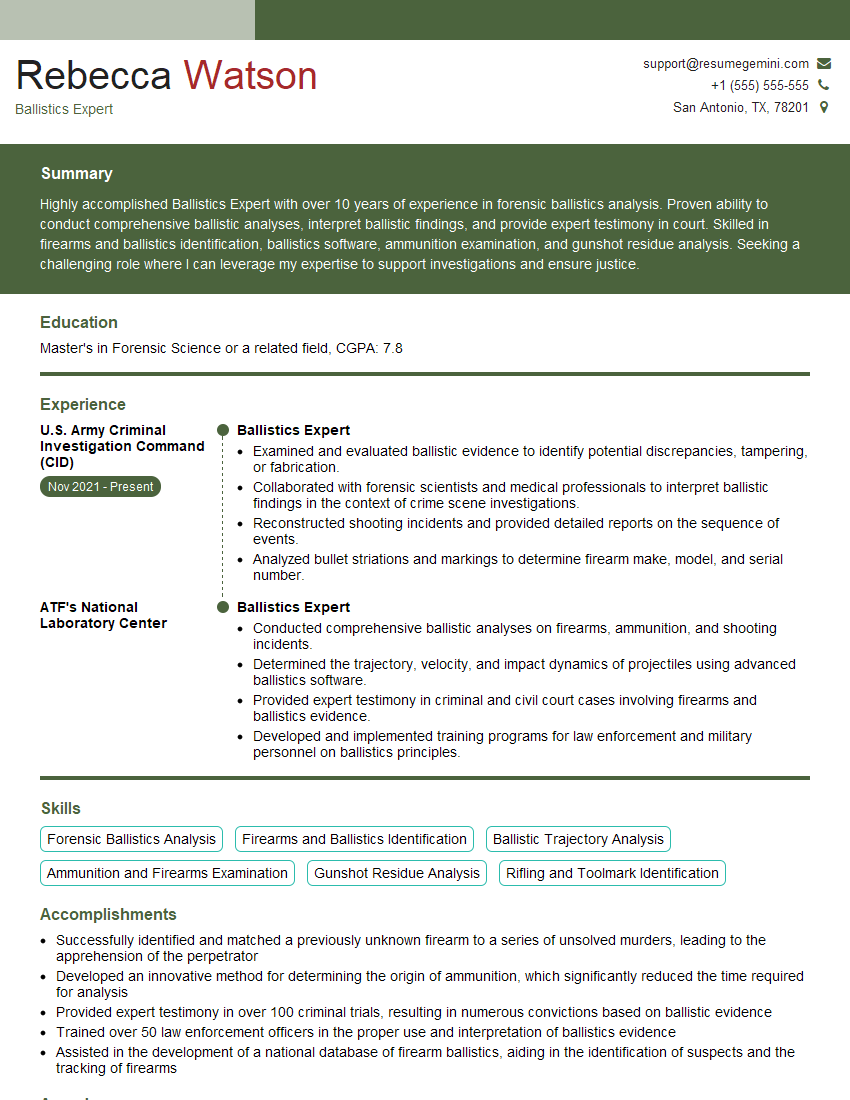
Mastering precision bombing techniques is crucial for career advancement in the defense and aerospace industries. A strong understanding of these concepts will significantly enhance your interview performance and open doors to exciting opportunities. To maximize your chances of securing your ideal role, focus on building an ATS-friendly resume that showcases your skills and experience effectively. ResumeGemini is a trusted resource that can help you create a professional and impactful resume. They offer examples of resumes tailored specifically to the precision bombing field, giving you a head start in crafting a document that highlights your unique qualifications. Invest time in refining your resume; it’s your first impression on potential employers.
Explore more articles
Users Rating of Our Blogs
Share Your Experience
We value your feedback! Please rate our content and share your thoughts (optional).
What Readers Say About Our Blog
Very informative content, great job.
good