Interviews are opportunities to demonstrate your expertise, and this guide is here to help you shine. Explore the essential Precision Placement and Assembly interview questions that employers frequently ask, paired with strategies for crafting responses that set you apart from the competition.
Questions Asked in Precision Placement and Assembly Interview
Q 1. Describe your experience with different soldering techniques (e.g., surface mount, through-hole).
My experience encompasses both surface mount technology (SMT) and through-hole technology (THT) soldering. SMT involves placing smaller components directly onto the surface of a printed circuit board (PCB), requiring precise placement and smaller solder joints. I’m proficient in various SMT soldering techniques, including reflow soldering (using a controlled oven to melt solder paste) and hand soldering with specialized irons for fine-pitch components. Through-hole soldering, on the other hand, involves inserting components with leads through holes in the PCB and soldering the leads on the other side. This often requires more manual dexterity and skill in managing heat to prevent damage. I’ve extensively used different solder types – lead-free and leaded – and have experience with various soldering iron types and stations. For example, in a recent project involving a high-density PCB with fine-pitch QFN components, I successfully employed a reflow oven with a nitrogen atmosphere to minimize oxidation and achieve optimal solder joints. In another instance, I repaired a prototype board requiring through-hole soldering by carefully hand-soldering delicate components while minimizing heat transfer to prevent damage to nearby components.
Q 2. Explain your understanding of various precision placement methods and their applications.
Precision placement methods are crucial for reliable electronic assembly. Several methods exist, each with its application. Pick-and-place machines are widely used in automated assembly lines, accurately positioning surface-mount components using vision systems and robotic arms. This is ideal for high-volume production. Dispensing systems, crucial for applying adhesives or solder paste, ensure uniform material application. Manual placement, while slower, is necessary for specialized or low-volume projects and delicate components where automation might cause damage. For example, in a project involving the assembly of a medical device with highly sensitive sensors, manual placement was critical to avoid any potential damage during the process. Another project demanded high-speed and accuracy in placing thousands of identical components—a pick-and-place machine was the perfect solution, achieving speeds and accuracy far exceeding manual processes. The choice of method depends on factors like component size, production volume, cost considerations and the required precision level.
Q 3. How do you ensure accuracy and precision during assembly processes?
Ensuring accuracy and precision involves a multi-pronged approach. Firstly, utilizing calibrated equipment is paramount—this includes pick-and-place machines with regular calibration checks, microscopes for visual inspection, and calibrated measurement tools like calipers. Secondly, meticulous process control is crucial; this involves strict adherence to assembly procedures, standardized work instructions, and using fixtures or jigs to ensure consistent component placement. Thirdly, continuous monitoring and quality checks during the assembly process are implemented, utilizing statistical process control (SPC) charts to track key parameters and identify potential deviations. For instance, I recently implemented a system of regular calibration checks on our pick-and-place machines, resulting in a 15% reduction in placement errors. This proactive approach helped to minimize production waste and improve overall product quality.
Q 4. What are your troubleshooting skills when dealing with assembly errors?
My troubleshooting approach is systematic. I start with visual inspection using magnification tools to identify the root cause of the error. Then, I verify the accuracy of the bill of materials (BOM) and the assembly drawings. If the error is related to component placement, I investigate machine settings (for automated systems) or worker technique (for manual assembly). For instance, if solder joints show defects, I’d check reflow profile parameters or soldering iron temperature. I use a combination of analytical and practical problem-solving skills; if there’s a recurring error, I’d examine the process to identify potential process improvements. Documenting findings and solutions is key to prevent recurrence and for future reference. Finally, collaborating with other team members to explore possible solutions is essential in complex scenarios. A recent instance involved a recurring solder bridge issue. By systematically checking machine parameters, solder paste viscosity, and PCB design, I discovered an issue with the stencil design, which was subsequently corrected, eliminating the problem.
Q 5. What quality control measures do you implement to guarantee product quality?
Quality control is deeply integrated into my approach. It starts with incoming inspection of components to ensure they meet specifications. During the assembly process, in-process inspections are conducted at critical stages—this might involve visual inspections, automated optical inspection (AOI), and X-ray inspection for more complex assemblies. After assembly, functional testing verifies the proper operation of the final product. Statistical process control (SPC) helps track and analyze key process variables to identify trends and prevent defects. I’m also very familiar with ISO 9001 standards and integrate quality control practices accordingly. Documentation, including detailed records of each assembly step and test results, is essential. For example, in a recent project involving high-reliability electronics, I implemented a 100% AOI inspection leading to a 20% decrease in post-assembly failures.
Q 6. How familiar are you with different types of assembly equipment (e.g., pick-and-place machines, automated systems)?
I’m very familiar with a range of assembly equipment. My experience includes operating various pick-and-place machines, from high-speed, high-precision units used in mass production to smaller, more versatile machines for prototyping and low-volume production. I’m also experienced with automated dispensing systems for applying adhesives and solder paste. Further, I’m comfortable working with manual soldering stations and associated tools for delicate hand-soldering tasks. Understanding the capabilities and limitations of each piece of equipment is crucial. For instance, I’ve used high-speed pick-and-place machines with vision systems for accurate placement of fine-pitch components in high-volume production, and a smaller, more flexible pick-and-place machine for prototyping new designs with unusual component packages.
Q 7. Describe your experience using precision measurement tools (e.g., calipers, microscopes).
I regularly utilize various precision measurement tools to ensure accuracy in all phases of precision placement and assembly. Calipers are indispensable for measuring component dimensions and PCB features. Optical microscopes provide magnification for detailed visual inspection of solder joints, component placement, and surface defects. Digital microscopes allow for capturing images and documenting findings, facilitating communication and analysis. I’m also experienced in using coordinate measuring machines (CMMs) for high-precision measurements, particularly in applications requiring very high dimensional accuracy. For example, during a recent troubleshooting exercise, a digital microscope enabled me to easily identify a minute crack in a component lead, which was otherwise invisible to the naked eye. This rapid identification prevented a larger production issue.
Q 8. How do you handle situations where deadlines are tight and production demands are high?
When deadlines are tight and production demands are high, my approach prioritizes efficient workflow and effective communication. I begin by analyzing the assembly process to identify any bottlenecks. This might involve optimizing the assembly sequence, improving tooling, or delegating tasks efficiently. For instance, in a recent project assembling micro-fluidic devices, we identified a time-consuming step in aligning tiny channels. By implementing a new jig with micro-adjustments, we reduced assembly time by 25%, enabling us to meet a critical deadline. Simultaneously, I maintain open communication with the team and management, providing transparent updates on progress and proactively flagging potential issues. This ensures everyone is on the same page and allows for timely adjustments to the plan, preventing unexpected delays. Finally, I always prioritize quality. While speed is important, compromising quality is never an option in precision assembly. Thorough quality checks throughout the process are crucial to avoid costly rework or product failure.
Q 9. What safety protocols do you follow in a precision assembly environment?
Safety is paramount in a precision assembly environment. My adherence to safety protocols begins with understanding and strictly following all company safety guidelines, including wearing appropriate personal protective equipment (PPE) like ESD (Electrostatic Discharge) wrist straps, safety glasses, and cleanroom garments. I’m meticulous in handling potentially hazardous materials, following specific handling instructions for each adhesive, solvent, or component. This includes proper ventilation and use of fume hoods when necessary. Ergonomics are also a key concern; I utilize appropriate tools and maintain proper posture to prevent injuries from repetitive movements. Furthermore, I regularly inspect my workspace for hazards and report any safety concerns immediately to my supervisor. For example, I once noticed a loose wire near a power supply, immediately reported it and ensured it was fixed before proceeding with the assembly, preventing a potential electrical shock hazard.
Q 10. Explain your experience with different types of adhesives and their applications in assembly.
I have extensive experience working with various adhesives, each with specific properties and applications. For instance, I’ve used cyanoacrylate (super glue) for quick-setting bonds in smaller components, always mindful of its rapid curing time and potential for brittleness. Epoxy adhesives, on the other hand, offer better strength and durability and are ideal for larger components or applications requiring higher shear strength. UV-curable adhesives are beneficial when precise curing time is required and where minimizing heat is critical. I’ve also worked with thermally conductive adhesives for electronic components that require efficient heat dissipation. The selection of the appropriate adhesive always depends on the specific requirements of the application, considering factors like material compatibility, bond strength, cure time, temperature resistance, and environmental conditions. Careful consideration and adherence to the manufacturer’s guidelines are crucial for optimal results.
Q 11. How do you ensure the cleanliness and ESD protection during assembly procedures?
Maintaining cleanliness and ESD protection is fundamental to precision assembly. We operate in a controlled environment, such as a cleanroom, with appropriate air filtration and humidity control. All work surfaces are regularly cleaned with ESD-safe cleaning agents. I use ESD mats and wrist straps to prevent electrostatic discharge damage to sensitive components. Tools are also regularly inspected and cleaned to remove any contaminants. All components are handled using ESD-safe tweezers and containers. Any potential contamination, such as dust particles or fibers, can significantly impact the performance and reliability of the assembled product. A rigorous approach to cleanliness is essential to reduce defects and ensure the final product’s quality and longevity. For example, in assembling delicate optical sensors, even a small dust particle could affect the sensor’s functionality. We employ stringent protocols in a class 100 cleanroom to guarantee the integrity of these sensitive components.
Q 12. What experience do you have with reading and interpreting engineering drawings and schematics?
I possess extensive experience in reading and interpreting engineering drawings and schematics. I am proficient in understanding various types of drawings, including orthographic projections, isometric views, and detailed component specifications. I can easily decipher dimensioning, tolerances, material specifications, and surface finishes. I frequently use these drawings to understand the component relationships and the assembly sequence. For example, in a recent project involving a complex robotic arm assembly, I used the provided assembly drawings and schematics to accurately sequence the assembly steps, ensuring correct component placement and alignment. I also understand the importance of tolerances and how deviations can affect the final product’s functionality. My ability to interpret these documents efficiently translates to faster assembly times and fewer errors.
Q 13. How do you maintain accurate records and documentation during assembly processes?
Maintaining accurate records and documentation is critical for traceability and quality control. I meticulously document every step of the assembly process, including the date, time, operator, components used, and any deviations from the standard procedure. This documentation includes serial numbers for traceability and specific notes on any observed issues. We use a combination of paper-based logs and electronic documentation systems to ensure comprehensive record-keeping. For example, we use barcodes to track components through the assembly process, recording their location and status at each stage. This ensures complete traceability, facilitating quick identification of any defective components and their source. Accurate documentation is also essential for future troubleshooting and process improvement initiatives.
Q 14. Describe your experience with statistical process control (SPC) techniques.
I have significant experience with Statistical Process Control (SPC) techniques, primarily using control charts. I am proficient in implementing and interpreting various control charts, such as X-bar and R charts, to monitor process variation and identify potential sources of defects. This involves collecting data, calculating control limits, and analyzing patterns within the data to identify trends and outliers. For example, in assembling circuit boards, we used X-bar and R charts to monitor solder joint heights. By closely monitoring the data, we were able to identify an issue with our soldering process before it led to a significant number of defects. The use of SPC techniques allows for proactive identification of problems, enabling timely adjustments to prevent defects and maintain high-quality assembly standards.
Q 15. What is your experience with lean manufacturing principles?
Lean manufacturing principles are all about maximizing customer value while minimizing waste. In precision placement and assembly, this translates to optimizing processes to reduce defects, improve efficiency, and streamline workflows. My experience includes implementing 5S methodologies (Sort, Set in Order, Shine, Standardize, Sustain) to maintain a clean and organized workspace, crucial for preventing errors and ensuring efficient material flow. I’ve also been involved in value stream mapping to identify bottlenecks and areas for improvement in assembly lines, resulting in a 15% reduction in lead time on a recent project. Furthermore, I’ve actively participated in Kaizen events, where teams collaboratively identify and solve problems, leading to significant improvements in process efficiency and quality.
- Example: Implementing a Kanban system to manage component inventory, preventing overstocking and ensuring timely availability of parts.
- Example: Using Poka-Yoke (error-proofing) techniques to prevent incorrect component placement, such as using jigs and fixtures that only accept the correct parts.
Career Expert Tips:
- Ace those interviews! Prepare effectively by reviewing the Top 50 Most Common Interview Questions on ResumeGemini.
- Navigate your job search with confidence! Explore a wide range of Career Tips on ResumeGemini. Learn about common challenges and recommendations to overcome them.
- Craft the perfect resume! Master the Art of Resume Writing with ResumeGemini’s guide. Showcase your unique qualifications and achievements effectively.
- Don’t miss out on holiday savings! Build your dream resume with ResumeGemini’s ATS optimized templates.
Q 16. What is your experience with six sigma methodology in assembly?
Six Sigma methodology focuses on reducing variation and defects in processes to achieve near-perfection. In assembly, this means minimizing errors in placement, soldering, and other critical steps. My experience involves using DMAIC (Define, Measure, Analyze, Improve, Control) to systematically improve assembly processes. For example, on a project involving the assembly of a complex micro-electronic device, we used statistical process control (SPC) charts to monitor critical parameters like solder joint quality and component placement accuracy. By identifying and addressing the root causes of variation, we reduced the defect rate from 2% to less than 0.1%, significantly improving the yield and product quality.
Specifically, we used control charts to track critical to quality (CTQ) characteristics such as solder joint height and component orientation. Identifying out-of-control points allowed for proactive intervention, preventing larger scale defects.
Q 17. How do you handle component damage during the assembly process?
Component damage during assembly is a serious concern that impacts quality and costs. My approach involves a multi-pronged strategy focused on prevention and mitigation. First, proper handling procedures are implemented, including the use of ESD (Electrostatic Discharge) protective equipment and anti-static mats. Components are handled with care using appropriate tools and techniques. Second, processes are designed to minimize the risk of damage. This includes using jigs and fixtures for precise placement and avoiding excessive force during assembly. Third, a robust inspection process is in place to detect any damage early in the process. This might involve visual inspection, X-ray inspection, or automated optical inspection (AOI). Finally, root cause analysis is performed on any damage that does occur to prevent recurrence. For example, if a recurring issue with bent leads is observed, the root cause may be traced to a faulty feeder, requiring adjustments or replacement.
Q 18. What are common causes of assembly defects and how do you prevent them?
Common causes of assembly defects in precision placement include incorrect component placement, solder defects (bridges, cold solder joints, insufficient solder), damaged components, and process-related issues like incorrect tooling or inadequate training. Prevention involves a comprehensive approach:
- Process Design: Employing robust processes that minimize the chances of errors. This includes using automated equipment, jigs and fixtures, and well-defined work instructions.
- Operator Training: Providing thorough training to assembly operators, ensuring they have the necessary skills and understanding of the processes.
- Quality Control: Implementing robust inspection procedures at various stages of the assembly process, including visual inspection, AOI, and functional testing.
- Preventive Maintenance: Regularly maintaining assembly equipment to ensure optimal performance and prevent malfunctions.
- Root Cause Analysis (RCA): Investigating the root causes of any defects that do occur to prevent recurrence.
Example: Incorrect component orientation can lead to shorts or malfunctions. To prevent this, we use vision systems to verify component orientation and placement before soldering.
Q 19. Describe your experience with different types of connectors and their installation.
My experience encompasses a wide range of connectors, including surface mount technology (SMT) connectors, through-hole connectors, and specialized high-density connectors. Installation techniques vary depending on the connector type, but generally involve careful preparation of the mating surfaces, precise alignment, and secure attachment. I’m proficient in using various tools and techniques, such as hand soldering, automated soldering systems, and crimping tools. For example, when installing a high-density board-to-board connector, I would carefully inspect both mating surfaces for debris, ensure proper alignment using jigs, and apply the appropriate amount of pressure during insertion to prevent damage. I also have experience with specialized connectors requiring unique insertion and locking mechanisms, necessitating a thorough understanding of each connector’s specific instructions and potential failure points.
Q 20. Explain your knowledge of different materials used in precision assembly.
Precision assembly utilizes a variety of materials, each with its own unique properties and challenges. My knowledge spans materials like various metals (copper, gold, nickel, aluminum alloys), polymers (thermoplastics, thermosets), ceramics, and composites. Understanding material compatibility is crucial to ensure the reliability and longevity of the assembled product. For instance, selecting a solder that is compatible with the substrate material is vital to prevent corrosion or delamination. Likewise, knowledge of the thermal expansion coefficients of different materials is important to prevent stress and cracking during thermal cycling. I’m also familiar with the specific requirements for materials in different applications, such as the need for high-temperature resistance in aerospace applications or biocompatibility in medical devices.
Q 21. How familiar are you with IPC standards for electronics assembly?
I am very familiar with IPC standards for electronics assembly, including IPC-A-610 (Acceptability of Electronic Assemblies) and IPC-J-STD-001 (Requirements for Soldered Electrical and Electronic Assemblies). These standards provide guidelines for acceptable workmanship, solder joint quality, and overall assembly process control. My experience includes applying these standards to ensure that our assembly processes meet the required quality levels. For example, I use IPC-A-610 as a reference when visually inspecting completed assemblies to identify potential defects. Furthermore, I’m experienced in implementing quality control procedures to ensure adherence to these standards and other relevant industry best practices. My understanding extends to interpreting IPC-compliant documentation, facilitating communication and collaboration across teams.
Q 22. What is your understanding of process capability and how to improve it?
Process capability is a statistical measure of a process’s ability to produce output within specified limits. It essentially tells us how consistently a process performs. We use metrics like Cp and Cpk, calculated from the process mean, standard deviation, and specification limits (upper and lower). A Cp of 1 indicates the process is capable of meeting the specifications if perfectly centered, while a Cpk of 1 means it’s capable considering the actual process mean.
Improving process capability involves identifying and addressing sources of variation. This is often a systematic approach involving:
- Process Mapping: Visualizing the entire assembly process to identify potential bottlenecks and areas prone to errors.
- Data Analysis: Statistical Process Control (SPC) charts, such as control charts, help identify trends and patterns in the data revealing inconsistencies.
- Root Cause Analysis: Techniques like the 5 Whys or Fishbone diagrams help pinpoint the root causes of defects. For example, if parts are misaligned repeatedly, we might find the root cause to be worn tooling or inconsistent part dimensions.
- Process Optimization: Implementing solutions, such as adjusting machine settings, improving operator training, or upgrading equipment, based on the root cause analysis. This could include implementing better fixtures to hold components precisely or switching to higher-precision components.
- Automation: Automating parts of the assembly process can significantly reduce variability introduced by human factors.
- Preventive Maintenance: Regularly scheduled maintenance of equipment and tools minimizes unplanned downtime and reduces variability.
For example, in assembling microchips, I once improved Cpk from 0.8 to 1.2 by identifying and replacing a worn component feeder which was causing inconsistent part placement. This improvement reduced rework and scrap significantly.
Q 23. How do you ensure traceability throughout the assembly process?
Traceability in assembly is crucial for quality control and tracking potential issues. We achieve this through a combination of methods:
- Unique Serial Numbers/IDs: Assigning unique identifiers to each component and assembly allows us to track the entire journey of a product from raw materials to finished goods. This is often done using barcodes or RFID tags.
- Detailed Documentation: Maintaining meticulous records of every step in the assembly process, including the date, time, operator, equipment used, and any relevant measurements. This usually includes work instructions, inspection reports, and traceability matrices.
- Software Systems: Implementing Manufacturing Execution Systems (MES) allows for real-time tracking of components and assemblies throughout the process. This software provides a complete audit trail.
- Batch and Lot Tracking: Grouping components and assemblies into batches or lots helps to identify and isolate potential problems. If a defect is found in one batch, we can quickly trace it back to the source.
Imagine assembling a complex medical device. If a component fails, we must be able to trace it back to its origin, its supplier, and its use in specific devices to initiate a recall if necessary. This is critical to patient safety and regulatory compliance.
Q 24. Describe your experience with automated assembly systems and their programming.
I have extensive experience with automated assembly systems, particularly those using SCARA and delta robots. I’m proficient in programming these robots using languages like RAPID (ABB) and KRL (KUKA). This involves creating programs that define the robot’s movements, speeds, and interactions with other equipment like vision systems and feeders.
My experience encompasses:
- Robot Programming: I can develop and debug robot programs to perform various assembly tasks, including pick-and-place operations, precise part insertion, and fastening.
- Vision System Integration: Integrating vision systems to guide robot movements and ensure accurate part placement, even with varying part orientations.
- PLC Programming (basic): Working with Programmable Logic Controllers (PLCs) to control the overall system operation, including sequencing, safety functions, and I/O handling. I’m comfortable using ladder logic.
- Simulation and Offline Programming: Using simulation software to test and optimize robot programs before deployment, reducing downtime during implementation.
For instance, I programmed a SCARA robot to assemble a miniature circuit board, including precise placement of surface-mount components with an accuracy of ±0.05 mm. This involved using a vision system to guide the robot’s movements and ensure accurate placement despite variations in component orientation.
Q 25. What is your experience working with cleanroom environments?
I’ve worked extensively in ISO Class 7 and 8 cleanroom environments, adhering to strict protocols to prevent contamination. This includes following gowning procedures, understanding particulate control, and maintaining proper hygiene. I’m familiar with cleanroom equipment like HEPA filters, air showers, and monitoring devices.
My experience includes:
- Gowning Procedures: Following proper gowning techniques to minimize the introduction of particles into the cleanroom.
- Contamination Control: Understanding and implementing measures to prevent contamination from various sources, including personnel, equipment, and materials.
- Cleanroom Maintenance: Participating in routine cleanroom maintenance activities to maintain cleanliness and prevent contamination.
- Environmental Monitoring: Using particle counters and other monitoring equipment to ensure the cleanroom maintains the required cleanliness levels.
In my previous role, I was responsible for assembling sensitive optical components in an ISO Class 7 cleanroom. We maintained rigorous cleanliness standards to prevent dust particles from affecting the performance of the finished product.
Q 26. How do you handle non-conforming materials or components?
Handling non-conforming materials or components requires a structured approach to ensure quality and prevent defects from reaching the final product. The process typically involves:
- Identification and Segregation: Immediately identifying and segregating non-conforming materials or components to prevent their accidental use.
- Documentation: Thoroughly documenting the nature of the non-conformity, including location, quantity, and cause, if known. This documentation is essential for traceability and root cause analysis.
- Inspection and Evaluation: A detailed inspection is conducted to determine the extent of the non-conformity and its potential impact on the final product.
- Corrective Actions: Determining the appropriate corrective actions, which may involve rework, repair, scrapping, or returning the materials to the supplier. For example, if a batch of components is slightly out of specification, we might rework them if the deviation is minor or scrap them if it affects functionality.
- Root Cause Analysis: Investigating the root cause of the non-conformity to prevent recurrence. This could involve analyzing supplier data, reviewing production processes, or conducting a Failure Mode and Effects Analysis (FMEA).
- Quarantine: Placing the affected materials in a quarantined area until the corrective action is completed.
I’ve had to handle instances of damaged components during shipping or slight variations in component dimensions. In each case, we followed this procedure to ensure no defective products were shipped.
Q 27. Describe your experience with root cause analysis of assembly problems.
Root cause analysis is vital for preventing recurring assembly problems. I employ various techniques, including:
- 5 Whys: Repeatedly asking ‘why’ to drill down to the root cause of a problem. For example: ‘Why is the part misaligned?’ (because the fixture is worn). ‘Why is the fixture worn?’ (because it wasn’t maintained properly). And so on.
- Fishbone Diagram (Ishikawa): A visual tool to brainstorm potential causes categorized by factors like people, materials, methods, machines, and environment.
- Pareto Analysis: Identifying the vital few causes that contribute to the majority of the problems, allowing us to focus our efforts on the most impactful areas.
- Failure Mode and Effects Analysis (FMEA): A proactive approach to identify potential failure modes in the assembly process and assess their impact on the product. This helps prevent problems before they occur.
In one instance, we experienced repeated failures of a specific solder joint. Using the 5 Whys and a Fishbone diagram, we traced the problem to insufficient preheating of the components, leading to poor solder adhesion. Implementing a preheating step completely eliminated the issue.
Q 28. How do you prioritize tasks and manage multiple projects simultaneously in an assembly environment?
Managing multiple projects in a fast-paced assembly environment requires effective prioritization and time management. My approach involves:
- Prioritization Matrix: Using a matrix to rank projects based on urgency and importance. This helps to allocate resources effectively to the most critical tasks.
- Project Scheduling: Utilizing project management tools like Gantt charts to visualize timelines, dependencies, and milestones. This provides a clear overview of project progress and potential bottlenecks.
- Resource Allocation: Optimizing the allocation of personnel, equipment, and materials to ensure efficient task completion. This includes considering skill sets and equipment availability.
- Regular Communication: Maintaining open communication with team members and stakeholders to ensure everyone is aware of priorities and potential issues. Daily stand-up meetings are helpful in this respect.
- Agile Methodology: Employing an agile approach allows for flexibility and adaptability in project planning and execution, especially when dealing with unforeseen challenges.
For example, I have successfully managed multiple projects simultaneously, including the assembly of different product variants, by implementing a prioritization matrix and using a Kanban system to visually track the workflow of each project. This ensured that all deadlines were met while optimizing resource utilization.
Key Topics to Learn for Precision Placement and Assembly Interview
- Understanding Tolerances and Specifications: Grasping the critical importance of adhering to precise measurements and tolerances in assembly processes. This includes interpreting engineering drawings and specifications.
- Methods for Precise Part Handling: Explore various techniques for handling delicate components, including the use of specialized tools and equipment to prevent damage and ensure accurate placement.
- Assembly Processes and Techniques: Familiarize yourself with different assembly methods (e.g., manual, automated, robotic) and understand the advantages and limitations of each. Consider the impact of different fastening methods on precision.
- Quality Control and Inspection Procedures: Learn about various quality control techniques and inspection methods used to verify the accuracy and reliability of assembled products. This includes understanding statistical process control (SPC) concepts.
- Troubleshooting and Problem-Solving: Develop strategies for identifying and resolving assembly-related issues, such as misalignments, component failures, or process inefficiencies. Practice root cause analysis techniques.
- Safety Procedures and Regulations: Understand and apply relevant safety protocols and regulations related to precision placement and assembly, including the use of personal protective equipment (PPE).
- Automation and Robotics in Assembly: Explore the role of automation and robotics in increasing efficiency and precision in assembly processes. Understand basic programming concepts if relevant to the specific job description.
Next Steps
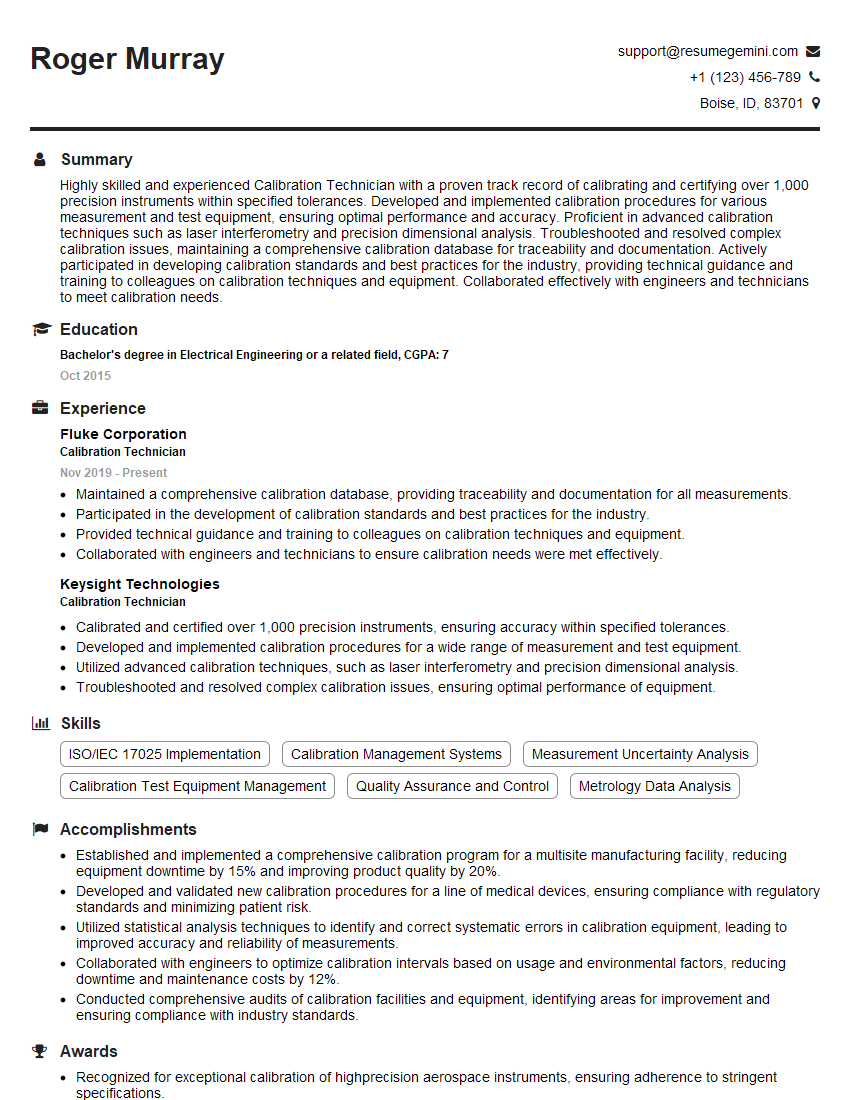
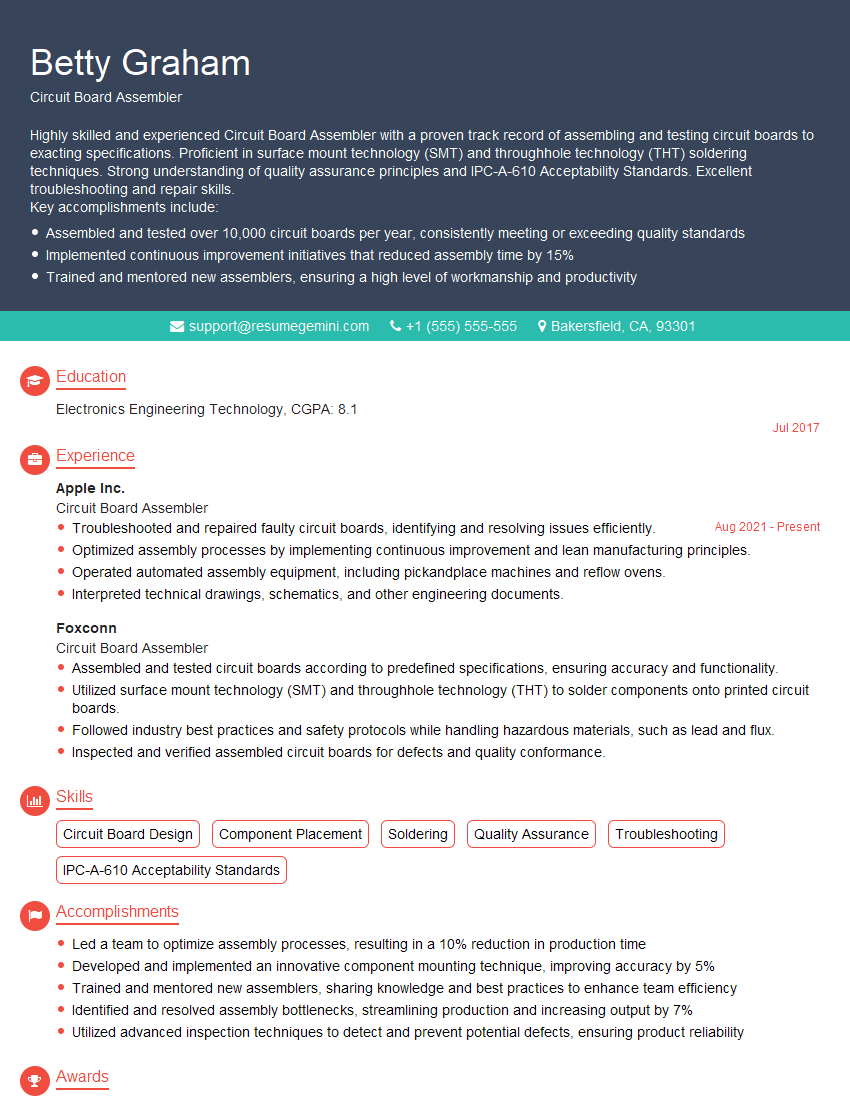
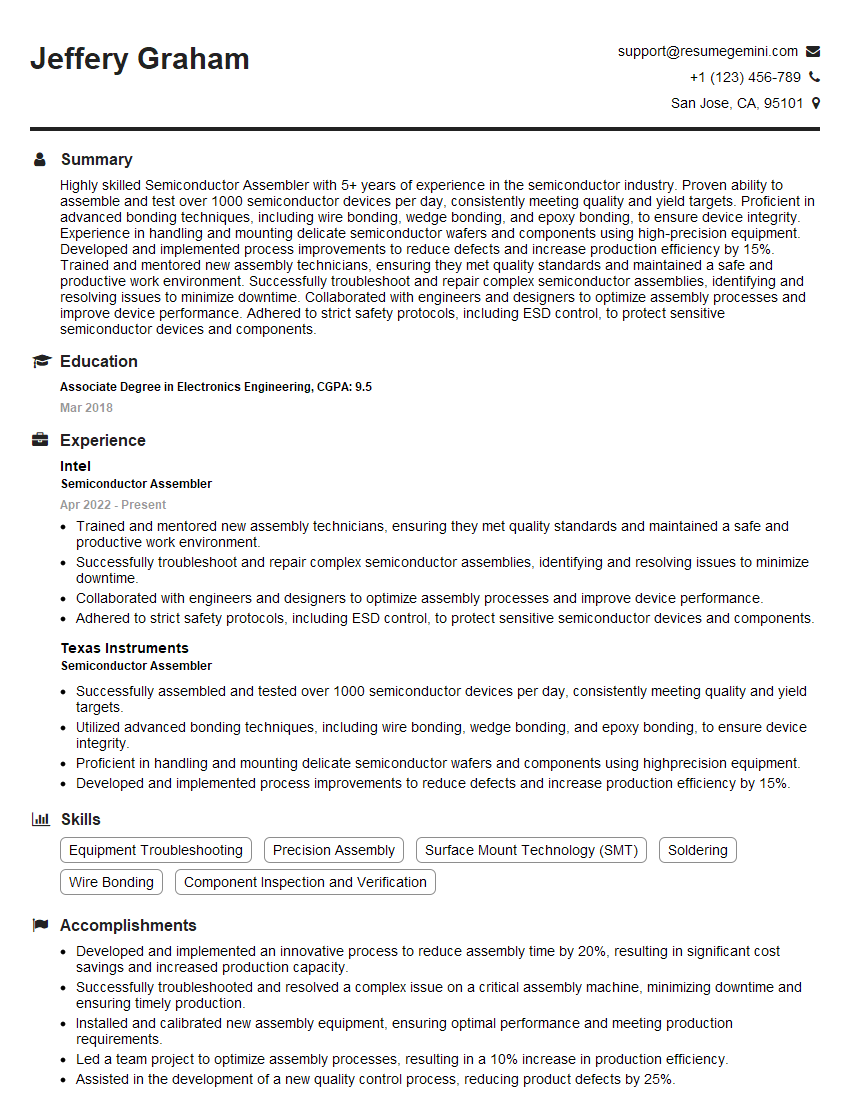
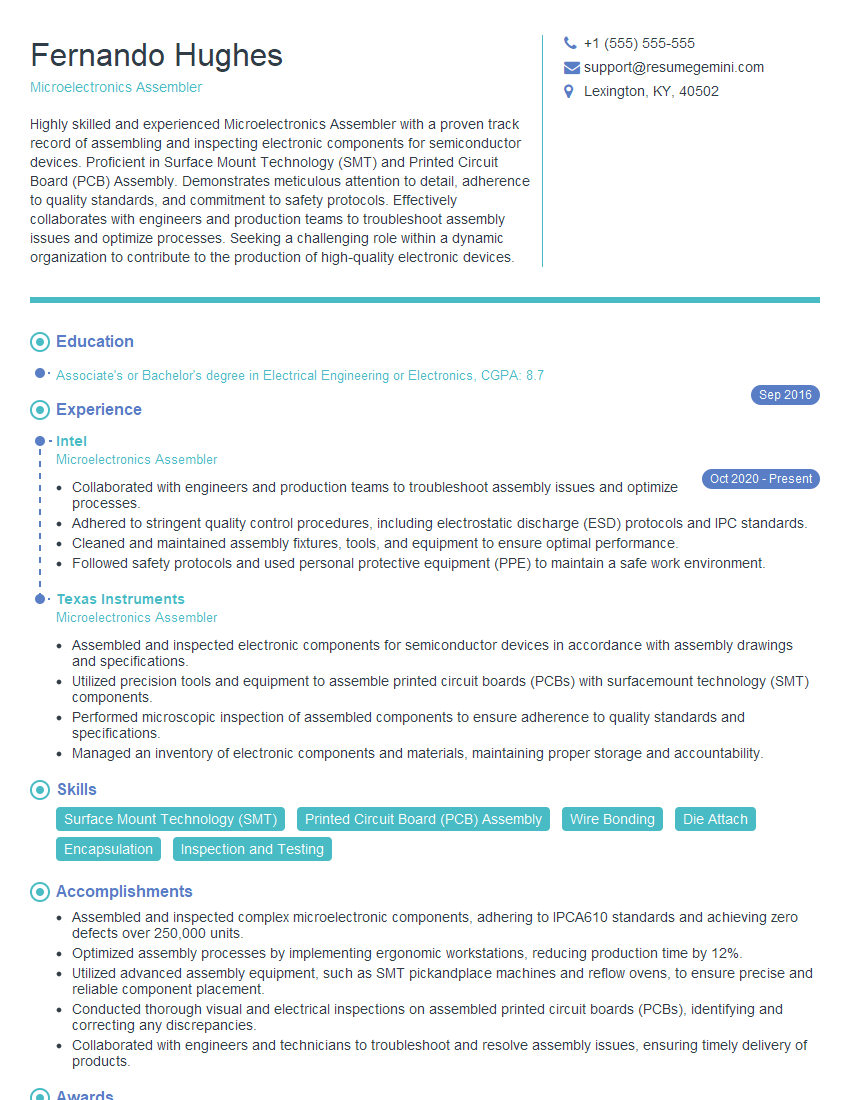
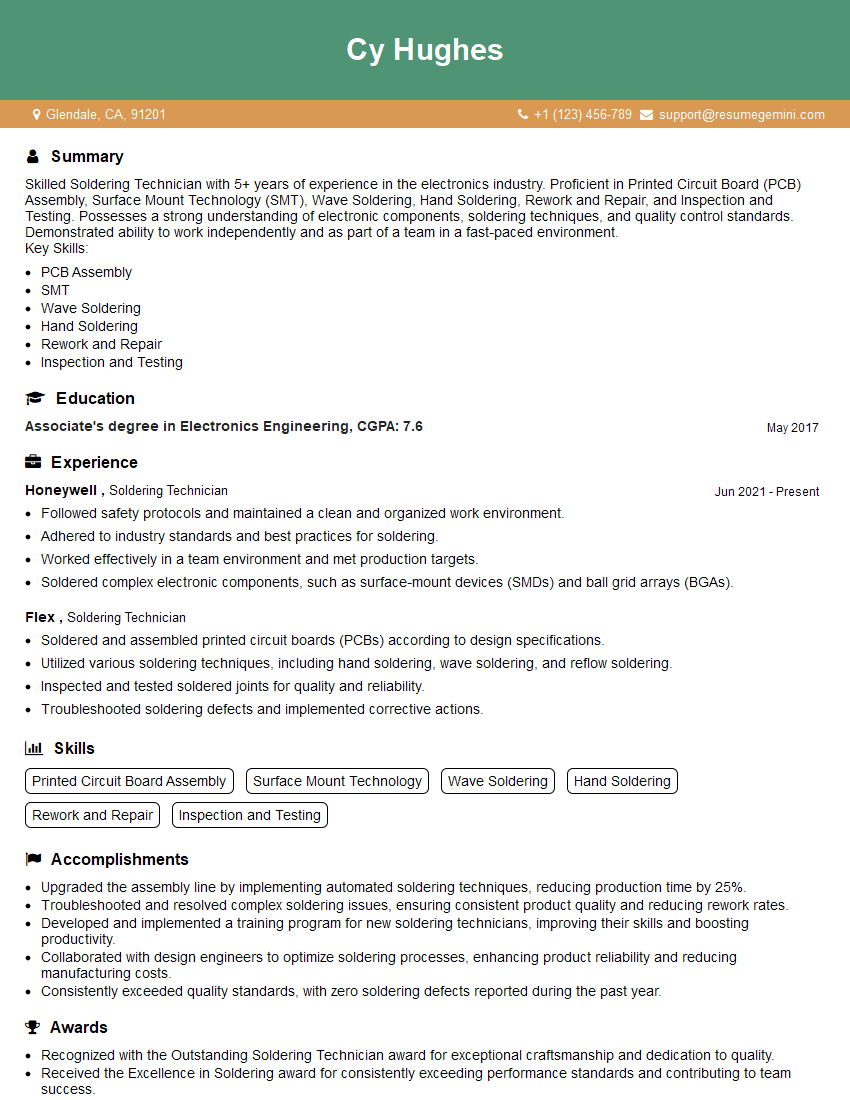
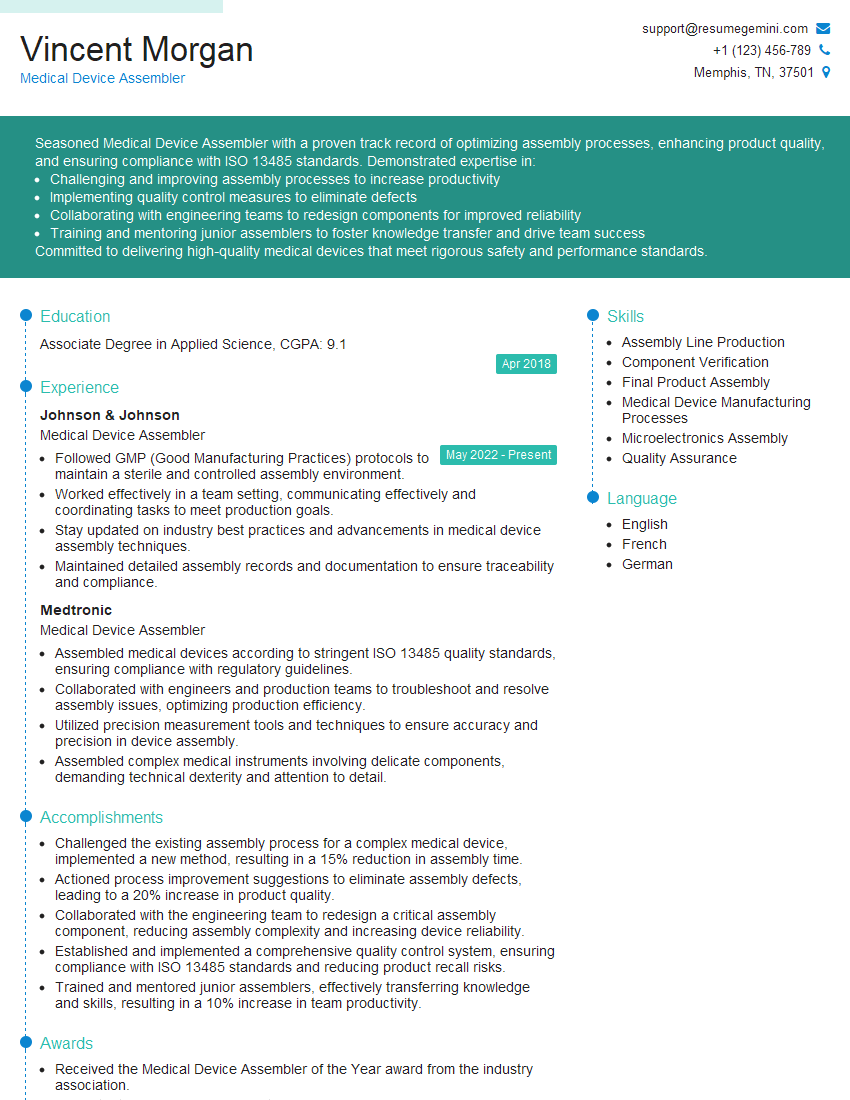
Mastering precision placement and assembly skills opens doors to exciting career opportunities in high-tech manufacturing and engineering fields, offering rewarding challenges and excellent growth potential. To maximize your job prospects, creating a strong, ATS-friendly resume is crucial. ResumeGemini is a trusted resource to help you build a professional and impactful resume tailored to your skills and experience. We provide examples of resumes specifically tailored for Precision Placement and Assembly roles to guide you. Invest the time to craft a compelling resume that showcases your expertise—it’s an investment in your future success.
Explore more articles
Users Rating of Our Blogs
Share Your Experience
We value your feedback! Please rate our content and share your thoughts (optional).
What Readers Say About Our Blog
Very informative content, great job.
good