Preparation is the key to success in any interview. In this post, we’ll explore crucial Print finishing and embellishments interview questions and equip you with strategies to craft impactful answers. Whether you’re a beginner or a pro, these tips will elevate your preparation.
Questions Asked in Print finishing and embellishments Interview
Q 1. Explain the difference between perfect binding and saddle stitching.
Perfect binding and saddle stitching are two common methods for binding printed documents, but they differ significantly in their approach and the resulting product. Think of it like this: perfect binding is like creating a book, while saddle stitching is more like making a booklet.
Perfect Binding: This method involves gluing the edges of printed sheets together to create a block, then applying a cover to the spine. It’s ideal for books, magazines, and other publications with a substantial page count (typically more than 40 pages). The spine is relatively thick and flexible, allowing the book to lay relatively flat. The process involves gathering pages, creating a block, roughening the spine for better adhesion, applying adhesive, and finally covering with a protective cover.
Saddle Stitching: This simpler method involves folding sheets of paper in half and fastening them through the fold line with staples. It’s suitable for brochures, booklets, and shorter documents (generally under 40 pages). The pages are directly stitched together which produces a thinner spine. This is more affordable than perfect binding.
In short: Perfect binding is for thicker books, while saddle stitching is for thinner booklets. The choice depends on page count, budget, and the desired aesthetic.
Q 2. Describe the process of UV coating and its benefits.
UV coating is a finishing technique that applies a clear, protective layer of ultraviolet (UV) cured varnish to printed materials. Imagine it as a clear, hard shell protecting a delicate print. It’s applied using specialized equipment which instantly hardens via UV light.
The Process: The printed material passes through a UV coater where a thin layer of UV varnish is applied. Immediately following application, high-intensity UV lamps cure the varnish, creating a glossy or matte finish that is extremely durable. This instant hardening is a key benefit that differentiates it from other coatings.
Benefits:
- Protection: UV coating protects the print from scratches, scuffs, and moisture, increasing the longevity of the printed piece. Think of a glossy magazine cover – that’s often UV coated.
- Enhanced Appearance: It creates a high-gloss or matte finish, enhancing the vibrancy of colors and improving the overall look and feel of the print. It can even give a luxurious look and feel to packaging.
- Durability: The cured varnish makes the print more resistant to wear and tear, crucial for items that will be handled frequently, such as packaging or menus.
UV coating is commonly used on brochures, business cards, book covers, and packaging to enhance durability, appearance, and protection of the printed product.
Q 3. What are the different types of laminating films and their applications?
Laminating films are thin plastic sheets applied to printed materials to enhance their protection and aesthetic appeal. Several types cater to diverse needs. Imagine laminating as wrapping your print in a protective, customized layer.
Types and Applications:
- Gloss Laminate: Provides a high-gloss, shiny finish, enhancing the vibrancy of colors. Ideal for marketing materials, brochures, and where a high-sheen is desired.
- Matte Laminate: Offers a smooth, non-reflective finish, often preferred for photos or documents where glare needs to be minimized. Suitable for presentations, educational materials, or anything needing a subtle appearance.
- Soft Touch Laminate: Creates a velvety, soft texture to the touch, providing a premium feel to the print. Frequently seen on high-end packaging or luxury products.
- Anti-Scratch Laminate: Offers superior protection against scratching and scuffing. Well suited for items that will experience a lot of handling, such as instruction manuals or children’s books.
The choice of laminate depends on the application, budget, and desired aesthetic. For example, a glossy laminate might be best for a product catalog, while a matte laminate could be preferred for a wedding invitation.
Q 4. How do you ensure quality control in print finishing?
Quality control in print finishing is crucial to ensure the final product meets the client’s expectations and maintains high standards. It’s a multi-step process involving careful checks throughout the production.
Key Aspects:
- Pre-Press Checks: Verification of color accuracy, file resolution, and print-ready files before production starts.
- In-Process Monitoring: Regular inspections during each stage of finishing (cutting, folding, binding, etc.) to identify and rectify errors early.
- Post-Finishing Inspection: A thorough examination of the finished product to check for defects such as misaligned cuts, mis-stitching, or inconsistencies in finishing.
- Random Sampling: Selecting a statistically significant number of finished pieces for rigorous inspection to represent the quality of the overall run.
- Color Calibration and Matching: Ensuring the printed colors accurately reflect the design specifications.
Utilizing checklists, standardized procedures, and calibrated equipment are also essential components of a robust QC system. This ensures defects are minimized, saving both time and money.
Q 5. What are the common issues encountered during die-cutting and how are they resolved?
Die-cutting, the process of using a sharp metal die to cut precise shapes from paper, cardboard, or other materials, can present several challenges. The precision required makes it vulnerable to error. Think of trying to cut a complex shape with extreme accuracy using a cookie cutter.
Common Issues and Solutions:
- Broken or Damaged Die: This results in inconsistent or incomplete cuts. Solution: Regular maintenance and inspection of the die, timely replacement of worn-out components.
- Incorrect Die Placement: Misalignment of the die leads to inaccurate cuts or misplaced elements. Solution: Precise alignment using registration marks and careful setup.
- Material Issues: Variations in material thickness or consistency can cause uneven cuts. Solution: Using consistent materials and adjusting die pressure as needed.
- Scoring Problems: Imperfect scoring lines that lead to uneven folding or bending. Solution: Proper maintenance of scoring blades, ensuring consistent pressure across the material.
To minimize issues, proper machine maintenance, skilled operators, and quality control measures are essential. Using a trial run before full production can detect and solve many problems before they affect a large portion of a print job.
Q 6. Explain the process of foil stamping and embossing.
Foil stamping and embossing are two print embellishment techniques that add texture and visual appeal. They’re often used together to create a luxurious effect. Imagine giving a printed item that extra touch of class.
Foil Stamping: This process uses heat and pressure to transfer metallic foil (gold, silver, etc.) onto the printed surface, creating a shiny, metallic effect. The foil is pressed onto the paper using a heated die which transfers the foil to only the area of the design.
Embossing: This technique creates a raised or recessed design on the paper without using foil. A die is used to create a three-dimensional effect, adding texture and depth to the design. Embossing can be done blind (without foil) or with foil to give a raised and metallic element.
The Process: Both techniques generally use a similar machine with a heated die. The die is pressed into the paper, transferring the foil in foil stamping and creating the embossed effect in embossing. The level of heat and pressure is carefully adjusted for different materials and designs. Both techniques add a premium, sophisticated finish.
Q 7. What are the safety precautions involved in operating print finishing machinery?
Operating print finishing machinery involves several safety precautions to protect the operator and prevent accidents. The machines often use sharp blades, high temperatures, and high-speed mechanisms.
Essential Precautions:
- Proper Training: Operators should receive thorough training on the safe operation and maintenance of all machinery.
- Personal Protective Equipment (PPE): Safety glasses, gloves, and hearing protection should always be worn.
- Machine Guards: Ensuring all safety guards are in place and functioning correctly before operation.
- Lockout/Tagout Procedures: Proper lockout/tagout procedures must be followed before performing maintenance or repairs.
- Emergency Shut-off: Knowing the location and operation of emergency stop buttons is crucial.
- Maintenance and Inspection: Regular maintenance and inspection of machinery to prevent malfunctions.
- Awareness of Moving Parts: Maintain a safe distance from moving parts and never reach into the machine while it’s running.
Strict adherence to safety protocols and regular machine maintenance are essential for a safe working environment in a print finishing operation. Investing in proper training is paramount for safety and productivity.
Q 8. How do you troubleshoot a malfunctioning folding machine?
Troubleshooting a malfunctioning folding machine requires a systematic approach. Think of it like diagnosing a car problem – you need to isolate the issue before you can fix it. First, I’d perform a visual inspection, checking for obvious problems like paper jams, misaligned rollers, or damaged components. Then, I’d consult the machine’s manual for troubleshooting guides specific to that model. Many machines have error codes that provide clues. For example, a code might indicate a sensor malfunction or a problem with the folding knives.
If the manual doesn’t resolve the issue, I’d systematically check the following: Power supply: Is the machine properly connected and receiving power? Paper feed: Is the paper feeding correctly? Are the paper guides adjusted properly? Are there any wrinkles or tears in the paper that could be causing jams? Folding mechanism: Are the folding plates and knives properly aligned and sharp? Are there any obstructions or blockages? Sensors and controls: Are the sensors working correctly? Are the control settings appropriate for the paper type and fold being performed?
I’d test each component individually, making adjustments or replacements as needed. For example, I might clean the rollers to improve paper feeding, replace a worn folding knife, or recalibrate a sensor. If the problem persists after these checks, I might contact a qualified technician or the manufacturer for further assistance. Documentation is key – I meticulously record each step of the troubleshooting process, including the initial problem, the tests performed, and the solutions implemented. This helps to prevent similar problems in the future and facilitates quicker troubleshooting.
Q 9. Describe your experience with different types of binding.
My experience encompasses a wide range of binding techniques, each with its own unique characteristics and applications. I’m proficient with perfect binding, ideal for paperback books and magazines where the pages are glued together along the spine. I’ve handled thousands of projects using this method, understanding the importance of accurate page block preparation and proper adhesive application to ensure a strong, durable bind. I also have extensive experience with saddle stitch binding, a cost-effective method suitable for brochures and booklets with a low page count. It involves folding pages and securing them with staples, and I’m adept at adjusting the stapling pressure to prevent misalignment or paper damage.
Wire-O binding is another technique I’m very familiar with; it’s frequently used for calendars, notebooks, and reports requiring a lay-flat design. This requires precision in punching the holes and ensuring consistent spacing for a clean, professional finish. I’ve even worked with more specialized methods like case binding for hardback books, a process involving intricate steps like sewing sections together, creating a cover, and then attaching the cover to the text block. This requires a high degree of precision and attention to detail.
Finally, I have experience with spiral binding (coil binding), a popular option for documents needing easy page turning and frequent referencing. Proper hole punching and consistent coil insertion are critical to the end-product quality. My experience allows me to choose the best binding method based on the project’s specifications, budget, and the client’s needs.
Q 10. What are the advantages and disadvantages of using different finishing techniques?
Different finishing techniques offer unique advantages and disadvantages. Let’s consider some examples. Die-cutting, the process of using a custom-made die to cut shapes or designs into the paper, offers creative freedom and eye-catching results but can be costly and time-consuming, particularly for complex designs. The setup time and die cost need to be considered in the overall budget. Foil stamping, which uses heat and pressure to apply metallic foil to paper, adds a luxurious touch and enhances branding, but it’s also more expensive than simple printing.
Embossing and debossing create raised or indented designs, adding texture and visual interest. While effective for premium products, these methods can have higher setup costs. Laminating protects the printed material from wear and tear, extending its lifespan. However, the added thickness might not be suitable for all applications. Varnishing can enhance the vibrancy of colors and offer some protection, but certain varnish types can affect the print’s feel.
The choice depends on the desired effect, budget, and the project’s practical requirements. A high-end product might justify the higher costs of embossing or foil stamping, while a simple brochure may only require cost-effective finishing. Each project demands careful consideration of these trade-offs.
Q 11. How do you handle rush jobs in print finishing?
Handling rush jobs in print finishing requires efficient planning and prioritization. First, I’d carefully review the job specifications to understand the requirements and potential bottlenecks. Then, I’d create a realistic timeline by breaking the job into smaller tasks. This allows for quick identification of potential delays and proactive measures to address them. I might need to optimize the workflow to ensure maximum efficiency and utilize all available resources effectively. This may involve adjusting personnel schedules, utilizing faster equipment when available, or outsourcing certain tasks if necessary.
Communication is crucial. I’d keep the client updated on progress and any potential issues that might delay completion. Transparency and proactive communication mitigate misunderstandings and manage expectations. Clear and concise instructions to the team ensure everyone is on the same page and that each team member clearly understands their role in the timely execution of the job. Utilizing a digital job management system would also provide real-time tracking, allowing for faster problem-solving and quick adjustments to the schedule as needed.
In high-pressure situations, maintaining calm and focus is key. A methodical, organized approach, clear communication, and close team collaboration ensures that even the most urgent tasks are completed to the highest standards, despite the tight deadlines.
Q 12. Explain your experience with different types of paper and their suitability for various finishing techniques.
Different papers react differently to various finishing techniques. For example, coated papers generally provide excellent results with techniques like embossing and foil stamping, as their smooth surface ensures a clean, crisp finish. However, they can be problematic with certain types of binding, as the coating can interfere with adhesive bonding in perfect binding. Uncoated papers, on the other hand, offer a more natural feel and are suitable for techniques like letterpress printing and die-cutting. They might not be ideal for processes that require a super smooth surface for crisp foil stamping.
Specialty papers, such as textured papers, have their own nuances. They can be beautifully used with embossing, where the texture adds to the tactile quality, but may not be as suitable for precise die-cutting, due to the risk of uneven cuts. The weight and thickness of the paper also influence the finishing options. Heavier papers are often better for embossing and debossing because they provide greater stability and prevent damage to the printing plates. Lighter papers are often suited to saddle stitching and folding.
My experience allows me to match paper types with the most appropriate finishing techniques to achieve the desired outcome and avoid potential problems. For instance, using a heavy uncoated paper for foil stamping may result in an inconsistent foil application, requiring careful selection of techniques.
Q 13. How do you manage inventory and supplies in a print finishing department?
Managing inventory and supplies in a print finishing department involves a structured approach that minimizes waste and ensures timely availability of materials. I use a combination of methods, including a robust inventory management system – often a digital system. This system tracks stock levels of various consumables, such as adhesives, foil, laminating pouches, and paper stocks in different sizes and weights. Reorder points and lead times for each item are defined to ensure timely replenishment. Regularly scheduled inventory checks prevent shortages and identify slow-moving or obsolete items that require disposal or repurposing.
A well-organized storage system is essential to locate items quickly. Supplies are neatly stored in clearly labeled containers, categorized by type and size to minimize confusion and streamline the picking process. Visual cues, such as color-coded shelves or labels, further enhance efficiency. Regular audits ensure accuracy of inventory records and prevent discrepancies. Waste reduction strategies are implemented to minimize usage of consumables; this involves using appropriate quantities and adopting efficient techniques. For example, optimizing cutting processes and reusing scraps where possible.
The entire process balances efficient stock management with minimizing holding costs. The goal is to have enough materials to meet production demands without tying up excessive capital in inventory.
Q 14. What software or systems are you familiar with for managing print finishing jobs?
I’m proficient with several software and systems for managing print finishing jobs. I have extensive experience using MIS (Management Information Systems) software specifically designed for the print industry. These systems integrate various aspects of the workflow, from job estimation and scheduling to inventory management and tracking production costs. They provide valuable real-time data for monitoring production efficiency and managing resources effectively. For example, PrintSmith Vision or EFI PrintStream are examples of robust MIS systems I’ve utilized.
Beyond MIS, I’m comfortable using CRM (Customer Relationship Management) software to manage client interactions, track project progress, and maintain a detailed history of each job. This ensures seamless communication and accurate record-keeping. I also have experience using various pre-press software to handle job setup and ensure that the files are prepared correctly for the finishing processes, reducing potential errors and delays. These software packages often allow for detailed specifications about the finishing required and facilitate communication with different departments involved in the print process.
My proficiency in these systems allows me to streamline workflows, improve communication, and enhance overall efficiency in the print finishing process.
Q 15. Describe a time you had to solve a complex problem in print finishing.
One challenging project involved a high-end fashion magazine requiring intricate embossing and a unique foil stamping pattern on the cover. The client provided a complex, high-resolution design file that presented difficulties during the die-making process. The initial dies produced uneven embossing and inconsistent foil application.
To solve this, I collaborated closely with the die-maker, meticulously analyzing the design and identifying areas prone to issues. We adjusted the die pressure and implemented a multi-stage process: first, a test run with a smaller quantity to refine pressure points; then, a second run to achieve the desired depth of embossing; finally, the foil stamping. We also experimented with different foil types and application techniques to ensure a consistent, sharp result that matched the client’s vision. This systematic approach, combining thorough analysis with iterative testing, ultimately delivered a flawless final product, exceeding client expectations.
Career Expert Tips:
- Ace those interviews! Prepare effectively by reviewing the Top 50 Most Common Interview Questions on ResumeGemini.
- Navigate your job search with confidence! Explore a wide range of Career Tips on ResumeGemini. Learn about common challenges and recommendations to overcome them.
- Craft the perfect resume! Master the Art of Resume Writing with ResumeGemini’s guide. Showcase your unique qualifications and achievements effectively.
- Don’t miss out on holiday savings! Build your dream resume with ResumeGemini’s ATS optimized templates.
Q 16. How do you ensure the finished product meets the client’s specifications?
Ensuring the finished product aligns with client specifications is a multi-step process beginning even before the printing stage. It involves meticulous review and approval of the client’s design files, color proofs, and material samples. We use a robust quality control system throughout the entire production workflow, involving inspections at key stages: pre-press, printing, and finishing.
We employ a detailed checklist that covers every aspect, from paper stock and color accuracy to the precise application of finishing techniques like die-cutting, embossing, or lamination. For complex projects, we create a dedicated sample run for client approval, allowing for adjustments before full-scale production. Regular communication with the client throughout the process ensures transparency and addresses any concerns proactively. This proactive, multi-layered approach minimizes errors and guarantees that the final product impeccably reflects the client’s brief.
Q 17. What are your skills in color management related to print finishing?
My color management skills are integral to my print finishing expertise. I’m proficient in using color profiles (e.g., ICC profiles) to ensure accurate color reproduction across different devices and materials. I understand the nuances of color spaces, such as CMYK and Pantone, and how they interact with various substrates and finishing techniques.
For example, I know that foil stamping on a dark substrate may require a different Pantone color than the same foil on a light substrate to achieve a similar visual effect. I regularly utilize color calibration tools and software to maintain consistent color accuracy. I also work closely with pre-press teams to ensure the digital files accurately reflect the client’s desired color palette and prevent inconsistencies during printing and finishing.
Q 18. What is your experience with different types of finishing materials?
My experience encompasses a wide range of finishing materials, including various paper stocks (coated, uncoated, textured), specialty papers (e.g., linen, metallic), and boards of different thicknesses and textures. I’m familiar with different laminates (gloss, matte, soft-touch), foil types (hot foil stamping, cold foil), and adhesives used in binding and mounting.
I’ve worked with eco-friendly materials like recycled paper and biodegradable films, selecting the appropriate materials based on the project requirements, budget, and environmental considerations. Understanding the properties of each material—their weight, texture, absorbency, and suitability for specific finishing techniques—is crucial for achieving optimal results.
Q 19. Describe your experience with automated print finishing equipment.
I have extensive experience operating and maintaining various automated print finishing equipment, including high-speed folding machines, die-cutting machines, perfect binding machines, and automated laminators. I’m proficient in programming and setting up these machines for different jobs, ensuring optimal efficiency and precision.
For instance, I can program a die-cutting machine to accurately cut and creas complex shapes, ensuring consistent quality across a large print run. I’m adept at troubleshooting malfunctions and performing routine maintenance, minimizing downtime and maximizing productivity. My experience extends to understanding the capabilities and limitations of each machine to make informed decisions about the most appropriate finishing processes.
Q 20. How familiar are you with sustainable finishing practices?
Sustainability is a critical concern in modern print finishing. I am well-versed in sustainable finishing practices, focusing on reducing waste and environmental impact. This includes selecting recycled or sustainably sourced materials, employing water-based inks and coatings, and optimizing processes to minimize energy consumption.
For example, I actively seek out FSC-certified papers and prioritize finishing techniques that produce minimal waste, such as die-cutting with efficient nesting designs. I’m also familiar with various environmentally friendly laminates and adhesives, ensuring projects meet both quality and sustainability standards. We continuously evaluate our processes for opportunities to improve efficiency and reduce our environmental footprint.
Q 21. What is your experience with digital print finishing techniques?
Digital print finishing techniques are rapidly evolving, and I keep abreast of the latest advancements. I’m experienced in using digital finishing solutions such as digital cutting and creasing, digital foil stamping, and UV coating. These techniques offer greater flexibility and personalization compared to traditional methods.
For instance, I have utilized digital cutting to create intricate shapes and personalized designs on demand, enhancing the final product’s appeal and uniqueness. The ability to quickly adapt to changing customer demands and implement variations on a small scale is a key advantage of digital finishing. I am always looking for innovative digital solutions to improve speed and efficiency and deliver high quality in personalized print finishing.
Q 22. Explain your understanding of finishing specifications and how to interpret them.
Finishing specifications are the detailed instructions outlining all post-printing processes a job requires. Think of them as a recipe for the final product. They dictate everything from the type of paper and binding to the embellishments and final packaging. Interpreting them involves understanding the specific terminology and symbols used to communicate the desired outcome. For instance, a specification might state ‘Saddle Stitch, 80# Gloss Cover, 60# Text, 4/0 UV Coating’. This indicates saddle stitching as the binding method, the use of 80-pound gloss paper for the cover, 60-pound paper for the inside pages, and a four-color UV coating on only the cover (4/0).
- Paper type and weight: This determines the overall feel and quality of the printed piece.
- Binding method: This can be saddle stitch (staples), perfect binding (glued), wire-o binding, or other methods. The choice depends on the number of pages and desired look.
- Finishing techniques: This includes cutting, creasing, scoring, perforating, embossing, debossing, lamination, UV coating, foil stamping, etc. Each has its own specific requirements and effects on the final product.
- Quantity: The number of printed pieces needed significantly influences the finishing processes and costing.
Understanding these elements is crucial for accurate costing, efficient scheduling, and ensuring a quality final product. Misinterpreting even one aspect can lead to delays, errors, and client dissatisfaction.
Q 23. Describe your experience with troubleshooting common print finishing problems.
Troubleshooting in print finishing often involves a systematic approach. I’ve encountered various issues, from misaligned cuts on a large format piece to improper folding causing pages to be out of order. My approach usually starts with identifying the source of the problem. Is it a machine malfunction, an operator error, or a flaw in the initial print job?
- Machine malfunctions: This requires checking the machine settings, calibration, and maintenance logs. Sometimes a simple adjustment resolves the issue, while other times it may involve calling for a technician. For example, a consistently misaligned cut could mean the cutting blades are dull or misaligned.
- Operator errors: This could range from incorrect paper feeding to incorrect settings on the finishing equipment. A clear communication protocol and proper training are essential to prevent these errors.
- Print job flaws: If the problem stems from the initial print stage, this involves feedback to the printing department and often requires reprinting parts or the entire job.
For instance, I once experienced a problem with consistently crooked folds in a large booklet run. By systematically checking each stage – from paper feeding to the folder’s settings – I identified that a slight misalignment in the folding rollers was the culprit. Adjusting the rollers resolved the issue, and I saved the company considerable time and materials that would have been wasted on a reprint.
Q 24. How do you prioritize tasks and manage your time effectively in a fast-paced print finishing environment?
In a fast-paced environment, efficient task prioritization and time management are essential. I use a combination of techniques to stay organized and meet deadlines. I utilize a project management software (such as Asana or Trello) to keep track of all jobs, their deadlines, and the various steps involved.
- Prioritization: I prioritize tasks based on urgency and importance using methods like the Eisenhower Matrix (urgent/important). Jobs with tighter deadlines or higher client priority are tackled first.
- Time Blocking: I allocate specific time slots for certain tasks, minimizing interruptions and distractions. This helps maintain focus and efficiency.
- Communication: Open communication with the team and clients is crucial to manage expectations and address any potential delays proactively.
For example, if I have several jobs due on the same day, I’ll prioritize the one with the shortest turnaround time and the highest priority first. By breaking down larger projects into smaller, manageable tasks, I can maintain momentum and prevent feeling overwhelmed.
Q 25. What are your salary expectations for this role?
My salary expectations are in line with the market rate for a print finishing specialist with my experience and skill set in this region. I am open to discussing a comprehensive compensation package that reflects my contributions to the company’s success.
Q 26. What are your long-term career goals in the print finishing industry?
My long-term career goals involve becoming a leading expert in print finishing and embellishments. I aspire to expand my knowledge of cutting-edge technologies and techniques and contribute to innovative developments within the industry. I also envision myself taking on a supervisory or management role, mentoring and guiding other professionals in the field.
Q 27. Describe your experience with working within a team in a print finishing environment.
I thrive in a team environment. In my previous role, I worked closely with printers, designers, and other finishing specialists to ensure seamless workflow and high-quality output. Effective teamwork, I believe, is the cornerstone of efficient production. My strengths include clear communication, active listening, and a willingness to collaborate and support colleagues.
For example, during a particularly challenging project with a tight deadline, we worked as a team, each member taking ownership of their tasks and proactively identifying and resolving potential bottlenecks. This collaborative spirit was crucial in successfully delivering the project on time and to the client’s satisfaction.
Q 28. Are you comfortable working overtime when needed to meet deadlines?
Yes, I am comfortable working overtime when necessary to meet deadlines and ensure client satisfaction. I understand that the print finishing industry often requires flexibility and a commitment to meeting tight deadlines. I am willing to work the extra hours needed to successfully complete projects.
Key Topics to Learn for Print Finishing and Embellishments Interview
- Die-Cutting and Perforating: Understanding different die-cutting techniques, applications (e.g., business cards, custom shapes), and troubleshooting issues like inaccurate cuts or perforations.
- Folding and Creasing: Mastering various folding methods (e.g., parallel, gate, z-fold), the importance of proper creasing for clean folds, and identifying potential problems like cracking or misaligned folds.
- Binding and Finishing: Familiarity with different binding options (e.g., saddle stitch, perfect binding, wire-o), their suitability for different projects, and quality control measures to ensure a professional finish.
- Embellishments: Knowledge of various embellishment techniques such as embossing, debossing, foil stamping, spot UV coating, and their impact on the final product’s aesthetic appeal and tactile experience. Understanding the practical application and limitations of each technique.
- Finishing Equipment & Processes: Familiarity with common finishing equipment (e.g., folding machines, die-cutting presses, binding machines), their operation, maintenance, and safety procedures. Understanding the workflow and integration of different finishing processes.
- Quality Control and Troubleshooting: Developing a keen eye for detail to identify defects and inconsistencies in finished products. Understanding common problems and implementing effective solutions to maintain quality standards.
- Materials and Sustainability: Knowledge of different paper stocks and their suitability for various finishing techniques. Understanding environmentally friendly options and sustainable practices in print finishing.
Next Steps
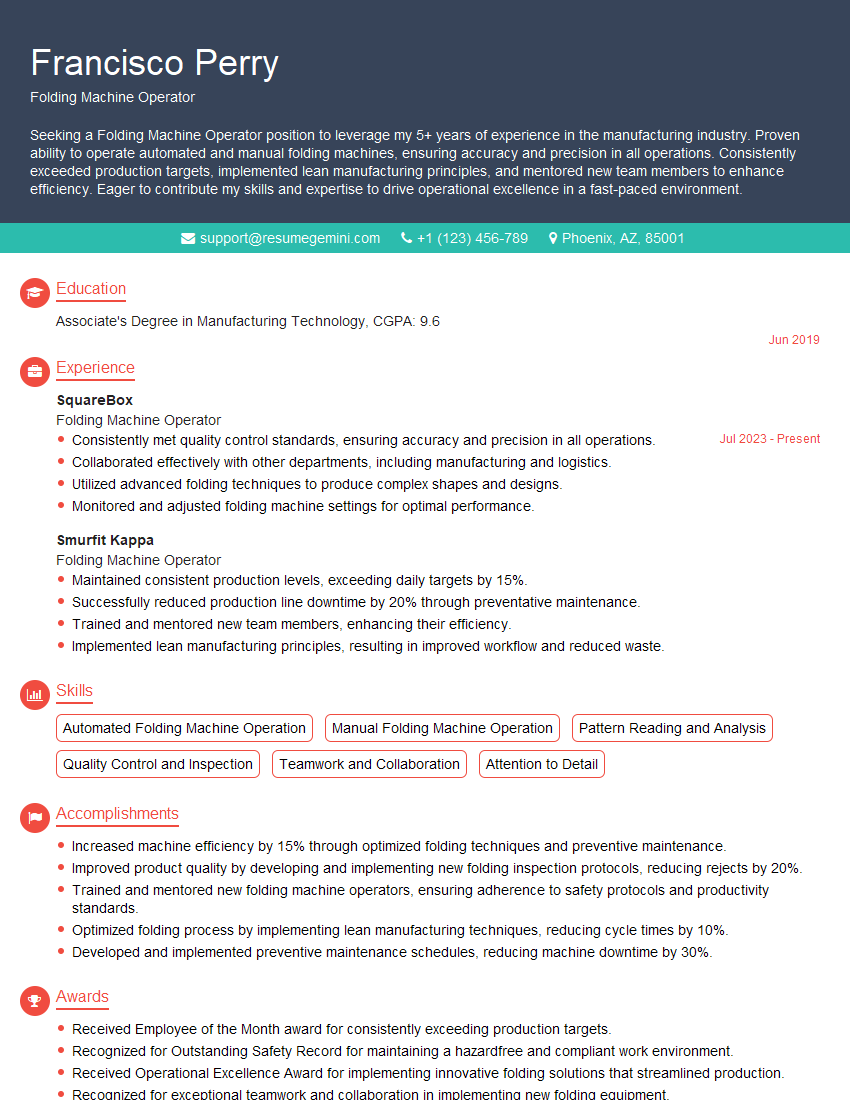
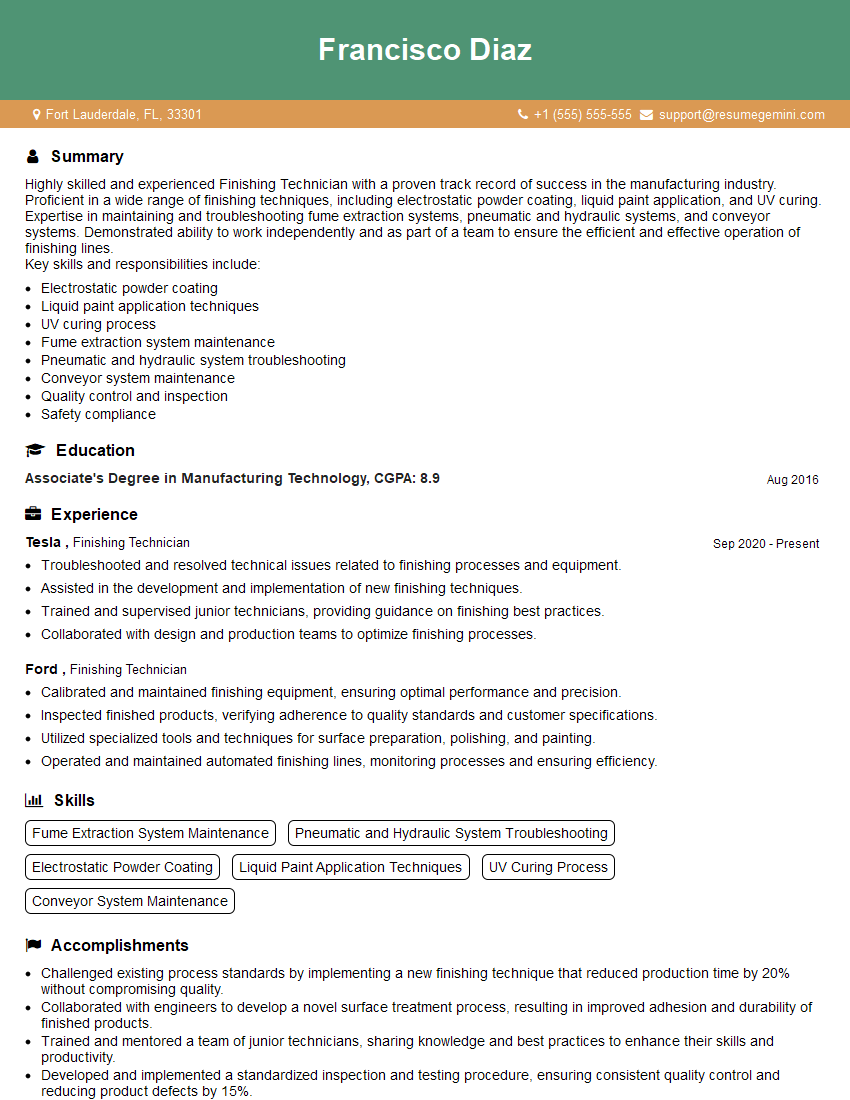
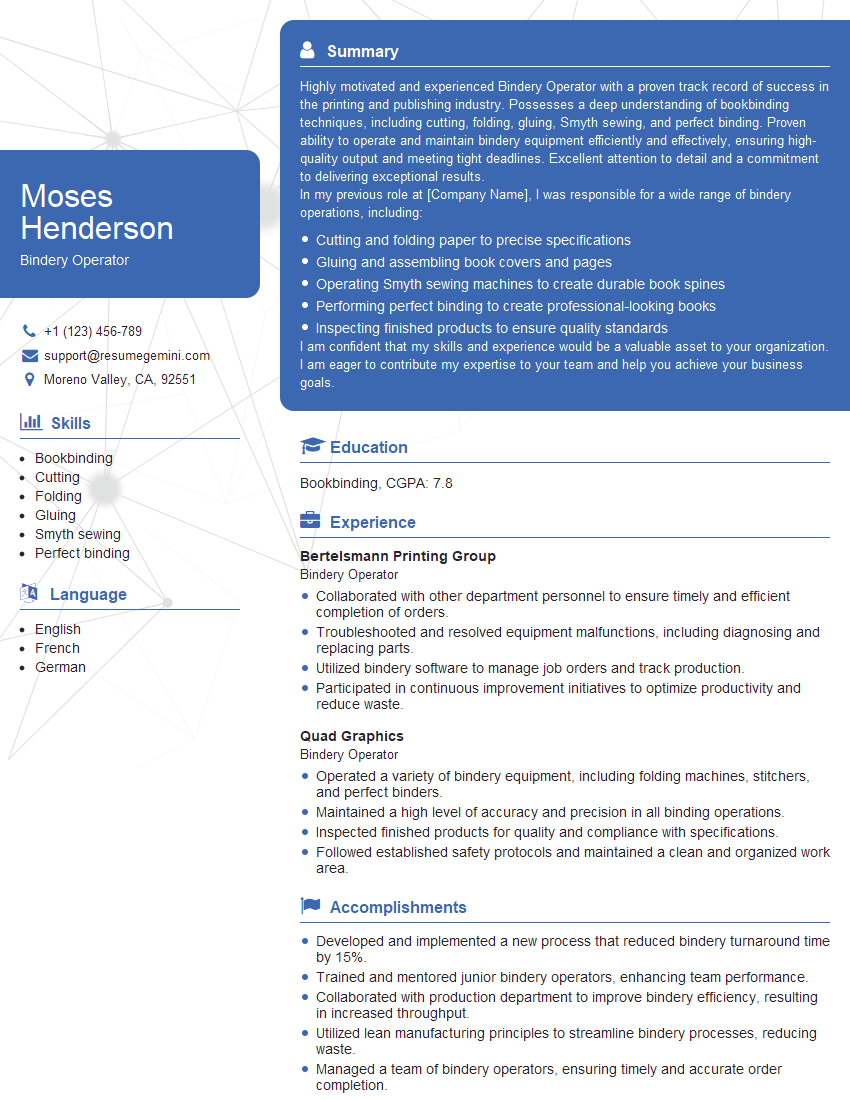
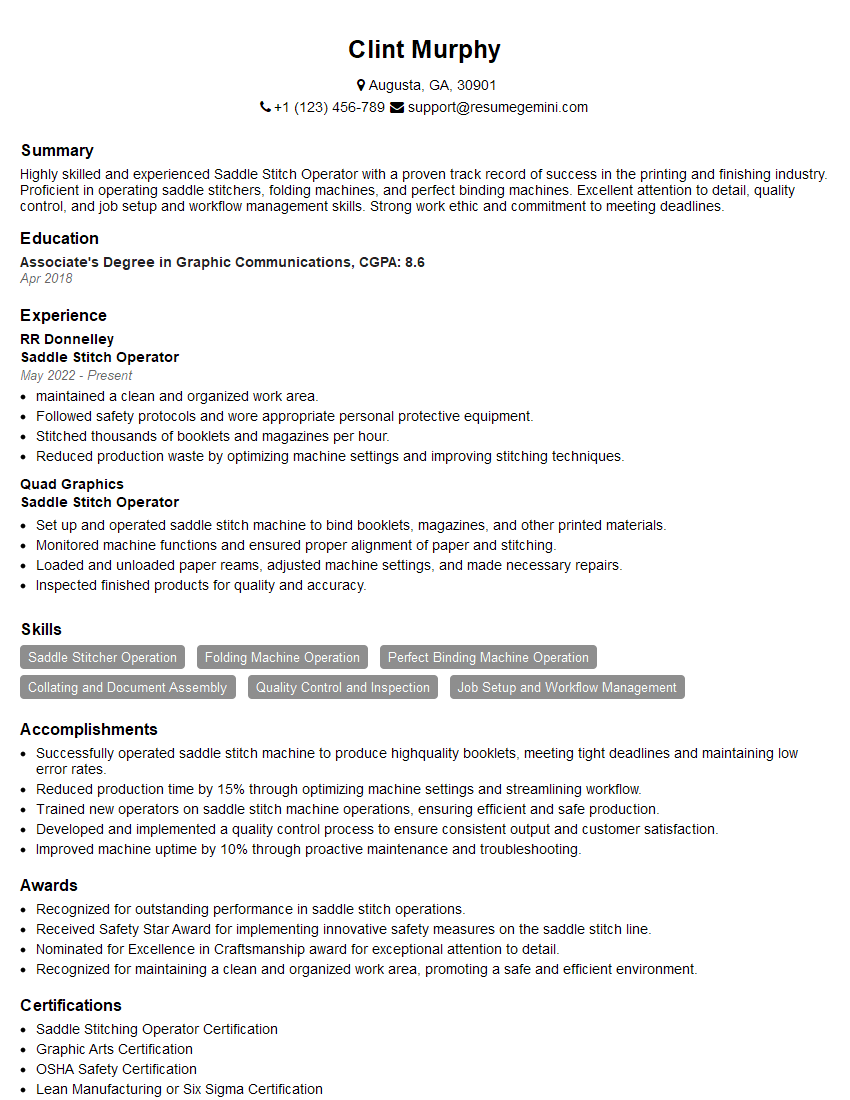
Mastering print finishing and embellishments is crucial for career advancement in the graphic arts industry. A strong understanding of these techniques opens doors to specialized roles and higher earning potential. To maximize your job prospects, creating a well-structured, ATS-friendly resume is essential. ResumeGemini is a trusted resource that can help you build a professional and impactful resume tailored to the print finishing industry. Examples of resumes tailored to Print finishing and embellishments are available through ResumeGemini to guide you in crafting your perfect application.
Explore more articles
Users Rating of Our Blogs
Share Your Experience
We value your feedback! Please rate our content and share your thoughts (optional).
What Readers Say About Our Blog
Very informative content, great job.
good