Preparation is the key to success in any interview. In this post, we’ll explore crucial Printing Technology interview questions and equip you with strategies to craft impactful answers. Whether you’re a beginner or a pro, these tips will elevate your preparation.
Questions Asked in Printing Technology Interview
Q 1. Explain the difference between offset and digital printing.
Offset and digital printing are two fundamentally different printing methods. Offset printing, the workhorse of large-scale printing, is an indirect process using plates to transfer ink onto a rubber blanket, then onto the substrate. Think of it like a three-step handshake: plate, blanket, paper. This allows for incredibly high-quality printing with vibrant colors and sharp details, especially on large runs. Digital printing, on the other hand, is a direct process. The image is printed directly onto the substrate, much like an inkjet printer at home, but on a larger, more sophisticated scale. It’s ideal for short runs, personalized pieces, and situations needing quick turnaround times because there’s no plate-making involved. The key differences boil down to volume, cost-effectiveness, and speed. Offset excels at large volumes, offering a lower per-unit cost; digital shines at small runs and customization, prioritizing speed and flexibility. For example, a million-copy book would be offset printed, while personalized invitations would likely use digital printing.
Q 2. Describe your experience with color management and profile creation.
Color management is crucial in printing, ensuring consistent color reproduction across different devices and processes. My experience includes extensive work with ICC profiles, which act like digital translators, specifying how a particular device interprets and renders color. I’ve created and calibrated profiles for various printers, including offset presses and digital machines. This involves using spectrophotometers to measure color, software for profile generation (like ColorSync or i1Profiler), and rigorous testing to ensure accurate color reproduction. For instance, I once worked on a project requiring precise Pantone matching for a luxury packaging print job. Creating a dedicated profile for the specific press and inks used was critical to achieving the client’s exact brand color and avoiding costly reprints. I’m also proficient in soft proofing, using digital mockups to preview colors and make adjustments before committing to the actual print run, saving both time and materials.
Q 3. What are the common troubleshooting steps for a jammed printing press?
Troubleshooting a jammed printing press requires a systematic approach. First, safety is paramount. Turn off the press and ensure all moving parts have stopped before proceeding. Next, I’d identify the location of the jam. Is it in the feeder, the inking system, or the delivery area? Once the area is pinpointed, I’d carefully examine the paper path for obstructions. This often involves removing paper jams, checking for misaligned paper guides, and inspecting rollers for damage or debris. For example, a common cause of jams is incorrect paper feeding; the paper might be too thick or too thin for the press settings. Sometimes, the problem is related to the inking system; an ink buildup or a faulty roller can cause paper to wrinkle and jam. If the problem persists after these checks, I’d examine the more intricate mechanisms of the press, potentially involving consultation with the press manufacturer or a specialist. Accurate record-keeping of the troubleshooting process is essential for future reference and preventative maintenance.
Q 4. How familiar are you with different types of printing inks and their applications?
My familiarity with printing inks is extensive, encompassing various types and their specific applications. We have process (CMYK) inks used in most offset and digital printing, where cyan, magenta, yellow, and black are combined to create a full color spectrum. Then there are spot colors, such as Pantone inks, which offer precise color control, especially critical for brand consistency and logo reproduction. For specialty applications, we have metallic inks (gold, silver), fluorescent inks, and even inks with unique textures or tactile qualities. The choice of ink depends heavily on the substrate – a highly absorbent paper will require a different ink formulation than a coated stock. For example, UV-cured inks are preferred for outdoor applications because of their superior durability and resistance to fading. Water-based inks are becoming more popular due to environmental concerns. The choice often involves balancing print quality, cost, and environmental impact.
Q 5. Explain the process of prepress preparation, including file setup and trapping.
Prepress preparation is crucial for a successful print job. It involves several steps. First, the design files need to be checked for resolution, color space (typically CMYK for offset), and proper bleed (the extra area extending beyond the trim). Then, image optimization is done to reduce file size without compromising quality, which helps with faster processing and avoids potential issues during printing. Trapping is a critical aspect; it involves creating overlaps between colors, especially where they meet, to prevent gaps or misregistration during the printing process. This ensures clean lines and sharp details, particularly important in multi-color jobs. For example, a poorly trapped design could result in visible white gaps between adjacent color areas on the final product. The optimized files are then sent to the output device—either a digital press or platesetter for offset—and proof copies are checked before the actual print run to verify color accuracy and alignment.
Q 6. What are your experiences with different finishing techniques (e.g., binding, lamination)?
My experience encompasses various finishing techniques that enhance the look, feel, and functionality of printed materials. Binding methods range from simple saddle-stitch binding for brochures to more complex perfect binding for books or case binding for high-end publications. Lamination adds a protective layer to enhance durability and weather resistance, often using gloss, matte, or UV coatings depending on the desired finish. Other finishing options include die-cutting for creating unique shapes, embossing/debossing for texture, and varnishing for spot gloss effects. I’ve worked on numerous projects where the choice of finishing techniques was critical to the final product’s presentation and appeal. For example, a high-end corporate annual report might require case binding, UV coating, and embossing for a premium feel, while a simple flyer might only need saddle-stitch binding.
Q 7. Describe your experience with different printing substrates (e.g., paper, vinyl, canvas).
My experience with various printing substrates is broad. Paper is the most common, ranging from lightweight newsprint to heavy-weight cardstock, each with different properties affecting print quality and application. I’ve worked with coated and uncoated papers, considering factors like brightness, opacity, and texture. Beyond paper, I’m familiar with vinyl, a durable substrate ideal for banners, stickers, and signage. The properties of vinyl vary based on thickness and coating; some are designed for indoor use, while others are weather-resistant. I’ve also worked with canvas, offering a textured finish suitable for fine art prints and giclée reproductions. The choice of substrate is heavily influenced by the final application of the printed material; for example, a poster designed for outdoor display needs a weather-resistant substrate like vinyl, while an art print is best suited to canvas or high-quality art paper.
Q 8. How do you ensure consistent color accuracy across different printing runs?
Maintaining consistent color accuracy across different printing runs is paramount for achieving the desired visual outcome. It’s like baking a cake – you want every batch to look and taste the same. This involves a multi-faceted approach, starting even before the printing process begins.
Color Management System (CMS): Implementing a robust CMS is crucial. This system ensures consistent color representation from the digital design file to the final printed product. We utilize industry-standard profiles (e.g., ICC profiles) to accurately translate colors across different devices and media. This involves profiling our printers, monitors, and proofing devices to guarantee a predictable color output.
Calibration and Profiling: Regular calibration of our printing equipment, including spectrophotometers and densitometers, is essential. This ensures that the measuring instruments themselves remain accurate and reliable. We regularly profile our presses, essentially creating a ‘recipe’ for the machine to accurately reproduce the desired colors.
Proofing: Before large-scale printing, we always create proofs – physical representations of the final print. These proofs, created on a high-quality proofing system, undergo careful review by both the client and our team to ensure color accuracy. Soft proofing, using digital representations, also plays a role in this early color assessment.
Ink Consistency: Maintaining a consistent ink supply is also key. Regular checks for ink viscosity and proper mixing are vital, as variations can significantly impact color accuracy. We use automated ink management systems where possible to minimize manual intervention and maintain consistent ink delivery.
Substrate Consistency: The printing material (paper, cardstock, etc.) also plays a role. Variations in paper thickness, texture, or absorbency can affect color reproduction. We maintain careful inventory control and source materials from reliable suppliers.
Q 9. What are your skills in operating and maintaining printing equipment?
My experience encompasses a broad range of printing equipment, from offset presses to digital printers, wide-format inkjet systems, and finishing machinery. I’m proficient in operating and maintaining various models, including Heidelberg Speedmaster (offset), Xerox iGen (digital), and HP Latex (wide-format). My skillset extends beyond simply running these machines; it includes preventative maintenance, troubleshooting malfunctions, and performing minor repairs.
Preventative Maintenance: I meticulously follow manufacturer-recommended maintenance schedules, including cleaning, lubrication, and part replacements to maximize uptime and prevent costly breakdowns. This proactive approach ensures consistent high-quality output.
Troubleshooting: I’m adept at diagnosing and resolving printing issues, such as misregistration, color inconsistencies, or paper jams. My troubleshooting approach is systematic and combines practical experience with knowledge of the machine’s technical specifications and manuals. I have experience with various diagnostic tools and techniques.
Minor Repairs: While major repairs are usually handled by specialized technicians, I can perform many minor repairs and adjustments, minimizing downtime and maintaining operational efficiency. Examples include replacing rollers, cleaning print heads, and adjusting paper guides.
Q 10. Describe your experience with print workflow software (e.g., MIS systems).
My experience with print workflow software, specifically MIS (Management Information Systems) like PrintVis and Tharstern, is extensive. These systems are the backbone of efficient print production. Think of them as the central nervous system of a print shop, managing every step from order intake to delivery.
Order Management: I’m skilled in using MIS systems to manage orders efficiently, tracking their progress, and ensuring timely completion. This involves entering job details, managing customer communications, and scheduling production runs.
Estimating and Pricing: MIS systems help to accurately estimate costs and provide quotes for clients. I am proficient in using the costing modules to account for materials, labor, and machine time.
Production Scheduling: These systems are crucial for optimizing production schedules. I utilize their scheduling tools to balance workload, prioritize urgent jobs, and avoid conflicts among different projects.
Reporting and Analytics: MIS systems generate valuable data on production efficiency, costs, and profitability. I utilize this data to identify areas for improvement and optimize our operations.
Q 11. How do you handle client revisions and changes during the printing process?
Client revisions and changes are a normal part of the printing process. Handling them effectively requires clear communication, organized workflows, and a proactive approach. It’s like adapting a recipe mid-cooking; you need to adjust and ensure the final dish is still delicious.
Clear Communication: I ensure that all changes are documented thoroughly and communicated effectively to the relevant teams. This includes clearly defining the changes, their impact on timelines and costs, and obtaining client approval before proceeding.
Workflow Management: Using the MIS system, we track all revisions and ensure that they are implemented accurately and efficiently. This might involve updating design files, adjusting print settings, or re-scheduling production runs.
Cost Management: Significant changes can impact the original quote. I accurately assess the cost implications of revisions and discuss them transparently with the client. This prevents surprises and maintains a positive client relationship.
Version Control: We maintain detailed version control of all design files and production data, ensuring we can easily revert to previous versions if needed.
Q 12. What is your experience with quality control procedures in printing?
Quality control (QC) is not just a procedure; it’s a mindset throughout the entire printing process. It’s like being a chef who constantly tastes and adjusts their cooking. We implement comprehensive QC procedures at every stage.
Pre-press Checks: This includes verifying the accuracy of design files, ensuring proper color profiles are used, and checking for any errors before the printing process begins.
In-press Checks: Regular checks during the printing run are crucial to catch any issues early. This might involve inspecting sheets for color consistency, registration, or any print defects.
Post-press Checks: This involves inspecting the finished product, including checking for any binding errors, cuts, or finishing flaws. We also perform visual inspection against proofs to ensure accuracy.
Statistical Process Control (SPC): We utilize SPC techniques to monitor and control the printing process, tracking key parameters like color density, registration, and dot gain. This helps us to identify and address potential issues before they become major problems. Control charts are employed for systematic analysis.
Q 13. Explain your understanding of different print finishing options and their suitability for various projects.
Print finishing options significantly enhance the visual appeal and functionality of a printed product. Think of them as the jewelry of a printed piece. The choice depends entirely on the project’s needs and the desired effect.
Binding: Methods like saddle-stitch (stapling), perfect binding (gluing), case binding (hardcover), and wire-o binding each offer unique characteristics and are suitable for different document types (e.g., brochures, books, magazines).
Cutting and Trimming: Precise cutting ensures clean edges and the right dimensions. This is crucial for a professional finish.
Folding: Various folding techniques (e.g., parallel folds, letter folds, gate folds) are used to create different formats and visual effects.
Lamination: Applying a protective film (glossy, matte, or UV) adds durability and improves the visual appeal.
Embossing and Debossing: These techniques create raised or indented designs, adding texture and a tactile experience.
Die-Cutting: This technique allows for intricate custom shapes and designs, creating unique and eye-catching products.
For instance, a high-end corporate report would likely benefit from case binding and lamination, while a simple brochure might just require saddle-stitch binding and trimming.
Q 14. How familiar are you with different types of printing plates and their usage?
Printing plates are the intermediary between the digital design and the printing press. They’re like stencils used to transfer ink to the paper. Different types of plates cater to specific printing techniques and requirements.
Offset Plates: These are used in offset lithography, the most common printing method for mass production. They come in various types, including aluminum plates with different surface treatments (e.g., conventional, surface-treated, thermal). The choice depends on the press type and the required print quality and run length.
Flexographic Plates: Used in flexographic printing, typically for packaging and labels, these plates are made of photopolymer and are known for their durability and ability to print on flexible substrates.
Gravure Plates: Used in gravure printing, characterized by its ability to produce high-quality images and fine details, these plates are typically made of copper or steel and etched with tiny cells that hold the ink.
Digital Plates (CTP): Computer-to-plate (CTP) technology eliminates the need for film and enables direct plate creation from digital files, streamlining the workflow and improving accuracy. This is becoming the standard in modern printing.
Choosing the right plate type is crucial for optimal print quality, efficiency, and cost-effectiveness. Factors like the printing method, print run length, substrate, and required print quality all influence this decision.
Q 15. How do you manage deadlines and prioritize tasks in a high-pressure printing environment?
In a high-pressure printing environment, effective deadline management is crucial. My approach is multifaceted, relying on a combination of project planning, prioritization techniques, and proactive communication. Firstly, I meticulously review each job’s specifications, identifying potential bottlenecks early on. This includes assessing the complexity of the design, required materials, and turnaround time. I then use a task management system, often a combination of project management software and physical checklists, to break down large projects into smaller, manageable tasks. This allows for better tracking of progress and easier identification of delays.
Prioritization is key. I employ methods like the Eisenhower Matrix (urgent/important), prioritizing jobs based on deadlines, client importance, and potential impact of delays. Proactive communication is vital; I regularly update clients on the progress of their jobs and promptly address any potential issues. This transparency builds trust and prevents misunderstandings. For example, if a particular paper stock is experiencing a delay, I’ll communicate this immediately to the client, offering alternative solutions to minimize disruption. Finally, I’m adept at adjusting to unexpected situations. If a machine malfunctions, for instance, I’ll immediately initiate troubleshooting and explore alternative solutions to maintain the production schedule.
Career Expert Tips:
- Ace those interviews! Prepare effectively by reviewing the Top 50 Most Common Interview Questions on ResumeGemini.
- Navigate your job search with confidence! Explore a wide range of Career Tips on ResumeGemini. Learn about common challenges and recommendations to overcome them.
- Craft the perfect resume! Master the Art of Resume Writing with ResumeGemini’s guide. Showcase your unique qualifications and achievements effectively.
- Don’t miss out on holiday savings! Build your dream resume with ResumeGemini’s ATS optimized templates.
Q 16. What is your experience with large-format printing techniques and equipment?
I possess extensive experience with large-format printing techniques, encompassing various methods and equipment. My expertise includes working with technologies such as solvent, eco-solvent, UV-curable, and latex printers. I’m proficient in operating and maintaining large-format printers from leading manufacturers such as HP, Epson, and Mimaki. My experience includes handling various substrates, including vinyl banners, canvas prints, photographic papers, and rigid materials like PVC boards and aluminum composite panels. I understand the nuances of color management, print resolution, and media selection critical for high-quality large-format printing.
For example, in a recent project involving the production of a series of billboard-sized advertisements, I expertly selected the appropriate UV-curable inks and media to ensure vibrant colors and exceptional durability suitable for outdoor exposure. This involved careful calibration of the printer and pre-flight checks of the artwork to avoid potential issues. I also have experience working with cutting plotters, laminators, and other finishing equipment necessary for the complete production workflow.
Q 17. Explain your understanding of sustainable printing practices and eco-friendly inks.
Sustainable printing practices are paramount in today’s environmentally conscious world. My understanding encompasses the entire printing process, from material selection to waste management. This includes utilizing eco-friendly inks, which are formulated with low-VOC (volatile organic compounds) content and are biodegradable or readily recyclable. Many manufacturers offer water-based or vegetable-oil-based inks which significantly reduce the environmental footprint compared to traditional solvent-based options.
Beyond inks, I prioritize using recycled paper whenever possible, choosing stocks with certifications like FSC (Forest Stewardship Council) to ensure responsible forestry practices. I also actively participate in minimizing energy consumption through responsible machine operation and by implementing efficient workflow processes. Waste management includes proper disposal or recycling of ink cartridges, used paper, and other printing consumables. This commitment to sustainability not only reduces environmental impact but also often aligns with client expectations and corporate social responsibility initiatives.
Q 18. How do you ensure the security of print jobs and sensitive data?
Securing print jobs and sensitive data is critical. My approach involves a multi-layered security strategy. Firstly, I ensure that all printing equipment is connected to a secure network with appropriate access controls and firewalls. Access to sensitive documents is restricted to authorized personnel only, typically using role-based access controls and strong password policies. Secondly, I utilize encryption whenever handling sensitive data, both in transit and at rest. This involves employing secure printing protocols and potentially encrypting data files before sending them to the printer.
Thirdly, I implement secure print release systems, which require authentication before a print job is released. This prevents unauthorized access to printed documents, even if they’ve been inadvertently left in the printer’s queue. Finally, I follow strict document disposal procedures. Confidential documents are shredded securely, ensuring the complete destruction of sensitive information. Regular security audits and staff training are also crucial to maintaining a robust security posture. For example, our company employs a print management system that tracks and logs all printing activities, allowing us to monitor usage and identify any potential security breaches.
Q 19. Describe your experience with variable data printing (VDP).
Variable data printing (VDP) is a powerful technique allowing for personalized marketing materials. My experience with VDP includes working with various software applications that allow for the dynamic insertion of personalized data into print jobs. This typically involves integrating databases containing customer information with design templates. I’m proficient in using software like Adobe InDesign, along with dedicated VDP software solutions, to manage and execute these projects.
For example, I’ve successfully implemented VDP projects for large-scale direct mail campaigns, creating personalized postcards or brochures with unique content for each recipient based on demographic data or past purchase history. This increased engagement and improved response rates compared to standard, generic print materials. I also have experience managing the data integration and ensuring data accuracy to prevent errors in personalized output. This involves rigorous data validation and cleaning processes to maintain the integrity of the final printed product.
Q 20. What are your skills in troubleshooting printing equipment malfunctions?
Troubleshooting printing equipment malfunctions requires a systematic approach. I start by identifying the nature of the problem – is it a hardware or software issue? Then I utilize my in-depth knowledge of printing equipment, coupled with diagnostic tools and manuals, to isolate the root cause. My troubleshooting techniques include checking power connections, paper paths, ink levels, and print heads for any physical obstructions or damage.
If it’s a software problem, I’ll review error messages, check driver settings, and examine job configurations. I also employ diagnostic software provided by the manufacturer to run tests and gather relevant data. For example, a recent issue involved a printer consistently producing blurry output. By carefully checking the print head alignment and cleaning it meticulously, the problem was resolved. If the problem persists, I am familiar with contacting the manufacturer’s technical support for advanced assistance. I prioritize documenting troubleshooting steps and resolutions for future reference. This methodical approach minimizes downtime and ensures efficient problem resolution.
Q 21. How familiar are you with different paper types and their properties (e.g., gsm, brightness)?
Understanding paper types and their properties is fundamental in printing. GSM (grams per square meter) indicates paper weight, influencing its thickness and durability. Higher GSM means heavier, sturdier paper. Brightness, measured in ISO brightness units, refers to the paper’s reflectance of light – higher brightness means whiter paper. Other key properties include opacity (how much light passes through), finish (coated, uncoated, textured), and texture.
I’m familiar with a wide range of paper types, including coated and uncoated papers, specialty papers (such as textured or metallic papers), and various card stocks. The choice of paper dramatically impacts the final print quality, influencing color reproduction, ink absorption, and overall feel. For instance, a high-brightness, coated paper is ideal for sharp images and vibrant colors, while an uncoated paper might be more suitable for a rustic or vintage look. My experience enables me to select the most appropriate paper based on the job requirements and client preferences, ensuring optimal results.
Q 22. Describe your experience with die-cutting and embossing techniques.
Die-cutting and embossing are crucial finishing techniques that add value and visual appeal to printed materials. Die-cutting uses a sharp, custom-designed steel rule die to cut precise shapes and forms from a sheet of printed material. Think of cookie cutters, but for paper or cardstock. Embossing, on the other hand, uses pressure to create raised or indented designs, adding texture and dimension. It’s like pressing a design into soft clay, but with much more precision.
My experience spans a wide range of applications, from simple shapes in business cards to intricate designs on packaging. I’ve worked with both flatbed and rotary die-cutting presses, understanding the nuances of each process and the importance of precise die construction for clean, consistent cuts. For embossing, I’ve handled various techniques, including blind embossing (no ink, just texture), and registered embossing (embossing precisely over a printed design). I’m adept at troubleshooting issues such as die breakage, inaccurate cuts, and inconsistent embossing depth, leveraging my knowledge of material properties and press settings to find effective solutions.
For example, on a recent project involving luxury invitation cards, we used a combination of intricate die-cutting and registered embossing to create a truly stunning and memorable piece. Precise alignment and consistent pressure were critical for a high-quality outcome, requiring careful setup and monitoring throughout the process.
Q 23. How do you handle color discrepancies between proofs and final prints?
Color discrepancies between proofs and final prints are a common challenge in printing. The goal is always to achieve a perfect color match, but several factors influence the final result: the type of paper used, ink properties, press calibration, and even environmental conditions.
My approach to handling these discrepancies involves a systematic process. First, I carefully review the proof against the accepted specifications, identifying the exact nature and extent of the color difference. Then, I investigate potential causes. For example, a difference in paper brightness can significantly alter the perceived color. Similarly, ink variations or incorrect profile settings on the printing press can also contribute.
I use color management tools (e.g., spectrophotometers) to precisely measure the color differences and make adjustments. This might involve calibrating the press, adjusting ink densities, or even re-examining the original design file. Effective communication with the client is vital throughout the process; I ensure they understand the potential reasons for discrepancies and the steps taken to resolve them. In many cases, a simple adjustment to the ink percentages or a slight change in paper can produce a near-perfect match. In extreme cases, reprinting may be necessary, but only as a last resort after all other options have been exhausted.
Q 24. What is your experience with print estimating and cost analysis?
Print estimating and cost analysis are fundamental skills in the printing industry. It requires a detailed understanding of production costs, material pricing, and labor expenses. Accurate estimating ensures profitability and prevents unpleasant surprises for both the printer and the client.
My experience involves breaking down project costs into their individual components. This includes calculating the cost of materials (paper, ink, substrates), machine time, labor, pre-press costs (design, proofing), finishing (die-cutting, binding, etc.), and overhead. I use sophisticated software to manage these calculations and create detailed quotes. I also take into account potential variables like rush orders, complex designs, or specialized finishing techniques, adding appropriate contingency to the estimate.
A real-world example would be estimating the cost for a large-scale brochure printing project. I would consider the quantity, paper weight, color complexity, binding type, and any additional finishing requirements. I’d then consult my pricing database for the current cost of materials and factor in machine time based on press speed and setup time. Finally, I calculate labor and overhead costs, and add a reasonable profit margin to arrive at a final estimate. I always provide clients with a breakdown of the cost components for transparency and trust.
Q 25. Explain your understanding of different file formats used in printing (e.g., PDF, TIFF).
Understanding different file formats is crucial for efficient printing. Each format has its strengths and weaknesses, making certain formats more suitable for specific printing needs.
- PDF (Portable Document Format): The industry standard for print-ready files. PDFs preserve fonts, images, and layout accurately across different platforms. However, it’s critical to ensure the PDF is properly prepared for print – high resolution images, embedded fonts, correct color profiles (CMYK), and appropriate bleed and trim marks.
- TIFF (Tagged Image File Format): A high-resolution image format suitable for photographic images or complex illustrations. TIFF files are often used for pre-press stages, especially for image quality assessment and color correction. However, they are not ideal for complex layouts or text-heavy documents.
- Other Formats (e.g., AI, EPS, InDesign): While design software often uses these formats, they usually need to be converted to PDF or TIFF for printing. These native files may contain embedded links, fonts, or other elements that are not always compatible with all printing systems.
As a printing expert, I have deep knowledge of all these file types and can help clients prepare their files appropriately. I can assess a client’s file to ensure it meets the requirements for optimal print quality, addressing issues such as low-resolution images, missing fonts, or incorrect color spaces proactively.
Q 26. How do you collaborate effectively with designers and clients during the printing process?
Effective collaboration is the cornerstone of a successful printing project. My approach emphasizes open communication, clear expectations, and proactive problem-solving.
With designers, I emphasize a clear understanding of print limitations early in the design process. This includes discussions on color reproduction, paper selection, and finishing techniques. I make myself available for consultations and answer any questions they may have about the printability of their designs. Regular check-ins and feedback loops ensure that design files are correctly prepared for the chosen printing process.
With clients, I strive to create a collaborative environment, maintaining open lines of communication. I guide them through the printing process, explaining technical options, and addressing their concerns about budgets, timelines, and quality expectations. I ensure I provide accurate information, realistic expectations, and regular project updates to keep them fully informed throughout the project. This leads to smoother project workflows and satisfied clients.
Q 27. Describe your experience with automated printing systems and workflow integration.
Automation plays a critical role in modern printing, improving efficiency and reducing errors. My experience includes working with various automated printing systems, including those with integrated workflow management software. These systems streamline the entire process from file preparation and pre-press to printing, finishing, and delivery.
I’m familiar with pre-press automation software, including workflow automation tools that connect various components of the printing process (design, proofing, imposition, and platemaking). This allows for tasks such as automated imposition, color management, and quality control checks, significantly reducing manual intervention and potential human error. I also have experience with automated printing presses, which optimize color consistency, registration, and speed. I understand the intricacies of setting up and troubleshooting these systems, ensuring optimal performance.
For instance, I’ve worked extensively with workflow systems that allow for automatic job tracking and reporting, providing real-time visibility into production status and enabling efficient resource allocation. This not only enhances efficiency but also helps identify bottlenecks and potential problem areas, allowing for proactive intervention and preventative maintenance.
Q 28. What are your strategies for minimizing waste and maximizing efficiency in printing production?
Minimizing waste and maximizing efficiency are key to profitability and environmental responsibility in printing. My strategies focus on several interconnected aspects.
- Optimized Workflow:Streamlining the entire printing process, minimizing delays and inefficiencies through automation and improved communication.
- Accurate Estimating and Job Planning:Preventing overproduction by precisely estimating the required materials and press time.
- Precise Imposition:Efficiently arranging pages on a printing sheet to minimize paper waste and optimize press utilization.
- Efficient Ink Management:Using color management tools and precise ink controls to reduce ink consumption and waste.
- Sustainable Materials:Choosing environmentally friendly papers and inks whenever possible.
- Regular Maintenance:Ensuring equipment is properly maintained to prevent jams, breakdowns, and waste caused by production errors.
For example, I implemented a new imposition strategy for a large-scale magazine printing project, resulting in a 15% reduction in paper waste without compromising print quality. By optimizing the sheet layout and incorporating efficient cutting techniques, we saved significant costs while demonstrating a commitment to sustainable printing practices. Continuous improvement is essential, always seeking ways to enhance operational efficiency and minimize environmental impact. I actively seek opportunities for improvement, regularly analyzing production data to identify areas for optimization and efficiency gains.
Key Topics to Learn for Your Printing Technology Interview
- Pre-press Processes: Understanding file preparation, color management (CMYK, RGB, Pantone), image resolution, trapping, and imposition techniques. Consider practical applications like preparing artwork for different printing methods (offset, digital, large format).
- Printing Technologies: Familiarize yourself with various printing methods such as offset lithography, digital printing (inkjet, toner-based), screen printing, flexography, and their respective strengths and weaknesses. Think about scenarios where you’d choose one method over another based on project needs (e.g., volume, budget, substrate).
- Print Finishing and Binding: Master the knowledge of different finishing options like cutting, folding, binding (perfect, saddle-stitch, wire-o), lamination, and die-cutting. Be prepared to discuss how these choices impact the final product’s quality and presentation.
- Color Theory and Management: Develop a strong understanding of color profiles, color space conversion, and troubleshooting color discrepancies. Be ready to discuss practical problem-solving strategies related to color matching and consistency across different printing processes.
- Print Production Workflow: Gain proficiency in understanding the entire printing workflow, from initial design to final delivery. This includes job scheduling, material management, quality control, and cost estimation.
- Troubleshooting and Problem-Solving: Prepare examples showcasing your ability to identify and resolve common printing issues, such as color mismatches, registration problems, and paper jams. Highlight your analytical and critical thinking skills.
- Sustainability in Printing: Demonstrate awareness of environmentally friendly printing practices, including responsible ink and paper choices, and waste reduction strategies.
Next Steps
Mastering Printing Technology opens doors to exciting career opportunities with diverse growth potential. To maximize your job prospects, focus on crafting an ATS-friendly resume that highlights your skills and experience effectively. ResumeGemini is a trusted resource to help you build a professional resume that stands out. They provide examples of resumes tailored specifically to the Printing Technology field, ensuring your qualifications shine brightly to potential employers. Take advantage of these resources to showcase your expertise and land your dream job!

Print Production Manager Resume Sample

Print Buyer Resume Sample

Prepress Supervisor Resume Sample
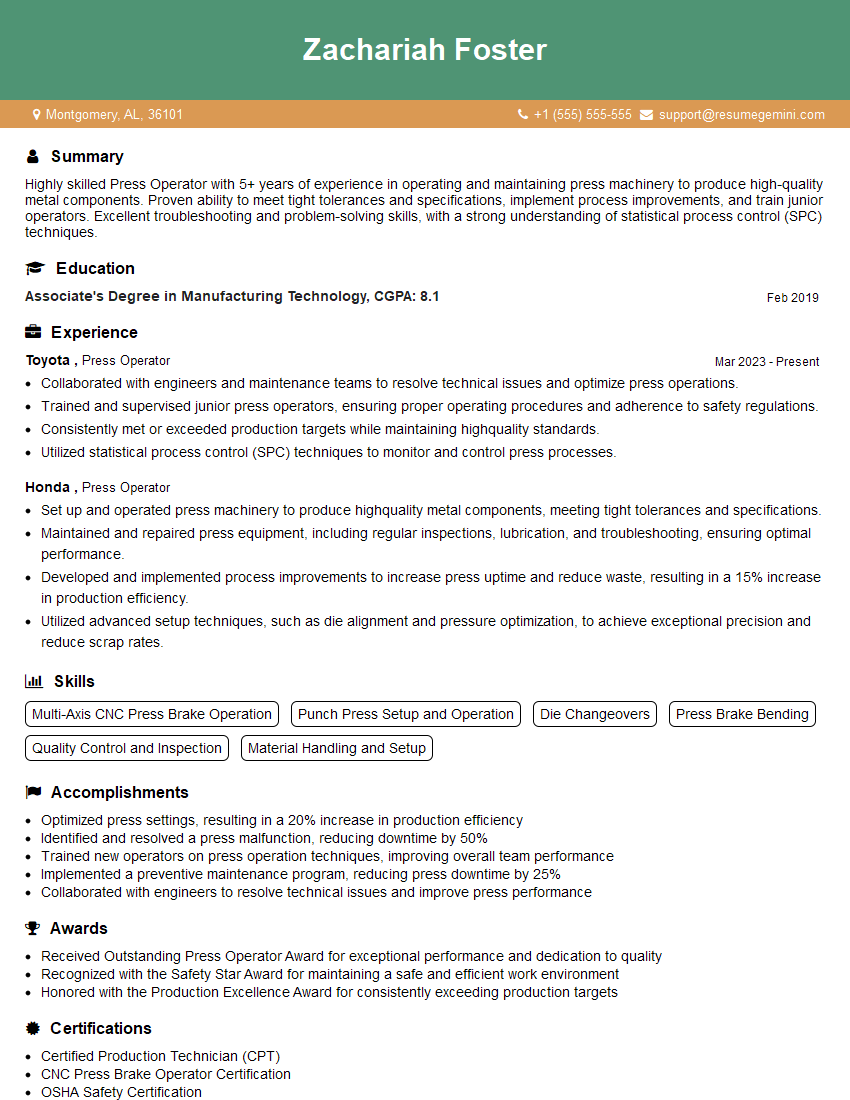
Press Operator Resume Sample
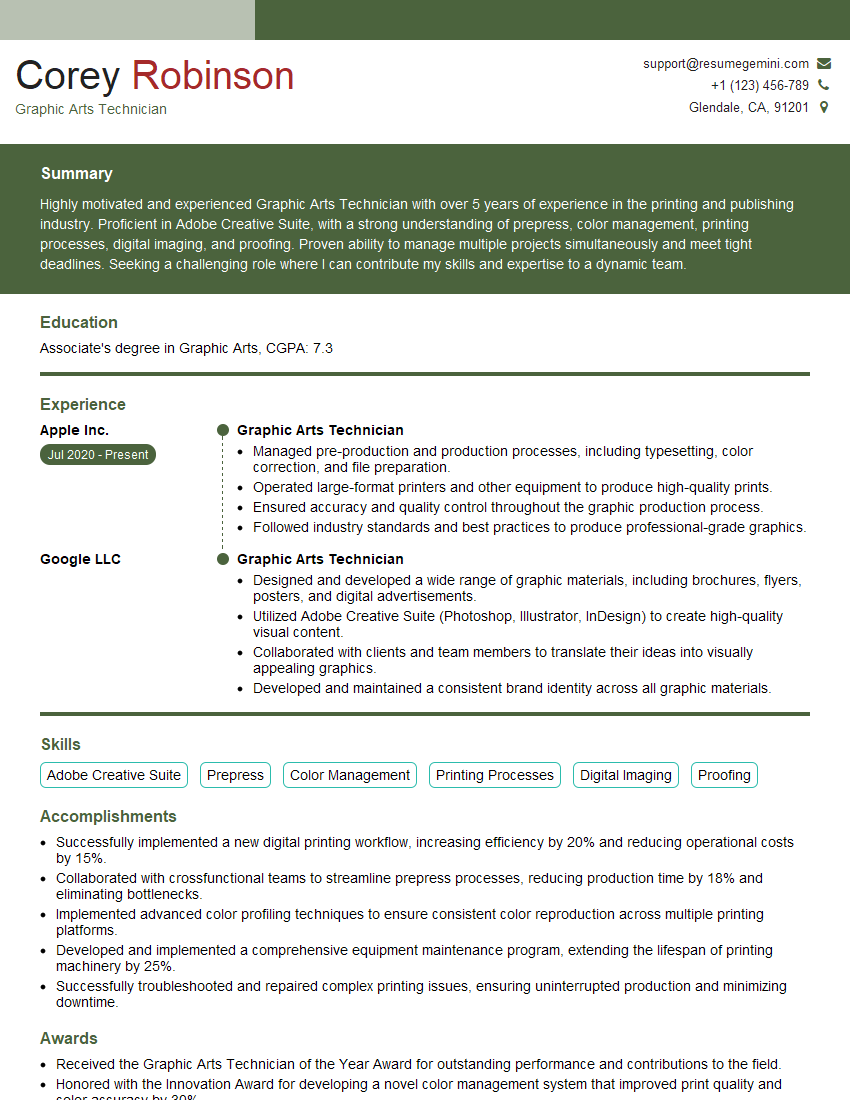
Graphic Arts Technician Resume Sample

Prepress Technician Resume Sample
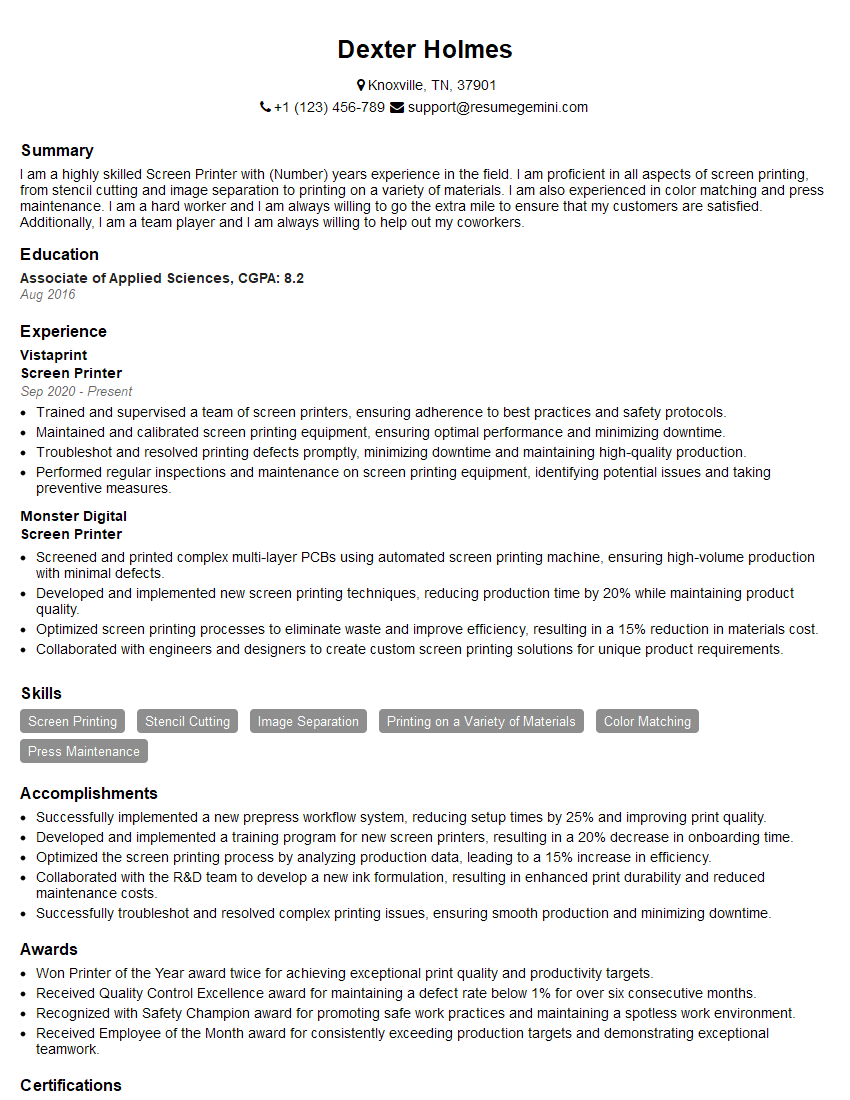
Screen Printer Resume Sample
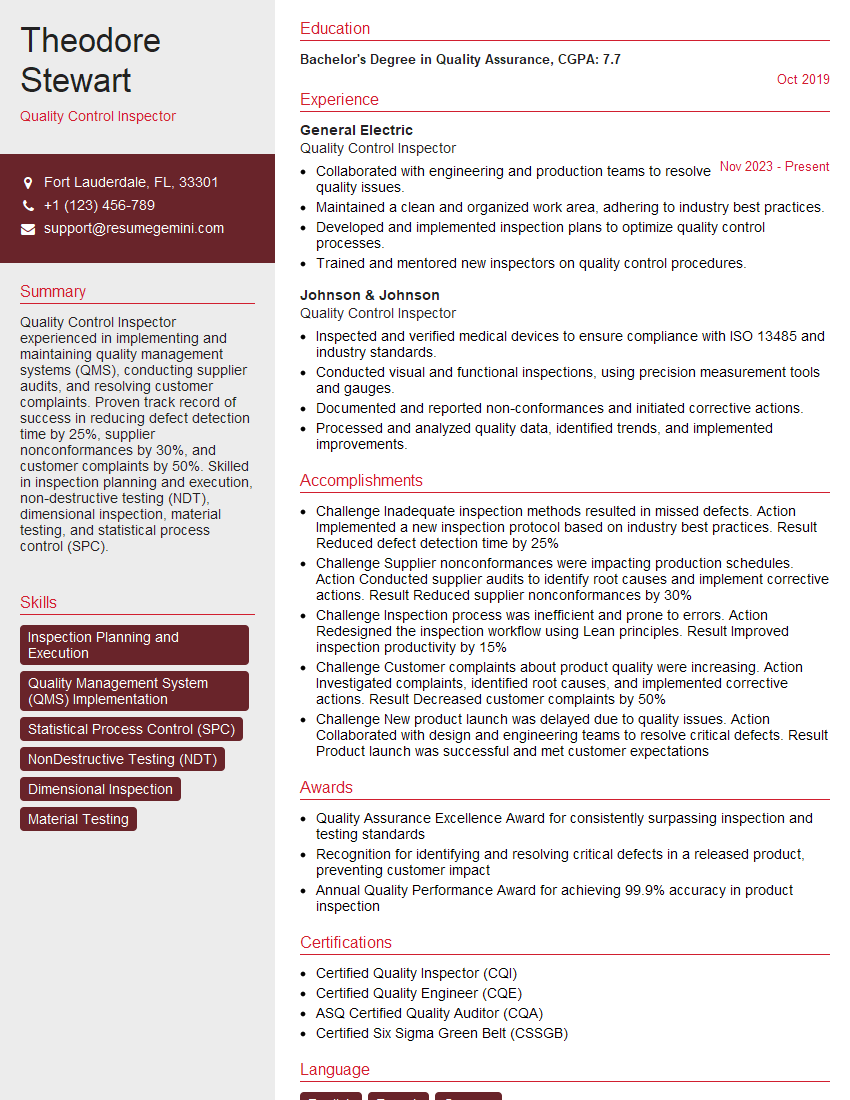
Quality Control Inspector Resume Sample
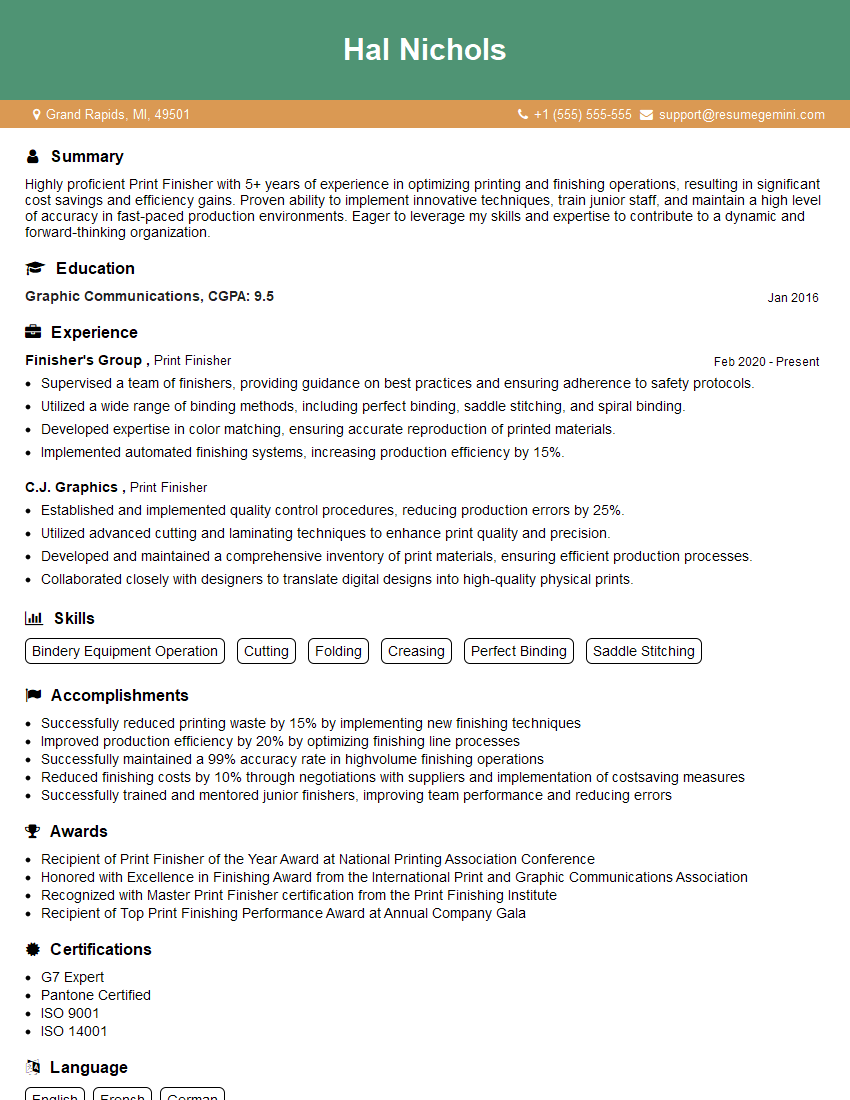
Print Finisher Resume Sample
Explore more articles
Users Rating of Our Blogs
Share Your Experience
We value your feedback! Please rate our content and share your thoughts (optional).
What Readers Say About Our Blog
Very informative content, great job.
good