The thought of an interview can be nerve-wracking, but the right preparation can make all the difference. Explore this comprehensive guide to Wastewater Treatment Technologies interview questions and gain the confidence you need to showcase your abilities and secure the role.
Questions Asked in Wastewater Treatment Technologies Interview
Q 1. Explain the different stages of wastewater treatment.
Wastewater treatment is a multi-stage process designed to remove contaminants from wastewater, making it safe for discharge or reuse. Think of it like cleaning a very dirty dish – you need several steps to get it sparkling clean.
- Preliminary Treatment: This initial stage involves removing large debris like grit, rags, and sticks using screens and grit chambers. Imagine a strainer for your kitchen sink.
- Primary Treatment: This stage uses physical processes like sedimentation to remove suspended solids. Think of letting the dirt settle at the bottom of a glass of water.
- Secondary Treatment: This is where the magic happens! Primarily biological processes are used to remove dissolved and suspended organic matter. This is analogous to using soap and water to clean your dishes, breaking down the grease and food particles.
- Tertiary Treatment (Optional): This advanced stage removes remaining nutrients (nitrogen and phosphorus) and pathogens, further polishing the effluent. Think of this as a final rinse and shine for your dish.
- Disinfection: The final stage involves killing harmful bacteria and viruses, ensuring the treated wastewater is safe for discharge. This is like sterilizing your dish with hot water.
The specific stages and technologies employed vary depending on factors such as the characteristics of the wastewater and environmental regulations.
Q 2. Describe the activated sludge process in detail.
The activated sludge process is the workhorse of secondary wastewater treatment. It’s a biological process that uses microorganisms (bacteria) to break down organic matter in wastewater. Imagine a tiny army of cleaners working tirelessly.
Here’s a breakdown:
- Aeration Tank: Wastewater is mixed with a population of microorganisms (activated sludge) in an aeration tank. Air is pumped into the tank to provide oxygen, which the microorganisms need to thrive and break down the organic matter. This is like providing the cleaning crew with the necessary tools and energy.
- Clarifier (Secondary Settling Tank): After aeration, the mixture flows into a clarifier where the activated sludge settles out. The clarified water, now significantly cleaner, is discharged. The settled sludge is partly recycled back to the aeration tank to maintain a healthy microbial population, ensuring continuous cleaning.
- Waste Sludge: Excess activated sludge is removed (wasted) and sent for further treatment (e.g., anaerobic digestion) to reduce its volume and stabilize it before disposal or further processing. This is like removing the used cleaning solution.
The activated sludge process is highly effective in removing organic pollutants, but its efficiency depends on factors such as temperature, pH, and the availability of oxygen. Monitoring and controlling these parameters is crucial for optimal performance.
Q 3. What are the key parameters monitored in a wastewater treatment plant?
Monitoring key parameters is essential for maintaining the effectiveness and compliance of a wastewater treatment plant. It’s like having a dashboard that shows the health of your system.
- pH: Measures the acidity or alkalinity of the wastewater. Maintaining the optimal pH range is crucial for microbial activity.
- Dissolved Oxygen (DO): Measures the oxygen levels in the aeration tank. Sufficient DO is essential for aerobic microorganisms.
- Biochemical Oxygen Demand (BOD): Indicates the amount of oxygen required by microorganisms to break down organic matter. A high BOD indicates a high level of pollution.
- Chemical Oxygen Demand (COD): Measures the total amount of organic compounds in wastewater, offering a broader picture of pollution than BOD.
- Suspended Solids (SS): Measures the total amount of solid particles in the wastewater. High SS levels can indicate ineffective treatment.
- Nitrogen and Phosphorus: These nutrients can cause eutrophication (excessive algal growth) in receiving waters. Monitoring them helps ensure that these are removed effectively.
- Pathogens: Regular testing for bacteria, viruses, and other pathogens is essential to ensure the safety of the treated effluent.
Q 4. How do you ensure compliance with environmental regulations?
Compliance with environmental regulations is paramount in wastewater treatment. It involves a multi-faceted approach.
- Regular Monitoring and Reporting: Consistently monitor all key parameters and submit detailed reports to the regulatory agencies according to the stipulated schedule.
- Proper Operation and Maintenance: Regular maintenance and optimal operation of all treatment units ensure consistent effluent quality.
- Process Optimization: Continuously refine processes based on monitoring data and advancements in wastewater treatment technology to enhance treatment efficiency and compliance.
- Emergency Preparedness: Develop and implement protocols for managing unexpected events like equipment failures or spills to minimize environmental impact.
- Record Keeping: Maintain accurate and thorough records of all operations, maintenance, monitoring data, and regulatory interactions.
- Staff Training: Ensure that personnel are well-trained in all aspects of plant operation, maintenance, and regulatory compliance.
Non-compliance can result in penalties, legal action, and reputational damage. Proactive compliance is the best approach.
Q 5. Explain the role of biological processes in wastewater treatment.
Biological processes are the heart of modern wastewater treatment. They leverage the power of microorganisms (primarily bacteria) to break down organic matter.
These processes are crucial because they efficiently remove dissolved and suspended organic pollutants that are not easily removed by physical methods. Think of it as nature’s way of cleaning.
- Aerobic Processes: These processes use oxygen-loving bacteria to break down organic matter. The activated sludge process is a prime example.
- Anaerobic Processes: These processes occur in the absence of oxygen and are used for sludge stabilization and biogas production. This is like composting on a large scale.
Biological processes are cost-effective and environmentally friendly, making them the cornerstone of most wastewater treatment plants.
Q 6. Describe different types of filtration used in wastewater treatment.
Filtration plays a significant role in wastewater treatment, especially in tertiary treatment, to remove suspended solids and other contaminants.
- Rapid Sand Filtration: This involves passing water through a bed of sand, where suspended solids are trapped. It’s a simple, yet effective method.
- Dual Media Filtration: This uses a combination of sand and anthracite coal, providing better filtration efficiency than rapid sand filtration alone.
- Membrane Filtration: This advanced filtration technology uses membranes with tiny pores to remove a wide range of contaminants, including viruses and bacteria. This is like using a super fine sieve.
- Microfiltration (MF): Removes larger particles like suspended solids and algae.
- Ultrafiltration (UF): Removes even smaller particles, including bacteria.
- Reverse Osmosis (RO): A very high-pressure process used to remove dissolved solids and salts, primarily in water reuse applications.
The choice of filtration method depends on the desired effluent quality and the characteristics of the wastewater.
Q 7. What are the common problems encountered in wastewater treatment plants?
Wastewater treatment plants face various challenges, and proactive management is key to mitigate them.
- Sludge Bulking: This occurs when the activated sludge loses its settling ability, leading to poor clarification. Regular monitoring and process adjustments are needed.
- Toxic Shock: The introduction of toxic substances can inhibit microbial activity, impairing the treatment process. Careful monitoring of influent quality is essential.
- Equipment Malfunctions: Pump failures, aeration system issues, and other malfunctions can disrupt the treatment process, demanding swift maintenance and repair.
- Flow Variations: Sudden influent flow surges can overwhelm the plant’s capacity, leading to poor treatment performance. Effective flow equalization is crucial.
- Biofouling: The accumulation of microorganisms on equipment surfaces can reduce efficiency. Regular cleaning and maintenance are required.
- Nutrient Removal Challenges: Removing nitrogen and phosphorus effectively remains a challenge in many plants, especially in dealing with high influent concentrations.
Effective problem-solving requires a combination of robust monitoring, prompt maintenance, and experienced operators who can adapt to changing conditions.
Q 8. How do you troubleshoot a malfunctioning clarifier?
Troubleshooting a malfunctioning clarifier involves a systematic approach. Think of a clarifier like a giant settling pond – it needs the right conditions for solids to settle out effectively. A malfunction often manifests as poor solids settling, excessive solids in the effluent, or a build-up of sludge in the clarifier itself. The troubleshooting process starts with observation: checking the influent flow rate, observing the sludge blanket level, and inspecting for any signs of physical damage or blockages.
- Influent issues: High influent flow rates can prevent adequate settling. Check pumps and flow meters. A high organic loading can also destabilize the sludge blanket, increasing the effluent suspended solids. Check the BOD and COD levels in the influent.
- Sludge blanket issues: A thick sludge blanket might indicate insufficient sludge withdrawal, while a thin or missing blanket often suggests excessive withdrawal or poor settling characteristics. Adjust the sludge withdrawal rate accordingly. A ‘bulking’ sludge (fluffy and unable to settle) often points to a biological issue, potentially involving filamentous bacteria. Microscopic analysis can confirm this.
- Mechanical issues: Inspect the clarifier mechanisms – rakes, scrapers, and effluent weirs – for blockages or damage. A malfunctioning rake can prevent proper sludge removal, leading to a build-up. Problems with the weir system can cause inefficient effluent discharge.
- Chemical issues: Polymer addition is crucial for effective settling. An incorrect dosage, or use of an ineffective polymer, can cause poor settling.
Addressing each of these aspects systematically is essential. For example, if we find a bulking sludge problem, corrective actions could include adjusting the aeration strategy in the activated sludge process upstream or introducing a different coagulant.
Q 9. Explain the principles of disinfection in wastewater treatment.
Disinfection in wastewater treatment aims to eliminate or significantly reduce harmful pathogens such as bacteria, viruses, and protozoa before the treated effluent is released into the environment. This protects public health and aquatic ecosystems. Common disinfection methods include:
- Chlorination: The most widely used method. Chlorine reacts with pathogens, inactivating them. However, it can form disinfection byproducts (DBPs) that are potentially harmful, requiring careful monitoring and control.
- UV disinfection: UV light damages the DNA of pathogens, rendering them unable to reproduce. This method is effective and doesn’t produce DBPs, but is less effective against some viruses compared to chlorine.
- Ozone disinfection: Ozone is a powerful oxidant that destroys pathogens. It’s effective, but expensive and requires on-site generation. Similar to chlorine, there is the need to control by-products.
- Chloramination: A combination of chlorine and ammonia, forming chloramines which provide a longer-lasting disinfection effect compared to free chlorine.
The choice of disinfection method depends on factors like the effluent quality, cost, regulatory requirements, and the presence of sensitive aquatic life in the receiving water body. Effective disinfection requires careful monitoring of the disinfection contact time, disinfectant residual, and pathogen levels in the effluent.
Q 10. What are the different types of sludge treatment methods?
Sludge treatment focuses on stabilizing and reducing the volume of the accumulated solids from wastewater treatment processes. Several methods exist:
- Anaerobic digestion: Bacteria break down organic matter in the absence of oxygen, producing biogas (methane and carbon dioxide) which can be used as an energy source. This significantly reduces sludge volume and stabilizes it.
- Aerobic digestion: Similar to anaerobic digestion, but oxygen is present. It is less effective at volume reduction than anaerobic digestion but produces less odor.
- Thickening: This process concentrates the sludge to reduce its volume before further treatment. Gravity thickening or chemical thickening are common methods.
- Dewatering: Further reduces the moisture content of the sludge, usually through mechanical methods like belt presses or centrifuges, or through using drying beds.
- Incineration: High-temperature burning of sludge to reduce its volume significantly. It’s energy-intensive and requires careful emission control.
- Land application: Sludge, after stabilization, can be used as a soil amendment but needs to meet stringent regulatory standards to avoid contaminating the soil and groundwater.
The selection of the most appropriate method often depends on factors such as sludge characteristics, energy requirements, land availability, and regulatory restrictions.
Q 11. Describe the process of biosolids management.
Biosolids management encompasses all aspects of handling and disposing of the stabilized sludge from wastewater treatment plants. It begins after sludge treatment (as described above) and focuses on environmentally sound and compliant disposal or beneficial reuse options. This includes:
- Dewatering and stabilization: Preparing the biosolids for safe handling and transport.
- Transportation: Moving the biosolids to their final destination.
- Beneficial reuse: Using biosolids as soil amendment in agriculture or for land reclamation (this needs to comply with stringent regulations and quality control).
- Disposal: Options include landfilling, incineration, or co-digestion in anaerobic digesters with other organic waste.
- Monitoring and compliance: Regular testing of biosolids to ensure compliance with environmental regulations and quality standards. This could involve testing for metals, pathogens, and other contaminants.
Successful biosolids management minimizes environmental impacts, recovers valuable resources, and ensures public safety. The specific approach is guided by local regulations, available technologies, and economic considerations.
Q 12. What is the significance of BOD and COD in wastewater analysis?
BOD (Biochemical Oxygen Demand) and COD (Chemical Oxygen Demand) are essential parameters in wastewater analysis that help us understand the organic load and the treatment efficiency. Think of them as indicators of how much oxygen is needed to break down the organic matter.
- BOD: Measures the amount of dissolved oxygen consumed by microorganisms during the aerobic decomposition of organic matter in a sample over a specific time period (usually 5 days). A high BOD indicates a high organic load, meaning the wastewater is more polluted and requires more extensive treatment.
- COD: Measures the total amount of oxygen required to chemically oxidize all organic and some inorganic matter in a sample. It’s a faster test than BOD and provides a broader measure of the oxygen demand than BOD alone, as it includes substances not easily biodegradable by microorganisms.
Comparing BOD and COD values can provide insights into the biodegradability of the organic matter. A high COD/BOD ratio suggests the presence of refractory (difficult-to-degrade) organic compounds, requiring more advanced treatment processes.
Q 13. Explain the concept of nutrient removal in wastewater treatment.
Nutrient removal in wastewater treatment is crucial for protecting aquatic ecosystems from eutrophication (excessive nutrient enrichment leading to algal blooms and oxygen depletion). The primary nutrients of concern are nitrogen and phosphorus.
- Nitrogen removal: This typically involves a combination of biological processes. Nitrification converts ammonia to nitrite and nitrate, and denitrification reduces nitrate to nitrogen gas, which is released into the atmosphere. This can be achieved through carefully controlled aeration strategies in activated sludge systems or using specialized biological reactors.
- Phosphorus removal: This often involves chemical precipitation using chemicals like ferric chloride or alum. These chemicals react with phosphorus to form insoluble precipitates that can be removed through sedimentation. Enhanced biological phosphorus removal (EBPR) is also a common biological approach that utilizes specific types of bacteria.
Effective nutrient removal requires careful process control and monitoring of nutrient levels throughout the treatment process. Stricter regulations are increasingly being implemented globally to minimize the discharge of nitrogen and phosphorus into the environment.
Q 14. Describe the role of anaerobic digestion in wastewater treatment.
Anaerobic digestion is a crucial process in wastewater treatment that utilizes microorganisms to break down organic matter in the absence of oxygen. It serves several important purposes:
- Sludge stabilization: It reduces the volume and pathogen content of sludge, making it safer for handling and disposal. The process converts the unstable organic matter in sludge to a more stable form.
- Biogas production: Anaerobic digestion generates biogas, a mixture of methane and carbon dioxide. This biogas can be captured and used as a renewable energy source to power the wastewater treatment plant or other facilities, reducing reliance on fossil fuels.
- Nutrient recovery: The digestate (the remaining material after digestion) is rich in nutrients and can be used as a fertilizer in agriculture, reducing the need for synthetic fertilizers.
Anaerobic digestion is a sustainable and energy-efficient process that contributes to both environmental protection and resource recovery in wastewater management. The design and operation of anaerobic digesters require careful control of parameters like temperature, pH, and the organic loading rate to ensure optimal performance.
Q 15. What are the different types of wastewater treatment plants?
Wastewater treatment plants come in various sizes and configurations, tailored to the specific needs of the community they serve. They generally fall into three main categories based on the level of treatment provided:
- Primary Treatment: This involves physical processes like screening and sedimentation to remove large solids and settleable materials. Think of it like a simple filtration process – removing the easily visible debris. An example is a sedimentation tank where heavier solids sink to the bottom, forming sludge.
- Secondary Treatment: This employs biological processes to further remove dissolved and suspended organic matter. This is where the magic happens, using microorganisms to break down pollutants. Common methods include activated sludge processes (where bacteria consume the organic matter) and trickling filters (where bacteria are grown on a media bed). Imagine it like a miniature ecosystem where bacteria do the heavy lifting of cleaning the water.
- Tertiary Treatment: This is an advanced level of treatment, going beyond secondary treatment to remove specific pollutants like nitrogen and phosphorus, and achieving a higher level of water purity. Techniques include filtration through sand or membrane systems, and disinfection with chlorine or UV light. Think of this as the final polishing step, ensuring the effluent meets strict discharge standards.
Many plants are a combination of these levels, providing varying degrees of treatment based on local regulations and environmental considerations. For instance, a smaller plant might only provide primary and secondary treatment, while a larger plant serving a densely populated area might incorporate all three levels.
Career Expert Tips:
- Ace those interviews! Prepare effectively by reviewing the Top 50 Most Common Interview Questions on ResumeGemini.
- Navigate your job search with confidence! Explore a wide range of Career Tips on ResumeGemini. Learn about common challenges and recommendations to overcome them.
- Craft the perfect resume! Master the Art of Resume Writing with ResumeGemini’s guide. Showcase your unique qualifications and achievements effectively.
- Don’t miss out on holiday savings! Build your dream resume with ResumeGemini’s ATS optimized templates.
Q 16. Explain the importance of SCADA systems in wastewater treatment.
SCADA (Supervisory Control and Data Acquisition) systems are the nervous system of a modern wastewater treatment plant. They provide real-time monitoring and control of various plant processes, significantly enhancing efficiency and safety. Imagine a central dashboard showing all critical parameters – flow rates, tank levels, oxygen levels, pump statuses, etc. – all at a glance.
SCADA’s importance stems from:
- Process Optimization: By continuously monitoring data, SCADA allows operators to make informed decisions, adjusting processes to maximize efficiency and minimize energy consumption. For example, it can automatically adjust the aeration in an activated sludge process based on the oxygen demand.
- Early Problem Detection: Anomalies in data, such as a sudden drop in oxygen levels or an increase in flow rate, can trigger alarms, alerting operators to potential problems before they escalate into major incidents. This proactive approach minimizes downtime and prevents costly repairs.
- Remote Monitoring and Control: SCADA systems often allow remote access, enabling operators to monitor and control plant operations from off-site locations, enhancing responsiveness during emergencies or allowing for off-hour checks.
- Data Logging and Reporting: SCADA systems meticulously record all operational data, providing valuable insights for trend analysis, regulatory compliance, and process improvement.
In essence, SCADA empowers operators to manage the complex interactions within a wastewater treatment plant effectively and safely, ensuring optimal performance and environmental protection.
Q 17. How do you maintain a safe working environment in a wastewater treatment plant?
Maintaining a safe working environment in a wastewater treatment plant is paramount, given the inherent risks associated with handling wastewater and operating complex machinery. This requires a multi-faceted approach:
- Personal Protective Equipment (PPE): Providing and enforcing the use of appropriate PPE, including gloves, boots, respirators, and safety glasses, is crucial to protect workers from chemical exposure, physical hazards, and infectious agents.
- Lockout/Tagout Procedures: Strict adherence to lockout/tagout procedures is essential before any maintenance or repair work on equipment to prevent accidental start-up and injuries. This is a critical safety protocol.
- Confined Space Entry Protocols: Proper procedures for confined space entry, including atmospheric monitoring, ventilation, and rescue plans, must be in place to protect workers from hazardous gases and oxygen deficiency.
- Regular Training and Safety Audits: Ongoing safety training for all personnel on relevant hazards, emergency procedures, and the use of PPE is critical. Regular safety audits and inspections help identify and address potential hazards proactively.
- Emergency Response Plan: A well-defined emergency response plan should be in place, outlining procedures for handling various incidents, such as chemical spills, equipment malfunctions, or medical emergencies. Regular drills help familiarize workers with the plan.
A culture of safety, fostered through effective communication, training, and accountability, is vital for ensuring a safe workplace and minimizing risks.
Q 18. Describe your experience with different types of pumps used in wastewater treatment.
Wastewater treatment plants utilize a variety of pumps, each suited for specific tasks and flow characteristics. My experience encompasses several types:
- Centrifugal Pumps: These are the workhorses of wastewater treatment, handling large volumes of relatively low-viscosity liquids. They’re used for transferring wastewater between treatment units and for sludge pumping.
- Submersible Pumps: Ideal for pumping wastewater from wet wells or deep lift stations, they’re installed directly within the liquid, eliminating the need for separate priming systems.
- Progressive Cavity Pumps (PCPs): These pumps excel at handling highly viscous and abrasive slurries, such as thickened sludge. They are characterized by their positive displacement action and ability to handle solids.
- Diaphragm Pumps: Suitable for pumping highly viscous and shear-sensitive liquids, diaphragm pumps are used in applications where gentler handling is required, such as pumping chemicals.
Experience with these different pumps includes troubleshooting malfunctions, performing preventative maintenance (like replacing seals and bearings), and selecting appropriate pumps based on flow rates, head pressures, and fluid characteristics for various projects. For instance, in one project we replaced aging centrifugal pumps with high-efficiency models, resulting in significant energy savings.
Q 19. Explain your understanding of wastewater flow control.
Wastewater flow control is crucial for efficient and effective treatment plant operation. It involves managing the volume and rate of wastewater entering and moving through the treatment process. Poor flow control can lead to process upsets, reduced treatment efficiency, and potential environmental violations.
Flow control strategies include:
- Flow Equalization Basins: These large tanks store wastewater, smoothing out variations in inflow rates, providing a more consistent flow to subsequent treatment processes. Think of them as buffers, preventing surges that could overwhelm the system.
- Control Valves and Weirs: These devices regulate the flow of wastewater between treatment units, ensuring proper hydraulic loading and preventing overloading of individual components.
- Pumping Systems: Variable speed drives (VSDs) on pumps allow for precise control of flow rates, optimizing the performance of various treatment stages.
- SCADA Integration: Integrating flow control components with the SCADA system allows for automated control and real-time monitoring of flow rates, ensuring efficient and consistent operation.
Effective flow control is essential for optimizing treatment performance, reducing energy consumption, and protecting the receiving environment. For example, precisely controlling the flow to the activated sludge process ensures that the microorganisms have sufficient time to treat the wastewater effectively.
Q 20. Describe your experience with wastewater effluent discharge permits.
Wastewater effluent discharge permits are legally binding documents issued by regulatory agencies that specify the allowable limits of pollutants in wastewater discharged into the environment. These permits are crucial for ensuring compliance with environmental regulations and protecting water quality.
My experience with these permits includes:
- Permit Application Preparation: This involves collecting and analyzing extensive data on wastewater characteristics, treatment processes, and discharge points to prepare a comprehensive application that demonstrates compliance with regulatory requirements.
- Compliance Monitoring: This requires regular sampling and analysis of effluent to ensure that the discharge meets the specified limits. Any deviations must be investigated and corrected promptly.
- Reporting and Record Keeping: Meticulous record-keeping of all monitoring data, process adjustments, and corrective actions is vital for demonstrating compliance to the regulatory agencies.
- Permit Renewal and Modification: Working with regulatory agencies to renew permits and ensure they remain relevant as treatment plant operations or environmental regulations change.
Failure to comply with permit requirements can result in significant penalties, including fines and legal action. Therefore, maintaining accurate records and ensuring consistent compliance is critical. One memorable case involved successfully navigating a permit renewal process by presenting extensive data demonstrating consistent compliance and ongoing improvements in treatment efficiency.
Q 21. How do you handle unexpected events or emergencies in the plant?
Handling unexpected events or emergencies in a wastewater treatment plant requires a proactive and systematic approach. Preparation and training are key to minimizing the impact of such events.
My approach involves:
- Rapid Assessment: Quickly identify the nature and extent of the emergency, focusing on immediate risks to personnel and the environment.
- Activation of Emergency Response Plan: Initiate the pre-defined emergency response plan, which includes specific procedures for different types of emergencies (e.g., chemical spills, power outages, equipment malfunctions).
- Notification and Communication: Immediately notify relevant personnel, including management, regulatory agencies, and emergency services as needed. Clear and effective communication is crucial during stressful situations.
- Containment and Mitigation: Implement appropriate containment and mitigation measures to limit the extent of the damage and prevent further escalation. This might involve isolating affected areas, shutting down equipment, or implementing emergency bypass systems.
- Post-Incident Analysis: After the immediate emergency is resolved, conduct a thorough analysis to identify the root cause, assess the effectiveness of the response, and implement corrective actions to prevent similar incidents in the future. This is a crucial learning opportunity.
An example of this in action was a sudden power outage which triggered our backup generators, minimizing downtime. A post-incident analysis showed our communication procedures could have been improved, leading to revised protocols.
Q 22. Explain your understanding of the Clean Water Act.
The Clean Water Act (CWA) is a cornerstone of US environmental law, enacted in 1972 and amended several times since. Its primary goal is to restore and maintain the chemical, physical, and biological integrity of the nation’s waters. This involves regulating point source pollution—discharges from industrial facilities, municipal wastewater treatment plants, and other identifiable sources—and working towards reducing non-point source pollution such as runoff from agriculture and urban areas. The CWA establishes water quality standards, sets technology-based effluent limitations for various industries, and provides mechanisms for enforcement and citizen involvement. It’s a complex piece of legislation that fundamentally changed how we manage wastewater and protect our water resources. For example, it mandated the construction of wastewater treatment plants across the country, leading to significant improvements in water quality in many rivers and lakes. It also created a permitting system to control discharges, ensuring industrial facilities treat their wastewater before releasing it into the environment. Understanding the CWA is crucial for any professional working in wastewater treatment, as it dictates the legal framework within which we operate.
Q 23. Describe your experience with different types of aeration systems.
My experience encompasses a range of aeration systems crucial for biological wastewater treatment. These systems provide the dissolved oxygen necessary for aerobic microorganisms to break down organic matter. I’ve worked with surface aerators, which use rotating impellers to introduce air into the wastewater; these are cost-effective but can be less efficient in large basins. I’m also proficient with diffused aeration systems, where air is introduced through porous diffusers at the bottom of the tank. Fine-bubble diffusers offer high oxygen transfer efficiency but can be susceptible to clogging. My experience includes working with various types of diffusers including ceramic, membrane, and plastic, selecting the best one depending on the wastewater characteristics and budget constraints. I’ve also worked with turbine aerators and other innovative aeration systems, evaluating their energy efficiency and oxygen transfer performance in various scenarios. One challenging project involved optimizing the aeration system in an overloaded plant; by implementing a combination of fine-bubble diffusers and improved aeration control strategies, we increased oxygen transfer efficiency and reduced energy consumption by 15%.
Q 24. What are the advantages and disadvantages of membrane bioreactors?
Membrane bioreactors (MBRs) combine biological treatment with membrane filtration, offering several advantages. They achieve significantly higher effluent quality than conventional activated sludge systems, resulting in clearer water with lower suspended solids and pathogens. This makes them suitable for water reuse applications or when stringent discharge limits are in place. MBRs also have a smaller footprint compared to conventional systems because they can achieve higher biomass concentrations. However, MBRs also come with disadvantages. Membrane fouling—the buildup of solids and biological material on the membrane surface—is a major operational challenge requiring regular cleaning, potentially using chemical cleaning agents which impact the overall environmental footprint. Furthermore, the membranes themselves are a significant capital investment, and their replacement or repair can be expensive. Energy consumption for membrane aeration and cleaning can also be higher than in traditional systems. Choosing an MBR versus a conventional system involves carefully weighing these factors against the desired effluent quality and available resources.
Q 25. How do you manage the energy consumption of a wastewater treatment plant?
Energy management in a wastewater treatment plant is critical due to the high energy demands of aeration, pumping, and other processes. My approach focuses on a multi-pronged strategy. Firstly, regular monitoring of energy consumption using smart meters and data logging systems helps us identify energy-intensive processes and pinpoint areas for improvement. Secondly, optimizing aeration strategies—using dissolved oxygen sensors and automated control systems—ensures we provide only the necessary oxygen, reducing energy waste. Implementing variable frequency drives (VFDs) on pumps helps adjust their speed according to demand, reducing energy consumption compared to running them at constant speed. Thirdly, regular maintenance and preventative measures are crucial to ensure equipment operates efficiently. We explore energy-efficient technologies such as low-energy pumps, high-efficiency aeration systems and renewable energy sources like solar power to further reduce the plant’s carbon footprint. For example, in a recent project, we implemented an energy efficiency improvement plan that resulted in a 20% reduction in energy consumption over a 2-year period.
Q 26. Explain your understanding of different types of wastewater sampling methods.
Wastewater sampling methods are crucial for assessing the quality and effectiveness of treatment processes. The choice of method depends on the objective of the sampling. Grab sampling involves collecting a single sample at a specific time, providing a snapshot of wastewater quality at that moment. Composite sampling involves collecting multiple samples over a period, mixing them to get a representative sample of the average wastewater quality. Automated samplers are increasingly used for collecting samples at regular intervals, especially in large plants, ensuring accurate and consistent data. For specialized analyses, such as the detection of specific pollutants or pathogens, more targeted sampling strategies may be employed. Furthermore, proper sample preservation techniques are crucial to prevent changes in wastewater composition before analysis, ensuring accurate results.
Q 27. Describe your experience with using laboratory equipment for wastewater analysis.
I have extensive experience using various laboratory equipment for wastewater analysis, including spectrophotometers for measuring turbidity and dissolved organic matter, titrators for determining pH and alkalinity, and ion chromatographs for analyzing specific ions. I’m also proficient in using gas chromatographs-mass spectrometers (GC-MS) and high-performance liquid chromatography (HPLC) to identify and quantify a wide range of organic pollutants. Furthermore, I have experience with microbial analysis techniques, including plate counting and molecular methods such as polymerase chain reaction (PCR) for detecting specific pathogens. Maintaining and calibrating the equipment is crucial for accurate results, and I have a strong understanding of quality control procedures, ensuring reliable and reproducible data for informed decision-making in the plant’s operation and optimization.
Q 28. How would you design a wastewater treatment system for a specific industrial application?
Designing a wastewater treatment system for a specific industrial application requires a thorough understanding of the wastewater characteristics. I would begin by conducting a detailed characterization of the wastewater stream, determining its flow rate, chemical composition (including pH, BOD, COD, TSS, specific pollutants), and temperature. This assessment will dictate the specific treatment technologies required. For example, a food processing plant may require pretreatment steps such as screening and equalization, followed by anaerobic digestion to break down organic matter, and finally, aerobic treatment to remove remaining pollutants before discharge. A pharmaceutical facility, on the other hand, may require more specialized treatment processes to remove specific chemicals unique to its production processes. The design would also consider the regulatory requirements for discharge, the available land area, energy costs, and overall budget constraints. The entire design process is iterative, refining the design based on modeling and simulations to ensure optimal performance, compliance and cost-effectiveness.
Key Topics to Learn for Wastewater Treatment Technologies Interview
- Preliminary Treatment: Understanding screening, grit removal, and flow equalization processes; their importance in protecting downstream treatment units and optimizing plant efficiency.
- Primary Treatment: Familiarize yourself with sedimentation and its role in removing settleable solids; analyze the impact of varying flow rates and solids concentrations on primary treatment performance.
- Secondary Treatment: Master the principles of activated sludge processes (including aeration, clarification, and sludge return); explore different variations like membrane bioreactors (MBR) and their advantages.
- Biological Nutrient Removal: Grasp the concepts of nitrification and denitrification; understand the role of different microorganisms and environmental factors affecting nutrient removal efficiency. Explore advanced strategies like Anammox.
- Tertiary Treatment: Learn about disinfection methods (chlorination, UV, etc.) and their effectiveness in pathogen removal; understand the processes involved in filtration and advanced oxidation processes (AOPs).
- Sludge Treatment and Disposal: Become familiar with various sludge handling methods including thickening, digestion (aerobic and anaerobic), dewatering, and disposal options (land application, incineration, etc.); understand the environmental considerations related to sludge management.
- Instrumentation and Control: Understand the role of sensors, SCADA systems, and automated control strategies in optimizing plant performance and ensuring efficient operation; troubleshoot common instrumentation issues.
- Process Control and Optimization: Develop a strong understanding of process modeling, data analysis, and optimization techniques to improve treatment efficiency and reduce operational costs. Practice problem-solving related to process upsets and troubleshooting.
- Safety and Regulations: Familiarize yourself with relevant safety protocols and environmental regulations governing wastewater treatment; be prepared to discuss your understanding of permit compliance and environmental impact assessments.
- Emerging Technologies: Stay updated on advancements in wastewater treatment technologies, including resource recovery (e.g., energy and nutrient recovery) and the use of advanced materials and processes.
Next Steps
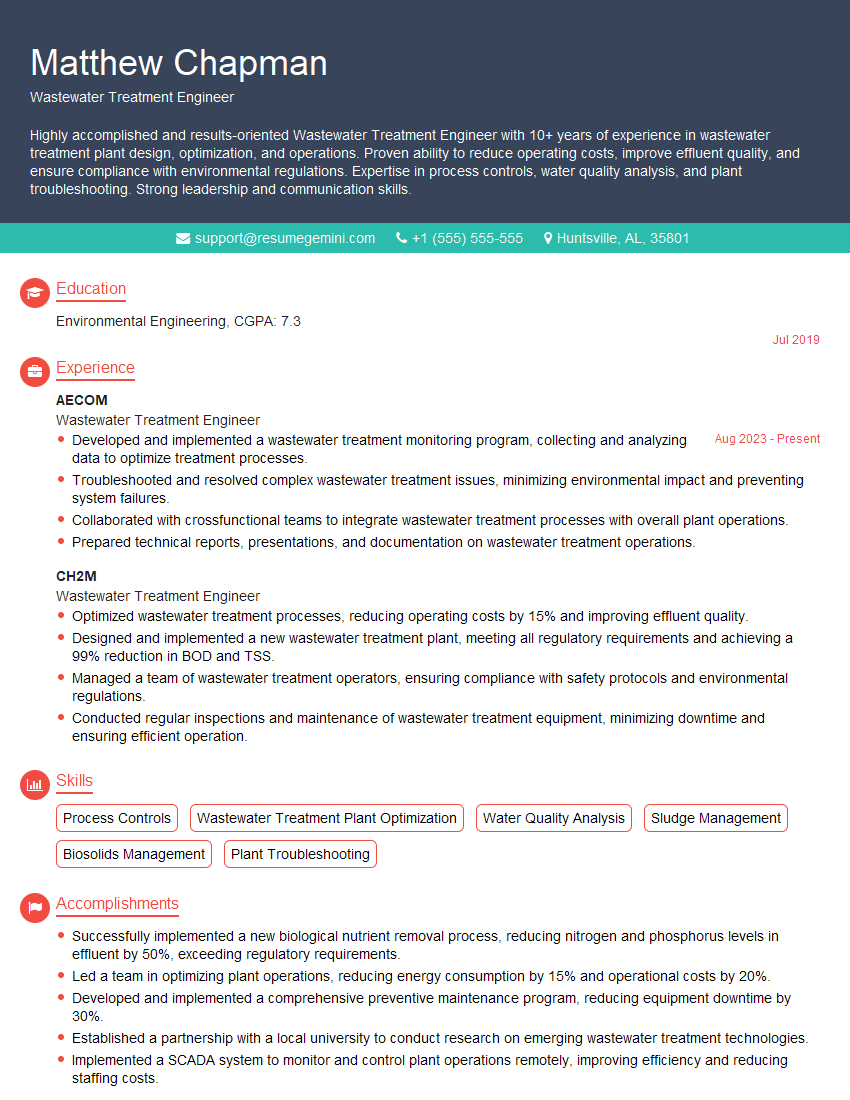
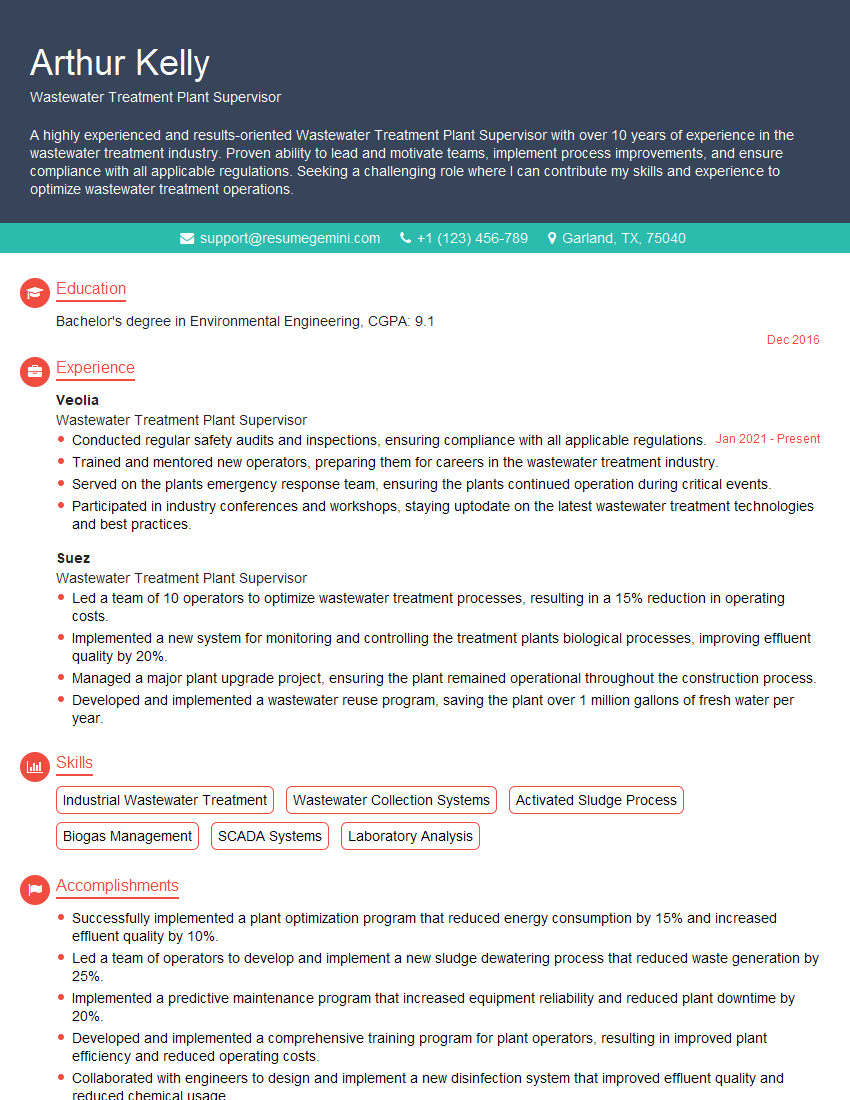
Mastering Wastewater Treatment Technologies is crucial for a successful and rewarding career in this vital field. It opens doors to diverse roles with increasing responsibility and higher earning potential. To maximize your job prospects, creating a strong, ATS-friendly resume is paramount. ResumeGemini offers a powerful platform to build a professional and impactful resume that highlights your skills and experience effectively. Take advantage of their resources and examples of resumes tailored to Wastewater Treatment Technologies to present yourself in the best possible light to potential employers.
Explore more articles
Users Rating of Our Blogs
Share Your Experience
We value your feedback! Please rate our content and share your thoughts (optional).
What Readers Say About Our Blog
Very informative content, great job.
good