Cracking a skill-specific interview, like one for Private Lessons, requires understanding the nuances of the role. In this blog, we present the questions you’re most likely to encounter, along with insights into how to answer them effectively. Let’s ensure you’re ready to make a strong impression.
Questions Asked in Private Lessons Interview
Q 1. Describe your experience adapting lesson plans to individual student needs.
Adapting lesson plans is crucial for effective private tutoring. It’s not a one-size-fits-all approach; each student learns differently and at their own pace. My process begins with a thorough initial assessment, identifying the student’s strengths, weaknesses, and learning style. This might involve diagnostic tests, informal conversations, or observation during a sample lesson.
Based on this assessment, I modify existing lesson plans or create entirely new ones. For example, a student struggling with algebra might benefit from more visual aids, like diagrams and real-world applications, rather than solely relying on abstract formulas. Another student might thrive with more hands-on activities and collaborative projects. I also adjust the pacing; a quicker learner might move through material faster, while a slower learner might need more time and repetition. Regular check-ins throughout the lesson ensure the plan remains relevant and effective.
For instance, I once had a student who struggled with reading comprehension. Instead of simply assigning more reading, I incorporated activities like summarizing paragraphs, creating mind maps, and engaging in discussions. This multi-faceted approach significantly improved their understanding and reading speed.
Q 2. How do you create a positive and engaging learning environment?
A positive and engaging learning environment is paramount for successful learning. I achieve this through a combination of strategies. First, I foster a respectful and supportive atmosphere where students feel comfortable asking questions and taking risks without fear of judgment. This involves creating a safe space for open communication and collaboration.
Secondly, I make learning fun and relevant by incorporating interactive activities, games, and real-world examples. For example, when teaching history, I might use interactive timelines or role-playing exercises. For math, I might incorporate puzzles and problem-solving games. I also tailor activities to the student’s interests whenever possible, enhancing motivation and engagement.
Finally, I incorporate positive reinforcement and celebrate successes, both big and small. This might involve verbal praise, awarding small rewards, or simply acknowledging their effort and progress. This positive reinforcement boosts confidence and encourages continued learning.
Q 3. What strategies do you use to assess student progress and learning?
Assessing student progress requires a multi-pronged approach that goes beyond just grades. I use a combination of formative and summative assessments. Formative assessments are ongoing checks of understanding throughout the learning process. This could include short quizzes, exit tickets, observation of their work in class, or informal discussions.
Summative assessments provide a more comprehensive evaluation at the end of a unit or module. These could include tests, projects, presentations, or a portfolio of their work. I also regularly review student work, providing detailed feedback to pinpoint areas for improvement and reinforce successful strategies. This feedback is not just about identifying errors, but also about encouraging their growth and providing guidance for future tasks.
For example, if a student consistently struggles with a particular concept, I might adjust my teaching method, provide additional practice exercises, or seek additional resources. Regular communication with the student about their progress is crucial for building confidence and maintaining motivation.
Q 4. Explain your approach to managing challenging student behaviors.
Managing challenging student behaviors requires a proactive and consistent approach. I believe in addressing behaviors calmly and directly, focusing on understanding the root cause rather than simply punishing the behavior. This often involves open communication and building a strong rapport with the student.
My strategies include clearly establishing expectations and classroom rules at the beginning of our sessions. I ensure these rules are age-appropriate and clearly understood. If a behavior issue arises, I address it privately and calmly, trying to understand the underlying reason. Is the student bored, frustrated, or overwhelmed? Adjusting the lesson plan, offering breaks, or providing additional support might be effective solutions.
In more serious cases, I might involve parents/guardians. Open communication and collaboration are key to resolving persistent issues. Consistency and patience are essential for creating a positive and productive learning environment, even with challenging behaviors. It’s about guiding the student towards self-regulation and responsible behavior.
Q 5. How do you differentiate instruction to meet diverse learning styles?
Differentiated instruction is crucial for meeting the diverse learning needs of students. I adapt my teaching methods to cater to different learning styles, such as visual, auditory, and kinesthetic learners. This means using a variety of instructional methods and materials to engage all learners.
For visual learners, I use diagrams, charts, videos, and other visual aids. For auditory learners, I incorporate discussions, lectures, and audio recordings. For kinesthetic learners, I include hands-on activities, experiments, and movement breaks. I also offer choices in assignments and assessment methods, allowing students to demonstrate their learning in ways that best suit their individual strengths.
For example, when teaching about the solar system, I might use a 3D model for visual learners, a narrated presentation for auditory learners, and a hands-on activity of building a model for kinesthetic learners. This multi-sensory approach ensures that all students have opportunities to learn and succeed.
Q 6. How do you communicate effectively with parents/guardians?
Effective communication with parents/guardians is essential for building a strong partnership and supporting the student’s learning. I regularly communicate with parents through various methods, including email, phone calls, and progress reports. I provide regular updates on the student’s progress, highlighting both achievements and areas for improvement.
I use clear and concise language, avoiding educational jargon. I also actively seek feedback from parents to gain insights into their child’s learning style, strengths, and challenges. This collaborative approach enables me to tailor my instruction to meet the student’s individual needs and to address concerns promptly.
Open communication creates a sense of shared responsibility and ensures that everyone is working together to support the student’s success. This includes discussing challenges and strategies for overcoming them, celebrating successes, and setting realistic goals together. Regular meetings and open dialogue build trust and strengthen the parent-tutor relationship.
Q 7. Describe a time you had to troubleshoot a learning difficulty with a student.
I once had a student struggling with math word problems. They could perform calculations accurately but struggled to translate the word problems into mathematical equations. I initially tried explaining the steps more clearly, but this didn’t solve the problem.
After further assessment, I realized the student was struggling with reading comprehension and vocabulary. We started working on these underlying skills first, focusing on improving reading fluency and vocabulary related to mathematical concepts. I used visual aids, like diagrams and manipulatives, to help them visualize the problem.
We also practiced breaking down word problems into smaller, manageable chunks. I taught them strategies like identifying key words, drawing diagrams, and writing down what they know and what they need to find. With focused attention on their reading and comprehension, their ability to solve math word problems significantly improved. This highlighted the importance of addressing the root cause of a learning difficulty rather than just focusing on the symptom.
Q 8. What resources do you utilize to enhance your teaching?
Enhancing my teaching relies on a multifaceted approach, constantly evolving with the student’s needs and my own professional development. I utilize a range of resources, categorized for clarity:
- Curriculum Resources: I draw upon reputable textbooks, workbooks, online learning platforms (like Khan Academy or Coursera, depending on the subject), and specialized journals relevant to the subject matter. This ensures I’m delivering up-to-date and accurate information.
- Technology Integration: I leverage educational apps, interactive whiteboards, and online simulations to make learning more engaging and accessible. For example, using a virtual lab for science lessons or interactive grammar exercises for language learning.
- Professional Development: I actively participate in workshops, conferences, and online courses to stay abreast of the latest teaching methodologies and best practices. This commitment helps me refine my techniques and adapt to changing learning environments.
- Student Feedback: Regularly soliciting feedback from students – through informal conversations and formal assessments – allows me to gauge the effectiveness of my teaching and make necessary adjustments. This might involve asking, “What was most helpful in today’s lesson?”, or reviewing student work to identify areas for improvement.
For instance, recently I attended a workshop on differentiated instruction, which significantly improved my ability to tailor lessons to meet the diverse learning styles of my students.
Q 9. How do you maintain student motivation and engagement?
Maintaining student motivation and engagement is crucial for successful learning. My strategy involves a blend of techniques:
- Creating a Positive Learning Environment: I foster a supportive and encouraging classroom where students feel comfortable asking questions and taking risks. A relaxed atmosphere where mistakes are seen as learning opportunities boosts confidence.
- Relatable Content & Real-World Application: I connect lesson material to students’ interests and real-world scenarios. For example, when teaching algebra, I might use examples related to their favorite sports or hobbies.
- Variety in Teaching Methods: I avoid monotony by incorporating diverse techniques – games, discussions, projects, presentations – catering to different learning preferences. This prevents students from becoming disengaged.
- Clear Goals and Progress Tracking: I set clear learning goals with each student, and we regularly track progress, celebrating milestones to maintain enthusiasm. Visual progress trackers, such as charts, can be particularly motivating.
- Personalized Learning Plans: I tailor lessons to individual needs and learning styles, making the material relevant and achievable for each student. This shows them I understand and care about their progress.
For example, I once had a student struggling with geometry. By incorporating hands-on activities with building blocks and real-world examples like designing a garden, their engagement and understanding improved significantly.
Q 10. How do you handle scheduling conflicts or last-minute cancellations?
Scheduling conflicts and last-minute cancellations are inevitable. My approach focuses on proactive communication and flexible solutions:
- Clear Scheduling Policies: From the outset, I establish clear policies regarding rescheduling, cancellations, and the required notice period. This sets expectations and minimizes misunderstandings.
- Flexible Scheduling: Wherever possible, I offer flexible scheduling options to accommodate students’ busy lives, utilizing online scheduling tools to manage bookings efficiently.
- Communication is Key: I encourage open communication. Students are encouraged to contact me as soon as possible if a conflict arises. I strive to find mutually agreeable solutions, perhaps offering a makeup session at a different time.
- Missed Lesson Policy: I have a clear policy for missed lessons, outlining how we will address missed material. This might include providing supplementary materials or scheduling a short makeup session.
For example, if a student needs to cancel a lesson due to illness, we reschedule without penalty, understanding that unforeseen circumstances happen. Clear communication ensures a smooth process.
Q 11. What is your approach to setting and communicating expectations?
Setting and communicating expectations is foundational to a successful learning partnership. My approach is:
- Initial Consultation: During our first meeting, I collaboratively establish clear learning goals, the teaching methodology to be used, lesson frequency and duration, and the assessment criteria. This ensures we’re on the same page from the start.
- Written Agreement (where applicable): For longer-term engagements, a concise written agreement outlining these expectations is beneficial. This serves as a reference point for both parties.
- Regular Check-ins: Throughout the learning process, I maintain regular communication with the student and/or their parents/guardians, providing feedback on progress and adjusting the plan as needed.
- Open Communication: I encourage open and honest dialogue, creating a space where students feel comfortable expressing concerns or suggestions.
For example, I’ll clearly state expectations regarding homework completion, participation in class, and the frequency of assessments. This transparency avoids confusion and fosters a collaborative learning environment.
Q 12. Describe your experience with various teaching methodologies.
My teaching methodology is eclectic, drawing from various approaches to cater to different learning styles and subject matter. I am proficient in:
- Direct Instruction: This involves structured lessons, clear explanations, and guided practice, particularly useful for foundational concepts.
- Inquiry-Based Learning: This encourages student-led investigation and problem-solving, fostering critical thinking and deeper understanding.
- Collaborative Learning: I often incorporate group work and peer learning, promoting interaction and knowledge sharing.
- Project-Based Learning: This approach allows students to apply their knowledge to real-world projects, enhancing engagement and demonstrating understanding.
- Differentiated Instruction: This is a cornerstone of my approach, tailoring lessons to individual needs and learning styles – visual, auditory, kinesthetic – using diverse materials and activities.
For instance, when teaching history, I might use direct instruction for dates and key events, but then use project-based learning for students to create historical presentations or recreate a historical event.
Q 13. How do you incorporate technology into your private lessons?
Technology plays a significant role in enhancing my private lessons. I incorporate it strategically and thoughtfully:
- Online Learning Platforms: I utilize platforms like Google Classroom or other subject-specific online learning environments for sharing resources, assignments, and providing feedback.
- Educational Apps & Software: I leverage interactive apps and software to reinforce concepts and provide engaging practice opportunities. These tools often provide immediate feedback, aiding student self-assessment.
- Virtual Whiteboards and Collaboration Tools: For online lessons, I utilize virtual whiteboards and collaboration tools that allow for real-time interaction and visual learning.
- Multimedia Resources: I use videos, audio clips, and interactive simulations to make learning more dynamic and accessible. This caters to diverse learning styles.
For example, when teaching a language, I use language learning apps for vocabulary building and pronunciation practice, supplementing with virtual conversations using video conferencing.
Q 14. How do you assess a student’s learning style and needs during the initial consultation?
Assessing a student’s learning style and needs during the initial consultation is crucial for tailoring effective lessons. My approach combines observation and direct questioning:
- Initial Conversation: I start with an open conversation to understand the student’s learning goals, background, and any prior experiences with the subject matter. This provides context and identifies areas of strength and weakness.
- Observation: During the consultation, I observe the student’s interaction, their communication style, and how they approach problem-solving. This provides insights into their learning preferences.
- Targeted Questions: I ask targeted questions to gauge their learning style: “Do you prefer learning through reading, listening, or hands-on activities?” “What are your preferred methods for studying?” “How do you typically approach solving problems?”
- Learning Style Assessments (optional): In some cases, I might use validated learning style assessments (with parental consent where appropriate) to gain a more detailed understanding.
For example, a student might describe themselves as a visual learner, which would inform my choice of using diagrams, charts, and visual aids in their lessons. Understanding their learning preferences ensures I can design effective and engaging learning experiences.
Q 15. How do you create and maintain a professional relationship with your students?
Building and maintaining a professional yet warm relationship with students is crucial for effective learning. It’s a delicate balance between authority and approachability. I begin by establishing clear expectations and boundaries from the outset, outlining communication protocols and lesson structure. This provides a sense of security and predictability for the student. Simultaneously, I strive to create a comfortable and encouraging environment where students feel safe to ask questions, share their struggles, and celebrate their successes.
I actively listen to my students, showing genuine interest in their lives and learning goals beyond the subject matter. For instance, if a student mentions a challenging sporting event, I might inquire about it in our next session, demonstrating that I care about their well-being holistically. Regular check-ins, both formal and informal, allow me to gauge their progress and address any concerns promptly. Furthermore, I always maintain professional boundaries while remaining empathetic and supportive.
I believe in fostering a collaborative relationship, where both the student and I are actively involved in shaping the learning experience. This might involve incorporating student preferences into lesson plans or adjusting teaching methods based on their learning style. This mutual respect and understanding forms the bedrock of a strong and productive student-teacher relationship.
Career Expert Tips:
- Ace those interviews! Prepare effectively by reviewing the Top 50 Most Common Interview Questions on ResumeGemini.
- Navigate your job search with confidence! Explore a wide range of Career Tips on ResumeGemini. Learn about common challenges and recommendations to overcome them.
- Craft the perfect resume! Master the Art of Resume Writing with ResumeGemini’s guide. Showcase your unique qualifications and achievements effectively.
- Don’t miss out on holiday savings! Build your dream resume with ResumeGemini’s ATS optimized templates.
Q 16. How do you ensure the safety and well-being of your students?
Safety and well-being are paramount in my private lessons. This begins with creating a secure learning environment, whether it’s in my home, the student’s home, or a public space. For in-person lessons, I always ensure the location is well-lit, accessible, and free from hazards. I conduct background checks on any potential new students, especially if they are minors. For online lessons, I utilize reputable video conferencing platforms with appropriate privacy settings.
Open communication is key. I encourage students to express any concerns they have regarding their safety or comfort. I would never pressure a student into a situation they’re not comfortable with and always prioritize their well-being above all else. I also have a clear policy regarding emergencies, ensuring I have readily available contact information for parents or guardians. Regular communication with parents ensures their involvement in maintaining a safe and positive learning environment. This could involve sharing lesson plans and providing feedback regularly.
In cases of sensitive issues like bullying or harassment, I have a clear protocol for reporting such incidents to the appropriate authorities. Child protection is my top priority, and I am familiar with relevant regulations and reporting procedures.
Q 17. Describe your experience with differentiated instruction.
Differentiated instruction is at the heart of my teaching philosophy. I recognize that each student learns differently, at their own pace, and with unique strengths and weaknesses. Therefore, I don’t employ a ‘one-size-fits-all’ approach. My experience with differentiated instruction involves tailoring my teaching methods and materials to cater to individual learning styles and needs. This involves understanding various learning modalities—visual, auditory, kinesthetic—and leveraging them effectively.
For example, a visually-oriented student might benefit from colorful diagrams and mind maps, whereas an auditory learner might prefer discussions and lectures. A kinesthetic learner might thrive through hands-on activities or role-playing. I assess each student’s strengths and weaknesses through initial assessments and ongoing observations, adapting my teaching strategies accordingly. I use a variety of teaching techniques, such as project-based learning, peer instruction, and small group work, to address individual needs. I also provide different levels of support—from scaffolding to extension activities—to challenge and engage each student appropriately.
A practical example would be teaching algebra. For a student struggling with the concept of equations, I might use manipulatives or visual representations to help them grasp the fundamental principles before moving on to more complex problems. Conversely, a student who quickly masters the basics would be challenged with more advanced word problems or exploring related concepts like inequalities.
Q 18. How do you promote independent learning in your students?
Promoting independent learning is vital for fostering self-reliance and lifelong learning. I achieve this through a gradual release of responsibility. I start by providing explicit instruction and modeling, clearly explaining concepts and demonstrating problem-solving strategies. As students gain confidence, I gradually reduce the level of support, encouraging them to work independently on progressively challenging tasks.
I incorporate various strategies to cultivate independent learning skills. For instance, I use think-aloud strategies where I verbalize my thought processes as I solve problems, allowing students to see how to approach challenges systematically. I encourage self-assessment through reflective journals or peer feedback sessions. Students might also be given choices in assignments, promoting ownership and motivation. This could involve researching a topic of their interest or choosing a project that aligns with their passions. Providing students with clear learning objectives and rubrics helps them understand the expectations and track their progress independently.
Regularly assigning independent practice exercises allows students to apply newly learned concepts and develop problem-solving skills independently. I provide feedback on their work, focusing on strategies rather than just grades, helping them learn from their mistakes and improve their independent learning skills. It’s a process of guiding them towards self-sufficiency, not simply leaving them to their own devices.
Q 19. What is your process for creating lesson plans and materials?
My lesson plan creation process is iterative and student-centered. It begins with a thorough understanding of the student’s learning goals, current skill level, and learning style. This often involves an initial assessment or consultation with the parent/guardian. I then identify the key concepts to be covered and break them down into manageable learning objectives, aligning them with relevant curriculum standards if applicable.
I design lessons that incorporate a variety of teaching strategies to cater to different learning styles. This might involve interactive activities, discussions, presentations, or hands-on projects. I meticulously select materials that are age-appropriate, engaging, and aligned with the learning objectives. This may involve creating original materials, adapting existing resources, or utilizing online tools and applications. A typical lesson plan includes a clear learning objective, planned activities, assessment methods, and time allocation for each segment.
After each lesson, I review its effectiveness. I reflect on what worked well, what could be improved, and how the student responded to the material and teaching methods. This feedback loop ensures that my lesson plans are constantly refined and optimized for each student’s needs. The process is dynamic and responsive, adapting to the individual learning journey of each student.
Q 20. How do you handle parent feedback and concerns?
Parent feedback is invaluable for improving my teaching and ensuring student success. I actively solicit feedback through regular communication, parent-teacher conferences, and written evaluations. I establish clear channels for parents to share their thoughts and concerns, creating a welcoming and non-judgmental atmosphere. I respond to all feedback promptly and professionally, acknowledging their perspectives and addressing their concerns.
When addressing concerns, I listen attentively to the parent’s perspective, seeking clarification and understanding. I explain my teaching methods and rationale, providing context for my approach. If the concern involves the student’s progress, I present data and evidence to support my assessment. I collaborate with parents to develop strategies to address any identified challenges, working as a team to support the student’s learning. This might involve adjusting teaching methods, providing extra support, or recommending additional resources.
In instances where there’s a significant disagreement, I maintain a calm and professional demeanor, focusing on finding a mutually agreeable solution that benefits the student. I always strive to maintain a positive and collaborative relationship with parents, recognizing their crucial role in the student’s learning journey. Open and honest communication is essential for building trust and resolving conflicts effectively.
Q 21. What is your approach to grading and providing feedback?
My approach to grading and feedback is formative and focused on student growth. I don’t solely rely on numerical grades; instead, I provide detailed and specific feedback that helps students understand their strengths and areas for improvement. I use a variety of methods to provide feedback, including written comments on assignments, verbal feedback during lessons, and self-assessment checklists.
For younger students, I emphasize positive reinforcement and celebrate their accomplishments. For older students, I focus on providing constructive criticism that helps them develop their skills and understanding. My feedback is always framed in a supportive and encouraging manner, focusing on learning rather than judgment. It is specific and actionable, suggesting concrete steps the student can take to improve their work. I avoid generic comments like “good job” or “try harder,” instead opting for specific examples of what the student did well and how they can refine their approach.
I believe that feedback should be timely and relevant, provided when it can have the greatest impact on the student’s learning. I might offer immediate feedback during a lesson, allowing the student to immediately address any misconceptions. I also provide written feedback on assignments, offering suggestions for improvement and identifying areas of strength. The goal is to empower students to take ownership of their learning and track their progress toward mastery.
Q 22. How do you stay current with best practices in education?
Staying current in education is crucial for effective teaching. I achieve this through a multi-pronged approach. Firstly, I actively participate in professional development workshops and conferences focused on innovative teaching methodologies and the latest research in my subject area. These events offer invaluable insights into best practices and allow me to network with other educators. Secondly, I regularly subscribe to and read educational journals and publications, keeping abreast of new trends and research findings. Think of it like staying updated on the latest software versions – you need to continuously upgrade your knowledge to remain competitive. Thirdly, I leverage online resources, such as educational webinars and online courses offered by reputable institutions, to further enhance my skills and knowledge. For example, I recently completed a course on incorporating gamification techniques into lesson planning, which significantly improved student engagement in my classes. Finally, I actively seek feedback from my students, parents, and colleagues, using it to refine my teaching methods and curriculum.
Q 23. How do you manage your time effectively when teaching multiple students?
Managing my time effectively with multiple students involves careful planning and organization. I begin by creating a detailed weekly schedule, allocating specific time slots for each student, factoring in travel time if necessary. This schedule is shared with the students and their parents, ensuring transparency and minimizing scheduling conflicts. Secondly, I utilize time-blocking techniques, dedicating focused periods for lesson preparation, grading assignments, and communicating with parents. I also employ various time management tools, such as digital calendars and to-do lists, to track progress and stay on schedule. I avoid multitasking, as this tends to reduce overall productivity and can lead to mistakes. Instead, I prioritize tasks and tackle one at a time. For example, I might dedicate the first hour of my day to grading and then move on to lesson preparation. Finally, I regularly review and adjust my schedule based on student progress and needs. This ensures that I remain flexible and adaptable, optimizing my time for maximum effectiveness.
Q 24. Describe your experience with online tutoring platforms and tools.
I have extensive experience with various online tutoring platforms and tools. I’m proficient in using platforms like Zoom, Google Meet, and Skype for video conferencing, facilitating interactive online lessons. I’m also comfortable using digital whiteboards, such as those integrated within these platforms, to share learning materials and engage students visually. I’m familiar with using online assessment tools to gauge student progress and provide timely feedback. Moreover, I’ve incorporated learning management systems (LMS) such as Moodle and Google Classroom to organize course materials, assign homework, and track student participation. My experience extends to using specialized educational software depending on the subject matter. For instance, while teaching math, I have successfully used GeoGebra to visualize geometric concepts and enhance student understanding. I believe that the successful integration of technology is crucial for enriching the online learning experience, and I’m always eager to explore and incorporate new tools to improve my teaching.
Q 25. What are your strengths and weaknesses as a private lesson instructor?
My greatest strengths as a private lesson instructor lie in my ability to adapt my teaching style to suit individual student needs. I excel at building rapport with students, creating a comfortable and engaging learning environment. I’m patient, encouraging, and possess strong communication skills, ensuring that students understand concepts clearly. I also pride myself on being well-organized and prepared, which significantly contributes to effective lesson delivery. However, like everyone, I have areas for improvement. Sometimes, I tend to be overly meticulous, which can occasionally slow down the lesson pace. I’m actively working on improving my ability to strike a balance between thoroughness and efficiency, ensuring that lessons remain engaging without sacrificing depth. I also recognize that constantly seeking feedback and reflecting on my teaching practices is key to continuous professional growth.
Q 26. What are your salary expectations?
My salary expectations are commensurate with my experience, qualifications, and the specific demands of this role. I am open to discussing a competitive salary range based on market rates and the details of the position. I’m more interested in finding a mutually beneficial arrangement that reflects the value I can bring to the role and the commitment I dedicate to my students’ success.
Q 27. What are your long-term career goals?
My long-term career goals involve establishing myself as a leading private lesson instructor in my field. I aspire to develop and refine my curriculum to create even more effective and engaging learning experiences. I also plan to further my own professional development through advanced certifications and potentially pursuing a leadership role within an educational institution or organization. Ultimately, I envision myself making a significant and lasting contribution to the education community.
Q 28. Why are you interested in this specific private lesson opportunity?
I am highly interested in this specific private lesson opportunity because it aligns perfectly with my teaching expertise and passion for [mention subject area]. The opportunity to work with [mention specific aspects of the opportunity, e.g., students of a particular age group, or a unique learning environment] particularly excites me. I’m confident that my skills and experience are a strong match for the requirements of this position, and I’m eager to contribute to the success of your program.
Key Topics to Learn for Private Lessons Interview
- Curriculum Development & Design: Understanding the principles of effective lesson planning, adapting to different learning styles, and creating engaging and challenging lesson materials.
- Instructional Strategies & Techniques: Mastering various teaching methods (e.g., direct instruction, inquiry-based learning, project-based learning) and applying them appropriately based on student needs and learning objectives.
- Student Assessment & Feedback: Developing effective assessment strategies to gauge student progress, providing constructive feedback to promote learning, and documenting student achievements.
- Classroom Management & Communication: Establishing a positive and productive learning environment, managing student behavior effectively, and communicating clearly and professionally with students and parents.
- Differentiated Instruction: Adapting teaching methods and materials to meet the diverse learning needs of individual students, including students with learning disabilities or special needs.
- Technology Integration: Utilizing educational technology effectively to enhance learning experiences and improve student engagement. This includes familiarity with relevant software and platforms.
- Professional Development & Ethical Considerations: Staying current with best practices in education, understanding ethical responsibilities as a private tutor, and demonstrating a commitment to continuous professional growth.
- Legal & Business Aspects (if applicable): Understanding relevant legal requirements, managing finances, marketing your services, and handling client relationships effectively.
Next Steps
Mastering the art of Private Lessons opens doors to a fulfilling and rewarding career path, allowing you to make a real difference in students’ lives. To maximize your job prospects, creating an ATS-friendly resume is crucial. This ensures your application gets noticed by potential employers. We highly recommend using ResumeGemini to build a professional and impactful resume tailored to the specific requirements of Private Lessons positions. Examples of resumes optimized for this field are available to help you get started.
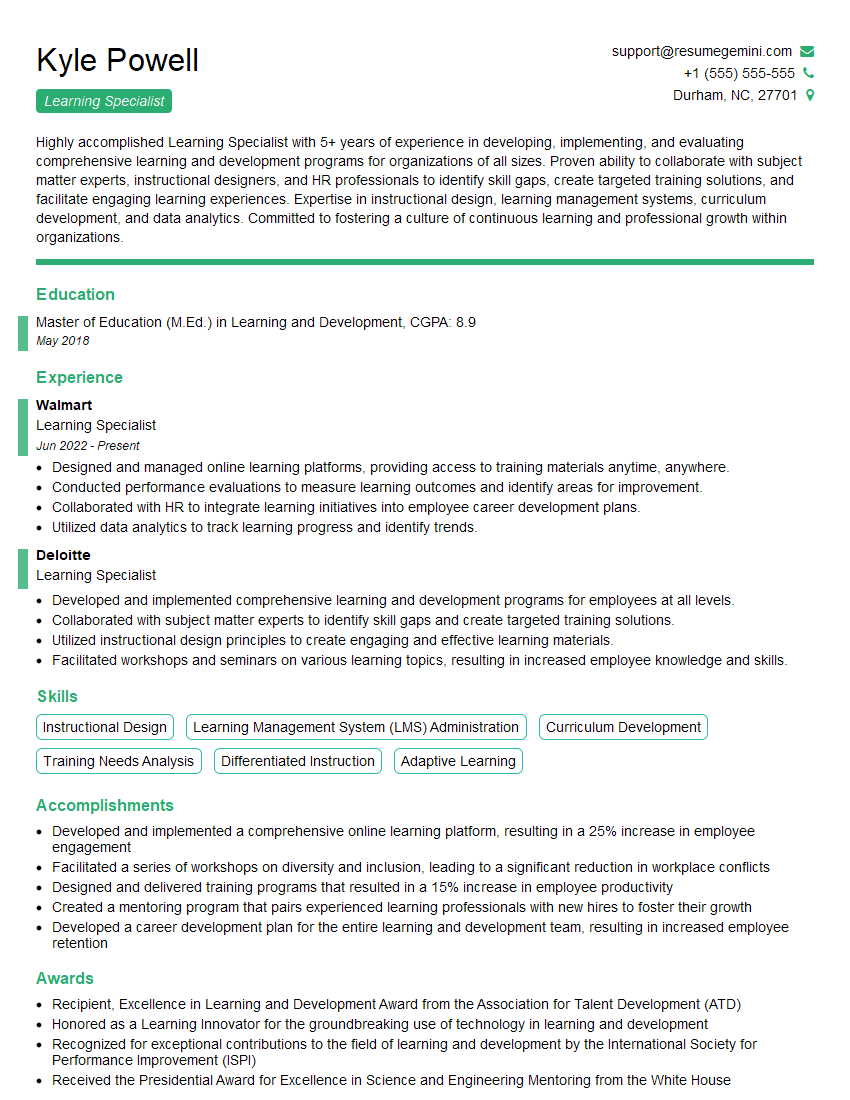
Learning Specialist Resume Sample
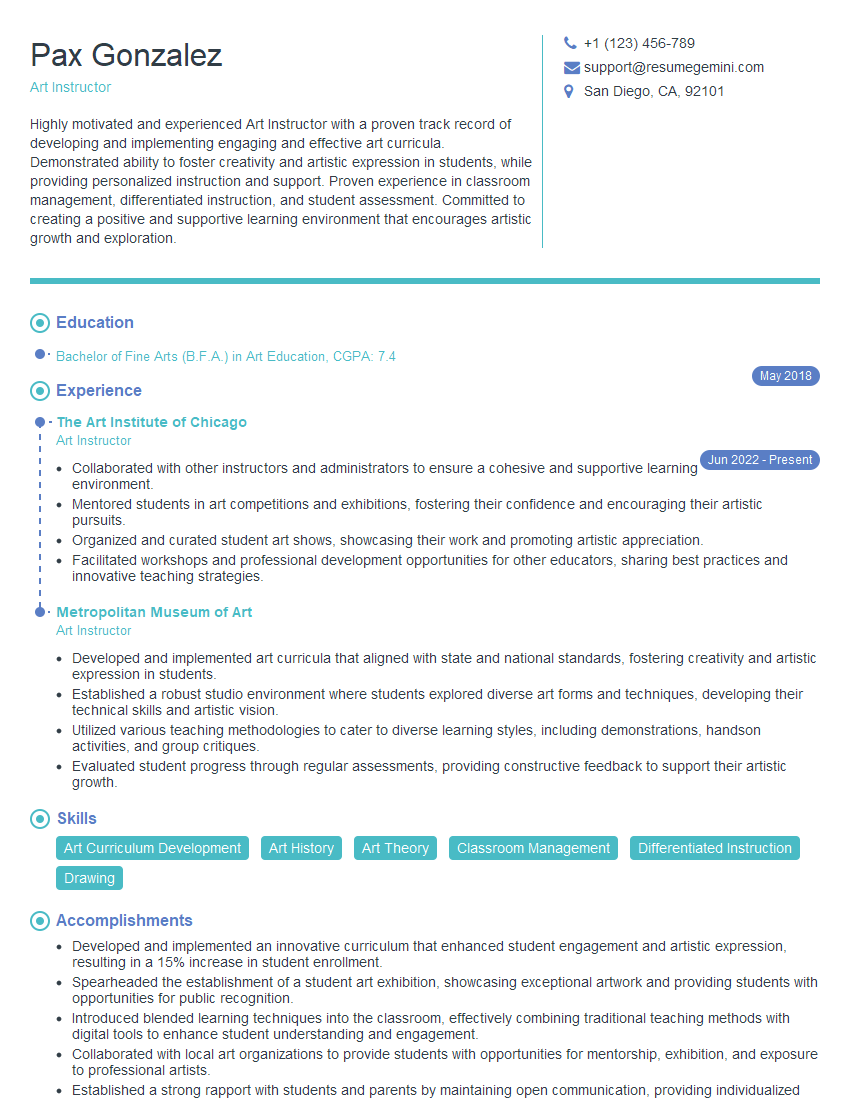
Art Instructor Resume Sample
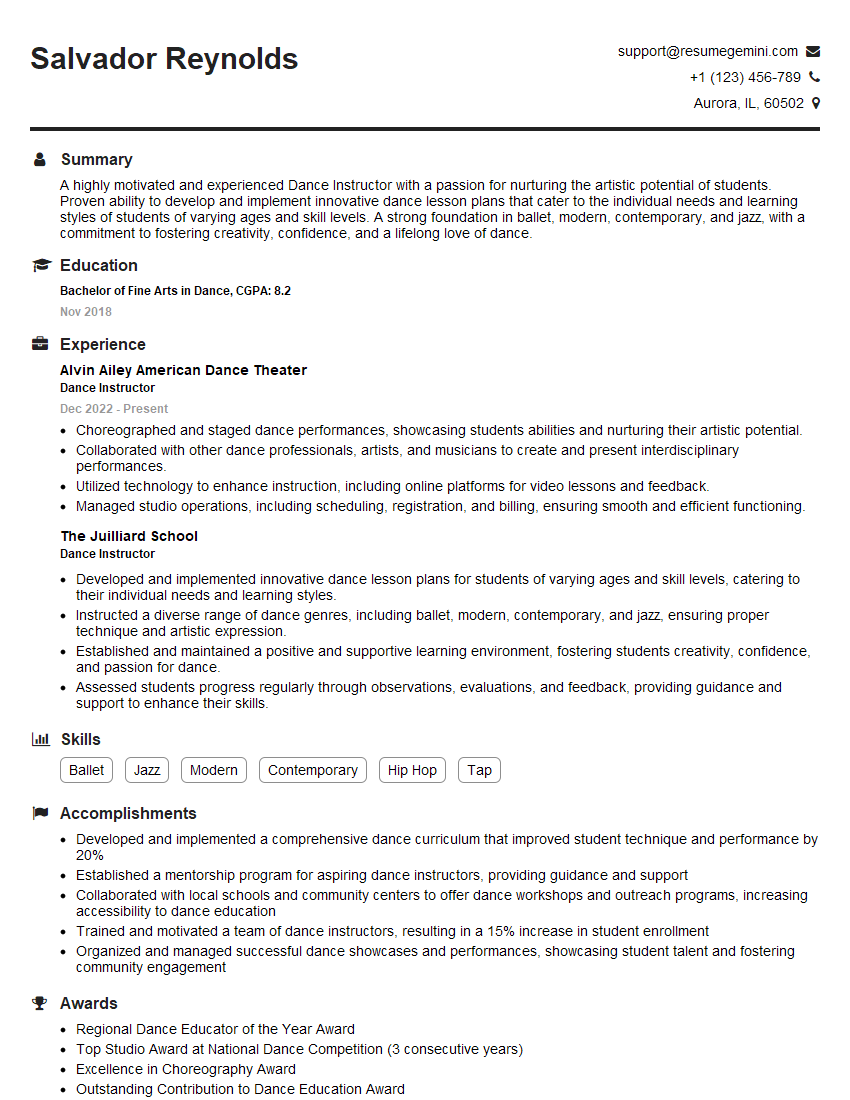
Dance Instructor Resume Sample
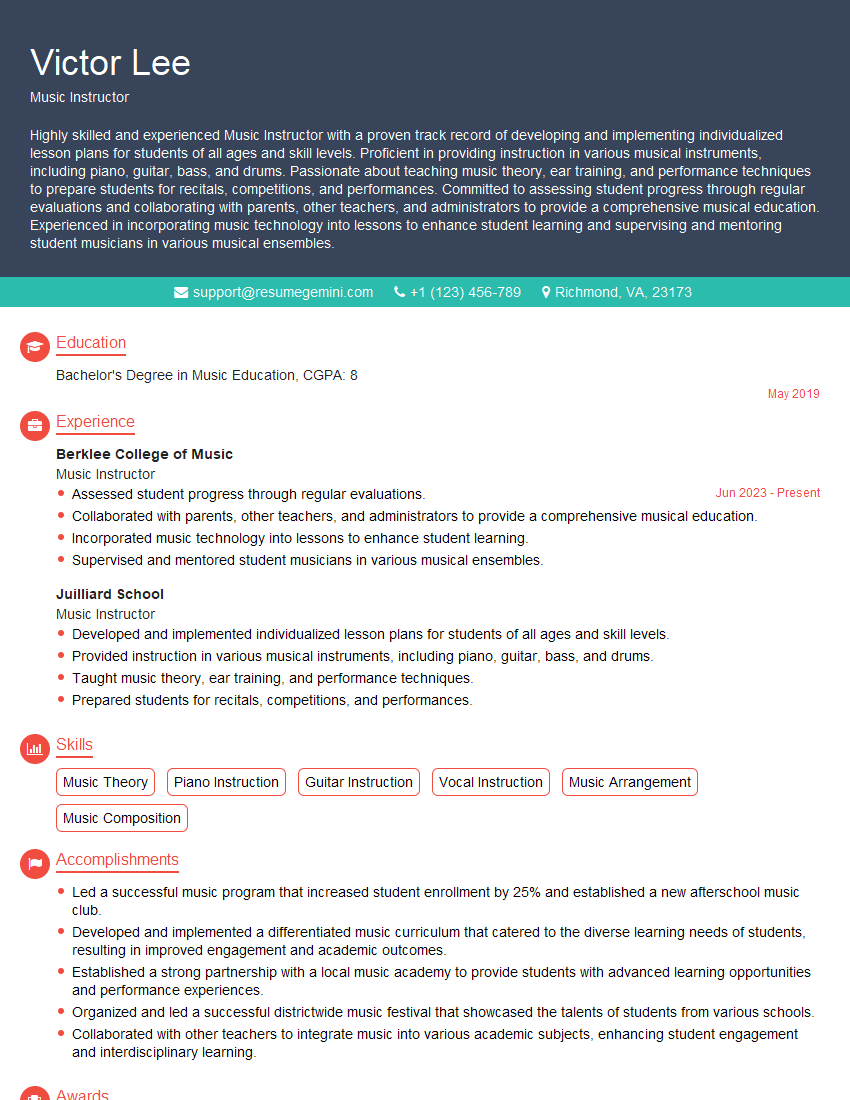
Music Instructor Resume Sample
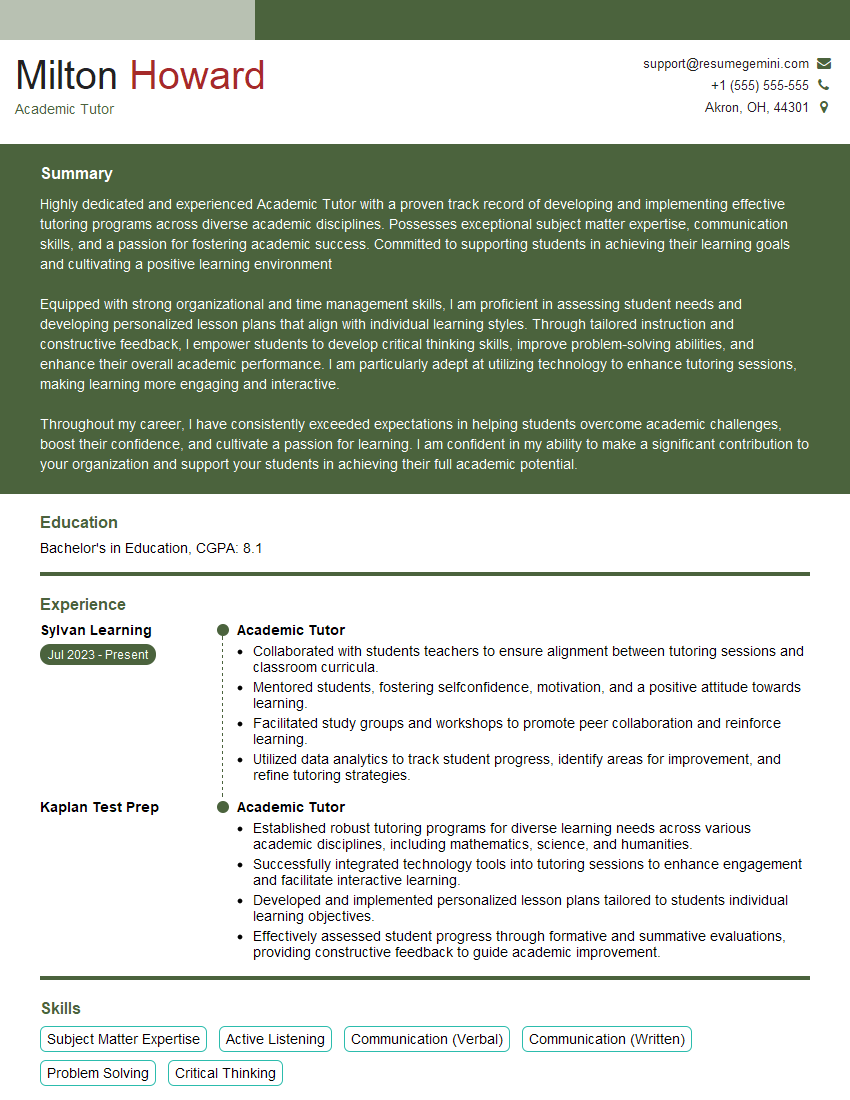
Academic Tutor Resume Sample
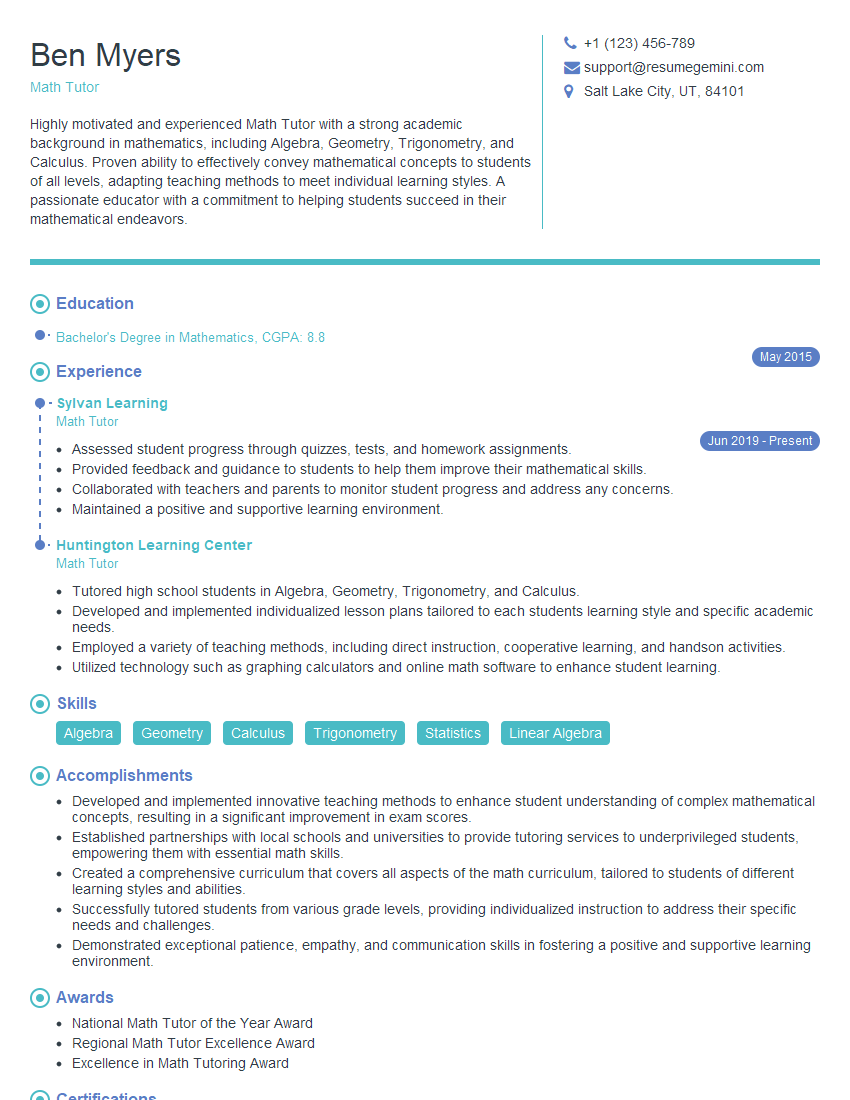
Math Tutor Resume Sample

Online Tutor Resume Sample
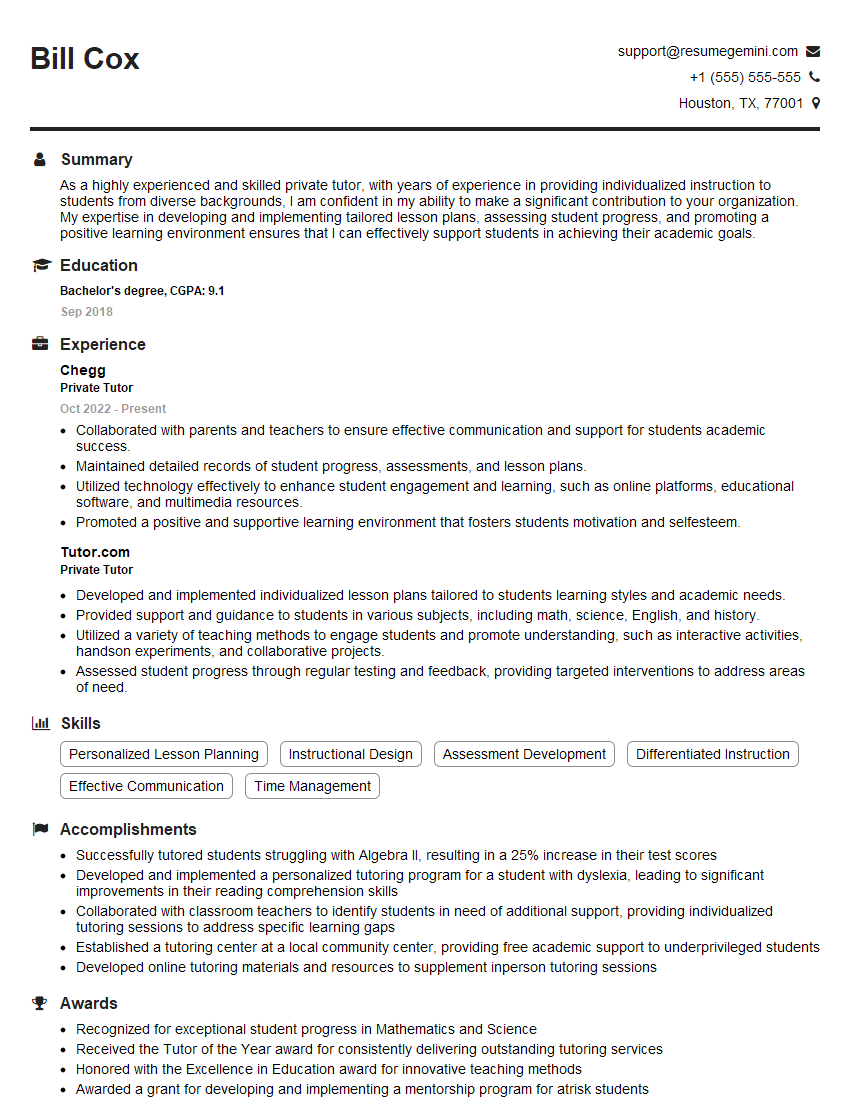
Private Tutor Resume Sample
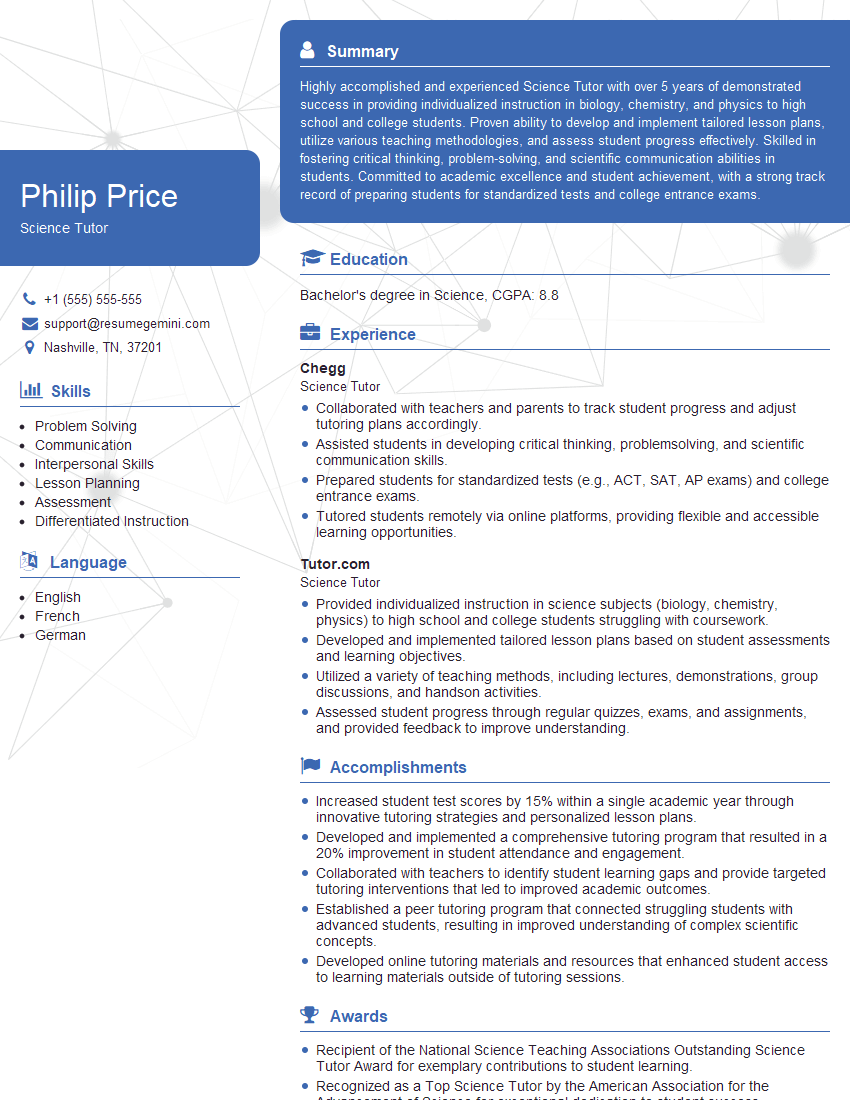
Science Tutor Resume Sample
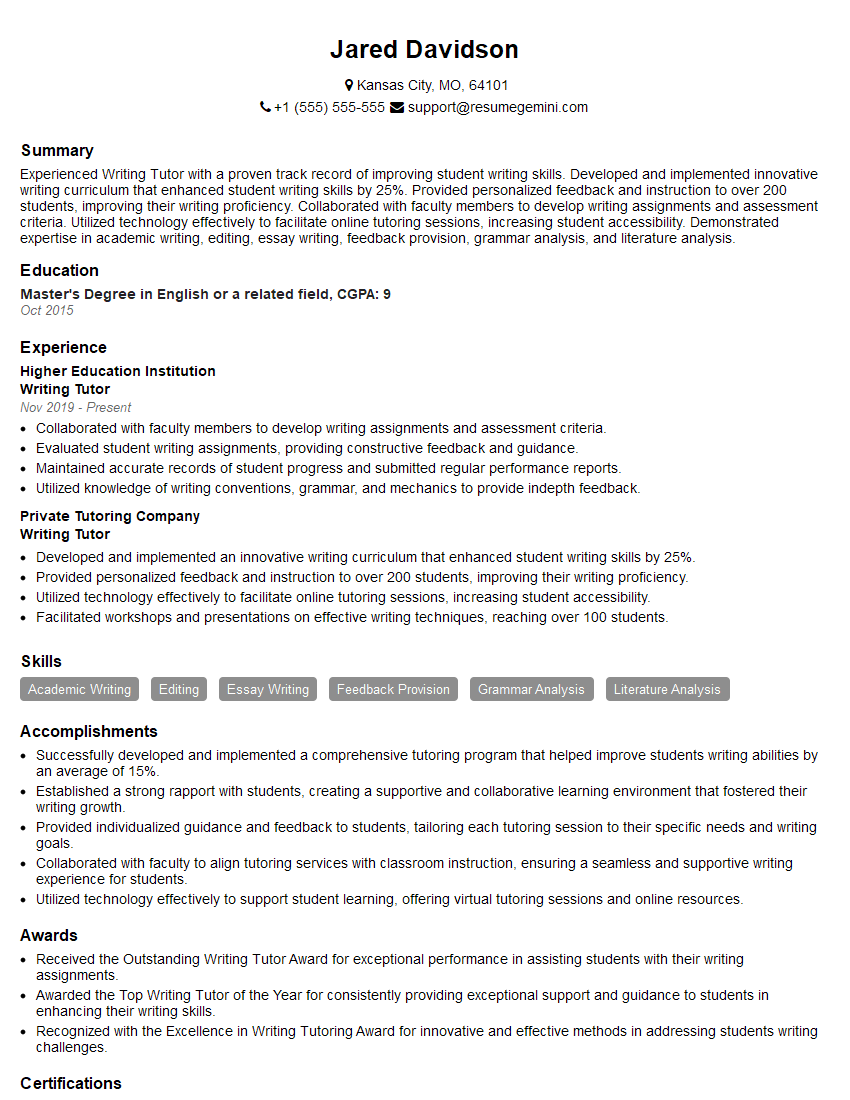
Writing Tutor Resume Sample
Explore more articles
Users Rating of Our Blogs
Share Your Experience
We value your feedback! Please rate our content and share your thoughts (optional).
What Readers Say About Our Blog
Very informative content, great job.
good