Interviews are more than just a Q&A session—they’re a chance to prove your worth. This blog dives into essential Proactive Environmental Stewardship interview questions and expert tips to help you align your answers with what hiring managers are looking for. Start preparing to shine!
Questions Asked in Proactive Environmental Stewardship Interview
Q 1. Describe your experience implementing ISO 14001 or similar environmental management systems.
Implementing ISO 14001, the internationally recognized standard for Environmental Management Systems (EMS), involves a structured approach to minimizing environmental impact. My experience includes leading the certification process for a manufacturing facility, which involved conducting a thorough gap analysis against the standard’s requirements. This meant identifying areas where our existing practices fell short of ISO 14001’s stipulations regarding environmental aspects, impacts, legal compliance, and continual improvement. We then developed and implemented documented procedures, documented processes for waste management, energy efficiency, and emissions monitoring. Crucially, we established clear roles and responsibilities for environmental management throughout the organization, creating an environmental team and embedding environmental considerations into every aspect of the operational processes. Internal audits and management reviews were key to ensuring compliance and continuous improvement, leading to successful ISO 14001 certification and a significant reduction in our environmental footprint. For example, we optimized our waste stream, reducing landfill waste by 30% within the first year through a robust recycling program and a focus on waste reduction at source.
Q 2. Explain your understanding of lifecycle assessment (LCA) and its application in product development.
Lifecycle Assessment (LCA) is a comprehensive method for evaluating the environmental impacts of a product or service throughout its entire lifespan. This encompasses all stages, from raw material extraction and processing to manufacturing, distribution, use, and eventual disposal or recycling. In product development, LCA helps identify environmental hotspots—stages where the product’s environmental impact is most significant. This allows companies to make informed design choices to minimize negative impacts. For instance, during the development of a new packaging material, an LCA might reveal that the manufacturing process is the most energy-intensive stage. This knowledge could drive the selection of more sustainable manufacturing methods or a less energy-intensive material. The LCA process usually involves data collection, impact assessment (using tools like ReCiPe or IMPACT), and interpretation of results. The outcome informs product design, choice of materials, and optimization of the supply chain. For example, a company might choose recycled materials, reduce packaging size, or design for easy disassembly and recycling to minimize environmental impact according to its LCA findings.
Q 3. How would you measure and report a company’s carbon footprint?
Measuring and reporting a company’s carbon footprint requires a systematic approach. It starts with identifying all sources of greenhouse gas (GHG) emissions, which can be broadly categorized as Scope 1 (direct emissions from company-owned or controlled sources), Scope 2 (indirect emissions from purchased electricity, heat, or steam), and Scope 3 (all other indirect emissions in the value chain, including supply chain, transportation, and use of sold products). We use standardized methodologies like the Greenhouse Gas Protocol to ensure accuracy and consistency. Data collection involves gathering information on energy consumption, fuel use, waste generation, business travel, and purchased goods and services. This data is then converted into GHG emissions using emission factors specific to each activity. For example, we might calculate Scope 1 emissions from our company vehicles using their fuel consumption and emission factors from a reputable database. We would then use our electricity consumption data and the emission factor for our local electricity grid to calculate our Scope 2 emissions. Finally, we’d aggregate all emissions to determine the company’s total carbon footprint, which is then reported transparently, often using industry-standard reporting frameworks such as the Carbon Disclosure Project (CDP).
Q 4. What strategies would you employ to reduce a company’s water consumption?
Reducing a company’s water consumption involves a multi-pronged strategy focused on efficiency, conservation, and responsible sourcing. Firstly, we’d conduct a water audit to pinpoint areas of high water usage. This audit helps identify leaks, inefficient equipment, and processes where water is wasted. We’d then implement water-saving technologies, such as low-flow fixtures, rainwater harvesting systems, and water-efficient irrigation. Process optimization is key – we can explore methods to reduce water usage in manufacturing processes, such as using closed-loop water systems or dry cooling technologies. Employee education and engagement are crucial; training employees on water conservation practices can significantly impact overall consumption. For example, we might implement a water-saving campaign to encourage employees to reduce their water usage in the workplace. Finally, we would prioritize sustainable water sourcing, where available, and work with suppliers to reduce their water footprint, incorporating water conservation targets into our supplier contracts. A good example is switching to a supplier using more water-efficient farming practices.
Q 5. Describe your experience with waste reduction and recycling programs.
My experience with waste reduction and recycling programs encompasses the entire lifecycle of waste management, from waste reduction at source through to responsible disposal. I’ve successfully implemented programs focusing on source reduction (minimizing waste generation), reuse (finding alternative uses for materials), recycling (recovering materials for reuse), and responsible disposal (safe and environmentally sound disposal of remaining waste). These programs typically involve employee training, waste audits to identify waste streams and opportunities for improvement, implementing waste segregation systems, establishing partnerships with recycling companies, and tracking key performance indicators (KPIs) such as diversion rates (percentage of waste diverted from landfills). For example, in one project, we introduced a comprehensive waste sorting system, resulting in a 45% increase in recycled materials and a 20% reduction in landfill waste. We also implemented a composting program for organic waste, converting it into valuable fertilizer for landscaping.
Q 6. How would you develop and implement an environmental policy for a new organization?
Developing and implementing an environmental policy for a new organization begins with understanding the organization’s context, industry, and geographic location. The policy must reflect the organization’s commitment to environmental sustainability, setting clear goals and objectives. This involves identifying key environmental aspects and impacts (e.g., energy consumption, waste generation, emissions). The policy should articulate the organization’s commitment to compliance with all applicable environmental regulations and laws. We’d then establish clear procedures and responsibilities for environmental management, including reporting and monitoring systems. The policy should cover areas like waste management, energy efficiency, water conservation, and pollution prevention. Crucial to this is stakeholder engagement – ensuring that the policy considers the perspectives of employees, customers, suppliers, and the local community. Once drafted, the policy is communicated internally and externally, reinforcing its commitment to environmental responsibility. Regular reviews and updates are essential to adapt to changing circumstances and improve performance. For example, the policy would outline specific targets for reducing energy consumption or landfill waste.
Q 7. Explain your understanding of environmental regulations (e.g., Clean Air Act, Clean Water Act).
My understanding of environmental regulations, such as the Clean Air Act (CAA) and the Clean Water Act (CWA) in the US, covers the legal framework for protecting air and water quality. The CAA sets standards for air pollutants, regulating emissions from stationary and mobile sources. Compliance requires monitoring emissions, obtaining permits, and implementing emission control technologies. Penalties for non-compliance can be substantial. The CWA regulates the discharge of pollutants into surface waters, establishing water quality standards and permitting requirements for point sources of pollution. Both acts involve complex permitting processes, requiring detailed applications and ongoing monitoring. Understanding these regulations is crucial for organizations to ensure legal compliance and avoid environmental liabilities. A thorough understanding of the specific requirements, permits needed, and monitoring protocols is essential. For example, a manufacturing facility needs to comply with specific emission limits under the CAA and obtain a National Pollutant Discharge Elimination System (NPDES) permit under the CWA to discharge wastewater. Non-compliance could result in hefty fines and legal repercussions. My experience includes advising organizations on compliance with these and other environmental regulations, helping them navigate the complexities of environmental permitting and reporting.
Q 8. Describe your experience conducting environmental audits or assessments.
Conducting environmental audits and assessments involves systematically evaluating an organization’s environmental performance against legal requirements, industry best practices, and its own stated environmental objectives. It’s like giving a company a thorough environmental ‘check-up’.
My experience includes leading audits across diverse sectors, from manufacturing plants to large-scale construction projects. For example, I recently conducted an audit of a food processing facility, focusing on wastewater management, waste disposal, and energy consumption. This involved reviewing operational procedures, inspecting equipment, collecting samples for laboratory analysis, and interviewing staff. The audit identified several areas for improvement, including upgrading wastewater treatment systems and implementing a more robust waste segregation program. The resulting report provided specific recommendations with quantified cost-benefit analyses to support management’s decision-making.
Another project involved a biodiversity assessment for a wind farm development. This required a detailed ecological survey, habitat mapping, and the assessment of potential impacts on protected species. We utilized GIS software to map sensitive areas and employed standardized methodologies to quantify the environmental impact.
Q 9. How would you identify and prioritize environmental risks for a company?
Identifying and prioritizing environmental risks requires a systematic approach. I typically use a combination of methods including:
- Hazard Identification: This involves identifying potential environmental impacts related to the company’s operations, such as air emissions, water pollution, waste generation, and resource depletion. I utilize tools like checklists, process flow diagrams, and brainstorming sessions with operational staff.
- Risk Assessment: This involves evaluating the likelihood and severity of each identified hazard. I often use a matrix approach, considering factors such as the probability of occurrence, potential environmental damage, and regulatory penalties.
- Risk Prioritization: Based on the risk assessment, risks are prioritized based on their overall impact. Risks with high likelihood and high severity are addressed first. This prioritization informs the development of effective risk mitigation strategies.
For instance, in assessing a chemical manufacturing facility, I would prioritize risks associated with accidental chemical spills due to their high likelihood and potential for significant environmental damage and regulatory fines. Mitigation strategies could include improved safety procedures, emergency response plans, and investment in containment systems.
Q 10. What are your preferred methods for engaging stakeholders in environmental initiatives?
Engaging stakeholders is crucial for successful environmental initiatives. My approach involves building strong relationships based on trust and transparency. I use a variety of methods, tailored to the specific stakeholders:
- Workshops and Meetings: Facilitating interactive workshops and regular meetings allow for open communication and collaborative problem-solving. This provides a platform for stakeholder feedback and input.
- Surveys and Questionnaires: These help to collect data on stakeholder perceptions and priorities, ensuring that initiatives are relevant and responsive to their needs.
- Communication Plans: Developing and implementing clear and consistent communication plans help to keep stakeholders informed of progress and address their concerns promptly.
- Community Engagement: Organizing public forums and community events helps to foster a sense of ownership and shared responsibility for environmental protection.
For example, while working on a community-based conservation project, I facilitated regular community meetings to discuss project updates, address concerns, and gather input on project design and implementation. This participatory approach led to a stronger sense of ownership and improved project outcomes.
Q 11. Explain your experience with environmental impact assessments (EIAs).
Environmental Impact Assessments (EIAs) are crucial for evaluating the potential environmental effects of proposed projects. My experience involves leading and contributing to numerous EIAs, encompassing a range of projects from infrastructure developments to mining operations. The process typically involves:
- Scoping: Identifying potential environmental impacts and determining the scope of the assessment.
- Baseline Studies: Characterizing the existing environmental conditions.
- Impact Prediction: Modeling and predicting the potential environmental changes resulting from the project.
- Mitigation Measures: Identifying and designing measures to reduce or eliminate adverse impacts.
- Reporting: Preparing a comprehensive report summarizing the findings and recommendations.
For example, during an EIA for a new highway construction, I utilized specialized software to model air and noise pollution impacts. This allowed us to identify sensitive areas and propose mitigation measures such as noise barriers and optimized road design to minimize environmental disturbances. The EIA report was submitted to regulatory authorities and played a key role in securing the necessary approvals.
Q 12. How would you manage environmental incidents or emergencies?
Managing environmental incidents or emergencies requires a swift and effective response. My approach is based on a well-defined emergency response plan that incorporates:
- Prevention: Implementing robust preventative measures to minimize the likelihood of incidents. This includes regular equipment maintenance, staff training, and adherence to strict operational procedures.
- Preparedness: Developing and regularly testing an emergency response plan including clear communication protocols and assigned responsibilities.
- Response: Implementing the emergency response plan to contain the incident, minimize its environmental impact, and ensure the safety of personnel.
- Recovery: Taking steps to restore the affected environment and prevent future incidents.
- Reporting: Documenting the incident thoroughly and submitting required reports to regulatory agencies.
For example, I developed an emergency response plan for a chemical storage facility, which outlined procedures for handling chemical spills, including containment, cleanup, and notification of relevant authorities. Regular drills ensured that staff were adequately trained and prepared to respond effectively in case of an actual emergency.
Q 13. Describe your experience with environmental monitoring and data analysis.
Environmental monitoring and data analysis are essential for tracking environmental performance and identifying trends. My experience involves designing and implementing monitoring programs, collecting and analyzing data, and interpreting results to inform management decisions.
This involves using various techniques depending on the context, including air quality monitoring using specialized equipment, water quality testing following standard protocols, and biodiversity surveys using established methodologies. The data is then analyzed using statistical software to identify trends, anomalies, and areas for improvement. For example, I designed a water quality monitoring program for a manufacturing facility. This involved regular sampling of wastewater discharges, analyzing parameters such as pH, dissolved oxygen, and heavy metal concentrations, and comparing the results to regulatory limits. The analysis revealed exceedances in certain parameters, leading to the implementation of process improvements to reduce pollutant loads.
Q 14. What software or tools are you familiar with for environmental management?
I am proficient in several software and tools used for environmental management. These include:
- GIS (Geographic Information Systems) software: ArcGIS and QGIS for mapping, spatial analysis, and visualizing environmental data.
- Statistical software: R and SPSS for data analysis and statistical modeling.
- Environmental management systems (EMS) software: Various software platforms for managing environmental compliance, tracking emissions, and reporting performance. Examples include ISO 14001 management software.
- Data logging and monitoring software: Software used to collect and manage environmental monitoring data in real time. This can include software specific to air quality monitors, water quality sondes, or other environmental sensors.
My experience using these tools allows me to effectively collect, analyze, and manage environmental data, generating reports that support informed decision-making and facilitate compliance with environmental regulations.
Q 15. How would you communicate environmental performance to senior management and stakeholders?
Communicating environmental performance effectively requires a multi-faceted approach tailored to the audience. For senior management, the focus should be on the financial implications and strategic alignment with business goals. This means presenting data in terms of cost savings, risk mitigation, and opportunities for revenue generation from sustainable practices. Key Performance Indicators (KPIs) like reduced carbon footprint, energy efficiency improvements, and waste reduction rates, presented visually with graphs and charts, are highly effective.
Stakeholders, which may include investors, customers, and the wider community, require a broader narrative that highlights the company’s ethical and social responsibility. Transparency is crucial here. We need to showcase our commitment to sustainability through detailed sustainability reports, third-party certifications (e.g., ISO 14001), and engagement with stakeholder groups through surveys, town halls, and social media. For example, I once presented to a group of investors, demonstrating how our waste reduction program not only saved money on disposal fees but also improved our brand image, attracting environmentally conscious customers. This approach helped secure investment for further sustainability initiatives.
Career Expert Tips:
- Ace those interviews! Prepare effectively by reviewing the Top 50 Most Common Interview Questions on ResumeGemini.
- Navigate your job search with confidence! Explore a wide range of Career Tips on ResumeGemini. Learn about common challenges and recommendations to overcome them.
- Craft the perfect resume! Master the Art of Resume Writing with ResumeGemini’s guide. Showcase your unique qualifications and achievements effectively.
- Don’t miss out on holiday savings! Build your dream resume with ResumeGemini’s ATS optimized templates.
Q 16. Explain your understanding of sustainable supply chain management.
Sustainable supply chain management (SSCM) integrates environmental, social, and governance (ESG) considerations throughout the entire supply chain, from raw material sourcing to product disposal. It aims to minimize environmental impacts, promote social responsibility, and enhance economic viability. This means collaborating with suppliers who share our commitment to sustainability, using ethical and sustainable sourcing practices, reducing transportation emissions, and ensuring responsible disposal or recycling of products at the end of their life cycle.
For example, implementing a traceability system to track materials throughout the supply chain allows for identification of environmental hotspots and opportunities for improvement. We can work with suppliers to improve their sustainability practices by providing technical assistance, training, or incentives. This ultimately reduces the overall environmental footprint of the organization and enhances its reputation.
Q 17. Describe your experience with renewable energy technologies.
My experience with renewable energy technologies spans several areas. I’ve been involved in projects assessing the feasibility of integrating solar photovoltaic (PV) systems into corporate facilities, resulting in significant reductions in electricity costs and carbon emissions. I’ve also worked on projects evaluating the potential for wind energy and geothermal energy, assessing their suitability based on site-specific factors such as wind speed and geological conditions.
Furthermore, I have experience managing the procurement and installation of renewable energy systems, ensuring compliance with relevant regulations and standards. For instance, in a previous role, I led the implementation of a large-scale solar PV array at a manufacturing plant, reducing its carbon footprint by over 30% within the first year. This included coordinating with contractors, securing permits, and managing the project budget to ensure timely and efficient completion.
Q 18. How would you develop and implement a corporate sustainability strategy?
Developing and implementing a corporate sustainability strategy is a structured process. It begins with a thorough materiality assessment, identifying the environmental and social issues that are most relevant to the business and its stakeholders. This assessment should include stakeholder engagement to ensure that the strategy addresses their concerns. Next, we define measurable goals and targets aligned with international standards like the Sustainable Development Goals (SDGs) and the Science Based Targets initiative (SBTi).
The strategy should include specific actions and initiatives to achieve these targets, encompassing areas like energy efficiency, waste management, sustainable sourcing, and employee engagement. A robust monitoring and evaluation system is crucial to track progress and make adjustments as needed. Regular reporting to stakeholders keeps them informed and helps to ensure accountability. For example, a successful strategy I helped develop included a detailed roadmap with specific milestones, assigning responsibilities to different departments, integrating sustainability performance into employee compensation, and embedding sustainability considerations into all aspects of decision-making.
Q 19. Explain your understanding of circular economy principles.
The circular economy is an economic model that aims to decouple economic growth from resource consumption and waste generation. It focuses on keeping resources in use for as long as possible, extracting maximum value from them while in use, then recovering and regenerating products and materials at the end of each service life. This contrasts with the traditional linear ‘take-make-dispose’ model.
Key principles include designing out waste and pollution, keeping products and materials in use, and regenerating natural systems. This could involve strategies like product design for durability and repairability, implementing closed-loop systems for material recycling, and promoting reuse and sharing platforms. For example, a company adopting circular economy principles might design its products with modular components to enable easy repairs and replacements rather than disposal, or create a take-back program to recycle used products and reuse valuable materials.
Q 20. How would you evaluate the effectiveness of environmental initiatives?
Evaluating the effectiveness of environmental initiatives requires a robust framework that considers both qualitative and quantitative data. Quantitative data includes measurable KPIs such as energy consumption, greenhouse gas emissions, waste generation, and water usage. These should be tracked over time to assess progress towards established targets.
Qualitative data provides context and insights into the effectiveness of initiatives, including feedback from employees, stakeholders, and external audits. This can be gathered through surveys, interviews, and focus groups. A comprehensive evaluation should also consider the unintended consequences of the initiatives and identify areas for improvement. For instance, if an energy-saving initiative leads to a decrease in productivity, this needs to be addressed. Regular review and adjustment of initiatives based on evaluation findings are crucial for continuous improvement.
Q 21. Describe your experience with environmental remediation projects.
My experience with environmental remediation projects includes assessing contaminated sites, developing remediation plans, and overseeing their implementation. This involves using a variety of techniques depending on the nature of the contamination, including soil excavation and treatment, groundwater remediation using pump-and-treat systems, and phytoremediation (using plants to remove contaminants).
A critical aspect is ensuring compliance with all relevant environmental regulations and obtaining necessary permits. Rigorous monitoring and reporting are essential to track the effectiveness of the remediation efforts and demonstrate compliance with regulatory requirements. For example, I was involved in a project to remediate a site contaminated with heavy metals, where we employed a combination of soil washing and phytoremediation, resulting in a significant reduction of contamination levels and successful site reclamation. This project required close collaboration with regulatory agencies and meticulous documentation to ensure full compliance throughout the process.
Q 22. How would you address conflict between environmental goals and business objectives?
Addressing the conflict between environmental goals and business objectives requires a strategic approach that recognizes their interconnectedness rather than viewing them as opposing forces. The key is to find synergistic solutions where environmental responsibility enhances, rather than hinders, business success.
- Integrated Approach: Instead of treating environmental concerns as an afterthought, integrate them into the core business strategy from the outset. This means considering environmental factors during product design, supply chain management, and operations planning.
- Life-Cycle Assessment (LCA): Conducting LCAs allows businesses to identify environmental impacts at every stage of a product’s life, from raw material extraction to disposal. This data helps pinpoint areas for improvement and inform more sustainable choices.
- Innovation and Efficiency: Investing in environmentally friendly technologies and processes can lead to cost savings and improve efficiency in the long run. For example, adopting renewable energy sources reduces reliance on fossil fuels and lowers operating costs.
- Transparency and Communication: Openly communicating environmental performance and goals with stakeholders builds trust and fosters collaboration. This includes reporting on sustainability metrics and engaging with environmental advocacy groups.
- Incentivizing Sustainability: Incorporating environmental performance into employee incentives and supplier contracts can drive positive change. For example, rewarding employees for reducing waste or partnering with suppliers who prioritize sustainability.
For instance, a clothing company might choose to use organic cotton and sustainable dyes, even if it’s slightly more expensive initially. The resulting improved brand image, increased customer loyalty, and potential for premium pricing often outweigh the extra cost, demonstrating a win-win scenario.
Q 23. What are some key performance indicators (KPIs) you would use to track environmental progress?
Key Performance Indicators (KPIs) are crucial for monitoring progress towards environmental goals. They provide quantifiable data to assess the effectiveness of sustainability initiatives and identify areas for improvement. The specific KPIs used will depend on the organization’s context and priorities, but some common examples include:
- Greenhouse Gas (GHG) Emissions: Measured in tons of CO2 equivalent, this KPI tracks progress in reducing the organization’s carbon footprint. It is often broken down by source (e.g., energy consumption, transportation).
- Energy Consumption: Measured in kilowatt-hours (kWh) or other relevant units, this KPI tracks energy efficiency improvements. This might include comparing energy use per unit of production.
- Waste Generation: Measured in weight or volume, this KPI monitors the amount of waste produced and recycled. Tracking waste reduction rates and recycling percentages is important.
- Water Consumption: Measured in gallons or cubic meters, this KPI tracks water usage and identifies opportunities for conservation. This can be especially relevant for water-intensive industries.
- Biodiversity Impact: This KPI could assess the impact on local ecosystems, for example, the number of protected habitats preserved or endangered species aided.
By regularly tracking these KPIs, businesses can identify trends, measure the impact of their initiatives, and make data-driven decisions to enhance their environmental performance.
Q 24. Explain your experience with environmental education and training programs.
I have extensive experience developing and delivering environmental education and training programs. My approach focuses on creating engaging and practical learning experiences that empower individuals and organizations to take action.
- Tailored Programs: I design customized programs based on the specific needs and learning styles of the audience, ranging from introductory workshops to advanced technical training.
- Interactive Methods: I utilize a variety of interactive methods, including case studies, simulations, group discussions, and hands-on activities to maximize engagement and knowledge retention.
- Practical Application: I emphasize the practical application of environmental principles through real-world examples and case studies, helping learners understand how theory translates into action.
- Technology Integration: I incorporate technology, such as online learning platforms and interactive simulations, to enhance the learning experience and reach a wider audience.
- Evaluation and Feedback: I conduct regular evaluations to assess the effectiveness of the programs and incorporate feedback to improve future offerings. Pre and post-training assessments are crucial.
For example, I developed a training program for a manufacturing facility to improve their waste management practices. The program included hands-on training on proper waste segregation, recycling techniques, and hazardous waste handling. The result was a significant reduction in waste disposal costs and an increase in recycling rates.
Q 25. How would you use data analytics to improve environmental performance?
Data analytics plays a vital role in improving environmental performance by providing insights into environmental impacts, identifying areas for improvement, and tracking the effectiveness of sustainability initiatives.
- Environmental Data Collection: This involves collecting data from various sources, such as energy meters, waste tracking systems, and environmental monitoring equipment. Data quality is critical.
- Data Analysis and Visualization: Using statistical methods and data visualization tools (like dashboards), we can analyze the collected data to identify trends, patterns, and anomalies. This can reveal areas of high energy consumption, significant waste generation, or other environmental hotspots.
- Predictive Modeling: Developing predictive models using historical data can help anticipate future environmental impacts and inform proactive measures. For example, predicting future energy demands or waste generation based on past trends.
- Performance Benchmarking: Comparing environmental performance data against industry benchmarks or best practices can identify opportunities for improvement and showcase areas where the organization excels.
- Reporting and Communication: Using data visualization, concise reports can effectively communicate environmental performance to stakeholders, both internally and externally.
For instance, a company might use data analytics to identify the most energy-intensive processes in its manufacturing plant. This analysis could inform investment decisions in energy-efficient technologies, leading to significant reductions in energy consumption and carbon emissions.
Q 26. Describe your experience with environmental permitting and compliance.
My experience with environmental permitting and compliance encompasses a wide range of activities, from initial permit applications to ongoing monitoring and reporting. This includes:
- Permit Application Preparation: Gathering necessary data, completing permit applications accurately, and submitting them to regulatory agencies in a timely manner.
- Regulatory Compliance: Ensuring ongoing compliance with all applicable environmental regulations and permits, including air, water, and waste permits.
- Environmental Monitoring: Conducting regular environmental monitoring to track emissions, discharges, and waste generation, ensuring compliance with permit limits.
- Record Keeping: Maintaining comprehensive records of all environmental activities, including permits, monitoring data, and compliance reports.
- Audits and Inspections: Preparing for and participating in audits and inspections by regulatory agencies, addressing any identified deficiencies promptly.
I’ve worked on various projects involving air quality permits, wastewater discharge permits, and solid waste management permits. A critical aspect of this work involves understanding the specific requirements of each permit and ensuring that all activities remain in full compliance.
Q 27. What are some innovative approaches to proactive environmental stewardship that you are familiar with?
Several innovative approaches to proactive environmental stewardship are gaining traction. These move beyond simply complying with regulations towards creating genuinely sustainable practices.
- Circular Economy Principles: Designing products and processes to minimize waste and maximize resource utilization through reuse, recycling, and recovery. This often involves shifting from a linear “take-make-dispose” model to a closed-loop system.
- Industrial Symbiosis: Creating partnerships between different industries to share resources and reduce waste. For example, one company’s waste product could become another’s raw material.
- Nature-Based Solutions: Utilizing natural processes, such as reforestation or wetland restoration, to mitigate environmental impacts. This can offer cost-effective and environmentally friendly solutions.
- Blockchain Technology for Traceability: Using blockchain to track the origin and movement of products throughout the supply chain, ensuring transparency and accountability in environmental performance.
- Green Finance and Investing: Investing in sustainable technologies and practices through green bonds, impact investing, and other financial mechanisms.
For instance, a brewery might partner with a local farm to use their spent grain as animal feed, reducing waste and creating a mutually beneficial relationship.
Q 28. How would you integrate environmental considerations into a company’s strategic planning process?
Integrating environmental considerations into a company’s strategic planning process is crucial for long-term sustainability. This requires a holistic approach that considers environmental impacts at every stage of decision-making.
- Define Environmental Goals: Establish clear, measurable, achievable, relevant, and time-bound (SMART) environmental goals that align with the overall business strategy. These goals should be integrated into the company’s mission and vision.
- Environmental Risk Assessment: Conduct a thorough assessment of potential environmental risks and opportunities related to the company’s operations and supply chain.
- Materiality Assessment: Identify the environmental issues most relevant to the business and its stakeholders. This focuses on the aspects that matter most in terms of environmental and financial impacts.
- Scenario Planning: Develop different scenarios based on potential future environmental regulations or resource availability to prepare for various possibilities.
- Resource Allocation: Allocate sufficient resources – financial, human, and technological – to implement environmental initiatives and monitor progress.
- Performance Monitoring and Reporting: Regularly monitor progress towards environmental goals and report on performance to internal and external stakeholders.
This systematic integration ensures that environmental considerations are not merely add-ons, but fundamental aspects of the company’s strategic direction. For example, a construction company might incorporate sustainable building materials and energy-efficient designs into its projects from the outset, attracting environmentally conscious clients and reducing operational costs in the long term.
Key Topics to Learn for Proactive Environmental Stewardship Interview
- Sustainable Resource Management: Understanding principles of sustainable forestry, water management, and waste reduction. Practical application: Developing and implementing a sustainable waste management plan for a specific industry.
- Environmental Impact Assessment (EIA): Knowledge of EIA methodologies, data analysis, and report writing. Practical application: Conducting a preliminary EIA for a proposed construction project, identifying potential environmental impacts and mitigation strategies.
- Climate Change Mitigation and Adaptation: Understanding greenhouse gas emissions, carbon footprint calculations, and strategies for reducing emissions. Practical application: Designing a carbon offsetting program for a company.
- Environmental Policy and Regulations: Familiarity with relevant environmental laws, regulations, and compliance procedures. Practical application: Analyzing the implications of a new environmental regulation on a specific industry.
- Pollution Prevention and Control: Understanding different types of pollution (air, water, soil) and techniques for prevention and remediation. Practical application: Developing a pollution prevention plan for a manufacturing facility.
- Environmental Monitoring and Auditing: Knowledge of environmental monitoring techniques, data interpretation, and environmental auditing processes. Practical application: Designing and implementing an environmental monitoring program for a specific ecosystem.
- Stakeholder Engagement and Communication: Effective communication and collaboration with diverse stakeholders (government agencies, communities, businesses). Practical application: Facilitating a community workshop to discuss environmental concerns and potential solutions.
- Circular Economy Principles: Understanding the principles of a circular economy and its application in reducing waste and resource consumption. Practical application: Designing a product with end-of-life management in mind, promoting reuse and recycling.
Next Steps
Mastering Proactive Environmental Stewardship is crucial for a successful and impactful career. It demonstrates a commitment to sustainability and positions you as a valuable asset to any organization. To enhance your job prospects, it’s vital to create a strong, ATS-friendly resume that effectively highlights your skills and experience. We highly recommend using ResumeGemini to build a professional and impactful resume. ResumeGemini provides a user-friendly platform and offers examples of resumes tailored to Proactive Environmental Stewardship, helping you present your qualifications in the best possible light. Take the next step towards your dream career today.
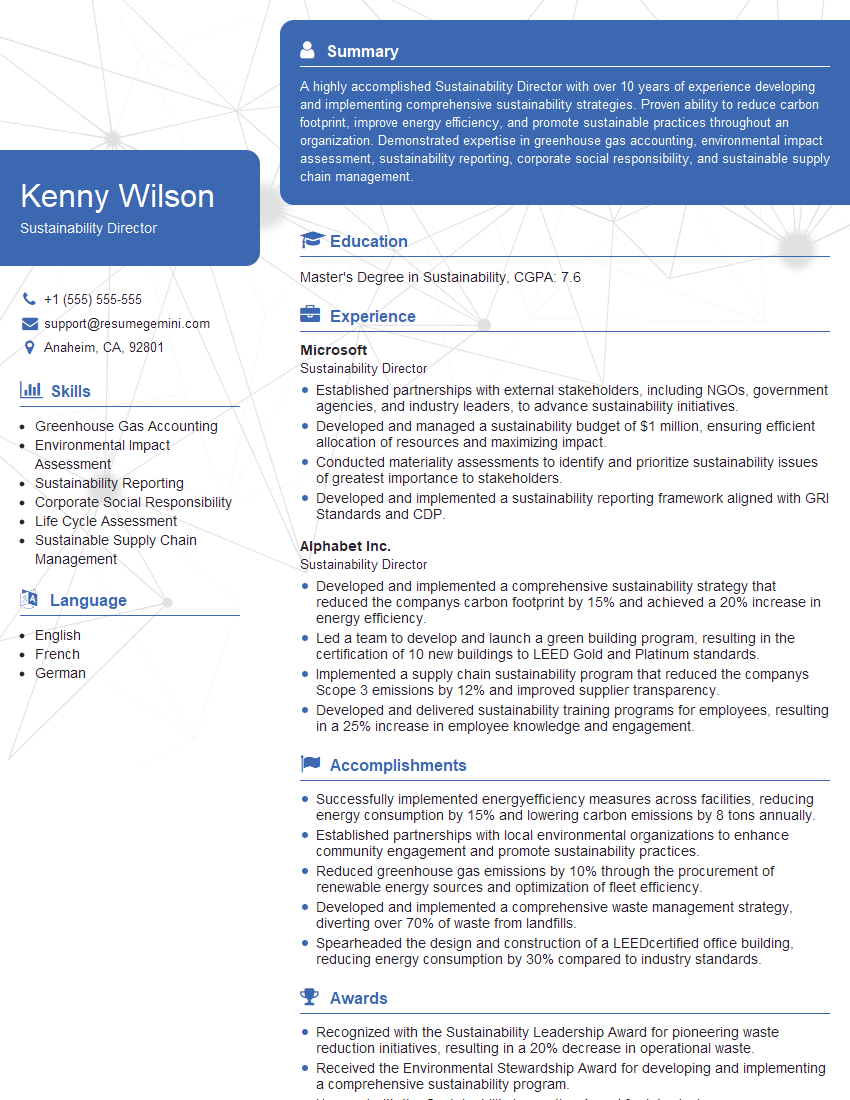
Sustainability Director Resume Sample
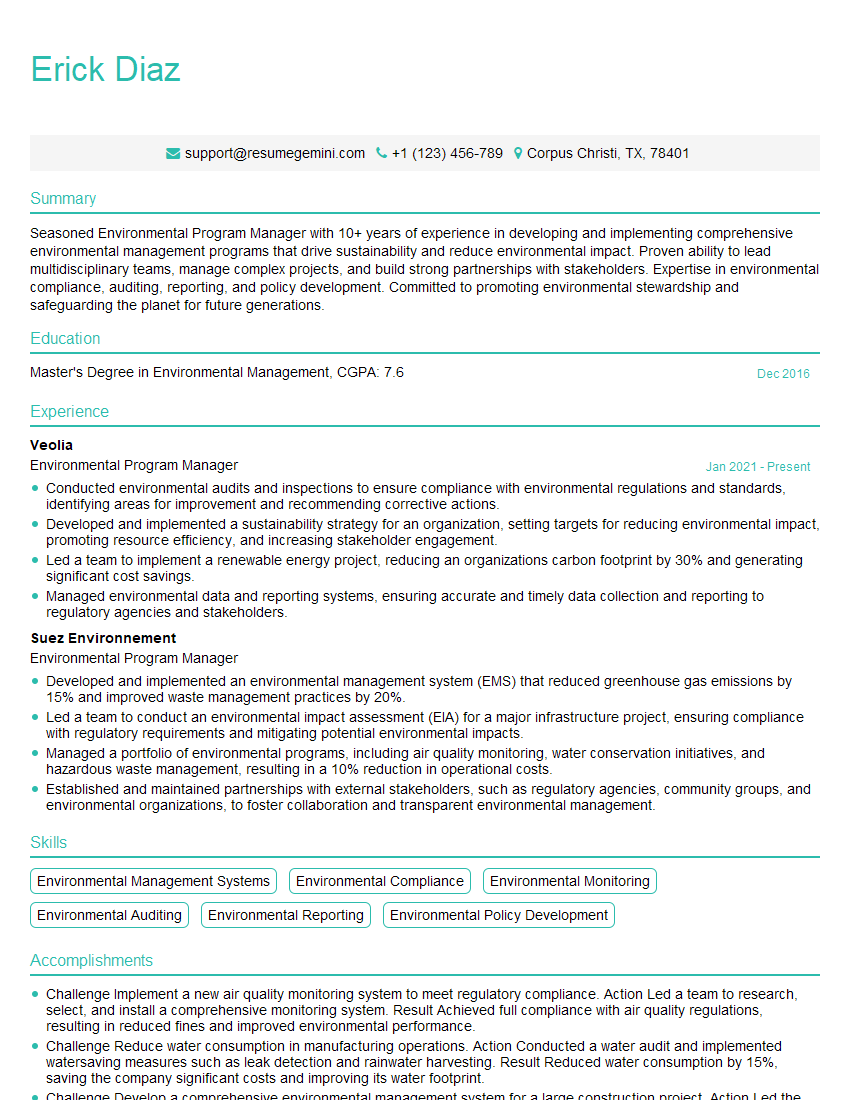
Environmental Program Manager Resume Sample
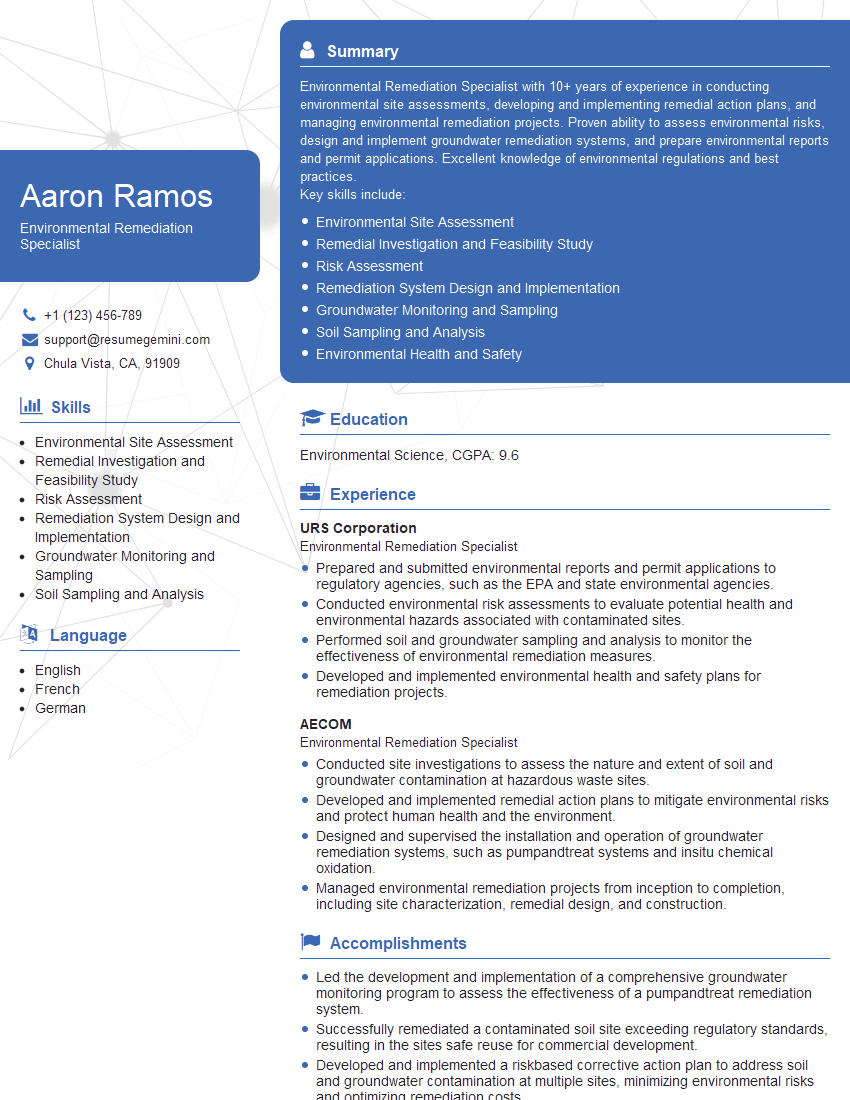
Environmental Remediation Specialist Resume Sample
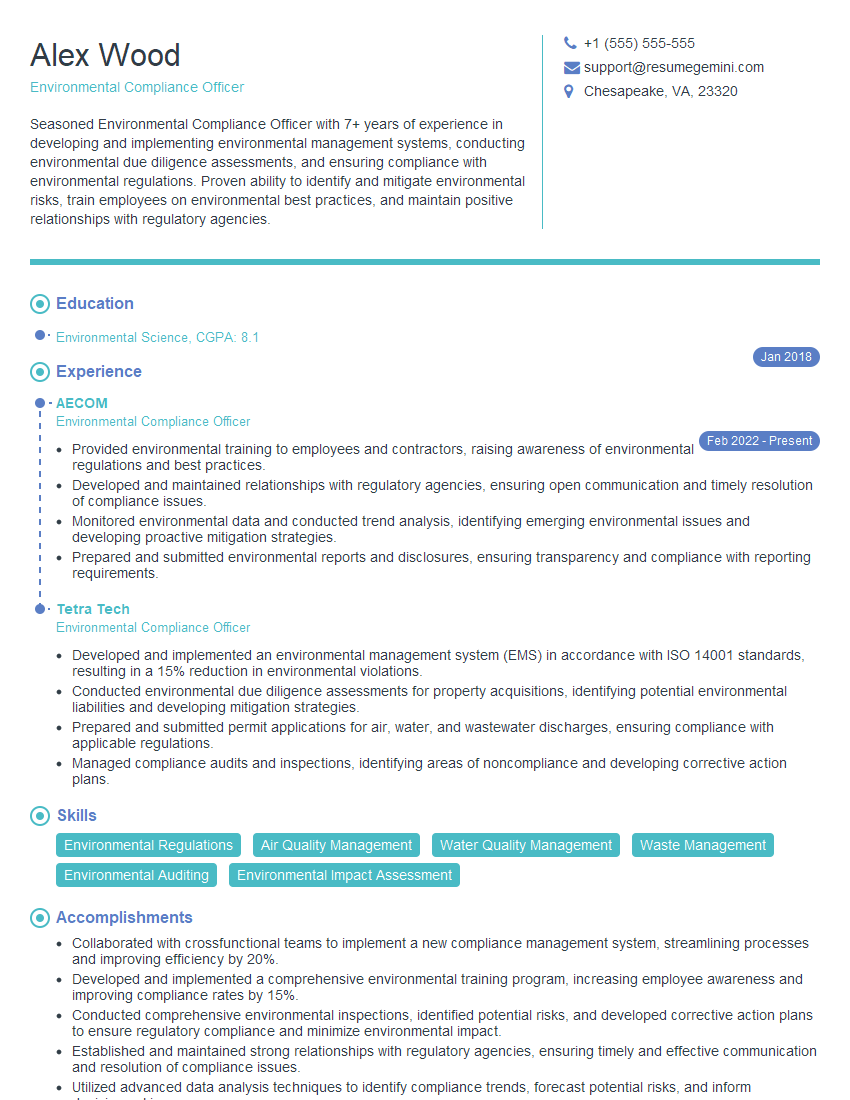
Environmental Compliance Officer Resume Sample
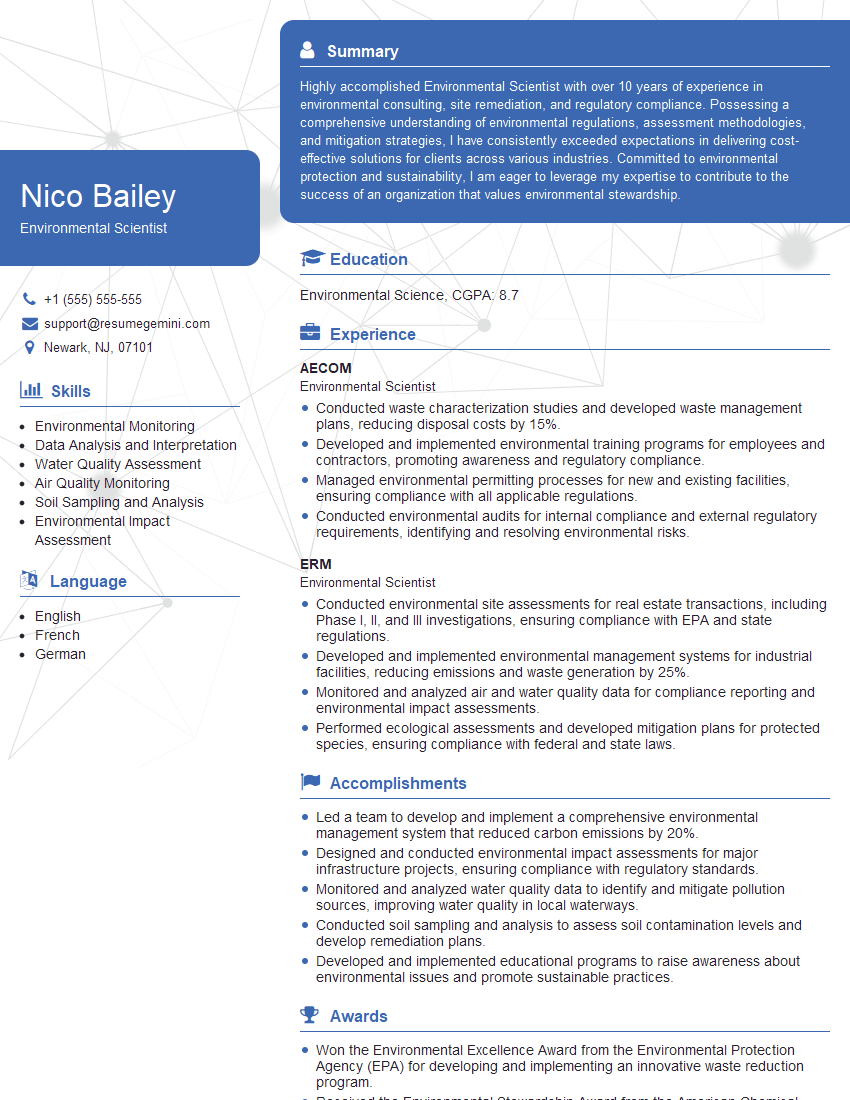
Environmental Scientist Resume Sample
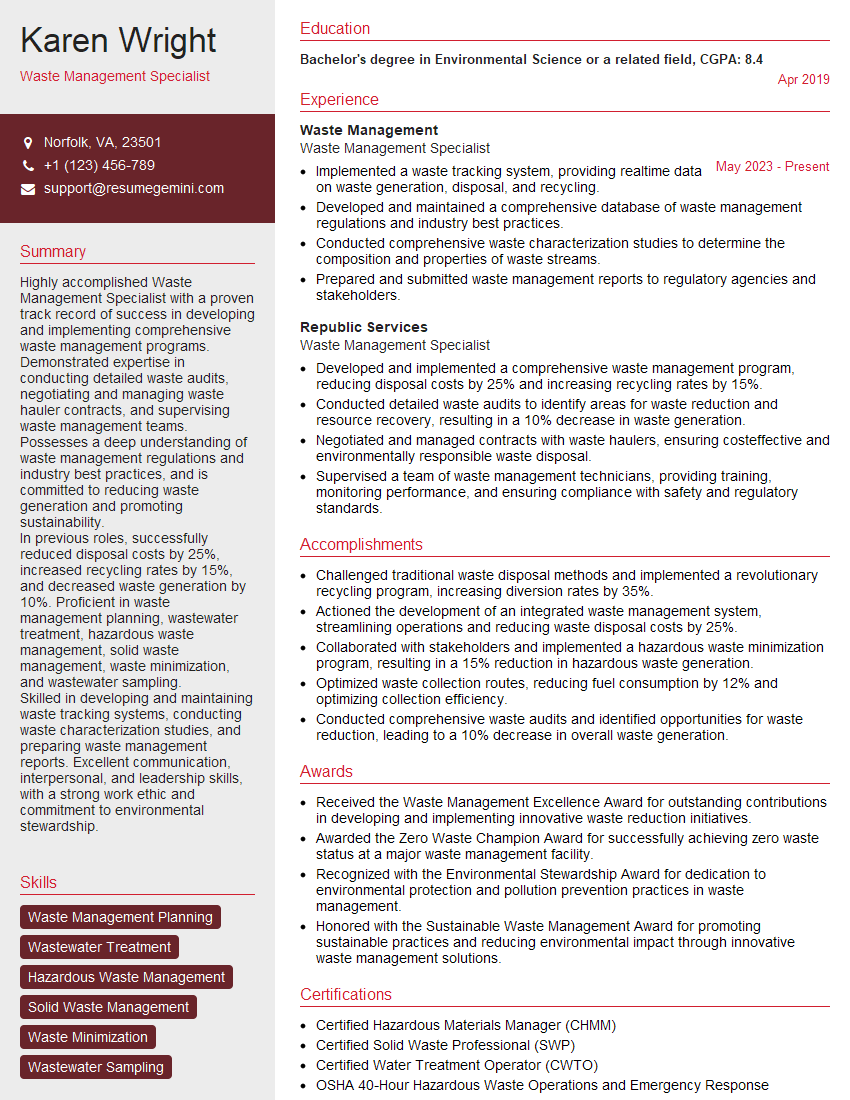
Waste Management Specialist Resume Sample
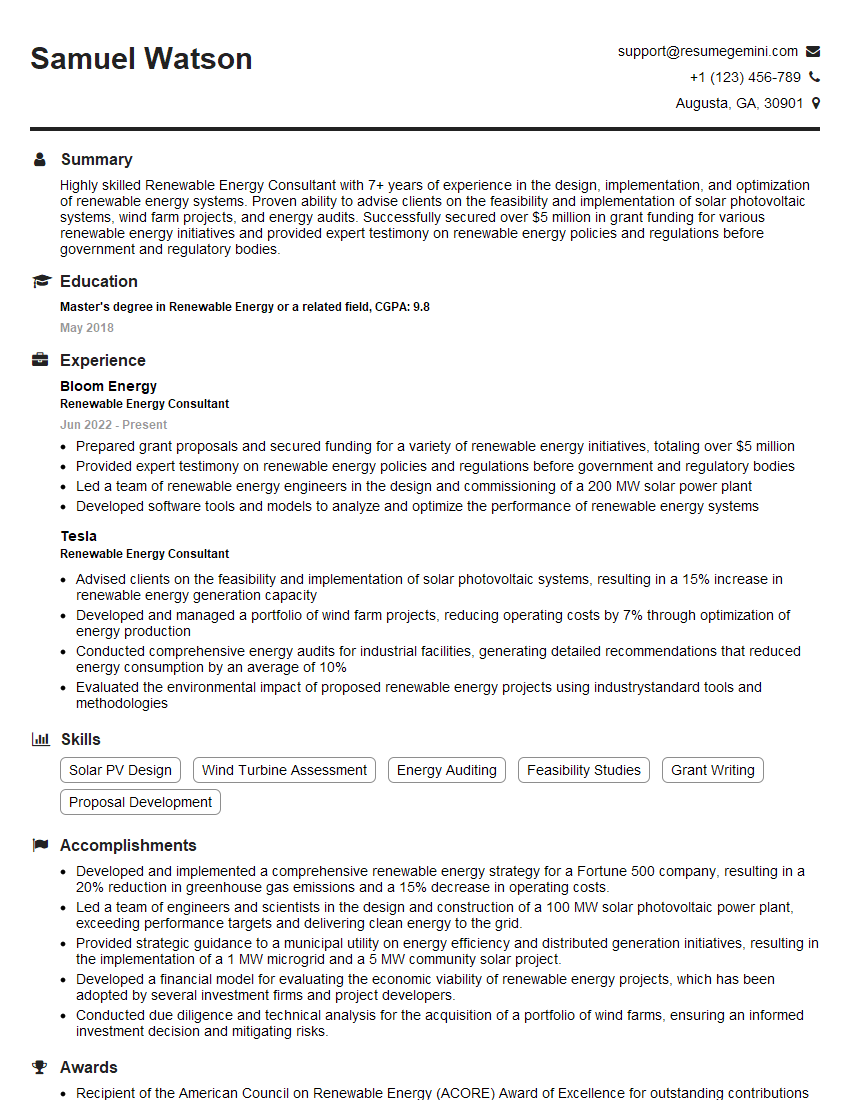
Renewable Energy Consultant Resume Sample
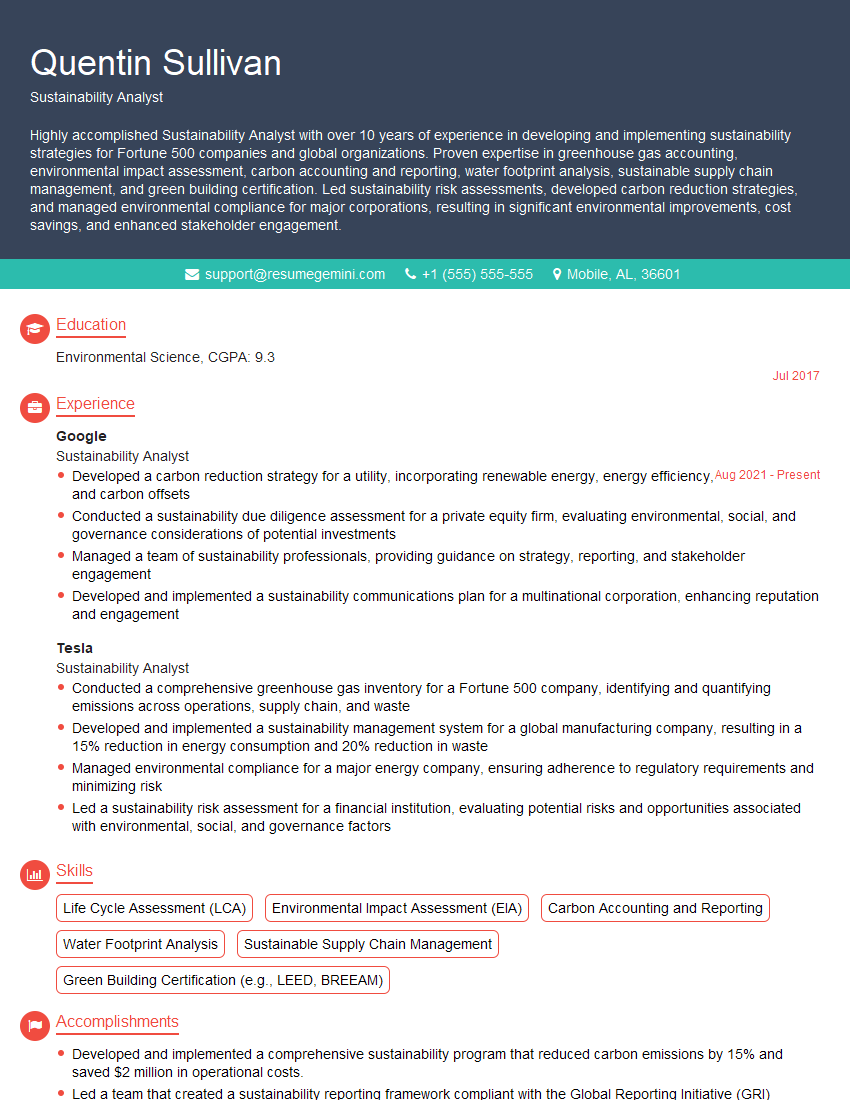
Sustainability Analyst Resume Sample

Sustainability Consultant Resume Sample
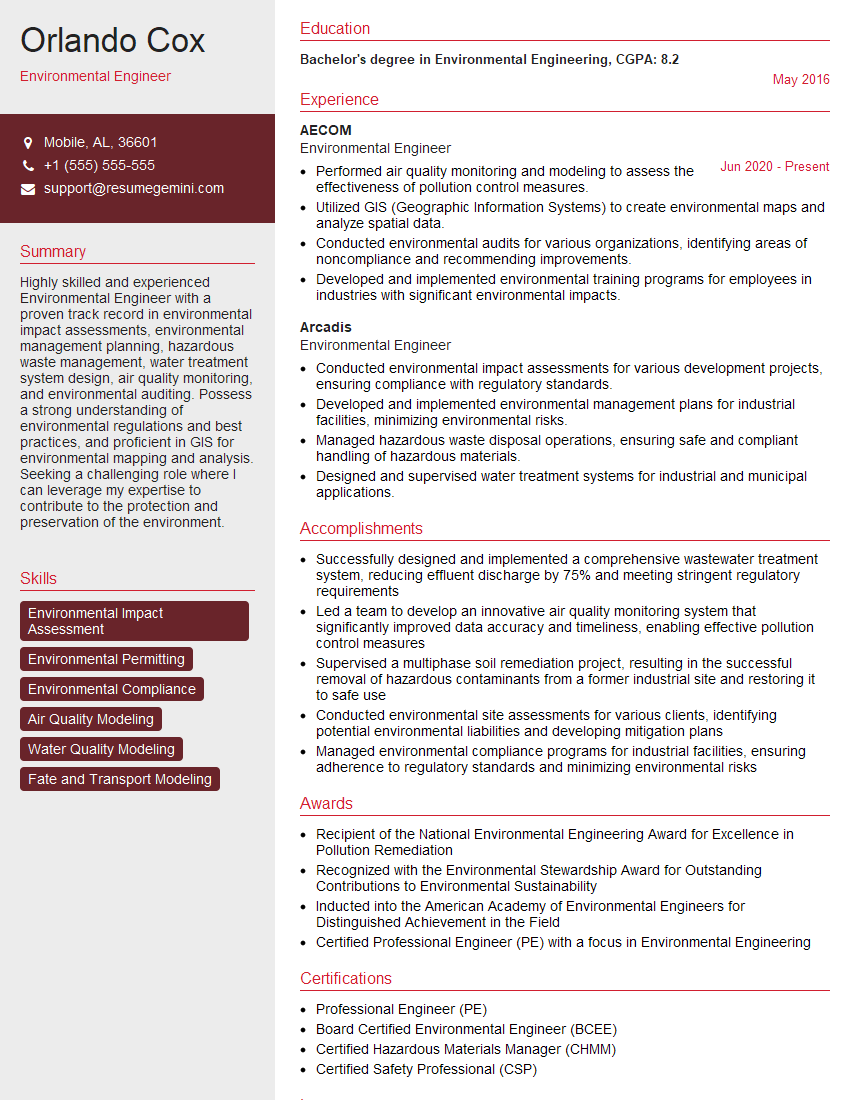
Environmental Engineer Resume Sample
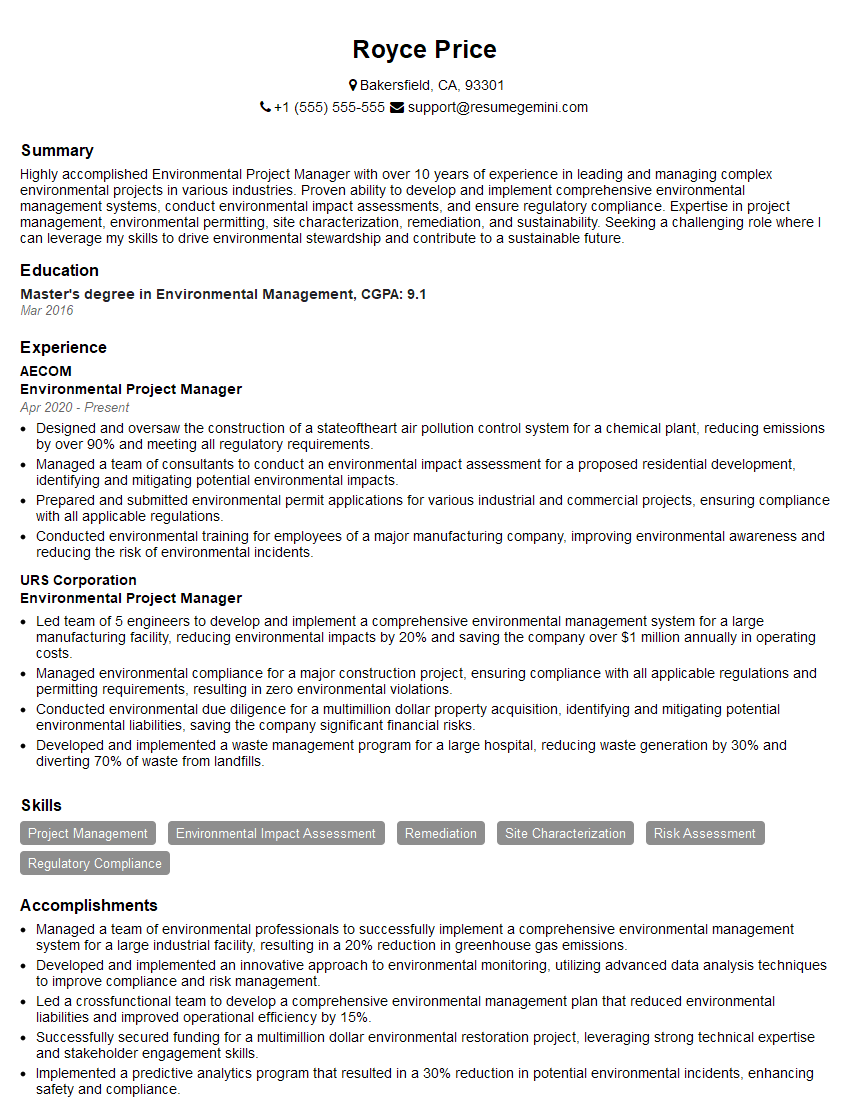
Environmental Project Manager Resume Sample

Environmental Sustainability Manager Resume Sample
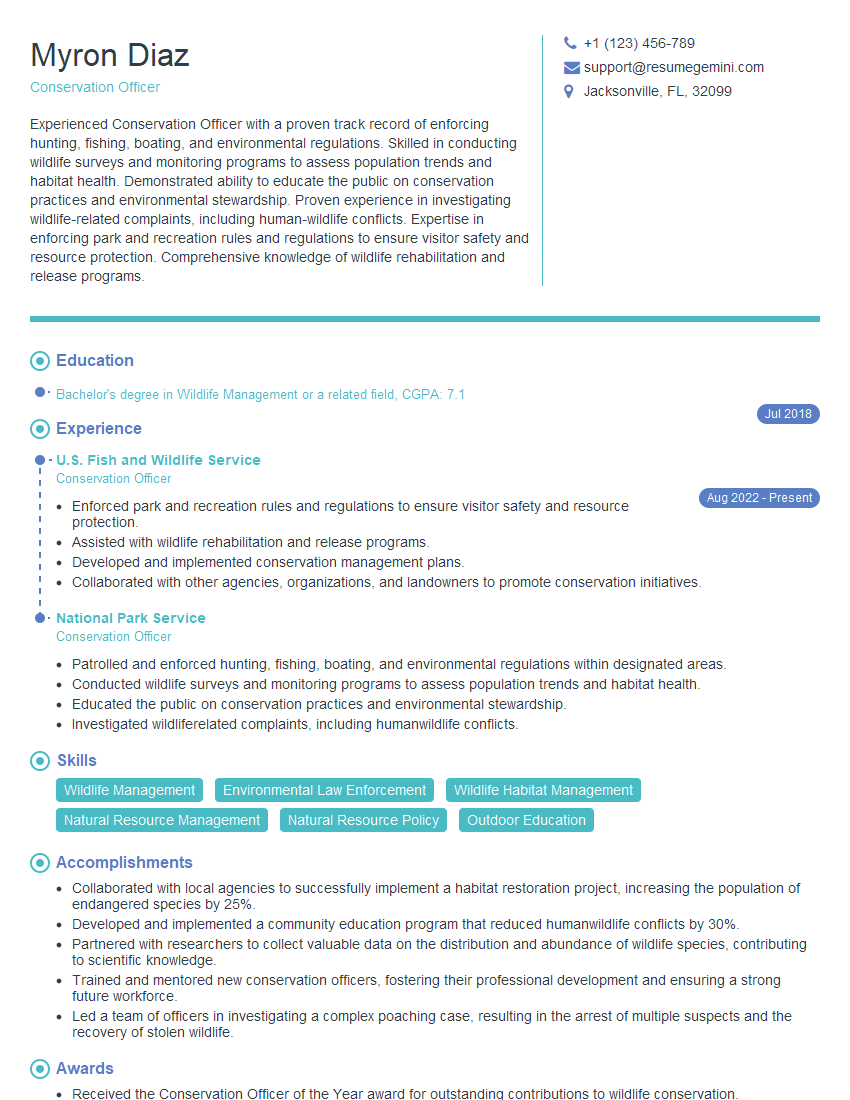
Conservation Officer Resume Sample
- Sustainability Director
- Environmental Program Manager
- Environmental Remediation Specialist
- Environmental Compliance Officer
- Environmental Scientist
- Waste Management Specialist
- Renewable Energy Consultant
- Sustainability Analyst
- Sustainability Consultant
- Environmental Engineer
- Environmental Project Manager
- Environmental Sustainability Manager
- Conservation Officer
Explore more articles
Users Rating of Our Blogs
Share Your Experience
We value your feedback! Please rate our content and share your thoughts (optional).
What Readers Say About Our Blog
Very informative content, great job.
good