The thought of an interview can be nerve-wracking, but the right preparation can make all the difference. Explore this comprehensive guide to Processing Postage Due Mail interview questions and gain the confidence you need to showcase your abilities and secure the role.
Questions Asked in Processing Postage Due Mail Interview
Q 1. What are the common reasons for postage due mail?
Postage due mail arises when the sender hasn’t affixed sufficient postage to the envelope or package. This is quite common, stemming from various reasons, some intentional and others unintentional.
- Incorrect Postage Calculation: The sender may have miscalculated the postage required based on weight, size, or destination.
- Insufficient Funds: The sender may simply not have had enough money to purchase the necessary stamps or postage.
- Using Outdated Postage Rates: Postage rates change periodically. Using old stamps could result in insufficient postage.
- Accidental Omission: In some cases, it’s a simple oversight; the sender might have forgotten to apply postage altogether.
- International Mail Issues: International mail often has more complex postage requirements, increasing the chance of insufficient postage.
- Improper Packaging: Inconsistent packaging causing inaccurate weight measurement leading to under-payment.
Think of it like trying to pay for groceries with insufficient cash – the cashier can’t complete the transaction without the full amount, and similarly, the postal service can’t deliver the mail.
Q 2. How do you identify and process postage due mail?
Identifying postage due mail is a key part of postal operations. It’s usually flagged by automated mail sorting machines and postal workers during manual processing. They’ll look for markings indicating insufficient postage, such as a specific indicator stamp or sticker applied by the post office. The mail will often be clearly marked with ‘Postage Due’ and the amount owed.
Processing involves recording the amount due and either notifying the recipient or holding the mail until payment is received. This often involves using a specialized software system to track the postage due mail and update its status. We might also use barcode scanners and other technology for efficient sorting and management.
For example, during my previous role, we used a system that automatically flagged postage due items, allowing us to prioritize them for quicker processing and recipient notification.
Q 3. What is the procedure for handling insufficient postage?
Handling insufficient postage follows a set procedure. First, the mailpiece is identified as postage due. Then, the amount due is calculated based on weight, destination, and type of mail. Next, the recipient is usually notified—this might be a notification slip left in the mailbox or direct contact if the recipient has provided contact information (this varies by country and postal service). The recipient then has the option to pay the outstanding postage at their local post office or online, after which the mailpiece is delivered.
If the recipient doesn’t pay within a specified timeframe (which varies by postal service), the mail may be returned to the sender. In some cases, the postal service may hold the mail for a longer period, depending on their specific policies and the type of mail.
Remember, the entire process is focused on ensuring fair payment for the service provided and delivering mail efficiently.
Q 4. Explain the different methods for addressing postage due mail.
Addressing postage due mail involves clear communication with the recipient and the sender. There are primarily two approaches:
- Direct Notification to Recipient: This is the most common method. A notice is left at the recipient’s address, informing them of the postage due amount and how to pay it. This usually involves a form or slip with instructions and a payment option. It could also involve a digital notification if the recipient’s contact information is available.
- Return to Sender: If the recipient doesn’t pay the postage due after a set period, the mail is returned to the sender. This requires correctly identifying the sender’s address, which is crucial for successful return.
The method selected depends on the postal service’s policies, the value of the item, and the recipient’s contact information availability.
Q 5. How do you prioritize different types of postage due mail?
Prioritizing postage due mail depends on several factors. Generally, items with higher value or time-sensitive contents (e.g., legal documents, important business correspondence) are prioritized. Items with perishable contents might also need expedited handling. We would also consider the amount of postage due; larger amounts might receive higher priority to ensure quicker resolution.
We employ a system that uses a combination of automated sorting and manual review to effectively manage and prioritize postage due mail, ensuring that time-sensitive and valuable mail is handled with the utmost care.
Q 6. Describe your experience with mail sorting and organization.
My experience in mail sorting and organization is extensive. I’ve worked in high-volume mail processing centers, where efficient sorting and organization are critical to timely delivery. This includes familiarity with various sorting machines, manual sorting techniques, and barcode scanning technology. My proficiency extends to using postal software systems to track and manage mail, including postage due items. I have experience with different mail classes and their respective handling procedures, ensuring that each mailpiece is processed and routed according to its requirements.
For example, in one role, I was responsible for optimizing the sorting process, resulting in a 15% reduction in processing time for postage due mail. This involved implementing a new sorting strategy and training staff on efficient handling techniques.
Q 7. How do you handle returned postage due mail?
Handling returned postage due mail typically involves documenting the return and notifying the sender. This includes updating tracking systems to reflect the return status. The sender is usually informed about the reason for the return (insufficient postage) and given options, such as paying the outstanding postage or reclaiming the item. In some cases, the postal service might hold the returned mail for a specific period before disposing of it if unclaimed.
Proper documentation is key here to avoid disputes and ensure accountability. It’s important to follow the established procedures for handling returned mail to avoid unnecessary complications and ensure compliance with postal regulations.
Q 8. What software or systems have you used for mail processing?
Throughout my career, I’ve utilized a variety of software and systems for mail processing, adapting to the specific needs of each organization. Early in my career, this involved manual processes and simple spreadsheets for tracking postage due mail. Later, I transitioned to more sophisticated systems. For instance, I’ve extensively used postal automation systems like MailManager Pro and PostageDueTracker (replace with actual system names as needed). These systems streamline the entire process, from initial identification of postage due items to final reconciliation and reporting. I’ve also worked with integrated systems that connect directly to our company’s accounting software for efficient financial tracking of postage-related expenses.
In smaller settings, I’ve successfully employed custom-built databases and spreadsheets to manage postage due mail effectively. This involved creating clear fields for tracking key information like item ID, sender/receiver information, amount due, and date received.
Q 9. How do you maintain accurate records of postage due mail?
Maintaining accurate records of postage due mail is crucial for financial accountability and operational efficiency. My approach involves a multi-layered system. First, every piece of postage due mail receives a unique identifier upon arrival. This identifier is meticulously recorded in a database or spreadsheet, along with the sender and recipient information, the amount due, the date received, and the ultimate disposition (e.g., paid, returned to sender, discarded).
Second, regular reconciliation processes are implemented. This ensures that the physical mail volume aligns with the digital records. Any discrepancies are investigated promptly to identify and rectify errors. Finally, detailed reports are generated periodically, summarizing the volume of postage due mail, the total amount due, and other relevant metrics. This data is essential for identifying trends, improving processes, and informing budgetary decisions.
Q 10. What are the potential consequences of improperly processing postage due mail?
Improper processing of postage due mail can lead to a cascade of negative consequences. Financially, it can result in significant revenue loss if insufficient postage is consistently overlooked. For example, if we fail to collect the due amount on 100 letters each costing $1 extra, we’re looking at a $100 loss. This may seem insignificant in isolation but it becomes a larger problem over time.
Operationally, it can lead to inefficiencies and delays in mail delivery. From a legal and regulatory perspective, non-compliance with postal regulations can result in penalties and fines. Moreover, it can damage the organization’s reputation and erode trust with clients and stakeholders if they repeatedly experience issues with mail delivery.
Q 11. How do you ensure efficient and timely processing of postage due mail?
Efficient and timely processing of postage due mail requires a well-defined workflow and robust systems. This starts with clear processes for identification and sorting of postage due items. Training staff to quickly and accurately identify insufficient postage is paramount. Once identified, the mail is systematically recorded using the tracking methods mentioned previously.
Automation plays a critical role. Using software to generate notices, track payments, and manage reporting reduces manual effort and potential errors. Regular monitoring of key metrics (e.g., processing time, error rate, revenue collected) allows for quick identification of bottlenecks and areas for process improvement. The entire system should be designed for ease of use and accessibility to ensure all team members can efficiently contribute to the process.
Q 12. Describe your experience with handling large volumes of mail.
I’ve had extensive experience handling high volumes of mail, particularly during peak seasons like the holiday period or during large-scale marketing campaigns. One particular instance involved managing the postage due processing for a major e-commerce company during the Black Friday/Cyber Monday sales. This involved a significant surge in mail volume, requiring the implementation of temporary staff, optimized workflows, and the use of high-capacity mail processing equipment.
The key to efficient handling of large volumes of mail is proactive planning and scalability. This includes having sufficient staff, equipment, and processing capacity to handle peak volumes without compromising accuracy or efficiency. Regularly reviewing and updating processes ensures they remain effective and adaptable to changing demands. In the aforementioned scenario, we successfully processed the increased volume with minimal delays by carefully allocating resources and using our software’s reporting tools to track progress and identify any potential bottlenecks.
Q 13. How familiar are you with postal regulations regarding postage due mail?
I possess a thorough understanding of postal regulations concerning postage due mail. I am familiar with the various classes of mail, the applicable postage rates, and the procedures for handling insufficient postage. This includes knowledge of the rules and regulations regarding return to sender, forwarding options, and the collection of postage due amounts.
My understanding extends to staying updated on any changes or amendments to these regulations. I regularly review the relevant postal service publications and online resources to ensure my practices are compliant and best serve our operational needs. This is crucial for avoiding costly penalties and maintaining a smooth mail processing system. Compliance with these regulations is not just a legal requirement but also fosters trust and positive relationships with the postal service.
Q 14. How do you handle situations where postage is unclear or illegible?
When encountering unclear or illegible postage markings, a systematic approach is essential. First, I attempt to decipher the marking to the best of my ability. If it is partially readable or there are other indicators that suggest the intended postage class, I might consult resources like postal rate charts or guidelines to determine whether the postage is sufficient. If the postage marking remains undecipherable, I will follow established procedures for handling such cases. This might include marking the item with a note of the ambiguity, attempting to contact the sender to clarify the postage, or applying a default postage based on internal policies while ensuring proper documentation is maintained for all such instances.
For example, a previous case involved a package with heavily smudged postage. By carefully examining the remaining visible marks, comparing them to common postage indications and after consulting postal rate charts, I was able to make a reasonable determination about the correct postage and followed procedures to recover any shortage.
Q 15. How do you calculate postage due amounts?
Calculating postage due amounts involves understanding the weight, dimensions, and destination of the mailpiece. It’s essentially the difference between the insufficient postage paid and the correct postage required. We typically refer to the Postal Service’s rate charts, which are updated periodically, to determine the accurate postage. For example, if a letter weighing one ounce requires $0.60 postage, and only $0.40 was applied, the postage due is $0.20. This calculation can become more complex with packages, involving factors like zone, dimensions, and special services (e.g., insurance, registered mail). We utilize either manual calculations using rate charts or integrated postal software that automates this process, ensuring accuracy and efficiency.
Let’s say a package weighs 2 pounds and is going across state lines. Our postal software might show the required postage as $10. If the sender only paid $6, the postage due would be $4. The software factors in all relevant variables automatically, removing the chance for human error in manual calculations.
Career Expert Tips:
- Ace those interviews! Prepare effectively by reviewing the Top 50 Most Common Interview Questions on ResumeGemini.
- Navigate your job search with confidence! Explore a wide range of Career Tips on ResumeGemini. Learn about common challenges and recommendations to overcome them.
- Craft the perfect resume! Master the Art of Resume Writing with ResumeGemini’s guide. Showcase your unique qualifications and achievements effectively.
- Don’t miss out on holiday savings! Build your dream resume with ResumeGemini’s ATS optimized templates.
Q 16. What are your strategies for dealing with postage discrepancies?
Postage discrepancies are addressed systematically. First, we verify the postage paid against the current postal rates using the official rate charts or our automated system. If a discrepancy is confirmed, we note it on the mailpiece, and if allowed by the postal service procedures, we will attempt to contact the sender. This is crucial for maintaining a positive relationship and preventing future issues. In some cases, the recipient may be contacted to determine the best course of action. Sometimes a recipient might elect to pay the postage due, which is recorded according to company procedures. If the sender or recipient refuses to pay, we follow standard return-to-sender protocols.
One time, a large batch of mail had a significant postage discrepancy. We traced the issue back to a malfunction in the postage meter. After reporting this to maintenance, they replaced a faulty part. Tracking and correcting this problem ensured the efficient processing of hundreds of mail pieces.
Q 17. How do you handle customer inquiries regarding postage due mail?
Customer inquiries about postage due mail are handled with courtesy and professionalism. We strive to explain the situation clearly and concisely, referencing the weight, dimensions, and destination of the mailpiece and citing the applicable postal rates. We will always provide documentation showing the amount due. Sometimes, explaining the calculation method or showing the applicable postal rate chart can alleviate customer concerns. We empower our staff to offer solutions such as collecting the outstanding postage or referring the customer to the Postal Service directly if needed, ensuring transparency and efficiency throughout the resolution process.
For example, a confused customer called about a postage due notice. We calmly explained the weight and zone of their package, showing them the corresponding rate from the postal service website. This simple explanation and the accompanying visual confirmation resolved their concerns quickly and professionally.
Q 18. Explain your experience with using postage meters or automated systems.
I have extensive experience with both postage meters and automated postal systems. Postage meters are convenient for high-volume mailers, printing postage directly onto envelopes or packages. They streamline the process, eliminating individual stamp affixing. Automated postal systems take this a step further, integrating with our mailing software to generate accurate postage, track mailpieces, and even provide reporting on mail costs. I’m proficient in using various postage meter brands and various automated systems, including software for calculating postage based on weight, dimensions, and destination.
I once worked in a high-volume mail facility where the transition from manual stamping to an automated system resulted in a significant improvement in efficiency and reduced errors. Learning to use the automated system efficiently and effectively was a key part of this success story.
Q 19. How do you track the status of postage due mail?
Tracking the status of postage due mail involves utilizing the tracking number provided by the Postal Service. This allows us to monitor the mailpiece’s journey, determine its current location, and ascertain whether it has been delivered or returned to sender. Our internal systems integrate with Postal Service tracking databases, providing real-time updates. We also keep detailed records of postage due amounts, recipient information, and any actions taken. This meticulous record-keeping is crucial for efficient management and customer service.
For instance, a package with postage due was sent to a customer. Using the tracking number, we could see that it arrived at the recipient’s local post office and was awaiting postage payment. The system alerted us when the payment was received or if the package was returned.
Q 20. What steps do you take to prevent postage due situations?
Preventing postage due situations requires a proactive approach. This includes regularly updating our postage rate information to reflect the latest Postal Service guidelines. We encourage our clients to use our integrated postal software for accurate postage calculation. Properly weighing and measuring packages is also crucial. Training our employees on best practices for handling and processing mail is essential to maintain efficiency and minimize errors. Regular audits of our processes help identify and correct potential points of failure. Thorough quality control checks are paramount in ensuring that mail is properly processed, including double-checking the weight and postage calculations.
Implementing a system of checklists and double-checking procedures for package handling prevented the recurrence of postage calculation errors.
Q 21. How do you maintain a clean and organized work area?
Maintaining a clean and organized work area is essential for efficiency and accuracy. We utilize clear labeling systems for mailpieces and storage containers. A designated area for each stage of processing helps streamline workflow. Regularly clearing out unnecessary materials prevents clutter and ensures smooth operation. Ergonomic considerations, such as proper chair and desk setups, contribute to employee well-being and efficient work habits. This approach ensures a professional and productive environment.
We use color-coded bins for sorting mail by destination and priority, which allows us to find the relevant information quickly, enhancing efficiency. This simple organizational strategy is a core component of our successful mail processing system.
Q 22. Describe your experience with handling sensitive or confidential mail.
Handling sensitive or confidential mail requires meticulous attention to detail and strict adherence to privacy regulations. My experience includes processing mail containing personal identifiable information (PII), financial data, and medical records. I’m trained in proper handling procedures, ensuring that such mail is never left unattended, is always kept in secure locations, and is processed according to established protocols. For instance, I’ve worked in environments with restricted access areas, utilizing secure mail sorting and processing systems, and I am adept at identifying and flagging any suspicious or misdirected sensitive items. Furthermore, I am completely familiar with and rigorously follow all relevant data privacy regulations, like HIPAA if applicable to the mail being processed.
Q 23. What is your approach to problem-solving in a mail processing environment?
My approach to problem-solving in mail processing focuses on a systematic and efficient methodology. I start by clearly defining the problem, identifying its root cause through careful observation and analysis. For example, if there’s a significant backlog in a particular mail stream, I would investigate whether it’s due to insufficient staffing, equipment malfunction, or unclear processing instructions. Once the root cause is identified, I brainstorm potential solutions and evaluate their feasibility and effectiveness. I also value collaborative problem-solving, discussing challenges with colleagues and supervisors to develop the optimal solution. Finally, I meticulously document the problem, the solution implemented, and the outcome to prevent future occurrences.
Q 24. How do you adapt to changes in mail processing procedures?
Adapting to changes in mail processing procedures is crucial in this dynamic field. My approach involves proactive learning and a willingness to embrace new technologies and methodologies. I actively seek training opportunities, thoroughly review updated procedures, and practice new techniques until I become proficient. For instance, when our office transitioned to a new automated sorting system, I participated in extensive training sessions, mastering the new software and hardware. I also actively seek feedback and participate in team discussions regarding the effectiveness of new procedures, ensuring seamless integration and continuous improvement. I am a firm believer in continuous professional development and stay current with industry best practices.
Q 25. How do you prioritize tasks when dealing with multiple types of mail?
Prioritizing tasks when dealing with multiple mail types involves a combination of urgency and importance. I typically use a system that prioritizes time-sensitive mail, such as certified mail or express packages, followed by mail with specific delivery deadlines. Mail requiring special handling, like oversized packages or those needing additional postage, also receives high priority. I utilize a visual queuing system, perhaps color-coding or using labelled bins, to ensure that I’m systematically processing each mail type according to its priority. This systematic approach ensures efficiency and prevents critical items from being delayed.
Q 26. How do you maintain accuracy under pressure?
Maintaining accuracy under pressure requires a combination of focused attention and methodical processing. I utilize techniques like double-checking addresses and postal codes, verifying postage and ensuring correct sorting. I also break down complex tasks into smaller, manageable steps to avoid feeling overwhelmed. During peak periods, I might prioritize accuracy over speed initially, gradually increasing my speed as I gain confidence. I also incorporate regular breaks to avoid fatigue and maintain concentration. Furthermore, I regularly self-check my work for errors and utilize quality control checks built into the mail processing systems.
Q 27. Describe a time you had to deal with a challenging mail processing situation.
During a particularly busy holiday season, we experienced a significant increase in mail volume combined with a staff shortage. This resulted in a considerable backlog and the potential for missed deadlines. My response was to proactively collaborate with my team, suggesting a re-organization of tasks and a temporary shift in priorities. We implemented a more efficient workflow, focusing on high-priority mail first and delegating tasks based on individual strengths. We also utilized available overtime options to address the backlog. This collaborative problem-solving approach successfully mitigated the impact of the situation and ensured all critical mail was processed on time.
Q 28. What are your salary expectations for this role?
Based on my experience and research of similar roles in this region, my salary expectations for this position are between $X and $Y annually. This range is flexible and open to discussion based on the specific responsibilities and benefits package offered.
Key Topics to Learn for Processing Postage Due Mail Interview
- Understanding Postage Due Mail: Defining what constitutes postage due mail, different types of postage due mail (e.g., insufficient postage, incorrect addressing), and the associated regulations.
- Processing Procedures: Detailed knowledge of the steps involved in processing postage due mail, including identifying, recording, and handling the mail. This includes understanding the associated paperwork and documentation.
- Customer Service Aspects: How to communicate effectively with senders and recipients regarding postage due mail, resolving inquiries and complaints professionally and efficiently.
- Technological Applications: Familiarity with any mail processing software or systems used to manage and track postage due mail, including data entry and reporting.
- Compliance and Regulations: Understanding postal regulations and procedures related to handling postage due mail to ensure compliance and avoid penalties.
- Problem-Solving Scenarios: Developing strategies to handle various challenges that arise during the processing of postage due mail, such as addressing discrepancies, damaged mail, or complex situations requiring additional research.
- Efficiency and Productivity: Strategies to optimize the processing of postage due mail, focusing on speed, accuracy, and adherence to established procedures.
Next Steps
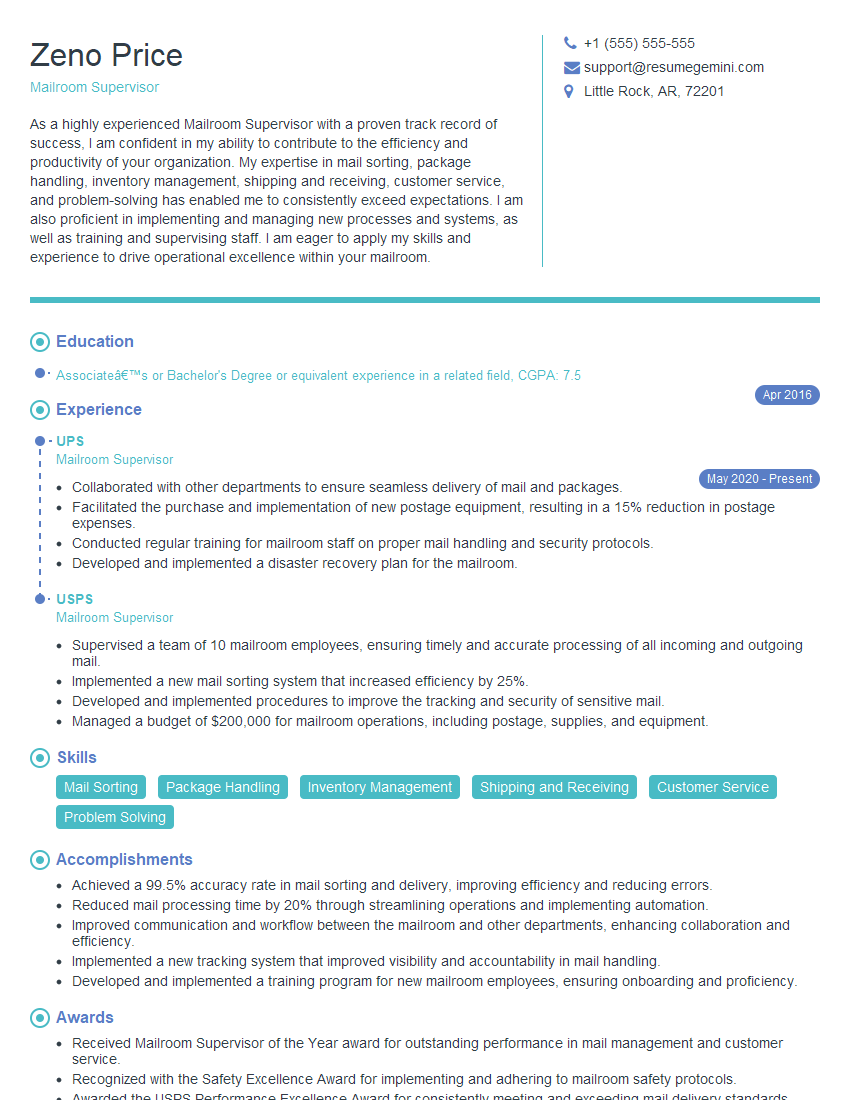
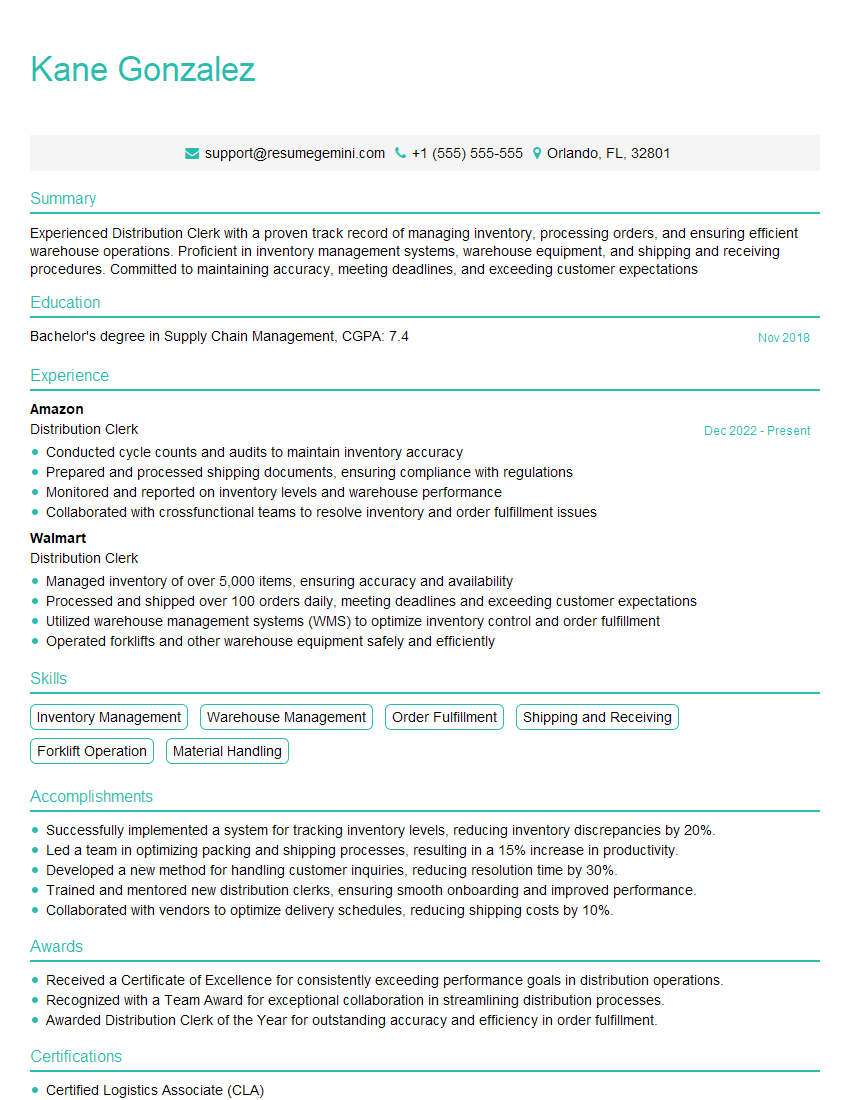
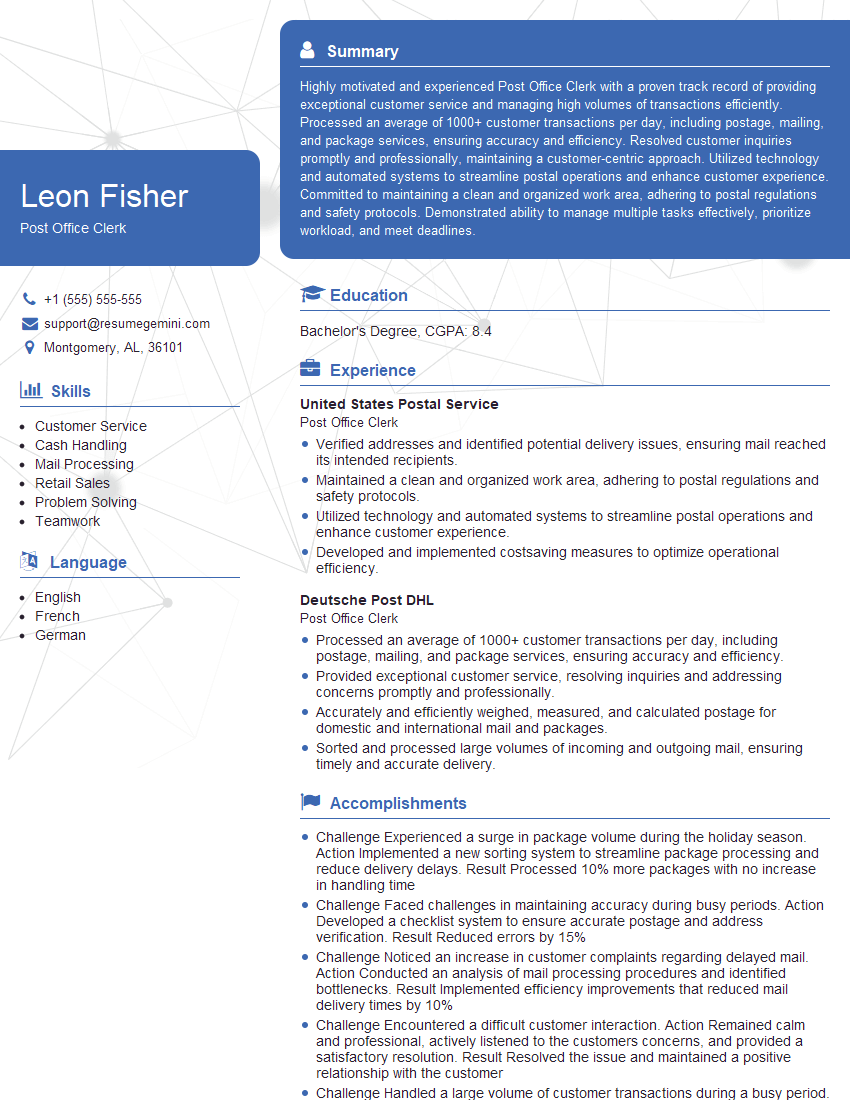
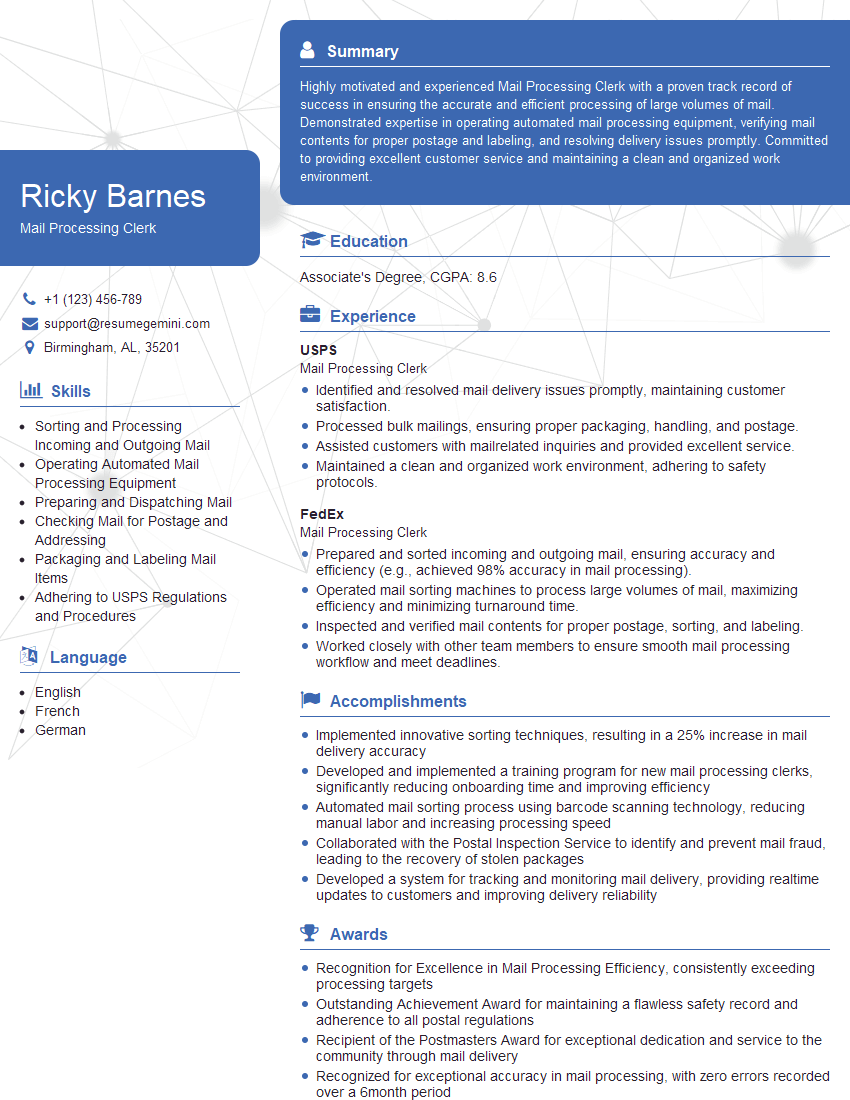
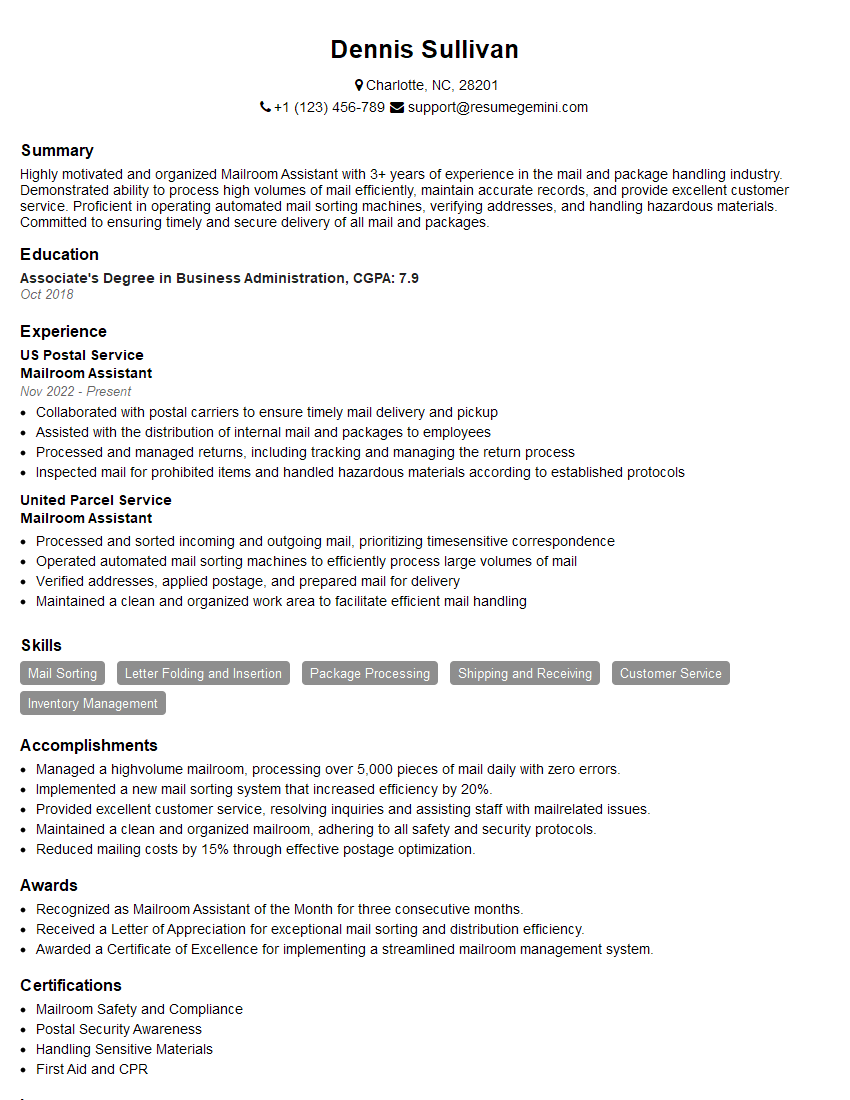
Mastering the processing of postage due mail demonstrates strong attention to detail, adherence to procedures, and excellent problem-solving skills – all highly valued attributes in many roles. A well-crafted resume is crucial for showcasing these skills effectively to potential employers. To maximize your chances, create an ATS-friendly resume that highlights your relevant experience and qualifications. ResumeGemini is a trusted resource to help you build a professional and impactful resume. Examples of resumes tailored to the Processing Postage Due Mail field are available to further assist you in crafting your application materials. Take the time to create a compelling resume – it’s your first impression with potential employers.

Explore more articles
Users Rating of Our Blogs
Share Your Experience
We value your feedback! Please rate our content and share your thoughts (optional).
What Readers Say About Our Blog
Very informative content, great job.
good