Every successful interview starts with knowing what to expect. In this blog, we’ll take you through the top Producer interview questions, breaking them down with expert tips to help you deliver impactful answers. Step into your next interview fully prepared and ready to succeed.
Questions Asked in Producer Interview
Q 1. Describe your experience managing budgets in past productions.
Budget management in production is like being a skilled chef carefully managing ingredients for a delicious meal. Every dollar is a precious ingredient, and meticulous planning is crucial for a successful outcome. In my past productions, I’ve consistently utilized a three-stage approach: pre-production budgeting, ongoing monitoring, and post-production analysis.
Pre-production involves detailed line-item budgeting. I break down costs into categories (personnel, equipment, location, post-production, etc.), using spreadsheets and budgeting software to track every expense. For example, on a recent documentary, I meticulously estimated crew costs, rental fees for cameras and lighting, travel expenses, and post-production editing software licenses. This allows for accurate forecasting and securing necessary funding.
Ongoing monitoring involves regular tracking of actual versus budgeted expenses. I utilize project management software to monitor spending against the budget throughout the production. This requires weekly or bi-weekly reviews, flagging any potential overspending and adjusting the budget accordingly. For instance, if unexpected location costs arose, I’d explore alternatives like negotiating better rates or adjusting the shooting schedule to minimize expenses.
Post-production analysis is essential for learning from the past. I review the final budget against the actuals, identifying areas of overspending or underspending. This feedback is invaluable for future projects, helping to refine budgeting accuracy and potentially negotiate better rates with vendors based on past performance.
Q 2. Explain your process for scheduling and coordinating production teams.
Scheduling and coordinating production teams is akin to orchestrating a symphony – each musician (crew member) needs to be in the right place at the right time for the perfect performance. My process focuses on three key aspects: detailed scheduling, clear communication, and proactive problem-solving.
I begin with creating a comprehensive production schedule, typically using specialized scheduling software like ShotGrid or StudioBinder. This schedule includes detailed call sheets for each day, outlining crew assignments, shooting locations, and call times. Visual aids like Gantt charts are invaluable for visualizing dependencies and potential conflicts.
Clear communication is crucial. Daily production meetings, regular email updates, and utilizing project management platforms like Asana or Trello keep everyone informed and on the same page. This includes transparently communicating potential delays or challenges.
Proactive problem-solving is critical. I anticipate potential conflicts, for example, clashing schedules of key crew members, and develop contingency plans. This might involve negotiating flexible schedules or securing backup personnel. Regular progress meetings ensure timely identification and mitigation of issues before they escalate.
Q 3. How do you handle unexpected challenges or setbacks during production?
Unexpected challenges are inevitable in production, like navigating a sudden storm during an outdoor shoot. My approach emphasizes a calm, systematic response, focusing on rapid assessment, decisive action, and effective communication.
The first step is to assess the situation quickly and objectively. This involves identifying the nature and scope of the problem. For example, a sudden equipment malfunction might require a quick repair or a backup solution.
Next, I develop and implement a solution, prioritizing safety and efficiency. This might involve re-scheduling parts of the shoot, finding alternative equipment, or negotiating with affected parties. For instance, if a key location became unavailable, I’d swiftly identify and secure an appropriate substitute location.
Finally, clear communication is vital. I keep the team informed of the situation, the proposed solution, and the impact on the schedule. Transparency and open communication minimize uncertainty and maintain team morale, which is crucial during stressful situations.
Q 4. What software or tools are you proficient in for production management?
Proficiency in relevant software is essential for efficient production management. I’m highly proficient in various tools, including:
- Scheduling and Project Management:
ShotGrid,StudioBinder,Asana,Trello - Budgeting and Finance:
Microsoft Excel,Final Draft(for script budgeting), specialized budgeting software - Communication and Collaboration:
Slack,Zoom,Google Workspace - Cloud Storage and Collaboration:
Dropbox,Google Drive
Beyond software, I am adept at utilizing various hardware such as field recorders, monitoring equipment, and utilizing various camera systems.
Q 5. Describe your experience with risk assessment in a production environment.
Risk assessment is like anticipating potential hazards before embarking on a journey – it’s crucial for ensuring a safe and successful production. My approach involves a structured process:
- Identification: Brainstorming potential risks, encompassing technical issues (equipment failure), logistical problems (location access), and human factors (crew illness).
- Analysis: Evaluating the likelihood and potential impact of each identified risk. This often involves using risk matrixes to categorize risks by severity and probability.
- Response Planning: Developing mitigation strategies for each risk. This might involve procuring backup equipment, securing alternative locations, or establishing contingency plans for unforeseen events.
- Monitoring: Continuously monitoring risks throughout production and adjusting plans as needed. This involves proactive communication and regular risk assessments.
For example, on a shoot in a remote location, I’d assess risks like weather conditions, transportation accessibility, and potential health hazards, implementing plans for each possibility. This could include weather monitoring, securing reliable transport, and having a first-aid kit readily available.
Q 6. How do you ensure the quality control of deliverables throughout the production process?
Quality control is the cornerstone of a successful production – it’s about delivering exceptional results. My approach is multifaceted and focuses on proactive measures and consistent monitoring.
Proactive Measures involve establishing clear quality standards from the outset, defining metrics for success for each deliverable. This involves reviewing scripts, storyboards, and shot lists meticulously, ensuring clarity and consistency. I also emphasize regular communication and feedback loops between different departments to ensure alignment on quality goals.
Consistent Monitoring involves regular quality checks at various stages. This includes daily rushes reviews to assess footage quality, editing reviews to ensure narrative flow and technical quality, and final review sessions for overall quality assurance. This involves utilizing appropriate tools and software such as color grading software for visual assessment.
Feedback Loops are essential for continuous improvement. Constructive feedback is incorporated promptly at each stage, ensuring issues are identified and addressed efficiently. This could involve reviewing dailies with the director, editor, and other relevant personnel.
Q 7. Explain your understanding of different production methodologies (e.g., Agile, Waterfall).
Understanding different production methodologies is essential for adapting to various project needs. Let’s explore Agile and Waterfall:
Waterfall is a linear, sequential approach. Each phase (concept, design, production, testing, deployment) must be completed before the next begins. It’s well-suited for projects with clearly defined requirements and minimal anticipated changes. Think of building a house – you wouldn’t start painting the walls before the foundation is laid.
Agile is an iterative approach emphasizing flexibility and collaboration. Work is broken down into short cycles (sprints), with frequent feedback and adaptation. It’s ideal for projects with evolving requirements or a need for rapid iteration. Think of developing a software application – frequent updates and user feedback help refine the product over time.
Choosing the right methodology depends on the project’s complexity, scope, and the client’s needs. Sometimes, a hybrid approach combining aspects of both is most effective.
Q 8. How do you track progress against deadlines and budgets?
Tracking progress against deadlines and budgets requires a proactive and multifaceted approach. I typically employ a combination of project management tools and strategies. First, a detailed schedule is created at the outset, breaking down the project into manageable tasks with assigned deadlines. This schedule is usually visualized using a Gantt chart or similar tool, allowing for easy monitoring of progress.
Budget tracking involves meticulously documenting all expenses against pre-approved budget allocations. I often utilize spreadsheets or dedicated project management software to track every expense, comparing actual spending to the planned budget regularly. Variance reports are generated to highlight areas of overspending or underspending, allowing for timely corrective action. Regular status meetings with the team are crucial, not only to review progress but also to identify and address potential roadblocks proactively, ensuring we stay on track with both time and budget.
For example, on a recent documentary film, we used Asana to track tasks, deadlines, and resource allocation. We created a custom budget spreadsheet that automatically calculated variances and flagged potential overruns. This allowed us to identify a potential issue with location permits that was projected to exceed budget early on and promptly find a more cost-effective alternative.
Q 9. How do you manage communication with clients and stakeholders?
Effective communication is the cornerstone of successful production. I believe in establishing clear communication channels and regular updates to keep clients and stakeholders informed throughout the entire production process. This starts with a well-defined communication plan, outlining who needs what information, how often, and through which channels (email, video conferencing, project management software). I also emphasize transparency – proactively sharing both positive and negative updates to build trust and manage expectations.
For instance, I typically hold weekly progress meetings with clients to review deliverables, address concerns, and answer questions. These meetings are documented and shared as minutes, creating a clear record of decisions and actions. Regular email updates are also provided to keep everyone in the loop between formal meetings. In the case of significant changes or challenges, I initiate immediate communication to ensure prompt action and mitigate any potential risks. I always tailor the communication style to suit the audience, ensuring it is clear, concise, and easy to understand, regardless of their technical expertise.
Q 10. Describe your experience in negotiating contracts and agreements with vendors.
Negotiating contracts and agreements with vendors requires a strategic and collaborative approach. I start by thoroughly understanding the scope of work, budget limitations, and the vendor’s capabilities. I then develop a detailed Request for Proposal (RFP) that clearly outlines the project’s requirements, deliverables, and timelines. This process provides a clear basis for comparison when receiving bids from different vendors.
During negotiations, I focus on building a mutually beneficial relationship. I carefully review each contract clause, paying close attention to payment terms, liability limitations, and intellectual property rights. I am adept at balancing the needs of the project with the vendor’s business interests to find solutions that work for both parties. My experience has taught me to anticipate potential challenges and proactively incorporate contingency plans into agreements. For example, I once negotiated a flexible payment schedule with a post-production company that helped us manage cash flow without compromising quality or service.
Q 11. How do you prioritize tasks and allocate resources effectively in a high-pressure environment?
Prioritizing tasks and allocating resources effectively in high-pressure environments is a skill I’ve honed over many years. My approach involves a combination of techniques, including utilizing project management methodologies like Agile or Kanban. I begin by identifying critical path tasks – those that directly impact project completion – and prioritize them accordingly. Then, I assign resources based on individuals’ skill sets and availability. Utilizing tools like project management software allows for efficient task assignment and progress tracking, enabling me to dynamically adjust resource allocation as needed.
When faced with competing priorities, I employ the Eisenhower Matrix (urgent/important), allowing me to focus on high-impact activities while delegating or delaying less critical tasks. Open communication is key; keeping the team informed about priorities and any changes ensures everyone remains aligned and focused. In a recent high-pressure situation where we faced a tight deadline, the use of a daily scrum meeting allowed us to identify and immediately resolve emerging issues, successfully delivering the project on time.
Q 12. What is your experience with post-production workflows?
My experience with post-production workflows encompasses various stages, from editing and color correction to sound design and visual effects. I’m proficient in managing the transfer of assets from the production phase to post-production, ensuring all necessary materials are properly organized and labeled. I am familiar with various software applications used in post-production, including Avid Media Composer, Adobe Premiere Pro, and DaVinci Resolve. My understanding extends beyond the technical aspects; I also focus on collaboration between the production team and post-production vendors to ensure a smooth workflow and maintain creative vision.
I understand the importance of establishing clear communication channels between the different teams, ensuring that feedback is efficiently communicated and implemented. This includes defining clear deliverables, setting realistic timelines, and regularly reviewing progress to prevent bottlenecks and delays. For instance, on a recent commercial project, we utilized a cloud-based storage system to facilitate efficient file sharing between the production and post-production teams, minimizing transfer times and maximizing efficiency.
Q 13. How do you handle conflict resolution within a production team?
Conflict resolution is an inevitable part of any production. My approach is to address conflicts promptly and directly, emphasizing open communication and mutual respect. I believe in creating a safe space where team members feel comfortable expressing their concerns. I typically start by actively listening to each party’s perspective, seeking to understand the root cause of the conflict rather than just focusing on surface-level issues.
I facilitate discussions that focus on finding mutually acceptable solutions. This often involves brainstorming alternative approaches and compromising when necessary. The goal is always to find a resolution that is fair to all involved and preserves team morale and productivity. If necessary, I will mediate between parties, ensuring a fair and impartial process. Documentation of the conflict and the resolution is crucial to prevent future occurrences of similar issues.
Q 14. How familiar are you with legal and ethical considerations in production?
I am well-versed in the legal and ethical considerations inherent in production. This includes understanding copyright laws, usage rights, model releases, and location permits. I ensure that all necessary legal documentation is obtained before commencing any production activity. I’m familiar with industry best practices and regulations regarding data privacy and confidentiality. This extends to safeguarding sensitive information and ensuring compliance with any relevant regulations.
Ethical considerations are paramount; I am committed to creating a fair and respectful workplace, free from harassment or discrimination. I prioritize ethical sourcing of materials and ensuring fair compensation for all involved in the production process. Maintaining transparency and integrity in all business dealings is critical. For example, I always ensure that we obtain proper permissions and releases before using any copyrighted material or filming in public spaces.
Q 15. Describe your experience with pre-production planning and organization.
Pre-production planning is the crucial groundwork that determines the success of any production. It’s like building a strong foundation for a house – you can’t have a sturdy structure without it. My approach involves a meticulous, multi-stage process. First, I thoroughly analyze the script or concept, identifying potential challenges and opportunities. This includes budgeting (both time and resources), scheduling key personnel and locations, and securing necessary permits or clearances. Then, I create detailed shot lists, storyboards, and production schedules, outlining each step of the production process. I also assemble a comprehensive production binder containing all relevant documents, ensuring every team member has the information they need. For example, on a recent documentary project, detailed location scouting and securing permissions in advance saved us three days of production time and avoided costly rescheduling. Finally, I establish clear communication channels, using project management software to track progress and facilitate collaboration.
- Detailed Script Breakdown: Identifying scene locations, prop requirements, and potential logistical challenges early on.
- Budget Allocation: Meticulously planning and tracking expenses to ensure the project stays within the allocated budget.
- Scheduling & Crew Management: Coordinating the availability of talent, crew, and equipment to avoid conflicts and delays.
Career Expert Tips:
- Ace those interviews! Prepare effectively by reviewing the Top 50 Most Common Interview Questions on ResumeGemini.
- Navigate your job search with confidence! Explore a wide range of Career Tips on ResumeGemini. Learn about common challenges and recommendations to overcome them.
- Craft the perfect resume! Master the Art of Resume Writing with ResumeGemini’s guide. Showcase your unique qualifications and achievements effectively.
- Don’t miss out on holiday savings! Build your dream resume with ResumeGemini’s ATS optimized templates.
Q 16. What metrics do you use to measure the success of a production?
Measuring production success goes beyond simply completing the project. It’s about achieving the intended goals and exceeding expectations. I use a multi-faceted approach, analyzing both quantitative and qualitative data. Quantitative metrics might include audience reach (views, downloads, engagement), production efficiency (staying on schedule and within budget), and technical quality (resolution, audio levels). However, equally important are qualitative measures like audience feedback (reviews, surveys, social media sentiment), the impact of the production (did it achieve its message or goal?), and the overall creative quality (was it compelling and engaging?). For instance, on a recent marketing campaign, we tracked website traffic and lead generation alongside audience feedback surveys to assess the campaign’s success holistically. We discovered a specific video ad had unexpectedly high engagement despite having lower than average views; this feedback influenced the style of future ads.
Q 17. Explain your experience working with different creative teams (e.g., writers, editors, designers).
Collaboration is the cornerstone of successful production. I’ve had the pleasure of working with diverse creative teams, including writers, editors, designers, and cinematographers. My approach is to foster a collaborative and respectful environment where each team member feels valued and their expertise is utilized effectively. Open communication is paramount; I regularly hold meetings, share updates, and seek feedback throughout the production process. This ensures everyone is aligned on the vision and goals. For example, on a recent music video, I worked closely with the director to refine the visual style, collaborating with the editor to ensure the pacing of the cuts complemented the song’s rhythm, and partnering with the designers to ensure the set design aligned with the overall aesthetic vision.
- Regular Check-ins: Maintaining open communication lines to keep everyone informed and engaged.
- Constructive Feedback: Providing and receiving constructive criticism to improve the overall product.
- Respectful Collaboration: Valuing the input and expertise of every team member.
Q 18. How do you ensure that your productions align with the overall goals and objectives?
Aligning productions with overall goals requires a clear understanding of the objectives from the outset. This begins with a thorough briefing session where we define the intended audience, desired outcome, and key performance indicators (KPIs). This is then translated into detailed pre-production planning. Throughout the production, I regularly check progress against those initial goals and KPIs, making adjustments as needed. For instance, if a marketing campaign’s goal is to increase brand awareness by 20%, I’ll track social media engagement, website traffic, and mentions in the media to measure progress and make adjustments to the content strategy mid-production if necessary. This proactive approach ensures that the final product effectively achieves its intended purpose.
Q 19. What is your experience with different production formats (e.g., live, studio, remote)?
My experience spans a wide range of production formats, including live events, studio productions, and remote collaborations. Each format has its own unique challenges and considerations. Live events require meticulous planning and coordination to ensure a seamless execution, often relying on detailed run-of-show documents and comprehensive technical rehearsals. Studio productions allow for greater control over the environment but require managing resources and coordinating schedules carefully. Remote productions, while offering flexibility, necessitate robust communication systems and reliance on cloud-based collaboration tools. For example, I successfully managed a large-scale virtual conference, utilizing multiple video conferencing platforms and real-time feedback systems to create a dynamic and engaging experience for a global audience. This required advanced technical planning and a highly skilled remote team.
Q 20. Describe your experience with using project management software (e.g., Asana, Trello).
Project management software is essential for efficient and organized production. I’ve extensively used platforms like Asana and Trello, leveraging their features for task assignment, progress tracking, and team communication. I establish a clear project structure, breaking down the production process into smaller, manageable tasks. These tasks are assigned to team members with deadlines and relevant files attached. Progress is tracked in real-time, allowing for proactive identification and resolution of potential delays. For instance, using Asana’s Kanban boards, I visually track the progress of tasks, allowing quick identification of bottlenecks and assigning resources effectively to maintain momentum. Regular status updates keep all stakeholders informed and ensure accountability.
Q 21. How do you handle changes in scope or requirements during a production?
Change is inevitable in production. My approach to handling scope changes or requirement updates is proactive and transparent. Any change requests are formally documented, assessed for impact on the budget and schedule, and then communicated to the entire team. The impact is analyzed, and a revised plan is created, taking into account the new requirements. This often involves prioritizing tasks, reallocating resources, and adjusting deadlines as necessary. For example, on a recent commercial shoot, a last-minute change in the client’s brand guidelines required a redesign of certain elements. I immediately convened a meeting with the creative team, assessed the changes, created a revised schedule, and successfully incorporated the new guidelines without compromising the overall quality or exceeding the budget. Open communication and collaboration are critical in managing change effectively.
Q 22. What are your strategies for maintaining morale and productivity within a team?
Maintaining high morale and productivity in a team is crucial for successful production. My strategy is multifaceted and focuses on fostering a positive and collaborative environment. It starts with clear communication: regular team meetings, transparent updates on project progress, and open channels for feedback are essential. I believe in empowering team members by delegating tasks based on individual strengths and providing opportunities for growth. This includes offering training and mentorship to enhance skills and boost confidence. Recognizing and celebrating successes, both big and small, is vital for reinforcing positive behavior and boosting morale. Finally, I prioritize work-life balance and encourage breaks and time off to prevent burnout. For example, on a recent documentary project, we implemented weekly ‘fun Fridays’ – casual team gatherings to build camaraderie outside of the usual work pressures. This significantly improved team cohesion and overall output.
- Open Communication: Regular meetings and feedback sessions.
- Empowerment: Delegating tasks based on strengths and offering training.
- Recognition: Celebrating achievements and contributions.
- Work-Life Balance: Encouraging breaks and time off to prevent burnout.
Q 23. How do you identify and mitigate potential production risks?
Identifying and mitigating production risks requires a proactive and systematic approach. This begins with thorough pre-production planning, including detailed risk assessments. We identify potential problems such as equipment malfunctions, talent unavailability, budget overruns, or unforeseen logistical challenges. For each identified risk, we develop mitigation strategies. For example, if a key actor might be unavailable, we identify backup actors and rehearse scenes with them. For potential budget overruns, we establish contingency funds. Regular monitoring and communication during production allows us to adapt to changing circumstances and quickly address emerging issues. We use project management software to track progress and identify potential bottlenecks. In a recent music video shoot, we anticipated potential weather disruptions by securing an indoor backup location and incorporating flexible scheduling. This proactive measure prevented significant delays and cost overruns.
- Risk Assessment: Identifying potential problems during pre-production.
- Mitigation Strategies: Developing solutions for each identified risk.
- Monitoring: Tracking progress and addressing emerging issues.
- Contingency Planning: Establishing backup plans for unforeseen circumstances.
Q 24. How do you build and maintain strong relationships with team members and clients?
Building strong relationships with team members and clients is fundamental to successful production. I cultivate these relationships through consistent communication, active listening, and mutual respect. Transparency is key: keeping everyone informed of the project’s progress, challenges, and decisions builds trust and confidence. I strive to understand the needs and goals of both my team and clients and work collaboratively to achieve them. I foster an inclusive environment where every voice is heard and valued. For example, I always make it a point to have one-on-one check-ins with team members to understand their individual needs and concerns, and regular client meetings to ensure their vision is being met. This approach has led to long-term collaborations with several satisfied clients and has fostered a loyal, motivated team.
Q 25. What is your experience with creating and managing production schedules?
I have extensive experience creating and managing production schedules using various project management tools, including Gantt charts and specialized software like Asana and Monday.com. The process involves breaking down the project into smaller, manageable tasks, assigning them to team members with defined deadlines, and accounting for potential delays or unforeseen circumstances. I also incorporate buffer time into the schedule to account for unexpected issues. I regularly review and update the schedule throughout the production process to maintain accuracy and ensure we remain on track. For example, on a recent commercial shoot, I used a Gantt chart to visualize the entire production timeline, identifying critical path tasks and potential dependencies. This allowed us to efficiently manage resources and meet the client’s tight deadline.
Q 26. How do you adapt your approach to different production styles and genres?
Adaptability is essential in production. I’ve worked across diverse production styles and genres, from documentary filmmaking to corporate video production to live event coverage. My approach adapts to the specific needs and demands of each project. For instance, the collaborative, improvisational nature of documentary filmmaking differs significantly from the structured, pre-planned approach often needed for commercials. I adjust my communication style, my team’s structure, and my approach to scheduling and resource allocation based on the particular genre and its requirements. I constantly seek to expand my skillset and stay up-to-date on industry trends and best practices to ensure successful navigation of diverse production environments.
Q 27. Explain your experience with different production equipment and technologies.
My experience encompasses a wide range of production equipment and technologies. I’m proficient in operating various cameras, from professional cinema cameras like RED and Arri to more compact options such as Sony Alpha series. I’m familiar with audio recording equipment, including boom mics, lavalier microphones, and field recorders. I’m experienced with lighting setups, utilizing both natural and artificial lighting techniques, and various lighting equipment. I’m adept in post-production software such as Adobe Premiere Pro, After Effects, and DaVinci Resolve. Furthermore, I understand the operation and maintenance of various grip and electric equipment. I also have experience with cloud-based collaboration platforms for seamless sharing of files and project management. Staying up-to-date with technological advancements is crucial in this ever-evolving field.
Q 28. Describe a time you had to make a difficult decision under pressure in a production setting.
During a live music festival broadcast, a severe thunderstorm unexpectedly rolled in, threatening to halt the show and jeopardize the live stream. We had a limited time to decide whether to immediately halt production, risking audience disappointment and significant financial losses for the client, or attempt to continue filming under challenging conditions, risking damage to equipment and potentially compromising the quality of the broadcast. After assessing the situation – considering the weather forecast, the condition of our equipment, and the feasibility of continuing the shoot – I quickly made the decision to temporarily halt filming and relocate some of our crucial equipment to a sheltered area. This minimized risk to our equipment while allowing us to quickly resume filming once the storm subsided. While this decision resulted in a minor delay, it prevented a much larger, more costly disaster. This experience underscored the importance of adaptability, quick thinking, and risk assessment in high-pressure production environments.
Key Topics to Learn for Producer Interview
- Project Management in Producer: Understand the lifecycle of a project within the Producer environment, from initiation to completion. Consider methodologies like Agile and Waterfall and how they apply.
- Workflow and Automation: Explore how to optimize workflows using Producer’s features. Think about practical applications like automating repetitive tasks and streamlining collaborations.
- Data Management and Analysis: Learn how to effectively manage and analyze data within Producer. Consider reporting, data visualization, and extracting key insights for decision-making.
- Team Collaboration and Communication: Discuss best practices for effective teamwork and communication within Producer’s collaborative features. Focus on strategies for conflict resolution and maintaining clear communication channels.
- Troubleshooting and Problem-Solving: Develop your ability to identify, diagnose, and resolve common issues within the Producer platform. Practice your analytical skills and problem-solving approaches.
- Security and Compliance: Understand Producer’s security protocols and best practices for data protection and compliance with relevant regulations.
- Integration with other systems: Explore how Producer integrates with other tools and systems relevant to your prospective role. Understand the implications of data exchange and interoperability.
- Advanced Features and Customization: Research advanced features and customization options within Producer to demonstrate a deeper understanding and potential for innovation.
Next Steps
Mastering Producer significantly enhances your career prospects, opening doors to exciting opportunities and higher earning potential. A well-crafted, ATS-friendly resume is crucial for getting your application noticed. To maximize your chances, leverage ResumeGemini – a trusted resource for creating professional and impactful resumes. ResumeGemini provides examples of resumes tailored to Producer roles, helping you present your skills and experience effectively. Invest time in crafting a strong resume – it’s your first impression with potential employers.
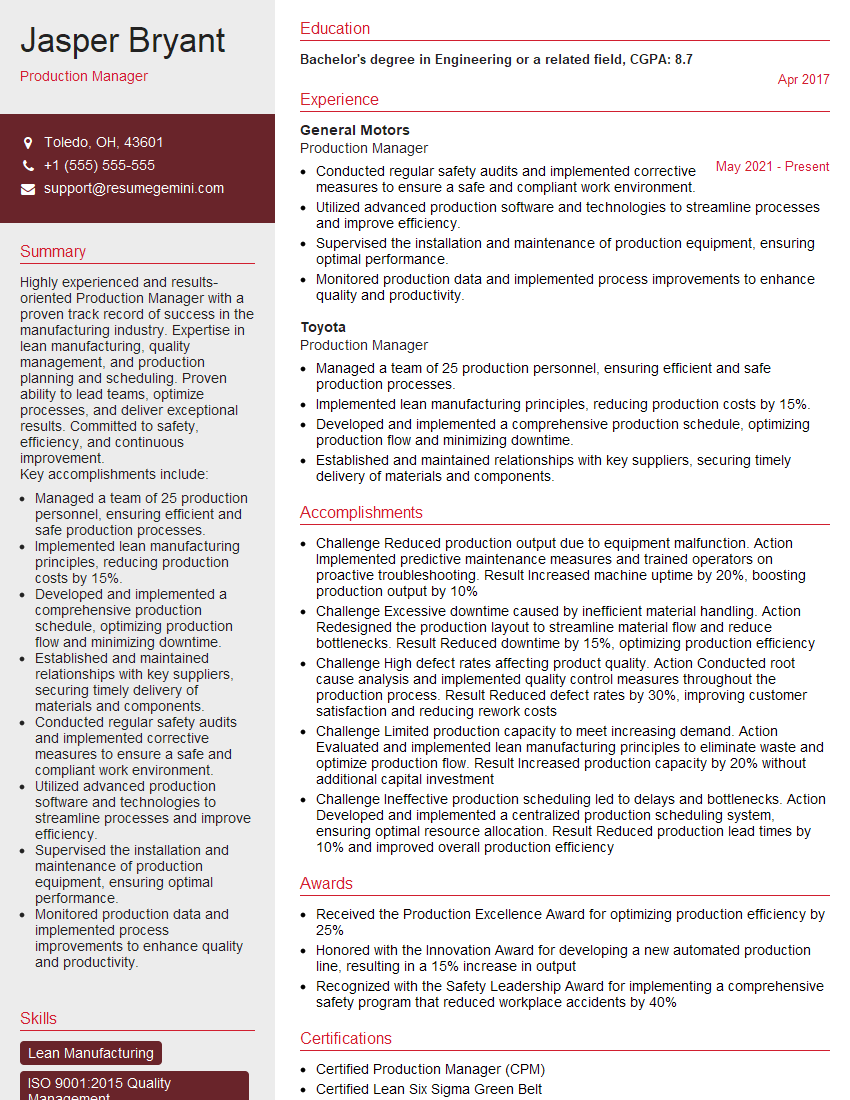
Production Manager Resume Sample
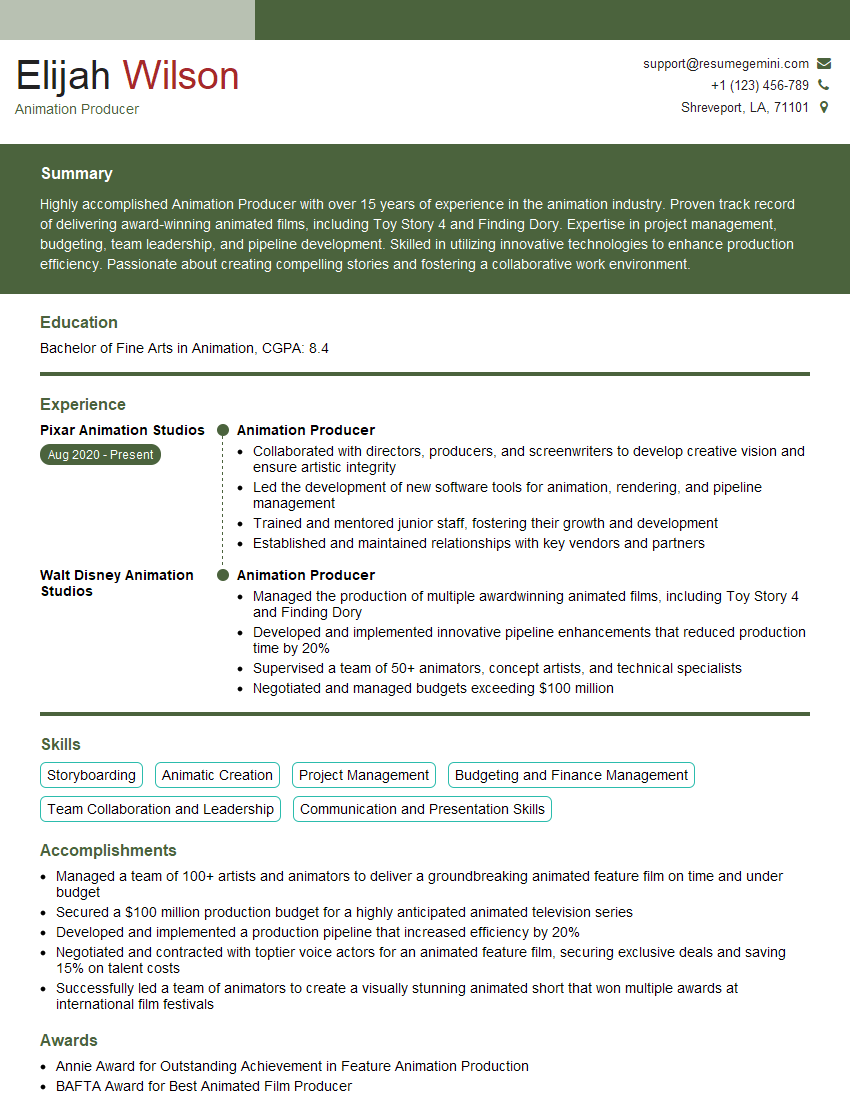
Animation Producer Resume Sample
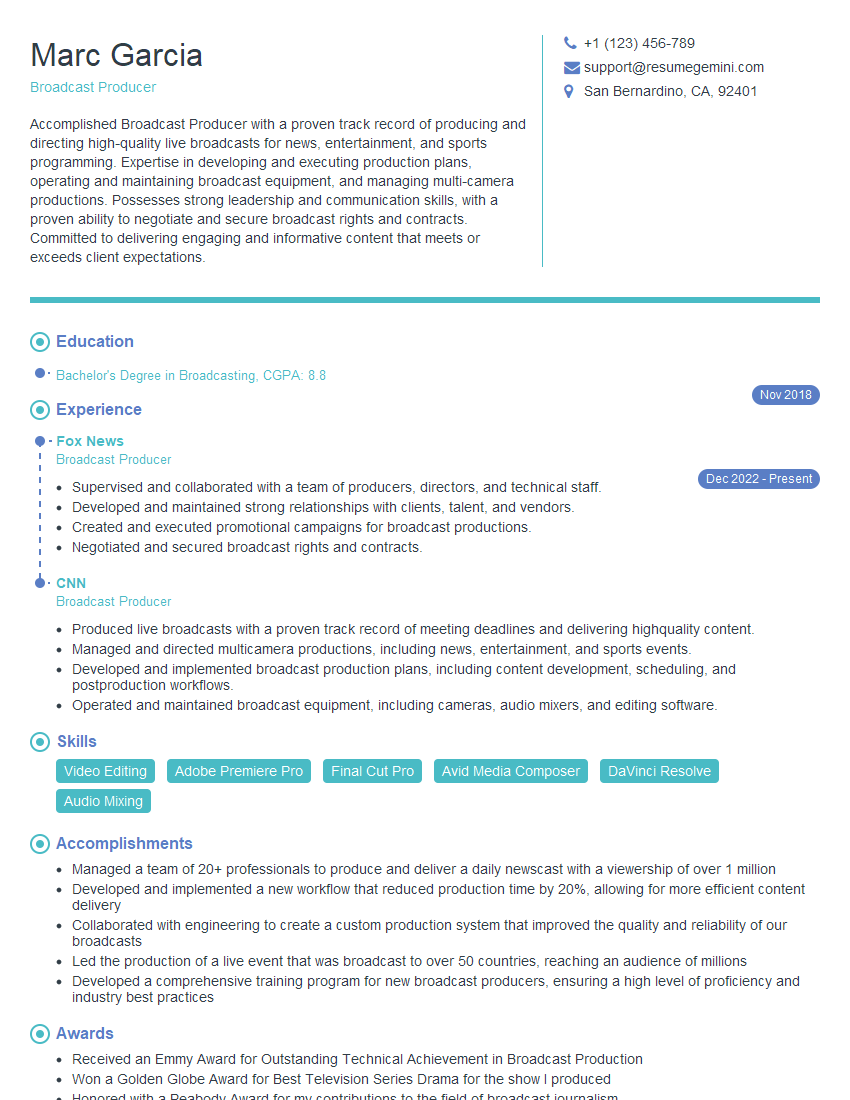
Broadcast Producer Resume Sample
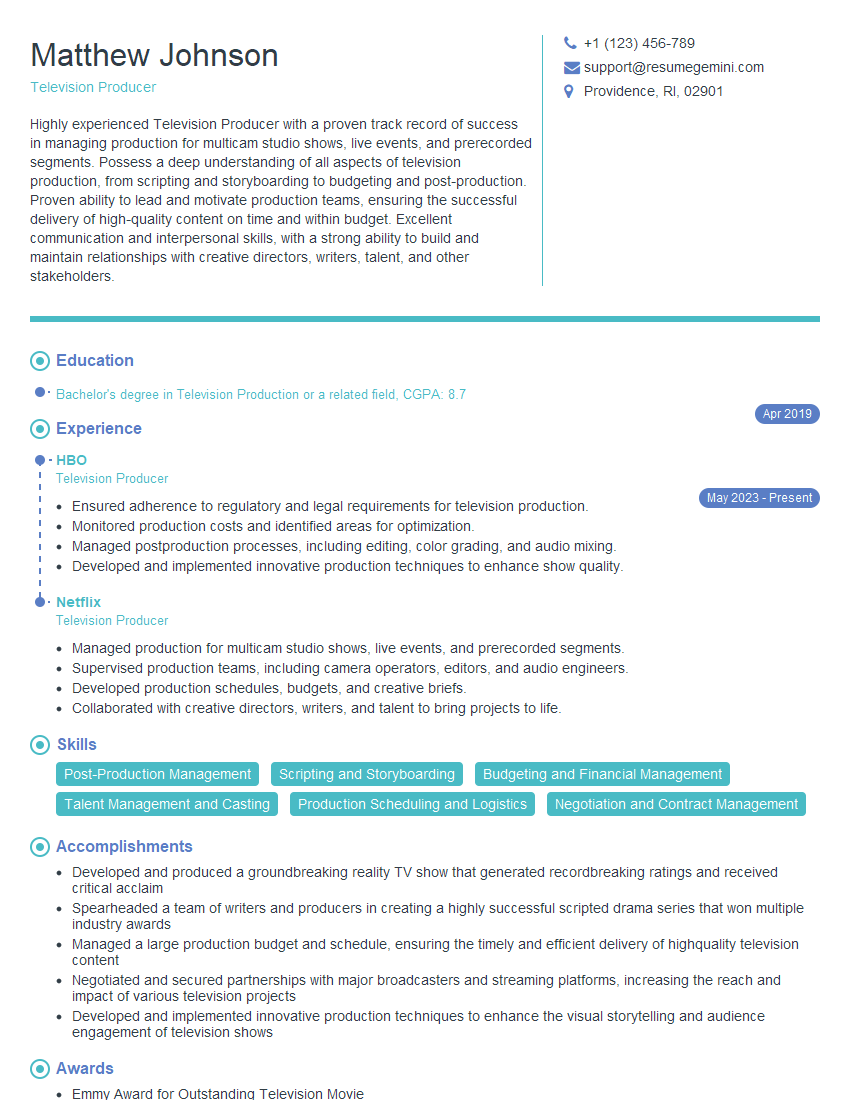
Television Producer Resume Sample
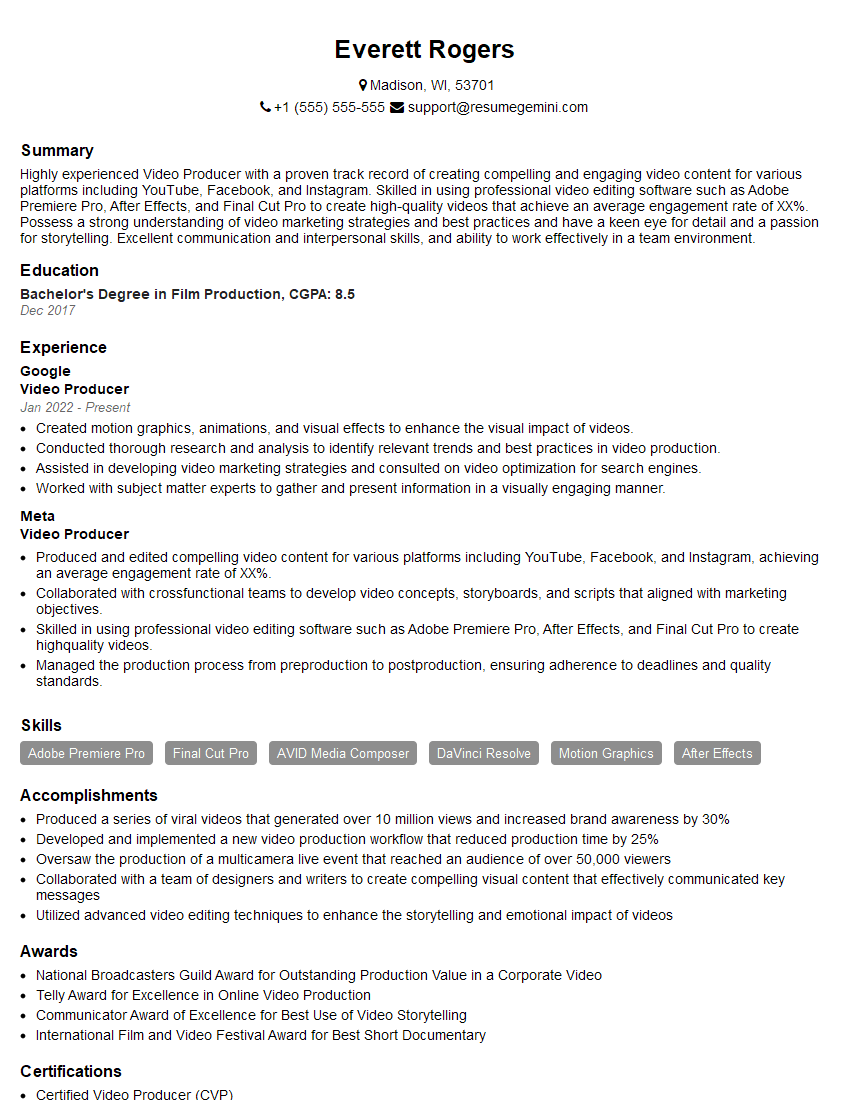
Video Producer Resume Sample
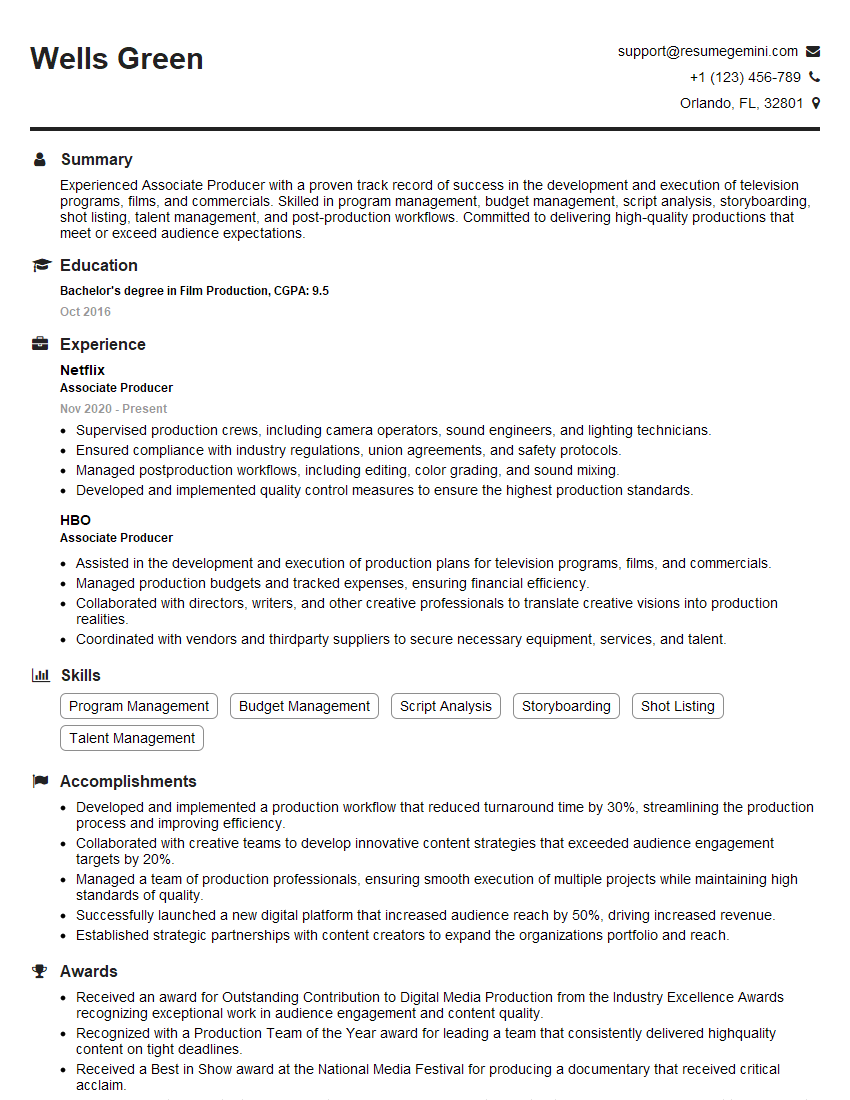
Associate Producer Resume Sample
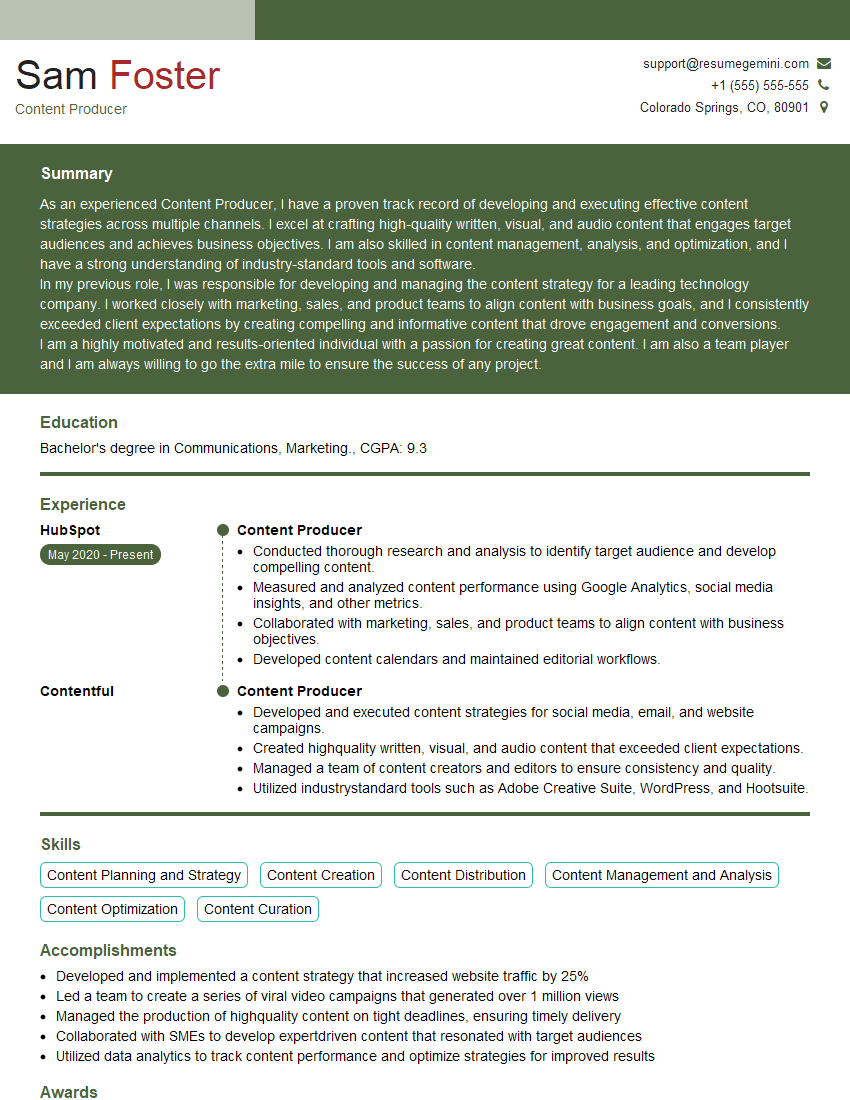
Content Producer Resume Sample
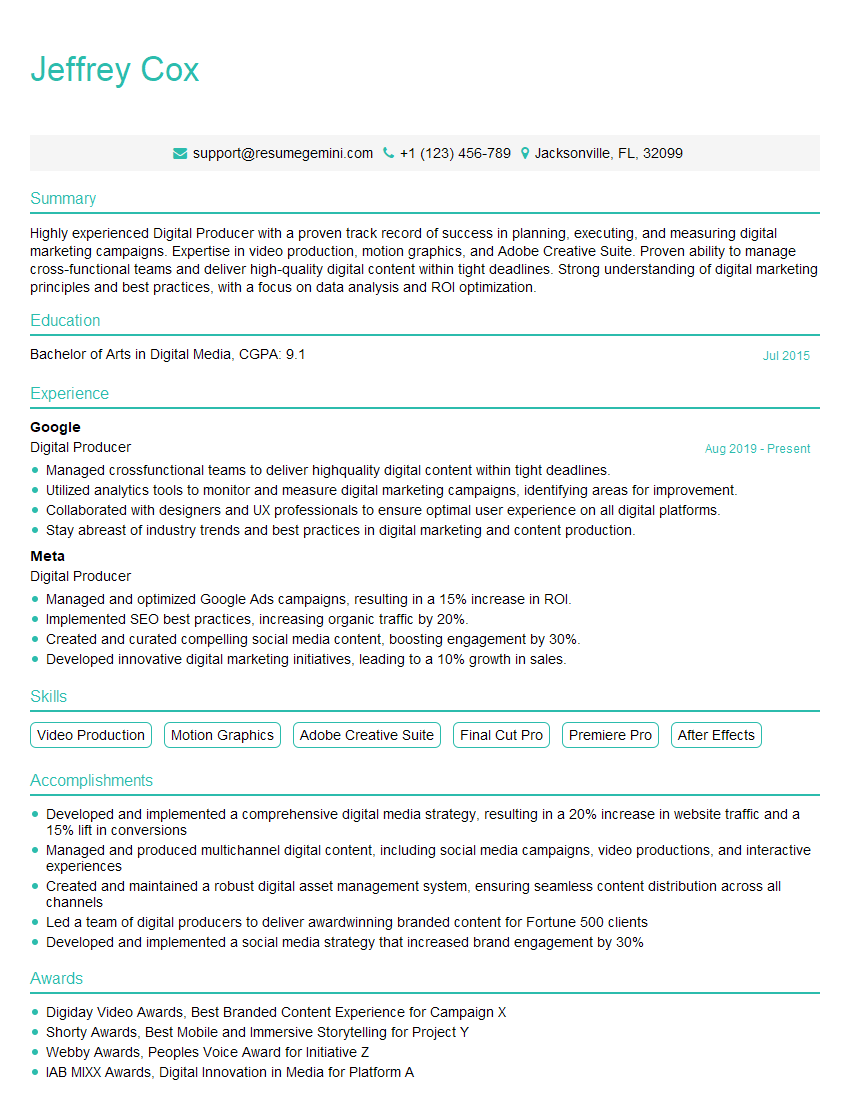
Digital Producer Resume Sample
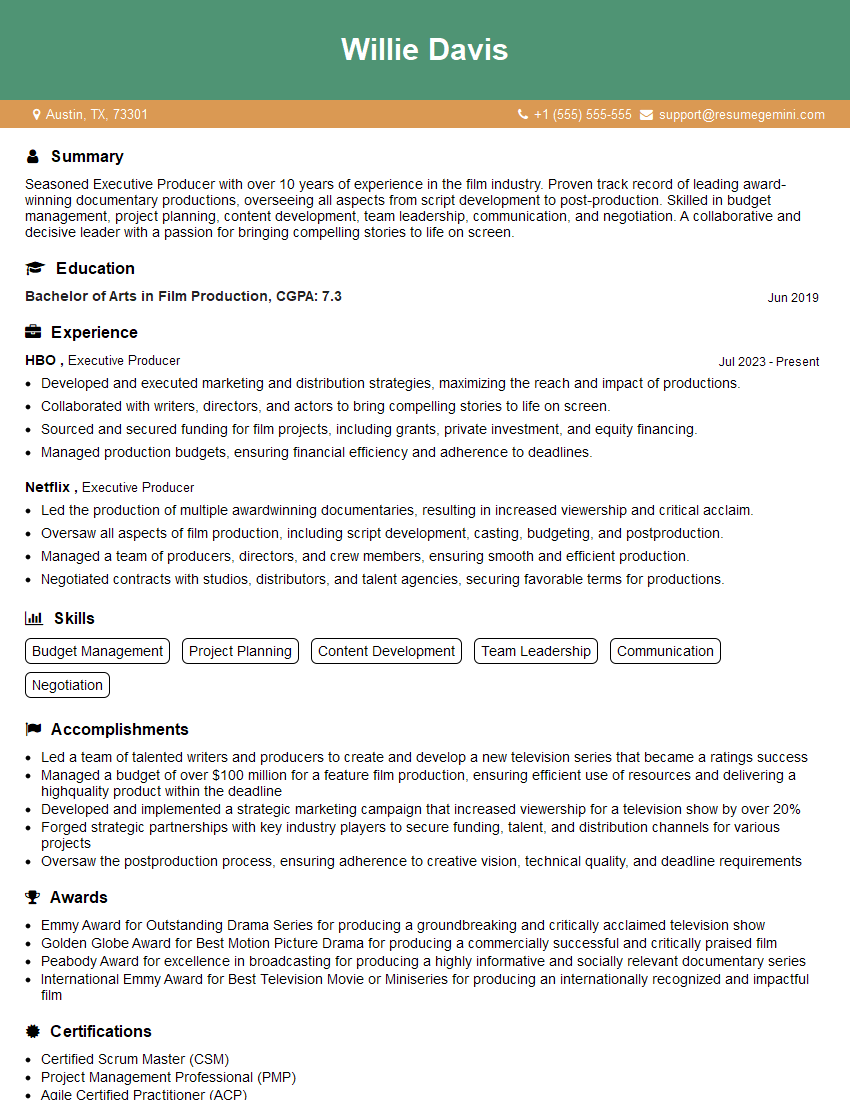
Executive Producer Resume Sample
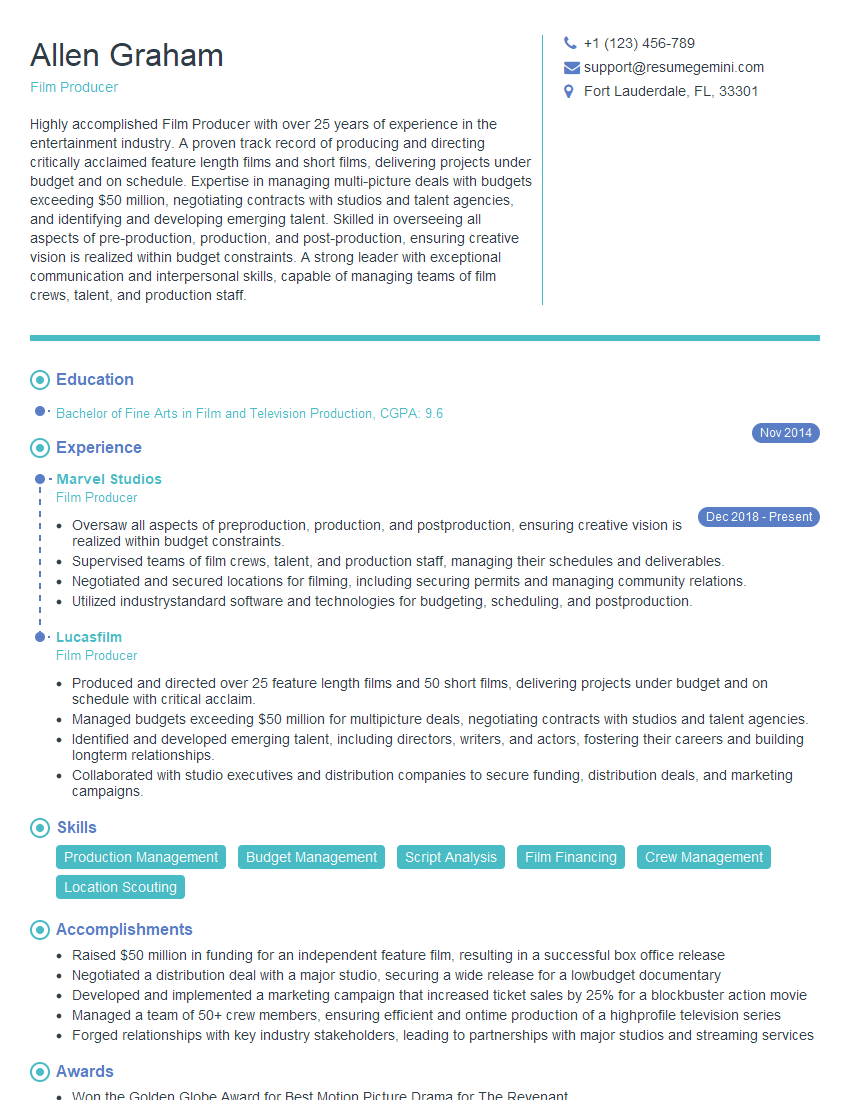
Film Producer Resume Sample
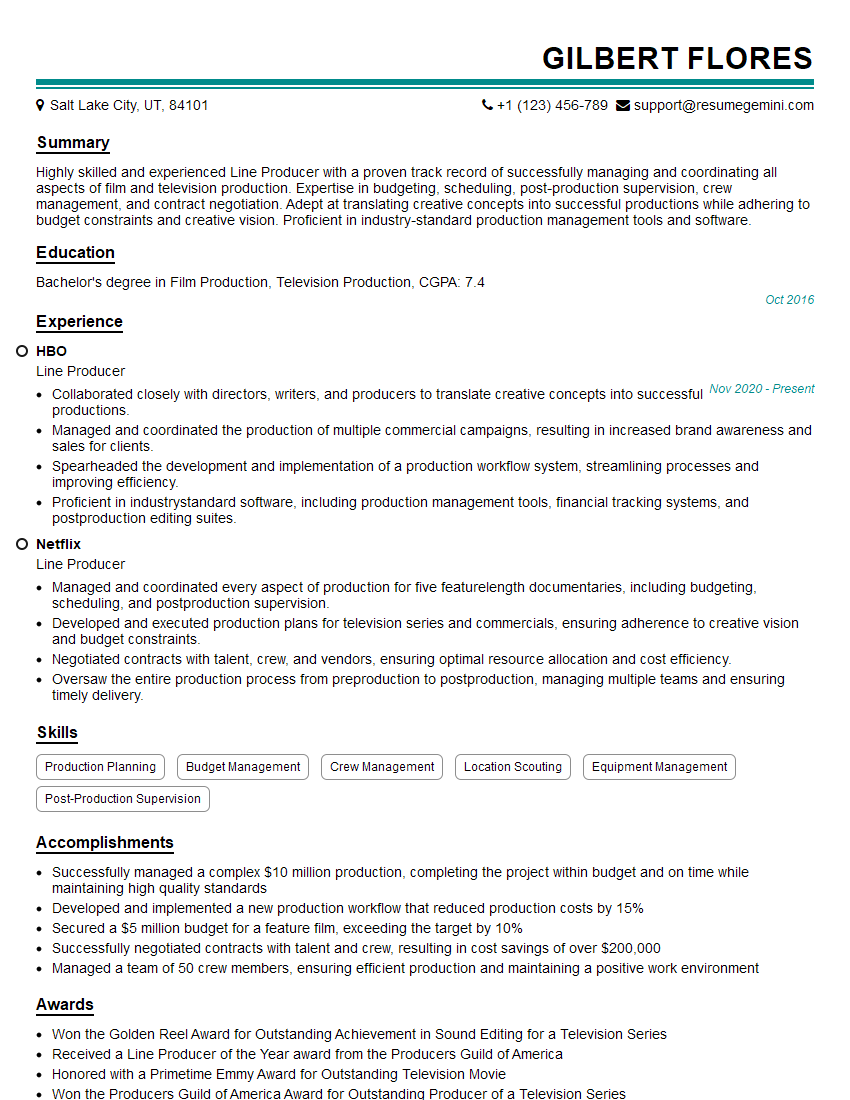
Line Producer Resume Sample
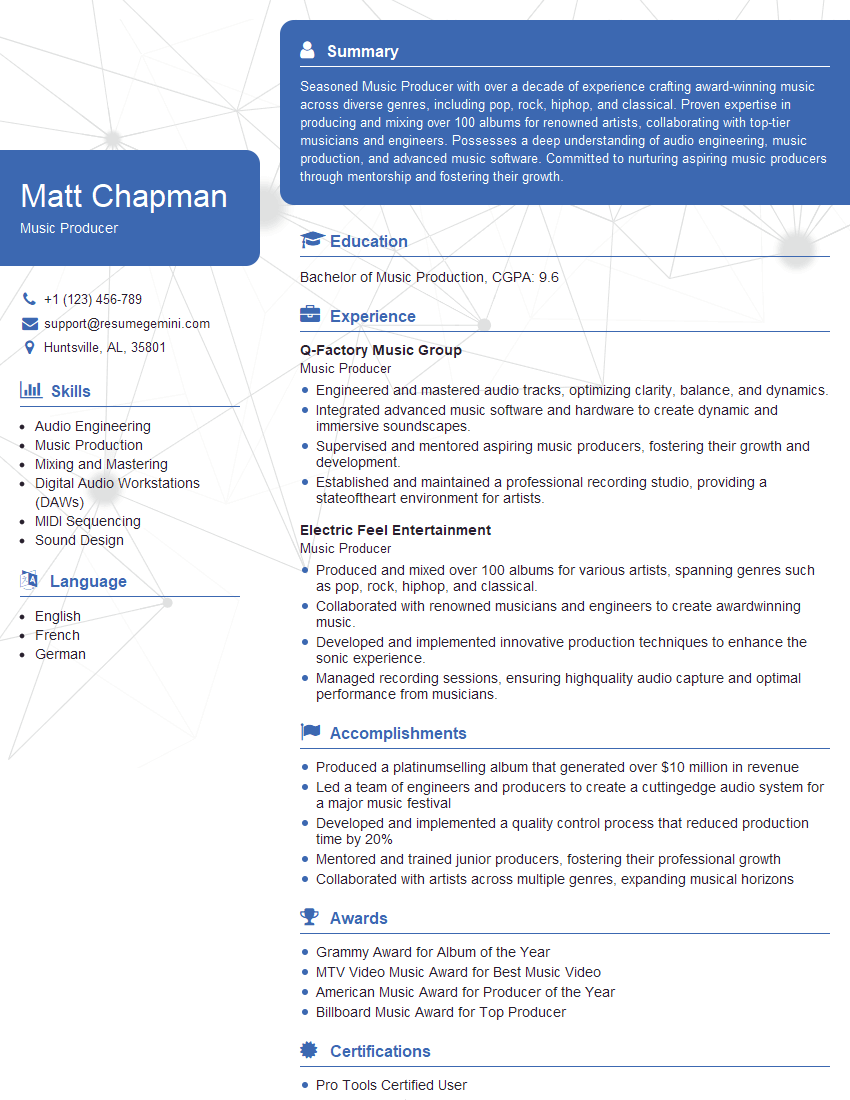
Music Producer Resume Sample
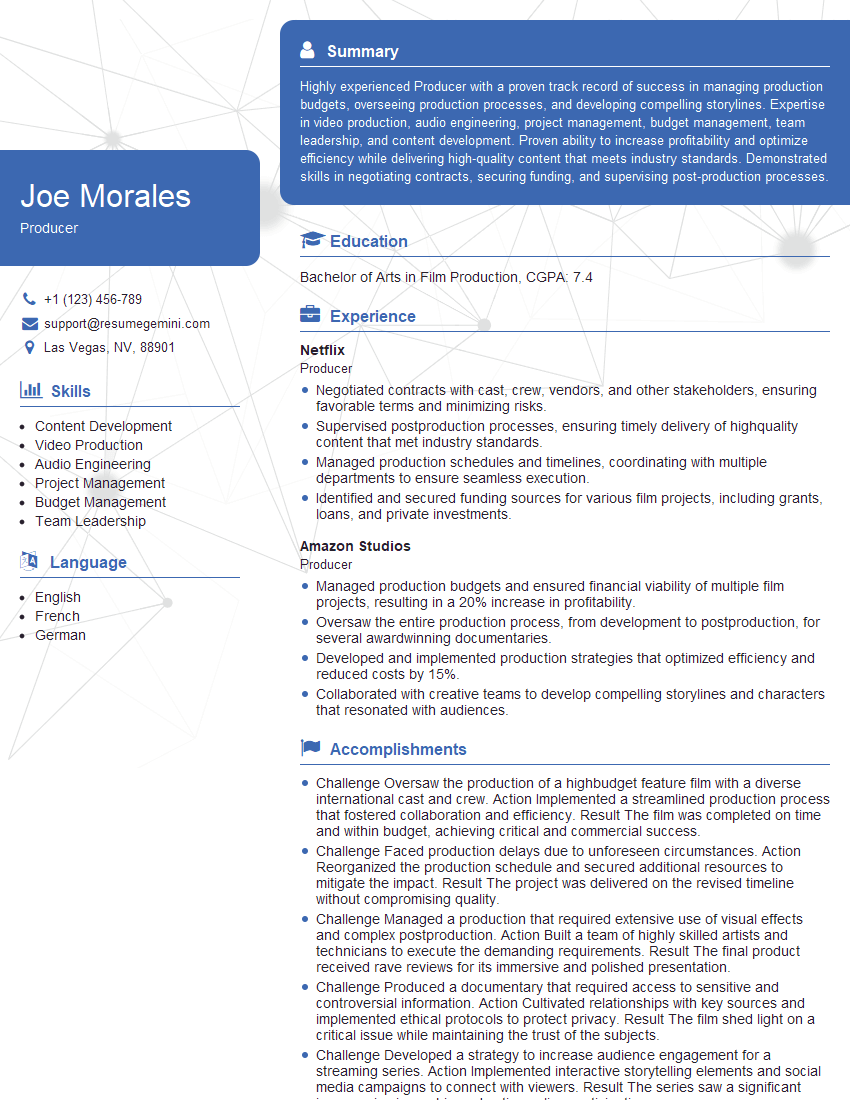
Producer Resume Sample
Explore more articles
Users Rating of Our Blogs
Share Your Experience
We value your feedback! Please rate our content and share your thoughts (optional).
What Readers Say About Our Blog
Very informative content, great job.
good