Interviews are more than just a Q&A session—they’re a chance to prove your worth. This blog dives into essential Product Compliance Testing interview questions and expert tips to help you align your answers with what hiring managers are looking for. Start preparing to shine!
Questions Asked in Product Compliance Testing Interview
Q 1. Explain the difference between compliance testing and quality assurance testing.
Compliance testing and quality assurance (QA) testing are related but distinct processes. QA testing focuses on ensuring a product meets its specified requirements and functions as intended, aiming for high quality and user satisfaction. Think of it as checking if the cake is baked correctly, the right size, and tastes good. Compliance testing, however, focuses on ensuring the product meets all relevant legal, regulatory, and industry standards. This is like checking if the cake meets food safety regulations, labeling requirements, and allergen guidelines. While a high-quality cake (passing QA) is desirable, it’s unacceptable if it’s unsafe or doesn’t meet legal requirements (failing compliance).
In short: QA aims for a good product; compliance ensures a legal and safe product.
Q 2. Describe your experience with specific compliance standards (e.g., ISO 9001, ISO 14001, UL, CE).
I have extensive experience working with several key compliance standards. My work with ISO 9001, focused on quality management systems, has involved implementing and maintaining processes for documentation control, internal audits, and continual improvement. This ensured consistent product quality and traceability. For example, I helped a client establish a robust system for managing design changes, preventing deviations from approved specifications and maintaining compliance. With ISO 14001 (environmental management systems), my contributions have centered on minimizing environmental impact through waste reduction strategies and energy efficiency improvements, including documentation and compliance audits.
My experience with product safety certifications like UL (Underwriters Laboratories) is considerable. I’ve been involved in various testing procedures, from electrical safety evaluations to flammability tests, ensuring products meet specific safety requirements for consumer markets. Similarly, I’ve worked extensively with CE marking, understanding the directives relevant to the specific products. This involves ensuring conformity with EU health, safety, and environmental protection legislation. I’ve particularly focused on the Electromagnetic Compatibility (EMC) directive and the Low Voltage Directive (LVD). This often involves meticulous documentation and testing protocols to ensure each product is compliant before market release.
Q 3. How do you identify and mitigate compliance risks in product development?
Identifying and mitigating compliance risks requires a proactive approach starting at the initial design phase. This involves a thorough review of applicable regulations and standards specific to the product’s intended market. A key step is conducting a comprehensive compliance risk assessment, identifying potential issues and assigning them risk levels based on the severity of potential non-compliance and the likelihood of occurrence.
Mitigating risks requires a multi-faceted approach. This may include implementing robust design controls to prevent non-compliance from the start. For example, using only approved components, rigorously testing materials and components, and ensuring proper design reviews. We also ensure thorough documentation of all compliance-related activities, including test results and certifications. Regular internal audits and management reviews are also crucial to monitor effectiveness and identify potential weaknesses in the system. In short, a proactive approach involving careful planning, meticulous documentation, and continuous monitoring is key to preventing costly compliance issues later in the development cycle.
Q 4. What are your strategies for managing and prioritizing multiple compliance projects?
Managing multiple compliance projects effectively involves employing a structured approach. I typically start by prioritizing projects based on urgency, potential impact (financial and reputational), and regulatory deadlines. Tools like Gantt charts and project management software are invaluable for visualizing timelines, dependencies, and resource allocation.
Clear communication and collaboration across different teams (engineering, legal, quality assurance) is essential. Regular meetings and progress reports keep everyone informed and aligned. I also utilize risk-based prioritization to focus resources on the highest-risk projects first. Finally, leveraging automation where possible, for instance, for report generation and data analysis, can significantly improve efficiency and free up time for more critical tasks. A well-defined workflow and clear responsibilities are vital for seamless execution and meeting deadlines.
Q 5. Explain your experience with different testing methodologies (e.g., functional, performance, stress testing).
My experience spans various testing methodologies crucial for thorough product validation. Functional testing verifies that each feature works as specified. Performance testing assesses the product’s responsiveness under various load conditions, ensuring it functions optimally under expected user scenarios. Stress testing goes further, pushing the product beyond its expected limits to identify breaking points and ensure robustness.
Other methodologies like unit testing (testing individual components) and integration testing (testing the interaction between different components) form the basis of a comprehensive approach. Selecting the right methodology is determined by the specific product and its intended use. For example, a high-traffic website would benefit significantly from performance and stress testing, whereas a simple utility tool may not require extensive performance evaluations. A combination of different methods often provides the most complete testing strategy.
Q 6. How do you ensure compliance throughout the entire product lifecycle?
Ensuring compliance throughout the entire product lifecycle, from conception to end-of-life, necessitates a structured approach. Compliance considerations must be integrated into each stage: design, development, manufacturing, distribution, and even disposal.
This requires establishing a robust compliance management system. This system incorporates regular compliance reviews at every phase, ensuring ongoing adherence to all relevant regulations. Clear procedures for handling design changes, component substitutions, and other potential deviations are crucial. Effective communication and collaboration across different teams are fundamental to success. Traceability of all materials, processes, and test results is essential, providing a clear audit trail. Finally, post-market surveillance and feedback mechanisms allow for prompt detection and resolution of any emerging compliance issues, maintaining compliance throughout the product’s life.
Q 7. Describe a situation where you had to troubleshoot a compliance issue. What was your approach?
In one instance, we discovered a potential compliance issue during testing for a medical device. Initial tests revealed inconsistencies in the device’s temperature readings. My approach involved a systematic investigation.
First, I meticulously reviewed the test setup to rule out any external factors. Then, I conducted more rigorous testing, varying parameters to isolate the problem’s source. Simultaneously, we reviewed the design specifications and manufacturing processes. We identified a flaw in the sensor calibration procedure during manufacturing. Once identified, we implemented a corrective action plan: revising the calibration procedure, retesting affected units, and introducing stricter quality checks. We thoroughly documented the issue, corrective actions, and verification tests to ensure compliance with regulatory requirements. The issue was effectively resolved, demonstrating the importance of thorough investigation and well-defined corrective action procedures.
Q 8. What tools and technologies are you familiar with for conducting compliance testing?
My experience encompasses a wide range of tools and technologies for conducting compliance testing. This includes specialized software for testing electromagnetic compatibility (EMC), such as spectrum analyzers and anechoic chambers for measuring radiated emissions and immunity. For safety testing, I’m proficient in using equipment like oscilloscopes, power analyzers, and insulation resistance testers. Beyond hardware, I’m also adept at using software for data analysis, report generation, and managing compliance documentation. For example, I’ve extensively used software like Test Management Systems (TMS) to track tests, manage results and generate reports. Furthermore, I have experience with simulation software to predict compliance outcomes before physical testing, saving time and resources. Finally, familiarity with databases is crucial for efficiently organizing and retrieving test data and compliance records.
- Hardware: Spectrum analyzers, anechoic chambers, oscilloscopes, power analyzers, insulation resistance testers.
- Software: Test Management Systems (TMS), data analysis software, report generation tools, simulation software, database management systems.
Q 9. How do you stay up-to-date with changing regulations and standards?
Staying current with ever-evolving regulations and standards is paramount in product compliance. My strategy involves a multi-pronged approach. Firstly, I actively subscribe to newsletters and updates from organizations like the IEC, UL, and relevant government agencies. Secondly, I regularly attend industry conferences and webinars to learn about emerging trends and best practices. Thirdly, I leverage online resources such as regulatory databases and industry publications to access the latest information. Finally, I maintain a network of colleagues and experts in the field to share knowledge and insights. Think of it like constantly updating a software program – continuous improvement is key to staying ahead of the curve in this dynamic environment.
Q 10. Describe your experience with documentation and reporting for compliance purposes.
Meticulous documentation and reporting are fundamental to demonstrating compliance. My experience involves creating comprehensive test plans, outlining the scope, methods, and acceptance criteria for each test. I meticulously document all test results, including raw data, observations, and any deviations from the plan. This documentation is crucial for audits and traceability. I then generate detailed reports summarizing the findings, including a clear statement of compliance or non-compliance, along with any recommendations for corrective actions. These reports are formatted to meet specific regulatory requirements and are easily understandable for both technical and non-technical audiences. I’ve used various report generation tools to ensure consistency and professionalism in the reporting process.
For example, in a recent project involving a medical device, I created a comprehensive report detailing every test conducted, referencing specific regulatory requirements (e.g., ISO 13485), and including all necessary certifications and approvals. This was essential for regulatory submissions and ensured the device’s safe and legal market entry.
Q 11. How do you handle conflicts between different compliance requirements?
Conflicts between different compliance requirements are common, particularly when dealing with products intended for multiple markets. Resolving these conflicts necessitates a structured approach. First, I identify all applicable regulations and standards. Then, I analyze the conflicting requirements, understanding the specific stipulations of each. Finally, I develop a prioritized compliance strategy, often involving discussions with stakeholders and legal counsel to determine the most appropriate and legally sound course of action. This may involve selecting the most stringent standard, seeking waivers or exemptions, or designing the product to meet all requirements, potentially through design changes or additional testing.
For example, if a product needs to meet both US and EU safety standards, which have slightly different requirements for certain components, I would prioritize the strictest standard and design the product to exceed both requirements to minimize future risk.
Q 12. How familiar are you with the legal implications of non-compliance?
I possess a strong understanding of the legal ramifications of non-compliance. These can range from hefty fines and penalties to product recalls, reputational damage, and even legal action. Non-compliance can also lead to market access restrictions and prevent the product from being sold legally in certain jurisdictions. The severity of the consequences varies depending on the specific regulation violated and the nature of the product. Therefore, a proactive and diligent approach to compliance is crucial, not just to meet legal obligations, but also to protect the company’s interests and maintain consumer trust.
Understanding the legal landscape and implications allows me to make informed decisions, perform thorough risk assessments, and develop comprehensive compliance strategies that mitigate potential legal exposure.
Q 13. How do you collaborate effectively with cross-functional teams to ensure compliance?
Effective cross-functional collaboration is essential for achieving product compliance. My approach involves open communication and regular meetings with various teams, including engineering, design, manufacturing, and legal. I ensure that all stakeholders have a clear understanding of the compliance requirements and their roles in meeting them. I proactively share information, updates, and potential challenges, facilitating a collaborative problem-solving environment. Moreover, I utilize project management tools to track progress, manage tasks, and ensure transparency across teams. A strong collaborative spirit prevents conflicts, promotes shared responsibility, and leads to efficient and effective compliance.
Q 14. Explain your experience with risk assessments related to product compliance.
Risk assessment is a crucial element of product compliance. I conduct thorough risk assessments throughout the product lifecycle, identifying potential compliance risks and evaluating their likelihood and potential impact. This involves analyzing product design, manufacturing processes, and intended use. I use various techniques, such as Failure Mode and Effects Analysis (FMEA), to systematically identify potential failure modes and their impact on compliance. Based on these assessments, I develop mitigation strategies to reduce risks, prioritizing actions based on the severity and likelihood of each risk. These risk assessments are documented and regularly reviewed to adapt to changes in product design, regulations, or technology.
For instance, in a recent risk assessment, we identified a potential risk related to the electromagnetic interference of a new device. By proactively designing shielding and conducting thorough EMC testing, we mitigated the risk and ensured compliance with regulatory standards.
Q 15. What are the key elements of a robust compliance program?
A robust compliance program is the backbone of any responsible organization, ensuring products meet all relevant regulations and standards. It’s not just about avoiding fines; it’s about building trust with consumers and maintaining a positive brand reputation. Key elements include:
- Clearly Defined Scope: Identifying all applicable regulations and standards (e.g., CE marking, FCC regulations, RoHS directive) for each product. This requires thorough research and understanding of target markets.
- Documented Processes: Establishing standardized procedures for testing, documentation, and record-keeping. This minimizes ambiguity and ensures consistency.
- Qualified Personnel: Employing or contracting individuals with the necessary expertise and certifications to conduct testing and interpret results accurately.
- Effective Testing Methodology: Implementing a comprehensive testing plan that covers all aspects of compliance, utilizing validated test methods and equipment.
- Corrective and Preventive Actions (CAPA): A system for identifying, analyzing, and resolving non-conformances found during testing or audits. This ensures continuous improvement.
- Regular Audits and Reviews: Conducting internal audits and external inspections to verify compliance and identify areas for improvement. This provides an independent verification of the effectiveness of the program.
- Management Commitment: Top-management support and involvement are crucial to the program’s success. Resources and commitment must be clearly demonstrated.
For instance, a medical device company might have a compliance program covering ISO 13485, FDA regulations, and specific standards related to the device’s functionality. Each element listed above would be meticulously addressed within their program.
Career Expert Tips:
- Ace those interviews! Prepare effectively by reviewing the Top 50 Most Common Interview Questions on ResumeGemini.
- Navigate your job search with confidence! Explore a wide range of Career Tips on ResumeGemini. Learn about common challenges and recommendations to overcome them.
- Craft the perfect resume! Master the Art of Resume Writing with ResumeGemini’s guide. Showcase your unique qualifications and achievements effectively.
- Don’t miss out on holiday savings! Build your dream resume with ResumeGemini’s ATS optimized templates.
Q 16. How do you validate test results and ensure data integrity?
Validating test results and ensuring data integrity are paramount. This involves a multi-faceted approach:
- Calibration and Traceability: All testing equipment must be calibrated regularly to traceable standards, ensuring accuracy and reliability. Calibration certificates must be maintained.
- Documented Procedures: Detailed test procedures must be followed meticulously and documented completely. Any deviation must be justified and recorded. This includes noting the equipment used, operator information, and environmental conditions.
- Chain of Custody:Maintaining a clear chain of custody for samples and test data to prevent any unauthorized changes or tampering. This often involves unique identifiers and secure storage.
- Data Integrity Checks: Implementing checks such as checksums or digital signatures to verify data hasn’t been altered. Using electronic data management systems with robust access control adds an extra layer of security.
- Peer Review: Having another qualified individual independently review the test results and documentation before finalization ensures objectivity and catches potential errors.
- Statistical Analysis: For certain tests, statistical analysis helps to determine the validity and reliability of results. This is crucial in demonstrating compliance to regulatory bodies.
Imagine a scenario where a safety test on a power supply yields questionable results. By having robust data integrity processes in place, we can trace the entire process—from sample selection to result generation—to identify any potential errors or inconsistencies. If the data shows a clear problem, it allows us to take appropriate action.
Q 17. Describe your experience with internal audits and external inspections.
I have extensive experience with both internal audits and external inspections, having led and participated in numerous audits across various industries. Internal audits are crucial for proactive compliance. They help identify weaknesses in our processes before external auditors find them. They provide an opportunity for continuous improvement. I develop audit plans covering all aspects of our compliance program, conduct audits based on those plans, document findings, and work with the relevant teams to implement corrective actions.
External inspections, on the other hand, are more formal and often conducted by notified bodies or regulatory agencies. These inspections are a demonstration of compliance to third parties and can have significant consequences if non-conformances are found. My experience includes preparing for these inspections, gathering all necessary documentation, and actively participating in the inspection process. Open communication and transparency are key during external inspections.
For example, in one instance, an internal audit revealed a gap in our documentation process for a specific type of safety test. This was promptly addressed, preventing a potential major issue during a subsequent external inspection. In another case, an external inspection highlighted areas for improvement in our calibration procedures, leading to a more robust and efficient system.
Q 18. How do you handle discrepancies found during testing or auditing?
Handling discrepancies is a critical part of the compliance process. It requires a structured approach:
- Identify and Document: The first step is to clearly identify the discrepancy and document it thoroughly. Note the specific test, the observed deviation from expected results, and any relevant context.
- Investigate the Root Cause: A thorough investigation is crucial to determine the underlying cause of the discrepancy. This might involve reviewing test procedures, equipment calibration, operator training, and even the sample itself.
- Implement Corrective Actions: Based on the root cause analysis, implement corrective actions to prevent recurrence. This might involve retraining personnel, recalibrating equipment, revising test procedures, or even replacing faulty components. All corrective actions must be documented.
- Verify Effectiveness: After implementing corrective actions, verify their effectiveness by repeating the relevant tests or audits. This ensures the problem has been resolved.
- Report and Communicate: Report findings, root causes, and corrective actions to relevant stakeholders, including management and regulatory bodies (if applicable).
For instance, if a discrepancy arises during EMC testing, we’ll investigate the source—whether it’s a faulty component, a procedural error, or an issue with the testing setup. A thorough investigation, coupled with corrective action and verification, is vital to ensuring product compliance.
Q 19. How do you determine the appropriate testing scope for a given product?
Determining the appropriate testing scope requires careful consideration of several factors:
- Product Specifications: The intended functionality and design of the product dictate the necessary tests. For example, a medical device will require far more stringent testing than a simple consumer electronic.
- Target Markets: Different countries and regions have varying regulations and standards. The testing scope must be aligned with the product’s intended markets.
- Applicable Standards: Identify all applicable safety, EMC, environmental, and other standards based on the product’s type and intended use. This often involves research into relevant legislation and regulatory documents.
- Risk Assessment: A risk assessment helps identify potential hazards and prioritize testing efforts. This helps focus resources on areas with the highest potential for non-compliance.
- Product Lifecycle: The testing scope may vary throughout the product lifecycle. More extensive testing is usually needed during development, with ongoing monitoring and testing during production.
For example, a new smartphone would require extensive testing for RF emissions (EMC), safety (e.g., IEC 60950-1), and environmental conditions (e.g., IEC 60068). The specific tests would be defined based on the product specifications, target markets, and applicable standards. A risk assessment may highlight particular areas requiring more in-depth testing.
Q 20. What are your preferred methods for tracking and managing compliance documentation?
Effective tracking and management of compliance documentation is essential. My preferred methods involve utilizing a combination of:
- Electronic Document Management System (EDMS): A centralized EDMS allows for secure storage, version control, and easy access to all relevant documents. This provides a single source of truth and minimizes the risk of misplacing or losing important files.
- Metadata Tagging: Using metadata tags to categorize and search documents efficiently. This allows for quick retrieval of specific documents based on relevant criteria, such as product type, test type, or regulatory standard.
- Access Control: Implementing robust access control measures to restrict access to sensitive documentation only to authorized personnel.
- Audit Trails: Maintaining audit trails to track all document modifications and access activity. This ensures transparency and accountability.
- Regular Backups: Regular backups of all compliance documentation are essential to safeguard against data loss or corruption. This involves both on-site and off-site backups.
For example, using an EDMS, we can quickly locate the calibration certificate for a specific piece of testing equipment or easily retrieve all test reports for a particular product batch. The system ensures everyone has access to the most up-to-date version, preventing confusion and improving efficiency.
Q 21. Describe your experience with different types of compliance testing (e.g., EMC, safety, environmental).
My experience encompasses a wide range of compliance testing, including:
- Electromagnetic Compatibility (EMC): This involves testing to ensure products meet emission and immunity limits, preventing interference with other electronic devices. I’m proficient in various EMC standards, such as CISPR, FCC, and EN standards. This includes radiated and conducted emissions and immunity testing.
- Safety Testing: This focuses on assessing product safety to prevent hazards like electric shock, fire, or mechanical injury. I have experience with safety standards such as IEC 60950-1, UL 60950-1, and other relevant standards depending on the product type. This includes high-voltage tests, insulation resistance checks, and other relevant tests.
- Environmental Testing: This evaluates the product’s ability to withstand various environmental conditions, such as temperature extremes, humidity, vibration, and shock. I’m familiar with various environmental standards, including IEC 60068, MIL-STD, and others as required.
- Chemical Compliance (RoHS, REACH): I have experience in ensuring products comply with regulations regarding restricted substances, such as RoHS (Restriction of Hazardous Substances) and REACH (Registration, Evaluation, Authorization, and Restriction of Chemicals). This involves material analysis and documentation.
For instance, in one project involving a medical device, I coordinated and oversaw EMC, safety, and environmental testing to meet stringent regulatory requirements for global markets. My understanding of different testing standards and regulations was essential in ensuring the product met all necessary compliance criteria.
Q 22. How do you prioritize compliance activities against other project demands?
Prioritizing compliance activities requires a strategic approach balancing regulatory deadlines with project timelines. I use a risk-based prioritization matrix. This involves identifying all compliance requirements, assessing their potential impact (financial penalties, reputational damage, product recalls), and determining the likelihood of non-compliance. High-impact, high-likelihood items are prioritized first. For example, meeting a critical safety standard deadline for a new medical device would supersede a less urgent software update compliance issue.
This matrix is then integrated into the overall project schedule using tools like Gantt charts. Regular review meetings ensure that compliance activities remain on track and adapt to evolving project demands. Clear communication with project managers is essential to ensure everyone understands the importance of compliance and its integration into the project roadmap.
Q 23. How do you define and measure success in a compliance testing role?
Success in compliance testing isn’t solely about passing audits; it’s about proactively building a robust compliance culture. I measure success through a multi-faceted approach:
- Zero critical compliance failures: This is the ultimate goal, reflecting effective processes and thorough testing.
- On-time completion of audits and certifications: Demonstrates efficient planning and execution.
- Minimal rework due to compliance issues: Indicates proactive identification and resolution of problems during the development cycle.
- Continuous improvement of compliance processes: Tracking metrics like defect rates, testing time, and audit findings helps pinpoint areas for optimization.
- Positive feedback from auditors and regulatory bodies: Validates the effectiveness of our compliance program.
For instance, a successful project might involve implementing a new automated testing system, reducing testing time by 20% and simultaneously decreasing defect rates by 15%, leading to smoother audits and faster certifications.
Q 24. Explain your understanding of different certification processes.
Different products require different certification processes, depending on their nature and intended use. These processes typically involve:
- Self-certification: The manufacturer declares conformity based on internal testing and documentation. This is common for less regulated products.
- Third-party certification: An independent testing lab assesses the product against specific standards and issues a certificate if it meets the requirements. This is often mandatory for high-risk products like medical devices or automotive components. Examples include ISO 9001, ISO 13485, CE marking, and UL certification.
- Government regulatory approvals: These are required for certain products and often involve rigorous testing and documentation submissions to regulatory agencies like the FDA (Food and Drug Administration) or the FCC (Federal Communications Commission).
Each process involves specific documentation requirements, testing procedures, and timelines. Understanding the specific requirements for each certification is crucial for successful product launch.
Q 25. Describe a time when you had to explain a complex compliance issue to a non-technical audience.
In a previous role, we discovered a potential non-compliance issue related to a complex data encryption algorithm used in our software. Explaining this to non-technical stakeholders, including executives and marketing personnel, required a simplified approach. Instead of focusing on technical details, I used analogies to explain the concept. I compared the encryption to a locked safe—the algorithm was the lock, the key was the decryption method, and the data was the valuables inside. A weakness in the algorithm meant the safe could be easily opened, posing a significant security risk. This analogy allowed them to understand the severity of the potential issue and its implications for customer trust and company reputation. We then collaboratively decided on corrective actions, highlighting the business impact and the steps needed for remediation.
Q 26. How do you use data analytics to improve compliance processes?
Data analytics plays a vital role in improving compliance processes. I leverage data from various sources, including testing results, audit reports, and defect tracking systems. By analyzing this data, I can identify trends, patterns, and areas for improvement.
- Identifying recurring issues: Data analysis helps pinpoint frequently occurring defects or compliance violations, allowing for proactive measures to prevent future occurrences.
- Optimizing testing processes: Analyzing testing times and resource utilization enables streamlining and automation of testing procedures.
- Predictive risk assessment: By analyzing historical data, we can better predict potential compliance risks and allocate resources accordingly.
- Tracking key performance indicators (KPIs): Using data to monitor KPIs such as defect detection rate, time to resolution, and audit scores allows for regular evaluation of process effectiveness and identification of areas for improvement.
For example, analyzing test results might reveal a specific component consistently failing a certain test. This could indicate a design flaw or a process improvement need, preventing numerous future failures.
Q 27. How would you address a critical compliance failure?
Addressing a critical compliance failure requires immediate and decisive action. My approach follows these steps:
- Immediate containment: The first priority is to stop any further non-compliant products from being released or sold.
- Root cause analysis: A thorough investigation is conducted to identify the root cause of the failure. This might involve reviewing test results, design documents, and manufacturing processes.
- Corrective and preventive actions: Based on the root cause analysis, corrective actions are implemented to fix the immediate problem, and preventive actions are put in place to prevent similar issues in the future.
- Communication and reporting: All relevant stakeholders, including regulatory bodies, customers, and internal management, are informed of the failure and the corrective actions being taken. Transparency is critical.
- Documentation: All actions taken are meticulously documented to demonstrate compliance with regulations and internal processes.
In the event of a recall, I would work closely with legal and manufacturing to manage the recall process efficiently and mitigate the impact on customers and the company’s reputation. A critical failure is a learning opportunity; post-incident reviews help ensure future improvements.
Q 28. What are your career aspirations related to product compliance testing?
My career aspirations involve becoming a leading expert in product compliance testing, specializing in emerging technologies. I aim to contribute to the development of innovative compliance solutions that streamline processes and improve product safety and reliability. I see myself taking on leadership roles, mentoring junior compliance engineers, and actively participating in industry initiatives to improve compliance standards. Ultimately, I aspire to shape the future of product compliance, ensuring products are safe, reliable, and meet all necessary regulations worldwide.
Key Topics to Learn for Product Compliance Testing Interview
- Regulatory Frameworks: Understand key international and regional compliance standards (e.g., ISO, CE, FCC, RoHS) and their implications for product development and testing.
- Testing Methodologies: Familiarize yourself with various testing techniques, including functional testing, safety testing, electromagnetic compatibility (EMC) testing, and environmental testing. Understand when each method is appropriate.
- Risk Assessment and Management: Learn how to identify potential compliance risks during the product lifecycle and develop mitigation strategies. This includes understanding failure analysis and root cause determination.
- Documentation and Reporting: Master the creation of comprehensive test plans, reports, and documentation that accurately reflect testing procedures and results. Understand the importance of clear and concise communication.
- Practical Application: Be prepared to discuss real-world examples of how you’ve applied compliance testing methodologies to specific products or situations. Consider scenarios involving product recalls or non-compliance issues.
- Problem-Solving Approaches: Practice your ability to troubleshoot compliance issues, analyze test results, and propose effective solutions. Highlight your analytical skills and attention to detail.
- Emerging Technologies and Standards: Demonstrate awareness of evolving compliance landscapes and new technologies impacting product testing (e.g., IoT security, AI compliance).
Next Steps
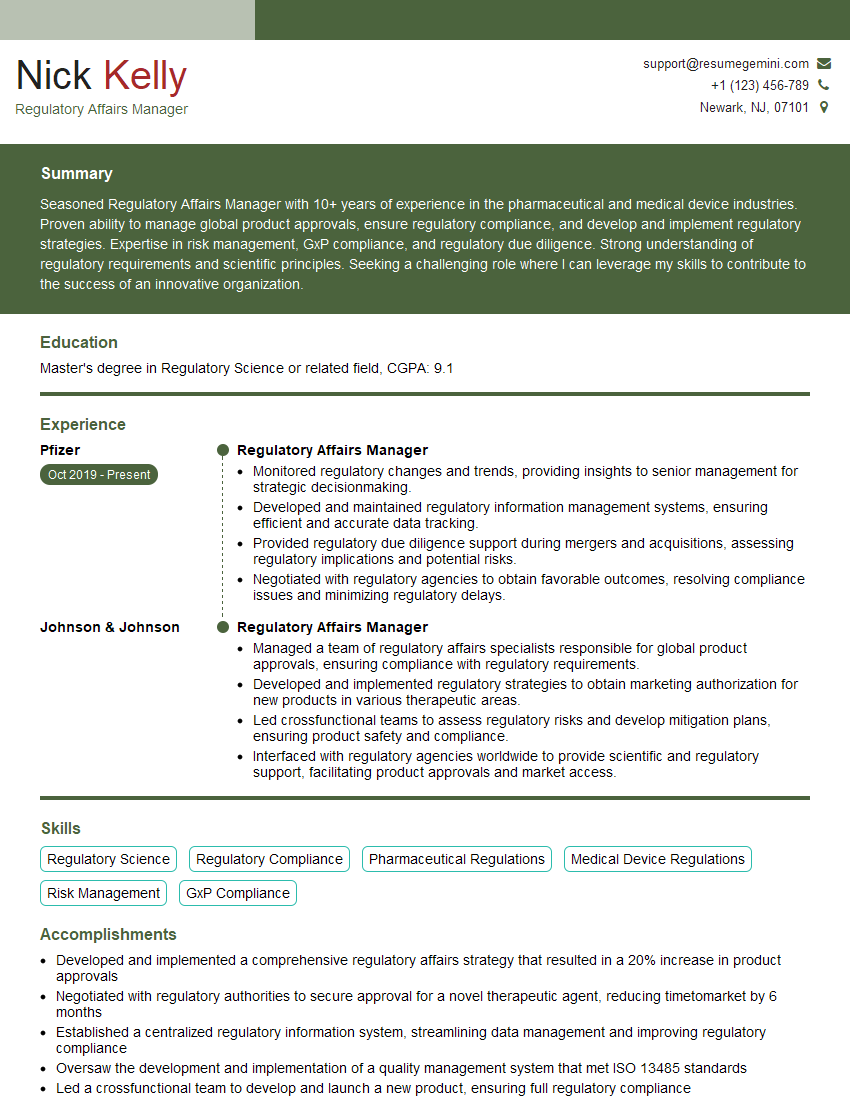
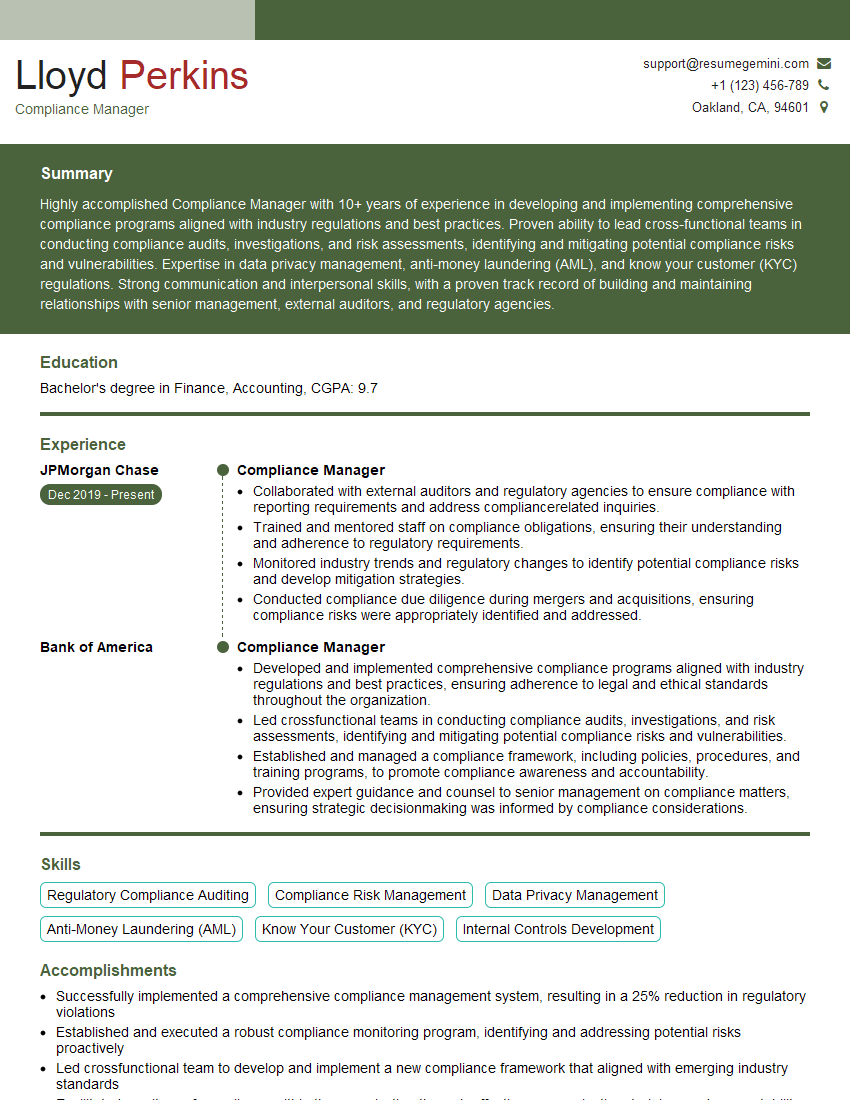
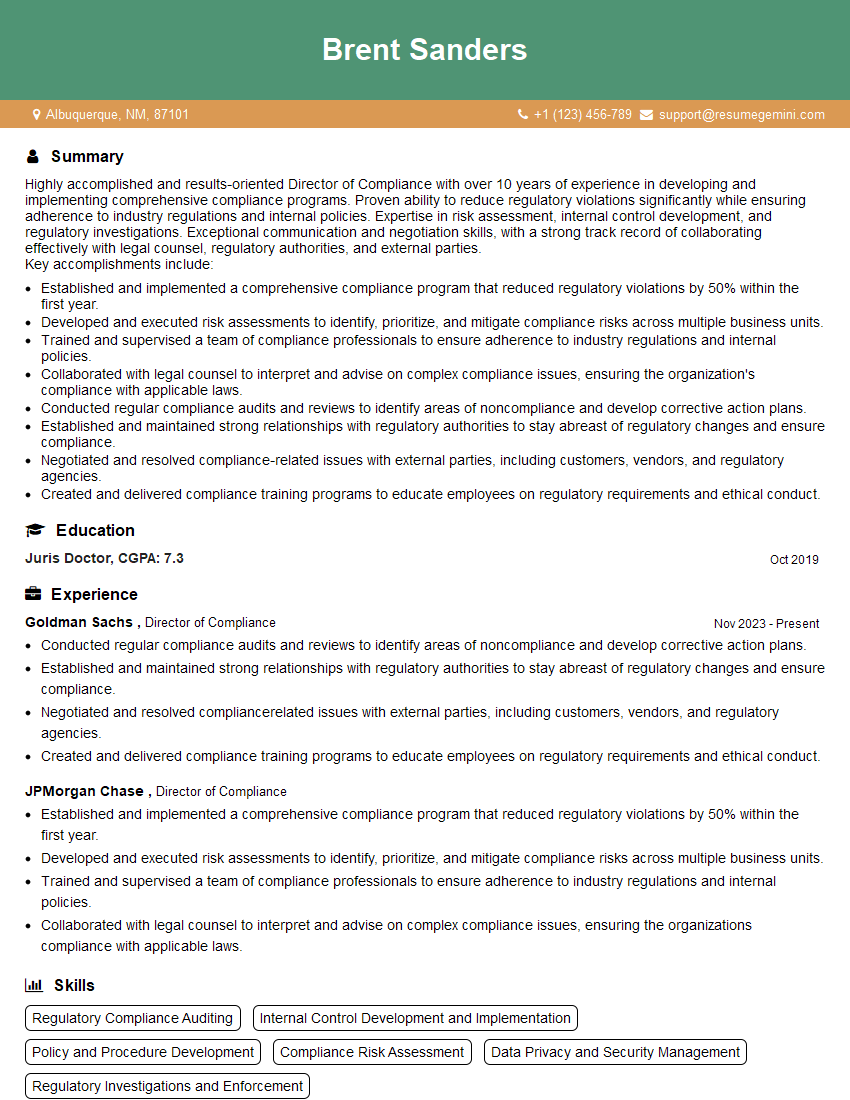
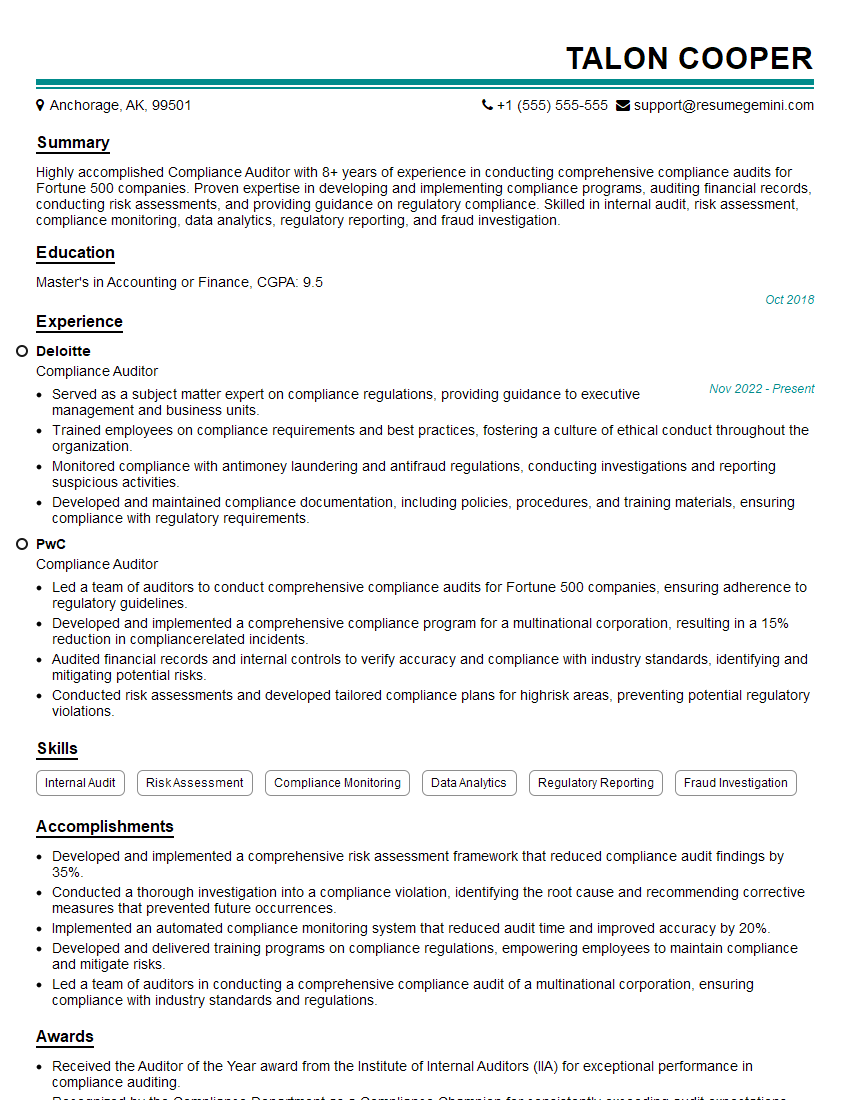
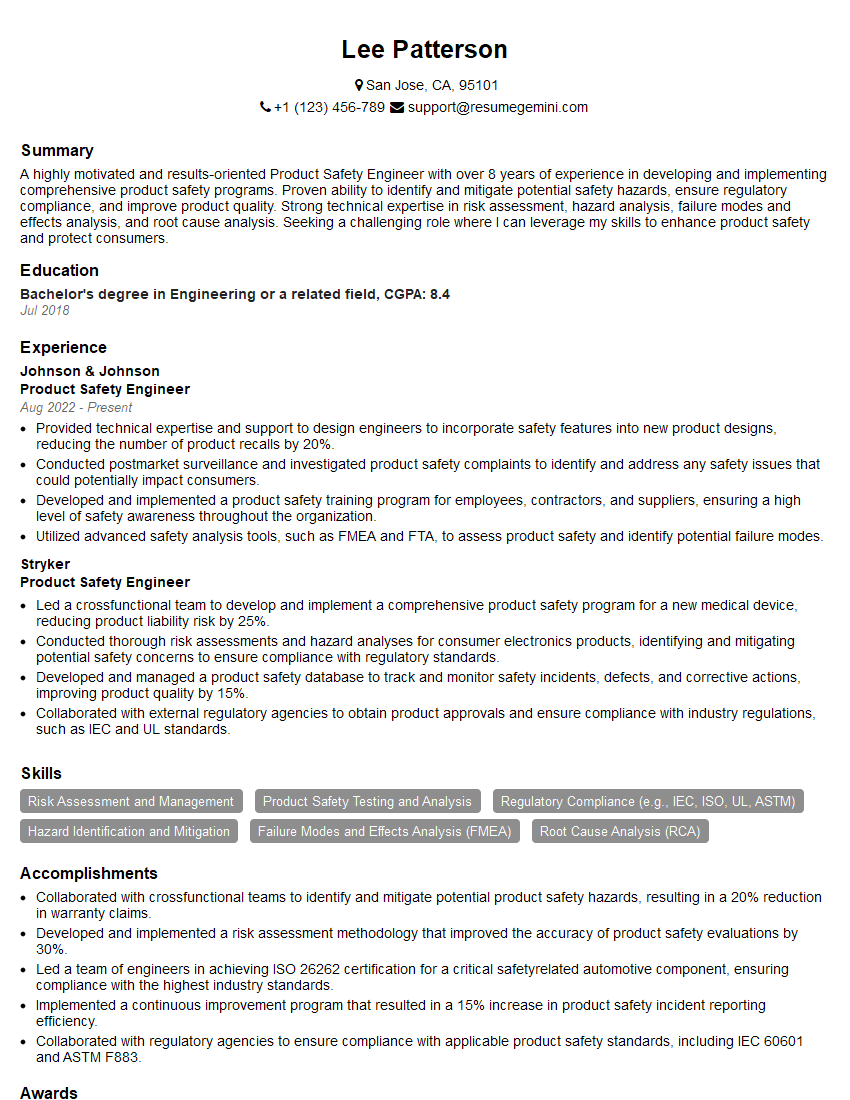
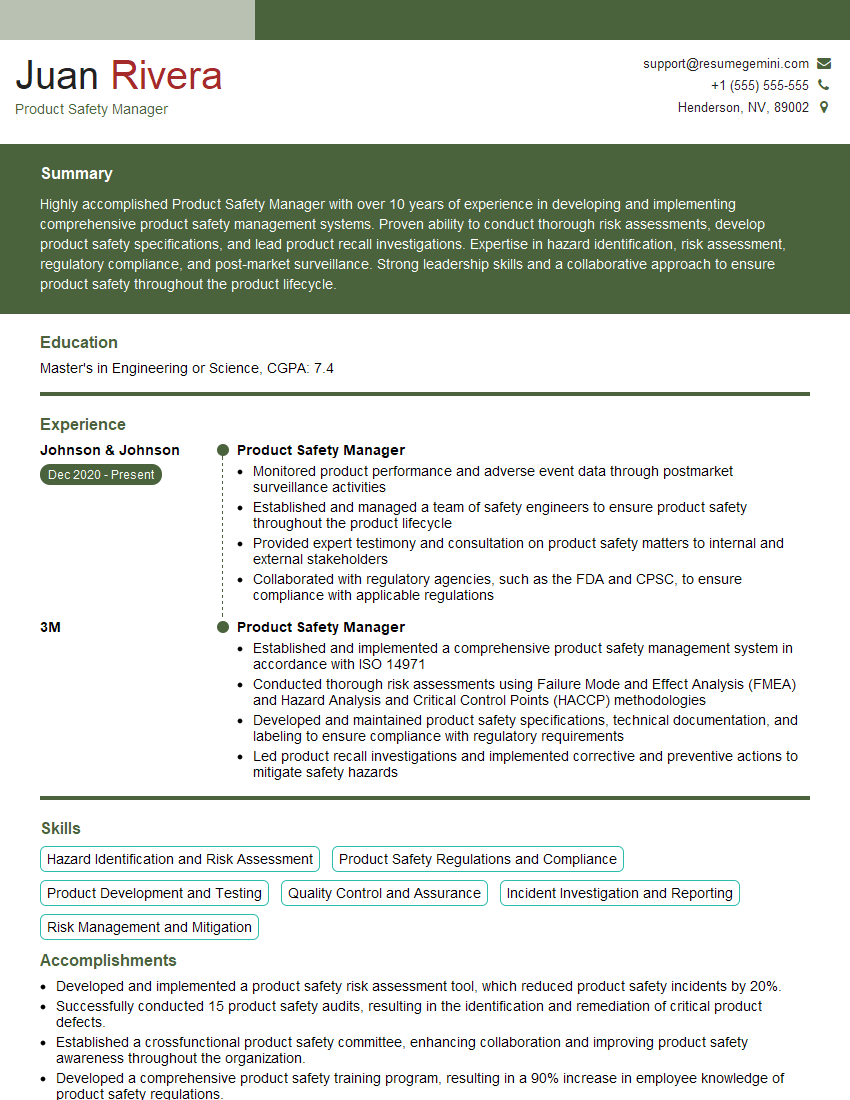
Mastering Product Compliance Testing opens doors to exciting career opportunities in a rapidly growing field. Your expertise in ensuring product safety and regulatory adherence is highly valuable to companies across various industries. To maximize your job prospects, creating a compelling and ATS-friendly resume is crucial. ResumeGemini can help you craft a professional resume that highlights your skills and experience effectively, increasing your chances of landing your dream job. Examples of resumes tailored to Product Compliance Testing are available to help guide you. Start building your success story today!
Explore more articles
Users Rating of Our Blogs
Share Your Experience
We value your feedback! Please rate our content and share your thoughts (optional).
What Readers Say About Our Blog
Very informative content, great job.
good