Cracking a skill-specific interview, like one for Product Design for Manufacturing (DFM), requires understanding the nuances of the role. In this blog, we present the questions you’re most likely to encounter, along with insights into how to answer them effectively. Let’s ensure you’re ready to make a strong impression.
Questions Asked in Product Design for Manufacturing (DFM) Interview
Q 1. Explain the principles of Design for Manufacturing (DFM).
Design for Manufacturing (DFM) is a crucial methodology that integrates manufacturing considerations into the early stages of product design. Its core principle is to optimize the design for efficient, cost-effective, and high-quality production. This involves understanding manufacturing processes, material properties, and assembly techniques to avoid costly redesigns and production bottlenecks later on. Think of it as building a house – you wouldn’t start constructing the roof before laying the foundation. Similarly, DFM ensures the product’s design is ‘buildable’ from the outset.
- Minimize parts count: Fewer parts mean less assembly time, lower costs, and reduced chances of errors.
- Simplify geometry: Avoid complex shapes that require specialized tooling or lengthy machining processes. Think of using standard components wherever possible.
- Optimize material selection: Choose materials appropriate for the manufacturing process and end-use requirements, considering factors like cost, strength, and durability.
- Design for assembly: Ensure parts are easily assembled, minimizing the number of fasteners and using techniques like snap-fits or press-fits whenever feasible.
- Consider tooling and process capabilities: Understand the limitations and capabilities of the chosen manufacturing process to ensure the design is feasible.
Q 2. Describe your experience with different manufacturing processes (e.g., injection molding, machining, casting).
My experience spans various manufacturing processes, each demanding a unique approach to DFM. I’ve extensively worked with injection molding, machining, and casting, understanding their strengths and limitations intimately.
- Injection Molding: I’ve designed numerous plastic parts using injection molding, focusing on draft angles (the angle of the part’s walls to facilitate mold release), consistent wall thickness to prevent warping, and appropriate gate and runner locations for efficient filling. For example, I once redesigned a complex part with intricate features, simplifying it to reduce mold costs by 30% without compromising functionality.
- Machining: My experience encompasses CNC machining of metal parts, where I prioritize designing for efficient material removal, minimizing the need for complex tooling, and selecting appropriate tolerances to balance precision with manufacturing costs. I once improved the machining time of a component by 25% by suggesting a minor design modification.
- Casting: I’ve worked on designs for die casting and investment casting, focusing on features like draft angles, parting lines, and core placement for accurate part formation. Understanding the shrinkage and warping tendencies of different alloys was key in successful casting designs.
Q 3. How do you identify potential DFM issues in a product design?
Identifying potential DFM issues requires a systematic approach. I typically start by reviewing the design in detail, considering factors like manufacturability, cost, and assembly. I leverage several techniques:
- Design reviews: Conducting regular design reviews with manufacturing engineers allows for early identification and resolution of potential issues.
- DFM software: Using specialized CAD software with DFM analysis capabilities helps identify potential problems like undercuts, complex geometries, and difficult-to-access areas for assembly.
- Manufacturing process simulations: Simulating the manufacturing process virtually helps predict potential issues, such as warping or molding defects.
- Tolerance analysis: Ensuring that tolerances are appropriate for the manufacturing process and assembly requirements is crucial to prevent fitting problems.
- Material selection analysis: Choosing the correct material is paramount; a poor choice can lead to manufacturing challenges and quality problems.
For example, a seemingly insignificant sharp corner might create a stress concentration point, leading to fracture during use, or might be impossible to mold cleanly. Identifying this early on prevents costly rework.
Q 4. What are some common DFM challenges and how have you overcome them?
Common DFM challenges include balancing cost, aesthetics, and functionality. Here are some I’ve encountered and how I’ve addressed them:
- Cost reduction: I once encountered a design that required expensive custom tooling. By simplifying the geometry and utilizing standard components, I reduced tooling costs by 40% without compromising functionality.
- Assembly difficulties: A complex assembly process can lead to high labor costs and poor quality. I’ve successfully addressed this by incorporating features like snap-fits and self-aligning mechanisms, reducing assembly time and improving consistency.
- Material limitations: When a chosen material proved difficult to machine or mold, I’ve successfully substituted it with a more suitable material based on the process and performance requirements, minimizing the manufacturing issues without compromising design integrity.
- Tolerance stack-up: Tight tolerances can increase manufacturing costs and reduce yield. I’ve used tolerance analysis to optimize tolerances across various parts of an assembly and reduced manufacturing issues significantly.
Q 5. How do you balance design aesthetics with manufacturability?
Balancing design aesthetics with manufacturability is a constant juggling act. It often involves iterative design and collaboration with designers and manufacturing engineers. I approach this by:
- Early collaboration: Involving manufacturing engineers early in the design process ensures that aesthetic choices don’t compromise manufacturability.
- Compromise and iteration: Sometimes, minor adjustments to the design can significantly improve manufacturability without drastically impacting aesthetics. For instance, slightly rounding a sharp corner can be done with minimal effect on the visual appeal but might significantly improve molding capabilities.
- Alternative manufacturing processes: Exploring alternative manufacturing processes can allow for more complex geometries while maintaining cost-effectiveness. 3D printing, for example, offers greater design freedom.
- Creative solutions: Using surface textures, color variations, or clever design details can maintain visual appeal even with simpler geometries.
For example, I once worked on a consumer electronics product where the design team wanted a complex, curved surface. Through collaboration, we identified a molding process that could accommodate the curve, while slightly modifying the design for optimal flow and minimizing warpage. The result was a product with a high-quality aesthetic look and effective manufacture.
Q 6. Explain your experience with tolerance analysis and its impact on DFM.
Tolerance analysis is a cornerstone of DFM. It’s the process of analyzing the variation in dimensions of individual parts and how these variations accumulate to affect the overall assembly. My experience includes using statistical methods to assess tolerance stack-up and identify potential problems before manufacturing commences. This often involves using tolerance analysis software integrated within CAD systems.
I’ve used tolerance analysis to:
- Identify critical dimensions: Determine which dimensions have the most significant impact on assembly.
- Optimize tolerances: Balance manufacturing costs and assembly requirements by allocating tighter tolerances where needed and looser ones where less precision is required. This approach minimizes manufacturing expenses and quality issues.
- Prevent interference: Avoid potential interference between parts due to dimensional variations.
- Improve assembly yield: Reduce the number of parts rejected during assembly due to dimensional issues.
For example, I was able to use tolerance analysis to identify a situation where the cumulative effect of tolerances on a critical assembly feature could cause failure, which we addressed before manufacturing the components, saving considerable costs and time.
Q 7. Describe your experience using CAD software for DFM analysis.
I’m proficient in using several CAD software packages, including SolidWorks, AutoCAD, and Creo, with integrated DFM analysis tools. These tools allow for early detection of potential manufacturing issues, such as undercuts, draft angle issues, and complex geometries, which would otherwise be costly to resolve later in the design process.
Specifically, I utilize these capabilities:
- Automated DFM checks: Many CAD packages offer automated checks to identify potential issues related to moldability, machinability, and assemblability.
- Tolerance analysis simulations: I can simulate the effects of tolerance variations on the overall assembly, helping to identify and resolve potential fitment problems.
- 3D modeling and simulation: I leverage 3D modeling and simulation to visualize the manufacturing process, such as mold filling in injection molding or material removal in machining, allowing for early problem identification.
- Design for assembly (DFA) tools: The CAD software supports DFA analysis, helping me identify potential assembly issues and propose improvements to the design for efficient and robust assembly.
The use of CAD software for DFM analysis is crucial for effective and efficient product design, saving both time and costs during the manufacturing process.
Q 8. How do you incorporate DFM principles into the early stages of product development?
Incorporating DFM principles early is crucial for minimizing costly redesigns later. It’s not an afterthought; it’s a foundational element of the design process. We start by involving manufacturing engineers from the conceptualization phase. This allows for early feedback on material choices, assembly methods, and potential manufacturing challenges. We utilize tools like Design for Manufacturing (DFM) software to analyze designs virtually, identifying potential issues like weak points, difficult-to-access areas for assembly, or parts that are too complex or expensive to manufacture.
For example, during the initial sketching phase for a new smartphone, we’d consider the feasibility of using injection molding for the casing, ensuring the design allows for easy ejection of the part from the mold without warping or defects. We’d also discuss assembly procedures—can the battery be easily installed? Are there sufficient tolerances for components to fit together without excessive force?
- Concurrent Engineering: Simultaneous design and manufacturing review sessions.
- DFM Software: Using specialized software to simulate manufacturing processes and identify potential problems.
- Material Selection Analysis: Early consideration of material properties and manufacturing compatibility.
Q 9. What are some key considerations for material selection in DFM?
Material selection in DFM is paramount, affecting cost, performance, and manufacturability. Key considerations include:
- Manufacturing Process Compatibility: Can the material be easily processed using the chosen manufacturing method (e.g., injection molding, machining, casting)? Some materials are better suited for specific processes.
- Cost: Material cost is a significant factor. We consider both the raw material cost and the processing costs associated with the material.
- Mechanical Properties: Strength, stiffness, durability, and other mechanical properties must meet the product’s functional requirements.
- Environmental Considerations: Sustainability and recyclability are increasingly important. We consider the material’s environmental impact throughout its life cycle.
- Aesthetics: Material appearance and surface finish can significantly affect the product’s appeal.
For instance, choosing ABS plastic for a consumer electronics enclosure is usually cost-effective and amenable to injection molding, allowing for high-volume production. But for a high-performance aerospace component, a more expensive and robust material like titanium alloy might be necessary despite the higher cost and more complex machining process.
Q 10. How do you assess the manufacturability of a design?
Assessing manufacturability involves a multi-faceted approach. We start by analyzing the design’s geometry, tolerances, and material choices. This includes:
- Tolerance Analysis: Ensuring that design tolerances are achievable and cost-effective. Too tight tolerances can significantly increase manufacturing costs.
- Geometric Analysis: Checking for undercuts, sharp corners, or other features that could make manufacturing difficult or impossible.
- Material Analysis: Confirming that the selected material is compatible with the manufacturing process and meets performance requirements.
- Process Simulation: Using software to simulate manufacturing processes and identify potential problems.
- Design Rule Checks (DRC): Employing software that checks a design for adherence to manufacturability guidelines.
For example, a part with complex internal features might require expensive tooling or specialized manufacturing techniques. We would then evaluate whether the design can be simplified, perhaps by changing the part’s geometry to eliminate the complex features, reducing the manufacturing cost and lead time.
Q 11. Explain your understanding of Design for Assembly (DFA).
Design for Assembly (DFA) is a subset of DFM that focuses on simplifying the assembly process. It aims to reduce the number of parts, simplify assembly operations, and minimize assembly time and cost. Key principles include:
- Part Count Reduction: Consolidating multiple parts into a single component whenever possible.
- Simplified Assembly Operations: Designing parts that are easy to handle, orient, and assemble.
- Modular Design: Breaking down the product into smaller, easily assembled modules.
- Self-mating Parts: Designing parts that guide themselves into place during assembly, reducing the need for complex fixturing or tooling.
- Gravity Insertion: Utilizing gravity to aid in the assembly process.
Imagine a children’s toy. A DFA approach might involve designing the toy with fewer screws and simpler interlocking parts, making it easier and faster for the manufacturer to assemble.
Q 12. How do you collaborate with manufacturing teams to ensure DFM best practices?
Collaboration with manufacturing teams is essential for successful DFM. We employ several strategies:
- Early Involvement: Including manufacturing engineers in the design process from the start.
- Regular Communication: Maintaining open and frequent communication between the design and manufacturing teams.
- Joint Design Reviews: Holding regular meetings to review the design and identify potential manufacturing issues.
- Prototyping and Testing: Building prototypes and testing them in a manufacturing setting to validate the design and identify any problems.
- Feedback Loops: Establishing a feedback mechanism to ensure that design changes are communicated effectively to the manufacturing team.
For example, we might hold weekly meetings with the manufacturing team to review progress and address any challenges. This iterative approach ensures everyone is on the same page and allows for quick adjustments to the design as needed.
Q 13. Describe a time you had to redesign a product to improve its manufacturability.
I once worked on a project involving a complex medical device with numerous small, delicate parts. The initial design was highly intricate, requiring extensive manual assembly, which increased labor costs and reduced production efficiency. We identified several areas for improvement using DFA and DFM principles.
The redesign involved consolidating several smaller components into larger, simpler modules. We also incorporated features like snap-fits and self-aligning features to simplify assembly. This eliminated several manual assembly steps, resulting in a 30% reduction in assembly time and a 15% decrease in production costs. The revised design was also more robust, reducing the likelihood of assembly errors. This experience highlighted the importance of early involvement of manufacturing engineers and the potential for significant cost savings through proactive DFM practices.
Q 14. What are some common tooling considerations in DFM?
Tooling considerations are critical in DFM, as tooling costs can be a significant portion of the overall manufacturing expense. Factors to consider include:
- Tooling Complexity: Complex tooling is more expensive to design, manufacture, and maintain. We strive for simpler tooling designs whenever possible.
- Tooling Material: The choice of tooling material affects its cost, durability, and lifespan. We choose appropriate materials based on the manufacturing process and the required production volume.
- Tooling Life: The expected lifespan of the tooling impacts the cost per part. Longer-lasting tooling reduces the overall cost of production.
- Tooling Maintenance: Regular maintenance is necessary to keep tooling in good condition and prevent costly downtime. We design for easier maintenance when possible.
- Tooling Cost vs. Part Cost: A balance must be struck between the cost of tooling and the cost of producing the part. High-volume production justifies more expensive tooling.
For example, when injection molding a plastic part, the mold design is crucial. An improperly designed mold can lead to defects, increased cycle times, and damage to the mold itself. Careful consideration of gate locations, cooling channels, and ejector pin placement ensures a robust and efficient molding process.
Q 15. How do you use DFM to reduce manufacturing costs?
DFM, or Design for Manufacturing, is all about optimizing a product’s design to minimize manufacturing costs. It’s like baking a cake – you wouldn’t use exotic ingredients if a simple recipe achieves the same delicious result. We achieve cost reduction through several key strategies:
- Part simplification: Reducing the number of parts decreases assembly time, material costs, and the risk of errors. For example, instead of using multiple screws and brackets, we might design a single, integrated component.
- Material selection: Choosing cost-effective materials without compromising quality is crucial. We might substitute an expensive alloy with a more affordable but equally durable plastic, depending on the application.
- Manufacturing process optimization: Selecting the right manufacturing process (e.g., injection molding instead of machining) can significantly lower costs. It’s about aligning the design with the most efficient production method.
- Tolerance optimization: Precisely defining manufacturing tolerances prevents unnecessary precision, saving time and resources. Slightly looser tolerances, where permissible, can reduce manufacturing time and material waste.
- Standardization: Using standard parts and components reduces procurement costs and simplifies assembly. If we can use off-the-shelf components, it simplifies the supply chain and reduces lead times.
For instance, I once worked on a project where we reduced the part count of a complex assembly from 30 to 15 by integrating functionalities into fewer, larger parts. This resulted in a 40% reduction in manufacturing costs.
Career Expert Tips:
- Ace those interviews! Prepare effectively by reviewing the Top 50 Most Common Interview Questions on ResumeGemini.
- Navigate your job search with confidence! Explore a wide range of Career Tips on ResumeGemini. Learn about common challenges and recommendations to overcome them.
- Craft the perfect resume! Master the Art of Resume Writing with ResumeGemini’s guide. Showcase your unique qualifications and achievements effectively.
- Don’t miss out on holiday savings! Build your dream resume with ResumeGemini’s ATS optimized templates.
Q 16. How do you utilize DFM to improve product quality?
DFM significantly impacts product quality by preventing potential defects and improving consistency. Think of it as building a house with a well-defined blueprint – every detail is considered to ensure stability and longevity. Here’s how:
- Improved manufacturability: Designing for ease of manufacturing inherently leads to fewer defects. Simple designs are less prone to errors during assembly or production.
- Robust design principles: Incorporating tolerances and considering potential variations in materials and manufacturing processes makes the product less susceptible to flaws.
- Reduced assembly complexity: Simplifying the assembly process minimizes the chances of human error, leading to more consistent quality.
- Enhanced material properties: Careful material selection ensures the product meets the required performance and durability standards. We might use materials better suited for the manufacturing process to minimize defects like warping or cracking.
- Testability: DFM often incorporates design features that allow for easy and efficient testing during and after manufacturing, which leads to early detection of defects.
In a previous project involving the design of a precision medical instrument, we implemented a robust design approach that incorporated self-aligning features, reducing assembly complexity and improving accuracy. This led to a 25% decrease in defects and a significant improvement in product reliability.
Q 17. How do you manage conflicting requirements between design and manufacturing?
Balancing design aesthetics and functionality with manufacturing constraints often involves trade-offs. It’s like choosing between a beautiful, complex cake design and a simpler, easier-to-bake one. We address this through:
- Collaborative design reviews: Early and frequent collaboration between designers, engineers, and manufacturing personnel is key. This allows for open discussion and negotiation on design parameters.
- Prioritization and compromise: Defining clear priorities and understanding which aspects are non-negotiable helps to make informed decisions. We might prioritize a key functional aspect over a purely aesthetic feature if manufacturing it is too expensive or complex.
- Design for assembly (DFA): DFA principles facilitate easy and efficient assembly, often leading to design modifications that accommodate manufacturing constraints.
- Value engineering: Value engineering involves analyzing all design aspects to identify areas where cost reduction is possible without significantly impacting performance. This might include suggesting alternative materials or simplifying component geometries.
- Iterative design process: A cyclical process of design, review, and refinement allows for continuous adjustments based on manufacturing feedback.
For example, I once had to address a conflict between an intricate design that was aesthetically pleasing but difficult to manufacture and a simpler, more functional design. By collaboratively exploring alternative manufacturing processes and slightly adjusting the design, we created a product that satisfied both design and manufacturing requirements.
Q 18. What are the benefits of using simulation tools in DFM?
Simulation tools are invaluable in DFM because they allow us to virtually test and optimize designs before physical prototyping. Think of them as virtual wind tunnels for your product – allowing us to spot potential problems early on. They help in several ways:
- Finite Element Analysis (FEA): FEA simulates the stress and strain on components under various loads, identifying potential failure points and allowing for design optimization.
- Computational Fluid Dynamics (CFD): CFD analyzes fluid flow, crucial for designs involving cooling systems or aerodynamics. It helps ensure proper airflow and heat dissipation.
- Mold flow analysis: This simulates the filling of molds during injection molding, predicting potential defects like sink marks or air traps. This helps in optimizing mold design.
- Tolerance analysis: These simulations predict the impact of tolerances on the final product, enabling more robust design and reducing the risk of assembly issues.
In a recent project, we used FEA to optimize the design of a critical component subjected to high stress. Simulation results revealed a potential stress concentration that could have led to failure. By modifying the design based on simulation results, we prevented a potential catastrophic product failure.
Q 19. Explain your experience with different types of manufacturing automation.
My experience encompasses various manufacturing automation technologies. I’ve worked with:
- CNC machining: I’ve used CNC machining extensively for prototyping and small-scale production runs. It provides high precision and flexibility for complex part geometries.
- Injection molding: I’ve been involved in designing products specifically for injection molding, focusing on part design for efficient mold filling and minimal defects. I also have experience optimizing gate locations and runner systems for optimal process efficiency.
- 3D printing (additive manufacturing): I’ve used 3D printing for rapid prototyping and low-volume production, particularly for complex shapes and customized parts. I’m familiar with different 3D printing technologies, such as FDM, SLA, and SLS, and their respective limitations. This is beneficial for early stage DFM and rapid iterations.
- Robotics and automation: I have experience integrating robotic arms and automated assembly systems into production lines. This involves designing products to be compatible with automated assembly processes.
Understanding the capabilities and limitations of each technology is crucial for effective DFM. For example, while CNC machining offers great flexibility, it is more expensive and slower than injection molding for mass production. Choosing the right method is a critical aspect of achieving an efficient and cost-effective manufacturing process.
Q 20. How do you ensure that DFM considerations are reflected in product specifications?
Ensuring DFM considerations are incorporated into product specifications requires a systematic approach. It’s akin to creating a detailed recipe before starting to bake – ensuring all necessary ingredients and steps are clearly defined:
- Early DFM integration: DFM should not be an afterthought but rather an integral part of the design process from the very beginning. This might mean involving manufacturing engineers early in the design phase.
- Clear manufacturing process specifications: Product specifications should include details about the intended manufacturing process, including chosen materials, tolerances, and surface finishes. This ensures the design is aligned with manufacturing capabilities.
- DFM guidelines and checklists: Creating comprehensive DFM guidelines and checklists helps to ensure all critical considerations are addressed consistently across different products.
- Collaboration with manufacturing engineers: Regular communication and collaboration between design and manufacturing engineers are vital for identifying potential manufacturing challenges early in the design phase. It helps ensure designs are manufacturable.
- Design reviews with manufacturing input: Design reviews should involve manufacturing experts to assess the manufacturability of the design and identify potential problems before they become costly issues.
For instance, in our company, we use a DFM checklist that guides designers through key considerations, including part simplification, material selection, and tolerance optimization. This checklist ensures that all necessary aspects are addressed, resulting in a robust and manufacturable product.
Q 21. What metrics do you use to assess the effectiveness of DFM initiatives?
Measuring the effectiveness of DFM initiatives requires careful tracking and analysis of key performance indicators (KPIs). It’s like monitoring the baking process – we need metrics to ensure the final product meets our expectations:
- Manufacturing cost reduction: This is the most important metric – comparing the cost of manufacturing the product before and after DFM implementation is essential.
- Part count reduction: Tracking the number of parts in the product before and after DFM implementation helps determine the effectiveness of simplification efforts.
- Defect rate: Monitoring the defect rate during manufacturing can indicate improvements in product quality resulting from DFM. This shows the reduction in failures due to design issues.
- Lead time reduction: Reduced lead time demonstrates efficiency gains from streamlined manufacturing processes.
- Assembly time reduction: This measures the efficiency improvements gained from simplifying the product’s assembly process.
- Return on investment (ROI): Calculating the ROI of DFM initiatives provides a clear picture of the financial benefits. This is crucial for justifying future investments in DFM.
We regularly track these KPIs to evaluate the effectiveness of our DFM efforts. For example, in one project, we achieved a 30% reduction in manufacturing costs, a 20% reduction in defect rate, and a 15% reduction in assembly time through strategic DFM implementation.
Q 22. How do you stay updated on the latest advancements in manufacturing technology and DFM best practices?
Staying current in the dynamic field of manufacturing technology and DFM best practices requires a multi-faceted approach. It’s not enough to simply read industry publications; active engagement is key.
- Industry Publications and Conferences: I regularly subscribe to journals like Manufacturing Engineering and Assembly Automation, and attend industry conferences like IMTS and Automate. These events provide insights into the newest equipment, materials, and processes.
- Online Resources and Communities: I actively participate in online forums and communities, such as those on LinkedIn and specialized manufacturing websites. These platforms facilitate the exchange of knowledge and best practices, allowing for real-time problem-solving and learning from others’ experiences.
- Vendor Engagement: Direct interaction with equipment and material suppliers is crucial. They are often at the forefront of innovation, and their representatives can offer valuable insights into upcoming technologies and their practical applications.
- Continuous Learning: I dedicate time to online courses and webinars on platforms like Coursera and edX, focusing on emerging technologies like additive manufacturing, AI-driven process optimization, and sustainable manufacturing practices. This ensures my skills remain sharp and aligned with industry trends.
For example, recently, I attended a workshop on the application of generative design in injection molding, learning how AI can optimize designs for both manufacturability and performance. This directly translates into more efficient and cost-effective product development.
Q 23. Describe your approach to problem-solving in a DFM context.
My approach to problem-solving in DFM follows a structured, iterative process. Think of it as a detective investigating a crime scene: gather evidence, form hypotheses, test, and refine.
- Problem Definition: Clearly define the problem. What manufacturing challenges are we facing? Is it cost, time, quality, or material limitations?
- Root Cause Analysis: Identify the root cause, not just the symptoms. This often involves using tools like Fishbone diagrams or 5 Whys to delve deeper. For example, a high rejection rate might be due to inconsistent material properties, improper tooling, or inadequate process control.
- Brainstorming and Solution Generation: Generate multiple potential solutions, considering various aspects like manufacturing processes, materials, and tooling. This step is crucial for identifying creative and innovative solutions.
- Feasibility Assessment: Evaluate the feasibility of each solution based on cost, time, available resources, and technical limitations. This step usually involves simulations, prototyping, and potentially testing different material options.
- Implementation and Testing: Implement the chosen solution and rigorously test its effectiveness. This step involves close collaboration with manufacturing engineers to monitor the process, collect data, and fine-tune the solution as needed.
- Documentation and Continuous Improvement: Document the entire problem-solving process and learnings. This allows for continuous improvement and avoids repeating past mistakes. We also capture lessons learned to improve our overall DFM process.
For instance, I once encountered a high defect rate in a plastic part due to warpage. By employing root cause analysis, we discovered the mold design had inadequate cooling channels. By redesigning the mold with optimized cooling, we drastically reduced the defects.
Q 24. How do you handle unexpected challenges or changes during the manufacturing process?
Unexpected challenges are inherent in manufacturing. My approach focuses on proactive risk management and agile adaptation.
- Proactive Risk Assessment: We identify potential risks early in the design process through Design Failure Mode and Effects Analysis (DFMEA). This allows us to plan for contingencies and develop mitigation strategies.
- Communication and Collaboration: Open and constant communication with all stakeholders (engineering, manufacturing, suppliers) is crucial. Transparency enables rapid identification and resolution of issues.
- Data-Driven Decision Making: Real-time data from the manufacturing floor, such as process monitoring systems and quality control checks, informs our decision-making. This enables quicker responses and minimizes downtime.
- Contingency Planning: We develop alternative solutions and backup plans for potential disruptions, such as material shortages or equipment failures. This reduces the impact of unforeseen circumstances.
- Problem Solving and Iteration: Employing the problem-solving methodology described earlier is essential for quickly addressing and resolving unexpected issues. It’s often an iterative process, requiring adaptation based on real-time feedback.
For example, if a crucial component is delayed, we might temporarily substitute a readily available alternative while the original component is sourced. This minimizes production delays and allows for a smooth transition once the original component arrives.
Q 25. How do you balance cost, quality, and manufacturability during the design process?
Balancing cost, quality, and manufacturability is a core aspect of DFM. It’s a delicate dance, often requiring trade-offs. My approach involves a multi-criteria decision-making process.
- Target Setting: Clearly define targets for each criterion – cost, quality (e.g., tolerances, surface finish), and manufacturability (e.g., assembly time, process complexity). This establishes a framework for evaluating design alternatives.
- Design for Manufacturing (DFM) Guidelines: Adhering to DFM guidelines is crucial. This involves selecting appropriate manufacturing processes, materials, and tolerances to optimize manufacturability and minimize cost.
- Value Engineering: Value engineering involves analyzing each component and assembly to identify potential cost reductions without compromising quality or functionality. This might involve simplifying designs, using less expensive materials, or optimizing manufacturing processes.
- Simulation and Analysis: Using simulation software (e.g., FEA, CFD) allows us to predict the performance and manufacturability of different design options. This provides data-driven insights for making informed decisions.
- Prototyping and Testing: Building prototypes and conducting rigorous testing is essential for validating designs and identifying potential issues before mass production. This helps to minimize costly rework and revisions later in the process.
Consider a scenario where we’re designing a plastic enclosure. We might initially choose a high-quality, expensive material. Through value engineering, we might identify a more cost-effective material with acceptable properties, resulting in significant cost savings without compromising the product’s overall quality.
Q 26. Explain your experience with different types of manufacturing materials and their properties.
My experience encompasses a wide range of manufacturing materials, including metals (aluminum, steel, titanium), plastics (ABS, polycarbonate, nylon), composites (carbon fiber, fiberglass), and ceramics. Understanding their properties is fundamental to successful DFM.
- Metals: Metals offer high strength and durability but can be expensive and require specialized machining processes. The choice between aluminum (lightweight, readily machinable) and steel (high strength, corrosion resistance) depends on the application’s specific requirements.
- Plastics: Plastics provide design flexibility, cost-effectiveness, and ease of processing (injection molding, extrusion). However, their mechanical properties and temperature resistance vary widely depending on the type of plastic.
- Composites: Composites combine the strengths of different materials (e.g., high strength fibers embedded in a matrix). They offer high strength-to-weight ratios, but their manufacturing can be complex and expensive.
- Ceramics: Ceramics excel in high-temperature applications and have excellent wear resistance. However, they are brittle and require careful handling during manufacturing.
For instance, when designing a lightweight drone component, I would likely opt for aluminum or a carbon fiber composite due to their high strength-to-weight ratio. However, for a high-temperature component in an engine, a ceramic material might be more suitable.
Q 27. How do you assess the environmental impact of manufacturing decisions?
Assessing the environmental impact of manufacturing decisions is increasingly critical. It’s not just about compliance; it’s about responsible manufacturing.
- Material Selection: We prioritize materials with lower environmental impact, considering factors like recyclability, biodegradability, and embodied carbon. Using recycled materials is a significant step towards sustainability.
- Process Optimization: Optimizing manufacturing processes to minimize waste and energy consumption is vital. Lean manufacturing principles and energy-efficient equipment can significantly reduce environmental impact.
- Lifecycle Assessment (LCA): Conducting a lifecycle assessment evaluates the environmental footprint of a product across its entire lifecycle – from raw material extraction to end-of-life disposal. This provides a comprehensive understanding of the environmental implications.
- Sustainable Packaging: Selecting sustainable packaging materials and minimizing packaging waste is crucial for reducing the overall environmental footprint.
- End-of-Life Considerations: Planning for the end-of-life of the product, such as designing for disassembly and recyclability, is essential. This reduces the amount of waste sent to landfills.
For example, in a recent project, we switched from a conventional plastic to a bio-based plastic, reducing the carbon footprint of the product significantly. We also designed the product for easy disassembly, making it easier to recycle at the end of its life.
Key Topics to Learn for Product Design for Manufacturing (DFM) Interview
- Manufacturing Processes: Understanding various manufacturing techniques like injection molding, machining, casting, and 3D printing is crucial. Consider the pros and cons of each method for different materials and product designs.
- Material Selection: Learn how material properties impact manufacturability, cost, and product performance. Be prepared to discuss the trade-offs between different materials based on specific application requirements.
- Design for Assembly (DFA): Master the principles of DFA to minimize assembly time, cost, and complexity. Practice applying DFA principles to various product designs and explaining your reasoning.
- Tolerancing and GD&T: A strong understanding of geometric dimensioning and tolerancing (GD&T) is essential for communicating design intent and ensuring manufacturability. Practice interpreting and applying GD&T symbols.
- Cost Analysis and Optimization: Learn to estimate manufacturing costs and identify opportunities for cost reduction without compromising product quality or functionality. This often involves understanding different manufacturing processes and material costs.
- DFM Software and Tools: Familiarity with CAD software and DFM analysis tools will demonstrate your practical skills. Be prepared to discuss your experience with any relevant software.
- Sustainability and Environmental Considerations: Discuss how DFM principles can be applied to reduce environmental impact through material selection, waste reduction, and efficient manufacturing processes.
- Troubleshooting and Problem-Solving: Be ready to discuss how you’ve addressed manufacturing challenges in past projects, highlighting your analytical and problem-solving skills.
Next Steps
Mastering Product Design for Manufacturing (DFM) is paramount for career advancement in the engineering and product development fields. It demonstrates your ability to create practical, cost-effective, and manufacturable products, making you a highly valuable asset to any team. To maximize your job prospects, create a strong, ATS-friendly resume that highlights your DFM expertise. ResumeGemini is a trusted resource to help you build a professional resume that showcases your skills effectively. Examples of resumes tailored to Product Design for Manufacturing (DFM) roles are available to help you get started.
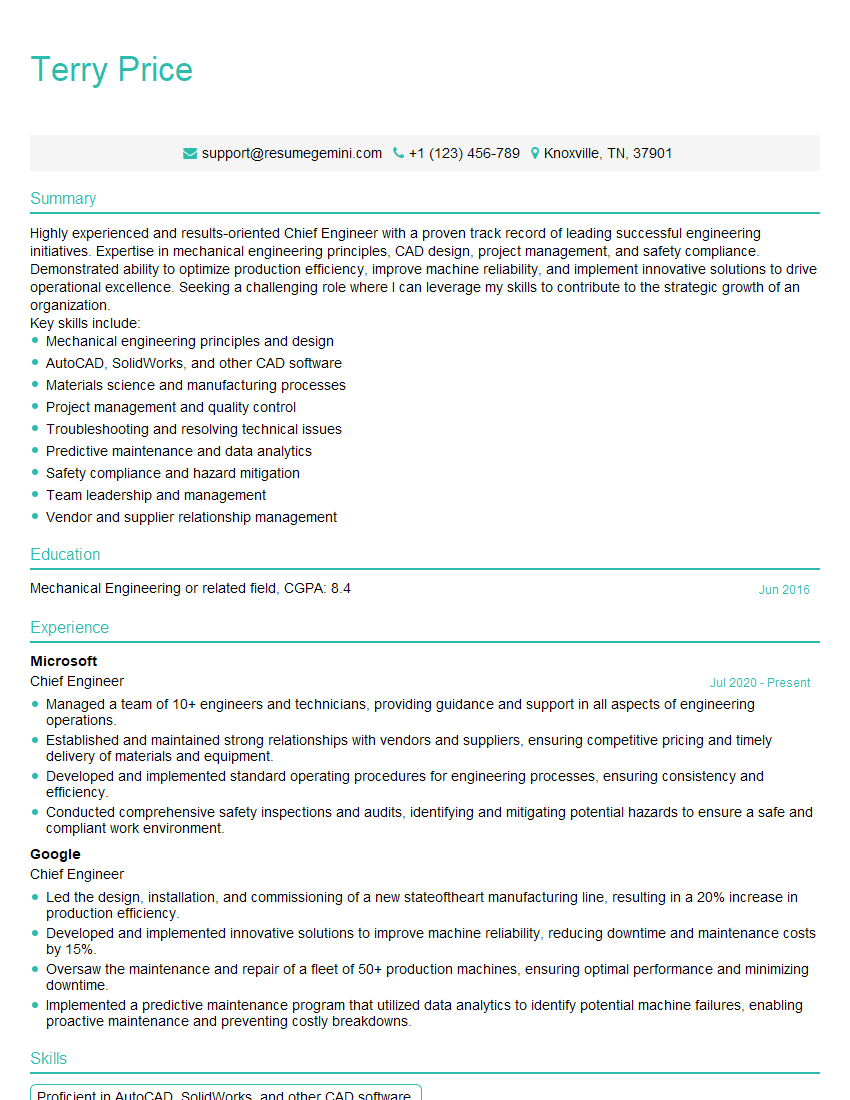
Chief Engineer Resume Sample
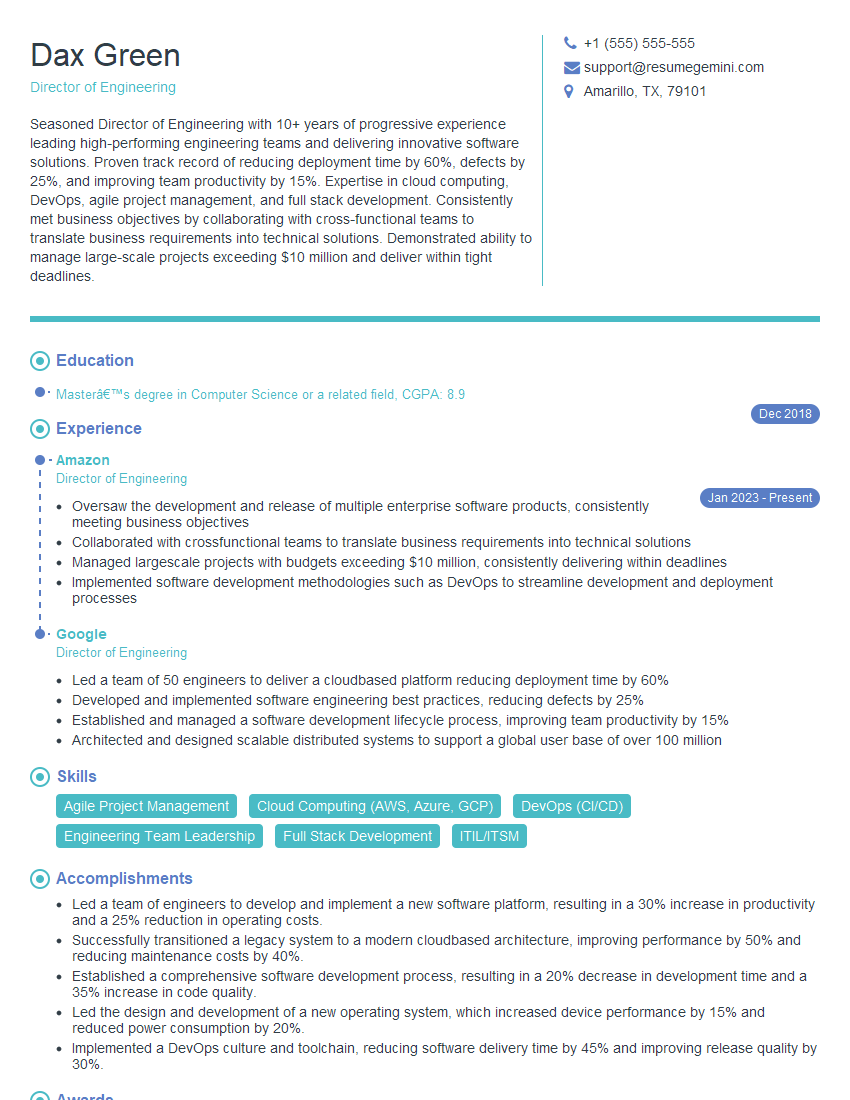
Director of Engineering Resume Sample
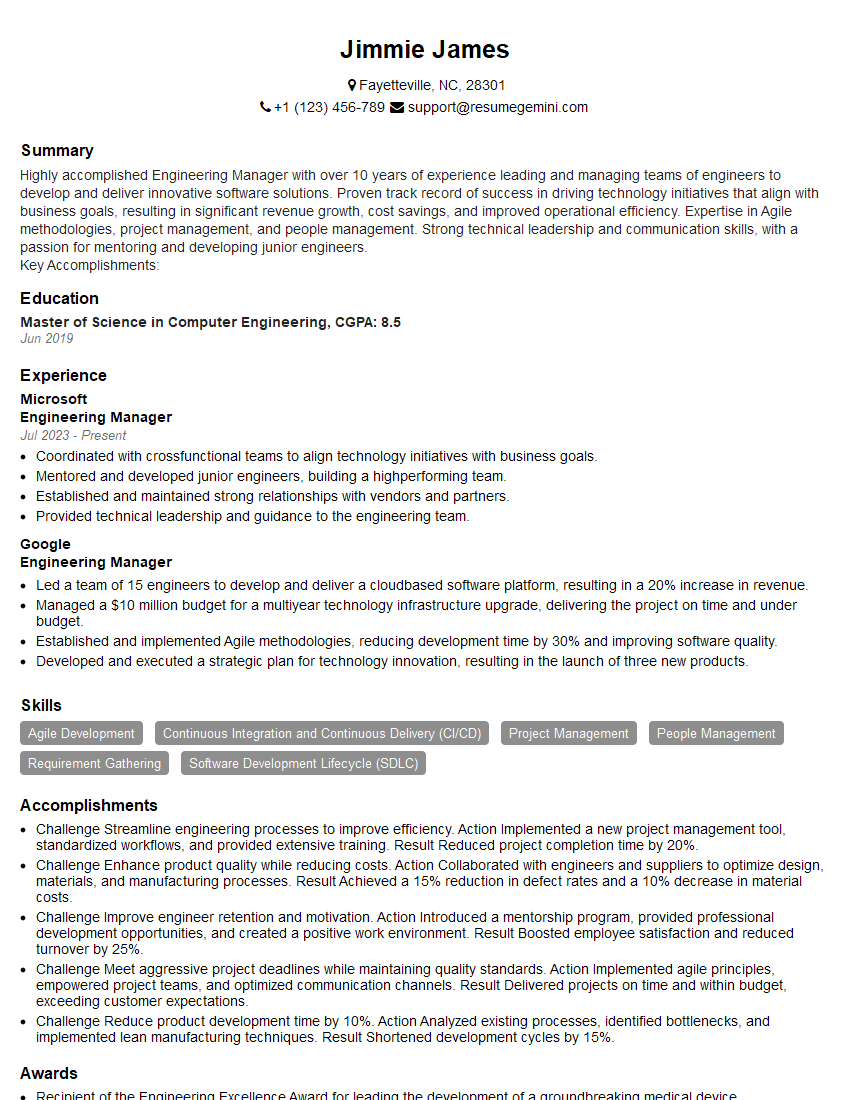
Engineering Manager Resume Sample

Project Engineer Resume Sample
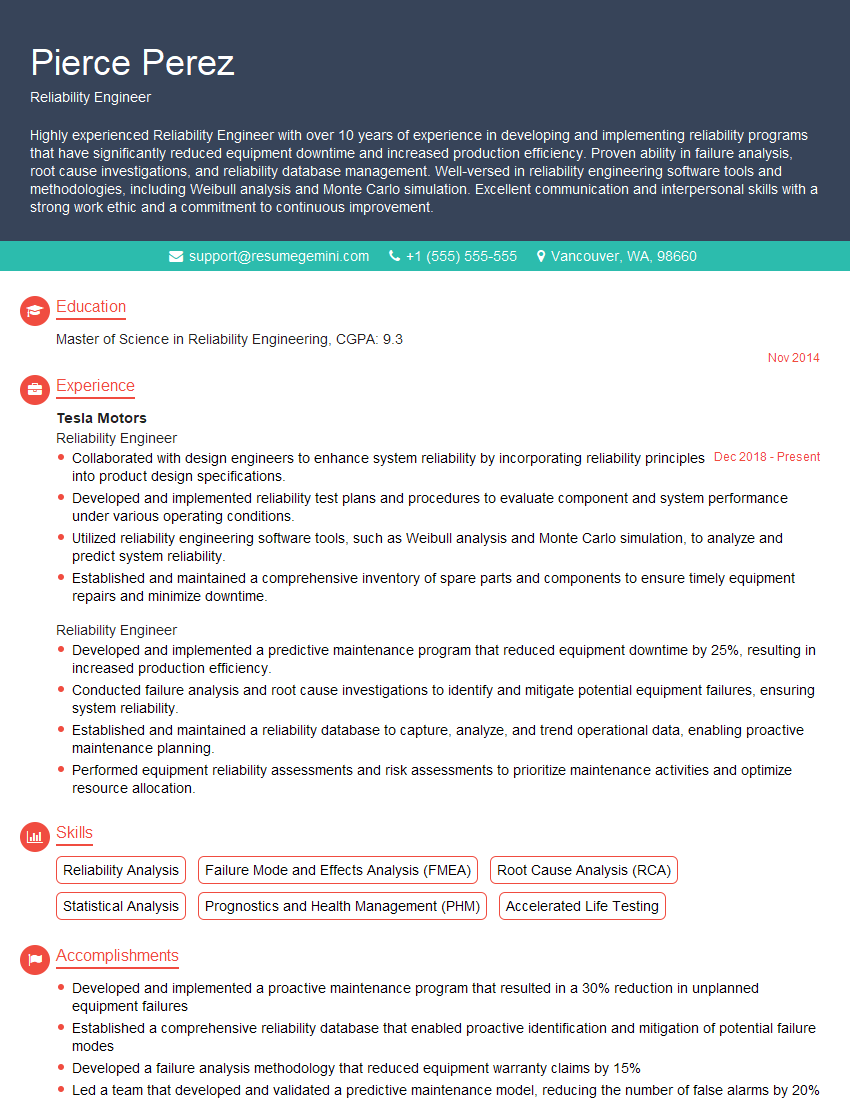
Reliability Engineer Resume Sample
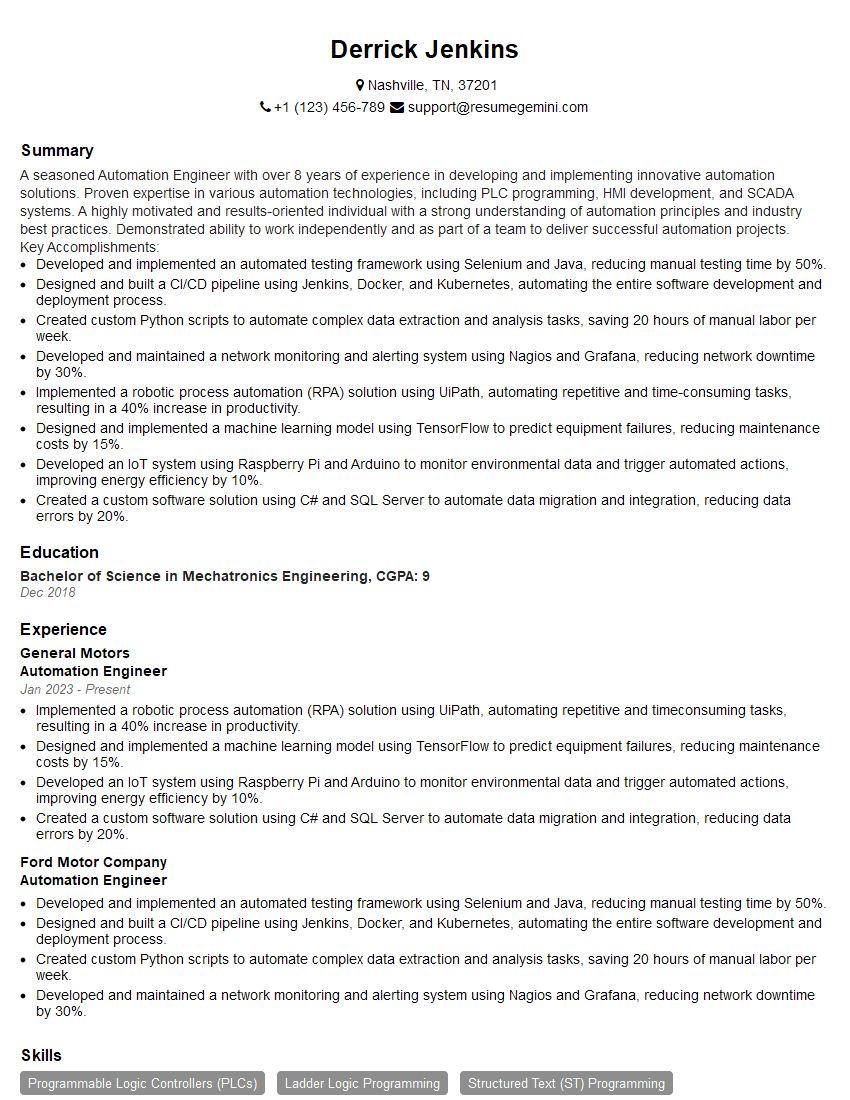
Automation Engineer Resume Sample
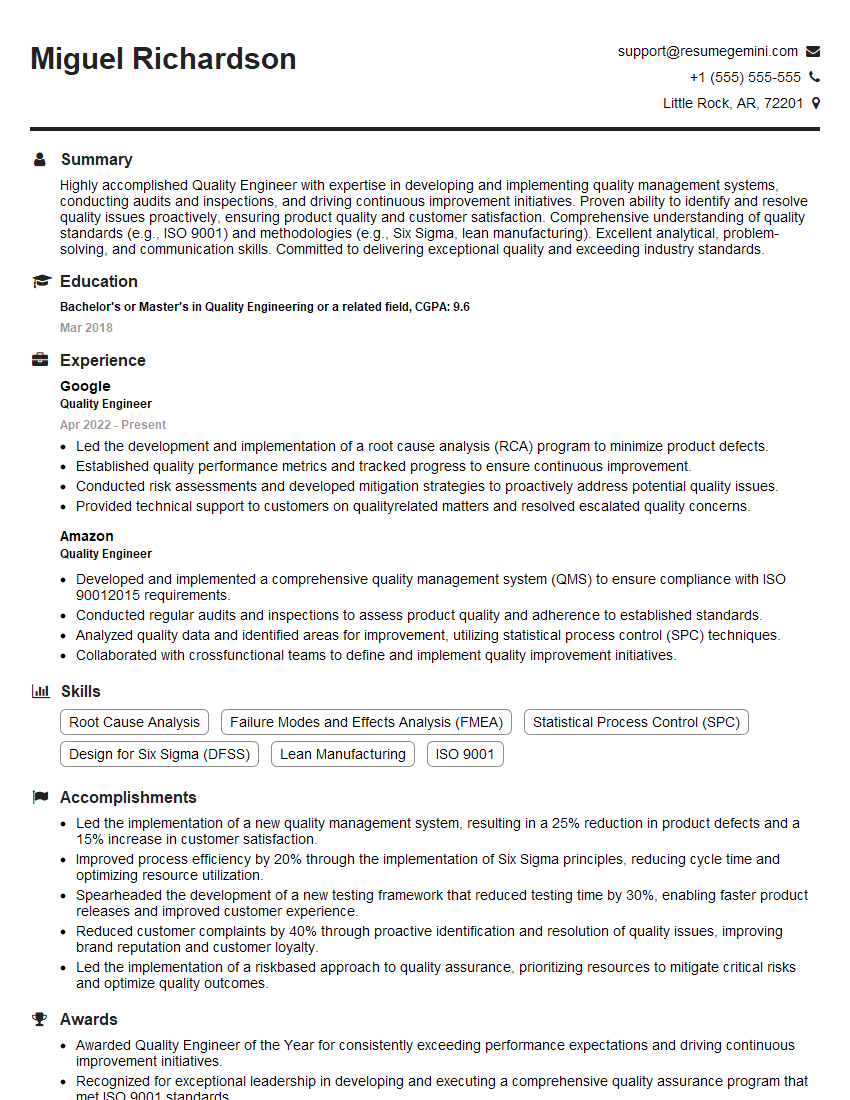
Quality Engineer Resume Sample
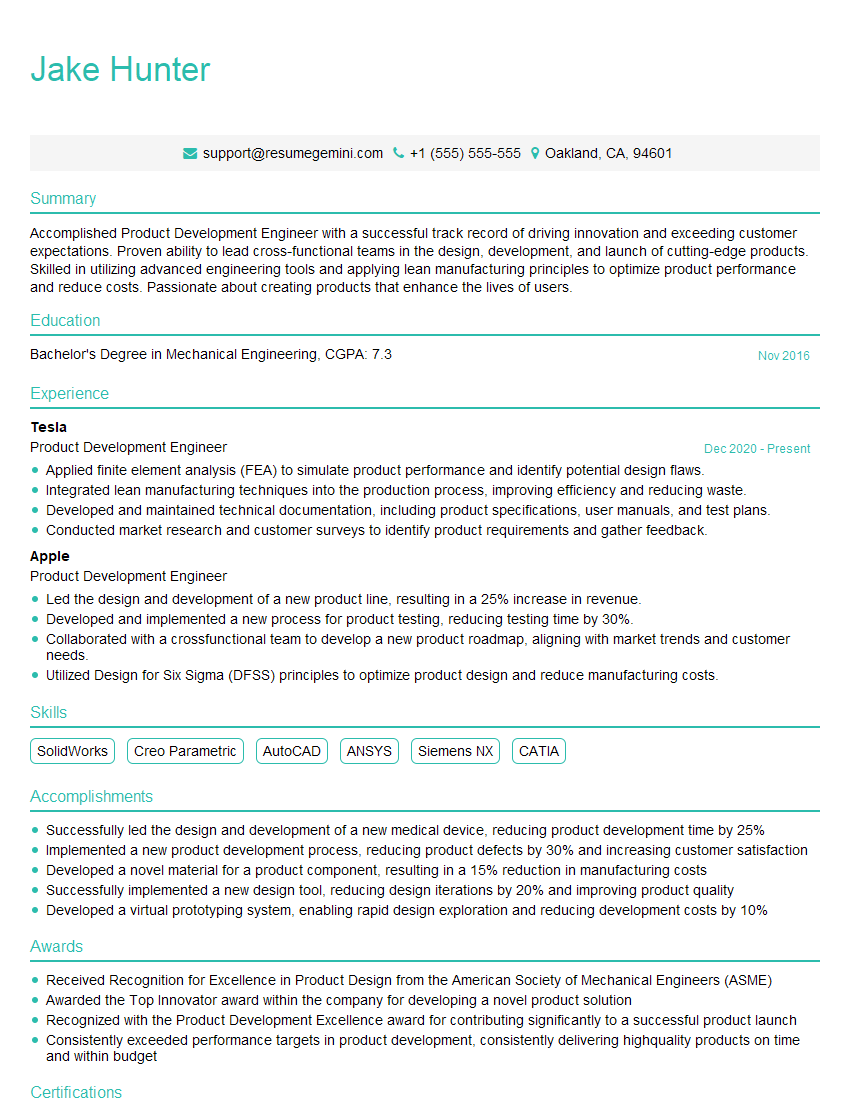
Product Development Engineer Resume Sample
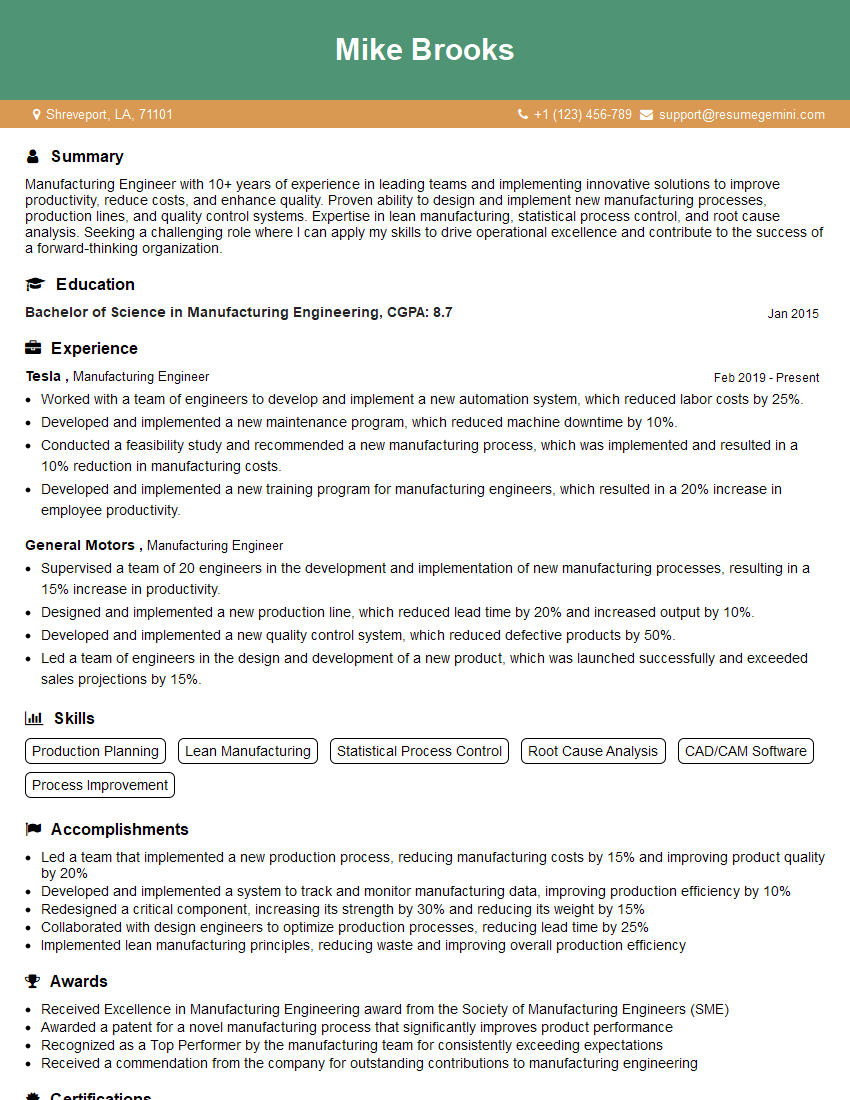
Manufacturing Engineer Resume Sample
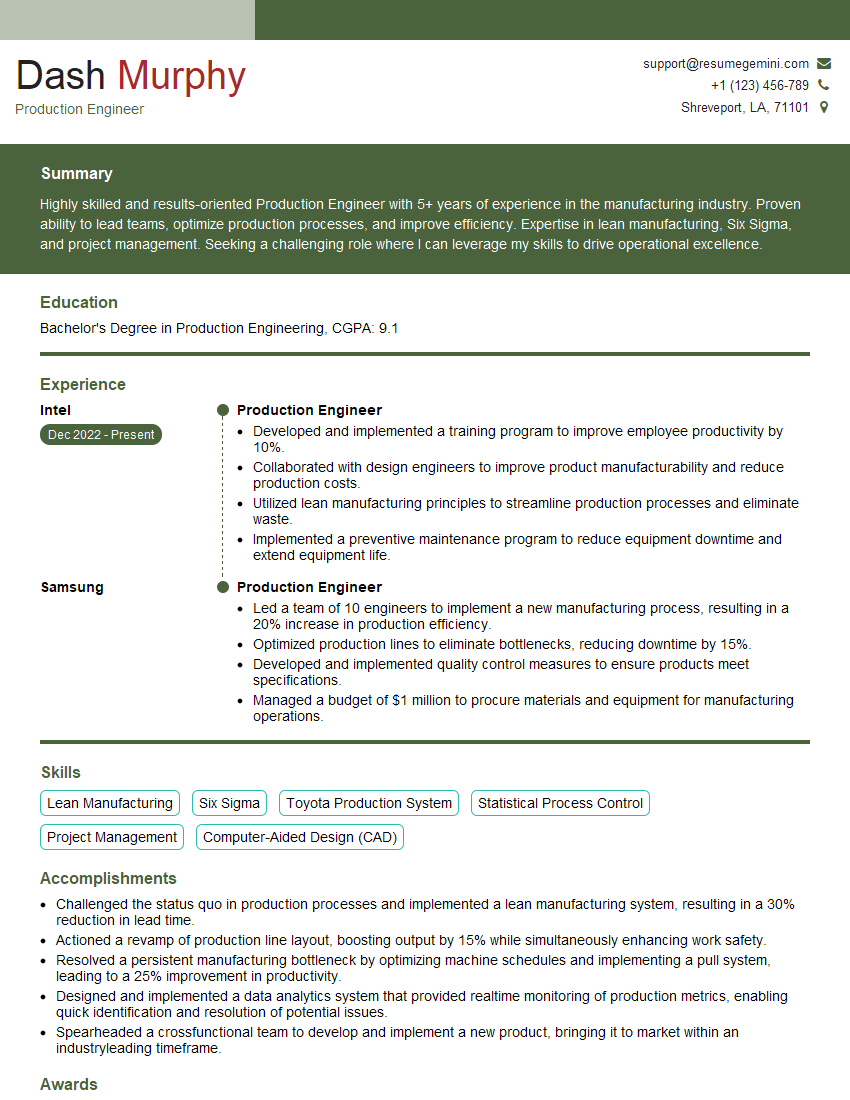
Production Engineer Resume Sample
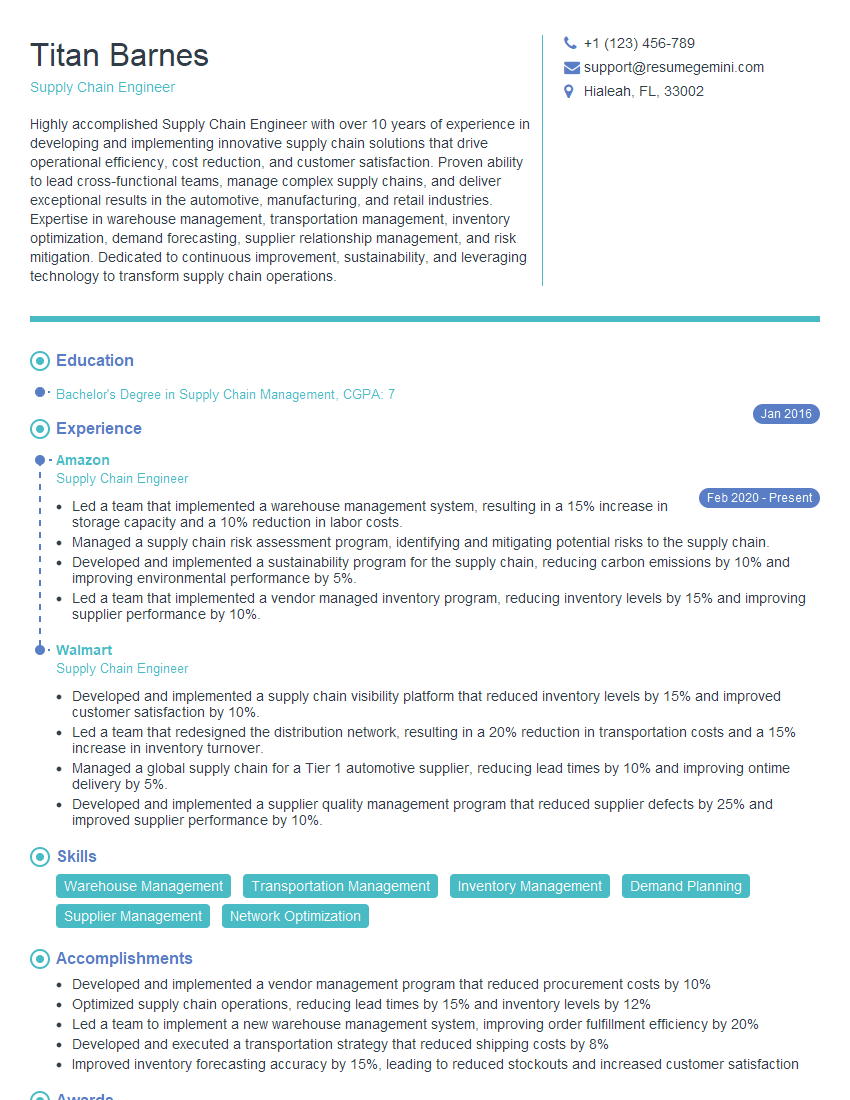
Supply Chain Engineer Resume Sample
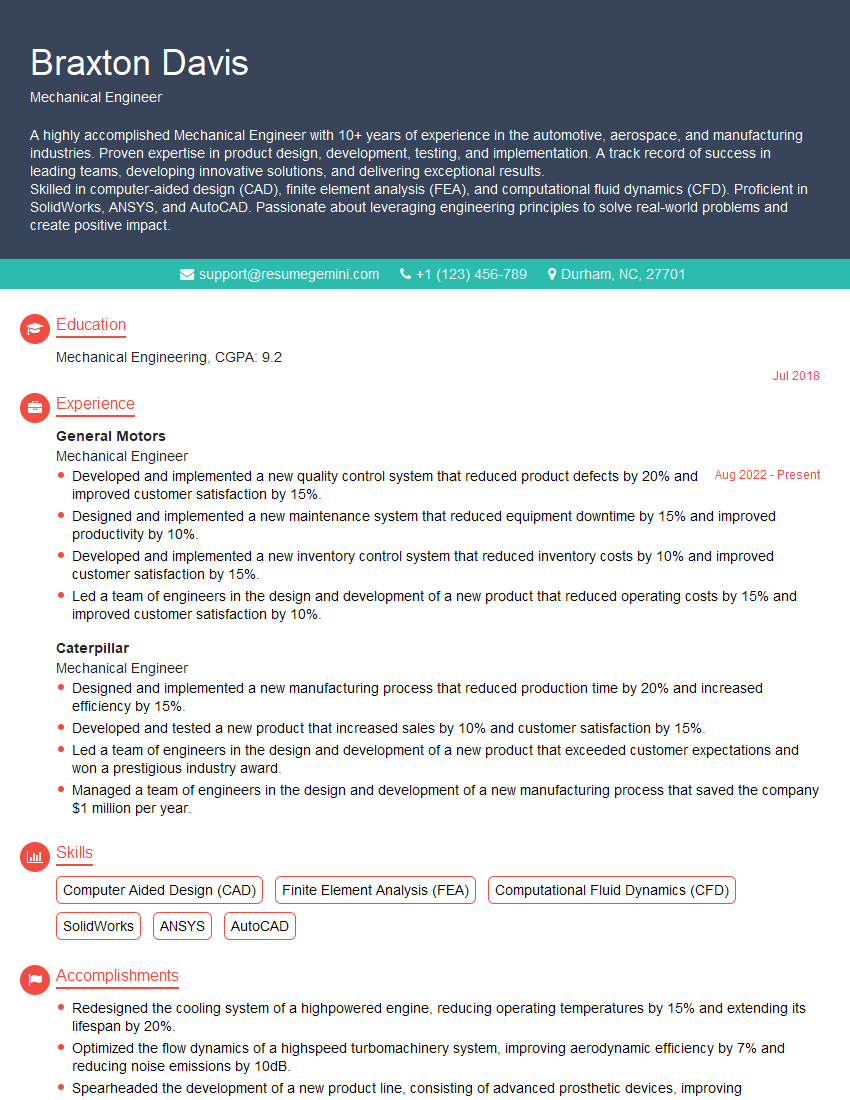
Mechanical Engineer Resume Sample
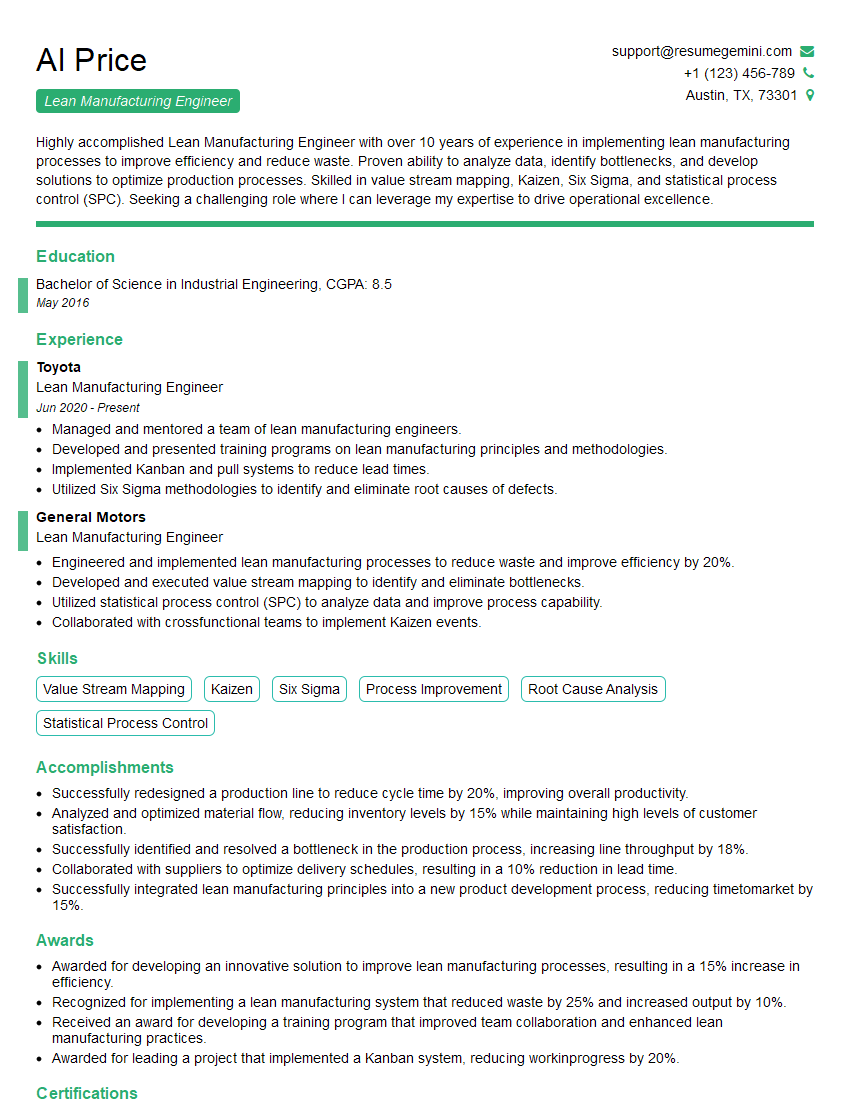
Lean Manufacturing Engineer Resume Sample
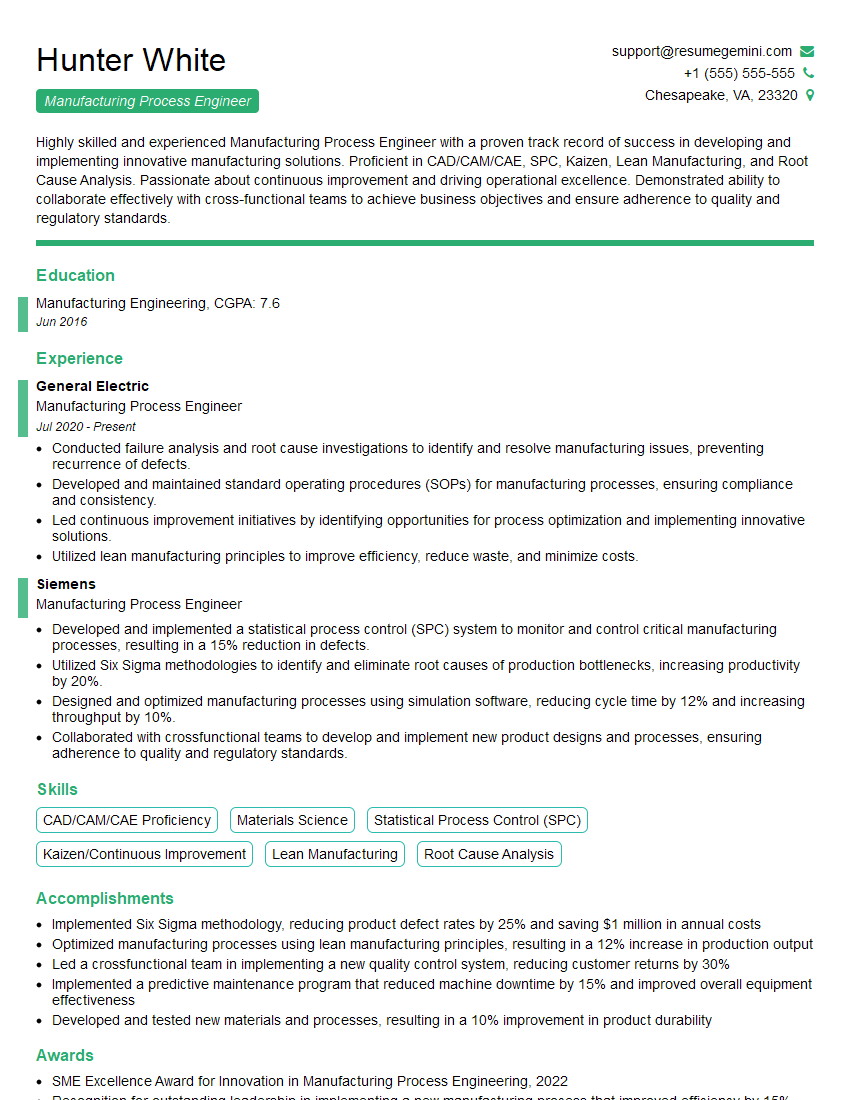
Manufacturing Process Engineer Resume Sample
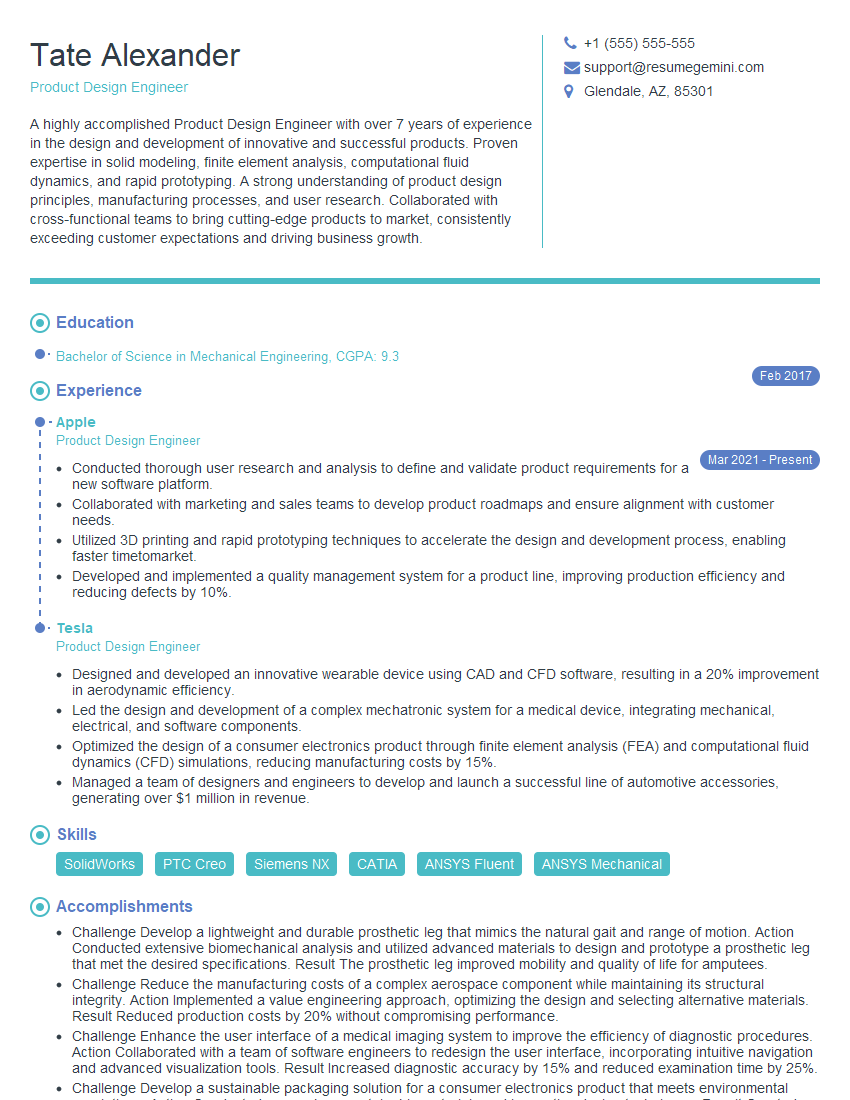
Product Design Engineer Resume Sample
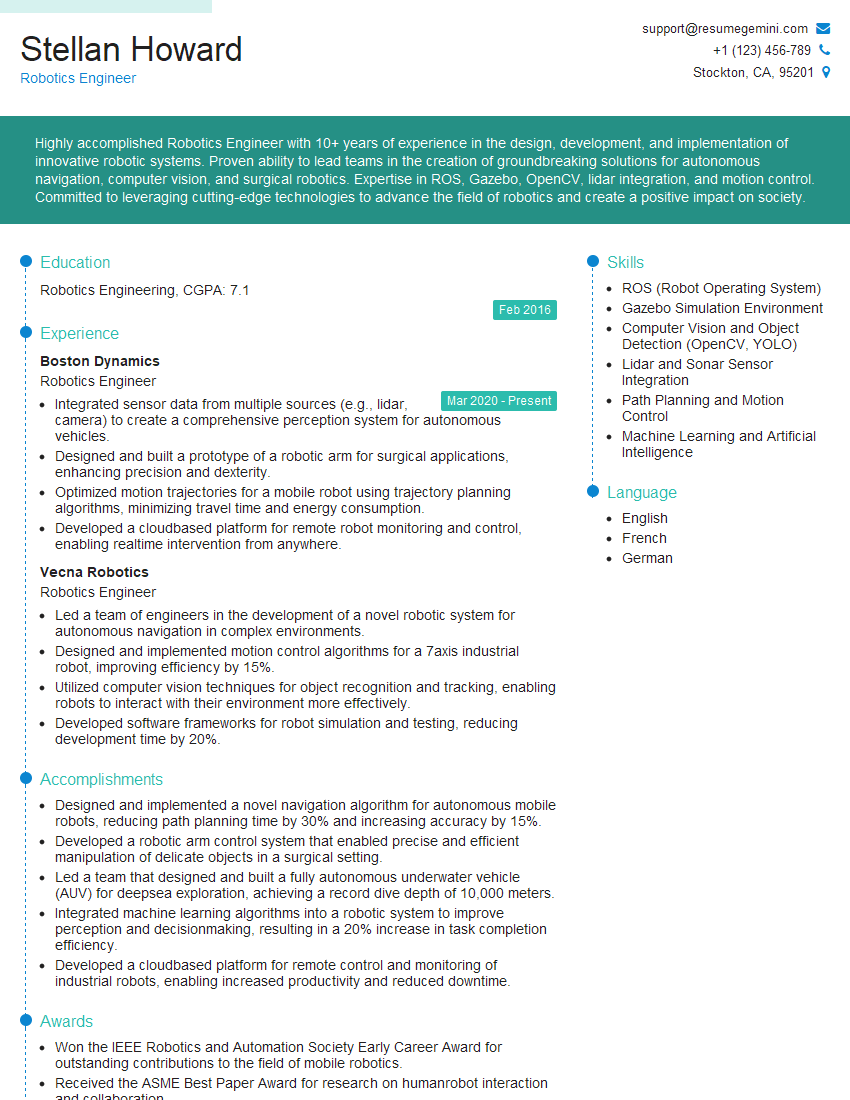
Robotics Engineer Resume Sample
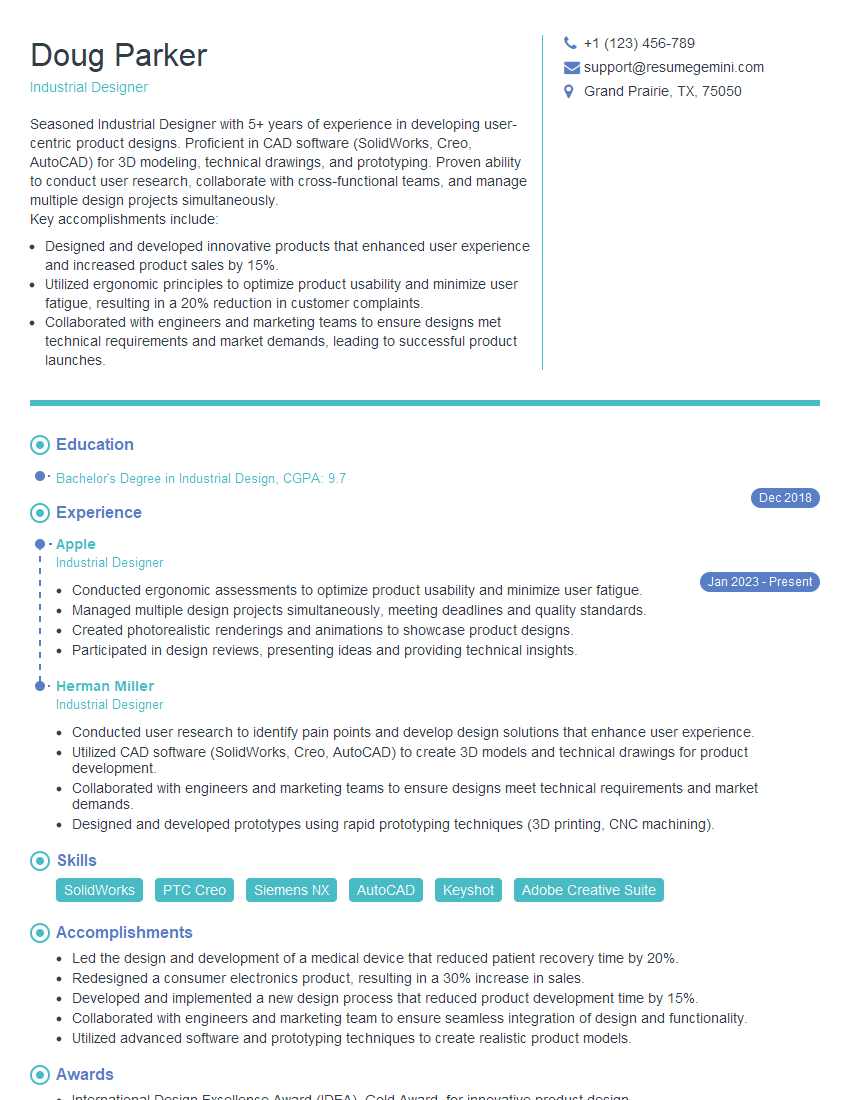
Industrial Designer Resume Sample
- Chief Engineer
- Director of Engineering
- Engineering Manager
- Project Engineer
- Reliability Engineer
- Automation Engineer
- Quality Engineer
- Product Development Engineer
- Manufacturing Engineer
- Production Engineer
- Supply Chain Engineer
- Mechanical Engineer
- Lean Manufacturing Engineer
- Manufacturing Process Engineer
- Product Design Engineer
- Robotics Engineer
- Industrial Designer
Explore more articles
Users Rating of Our Blogs
Share Your Experience
We value your feedback! Please rate our content and share your thoughts (optional).
What Readers Say About Our Blog
Very informative content, great job.
good