Are you ready to stand out in your next interview? Understanding and preparing for Product Development and Launch interview questions is a game-changer. In this blog, we’ve compiled key questions and expert advice to help you showcase your skills with confidence and precision. Let’s get started on your journey to acing the interview.
Questions Asked in Product Development and Launch Interview
Q 1. Describe your experience with Agile methodologies in product development.
Agile methodologies, for me, are the backbone of successful product development. They prioritize iterative development, frequent feedback loops, and adaptability to change. Instead of a rigid, waterfall approach where everything is planned upfront, Agile embraces flexibility. I’ve extensively used Scrum and Kanban in past projects. In a Scrum project, for example, we’d work in short sprints (typically 2-4 weeks), each culminating in a potentially shippable increment of the product. Daily stand-ups, sprint reviews, and retrospectives ensured continuous improvement and alignment across the team. Kanban, on the other hand, provided a more flexible visual workflow management system, particularly useful when dealing with multiple concurrent projects and changing priorities. In one instance, switching from a waterfall approach to Scrum significantly reduced our time to market and improved the quality of the final product by allowing us to incorporate user feedback early and often.
- Scrum: Sprints, daily stand-ups, sprint reviews, retrospectives.
- Kanban: Visual workflow, continuous delivery, limiting work in progress.
Q 2. Explain the difference between a Minimum Viable Product (MVP) and a market-ready product.
The difference between a Minimum Viable Product (MVP) and a market-ready product lies primarily in their scope and functionality. An MVP is a stripped-down version of your product, containing only the core features necessary to test a central hypothesis with early adopters. Think of it as a proof of concept—it’s designed to validate your assumptions about market demand and gather essential user feedback before investing heavily in full development. A market-ready product, on the other hand, is fully functional, polished, and ready for a wider audience. It incorporates all planned features, has undergone rigorous testing, and is designed for scalability and maintainability. For example, an MVP for a ride-sharing app might only allow users to request rides within a limited geographical area with basic payment options, whereas a market-ready version would include broader coverage, various payment choices, driver ratings, and advanced features like ride-sharing.
Q 3. How do you prioritize features in a product roadmap?
Prioritizing features in a product roadmap is crucial for efficient resource allocation. I usually employ a combination of methods, including MoSCoW (Must have, Should have, Could have, Won’t have), value vs. effort matrices, and prioritization frameworks like RICE (Reach, Impact, Confidence, Effort). The MoSCoW method helps categorize features based on their importance, while the value vs. effort matrix visually represents the relative value of a feature against the effort required to implement it. This allows us to focus on high-value, low-effort features first. The RICE scoring system provides a more quantitative approach, allowing for a data-driven prioritization. For example, a new feature might score high on Reach (number of users affected) and Impact (positive change in user experience) but low on Effort (development time), making it a priority.
Q 4. Describe your process for gathering and analyzing user feedback.
Gathering and analyzing user feedback is an iterative process that starts even before the product is launched. We use a mix of qualitative and quantitative methods. Qualitative feedback, such as user interviews and usability testing, provides rich insights into user behavior and pain points. We conduct these sessions by observing users directly as they interact with the product or by asking focused questions. Quantitative data, obtained through surveys, A/B testing, and analytics dashboards, measures user engagement metrics like session duration, conversion rates, and feature usage. These numbers help us understand the impact of our changes and identify areas for improvement. For instance, if a specific feature’s usage is consistently low despite our initial expectations, we might conduct user interviews to understand why.
Q 5. How do you handle conflicting priorities among stakeholders?
Handling conflicting priorities among stakeholders requires strong communication, negotiation, and a clear decision-making process. I typically start by clearly defining the objectives and constraints of the project. Then, I facilitate collaborative workshops or meetings where stakeholders can openly express their priorities and concerns. Using techniques like weighted scoring or a prioritization matrix helps us objectively assess the relative importance of each competing requirement. Ultimately, I aim to reach a consensus or, if necessary, make well-justified decisions based on the overall project goals and available resources, ensuring that all stakeholders are informed and their concerns are addressed. Transparency is key; keeping everyone updated and involved helps mitigate conflict.
Q 6. What metrics do you use to measure the success of a product launch?
Measuring the success of a product launch goes beyond simple sales figures. While revenue is important, we also track key metrics such as customer acquisition cost (CAC), customer lifetime value (CLTV), daily/monthly active users (DAU/MAU), churn rate, and net promoter score (NPS). CAC helps us understand the cost-effectiveness of our marketing efforts, while CLTV indicates the long-term value of each customer. DAU/MAU measures user engagement, and churn rate identifies the percentage of users who stop using the product. Finally, NPS provides a measure of customer satisfaction and loyalty. Analyzing these metrics helps us understand not only the immediate success but also the long-term viability and growth potential of the product. For example, a high CAC and low CLTV might indicate a need to adjust our marketing strategy or pricing model.
Q 7. How do you identify and mitigate risks in product development?
Risk identification and mitigation are integral to successful product development. We use a combination of methods including brainstorming sessions, SWOT analysis (Strengths, Weaknesses, Opportunities, Threats), and risk registers. During brainstorming sessions, the team identifies potential risks related to technology, market conditions, competition, and internal factors. SWOT analysis helps us understand our competitive position and identify potential threats. A risk register documents each identified risk, including its likelihood and potential impact. For each risk, we define mitigation strategies—plans to reduce the likelihood or impact of the risk. For instance, if a technology risk is identified (e.g., reliance on a third-party API), a mitigation strategy might involve developing a backup solution or exploring alternative technologies. Regularly reviewing and updating the risk register ensures that we remain proactive in addressing potential challenges.
Q 8. Describe a time you had to make a difficult decision regarding product development.
One of the toughest decisions I faced involved prioritizing features for a major software update. We were under pressure to deliver a highly anticipated release, but the development team had identified a critical bug in a core module, and several highly requested features were still incomplete. Choosing to delay the release to fix the bug, despite the potential negative impact on marketing timelines and user expectations, was difficult. However, releasing a product with a critical bug would have been far more damaging to the long-term health and reputation of the product.
My approach involved a structured decision-making process: first, we assessed the severity of the bug and its potential impact on user experience and the company’s reputation using a risk matrix. Secondly, we evaluated the time required to fix the bug versus the time required to complete the remaining features. Finally, we weighed the potential negative consequences of a delayed launch against the significant risks of releasing a buggy product. The data clearly showed that delaying the launch to fix the critical bug was the right decision, despite the short-term pain. The subsequent launch was far more successful thanks to the stability of the product.
Q 9. How do you ensure cross-functional collaboration during a product launch?
Cross-functional collaboration is paramount for a successful product launch. I employ a multi-pronged strategy. First, regular cross-functional meetings are crucial. These aren’t just information-sharing sessions; they’re collaborative workshops where each team (engineering, marketing, sales, design, etc.) presents their progress, challenges, and dependencies. This creates shared awareness and allows for proactive problem-solving.
Second, I rely heavily on a shared project management tool (like Jira or Asana) to track progress, assign tasks, and manage dependencies visually. This provides complete transparency and allows everyone to see the big picture and understand how their work integrates with others’.
Third, fostering a culture of open communication and collaboration is vital. This means creating an environment where individuals feel comfortable raising concerns, suggesting improvements, and asking for help. I actively encourage feedback and ensure that every voice is heard.
Lastly, I establish clear roles and responsibilities from the beginning, eliminating ambiguity and overlap. A well-defined RACI matrix (Responsible, Accountable, Consulted, Informed) for each task prevents confusion and ensures accountability.
Q 10. Explain your understanding of A/B testing and its application in product development.
A/B testing is a powerful method for making data-driven decisions in product development. It involves creating two versions of a feature (A and B) and showing them to different user segments. By analyzing the results – which version achieves the desired outcome (e.g., higher conversion rates, better user engagement) – we can determine which version performs better.
For instance, imagine we’re testing two different call-to-action buttons on a landing page. Version A might use a green button, while Version B uses a blue one. By tracking click-through rates and other relevant metrics for each version, we can see which button drives more conversions. This allows us to optimize our designs based on measurable data, rather than relying on intuition alone.
In product development, A/B testing can be used to test various aspects, including UI/UX elements, marketing copy, pricing strategies, and feature implementations. It helps to validate assumptions and identify the best approaches for maximizing user engagement and achieving business objectives. It’s crucial to define clear success metrics beforehand and ensure statistical significance in the results.
Q 11. How do you manage stakeholder expectations throughout the product lifecycle?
Managing stakeholder expectations is an ongoing process throughout the product lifecycle. Proactive communication is key. I regularly provide updates to stakeholders through various channels, tailored to their specific interests and needs. These updates include progress reports, roadmaps, and risk assessments, allowing them to understand the status of the project and potential challenges.
It’s vital to establish clear communication channels and set realistic expectations early on. Setting clear goals and defining success metrics in the beginning helps align stakeholders on what constitutes a successful outcome. Transparency and open communication ensure there are no surprises and helps build trust. Regular feedback sessions provide opportunities to address any concerns and adjust expectations as needed.
In case of unexpected delays or changes, I aim to communicate these proactively, explaining the reasons behind the changes and outlining a revised plan. This helps avoid misunderstandings and maintain trust. Regular check-ins and feedback loops allow me to address concerns before they escalate.
Q 12. Describe your experience with market research and competitive analysis.
My experience with market research and competitive analysis is extensive. I approach these activities systematically. Market research involves understanding the target audience, their needs, preferences, and pain points. This often involves surveys, focus groups, interviews, and analyzing market trends. I use a combination of quantitative and qualitative methods to gain a complete picture of the market.
Competitive analysis focuses on understanding the strengths and weaknesses of competitors. This includes analyzing their products, pricing strategies, marketing efforts, and overall market positioning. I use tools like SWOT analysis and competitive mapping to visualize and compare competitors effectively. This information is vital to differentiate our product and identify opportunities for innovation.
For example, before launching a new mobile app, I’d conduct extensive market research to understand the existing mobile app landscape, identify gaps in the market, and analyze the demographics and needs of potential users. Then I’d perform a thorough competitive analysis to understand how our proposed app would differentiate itself from existing competitors. This comprehensive understanding of the market ensures we’re building a product that not only meets user needs but also holds a competitive advantage.
Q 13. How do you define success for a new product?
Defining success for a new product is multifaceted and depends on the specific goals and objectives. It’s not solely about sales figures, although those are certainly important. A truly successful product achieves a balance of several key metrics:
- Market penetration: Achieving a significant share of the target market.
- Customer satisfaction: High levels of user satisfaction and positive reviews.
- Financial viability: Generating revenue that surpasses costs and ensures profitability.
- User engagement: High user activity and retention rates.
- Achieving product-market fit: Successfully satisfying a clear market need.
Success should be measured using a balanced scorecard approach that considers financial, customer, internal, and learning and growth perspectives. Each metric should be clearly defined with measurable goals established upfront.
Q 14. What is your approach to dealing with product failures or setbacks?
Product failures and setbacks are inevitable. My approach is to treat them as learning opportunities. The first step is conducting a thorough post-mortem analysis to understand what went wrong. This should involve a frank and objective review of the entire product development process, identifying areas of improvement and avoiding blame. The analysis often involves data gathering, interviews, and a comprehensive review of relevant documentation.
Once we understand the root causes, we develop a remediation plan. This might involve fixing bugs, redesigning features, or adjusting the marketing strategy. It also involves actively seeking feedback from customers and using their insights to inform the improvement process. This iterative process involves adapting and improving based on learned experiences to ensure that future products avoid the same pitfalls.
Crucially, we document our learnings, not just for the current project but to inform future product development efforts. This helps to build a culture of continuous improvement and prevents us from making the same mistakes twice.
Q 15. How do you balance innovation with business requirements in product development?
Balancing innovation and business requirements is a crucial tightrope walk in product development. It’s about finding the sweet spot where groundbreaking features meet realistic market demands and company goals. I approach this by using a framework that incorporates:
- Market Research and Validation: Before investing heavily in a novel idea, thorough market research is essential. We validate concepts with potential customers through surveys, interviews, and beta testing to gauge their genuine interest and willingness to pay. This helps us avoid building something nobody wants.
- Prioritization Matrix: A matrix that plots features based on their innovation potential and business impact. This allows us to focus development resources on features that deliver the highest value to the business while also incorporating some level of innovation.
- Minimum Viable Product (MVP): Developing an MVP allows us to launch a core product with essential features quickly, gathering user feedback to inform further iterations. This agile approach minimizes risk associated with investing heavily in unproven features.
- Agile Development Methodology: We use sprints to deliver working software incrementally. This allows for flexibility and quick adjustments based on user feedback and changing business needs. If a feature proves less impactful than anticipated, we can pivot efficiently.
For example, in developing a new productivity app, we might initially focus on the core functionality (task management, calendar integration) as the MVP. Once we validate the core, we can then introduce innovative features, like AI-powered task prioritization or collaborative tools, based on user feedback and business analysis.
Career Expert Tips:
- Ace those interviews! Prepare effectively by reviewing the Top 50 Most Common Interview Questions on ResumeGemini.
- Navigate your job search with confidence! Explore a wide range of Career Tips on ResumeGemini. Learn about common challenges and recommendations to overcome them.
- Craft the perfect resume! Master the Art of Resume Writing with ResumeGemini’s guide. Showcase your unique qualifications and achievements effectively.
- Don’t miss out on holiday savings! Build your dream resume with ResumeGemini’s ATS optimized templates.
Q 16. Describe your process for creating user stories and acceptance criteria.
Creating user stories and acceptance criteria is paramount for clear communication and successful product development. I use a structured approach:
- User Story Format: I adhere to a consistent format: “As a [user type], I want [goal] so that [benefit].” This ensures everyone understands the user’s perspective and the value proposition.
- Acceptance Criteria: These are the specific conditions that must be met for the user story to be considered complete. I define these criteria using clear, testable statements. This could include functional requirements (e.g., “The system must allow users to upload files up to 10MB”), non-functional requirements (e.g., “The login process should take less than 2 seconds”), and edge-case scenarios (e.g., “The system must handle incorrect input gracefully”).
- Collaboration: User stories and acceptance criteria are collaboratively developed with the product owner, developers, and testers. This ensures everyone is on the same page and misunderstandings are minimized.
Example:
User Story: As a customer, I want to be able to add items to my shopping cart so that I can purchase them later.
Acceptance Criteria:
- The Add to Cart button is clearly visible on each product page.
- The cart displays the number of items and the total price.
- Users can remove items from the cart.
- The system handles the addition of duplicate items correctly.
- The system displays appropriate error messages if an item cannot be added (e.g., out of stock).
Q 17. How do you estimate the time and resources required for a product development project?
Estimating time and resources is crucial for project success and involves several steps:
- Work Breakdown Structure (WBS): Decompose the project into smaller, manageable tasks. This provides a granular view of the work required.
- Task Estimation: Estimate the effort required for each task using techniques like three-point estimation (optimistic, most likely, pessimistic) or story points (relative estimation based on complexity). Consider factors such as developer experience and potential risks.
- Resource Allocation: Determine the number of developers, designers, testers, etc., needed for each task. Consider their availability and potential conflicts.
- Contingency Planning: Always add a buffer for unforeseen issues, delays, or scope creep. A common approach is to add 20-30% buffer to the total time estimate.
- Tools & Technologies: Project management software (Jira, Asana, etc.) can help to manage and track tasks, resources, and progress.
For example, using a project management software to track progress of tasks using Agile methodology allows us to estimate time and resources in sprints. At the end of each sprint, we can review the progress made against planned tasks and adjust our estimates for subsequent sprints. This iterative approach helps adapt to evolving needs.
Q 18. How do you handle technical debt in a product development project?
Technical debt, the implied cost of rework caused by choosing an easy solution now instead of a better approach that would take longer, is an inevitable part of software development. Managing it effectively is crucial:
- Identification: Regularly identify and document technical debt. This involves code reviews, technical discussions, and using static analysis tools.
- Prioritization: Prioritize addressing technical debt based on its impact. High-impact debt that hinders development velocity or introduces bugs should be addressed first.
- Refactoring: Allocate time during sprints for refactoring code to improve its quality, maintainability, and performance. This is often a small commitment in each sprint to prevent significant build-up.
- Strategic Approach: Integrate debt repayment into the product roadmap. Don’t just react to problems; proactively plan for tackling significant debt.
- Communication: Communicate the strategy and prioritization of technical debt to stakeholders. Transparency is key to managing expectations.
Imagine you have a quick, but messy, solution to a feature. While it gets the job done immediately, it might make future feature additions far more difficult and time-consuming. A planned refactoring later will mitigate this risk. Prioritizing and addressing technical debt improves maintainability and avoids a potential future crisis.
Q 19. What is your experience with product backlog management?
Product backlog management is central to my approach to product development. I have extensive experience using Agile methodologies, specifically Scrum, to manage product backlogs. My process includes:
- Backlog Refinement: Regularly refine the backlog with the development team to ensure user stories are clear, concise, and well-understood. This collaborative process clarifies ambiguities and prevents costly rework later.
- Prioritization: Prioritize user stories based on value, risk, dependencies, and effort. Techniques like MoSCoW (Must have, Should have, Could have, Won’t have) and value vs. effort matrix help in this process.
- Story Point Estimation: Utilize story points (relative size estimation) to gauge the effort required for each user story. This helps with sprint planning and capacity forecasting.
- Sprint Planning: Collaboratively select user stories for each sprint based on team velocity (the amount of work the team can complete in a sprint).
- Backlog Grooming: Continuously review, update, and prioritize the backlog to reflect changing market conditions, user feedback, and business priorities.
- Tools: Proficiently use tools like Jira or Azure DevOps for backlog management and tracking progress.
By efficiently managing the backlog, we ensure that the most valuable features are delivered first, development efforts are focused, and the product roadmap is constantly adapted based on feedback and market shifts.
Q 20. Describe a product launch that was particularly successful. What factors contributed to its success?
A particularly successful product launch was for a mobile banking app. Its success stemmed from:
- User-centric Design: Extensive user research informed the design, resulting in an intuitive and easy-to-use interface. This eliminated the common friction points that plague many financial apps.
- Thorough Testing: Rigorous testing across various devices and network conditions ensured a smooth and bug-free launch. This minimized negative reviews and improved user satisfaction.
- Effective Marketing: A well-planned marketing campaign targeted the right audience segments and effectively communicated the app’s value proposition. This resulted in significant downloads and user acquisition within the first few weeks.
- Strong Customer Support: A dedicated customer support team addressed user queries promptly and efficiently. This fostered user loyalty and trust.
- Post-launch Monitoring and Iteration: We continuously monitored user feedback and app usage data to identify areas for improvement and rapidly iterate on new features. This demonstrated responsiveness to our users and created a positive feedback loop.
The launch’s success wasn’t accidental; it was a result of a planned approach focused on user needs and a commitment to quality and customer support.
Q 21. Describe a product launch that faced challenges. What did you learn from the experience?
A challenging product launch was for a new SaaS platform. We faced unexpected difficulties with:
- Scalability Issues: We underestimated the initial demand, leading to performance issues and downtime during the peak launch period. This resulted in negative user reviews and affected our reputation.
- Integration Problems: Unexpected integration problems with third-party services led to delays in fully launching all planned features. This created a less comprehensive product offering than anticipated.
- Insufficient Documentation: Poor initial documentation made it difficult for users to understand the platform’s functionality and caused widespread confusion.
Key Learnings:
- Stress Testing: We learned the critical importance of thorough stress testing before launch to ensure the platform could handle unexpected surges in demand.
- Robust Integration Strategy: A more rigorous approach to third-party integrations, including thorough testing and contingency plans, is crucial.
- Comprehensive Documentation: Prioritizing user documentation and offering various support channels (video tutorials, FAQs, chat) is paramount for a smoother user onboarding experience.
This experience reinforced the importance of planning for the unexpected and anticipating potential risks. Investing in thorough testing, robust infrastructure, and clear documentation is essential for a successful product launch.
Q 22. How do you utilize data to inform product decisions?
Data is the lifeblood of informed product decisions. I utilize data throughout the entire product lifecycle, from initial ideation to post-launch analysis. This involves leveraging various data sources and analytical techniques.
Market Research: Understanding market size, trends, competitor analysis, and customer needs through surveys, focus groups, and competitive benchmarking reports. For example, analyzing sales data of a competitor’s similar product can reveal pricing strategies and feature preferences.
User Feedback: Collecting and analyzing feedback from users through surveys, in-app feedback mechanisms, user interviews, and social media monitoring. This helps identify pain points, areas for improvement, and unmet needs. A concrete example would be using A/B testing to compare user engagement with two different UI designs.
Product Usage Data: Tracking key metrics like user engagement, retention, conversion rates, and feature usage using analytics platforms like Google Analytics or Mixpanel. This helps identify which features are most popular, which ones are underperforming, and where to focus future development efforts. For example, if we observe low usage of a certain feature, it suggests a need for redesign or improvement.
Sales Data: Monitoring sales figures, customer acquisition cost, and revenue streams provides insights into product performance and market demand. This data can inform pricing strategies, marketing campaigns, and future product iterations. Low sales of a specific product variant might indicate a need for adjustments in the marketing message or product features.
By combining these data sources, I build a comprehensive understanding of the product’s performance and market dynamics, enabling data-driven decisions that maximize impact and minimize risk.
Q 23. What tools and technologies are you familiar with in the context of product development?
My experience encompasses a wide range of tools and technologies used in product development. I am proficient in using both software and hardware tools, adapting my approach based on the project’s needs.
Project Management Tools: Jira, Asana, Trello for managing tasks, sprints, and workflows.
Collaboration Platforms: Slack, Microsoft Teams for seamless communication and team collaboration.
Prototyping Tools: Figma, Adobe XD, Sketch for creating interactive prototypes and user interfaces.
Data Analytics Platforms: Google Analytics, Mixpanel, Amplitude for tracking user behavior and product performance.
Version Control Systems: Git for managing code changes and collaboration among developers.
Software Development Tools: Familiarity with various programming languages (e.g., Python, Java, JavaScript) depending on the project’s requirements. I also have experience with various development frameworks and databases (e.g., React, Node.js, SQL).
Testing and QA Tools: Selenium, Appium, JUnit for ensuring product quality and identifying bugs.
I’m also comfortable working with agile methodologies and utilizing various development frameworks like Scrum or Kanban.
Q 24. Describe your understanding of the product development lifecycle.
The product development lifecycle (PDLC) is a structured process that guides the creation and launch of a product. It typically involves several key phases, often iterative and overlapping in practice.
Idea Generation & Concept Development: Identifying market opportunities, conducting market research, and developing initial product concepts.
Design & Prototyping: Creating detailed design specifications, building prototypes, and conducting user testing.
Development & Testing: Building the actual product, conducting rigorous testing, and addressing bugs.
Launch & Marketing: Officially releasing the product to the market and implementing a marketing strategy.
Post-Launch Monitoring & Iteration: Collecting user feedback, analyzing product performance, and iterating on the product based on gathered data.
Understanding the PDLC allows for a systematic approach, ensuring all critical stages are addressed effectively. A well-defined PDLC minimizes risks and maximizes the chances of a successful product launch.
Q 25. How do you ensure the quality of a product before launch?
Ensuring product quality before launch is crucial. My approach is multifaceted and incorporates several strategies.
Rigorous Testing: Employing various testing methodologies such as unit testing, integration testing, system testing, and user acceptance testing (UAT). This involves identifying and resolving bugs and ensuring the product meets specified requirements.
Quality Assurance (QA): Dedicated QA teams play a vital role in independently verifying the product’s functionality, performance, and usability.
Code Reviews: Peer reviews of code help identify potential issues early in the development process.
Automated Testing: Implementing automated tests to accelerate the testing process and ensure consistent quality across multiple builds. For example, using Selenium for automated UI testing.
Beta Testing: Releasing a beta version to a select group of users to gather feedback and identify any remaining issues before the official launch. This real-world usage provides valuable insights into usability and performance.
A robust QA process, coupled with continuous monitoring and improvement, is essential for delivering a high-quality product that meets user expectations.
Q 26. How do you measure the ROI of a product?
Measuring the ROI of a product requires a comprehensive approach, going beyond simple revenue figures. It involves analyzing various financial and non-financial metrics.
Revenue Generation: Tracking sales, subscriptions, or other revenue streams directly attributed to the product.
Cost Analysis: Accounting for all costs associated with the product’s development, marketing, and ongoing maintenance.
Customer Lifetime Value (CLTV): Estimating the total revenue generated by a single customer over their relationship with the product.
Market Share: Assessing the product’s market penetration and its growth potential.
Customer Satisfaction: Measuring customer satisfaction through surveys and feedback mechanisms. High satisfaction often correlates with improved retention and positive word-of-mouth marketing.
ROI is calculated by subtracting the total costs from the total revenue and dividing the result by the total investment. ROI = (Total Revenue - Total Costs) / Total Investment. However, a holistic evaluation should include qualitative factors like brand building and customer loyalty, as these contribute to long-term value.
Q 27. How do you adapt to changing market conditions during product development?
Adaptability is key in today’s dynamic market. I utilize a flexible approach that incorporates agile methodologies and data-driven decision-making to respond to changing market conditions.
Market Monitoring: Continuously monitoring market trends, competitor activities, and emerging technologies.
Data Analysis: Analyzing real-time data on product performance and user behavior to identify areas needing adjustment.
Agile Development: Embracing agile principles to facilitate quick iterations and accommodate changes throughout the development lifecycle. This allows for swift responses to changing demands and unforeseen circumstances.
Feedback Incorporation: Actively soliciting and incorporating user feedback to ensure the product remains relevant and meets evolving needs.
Scenario Planning: Developing contingency plans to address potential market disruptions or shifts in customer preferences. This proactive approach allows for swift adaptation when market changes occur.
By staying informed and embracing flexibility, we can navigate market changes effectively, ensuring product relevance and long-term success.
Q 28. What is your preferred approach to managing product documentation?
Effective product documentation is essential for successful product development and maintenance. My preferred approach involves a combination of structured documentation and readily accessible tools.
Version Control: Using a version control system like Git to manage all documentation, allowing for easy tracking of changes and collaboration among team members.
Centralized Repository: Storing all documentation in a centralized repository, such as a Wiki or a dedicated project management platform (e.g., Confluence). This ensures everyone has access to the latest version.
Structured Format: Using a consistent and well-defined structure for all documentation, including user manuals, technical specifications, API documentation, and release notes. This approach ensures clarity and easy navigation.
Regular Updates: Maintaining and updating documentation regularly to reflect any changes or improvements made to the product. This ensures that the documentation always reflects the current state of the product.
User-Friendly Language: Writing documentation in clear and concise language, avoiding technical jargon where possible. The goal is to make the information accessible to all stakeholders.
Well-maintained documentation facilitates efficient onboarding for new team members, supports troubleshooting, and ensures consistency in product development and maintenance.
Key Topics to Learn for Product Development and Launch Interview
- Product Strategy & Ideation: Understanding market research, competitive analysis, and defining a clear value proposition. Practical application: Developing a concise product roadmap based on user needs and market trends.
- Agile Development Methodologies: Working knowledge of Scrum, Kanban, or similar frameworks. Practical application: Describing your experience with sprint planning, daily stand-ups, and retrospective meetings. Consider discussing challenges overcome using these methodologies.
- Project Management & Execution: Managing timelines, budgets, and resources effectively. Practical application: Illustrating how you’ve tracked progress, identified and mitigated risks, and ensured on-time delivery.
- Technical Requirements & Specifications: Collaborating with engineering teams to define functional and non-functional requirements. Practical application: Explaining your understanding of user stories, acceptance criteria, and technical documentation.
- Go-to-Market Strategy & Launch Planning: Developing and executing a launch plan encompassing marketing, sales, and customer support. Practical application: Detailing your experience in pre-launch activities such as beta testing and marketing campaigns.
- Data Analysis & Iteration: Using data to track product performance, identify areas for improvement, and inform future development. Practical application: Discussing the metrics you’d use to measure product success and how you’d interpret data to drive product decisions.
- Product Life Cycle Management: Understanding the various stages of a product’s lifecycle and the strategies for each phase. Practical application: Analyzing scenarios and proposing suitable approaches for product evolution, maintenance, or sunsetting.
Next Steps
Mastering Product Development and Launch is crucial for career advancement in today’s competitive market. Demonstrating a strong understanding of these concepts significantly improves your job prospects. To maximize your chances of landing your dream role, crafting an ATS-friendly resume is essential. ResumeGemini is a trusted resource that can help you build a professional and effective resume, ensuring your qualifications shine. Examples of resumes tailored to Product Development and Launch roles are available to help you create a compelling application.
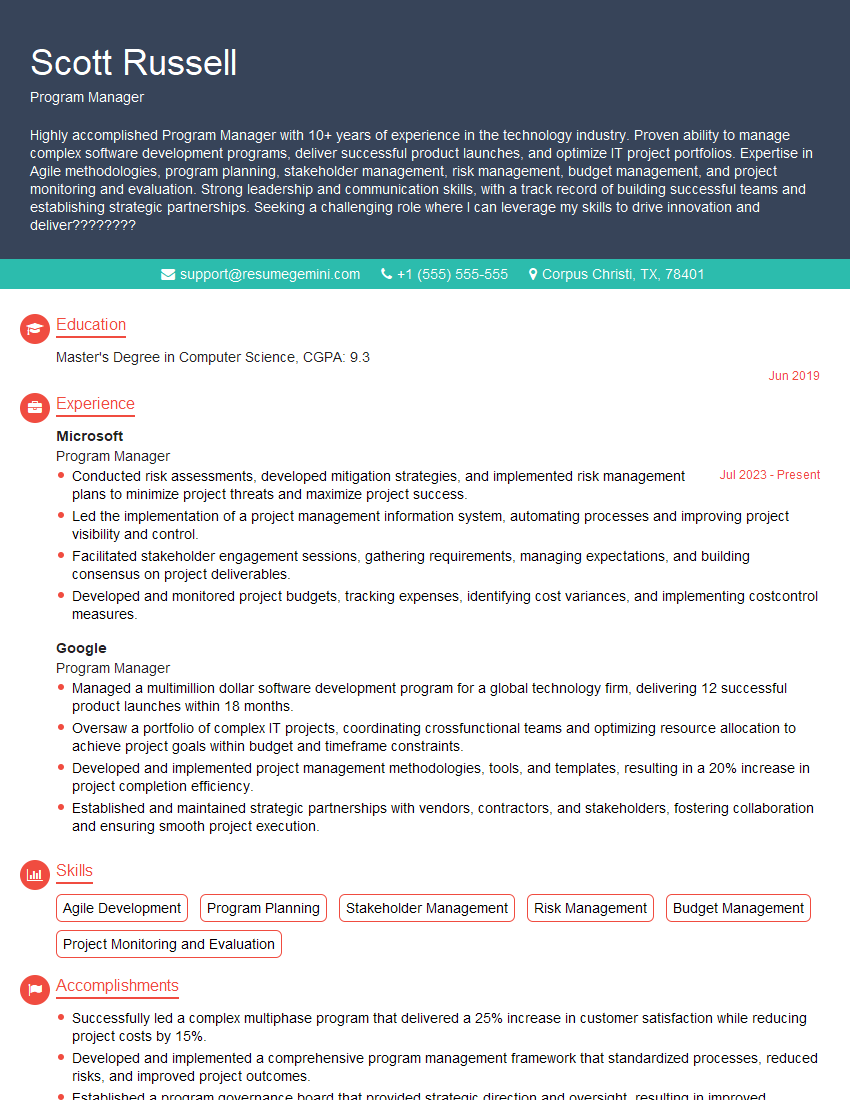
Program Manager Resume Sample
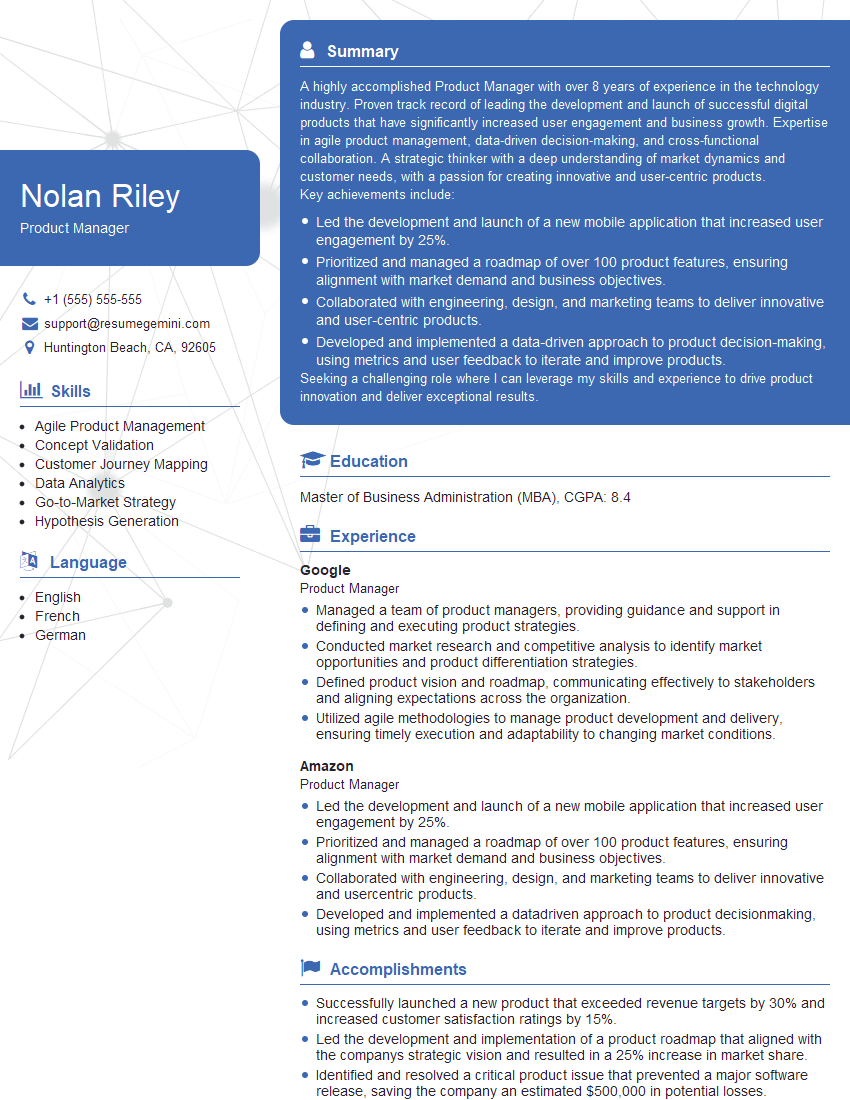
Product Manager Resume Sample

Project Manager Resume Sample
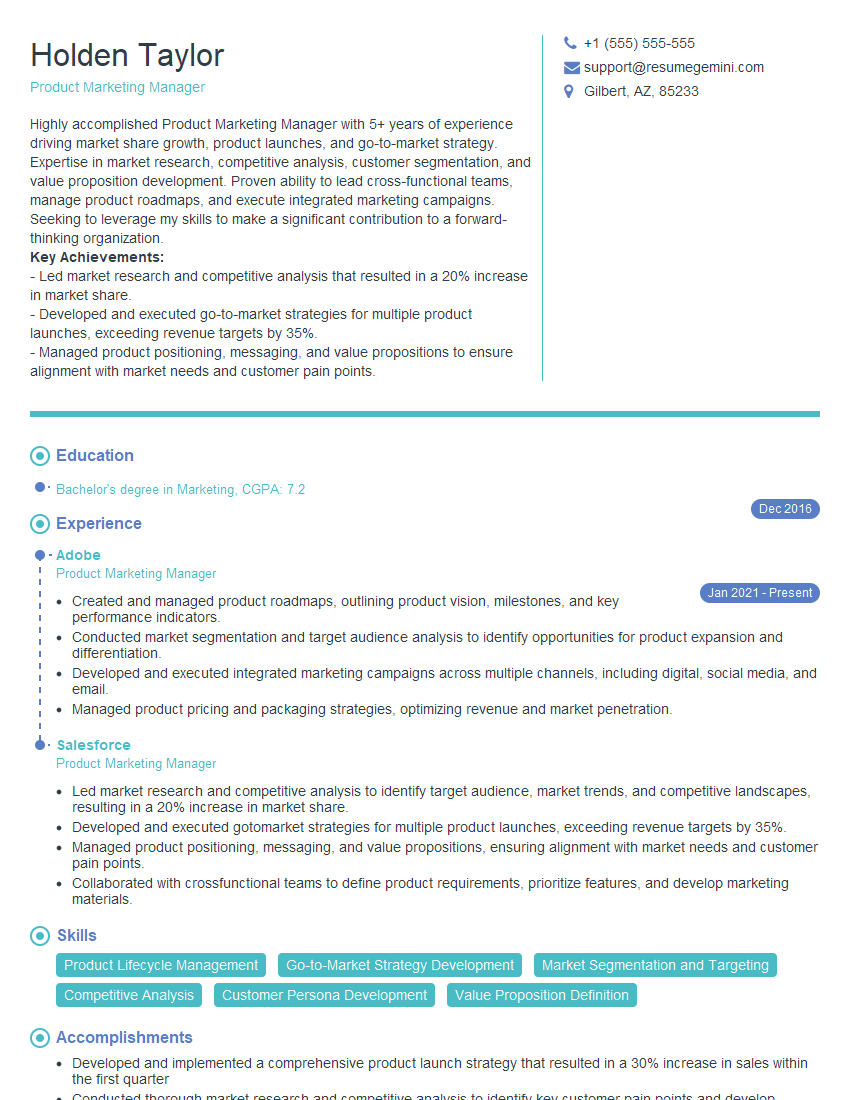
Product Marketing Manager Resume Sample
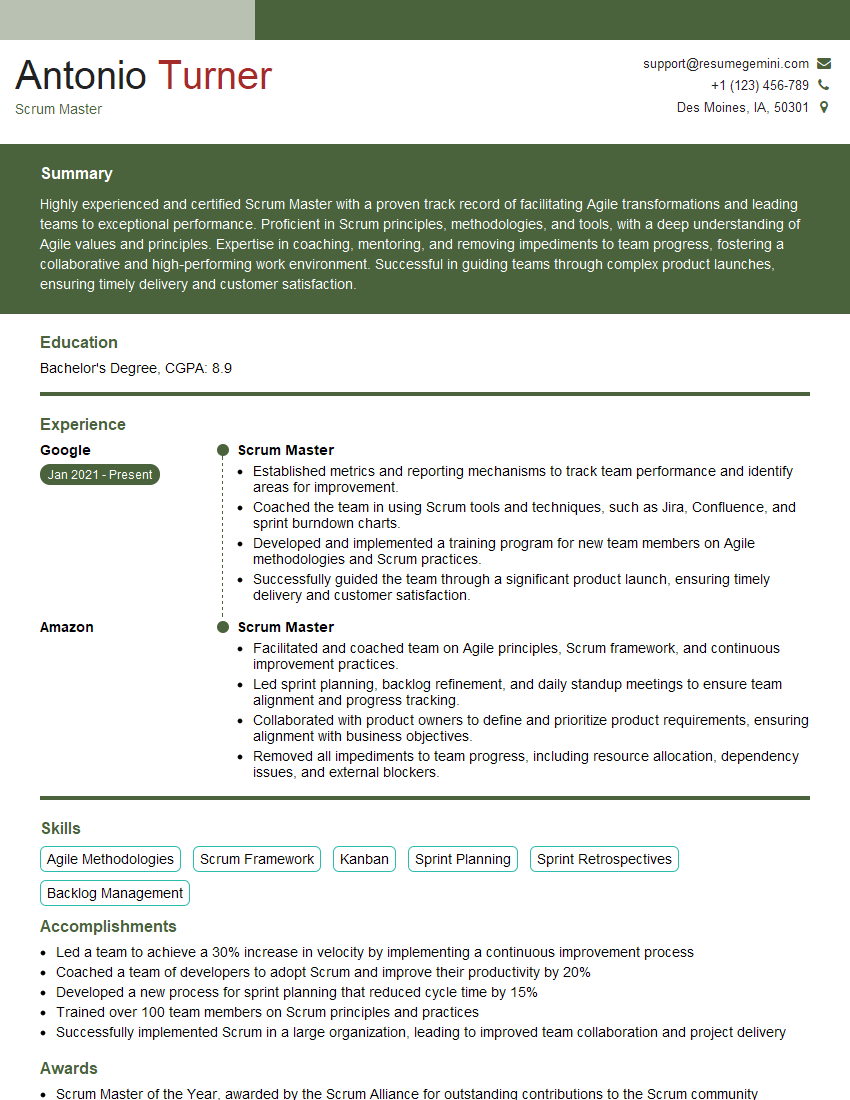
Scrum Master Resume Sample

Product Development Manager Resume Sample
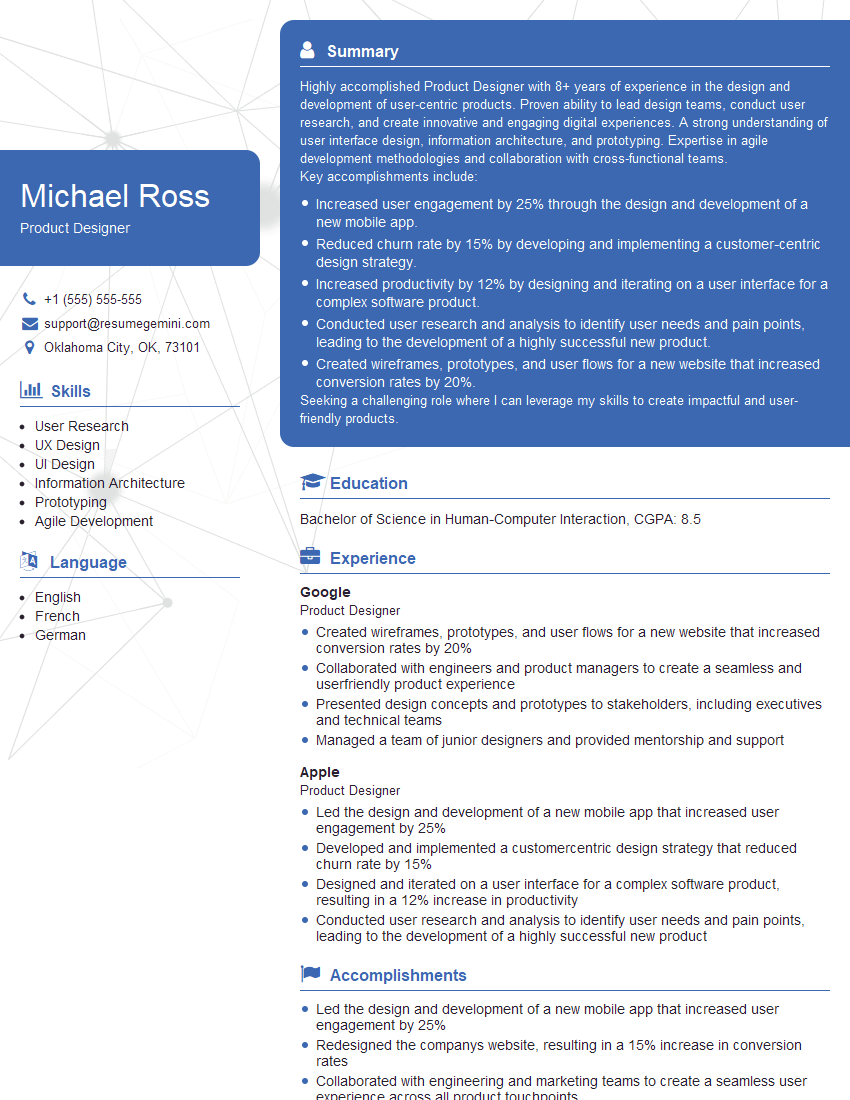
Product Designer Resume Sample
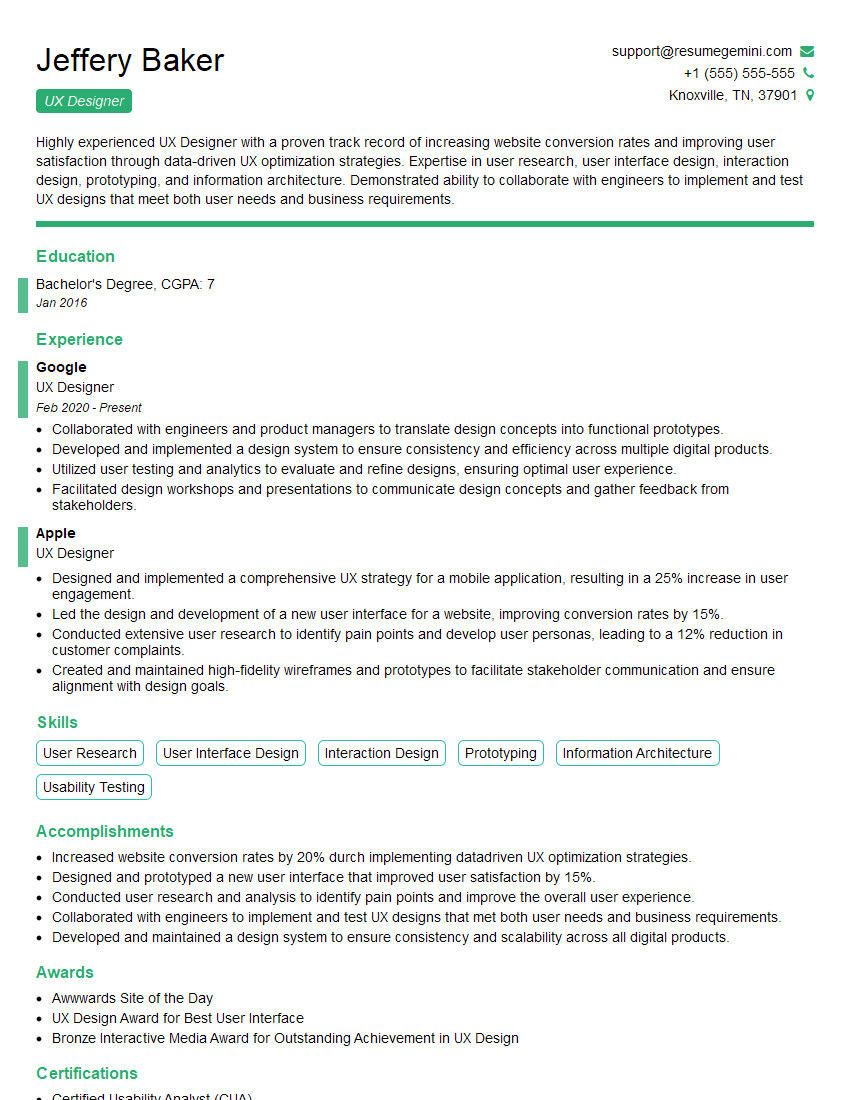
UX Designer Resume Sample
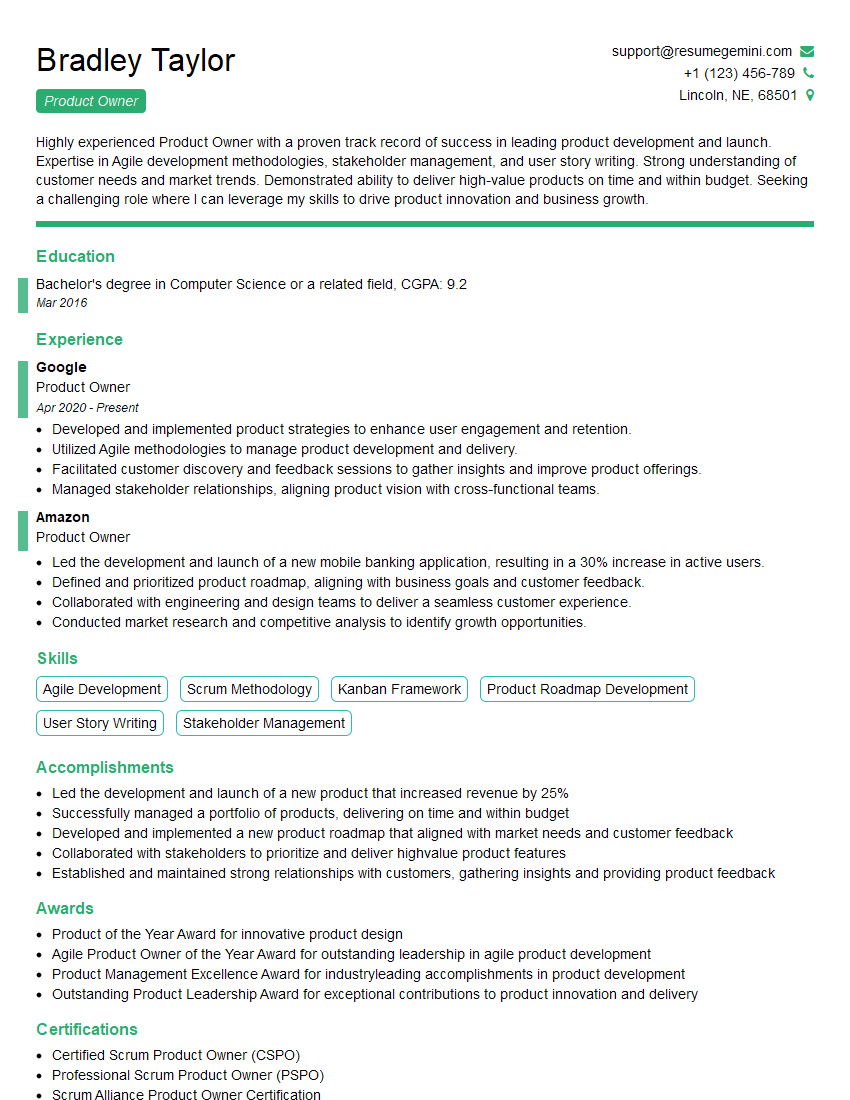
Product Owner Resume Sample
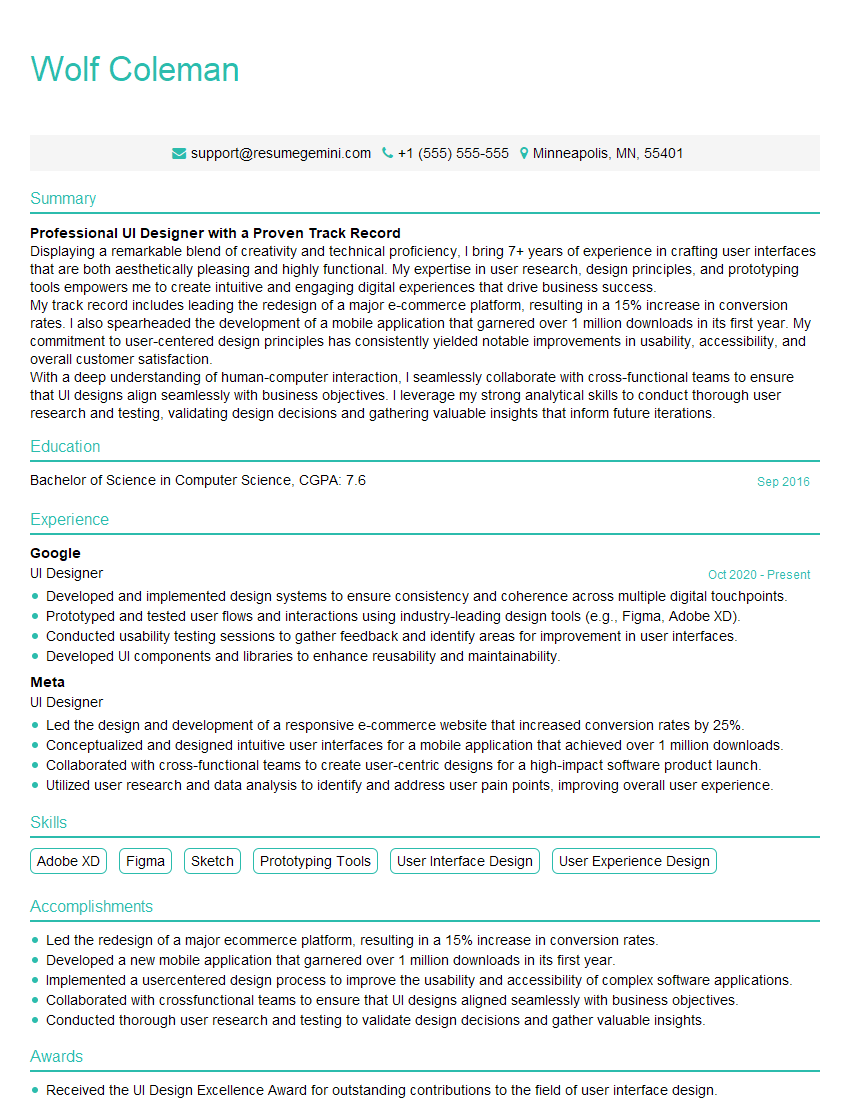
UI Designer Resume Sample
Explore more articles
Users Rating of Our Blogs
Share Your Experience
We value your feedback! Please rate our content and share your thoughts (optional).