Are you ready to stand out in your next interview? Understanding and preparing for Site Inspection and Reporting interview questions is a game-changer. In this blog, we’ve compiled key questions and expert advice to help you showcase your skills with confidence and precision. Let’s get started on your journey to acing the interview.
Questions Asked in Site Inspection and Reporting Interview
Q 1. Describe your experience conducting site inspections.
My experience in conducting site inspections spans over eight years, encompassing a wide range of projects including residential, commercial, and industrial constructions. I’ve performed inspections at various stages of a project’s lifecycle, from initial site preparation to final completion, and even during renovations or remediation efforts. I’m proficient in utilizing various inspection techniques, ranging from visual assessments to the use of specialized equipment, depending on the project’s specific needs. For example, during a recent inspection of a high-rise building, I used drone technology to assess the condition of the facade, identifying areas requiring attention that were otherwise difficult to access. Another project involved a meticulous inspection of a historical building where careful attention to detail was crucial in identifying structural weaknesses and potential preservation issues. Each project presents unique challenges and opportunities to apply my diverse skill set.
Q 2. What types of documentation do you typically create during a site inspection?
The documentation I create during a site inspection is comprehensive and aims to provide a clear and accurate record of the site’s condition. This typically includes:
- Inspection Checklist: A detailed checklist ensures consistency and completeness. This might include sections on structural integrity, safety hazards, compliance with building codes, and the overall site condition.
- Photographs and Videos: High-resolution images and videos act as visual records of identified issues, providing irrefutable evidence. I use precise annotations to highlight specific problem areas.
- Detailed Report: This consolidates all findings, includes prioritized observations, recommendations for corrective actions, and supporting photographic evidence. The report is formatted for clarity and easy understanding for both technical and non-technical stakeholders.
- Sketch Plans/As-Built Drawings: Where necessary, I create or annotate existing plans to pinpoint locations of issues. This makes it easier for contractors to understand and address the problems.
- Safety Hazard Report: If safety violations are found, a separate report with immediate corrective actions is generated and communicated to relevant parties.
The specific documentation varies depending on the project scope and client requirements.
Q 3. How do you prioritize findings during a site inspection?
Prioritizing findings during a site inspection is crucial for efficient and effective remediation. I use a risk-based approach, prioritizing findings based on their potential impact on safety, structural integrity, and project timelines.
- Immediate Safety Hazards: Issues posing an imminent risk to personnel are addressed first. These might include exposed wiring, unstable scaffolding, or hazardous materials.
- Critical Structural Issues: Problems threatening the building’s stability or structural soundness, such as significant cracks or foundation settlement, are next in priority.
- Code Violations: Violations of relevant building codes and regulations are prioritized based on their severity and potential impact.
- Functional Issues: Issues affecting the building’s functionality, but not posing immediate risk, are addressed later. This might include minor cosmetic defects or minor plumbing issues.
I often employ a matrix or scoring system to objectively quantify the severity and risk of each finding, further enhancing the prioritization process.
Q 4. Explain your process for identifying and documenting safety hazards.
Identifying and documenting safety hazards is a critical aspect of my work. My process involves a systematic approach that combines visual inspection with an understanding of relevant safety regulations.
- Visual Inspection: Thoroughly examining the site, focusing on potential hazards such as fall risks, electrical hazards, fire hazards, and trip hazards.
- Compliance Check: Assessing the adherence to relevant safety regulations (OSHA, local codes).
- Documentation: Creating a detailed record of each identified hazard, including location, type of hazard, potential consequences, and recommended corrective actions. Photographs and videos are crucial components of the documentation. I also note the level of urgency for corrective measures (immediate, short-term, long-term).
- Reporting: Submitting a comprehensive report outlining all findings to relevant parties, including the client and contractors. I emphasize clear and concise communication to ensure that everyone understands the risks and how to mitigate them.
For instance, if I find exposed wiring, I’ll immediately halt work in that area until it’s secured and document the hazard with a photograph, noting its location and the potential risk of electrocution.
Q 5. How familiar are you with relevant building codes and regulations?
I am very familiar with relevant building codes and regulations. My knowledge encompasses the International Building Code (IBC), local jurisdiction-specific codes, and relevant OSHA safety standards. I regularly attend industry conferences and training sessions to stay updated on code changes and best practices. This ensures that my inspections are thorough and that my recommendations are compliant and effective. I understand how these regulations impact different aspects of a building project, including structural design, fire safety, accessibility, and environmental protection. My experience allows me to effectively identify code violations and offer solutions that comply with all applicable regulations.
Q 6. Describe your experience using inspection software or technology.
I’m proficient in using several inspection software and technologies, including mobile apps for data collection and reporting, drone technology for aerial inspections, 3D scanning for precise measurement and modeling, and cloud-based platforms for report management and collaboration. For instance, I routinely use a mobile app to record observations directly in the field, complete with photos and annotations, which auto-populates into my reports. This streamlines the process and minimizes the potential for errors. The use of drone technology significantly enhances my ability to inspect hard-to-reach areas, providing valuable perspectives and increasing efficiency and safety. 3D scanning enables me to create a detailed digital model of the site, allowing for more in-depth analysis and comparison to design documents. I also utilize cloud-based platforms for seamless collaboration and report sharing with clients and stakeholders.
Q 7. How do you handle discrepancies between design plans and actual site conditions?
Discrepancies between design plans and actual site conditions are common during site inspections. My approach involves a systematic process to document, analyze, and address these differences.
- Documentation: I meticulously document all discrepancies, including their location, nature, and potential implications. I utilize photographs, detailed notes, and measurements to support my findings.
- Analysis: I carefully analyze the discrepancies to understand their causes. This may involve considering factors like construction errors, design omissions, or changes made during construction.
- Communication: I clearly communicate the findings to all relevant stakeholders, including the client, architects, engineers, and contractors. I explain the potential consequences of the discrepancies and discuss possible solutions.
- Recommendations: I provide recommendations for addressing the discrepancies, which may involve revising design plans, implementing corrective measures, or seeking additional expertise from relevant specialists.
For example, if a wall is constructed in a different location than indicated in the design plans, I would document the discrepancy, determine the cause, and suggest either modifying the plans or finding a solution that complies with building codes and ensures structural integrity. Effective communication and collaboration are crucial for resolving these issues promptly and efficiently.
Q 8. How do you communicate inspection findings to stakeholders?
Communicating inspection findings effectively is crucial for ensuring project success. My approach involves tailoring the communication method to the stakeholder’s role and technical understanding.
- For clients: I prioritize clear, concise language, focusing on the impact of findings on the project timeline and budget, avoiding overly technical jargon. I often use visual aids like photos and diagrams to highlight key issues. I present findings in a meeting, followed by a comprehensive written report.
- For contractors: Communication is more detailed, providing specific instructions for remediation and referencing relevant codes and standards. I might use a collaborative platform to track progress on corrective actions.
- For regulatory bodies: Reports are highly formal, adhering strictly to required formats and including all necessary documentation, test results, and photographs. I ensure complete transparency and accuracy to maintain compliance.
Regardless of the audience, I always ensure the report includes: a summary of findings, detailed descriptions of observed defects or non-compliances, recommended corrective actions, and a timeline for completion.
Q 9. How do you ensure the accuracy and completeness of your inspection reports?
Accuracy and completeness are paramount in site inspection reports. I employ a multi-layered approach to guarantee this:
- Detailed checklists: I use meticulously prepared checklists tailored to the specific inspection type and project requirements. This ensures a systematic and comprehensive review of all relevant areas.
- Dual verification: Where feasible, I incorporate peer review or a second independent inspection to verify findings and reduce the risk of errors. This is especially important for complex or high-risk projects.
- Digital documentation: I use digital tools for recording findings, including high-resolution photographs, videos, and precise GPS coordinates. This provides a detailed and irrefutable record of the inspection.
- Clear and concise language: My reports use precise language, avoiding ambiguity. I define all technical terms clearly and provide sufficient context to support each finding.
- Thorough review and revision: Before finalization, I review the report meticulously, checking for consistency, accuracy, and completeness, ensuring that all observations are accurately documented and the conclusions are well-supported.
This structured approach minimizes the possibility of omissions or errors, ensuring the report provides a reliable and credible account of the site inspection.
Q 10. Describe a situation where you had to resolve a conflict on a site inspection.
During a pre-construction inspection for a large commercial building, a disagreement arose between the client and the general contractor regarding the location of a proposed utility easement. The client wanted it shifted, impacting the contractor’s planned foundation layout.
To resolve the conflict, I facilitated a meeting involving all parties: the client, the contractor, the utility company representative, and myself. I presented my unbiased assessment of the situation, outlining the implications of each proposed location based on codes, engineering plans, and site conditions. I actively listened to all perspectives, identifying common ground and areas of compromise. We collaboratively developed a modified plan that satisfied all parties’ concerns without compromising the project’s structural integrity or safety.
The key to successful conflict resolution was open communication, mutual respect, and a focus on finding a practical and mutually acceptable solution. Maintaining a neutral stance, presenting factual information, and guiding the discussion towards a collaborative outcome were critical to reaching a successful resolution.
Q 11. What is your experience with different types of inspections (e.g., pre-construction, during construction, post-construction)?
My experience encompasses all phases of construction: pre-construction, during construction, and post-construction inspections.
- Pre-construction: These inspections focus on verifying site conditions, reviewing plans for constructability, and identifying potential risks or challenges before construction begins. This helps to avoid costly rework and delays later in the project.
- During construction: Regular inspections during construction monitor progress, verify compliance with plans and specifications, identify and address defects early, and ensure safety protocols are followed. This proactive approach helps maintain quality and prevents issues from escalating.
- Post-construction: These inspections assess the completed work to ensure it meets all requirements, and identify any outstanding issues that need attention before project handover. This minimizes disputes and ensures a smooth transition to the client.
Each phase requires a different focus and skill set, but they all rely on a thorough understanding of building codes, construction practices, and effective communication to ensure project success.
Q 12. How do you manage your time effectively during a site inspection?
Effective time management during a site inspection is critical to ensure thoroughness and efficiency. My approach includes:
- Pre-inspection planning: I review plans and specifications in advance, identifying key areas to focus on and developing a structured inspection plan. This minimizes time wasted on site.
- Logical site progression: I follow a logical sequence during the inspection, moving systematically through the site to avoid backtracking and ensure complete coverage.
- Prioritization: I prioritize critical areas and high-risk elements for careful examination, focusing my time on aspects that pose the greatest potential for problems.
- Efficient documentation: I use digital tools to streamline documentation, ensuring quick and accurate recording of findings without unnecessary delays.
- Effective communication: I maintain clear and concise communication with the project team, focusing conversations on relevant issues and avoiding unnecessary distractions.
By strategically planning and executing the inspection, I can ensure thorough coverage within the allotted time, maximizing efficiency without compromising the quality of the inspection.
Q 13. How do you maintain impartiality during an inspection?
Maintaining impartiality is crucial for the credibility and objectivity of my inspections. I achieve this through:
- Adherence to standards: I strictly follow relevant codes, standards, and regulations, providing a consistent and unbiased framework for my assessment.
- Documented procedures: I adhere to documented inspection procedures, ensuring consistent application of assessment criteria across all projects.
- Open and transparent communication: I engage in open communication with all parties, actively listening to their perspectives, but maintaining a focus on the objective facts.
- Avoiding conflicts of interest: I disclose any potential conflicts of interest and avoid situations that could compromise my impartiality.
- Focus on facts: I base my assessments solely on factual observations and documented evidence, avoiding personal opinions or biases.
By consistently applying these principles, I ensure my inspections remain fair, objective, and free from undue influence.
Q 14. Describe your experience with different inspection methods (e.g., visual inspection, testing, sampling).
My experience spans various inspection methods, tailored to the specific needs of each project:
- Visual inspection: This is fundamental to all inspections, involving a thorough visual examination of structures, systems, and components. I use this to identify visible defects, damage, or non-compliance.
- Testing: This involves the use of specialized equipment and techniques to assess performance, integrity, and functionality. For example, I might use moisture meters to detect hidden water damage, or non-destructive testing (NDT) methods to evaluate the condition of concrete or steel.
- Sampling: In cases where further investigation is required, I collect samples of materials for laboratory testing. This might involve taking samples of concrete to determine its compressive strength or soil samples to assess its bearing capacity.
The choice of inspection methods depends on the project’s complexity, risks, and regulatory requirements. I always use a combination of methods to obtain a comprehensive and accurate assessment.
Q 15. How do you handle unexpected issues or emergencies during a site inspection?
Unexpected issues during site inspections are inevitable. My approach prioritizes safety and efficient problem-solving. First, I assess the situation to determine the severity and potential risks. This might involve identifying immediate hazards, like exposed wiring or unstable scaffolding. Then, I follow established protocols, which might include halting the inspection temporarily, notifying relevant parties (e.g., the client, site manager, or safety officer), and documenting the issue thoroughly with photos and detailed notes. If the issue poses an immediate danger, I’ll immediately evacuate the area and ensure everyone’s safety. For instance, during a recent inspection of a construction site, I discovered a significant gas leak. I immediately stopped the inspection, contacted the site supervisor and emergency services, and ensured all personnel were evacuated from the area before further investigation. Following the emergency, I documented everything in my report, detailing the incident, the actions taken, and any potential future risks.
Career Expert Tips:
- Ace those interviews! Prepare effectively by reviewing the Top 50 Most Common Interview Questions on ResumeGemini.
- Navigate your job search with confidence! Explore a wide range of Career Tips on ResumeGemini. Learn about common challenges and recommendations to overcome them.
- Craft the perfect resume! Master the Art of Resume Writing with ResumeGemini’s guide. Showcase your unique qualifications and achievements effectively.
- Don’t miss out on holiday savings! Build your dream resume with ResumeGemini’s ATS optimized templates.
Q 16. What is your experience with risk assessment related to site inspections?
Risk assessment is fundamental to site inspections. Before each inspection, I conduct a thorough risk assessment, identifying potential hazards specific to the site and project. This involves reviewing project plans, considering the environment (e.g., weather conditions, presence of hazardous materials), and assessing potential risks to personnel, equipment, and the environment. I use a systematic approach, often employing a matrix that categorizes risks by likelihood and severity. This allows me to prioritize critical risks and adjust my inspection strategy accordingly. For example, when inspecting a chemical processing plant, I’d prioritize the identification of potential leaks, fire hazards, and exposure to toxic substances. The risk assessment informs my selection of personal protective equipment (PPE) and guides my decision-making during the inspection. I document all risk assessments within the inspection report to ensure accountability and transparency.
Q 17. How do you ensure the confidentiality of inspection information?
Confidentiality is paramount. I handle sensitive information responsibly, adhering to strict confidentiality agreements and organizational policies. All inspection reports and data are stored securely, often using password-protected files and encrypted storage solutions. I limit access to inspection information to authorized personnel only. During inspections, I avoid discussing sensitive details with unauthorized individuals and always ensure that any photographs or videos taken are handled responsibly and securely. Furthermore, I follow appropriate data destruction protocols when information is no longer required, ensuring compliance with all applicable regulations.
Q 18. What software or tools are you proficient in using for site inspections and reporting?
I’m proficient in various software and tools used for site inspections and reporting. I regularly use Microsoft Office Suite (Word, Excel, PowerPoint) for report writing and data analysis. I am also experienced with BIM (Building Information Modeling) software such as Autodesk Revit for reviewing project plans and integrating inspection findings with digital models. Mobile applications for data collection and photography, like PlanGrid or similar platforms, are also integral to my workflow. Additionally, I’m familiar with dedicated inspection software which often allows for automated report generation, integrated risk assessments and streamlined data management. The specific software used depends on the project’s requirements and client preferences.
Q 19. How do you adapt your inspection approach to different project types and scopes?
My inspection approach adapts to different project types and scopes. For example, a site inspection for a small residential renovation will differ significantly from a large-scale infrastructure project. My checklist and focus areas change accordingly. For a residential renovation, I’d concentrate on building code compliance, safety of the work area and the quality of workmanship. On a large infrastructure project, my priorities shift to broader issues like environmental impact, structural integrity, and adherence to complex regulatory frameworks. The key is flexibility and the ability to tailor the inspection to the specific needs of each project and client, ensuring that all relevant aspects are comprehensively covered. I meticulously tailor my approach, adjusting the level of detail, checklists and time allocation as needed.
Q 20. Describe your experience with regulatory compliance related to site inspections.
Regulatory compliance is crucial in site inspections. My experience encompasses a broad range of regulations, including OSHA (Occupational Safety and Health Administration) standards, local building codes, and environmental regulations. I’m familiar with the specific requirements of different jurisdictions and industries. I ensure my inspections meet all relevant legal requirements and consistently document compliance, or any deviations, thoroughly. For example, I’m familiar with EPA regulations concerning hazardous waste handling and disposal. Any non-compliance noted during an inspection is clearly documented in the report with appropriate recommendations for corrective actions. My thorough understanding of these regulations allows me to identify potential liabilities and mitigate risk for my clients.
Q 21. How do you stay current with industry best practices and changes in regulations?
Staying current is vital in this rapidly evolving field. I actively participate in industry professional organizations, attending conferences and webinars to stay abreast of the latest best practices and regulatory changes. I subscribe to relevant industry publications and online resources, actively seeking opportunities for continuing education. This ensures my inspection methods and reports always reflect the most up-to-date standards. I also regularly review and update my inspection checklists and processes to reflect these changes. By maintaining a proactive approach to continuing education, I ensure the quality and effectiveness of my services and contribute to the safety and integrity of the projects I inspect.
Q 22. Explain your understanding of different types of inspection reports and their purpose.
Site inspection reports come in various forms, each serving a unique purpose. The most common types include:
- Initial Site Assessment Reports: These reports detail the conditions of a site before any work begins. They document existing structures, utilities, potential hazards, and environmental considerations. Think of it like a snapshot before construction begins. For example, an initial assessment might note the presence of asbestos-containing materials requiring specialized handling.
- Progress Reports: These reports track the progress of a project throughout its lifecycle. They compare the actual progress against the planned schedule and highlight any discrepancies or potential delays. A progress report might show that concrete pouring is behind schedule due to inclement weather.
- Final Inspection Reports: These reports summarize the final state of the project upon completion. They confirm compliance with all relevant codes, specifications, and regulations. It’s the ‘final sign-off’ report, verifying the project meets all requirements. This report might detail any minor snags that need addressing and the final as-built drawings.
- Defect Reports: These reports document identified defects or non-conformances with plans and specifications. They provide a detailed description of the defect, its location, severity, and recommended remedial actions. A picture showing a crack in a newly laid concrete slab would accompany such a report.
- Safety Inspection Reports: These reports focus specifically on identifying potential safety hazards and recommending corrective measures. They are crucial for ensuring a safe work environment. This might highlight improper use of personal protective equipment (PPE) or inadequate safety barriers.
The purpose of each report is to provide clear, concise, and accurate documentation of the site’s condition, project progress, and compliance with standards. They serve as essential tools for communication, risk management, and legal protection.
Q 23. Describe your experience with quality control measures during site inspections.
Quality control (QC) is paramount in site inspections. My experience involves implementing a multi-layered approach ensuring accuracy and consistency. This includes:
- Pre-inspection Planning: Thorough preparation is key. I always review the project plans, specifications, and relevant codes before each inspection. This allows me to develop a detailed checklist and prioritize areas for scrutiny.
- Systematic Inspection: I follow a structured approach, systematically checking all aspects of the work against the plans. This includes documenting measurements, taking photographs, and noting any deviations from specifications.
- Calibration and Maintenance of Equipment: Using calibrated measuring tools (like laser distance meters and levels) is essential. Regular equipment maintenance ensures accurate data collection. I always verify the calibration certificates are up to date.
- Multiple Checkpoints: I believe in multiple checks and balances. For critical aspects of the project, I might incorporate independent verification from another inspector or use non-destructive testing techniques to validate findings.
- Detailed Documentation: Comprehensive documentation is critical. This includes detailed written reports, photographs, sketches, and video recordings, supporting all findings.
- Data Analysis and Reporting: Once the inspection is complete, I meticulously analyze the collected data and draft a clear, concise report. I identify trends and potential issues for early intervention.
For example, during a recent inspection of a high-rise building’s foundation, we used ground-penetrating radar to check for any voids or weaknesses undetected by conventional methods. This layered approach ensures that the project remains within quality parameters.
Q 24. How do you contribute to a safe and efficient work environment during site inspections?
Contributing to a safe and efficient work environment during site inspections is a top priority. This involves:
- Hazard Identification and Mitigation: I proactively identify and report any potential hazards, including unsafe working conditions, inadequate safety equipment, or environmental risks. This is often done using a standard hazard identification checklist and documented through photographic evidence.
- Enforcement of Safety Regulations: I ensure that all personnel on-site comply with relevant safety regulations and wear appropriate personal protective equipment (PPE). I’ll politely remind workers of safety protocols, and report serious breaches immediately to the site supervisor.
- Communication and Collaboration: I maintain open communication with all stakeholders, including contractors, workers, and management. This ensures that safety concerns are addressed promptly and everyone is aware of potential risks.
- Emergency Preparedness: I’m familiar with emergency procedures and know how to use communication equipment for quick reporting and calling appropriate emergency services.
- Promoting a Safety Culture: I actively promote a positive safety culture by highlighting best practices and recognizing safe work behaviours. I believe that promoting a positive safety culture is just as critical as implementing safety guidelines. A safety briefing before the start of the site inspection is part of my routine.
For instance, during a recent inspection, I noticed that some scaffolding was improperly erected. I immediately halted the work and reported the issue, preventing a potential accident.
Q 25. How do you handle situations where you disagree with the project manager or client?
Disagreements are inevitable in project management. My approach is professional and collaborative:
- Documenting Discrepancies: I meticulously document any points of disagreement, providing clear evidence and referencing relevant standards or specifications.
- Seeking Clarification: Before escalating the issue, I always attempt to understand the project manager’s or client’s perspective. I ask clarifying questions to ensure a common understanding of the problem.
- Professional Communication: I communicate my concerns in a clear, respectful, and professional manner, focusing on the facts and avoiding personal attacks.
- Collaboration and Compromise: I strive for collaborative solutions that address everyone’s concerns. Sometimes a compromise might involve alternative solutions, while remaining true to safety standards.
- Escalation (if necessary): If a mutually agreeable solution can’t be found, I will escalate the issue through the appropriate channels within the organization, providing documented evidence of the disagreement and attempted resolutions.
For example, I once disagreed with a client’s request to compromise on a critical safety feature. By providing clear evidence of potential risks, I was able to convince them to adhere to safety standards.
Q 26. What are your salary expectations for this role?
My salary expectations are in line with the market rate for experienced Site Inspection and Reporting professionals with my qualifications and experience. I am open to discussing a specific range after learning more about the comprehensive compensation package and benefits offered for this role.
Q 27. What are your long-term career goals?
My long-term career goals involve becoming a recognized expert in Site Inspection and Reporting, potentially leading a team, and contributing to the development of innovative inspection technologies and methodologies. I aim to further develop my expertise in sustainable construction practices and advanced inspection techniques.
Q 28. What questions do you have for me?
I have several questions to ensure I fully understand this role and the company’s expectations:
- What specific software or technologies do you use for site inspection reporting?
- What is the company’s approach to continuous professional development and training for its employees?
- What are the team dynamics and collaboration processes within the inspection department?
- Can you describe a typical project lifecycle and how the inspection process integrates into it?
- What opportunities are there for advancement within the company?
Key Topics to Learn for Site Inspection and Reporting Interview
- Safety Protocols and Procedures: Understanding and applying relevant safety regulations and best practices during site inspections. This includes recognizing potential hazards and implementing preventative measures.
- Data Collection and Documentation: Mastering techniques for accurately recording observations, measurements, and photographic evidence. This involves using appropriate tools and software to maintain detailed and organized records.
- Report Writing and Communication: Developing clear, concise, and professional reports that effectively communicate findings to stakeholders. This includes using visual aids and adapting communication styles for different audiences.
- Technical Knowledge of Relevant Systems: Depending on the specific industry, this might include familiarity with building codes, environmental regulations, or specific infrastructure systems (e.g., plumbing, electrical). Demonstrate understanding of how these relate to inspection processes.
- Problem-Solving and Analytical Skills: Applying critical thinking to identify potential issues, analyze data, and propose effective solutions. Be prepared to discuss past experiences where you identified and resolved problems during site inspections.
- Software Proficiency: Familiarity with relevant software for data collection, reporting, and potentially CAD or GIS systems. Highlight any software experience you possess.
- Legal and Compliance Aspects: Understanding relevant legal frameworks and compliance requirements related to site inspections and reporting. This will show your awareness of potential liabilities and the importance of accurate documentation.
Next Steps
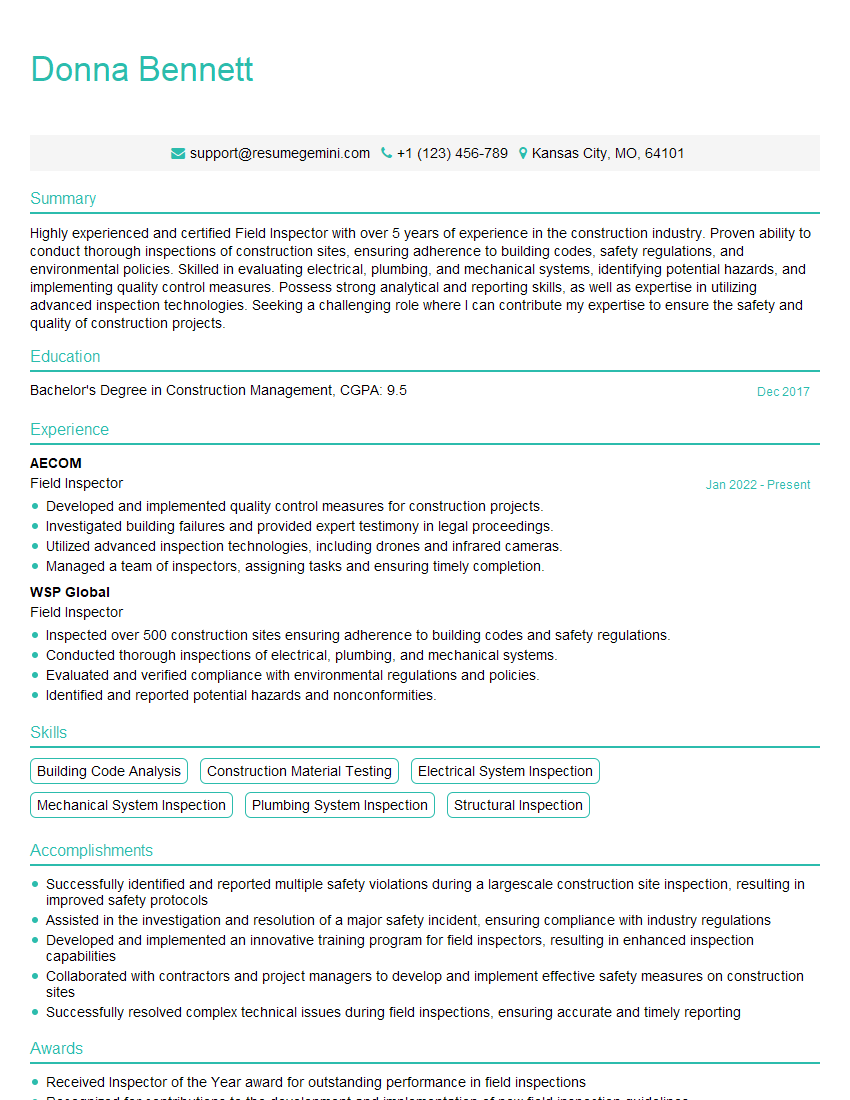
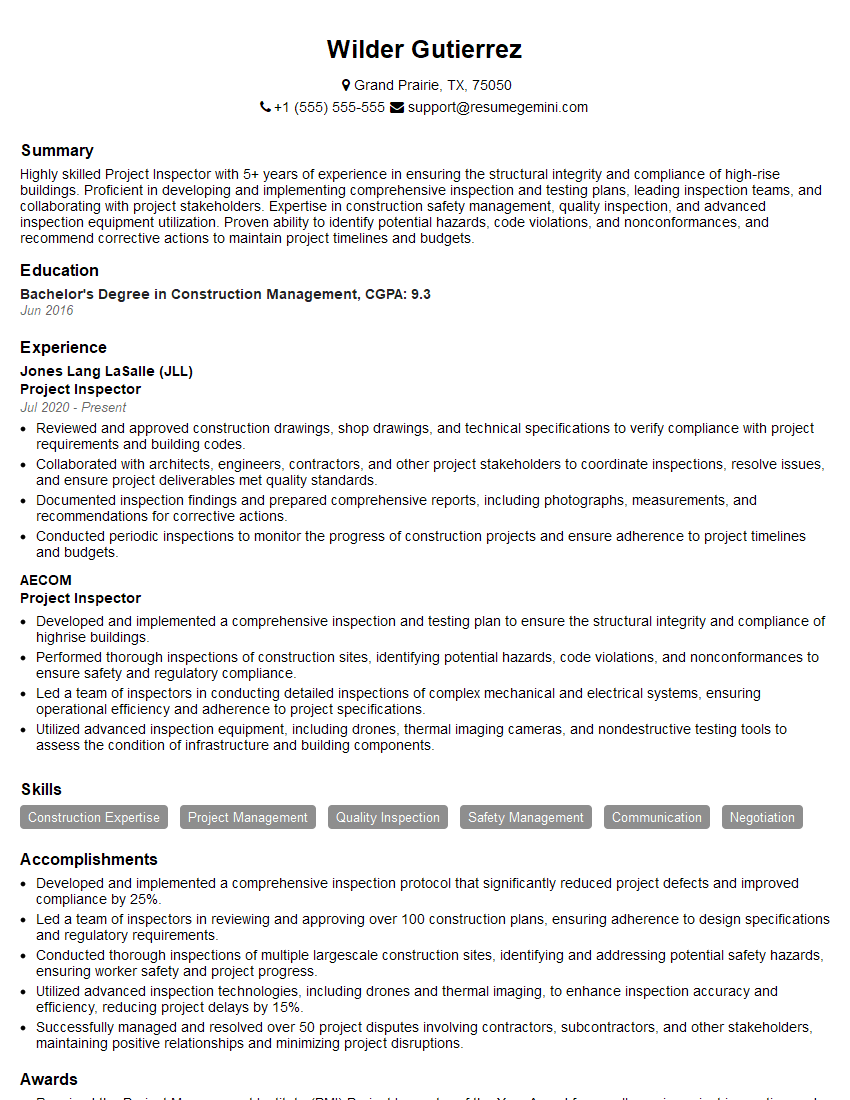
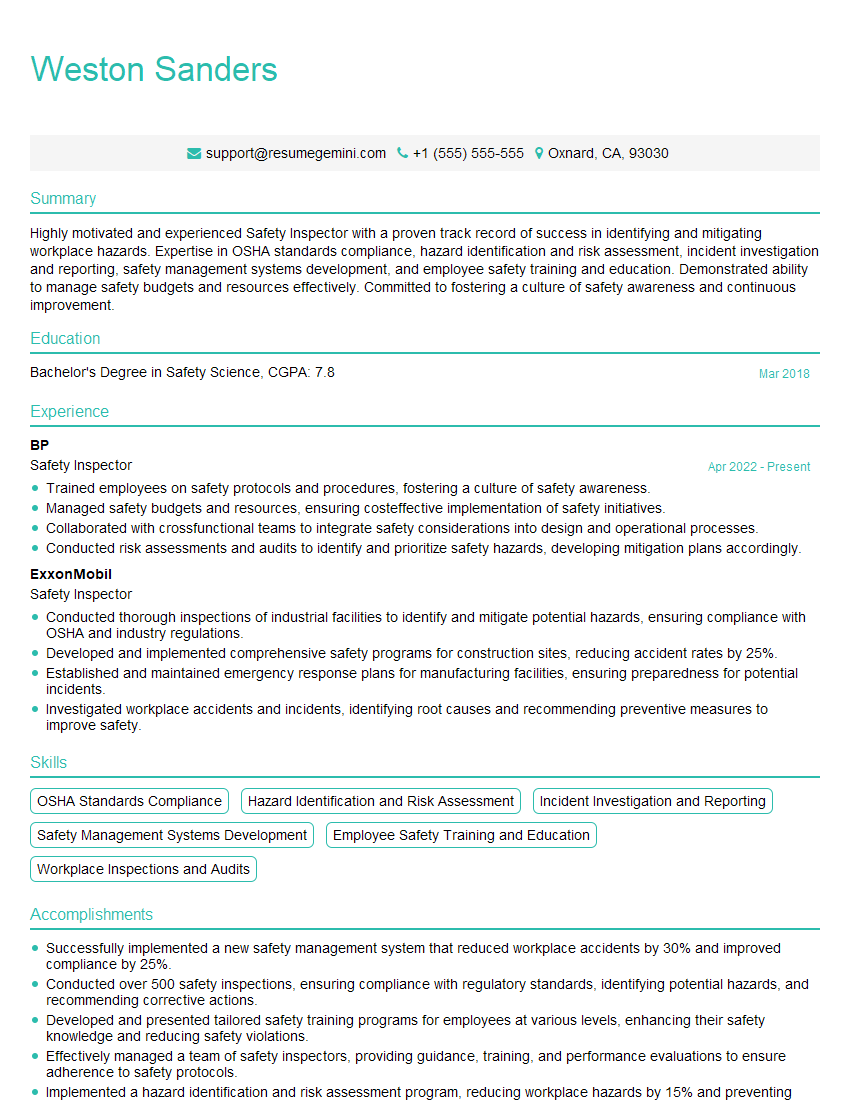
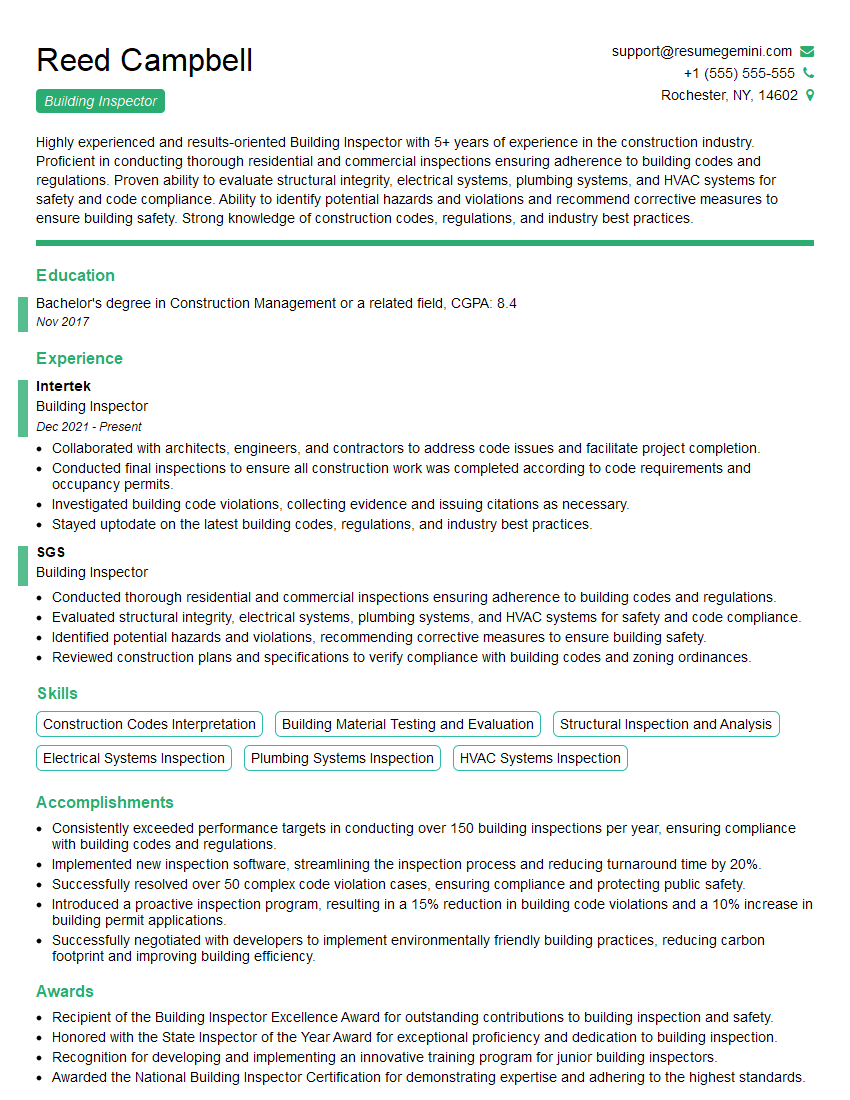
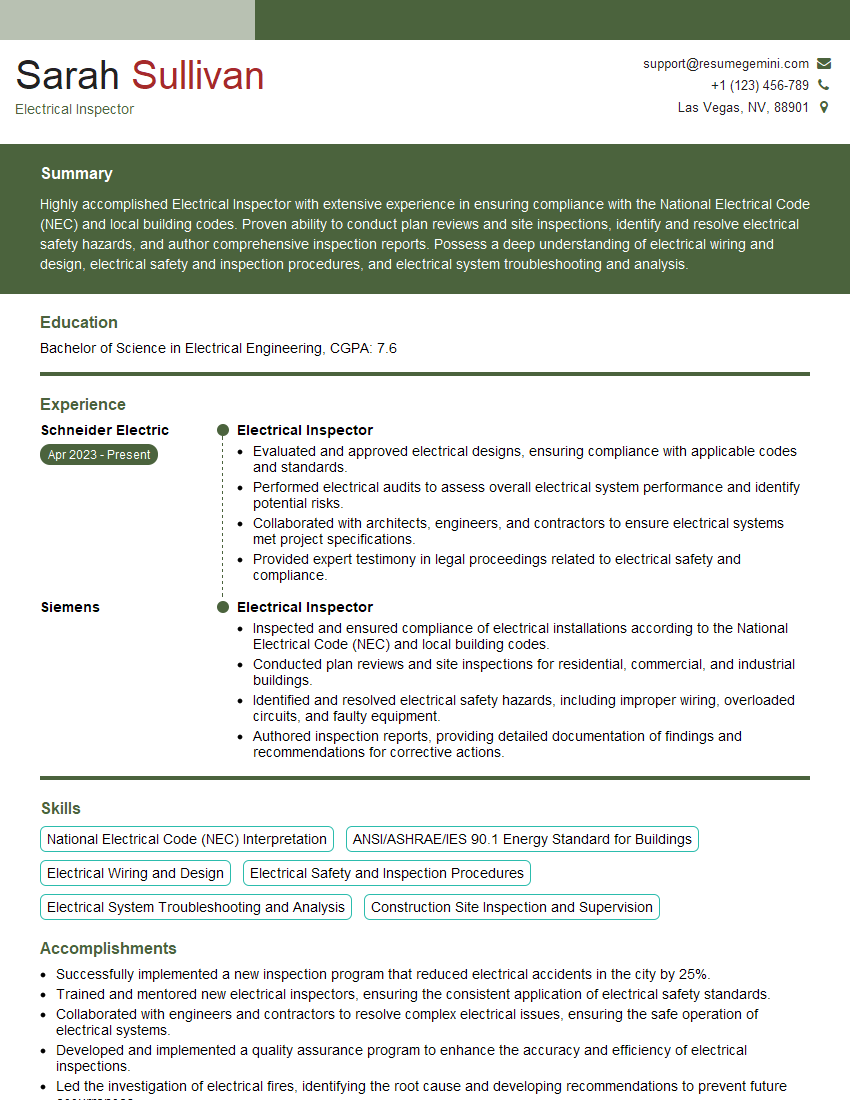
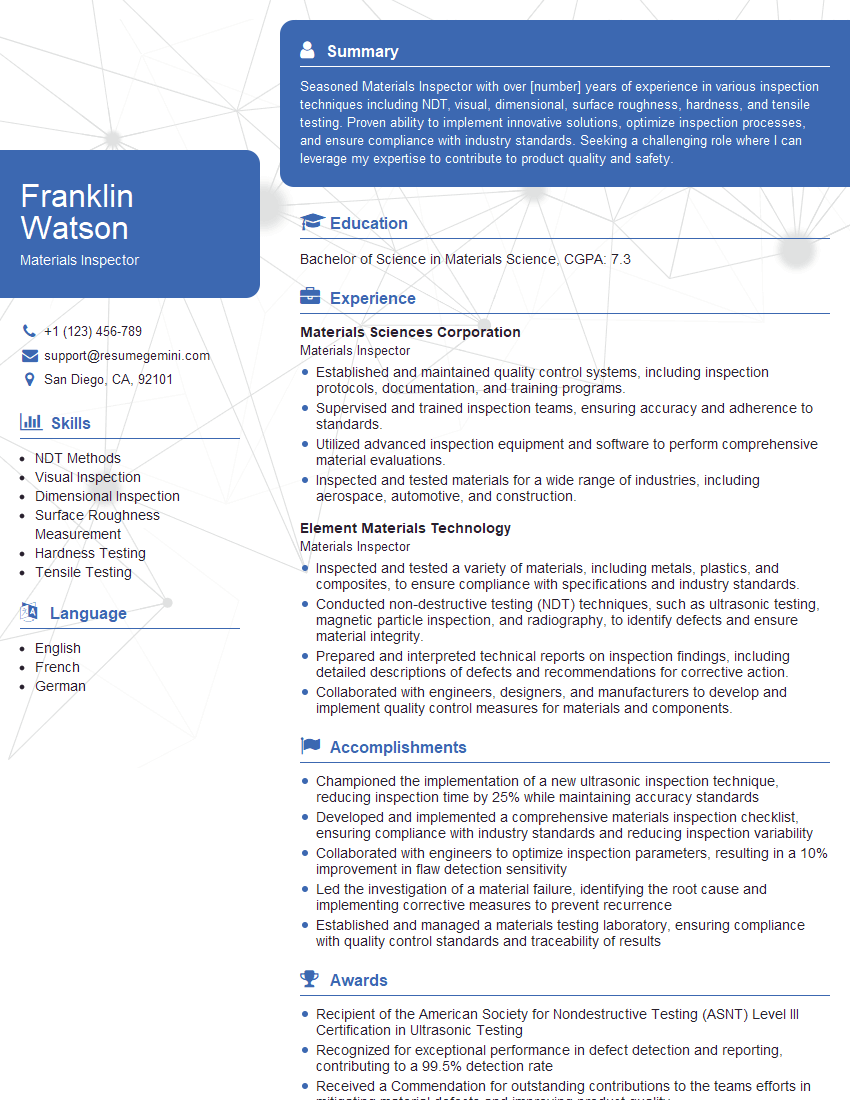
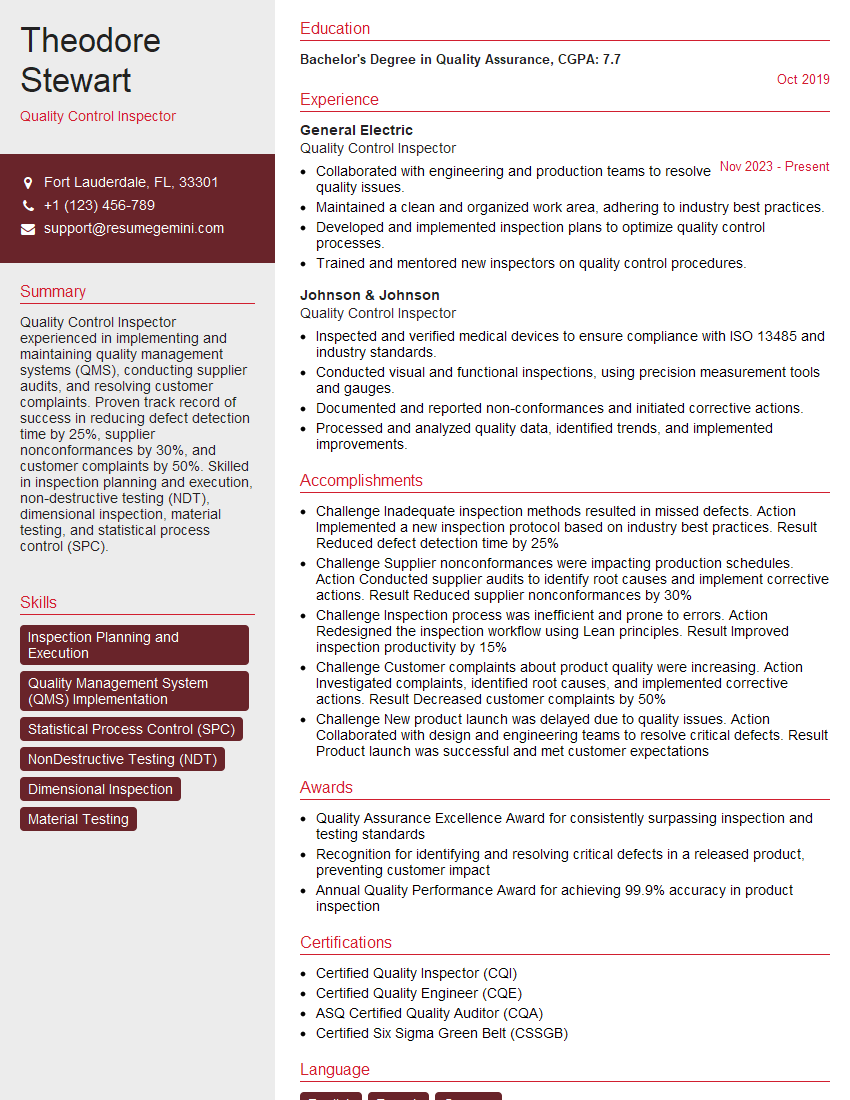
Mastering Site Inspection and Reporting is crucial for career advancement in many fields, opening doors to higher responsibility and increased earning potential. A well-crafted resume is your key to unlocking these opportunities. Make sure your resume is ATS-friendly to ensure it gets noticed by recruiters. ResumeGemini is a valuable tool to help you create a professional and effective resume that showcases your skills and experience. We provide examples of resumes tailored specifically to Site Inspection and Reporting to help you get started. Invest time in crafting a compelling resume – it’s your first impression and a critical step in landing your dream job.
Explore more articles
Users Rating of Our Blogs
Share Your Experience
We value your feedback! Please rate our content and share your thoughts (optional).
What Readers Say About Our Blog
Very informative content, great job.
good