The right preparation can turn an interview into an opportunity to showcase your expertise. This guide to Product Liability Assessment interview questions is your ultimate resource, providing key insights and tips to help you ace your responses and stand out as a top candidate.
Questions Asked in Product Liability Assessment Interview
Q 1. Explain the difference between strict liability and negligence in product liability cases.
The core difference between strict liability and negligence in product liability lies in the proof required. Negligence focuses on the manufacturer’s conduct – did they act reasonably in designing, manufacturing, or warning about their product? Strict liability, on the other hand, focuses on the product itself – was it defective and unreasonably dangerous, regardless of the manufacturer’s intent or actions?
Think of it like this: Negligence is like a speeding car – you need to prove the driver was reckless. Strict liability is like a faulty brake system – it doesn’t matter how carefully the driver drove; the defect caused the accident. To establish negligence, you must prove duty, breach, causation, and damages. With strict liability, you only need to show a defect and resulting injury.
For example, a manufacturer failing to properly test a product and it causes harm would be negligence. However, if a perfectly manufactured product has an inherent design flaw that causes injury, it would likely fall under strict liability.
Q 2. Describe the elements necessary to establish a successful product liability claim.
To successfully establish a product liability claim, several elements must be proven, typically varying slightly based on jurisdiction. Generally, these include:
- Defect: The product must have been defective when it left the manufacturer’s control. This can be a manufacturing defect (a flaw in a single product), a design defect (a flaw inherent in the product’s design), or a failure-to-warn defect (inadequate instructions or warnings).
- Causation: The defect must have been the direct and proximate cause of the plaintiff’s injuries. This means the injury wouldn’t have happened without the defect. The plaintiff needs to show a clear link between the defect and the harm suffered.
- Injury: The plaintiff must have suffered actual harm, such as physical injury, property damage, or economic loss, as a result of the defect. The injury needs to be reasonably foreseeable and directly linked to the product’s defective nature.
- Duty Owed: The manufacturer owed a legal duty to the plaintiff to provide a safe product. In most jurisdictions, this duty extends to foreseeable users of the product.
In essence, you have to demonstrate that the product was defective, this defect caused the injury and the plaintiff suffered a compensable injury. Expert witnesses play a crucial role in providing evidence and analysis to support these claims.
Q 3. What are the key defenses in product liability litigation?
Defendants in product liability cases have several key defenses at their disposal. These often include:
- Comparative/Contributory Negligence: The defendant argues that the plaintiff’s own negligence contributed to their injuries. For instance, if someone ignores safety warnings and gets injured, their recovery might be reduced. The allocation of responsibility varies by jurisdiction.
- Assumption of Risk: The defendant claims the plaintiff knowingly and voluntarily assumed the risk of injury associated with the product. This defense is often difficult to establish and usually requires a high level of awareness of the risk on the plaintiff’s part.
- Product Misuse: The defendant asserts that the product was misused or used in a way not intended by the manufacturer. For example, using a power tool for an unintended purpose. It’s crucial to prove the misuse was not foreseeable by the manufacturer.
- State of the Art Defense: The defendant argues that the product was designed and manufactured using the best available technology and knowledge at the time. This is a difficult defense as the “state of the art” is constantly evolving.
- Preemption: A federal or state regulation may preempt a product liability claim if the product complied with all applicable regulations.
Success in using these defenses hinges upon presenting strong evidence and demonstrating to the court the plaintiff’s actions or the absence of a true defect.
Q 4. How does the concept of ‘design defect’ differ from ‘manufacturing defect’?
The distinction between design defects and manufacturing defects is crucial in product liability. A manufacturing defect occurs when a product deviates from its intended design during the manufacturing process. It’s a flaw in a single product or a limited batch. For example, a car’s brake line might be improperly installed on one vehicle, leading to brake failure. A design defect, conversely, is a flaw inherent in the product’s overall design, affecting all products manufactured according to that design. This could be a poorly designed seatbelt system that consistently fails to provide adequate protection in a crash.
In short: manufacturing defects are about individual product failures; design defects are about systemic problems with the product’s blueprint itself.
Q 5. Explain the role of warnings and instructions in mitigating product liability risk.
Warnings and instructions play a pivotal role in mitigating product liability risk. Clear, concise, and prominent warnings alert consumers to potential hazards associated with the product, helping them to use it safely. Adequate instructions explain the proper use of the product, reducing the likelihood of misuse and accidents. Manufacturers have a duty to warn consumers about foreseeable dangers, even those that might not be immediately obvious.
For example, a chainsaw needs clear warnings about kickback and proper handling techniques, while a medication requires detailed instructions on dosage and potential side effects. A failure to provide adequate warnings or instructions can lead to product liability claims, even if the product itself is otherwise free of defects.
Q 6. How do you assess the adequacy of product warnings?
Assessing the adequacy of product warnings involves a multifaceted evaluation process. Several factors are considered:
- Foreseeability: Were the hazards warned about reasonably foreseeable?
- Clarity and Simplicity: Are the warnings easily understood by the target audience? Are they written in plain language, free of technical jargon?
- Prominence: Are the warnings sufficiently noticeable on the product or in the instructions? Are they clear and easy to see?
- Comprehensiveness: Do the warnings cover all reasonably foreseeable hazards?
- Effectiveness: Would a reasonably prudent person have heeded the warning and avoided the harm? This is often determined by testing and expert testimony.
I often use a risk-based approach, analyzing the severity and probability of potential hazards to determine the appropriate level of warning required. A highly severe and probable hazard necessitates a much more prominent and detailed warning compared to a less serious and improbable risk. The analysis also accounts for the target audience – a warning for a child’s toy needs to be simpler and more visually prominent than one for a professional tool.
Q 7. Describe your experience with conducting root cause analyses for product failures.
Throughout my career, I’ve extensively conducted root cause analyses (RCA) for product failures. My approach typically involves a structured methodology, such as the ‘5 Whys’ technique or a more formal fault tree analysis. This involves gathering data from various sources: examining the failed product itself, reviewing manufacturing records, interviewing witnesses and engineers, and analyzing usage patterns.
For example, I was once involved in an RCA for a series of power tool failures. By systematically examining the failed tools and interviewing users, we discovered a flaw in the motor’s cooling system that led to overheating and eventual failure under certain usage conditions. The root cause analysis helped identify the design flaw and recommend corrective actions to prevent future failures. A key part of my process is documenting every step thoroughly, creating a clear and comprehensive report for the client that not only identifies the root cause but also recommends effective solutions and preventative measures to avoid recurrence.
Q 8. What are some common methods used to investigate product liability incidents?
Investigating product liability incidents requires a multi-faceted approach, combining meticulous data collection with expert analysis. Common methods include:
- Scene Investigation: Thorough examination of the incident location, collecting physical evidence like the product itself, packaging, and any surrounding materials. Think of a car accident – investigators would examine the vehicle, the road conditions, and any witness statements.
- Product Testing and Analysis: Laboratory analysis of the product to identify defects in materials, design, or manufacturing processes. For example, a faulty power cord on a hairdryer might be dissected to determine the cause of the short circuit.
- Witness Interviews: Gathering accounts from individuals involved in or who witnessed the incident. These statements need to be carefully documented and corroborated.
- Expert Witness Testimony: Consulting with engineers, medical professionals, or other specialists to provide expert opinions on the cause of the incident and the role of the product. This is crucial for complex cases requiring in-depth technical analysis.
- Data Analysis: Reviewing product usage data, service records, and manufacturing records to identify patterns or trends that might indicate a systemic problem. This is particularly relevant for identifying recurring defects across multiple units.
- Failure Analysis: A systematic investigation to determine the root cause of a product failure, often involving detailed examination of the failed component using techniques like microscopy and chemical analysis.
The choice of methods depends on the nature of the incident and the type of product involved. A simple incident might only require a scene investigation and witness interviews, while a complex case might need a comprehensive combination of all methods.
Q 9. How do you determine the causal link between a product defect and an alleged injury?
Establishing a causal link between a product defect and an alleged injury is crucial in product liability cases. This requires demonstrating that:
- Defect existed: Proof that the product had a defect in its design, manufacture, or warnings at the time it left the manufacturer’s control. This could be established through testing, expert testimony, or evidence of manufacturing flaws.
- Defect caused injury: Evidence that the defect directly caused the alleged injury. This can be complex, often requiring expert testimony to rule out other contributing factors. For example, if someone claims a faulty ladder caused a fall, we need to demonstrate that the ladder’s defect (e.g., a broken rung) was the direct cause of the fall, not something else like user error or an external factor.
- Injury was foreseeable: The manufacturer should have reasonably foreseen the possibility of the injury occurring due to the defect. This is related to the concept of ‘duty of care’.
This is often done using a combination of scientific evidence (testing, analysis), medical records (to document the injury), and expert testimony. The ‘but-for’ test is often applied: Would the injury have occurred ‘but for’ the product defect? If the answer is no, then a causal link is likely established.
Q 10. Explain your understanding of relevant product liability legislation (e.g., Consumer Product Safety Act).
The Consumer Product Safety Act (CPSA) in the United States, and similar legislation in other countries, provides a legal framework for addressing product safety risks. Key aspects include:
- Mandatory Reporting: Manufacturers are required to report certain types of product-related injuries and hazards to the Consumer Product Safety Commission (CPSC). This allows for rapid identification of widespread problems.
- Product Recalls: The CPSC has the authority to order product recalls if a product poses a significant safety risk. This involves removing the defective product from the market.
- Safety Standards: The CPSA authorizes the development and enforcement of safety standards for consumer products. These standards aim to prevent injuries by setting minimum safety requirements.
- Civil and Criminal Penalties: The act allows for civil and criminal penalties for manufacturers who fail to comply with safety regulations or who knowingly sell dangerous products. This provides a strong incentive for compliance.
The CPSA, and equivalent acts in other jurisdictions, significantly impacts product liability assessment by setting the legal and regulatory requirements for product safety, providing a legal basis for product recall, and setting clear consequences for non-compliance. Understanding these regulations is crucial in developing effective product liability management strategies.
Q 11. How do you prioritize product safety risks?
Prioritizing product safety risks requires a systematic approach. Common methods include:
- Risk Assessment Matrix: This involves assigning risk scores based on the likelihood and severity of potential hazards. Hazards with high likelihood and severe consequences are prioritized.
- Failure Mode and Effects Analysis (FMEA): A proactive technique for identifying potential failure modes in a product and assessing their impact. This helps determine the criticality of different components and processes.
- Hazard and Operability Study (HAZOP): A structured review process that systematically examines potential hazards associated with a process or product.
- Fault Tree Analysis (FTA): This method traces potential failures back to their root causes and helps identify the most critical contributing factors.
Prioritization often considers factors like the potential for serious injury or death, the number of affected users, the cost of mitigation, and regulatory requirements. A well-defined prioritization scheme ensures that resources are allocated effectively to address the most critical safety concerns.
Q 12. What are the key aspects of a product liability risk assessment?
A comprehensive product liability risk assessment involves several key aspects:
- Hazard Identification: Identifying all potential hazards associated with the product, including those related to design, manufacturing, use, and disposal. This involves brainstorming, literature reviews, and potentially using established hazard databases.
- Risk Analysis: Evaluating the likelihood and severity of each identified hazard. This often involves quantitative and qualitative assessments.
- Risk Evaluation: Determining the acceptability of the identified risks, comparing them to acceptable risk levels based on industry standards, regulations, and company policies.
- Risk Control: Developing and implementing strategies to mitigate or eliminate identified risks. This might include design modifications, improved manufacturing processes, enhanced warnings, or safety features.
- Risk Monitoring: Continuously monitoring the effectiveness of the implemented risk controls and making necessary adjustments based on new information or feedback.
- Documentation: Maintaining thorough documentation of the entire risk assessment process, including identified hazards, risk levels, mitigation strategies, and monitoring results. This is crucial for legal and regulatory compliance.
A thorough risk assessment provides a systematic understanding of potential product liabilities and guides the development of effective risk management strategies. It also provides valuable evidence in case of legal action.
Q 13. Describe your experience with product recall procedures.
My experience with product recall procedures includes all phases, from initial detection to post-recall analysis. This involves:
- Recall Initiation: Participating in the decision-making process to determine if a recall is necessary, based on the severity of the risk and regulatory requirements.
- Recall Planning: Developing a detailed recall plan that includes communication strategies, logistics for retrieving the defective products, customer service protocols, and resource allocation.
- Recall Implementation: Overseeing the execution of the recall plan, coordinating with various internal and external stakeholders (e.g., distributors, retailers, customers).
- Communication Management: Managing communications with consumers, regulatory agencies, and the media to ensure timely and accurate information dissemination. This might involve press releases, website updates, and direct customer contact.
- Product Remediation: Implementing solutions to fix or replace the defective product. This may involve repair, replacement, or a combination of both.
- Post-Recall Analysis: Conducting a thorough review of the recall process to identify areas for improvement and prevent future similar incidents. This often includes root cause analysis to identify systemic issues.
Effective recall management minimizes financial losses, protects brand reputation, and most importantly, protects consumers from potential harm. It requires meticulous planning, effective communication, and a strong commitment to product safety.
Q 14. What are your strategies for mitigating product liability risks during the product design phase?
Mitigating product liability risks during the product design phase is the most effective approach. Strategies include:
- Design for Safety (DfS): Incorporating safety considerations into every stage of the design process. This is a proactive approach that prevents hazards rather than reacting to them.
- Hazard Analysis and Risk Control: Conducting thorough hazard analyses, like FMEA or HAZOP, early in the design phase to identify and mitigate potential hazards.
- Redundancy and Fail-safes: Designing systems with built-in redundancy and fail-safe mechanisms to minimize the impact of potential failures.
- User-centered Design: Designing the product to be intuitive and easy to use, minimizing the risk of misuse or accidental injury.
- Robust Design: Designing the product to withstand anticipated stresses and strains, thereby reducing the likelihood of failures.
- Materials Selection: Carefully selecting materials that are appropriate for the intended use and meet relevant safety standards.
- Testing and Verification: Thoroughly testing the product throughout the design and development phases to identify and address potential problems before the product reaches the market.
- Clear and Comprehensive Instructions: Providing clear, concise, and unambiguous instructions for safe product use, including warnings and precautions.
Proactive design strategies greatly reduce the likelihood of product-related injuries and associated liability claims, ultimately saving significant costs and protecting brand reputation. A safety-focused design approach is far more efficient and cost-effective than addressing issues after the product is already in the market.
Q 15. How do you stay current on product liability laws and regulations?
Staying current in the dynamic field of product liability requires a multi-pronged approach. It’s not enough to simply rely on past knowledge; continuous learning is essential.
- Professional Organizations: I actively participate in organizations like the American Bar Association’s Section of Litigation and similar groups focused on product liability. These offer access to the latest case law, legislative updates, and continuing education opportunities.
- Legal Databases: I subscribe to and regularly monitor legal databases such as Westlaw and LexisNexis. These provide up-to-the-minute access to court decisions, statutes, and regulations, allowing me to track evolving legal interpretations and precedents.
- Journals and Publications: I consistently read relevant journals and publications dedicated to product liability, toxicology, engineering, and other related fields. This keeps me informed about emerging scientific and technological developments and their legal implications.
- Seminars and Conferences: Attending industry seminars and conferences is crucial. These events provide opportunities to network with other experts and learn directly from leading practitioners and academics in the field.
- Regulatory Agency Websites: I regularly check the websites of relevant regulatory agencies such as the Consumer Product Safety Commission (CPSC) and the Food and Drug Administration (FDA) for updates on regulations, recalls, and enforcement actions.
This holistic approach ensures I’m consistently informed about changes in the legal landscape and best practices, allowing me to provide the most accurate and effective product liability assessments.
Career Expert Tips:
- Ace those interviews! Prepare effectively by reviewing the Top 50 Most Common Interview Questions on ResumeGemini.
- Navigate your job search with confidence! Explore a wide range of Career Tips on ResumeGemini. Learn about common challenges and recommendations to overcome them.
- Craft the perfect resume! Master the Art of Resume Writing with ResumeGemini’s guide. Showcase your unique qualifications and achievements effectively.
- Don’t miss out on holiday savings! Build your dream resume with ResumeGemini’s ATS optimized templates.
Q 16. How familiar are you with different types of product testing and standards?
My familiarity with product testing and standards is extensive. I’m well-versed in a range of testing methods, from destructive to non-destructive, and understand the nuances of various standards applicable to diverse product categories.
- Material Testing: I’m proficient in mechanical testing (tensile strength, fatigue, impact resistance), chemical analysis (composition, purity, degradation), and electrical testing (insulation resistance, conductivity).
- Performance Testing: This includes functional testing, durability testing, and safety testing to ensure products perform as intended and meet required safety standards. For example, understanding the specific standards for children’s toys or medical devices is crucial.
- Standards Organizations: I have experience interpreting and applying standards from organizations such as ASTM International, ISO, and ANSI. I understand the importance of choosing the appropriate standards for a specific product and its intended use.
- Non-destructive Testing (NDT): Methods like ultrasonic testing, radiographic testing, and magnetic particle inspection allow examination of products without causing damage, crucial for analyzing existing products in failure investigations.
Understanding these testing methodologies and standards is fundamental to determining whether a product’s design or manufacture deviated from acceptable norms, a key element in product liability cases.
Q 17. Explain your understanding of statistical analysis in product liability investigations.
Statistical analysis plays a vital role in product liability investigations, allowing us to move beyond anecdotal evidence and draw robust conclusions about product failure rates and causal relationships. It helps us to quantify risks and assess the likelihood of defects.
- Descriptive Statistics: We use measures like mean, median, standard deviation, and variance to summarize data on failure rates and identify trends.
- Inferential Statistics: Techniques like hypothesis testing (t-tests, ANOVA) and regression analysis allow us to infer conclusions about a population based on a sample. For instance, we might test the hypothesis that a specific design flaw significantly increases the failure rate.
- Survival Analysis: This technique is particularly useful for analyzing product lifespan and predicting the probability of failure over time. It’s vital for assessing the long-term performance and safety of a product.
- Reliability Analysis: We use methods like Weibull analysis to model product reliability and identify potential failure modes. This helps determine if the observed failure rate is within acceptable limits or significantly higher than expected.
For example, if a manufacturer claims a 1% failure rate, statistical analysis helps determine if the observed failure rate in a sample significantly deviates from this claim, potentially indicating a design or manufacturing defect.
Q 18. How do you handle conflicting expert opinions in product liability cases?
Conflicting expert opinions are common in product liability cases. My approach involves a systematic process to evaluate and reconcile these differences:
- Thorough Review: I meticulously review each expert’s report, paying close attention to their methodology, data sources, and conclusions. I identify the points of agreement and disagreement.
- Critical Evaluation: I critically evaluate the validity and reliability of each expert’s opinion, considering their qualifications, experience, and potential biases. This includes assessing the strength of their supporting evidence and the rigor of their analysis.
- Identify Underlying Assumptions: I examine the underlying assumptions made by each expert, identifying any differences that may contribute to the conflicting conclusions.
- Seek Clarification: When appropriate, I seek clarification or further information from the experts to address any ambiguities or inconsistencies.
- Synthesize Findings: I synthesize the findings from all expert opinions, highlighting areas of consensus and explaining the basis for any remaining disagreements. I may weigh the evidence based on its credibility and relevance.
- Consider Alternative Explanations: I explore potential alternative explanations for the product failure that could reconcile the conflicting opinions. This involves a comprehensive investigation considering all possible factors.
The goal is not necessarily to definitively resolve all conflicts, but rather to present a balanced and well-reasoned assessment of the evidence, including any remaining uncertainties.
Q 19. Describe your experience with data analysis related to product failure rates.
My experience with data analysis related to product failure rates is substantial. I have been involved in numerous cases requiring the analysis of large datasets to identify trends, patterns, and potential causes of product failures. This involves a structured approach:
- Data Collection: This may involve gathering data from various sources, including manufacturer’s records, field reports, customer complaints, and testing data.
- Data Cleaning and Preprocessing: This crucial step involves handling missing data, correcting errors, and transforming data into a suitable format for analysis.
- Exploratory Data Analysis (EDA): EDA techniques, such as data visualization and summary statistics, are used to explore the data and identify initial patterns and insights. This can reveal unexpected trends and inform further analysis.
- Statistical Modeling: Appropriate statistical models are selected and applied to analyze the data and quantify the relationship between different variables. This might involve regression analysis, survival analysis, or other methods depending on the specific data and research question.
- Interpretation and Reporting: The results of the analysis are interpreted in the context of the product liability investigation, providing insights into potential causes of failure and informing legal strategies.
For instance, in a case involving a medical device, I analyzed data on failure rates across different batches, identifying a correlation with a specific supplier of a component. This evidence supported a claim of manufacturing defects.
Q 20. What are the ethical considerations involved in product liability assessments?
Ethical considerations are paramount in product liability assessments. Maintaining objectivity, impartiality, and integrity is crucial. This includes:
- Independence and Objectivity: Maintaining independence from any party involved in the case is essential. This avoids any potential bias in the assessment process.
- Transparency and Disclosure: Full transparency in methodology, data sources, and any limitations of the analysis is critical. Any potential conflicts of interest must be disclosed.
- Data Integrity: Ensuring data accuracy, completeness, and reliability is vital. Any manipulation or alteration of data is unethical and unacceptable.
- Confidentiality: Maintaining the confidentiality of sensitive information obtained during the assessment is essential. This includes protecting proprietary information and client data.
- Professionalism: Adhering to the highest professional standards and ethical guidelines set by relevant professional organizations is imperative.
A breach of ethics can severely compromise the credibility of an assessment and potentially lead to legal ramifications. Maintaining ethical conduct is therefore not only a moral obligation but also a professional necessity.
Q 21. How do you communicate complex technical information to non-technical audiences?
Communicating complex technical information to non-technical audiences requires careful planning and a clear, concise approach. I use several strategies:
- Plain Language: Avoiding jargon and technical terms whenever possible. Instead, I use clear and simple language that everyone can understand.
- Visual Aids: Using charts, graphs, diagrams, and other visual aids to illustrate complex concepts and data. A picture is often worth a thousand words.
- Analogies and Metaphors: Using relatable analogies and metaphors to explain abstract concepts. For example, comparing the complexity of a system to a car engine can make it easier to understand.
- Storytelling: Presenting the information in a narrative format, weaving together technical details with a compelling story. This makes the information more engaging and memorable.
- Interactive Presentations: Incorporating interactive elements into presentations to enhance engagement and comprehension. This could involve interactive charts or demonstrations.
- Tailoring the Message: Adjusting the level of detail and complexity to match the audience’s knowledge and background.
For example, when explaining a complex engineering failure to a jury, I would use visual aids and analogies to illustrate the technical aspects of the failure without overwhelming them with technical jargon.
Q 22. Describe a situation where you had to make a difficult decision regarding product safety.
One challenging situation involved a children’s toy with a potential choking hazard. Initial testing hadn’t revealed the issue, but after a few reported incidents, we faced a tough decision: initiate a costly product recall before definitive proof of a widespread problem, or risk further injuries. Weighing the potential for serious harm against the financial implications and reputational damage, we opted for a proactive recall. This decision, although financially difficult, prioritized safety. It demonstrated our commitment to ethical conduct and underscored the importance of erring on the side of caution when child safety is involved. We further enhanced our testing protocols following this incident, adding specific tests designed to identify this type of hazard.
Q 23. How do you collaborate with legal and engineering teams in product liability matters?
Collaboration is key in product liability. With legal teams, I ensure our technical findings are clearly communicated in a legally sound manner. This involves providing detailed reports, explaining complex technical aspects in layman’s terms, and being available for depositions and court testimony. With engineering teams, it’s about understanding the design process, materials used, and manufacturing procedures. This helps us pinpoint the root causes of failures and determine the extent of liability. We jointly analyze data, discuss design flaws, and determine the most effective corrective actions. A multidisciplinary approach is fundamental. For instance, in a recent case involving a faulty appliance, we brought together engineers who analyzed the design flaw, legal counsel who navigated the liability aspects, and myself to assess the risk and formulate a comprehensive response.
Q 24. What are some of the challenges associated with investigating international product liability cases?
International product liability cases present unique challenges. Jurisdictional differences in product safety standards, legal frameworks, and evidentiary rules are significant hurdles. Language barriers, cultural nuances, and differing legal procedures can complicate investigations significantly. Gathering evidence across international borders, dealing with varying levels of cooperation from foreign authorities, and navigating international litigation processes can be complex and time-consuming. For example, obtaining relevant documentation from a manufacturer in a country with different data protection laws might necessitate lengthy legal processes. Establishing the chain of custody for evidence collected internationally is also crucial for its admissibility in court. Successfully navigating these difficulties requires specialized expertise in international law and cross-border collaboration.
Q 25. Explain your understanding of the role of insurance in product liability.
Product liability insurance is crucial for mitigating financial risks. It protects manufacturers and distributors against claims arising from product defects, injuries, or damages. It covers legal costs, settlements, and judgments. Choosing appropriate coverage is vital, factoring in factors like product type, potential risk, and market reach. It’s more than just financial protection; insurance also facilitates proactive risk management strategies. Insurers often provide valuable insights into risk assessment and safety measures, promoting a culture of safety and compliance. Think of it as a safety net and a proactive partner in managing risks associated with product liability.
Q 26. Describe your experience with expert witness testimony in product liability cases.
I have extensive experience providing expert witness testimony in product liability cases. This involves reviewing technical data, conducting independent investigations, preparing comprehensive reports, and testifying in court. I focus on presenting clear, unbiased opinions, based solely on the facts and evidence. My expertise allows me to provide technical explanations to the judge and jury. I’ve testified on various aspects, from design flaws to manufacturing defects to inadequate warnings. For example, in one case, I analyzed the failure mechanism of a medical device and explained the technical details clearly to the jury, resulting in a successful defense for the manufacturer. Maintaining impartiality and clarity is vital in this role; my objective is to provide factual expertise, not to advocate for any particular side.
Q 27. How familiar are you with different types of damages in product liability cases (e.g., compensatory, punitive)?
I am very familiar with different types of damages awarded in product liability cases. Compensatory damages aim to compensate the plaintiff for actual losses, such as medical expenses, lost wages, and pain and suffering. Punitive damages, on the other hand, are intended to punish the defendant for egregious conduct and deter similar behavior in the future. These are typically awarded only when the defendant acted with malice or recklessness. Economic damages are easily quantifiable (e.g., medical bills), while non-economic damages, like pain and suffering, require more subjective assessment. Understanding the distinction between these damage types is crucial for accurately assessing the potential liability and financial exposure in a case. For example, in a case involving a defective car part that caused a fatal accident, the plaintiff could seek compensatory damages for funeral expenses, loss of income, and emotional distress, and potentially punitive damages if the manufacturer knew about the defect and failed to act.
Q 28. How do you ensure the accuracy and reliability of your product liability assessments?
Accuracy and reliability are paramount. My assessments utilize a rigorous methodology, encompassing a thorough review of all relevant documentation (design specifications, manufacturing records, test results, incident reports), independent testing and analysis when necessary, and interviews with key stakeholders. I adhere to established industry standards and best practices. Peer review is also employed to ensure the objectivity and soundness of my conclusions. Transparency and clear documentation are vital throughout the process. Maintaining a detailed audit trail of all data, analyses, and conclusions ensures the reproducibility and defensibility of our findings. In short, my methodology prioritizes objectivity and leaves no room for bias to compromise the integrity of the assessment.
Key Topics to Learn for Product Liability Assessment Interview
- Product Design and Manufacturing Defects: Understanding the legal definitions of design defects, manufacturing defects, and failure to warn, and how to analyze products for these flaws. Practical application: Analyzing case studies of product failures to identify potential liability.
- Causation and Damages: Establishing a clear link between the product defect and the alleged injury or harm. Understanding different types of damages (economic, non-economic) and how to assess their value. Practical application: Building a logical argument connecting product defect to injury using evidence and expert testimony.
- Legal Standards and Case Law: Familiarity with relevant legal precedents and statutes governing product liability, including variations across jurisdictions. Practical application: Applying relevant case law to analyze hypothetical scenarios and predict potential outcomes.
- Risk Assessment and Mitigation: Identifying potential hazards associated with a product and implementing strategies to minimize risk. Practical application: Developing and presenting a comprehensive risk assessment report for a new product.
- Expert Witness Testimony and Evidence: Understanding the role of expert witnesses in product liability cases and how to evaluate the credibility and relevance of their testimony. Practical application: Critically analyzing expert reports and identifying potential weaknesses in their arguments.
- Regulatory Compliance: Knowledge of relevant safety regulations and standards, and how to ensure products meet these requirements. Practical application: Conducting compliance audits and identifying potential areas of non-compliance.
- Insurance and Indemnification: Understanding the role of insurance in managing product liability risk. Practical application: Analyzing insurance policies and determining coverage for potential claims.
Next Steps
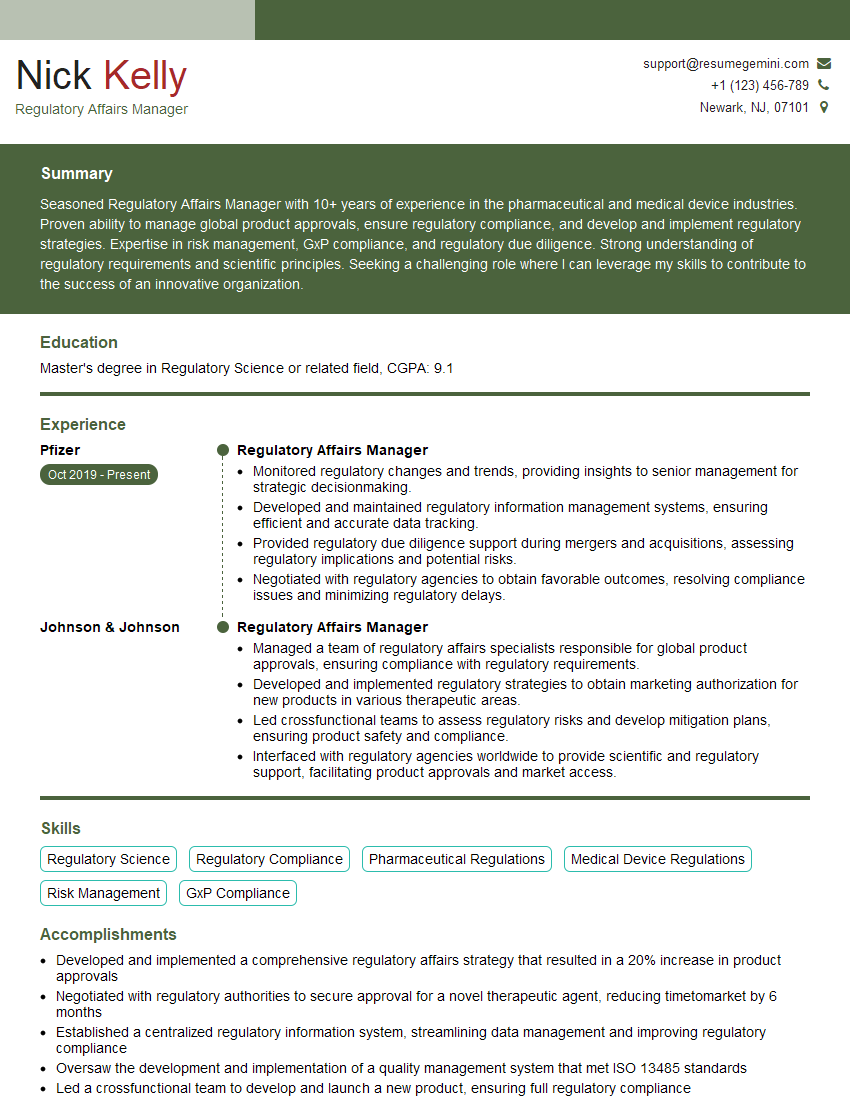
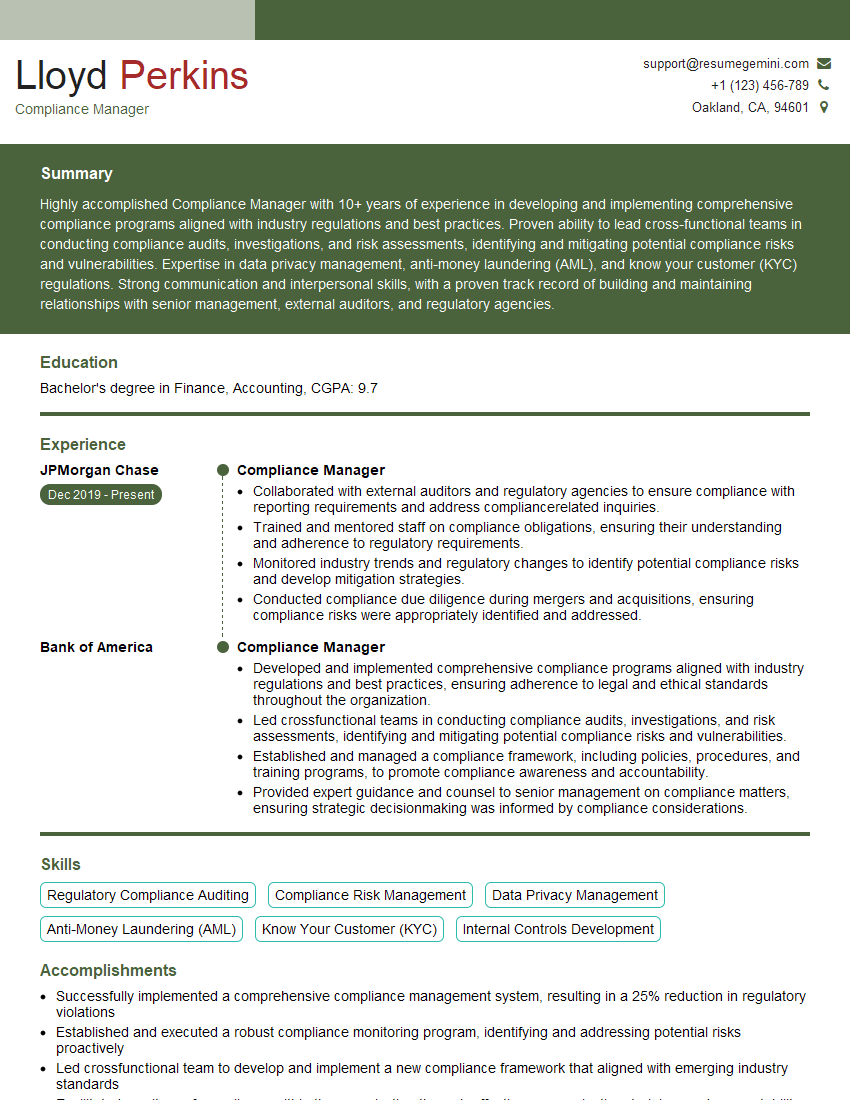
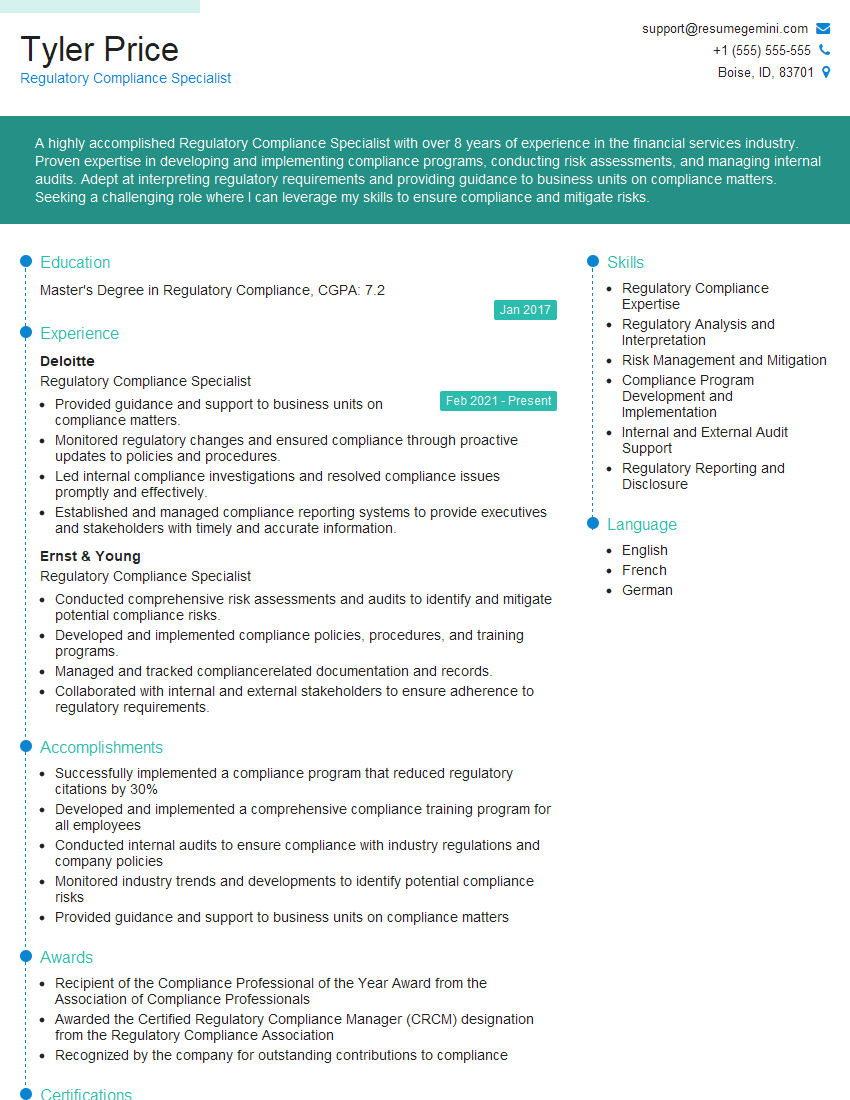
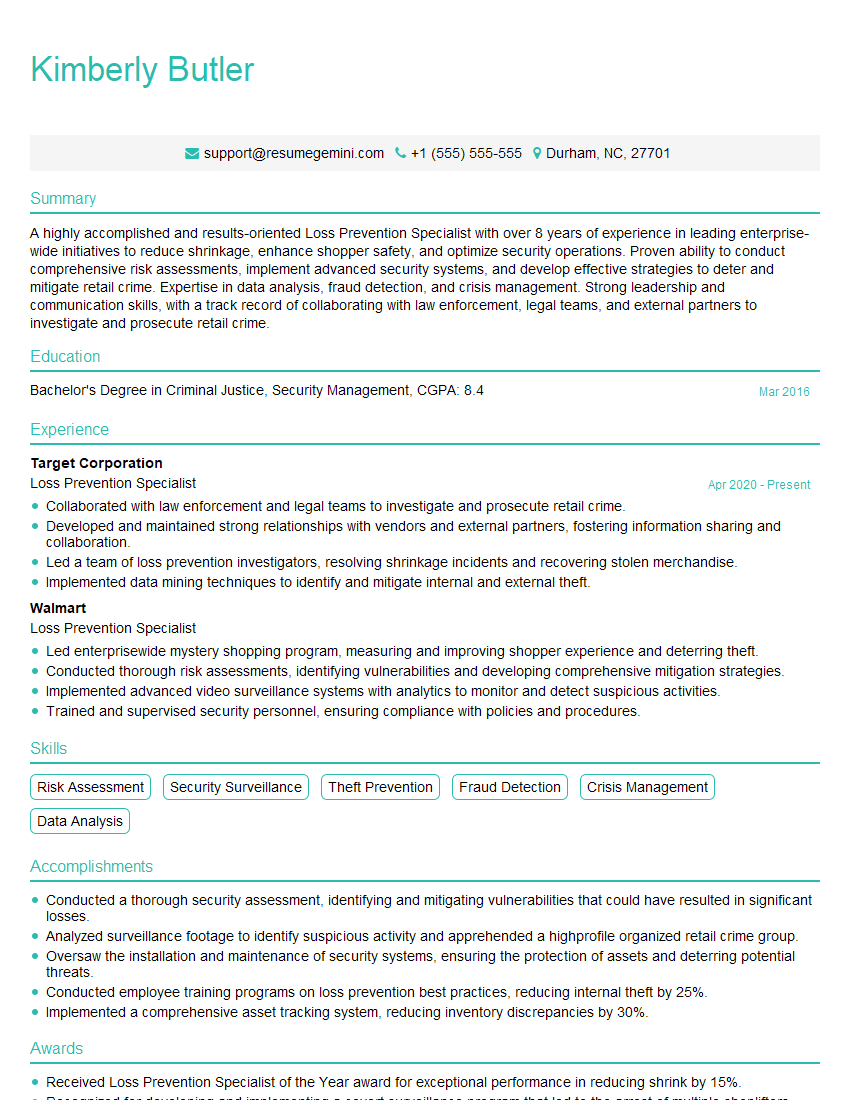
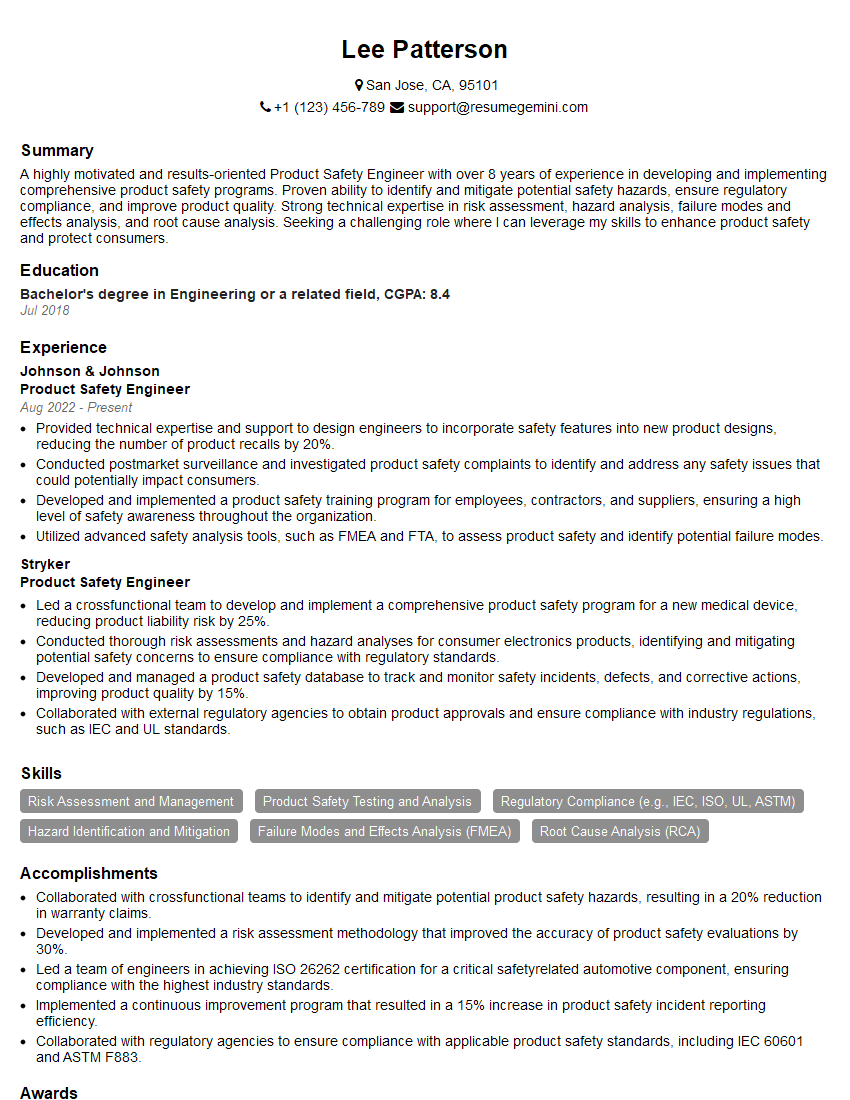
Mastering Product Liability Assessment is crucial for career advancement in fields requiring rigorous risk management and legal acumen. A strong understanding of these concepts significantly enhances your value to potential employers. To maximize your job prospects, invest time in crafting an ATS-friendly resume that showcases your skills and experience effectively. ResumeGemini is a trusted resource that can help you build a professional resume tailored to the specific requirements of Product Liability Assessment roles. Examples of resumes optimized for this field are available on ResumeGemini, providing valuable templates and guidance to help you present your qualifications in the best possible light. Take this opportunity to elevate your resume and increase your chances of securing your dream job.
Explore more articles
Users Rating of Our Blogs
Share Your Experience
We value your feedback! Please rate our content and share your thoughts (optional).
What Readers Say About Our Blog
Very informative content, great job.
good