The right preparation can turn an interview into an opportunity to showcase your expertise. This guide to Cake Assembly interview questions is your ultimate resource, providing key insights and tips to help you ace your responses and stand out as a top candidate.
Questions Asked in Cake Assembly Interview
Q 1. Describe your experience with different cake types (e.g., tiered, sheet, sculpted).
My experience spans a wide range of cake types, from the classic sheet cakes perfect for large gatherings to the intricate beauty of tiered cakes ideal for weddings or anniversaries. I’m also proficient in sculpted cakes, which demand a higher level of artistic skill and precision. For sheet cakes, I focus on efficient baking and even frosting. Tiered cakes require meticulous planning for structure and stability, while sculpted cakes demand precise carving and modeling techniques, often involving edible fondant or modeling chocolate. Each type presents unique challenges and rewards; I’ve even incorporated elements of all three into custom designs, such as a sculpted centerpiece atop a tiered cake with sheet cake components as a base.
- Sheet Cakes: Ideal for large groups, simple decoration.
- Tiered Cakes: Elegant, require structural support, ideal for special occasions.
- Sculpted Cakes: Highly artistic, require strong carving and modeling skills.
Q 2. Explain the process of properly leveling cake layers.
Leveling cake layers is crucial for a visually appealing and structurally sound cake. Uneven layers can lead to a wobbly finished product. I use a long serrated knife, ensuring it’s sharp to prevent tearing. I gently saw back and forth, rotating the cake as I go, until the top is perfectly flat. For particularly domed cakes, I’ll use a cake leveler tool for greater precision. The goal is to remove the minimum amount of cake while achieving a perfectly even surface. Think of it like sculpting – removing small amounts at a time until you reach the desired shape.
Tip: Chill your cakes slightly before leveling; this makes them firmer and easier to work with.
Q 3. How do you ensure even frosting application?
Even frosting application is all about technique and preparation. Firstly, ensure your cake is completely level. Next, I use a crumb coat – a thin layer of frosting to trap any crumbs. This prevents them from mixing into your final frosting layer. Once the crumb coat is set (usually chilled for at least 30 minutes), apply a thicker layer of frosting, using a bench scraper or offset spatula to create smooth, even sides and a flat top. For a truly professional finish, I use a rotating cake turntable, allowing for consistent and controlled application. It’s like painting a wall – you wouldn’t start with a thick coat without a primer!
Q 4. What techniques do you use to prevent cake layers from crumbling?
Crumbly cake layers are the bane of any cake decorator’s existence! Several techniques prevent this. First, using fresh, high-quality ingredients is paramount. Over-mixing the batter can also lead to toughness and crumbliness. Gently folding in ingredients, rather than vigorously mixing, creates a more tender crumb. Secondly, ensuring the cakes are completely cool before frosting is crucial – warm cakes are more prone to crumbling. Finally, using a gentle touch when handling and layering the cakes minimizes damage.
- Gentle Handling: Avoid excessive pressure.
- Proper Baking: Follow the recipe carefully.
- Cooling Completely: Prevents crumbling during frosting.
Q 5. Describe your experience with various frosting types (e.g., buttercream, ganache).
My experience with frostings is extensive, covering a range from classic American buttercream to the rich elegance of ganache. Buttercream offers versatility; its texture can be adjusted through ingredient ratios, making it adaptable for piping, swirling, or creating smooth surfaces. Ganache, a mixture of chocolate and cream, provides a luxurious, intensely chocolatey finish, perfect for modern cakes. I also work with cream cheese frosting, which offers a tangy counterpoint to rich cakes, and Swiss meringue buttercream, known for its stability and smooth texture. Choosing the right frosting depends entirely on the cake’s flavor profile and the desired aesthetic.
Q 6. How do you handle different filling consistencies?
Handling different filling consistencies requires adaptability. Thicker fillings, like pastry cream, need to be carefully spread to avoid disrupting the cake layers. I often use a piping bag with a large tip to create even distribution. For thinner fillings, like curd or jam, I use a palette knife to create a thin, even layer without overfilling and risking spillage. The key is to understand the properties of each filling and choose the appropriate application method. Think of it like painting – you wouldn’t use the same brush for watercolor and oil paint.
Q 7. Explain your approach to assembling tiered cakes, including structural support.
Assembling tiered cakes requires careful planning and strong structural support. I use dowels or cake supports to prevent the upper tiers from collapsing under their own weight. The dowels are inserted into the bottom tier, creating a stable foundation for the tiers above. Each tier is carefully centered and secured, ensuring even weight distribution. For particularly tall or heavy cakes, I’ll use additional support structures, like a sturdy cake board or even a custom-built frame, to reinforce the overall stability. Safety and stability are paramount; a collapsed cake is a disaster!
Q 8. How do you maintain hygiene and sanitation standards during cake assembly?
Maintaining hygiene and sanitation is paramount in cake assembly. It’s not just about creating a beautiful cake; it’s about ensuring its safety for consumption. My process starts with a meticulously clean workspace. I use sanitized surfaces, tools, and equipment. This includes wiping down my worktables with a food-safe disinfectant before and after each cake assembly. I wash my hands thoroughly and frequently, especially after handling raw ingredients or touching anything outside the assembly area. I also use disposable gloves whenever handling frosting or decorations to prevent contamination. Think of it like a surgical procedure – cleanliness is non-negotiable.
For example, I always use separate sets of tools for different components, like one spatula for the cake layers and another for the frosting. I carefully store unused ingredients properly and discard any leftover frosting or filling that’s been exposed to air for extended periods. These practices are essential not only to meet health codes but also to maintain the highest quality and safety standards for my clients.
Q 9. What are the common challenges you encounter during cake assembly, and how do you overcome them?
Common challenges in cake assembly include structural instability, particularly with tiered cakes or intricate designs. Another challenge is achieving a smooth, even finish on the frosting. Time constraints, especially during peak seasons, can also be a significant hurdle. I overcome these by using appropriate support structures, like dowels and cake boards, for tiered cakes (more on this later). For a smooth finish, I employ techniques like crumb coating and chilling the cake layers before final frosting. To manage time effectively, I use a detailed checklist and often pre-prepare components, like frosting and decorations, in advance.
For instance, I once had to assemble a very tall, multi-tiered wedding cake with minimal time. I pre-leveled and chilled all the layers the night before, and organized all my tools and decorations into designated containers before starting the assembly. This dramatically reduced the time spent during assembly and ensured a smooth and efficient process. Effective planning is key to overcoming the challenges of cake assembly.
Q 10. Describe your experience with using cake boards and dowels.
Cake boards and dowels are essential for structural support, especially in multi-tiered cakes. Cake boards provide a stable base for each layer, preventing sagging and ensuring the cake remains intact during transport and serving. Dowels act as internal supports, preventing the top layers from collapsing under their own weight. My experience with these elements is extensive. I select cake boards that are appropriately sized and sturdy, considering the weight of each layer and the overall cake design. The material matters, too; cardboard is standard, but for heavier cakes I sometimes use stronger alternatives like foam boards.
For dowels, I use food-safe wooden or plastic dowels, carefully placing them in the lower layer(s) to support the tiers above. Proper spacing is vital; I ensure they are evenly distributed to avoid uneven pressure. For exceptionally tall or heavy cakes, I might even reinforce the structure with additional support mechanisms like sturdy pillars or a central core. The quality of these materials is crucial to the cake’s longevity and presentation.
Q 11. How do you ensure the stability and structural integrity of a complex cake design?
Ensuring the stability and structural integrity of a complex cake design requires careful planning and execution. It’s like building a miniature architectural marvel! I begin with a solid base, using a sturdy cake board that’s appropriately sized. For tiered cakes, I use appropriately sized dowels or support pillars, ensuring they’re properly inserted to distribute the weight evenly. I might even add a central support column for extra-tall cakes. The choice of cake layers also matters. Dense cakes are generally more stable than lighter, airier ones.
Furthermore, I use a crumb coat, a thin layer of frosting, to seal in any crumbs and provide a smooth surface for the final frosting. This is crucial for preventing the cake layers from absorbing moisture from the frosting, which can lead to instability. For intricate designs, I might use edible supports, such as rice paper or gum paste, to add reinforcement while maintaining aesthetic appeal. Careful consideration of weight distribution, support mechanisms, and material choice is vital for achieving a stable, structurally sound cake.
Q 12. What is your experience with using piping bags and decorating tips?
Piping bags and decorating tips are essential tools for creating detailed and beautiful cake decorations. My experience spans a wide range of piping techniques, from simple borders to intricate floral designs. I’m proficient in using various piping bags, including disposable and reusable ones. I select the right bag size depending on the consistency of the frosting and the desired detail level. My collection of decorating tips is extensive, ranging from basic round tips for borders to specialized tips for creating leaves, flowers, and other decorative elements.
For example, when creating a rose, I might start with a large round tip to create the base and then transition to smaller tips for the petals, carefully controlling the pressure and the angle of the piping bag to achieve the desired shape and texture. Mastering the use of piping bags and decorating tips is about practice, precision, and creativity. I always clean my tips thoroughly after each use to maintain their shape and prevent clogging.
Q 13. How do you efficiently assemble multiple cakes simultaneously?
Assembling multiple cakes simultaneously requires meticulous planning and organization. It’s a bit like managing a well-oiled production line. My strategy begins with a detailed schedule that allocates specific time slots for each cake, considering complexity and time required. I pre-prepare components, such as frosting and fillings, for each cake in advance to streamline the process. I also set up multiple work stations, each equipped with the necessary tools and ingredients for a particular cake.
I often employ a team-based approach for large orders, assigning specific tasks to each team member to maximize efficiency. The key is to maintain a clear workflow, avoiding cross-contamination and ensuring each cake receives equal attention to detail. This involves careful labeling of components, containers, and work surfaces to keep everything organized and prevent any errors.
Q 14. How do you handle last-minute changes or adjustments to a cake design?
Handling last-minute changes or adjustments requires flexibility and adaptability. Communication is key. I maintain open communication with my clients to ensure that any changes are clear and achievable. I assess the impact of any changes on the timeline and resources, making adjustments to my schedule and workflow as needed. For minor adjustments, I often have a stash of ready-to-use elements, like decorative fondant or sprinkles, to facilitate quick changes.
For instance, I once had a client change the color scheme of their cake only a few hours before the pick-up time. By utilizing pre-made frosting in different colors and quickly adjusting my decoration plan, I managed to complete the change efficiently without compromising quality. Calmness and resourcefulness are essential when dealing with last-minute changes in cake assembly.
Q 15. Describe your experience with using cake dummies and support structures.
Cake dummies and support structures are crucial for creating stable and visually stunning cakes, especially tiered ones. Dummies provide a lightweight base, reducing the weight on lower tiers and preventing structural collapse. Support structures, like dowels or cake boards, ensure each layer is properly aligned and supported.
My experience includes using various types of dummies – from styrofoam to sturdy cardboard – choosing the appropriate one based on the cake’s size and design. I’m proficient in using different dowel sizes and techniques for inserting them securely, ensuring even weight distribution and preventing sagging. For instance, for a heavy fruitcake, I would use a sturdy cardboard dummy and multiple, strategically placed dowels to support the weight. For a lighter sponge cake, a foam dummy and fewer dowels might suffice. I always ensure the dummy is appropriately sized for the cake layers to create a seamless, unified look. I also utilize cake boards between each tier, ensuring a clean, level presentation and helping to prevent crumbs from migrating upwards.
Career Expert Tips:
- Ace those interviews! Prepare effectively by reviewing the Top 50 Most Common Interview Questions on ResumeGemini.
- Navigate your job search with confidence! Explore a wide range of Career Tips on ResumeGemini. Learn about common challenges and recommendations to overcome them.
- Craft the perfect resume! Master the Art of Resume Writing with ResumeGemini’s guide. Showcase your unique qualifications and achievements effectively.
- Don’t miss out on holiday savings! Build your dream resume with ResumeGemini’s ATS optimized templates.
Q 16. How do you manage your time effectively during cake assembly?
Effective time management during cake assembly is paramount. My approach involves detailed planning and meticulous execution. Before I begin, I meticulously review the design, considering each step and the time it will require. I break down the assembly process into smaller, manageable tasks: prepping the layers, frosting, stacking, and decorating. I create a timeline, allocating specific time slots for each stage. For example, I might allocate 30 minutes for leveling and frosting the layers, one hour for stacking and securing tiers, and another hour for final decoration and finishing touches. This ensures a smooth workflow and prevents rushing, which can lead to errors. I also prioritize tasks, focusing on the most critical aspects first, such as ensuring the structural integrity of the cake before adding delicate decorations. Furthermore, I prepare all necessary ingredients and tools beforehand to avoid interruptions and maintain a steady pace. This organized approach ensures I consistently meet deadlines, even under pressure.
Q 17. Explain your knowledge of food safety regulations related to cake assembly.
Food safety is my top priority. I adhere strictly to all relevant regulations, ensuring the safety and quality of my cakes. This includes maintaining proper hygiene throughout the assembly process – washing hands frequently, using clean utensils and work surfaces, and keeping the cake in a temperature-controlled environment to prevent bacterial growth. I source high-quality, fresh ingredients from reputable suppliers and always check expiration dates. I understand the importance of proper storage, keeping the assembled cake refrigerated if necessary and following guidelines for safe transportation to prevent contamination. I am also aware of allergen information and always clearly label cakes containing common allergens like nuts or dairy, informing customers accordingly. My knowledge extends to safe handling of icing and fillings, ensuring that they are stored and used safely to avoid cross-contamination. I regularly update my knowledge on food safety regulations to maintain compliance with current best practices.
Q 18. How do you troubleshoot common cake assembly problems (e.g., frosting cracks, uneven layers)?
Troubleshooting is an integral part of cake assembly. Frosting cracks often result from uneven layers or insufficient frosting. To solve this, I carefully level the layers using a serrated knife or cake leveler, ensuring a consistent height across each tier. Then, I generously frost each layer to provide a sufficient buffer against cracks. If cracks still appear, I carefully spread more frosting to fill the cracks and blend it seamlessly into the surrounding surface. Uneven layers can be corrected using a leveling tool, ensuring a smooth and stable base for the next layer.
Other issues, like crumbling cake, might indicate the cake is too dry. In such cases, I might brush the layers with simple syrup to add moisture before frosting. If the cake is too moist, it may cause the layers to stick, necessitating additional support to hold the tiers in place. In every instance, meticulous attention to detail is key to troubleshooting. I carefully observe the cake’s behavior during each step, identifying and addressing potential problems early on.
Q 19. How do you work under pressure and meet deadlines?
Working under pressure and meeting deadlines is a standard aspect of my profession. My ability to manage stress stems from efficient planning, prioritizing tasks, and maintaining a calm, focused approach. I’ve learned to break down large orders into smaller, manageable components, making the overall task less daunting. I utilize checklists to ensure I don’t miss any steps. When faced with tight deadlines, I may prioritize the most visible elements first, ensuring the cake still looks impressive even if some intricate details are sacrificed. For example, if pressed for time I’ll focus on a clean frosting finish over adding intricate piping details. Communication is also vital. I proactively communicate any potential delays to the client and explore alternative solutions collaboratively. This ensures transparency and maintains a positive client relationship, even under pressure.
Q 20. Describe your experience with different cake decorating techniques.
My decorating experience encompasses a wide range of techniques, from classic buttercream roses and intricate piping designs to modern techniques like airbrushing and fondant modeling. I’m proficient in creating various textures, using different tools to achieve smooth, textured, or sculpted effects. I am adept at using stencils for consistent patterns, and I’m skilled in using a variety of nozzles and piping bags to create various designs. I frequently experiment with colour combinations and techniques to match client requests or create unique cake designs. I find inspiration from various sources, from nature to modern art, ensuring each creation is distinct. For instance, I recently created a cake with a hand-painted watercolor design on fondant, which combined my skill in fondant work with my artistic ability. My aim is always to create a visually stunning and delicious cake that reflects the client’s vision.
Q 21. What is your understanding of different cake recipes and their impact on assembly?
Different cake recipes significantly impact assembly. A dense, moist cake like a fruitcake requires a strong support structure, possibly multiple layers of cake boards and sturdy dowels, to prevent sagging. In contrast, a lighter sponge cake might require fewer supports. The crumb structure also plays a role; a crumbly cake needs careful handling during layering, perhaps requiring more frosting to provide stability. The recipe also impacts the frosting choice. A rich, buttery cake might pair well with a lighter, less sweet frosting, preventing an overly heavy flavour profile. Conversely, a lighter cake might benefit from a richer buttercream to add more depth. Understanding how different ingredients interact, like the moisture content and the texture of the cake layers, is essential for successful assembly. I always consider the recipe’s specific characteristics when planning the assembly process to ensure optimal results.
Q 22. How do you handle damaged or imperfect cake layers?
Handling damaged cake layers requires a keen eye and a bit of resourcefulness. The first step is assessment. Is the damage minor, like a slight crack or a small crumble? Or is it significant, involving a large chunk missing or a completely uneven layer?
For minor imperfections, I might carefully trim away the damaged section using a serrated knife, ensuring a clean, even surface. If the damage is on the bottom layer, it’s often less noticeable, so I might choose to level it and use a crumb coat to cover imperfections. If the damage is on a top layer, however, I’d likely create a new layer to maintain presentation standards.
For major damage, unfortunately, the best course of action is often to bake a replacement layer. This guarantees a consistent texture and appearance across all layers. It’s always better to start with a perfect base than try to salvage something irreparably flawed. Time is of the essence, so I always bake extra layers as a precaution to account for unexpected problems.
Q 23. Explain your knowledge of different cake fillings and their suitability for different cake types.
Choosing the right filling is crucial for creating a balanced and delicious cake. The filling should complement the cake’s flavor profile and texture, enhancing rather than overpowering it. For instance, a light and fluffy sponge cake pairs well with a fresh fruit curd or a whipped cream filling, whereas a denser chocolate cake might benefit from a richer filling like ganache or buttercream.
- Buttercream: Versatile, comes in countless flavors, and works well with most cakes.
- Ganache: Rich, decadent chocolate filling, excellent for chocolate cakes or cakes with chocolate accents.
- Fruit Curds: Light, tangy, and perfect for complementing lighter cakes and adding moisture.
- Jam or Preserves: Adds fruity sweetness and moisture, but use sparingly to avoid an overly sweet cake.
- Cream Cheese Frosting: Classic pairing for carrot cakes or red velvet cakes, offering a tangy counterpoint.
Consider the cake’s overall design as well. A very layered cake might need a lighter filling to prevent it from becoming too heavy. A simple cake might benefit from a more intense or unique filling to elevate the experience.
Q 24. How do you ensure the consistency of flavor and texture across multiple cakes?
Consistency is paramount. I achieve this through meticulous recipe following, precise measuring, and consistent baking techniques. I use a standardized recipe and follow it religiously to maintain the exact proportions of each ingredient. This is particularly crucial for things like baking powder, baking soda, and liquids, as even slight variations can significantly affect the outcome.
I use digital scales for precise weighing of ingredients. Volume measurements can be inconsistent. Baking under identical conditions, using the same oven, baking pans, and baking time is critical. Maintaining consistent oven temperature through use of an oven thermometer is also vital to ensure accurate results.
I also utilize standardized assembly procedures. For example, I use the same frosting technique, spreading method, and layering approach for each cake to ensure a uniform outcome. Creating a detailed checklist and working methodically helps prevent mistakes and ensures consistency.
Q 25. What measures do you take to prevent cross-contamination during cake assembly?
Preventing cross-contamination is essential for maintaining food safety and preventing allergic reactions. My approach is multifaceted:
- Dedicated Utensils: I use separate sets of bowls, spatulas, and mixing utensils for each cake and filling to avoid cross-contamination between different flavors and ingredients.
- Thorough Cleaning: After each step, I thoroughly clean and sanitize all surfaces, utensils, and equipment. I particularly focus on areas that come into contact with different ingredients or fillings.
- Ingredient Organization: I carefully organize my ingredients to minimize the chances of accidental cross-contamination. I use clearly labeled containers and keep ingredients separate to prevent any accidental mixing.
- Hand Hygiene: Regular handwashing with soap and water is crucial between handling different ingredients or cakes.
Implementing these measures ensures that the final product is safe, delicious, and free from any unwanted elements.
Q 26. Describe your experience working with different tools and equipment used in cake assembly.
Cake assembly involves a variety of tools and equipment, each with its own purpose and application. My experience encompasses a wide range of tools:
- Cake Levels: Essential for creating perfectly flat surfaces for even layering.
- Offset Spatulas: Used for frosting cakes, creating smooth finishes, and decorative piping.
- Cake Turntables: Facilitate easy and uniform frosting application. They aid in creating professional-looking cakes.
- Piping Bags and Tips: Essential for creating decorative elements, borders, and text.
- Measuring Cups and Spoons: Accurate measurements are key to successful baking and cake assembly.
- Serrated Knives: Used for precise cake cutting and leveling.
I am also adept at using modern equipment, including stand mixers for efficient frosting preparation and refrigeration units for proper storage of cakes and fillings.
Q 27. How do you maintain the freshness and quality of assembled cakes?
Maintaining freshness and quality involves several key steps:
- Proper Storage: Once assembled, cakes are stored in airtight containers in a cool, dry environment to maintain freshness. This slows down the oxidation process, preventing the cake from drying out or developing stale flavors.
- Optimal Temperature: Refrigerating the cake is crucial, especially for cakes with creamy fillings or fresh fruits. Cold temperatures slow down the growth of bacteria.
- Quality Ingredients: Using high-quality, fresh ingredients in the first place is the foundation for a long-lasting cake. Fresh cream, good-quality butter, and fresh fruits all contribute to a superior flavor and longer shelf-life.
- Avoid Fluctuations: Keep the cakes at a stable temperature to prevent condensation or rapid drying.
Careful attention to these details guarantees that the cake remains fresh and retains its flavor, texture, and overall appeal.
Q 28. Explain your understanding of different cake storage and preservation methods.
Cake storage and preservation methods vary depending on the cake’s ingredients and filling. There are several approaches:
- Refrigeration: Ideal for cakes with cream cheese frosting, whipped cream, or fresh fruit fillings. Cakes should be stored in airtight containers to prevent drying out and contamination.
- Freezing: For longer storage, cakes can be frozen. It’s best to wrap the cake tightly in plastic wrap, followed by aluminum foil, to prevent freezer burn. They should be thawed slowly in the refrigerator before serving.
- Room Temperature (Short-Term): Some cakes with stable fillings, such as buttercream, can be kept at room temperature for a short time but must be consumed quickly to avoid spoiling.
Proper labeling with storage dates is essential to ensure freshness and prevent spoilage. Understanding the limitations of each method is crucial to maintaining the quality and safety of the cake.
Key Topics to Learn for Cake Assembly Interview
- Cake Layer Construction: Understanding the principles of layering, including appropriate leveling techniques, crumb coating strategies, and achieving consistent layer heights.
- Frosting Application: Mastering various frosting techniques, such as achieving smooth finishes, creating textured effects, and efficiently frosting different cake shapes and sizes. Consider piping techniques and decorative elements.
- Filling Selection and Integration: Choosing appropriate fillings based on cake flavors and textures, and effectively layering fillings to complement the overall design and taste profile.
- Structural Integrity: Understanding how to build structurally sound cakes, especially multi-tiered cakes, using dowels, supports, and appropriate cake recipes to prevent collapse.
- Time Management and Efficiency: Developing efficient workflows for assembly, considering preparation steps, assembly time, and potential delays to ensure timely completion.
- Troubleshooting and Problem Solving: Identifying and addressing common issues during cake assembly, such as uneven layers, frosting inconsistencies, and structural problems. Developing solutions to maintain high-quality results.
- Hygiene and Safety: Understanding and adhering to proper food safety protocols, including hand hygiene, equipment sanitation, and ingredient handling practices.
- Cake Decoration and Presentation: Understanding the principles of visual appeal, including color coordination, design aesthetics, and appropriate garnishes to enhance the overall presentation.
Next Steps
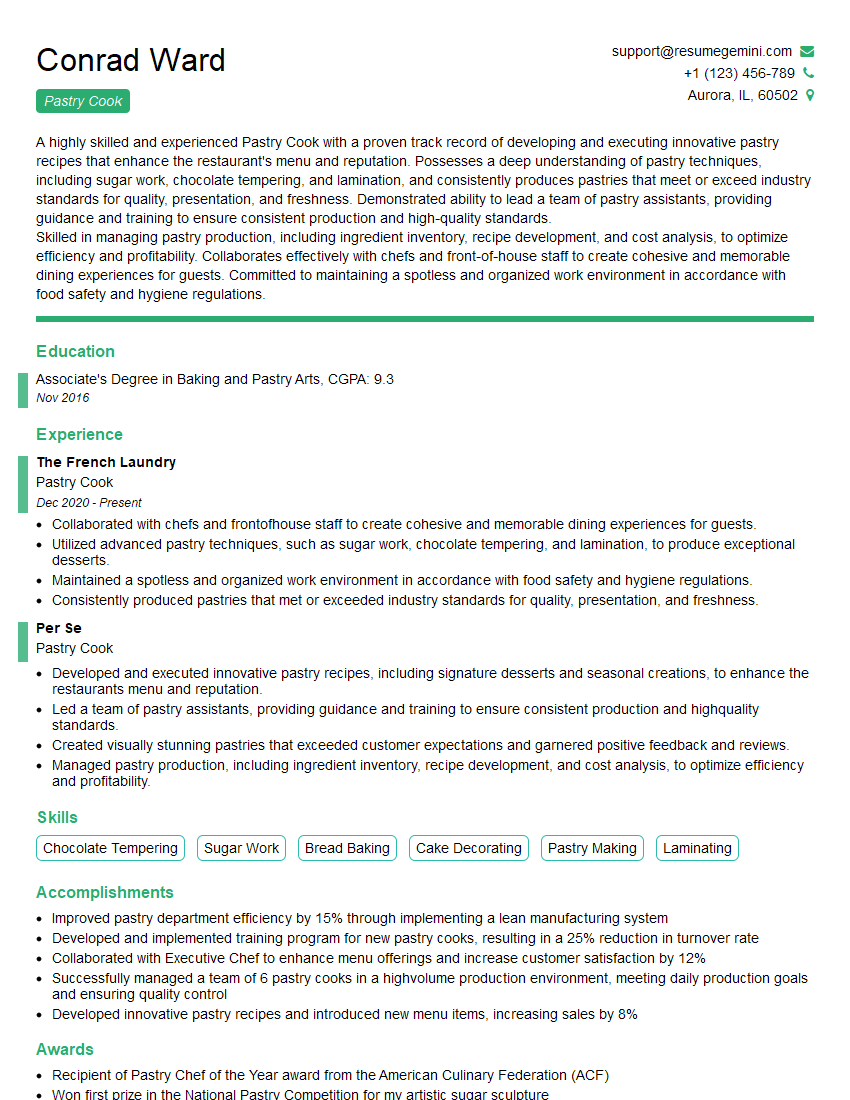
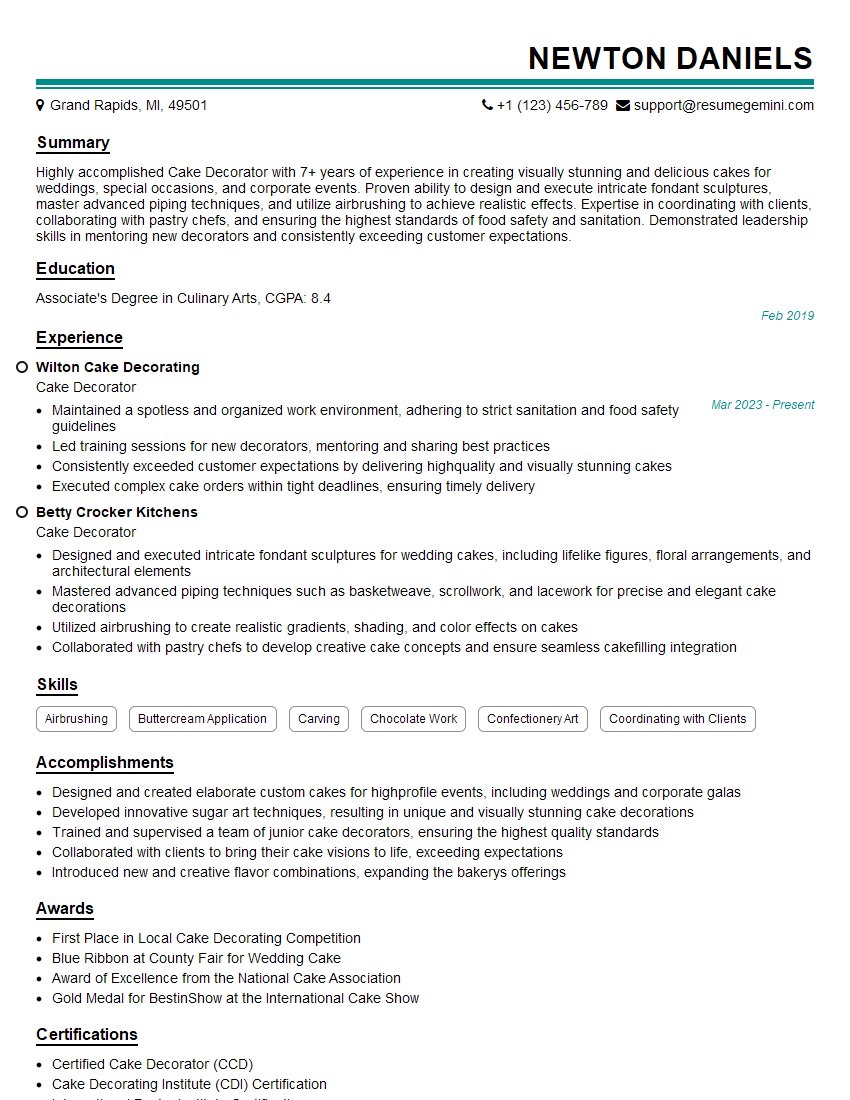
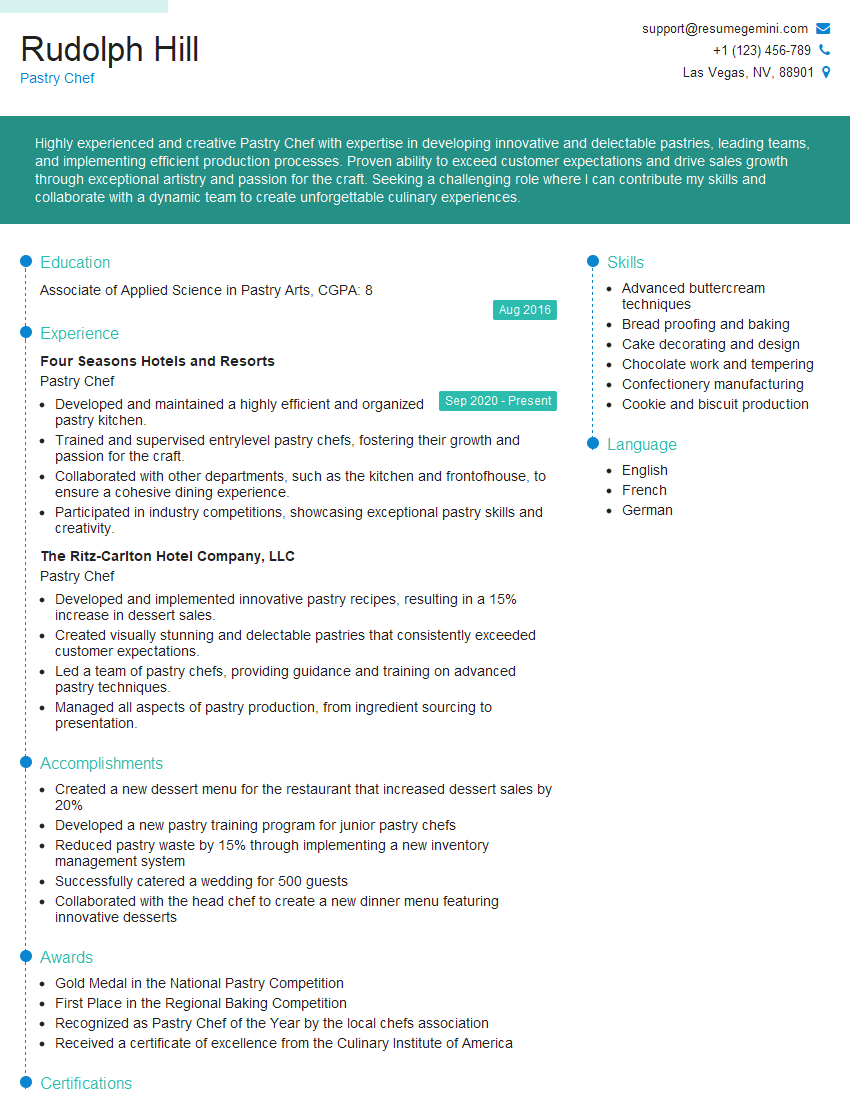
Mastering Cake Assembly opens doors to exciting opportunities in the culinary arts, offering diverse roles with growth potential. A strong resume is crucial to highlighting your skills and experience. To ensure your application stands out, build an ATS-friendly resume that effectively showcases your abilities. ResumeGemini is a trusted resource to help you craft a professional and impactful resume. Examples of resumes tailored to Cake Assembly are available to guide you.
Explore more articles
Users Rating of Our Blogs
Share Your Experience
We value your feedback! Please rate our content and share your thoughts (optional).
What Readers Say About Our Blog
Very informative content, great job.
good