The right preparation can turn an interview into an opportunity to showcase your expertise. This guide to Product Lifecycle Pricing interview questions is your ultimate resource, providing key insights and tips to help you ace your responses and stand out as a top candidate.
Questions Asked in Product Lifecycle Pricing Interview
Q 1. Explain the concept of Product Lifecycle Pricing.
Product Lifecycle Pricing (PLP) is a dynamic pricing strategy that recognizes the changing market conditions and consumer perceptions throughout a product’s life. Instead of setting a single price and sticking to it, PLP adjusts pricing at different stages to maximize profitability and market share. Think of it like a movie’s theatrical release – the price might be high initially, then decrease as it moves to streaming services.
Q 2. Describe the different stages of a product lifecycle and how pricing strategies should adapt at each stage.
A product typically goes through several stages: Introduction, Growth, Maturity, and Decline.
- Introduction: Pricing can be premium (price skimming) to recoup R&D costs or penetration pricing (low price) to rapidly gain market share. Consider Apple’s initial iPhone pricing – premium to establish a luxury image.
- Growth: As demand increases, prices can be maintained or slightly increased. Competition may emerge, necessitating a balance between profitability and market share.
- Maturity: Competition is fierce. Companies might opt for value pricing (emphasizing features and benefits) or competitive pricing (matching or slightly undercutting competitors). Consider the pricing of soft drinks – many brands compete with subtle price differences.
- Decline: Prices are typically lowered to clear remaining stock. Promotional pricing or discounts become common. Think of older model electronics being heavily discounted.
Q 3. How do you determine the optimal pricing strategy for a new product launch?
Determining optimal pricing for a new product launch requires a multi-faceted approach:
- Market Research: Understand target customer demographics, needs, and price sensitivity. Conduct surveys and focus groups.
- Cost Analysis: Calculate all costs – manufacturing, marketing, distribution, etc. This forms the pricing floor.
- Competitive Analysis: Analyze competitor pricing, features, and market positioning.
- Value Proposition: Clearly define the unique value your product offers. A superior product justifies a higher price.
- Pricing Strategy Selection: Choose a strategy – premium, penetration, or value pricing – based on your objectives and market analysis.
- Testing and Adjustment: Launch with a selected price in a test market and monitor sales. Adjust pricing based on market response.
For example, launching a revolutionary new technology might justify price skimming, while a product targeting a price-sensitive market might require penetration pricing.
Q 4. What are some common pricing models used in Product Lifecycle Pricing?
Several pricing models are used in PLP:
- Cost-Plus Pricing: Adds a markup percentage to the cost of goods sold. Simple, but ignores market dynamics.
- Value-Based Pricing: Sets prices based on perceived customer value. Requires strong market research.
- Competitive Pricing: Prices are set relative to competitors. Can lead to price wars.
- Premium Pricing: Sets high prices to signal superior quality or exclusivity. Appropriate for luxury or innovative products.
- Penetration Pricing: Sets low prices to gain rapid market share. Suitable for products with high production volumes.
- Dynamic Pricing: Prices adjust in real-time based on factors like demand, competition, and inventory levels. Common in online retail (e.g., airline tickets).
Q 5. How do you analyze competitor pricing strategies and incorporate that into your own pricing plans?
Analyzing competitor pricing requires a structured approach:
- Identify Key Competitors: Determine which companies offer similar products or services.
- Gather Price Data: Collect information on competitors’ prices, discounts, and promotions.
- Analyze Value Propositions: Compare features, quality, and branding to understand why customers might choose one product over another.
- Assess Market Positioning: Understand each competitor’s strategy – premium, value, etc.
- Incorporate into Pricing Plans: Use competitor pricing as a benchmark, but focus on your own value proposition. Undercutting may lead to price wars, while overpricing may lead to lost sales.
For example, if a competitor offers a similar product at a significantly lower price, you might need to evaluate your cost structure or find ways to enhance your value proposition to justify a higher price.
Q 6. Explain the importance of cost analysis in Product Lifecycle Pricing.
Cost analysis is crucial in PLP because it establishes the minimum price a product can be sold for while still generating profit. Without accurate cost data, pricing decisions become arbitrary and risky. This includes all direct and indirect costs:
- Direct Costs: Raw materials, labor, manufacturing overhead.
- Indirect Costs: Marketing, distribution, research and development, administration.
A thorough cost analysis allows for informed decisions about pricing strategies, ensuring profitability at each stage of the product lifecycle. It helps in determining the price floor (minimum acceptable price) and informing decisions about cost reduction strategies to enhance profitability.
Q 7. How do you handle price elasticity of demand when setting prices?
Price elasticity of demand measures how sensitive demand is to price changes. Understanding this is critical for effective PLP.
- Inelastic Demand: Small price changes lead to minimal changes in demand (e.g., gasoline, essential medicines). Companies can often increase prices without significant sales impact.
- Elastic Demand: Small price changes lead to significant changes in demand (e.g., luxury goods, discretionary purchases). Price increases can dramatically reduce sales.
To handle price elasticity, conduct market research to determine your product’s elasticity. For elastic products, small price adjustments are crucial, while for inelastic products, there might be more leeway for price increases. Dynamic pricing models can help constantly adjust prices in response to changing demand.
Q 8. Describe your experience with dynamic pricing models.
Dynamic pricing models adjust prices in real-time based on various factors like supply, demand, competitor pricing, and even customer behavior. Think of it like a sophisticated, constantly-adjusting price tag. My experience spans several years working with both rule-based and machine learning-driven dynamic pricing systems. For example, I’ve implemented a system for an e-commerce client that used real-time inventory levels and competitor pricing to automatically adjust the price of a highly popular product. If competitor prices dropped, our system would automatically lower our price to remain competitive. Conversely, if inventory was low, prices were adjusted upwards to manage demand and prevent stockouts. I’ve also worked with more complex models that incorporate customer segmentation and predicted purchase behavior to further optimize pricing.
Another example involved developing a dynamic pricing model for a subscription-based service. This required a different approach, focusing on customer lifetime value (CLTV) and churn prediction. We experimented with tiered pricing and personalized discounts to incentivize customer retention while maximizing revenue from high-value customers.
Q 9. How do you measure the success of your pricing strategies?
Measuring the success of pricing strategies isn’t just about revenue; it’s about a holistic evaluation of its impact on the business. I use a multi-faceted approach. First, we track key financial metrics like revenue growth, profit margin improvement, and return on investment (ROI). This gives a clear picture of the bottom-line impact. But equally important is analyzing the impact on customer behavior. Did our pricing strategy lead to increased customer acquisition? Did it improve customer retention? Did it shift customer purchase patterns in a desirable way? We also analyze market share changes to gauge competitive positioning.
Finally, I carefully analyze any unintended consequences. Did our pricing strategy inadvertently impact brand perception or customer loyalty? A comprehensive analysis across these areas provides a complete and nuanced view of the success of our pricing strategies.
Q 10. What are some key performance indicators (KPIs) you use to track pricing effectiveness?
Key Performance Indicators (KPIs) I use to track pricing effectiveness include:
- Revenue Growth: The percentage increase or decrease in revenue compared to a previous period.
- Average Revenue Per User (ARPU): The average revenue generated per customer.
- Gross Margin: The difference between revenue and the cost of goods sold, expressed as a percentage of revenue.
- Price Elasticity of Demand: Measures the responsiveness of demand to changes in price.
- Customer Acquisition Cost (CAC): The cost of acquiring a new customer.
- Customer Lifetime Value (CLTV): The predicted revenue a customer will generate over their relationship with the company.
- Conversion Rate: The percentage of visitors who complete a desired action (e.g., purchase).
- Market Share: The company’s percentage of the total market.
By monitoring these KPIs, I can identify areas for improvement and fine-tune pricing strategies to optimize performance.
Q 11. How do you handle price promotions and discounts strategically?
Price promotions and discounts, when implemented strategically, can be powerful tools for boosting sales and clearing inventory. However, they need careful planning to avoid eroding profit margins or damaging brand perception. My approach involves segmenting customers and offering tailored promotions. For example, we might offer discounts to new customers to drive acquisition or offer loyalty discounts to retain existing customers. Promotions should also be aligned with specific business objectives, like boosting sales during slow periods or clearing out excess inventory.
Critically, I always analyze the impact of promotions post-campaign. Did they achieve the desired outcome? Did they attract the intended customers? This data informs future promotional strategies. A key aspect is to avoid over-reliance on discounts, as this can devalue the product and lead to a price war with competitors. We should always strive to find a balance between stimulating demand and maintaining profitability.
Q 12. Explain the difference between value-based pricing and cost-plus pricing.
Value-based pricing sets prices based on the perceived value of the product or service to the customer. It focuses on what the customer is willing to pay, rather than just the cost of production. For example, a premium brand of coffee might be priced higher than a generic brand, even if the production costs are similar, because customers perceive greater value in the quality, taste, and brand image.
Cost-plus pricing, on the other hand, calculates the price by adding a markup to the cost of producing the product or service. It’s a simpler approach but doesn’t necessarily reflect the market value or customer willingness to pay. A manufacturer might calculate the cost of producing a widget and then add a 20% markup to determine the selling price.
The key difference lies in the starting point. Value-based pricing starts with the customer and their perception of value; cost-plus pricing starts with the cost of production.
Q 13. How do you balance maximizing revenue with maintaining customer satisfaction?
Balancing revenue maximization with customer satisfaction is a crucial aspect of effective pricing. It’s not a zero-sum game. Excessive focus on maximizing revenue at the expense of customer satisfaction can lead to customer churn and damage brand reputation. My approach involves a data-driven strategy that considers customer segmentation and price sensitivity.
We segment customers into groups based on their value and price sensitivity, allowing us to tailor our pricing strategies accordingly. High-value customers might be less sensitive to price increases and more receptive to premium offerings, while price-sensitive customers might need more competitive pricing or promotional offers. Regular customer feedback surveys and market research are crucial for understanding customer perception of value and price fairness. By continuously monitoring these factors and making adjustments, we aim for a balance that optimizes both revenue and customer loyalty.
Q 14. Describe a time you had to make a pricing decision under pressure.
During the launch of a new software product, we faced intense pressure to set the right price. Market research suggested a higher price point would maximize profits, but we were also aware of significant competitor pressure and concerns about market penetration. The deadline for price announcement was fast approaching, and internal stakeholders had conflicting opinions.
My approach was to create a range of price scenarios, each with a detailed analysis of potential revenue, market share, and risk. We factored in various assumptions, including competitor reactions and potential customer adoption rates. This structured approach helped facilitate a data-driven discussion among stakeholders and ultimately resulted in a price point that balanced revenue goals with market realities. While the initial revenue wasn’t the absolute maximum possible, the selected price point resulted in strong market penetration, positive customer feedback, and ultimately a better long-term return on investment.
Q 15. How do you incorporate market research into your pricing decisions?
Market research is the bedrock of effective Product Lifecycle Pricing. It allows us to understand customer needs, price sensitivity, and competitive dynamics, ultimately informing optimal pricing strategies throughout a product’s lifecycle. I incorporate market research in several key ways:
- Competitive Analysis: I meticulously analyze competitors’ pricing, product features, and target markets. This helps determine our relative positioning and identify opportunities for differentiation or price adjustments. For instance, if competitors are offering similar products at a lower price point, we might need to explore cost reductions or focus on highlighting unique value propositions to justify a premium price.
- Customer Segmentation: I segment the market into distinct groups based on demographics, purchasing behavior, and price sensitivity. This allows us to tailor pricing strategies to specific customer segments. For example, we might offer higher-priced versions with premium features to high-value customers while providing a more budget-friendly option for price-sensitive customers.
- Price Elasticity Studies: These studies help determine how changes in price affect demand. This is crucial for understanding price sensitivity and determining the optimal price point to maximize revenue. For example, a study might reveal that a small price increase will lead to a significant drop in demand, indicating high price sensitivity and suggesting caution with price adjustments.
- Surveys and Focus Groups: Direct engagement with potential customers through surveys and focus groups provides valuable insights into their willingness to pay for different product features and price points. This feedback directly shapes our pricing strategy.
By combining these approaches, I build a comprehensive understanding of the market landscape, enabling data-driven pricing decisions that maximize profitability and market share.
Career Expert Tips:
- Ace those interviews! Prepare effectively by reviewing the Top 50 Most Common Interview Questions on ResumeGemini.
- Navigate your job search with confidence! Explore a wide range of Career Tips on ResumeGemini. Learn about common challenges and recommendations to overcome them.
- Craft the perfect resume! Master the Art of Resume Writing with ResumeGemini’s guide. Showcase your unique qualifications and achievements effectively.
- Don’t miss out on holiday savings! Build your dream resume with ResumeGemini’s ATS optimized templates.
Q 16. Explain how you would handle a situation where a product is underperforming despite a well-defined pricing strategy.
A product underperforming despite a well-defined pricing strategy points to underlying issues beyond pricing. It requires a systematic investigation, focusing on several key areas:
- Market Demand: Is there actual demand for the product? Perhaps the market research was flawed, or market conditions have shifted since the launch. We might need to conduct further research to validate the original assumptions or explore repositioning the product.
- Product-Market Fit: Does the product truly meet customer needs and expectations? If not, a price adjustment alone won’t solve the problem. We’ll need to assess customer feedback, analyze sales data, and potentially redesign or enhance the product to better align with market demands.
- Marketing and Sales Effectiveness: Are marketing and sales efforts adequately promoting and distributing the product? Poor marketing can lead to low awareness and subsequently, low sales, regardless of price. We should analyze our marketing channels, messaging, and sales processes to identify areas for improvement.
- Competition: Have competitors introduced new products or changed their pricing strategies? A reassessment of the competitive landscape and adjustment of our strategy might be necessary. For example, a price reduction might be required to regain market share or we may need to create new ways to differentiate the product.
- Pricing Strategy Review: Although a pricing strategy was defined, we should revisit it in light of the underperformance. Perhaps the initial assumptions need revision. Are there different pricing models that could work better?
Addressing the root causes requires collaboration across departments, careful data analysis, and a willingness to adapt and iterate our strategy.
Q 17. What are some common challenges faced in Product Lifecycle Pricing?
Product Lifecycle Pricing faces numerous challenges, often interconnected and requiring creative solutions. Some common ones include:
- Accurate Forecasting: Predicting demand and market trends throughout the product lifecycle is inherently difficult. Unexpected economic shifts or changes in consumer preferences can significantly impact sales and profitability.
- Competition: Competitor actions, such as price wars or the introduction of new products, can disrupt carefully planned pricing strategies. Maintaining a competitive edge requires continuous monitoring and adaptation.
- Cost Management: Unexpected increases in production costs, raw materials, or logistics can squeeze margins and necessitate price adjustments. Effective cost management is crucial for maintaining profitability.
- Pricing Strategy Complexity: Developing and implementing optimal pricing strategies across different market segments and product versions can be complex, requiring specialized expertise and advanced analytical tools.
- Data Availability and Quality: Access to reliable, timely, and comprehensive data is essential for effective pricing decisions. Data gaps or inaccuracies can lead to flawed analyses and poor decisions.
- Internal Alignment: Achieving consensus on pricing strategies across different departments (sales, marketing, finance) can be challenging. Open communication and a shared understanding of pricing objectives are vital.
Overcoming these challenges requires a robust process, continuous monitoring, data-driven decision-making, and a flexible approach to adapting to evolving market conditions.
Q 18. How do you adapt your pricing strategy based on market changes?
Adapting to market changes is crucial for long-term success. My approach involves:
- Continuous Market Monitoring: I regularly monitor market trends, competitor actions, and economic indicators using a combination of secondary research (market reports, news articles) and primary research (customer surveys, focus groups).
- Scenario Planning: I develop different pricing scenarios based on various potential market outcomes (e.g., increased competition, economic downturn). This allows us to proactively adapt our pricing strategy in response to unforeseen events.
- Price Elasticity Modeling: I regularly update price elasticity models to reflect changes in market conditions and customer behavior. This helps predict how demand will respond to various price changes.
- Agile Pricing: Instead of rigid, long-term pricing strategies, I favor an agile approach, making smaller, more frequent adjustments based on real-time data and market feedback. This allows for greater responsiveness to dynamic market situations.
- Value-Based Pricing: Focus on the value the product provides to the customer rather than simply cost-plus pricing. This allows for adjustments to maintain profitability even with changes in cost structure.
A proactive and adaptive approach ensures that our pricing strategy remains aligned with market realities and maximizes profitability throughout the product lifecycle.
Q 19. How do you use data analytics to inform your pricing decisions?
Data analytics plays a critical role in informing my pricing decisions. I leverage various analytical techniques:
- Sales Data Analysis: Analyzing historical sales data helps identify trends, seasonality, and price sensitivity. For example, we might find that sales are higher during certain periods or that a particular price point consistently generates more revenue.
- Customer Segmentation Analysis: Clustering algorithms and other segmentation techniques help group customers based on their purchasing behavior and price sensitivity, enabling targeted pricing strategies.
- Price Elasticity Analysis: Statistical models, such as regression analysis, are used to estimate the relationship between price and demand. This helps determine the optimal price point that maximizes revenue.
- Predictive Modeling: Machine learning algorithms can forecast future demand and sales based on historical data and external factors (e.g., economic indicators, competitor actions). This helps anticipate market changes and proactively adjust pricing.
- A/B Testing: Testing different price points with different customer segments helps gather real-time data on price sensitivity and optimize pricing strategies.
By combining these analytical techniques, we generate actionable insights that inform our pricing decisions, leading to better outcomes.
Q 20. Describe your experience with pricing software and tools.
I have extensive experience with various pricing software and tools, including:
- Pricing optimization software: These tools utilize advanced algorithms to determine optimal price points based on various factors, such as cost, demand, competition, and customer segmentation. I have worked with tools like
[Software Name 1]and[Software Name 2]which offer powerful features for dynamic pricing and simulation. - Business Intelligence (BI) tools: These tools provide comprehensive data visualization and analysis capabilities, allowing for a thorough understanding of sales data, customer behavior, and market trends. Examples include
[BI Tool Name 1]and[BI Tool Name 2]. - Customer Relationship Management (CRM) systems: CRM systems provide valuable customer data, allowing for personalized pricing and targeted marketing efforts. I’m proficient with
[CRM System Name]. - Spreadsheet software (e.g., Excel): While less sophisticated than dedicated pricing software, spreadsheets remain essential for data manipulation, analysis, and reporting.
My proficiency in these tools allows me to efficiently analyze large datasets, develop sophisticated pricing models, and track the performance of our pricing strategies.
Q 21. How do you collaborate with other departments (e.g., sales, marketing) to implement pricing strategies?
Collaboration is paramount for successful pricing strategy implementation. I foster strong relationships with sales and marketing to ensure alignment and effective execution:
- Joint Strategy Sessions: I participate in regular meetings with sales and marketing to discuss market trends, customer feedback, and pricing challenges. This collaborative approach ensures that pricing decisions are aligned with overall business objectives.
- Shared Data and Insights: I actively share data and analytical insights with sales and marketing teams. This enables them to make informed decisions regarding sales strategies, marketing campaigns, and customer communication.
- Feedback Loops: I establish feedback loops to gather input from sales and marketing teams on the effectiveness of the implemented pricing strategies. This enables continuous improvement and adaptation.
- Training and Education: I provide training and education to sales and marketing teams on the pricing strategy, ensuring everyone understands the rationale behind pricing decisions and can effectively communicate them to customers.
- Joint Performance Monitoring: I work closely with sales and marketing to track the performance of our pricing strategies and make necessary adjustments.
By fostering open communication and collaboration, we ensure that everyone is working towards the same pricing goals, leading to greater success.
Q 22. What is your understanding of price discrimination and when it is appropriate to use it?
Price discrimination is the practice of charging different prices for the same product or service to different customer segments. This isn’t necessarily unfair; it’s about maximizing revenue by recognizing that different customers have different price sensitivities. It’s appropriate when you can effectively segment your market and those segments have different willingness to pay, and when you can prevent arbitrage (customers buying at a lower price and reselling at a higher one).
- Example 1: Airlines often use price discrimination. They charge more for last-minute bookings, knowing that business travelers are less price-sensitive and willing to pay a premium for convenience. Meanwhile, those booking in advance might get a cheaper ticket.
- Example 2: Software companies sometimes offer different pricing tiers based on features or usage limits. A smaller business might opt for a basic plan, while a larger enterprise needs a more comprehensive, higher-priced option.
Before implementing price discrimination, it’s crucial to analyze your customer segments, understand their price elasticity of demand, and ensure you have the systems in place to effectively manage different pricing tiers without confusing or alienating customers.
Q 23. How do you handle pricing for products with different versions or features?
Pricing products with different versions or features requires a strategic approach that balances value creation with profitability. Think about how much each feature adds to the customer’s value proposition. You can employ several strategies:
- Value-Based Pricing: Price each version based on the perceived value it offers. A premium version with advanced features justifies a higher price than a basic version.
- Tiered Pricing: Create different price tiers with varying features. This allows customers to choose the option that best fits their needs and budget. For example, a basic, premium, and enterprise plan.
- Feature-Based Pricing: Charge extra for individual features added to a base product. This is a good approach for software or SaaS products.
- Bundling: Offer bundles of features at a discounted price compared to buying them individually. This incentivizes customers to purchase more features.
Consider the cost of development and maintenance for each version, and ensure your pricing covers your costs and generates a healthy profit margin. Thorough market research is key to understanding customer preferences and price sensitivity for each version.
Q 24. Describe your experience with international pricing considerations.
International pricing is complex and requires careful consideration of many factors beyond simple currency conversion. These include:
- Local Market Conditions: Purchasing power parity, economic conditions, local competition, and consumer preferences can all significantly influence pricing decisions in different countries.
- Taxes and Duties: Import taxes, tariffs, and other government regulations can substantially affect the final price paid by the consumer.
- Currency Fluctuations: Exchange rates impact profitability and need constant monitoring and adjustment. Hedging strategies can be necessary to mitigate risk.
- Distribution Costs: Transportation, logistics, and warehousing costs differ greatly across countries and impact pricing.
- Legal and Regulatory Considerations: Antitrust laws and other regulations vary by country and must be adhered to.
In my experience, a successful international pricing strategy involves in-depth market research in each target country, collaborating with local distributors, and implementing a flexible pricing model that adapts to changing conditions. Often, a global pricing matrix is not suitable, requiring a more tailored approach.
Q 25. Explain how you would develop a pricing strategy for a subscription-based product.
Developing a pricing strategy for a subscription-based product requires a deep understanding of customer acquisition costs (CAC), churn rate, and lifetime value (LTV). Here’s a structured approach:
- Define Value Proposition: Clearly articulate the benefits subscribers receive. What problem are you solving? What unique value do you offer?
- Market Research: Analyze competitor pricing and identify your target market’s price sensitivity.
- Cost Analysis: Calculate your CAC, operational costs, and expected churn rate. This is crucial for determining your break-even point and long-term profitability.
- Pricing Model: Choose a model that aligns with your value proposition and target market. Options include tiered pricing (different features/usage limits at various prices), freemium models (basic service free, premium features paid), or usage-based pricing.
- Pricing Optimization: Use A/B testing to experiment with different price points and subscription plans to find the optimal balance between revenue and subscriber acquisition.
- Monitor and Adjust: Continuously monitor key metrics like churn, LTV, and CAC to fine-tune your pricing strategy over time.
Remember that for subscription services, focusing on LTV is crucial. A slightly lower price that leads to higher subscriber retention and a longer LTV can be more profitable than a higher upfront price with high churn.
Q 26. How do you handle price objections from customers?
Handling price objections requires empathy, understanding, and a persuasive approach. Avoid immediately discounting; instead, try to understand the root of the objection:
- Listen Actively: Let the customer fully express their concerns without interruption.
- Qualify the Objection: Determine if it’s a genuine concern about price or something else (e.g., features, value, trust).
- Reframe the Value: Highlight the long-term benefits or return on investment (ROI). Focus on the value the product provides, not just the price.
- Offer Alternatives: If the price is truly an issue, propose alternative options, such as a lower-tiered plan or a payment plan.
- Add Value: Offer a limited-time discount, free trial, or bonus features to sweeten the deal.
Addressing price objections is an opportunity to build rapport and demonstrate customer-centricity. Even if the sale isn’t made, handling the objection professionally can enhance your brand reputation.
Q 27. How would you approach pricing for a product in a highly competitive market?
Pricing in a highly competitive market requires a nuanced strategy that leverages your unique strengths while acknowledging market realities. Here are some key approaches:
- Value Differentiation: Identify what sets your product apart from the competition and emphasize those unique selling points in your pricing communication. If you offer superior quality, performance, or customer service, highlight these aspects to justify a potentially higher price.
- Cost Leadership: If possible, aim for cost leadership through efficient operations and economies of scale. This allows you to offer a lower price than competitors without sacrificing profitability.
- Niche Market Targeting: Focus on a specific segment of the market with less competition. This allows you to command a premium price for catering to specialized needs.
- Competitive Pricing: Analyze your competitors’ pricing and position your product accordingly. You might choose to match or slightly undercut competitors’ prices.
- Value-Added Services: Offer additional services, such as excellent customer support, training, or integration assistance, to increase the overall value proposition and justify a potentially higher price.
In a competitive market, continuous monitoring of competitors’ pricing and actions is essential. Flexibility and adaptability are key to success.
Q 28. Explain your understanding of the relationship between pricing and brand perception.
Pricing and brand perception are intricately linked. Price is a powerful signal that communicates brand positioning and value to consumers.
- Premium Pricing: A high price often creates a perception of luxury, exclusivity, and high quality. This is effective for brands aiming for a premium positioning.
- Value Pricing: A competitively low price might create a perception of affordability and practicality, appealing to price-sensitive customers.
- Price Consistency: Consistent pricing across channels maintains brand credibility and reinforces brand identity.
- Price Changes: Significant price increases or decreases can impact brand perception positively or negatively. For example, a sudden price drop might signal reduced quality or financial trouble.
Therefore, pricing decisions should be strategically aligned with your overall brand strategy to ensure consistency in messaging and consumer perception. It’s important to avoid misalignments, such as selling a premium brand at discount prices. A poorly managed pricing strategy can damage your brand reputation and erode customer trust.
Key Topics to Learn for Product Lifecycle Pricing Interview
- Introduction to Product Lifecycle Pricing: Understanding the different stages (introduction, growth, maturity, decline) and their pricing implications. Consider factors like market entry strategies and competitive landscape.
- Cost-Plus Pricing: Mastering the calculation and application of cost-plus pricing models, including understanding their limitations and when they are most appropriate. Explore scenarios where this approach might be less effective.
- Value-Based Pricing: Developing a strong understanding of how to determine and leverage perceived value to set optimal prices. Practice analyzing customer segments and their willingness to pay.
- Competitive Pricing Strategies: Learn to analyze competitor pricing, understand market share dynamics, and develop strategies to respond effectively. Consider price wars and their consequences.
- Pricing Models for Different Lifecycle Stages: Explore how pricing strategies should adapt during each phase of the product lifecycle. For example, penetration pricing during introduction vs. premium pricing during growth.
- Price Elasticity of Demand: Understand the concept and calculate price elasticity to predict the impact of price changes on sales volume. This is crucial for informed decision-making.
- Skimming vs. Penetration Pricing: Analyze the advantages and disadvantages of each strategy, and understand when to apply each one based on market conditions and product characteristics.
- Pricing Optimization Techniques: Explore advanced techniques like conjoint analysis or experimentation to optimize pricing strategies and maximize revenue.
- Ethical Considerations in Pricing: Discuss fair pricing practices and the potential impact of unethical pricing strategies on brand reputation and customer loyalty.
- Case Studies and Problem Solving: Practice applying your knowledge to real-world scenarios and analyzing pricing decisions made by successful companies.
Next Steps
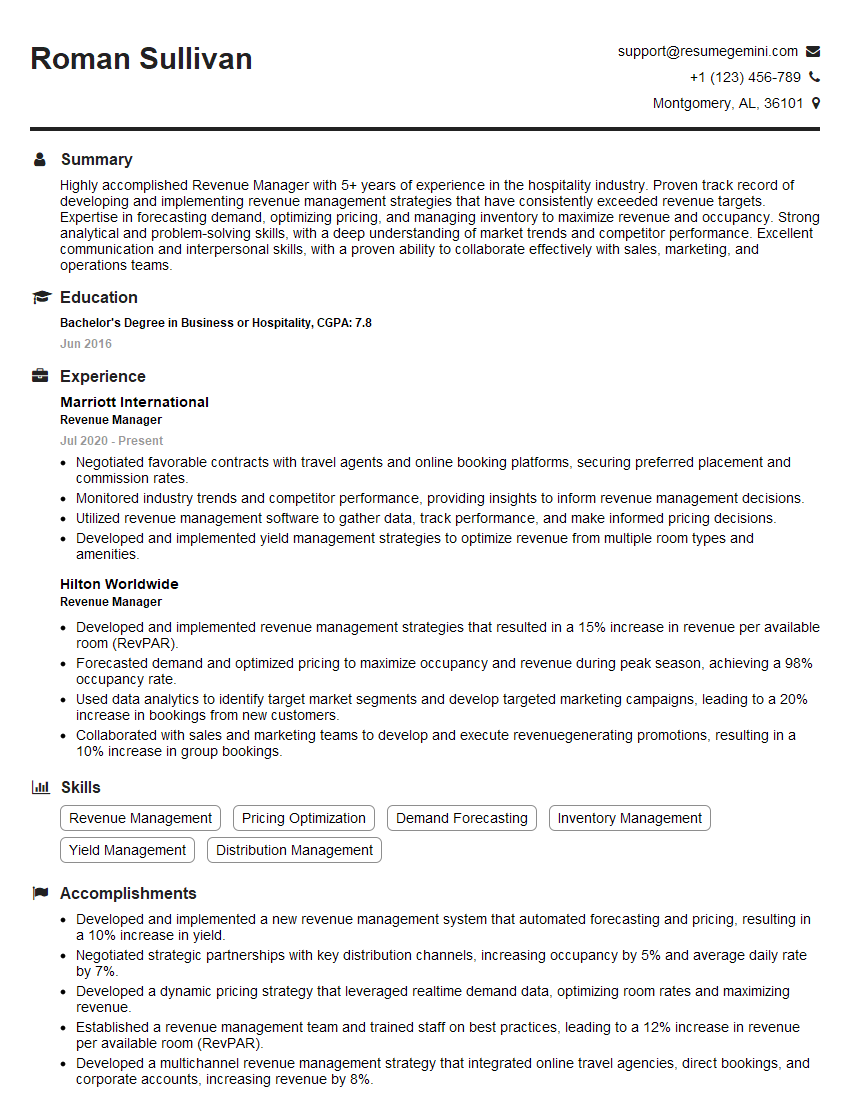
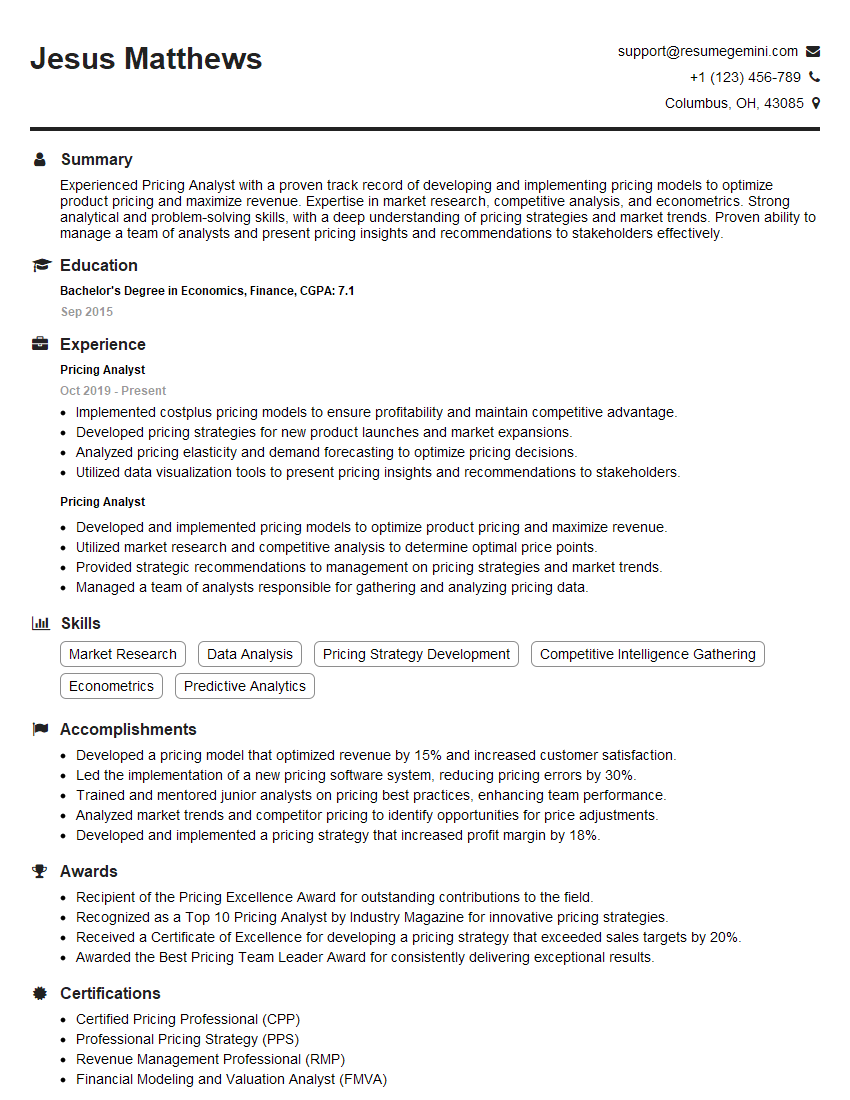
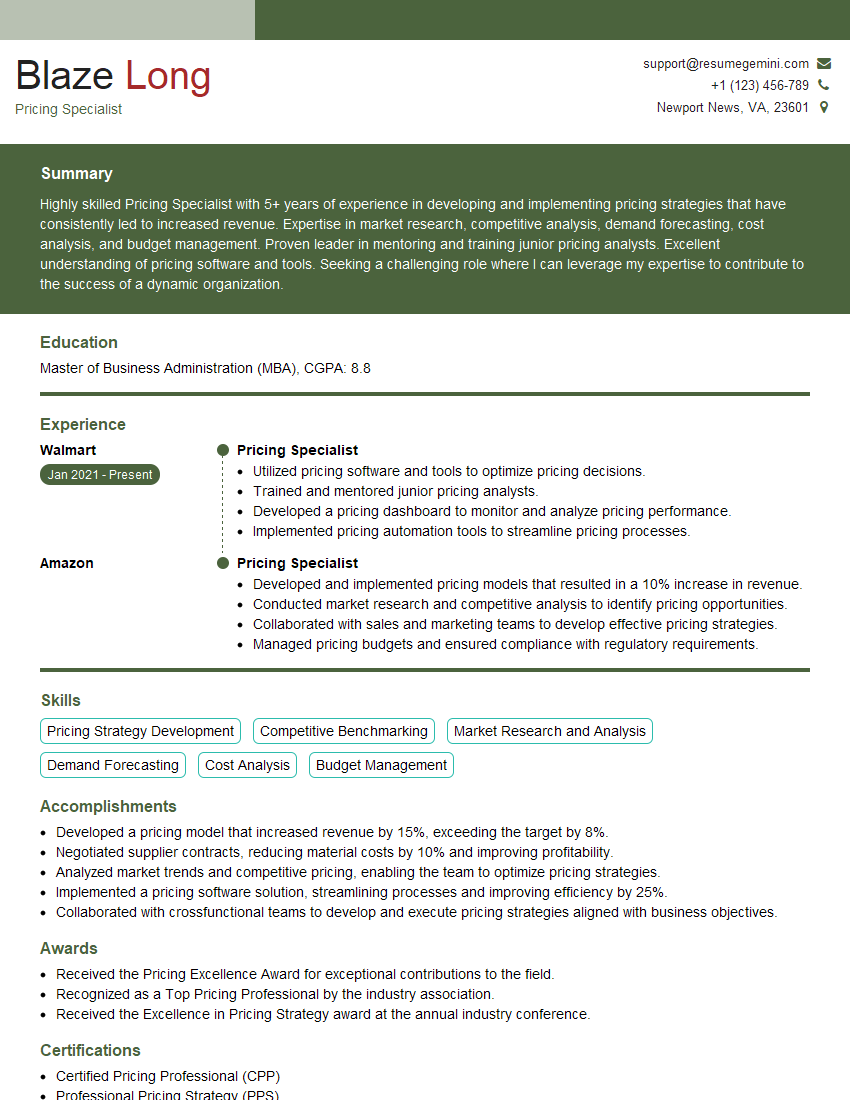
Mastering Product Lifecycle Pricing is crucial for career advancement in the dynamic world of product management and marketing. A strong understanding of these concepts significantly enhances your strategic thinking and decision-making capabilities, making you a highly valuable asset to any organization. To increase your chances of landing your dream role, it’s essential to create a compelling and ATS-friendly resume that highlights your relevant skills and experience. ResumeGemini is a trusted resource to help you build a professional resume that stands out. We provide examples of resumes tailored to Product Lifecycle Pricing to give you a head start. Invest time in crafting a top-notch resume – it’s your first impression with potential employers.
Explore more articles
Users Rating of Our Blogs
Share Your Experience
We value your feedback! Please rate our content and share your thoughts (optional).
What Readers Say About Our Blog
Very informative content, great job.
good