Feeling uncertain about what to expect in your upcoming interview? We’ve got you covered! This blog highlights the most important Computer to Plate (CTP) interview questions and provides actionable advice to help you stand out as the ideal candidate. Let’s pave the way for your success.
Questions Asked in Computer to Plate (CTP) Interview
Q 1. Explain the Computer to Plate (CTP) workflow.
Computer to Plate (CTP) is a digital platemaking technology that revolutionized the printing industry. Instead of using film, CTP systems directly image printing plates using a laser or other imaging device controlled by a computer. The workflow generally follows these steps:
- Design and Prepress: The design is created and prepared using design software. This involves creating vector graphics, placing images, and ensuring proper color management.
- RIP (Raster Image Processor): The design file is sent to a RIP, which converts the vector information into a raster image – a grid of pixels – suitable for plate exposure. The RIP also handles color separation and other prepress tasks.
- Plate Exposure: The RIP’s output is used to expose a photosensitive printing plate. A laser precisely burns away the non-image areas on the plate, creating a relief image that will transfer ink during printing.
- Plate Processing: After exposure, the plate undergoes processing, such as washing and gumming, to remove unexposed areas and prepare it for printing. This step might involve automated plate processors for efficiency.
- Mounting and Printing: Finally, the processed plate is mounted onto a printing press and ready for use.
Imagine it like baking a cake – the design is the recipe, the RIP is the preparation of ingredients, exposure is the baking, processing is cooling and frosting, and the mounted plate is the finished, ready-to-serve cake.
Q 2. Describe the different types of CTP plates and their applications.
CTP plates come in various types, each suited for specific applications. The choice depends on factors like press type, print run length, and desired print quality:
- Thermal Plates: These plates are exposed using a thermal laser, which heats the plate to activate the photosensitive layer. They are generally cost-effective and suitable for shorter print runs. They are popular for their ease of use and lower cost but may be less durable for very long runs.
- Violet Plates: These plates use a violet laser for exposure, which offers higher resolution and better stability than thermal plates. They are ideal for high-quality printing and longer print runs, offering improved image sharpness and dot reproduction. However, they often require more robust processing.
- UV Plates: Exposed using ultraviolet light, these plates offer excellent durability and are suitable for very long print runs. However, they often require specialized processing equipment.
For example, a small print shop producing short-run business cards might prefer thermal plates due to their low cost, whereas a large publishing house printing millions of magazines would benefit from the durability and quality offered by violet or UV plates.
Q 3. What are the advantages of CTP over conventional platemaking?
CTP offers significant advantages over conventional film-based platemaking:
- Increased Efficiency: CTP eliminates the film stage, significantly reducing processing time and labor costs. Plates are produced much faster.
- Improved Accuracy: Direct-to-plate imaging minimizes errors caused by film handling and processing, leading to higher consistency and print quality. The digital workflow reduces the chance of human error.
- Reduced Waste: CTP reduces chemical waste and film disposal, making it a more environmentally friendly option. It minimizes the use of hazardous chemicals and film, creating a greener production process.
- Enhanced Productivity: Automated plate processing in some systems further streamlines workflow, boosting overall productivity and profitability.
- Greater Flexibility: CTP allows for quick turnaround times and easy adjustments to print designs without significant re-work.
Think of it as comparing handwritten letters to email. Film-based platemaking is like handwriting – slower, error-prone, and wasteful, whereas CTP is like email – faster, more accurate, and efficient.
Q 4. How does image resolution affect CTP plate quality?
Image resolution directly impacts CTP plate quality. Higher resolution (measured in dots per inch or dpi) results in finer detail and sharper images on the printed output. However, excessively high resolution can increase processing time and may not always be necessary, depending on the print application and desired outcome.
A low-resolution image will lead to pixelation, jagged edges, and loss of fine detail in the final print. Conversely, a high-resolution image will provide a smoother, more accurate reproduction of the original design. The choice of resolution is often a balance between print quality and production efficiency. For example, a high-quality magazine might require 300-400 dpi, while a simple brochure might be acceptable at 150-200 dpi.
Q 5. Explain the process of exposing a CTP plate.
The CTP plate exposure process involves several key steps:
- Plate Loading: The photosensitive plate is loaded into the CTP device.
- Exposure: A laser or other imaging device scans the plate according to the data from the RIP. The laser precisely burns the areas that represent the image onto the plate. This process hardens the areas designated to receive ink, leaving others easily removable in the next step. The intensity of the laser is crucial for proper exposure.
- Plate Retrieval: Once exposure is complete, the plate is carefully removed from the device.
The process is very precise, similar to using a highly accurate laser cutter but instead of physically cutting, it chemically changes the plate’s photosensitive surface based on the digital image data.
Q 6. What are the common causes of CTP plate defects?
Several factors can contribute to CTP plate defects:
- Poor Image Resolution: Low resolution can lead to grainy or pixelated prints.
- Improper Plate Exposure: Overexposure or underexposure can result in light or dark areas on the plate, affecting print quality. This is usually due to problems with the laser intensity, exposure time, or plate sensitivity.
- Plate Handling Issues: Scratches or damage during handling can create defects. Poor storage or improper handling can easily degrade the quality of the plate.
- Processing Errors: Incorrect processing chemicals or inadequate processing time can affect plate quality. This could be due to using expired chemicals or faulty processing machines.
- Plate Degradation: Old or improperly stored plates may lose sensitivity and produce inconsistent results.
- RIP Issues: Problems with the RIP software, such as incorrect color profiles or settings, can lead to unexpected results.
Troubleshooting these issues often requires systematic analysis, checking each step in the workflow and carefully checking the CTP device and software settings.
Q 7. How do you troubleshoot a CTP plate exposure issue?
Troubleshooting a CTP plate exposure issue requires a systematic approach:
- Check the RIP settings: Verify that the RIP settings (resolution, color profiles, and output settings) are correct and consistent with the press requirements.
- Inspect the Plate: Examine the plate for any physical damage or imperfections before and after exposure.
- Review Exposure parameters: Check the exposure parameters (laser intensity, time, and speed) to ensure they are appropriate for the plate type and RIP settings. Consult the device’s maintenance logs to look for irregularities.
- Analyze the Print: Compare the printed output with the digital design file to identify areas of inconsistency. Look for patterns to narrow down the issue.
- Examine Processing: Ensure proper use and freshness of processing chemicals. Check the processing machine settings and maintenance logs to see if there are any errors.
- Test with a known good file: Expose a test plate with a known good design file to isolate if the issue is with the file or the CTP device.
- Contact Technical Support: If the problem persists, contact the CTP equipment manufacturer’s technical support for assistance.
Remember that many factors contribute to successful CTP operations; troubleshooting effectively involves a meticulous analysis of every step in the workflow.
Q 8. Describe the role of a RIP (Raster Image Processor) in CTP.
The Raster Image Processor (RIP) is the brain of a Computer to Plate (CTP) workflow. It’s essentially a sophisticated software program that takes your digital design files – usually in formats like PDF or TIFF – and translates them into a format the CTP imager understands. Think of it as a translator, converting the human-readable design into a language the machine can use to expose the printing plate.
This process involves several crucial steps: First, the RIP analyzes the file, interpreting colors, fonts, and images. Then, it performs image processing functions like halftoning (converting continuous-tone images into dots for printing), screening (arranging those dots in specific patterns to optimize print quality), and trapping (adjusting the edges of colors to prevent gaps during printing). Finally, the RIP outputs a rasterized image file – a detailed map of dots – that dictates precisely where the CTP imager should expose the plate.
Without a properly configured RIP, you risk inaccurate color reproduction, image distortion, and overall poor print quality. Imagine trying to build a house without blueprints – the RIP provides the precise blueprint for the printing plate.
Q 9. What are the key parameters to adjust in a RIP for optimal CTP output?
Optimizing a RIP for CTP involves fine-tuning several parameters, each impacting different aspects of the final output. These key parameters include:
- Resolution: Higher resolution (dots per inch or DPI) generally yields sharper images, but also increases file sizes and processing time. Finding the sweet spot depends on the plate type and printing requirements. For example, a high-resolution image might be essential for fine-detail printing, whereas a lower resolution might suffice for larger-scale work.
- Screening Frequency: This determines the dot pattern on the plate. Different frequencies are better suited for various paper stocks and printing processes. The wrong frequency can lead to moiré patterns (unwanted interference patterns) in the final print.
- Halftone Angle: Changing the angle of the dots relative to one another can minimize moiré and improve the overall look of the printed image. We often employ specific angles to avoid overlapping patterns from different color channels.
- Color Space: This is crucial for accurate color reproduction. Ensuring your design is in the correct color space (e.g., CMYK) and that the RIP is configured for that space prevents color shifts during plate making.
- Trapping: This parameter ensures that colors meet cleanly, especially important for preventing gaps or misalignment between colors in fine detail or on edges.
Adjusting these parameters often requires a trial-and-error approach, combined with color profiling and testing prints to achieve the desired outcome. It’s a balancing act between print quality, file size, and production speed.
Q 10. Explain the concept of color management in CTP.
Color management in CTP is the process of ensuring consistent and accurate color reproduction throughout the entire workflow, from design to final print. It involves managing color profiles – which are essentially mathematical descriptions of how a device (monitor, printer, plate) handles color. In essence, it’s about bridging the gap between the colors you see on screen and the colors that appear on the printed page.
The RIP plays a critical role here. It uses color profiles to translate the colors from the design file (often in RGB) to the color space of the printing plate (typically CMYK). Without proper color management, subtle variations in color across different devices can lead to a significant mismatch between the digital design and the final printed product. Imagine designing a vibrant red logo only to have it appear dull and muted on the printed piece – that’s a clear indication of poor color management.
Color management in CTP also involves using calibrated equipment, including monitors and proofing systems, to ensure all devices consistently reproduce colors accurately. This involves regular calibration and profiling of all devices to prevent color drift over time.
Q 11. How do you ensure accurate color reproduction in CTP?
Accurate color reproduction in CTP requires a multi-faceted approach involving meticulous attention to detail at each stage of the workflow. Here’s how we ensure accuracy:
- Color Profile Creation and Management: Creating accurate color profiles for all devices involved (monitor, RIP, CTP imager, press) is essential. This typically involves using a spectrophotometer to measure color accurately and generate profiles specific to each device.
- Soft Proofing: Before creating the printing plates, a soft proof (a digital simulation of the final print) is created and reviewed. This allows for color adjustments and corrections before any plates are made, saving time and materials.
- Hard Proofing: A hard proof (a physical print sample) is produced under controlled conditions to verify color accuracy before the final print run. This allows for a final check and adjustment if necessary.
- RIP Calibration: Regular calibration of the RIP is important to maintain its accuracy in color translation. This usually involves using standardized color targets to adjust the RIP’s settings.
- Plate Material and Processing: Choosing the appropriate plate type for the desired print quality and ensuring the plate is processed correctly (proper exposure and processing chemicals) is also crucial for accurate color reproduction.
By implementing these measures, we minimize color discrepancies and ensure the final print closely matches the digital design intent.
Q 12. Describe your experience with different CTP plate types (e.g., thermal, violet).
My experience encompasses a wide range of CTP plate types, including thermal and violet plates. Thermal plates are exposed using heat, often from lasers. These plates are generally less expensive and require less intensive processing than violet plates. However, they may have limitations in terms of resolution and print longevity compared to violet options.
Violet plates, on the other hand, are exposed using violet lasers. They generally offer higher resolution, sharper images, and greater durability. They are suitable for high-quality printing and longer print runs. We often choose violet plates for projects demanding premium print quality, such as high-end brochures or packaging.
The choice between thermal and violet plates depends on the specific job requirements. Factors such as budget, print quality needs, press capabilities, and print run length heavily influence this decision. For example, a smaller print run for a quick-turnaround project might utilize thermal plates, while a large commercial print run often calls for the higher quality of violet plates.
Q 13. What are the safety precautions involved in handling CTP plates and chemicals?
Safety is paramount in a CTP environment. Handling CTP plates and chemicals requires strict adherence to safety protocols. Here are key precautions:
- Personal Protective Equipment (PPE): Always wear appropriate PPE, including gloves, safety glasses, and lab coats, when handling plates or chemicals. Certain chemicals used in plate processing are hazardous and require extra care.
- Proper Ventilation: Ensure adequate ventilation in the processing area to avoid inhalation of harmful fumes. A well-ventilated environment is crucial to minimize health risks.
- Chemical Handling: Follow the manufacturer’s instructions carefully when handling processing chemicals. This includes proper storage, mixing, and disposal procedures. Misuse or improper handling can lead to accidents and health hazards.
- Waste Disposal: Dispose of used processing chemicals and plates according to local regulations. Improper disposal contaminates the environment and poses a health risk.
- Laser Safety: If the CTP system uses lasers, ensure laser safety eyewear is worn and laser safety procedures are followed to protect your eyes.
Regular safety training for all personnel is essential to ensure everyone understands and adheres to these protocols.
Q 14. How do you maintain CTP equipment and ensure its optimal performance?
Maintaining CTP equipment is crucial for ensuring optimal performance, print quality, and longevity. This involves a combination of preventative maintenance and proactive troubleshooting.
- Regular Cleaning: Regular cleaning of the imager, including the laser unit, optics, and plate transport system, is vital. Dust and debris can significantly affect image quality and system performance.
- Preventative Maintenance Schedules: Following manufacturer-recommended maintenance schedules is paramount. This often includes replacing parts at regular intervals and performing calibrations to maintain accuracy.
- Monitoring System Parameters: Regularly monitor system parameters such as laser power, exposure times, and plate temperature to identify potential problems before they escalate.
- Routine Inspections: Perform regular visual inspections for any signs of wear and tear, damage, or leaks.
- Calibration and Testing: Regular calibration ensures the system’s accuracy, using standardized color targets and test plates. This is crucial for consistent print quality.
- Software Updates: Keeping the RIP software up-to-date with the latest updates and patches ensures optimal performance and addresses potential bugs or vulnerabilities.
By implementing a robust maintenance program, we minimize downtime, maximize productivity, and guarantee consistent high-quality output. Regular maintenance is like servicing a car – it prevents costly repairs and ensures the system runs smoothly.
Q 15. Explain your experience with CTP workflow software.
My experience with CTP workflow software spans over a decade, encompassing various systems from industry leaders. I’m proficient in managing the entire workflow, from job ticket creation and imposition to plate generation and output. This includes software like Esko Automation Engine, Kodak Prinergy, and Agfa Apogee. I understand the importance of streamlined processes to maximize efficiency and minimize errors. For example, in a recent project involving a large-scale magazine printing job, I optimized the workflow using Esko Automation Engine’s automated job submission and preflighting capabilities, reducing production time by 15% and significantly improving consistency.
I’m adept at configuring and troubleshooting these systems, ensuring seamless integration with prepress hardware like RIPs and CTP devices. My expertise extends to utilizing advanced features such as job tracking, reporting, and remote monitoring to maintain optimal system performance and identify potential bottlenecks.
Career Expert Tips:
- Ace those interviews! Prepare effectively by reviewing the Top 50 Most Common Interview Questions on ResumeGemini.
- Navigate your job search with confidence! Explore a wide range of Career Tips on ResumeGemini. Learn about common challenges and recommendations to overcome them.
- Craft the perfect resume! Master the Art of Resume Writing with ResumeGemini’s guide. Showcase your unique qualifications and achievements effectively.
- Don’t miss out on holiday savings! Build your dream resume with ResumeGemini’s ATS optimized templates.
Q 16. How do you handle file preparation for CTP?
File preparation for CTP is critical for achieving high-quality print results. It involves several key steps. First, I meticulously check the file for color mode (typically CMYK), resolution (at least 300 dpi for optimal results), and embedded profiles (ensuring consistent color across the workflow). I utilize software like Adobe Acrobat Pro to preflight files, identify and correct potential issues such as missing fonts or incorrect image settings. Any necessary adjustments, such as color correction or trapping, are performed using tools like Adobe Photoshop or Illustrator.
Next, I optimize the files for the specific CTP device and plate type being used. This might include converting the file to a suitable format (e.g., PDF/X-1a for press-ready files) and adjusting the resolution or compression settings to balance image quality with file size. Finally, I meticulously review the imposition plan to ensure efficient plate usage and minimize waste. For example, when working with a large-format poster print, optimizing imposition significantly reduces material costs and waste. A misaligned or incorrectly imposed file can lead to significant reprints and delays.
Q 17. Describe your experience with proofing and color verification.
Proofing and color verification are paramount in CTP. I have extensive experience using both soft proofing (on-screen) and hard proofing (physical prints) to ensure color accuracy. Soft proofing involves utilizing specialized software and calibrated monitors to simulate the final printed output. I use tools such as GMG ColorProof or X-Rite i1Profiler to create accurate color profiles and match the screen representation to the final print. Hard proofing involves creating test prints on a proofing press or using a high-quality inkjet printer with a controlled color space. This is especially important for projects with critical color requirements, such as brand identity guidelines or high-end packaging.
Color verification involves using spectrophotometers (like X-Rite i1iSis) to measure the color values of the proofs and compare them against the desired values in the original artwork. Any discrepancies are identified and corrected before proceeding to plate creation. This process ensures color consistency throughout the production run, reducing the risk of costly reprints due to color variations.
Q 18. What is your experience with different CTP plate manufacturers?
I have worked with various CTP plate manufacturers, including Kodak, Agfa, and FujiFilm. My experience covers a range of plate technologies, such as thermal, UV, and violet laser plates. Each manufacturer’s plates have unique characteristics concerning sensitivity, resolution, and durability. For instance, Kodak Sonora XP plates offer excellent resolution and environmental benefits due to their process-less nature. Agfa’s Azura plates are known for their high dynamic range, delivering smooth gradients and fine details. FujiFilm’s Superia plates are often chosen for their durability and resistance to scratches.
Understanding the nuances of each plate type allows me to optimize the CTP settings and RIP parameters to maximize the quality and efficiency of the plate-making process. The selection of the right plate for a specific job depends on factors like print run length, substrate, and press type. For a short-run job on coated stock, a thermal plate might suffice, while a longer run on uncoated stock would benefit from a more durable, violet-laser plate.
Q 19. How do you manage and troubleshoot CTP system errors?
Managing and troubleshooting CTP system errors requires a systematic approach. I start by identifying the error message or symptom. This often involves reviewing system logs and error reports. Then, I carefully analyze the problem to determine its source – is it a hardware issue, software malfunction, or an operator error? Simple issues like a paper jam or a low-toner alert are quickly addressed. More complex issues, such as unexpected plate defects or RIP software crashes, might involve checking connections, updating drivers, and potentially contacting technical support.
My troubleshooting strategy involves a series of steps: checking the status of the CTP system, examining the plate-making process for any abnormalities, and checking the quality of the output plates for any flaws. Prioritizing efficiency and avoiding downtime is crucial, so I document all troubleshooting steps and preventative maintenance to minimize future disruptions. For instance, a recent issue with intermittent plate exposure defects was resolved by recalibrating the laser power settings on the CTP device after carefully reviewing the system logs that highlighted power fluctuations.
Q 20. What are the different types of plate readers used in CTP?
Different types of plate readers are used in CTP workflows to ensure plate quality and detect potential defects before the plates are used on the printing press. These readers use various technologies to analyze the plates. Densitometers measure the density of the plate image, helping identify areas of insufficient exposure or development. Spectrophotometers measure the spectral reflectance of the plate, providing more detailed colorimetric data. Finally, imaging systems use high-resolution cameras to create a digital image of the plate, allowing for detailed visual inspection of the entire plate surface for defects such as scratches or pinholes.
The choice of plate reader depends on the specific requirements of the job. For example, a simple densitometer might suffice for quick quality checks of routine jobs, while a more sophisticated imaging system would be necessary for high-end print jobs that require extremely precise color control and defect detection.
Q 21. Explain your experience with different RIP software solutions.
My experience with RIP software includes working with industry-standard solutions such as Esko CDI, Kodak Prinergy, and Agfa Apogee. These RIPs (Raster Image Processors) are essential for converting vector-based artwork into the raster images needed for CTP plate creation. I’m skilled in configuring and optimizing RIP settings for specific plate types, substrates, and printing presses. I understand the importance of color management profiles and accurately setting parameters like resolution, screening angles, and dot gain compensation for optimal print results.
Beyond basic RIP operation, I’m familiar with advanced features such as automated preflighting, color optimization tools, and imposition software. This allows me to fine-tune the imaging process for various printing requirements, reducing waste and improving overall efficiency. For example, using Prinergy’s stochastic screening features allowed me to achieve a smoother tonal range in a recent fine art print job, enhancing the visual appeal of the artwork.
Q 22. Describe your experience working with different color spaces (e.g., CMYK, RGB).
My experience with color spaces in CTP is extensive, encompassing both RGB and CMYK. RGB (Red, Green, Blue) is the additive color model used for screen displays, while CMYK (Cyan, Magenta, Yellow, Key – black) is the subtractive model used for printing. Understanding the nuances of color conversion is crucial for accurate platemaking.
For instance, a vibrant RGB image intended for print needs careful conversion to CMYK. Direct conversion often leads to color shifts, as the color gamuts differ. I’ve used color management software like GMG ColorProof and Adobe Color Engine to profile my devices and create ICC profiles, ensuring accurate color translation. These profiles allow for predictable conversions, minimizing color discrepancies between the screen preview and the final printed output. I’ve also handled situations involving spot colors, requiring careful attention to Pantone matching and effective incorporation into the CMYK workflow. In short, mastering color space management is key to delivering high-quality, consistent results in CTP.
Q 23. How do you ensure the quality and consistency of CTP plates?
Quality and consistency in CTP are paramount. My approach involves a multi-faceted strategy. First, regular calibration and maintenance of the CTP imager are non-negotiable. This includes consistent cleaning of the laser head, regular checks of the imaging drum, and periodic calibration against industry standards. I perform these tasks according to the manufacturer’s guidelines, documenting everything meticulously.
Secondly, I meticulously control the platemaking process, ensuring proper plate selection for the job. Different plates offer varying resolutions and sensitivities; choosing the right plate based on the job’s requirements is critical for quality. I monitor the processing conditions—temperature, chemical concentration, and exposure time—to maintain optimal performance. Any deviations are recorded and analyzed to identify and prevent future issues. Thirdly, rigorous quality control procedures are implemented. This involves inspecting the plates visually for defects and regularly testing the plates on press to validate color accuracy and registration.
Finally, I leverage software tools to automate quality checks and data logging. This provides an audit trail that aids in troubleshooting and ensures consistent quality over time. For example, automated density measurements help maintain consistent plate density and identify issues promptly.
Q 24. How do you manage and prioritize tasks in a fast-paced CTP environment?
Managing tasks in a fast-paced CTP environment requires efficient prioritization and strong organizational skills. I utilize a combination of tools and techniques to streamline my workflow. Firstly, I use a job ticketing system, prioritizing jobs based on urgency and deadlines. This system ensures transparency and keeps track of progress for all jobs. Secondly, I leverage workflow automation wherever possible, reducing manual intervention and freeing up time for more complex tasks.
I also employ time management techniques like the Pomodoro Technique to focus on individual tasks. This allows for sustained concentration and boosts overall efficiency. Finally, proactive communication with the press operators and prepress team is essential. This ensures smooth handoffs, minimizes delays, and allows for collaborative problem-solving.
Q 25. Describe your experience with workflow automation in CTP.
My experience with workflow automation in CTP is extensive. I’ve implemented and managed automated workflows using different software solutions. This automation streamlines various stages, including job submission, preflighting, imposition, color management, and plate output. For example, I’ve integrated various software components—MIS (Management Information System), prepress software, and the CTP device—to create a seamless, automated workflow. This significantly reduces manual effort and minimizes human error. This includes automated preflight checks to identify potential problems before plates are even produced, saving both time and resources.
One specific example involved implementing a JDF (Job Definition Format)-based workflow. This enabled automated communication between the prepress software and the CTP device, eliminating manual data entry and reducing the risk of errors associated with data inconsistencies. The result was a significant improvement in turnaround time and a consistent increase in overall production efficiency.
Q 26. How do you handle urgent requests and tight deadlines in CTP operations?
Handling urgent requests and tight deadlines requires a combination of skills and proactive planning. My approach involves a swift assessment of the urgency, followed by a rapid prioritization of tasks. This often involves temporarily re-ordering the workflow to accommodate the urgent job. I communicate transparently with all stakeholders, keeping them informed of the progress and any potential challenges. I might need to allocate extra resources or leverage overtime to meet deadlines without compromising quality.
For example, if a critical job requires immediate plate production, I might temporarily halt less urgent jobs to ensure the timely delivery of the urgent request. While this might temporarily impact the overall schedule, it avoids larger potential consequences of delayed production. I have experience in prioritizing tasks while maintaining quality and have developed strong time-management and communication skills to handle these situations efficiently.
Q 27. What are your strategies for continuous improvement in CTP operations?
Continuous improvement in CTP operations is an ongoing process for me. I regularly analyze process metrics, such as turnaround time, plate defects, and overall throughput, to identify areas for optimization. This data-driven approach provides valuable insights for making informed decisions. I actively seek out new technologies and techniques to enhance efficiency and improve quality. This includes participating in industry events, attending workshops, and staying up-to-date with the latest developments in CTP technology.
Further, I foster a culture of continuous improvement within the team by encouraging feedback and open communication. By regularly reviewing our processes and seeking input from colleagues, we can identify potential bottlenecks and brainstorm innovative solutions. I believe this continuous learning and improvement mindset is crucial for maintaining a competitive edge and providing high-quality service.
Q 28. What are your salary expectations for this role?
My salary expectations are commensurate with my experience and skills in the CTP field, considering the specific requirements and responsibilities of this role. I am open to discussing a competitive compensation package that reflects my market value and contributions to your organization.
Key Topics to Learn for Computer to Plate (CTP) Interview
- CTP Workflow and Processes: Understand the entire CTP workflow, from file creation and prepress to platemaking and printing. Consider the different stages and their interdependencies.
- Color Management in CTP: Master color profiles, color spaces (CMYK, RGB), and how accurate color reproduction is achieved in the CTP process. Be prepared to discuss color calibration and proofing.
- Image Setting and RIP Software: Familiarize yourself with various RIP (Raster Image Processor) software and their functionalities. Discuss image processing techniques, screening methods (AM, FM), and resolution adjustments.
- Platemaking Technologies: Understand the different types of plates used in CTP (e.g., thermal, violet, UV) and their respective advantages and disadvantages. Be prepared to discuss plate processing and quality control.
- Troubleshooting and Problem Solving: Practice identifying and resolving common issues in the CTP workflow, such as banding, moiré patterns, and registration problems. Discuss your approach to troubleshooting.
- Prepress File Preparation: Know the importance of proper file preparation, including resolution, color mode, and file formats. Discuss the impact of incorrect file preparation on the final output.
- Quality Control and Standards: Understand industry standards and best practices related to CTP. Discuss quality assurance measures and how to maintain consistency in print output.
- Automation and Workflow Optimization: Discuss your understanding of automation within the CTP workflow and how to improve efficiency and reduce errors.
Next Steps
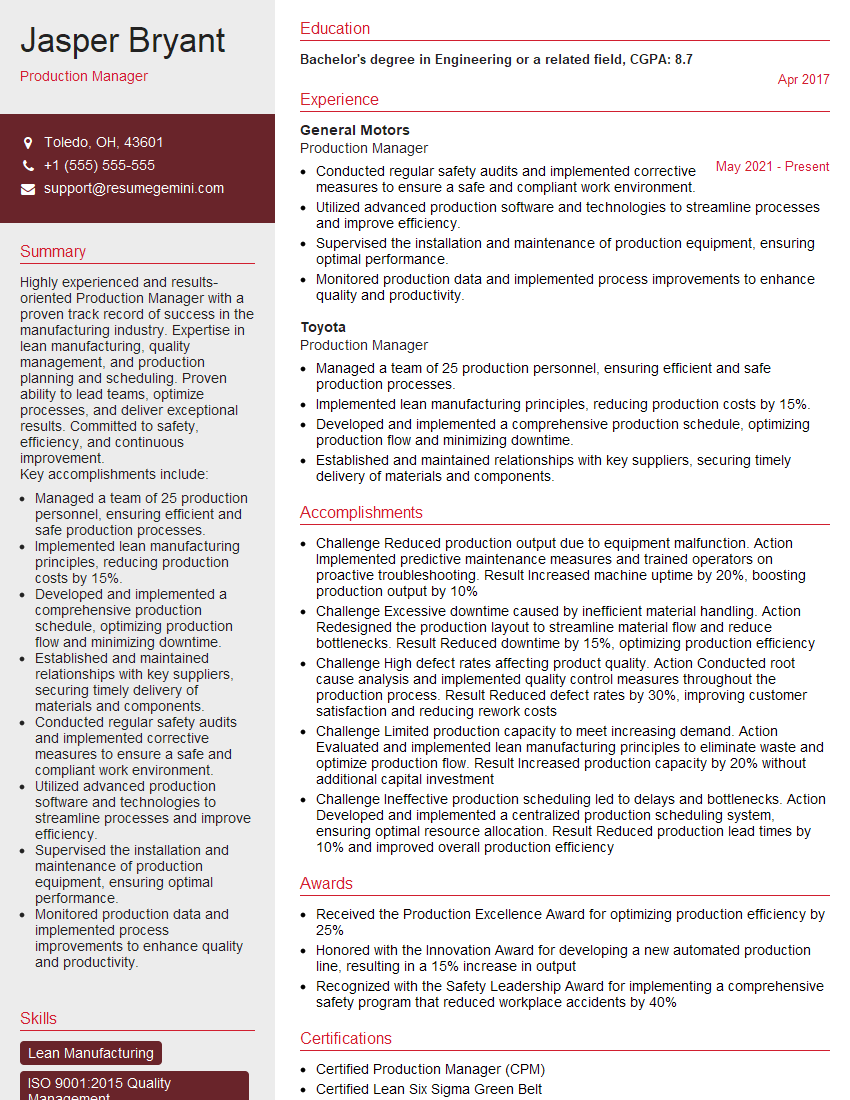
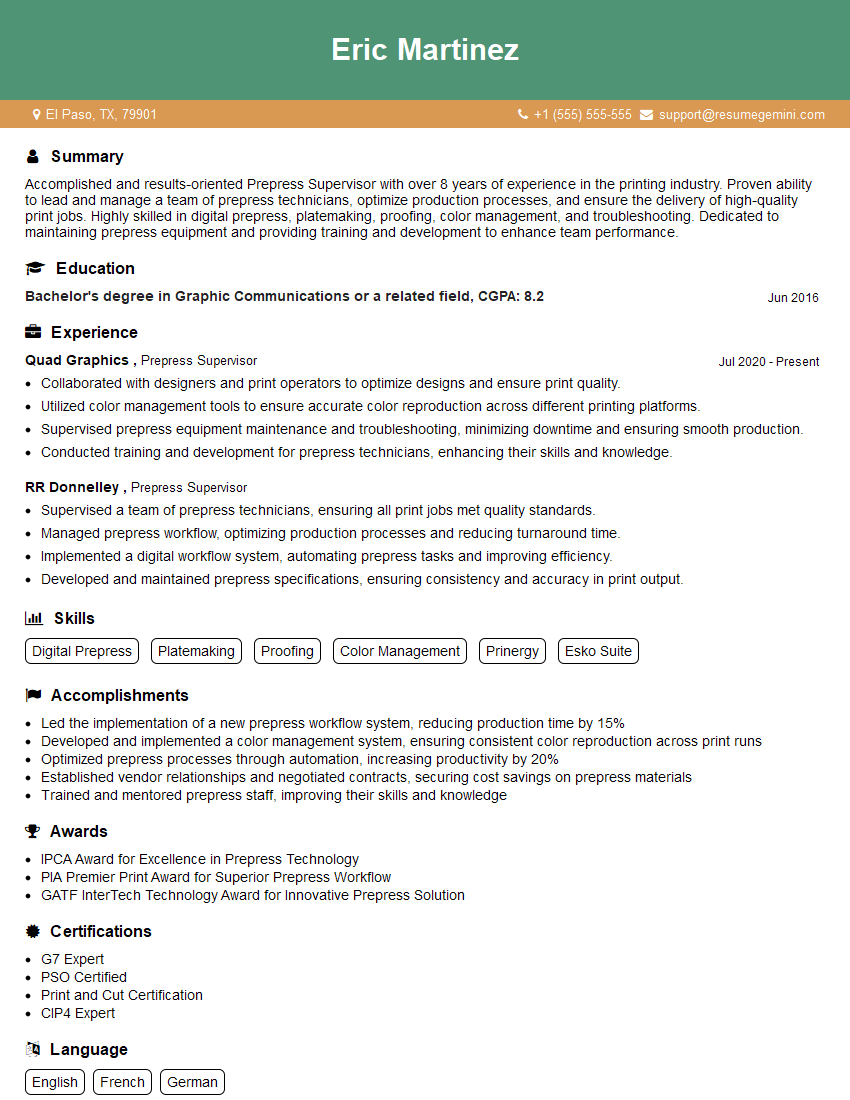
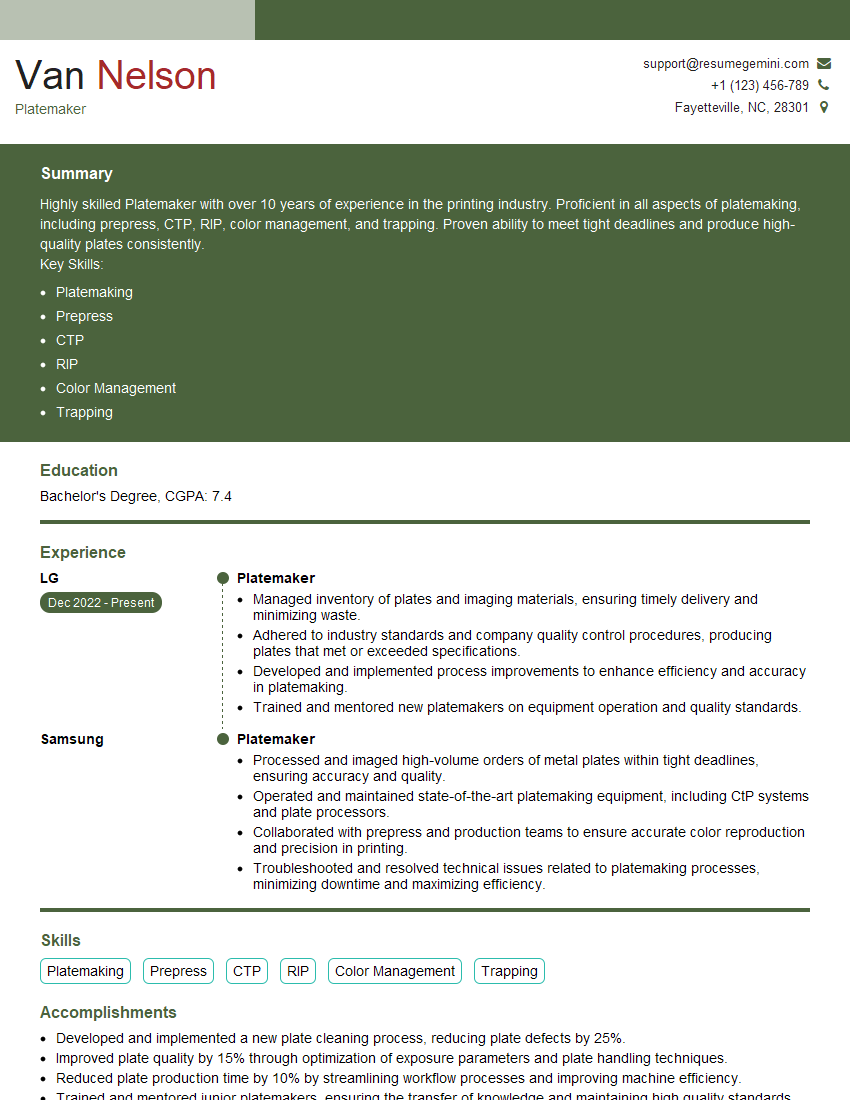
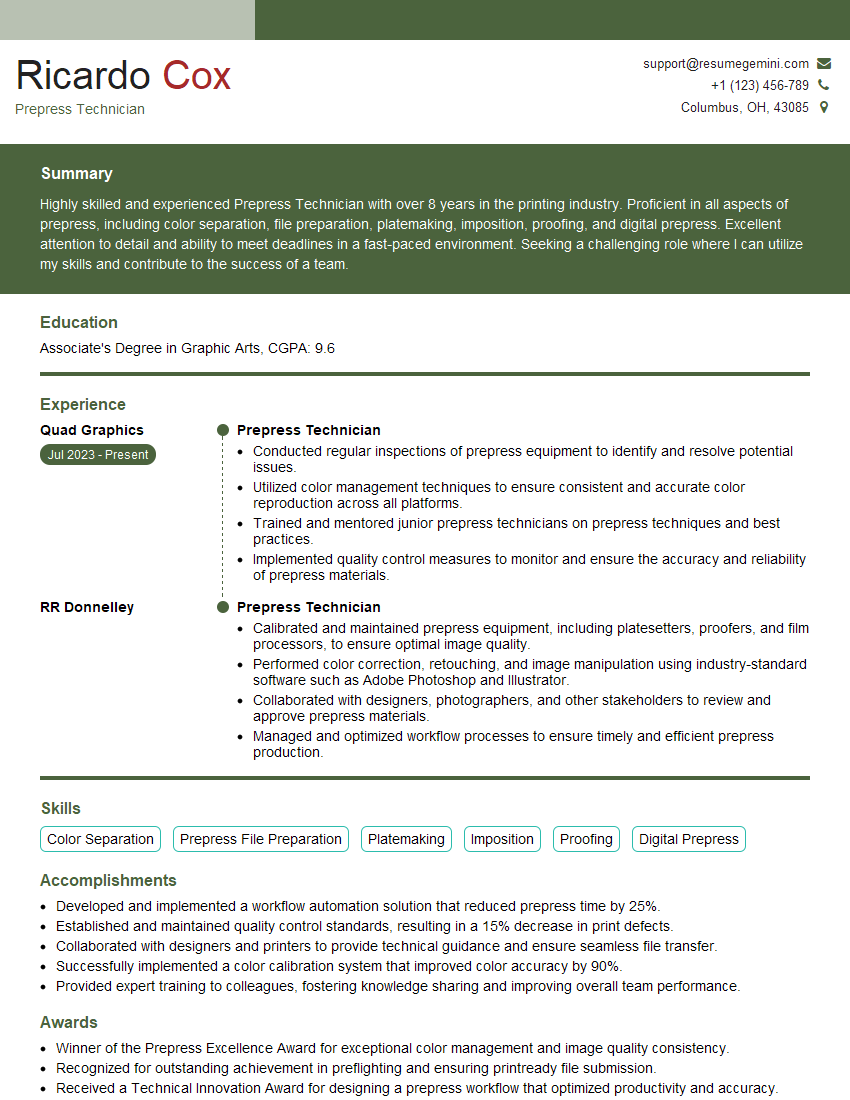
Mastering Computer to Plate (CTP) opens doors to exciting career opportunities in the printing and publishing industries, offering roles with increasing responsibility and earning potential. To maximize your job prospects, creating a strong, ATS-friendly resume is crucial. ResumeGemini is a trusted resource to help you build a professional and impactful resume that highlights your skills and experience effectively. Examples of resumes tailored to Computer to Plate (CTP) roles are available to help guide your creation. Invest the time to craft a compelling resume; it’s your first impression on potential employers.

Explore more articles
Users Rating of Our Blogs
Share Your Experience
We value your feedback! Please rate our content and share your thoughts (optional).
What Readers Say About Our Blog
Very informative content, great job.
good