Are you ready to stand out in your next interview? Understanding and preparing for Product Safety Documentation Management interview questions is a game-changer. In this blog, we’ve compiled key questions and expert advice to help you showcase your skills with confidence and precision. Let’s get started on your journey to acing the interview.
Questions Asked in Product Safety Documentation Management Interview
Q 1. Explain your experience with creating and maintaining Safety Data Sheets (SDS).
Creating and maintaining Safety Data Sheets (SDS), also known as Material Safety Data Sheets (MSDS), is a crucial aspect of product safety. My experience encompasses the entire lifecycle, from initial data gathering to regular updates and archiving. This includes collaborating with chemists, engineers, and regulatory affairs specialists to ensure the SDS accurately reflects the hazards associated with a product and the necessary precautions for its safe handling, storage, and disposal.
I’m proficient in using SDS authoring software to generate compliant documents. For example, I’ve used [Software Name A] and [Software Name B] to create SDSs for a wide range of products, from industrial chemicals to consumer goods. My process includes:
- Hazard Identification: Thoroughly assessing the physical, health, and environmental hazards of each product ingredient.
- Data Compilation: Gathering data from various sources, including chemical analyses, toxicological studies, and relevant literature.
- SDS Generation: Utilizing SDS authoring software to create a structured document compliant with globally recognized standards like GHS (Globally Harmonized System).
- Review and Approval: Ensuring internal review by relevant experts before finalization and distribution.
- Version Control: Implementing a robust version control system to track changes and ensure only the latest version is distributed.
- Regular Updates: Periodically reviewing and updating SDSs to reflect new information or changes in regulations.
In one project, I streamlined the SDS creation process for over 50 products, reducing the time required by 30% by implementing a standardized template and automated data extraction process.
Q 2. Describe your process for ensuring product safety documentation is compliant with relevant regulations (e.g., FDA, ISO, etc.).
Ensuring compliance with regulations like those from the FDA (Food and Drug Administration), ISO (International Organization for Standardization), and other regional bodies is paramount. My approach involves a multi-step process:
- Regulatory Landscape Analysis: Identifying all applicable regulations for each product and target market. This includes considering variations in requirements across different jurisdictions (e.g., the EU’s REACH regulation versus US OSHA regulations).
- Documentation Template Development: Creating standardized templates for safety documentation that pre-emptively incorporate all mandatory sections and data fields required by the relevant regulations. This ensures consistency and reduces the risk of omissions.
- Data Validation: Rigorous validation of data used in the documents to ensure accuracy and reliability. This involves cross-referencing information from multiple sources and using appropriate analytical methods.
- Compliance Audits: Regularly conducting internal and potentially external audits to assess the effectiveness of our compliance program and identify areas for improvement. We track any non-conformances, develop corrective action plans, and verify the effectiveness of those plans.
- Staying Updated: Continuously monitoring and adapting to changes in regulations. This involves subscribing to regulatory updates, attending industry conferences, and participating in relevant training programs.
For instance, when working with a medical device manufacturer, I ensured all documentation adhered to ISO 13485 and FDA 21 CFR Part 820 requirements by implementing a comprehensive quality management system and conducting regular audits.
Q 3. How do you manage version control of product safety documentation?
Version control is crucial for maintaining accurate and auditable product safety documentation. I utilize a combination of electronic document management systems (EDMS) and version control software. This ensures that only the most up-to-date version is available and that previous versions are readily accessible for auditing or reference.
Our system typically uses a document numbering system that incorporates version numbers (e.g., SDS-XYZ-v3.0). Each revision is clearly documented, outlining the changes made and the reason for the revision. We maintain an archive of all previous versions, preventing accidental loss or overwriting of critical information. Access controls are also implemented to ensure only authorized personnel can modify documents. This prevents accidental changes or unauthorized edits, safeguarding the integrity of the documentation. A change log is maintained, providing a comprehensive history of all revisions.
Q 4. What methods do you use to ensure the accuracy and completeness of safety documentation?
Ensuring the accuracy and completeness of safety documentation is a continuous process involving several methods:
- Cross-Verification: Data from different sources are cross-referenced to minimize errors and ensure consistency. For example, chemical composition data is verified against Certificate of Analysis (CoA).
- Expert Review: Documents are reviewed by subject matter experts (SMEs) with relevant qualifications in toxicology, chemistry, engineering etc. This helps catch potential inconsistencies or missing information.
- Data Validation Checks: Implementing automated checks to ensure data integrity and consistency throughout the documentation. This includes range checks, plausibility checks and ensuring adherence to predefined formats.
- Template Usage: Using standardized templates to ensure all necessary sections are included and consistently formatted. This makes the review process more efficient and reduces the chances of overlooking important details.
- Regular Audits: Periodic internal and sometimes external audits of the documentation system to identify gaps and ensure ongoing compliance.
For instance, in a recent project, a cross-verification process revealed a discrepancy between the concentration of a specific ingredient listed in the SDS and the actual composition reported in the raw material COA. This discrepancy was promptly corrected, preventing a potential safety risk.
Q 5. Describe your experience with conducting internal audits of product safety documentation.
My experience with conducting internal audits of product safety documentation is extensive. These audits follow a structured approach to evaluate the effectiveness of our documentation management system and ensure regulatory compliance.
The process typically involves:
- Defining Audit Scope: Clearly defining the specific documentation types and areas to be audited.
- Developing an Audit Checklist: Creating a checklist based on regulatory requirements and internal procedures to ensure consistent evaluation.
- Document Sampling: Selecting a representative sample of documents for review based on criteria such as product type, complexity, and recency of updates.
- Audit Execution: Systematically reviewing the selected documents against the checklist and identifying any discrepancies or non-conformances.
- Reporting and Corrective Actions: Documenting the findings in an audit report, which includes a detailed description of identified non-conformances and recommendations for corrective and preventive actions (CAPA).
- Follow-up: Verifying the implementation of corrective actions and their effectiveness in preventing recurrence.
Through these audits, we’ve identified several opportunities to improve our processes, such as implementing a more efficient document versioning system and refining our training programs for document authors.
Q 6. How do you handle discrepancies or inconsistencies found during documentation reviews?
Discrepancies or inconsistencies discovered during documentation reviews are addressed through a structured process. The first step is to thoroughly investigate the root cause of the discrepancy. This might involve reviewing raw data, contacting relevant personnel, or consulting external experts. Once the root cause is identified, a corrective action plan is developed. This plan outlines the necessary steps to correct the discrepancy and prevent its recurrence.
For example, if a discrepancy was found between the hazard statements in the SDS and the results of a recent toxicological study, the following actions would be taken:
- Investigate: Thoroughly review the toxicological study and compare it with previous data to verify its accuracy and relevance.
- Assess Risk: Determine the potential safety implications of the discrepancy.
- Corrective Action: Update the SDS with the correct hazard information, ensuring compliance with all applicable regulations.
- Communicate: Inform relevant stakeholders, such as internal teams and potentially customers, about the correction.
- Document: Record the discrepancy, root cause analysis, corrective actions, and verification steps in a change log.
This methodical approach ensures the accuracy and reliability of our safety documentation.
Q 7. Explain your understanding of different regulatory requirements for product safety documentation across various regions.
My understanding of diverse regulatory requirements for product safety documentation across various regions is comprehensive. I recognize that regulations vary significantly depending on factors such as product type, intended use, and target market. Each region or country has its own specific rules, and sometimes even different states or provinces within the same country might have slightly different requirements.
For example:
- United States (US): The FDA regulates food, drugs, cosmetics, and medical devices; OSHA (Occupational Safety and Health Administration) focuses on workplace safety, while the EPA (Environmental Protection Agency) oversees environmental aspects.
- European Union (EU): REACH (Registration, Evaluation, Authorisation and Restriction of Chemicals) governs the registration of chemicals, while CLP (Classification, Labelling and Packaging) dictates how chemicals are classified and labelled.
- Canada: Similar to the US, but with its own unique regulatory agencies and requirements.
- Asia (varies by country): Each country in Asia typically has its own unique regulatory landscape. For example, China’s regulations may differ substantially from those in Japan or South Korea.
I’m skilled in navigating these complexities to ensure documentation compliance across numerous jurisdictions. This requires a deep understanding of each region’s specific requirements, an ability to adapt documentation to these requirements, and a commitment to staying current on evolving regulations.
Q 8. How do you ensure effective communication and collaboration with cross-functional teams regarding product safety documentation?
Effective communication and collaboration are paramount in product safety documentation. Think of it like building a house – everyone needs to be on the same page regarding the blueprints (documentation) to avoid structural issues (safety hazards).
My approach involves several key strategies:
- Regular meetings: Scheduled meetings with cross-functional teams (engineering, design, quality assurance, legal) ensure consistent information flow and address concerns proactively.
- Centralized documentation platform: Utilizing a shared platform (like SharePoint or a dedicated PLM system) provides a single source of truth, minimizing confusion and version control issues. This ensures everyone accesses the most up-to-date documents.
- Clear communication protocols: Establishing clear processes for document review, feedback, and approval ensures transparency and accountability. This often involves predefined roles and responsibilities for each team member.
- Version control: Implementing robust version control systems prevents accidental overwrites and allows for easy tracking of changes, critical for auditing and traceability.
- Training and awareness: Providing comprehensive training on product safety regulations and documentation procedures empowers all stakeholders to contribute effectively and understand the importance of their roles.
For instance, in a previous role, we used regular stand-up meetings to discuss ongoing documentation projects and address any roadblocks immediately. This prevented minor issues from escalating into major problems.
Q 9. What software or systems are you proficient in for managing product safety documentation?
I’m proficient in several software systems for managing product safety documentation, each suited to different needs:
- PLM (Product Lifecycle Management) systems: Such as Arena Solutions, Windchill, or Teamcenter. These are comprehensive systems managing the entire product lifecycle, including safety documentation, from design to disposal.
- Document Management Systems (DMS): Like SharePoint, M-Files, or Documentum. These systems offer features like version control, workflow automation, and access control, essential for managing large volumes of documents.
- Dedicated safety software: Specific applications designed for risk assessment, hazard analysis, and regulatory compliance (e.g., some specialized modules within PLM systems). These are particularly helpful for tracking and managing safety-critical information.
- Spreadsheets (with caution): Although not ideal for complex projects, spreadsheets can be used for smaller projects or to track specific data points in conjunction with a broader DMS or PLM system. However, it’s crucial to emphasize data integrity and version control limitations.
My proficiency extends beyond simple document storage; I’m skilled in utilizing the advanced features of these systems – workflow automation, reporting, and integration with other business systems – to ensure efficiency and compliance.
Q 10. Describe your approach to resolving conflicts between different product safety requirements.
Conflicts between product safety requirements are inevitable. My approach focuses on a collaborative and data-driven resolution:
- Clearly define the conflicting requirements: Understand the source and context of each requirement, involving the relevant stakeholders to ensure accurate interpretation.
- Assess the risk associated with each requirement: Utilize risk assessment methodologies (e.g., FMEA, FTA) to prioritize and quantify the potential hazards associated with complying or not complying with each requirement.
- Seek expert opinions: If necessary, consult with safety engineers, regulatory specialists, or other relevant experts to obtain objective advice.
- Document the decision-making process: Maintain clear records of the discussion, the rationale behind the chosen solution, and any necessary compromises. This is essential for audit trails and future reference.
- Implement and monitor the chosen solution: After a resolution is reached, implement the changes to the documentation and monitor the effectiveness of the chosen approach.
For example, I once faced a conflict between a design requirement and a regulatory standard. Through risk assessment, we determined that a slight modification to the design, adequately documented and approved, offered a better overall safety profile while meeting the regulatory obligations.
Q 11. How do you prioritize tasks when managing multiple product safety documentation projects simultaneously?
Prioritization is crucial when managing multiple projects. I employ a combination of techniques:
- Risk-based prioritization: Projects with the highest potential safety impact receive higher priority, regardless of deadlines. This ensures critical safety concerns are addressed first.
- Urgency and importance matrix: This tool helps visualize projects based on their urgency and importance, guiding resource allocation effectively. Urgent but less important tasks might be delegated or slightly delayed.
- Project management software: Tools like Asana, Jira, or MS Project help track progress, manage dependencies, and assign resources effectively. They provide a centralized view of all ongoing projects.
- Regular review and adjustment: Prioritization isn’t static. I regularly review project progress, assess emerging risks, and adjust priorities as needed. This dynamic approach ensures the most important tasks remain in focus.
Imagine juggling multiple balls; some are glass (high-risk, high-priority), others are rubber (lower risk). You focus on the glass balls first, ensuring they don’t drop.
Q 12. Describe a time you identified a potential safety hazard through document review. What actions did you take?
During a document review of a new medical device, I noticed an inconsistency between the design specifications and the user manual regarding the cleaning procedure. The manual omitted a crucial step of sterilization, potentially leading to cross-contamination and infection.
My actions were immediate and followed a clear protocol:
- Escalated the issue: I immediately informed my supervisor and the design engineering team, providing detailed documentation of the discrepancy.
- Initiated a formal non-conformity report: This report documented the hazard, its potential impact, and the corrective action needed.
- Collaborated on corrective action: I worked with the design and documentation teams to revise the user manual, ensuring the critical sterilization step was clearly highlighted.
- Verification and validation: Once the manual was corrected, we conducted a thorough review to verify the accuracy of the revised document and its clarity for end-users.
This prompt identification and resolution of the safety hazard prevented a potentially serious risk to patients.
Q 13. How familiar are you with different document types involved in product safety (e.g., risk assessments, design specifications, test reports)?
I’m intimately familiar with various product safety document types. Consider them as different pieces of a puzzle, all necessary for a complete picture of product safety:
- Risk Assessments (e.g., FMEA, HAZOP): Identify potential hazards and assess their likelihood and severity.
- Design Specifications: Detailed descriptions of the product’s design, materials, and functionality, often including safety considerations.
- Test Reports: Document the results of safety testing, verification, and validation activities.
- User Manuals: Provide instructions for safe use, operation, maintenance, and disposal of the product.
- Safety Data Sheets (SDS): Information on the hazards of chemicals used in the product’s manufacturing or contained within it.
- Compliance Certifications: Evidence demonstrating compliance with relevant safety standards and regulations.
- Incident Reports: Documentation of any safety-related incidents, near misses, or accidents involving the product.
Understanding the interrelationships between these documents is crucial for ensuring comprehensive product safety.
Q 14. Explain your process for archiving and retrieving product safety documentation.
Archiving and retrieval of product safety documentation is crucial for compliance and traceability. My process follows a structured approach:
- Establish a robust archiving system: This typically involves a combination of physical and digital archiving, depending on regulatory requirements and company policies. Digital archives should leverage secure, cloud-based or on-premise servers with appropriate access controls.
- Metadata tagging and indexing: Each document is meticulously tagged with relevant metadata (e.g., product name, date, document type, version number) to enable efficient searching and retrieval.
- Version control: Maintain a complete history of all document versions to ensure traceability and accountability. This prevents accidental use of outdated documents.
- Retention policies: Adhere to defined document retention policies based on regulatory requirements and internal procedures. This might involve deleting some documents after a specified period or transferring them to long-term storage.
- Regular audits and backups: Regular audits ensure the integrity of the archive, while regular backups safeguard against data loss or corruption.
Think of it like a well-organized library; you need a clear cataloging system to easily find the specific book (document) you need when you need it.
Q 15. How do you ensure confidentiality and data integrity when managing product safety documentation?
Ensuring confidentiality and data integrity in product safety documentation management is paramount. Think of it like safeguarding a company’s crown jewels – its reputation and legal standing depend on it. We achieve this through a multi-layered approach:
- Access Control: We implement robust access control systems, using role-based permissions. Only authorized personnel with a legitimate need to access specific documents are granted permission, utilizing systems like Active Directory or similar. This prevents unauthorized viewing, modification, or deletion.
- Encryption: Both data at rest (on servers and storage) and data in transit (during transmission) are encrypted using industry-standard encryption algorithms like AES-256. This protects against unauthorized access even if the data is intercepted.
- Version Control: A version control system tracks all changes to documents, recording who made the changes, when, and why. This allows for easy audit trails and ensures we always have access to previous versions if needed. We typically use dedicated document management systems with built-in version control.
- Data Backup and Disaster Recovery: Regular backups are performed and stored offsite to protect against data loss due to hardware failure, natural disasters, or cyberattacks. A comprehensive disaster recovery plan ensures business continuity in case of an unforeseen event.
- Regular Audits and Reviews: We conduct regular audits to verify the effectiveness of our security measures and identify any vulnerabilities. These audits also ensure compliance with relevant regulations and best practices.
For example, in a previous role, we implemented a system where access to sensitive documents like test reports containing confidential customer data was restricted to only engineers and management, with audit logs meticulously maintained.
Career Expert Tips:
- Ace those interviews! Prepare effectively by reviewing the Top 50 Most Common Interview Questions on ResumeGemini.
- Navigate your job search with confidence! Explore a wide range of Career Tips on ResumeGemini. Learn about common challenges and recommendations to overcome them.
- Craft the perfect resume! Master the Art of Resume Writing with ResumeGemini’s guide. Showcase your unique qualifications and achievements effectively.
- Don’t miss out on holiday savings! Build your dream resume with ResumeGemini’s ATS optimized templates.
Q 16. Describe your experience with implementing and maintaining a product safety documentation management system.
I have extensive experience implementing and maintaining product safety documentation management systems. My approach is always holistic, encompassing the entire lifecycle, from document creation to archival. I’ve successfully deployed and managed systems using both dedicated software solutions and customized solutions built within existing ERP or CRM systems.
Typically, implementation involves:
- Needs Assessment: Defining the scope, identifying stakeholders, and outlining specific requirements.
- System Selection or Design: Choosing or designing a system that meets those requirements, considering factors like scalability, security, and ease of use. This includes careful consideration of document types, workflows, and integration with other systems.
- Implementation and Training: Deploying the system, training users on the new procedures, and establishing standardized workflows.
- Maintenance and Improvement: Regularly reviewing and updating the system to ensure it remains effective and efficient. This includes addressing user feedback, adapting to changes in regulations, and integrating new technologies.
In a previous role, I successfully implemented a cloud-based document management system for a medical device company. This involved migrating thousands of documents, training over 50 employees, and establishing a robust workflow for document review and approval. The result was improved efficiency, reduced risk of errors, and enhanced compliance.
Q 17. How would you train a new team member on product safety documentation procedures?
Training a new team member involves a structured approach focusing on both theoretical knowledge and practical application. It’s not just about knowing the system; it’s about understanding the *why* behind the procedures. My training program would include:
- Introduction to Product Safety Regulations: A comprehensive overview of relevant regulations, emphasizing their importance and potential consequences of non-compliance.
- Documentation Procedures: Detailed explanation of the documentation process, including document types, templates, naming conventions, and version control.
- System Training: Hands-on training on the specific document management system used, including navigation, document creation, editing, and approval workflows.
- Practical Exercises: Real-world scenarios and exercises to allow the new team member to apply their knowledge and practice the procedures. This might involve creating sample documents and navigating the approval process.
- Mentorship and Ongoing Support: Pairing the new team member with an experienced colleague for ongoing mentorship and guidance. Regular check-ins and feedback sessions are crucial for continuous improvement.
For example, when training new employees, I use a combination of presentations, interactive workshops, and shadowing opportunities. This blended learning approach ensures a comprehensive understanding and retention of information.
Q 18. How do you stay current with changes in product safety regulations and best practices?
Staying current in product safety is an ongoing process. The regulatory landscape is constantly evolving, and best practices are continuously refined. I employ a multi-pronged approach:
- Subscription to Regulatory Updates: I subscribe to newsletters and alerts from relevant regulatory bodies like the FDA, CSA, and similar agencies for my specific industry. This ensures I’m informed about changes in regulations and requirements.
- Industry Conferences and Webinars: Regular attendance at industry conferences and webinars provides opportunities to network with peers and learn about emerging trends and best practices.
- Professional Organizations: Membership in relevant professional organizations allows access to publications, training materials, and networking opportunities.
- Regular Internal Training: I ensure that our team undergoes regular training updates to remain knowledgeable on current regulations and best practices.
- Monitoring Industry News and Publications: I actively follow industry news and publications to stay abreast of any significant changes or developments.
For instance, I recently attended a webinar on the updated ISO 13485 standard for medical devices, which helped us proactively update our internal processes and documentation.
Q 19. What metrics do you use to assess the effectiveness of your product safety documentation management system?
Assessing the effectiveness of our product safety documentation management system is crucial. We use a range of metrics, focusing on efficiency, compliance, and risk reduction:
- Document Completion Time: Tracking the time it takes to complete various documentation processes helps identify bottlenecks and areas for improvement.
- Compliance Rate: Measuring the percentage of documents that meet all regulatory and internal requirements shows the effectiveness of our procedures.
- Error Rate: Tracking the number of errors identified in documents helps identify areas for process improvement and training.
- Time to Access Information: Monitoring how quickly relevant information can be found demonstrates the usability and organization of the system.
- Number of Non-Conformances: This reflects any discrepancies found, highlighting areas where improvements are needed in the system or training.
- User Satisfaction Surveys: Gathering feedback from users on the system’s ease of use and effectiveness helps identify areas for enhancement.
By regularly monitoring these metrics, we can proactively identify and address any issues, ensuring the system remains effective and supports our product safety goals.
Q 20. Explain your experience with root cause analysis related to product safety incidents documented.
Root cause analysis (RCA) is a critical part of our product safety incident management process. It’s not just about fixing the immediate problem; it’s about preventing it from happening again. We typically use a structured approach like the ‘5 Whys’ or a more formal method like Fishbone diagrams.
My experience with RCA involves:
- Incident Investigation: Thorough investigation of the incident to gather all relevant facts and data.
- Root Cause Identification: Employing structured techniques to identify the underlying causes of the incident, going beyond superficial symptoms.
- Corrective Actions: Developing and implementing corrective actions to address the root causes and prevent recurrence.
- Preventive Actions: Implementing preventive actions to mitigate the risk of similar incidents in the future.
- Documentation and Reporting: Meticulous documentation of the entire RCA process, including findings, corrective actions, and preventive actions.
For example, in one instance, we used the ‘5 Whys’ technique to investigate a product defect. By repeatedly asking ‘why’ after each answer, we uncovered a previously unnoticed flaw in the manufacturing process. This allowed for targeted corrective actions, leading to a significant reduction in similar defects.
Q 21. How do you handle requests for product safety documentation from external stakeholders?
Handling requests for product safety documentation from external stakeholders requires a careful and structured approach. We must balance the need for transparency with the protection of confidential information. Our process involves:
- Request Validation: Verifying the legitimacy of the request and the identity of the requester.
- Document Review: Reviewing the requested documents to ensure they are relevant and do not contain confidential information.
- Redaction (if necessary): Redacting any confidential information before releasing the documents.
- Controlled Release: Using a secure method to release the documents, such as encrypted email or a secure file-sharing platform.
- Documentation of the Request and Release: Maintaining a record of all requests and the documents released.
For example, if a regulatory body requests test data, we would review the data to ensure no proprietary information is included before releasing it. We would also document the request and the release of the information for audit trails. Maintaining strong internal documentation safeguards us from potential liability.
Q 22. Describe your experience with document control processes, including version control, approval workflows, and distribution methods.
Document control is the backbone of any effective product safety management system. It ensures that everyone works with the most up-to-date, accurate information. My experience encompasses the entire lifecycle, from initial document creation to final archiving. Version control is paramount; we use a system where each revision is clearly numbered (e.g., v1.0, v1.1, etc.) and any changes are meticulously documented in a change log. This ensures traceability and allows us to easily revert to previous versions if needed. Approval workflows are carefully defined, routing documents through the appropriate stakeholders – engineers, legal, quality assurance – for review and sign-off before release. This is often managed through an electronic document management system (EDMS), which we’ll discuss further. Finally, distribution methods are tailored to the document’s sensitivity and the audience. For example, internal documents might be accessed through the EDMS, while external documents, such as safety data sheets, are distributed via secure portals or email with appropriate security measures.
For instance, in a recent project involving a new medical device, we used a three-stage approval process: initial review by engineering, followed by a comprehensive quality assurance check, and finally, legal review to ensure compliance. Each step was recorded within the EDMS, providing a complete audit trail.
Q 23. How familiar are you with different document formats (e.g., PDF, XML, databases)?
I’m proficient in a variety of document formats, each suited to different purposes. PDFs are widely used for their portability and read-only nature, ideal for distributing final versions of safety documentation. XML is beneficial for structured data, allowing for easier parsing and analysis, particularly helpful when integrating safety data into larger databases. Databases themselves are crucial for storing and managing large volumes of information, enabling powerful search and reporting capabilities. I have experience working with relational databases (like SQL Server or MySQL) and NoSQL databases, adapting my approach to the specific needs of the project. The choice of format depends heavily on the intended use and the downstream applications.
For example, we might use an XML schema to structure safety test results, enabling automated data analysis and report generation. This same data could then be imported into a central database for long-term storage and reporting.
Q 24. Describe your experience with electronic document management systems (EDMS).
My experience with Electronic Document Management Systems (EDMS) is extensive. I’ve implemented and managed several EDMS platforms, including SharePoint, Documentum, and others. These systems are indispensable for managing the complexity of product safety documentation. A well-implemented EDMS provides version control, access control, workflow automation, and a robust search functionality. Beyond the basic features, I’m experienced in configuring metadata schemas to allow for efficient searching and retrieval of documents. We utilize metadata tagging to categorize documents by product, date, author, and other relevant fields, making it significantly easier to locate the correct version of a document when needed.
In a past role, we migrated from a paper-based system to a cloud-based EDMS. This involved a comprehensive plan for data migration, user training, and process optimization. The result was a significant improvement in efficiency and regulatory compliance.
Q 25. How do you ensure your product safety documentation is accessible and user-friendly?
Accessibility and user-friendliness are critical for effective product safety documentation. We strive to make our documents easy to understand, regardless of the user’s technical expertise. This includes using clear and concise language, avoiding technical jargon where possible, and employing visual aids such as diagrams and flowcharts. We also ensure our documents are available in accessible formats such as PDF/UA (PDF Universal Accessibility) which meet accessibility standards. Document structure is key; using numbered headings, bullet points, and clear formatting helps users quickly find the information they need. Furthermore, we provide a comprehensive index and table of contents to improve navigation.
For example, safety data sheets are designed with clear hazard warnings and pictograms, using easily understandable symbols, and instructions are written in a straightforward manner, avoiding technical terms.
Q 26. How do you handle situations where product safety documentation is incomplete or outdated?
Incomplete or outdated product safety documentation is a serious issue, potentially leading to non-compliance and safety risks. Our first step is to identify the gaps or inconsistencies. This often involves auditing existing documentation, comparing it against regulatory requirements, and conducting interviews with relevant personnel. Once the issues are identified, we prioritize them based on their potential impact on safety and compliance. We then develop a remediation plan, which may involve updating existing documents, creating new documents, or initiating corrective actions. A clear communication plan is crucial, ensuring everyone involved is aware of the issues and the steps being taken to address them. Proper documentation of the remediation process itself is vital for auditability and transparency.
For example, if we discover a missing test report, we’ll initiate an investigation to determine why it’s missing and take steps to reconstruct the data if possible. We’ll document this whole process, including our investigation, and the corrective actions taken. If a document is outdated, a thorough review is conducted to determine what information needs to be updated, and versions are properly controlled.
Q 27. Describe your experience in creating and delivering training on product safety documentation.
Creating and delivering training on product safety documentation is a key part of my role. Effective training ensures everyone understands their responsibilities and can use the documentation properly. I design training materials that are engaging and tailored to the audience’s technical level. This includes interactive modules, presentations, and practical exercises. The training is delivered using a variety of methods, including classroom sessions, online courses, and individual coaching sessions. Post-training assessments ensure understanding and knowledge retention. The feedback obtained from these assessments helps to refine the training materials for future use.
In one instance, I developed a series of short videos explaining different aspects of our company’s EDMS, making it easier for employees to quickly learn how to use the system effectively. This improved user adoption and reduced reliance on manual processes.
Q 28. How do you measure the success of your product safety documentation management efforts?
Measuring the success of product safety documentation management requires a multi-faceted approach. Key performance indicators (KPIs) are used to track various aspects, including document accuracy, timeliness, completeness, and accessibility. We monitor the number of document errors identified, the time taken to approve documents, and the level of user satisfaction with the documentation. Regular audits and internal reviews are conducted to evaluate the effectiveness of our processes and identify areas for improvement. Data from these reviews is used to refine our strategies and ensure continuous improvement. Ultimately, the success is judged by our ability to consistently meet regulatory requirements, minimize safety risks, and improve efficiency.
For instance, a reduction in the number of non-conformances identified during audits, along with improved employee satisfaction scores in relation to the usability of our documentation would indicate a successful strategy. We also track the time it takes to locate specific documents, showing improvements in information retrieval and overall efficiency.
Key Topics to Learn for Product Safety Documentation Management Interview
- Regulatory Compliance: Understanding relevant safety standards (e.g., ISO 13485, FDA regulations) and their impact on documentation processes. Practical application: Explain how you’d ensure compliance with a specific standard in a given scenario.
- Documentation Lifecycle Management: Mastering the complete lifecycle – from initial creation and version control to archiving and retrieval. Practical application: Describe your experience with a specific document management system (DMS) and how you’ve optimized its use for safety documentation.
- Risk Management & Hazard Analysis: Integrating safety considerations into the documentation process, including hazard identification, risk assessment, and mitigation strategies. Practical application: Illustrate how you’d use documentation to support a risk assessment and subsequent mitigation plan.
- Data Integrity & Traceability: Maintaining accurate, complete, and readily traceable documentation throughout the product lifecycle. Practical application: Explain your approach to ensuring data integrity in a complex documentation system.
- Auditing & Inspections: Preparing for and participating in internal and external audits related to product safety documentation. Practical application: Describe your experience with audit preparation and response to audit findings.
- Communication & Collaboration: Effectively communicating safety information internally and externally. Practical application: Explain how you’d collaborate with engineering, manufacturing, and regulatory teams to manage safety documentation effectively.
- Technical Writing & Documentation Standards: Creating clear, concise, and compliant safety documentation using established standards. Practical application: Discuss your experience creating technical documents tailored to different audiences.
Next Steps
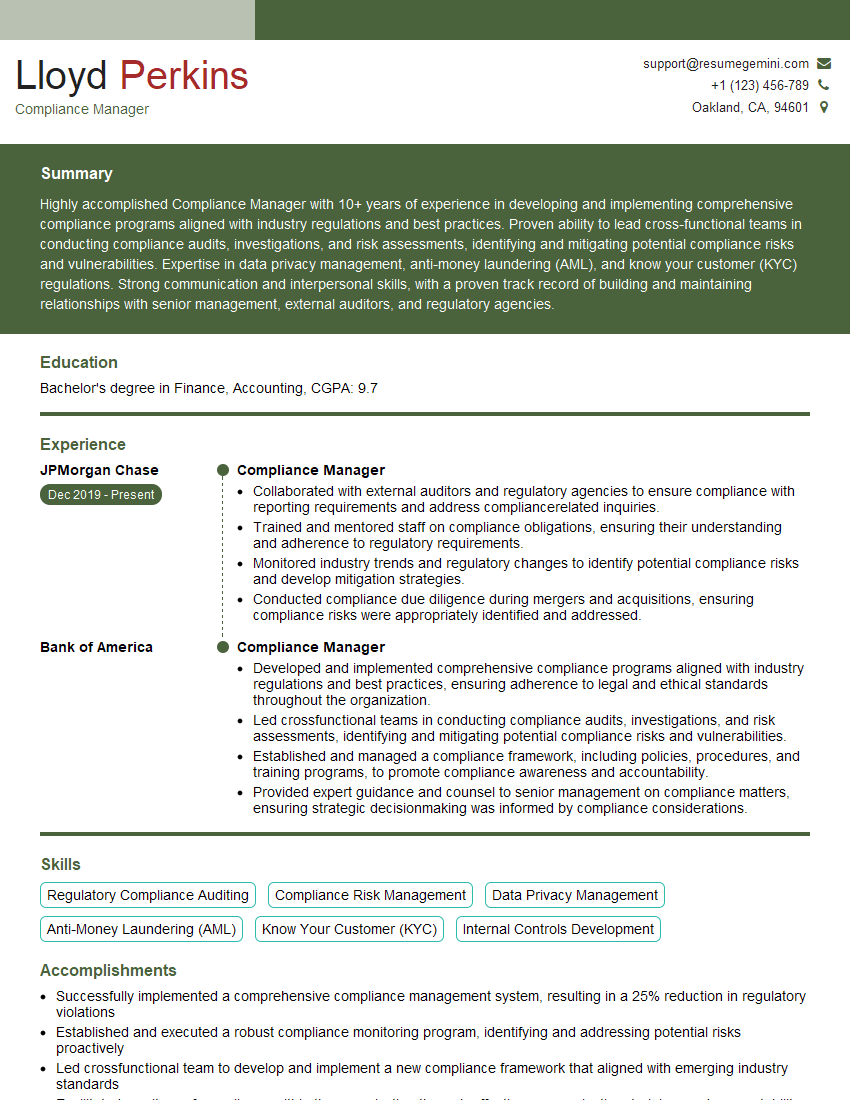
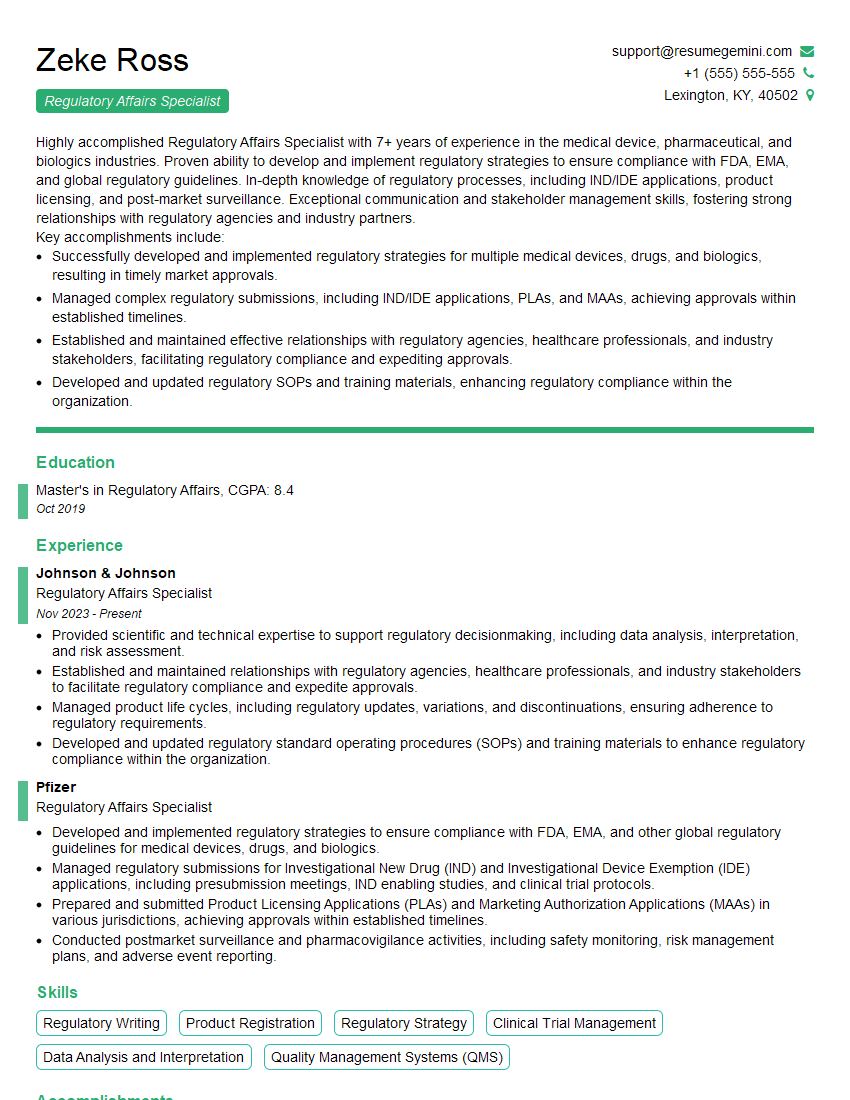
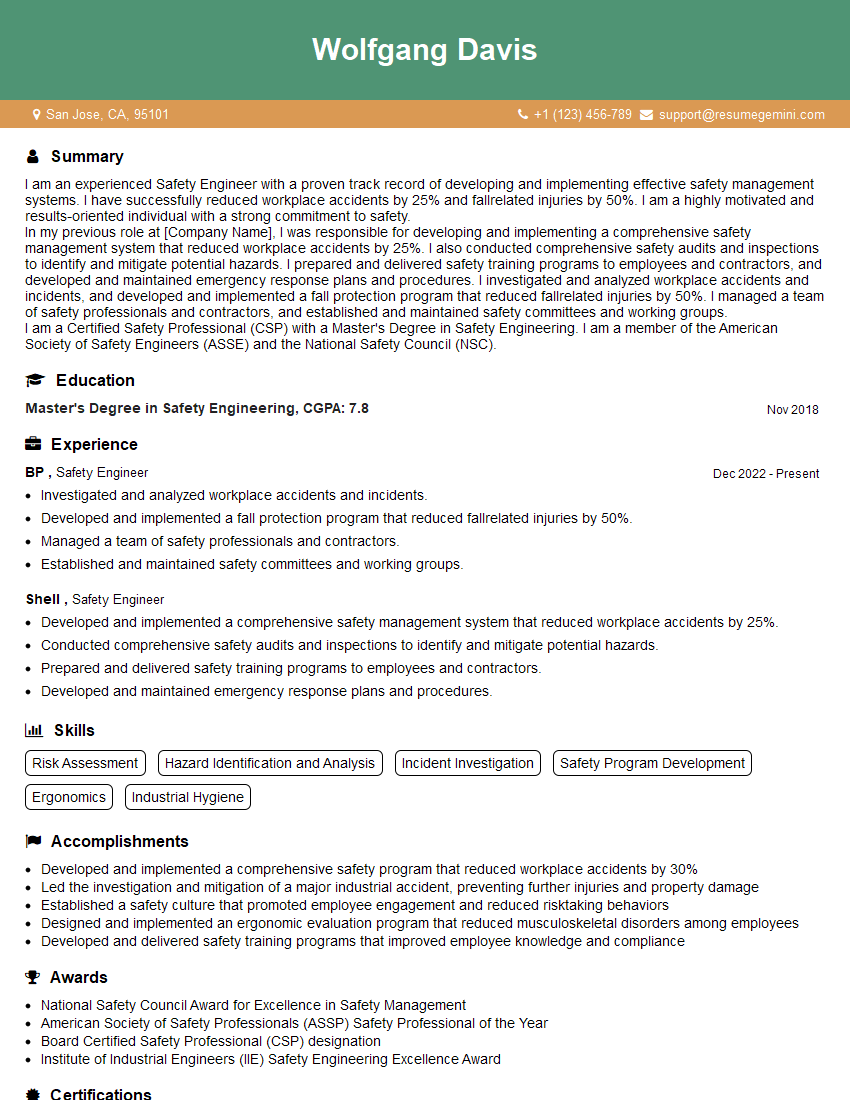
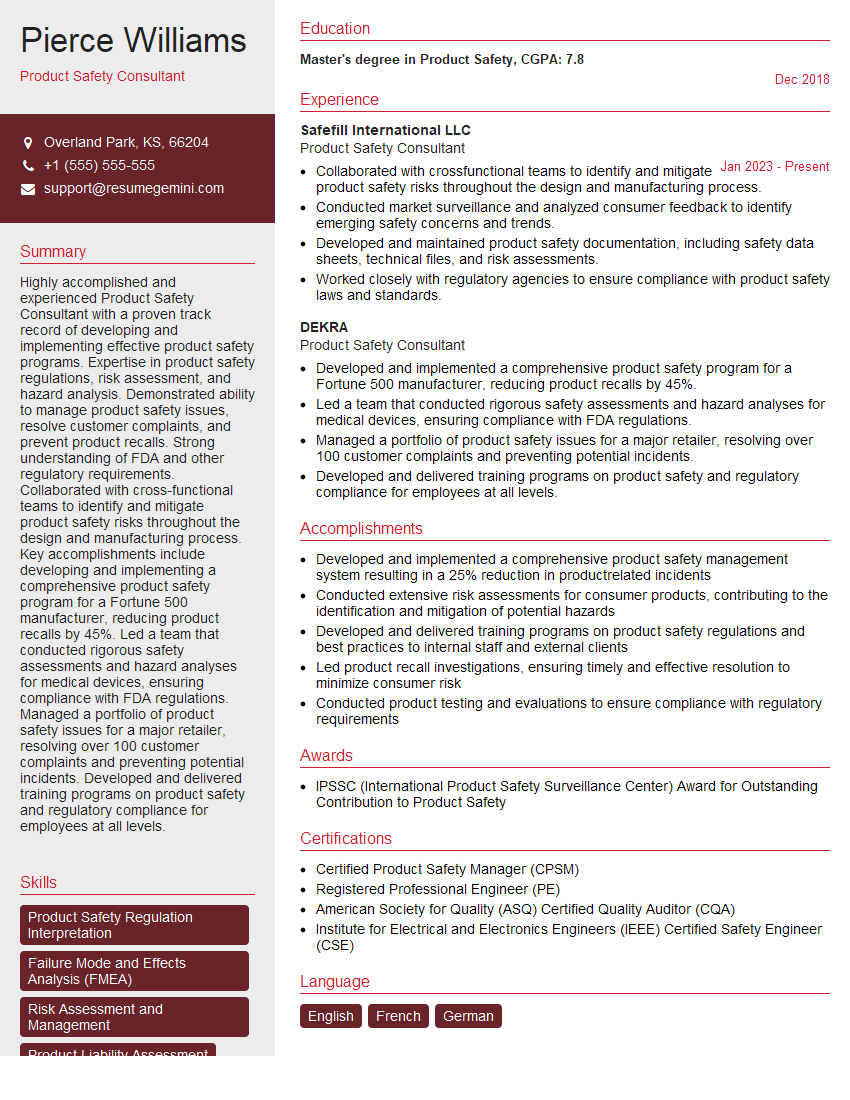
Mastering Product Safety Documentation Management is crucial for a successful and rewarding career in a highly regulated industry. It demonstrates your commitment to safety, compliance, and meticulous attention to detail – all highly valued attributes. To maximize your job prospects, focus on creating a compelling and ATS-friendly resume that highlights your relevant skills and experience. ResumeGemini is a trusted resource for building professional resumes, and we provide examples specifically tailored to Product Safety Documentation Management to help you showcase your qualifications effectively.



Explore more articles
Users Rating of Our Blogs
Share Your Experience
We value your feedback! Please rate our content and share your thoughts (optional).
What Readers Say About Our Blog
Very informative content, great job.
good