Every successful interview starts with knowing what to expect. In this blog, we’ll take you through the top Product Safety Evaluation interview questions, breaking them down with expert tips to help you deliver impactful answers. Step into your next interview fully prepared and ready to succeed.
Questions Asked in Product Safety Evaluation Interview
Q 1. Explain the difference between hazard and risk in product safety.
In product safety, hazard and risk are distinct but related concepts. A hazard is the potential source of harm, a dangerous condition or situation that *could* cause injury or damage. Think of it as the ‘what’ – what *could* go wrong? A risk, on the other hand, is the likelihood of that hazard causing harm, combined with the severity of the harm if it does occur. It’s the ‘how likely’ and ‘how bad’ combined. For example, a sharp blade (hazard) presents a risk of cutting injury (risk). The risk is higher if the blade is exposed and easily accessible (high likelihood) and sharper (high severity).
Imagine a power tool. The hazard is the rotating blade which can cause injury. The risk depends on factors like the blade’s sharpness, the tool’s safety features (guard, emergency stop), and the user’s training. A well-guarded tool used by a trained professional has a much lower risk than an unguarded tool used by an untrained individual.
Q 2. Describe your experience with conducting a Failure Mode and Effects Analysis (FMEA).
I have extensive experience conducting Failure Mode and Effects Analysis (FMEA). In my previous role at XYZ Corp, I led FMEA teams for several complex medical devices. My approach is systematic, involving these key steps:
- Defining the system: Clearly outlining the product’s functions and boundaries.
- Identifying potential failure modes: Brainstorming all ways in which each component or function could fail, considering both hardware and software failures. We often use techniques like brainstorming and fault tree analysis.
- Assessing severity, occurrence, and detection: Rating each failure mode based on severity (how bad is the consequence?), occurrence (how likely is this to happen?), and detection (how likely is this to be caught before causing harm?). We use a scoring system, often a 1-10 scale for each factor, to quantify the risk.
- Calculating the risk priority number (RPN): Multiplying the severity, occurrence, and detection scores provides a numerical risk priority. Higher RPN values indicate higher-risk failure modes. For example, Severity 8 x Occurrence 5 x Detection 2 = RPN 80.
- Recommending corrective actions: Developing and implementing actions to mitigate the risks associated with high RPN failure modes. This could involve design changes, improved testing, or additional safety features.
- Documenting the FMEA: Maintaining a detailed, well-organized record of the entire process, including findings, risk assessments, and implemented corrective actions.
For example, during the FMEA for a new infusion pump, we identified a potential failure mode where the pump could deliver an incorrect dosage due to a software malfunction. By implementing a redundant pressure sensor and software checks, we significantly reduced the RPN and improved the device’s safety.
Q 3. How familiar are you with relevant safety standards such as ISO 14971 or IEC 60601-1?
I’m very familiar with relevant safety standards, particularly ISO 14971 (Medical Devices – Application of risk management to medical devices) and IEC 60601-1 (Medical electrical equipment – Part 1: General requirements for basic safety and essential performance).
ISO 14971 provides a structured framework for risk management throughout the entire lifecycle of a medical device, emphasizing proactive identification, analysis, and control of hazards. I’ve used this extensively to manage risk in medical device projects. It covers aspects from hazard identification and risk analysis to risk evaluation and risk control measures, and post-market surveillance.
IEC 60601-1 sets the basic safety and essential performance requirements for medical electrical equipment. Understanding this standard is crucial for ensuring the safety of such devices. It covers topics such as electrical safety, mechanical safety, and protection against electromagnetic interference (EMI).
My experience extends to other relevant standards as needed, depending on the type of product. My understanding isn’t limited to medical devices; I apply similar principles from standards like those from UL and others concerning other product types, adjusting the specifics for those areas.
Q 4. Describe your experience with risk assessment methodologies.
My experience with risk assessment methodologies includes FMEA (as discussed earlier), Fault Tree Analysis (FTA), and Hazard and Operability Study (HAZOP). Each method has its strengths and weaknesses, and the best choice depends on the specific context.
FMEA is a bottom-up approach, suitable for examining individual components and functions. FTA is a top-down method, starting with an undesired event and working backward to identify potential causes. It’s excellent for understanding complex systems. HAZOP is a systematic method of examining process hazards, typically for larger-scale systems and chemical processes; although it can be adapted for other applications with modification.
I’m proficient in using various software tools to facilitate these assessments, helping in risk prioritization and efficient reporting. In practice, I often combine methodologies – for instance, conducting an initial HAZOP to define high-level hazards and then employing FMEA to analyze those hazards in more detail at the component level.
Q 5. How do you determine the acceptability of risk in product design?
Determining the acceptability of risk is a crucial part of product safety evaluation. It’s not about eliminating all risk – that’s often impossible and impractical – but about managing risk to an acceptable level. This involves a risk-benefit analysis, comparing the level of risk with the benefits the product provides. This is often dictated by regulatory standards.
The process often includes:
- Setting acceptable risk criteria: Defining the tolerable level of risk, often based on regulatory guidelines, industry best practices, and stakeholder expectations. This may involve using quantitative metrics or qualitative judgments.
- Comparing assessed risks with acceptable risk criteria: Evaluating whether the assessed risks fall within the acceptable limits. If not, mitigation strategies need to be implemented.
- Risk mitigation: Implementing control measures to reduce the identified risks to an acceptable level. These measures might include design changes, warnings, instructions, or training.
- Risk communication: Clearly communicating the remaining risks to relevant stakeholders, including consumers. This might involve providing warnings or instructions.
For example, a small risk of minor discomfort from a medical device might be acceptable if the benefits (e.g., treating a serious illness) significantly outweigh the risk. But a high risk of serious injury or death would require far more rigorous risk mitigation and potentially redesign of the product.
Q 6. What are your methods for documenting and tracking product safety issues?
Documenting and tracking product safety issues is essential for ongoing improvement and regulatory compliance. We use a combination of methods:
- Formal incident reporting system: A centralized system for reporting, investigating, and tracking all safety incidents related to the product. This could be a database or a specialized software solution.
- FMEA documentation: The FMEA itself serves as a key document, containing information on identified hazards, risks, and corrective actions.
- Design history files (DHFs): These comprehensive files document the entire design process, including design decisions, risk assessments, and verification and validation activities.
- Non-conformance reports (NCRs): These reports document deviations from design specifications or manufacturing processes that might impact safety.
- Corrective and preventive action (CAPA) system: A system for investigating root causes of safety issues, implementing corrective actions, and preventing recurrence.
All documentation is carefully maintained and archived, ensuring traceability and accessibility. Regular audits and reviews of these systems help ensure their effectiveness and identify areas for improvement. We also utilize version control systems for all documents to maintain a record of changes and revisions.
Q 7. How do you ensure compliance with relevant safety regulations?
Ensuring compliance with relevant safety regulations involves a multifaceted approach:
- Identifying applicable regulations: Determining all relevant regulations and standards (e.g., FDA, CE marking, UL) that apply to the product, considering the product type, intended use, and geographical market.
- Integrating regulatory requirements into the design process: Ensuring compliance is built into the product from the outset, rather than being an afterthought. This includes conducting thorough risk assessments and incorporating necessary safety features.
- Testing and verification: Performing rigorous testing and verification activities to demonstrate that the product meets all regulatory requirements. This might involve laboratory testing, clinical trials (for medical devices), and field testing.
- Maintaining comprehensive documentation: Maintaining detailed records of all design activities, testing results, and compliance activities. This documentation is crucial for demonstrating compliance to regulatory bodies during audits.
- Ongoing monitoring and surveillance: Continuously monitoring the product’s performance in the market and responding to any reported safety issues. This includes post-market surveillance, which involves tracking and analyzing product performance data to identify potential problems and implement corrective actions.
- Working with regulatory bodies: Engaging with regulatory agencies, proactively providing necessary information and responding to their queries.
This proactive and systematic approach is crucial not only for meeting regulatory requirements but also for building trust with customers and stakeholders.
Q 8. Describe your experience with product recall procedures.
Product recalls are a critical aspect of ensuring product safety. My experience encompasses the entire recall process, from initial identification of a safety hazard through to the final resolution and post-recall analysis. This includes:
- Hazard Identification and Assessment: This involves thoroughly investigating reported incidents, analyzing data from various sources (customer complaints, field reports, internal testing), and determining the severity and scope of the potential hazard.
- Recall Strategy Development: We collaboratively develop a comprehensive recall plan encompassing communication strategies, product retrieval methods, remediation solutions (repair, replacement, refund), and regulatory compliance. For example, during a recall of a faulty children’s toy, we prioritized immediate removal from shelves and a direct communication plan to parents.
- Communication and Notification: Effectively communicating with consumers, retailers, distributors, and regulatory bodies is crucial. This may involve press releases, direct mail campaigns, website updates, and coordination with regulatory agencies like the CPSC (Consumer Product Safety Commission).
- Product Retrieval and Remediation: Logistics are key here. Efficient and safe retrieval mechanisms must be established, whether it’s through voluntary returns, coordinated retailer cooperation, or even a more aggressive direct retrieval strategy. We’d also manage the repair, replacement, or refund process, ensuring customer satisfaction and safety.
- Post-Recall Analysis: A critical step is to thoroughly analyze the root cause of the issue, implement corrective actions to prevent future incidents, and update our internal processes. We use this data to improve our design, manufacturing, and quality control processes.
I’ve been involved in several recalls across various product categories, always prioritizing transparency and customer well-being. The experience has honed my skills in crisis management, cross-functional collaboration, and regulatory compliance.
Q 9. How do you communicate safety information to various stakeholders?
Effective communication is crucial in product safety. I tailor my communication style to the audience, using clear, concise language appropriate to their technical understanding. For instance:
- Consumers: Communication must be simple, accessible, and focus on the potential risk and the necessary actions. This might involve infographics, FAQs, and straightforward instructions.
- Retailers and Distributors: Communication requires more technical detail, including recall procedures, return logistics, and potential liability implications. This often involves formal written notifications and training materials.
- Regulatory Agencies: Communication should adhere to strict reporting requirements and demonstrate transparency and proactive hazard management. This may include formal reports, testing data, and detailed recall plans.
- Internal Stakeholders (Engineers, Management): Communication needs to be detailed, data-driven, and geared towards technical problem-solving and process improvement. This often involves technical reports, risk assessments, and root cause analysis documents.
I utilize multiple channels such as email, phone calls, formal letters, press releases, and company websites to reach these diverse audiences effectively. I also regularly monitor feedback channels to gauge communication effectiveness and make improvements as needed.
Q 10. What is your experience with safety testing and certification processes?
My experience with safety testing and certification is extensive. I’m familiar with various standards and regulations, including ISO 9001, ISO 14001, and relevant product-specific safety standards. This includes:
- Test Planning and Execution: I oversee the development and execution of comprehensive test plans, ensuring all relevant safety aspects are adequately addressed. This involves selecting appropriate test methods, overseeing testing labs, and interpreting results.
- Compliance with Standards: I ensure that our products meet all applicable safety standards and regulations, both domestically and internationally. This involves staying abreast of updates and changes to regulatory requirements.
- Certification Processes: I have experience navigating the certification process with various agencies, such as UL, CSA, and others, and understand the documentation requirements for obtaining and maintaining certifications.
- Risk Assessment: A key part of this is proactive risk assessment throughout the product lifecycle. This allows us to identify and mitigate potential hazards before they lead to product failure or injury.
For example, in a recent project involving medical devices, I spearheaded the testing program ensuring that it fully satisfied FDA guidelines and UL certification requirements. We conducted rigorous biocompatibility testing and electrical safety evaluations before launch, thereby mitigating potential risks to patients.
Q 11. How do you handle conflicting requirements between safety and other design considerations?
Balancing safety and other design considerations (cost, aesthetics, performance) is a constant challenge. It requires a structured approach. I typically utilize a risk-based decision-making framework:
- Hazard Analysis: Thoroughly identify all potential hazards associated with the product.
- Risk Assessment: Evaluate the likelihood and severity of each hazard.
- Risk Mitigation: Develop and implement strategies to mitigate the risks. This might involve design modifications, improved materials, or enhanced warnings.
- Cost-Benefit Analysis: Weigh the costs of implementing safety measures against the potential costs of not doing so (e.g., lawsuits, recalls). This is where you’ll often need to justify safety-related design changes to stakeholders.
- Prioritization: Prioritize safety improvements based on the level of risk.
Sometimes, compromises are necessary, but safety should always be the primary concern. Documentation of these decisions and justifications is extremely important. For example, in a recent project, we opted for a slightly more expensive material to improve the fire resistance of a product, even though it impacted the overall cost. This decision was fully documented, demonstrating the higher value of safety in the product’s intended use.
Q 12. Describe your experience with root cause analysis techniques.
Root cause analysis (RCA) is vital for preventing future safety incidents. I’m proficient in several RCA techniques, including:
- 5 Whys: A simple but effective technique that involves repeatedly asking “Why?” to uncover the underlying cause of a problem.
- Fishbone Diagram (Ishikawa Diagram): A visual tool that helps to identify potential causes grouped by categories (materials, methods, manpower, machinery, measurement, environment).
- Fault Tree Analysis (FTA): A top-down, deductive approach that analyzes how various events can lead to a specific undesired outcome (failure).
- Failure Mode and Effects Analysis (FMEA): A proactive method that identifies potential failure modes and their effects, allowing for preventative measures to be put in place.
Choosing the right technique depends on the complexity of the issue. Regardless of the technique, thorough documentation and collaboration across teams are critical. I’ve used these techniques to investigate product failures, leading to corrective actions and process improvements, thereby minimizing future risks.
Q 13. How do you incorporate user feedback into product safety improvement?
User feedback is invaluable for identifying potential safety hazards and improving product safety. We actively solicit feedback through various channels:
- Surveys: Collecting feedback on product usability, safety concerns, and areas for improvement.
- Customer Service Interactions: Analyzing customer complaints and incident reports to identify recurring issues.
- Focus Groups: Conducting targeted discussions with users to gather in-depth information.
- Social Media Monitoring: Tracking online conversations and reviews to identify potential safety concerns.
We use this feedback to refine our designs, enhance warnings, and improve our overall product safety. A recent example involved incorporating user feedback on a product’s packaging which led to changes that reduced the risk of children accessing harmful components.
Q 14. Describe your experience with developing safety plans and procedures.
Developing robust safety plans and procedures is essential for proactively managing product safety risks. My experience involves:
- Hazard Identification and Risk Assessment: Identifying potential hazards and assessing the associated risks throughout the product lifecycle.
- Safety Control Measures: Implementing engineering controls (design modifications), administrative controls (procedures, training), and personal protective equipment (PPE) where appropriate.
- Emergency Response Planning: Developing detailed procedures for handling safety incidents, including communication protocols, emergency contacts, and escalation procedures.
- Training and Communication: Providing thorough safety training to employees and developing clear communication channels for reporting safety incidents.
- Documentation: Maintaining meticulous records of safety incidents, investigations, and corrective actions. This includes creating comprehensive safety manuals and ensuring adherence to internal SOPs (Standard Operating Procedures).
These plans and procedures are reviewed regularly and updated as needed to reflect changes in technology, regulations, and best practices. I’ve led the development of safety plans for various products, resulting in significantly improved safety performance and reduced risk.
Q 15. How do you manage and prioritize safety-related tasks?
Prioritizing safety tasks requires a structured approach. I utilize a combination of risk assessment methodologies and project management techniques. Firstly, I employ a risk matrix that considers the likelihood and severity of potential hazards associated with each task. This helps me visually prioritize tasks based on their potential impact. For example, a task with a high likelihood of a severe injury would naturally rank higher than one with a low likelihood of a minor inconvenience. Secondly, I leverage project management tools like Kanban or Agile methodologies to visually manage the workflow, ensuring that high-priority safety tasks are visible and addressed promptly. This also allows for tracking progress, identifying bottlenecks, and adjusting priorities as needed.
Consider a scenario where we’re launching a new product. High-priority tasks might include final safety testing, regulatory compliance checks, and addressing any critical design flaws identified during previous testing phases. Lower-priority tasks might involve minor improvements to the user manual or updating internal documentation.
Career Expert Tips:
- Ace those interviews! Prepare effectively by reviewing the Top 50 Most Common Interview Questions on ResumeGemini.
- Navigate your job search with confidence! Explore a wide range of Career Tips on ResumeGemini. Learn about common challenges and recommendations to overcome them.
- Craft the perfect resume! Master the Art of Resume Writing with ResumeGemini’s guide. Showcase your unique qualifications and achievements effectively.
- Don’t miss out on holiday savings! Build your dream resume with ResumeGemini’s ATS optimized templates.
Q 16. Explain your approach to investigating product safety incidents.
Investigating product safety incidents follows a systematic procedure. My approach begins with immediate containment of the situation to prevent further harm. Then, I gather comprehensive data through a series of steps: First, I collect all available information, including incident reports, witness statements, product photos, and any available data logs. Next, I conduct a thorough analysis of the product, including examining the damaged component(s) to understand the root cause of the failure. This frequently involves using various analytical tools and techniques, such as failure mode and effects analysis (FMEA) or fault tree analysis (FTA). Finally, I develop a corrective action plan that addresses the root cause, prevents recurrence, and, if necessary, includes a recall plan. The entire investigation is meticulously documented, including all findings, conclusions, and actions taken. This documentation is vital for improving future product safety and for legal purposes.
For example, if a child’s toy breaks and a small part presents a choking hazard, the investigation would include determining if the material was faulty, if the design was flawed, or if manufacturing processes were inadequate. The investigation would also analyze the risk, leading to a corrective action, potentially a recall and a redesign.
Q 17. How do you ensure the effectiveness of safety training programs?
Effective safety training programs go beyond simple lectures. To ensure effectiveness, I focus on a multi-faceted approach. First, I tailor the training content to the specific needs and roles of the participants. This might include hands-on demonstrations, interactive simulations, and case studies relevant to their tasks. Second, I emphasize practical application through regular assessments and follow-up exercises to ensure understanding and retention of the material. Finally, I utilize diverse methods to accommodate different learning styles, and I obtain feedback to continuously improve the program’s effectiveness. This includes pre- and post-training assessments, feedback surveys, and regular performance reviews. By regularly reviewing the effectiveness of the training, we can identify and address knowledge gaps and update the program as needed.
For instance, training for factory workers might involve hands-on demonstrations of proper machine operation and safety protocols, while training for engineers might focus on design for safety principles and risk assessment methodologies. Post-training quizzes and observations on the shop floor would help verify the effectiveness of the training.
Q 18. Describe your experience with safety audits and inspections.
My experience with safety audits and inspections is extensive. I’m proficient in conducting both internal and external audits, adhering to relevant industry standards and regulations. An audit involves a systematic examination of all safety-related aspects of a product or process. This includes reviewing documentation, observing practices, and conducting interviews. The goal is to identify any potential hazards or non-compliances. Inspections are typically more focused on a specific area or process, such as examining a particular manufacturing line or testing a specific product feature. I use checklists and standardized procedures to ensure consistency and thoroughness in my assessments. During audits and inspections, I create comprehensive reports that detail any findings, recommendations for corrective actions, and a timeline for implementation. The reports are vital for demonstrating regulatory compliance and continuously improving safety performance.
For example, an audit of a manufacturing plant might include inspecting machinery for safety guards, reviewing employee training records, and assessing the effectiveness of emergency procedures. The inspection report would highlight any deficiencies identified and recommendations to address them.
Q 19. What is your experience with using risk matrices and other risk management tools?
Risk matrices are fundamental tools in my risk management approach. A risk matrix is a visual tool that allows us to categorize risks based on their likelihood and severity. I use this tool to identify, analyze, and prioritize risks associated with product design, manufacturing, and use. Other risk management tools I frequently use include Failure Mode and Effects Analysis (FMEA) and Fault Tree Analysis (FTA). FMEA systematically identifies potential failure modes in a system and assesses their impact. FTA, on the other hand, works backward from an undesired event to determine the underlying causes. These tools are often used in conjunction with risk matrices to provide a comprehensive risk assessment. The results inform design decisions, safety procedures, and mitigation strategies. By integrating these tools into the product lifecycle, we can proactively manage risks and minimize potential harm.
For example, in the design phase of a new product, FMEA would help identify potential failures in components. This data, along with likelihood and severity assessments, would then be input into a risk matrix to prioritize which failures to address first during the design review.
Q 20. How do you ensure traceability of safety-related design decisions?
Traceability of safety-related design decisions is crucial for accountability and continuous improvement. I ensure this by implementing a robust design history file (DHF) system, which is a comprehensive record of all design decisions, justifications, and revisions. This system maintains a clear audit trail and allows us to readily trace the rationale behind each safety-related choice. The DHF is an essential element for regulatory compliance and for demonstrating that safety has been given due consideration throughout the product lifecycle. This approach leverages version control systems, design review documentation, and rigorous change management processes. Changes are tracked, reviewed, and approved, ensuring a clear and transparent history of design decisions.
For example, if a design change was made to improve the stability of a product, the DHF would include details of the original design, the reason for the change, the testing data supporting the improvement, and the approval process. This allows easy tracing back to the original safety concerns and the decisions taken to mitigate them.
Q 21. What is your experience with developing safety cases?
Developing safety cases is a key part of demonstrating the safety of a product or system. A safety case is a structured argument that shows how hazards have been identified, assessed, and mitigated to meet predefined safety requirements. My experience involves creating safety cases that comply with relevant standards and regulations. This involves identifying hazards, conducting risk assessments, defining safety requirements, selecting and implementing safety measures, and verifying their effectiveness. The safety case provides a clear and concise justification for why the product or system is acceptably safe for its intended use. It’s a critical document for regulatory approval and internal assurance. I utilize various techniques to ensure the safety case is robust, well-documented, and readily auditable. This includes the use of various diagramming techniques and formal verification methods.
For example, the safety case for an aircraft would demonstrate how the design, manufacturing, and operational procedures mitigate the risks of catastrophic failures, such as engine failure or loss of control. The safety case would be a comprehensive document supporting the claim that the risks are acceptable.
Q 22. Describe your understanding of legal and regulatory requirements related to product safety.
Product safety regulations are a complex tapestry woven from international, national, and sometimes even regional laws. My understanding encompasses a broad range, including regulations concerning product design, manufacturing, testing, labeling, and post-market surveillance. For example, in the US, the Consumer Product Safety Commission (CPSC) plays a vital role, setting standards and enforcing regulations for a vast array of consumer products. The European Union has its own comprehensive framework, with directives like the General Product Safety Directive (GPSD) setting minimum safety requirements. These regulations often mandate specific testing procedures, such as those outlined in ISO standards, to ensure products meet acceptable safety levels. Failure to comply can result in significant penalties, including product recalls, fines, and even legal action. I’m deeply familiar with these legal frameworks and how they intersect with different product categories, from toys to medical devices. Understanding these regulations is fundamental to responsible product development and release.
Q 23. How do you stay current with evolving product safety regulations and standards?
Staying abreast of ever-changing product safety regulations demands a proactive and multifaceted approach. I subscribe to relevant industry publications, such as those from organizations like UL and Intertek, and actively participate in industry conferences and webinars to network with peers and learn about emerging trends and regulations. Government agency websites, like the CPSC’s in the US or the EU’s RAPEX system for notifying dangerous products, are invaluable resources. I also utilize specialized online databases that track regulatory changes and provide updates on new standards. Furthermore, I maintain a network of contacts within regulatory bodies to ensure I receive timely alerts and explanations of significant modifications to existing regulations. This layered approach is vital in guaranteeing that our products consistently meet and exceed current safety standards.
Q 24. Explain your approach to managing product safety within a budget.
Managing product safety within budgetary constraints requires strategic prioritization and resource allocation. It’s not about cutting corners on safety; it’s about optimizing processes. This starts with a thorough risk assessment, identifying the most critical safety aspects of a product and concentrating resources there. For example, a high-risk product like a children’s toy will require a more rigorous testing program compared to a lower-risk item. Cost-effective testing methods should be identified, possibly utilizing a combination of internal testing, and third-party audits where needed. Automation of certain testing procedures can also greatly enhance efficiency and reduce costs. Regular training for staff on safety protocols is crucial, and should be considered a key investment, not a cost. We can also explore alternative materials or designs that meet safety standards while reducing overall costs. The key is to balance cost-effectiveness with comprehensive safety measures, ensuring compliance without sacrificing the safety of the end-user.
Q 25. How do you balance safety, cost, and time constraints in product development?
Balancing safety, cost, and time in product development is a constant challenge requiring a systematic approach. I employ a risk-based methodology, prioritizing safety as the paramount consideration. This involves conducting a comprehensive hazard analysis early in the design process, identifying potential risks and assessing their severity. This assessment guides the design choices, allowing us to implement safety features while remaining mindful of budget and schedule. For example, choosing a slightly more expensive but safer material might add to initial costs, but prevent costly recalls later. We use agile development principles, incorporating regular safety checks throughout the design and testing phases to catch potential issues early, reducing time and costs associated with resolving issues later in the development cycle. Open communication between all stakeholders—engineers, designers, and management—is crucial for effective decision-making and ensuring all parties understand the safety implications of design choices and their impact on budget and timeline.
Q 26. Describe your experience with working collaboratively with cross-functional teams on safety-related matters.
My experience collaborating with cross-functional teams on safety matters is extensive. I’ve worked effectively with engineers, designers, marketing, legal, and manufacturing teams to integrate safety considerations into every stage of the product lifecycle. I’ve found that fostering open communication and building trust are crucial. I often facilitate workshops and training sessions to ensure everyone understands safety regulations and their roles in ensuring compliance. For example, I worked with a team developing a smart home device. I was instrumental in bridging the gap between the software engineers, who were focused on functionality, and the hardware engineers, who were responsible for the physical safety of the product. My role involved translating safety requirements into actionable specifications for the engineering teams and coordinating regular safety reviews to ensure the product met all relevant standards before launch.
Q 27. How do you identify and mitigate potential safety hazards in the design process?
Identifying and mitigating potential safety hazards starts with a proactive design process employing Failure Mode and Effects Analysis (FMEA) and Hazard Analysis and Critical Control Points (HACCP) methodologies. FMEA involves systematically identifying potential failure modes in a product and assessing their impact. HACCP focuses on identifying critical control points in the manufacturing process that can impact safety. These methods allow us to proactively design out hazards or mitigate their risks. For instance, when designing a power tool, we would consider potential hazards such as electrical shock, overheating, and moving parts. We’d then design safety features like insulation, thermal cut-offs, and guards to minimize these risks. Prototyping and rigorous testing are essential steps. We use simulations and physical tests to verify the effectiveness of implemented safety measures and to identify any unforeseen hazards. This iterative process, incorporating feedback from all teams, allows for continuous improvement and risk reduction throughout the design lifecycle.
Q 28. Describe your experience with conducting post-market surveillance activities.
Post-market surveillance is critical for continuously monitoring product safety after release. My experience includes implementing systems for collecting and analyzing data on product performance and safety incidents. This involves setting up reporting mechanisms for consumers and distributors to report issues and establishing processes for investigating reported incidents. We analyze this data to identify trends, potential hazards, and areas for improvement. This could include identifying faulty components, inadequate instructions, or unforeseen use cases. For example, in a previous role, we implemented a system for tracking customer complaints about a particular kitchen appliance. We discovered a common problem with a specific part that led to a minor injury. This allowed us to proactively issue a safety alert, offering a free replacement part and preventing more serious incidents. Data analysis, combined with feedback from customers and distributors, informs ongoing improvement efforts and reinforces a commitment to post-market safety.
Key Topics to Learn for Product Safety Evaluation Interview
- Hazard Identification & Risk Assessment: Understanding methodologies like HAZOP, FMEA, and FTA; applying these techniques to real-world product scenarios.
- Safety Standards & Regulations: Familiarity with relevant international and regional standards (e.g., ISO, IEC, UL, CE); interpreting and applying these standards to product design and testing.
- Testing & Evaluation Methods: Knowledge of various testing procedures (e.g., mechanical, electrical, chemical); understanding the selection of appropriate tests based on product characteristics and risk profile.
- Risk Management Strategies: Developing and implementing strategies to mitigate identified hazards; understanding the principles of risk reduction, elimination, and control.
- Safety Documentation & Reporting: Creating comprehensive safety documentation, including test reports, safety assessments, and compliance declarations; effectively communicating safety findings to stakeholders.
- Product Life Cycle Considerations: Understanding safety considerations throughout the entire product life cycle, from design and manufacturing to disposal and end-of-life management.
- Legal and Ethical Considerations: Understanding product liability and relevant legislation; applying ethical principles to safety evaluation practices.
- Root Cause Analysis & Corrective Actions: Investigating product incidents and failures; identifying root causes and implementing effective corrective actions to prevent recurrence.
Next Steps
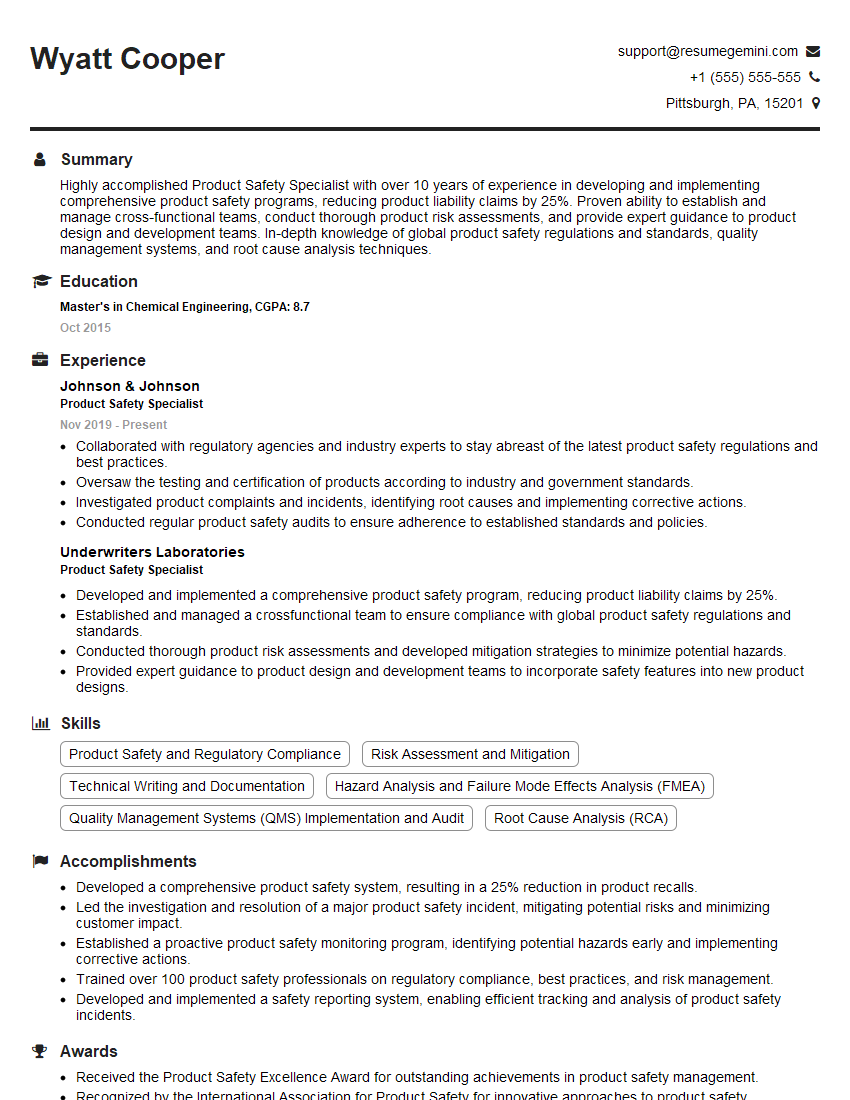
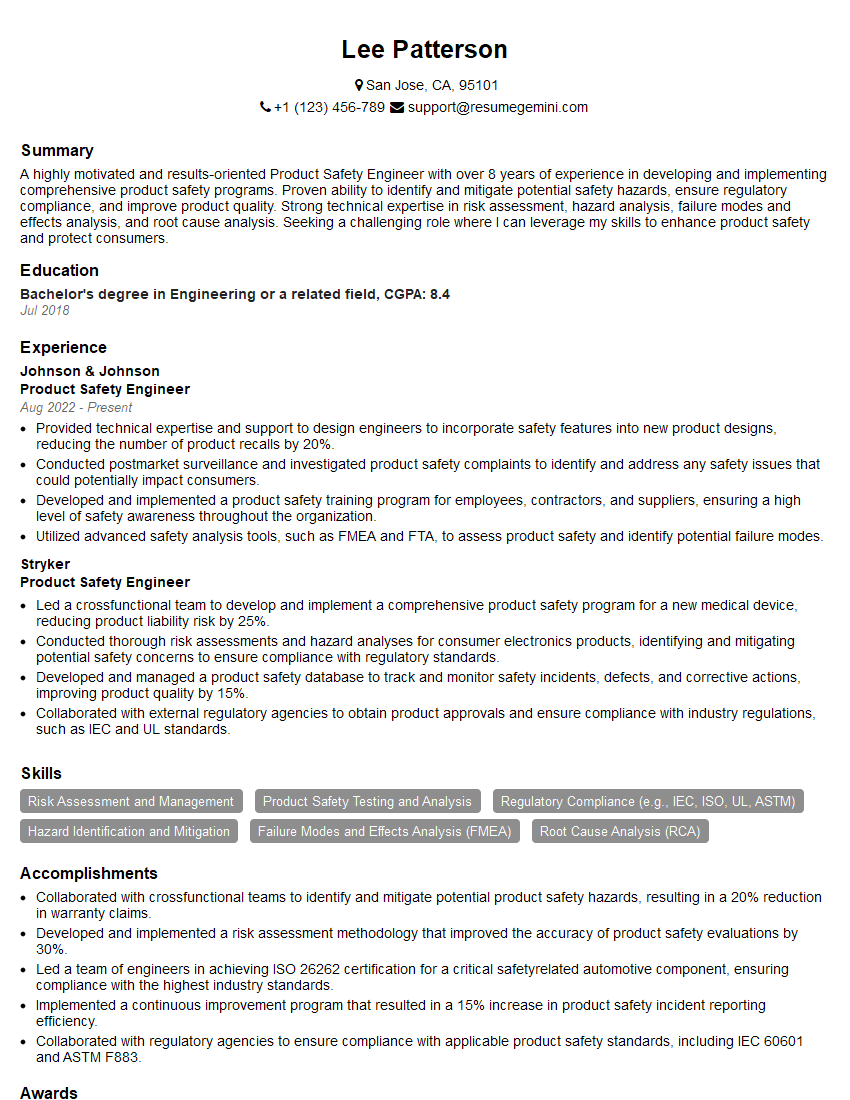
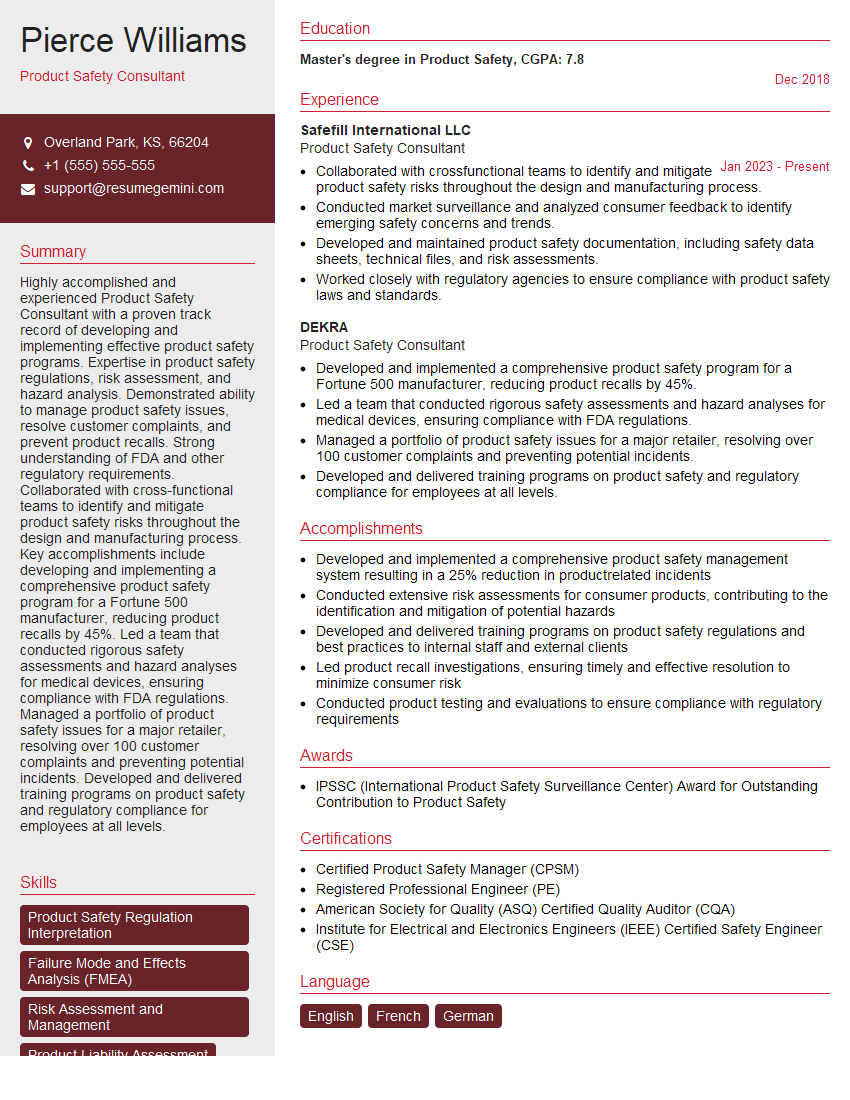
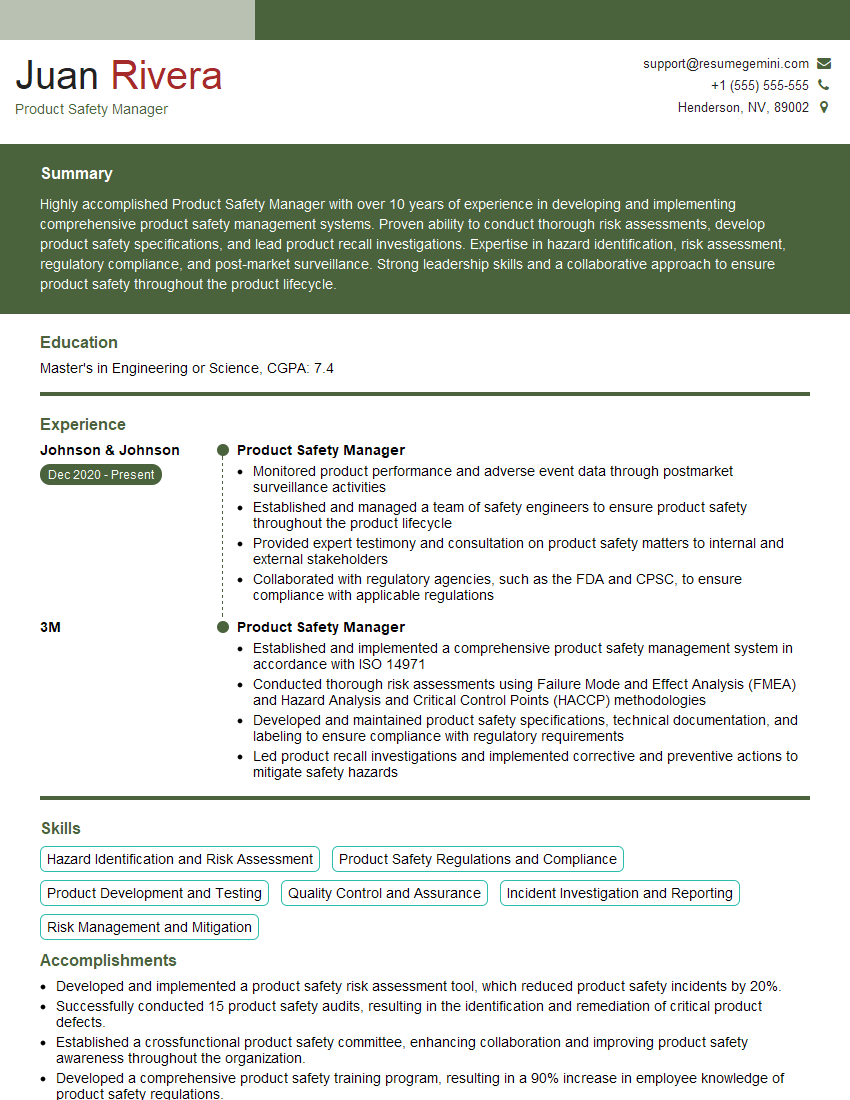
Mastering Product Safety Evaluation opens doors to exciting career opportunities in a field crucial for public safety and corporate responsibility. A strong foundation in these key areas significantly enhances your candidacy and marketability. To further strengthen your application, invest time in creating an ATS-friendly resume that highlights your skills and experience effectively. ResumeGemini is a trusted resource that can help you build a professional and impactful resume tailored to the Product Safety Evaluation field. Examples of resumes specifically designed for this industry are available through ResumeGemini, allowing you to showcase your qualifications with confidence.
Explore more articles
Users Rating of Our Blogs
Share Your Experience
We value your feedback! Please rate our content and share your thoughts (optional).
What Readers Say About Our Blog
Very informative content, great job.
good