Are you ready to stand out in your next interview? Understanding and preparing for Product Safety Planning interview questions is a game-changer. In this blog, we’ve compiled key questions and expert advice to help you showcase your skills with confidence and precision. Let’s get started on your journey to acing the interview.
Questions Asked in Product Safety Planning Interview
Q 1. Explain the difference between hazard and risk in the context of product safety.
In product safety, a hazard is the potential source of harm, while risk is the likelihood of that harm occurring and its severity. Think of it this way: a hazard is the potential for a problem (e.g., a sharp edge on a product), while the risk is the chance that someone will get cut and how badly they might be injured.
For instance, a chainsaw is a hazard. The risk is the probability that a user will be injured while using the chainsaw, depending on factors like the user’s training, the chainsaw’s safety features, and the environment in which it is used. A well-designed chainsaw with safety features significantly reduces the risk, even though the hazard (the sharp blade) remains.
Q 2. Describe your experience with conducting a Failure Modes and Effects Analysis (FMEA).
I have extensive experience conducting Failure Modes and Effects Analysis (FMEA). In my previous role at Acme Corp, we used FMEA to assess the safety of a new line of power tools. The process involves systematically identifying potential failure modes within a product, analyzing their effects, and assigning severity, occurrence, and detection ratings. This allows us to prioritize potential failures based on their risk priority number (RPN).
For example, we identified a potential failure mode where the power tool’s trigger could malfunction and remain activated. We assessed the severity (how serious the injury could be), the likelihood of occurrence (how often this malfunction might happen), and the probability of detecting it before it caused harm. The high RPN for this failure mode led to design modifications, incorporating a safety interlock to prevent accidental activation. We documented the entire process, including the risk mitigation strategies, which is crucial for traceability and regulatory compliance.
Q 3. What are the key international and/or regional product safety standards you’re familiar with?
I’m familiar with a wide range of international and regional product safety standards, including:
- ISO 14971:2019: This is a globally recognized standard for medical device risk management, but its principles are widely applicable to other products. It emphasizes a systematic approach to hazard identification, risk analysis, and risk control.
- IEC 60601-1: This is the international standard for the basic safety and essential performance of medical electrical equipment. It details specific safety requirements and testing methods.
- UL Standards: Underwriters Laboratories (UL) develops and publishes numerous safety standards across various product categories. These standards are widely recognized in North America.
- CE Marking (EU): The CE marking indicates that a product meets the essential health, safety, and environmental protection requirements of the European Union legislation. Compliance necessitates conformity assessment procedures, often including technical documentation and testing.
My understanding extends beyond these specific standards to encompass general product safety principles and regulations relevant to various industries and jurisdictions. This allows me to adapt my approach to the specific context and requirements of a given project.
Q 4. How do you identify and assess potential hazards in a new product design?
Identifying and assessing hazards in a new product design is a multi-stage process that begins even before the design phase. It involves employing a range of techniques such as:
- Hazard and Operability Study (HAZOP): A structured and systematic review of the design and operating procedures to identify potential hazards.
- Failure Modes and Effects Analysis (FMEA): As described earlier, this method focuses on potential failures within components and their impact on the overall system.
- Fault Tree Analysis (FTA): A top-down approach that starts with an undesired event (e.g., injury) and works backward to identify the contributing causes.
- Design Reviews: Formal meetings with engineers and other stakeholders to review the design for potential hazards and usability issues.
Once potential hazards are identified, we use various methods (e.g., severity, probability, exposure) to assess the risk they pose. This often leads to the prioritization of design changes or risk mitigation measures.
Q 5. What risk mitigation strategies have you implemented in your previous roles?
In my previous roles, I’ve implemented various risk mitigation strategies depending on the specific hazard and its associated risk. Examples include:
- Design modifications: Modifying the product’s design to eliminate the hazard or reduce its severity (e.g., adding guards to machinery).
- Safety devices and features: Incorporating safety features such as emergency stops, interlocks, and warning systems.
- Protective measures: Implementing controls to minimize the exposure to hazards (e.g., providing personal protective equipment (PPE) to workers).
- Training and instructions: Providing comprehensive training and clear instructions to users on how to safely operate and maintain the product.
- Administrative controls: Implementing procedures and work practices to minimize risk (e.g., lockout/tagout procedures).
The selection of appropriate mitigation strategies is driven by a risk assessment and considers feasibility, cost-effectiveness, and regulatory requirements.
Q 6. How do you prioritize risks when multiple hazards are identified?
When multiple hazards are identified, prioritization is essential. This is often done using a risk matrix that considers both the severity and likelihood of each hazard. A common method is to assign numerical scores to each factor and calculate a risk priority number (RPN). Hazards with higher RPN scores are prioritized for mitigation.
However, quantitative risk assessment alone may not always be sufficient. Qualitative factors, such as ethical considerations and regulatory requirements, can also play a significant role in prioritizing risks. For example, a hazard with a relatively low RPN might still require immediate attention if it involves a significant risk to children or violates regulatory mandates.
Q 7. Describe your experience with developing and implementing a product safety plan.
Developing and implementing a product safety plan is a crucial aspect of my work. A comprehensive plan typically includes:
- Hazard identification and risk assessment: Utilizing techniques like those described above to identify potential hazards and assess associated risks.
- Risk mitigation strategies: Detailing the specific actions taken to reduce or eliminate the identified risks.
- Testing and verification: Defining the testing procedures to verify the effectiveness of implemented mitigation strategies.
- Documentation: Maintaining comprehensive records of all aspects of the safety plan, including hazard analyses, risk assessments, mitigation strategies, and test results.
- Training and communication: Ensuring that all relevant personnel are adequately trained in product safety procedures and are aware of their responsibilities.
- Continuous improvement: Regularly reviewing and updating the safety plan based on new information, feedback, and lessons learned.
In a recent project, the meticulous development and implementation of a product safety plan resulted in zero reported incidents related to product safety during the product’s initial three years on the market, exceeding our initial safety goals.
Q 8. How do you ensure compliance with relevant safety regulations and standards?
Ensuring compliance with safety regulations and standards is paramount in product safety planning. It’s a proactive, multi-step process that begins even before the design phase. We start by identifying all applicable regulations and standards relevant to our product’s intended use, target market, and materials. This might include international standards like ISO 14971 (Risk Management) or regional regulations like those set by the FDA (for medical devices) or the EU’s REACH (for chemicals).
Next, we integrate these requirements into our design and manufacturing processes. This includes using compliant materials, implementing robust quality control measures, and creating comprehensive test protocols. We maintain detailed documentation tracing our compliance efforts, from the selection of materials to the final product testing. Regular internal audits ensure continuous compliance and identify areas for improvement. Finally, we proactively monitor changes in regulations to stay ahead of any potential non-compliance issues.
For example, if we were developing a children’s toy, we would meticulously check and adhere to standards such as ASTM F963 (U.S. standards for toy safety), ensuring that small parts are appropriately sized to prevent choking hazards. We would also conduct thorough testing to verify that paints are non-toxic and that the toy materials meet flammability standards.
Q 9. Explain your understanding of lifecycle safety assessments.
A lifecycle safety assessment is a holistic approach to managing product safety throughout the entire product lifecycle, from conception to disposal. It’s not a one-time activity but a continuous process involving risk assessment and mitigation at each stage. Think of it as a safety net woven throughout the product’s journey.
- Design Phase: Hazards are identified and mitigated in the design itself – for example, choosing materials with lower flammability or incorporating safety features.
- Manufacturing Phase: Processes are carefully designed to maintain quality and safety, preventing defects that could cause hazards. Quality control inspections and testing take place here.
- Distribution and Use Phase: Safe usage instructions, warnings, and labels are crucial here. Monitoring feedback from customers about potential safety concerns is also vital.
- End-of-Life Phase: Safe disposal or recycling strategies are planned to minimize environmental impact and prevent hazards during the product’s disposal.
By consistently evaluating safety throughout each phase, we can proactively identify and address potential problems, minimizing risks and preventing accidents.
Q 10. How do you communicate product safety risks and mitigation strategies to stakeholders?
Communicating product safety risks and mitigation strategies effectively requires a multi-faceted approach tailored to different stakeholders. Clear and concise communication is key.
- Internal Stakeholders (e.g., engineers, management): We use technical reports, risk assessments, and presentations to communicate details, focusing on data and technical solutions.
- External Stakeholders (e.g., customers, regulatory bodies): We use simpler language, avoiding technical jargon. Safety data sheets (SDS), user manuals, and warning labels provide crucial information. We might also use infographics or videos for improved understanding.
- Regulatory Agencies: We adhere to specific reporting requirements and provide thorough documentation when needed. Transparency and accuracy are paramount here.
Using multiple communication channels ensures that all relevant parties receive appropriate information. For instance, a concise warning label on the product communicates risks directly to the consumer, while a detailed safety report to the regulatory body ensures compliance and transparency.
Q 11. What is your experience with safety testing and validation procedures?
My experience in safety testing and validation procedures is extensive, encompassing a wide range of methodologies and testing standards. I am proficient in both destructive and non-destructive testing, depending on the product and its intended use.
Examples include:
- Mechanical Testing: Tensile strength, impact resistance, fatigue testing – these help determine the product’s durability and resistance to failure.
- Electrical Testing: Insulation resistance, dielectric strength, surge protection testing – to ensure safety related to electrical components.
- Environmental Testing: Temperature cycling, humidity testing, vibration testing – to ensure the product withstands different environmental conditions without compromising safety.
- Chemical Testing: Toxicity testing, flammability testing, chemical stability testing – ensuring that materials used are safe for their intended purpose.
In addition to these individual tests, I’m skilled in developing and implementing comprehensive test plans, analyzing test results, and generating detailed reports that support our safety claims. We use statistical methods to ensure the robustness and reliability of our findings.
Q 12. Describe a time you had to deal with a product safety incident. How did you handle it?
In a previous role, we encountered an incident involving a minor burn injury linked to a malfunction in a heating element within a consumer product. Our immediate response followed a pre-defined protocol. First, we confirmed the incident details and initiated a thorough investigation, interviewing the affected user and collecting the product for analysis.
Our engineering team investigated the root cause, discovering a defect in the thermal fuse which allowed overheating. This led to immediate corrective actions, such as a recall of affected units and a design modification to improve the safety system. A detailed report on the incident was filed and shared internally, as well as with relevant regulatory bodies. We also communicated with affected customers, offering replacements and expressing our sincere apologies.
This incident led to a review and enhancement of our quality control procedures and a more rigorous testing protocol for the specific heating element. This proactive approach helped prevent similar incidents in the future.
Q 13. How do you maintain product safety documentation and records?
Maintaining meticulous product safety documentation and records is crucial for traceability, compliance audits, and potential future investigations. We utilize a combination of digital and physical records, ensuring redundancy and secure storage.
Our system includes:
- Centralized Database: All documentation is stored in a secure, digitally accessible database, allowing for easy searching and retrieval.
- Version Control: Each document is version-controlled, allowing tracking of changes and ensuring that the most current version is available.
- Physical Archives: Critical documents are also kept in secure, off-site physical archives for backup and long-term storage.
- Auditable Trails: The system maintains an audit trail, tracking all changes and access to ensure accountability and transparency.
This comprehensive approach ensures that we have readily available and reliable safety documentation throughout the product’s lifecycle, fulfilling regulatory requirements and protecting our company’s reputation.
Q 14. What methods do you use to ensure effective risk communication?
Effective risk communication is about tailoring the message to the audience and using multiple channels to ensure understanding. It’s not just about providing information; it’s about fostering trust and transparency.
We employ several methods:
- Plain Language Communication: We avoid technical jargon and use clear, concise language, keeping the audience’s knowledge level in mind.
- Visual Aids: Infographics, diagrams, and videos can make complex information easier to understand.
- Multiple Communication Channels: Utilizing appropriate channels, such as websites, social media, direct mail, and face-to-face meetings to reach target audiences effectively.
- Feedback Mechanisms: We actively solicit feedback from stakeholders and use it to improve our communication strategies.
- Transparency and Honesty: Openly addressing concerns and potential risks builds trust and credibility.
For example, when communicating about a product recall, we would use a simple, straightforward message explaining the issue and the steps customers should take. We would also use multiple channels to ensure the message reaches everyone affected, including email, social media, and potentially press releases.
Q 15. Explain your experience with root cause analysis techniques.
Root cause analysis (RCA) is crucial for preventing future product safety incidents. My experience encompasses various techniques, including the '5 Whys', Fishbone diagrams (Ishikawa diagrams), Fault Tree Analysis (FTA), and Failure Mode and Effects Analysis (FMEA).
For instance, in a previous role, we used the '5 Whys' method to investigate a child's toy that broke unexpectedly. By repeatedly asking 'why', we moved beyond superficial explanations (e.g., 'Why did the toy break? Because the plastic cracked.') to uncover the root cause: a manufacturing defect in the plastic injection molding process due to insufficient quality control checks.
FTA, on the other hand, is more suitable for complex systems. We used FTA to analyze a potential safety hazard in a medical device. By mapping out potential failures and their combinations, we identified the most critical failure points and implemented mitigation strategies. FMEA is particularly effective in the design phase, allowing us to proactively identify and mitigate potential hazards before they become a problem.
Career Expert Tips:
- Ace those interviews! Prepare effectively by reviewing the Top 50 Most Common Interview Questions on ResumeGemini.
- Navigate your job search with confidence! Explore a wide range of Career Tips on ResumeGemini. Learn about common challenges and recommendations to overcome them.
- Craft the perfect resume! Master the Art of Resume Writing with ResumeGemini’s guide. Showcase your unique qualifications and achievements effectively.
- Don’t miss out on holiday savings! Build your dream resume with ResumeGemini’s ATS optimized templates.
Q 16. Describe your experience with using safety software or tools.
I have extensive experience using various safety software and tools. This includes Computer-Aided Design (CAD) software with integrated safety analysis features, allowing for early hazard identification during the design phase. I’m also proficient in using dedicated FMEA software, which streamlines the process and facilitates collaborative work. Further, I have experience with software for tracking and managing safety incidents, facilitating efficient reporting, analysis, and corrective actions.
For example, using a specific FMEA software, we were able to quantitatively assess the risk associated with different failure modes, making it easier to prioritize mitigation efforts. The software also generated reports that facilitated effective communication with stakeholders and regulatory bodies.
Q 17. What are your methods for improving the safety culture within a team or organization?
Improving safety culture involves a multifaceted approach. It starts with leadership commitment, fostering a transparent environment where safety concerns are openly discussed without fear of retribution. Regular safety training, emphasizing both theoretical knowledge and practical skills, is paramount.
I believe in establishing clear safety goals and metrics, regularly measuring progress, and acknowledging achievements. This could involve creating safety committees, allowing employees to actively participate in identifying and resolving safety concerns. Additionally, I promote a culture of learning from near misses and incidents, transforming them into valuable lessons to avoid future hazards. Implementing a robust reporting system, where individuals feel comfortable raising concerns without reprisal, is key to establishing this type of environment.
Q 18. How do you stay updated on the latest product safety regulations and best practices?
Staying updated on product safety regulations and best practices requires a proactive and multi-pronged approach. I regularly subscribe to industry publications and newsletters, attend conferences and webinars, and actively participate in professional organizations focused on product safety.
I also maintain a network of contacts within regulatory bodies and industry experts, enabling me to stay informed about evolving legislation and emerging best practices. Furthermore, I monitor relevant governmental websites, such as the FDA and CPSC websites, for updates and changes to regulations. This ensures my knowledge remains current and applicable to our product development and safety processes.
Q 19. Explain your understanding of product recall procedures.
Product recall procedures are complex and require a systematic approach. My experience involves initiating and managing recalls, starting with identifying the affected products, determining the root cause of the defect or hazard, and developing a comprehensive recall strategy.
This includes communicating with regulatory authorities, notifying customers, and implementing effective methods for retrieving the defective products from the market. Crucially, I ensure that the recall process includes measures to prevent similar issues from happening again by identifying and addressing the root cause. Documentation throughout the entire process is paramount for traceability and accountability.
For instance, during one recall, we utilized a multi-channel communication strategy that involved direct mail, email, social media, and website updates to ensure widespread customer notification. We also created a dedicated recall hotline and website to answer customer queries and manage returns efficiently.
Q 20. How do you incorporate safety considerations into the product development lifecycle?
Safety is not an afterthought; it must be integrated throughout the product development lifecycle (PDLC). From the initial concept and design phases, safety is paramount. We employ methods like Hazard and Operability Studies (HAZOPs) and FMEAs to identify and mitigate potential hazards early on.
Design for Safety (DfS) principles guide the design process, ensuring safety is incorporated throughout the development phases. This includes using safe materials, incorporating safety features, and conducting thorough testing and verification before launch. Post-market surveillance is equally critical, allowing for continuous monitoring of product performance and identification of any emerging safety concerns.
Q 21. Describe your experience with conducting safety audits.
Conducting safety audits involves a systematic review of all aspects of a company's safety management system. This includes reviewing documentation, observing processes, interviewing personnel, and assessing compliance with relevant regulations and standards.
My experience includes conducting internal audits, identifying areas of non-compliance, and developing corrective action plans. I've also participated in third-party audits, ensuring the organization meets external requirements. The goal is to identify vulnerabilities and weaknesses in the safety system to proactively improve safety performance and prevent incidents. The audit process includes a detailed report outlining findings, recommendations, and a timeline for implementing corrective actions.
Q 22. How do you balance safety considerations with product development timelines and budgets?
Balancing safety with timelines and budgets requires a proactive, integrated approach. It’s not about choosing one over the other; it’s about strategically incorporating safety considerations throughout the product lifecycle. This starts with upfront risk assessment. By identifying potential hazards early, we can design for safety from the outset, minimizing costly redesigns and delays later.
For example, instead of adding safety features as an afterthought, we’d integrate them into the initial design concepts. This might involve choosing safer materials, incorporating fail-safe mechanisms, or designing user interfaces that minimize error. We also use tools like Failure Mode and Effects Analysis (FMEA) to predict potential failures and their severity, allowing us to prioritize mitigation strategies. Finally, we establish clear safety criteria as a key performance indicator (KPI) and allocate appropriate resources to ensure compliance.
Budgeting for safety is an investment, not an expense. While it may seem costly upfront, the long-term costs of product recalls, lawsuits, or reputational damage far outweigh the initial investment in safety engineering and testing. We frequently present a cost-benefit analysis to stakeholders demonstrating the financial prudence of proactive safety measures.
Q 23. What is your understanding of the ISO 14971 standard?
ISO 14971:2019 is the internationally recognized standard for risk management of medical devices. However, its principles are widely applicable across many industries. At its core, it’s a systematic process for identifying hazards, analyzing risks, evaluating risks, and implementing controls. It emphasizes a risk-based approach, focusing on the likelihood and severity of potential harm.
The standard outlines a cyclical process: We start by defining the intended use of the product and identifying potential hazards associated with its use. Then, we conduct a risk analysis, determining the probability of occurrence and the severity of each hazard. This involves evaluating potential user actions and environmental factors. Based on the risk analysis, we implement risk controls – design modifications, warnings, instructions, or other protective measures. Finally, we verify the effectiveness of these controls and revisit the process periodically to account for changes or new information.
Think of it like building a house: ISO 14971 provides a blueprint for identifying potential dangers (e.g., faulty wiring, unstable foundation), evaluating their risk (likelihood of fire, structural collapse), implementing safety measures (fire alarms, reinforced beams), and regularly inspecting to ensure the house remains safe.
Q 24. How do you manage product safety within a global supply chain?
Managing product safety in a global supply chain requires a multi-faceted approach that ensures consistent standards across all tiers of the supply chain. This necessitates strong communication, robust supplier audits, and a clear understanding of each supplier’s capabilities and adherence to safety regulations.
We start by selecting reliable suppliers who demonstrate a commitment to safety, often through third-party audits and certifications. We establish clear safety requirements in contracts, including testing protocols, material specifications, and manufacturing processes. Regular audits and inspections are essential to verify compliance. This includes onsite visits to factories and testing of materials and components to confirm that the product meets safety standards. We also incorporate transparency throughout the chain, regularly sharing information on safety updates, regulations, and best practices.
For example, in the manufacturing of a toy, we might specify the exact type of paint and plastic permitted to ensure they meet relevant safety standards. We would then audit the supplier to verify that these specifications are adhered to during the manufacturing process. This multi-layered approach ensures the safety of the product throughout its lifecycle.
Q 25. Describe your experience with designing for safety in a specific industry.
I have extensive experience in designing for safety in the medical device industry. In my previous role, I was involved in the development of a new minimally invasive surgical instrument. Safety was paramount, given the potential risks to patients during surgery.
Our design process began with a thorough hazard analysis, focusing on potential issues such as device malfunction, material degradation, and user error. We used FMEA to identify potential failure modes and their impact on patient safety. This led to several design improvements, including incorporating redundant safety mechanisms, using biocompatible materials, and developing a user-friendly interface to minimize the risk of incorrect operation.
Rigorous testing was crucial. We conducted extensive bench testing, accelerated life testing, and biocompatibility testing to ensure the device’s safety and efficacy. The design also underwent rigorous usability testing with surgeons to ensure it was intuitive and safe to operate in a real-world surgical setting. This multi-faceted approach resulted in a medical device that met the stringent safety requirements of the industry and provided a safer and more effective surgical procedure.
Q 26. Explain your approach to identifying and mitigating potential ergonomic hazards.
My approach to identifying and mitigating ergonomic hazards involves a combination of proactive design and reactive assessment. Proactive design focuses on designing products and workspaces to minimize strain and discomfort. This includes considering factors such as posture, reach, force, and repetition.
We utilize tools like ergonomic checklists and assessments to identify potential hazards early in the design process. These checklists guide us in evaluating the design from an ergonomic perspective, considering factors like the weight, size, and shape of the product, and the forces required to operate it. We also use anthropometric data to ensure the product is suitable for a wide range of users. For example, a chair’s height and backrest adjustability should cater to varying body sizes and postures.
Reactive assessment involves conducting ergonomic evaluations of existing products and workspaces to identify any hazards that may have been missed during the design phase. This may include observational studies, interviews with users, and the use of ergonomic measurement tools. The results of these assessments inform improvements to the design, operating procedures, or work environment.
Q 27. How do you conduct a thorough safety review of existing products?
A thorough safety review of existing products requires a systematic approach. It’s not just about looking for obvious problems; it’s about analyzing the product’s entire lifecycle to identify potential hazards. This involves reviewing design specifications, manufacturing processes, usage instructions, and post-market surveillance data.
The process begins with a review of the original design documentation to identify any inherent hazards that may have been overlooked. We then evaluate the manufacturing process to ensure that quality control measures are in place to prevent defects. A detailed examination of the usage instructions is critical to ensure they are clear, concise, and comprehensive, and warn users of potential hazards. Finally, we analyze post-market surveillance data, including any reports of incidents or accidents involving the product.
For example, if we were reviewing a power tool, we would examine the design for potential pinch points, the manufacturing process for potential defects, the instructions for clarity regarding safety precautions, and finally, any reports of injuries related to the tool’s use. This systematic approach helps identify areas for improvement and mitigates the risks associated with using the product.
Q 28. What is your experience with designing and implementing safety training programs?
Designing and implementing effective safety training programs requires a needs assessment, clear learning objectives, and engaging delivery methods. It’s crucial to tailor the program to the specific needs of the audience, considering their roles, responsibilities, and existing knowledge.
We begin with a needs assessment to identify specific safety knowledge gaps and training needs. This informs the development of learning objectives – what participants should know and be able to do after the training. The training itself should be engaging and interactive, incorporating various methods such as presentations, videos, hands-on activities, and simulations. We also emphasize practical application, providing opportunities for participants to practice safe work procedures and apply the knowledge learned. Finally, we incorporate ongoing reinforcement through regular updates, refresher courses, and ongoing communication.
For example, training on the safe operation of machinery might involve classroom instruction, followed by hands-on practice with a mock-up of the machinery, and finally, supervised operation of the actual machinery. Regular assessments and feedback mechanisms are essential to evaluate the effectiveness of the training and ensure it meets its objectives.
Key Topics to Learn for Product Safety Planning Interview
- Hazard Identification and Risk Assessment: Understanding methodologies like HAZOP, FMEA, and FTA to proactively identify potential hazards in product design and use.
- Risk Mitigation Strategies: Exploring practical applications of design for safety, safety testing procedures, and implementing control measures to reduce identified risks.
- Safety Standards and Regulations: Familiarity with relevant international, national, and industry-specific safety standards (e.g., ISO, IEC, OSHA) and their application in product development.
- Safety Documentation and Reporting: Mastering the creation and management of safety documentation, including safety plans, risk assessments, and incident reports, ensuring compliance and traceability.
- Legal and Ethical Considerations: Understanding product liability laws, ethical responsibilities related to product safety, and the importance of transparency and communication in addressing safety concerns.
- Life Cycle Approach to Safety: Applying a holistic perspective to safety planning, considering all phases of a product’s life cycle, from design and manufacturing to disposal and end-of-life management.
- Communication and Collaboration: Demonstrating proficiency in effectively communicating safety information to various stakeholders, including engineers, designers, management, and regulatory bodies.
- Problem-Solving and Decision-Making in Safety-Critical Situations: Showcasing the ability to analyze complex safety issues, identify root causes, and propose effective solutions under pressure.
- Data Analysis and Interpretation for Safety Improvements: Utilizing data from testing, incidents, and feedback to continuously improve product safety and refine safety planning processes.
Next Steps
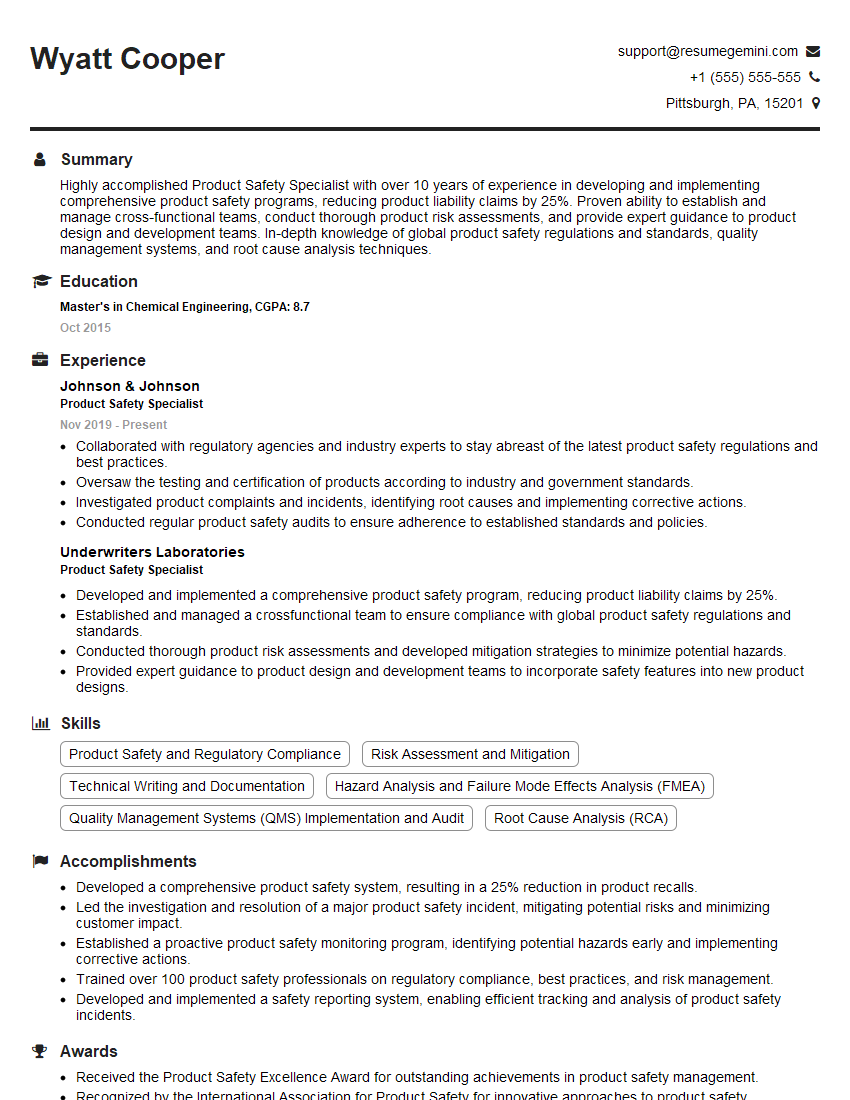
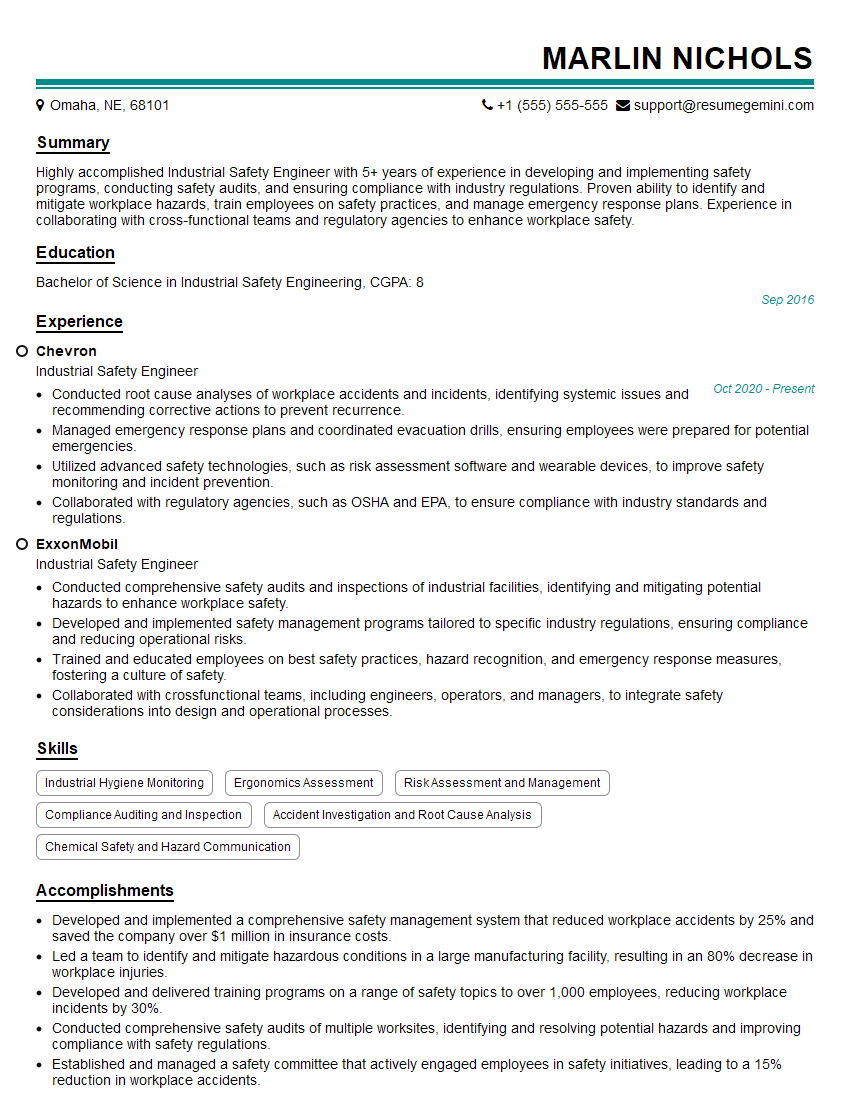
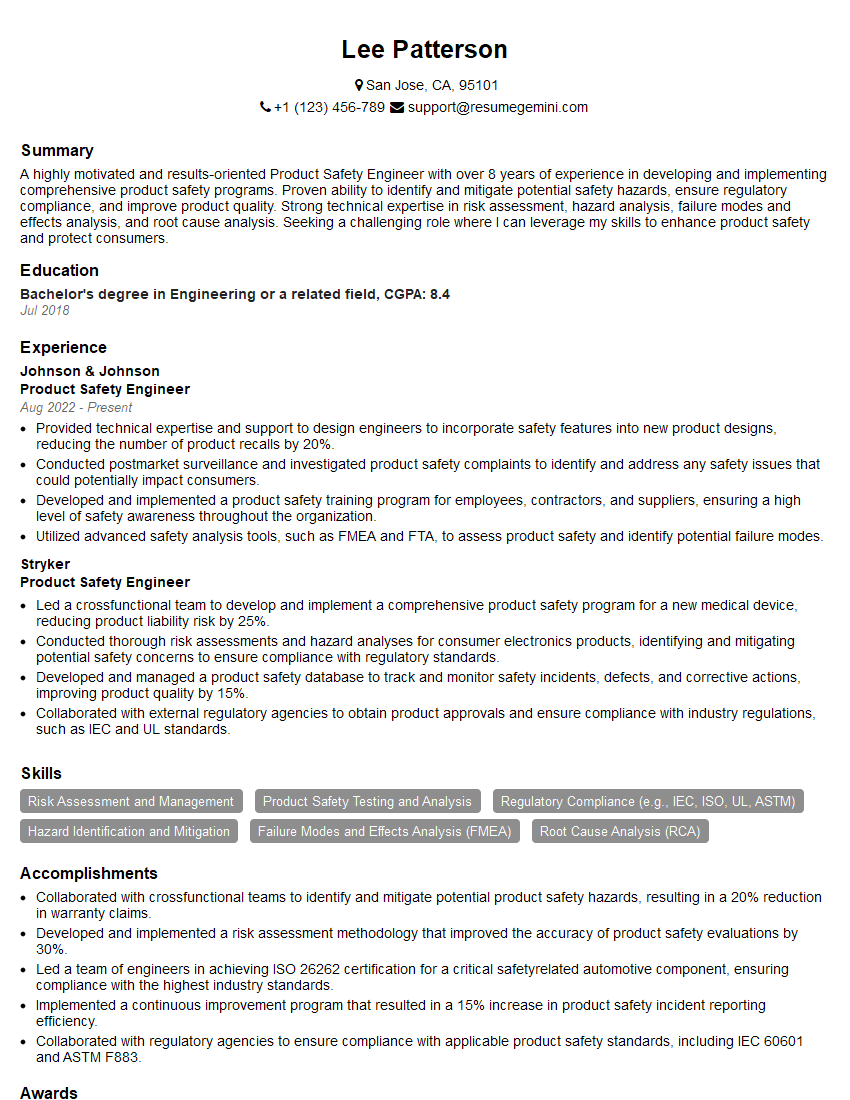
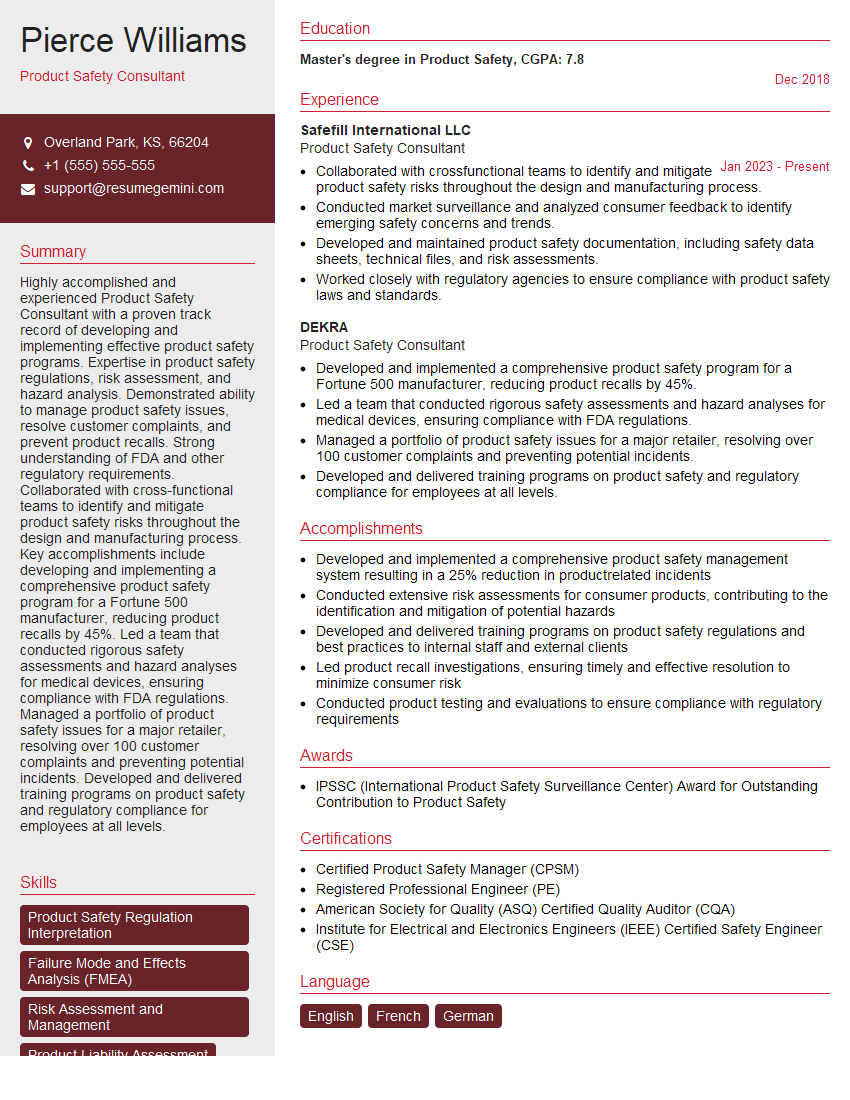
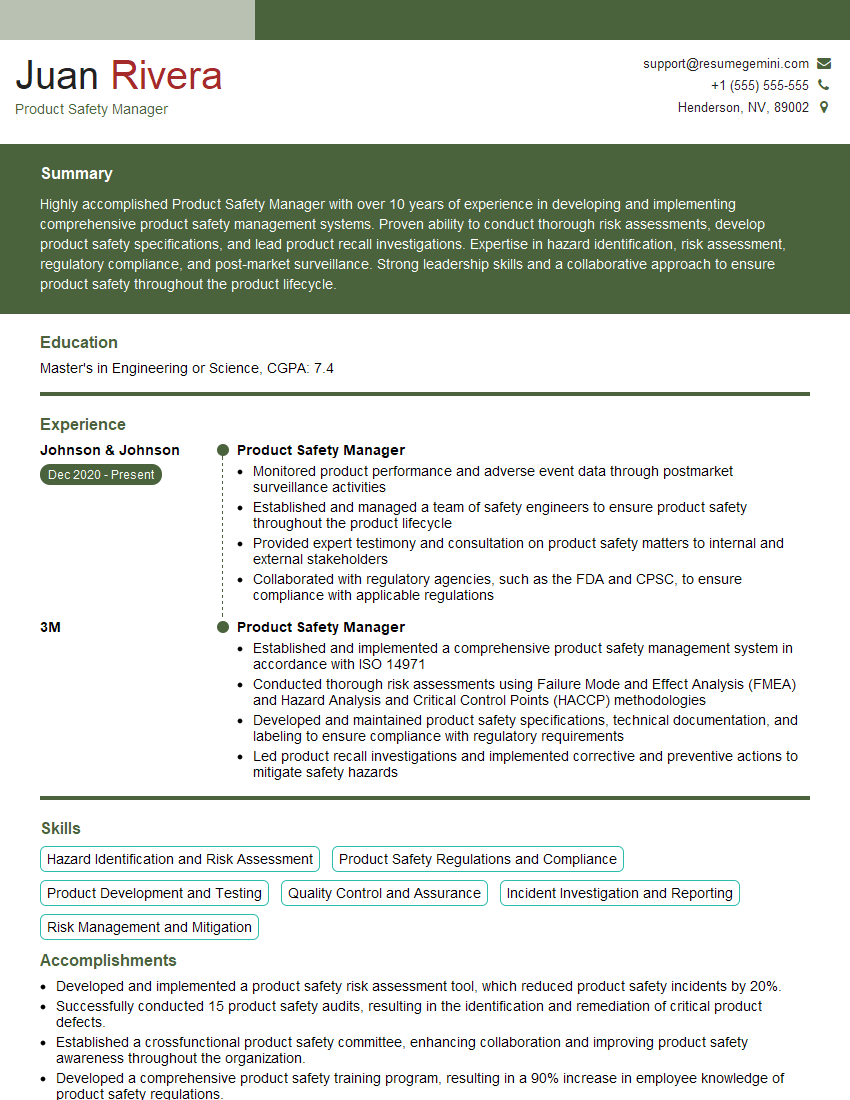
Mastering Product Safety Planning is crucial for career advancement in many industries, opening doors to specialized roles and increased responsibility. A strong understanding of these principles significantly improves your value to potential employers. To maximize your job prospects, crafting an ATS-friendly resume is essential. This ensures your qualifications are effectively highlighted to Applicant Tracking Systems. We highly recommend using ResumeGemini to build a professional and impactful resume. ResumeGemini offers a streamlined process and provides examples of resumes tailored to Product Safety Planning, giving you a significant advantage in your job search.
Explore more articles
Users Rating of Our Blogs
Share Your Experience
We value your feedback! Please rate our content and share your thoughts (optional).
What Readers Say About Our Blog
Very informative content, great job.
good