The right preparation can turn an interview into an opportunity to showcase your expertise. This guide to Product Safety Regulations and Compliance interview questions is your ultimate resource, providing key insights and tips to help you ace your responses and stand out as a top candidate.
Questions Asked in Product Safety Regulations and Compliance Interview
Q 1. Describe your experience with ISO 9001, ISO 14001, or other relevant quality management systems.
Throughout my career, I’ve been heavily involved in implementing and maintaining ISO 9001:2015 and ISO 14001:2015 standards. ISO 9001 focuses on establishing a robust Quality Management System (QMS) to ensure consistent product quality and customer satisfaction. My experience includes developing and auditing QMS documentation, conducting internal audits, and participating in management review meetings. I’ve seen firsthand how a well-structured QMS minimizes defects, streamlines processes, and improves overall efficiency. ISO 14001, on the other hand, emphasizes Environmental Management Systems (EMS), focusing on minimizing environmental impact. My work here involved implementing waste reduction programs, managing environmental permits, and conducting environmental impact assessments. Both standards are interconnected, as environmental responsibility is an important aspect of responsible product production. For example, reducing waste in manufacturing directly impacts product quality and cost. I’ve also worked with other relevant standards such as those specific to certain industries (e.g., automotive, medical device) which build upon the foundational principles of ISO 9001 and 14001.
Q 2. Explain your understanding of the different stages of a product lifecycle and how safety regulations apply at each stage.
Understanding the product lifecycle is crucial for effective safety management. It typically involves several stages: Design & Development, Production, Distribution, Use, and End-of-Life. Safety regulations apply differently at each stage.
- Design & Development: This is where inherent safety is built into the product. Risk assessments are conducted, materials are selected based on safety criteria, and design specifications must adhere to relevant standards. Failing to account for potential hazards at this stage can lead to costly recalls and reputational damage later on.
- Production: This stage involves ensuring the manufacturing process itself is safe for workers and doesn’t compromise product integrity. Quality control checks, regular maintenance of machinery, and adherence to manufacturing process specifications are critical.
- Distribution: Safe packaging and transportation are essential. Products must be protected from damage during shipping and handling, and appropriate labeling and documentation must be in place to meet regulatory requirements.
- Use: User safety instructions, warnings, and training are vital. Products should be designed to be user-friendly and intuitive, minimizing the chance of misuse or accidents. Post-market surveillance is critical to identify any safety concerns arising from actual use.
- End-of-Life: Regulations govern the safe disposal or recycling of products at the end of their life. This includes ensuring environmentally responsible practices and preventing the release of hazardous materials.
Failing to address safety concerns at any stage can lead to significant consequences, including product recalls, legal action, and damage to company reputation. For example, improper labeling during distribution could violate regulations and lead to serious accidents.
Q 3. How would you conduct a risk assessment for a new product?
Conducting a thorough risk assessment is crucial. I typically use a systematic approach involving these steps:
- Hazard Identification: Identify all potential hazards associated with the product, encompassing all aspects from materials used to the intended use and foreseeable misuse. This involves brainstorming sessions, reviewing similar products, and consulting with experts.
- Hazard Analysis: For each identified hazard, assess its severity, likelihood of occurrence, and potential consequences. This often involves using a risk matrix to visually represent and prioritize the risks.
- Risk Evaluation: Evaluate the overall risk level for each hazard by combining severity and likelihood. This helps prioritize which hazards need immediate attention.
- Risk Control: Develop and implement control measures to mitigate the identified risks. These measures can include design modifications, warning labels, safety instructions, or even removing the product from the market if risks are unacceptable.
- Risk Monitoring: Continuously monitor the effectiveness of the implemented control measures. This may involve post-market surveillance, gathering user feedback, and conducting periodic reviews of the risk assessment.
For example, during a risk assessment for a children’s toy, we might identify choking hazards from small parts. The control measures could include designing larger parts, providing warnings on the packaging, and conducting rigorous testing to meet safety standards for small parts.
Q 4. What are some common product safety regulations you are familiar with (e.g., CE marking, UL certifications, FDA regulations)?
I’m familiar with a wide range of product safety regulations, including:
- CE Marking (European Union): Indicates conformity with EU health, safety, and environmental protection legislation. It applies to a wide range of products and demonstrates the manufacturer’s declaration of compliance. Failure to comply can lead to significant fines and market restrictions.
- UL Certification (Underwriters Laboratories): Provides independent testing and certification for product safety in various sectors, including electrical appliances, building materials, and more. UL marks provide assurance to consumers about product safety and compliance with specific standards.
- FDA Regulations (U.S. Food and Drug Administration): Regulates food, drugs, cosmetics, medical devices, and tobacco products. These regulations are highly specific and vary depending on the product type, encompassing aspects like labeling, manufacturing processes, and clinical trials.
- RoHS (Restriction of Hazardous Substances): Limits the use of certain hazardous materials in electrical and electronic equipment. Compliance with RoHS is mandatory in many regions globally.
- REACH (Registration, Evaluation, Authorization, and Restriction of Chemicals): An EU regulation concerning the registration, evaluation, authorization, and restriction of chemical substances. It aims to improve the protection of human health and the environment.
The specific regulations applicable depend on the product, its intended use, and the target market. It’s crucial to understand all relevant regulations for any given product to ensure compliance and minimize risks.
Q 5. How do you stay updated on changes in product safety regulations?
Staying updated on evolving product safety regulations is critical. I utilize several strategies:
- Subscription to Regulatory Newsletters and Databases: I subscribe to newsletters and databases from organizations like the FDA, the European Commission, and other relevant national or international bodies. These resources provide regular updates on changes in regulations and standards.
- Professional Associations and Networks: Membership in professional organizations related to product safety allows access to expert insights, networking opportunities, and regular updates on regulatory changes.
- Industry Conferences and Webinars: Attending industry conferences and webinars provides opportunities to learn about the latest developments in product safety regulations and best practices from experts in the field.
- Monitoring Regulatory Websites: Regularly checking the websites of relevant regulatory agencies allows for direct access to the latest legal documents, announcements, and updates.
Proactive monitoring ensures I’m always abreast of changes and can promptly adjust our processes and practices accordingly. This proactive approach minimizes risks and avoids costly non-compliance.
Q 6. Describe a time you identified a safety hazard in a product. How did you address it?
During the development of a new line of children’s toys, we identified a potential strangulation hazard with a long, thin cord used as an accessory. While the initial design was deemed aesthetically pleasing, it posed a significant risk to young children. We immediately initiated a corrective action.
Our response involved a multi-pronged approach:
- Design Modification: The cord was redesigned to be significantly shorter and made from a softer material, reducing the strangulation risk significantly. This change was carefully reviewed to ensure it didn’t compromise the toy’s intended functionality.
- Testing and Validation: The redesigned toy underwent rigorous testing to meet all relevant safety standards, including those specific to strangulation hazards.
- Internal Communication: The design team, engineering, and quality control departments were promptly informed of the hazard and the implemented solution. This ensured everyone was aligned on the corrective action.
- Documentation: All changes and related testing were meticulously documented, ensuring clear traceability and compliance with regulatory requirements.
This incident underscored the importance of thorough risk assessment and the need for continuous improvement in our safety practices. It also highlighted the value of a collaborative team approach in addressing safety concerns effectively.
Q 7. Explain your understanding of hazard analysis and critical control points (HACCP).
Hazard Analysis and Critical Control Points (HACCP) is a systematic, preventative approach to food safety. It focuses on identifying and controlling biological, chemical, and physical hazards that can occur during food production and processing.
It involves several key steps:
- Conduct a Hazard Analysis: Identify potential biological, chemical, and physical hazards that may occur at each stage of food production.
- Determine Critical Control Points (CCPs): Identify steps in the process where control can be applied and is essential to prevent or eliminate a food safety hazard or reduce it to an acceptable level.
- Establish Critical Limits: For each CCP, establish measurable limits. These limits determine whether a process is under control and producing a safe product. For example, this may relate to temperature, time, or pH levels.
- Establish Monitoring Procedures: Establish procedures for monitoring each CCP. Regular monitoring ensures the process remains within the critical limits. This may involve frequent temperature checks, visual inspections, or other methods.
- Establish Corrective Actions: Determine what actions to take when monitoring indicates that a CCP is not under control. This may involve adjusting the process, discarding a batch of product, or taking other corrective actions to restore control.
- Establish Verification Procedures: Develop procedures to verify that the HACCP system is working effectively. This may include internal audits, reviewing records, and verifying the effectiveness of corrective actions.
- Establish Record-Keeping and Documentation Procedures: Maintain detailed records of all aspects of the HACCP system.
HACCP is not just for food; its principles can be adapted and applied to other industries involving complex processes and safety concerns, although the specific hazards and critical control points would differ greatly depending on the nature of the product and its production.
Q 8. How familiar are you with different testing standards and methodologies for product safety?
My familiarity with product safety testing standards and methodologies is extensive. I’ve worked with a wide range of standards, including those from organizations like UL, IEC, ISO, and ASTM International, depending on the product and its intended market. These standards cover various aspects, from electrical safety (e.g., IEC 60950-1 for IT equipment) and mechanical safety (e.g., ISO 13849 for machinery safety) to chemical safety (e.g., REACH regulations for chemical substances) and flammability (e.g., UL 94 for flammability of plastics).
Testing methodologies vary greatly depending on the product and the specific hazard it might present. For instance, electrical safety testing might involve dielectric strength tests, insulation resistance measurements, and creepage distance assessments. Mechanical testing could involve impact tests, tensile strength tests, and fatigue analysis. Chemical safety testing might involve analyzing the composition of materials to ensure compliance with relevant regulations and toxicity limits. I am proficient in interpreting test results, identifying potential safety hazards, and recommending appropriate corrective actions.
For example, in a recent project involving a children’s toy, we had to adhere to ASTM F963, which specifies safety requirements for toys. This involved rigorous testing for small parts, sharp edges, and toxic materials. Understanding the specific requirements of each standard and selecting the appropriate testing methodology is crucial for ensuring product safety and regulatory compliance.
Q 9. What is your experience with creating and implementing safety procedures and protocols?
Creating and implementing safety procedures and protocols is a core part of my role. My approach is to establish a comprehensive safety management system (SMS), which involves several key steps. First, a thorough hazard analysis is conducted, identifying potential hazards at each stage of the product lifecycle – from design and manufacturing to distribution and use. Then, based on this analysis, we develop detailed safety procedures and protocols that address those identified hazards. This includes specifying safety checks at each production stage, outlining proper handling and storage procedures, and defining clear communication channels for reporting safety incidents.
These procedures are documented clearly and made accessible to all relevant personnel through training programs and readily available documentation. Regular audits and reviews are crucial to ensure the effectiveness of these procedures. I actively participate in these reviews, identifying areas for improvement and implementing corrective actions.
For instance, in a previous project involving medical devices, we implemented a robust quality management system compliant with ISO 13485, including detailed work instructions, quality control checks at each manufacturing step, and thorough documentation of all processes. This ensured that our medical devices met the highest safety and performance standards.
Q 10. How do you handle conflicting requirements from different regulatory bodies?
Handling conflicting requirements from different regulatory bodies is a common challenge in international product safety. My approach involves a systematic process. First, I meticulously identify all applicable regulations and standards from each relevant jurisdiction. Then, I analyze the requirements, highlighting any inconsistencies or conflicts. Often, a thorough analysis reveals that the apparent conflict is due to differing interpretations or a lack of complete understanding of the regulations.
Where true conflicts exist, I prioritize the most stringent requirement to ensure the highest level of safety. Sometimes, this may involve seeking clarification from regulatory bodies or consulting with legal experts. Good documentation is critical at each step, providing a clear audit trail of the decision-making process. Proactive communication with all relevant regulatory bodies is essential to maintain transparency and foster a collaborative approach to resolving any conflict.
In one instance, we faced conflicting requirements regarding labeling from the FDA (USA) and the EU. By carefully reviewing the specific stipulations, we identified that the difference stemmed from the interpretations of certain phrases. By seeking clarifications from both agencies and incorporating the most stringent elements, we created a label that met both regulatory requirements without compromising safety.
Q 11. Describe your approach to investigating and reporting product safety incidents.
Investigating and reporting product safety incidents is a critical process that necessitates a structured and thorough approach. Upon learning of an incident, my first step is to secure the affected product and gather all relevant information, including witness statements, photographs, and any related documentation. A detailed root cause analysis is then conducted using established methodologies like the ‘5 Whys’ technique or fault tree analysis to identify the underlying causes of the incident.
This investigation aims to pinpoint the contributing factors – whether design flaws, manufacturing defects, or misuse of the product. The findings are meticulously documented, and a corrective action plan is developed to prevent similar incidents from occurring. This plan might include design modifications, improved manufacturing processes, enhanced warnings or instructions, or a product recall. The incident report is submitted to relevant regulatory authorities and stakeholders as per the mandated reporting requirements.
For example, if a malfunctioning component led to an injury, our investigation would trace the component’s origin, analyze its manufacturing process, test its performance, and check for compliance with relevant standards. This might lead to sourcing a better quality component or updating the design to improve reliability.
Q 12. What are the key elements of a robust product recall plan?
A robust product recall plan is crucial for mitigating the risks associated with defective products. Key elements include a well-defined recall trigger, a clearly defined recall process, and efficient communication strategies. The recall trigger outlines specific situations that necessitate a recall – for example, a certain number of reported incidents, a confirmed safety hazard, or a violation of regulatory standards. The recall process involves identifying the affected products, establishing efficient distribution channels for recall notices, arranging for product return or replacement, and tracking the effectiveness of the recall.
Effective communication is paramount. This involves notifying customers promptly and clearly through multiple channels (e.g., website announcements, email, social media, media releases) and providing clear instructions on returning the defective product. Regular monitoring and evaluation of the recall are also critical to gauge its effectiveness and make necessary adjustments. A post-recall analysis should be conducted to learn from the experience and enhance future safety procedures.
A well-structured recall plan helps minimize financial losses, safeguard brand reputation, and, most importantly, protect consumers. Planning for a recall in advance allows for a more efficient response to a crisis.
Q 13. Explain your understanding of the legal liabilities associated with product safety failures.
The legal liabilities associated with product safety failures can be substantial. Companies can face a range of legal actions, including product liability lawsuits, fines from regulatory bodies, and criminal charges in severe cases. These liabilities stem from various legal principles, such as negligence, breach of warranty, and strict liability. Negligence involves a failure to exercise reasonable care in designing, manufacturing, or distributing a product, leading to harm. Breach of warranty arises when a product fails to meet the manufacturer’s expressed or implied guarantees. Strict liability holds manufacturers accountable for defective products even without proof of negligence.
The severity of legal consequences can vary based on factors such as the nature and extent of the harm caused, the company’s culpability, and the applicable jurisdiction’s laws. Compliance with relevant safety standards and regulations is crucial in mitigating legal risks. Maintaining thorough documentation of safety procedures, testing results, and incident investigations also forms a strong defense in potential legal disputes. Professional liability insurance can help manage some of the financial risks involved.
Understanding the legal landscape is essential for proactively managing product safety risks. This requires regular legal counsel and staying informed about evolving regulations.
Q 14. How do you balance product safety with cost considerations?
Balancing product safety with cost considerations requires a strategic approach that prioritizes safety without unnecessary expense. It’s not a matter of compromising safety for cost; rather, it’s about finding the most cost-effective way to ensure safety. This can involve thorough risk assessment to identify the most critical safety hazards and focusing resources on addressing those.
For example, investing in robust testing and quality control procedures at the design and manufacturing stages often reduces costly recalls and legal battles later on. Early collaboration with suppliers to source high-quality, safe materials can also contribute to long-term cost savings. Implementing preventive measures is generally less costly than dealing with the consequences of safety failures. Value engineering, a systematic method of improving designs while reducing costs, can be employed without compromising safety.
It’s about making informed decisions based on thorough risk analysis, prioritizing critical safety aspects, and choosing the most effective and economical strategies to achieve the desired level of safety. A balance can be achieved by employing a life-cycle cost analysis, which takes into account all costs associated with a product throughout its lifespan. This helps in making optimal decisions that consider both safety and profitability.
Q 15. How do you ensure compliance with product safety regulations across different geographical regions?
Ensuring global product safety compliance is a multifaceted challenge requiring a systematic approach. It begins with identifying the specific regulations for each target market. This involves researching and understanding the relevant laws, standards, and certifications (e.g., CE marking in Europe, UL certification in the US, CCC certification in China). We create a compliance matrix that maps our products against these regional requirements. For example, a children’s toy might need to meet specific toy safety standards in the EU (EN 71) and different standards in the US (ASTM F963).
Next, we integrate these requirements into our product design and manufacturing processes. This includes material selection, testing protocols, and labeling. We often use a global product design approach that adheres to the strictest standards, minimizing the need for significant modifications based on region. This proactive strategy avoids costly redesigns and delays. Regular audits and supplier assessments verify compliance throughout the supply chain. We also maintain meticulous records and documentation for traceability and audit purposes. Ultimately, successful global compliance relies on a robust system of ongoing monitoring and adaptation to evolving regulatory landscapes.
Career Expert Tips:
- Ace those interviews! Prepare effectively by reviewing the Top 50 Most Common Interview Questions on ResumeGemini.
- Navigate your job search with confidence! Explore a wide range of Career Tips on ResumeGemini. Learn about common challenges and recommendations to overcome them.
- Craft the perfect resume! Master the Art of Resume Writing with ResumeGemini’s guide. Showcase your unique qualifications and achievements effectively.
- Don’t miss out on holiday savings! Build your dream resume with ResumeGemini’s ATS optimized templates.
Q 16. Describe your experience with product labeling and documentation requirements.
My experience with product labeling and documentation encompasses a broad range of requirements, from simple consumer products to complex industrial equipment. I’m proficient in creating compliant labels that include all necessary information such as warnings, instructions for use, materials composition, country of origin, and relevant certification marks. I understand the importance of using clear, concise language appropriate for the target audience and ensuring that the label is easily visible and legible.
Beyond labeling, I’m experienced in generating comprehensive technical documentation including user manuals, safety data sheets (SDS), and compliance certificates. These documents are crucial for demonstrating compliance and assisting customers in using products safely and effectively. My experience includes managing the entire document lifecycle – from creation and review to updating and archiving – ensuring consistency and accuracy across all documents. For example, I’ve worked on projects where accurate labeling of chemicals according to Globally Harmonized System of Classification and Labelling of Chemicals (GHS) standards was critical to prevent misuse and accidents.
Q 17. What is your experience with designing for safety in product development?
Designing for safety is integral to every stage of our product development lifecycle. It starts with a thorough hazard analysis where we identify potential hazards and risks associated with the product’s intended use, foreseeable misuse, and environmental factors. We use tools such as Failure Mode and Effects Analysis (FMEA) and Fault Tree Analysis (FTA) to systematically assess potential failures and their consequences.
Based on the hazard analysis, we implement safety measures throughout the design. This could involve incorporating safety features such as interlocks, guards, or automatic shutoff mechanisms. We also select materials that meet relevant safety standards regarding flammability, toxicity, and durability. Throughout the design process, regular reviews and testing are conducted to validate safety measures. We adhere to design principles like the reduction of sharp edges, incorporation of ergonomic design elements, and the minimization of potential pinch points. For instance, in designing a power tool, we would incorporate a dead man’s switch to prevent accidental operation.
Q 18. How familiar are you with the use of safety data sheets (SDS)?
I’m very familiar with Safety Data Sheets (SDS), previously known as Material Safety Data Sheets (MSDS). SDSs are crucial documents that provide comprehensive information about the hazards of chemical substances and mixtures. They’re essential for safe handling, storage, and disposal of hazardous materials. My experience includes creating, reviewing, and updating SDSs to meet globally harmonized standards (GHS). I understand the 16 sections of an SDS and their importance in communicating critical safety information. This includes physical and chemical properties, health hazards, first aid measures, fire-fighting measures, accidental release measures, and personal protective equipment (PPE) requirements.
Accurate and up-to-date SDSs are critical for ensuring worker safety and legal compliance. I’ve been involved in ensuring our SDSs are readily accessible to all relevant personnel and are consistently updated to reflect changes in product formulations or new safety information. Failure to maintain accurate and accessible SDSs can lead to serious consequences, including workplace accidents and legal liabilities.
Q 19. Explain your understanding of various safety testing methods such as impact testing or flammability testing.
I’m experienced in a variety of safety testing methods, including impact testing, flammability testing, and many others depending on the specific product. Impact testing evaluates a product’s ability to withstand impacts, drops, or shocks. This is crucial for items likely to experience accidental drops or collisions, such as electronics or toys. Different test methods exist depending on the product and its intended use, for instance, the Izod impact test or Charpy impact test.
Flammability testing assesses a material or product’s resistance to ignition and its rate of flame spread. This is essential for products used near heat sources or where fire safety is paramount. Various standards define different flammability testing methods, such as UL 94 for plastics and the vertical flame test for textiles. Other common tests include tensile strength testing, chemical resistance testing, electrical safety testing, and many more, depending on the product and its intended use and regulatory requirements.
Q 20. How do you ensure that your team adheres to safety regulations and protocols?
Ensuring team adherence to safety regulations and protocols involves a multi-pronged strategy. We start with comprehensive training programs that cover all aspects of product safety, relevant regulations, and company-specific procedures. This training is regularly updated to reflect any changes in regulations or best practices. We also establish clear roles and responsibilities, assigning ownership of safety compliance to specific team members.
We implement regular safety audits and inspections to ensure that procedures are being followed correctly and identify potential issues proactively. These audits encompass the entire process, from design and manufacturing to packaging and shipping. Non-compliance is addressed promptly through corrective actions, and lessons learned are shared across the team. Furthermore, open communication is crucial. We foster a culture where employees feel comfortable raising safety concerns without fear of reprisal. A robust system of documentation and record-keeping further supports compliance efforts, allowing us to track progress, identify trends, and continuously improve our safety performance.
Q 21. What are some common pitfalls companies encounter with regards to product safety and compliance?
Companies often encounter several common pitfalls regarding product safety and compliance. One major pitfall is a lack of proactive planning. Many companies only focus on safety compliance when a problem arises, leading to reactive rather than proactive measures. This can result in costly redesigns, product recalls, and legal issues.
Another common pitfall is insufficient testing and validation. Rushing the product development process or failing to conduct thorough testing can lead to undetected safety hazards. Inadequate training of personnel on safety regulations and procedures also contributes to non-compliance. Finally, neglecting to keep up-to-date with evolving regulations can lead to unexpected compliance issues. A thorough understanding of the regulations and a commitment to continuous improvement are crucial for preventing these pitfalls. In essence, proactive planning, thorough testing, adequate training, and ongoing monitoring are all fundamental to successful product safety and compliance.
Q 22. Describe your understanding of the different types of product liability.
Product liability refers to the legal responsibility of manufacturers, sellers, and distributors for injuries or damages caused by defective products. There are primarily three types:
- Negligence: This occurs when a company fails to exercise reasonable care in the design, manufacturing, or distribution of a product, leading to harm. For example, failing to adequately test a product for foreseeable hazards.
- Strict Liability: This holds manufacturers and sellers liable for injuries caused by defective products, regardless of fault or negligence. The focus is on the product’s defect, not the company’s intent. A classic example would be a faulty car part causing an accident.
- Breach of Warranty: This involves a violation of an express or implied warranty made by the manufacturer or seller. An express warranty is a specific promise about a product’s qualities (e.g., “This toy is unbreakable”), while an implied warranty suggests that a product is fit for its intended purpose. A toy that breaks easily despite being advertised as ‘unbreakable’ would be a breach of express warranty.
Understanding these different types is crucial for proactively mitigating risks and ensuring compliance with product safety regulations. Each type necessitates different strategies for risk management and legal defense.
Q 23. How would you communicate complex safety information to non-technical stakeholders?
Communicating complex safety information to non-technical stakeholders requires clear, concise, and relatable language. I avoid technical jargon and instead use analogies and visual aids. For instance, instead of saying “The product’s failure rate exceeds the acceptable threshold,” I might say, “The product breaks too often and is unsafe.”
I often use storytelling to make the information memorable. Sharing case studies of incidents (without revealing sensitive details) helps illustrate the potential consequences of not following safety protocols. I also utilize infographics, videos, and interactive presentations to cater to different learning styles. Crucially, I encourage questions and create a safe space for discussion to ensure everyone understands and feels heard. Finally, I tailor the communication to the audience’s specific level of understanding, creating different versions of the same information for different groups (e.g., a simplified version for factory workers, a more detailed report for management).
Q 24. What software or tools do you use to manage product safety and compliance?
I leverage a variety of software and tools to manage product safety and compliance, depending on the specific needs of the project. This includes:
- Product Lifecycle Management (PLM) software: Systems like Arena PLM or Siemens Teamcenter help manage the entire product lifecycle, including design, manufacturing, and post-market surveillance, ensuring traceability and compliance documentation.
- Quality Management Systems (QMS) software: Tools such as ISOTools or MasterControl help document processes, manage non-conformances, and track corrective actions, ensuring ISO standards are followed.
- Regulatory compliance databases: Subscription services provide access to up-to-date information on regulations across various jurisdictions, including the FDA, CPSIA, and REACH.
- Spreadsheet software (Excel): For simpler tasks such as tracking component specifications and test results. However, more sophisticated systems are crucial for large-scale projects.
The specific tools I choose are always selected based on the complexity of the project, the regulatory landscape, and the size of the company.
Q 25. How do you handle pressure when dealing with urgent product safety issues?
Handling urgent product safety issues requires a calm, methodical approach, even under intense pressure. My strategy involves:
- Rapid Assessment: Immediately gather information about the problem’s scope and severity.
- Incident Response Team Activation: Initiate established protocols and assemble the necessary experts.
- Risk Assessment and Prioritization: Analyze potential risks and identify immediate actions to mitigate harm.
- Communication: Clearly communicate the situation to stakeholders, both internally and externally (if necessary).
- Corrective Actions: Implement immediate corrective and preventative actions to address the issue.
- Documentation: Meticulously record all steps taken, decisions made, and the timeline of events.
Through experience, I’ve learned that staying calm and focused is crucial. Panic hinders effective problem-solving. Utilizing a structured approach and relying on established protocols ensures a coordinated and effective response.
Q 26. How do you measure the effectiveness of your product safety and compliance program?
Measuring the effectiveness of a product safety and compliance program involves both qualitative and quantitative metrics.
- Quantitative Metrics: This includes tracking the number of product defects, incident reports, regulatory non-conformances, and the cost of recalls. Data analysis helps identify trends and areas needing improvement.
- Qualitative Metrics: These assess the effectiveness of training programs, the quality of internal audits, and employee satisfaction with safety procedures. Employee feedback and satisfaction surveys are essential for qualitative data collection.
- Benchmarking: Comparing our performance to industry best practices or competitors helps identify areas of strength and weakness.
Regular review of these metrics allows for continuous improvement of the program. For example, a high number of reported defects might suggest a need for improved quality control in manufacturing. Low employee satisfaction scores might signal a deficiency in safety training.
Q 27. Describe your experience with internal audits and inspections to ensure compliance.
I have extensive experience conducting and participating in internal audits and inspections to ensure compliance. This involves:
- Planning and Scheduling: Developing a detailed audit plan that covers all relevant aspects of the product safety program, including design reviews, manufacturing processes, testing procedures, and documentation.
- Execution: Conducting thorough on-site inspections and reviewing relevant documentation, focusing on potential areas of non-compliance.
- Finding Identification and Documentation: Carefully documenting any identified non-conformances, including their severity and potential impact.
- Corrective Action Implementation: Working with the relevant teams to implement corrective and preventative actions to address identified issues.
- Follow-up: Verifying that corrective actions are effectively implemented and that the identified non-conformances have been resolved.
These audits are crucial for identifying weaknesses in the system and preventing potential safety issues before they impact consumers. My experience emphasizes a proactive and collaborative approach, working closely with different departments to ensure continuous improvement.
Q 28. What are your professional development goals related to product safety and compliance?
My professional development goals focus on expanding my knowledge and expertise in product safety and compliance. This includes:
- Staying current with evolving regulations: Product safety regulations are constantly evolving, and continuous learning is essential. I aim to participate in relevant conferences and training courses to remain up-to-date.
- Deepening my technical expertise: I plan to expand my understanding of specific technologies and manufacturing processes related to the products I oversee. This will enable me to identify potential safety hazards more effectively.
- Improving my leadership and communication skills: Effective communication and leadership are crucial for driving a robust product safety culture. I seek opportunities to enhance my ability to lead and motivate teams.
- Exploring emerging technologies in product safety: I am keen to investigate new technologies and approaches that can help improve product safety, such as AI-powered risk assessment tools.
By pursuing these goals, I aim to contribute to a safer and more responsible product development process.
Key Topics to Learn for Product Safety Regulations and Compliance Interview
- Understanding Key Regulations: Familiarize yourself with relevant national and international safety standards (e.g., ISO, CE marking, FDA regulations) and their practical implications for product design and manufacturing.
- Risk Assessment and Management: Master the techniques for identifying, analyzing, and mitigating potential hazards associated with products throughout their lifecycle. Practice applying these methods to various case studies.
- Testing and Certification: Understand the different types of product testing required for compliance, including laboratory testing and field evaluations. Learn how to interpret test results and ensure compliance with certification requirements.
- Documentation and Traceability: Learn how to maintain comprehensive records throughout the product development and manufacturing process, ensuring complete traceability and compliance audits. This includes understanding the importance of proper labeling and instructions.
- Legal and Ethical Considerations: Develop a strong understanding of the legal ramifications of non-compliance, including potential fines, product recalls, and reputational damage. Understand ethical responsibilities in ensuring product safety.
- Data Analysis and Reporting: Learn to effectively interpret safety data, identify trends, and generate reports to communicate findings to stakeholders. This includes compiling evidence for compliance and identifying areas for improvement.
- Incident Management and Recall Procedures: Understand the processes for handling product incidents, conducting root cause analysis, and executing effective recall strategies if necessary.
- Continuous Improvement and Updates: Stay current with evolving regulations and best practices in product safety. Understand how to implement changes effectively and efficiently.
Next Steps
Mastering Product Safety Regulations and Compliance is crucial for career advancement in this vital field. It demonstrates your commitment to safety, your technical expertise, and your ability to navigate complex regulatory landscapes. This expertise is highly valued by employers, leading to greater opportunities for growth and higher earning potential.
To maximize your job prospects, focus on creating an ATS-friendly resume that effectively highlights your skills and experience. ResumeGemini is a trusted resource to help you build a professional and impactful resume that grabs the attention of recruiters and hiring managers. ResumeGemini provides examples of resumes tailored to Product Safety Regulations and Compliance to help guide you through the process. Use these examples to craft a compelling narrative showcasing your achievements and expertise in this field.
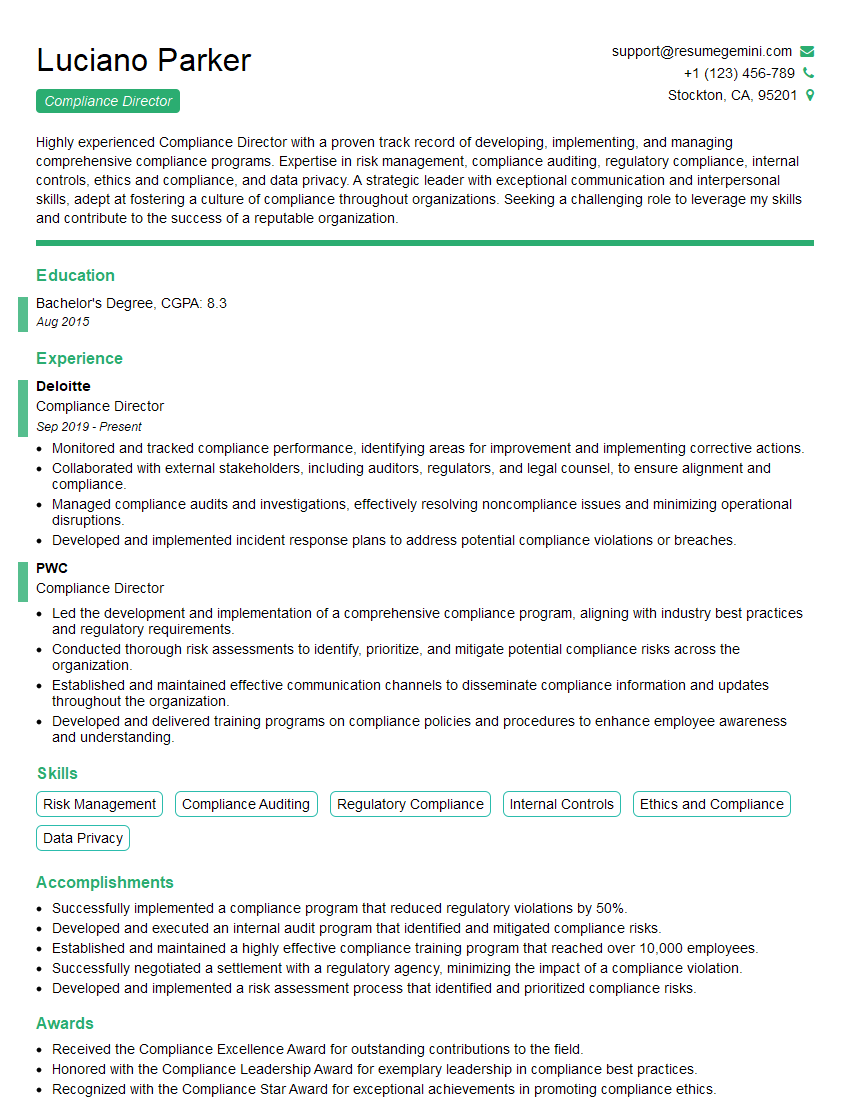
Compliance Director Resume Sample
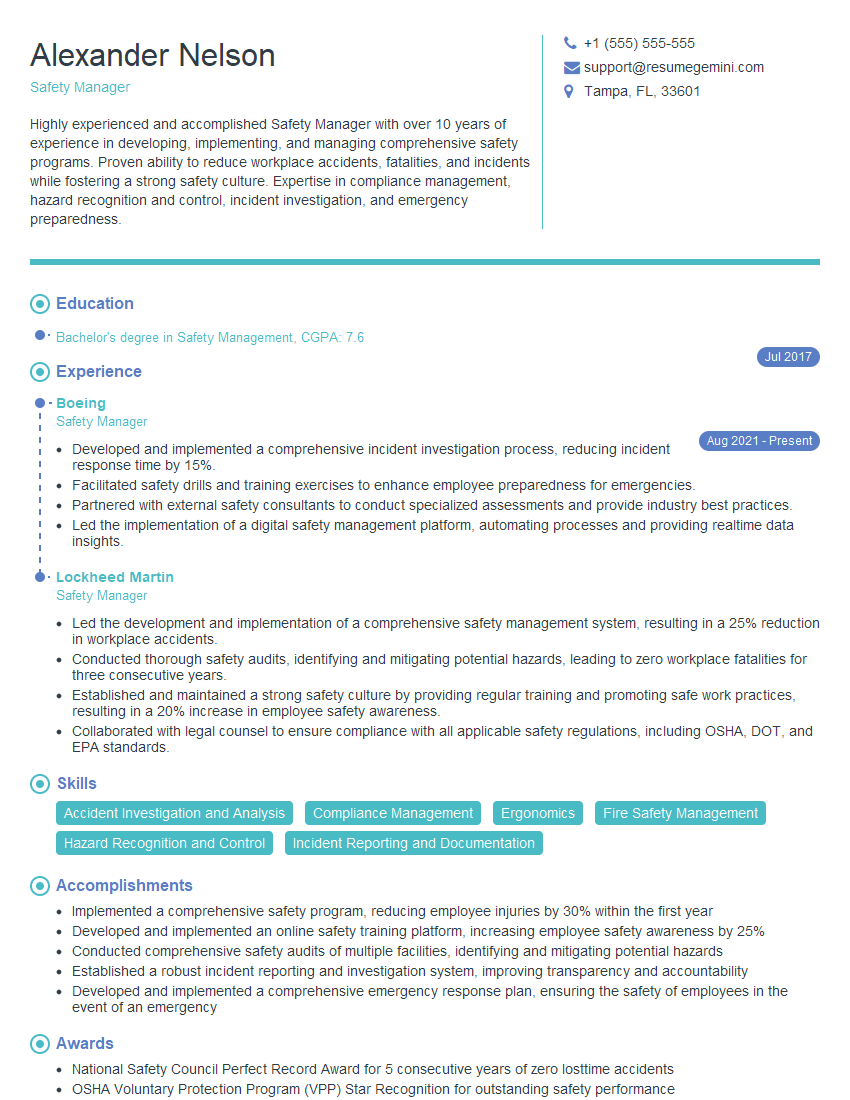
Safety Manager Resume Sample
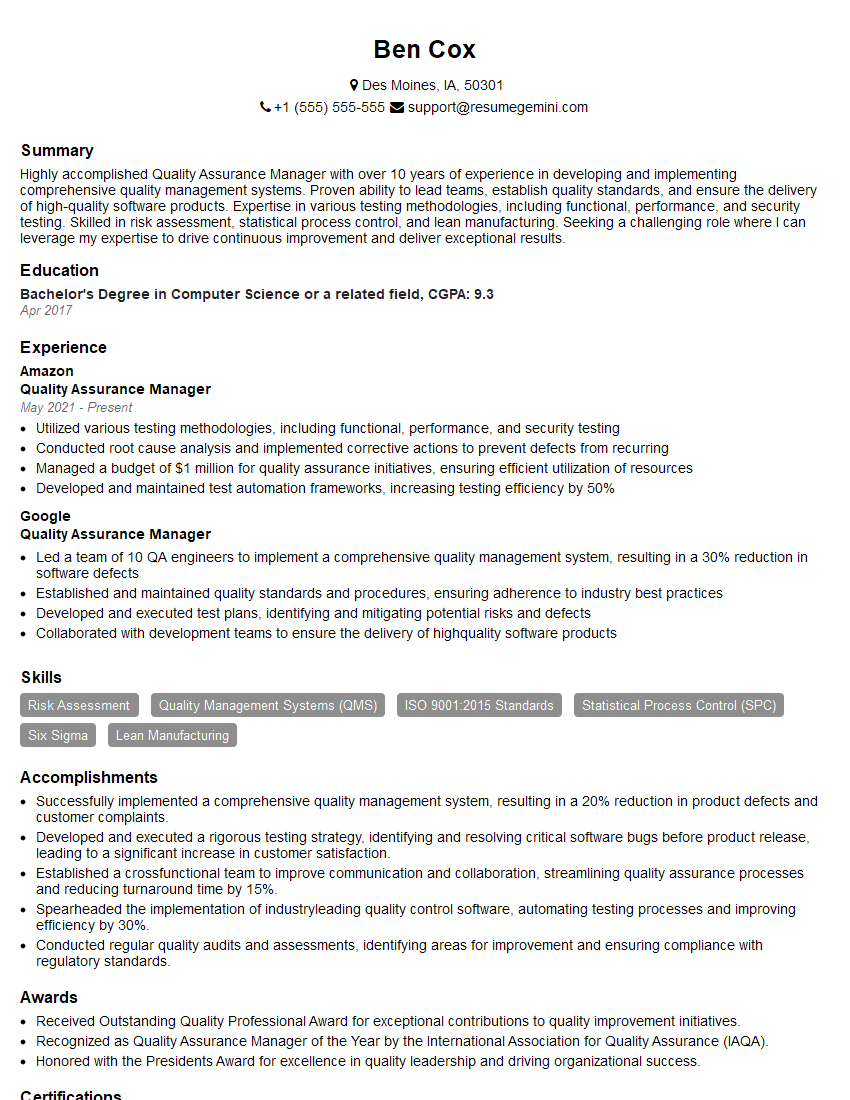
Quality Assurance Manager Resume Sample
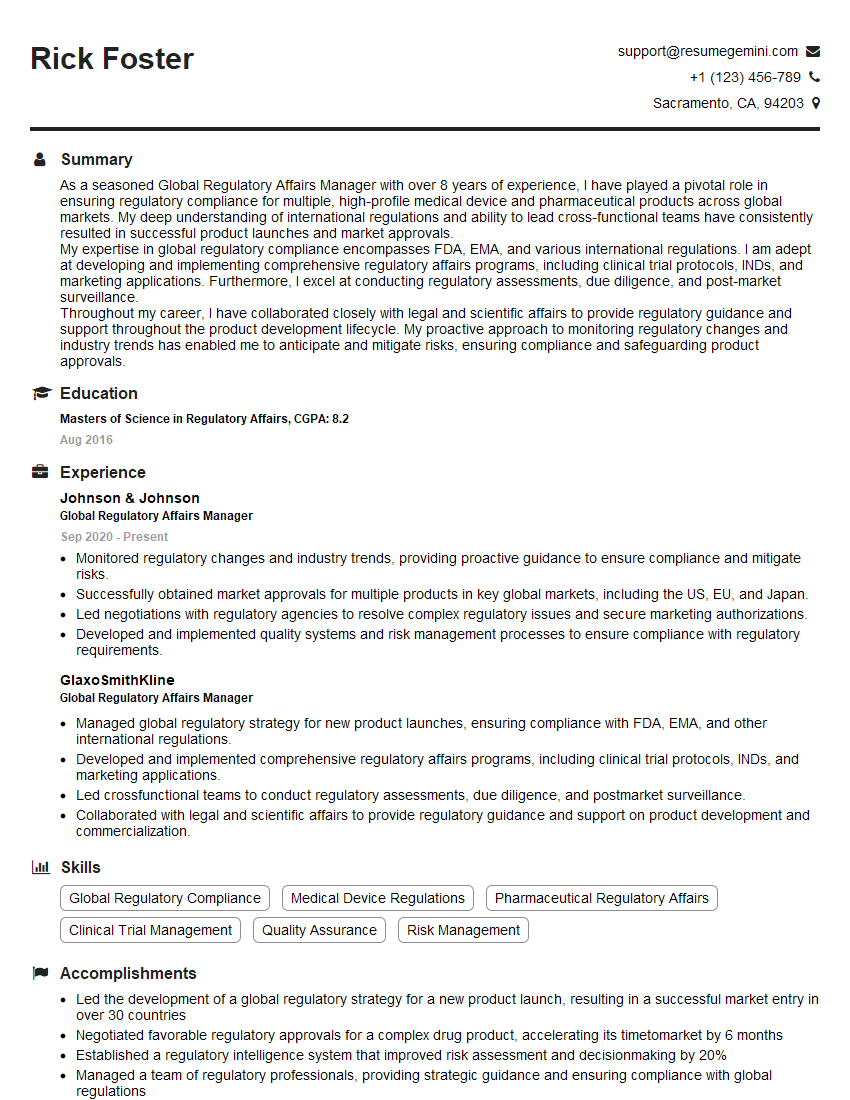
Global Regulatory Affairs Manager Resume Sample
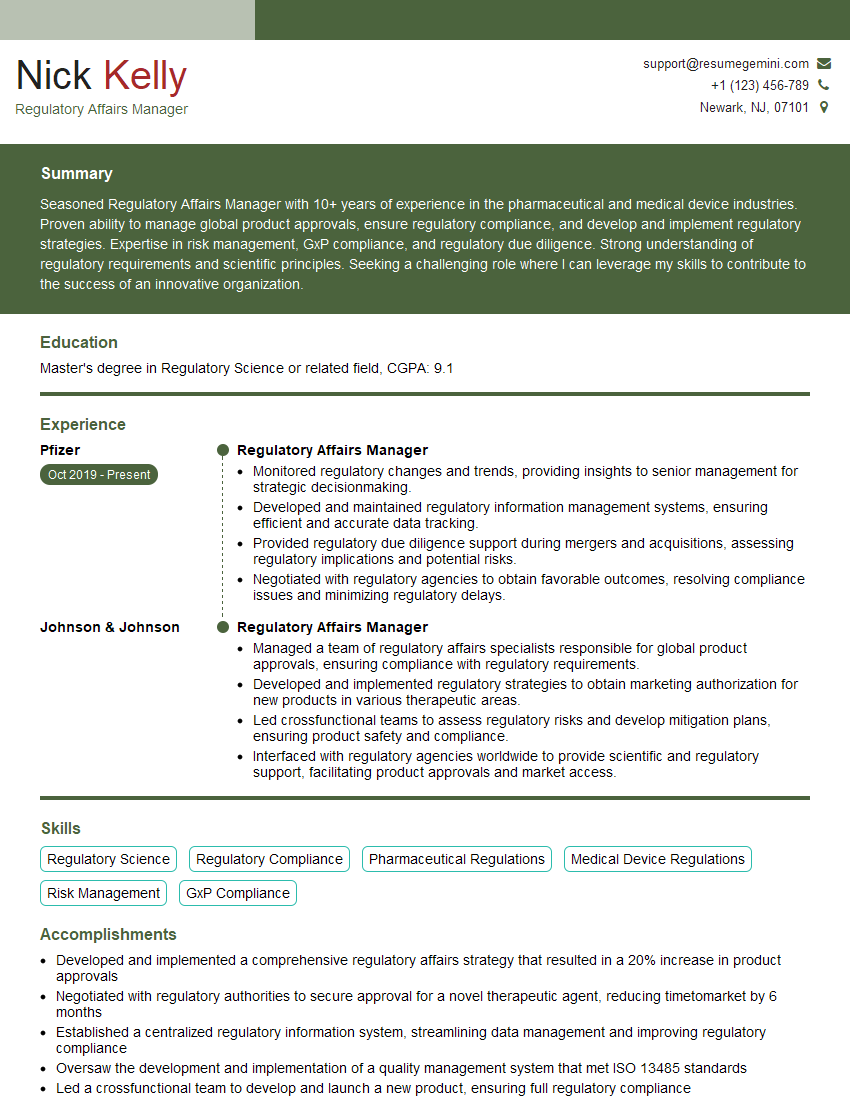
Regulatory Affairs Manager Resume Sample
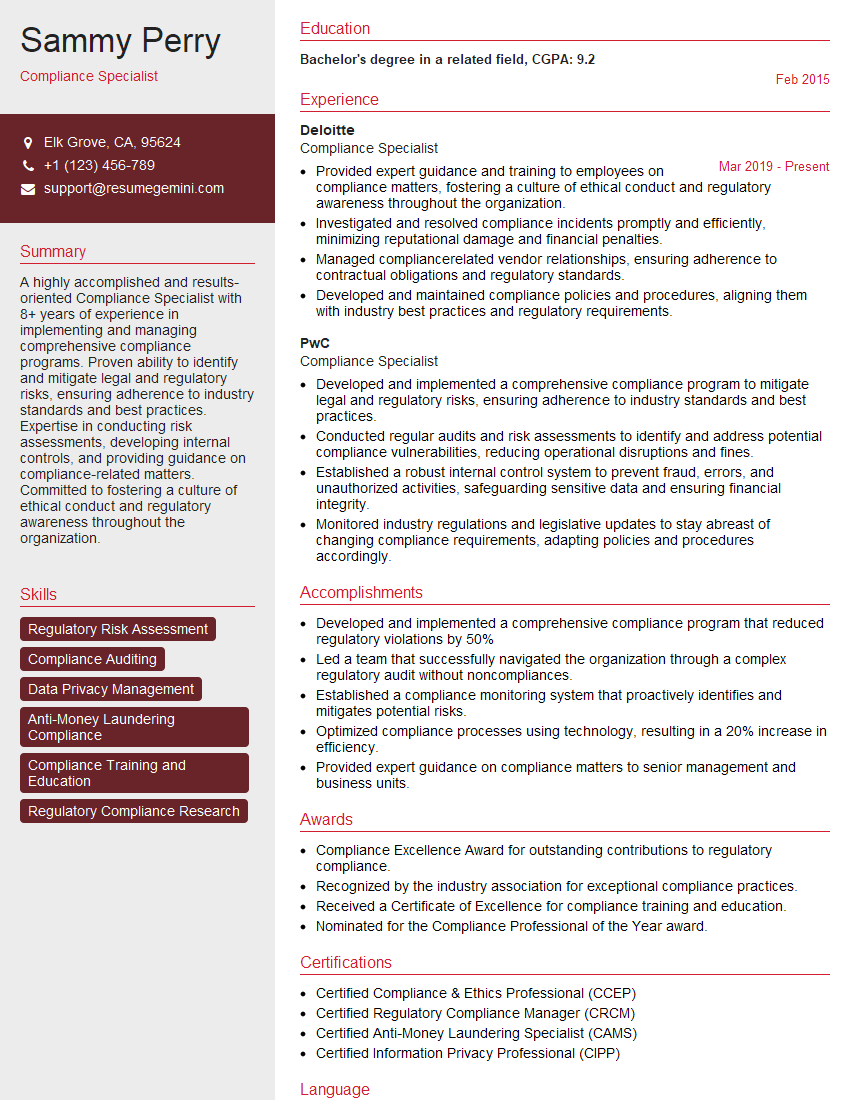
Compliance Specialist Resume Sample
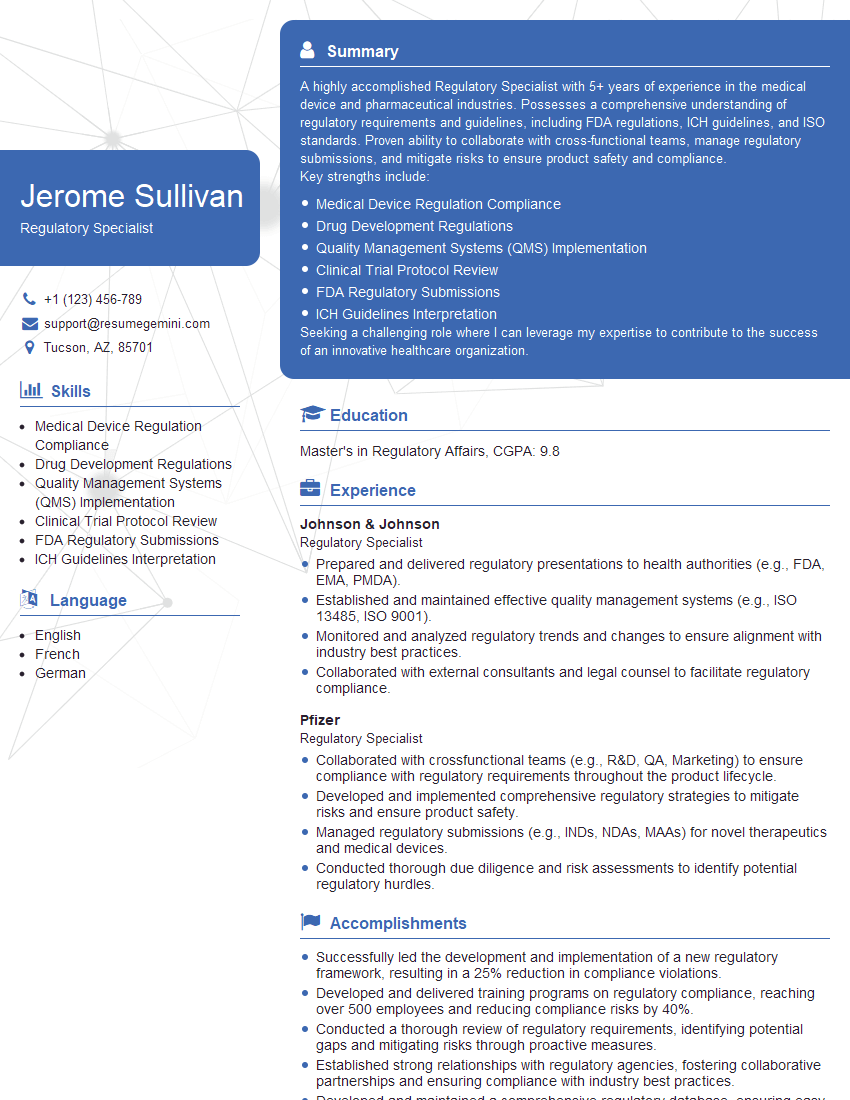
Regulatory Specialist Resume Sample
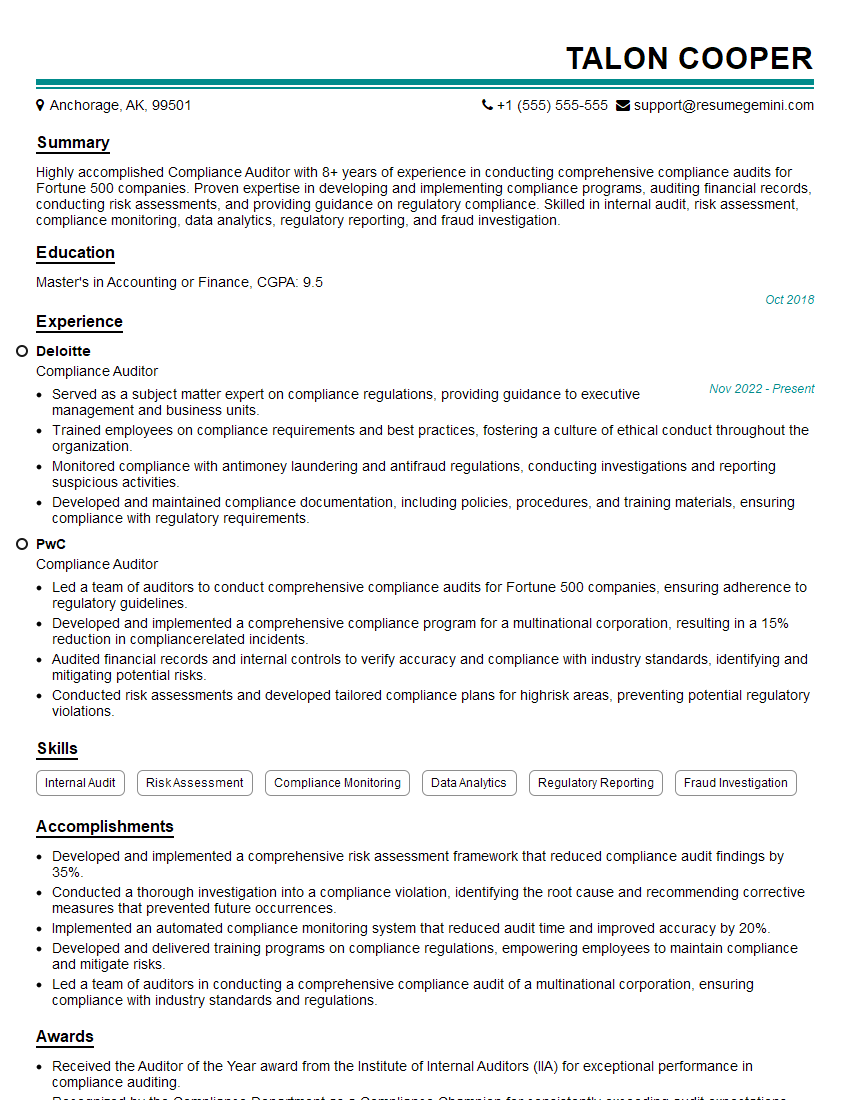
Compliance Auditor Resume Sample
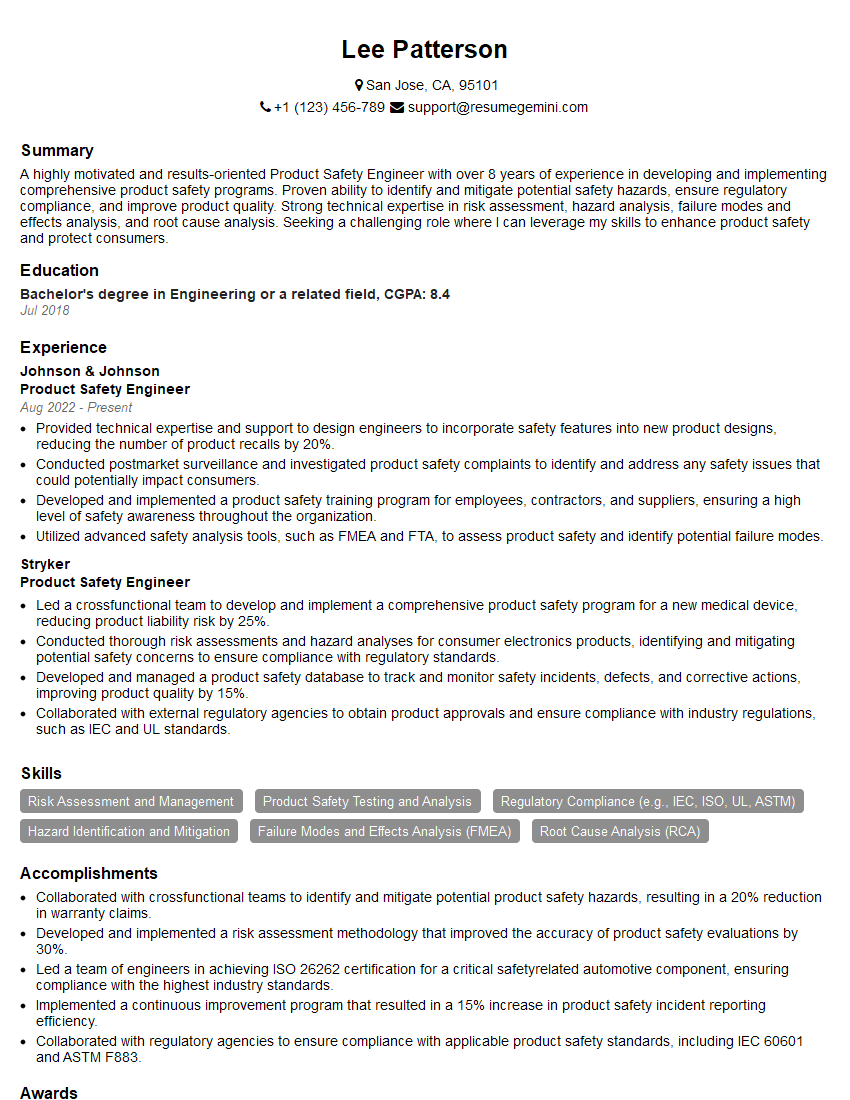
Product Safety Engineer Resume Sample
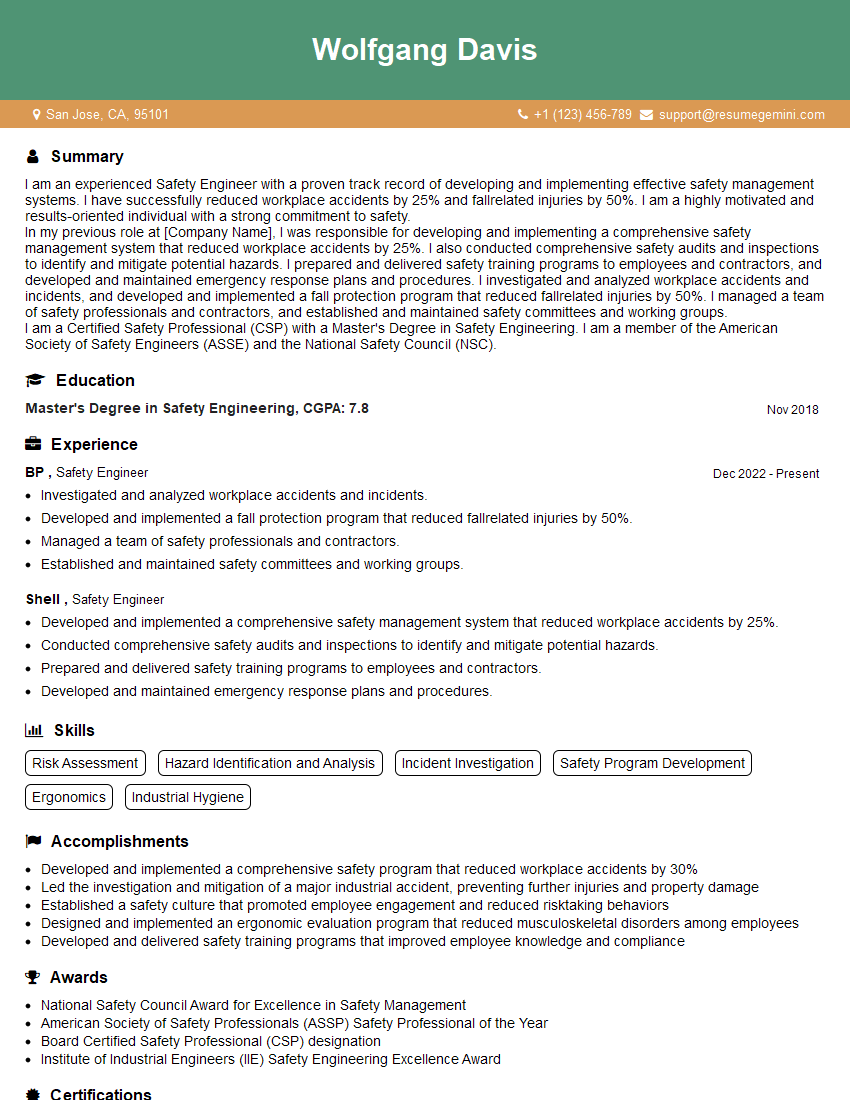
Safety Engineer Resume Sample
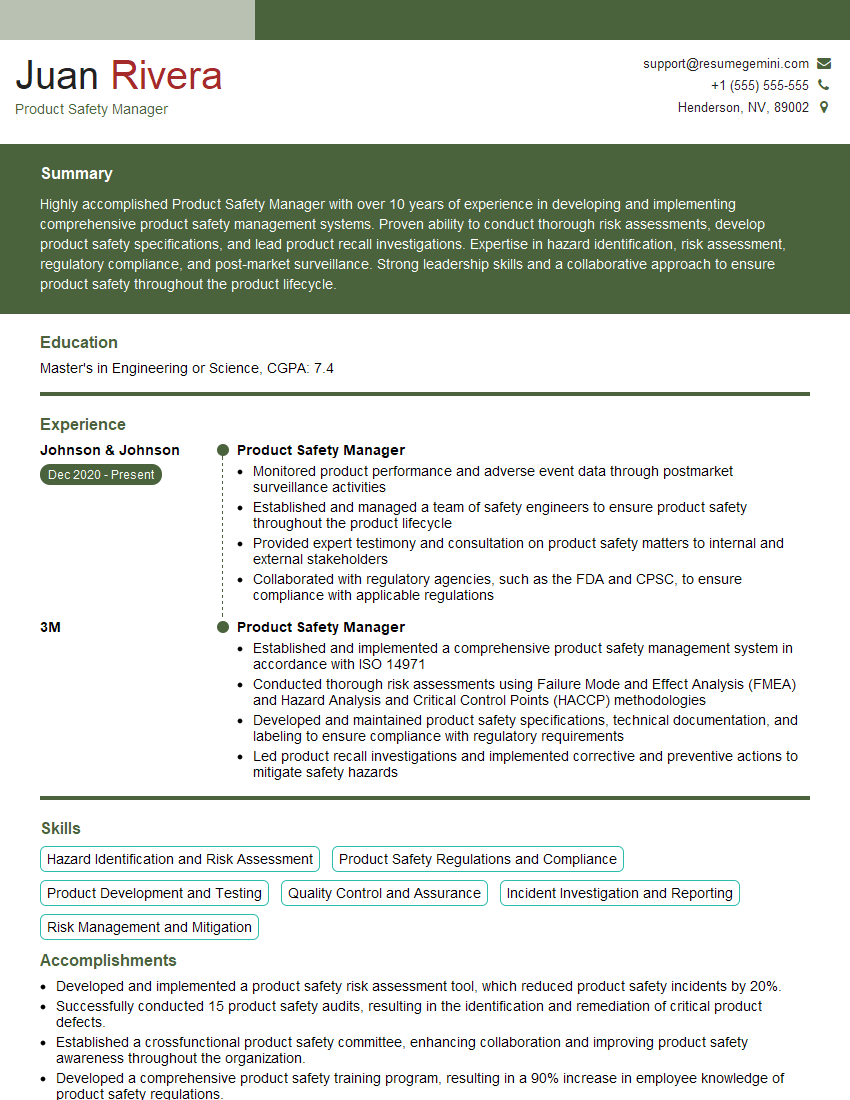
Product Safety Manager Resume Sample
Explore more articles
Users Rating of Our Blogs
Share Your Experience
We value your feedback! Please rate our content and share your thoughts (optional).
What Readers Say About Our Blog
Very informative content, great job.
good