Unlock your full potential by mastering the most common Product Safety Standards and Regulations interview questions. This blog offers a deep dive into the critical topics, ensuring you’re not only prepared to answer but to excel. With these insights, you’ll approach your interview with clarity and confidence.
Questions Asked in Product Safety Standards and Regulations Interview
Q 1. Explain your understanding of ISO 9001 and its relevance to product safety.
ISO 9001 is an internationally recognized standard that outlines requirements for a quality management system (QMS). While not a product safety standard itself, a robust QMS is crucial for ensuring product safety. It provides a framework for consistently meeting customer and regulatory requirements, including those related to safety. Think of it as the foundation upon which product safety is built.
ISO 9001’s relevance to product safety stems from its emphasis on risk management, process control, and continuous improvement. By implementing a QMS, organizations can identify potential safety hazards early in the design process, establish robust control measures to mitigate those risks, and systematically track and improve safety performance. For example, a well-defined document control process, as required by ISO 9001, ensures that all design specifications and safety requirements are clearly documented, readily accessible, and consistently followed throughout the manufacturing process. This minimizes the risk of errors that could lead to unsafe products.
In a practical setting, compliance with ISO 9001 demonstrates a commitment to quality and safety to customers and regulators, potentially leading to increased trust and market access. It also streamlines internal processes, reducing errors and improving efficiency in areas directly related to product safety.
Q 2. Describe your experience with conducting risk assessments using FMEA or similar methodologies.
Failure Mode and Effects Analysis (FMEA) is a proactive risk assessment technique I use extensively. It involves systematically identifying potential failure modes in a product or process, assessing the severity of each failure, its likelihood of occurrence, and the ability to detect it before it causes harm. This allows us to prioritize risk mitigation efforts based on a calculated risk priority number (RPN).
My experience includes conducting FMEAs for various products, from medical devices to consumer electronics. For example, in assessing the safety of a children’s toy, we might identify a potential failure mode as the small parts detaching, leading to a choking hazard. We’d then evaluate the severity (high, as choking can be fatal), the likelihood of occurrence (moderate, depending on the design and materials), and the detection capability (low, unless there’s a specific test in place). A high RPN would indicate a need for immediate design changes or improved quality control measures to reduce the risk. I’ve used similar methodologies like HAZOP (Hazard and Operability Study) for process safety analysis, especially in chemical and manufacturing settings.
The output of an FMEA is not just a list of potential failures, but a documented plan of actions to mitigate risks. These actions are then tracked, and the effectiveness of the mitigation strategies is reassessed periodically, showing continuous improvement in product safety.
Q 3. How familiar are you with the requirements of the Consumer Product Safety Improvement Act (CPSIA)?
The Consumer Product Safety Improvement Act (CPSIA) is a US federal law that significantly impacts the safety of consumer products, especially those intended for children. I’m very familiar with its key requirements, including the lead paint and lead content restrictions, the requirements for third-party testing and certification to demonstrate compliance, and the tracking and record-keeping obligations for manufacturers and importers.
Specifically, I understand the requirements for obtaining Children’s Product Certificates (CPCs) and the implications of failing to comply, such as product recalls and significant financial penalties. I also understand the importance of understanding the different categories of children’s products and the specific requirements each category faces. For instance, children’s toys are subject to more stringent testing for small parts and potential choking hazards than other categories of products. Furthermore, I’m well versed in the implications of the CPSIA on product labeling and the necessity for accurate and readily-accessible information about the product’s composition.
My understanding of the CPSIA also extends to the ongoing updates and clarifications issued by the Consumer Product Safety Commission (CPSC), ensuring that I remain abreast of the latest regulatory requirements and their practical application. Failure to comply with these regulations can lead to severe consequences.
Q 4. What are your strategies for ensuring product compliance with relevant safety standards throughout the product lifecycle?
Ensuring product compliance is a continuous process that spans the entire product lifecycle. My strategies involve a multi-faceted approach:
- Design for Safety: Incorporating safety considerations from the initial design phase, using techniques such as FMEA and DFMEA (Design FMEA) to identify and mitigate potential hazards early on. This is significantly more cost-effective than addressing safety issues later in the process.
- Material Selection: Choosing materials that comply with all relevant safety standards and regulations, considering factors like flammability, toxicity, and durability. This includes careful consideration of restricted substances lists like RoHS (Restriction of Hazardous Substances).
- Testing and Validation: Conducting thorough testing at each stage of development, including prototype testing, pre-production testing, and final product testing to verify that the product meets safety requirements. This involves using accredited testing labs to ensure the credibility of results.
- Manufacturing Process Control: Implementing robust quality control measures throughout the manufacturing process to ensure consistent product quality and safety. This includes regular inspections, audits and rigorous adherence to the established quality management system.
- Supplier Management: Working with suppliers who share a commitment to product safety and who adhere to relevant safety standards. Regular audits and clear communication are essential.
- Post-Market Surveillance: Continuously monitoring product performance in the market through feedback mechanisms, incident reporting, and field studies, which can identify potential safety issues that may not have been detected during initial testing.
By implementing these strategies, I aim to build a culture of safety within the organization, making product safety a top priority at every stage of the product lifecycle.
Q 5. Explain the process for identifying and reporting product safety incidents.
Identifying and reporting product safety incidents is crucial for mitigating risks and preventing future harm. My process typically follows these steps:
- Incident Detection: This could involve receiving reports from consumers, distributors, or internal quality control. We have established reporting mechanisms, including dedicated email addresses, phone lines, and online forms, ensuring easy reporting.
- Incident Investigation: A thorough investigation is conducted to gather all relevant information, such as details about the incident, the product involved, and any potential contributing factors. This investigation may involve interviews, product examination, and analysis of any available data.
- Root Cause Analysis: Identifying the underlying cause(s) of the incident is critical to prevent recurrence. Techniques such as the “5 Whys” method may be utilized to drill down to the root of the problem.
- Corrective Actions: Implementing appropriate corrective and preventative actions to address the root cause and prevent future similar incidents. This may involve design changes, improved manufacturing processes, enhanced quality control measures, or changes to product instructions.
- Reporting to Authorities: Reporting incidents to relevant regulatory authorities (such as the CPSC in the US or the equivalent in other countries) as required by law. This is crucial for transparency and to ensure public safety.
- Customer Communication: Communicating with affected customers to address their concerns, provide any necessary remediation, and maintain transparency.
Documentation throughout this process is paramount. Detailed records are maintained for traceability and accountability.
Q 6. How do you stay updated on evolving product safety standards and regulations?
Staying updated on evolving product safety standards and regulations requires a proactive approach. My strategy involves:
- Subscription to Regulatory Updates: Subscribing to newsletters and alerts from relevant regulatory bodies such as the CPSC, the FDA, and international standards organizations like ISO. Many of these organizations offer free subscription options to stay up-to-date.
- Industry Associations and Conferences: Actively participating in industry associations and attending conferences to learn about the latest developments in product safety and regulatory compliance from experts and peers.
- Professional Development: Engaging in continuous professional development through training courses, webinars, and certifications to enhance knowledge and skills in product safety management. This includes attending workshops and seminars that focus on updates to existing regulations and the introduction of new standards.
- Monitoring Industry News and Publications: Regularly reviewing industry publications, journals, and online resources dedicated to product safety to keep abreast of emerging issues, technologies, and regulatory changes.
- Internal Knowledge Sharing: Creating an internal system for sharing and disseminating critical product safety information amongst colleagues, to ensure everyone is up to date.
This multi-pronged approach ensures I remain well-informed about the latest developments in product safety, enabling me to provide effective guidance and support to my organization.
Q 7. Describe your experience with conducting product testing and validation.
My experience with product testing and validation encompasses a wide range of methodologies and testing types, depending on the specific product and its intended use. This includes both laboratory testing and field testing.
Laboratory testing might involve mechanical testing (e.g., tensile strength, impact resistance), electrical testing (e.g., insulation resistance, dielectric strength), chemical testing (e.g., flammability, toxicity), and environmental testing (e.g., temperature cycling, humidity testing). The selection of tests is guided by relevant safety standards and the potential hazards associated with the product. For instance, a medical device would undergo much more rigorous testing than a simple consumer good.
Field testing is essential to validate the product’s performance in real-world conditions. This may involve user studies, observation under typical usage conditions, and controlled trials under different stress conditions. The data gathered from these tests informs design improvements, allows for the refinement of safety procedures, and provides further validation of the product’s overall safety and performance.
I am proficient in interpreting test results and determining whether a product meets the specified safety standards. My experience ensures that the testing process is rigorous and meets the highest standards of accuracy and objectivity, which is crucial for ensuring product safety and compliance.
Q 8. How do you prioritize safety concerns when facing conflicting demands such as cost and time constraints?
Prioritizing safety amidst cost and time pressures requires a structured approach. It’s not about choosing one over the other, but rather integrating safety as a core element of every decision. I use a risk-based prioritization method. This involves identifying all potential hazards, assessing their risks (likelihood and severity), and then allocating resources accordingly. Higher-risk hazards, regardless of cost or timeline, always receive precedence. For example, if a design flaw could lead to serious injury, the cost of redesigning the component is secondary to eliminating that risk. This often involves utilizing risk matrices and documented decision-making processes to ensure transparency and accountability. I’ve found that proactively addressing safety concerns early in the development cycle saves significant costs and time later on – rectifying problems during design is cheaper than during production or post-market.
My approach also involves open communication with stakeholders. I ensure everyone understands the importance of safety and that compromising it is unacceptable. This includes sharing risk assessments, mitigation strategies, and the rationale behind resource allocation decisions.
Q 9. Explain your understanding of the difference between a hazard and a risk.
A hazard is something with the potential to cause harm – it’s the source of danger. Think of a sharp knife; it’s a hazard because its sharpness can cause cuts. A risk, on the other hand, is the probability of harm occurring because of that hazard. The risk associated with that sharp knife is higher if a child is handling it unsupervised compared to a trained chef using it properly. Therefore, a hazard exists independently, while risk is a combination of the hazard’s potential for harm and the likelihood of that harm happening.
In product safety, we thoroughly analyze hazards and then assess the associated risks through methods like Failure Mode and Effects Analysis (FMEA) or Hazard and Operability Studies (HAZOP). This allows us to prioritize mitigation efforts, focusing on high-risk scenarios first.
Q 10. How would you approach developing a product safety management system?
Developing a robust product safety management system (PSMS) involves a multi-faceted approach. It begins with establishing a strong safety culture throughout the organization. This culture should emphasize proactive hazard identification, risk assessment, and mitigation. The system needs to encompass all stages of the product lifecycle, from design and development to manufacturing, distribution, and post-market surveillance.
- Hazard identification and risk assessment: This involves systematically identifying potential hazards and evaluating their associated risks using established methodologies like FMEA or HAZOP.
- Design for safety: Incorporating safety features into the product design from the outset minimizes potential risks. This could involve incorporating safety guards, interlocks, or using safer materials.
- Testing and verification: Rigorous testing is critical to ensure the product meets safety standards and regulations. This includes both internal testing and potentially third-party testing to validate compliance.
- Manufacturing controls: Implementing quality control measures during manufacturing to ensure consistency and prevent defects that could compromise safety.
- Post-market surveillance: Continuously monitoring the product’s performance in the field to identify any unexpected safety issues and implement corrective actions.
- Documentation and record-keeping: Maintaining comprehensive records of all safety-related activities, including hazard assessments, test results, and incident reports.
Regular audits and reviews of the PSMS are crucial to ensure its effectiveness and ongoing improvement. The system should be documented and easily accessible to all relevant personnel.
Q 11. Describe your experience with regulatory audits and inspections.
I have extensive experience with regulatory audits and inspections, particularly with agencies like the FDA (Food and Drug Administration) and OSHA (Occupational Safety and Health Administration). I’ve participated in numerous audits, both as an auditor and an auditee. This experience has equipped me with a deep understanding of regulatory requirements, audit methodologies, and best practices for addressing findings. I know how to efficiently prepare for audits, compile necessary documentation, and address any non-conformances promptly and effectively. For example, in one audit with the FDA, we uncovered a minor documentation issue, but by having a thorough document control system in place, we were able to quickly resolve it, showing the auditors our commitment to compliance.
My experience also extends to conducting internal audits to proactively identify and rectify potential compliance issues before external audits.
Q 12. How do you ensure traceability and accountability in product safety management?
Traceability and accountability in product safety are paramount. This requires a robust system for tracking components, materials, and processes throughout the product lifecycle. Each component should be uniquely identifiable, allowing us to trace it back to its source and to every stage of production. This is often achieved through batch numbers, serial numbers, and comprehensive documentation. For example, we use barcodes and RFID tags to track materials and components from procurement through production. This ensures that if a safety issue arises, we can quickly identify the affected products and take corrective action.
Accountability is ensured by clearly defining roles and responsibilities related to product safety. Each individual involved in the product’s lifecycle has specific duties and obligations. Our system maintains a clear audit trail, ensuring that actions taken are documented, reviewed, and approved by the appropriate personnel. This transparency helps build trust and demonstrates a strong commitment to safety.
Q 13. Explain the importance of root cause analysis in product safety investigations.
Root cause analysis (RCA) is crucial in product safety investigations because it goes beyond identifying symptoms to uncover the underlying causes of incidents or failures. A simple fix might only address the immediate problem, allowing the same issue to reoccur. RCA uses various techniques like the “5 Whys” method or fishbone diagrams to systematically delve into the problem’s origin.
For instance, if a product malfunctions, a superficial examination might only identify a broken component. However, RCA could reveal that the component failure was due to a manufacturing defect caused by inadequate training of personnel. By identifying the root cause, we can implement targeted corrective actions to prevent recurrence, making our products safer. This prevents a reactive approach, and instead allows for proactive implementation of changes, such as improved training or a change in the manufacturing process. Detailed documentation of the RCA process is essential to ensure future reference and improvement.
Q 14. How familiar are you with different testing standards (e.g., UL, IEC, ASTM)?
I am very familiar with various testing standards, including UL (Underwriters Laboratories), IEC (International Electrotechnical Commission), and ASTM International (formerly American Society for Testing and Materials) standards. I understand their scopes, requirements, and how they apply to different product categories. My experience includes reviewing and interpreting test reports, selecting appropriate standards for different products, and ensuring compliance with relevant regulations.
For example, UL standards are widely used for electrical safety, IEC standards are often used for electronic and electrical equipment globally, and ASTM standards cover a broad range of materials, products, and systems. Knowing which standards are applicable and ensuring our products meet them is essential for global market access and demonstrating a commitment to product safety.
Q 15. Describe your experience with developing and implementing safety training programs.
Developing and implementing effective safety training programs requires a multifaceted approach. It starts with a thorough needs assessment to identify knowledge gaps and specific hazards relevant to the workplace or product. For example, a manufacturing facility might need training on machine guarding, while a software company might focus on data security and privacy.
My approach involves creating modular training programs tailored to different roles and skill levels. This includes a mix of methods: interactive online modules, hands-on workshops, videos, and regular refresher courses. For instance, I once developed a multi-module program for a pharmaceutical company covering GMP (Good Manufacturing Practices), hazard communication, and emergency response procedures. Each module incorporated practical scenarios, quizzes, and case studies to reinforce learning and assess competency.
Crucially, I emphasize regular evaluation and updates to ensure the training remains relevant and effective. Post-training assessments and feedback mechanisms help to gauge comprehension and identify areas for improvement. This iterative process ensures that the training program evolves alongside the changing safety landscape and technological advancements.
Career Expert Tips:
- Ace those interviews! Prepare effectively by reviewing the Top 50 Most Common Interview Questions on ResumeGemini.
- Navigate your job search with confidence! Explore a wide range of Career Tips on ResumeGemini. Learn about common challenges and recommendations to overcome them.
- Craft the perfect resume! Master the Art of Resume Writing with ResumeGemini’s guide. Showcase your unique qualifications and achievements effectively.
- Don’t miss out on holiday savings! Build your dream resume with ResumeGemini’s ATS optimized templates.
Q 16. How do you handle situations where safety standards conflict with client requests?
Conflicts between safety standards and client requests are inevitable. My approach is to prioritize safety, always. I initiate a collaborative discussion with the client, explaining the relevant safety standards and the potential risks associated with deviating from them. I present the scientific evidence supporting the safety requirements. This conversation focuses on finding mutually agreeable solutions that meet both the client’s needs and safety regulations.
For example, if a client requests a design feature that compromises product stability, I would present data demonstrating the potential for injury and propose alternative design options that maintain both functionality and safety. Sometimes, compromise might involve adding additional safety features or adjusting the product’s intended use. Documentation of these discussions, including the rationale for decisions, is crucial for audit trail and liability purposes.
In cases where compromise is impossible due to severe safety concerns, I will respectfully but firmly explain the limitations and potential legal ramifications of proceeding with the client’s request. The safety of the end-user always comes first, and I’m prepared to advocate for safety standards even if it means losing a project.
Q 17. Describe your experience in using and interpreting safety data sheets (SDS).
Safety Data Sheets (SDS) are crucial documents detailing the hazards associated with chemicals and materials. My experience involves not just reading and understanding them but actively using them to assess risks and implement appropriate control measures. I’m proficient in interpreting various sections, including identification, hazards, composition, first aid measures, handling and storage, exposure controls, personal protection, and more.
I use SDS information to determine appropriate personal protective equipment (PPE), such as gloves, respirators, or eye protection, and to develop safe handling and storage procedures. For example, when dealing with a highly flammable material, I’d use the SDS to identify its flash point, and implement storage in a designated flammable materials cabinet. This ensures compliance with OSHA (Occupational Safety and Health Administration) regulations and other applicable standards.
Beyond individual chemical use, I leverage SDS data to conduct comprehensive risk assessments, identifying potential hazards in a workspace or during manufacturing processes. This data forms the foundation for creating safe work practices, emergency response plans, and training materials. I ensure all SDS are readily accessible to relevant personnel and regularly review and update them as new information becomes available.
Q 18. How do you communicate complex technical information about product safety to non-technical audiences?
Communicating complex technical information about product safety to non-technical audiences requires clear, concise, and engaging communication strategies. Avoidance of jargon and the use of visual aids are key elements.
I frequently employ analogies and relatable examples to simplify complex concepts. For example, instead of discussing intricate chemical reactions, I might use the analogy of a chain reaction to explain the cascading effects of a potential failure. I often use visual aids like infographics, flowcharts, and simple diagrams to illustrate critical points.
I also prioritize active listening and tailoring my communication to the audience’s level of understanding. I encourage questions and answer them patiently, ensuring the audience feels comfortable asking for clarification. Active feedback mechanisms, such as surveys or focus groups, can also be employed to measure the effectiveness of communication and to modify future communication strategies.
Q 19. How familiar are you with the concept of Design for Safety?
Design for Safety (DfS) is a proactive approach that integrates safety considerations into every stage of product development, from concept to disposal. It goes beyond simply meeting minimum regulatory requirements; it aims to minimize risks and enhance the overall safety of a product throughout its lifecycle.
My experience includes applying DfS principles to numerous projects, focusing on hazard identification, risk assessment, and mitigation strategies. This typically involves utilizing techniques such as Failure Mode and Effects Analysis (FMEA) and Fault Tree Analysis (FTA) to identify potential hazards and their associated risks. For example, during the design of a children’s toy, we employed DfS to eliminate small parts that could pose choking hazards.
DfS also involves considering human factors, such as ergonomics and user behavior, to ensure the product is intuitive and safe to use. This includes clear labeling, user-friendly instructions, and appropriate warnings. The ultimate goal of DfS is to create a safer and more reliable product that protects both the user and the environment.
Q 20. Explain your experience with product recalls and corrective actions.
Product recalls and corrective actions are critical components of product safety management. My experience includes participation in several recalls, from initial incident reporting to post-remediation analysis. This process starts with a thorough investigation to determine the root cause of the problem, which often involves analyzing failure reports, inspecting defective products, and interviewing affected consumers.
Once the root cause is identified, a corrective action plan is developed to address the problem and prevent future occurrences. This might involve redesigning the product, improving manufacturing processes, or enhancing quality control procedures. For example, I worked on a recall of a consumer electronics product due to a fire hazard caused by a faulty component. The corrective action plan included replacing the faulty component, implementing a new quality assurance test, and sending out revised user manuals emphasizing proper usage.
Throughout the recall process, effective communication with customers, regulatory agencies, and internal stakeholders is paramount. We utilized multiple channels, including social media, press releases, and direct customer outreach, to inform affected consumers about the recall and provide instructions on how to receive a replacement product or refund.
Q 21. Describe a situation where you had to identify and mitigate a potential safety hazard.
In a previous role, we identified a potential safety hazard related to a newly developed medical device. During routine testing, we observed a small, but statistically significant, increase in the device’s internal temperature under specific operational conditions. While not immediately catastrophic, this could potentially lead to burns if prolonged.
My first step was to assemble a team to conduct a thorough investigation, using several methods such as detailed analysis of test data and failure mode analysis. We quickly identified a design flaw in the device’s thermal management system. We then developed and tested several mitigation strategies, including modifying the component material and improving the cooling system’s airflow.
Following successful testing and validation, we implemented the corrective action plan. This included revising the design specifications, updating manufacturing procedures, and rigorously testing all future products. We also developed an internal training program to prevent similar incidents in the future, emphasizing the importance of thorough testing and proactive hazard identification throughout the product development process. The outcome was a safer, more reliable device, demonstrating my ability to effectively identify, assess, and mitigate potential safety hazards.
Q 22. How familiar are you with global product safety regulations (e.g., CE marking, RoHS)?
I possess extensive familiarity with global product safety regulations. My expertise encompasses a wide range of standards, including the CE marking for products sold within the European Economic Area and RoHS (Restriction of Hazardous Substances) directives which limit the use of certain hazardous materials in electrical and electronic equipment. Understanding these regulations goes beyond simply knowing their existence; it involves a deep understanding of their specific requirements, interpretations, and implications for product design, manufacturing, and distribution. For example, the CE marking isn’t just a sticker; it signifies compliance with a complex web of directives covering everything from electromagnetic compatibility (EMC) to low-voltage safety. Similarly, RoHS compliance requires meticulous tracking of materials throughout the entire supply chain to ensure no prohibited substances are present.
I’m also familiar with other key regulations, such as those in North America (UL, CSA), Asia (PSE, CCC), and Australia (SAA), adapting my approach to the specific requirements of each target market. This allows me to effectively navigate the complexities of international trade and ensure products meet all applicable safety standards worldwide.
Q 23. How do you ensure the safety of products sourced from global supply chains?
Ensuring product safety in global supply chains requires a multi-faceted approach. It starts with rigorous supplier selection, evaluating their safety management systems, certifications, and past performance. This includes on-site audits, verification of their manufacturing processes and quality control measures, and review of their own supplier chain for potential risks.
Furthermore, comprehensive testing protocols are essential at multiple stages. This includes incoming material inspection, in-process quality checks, and final product testing. Testing must adhere to relevant international standards and often requires engaging independent third-party testing laboratories for unbiased verification. Transparent documentation is also paramount, maintaining a complete audit trail of materials, processes, and test results throughout the entire supply chain. Regular communication and collaboration with suppliers are crucial for identifying and addressing potential safety issues proactively.
Imagine it like building a house: You wouldn’t just trust any contractor; you’d thoroughly vet them, inspect their work at different stages, and ensure they follow building codes. Similarly, managing a global supply chain requires vigilance at each step to guarantee product safety.
Q 24. Explain your understanding of the role of documentation in product safety.
Documentation plays a pivotal role in demonstrating product safety compliance. It’s not simply about ticking boxes; it’s about creating a comprehensive and auditable record that supports every aspect of the product’s lifecycle, from design to disposal. This includes design specifications, risk assessments, test reports, material certifications, manufacturing processes, quality control records, and any corrective actions taken.
This documentation serves multiple purposes. It allows for internal quality control, aids in identifying and rectifying problems, provides evidence of compliance to regulatory bodies during audits, and supports claims of product safety in case of litigation. Consider it a safety net – if a problem arises, thorough documentation allows for efficient traceability and swift resolution. The lack of adequate documentation can lead to costly delays, reputational damage, and legal repercussions.
- Design Documentation: Detailed drawings, specifications, and simulations.
- Risk Assessment Reports: Identifying potential hazards and outlining mitigation strategies.
- Test Reports: Results from safety testing and conformity assessments.
- Material Certificates: Verifying the composition and properties of materials used.
Q 25. Describe your experience with using statistical methods in product safety analysis.
I have extensive experience utilizing statistical methods in product safety analysis. These methods are invaluable for evaluating product reliability, identifying failure modes, and predicting potential risks. For instance, I’ve used statistical process control (SPC) charts to monitor manufacturing processes, identifying potential deviations from established norms and preventing the production of non-compliant products.
Failure analysis often involves statistical techniques such as Weibull analysis to estimate product lifetime and identify underlying causes of failures. This data-driven approach is far more effective than relying on anecdotal evidence or gut feeling. For example, if a certain component consistently fails after a specific timeframe, statistical analysis can help pinpoint the root cause, whether it be material degradation, design flaws, or manufacturing defects. I’ve also used statistical modeling to predict the probability of various failure scenarios, enabling proactive risk mitigation strategies. This allows for informed decision-making, resource allocation, and ultimately, the creation of safer and more reliable products.
Q 26. How familiar are you with different types of safety certifications?
My familiarity with safety certifications extends across various sectors and geographies. I understand the significance and differences between certifications such as UL (Underwriters Laboratories), CSA (Canadian Standards Association), CE (Conformité Européenne), and ISO 9001 (Quality Management Systems). Each certification signifies compliance with specific standards and often involves rigorous testing and auditing processes.
For instance, UL certification demonstrates that a product meets stringent safety requirements in North America, while CE marking indicates conformity with EU directives. Understanding the specific requirements and limitations of each certification is critical for ensuring appropriate compliance and for navigating the complexities of international trade. The selection of the appropriate certification depends heavily on the product, its intended market, and the relevant regulations in that market. This requires a nuanced understanding of the regulatory landscape and the strengths and weaknesses of each certification scheme.
Q 27. What is your approach to maintaining up-to-date knowledge on relevant safety standards and regulations?
Maintaining up-to-date knowledge in this field is crucial. My approach is multi-pronged. I actively subscribe to and review publications from organizations like ANSI, IEC, and ISO. I regularly attend industry conferences, workshops, and webinars to network with experts and learn about the latest developments.
I also leverage online resources and databases to track changes in regulations and standards. Furthermore, I maintain memberships in relevant professional organizations, which provide access to ongoing training and updates on emerging safety concerns. This constant learning and engagement ensures my knowledge base remains relevant and comprehensive, allowing me to provide accurate and effective guidance to clients and stakeholders. It’s akin to a doctor staying current with medical advancements – the responsibility for ensuring safety demands continuous learning and adaptation.
Q 28. How would you approach investigating a customer complaint regarding a potential product safety issue?
Investigating a customer complaint about a potential product safety issue requires a structured and systematic approach. First, I would gather all available information from the customer, including detailed descriptions of the incident, any accompanying photos or videos, and the product’s serial number. This information would help to understand the nature of the problem and identify any potential patterns or recurring issues.
Next, I would analyze the complaint against our existing safety data and documentation to determine if it aligns with known issues or if it represents a new safety concern. This may involve analyzing internal test data, incident reports, and design specifications. If necessary, I would conduct further testing or analysis on the returned product or a similar unit to determine the root cause of the problem. Depending on the severity of the issue, I would then coordinate with relevant teams to implement corrective actions, including product recalls if necessary. Finally, I would document the entire investigation process, including findings, corrective actions, and any changes made to prevent similar incidents from occurring in the future. The goal is not just to resolve the individual complaint but to improve overall product safety and prevent future incidents.
Key Topics to Learn for Product Safety Standards and Regulations Interview
- International Standards Organizations (ISO): Understanding the role of ISO standards (e.g., ISO 9001, ISO 14001) in product safety and quality management systems. Practical application: Explain how adherence to ISO standards contributes to risk mitigation and consumer protection.
- Regulatory Compliance (e.g., CE Marking, FDA regulations): Familiarize yourself with key regional and international regulations impacting your field. Practical application: Describe your experience navigating the complexities of specific regulations and ensuring compliance throughout the product lifecycle.
- Hazard Identification and Risk Assessment: Master techniques for identifying potential hazards associated with products and conducting thorough risk assessments. Practical application: Illustrate how you’ve used risk assessment methodologies to prioritize safety improvements and make informed design decisions.
- Testing and Certification: Understand the various testing methods and certification processes for demonstrating product safety and compliance. Practical application: Describe your experience with specific testing procedures and interpreting test results to inform design modifications.
- Product Recall Procedures: Be prepared to discuss the process of initiating and managing product recalls, including communication strategies and corrective actions. Practical application: Explain your understanding of recall procedures and how you would handle a potential product safety issue.
- Safety Engineering Principles: Demonstrate a strong understanding of fundamental safety engineering principles and their application in product design and development. Practical application: Discuss your experience in applying safety engineering principles to improve product design and minimize risks.
- Legal and Ethical Considerations: Understand the legal implications of product safety failures and the ethical responsibilities of product safety professionals. Practical application: Describe how you would balance the need for cost-effective design with the need to meet stringent safety requirements.
Next Steps
Mastering Product Safety Standards and Regulations is crucial for career advancement in this vital field. A strong understanding of these topics demonstrates your commitment to consumer safety and positions you as a valuable asset to any organization. To enhance your job prospects, focus on creating an ATS-friendly resume that effectively showcases your skills and experience. ResumeGemini is a trusted resource that can help you build a professional and impactful resume. Examples of resumes tailored to Product Safety Standards and Regulations are available to guide your resume creation process, ensuring your qualifications shine.
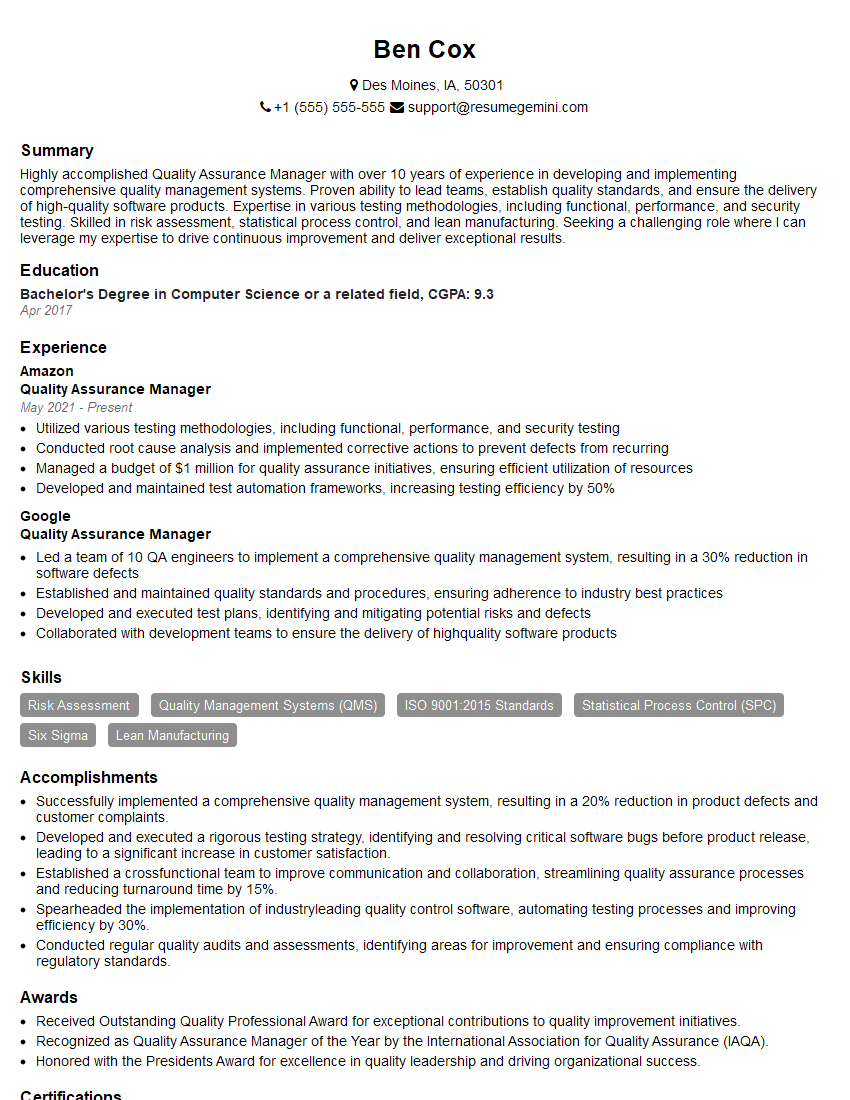
Quality Assurance Manager Resume Sample
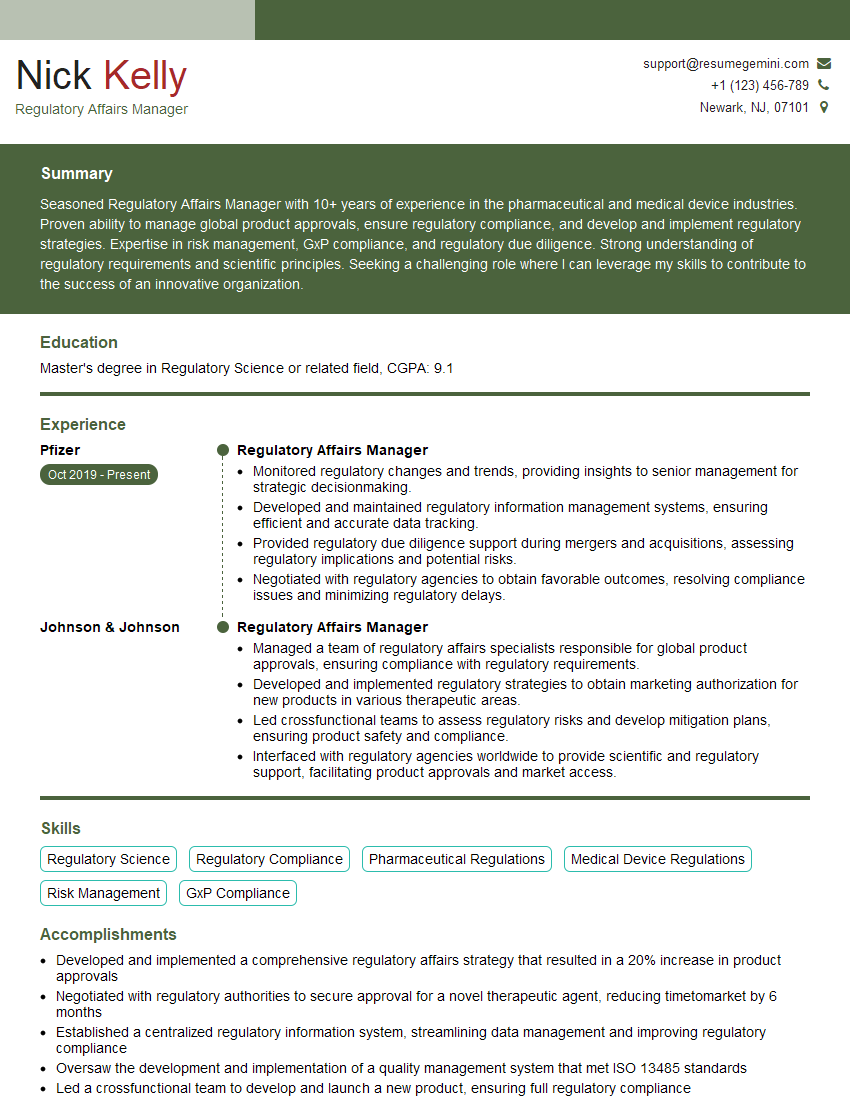
Regulatory Affairs Manager Resume Sample
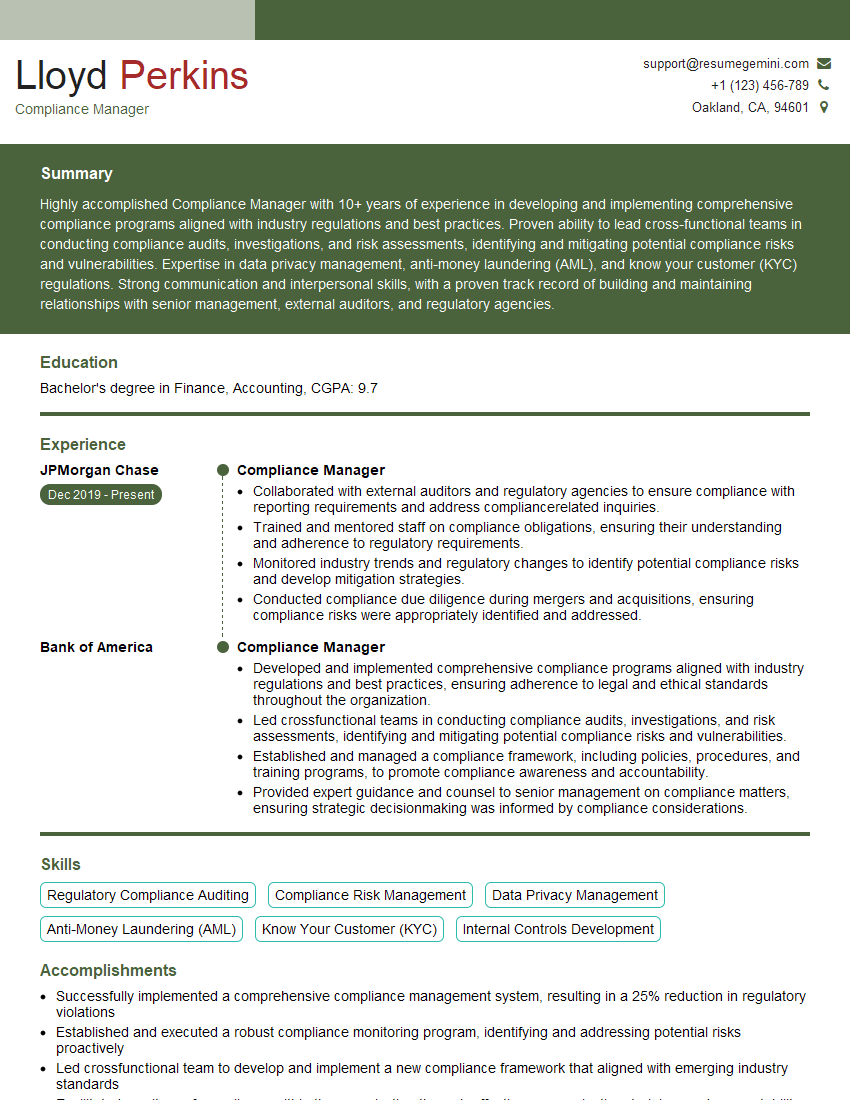
Compliance Manager Resume Sample
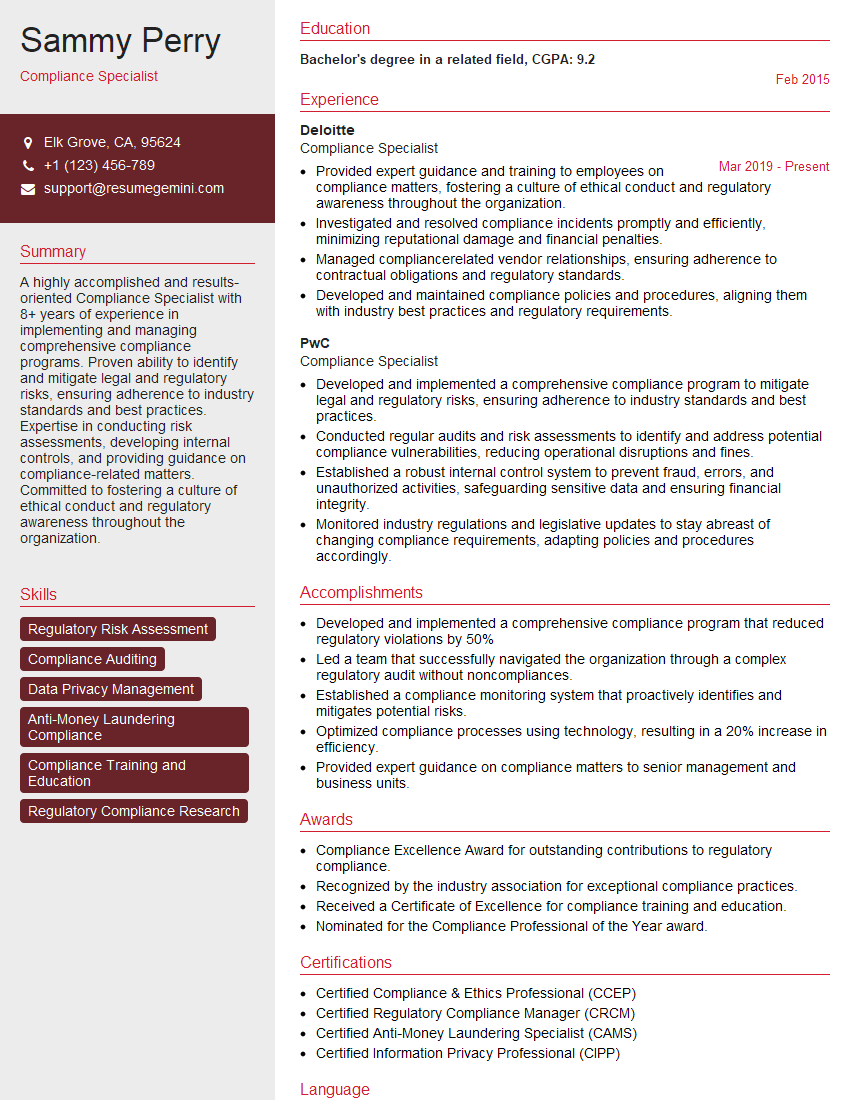
Compliance Specialist Resume Sample
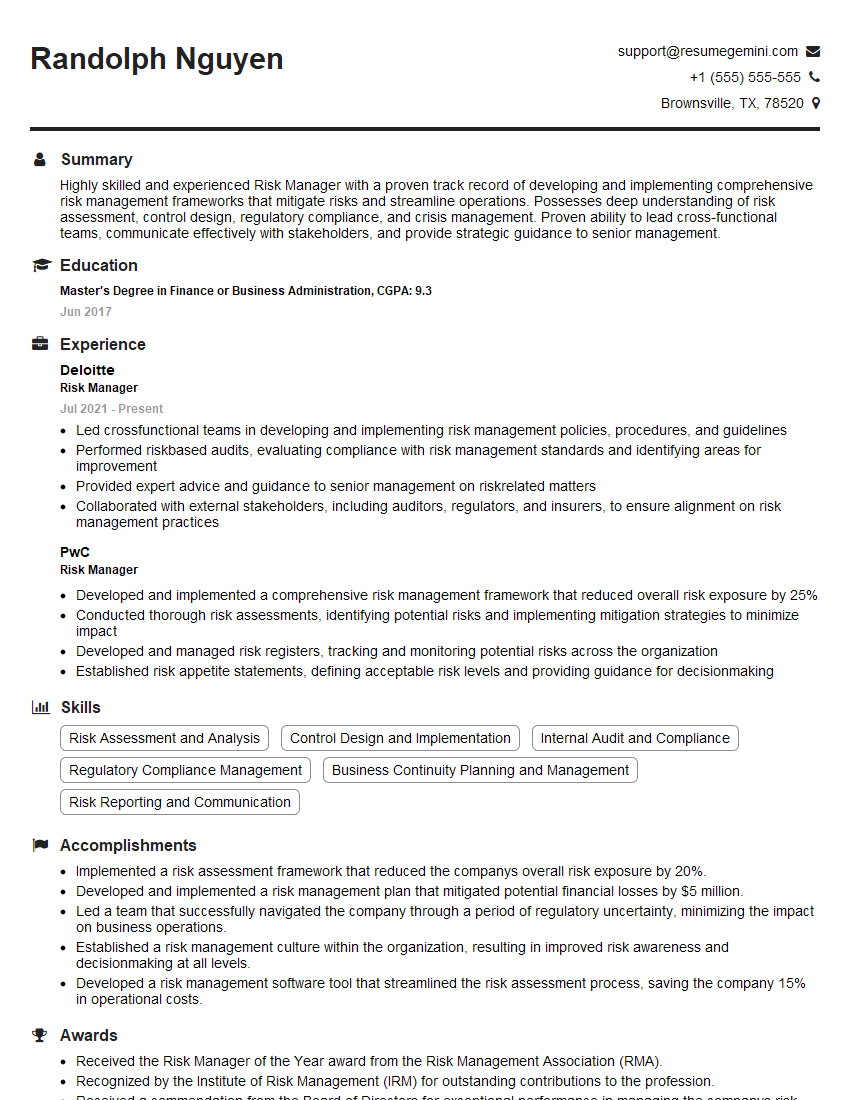
Risk Manager Resume Sample
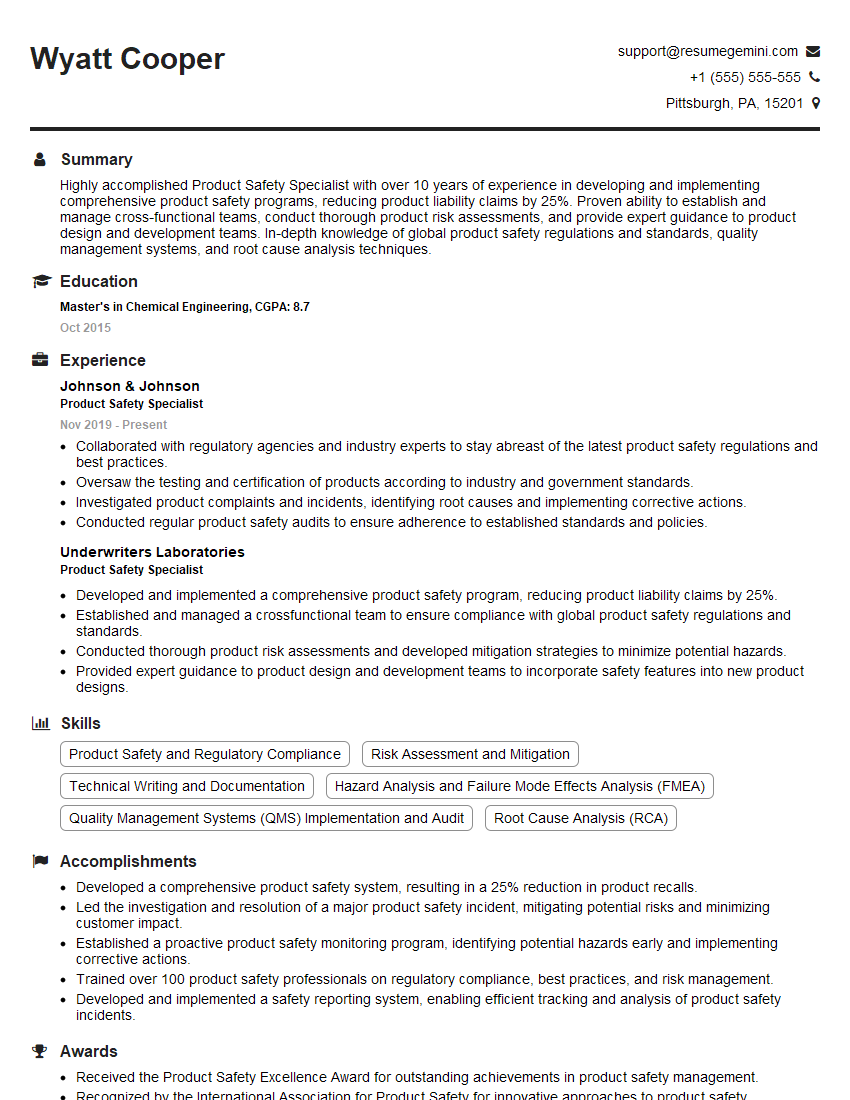
Product Safety Specialist Resume Sample
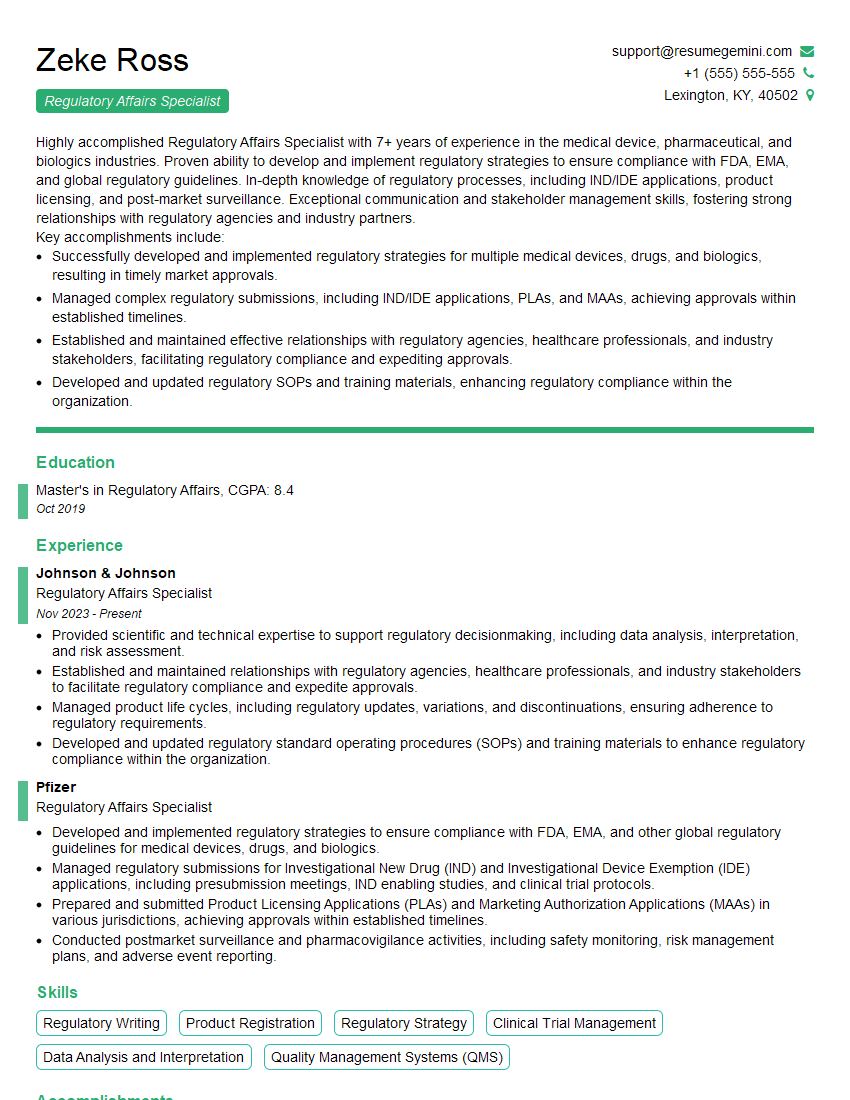
Regulatory Affairs Specialist Resume Sample
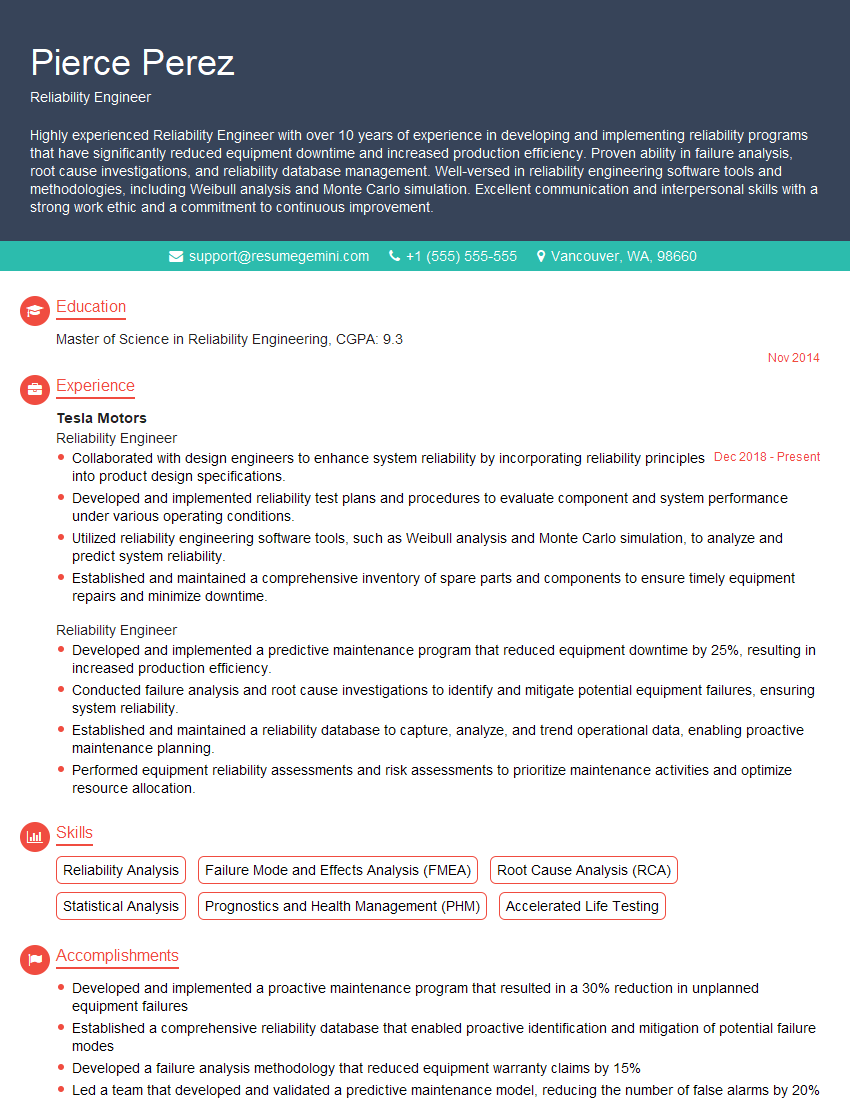
Reliability Engineer Resume Sample
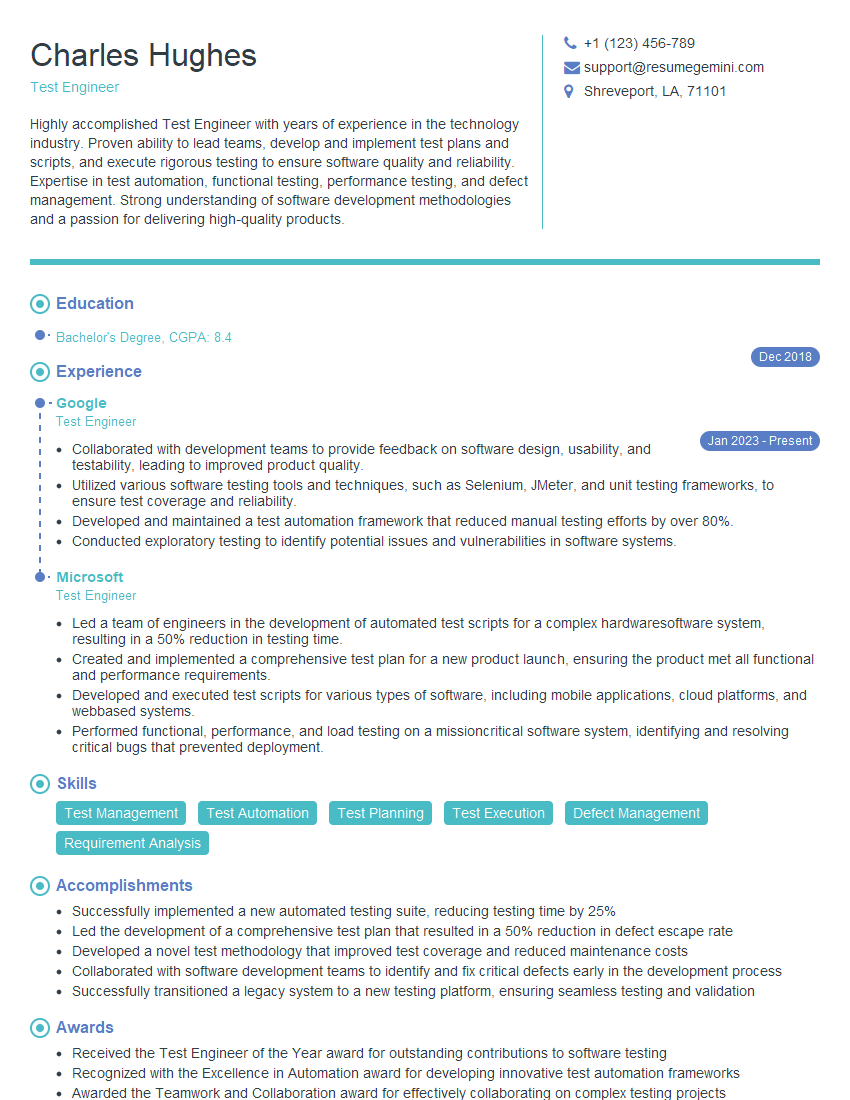
Test Engineer Resume Sample
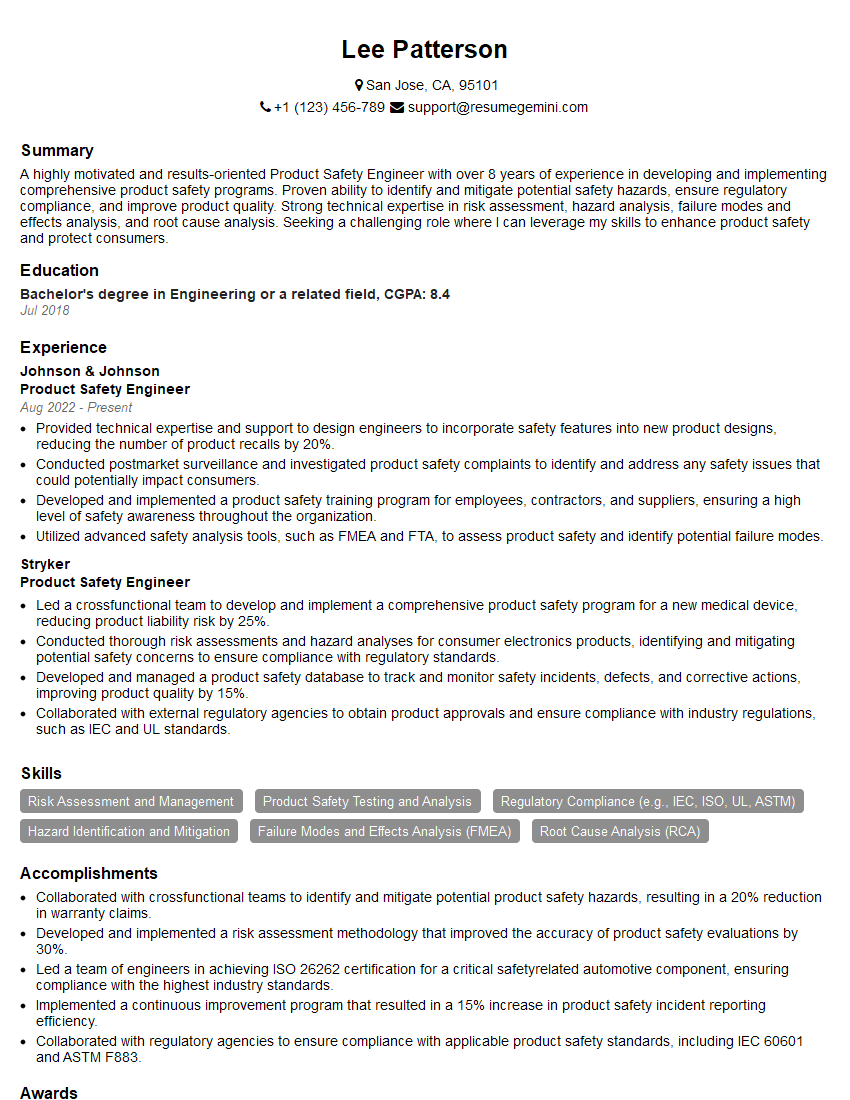
Product Safety Engineer Resume Sample
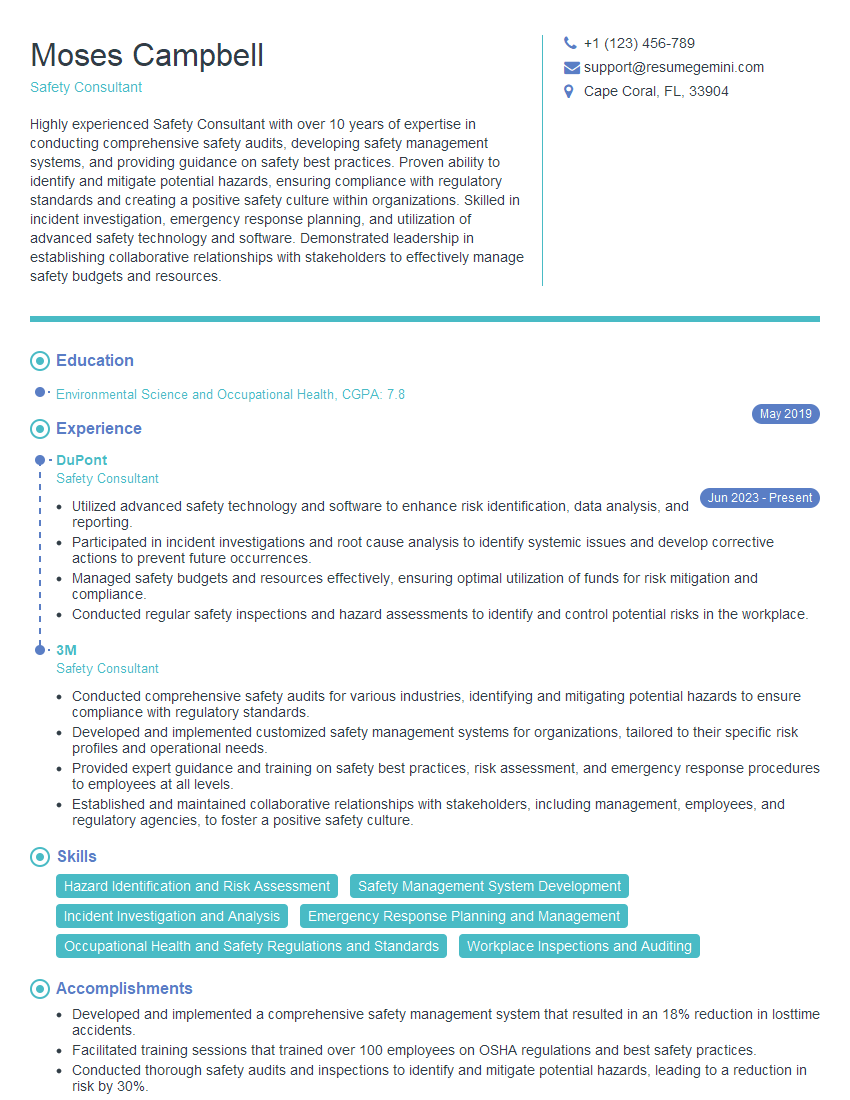
Safety Consultant Resume Sample
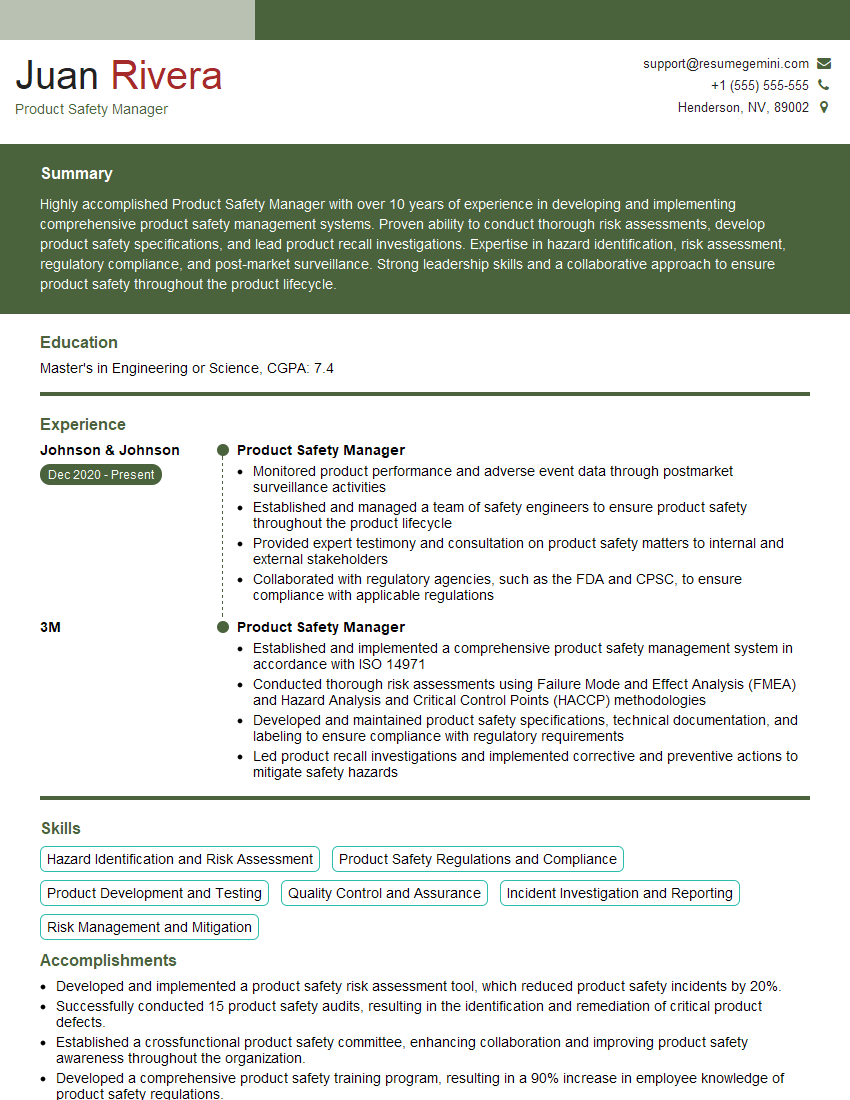
Product Safety Manager Resume Sample
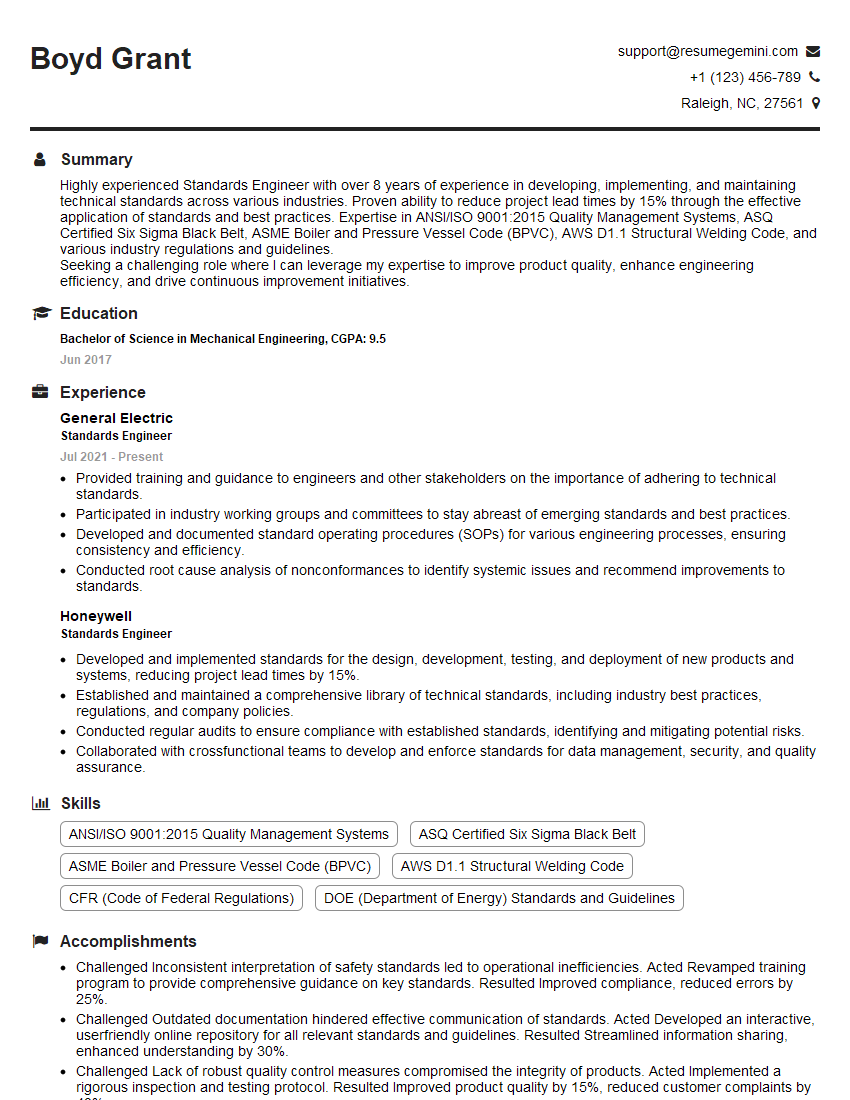
Standards Engineer Resume Sample
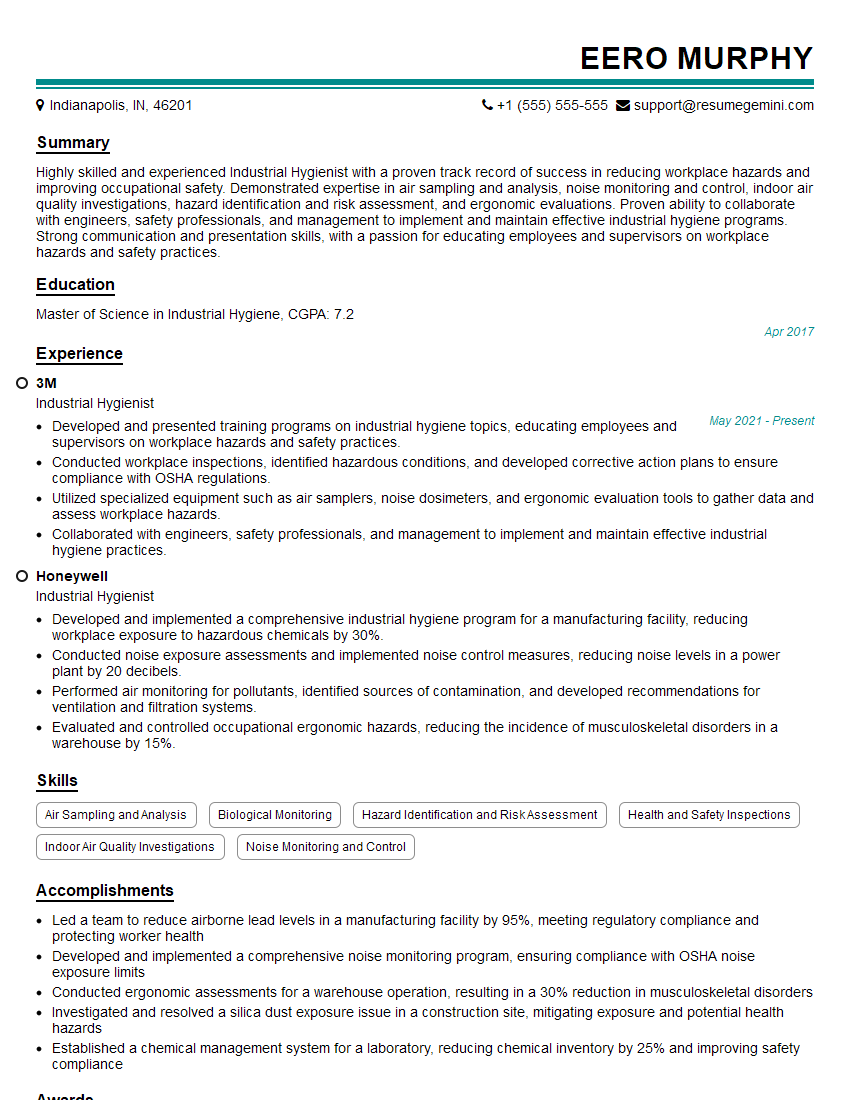
Industrial Hygienist Resume Sample
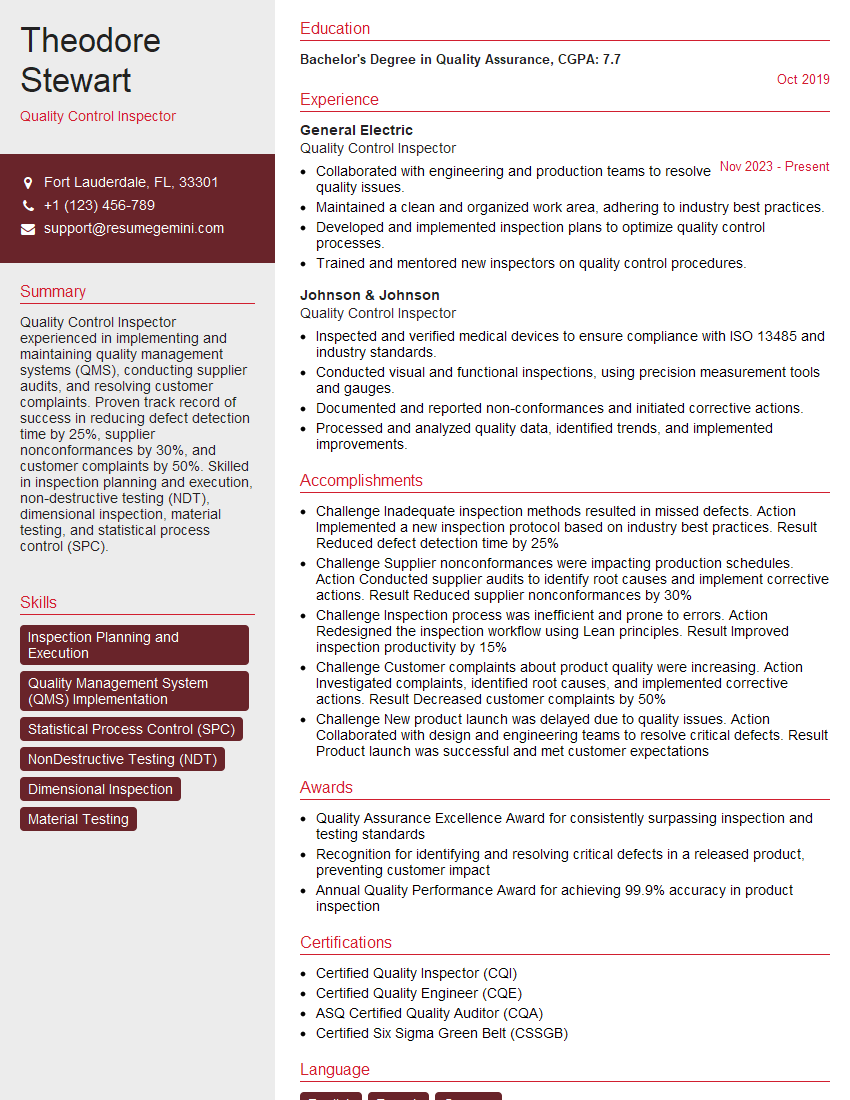
Quality Control Inspector Resume Sample
- Quality Assurance Manager
- Regulatory Affairs Manager
- Compliance Manager
- Compliance Specialist
- Risk Manager
- Product Safety Specialist
- Regulatory Affairs Specialist
- Reliability Engineer
- Test Engineer
- Product Safety Engineer
- Safety Consultant
- Product Safety Manager
- Standards Engineer
- Industrial Hygienist
- Quality Control Inspector
Explore more articles
Users Rating of Our Blogs
Share Your Experience
We value your feedback! Please rate our content and share your thoughts (optional).
What Readers Say About Our Blog
Very informative content, great job.
good