Interviews are opportunities to demonstrate your expertise, and this guide is here to help you shine. Explore the essential Product Safety Standards Interpretation interview questions that employers frequently ask, paired with strategies for crafting responses that set you apart from the competition.
Questions Asked in Product Safety Standards Interpretation Interview
Q 1. Explain your understanding of ISO 9001 and its relevance to product safety.
ISO 9001 is a globally recognized Quality Management System (QMS) standard. While it doesn’t directly address product safety, it lays a crucial foundation for achieving it. Think of it as the scaffolding upon which you build a safe product. It focuses on establishing a robust framework for consistently meeting customer requirements and enhancing customer satisfaction. This framework includes processes for design, development, production, and post-market surveillance, all essential for ensuring product safety. A strong QMS ensures that safety considerations are integrated throughout the entire product lifecycle, from initial concept to final disposal. For example, a well-implemented ISO 9001 system will include documented procedures for risk assessments, material selection, testing, and corrective actions, all vital elements for building safe products. Failure to properly address these processes can lead to product defects and safety hazards. ISO 9001’s emphasis on continuous improvement further ensures that safety standards remain up to date and effective.
Q 2. Describe your experience with UL standards and their application in product design.
My experience with UL standards is extensive. UL (Underwriters Laboratories) provides independent safety testing and certification for a vast range of products. In product design, we utilize UL standards as the benchmark for safety compliance. For example, in designing a power supply, we must adhere to relevant UL 62368-1 standards, which dictate requirements for the safe construction and operation of the device, including aspects like insulation, clearances, and creepage distances. These standards are meticulously followed from the initial design phase, through prototyping and testing, and ultimately, the final product certification. I’ve personally been involved in several projects where we worked closely with UL to address specific concerns and ensure our designs met all applicable standards. This involves meticulous documentation, rigorous testing, and ongoing communication with the certifying body. Any deviation from the standards is thoroughly documented and justified to ensure the safety and reliability of the final product. We would conduct testing both internally and by a third party UL laboratory to ensure compliance.
Q 3. How do you ensure compliance with CE marking requirements?
Ensuring compliance with CE marking requires a comprehensive approach. CE marking, short for ‘Conformité Européenne’ or European Conformity, indicates that a product meets EU health, safety, and environmental protection requirements. It’s not a certification in itself but a self-declaration of conformity. The process starts with identifying all applicable directives and harmonized standards relevant to the product. This involves carefully analyzing the product’s features and intended use. Next, we conduct thorough risk assessments, design validation, and testing according to the identified standards. Crucially, we maintain meticulous documentation throughout the entire process, including design files, test results, and declarations of conformity. This documentation serves as proof of compliance and is essential in case of audits or investigations. We also ensure our supply chain partners comply with relevant regulations. If the product falls under specific directives requiring notified body involvement, we work with a designated body to obtain the necessary certifications. Finally, the CE marking is applied to the product to show compliance and allows the product to be legally sold within the European Economic Area. This careful and meticulous approach minimizes risks and ensures consumer safety. A failure to comply with CE marking can result in significant penalties and market withdrawals.
Q 4. What are the key differences between product safety standards in the US and EU?
The key differences between US and EU product safety standards lie primarily in their regulatory approaches and emphasis. The US, especially through agencies like the Consumer Product Safety Commission (CPSC), tends to focus on a post-market surveillance approach, reacting to safety incidents and issuing recalls as needed. While standards exist, enforcement often relies on incident-driven responses. The EU, on the other hand, employs a more proactive, preventative approach. They utilize a comprehensive system of directives and harmonized standards that manufacturers must comply with *before* placing a product on the market. This means manufacturers bear the responsibility for demonstrating compliance beforehand, making the EU system more stringent in its pre-market checks. Another difference is in the specific standards used. While there’s significant overlap, certain standards are region-specific, requiring different testing methodologies and compliance certifications. For instance, electrical safety standards may differ slightly between UL (US) and IEC (International Electrotechnical Commission) standards adopted by the EU. The different approaches mean that a product compliant with US standards may not automatically meet EU requirements, and vice-versa, mandating adjustments for specific target markets.
Q 5. Explain your experience with risk assessment methodologies (e.g., FMEA, FTA).
I have extensive experience using Failure Mode and Effects Analysis (FMEA) and Fault Tree Analysis (FTA) in product safety assessments. FMEA is a proactive approach where we systematically identify potential failure modes, their effects, and their severity, occurrence, and detectability. This leads to prioritization of potential hazards and allows for the implementation of mitigative designs or processes. For instance, in a recent project involving a medical device, we used FMEA to identify potential risks associated with battery failure. By analyzing the potential for overheating and its impact, we implemented safeguards like thermal sensors and emergency shut-off mechanisms. FTA, conversely, is a deductive technique. It focuses on a specific unwanted event (top event) and analyzes the contributing factors that can lead to it. It helps visualize the cascading effects of failures. I’ve used FTA to assess potential risks associated with software failures in embedded systems by analyzing the fault propagation from hardware failures through the software to their impact on the product’s safety. Both FMEA and FTA are invaluable in identifying and mitigating potential hazards before they become real-world problems, improving product reliability and safety.
Q 6. How would you handle a situation where a product fails to meet safety standards?
Handling a product failure to meet safety standards requires a structured, multi-step response. First, we thoroughly investigate the root cause of the failure. This involves reviewing all relevant documentation, conducting additional testing, and analyzing failure data. Depending on the severity, we might engage external experts or regulatory agencies to assist with the analysis. Once the root cause is identified, we implement corrective and preventive actions. This could involve design modifications, changes to manufacturing processes, or improved quality control measures. It’s crucial to thoroughly document these actions and their effectiveness. Then, we communicate openly and transparently with relevant stakeholders, including customers, regulatory bodies, and internal teams. This might involve issuing recalls, providing updates, and implementing customer support measures. We would also review our internal processes and identify areas for improvement to prevent similar failures in the future. The approach is always data-driven, aiming for a full understanding of the failure, quick and effective remediation, and lessons learned to avoid future issues. Transparency and responsiveness to regulatory bodies are vital in maintaining credibility and protecting our brand reputation.
Q 7. Describe your experience with safety testing procedures and equipment.
My experience with safety testing procedures and equipment is extensive. I’m proficient in using a wide range of testing equipment, including environmental chambers (for thermal and humidity testing), mechanical testing machines (for strength and durability assessments), electrical safety testers (for insulation resistance, leakage current, and dielectric strength testing), and electromagnetic compatibility (EMC) testing equipment. I’m also familiar with advanced techniques like Finite Element Analysis (FEA) for predicting product behavior under stress and Accelerated Life Testing (ALT) to assess product longevity. For example, I was involved in a project testing a medical device’s resistance to impact, electromagnetic interference, and various temperature extremes. We used specialized equipment to simulate real-world conditions and ensure the device’s safety and reliability in various environments. Proper documentation of test methodologies, procedures, and results is critical, adhering to relevant standards and ensuring traceability. Maintaining and calibrating equipment is crucial for reliable results. Understanding the limitations of different testing methodologies is equally important to interpret results and make informed decisions about product safety.
Q 8. What are your methods for staying up-to-date on evolving product safety regulations?
Staying current with product safety regulations requires a multi-faceted approach. It’s not a one-time task but an ongoing commitment. My strategy involves several key methods:
Subscription to Regulatory Agencies and Standard Organizations: I actively subscribe to newsletters and updates from organizations like the Consumer Product Safety Commission (CPSC), the European Commission (for EU directives like RoHS and REACH), and relevant standards bodies like ASTM International and UL. This ensures I receive timely alerts on new regulations, amendments, and interpretations.
Industry Publications and Conferences: I regularly read trade journals and attend industry conferences and webinars focused on product safety. These events offer insights into emerging trends, best practices, and discussions on evolving regulatory landscapes. Networking with other professionals also provides valuable information.
Legal and Compliance Databases: I utilize specialized databases that compile and analyze product safety regulations from across the globe. These databases often provide alerts for relevant changes and offer sophisticated search capabilities for specific product categories or regulations.
Internal Knowledge Sharing: Within my team, we maintain a robust system of internal communication and knowledge sharing, documenting relevant changes, and conducting regular training sessions to keep everyone updated. This ensures that the entire team operates with the latest safety guidelines.
By combining these methods, I ensure I’m consistently aware of the changing regulatory landscape and can proactively adapt our processes to meet the latest safety standards.
Q 9. How do you interpret and apply safety standards to specific product designs?
Interpreting and applying safety standards to specific product designs is a systematic process. It begins with a thorough understanding of the applicable standards and the product’s intended use and target market. Think of it like assembling a puzzle – each standard piece fits into the bigger picture of product safety.
Identify Applicable Standards: The first step is identifying all relevant safety standards. This often involves consulting national and international standards, considering the product’s intended use and the regions where it will be sold. For example, a children’s toy will need to comply with stringent standards related to small parts and choking hazards.
Hazard Identification and Risk Assessment: A detailed hazard analysis is conducted to identify potential hazards associated with the product’s design, manufacturing, use, and disposal. This involves brainstorming potential failures, misuse scenarios, and potential resulting injuries or damages. Risk assessment quantifies the likelihood and severity of these hazards.
Design for Safety: Based on the risk assessment, design modifications are implemented to mitigate identified hazards. This could involve changing materials, incorporating safety features, or redesigning specific components to meet standard requirements. For example, a power tool might need an improved safety switch or improved guarding to prevent accidental injury.
Verification and Validation: Testing and verification procedures are implemented to ensure that the design modifications effectively mitigate the identified hazards and that the product consistently meets the safety standards. This can involve various testing methodologies, including simulations and physical tests.
Documentation: Comprehensive documentation is crucial. This includes all safety standards referenced, hazard analysis results, risk assessments, design modifications, testing data, and any other relevant information.
This structured approach ensures that the product is designed and manufactured to meet all applicable safety standards, minimizing potential risks and maximizing user safety.
Q 10. Explain your understanding of hazard analysis and critical control points (HACCP).
Hazard Analysis and Critical Control Points (HACCP) is a systematic, preventative approach to food safety that can also be adapted for other product types. It focuses on identifying and controlling potential hazards at each stage of the product lifecycle. Think of it as building a safety net – anticipating potential problems and building safeguards to prevent them.
Hazard Analysis: This involves identifying all potential biological, chemical, and physical hazards that could occur during production, processing, packaging, storage, and distribution. For example, in food production, this might include bacterial contamination, chemical residues, or physical contaminants like glass shards.
Critical Control Points (CCPs): Once hazards are identified, CCPs are determined. CCPs are points in the process where control is essential to prevent or eliminate a hazard or reduce it to an acceptable level. For example, the cooking temperature might be a CCP for ensuring that bacteria are eliminated in a food product.
Critical Limits: For each CCP, critical limits are established. These are measurable parameters that must be met to ensure the hazard is controlled. In the cooking temperature example, this might be a minimum temperature that must be maintained for a specific duration.
Monitoring: Regular monitoring of CCPs is essential to ensure that critical limits are being met. This typically involves routine inspections, temperature checks, or other relevant measurements.
Corrective Actions: If a CCP is not meeting its critical limits, corrective actions must be taken immediately to rectify the problem. This could involve adjusting process parameters, discarding contaminated products, or implementing other corrective measures.
Record Keeping: Detailed records of all monitoring, corrective actions, and other relevant information must be maintained. These records provide evidence that the HACCP plan is being effectively implemented.
While primarily used in food safety, the principles of HACCP can be adapted to non-food products by focusing on hazards related to the specific product and its intended use. For example, in manufacturing toys, a CCP might be the inspection process for small parts to prevent choking hazards.
Q 11. How do you communicate complex safety information to non-technical audiences?
Communicating complex safety information to non-technical audiences requires clear, concise, and engaging communication. I employ several strategies to achieve this:
Plain Language: I avoid technical jargon and use simple, everyday language that everyone can understand. Replacing complex terms with clear definitions is essential.
Visual Aids: Using visual aids like diagrams, charts, and infographics helps simplify complex information and make it more accessible. A picture is worth a thousand words, especially when explaining safety procedures.
Storytelling: Narratives and real-life examples make the information more relatable and memorable. Sharing stories about how safety failures have impacted individuals or organizations can be a powerful motivator.
Interactive Communication: Interactive sessions, such as workshops or Q&A sessions, allow for clarification and a two-way exchange of information, ensuring audience engagement and understanding.
Layered Communication: Providing information at different levels of detail caters to different levels of technical understanding within an audience. Summary documents for broader audiences, and more detailed technical reports for experts, ensures efficient communication.
For instance, when explaining the importance of a specific safety feature on a product, I might use a simple analogy that relates it to something familiar to the audience, making the information easily understandable and memorable.
Q 12. Describe your experience with root cause analysis (RCA) techniques.
Root Cause Analysis (RCA) is a systematic approach to identifying the underlying causes of problems, rather than just addressing the symptoms. It’s about digging deep to find the ‘why’ behind a failure, not just the ‘what’.
I have extensive experience with various RCA techniques, including:
5 Whys: This simple yet effective method involves repeatedly asking ‘why’ to uncover the root cause. By asking ‘why’ five times (or more), you often peel back layers of symptoms to reach the underlying issue. It’s a great starting point for simpler problems.
Fishbone Diagram (Ishikawa Diagram): This visual tool helps brainstorm potential causes categorized by different contributing factors (e.g., materials, methods, manpower, machinery, measurement, environment). It’s excellent for collaborative RCA sessions.
Fault Tree Analysis (FTA): FTA uses a top-down approach, starting with an undesired event (the problem) and working backward to identify the contributing causes through Boolean logic. This method is particularly useful for complex systems.
In practice, I often combine these methods to achieve a comprehensive understanding of the root cause. For example, I might use the 5 Whys to initially explore a problem, then use a fishbone diagram to facilitate a more in-depth group discussion and identify potential contributing factors. The choice of technique depends on the complexity of the problem and the available resources. Regardless of the method, thorough documentation is crucial to track the RCA process and its findings.
Q 13. How do you manage safety documentation and record-keeping?
Effective safety documentation and record-keeping are paramount for maintaining compliance and demonstrating due diligence. My approach involves a structured system that combines both physical and digital record-keeping:
Centralized System: All safety-related documents are stored in a centralized, easily accessible system. This system could be a combination of physical filing cabinets for archival purposes and a digital document management system (DMS) for easy access and sharing.
Version Control: A version control system ensures that only the most up-to-date documents are used. This prevents confusion and ensures that everyone is working with the latest information.
Metadata Tagging: Documents are tagged with relevant metadata to enable efficient searching and retrieval. This includes information such as product name, standard number, date, and author.
Audit Trails: A clear audit trail is maintained for all documents, showing when they were created, modified, and accessed. This ensures accountability and traceability.
Regular Backups: Regular backups are performed to protect against data loss. This includes both physical and digital backups, stored in separate locations.
This system ensures that all safety documentation is readily available, well-organized, and easily retrievable for audits or future reference. It provides a clear picture of the safety measures implemented and their effectiveness.
Q 14. What is your experience with product recall procedures?
Product recall procedures are serious matters that require a swift, organized, and transparent response. My experience includes all phases of the recall process:
Recall Initiation: This involves identifying the product defect or hazard, assessing the risk to consumers, and deciding whether a recall is necessary. This often involves collaboration with regulatory agencies.
Recall Strategy Development: A detailed recall plan is developed, outlining the steps involved in notifying consumers, retrieving the affected products, and managing communications. This plan should account for various communication channels and potential logistical challenges.
Notification and Communication: Consumers are notified of the recall through various channels, such as press releases, website updates, social media, and direct mail. Clear and concise communication is vital to ensure consumers understand the risk and how to return the product.
Product Retrieval: A system is set up to retrieve the affected products. This can involve working with retailers, distributors, and consumers to return the products. Efficient logistics is essential for a smooth recall.
Corrective Actions: Corrective actions are implemented to prevent similar issues from occurring in the future. This might involve design changes, improved manufacturing processes, or enhanced quality control measures.
Post-Recall Analysis: A thorough post-recall analysis is conducted to evaluate the effectiveness of the recall process and identify areas for improvement. This is crucial for preventing future recalls.
Throughout the entire process, meticulous record-keeping is crucial for documenting all actions taken, communication made, and data collected. This information is invaluable for future reference and demonstrating compliance with regulatory requirements.
Q 15. How do you collaborate with cross-functional teams to ensure product safety?
Effective product safety relies heavily on cross-functional collaboration. I approach this by acting as a bridge between engineering, design, manufacturing, marketing, and legal teams. My role is to ensure that safety considerations are integrated into every stage of the product lifecycle, from initial concept to post-market surveillance.
- Early Involvement: I actively participate in design reviews, offering input on potential hazards and suggesting mitigating strategies. This proactive approach prevents safety issues from becoming costly problems later on.
- Clear Communication: I utilize clear and concise communication, explaining complex safety standards in plain language, ensuring everyone understands their role in maintaining product safety. Regular meetings and shared documentation keep all stakeholders informed.
- Risk Assessment Collaboration: We collaboratively conduct thorough risk assessments, identifying potential hazards and analyzing their severity and likelihood. This helps prioritize safety interventions and resource allocation. For example, during the development of a new children’s toy, we’d collaboratively identify potential choking hazards and design solutions to mitigate them.
- Data-Driven Decision Making: I leverage data from testing, incident reports, and market surveillance to inform safety improvements. This data helps us to continuously refine our safety processes and products.
Career Expert Tips:
- Ace those interviews! Prepare effectively by reviewing the Top 50 Most Common Interview Questions on ResumeGemini.
- Navigate your job search with confidence! Explore a wide range of Career Tips on ResumeGemini. Learn about common challenges and recommendations to overcome them.
- Craft the perfect resume! Master the Art of Resume Writing with ResumeGemini’s guide. Showcase your unique qualifications and achievements effectively.
- Don’t miss out on holiday savings! Build your dream resume with ResumeGemini’s ATS optimized templates.
Q 16. What safety standards are relevant to your field of expertise?
The safety standards relevant to my field are numerous and depend heavily on the specific product category. However, some universally important standards include:
- ISO 9001: Focuses on quality management systems, providing a framework for consistently meeting customer and regulatory requirements, including safety aspects.
- ISO 14001: Addresses environmental management, which often overlaps with product safety by considering the environmental impact of materials and manufacturing processes.
- IEC 60950-1 (and its successor IEC 62368-1): Covers safety requirements for information technology equipment, crucial for electronics and appliances.
- UL standards (e.g., UL 1642 for power supplies): Underwriters Laboratories standards define specific safety requirements for many product types.
- ASTM standards (e.g., ASTM F963 for toys): American Society for Testing and Materials standards provide testing methods and safety requirements for various products.
- Specific regional standards: Many regions have their own specific regulations and safety standards that must be adhered to, such as CE marking in Europe, CCC marking in China, and others.
The selection of relevant standards depends on the product’s intended use, target market, and applicable regulations.
Q 17. Describe a time you had to resolve a safety-related issue.
During the production of a new line of power tools, we discovered a potential issue with the safety switch. During routine testing, we found that under specific conditions, the switch could fail to disengage, posing a risk of electric shock.
My response involved a multi-stage process:
- Immediate Stoppage: We immediately halted production to prevent further units from being shipped.
- Root Cause Analysis: A thorough investigation was conducted to identify the exact cause of the switch failure. This involved examining the design, manufacturing process, and components.
- Corrective Action Plan: Based on the root cause analysis, we implemented a corrective action plan. This included redesigning the safety switch, retraining manufacturing personnel, and implementing stricter quality control checks.
- Communication and Recall: We contacted relevant authorities and initiated a voluntary recall of affected units. Clear communication with customers was paramount, emphasizing the safety risk and providing instructions on how to return the faulty products for replacement.
This experience highlighted the importance of rigorous testing, proactive risk management, and swift response in addressing product safety issues.
Q 18. How familiar are you with OSHA regulations?
I am very familiar with OSHA (Occupational Safety and Health Administration) regulations, particularly as they relate to workplace safety within manufacturing environments. My understanding covers areas such as:
- Hazard Communication: Understanding and implementing proper labeling, safety data sheets (SDS), and employee training programs.
- Personal Protective Equipment (PPE): Ensuring that appropriate PPE is available and utilized by employees, including eye protection, hearing protection, and other necessary equipment.
- Machine Guarding: Knowing the requirements for guarding machinery to prevent injuries from moving parts.
- Lockout/Tagout procedures: Implementing and overseeing procedures to prevent accidental start-up of equipment during maintenance or repair.
- Emergency Action Plans: Understanding and participating in the development and implementation of emergency action plans for various scenarios.
OSHA compliance is crucial in maintaining a safe workplace, and it’s a significant aspect of my overall product safety responsibilities.
Q 19. Explain your approach to conducting product safety audits.
My approach to conducting product safety audits is systematic and thorough, following a structured methodology:
- Planning Phase: This includes defining the scope of the audit, identifying relevant safety standards and regulations, and creating a detailed checklist based on those standards.
- On-site Inspection: This involves a physical inspection of the manufacturing facility and the product itself, examining production processes, materials, and documentation. I use a combination of observation, interviews, and document review.
- Testing and Verification: This step may involve witnessing testing procedures or conducting independent tests to verify that the product meets safety requirements. I might use specialized equipment or refer to external testing laboratories.
- Documentation Review: I carefully review design documentation, manufacturing records, test reports, and any other relevant documents to ensure compliance with standards and regulations. I pay close attention to details like traceability and calibration records.
- Reporting and Follow-up: Following the audit, a comprehensive report is created, detailing findings, recommendations, and corrective actions. I conduct follow-up audits to ensure that recommended improvements have been implemented.
My audit approach prioritizes objectivity, thoroughness, and continuous improvement.
Q 20. How would you determine if a product is compliant with specific safety standards?
Determining product compliance involves a multi-faceted approach:
- Identify Applicable Standards: The first step is to identify all the relevant safety standards and regulations applicable to the product. This will depend on the product’s type, intended use, and the target market.
- Design Review: Thoroughly reviewing the product design to ensure it inherently incorporates safety features and mitigates potential hazards. This might include using Failure Mode and Effects Analysis (FMEA).
- Testing and Verification: Conduct comprehensive testing according to the specified standards. This might include electrical safety testing, mechanical testing, flammability testing, and other tests as needed.
- Documentation: Maintaining thorough documentation of the design, manufacturing processes, testing results, and any corrective actions taken. This documentation is crucial for demonstrating compliance and for future reference.
- Certification (if applicable): Seeking third-party certification from recognized testing laboratories and certification bodies to provide an independent verification of compliance. Examples include UL certification or CE marking.
A product can only be deemed compliant if it passes all necessary tests and meets all the requirements of the applicable standards and regulations.
Q 21. How do you balance product safety with production efficiency?
Balancing product safety and production efficiency is a crucial aspect of my role. It’s not a trade-off, but rather a careful optimization. My approach involves:
- Early Integration of Safety: Incorporating safety considerations from the initial design phase minimizes costly redesigns and delays later on. This proactive approach streamlines the production process.
- Efficient Testing Strategies: Implementing well-planned and efficient testing protocols minimizes downtime and ensures that safety checks are integrated seamlessly into the manufacturing process.
- Automation and Technology: Leveraging automation and advanced technologies in manufacturing can improve both safety and efficiency by reducing human error and improving consistency.
- Continuous Improvement: Regularly reviewing safety protocols and processes to identify areas for improvement, enhancing both safety and efficiency over time. This includes analyzing data from manufacturing processes and safety audits.
- Training and Education: Providing thorough training to manufacturing personnel on safety procedures and best practices contributes to both a safe and efficient work environment.
By proactively integrating safety into every step of the process, we can achieve high levels of both product safety and production efficiency. It’s about finding smart and efficient solutions that don’t compromise safety.
Q 22. What are the ethical considerations when dealing with product safety?
Ethical considerations in product safety are paramount. They revolve around a commitment to prioritizing the well-being of consumers above profit maximization. This means proactively identifying and mitigating potential hazards, even if it’s costly. It’s about transparency in communicating product risks, honestly representing product capabilities, and acting responsibly when safety issues arise – even initiating recalls swiftly and without hesitation. A core ethical principle is to design products with safety as a primary design goal, not an afterthought. For example, a company might choose a more expensive, but safer, material even if it impacts profit margins slightly. This demonstrates a true commitment to ethical product safety.
Another crucial aspect is ensuring that safety testing is thorough, unbiased, and performed by qualified personnel. This prevents conflicts of interest and guarantees the integrity of the results. Finally, ethical product safety demands a company culture that values safety above all else and actively encourages employees to report safety concerns without fear of reprisal.
Q 23. Explain your experience with different types of safety testing (e.g., mechanical, electrical).
My experience encompasses a wide range of safety testing methodologies. In mechanical testing, I’ve extensively used techniques like tensile strength testing to determine material durability, impact testing to assess resistance to shock, and fatigue testing to evaluate the product’s endurance under repetitive stress. For example, I was involved in evaluating the strength of a child’s toy to ensure it couldn’t easily break into sharp pieces.
Electrical testing is another area of my expertise, including dielectric strength tests to ensure insulation quality, ground fault testing to prevent electric shocks, and high-pot testing to evaluate insulation integrity. In one project, we identified a potential short circuit risk in a power adapter using these methods, preventing a potentially dangerous product from reaching the market. Furthermore, I have experience in environmental testing, covering aspects like thermal shock (sudden temperature changes), vibration testing to simulate real-world conditions, and humidity testing to ensure product longevity. This holistic approach ensures a thorough evaluation of product safety across all possible failure modes.
Q 24. How do you incorporate safety considerations into the product development lifecycle?
Incorporating safety into the product development lifecycle (PDLC) is not merely a compliance exercise; it’s a core design principle. It starts in the initial concept and design phase, where hazard analysis techniques like Failure Mode and Effects Analysis (FMEA) are used to proactively identify and mitigate potential hazards. For example, using FMEA, we might identify a potential pinch point in a machine and design a protective guard to eliminate the hazard. Throughout design, safety features are built-in, not bolted on as an afterthought.
During prototyping, rigorous testing, as detailed in my previous answer, confirms the effectiveness of the safety measures. Testing data is meticulously documented and used to continuously improve the design. The manufacturing phase also includes safety audits and quality control checks to maintain consistently high safety standards. Post-market surveillance tracks product performance and user feedback to promptly address any unforeseen issues. This holistic approach ensures product safety is a continuous process throughout the entire lifecycle of the product, guaranteeing both consumer protection and regulatory compliance.
Q 25. What is your understanding of the legal ramifications of product safety violations?
The legal ramifications of product safety violations can be severe. Depending on the jurisdiction and severity of the violation, consequences range from hefty fines and product recalls to criminal charges against individuals and companies. For instance, a company failing to comply with mandatory safety standards could face significant financial penalties and legal actions from affected consumers.
Violations leading to injuries or deaths can result in even more serious consequences, including lawsuits seeking substantial damages, reputational damage, and even criminal indictments for corporate negligence or manslaughter. Regulatory bodies have the authority to seize unsafe products and impose strict sanctions to prevent further harm. Therefore, maintaining comprehensive safety programs and adhering to all relevant regulations is crucial for avoiding such catastrophic outcomes.
Q 26. How familiar are you with different international safety standards (e.g., IEC, ISO)?
I’m very familiar with numerous international safety standards. My expertise includes IEC standards, extensively used in electrical and electronic products; ISO standards, which cover a broader range of safety aspects across various industries; and UL standards, widely recognized in North America. I understand the nuances of these standards, including their requirements, testing methods, and certification processes.
For example, I’ve worked extensively with IEC 60950-1 (now superseded) and IEC 62368-1 for information technology equipment safety, understanding the differences in their approaches and requirements. My knowledge extends to understanding the harmonization efforts between these standards and their implications for global product compliance. This allows me to navigate the complexities of different international regulations and ensure products meet the necessary safety criteria in all target markets.
Q 27. Explain your experience with developing and implementing safety programs.
My experience in developing and implementing safety programs involves a structured approach. It begins with a comprehensive risk assessment, identifying potential hazards associated with the product and its lifecycle. This is often followed by the creation of detailed safety procedures, including work instructions and training materials for employees. We also develop and implement quality control measures at every stage of production.
A crucial element is establishing robust incident reporting and investigation procedures to thoroughly examine any safety incidents, enabling corrective actions and preventative measures. Regular safety audits and internal reviews assess the effectiveness of implemented safety measures and pinpoint areas for improvement. Finally, continuous improvement is key, with ongoing monitoring and adaptation to evolving technologies and safety standards. This iterative approach allows for continuous enhancements to product and process safety.
Q 28. Describe your approach to managing safety risks throughout the supply chain.
Managing safety risks throughout the supply chain requires a proactive and collaborative approach. This necessitates establishing clear safety expectations and requirements for all suppliers, including documented safety standards and processes. Regular audits of suppliers’ facilities and manufacturing practices verify adherence to these expectations.
Furthermore, continuous communication and collaboration with suppliers are critical to address emerging safety concerns and ensure effective mitigation strategies. It is also vital to carefully screen suppliers for their safety records and compliance history. Traceability systems enable effective tracking of materials and components, facilitating the identification and swift resolution of safety-related issues. By leveraging these methods, companies can build a resilient supply chain that prioritizes product safety at every stage.
Key Topics to Learn for Product Safety Standards Interpretation Interview
- Understanding Regulatory Frameworks: Grasp the legal and regulatory landscape surrounding product safety, including key legislation and directives relevant to your industry. This includes understanding the intent and scope of regulations, not just the text itself.
- Standard Interpretation Techniques: Develop proficiency in interpreting technical standards, including identifying key clauses, understanding terminology, and applying the standards to specific product designs and functionalities. Practice analyzing ambiguous situations and proposing solutions.
- Risk Assessment and Mitigation: Learn how to conduct thorough risk assessments based on safety standards. Understand hazard identification, risk analysis, and the implementation of effective mitigation strategies. Be prepared to discuss different risk assessment methodologies.
- Testing and Certification Processes: Familiarize yourself with relevant testing procedures and certification processes. Understand the role of testing in verifying compliance with safety standards and the implications of certification marks.
- Practical Application of Standards: Prepare real-world examples where you’ve applied product safety standards to solve a problem or improve a product’s safety profile. Showcase your problem-solving skills and ability to translate theoretical knowledge into practical action.
- Case Studies and Problem Solving: Review case studies of product recalls or safety incidents to understand how failures in safety standards interpretation can lead to negative consequences. Practice analyzing hypothetical scenarios and formulating solutions.
- Communication and Collaboration: Product safety often involves teamwork. Prepare to discuss how you collaborate with engineers, designers, and legal teams to ensure product safety compliance.
Next Steps
Mastering Product Safety Standards Interpretation is crucial for career advancement in this field. A strong understanding of these standards demonstrates your commitment to safety and opens doors to more challenging and rewarding roles. To maximize your job prospects, it’s essential to create an ATS-friendly resume that highlights your skills and experience effectively. ResumeGemini is a trusted resource that can help you build a professional and impactful resume tailored to the specific requirements of Product Safety Standards Interpretation roles. Examples of resumes tailored to this field are available within ResumeGemini to help guide you. Invest time in crafting a compelling resume—it’s your first impression to potential employers.

Quality Assurance Manager Resume Sample
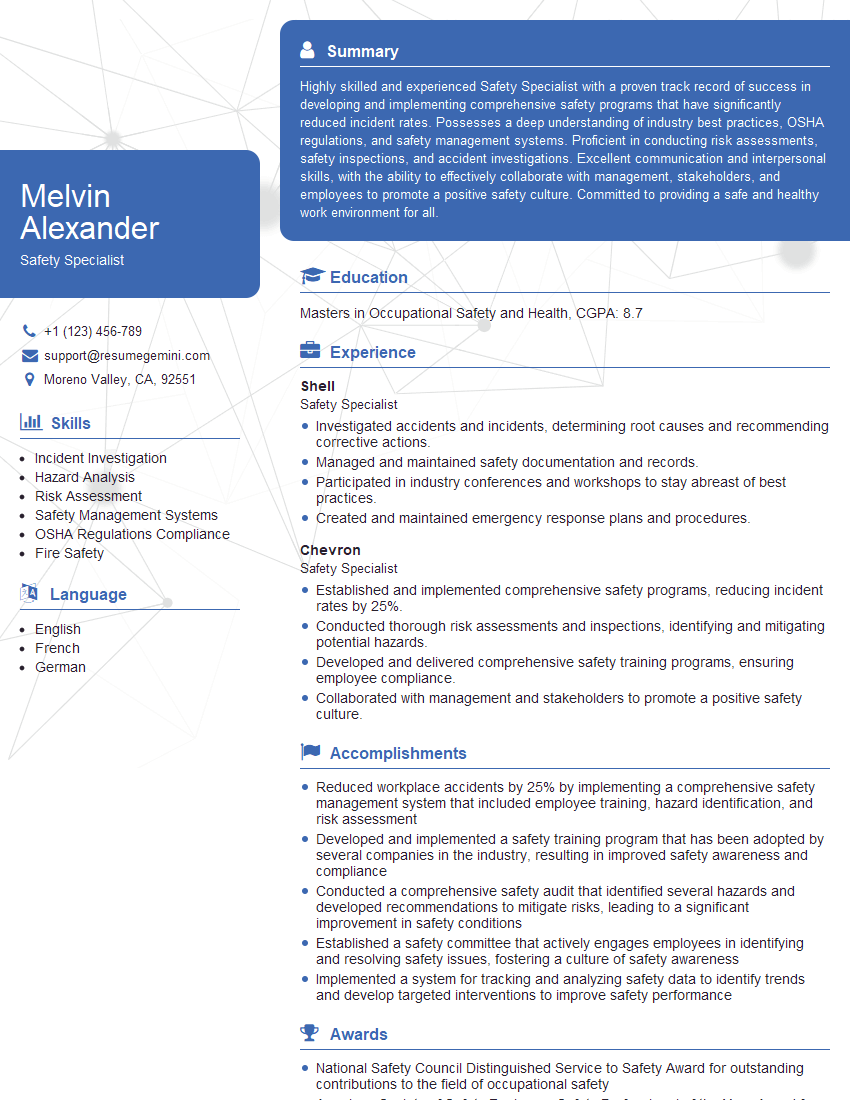
Safety Specialist Resume Sample
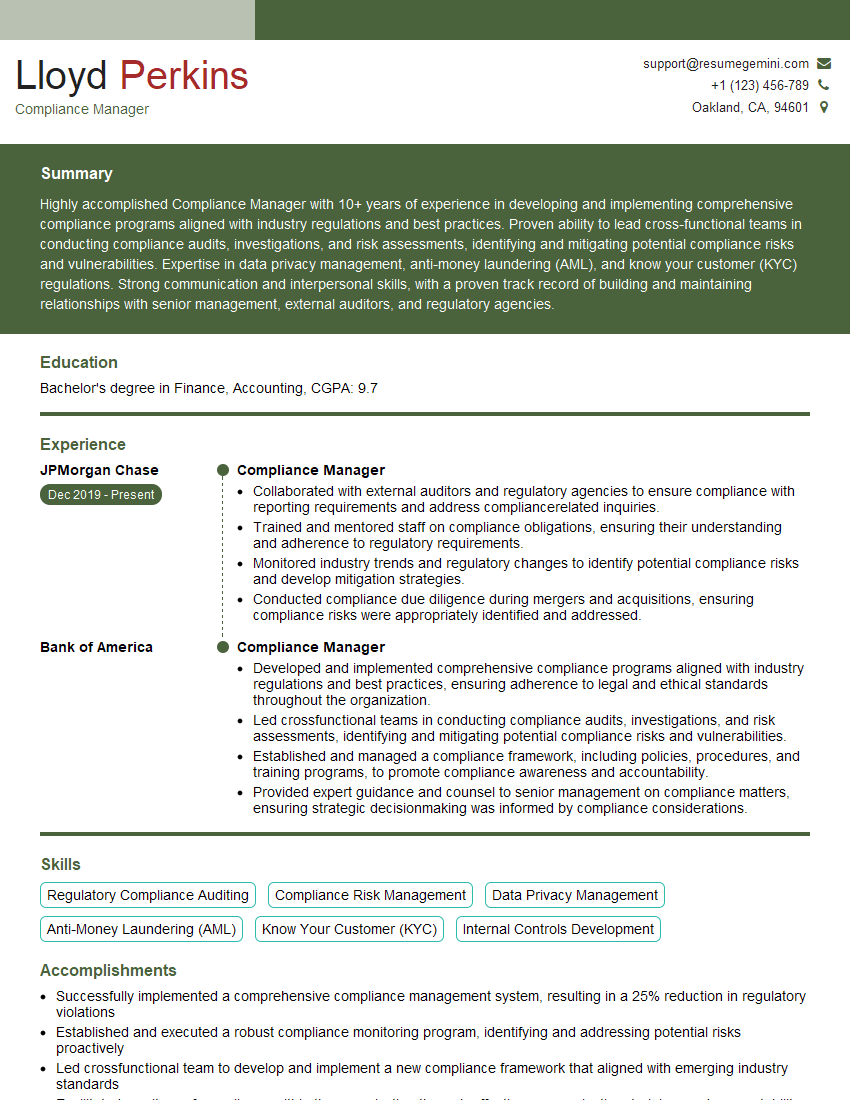
Compliance Manager Resume Sample
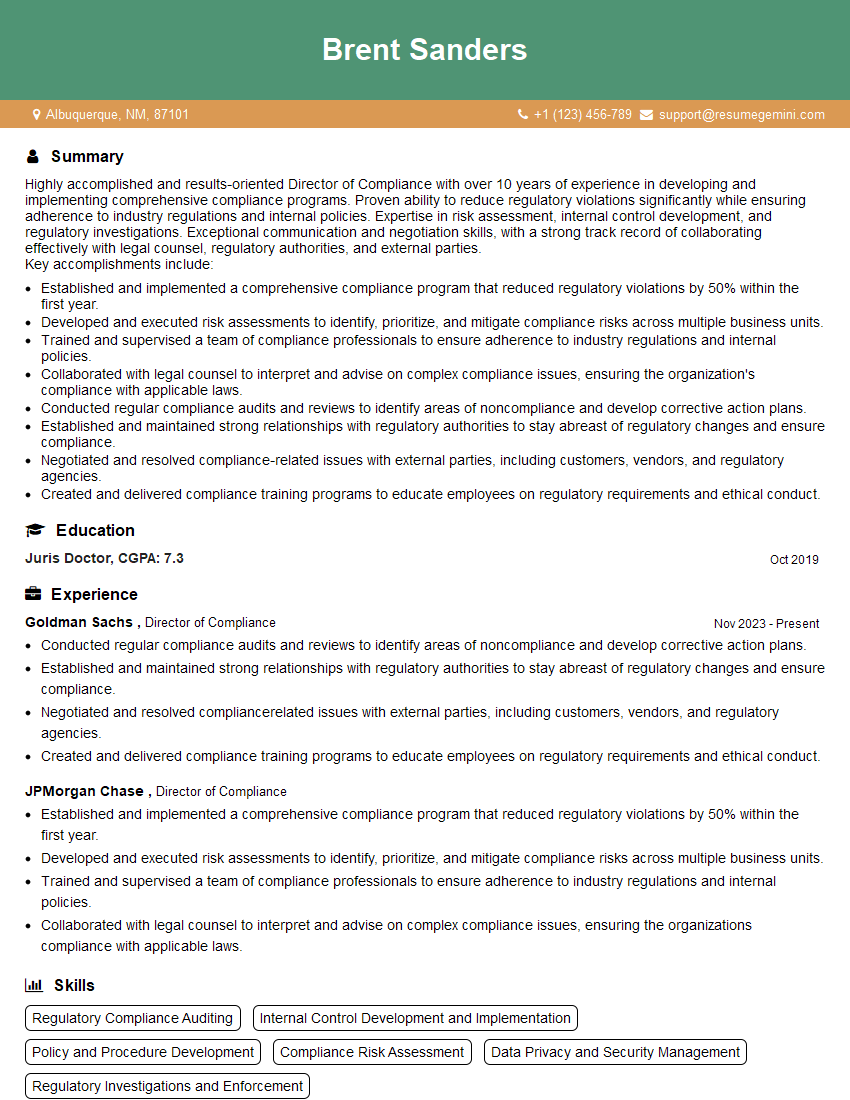
Director of Compliance Resume Sample
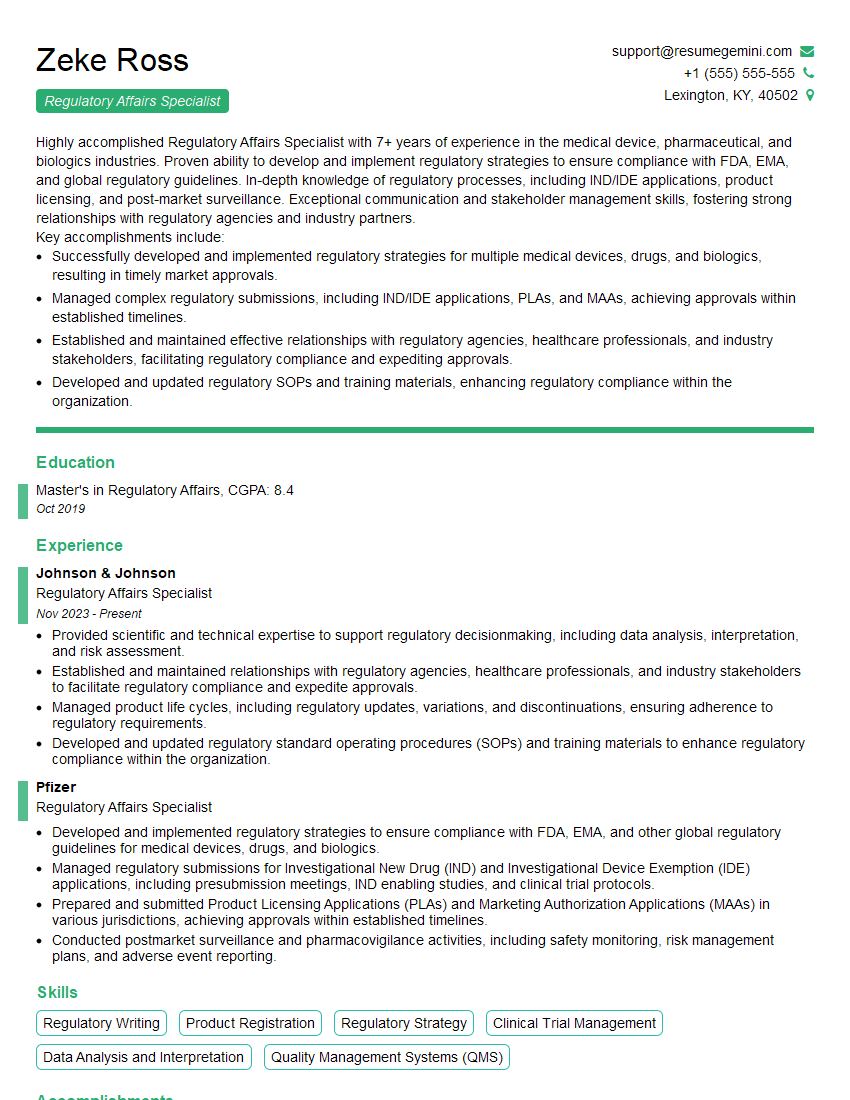
Regulatory Affairs Specialist Resume Sample
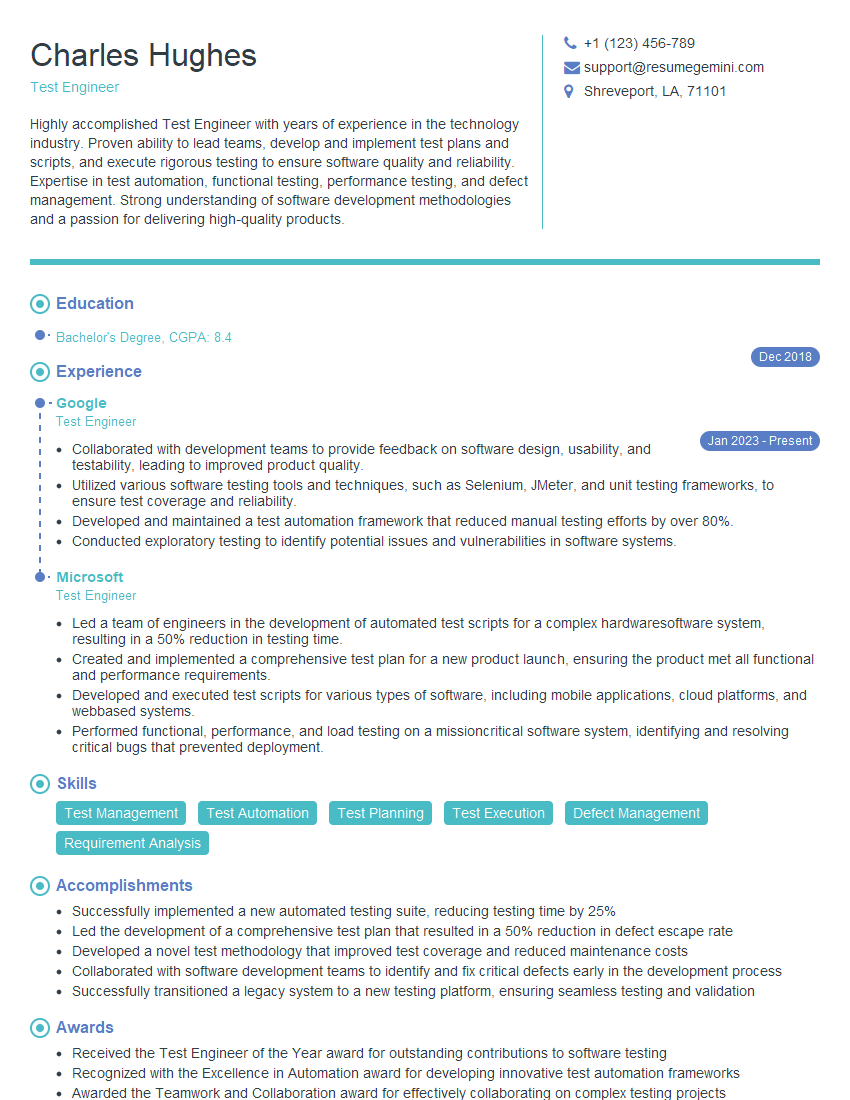
Test Engineer Resume Sample
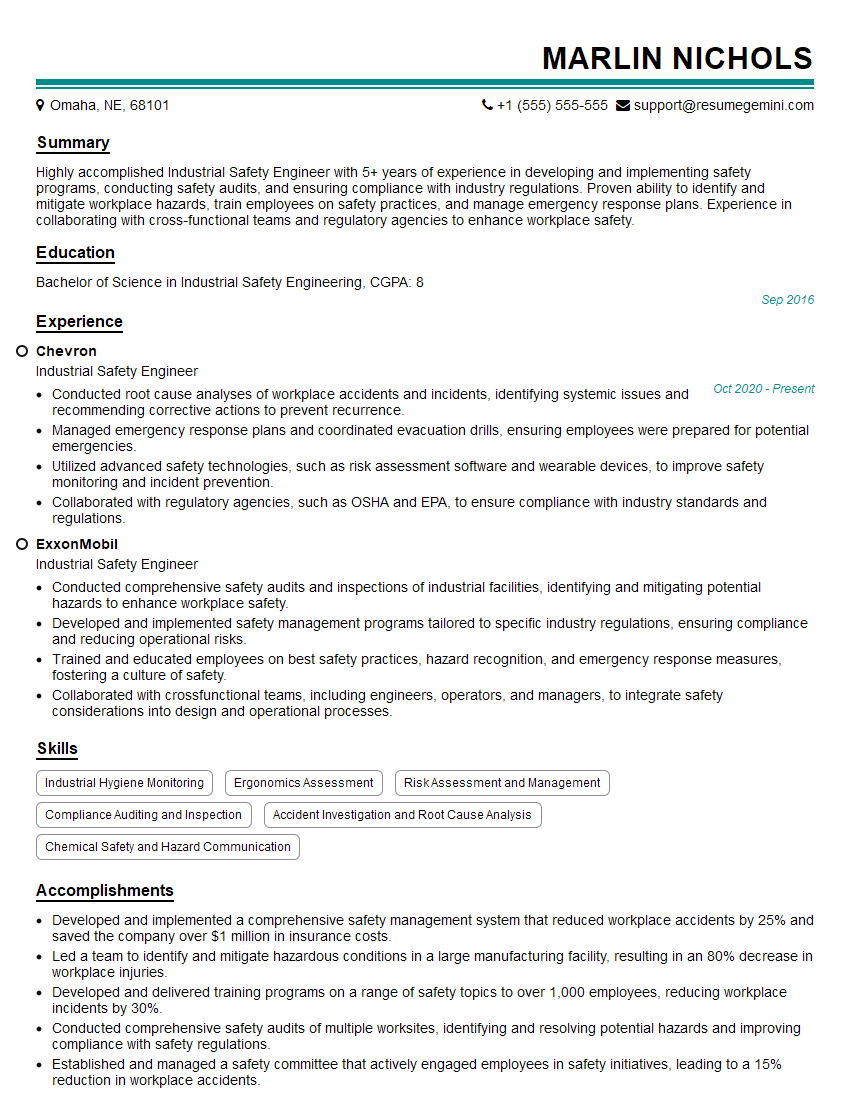
Industrial Safety Engineer Resume Sample
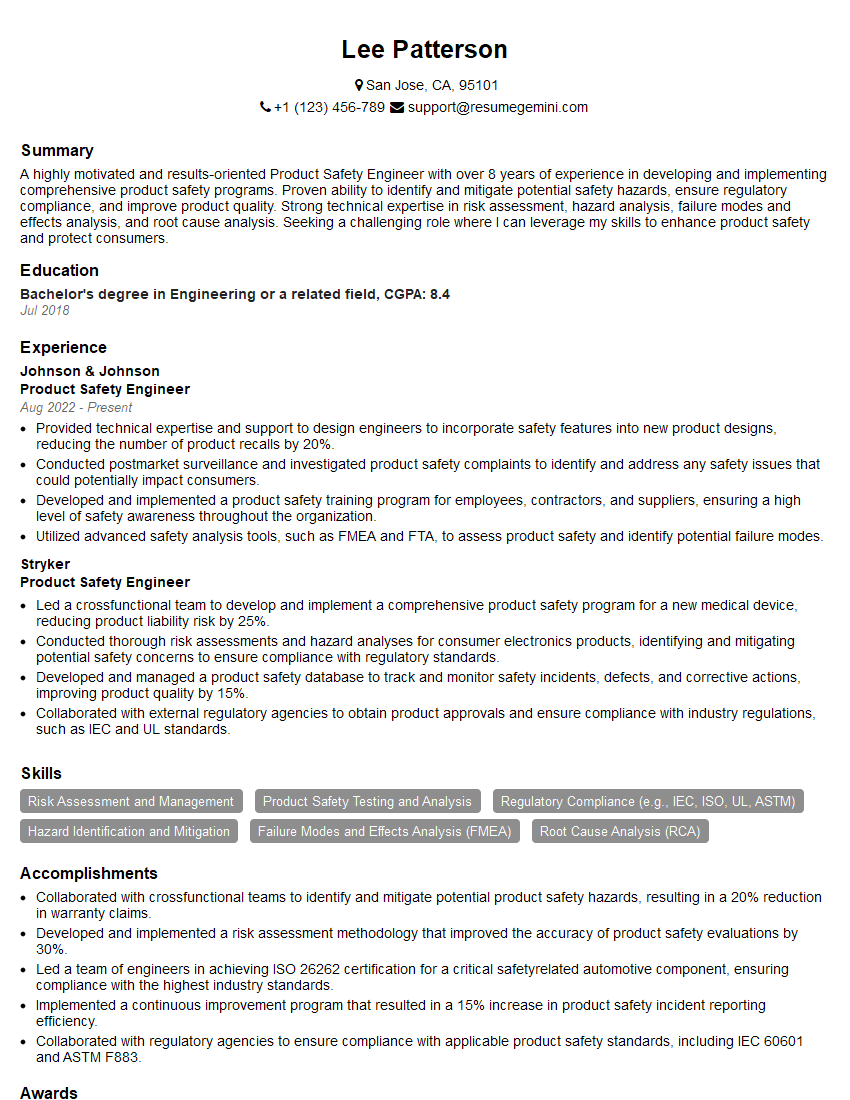
Product Safety Engineer Resume Sample
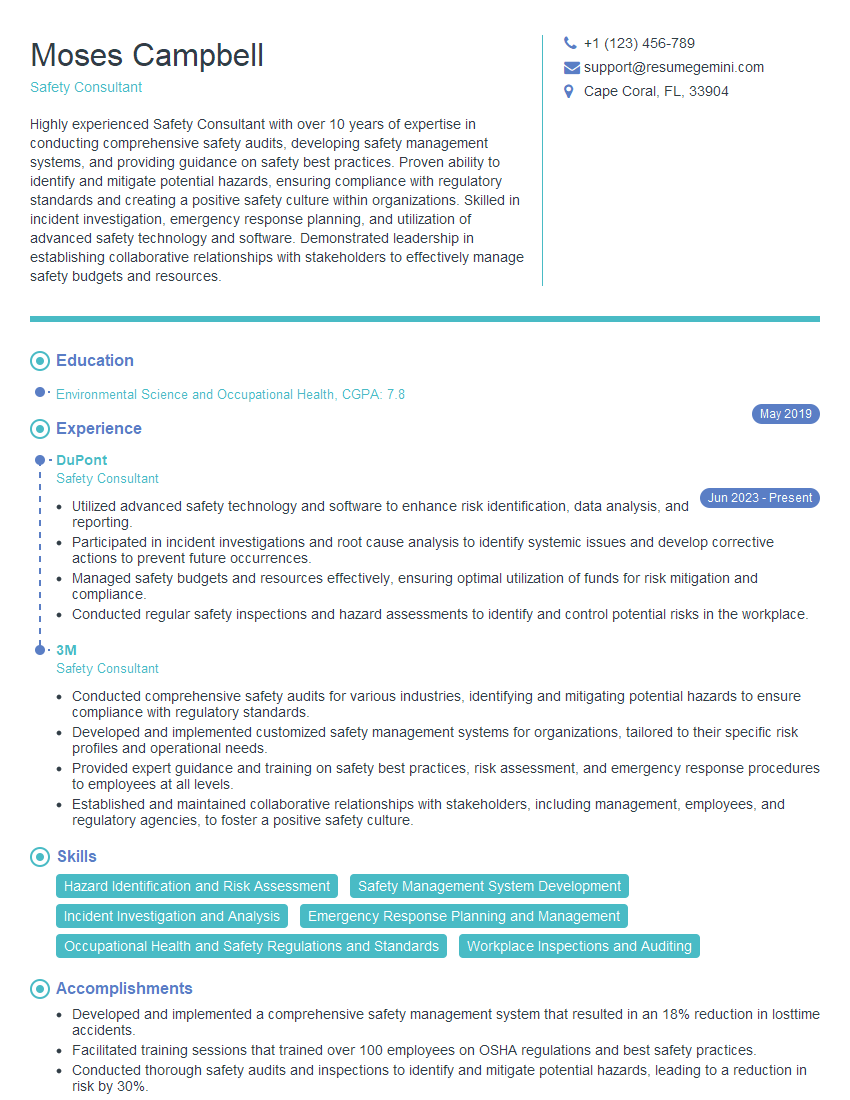
Safety Consultant Resume Sample
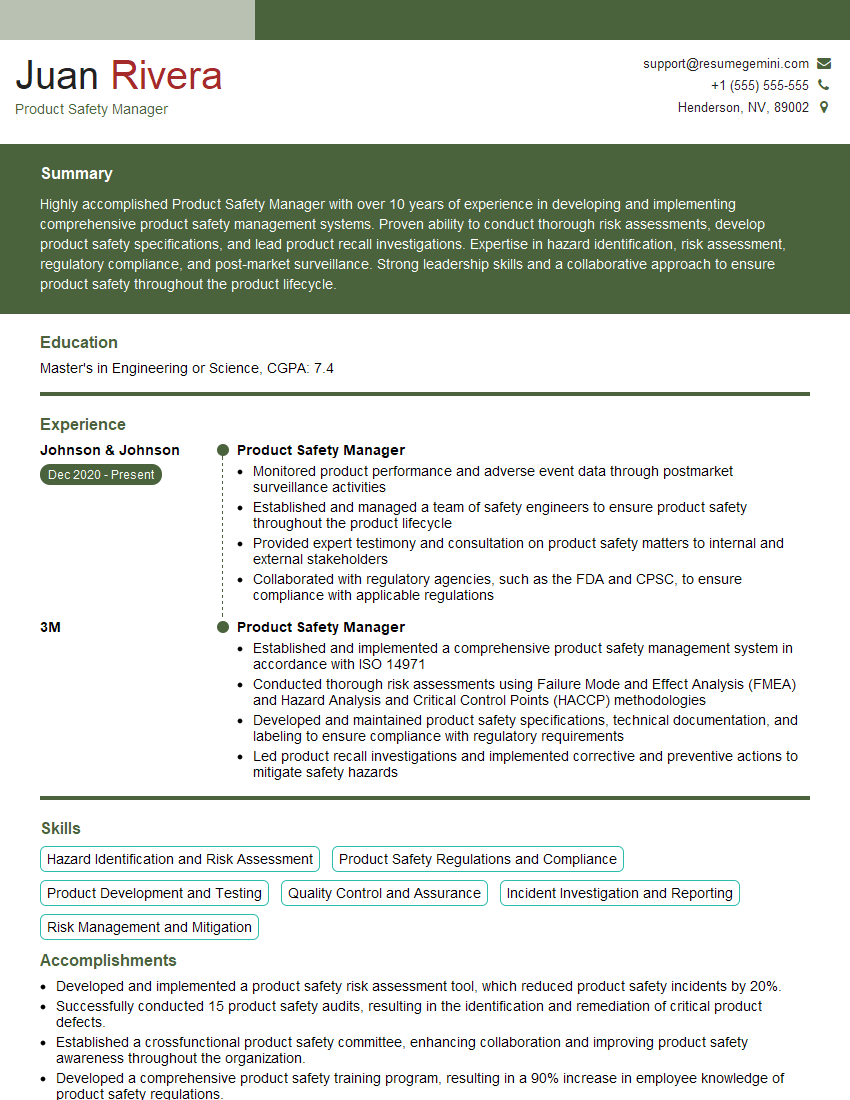
Product Safety Manager Resume Sample
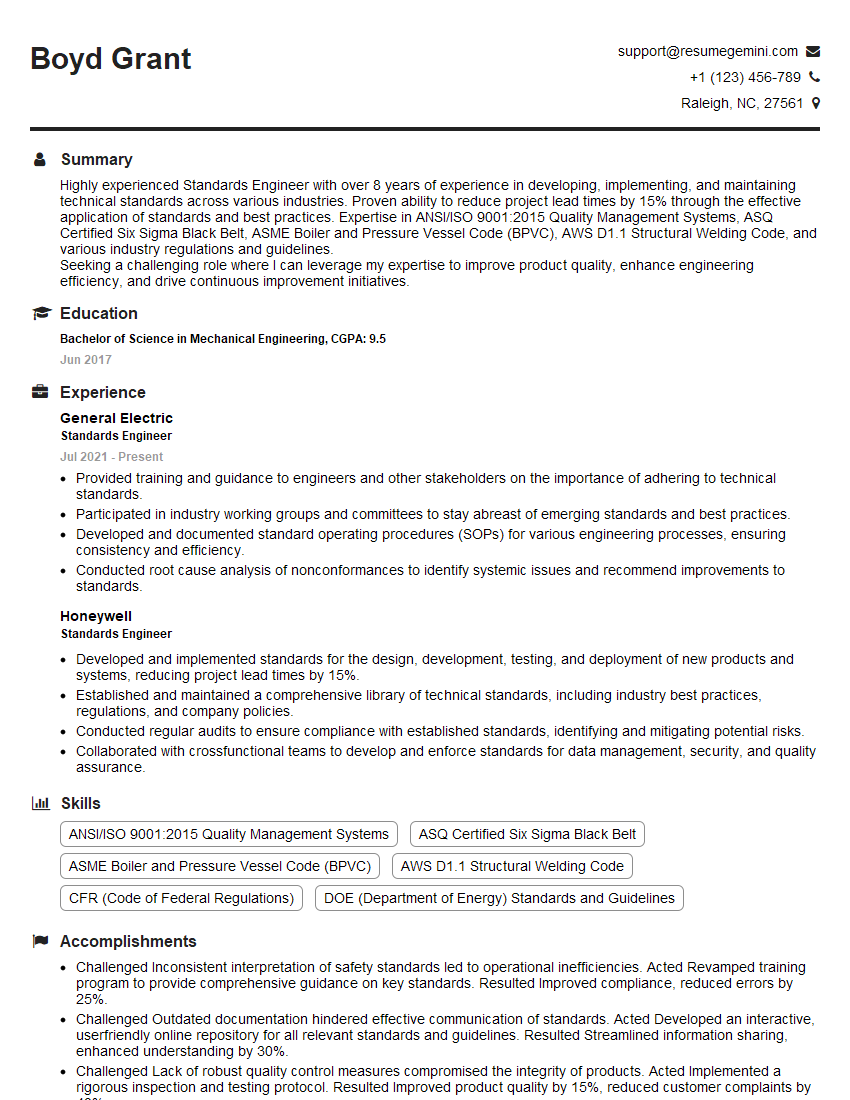
Standards Engineer Resume Sample
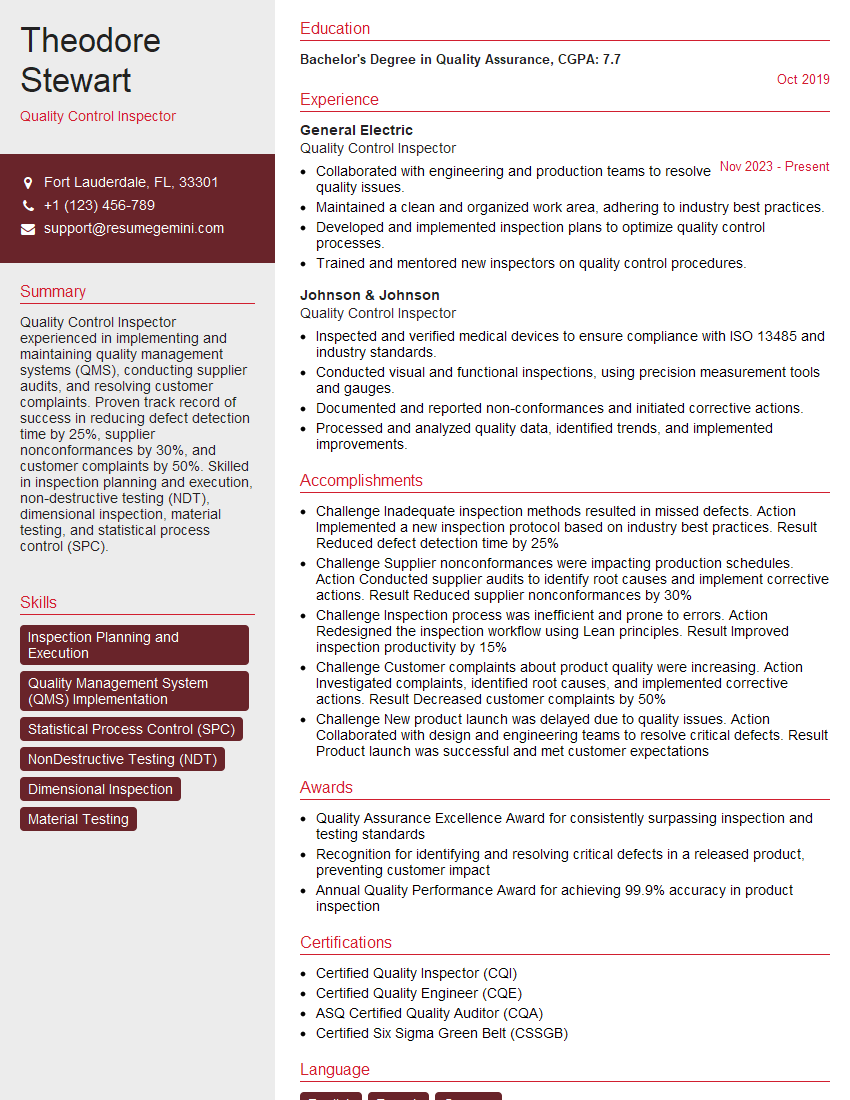
Quality Control Inspector Resume Sample
Explore more articles
Users Rating of Our Blogs
Share Your Experience
We value your feedback! Please rate our content and share your thoughts (optional).
What Readers Say About Our Blog
Very informative content, great job.
good