Cracking a skill-specific interview, like one for Product Safety Testing and Evaluation, requires understanding the nuances of the role. In this blog, we present the questions you’re most likely to encounter, along with insights into how to answer them effectively. Let’s ensure you’re ready to make a strong impression.
Questions Asked in Product Safety Testing and Evaluation Interview
Q 1. Explain the difference between safety testing and reliability testing.
Safety testing and reliability testing, while both crucial for product success, focus on different aspects. Safety testing aims to identify hazards and ensure a product won’t cause harm to users or the environment. Reliability testing, on the other hand, focuses on determining the product’s lifespan and its ability to perform its intended function without failure over a specified period. Think of it this way: safety testing asks, “Will this product hurt someone?” while reliability testing asks, “Will this product continue to work as expected?”
For example, a safety test for a power tool might involve evaluating its insulation resistance to prevent electric shock. A reliability test for the same tool might involve running it continuously for hundreds of hours to assess its motor’s durability. A product can be reliable but unsafe (e.g., a perfectly functioning but dangerously sharp knife) and vice-versa (e.g., a tool that breaks down frequently but poses no safety risk).
Q 2. Describe your experience with different safety standards (e.g., UL, IEC, ISO).
Throughout my career, I’ve worked extensively with various safety standards, including UL (Underwriters Laboratories), IEC (International Electrotechnical Commission), and ISO (International Organization for Standardization). My experience encompasses interpreting their requirements, designing test plans to meet those standards, and executing tests to ensure product compliance.
For instance, I’ve used UL standards for electrical safety testing of appliances in the North American market, IEC standards for evaluating the electromagnetic compatibility (EMC) of electronic devices for global distribution, and ISO standards for managing quality and risk within the product development lifecycle. Understanding the nuances of each standard is crucial, as they often differ in their specific requirements and testing methodologies. One project involved a medical device where navigating the stringent requirements of both IEC 60601 (medical electrical equipment) and ISO 13485 (medical devices quality management system) was vital for successful market entry.
Q 3. How do you identify potential safety hazards in a new product?
Identifying potential safety hazards in a new product involves a systematic approach combining engineering judgment with established methodologies. It starts with a thorough understanding of the product’s intended use, target users, and operating environment. We then conduct a Hazard Analysis, a crucial step in identifying potential hazards, using techniques like brainstorming, Failure Mode and Effects Analysis (FMEA), and Fault Tree Analysis (FTA).
Consider a children’s toy: during hazard analysis, we might identify potential hazards such as small parts (choking hazard), sharp edges (laceration hazard), and toxic materials (poisoning hazard). This process necessitates considering various scenarios, including misuse and foreseeable misuse. Once identified, each hazard is assessed for severity, probability, and detectability to determine the required mitigation strategies.
Q 4. What risk assessment methodologies are you familiar with?
My experience encompasses a variety of risk assessment methodologies, including Failure Mode and Effects Analysis (FMEA), Fault Tree Analysis (FTA), Hazard and Operability Study (HAZOP), and Bow-Tie Analysis. The choice of methodology depends on the specific product, its complexity, and the risk profile.
For instance, FMEA is particularly effective for identifying potential failure modes within individual components and assessing their impact on the overall system. FTA, on the other hand, is better suited for analyzing complex systems by working backward from an undesired event (e.g., system failure) to identify the underlying causes. HAZOP is frequently used in process industries to systematically examine deviations from normal operating procedures, while Bow-Tie analysis provides a holistic view of risk by combining hazard identification, consequence analysis, and control measures.
Q 5. Explain your understanding of Failure Mode and Effects Analysis (FMEA).
Failure Mode and Effects Analysis (FMEA) is a systematic, proactive method used to identify potential failure modes in a system, product, or process and assess their severity, probability of occurrence, and detectability. The goal is to prioritize actions to reduce the risk associated with these failures.
An FMEA typically involves a team reviewing each component or process step, identifying potential failure modes, and rating them using a severity, occurrence, and detection rating (often on a scale of 1-10). The Risk Priority Number (RPN) is then calculated (Severity x Occurrence x Detection), helping prioritize actions. A higher RPN indicates a higher risk requiring immediate attention. For example, in a coffee maker, a failure mode for the heating element could be overheating. A high severity (potential for fire), high occurrence (due to age and use), and low detection (not easily noticed until a fire occurs) would yield a high RPN, demanding a design or process change to mitigate the risk.
Q 6. Describe your experience with fault tree analysis.
Fault Tree Analysis (FTA) is a top-down, deductive technique used to systematically analyze the causes of an undesired event, or top event, in a system. It graphically represents the combination of events that could lead to this top event, using logic gates (AND, OR) to show the relationships between contributing factors.
Imagine an aircraft engine failure (top event). An FTA would work backward to show the different pathways leading to this failure, such as fuel pump malfunction (OR) or engine overheating (OR), each with its own contributing factors. The visual representation helps identify critical failures, allowing for focused mitigation strategies. My experience includes using FTA software to analyze complex systems, often complementing FMEA to provide a more comprehensive risk assessment. This holistic approach ensured we were fully equipped to address any potential hazards.
Q 7. How do you determine the appropriate testing methods for a given product?
Determining appropriate testing methods for a given product requires a thorough understanding of its design, functionality, intended use, and applicable safety standards. It’s a multi-step process that starts with a comprehensive risk assessment.
First, we identify the potential hazards and risks associated with the product through techniques like FMEA and FTA, as discussed previously. Then, based on these identified risks and applicable standards, we choose appropriate tests. For example, a children’s toy might require tests for small parts, flammability, and toxicity, while an electrical appliance would need tests for electrical safety, EMC, and mechanical strength. Finally, we create a detailed test plan specifying the test methods, equipment, acceptance criteria, and procedures, ensuring all relevant aspects are considered. The test plan is then rigorously followed to ensure product safety and compliance.
Q 8. What are some common safety testing techniques?
Common safety testing techniques span a wide range, depending on the product and its intended use. They broadly fall under categories like mechanical, electrical, chemical, and environmental testing.
Mechanical Testing: This involves assessing a product’s strength, durability, and resistance to physical forces. Examples include drop tests (simulating accidental falls), impact tests (measuring resistance to sudden impacts), and tensile strength tests (measuring the material’s resistance to stretching).
Electrical Testing: This focuses on the safety of electrical components and circuits. Techniques include insulation resistance tests (measuring the ability of insulation to prevent electrical leakage), dielectric strength tests (determining the voltage at which insulation breaks down), and ground continuity tests (checking for proper grounding to prevent electrical shocks).
Chemical Testing: This examines the presence and levels of hazardous substances, flammability, and chemical stability. Techniques include flammability tests (determining how easily a material ignites and burns), toxicity testing (assessing the potential harm of chemicals released), and chemical composition analysis (identifying the specific chemical components).
Environmental Testing: This assesses how a product performs under various environmental conditions. This includes temperature cycling, humidity testing, vibration testing, and exposure to UV radiation (to simulate sunlight exposure). I’ll elaborate on my experience with environmental testing in the next answer.
Q 9. Explain your experience with environmental testing (e.g., temperature, humidity, vibration).
Throughout my career, I’ve extensively worked with environmental testing, recognizing its crucial role in ensuring product longevity and safety. For instance, I was involved in a project testing the durability of a new line of outdoor smart speakers. We subjected the speakers to a rigorous environmental testing regime which included:
Temperature Cycling: We cycled the speakers between extreme temperatures (-40°C to +85°C) to simulate exposure to harsh climates. This helped us identify any potential issues with component failure at both high and low temperatures.
Humidity Testing: We exposed the speakers to high humidity levels (95% relative humidity) for extended periods, observing for signs of corrosion, mold growth, or performance degradation. This is particularly important for electronics operating in humid environments.
Vibration Testing: We subjected the speakers to various vibration frequencies and amplitudes, simulating transportation and handling conditions. This helped us ensure that internal components remained secure and functioned correctly after exposure to vibrations.
This testing revealed that a particular solder joint was prone to failure at low temperatures, prompting a design modification to enhance the speaker’s reliability in cold weather. Detailed documentation of this process was crucial for traceability and subsequent regulatory compliance.
Q 10. How do you ensure that safety testing is thorough and comprehensive?
Ensuring thorough and comprehensive safety testing requires a multi-faceted approach. It’s not just about running tests; it’s about strategically planning and executing them to cover all potential risks.
Risk Assessment: We begin with a thorough hazard analysis to identify potential hazards associated with the product and its use. This helps prioritize the most critical tests.
Test Plan Development: A detailed test plan outlines the specific tests to be conducted, the equipment to be used, and the acceptance criteria. This plan is essential for ensuring consistency and reproducibility of results.
Test Execution and Documentation: Rigorous execution of tests according to the plan, with meticulous record-keeping of all data, settings, and observations, is critical. Any deviations from the plan must be carefully documented.
Independent Verification and Validation: Having an independent team review the test plans, data, and conclusions helps ensure the objectivity and accuracy of the results. This reduces the possibility of bias in test findings.
Continuous Improvement: Regular review of the safety testing processes helps identify areas for improvement, ensuring ongoing refinement and adaptation based on lessons learned.
Consider a children’s toy example: thorough testing would include not only material toxicity and mechanical strength but also the risk assessment of small parts detaching which can pose a choking hazard.
Q 11. Describe your experience with writing safety test reports.
Writing clear and comprehensive safety test reports is crucial for communicating findings to stakeholders and regulators. A well-written report should be easily understood even by those without extensive technical knowledge.
Clear and Concise Language: Avoid technical jargon where possible. Explain any technical terms in simple language.
Structured Format: A standardized format makes the report easy to navigate. This typically includes an executive summary, test methodology, results, and conclusions sections. Tables and graphs effectively present data.
Detailed Methodology: The methodology section must clearly outline how the tests were conducted, including equipment used, test parameters, and procedures followed. This allows others to replicate the testing and verify the results.
Data Presentation: Data should be clearly presented, using tables, graphs, and charts to make complex information easy to understand. Photographs or videos can help illustrate critical findings.
Conclusion and Recommendations: The conclusion summarizes the overall findings, highlighting any safety concerns or areas needing improvement. Recommendations provide actionable steps to address any identified issues.
In past projects, I’ve successfully utilized templates to ensure consistency across reports and employed data analysis tools to efficiently present complex test data in a readily comprehensible manner.
Q 12. How do you handle discrepancies or inconsistencies in test results?
Discrepancies or inconsistencies in test results are opportunities for deeper investigation and understanding. They shouldn’t be dismissed or ignored.
Repeatability Checks: The first step is to repeat the tests to verify the results. Were the inconsistencies due to random error, or is there a systematic problem?
Data Analysis: Carefully analyze the data, looking for patterns or trends. Are there any outliers that should be investigated?
Equipment Calibration: Verify that all testing equipment was properly calibrated and functioning correctly. Poorly calibrated equipment can lead to inaccurate results.
Methodology Review: Review the testing methodology to ensure that the procedures were followed correctly. Were there any unforeseen variables influencing the results?
Root Cause Analysis: If inconsistencies persist, a thorough root cause analysis is necessary to pinpoint the underlying issue. This may involve reviewing design specifications, manufacturing processes, or even the materials used.
For example, if unexpected high failure rates were observed in a specific temperature range, we’d investigate whether the material properties changed significantly at those temperatures or if there was a problem in the assembly process affecting those units.
Q 13. How do you prioritize safety testing efforts when resources are limited?
Prioritizing safety testing with limited resources requires a strategic approach. This involves focusing on the most critical risks first.
Risk-Based Prioritization: Prioritize tests based on the severity and likelihood of potential hazards. Tests addressing high-risk hazards should be conducted first.
Cost-Benefit Analysis: Evaluate the cost of each test against the potential consequences of failure. Focus on tests that offer the greatest risk reduction for the investment.
Testing Hierarchy: Consider a hierarchical testing approach, starting with simpler, less expensive tests before progressing to more complex and expensive ones. If the initial tests identify no major problems, more extensive testing may not be necessary.
Test Automation: Automate repeatable tests to reduce time and labor costs, allowing more resources to be dedicated to higher-risk testing.
Collaboration and Outsourcing: Consider collaborating with other teams or outsourcing certain tests to specialized labs to leverage their expertise and resources.
For example, a new medical device would likely prioritize biocompatibility and efficacy tests over cosmetic appearance testing, as the former directly relates to patient safety.
Q 14. Explain your experience with regulatory compliance.
Regulatory compliance is paramount in product safety. My experience encompasses understanding and adhering to various safety standards and regulations.
Standard Knowledge: I possess in-depth knowledge of relevant standards such as UL, IEC, ISO, and others, depending on the product and its intended market.
Compliance Planning: I participate in the planning and execution of testing programs designed to meet specific regulatory requirements.
Documentation and Reporting: I’m proficient in creating the necessary documentation for regulatory submissions, including test reports, certificates of compliance, and other required paperwork.
Audits and Inspections: I’ve actively participated in audits and inspections by regulatory bodies, ensuring compliance and addressing any identified non-conformances.
Staying Updated: I continuously stay updated on evolving regulations and standards through professional development and industry publications, ensuring our testing protocols remain current and compliant.
For example, ensuring a toy meets the requirements of CPSIA (Consumer Product Safety Improvement Act) in the US or the corresponding regulations in other countries requires a comprehensive understanding of the specific test methods, material restrictions, and labeling requirements. Failure to comply can result in significant penalties and product recalls.
Q 15. How do you stay up-to-date on changes in safety standards and regulations?
Staying current in the ever-evolving landscape of safety standards and regulations requires a multifaceted approach. It’s not enough to simply rely on one source; a robust strategy is key.
- Subscription to Industry Publications and Databases: I subscribe to leading journals like Product Safety & Engineering and access comprehensive databases like those offered by ANSI and ISO. These resources provide updates on newly published or revised standards and regulatory changes across various industries.
- Active Participation in Professional Organizations: Membership in organizations like ASTM International and the Institute of Electrical and Electronics Engineers (IEEE) offers access to webinars, conferences, and networking opportunities. These events often feature discussions on the latest safety advancements and regulatory updates.
- Government Agency Websites: I regularly monitor websites such as the Consumer Product Safety Commission (CPSC) in the US, or equivalent agencies in other countries. These sites publish new regulations, recall notices, and guidance documents that are crucial for staying informed.
- Industry-Specific Training and Certifications: Continuous professional development is crucial. I actively seek out training courses and certifications related to specific safety standards, ensuring my expertise aligns with the latest best practices. For example, staying up-to-date with IEC 60601 (medical electrical equipment safety) certifications keeps me current with its revisions.
This multi-pronged approach ensures I remain at the forefront of safety knowledge, enabling me to proactively address potential hazards and ensure compliance.
Career Expert Tips:
- Ace those interviews! Prepare effectively by reviewing the Top 50 Most Common Interview Questions on ResumeGemini.
- Navigate your job search with confidence! Explore a wide range of Career Tips on ResumeGemini. Learn about common challenges and recommendations to overcome them.
- Craft the perfect resume! Master the Art of Resume Writing with ResumeGemini’s guide. Showcase your unique qualifications and achievements effectively.
- Don’t miss out on holiday savings! Build your dream resume with ResumeGemini’s ATS optimized templates.
Q 16. Describe a time you had to troubleshoot a safety issue.
During the development of a new children’s toy, we discovered a potential choking hazard. Small parts were detaching more easily than our initial testing suggested. This wasn’t identified during routine testing, but rather flagged during a final assembly review by a team member.
Troubleshooting Steps:
- Root Cause Analysis: We immediately launched a thorough investigation. We examined the manufacturing process, material specifications, and the design itself, using various tools including 3D modeling software to analyze stress points on the toy’s components.
- Testing and Experimentation: We conducted further pull tests using advanced equipment (like a tensile tester) to determine the precise force required to detach the parts. We also modified the assembly process in order to mitigate part detachment.
- Material Evaluation: We explored alternative, more secure materials for the small components to increase the force needed for detachment, and conducted further testing to ensure those parts meet the relevant safety standards.
- Design Modification: Based on our findings, we redesigned the critical parts to ensure greater strength and better integration with the rest of the toy. We employed stronger bonding methods and redesigned the joints.
The modified design successfully passed all subsequent safety tests. This experience highlighted the importance of rigorous testing coupled with a proactive approach to identifying and addressing potential safety concerns throughout the product development lifecycle.
Q 17. How do you communicate safety concerns to stakeholders?
Communicating safety concerns effectively requires a clear, concise, and data-driven approach tailored to the audience. I prioritize transparency and proactive communication.
- Formal Reports: For major safety issues, I create detailed reports that include the root cause analysis, the potential impact, and proposed corrective actions. These reports use clear visuals like graphs and charts to present the data.
- Presentations and Meetings: I leverage presentations and meetings to explain complex safety issues clearly. Visual aids and real-world examples help convey the severity of potential hazards. I am careful to present this information in a non-technical manner when discussing with non-technical stakeholders, emphasizing the impact and recommendations.
- Risk Assessment Matrices: I utilize risk matrices to visually represent the likelihood and severity of identified hazards. This allows for prioritization of safety efforts.
- Collaboration and Feedback: I encourage open communication and collaboration among all stakeholders. Regular updates keep the team informed and allow for prompt identification of issues and solutions. I encourage feedback to ensure that the information is understood across various departments.
Ultimately, my goal is to ensure everyone understands the risks and the steps being taken to mitigate them. Open communication fosters a culture of safety and improves our response to safety issues.
Q 18. What is your experience with risk management in product development?
Risk management is integral to every stage of product development. My approach is rooted in a proactive, systematic process that identifies, analyzes, and mitigates potential hazards.
- Hazard Identification: This involves brainstorming sessions, Failure Modes and Effects Analysis (FMEA), and reviewing relevant safety standards to identify potential hazards related to the product. For example, during the development of a power tool, we identified the risk of electric shock, which was then assessed using a quantitative risk assessment method.
- Risk Assessment: I leverage risk assessment techniques (e.g., Fault Tree Analysis, HAZOP) to determine the likelihood and severity of each identified hazard. The severity of the hazard is quantified using a predetermined scale.
- Risk Mitigation: Based on the risk assessment, we develop strategies to mitigate those hazards. This includes design modifications, implementing safety features (e.g., safety interlocks, emergency stops), and developing warnings and instructions for users.
- Risk Monitoring and Review: After the product launch, ongoing monitoring and review of potential hazards are vital. This involves analyzing field data, customer feedback, and conducting post-market surveillance to detect and address any emerging safety issues.
By integrating risk management throughout the entire lifecycle, we improve the safety and reliability of our products while minimizing potential legal and reputational risks.
Q 19. Describe your experience with different types of safety testing equipment.
My experience encompasses a wide range of safety testing equipment, including:
- Material Testing Equipment: Tensile testers, compression testers, and impact testers to evaluate material strength and durability. For example, using a tensile tester to assess the strength of a plastic component to prevent breakage.
- Environmental Testing Chambers: These chambers simulate various environmental conditions (temperature, humidity, altitude) to evaluate a product’s performance and stability under extreme conditions. We use these to determine the device’s lifespan and operational parameters under different environmental stresses.
- Electrical Safety Testers: Instruments like insulation resistance testers, dielectric strength testers, and ground continuity testers are essential for evaluating electrical safety compliance. These ensure that electrical devices meet the safety regulations.
- Flammability Testers: We use various flammability testers to evaluate materials’ ignition characteristics and rate of burn, ensuring compliance with fire safety standards. This is a crucial element in the development of devices meant to be used within potentially hazardous environments.
- Mechanical Testing Equipment: Equipment such as drop testers and vibration testers evaluate product robustness under various physical stressors. For instance, we use a drop test machine to assess the durability of a smartphone.
Proficiency with these instruments ensures accurate and reliable safety testing, leading to the development of safer and more durable products.
Q 20. Explain your experience with data analysis and interpretation in safety testing.
Data analysis and interpretation are crucial for drawing meaningful conclusions from safety tests. My approach involves several key steps:
- Data Collection and Organization: Accurate and systematic data collection is paramount. I use spreadsheets and databases to organize the massive amounts of data produced during testing. I ensure that all data is clearly labeled and traceable back to the specific test and the item being tested.
- Statistical Analysis: I apply appropriate statistical methods (e.g., hypothesis testing, regression analysis) to analyze the data, identifying trends, outliers, and significant differences. This is vital for establishing whether a product meets the safety standard specifications.
- Data Visualization: Creating clear and informative graphs, charts, and tables helps to effectively communicate findings. For instance, histograms and box plots can be used to illustrate the distribution of test results.
- Interpretation and Reporting: The ultimate goal is to interpret the data and draw conclusions about the product’s safety performance. The reports I create clearly outline the test methods, results, analysis, and conclusions, with emphasis on any areas needing attention.
This rigorous approach ensures that safety decisions are data-driven, reducing reliance on subjective opinions and promoting informed and well-justified conclusions.
Q 21. How do you manage and track safety testing data?
Effective management and tracking of safety testing data are essential for maintaining traceability and ensuring data integrity. I use a combination of methods for optimal data handling.
- Dedicated Database: A centralized database (e.g., using SQL or other database management systems) stores all test data, including test reports, specifications, and relevant metadata. This allows for easy retrieval and analysis of historical data.
- Version Control: Implementing a version control system (e.g., Git) allows us to track changes in test procedures, results, and reports. This allows for easy traceability and analysis of how the product and testing procedures evolved over time.
- Automated Data Logging: Where possible, I incorporate automated data logging into the testing process, reducing manual errors and improving efficiency. This system of automation allows for less human error, and faster data processing.
- Regular Data Backups: Regular backups are crucial for data security and recovery. This ensures data integrity even in the event of hardware failure or other unforeseen events.
- Access Control: Access to the database is controlled to ensure data security and integrity, and to prevent accidental modification of test data.
This systematic approach guarantees data accuracy, traceability, and accessibility, essential for regulatory compliance and continuous product improvement.
Q 22. Describe your experience with safety audits.
Safety audits are systematic examinations of a product, process, or system to identify potential hazards and ensure compliance with safety regulations and standards. My experience encompasses conducting both internal and external audits, covering a wide range of products, from consumer electronics to medical devices. This involves reviewing design specifications, manufacturing processes, testing protocols, and quality control procedures. For instance, in a recent audit of a children’s toy manufacturer, I identified a potential choking hazard due to small parts that didn’t meet the required safety standards. This led to a redesign of the product and strengthened quality control procedures.
- Pre-audit phase: Defining the scope, identifying relevant standards, and planning the audit schedule.
- Audit execution: On-site inspection of facilities, review of documentation, interviews with personnel, and observation of processes.
- Post-audit phase: Compilation of findings, drafting a comprehensive report with recommendations for corrective actions, and follow-up on implementation.
Throughout the process, I leverage established audit methodologies, such as checklists based on relevant safety standards (e.g., ISO 14001, ISO 45001) and best practices to ensure a thorough and efficient assessment. My goal isn’t simply to find problems but also to collaborate with the company to proactively improve their safety management system.
Q 23. How do you contribute to a culture of safety within an organization?
Cultivating a safety culture requires a multifaceted approach focusing on leadership commitment, employee engagement, and continuous improvement. I foster this by championing open communication, empowering employees to report hazards without fear of retribution, and celebrating successes in safety improvement. I believe in leading by example, demonstrating a strong commitment to safety in all aspects of my work. I actively participate in safety training programs and encourage others to do the same.
- Leadership commitment: Visible support from senior management is crucial. This includes allocating resources for safety initiatives and ensuring safety is a top priority in decision-making.
- Employee involvement: Regular safety meetings, suggestion boxes, and safety committees promote employee participation and ownership of safety protocols.
- Training and education: Providing comprehensive safety training, including hazard identification, risk assessment, and emergency procedures, equips employees with the knowledge and skills to work safely.
- Incident investigation and reporting: A robust system for reporting and investigating incidents helps identify root causes and prevent recurrence.
For example, I implemented a peer-to-peer safety observation program where employees could safely point out potential hazards to one another, fostering a collaborative approach to safety.
Q 24. Explain your experience with root cause analysis.
Root cause analysis (RCA) is a systematic approach to identifying the underlying causes of incidents or problems, not just the symptoms. My experience involves utilizing various RCA techniques, including the 5 Whys, Fishbone diagrams, and Fault Tree Analysis.
For instance, when investigating a product malfunction that resulted in a minor injury, I applied the 5 Whys technique. The initial problem was a product breaking.
- Why did the product break? Because a component failed.
- Why did the component fail? Because it was made of substandard material.
- Why was substandard material used? Due to a supplier’s quality control issue.
- Why was the supplier’s quality control lacking? Insufficient training for quality inspectors.
- Why was there insufficient training? Lack of budget allocated for training by the management.
This revealed the root cause was a management decision, not just a simple component failure. This allowed us to implement corrective actions focusing on supplier management and employee training, addressing the underlying issue and preventing similar incidents.
Q 25. How do you balance safety with cost and time constraints?
Balancing safety, cost, and time is a critical challenge in product development. It requires a risk-based approach where safety is prioritized, but cost and time constraints are considered. Instead of cutting corners on safety, I focus on optimizing design, processes, and testing strategies to achieve the best balance.
This involves:
- Prioritizing risks: Conducting a thorough risk assessment to identify high-risk areas that require more investment in safety measures.
- Value engineering: Evaluating design options to find the safest and most cost-effective solutions. This might involve exploring alternative materials, manufacturing processes, or design modifications.
- Efficient testing strategies: Selecting appropriate testing methods and focusing on critical safety parameters to reduce testing time and costs without compromising safety.
- Collaboration: Working closely with design, engineering, and manufacturing teams to find innovative ways to improve safety without significantly increasing costs or timelines. This could involve exploring automation to minimize human error and improve consistency.
For example, instead of using expensive high-strength materials everywhere, we might selectively use them only in critical stress points of a product, achieving acceptable safety levels while minimizing costs.
Q 26. What is your experience with designing for safety?
Designing for safety is a proactive approach that integrates safety considerations into every stage of product development, from initial concept to final disposal. My experience includes applying various safety engineering principles, including hazard analysis, fault tolerance, and safety margins.
In practice, this means considering potential hazards early in the design phase, using appropriate safety standards and guidelines, and designing in features that mitigate those hazards. For instance, using robust materials, adding safety interlocks to prevent misuse, designing for ease of maintenance and repair, and incorporating safety warnings and instructions are all important aspects of designing for safety.
A recent project involved designing a new medical device. By using a fail-safe mechanism that automatically shuts off the device in case of a power surge, and by incorporating redundant safety systems, we significantly reduced the risk of harm to patients.
Q 27. How do you ensure the safety of products throughout their lifecycle?
Ensuring product safety throughout its lifecycle requires a comprehensive approach that includes design, manufacturing, distribution, use, and disposal. This involves:
- Design for safety: As discussed earlier, incorporating safety features into the product design.
- Manufacturing control: Establishing robust quality control processes to ensure the product is manufactured to the design specifications and meets safety requirements.
- Distribution and logistics: Implementing safe packaging and handling procedures to prevent damage during transportation and storage.
- User instructions and warnings: Providing clear and concise instructions for safe use and warnings about potential hazards.
- Post-market surveillance: Monitoring product performance and safety after launch to identify and address any potential issues. This might involve collecting data from customers or conducting post-market studies.
- End-of-life management: Developing procedures for safe disposal or recycling of the product at the end of its useful life to minimize environmental impact.
For example, for a line of power tools, we established a comprehensive post-market surveillance program that involves collecting data on reported incidents and customer feedback to continuously improve the safety of the tools over time.
Q 28. Explain your understanding of different safety certifications.
Safety certifications provide independent verification that a product meets specific safety standards and regulations. Different certifications apply to various product categories and geographical regions. My understanding includes a range of certifications, such as:
- UL (Underwriters Laboratories): Widely recognized for electrical safety certifications in North America.
- CE Marking (Conformité Européenne): Indicates compliance with European Union health, safety, and environmental protection legislation.
- CSA (Canadian Standards Association): Provides safety certifications in Canada.
- ISO 9001: Focuses on quality management systems, indirectly impacting product safety.
- ISO 13485: Specific to medical devices, ensuring compliance with stringent quality and safety standards.
The specific certifications required for a product depend on its intended use, target market, and applicable regulations. Obtaining these certifications demonstrates a commitment to safety and can enhance a product’s credibility and marketability. I am well-versed in interpreting certification requirements and guiding manufacturers through the certification process.
Key Topics to Learn for Product Safety Testing and Evaluation Interview
- Standards and Regulations: Understanding relevant safety standards (e.g., UL, IEC, ISO) and regulatory compliance requirements for various product categories. This includes knowing how to interpret and apply these standards in practical scenarios.
- Testing Methodologies: Familiarity with different testing methods, including mechanical, electrical, chemical, and environmental testing. Be prepared to discuss the selection of appropriate test methods based on product characteristics and regulatory requirements.
- Risk Assessment and Management: Demonstrate understanding of hazard identification, risk analysis, and risk mitigation strategies. Be able to explain how to incorporate risk assessment into the product development lifecycle.
- Data Analysis and Reporting: Proficiency in analyzing test data, interpreting results, and preparing comprehensive reports. This includes understanding statistical methods and presenting findings clearly and concisely.
- Failure Analysis and Root Cause Investigation: Ability to investigate product failures, identify root causes, and recommend corrective actions to prevent future occurrences. This involves understanding various failure mechanisms and employing appropriate investigative techniques.
- Product Lifecycle Management: Understanding the role of safety testing and evaluation throughout the entire product lifecycle, from design and development to manufacturing and post-market surveillance.
- Communication and Collaboration: Highlighting effective communication skills in conveying technical information to both technical and non-technical audiences, as well as collaborative skills for working with cross-functional teams.
Next Steps
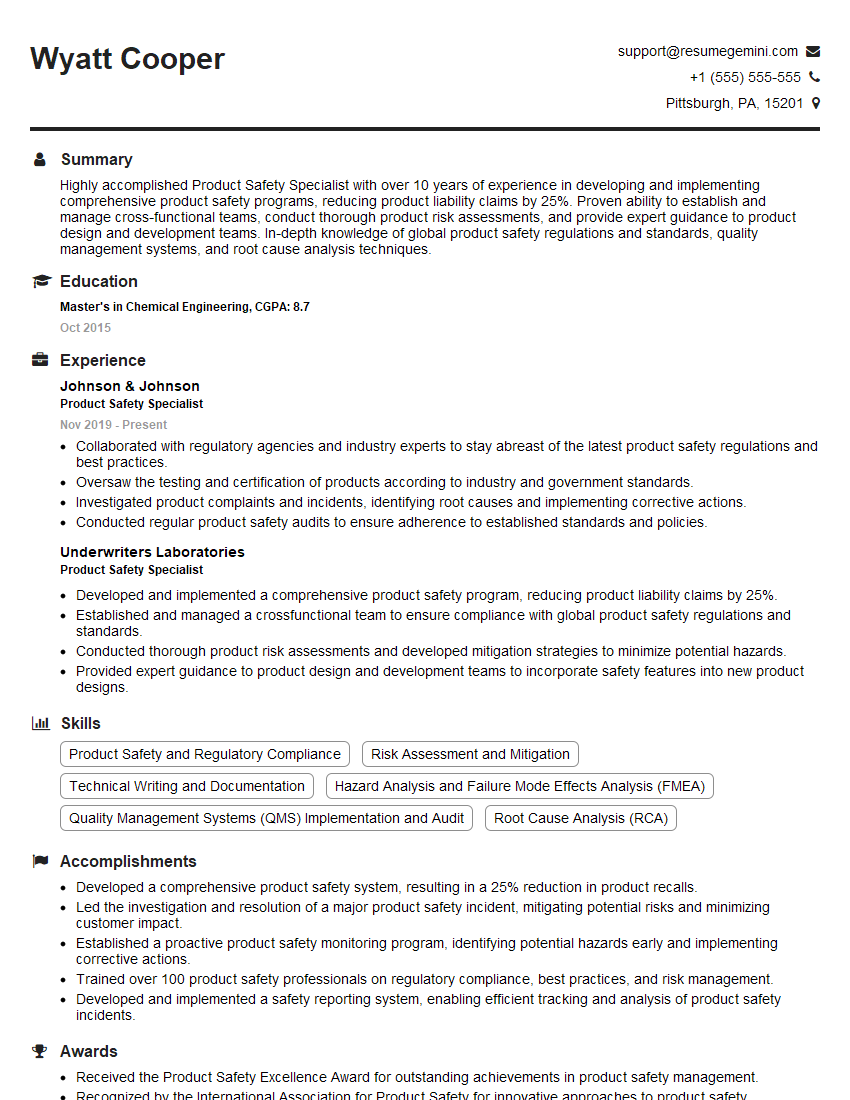
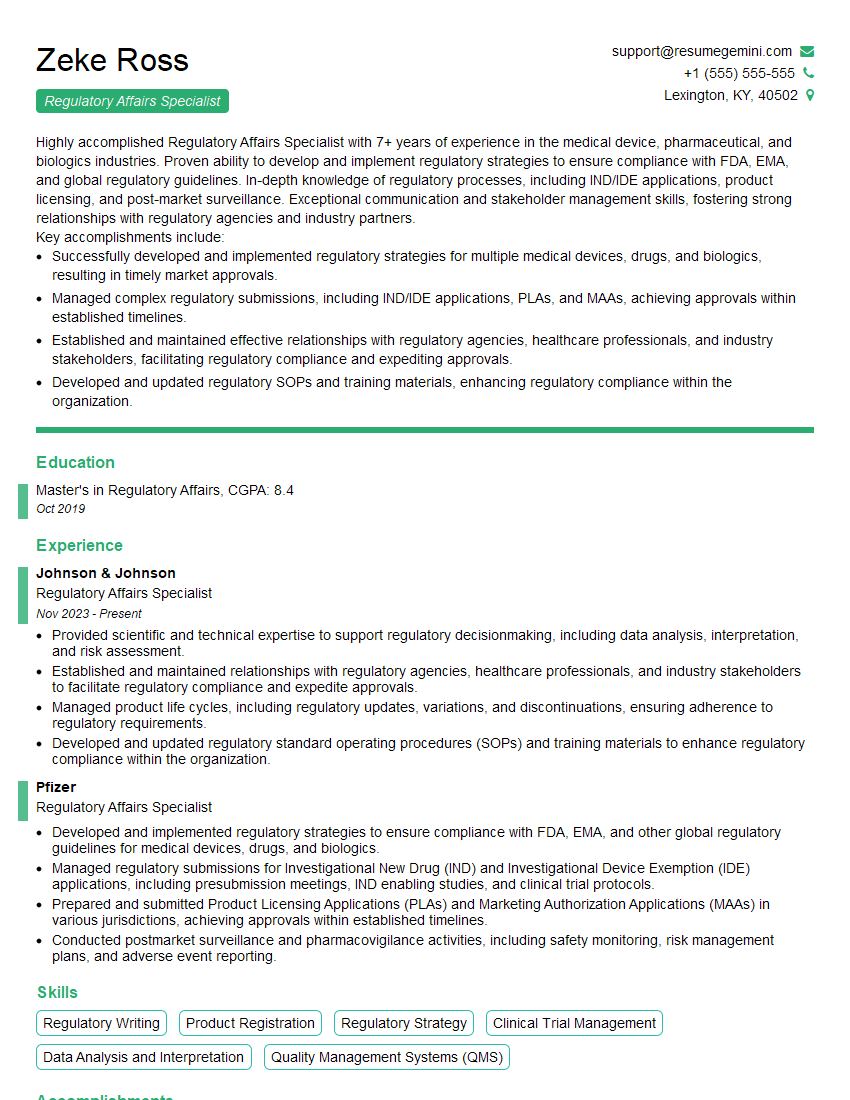
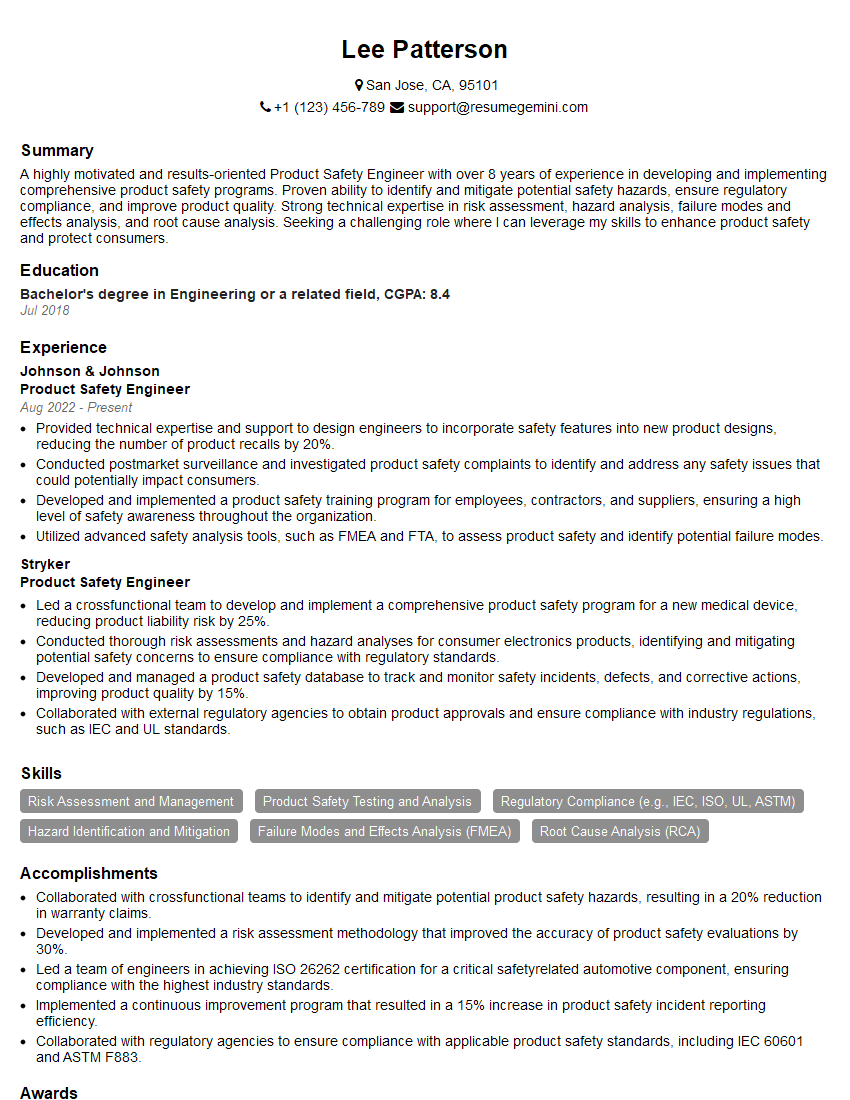
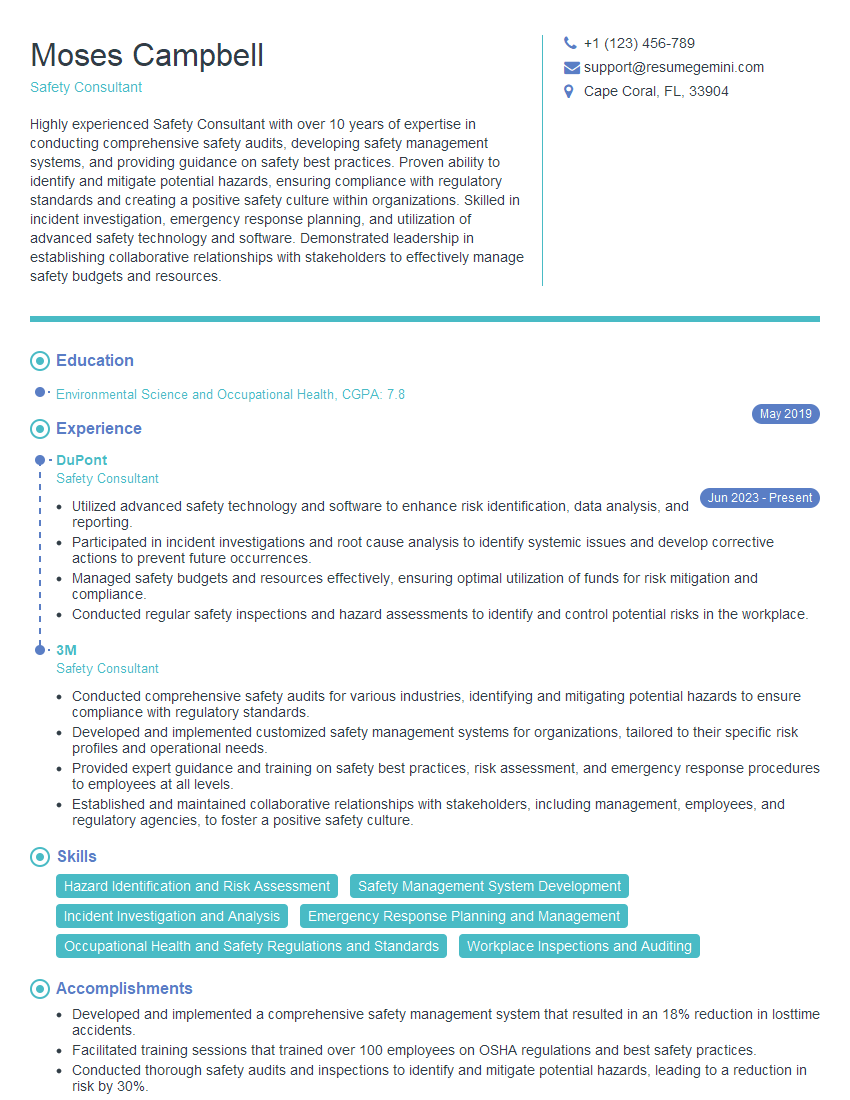
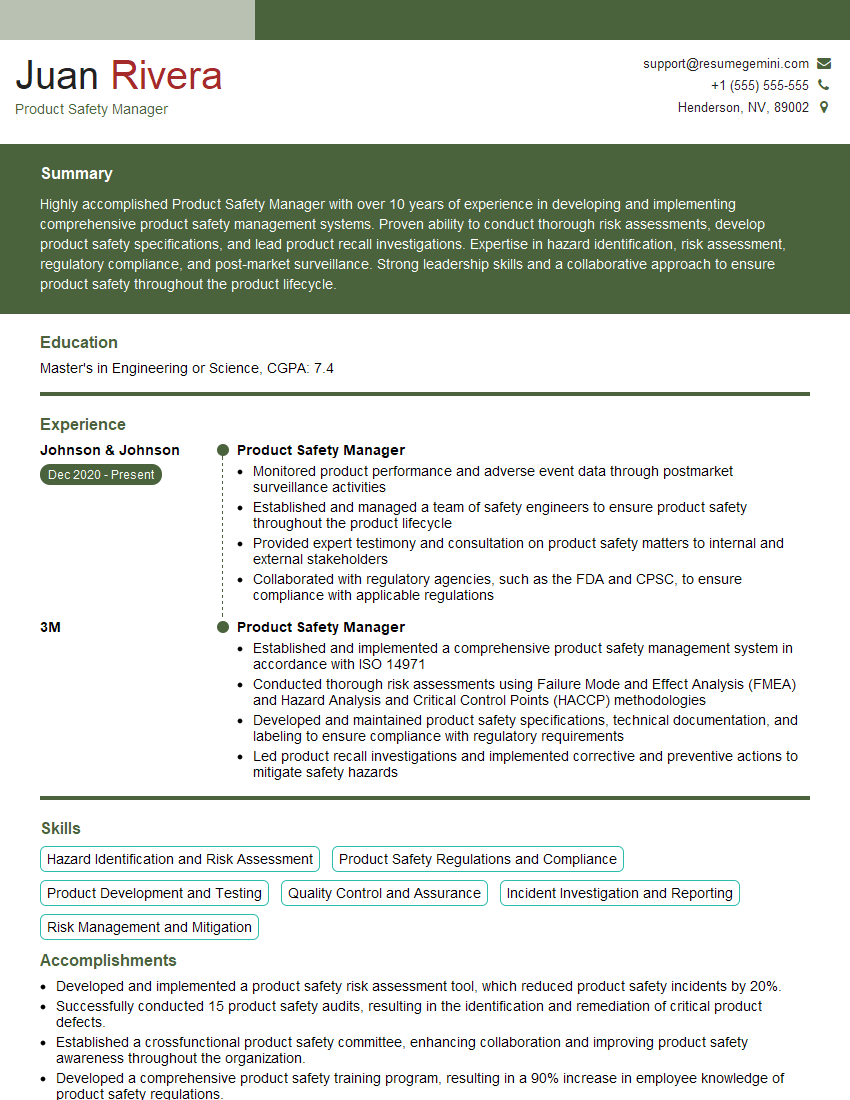
Mastering Product Safety Testing and Evaluation opens doors to exciting career opportunities in a rapidly growing field. It demonstrates a commitment to product quality and consumer safety, making you a highly valuable asset to any organization. To significantly enhance your job prospects, it’s crucial to present your skills and experience effectively through a well-crafted resume optimized for Applicant Tracking Systems (ATS). ResumeGemini is a trusted resource to help you build a professional, ATS-friendly resume that showcases your expertise. We provide examples of resumes tailored to Product Safety Testing and Evaluation to help guide you. Take the next step towards your dream career – build your best resume with ResumeGemini.
Explore more articles
Users Rating of Our Blogs
Share Your Experience
We value your feedback! Please rate our content and share your thoughts (optional).
What Readers Say About Our Blog
Very informative content, great job.
good