Are you ready to stand out in your next interview? Understanding and preparing for Production Metrics Monitoring interview questions is a game-changer. In this blog, we’ve compiled key questions and expert advice to help you showcase your skills with confidence and precision. Let’s get started on your journey to acing the interview.
Questions Asked in Production Metrics Monitoring Interview
Q 1. Explain the difference between metrics, logs, and traces.
Metrics, logs, and traces are all crucial for monitoring a production system, but they provide different types of information.
- Metrics: These are numerical measurements collected at regular intervals, providing a snapshot of the system’s performance at a specific point in time. Think of them as vital signs – they tell you the current state of health. Examples include CPU usage, memory consumption, request latency, and error rate. They are often aggregated and visualized on dashboards.
- Logs: These are textual records of events that occur within the system. They provide detailed context about what happened, when it happened, and sometimes why. Imagine logs as a detailed medical history – they tell you the story of the system’s operation, including both normal and abnormal events. They can be used to debug issues and understand system behavior.
- Traces: These provide a comprehensive view of a single request as it flows through the system. They show the sequence of operations, the time spent in each operation, and any errors encountered. If logs are the patient history, traces are the detailed account of a single medical procedure. They are essential for identifying performance bottlenecks and latency issues in distributed systems.
In short: Metrics show the overall health, logs provide context for events, and traces dissect individual requests. They complement each other to provide a holistic understanding of the system.
Q 2. What are some key performance indicators (KPIs) you would monitor for a web application?
For a web application, key performance indicators (KPIs) should cover availability, performance, and user experience. Here are some examples:
- Availability: Uptime percentage, error rate, number of successful requests.
- Performance: Average response time, 95th percentile response time (to account for outliers), requests per second, throughput.
- User Experience: Page load time, bounce rate, conversion rate (if applicable), number of concurrent users.
- Resource Utilization: CPU usage, memory usage, disk I/O, network traffic. This helps identify potential bottlenecks before they impact users.
The specific KPIs to monitor will depend on the application’s goals and critical functions. For instance, an e-commerce site would prioritize conversion rate and average transaction time, while a social media platform might focus on requests per second and concurrent user count. It’s crucial to define clear objectives and select KPIs that align directly with them.
Q 3. Describe your experience with monitoring tools like Prometheus, Grafana, or Datadog.
I have extensive experience with Prometheus, Grafana, and Datadog, having used them in various projects to build and maintain robust monitoring systems.
- Prometheus: I’ve used Prometheus as a time-series database for collecting and storing metrics. Its pull-based model and flexible query language (PromQL) allow for powerful querying and analysis. I’m comfortable setting up exporters for various services and configuring alerting rules based on metric thresholds.
- Grafana: I’ve leveraged Grafana to create interactive dashboards for visualizing metrics collected by Prometheus and other sources. I’m proficient in creating custom dashboards with various panels, including graphs, tables, and maps, providing stakeholders with clear and actionable insights.
- Datadog: I’ve worked with Datadog for its comprehensive monitoring capabilities, including metrics, logs, and traces. I appreciate its ease of setup and its ability to integrate with various technologies. I’ve utilized Datadog’s alerting system to set up notifications based on predefined thresholds and to proactively address performance issues.
My experience extends beyond simply using these tools; I understand their underlying architectures and can troubleshoot issues related to configuration, data ingestion, and visualization. I can also tailor the monitoring system to specific needs, integrating custom metrics and dashboards as necessary.
Q 4. How would you identify and troubleshoot a performance bottleneck in a production environment?
Identifying and troubleshooting performance bottlenecks requires a systematic approach. Here’s the process I typically follow:
- Gather data: Use monitoring tools to collect metrics, logs, and traces related to the suspected bottleneck. Pay close attention to response times, error rates, and resource utilization.
- Analyze data: Identify patterns and anomalies in the collected data. Look for correlations between metrics and pinpoint areas where performance is degrading. For example, a sudden increase in response time might correlate with high CPU usage or slow database queries.
- Isolate the problem: Use traces to pinpoint the specific part of the system causing the bottleneck. This might involve analyzing logs, examining code, or running performance tests.
- Implement a solution: Based on the root cause analysis, implement a solution. This might involve optimizing code, upgrading hardware, scaling resources, or fixing a bug. Solutions could range from simple database index optimization to more significant architectural changes.
- Monitor and validate: After implementing a solution, continue monitoring the system to ensure the bottleneck is resolved and performance is improved. This iterative process is key to ongoing optimization.
For example, if I find high database query latency, I might use database profiling tools to identify slow queries, optimize database indexes, or investigate whether schema changes are necessary. This whole process is often iterative; you may need to revisit steps based on new data insights.
Q 5. Explain your understanding of alerting and its importance in production monitoring.
Alerting is the process of notifying engineers when something goes wrong in the production environment. It is crucial because it allows for prompt identification and resolution of issues, minimizing downtime and preventing service degradation. Think of alerts as the ‘check engine’ light in a car – a clear signal that something requires attention.
Effective alerting relies on defining clear thresholds for critical metrics. For example, if the average response time exceeds 500ms for more than 5 minutes, an alert should trigger. It’s vital to balance sensitivity (avoiding missed issues) and specificity (avoiding noise). The alert mechanism should provide relevant information, such as the affected component, severity level, and suggested resolution steps. A good alerting system minimizes the time to detection and resolution, improving overall system reliability.
Q 6. What are some common challenges you’ve faced in setting up and maintaining a production monitoring system?
Setting up and maintaining a production monitoring system presents several challenges:
- Data volume and storage: Production environments generate massive amounts of data, requiring scalable storage and efficient data management solutions.
- Alert fatigue: Too many alerts can lead to engineers ignoring them, resulting in missed critical issues. This requires careful configuration of alert thresholds and prioritization.
- Integration complexity: Integrating monitoring tools with various services and applications can be complex and time-consuming, requiring deep technical expertise.
- Cost optimization: Monitoring infrastructure can be expensive, requiring careful consideration of cost-effective solutions without compromising on coverage and performance.
- Maintaining accuracy and reliability: Ensuring data accuracy and the reliability of the monitoring system is essential, requiring rigorous testing and ongoing maintenance.
One particular challenge I faced was handling noisy alerts from a microservice architecture. By implementing more granular monitoring and defining stricter alert thresholds based on specific error patterns, we were able to drastically reduce false positives without sacrificing the ability to detect genuine failures.
Q 7. How do you handle noisy alerts and prevent alert fatigue?
Noisy alerts and alert fatigue are common problems in production monitoring. Here’s how to address them:
- Refine alert thresholds: Carefully set thresholds based on historical data and expected behavior. Avoid overly sensitive thresholds that trigger alerts for minor fluctuations.
- Implement deduplication and aggregation: Group similar alerts into a single notification to prevent alert storms. For example, if multiple instances of a service are experiencing the same error, consolidate those alerts into a single message.
- Use intelligent alerting: Implement anomaly detection to distinguish between expected behavior and genuine issues. This can involve using machine learning techniques to identify unusual patterns in data.
- Prioritize alerts: Categorize alerts based on severity and impact. Focus on resolving high-priority alerts first.
- Provide context: Include relevant information in alerts, such as the affected component, error messages, and potential causes.
- Regularly review alerts: Periodically analyze alerts to identify patterns and adjust thresholds as needed.
For example, we once implemented an anomaly detection system that used machine learning to distinguish between normal fluctuations in request latency and significant performance drops. This reduced the number of false positives significantly and focused engineers’ attention on critical issues only.
Q 8. How do you prioritize different alerts based on their severity and impact?
Prioritizing alerts is crucial for effective incident management. We use a multi-layered approach combining severity and impact analysis. Severity is typically defined by the immediate risk (e.g., complete system outage vs. minor performance degradation). Impact considers the number of users affected, revenue loss potential, and business criticality of the affected service.
We often use a system that assigns weighted scores based on pre-defined rules. For example, a critical system experiencing a complete outage might receive a score of 100, while a minor performance issue affecting only a small percentage of users might get a score of 10. Alerts are then ranked based on these scores, allowing our team to focus on the most impactful issues first. This prioritization system is continuously refined based on learnings from past incidents.
Consider this example: An alert indicating 100% CPU utilization on a database server (high severity, high impact if it crashes our core application) would be prioritized over an alert showing a slightly slower response time on a less critical microservice (low severity, low impact).
Q 9. Describe your experience with capacity planning and performance testing.
Capacity planning and performance testing are fundamental to ensuring system stability and scalability. My experience involves using a combination of historical data analysis, load testing tools, and predictive modeling to anticipate future demands. For capacity planning, I analyze trends in user growth, traffic patterns, and resource consumption to project future resource requirements. This involves forecasting CPU, memory, network bandwidth, and storage needs.
Performance testing is done using tools like JMeter, Gatling, or k6 to simulate real-world user loads and identify bottlenecks. We run various tests, including load tests (simulating peak user traffic), stress tests (pushing the system beyond its limits to determine its breaking point), and endurance tests (assessing system stability over long periods). This allows us to identify areas of improvement and prevent performance issues before they impact our users. I’ve successfully used these techniques to optimize database queries, optimize application code, and scale our infrastructure to handle significant traffic spikes, such as during major sales events.
Q 10. How do you ensure the accuracy and reliability of your monitoring data?
Ensuring data accuracy and reliability is paramount. We achieve this through a multi-pronged approach:
- Data Validation: Implementing checks at various stages of data collection and processing. This might include verifying data against expected ranges, checking for data consistency, and using checksums.
- Redundancy and Failover: Utilizing redundant monitoring systems and implementing failover mechanisms to ensure continuous monitoring even if one system fails.
- Regular Calibration and Verification: Periodically comparing our monitoring data with external data sources or manual checks to confirm accuracy.
- Data Aggregation and Anomaly Detection: Implementing robust algorithms for data aggregation and anomaly detection to identify potential errors or outliers in the data.
- Automated Alerting and Thresholds: Setting appropriate alert thresholds and implementing automated alerting mechanisms to promptly identify issues.
For example, if our monitoring system reports unusually high error rates, we investigate the root cause by correlating this data with other metrics, logs, and possibly engaging the development team. We also periodically verify the accuracy of our monitoring agents by comparing their readings against manual system checks.
Q 11. Explain your understanding of different monitoring strategies (e.g., synthetic monitoring, real user monitoring).
Different monitoring strategies offer distinct perspectives on system health.
- Synthetic Monitoring: This involves using automated scripts or agents to simulate real user interactions with the application. It’s proactive, allowing us to identify problems before users experience them. Examples include checking website response times, API availability, and database connectivity.
- Real User Monitoring (RUM): This captures actual user interactions and experiences. It provides insights into how the application performs in real-world conditions, giving us visibility into performance from the user’s perspective. RUM tools often track page load times, error rates, and user behavior.
- Log Monitoring: This involves analyzing application logs for errors, warnings, and other valuable information. It’s crucial for diagnosing issues and understanding the root cause of problems. Effective log management requires tools for filtering, aggregation and analysis.
A comprehensive monitoring strategy typically combines all three, providing a holistic view of the application’s performance and reliability. For example, we use synthetic monitoring to ensure our APIs are functioning correctly, RUM to assess user experience, and log monitoring to investigate the causes of errors and exceptions.
Q 12. How do you use monitoring data to inform decision-making and improve system performance?
Monitoring data is invaluable for informed decision-making and system improvement. We use it to:
- Identify Performance Bottlenecks: Analyzing metrics like CPU utilization, memory usage, and database query times allows us to pin-point performance limitations and prioritize optimization efforts.
- Capacity Planning: Historical data on resource consumption informs our projections for future capacity needs.
- Proactive Problem Solving: Monitoring alerts us to potential issues before they impact users, allowing us to take preventative action.
- Measure the Effectiveness of Changes: Tracking key metrics before and after implementing changes allows us to assess the impact of our optimizations and code deployments.
- Root Cause Analysis: Correlating multiple data sources helps in understanding the root cause of issues.
For instance, if we observe a sudden increase in error rates, we use monitoring data to identify the affected components, analyze the error logs, and potentially roll back changes or deploy a hotfix.
Q 13. Describe your experience with distributed tracing and its benefits.
Distributed tracing provides a powerful way to understand the flow of requests in a microservices architecture. It allows us to trace a single request as it propagates across multiple services, identifying bottlenecks and latency issues. Each service logs relevant information (e.g., timestamps, request IDs), and this data is aggregated to visualize the entire request path.
The benefits include:
- Improved troubleshooting: Quickly identifying the source of problems in complex systems.
- Performance optimization: Pinpointing performance bottlenecks within individual services and across the system.
- Enhanced observability: Gaining deeper visibility into the behavior of distributed systems.
I’ve used tools like Jaeger and Zipkin extensively to implement distributed tracing in our microservices architecture. This has been invaluable in identifying performance issues that would be extremely difficult to diagnose without tracing, such as slow database queries within specific microservices or network latency between services.
Q 14. How do you use A/B testing results to inform your monitoring strategy?
A/B testing results can significantly inform our monitoring strategy. By comparing the performance and user experience of different versions of a feature or application, we can identify which version performs better and adjust our monitoring accordingly.
For example, if version A of a new feature shows consistently higher error rates and slower response times than version B based on A/B testing results, we will focus our monitoring efforts on those specific metrics for version A. We might also adjust alert thresholds for error rates based on this insight, improving the signal-to-noise ratio of our alerts. This helps us prioritize the specific areas of our application where monitoring and optimization efforts will provide the greatest benefit, making our monitoring system more efficient and effective.
Q 15. Explain your experience with log aggregation and analysis tools.
Log aggregation and analysis are crucial for understanding application behavior and identifying issues. My experience encompasses using tools like Elasticsearch, Fluentd, and Kibana (the ELK stack), as well as Splunk and Graylog. These tools allow me to collect logs from various sources – servers, applications, databases – centralize them, and then analyze them using powerful search and filtering capabilities. For instance, I once used the ELK stack to track down a recurring database performance issue. By correlating application logs with database logs, I identified a specific query that was causing significant slowdowns, leading to a database schema optimization that improved performance by 40%.
Beyond basic searching, these tools allow for advanced analysis, including log parsing (extracting key information from log entries), creating custom dashboards to visualize key metrics, and setting up alerts to notify me of critical events. I also have experience with scripting (e.g., using Logstash filters written in Grok or Ruby) to enhance log processing and extract meaningful data from complex log formats.
Career Expert Tips:
- Ace those interviews! Prepare effectively by reviewing the Top 50 Most Common Interview Questions on ResumeGemini.
- Navigate your job search with confidence! Explore a wide range of Career Tips on ResumeGemini. Learn about common challenges and recommendations to overcome them.
- Craft the perfect resume! Master the Art of Resume Writing with ResumeGemini’s guide. Showcase your unique qualifications and achievements effectively.
- Don’t miss out on holiday savings! Build your dream resume with ResumeGemini’s ATS optimized templates.
Q 16. How do you handle unexpected spikes in resource usage?
Unexpected spikes in resource usage are a common challenge, and my approach involves a systematic investigation. The first step is to identify the root cause. I use monitoring tools to pinpoint which resources (CPU, memory, disk I/O, network) are experiencing the spike and then correlate this with application logs and metrics to identify the affected components. Tools like Prometheus and Grafana are invaluable here. For example, a sudden CPU spike might point to a specific application or process. Analyzing application logs will often reveal the cause – maybe a poorly performing code segment, a resource leak, or an unexpected surge in traffic.
Once the cause is identified, I implement appropriate mitigation strategies. This could involve scaling up resources (e.g., adding more CPU or memory to the affected server), optimizing code, improving database queries, caching frequently accessed data, or implementing load balancing. In cases of transient spikes, implementing autoscaling solutions can automatically adjust resource allocation based on real-time demand. For instance, I have successfully implemented autoscaling using Kubernetes to handle short-lived but intense traffic bursts without impacting performance.
Q 17. Describe your experience with creating dashboards and visualizations for monitoring data.
Creating effective dashboards and visualizations is essential for making monitoring data actionable. My experience includes using tools like Grafana, Kibana, and Datadog to create custom dashboards that provide a clear overview of key performance indicators (KPIs). I focus on designing dashboards that are intuitive, easy to understand, and provide actionable insights. For example, I’d use charts to display metrics like CPU utilization, memory usage, request latency, and error rates. I also utilize alerting mechanisms to notify the team of critical events, ensuring timely responses to issues.
Beyond standard charts, I also leverage techniques like heatmaps to visualize data distributions, geographic maps for location-based monitoring, and time-series graphs to display trends over time. The key is to tailor the visualizations to the specific needs of the audience – developers, operations team, or management. In one project, I developed a dashboard that showcased key metrics across multiple microservices, allowing the team to instantly identify bottlenecks and understand the overall health of the system.
Q 18. What are some common patterns in application performance issues?
Application performance issues often follow common patterns. One common pattern is slow database queries, which can often be identified by analyzing database query logs and monitoring database metrics. Another frequent issue is resource starvation – applications consuming excessive CPU, memory, or disk I/O, usually detected via system monitoring tools. Network bottlenecks, particularly high latency or packet loss, can significantly impact performance and are frequently diagnosed using network monitoring tools. Concurrency issues, like race conditions or deadlocks, can also lead to unpredictable application behavior, often diagnosed through debugging and careful log analysis. Finally, poorly written code, particularly memory leaks or inefficient algorithms, can cause persistent performance problems, requiring code profiling and optimization.
Identifying these patterns requires a holistic approach, analyzing application logs, system metrics, and network traffic. Tools like application performance monitoring (APM) systems can provide deep insights into application-specific issues, helping isolate performance bottlenecks. For instance, a slow response time might be due to slow database queries or network issues. Through comprehensive monitoring, we can drill down into these problems and understand their root cause.
Q 19. How do you measure the effectiveness of your monitoring system?
Measuring the effectiveness of a monitoring system hinges on several key factors. First, it’s essential to track the Mean Time To Detect (MTTD) and Mean Time To Resolve (MTTR) for incidents. A shorter MTTD indicates that the system is effective at quickly identifying problems, while a shorter MTTR shows that it aids in swift resolution. Secondly, I evaluate the system’s completeness – does it capture all critical metrics and logs, or are there gaps? Thirdly, I assess the system’s reliability – is it constantly operational, providing accurate and timely data? Finally, I gauge the system’s usability – are the dashboards and alerts easily understood and acted upon by the team?
I use various metrics to track these factors, such as the percentage of incidents detected automatically versus manually, the number of false positives and false negatives generated by the alerts, and user feedback on dashboard usability. Continuous improvement is key. We regularly conduct reviews to identify areas for optimization, including adding new metrics, refining alerting strategies, and improving dashboard design based on user feedback.
Q 20. Explain your understanding of SLOs (Service Level Objectives) and SLIs (Service Level Indicators).
Service Level Objectives (SLOs) define the expected performance of a service, while Service Level Indicators (SLIs) are the metrics used to measure progress toward those objectives. SLOs are typically expressed as percentages or numerical targets (e.g., 99.9% uptime, average latency under 200ms). SLIs are the quantifiable measurements that demonstrate whether or not the SLOs are being met (e.g., uptime percentage, average latency, error rate).
For example, an SLO might state that a service should have 99.9% availability. The corresponding SLIs could be the percentage of successful requests, the number of service outages, and the duration of any outages. By defining clear SLOs and SLIs, we establish expectations for service performance and provide a framework for tracking and improving reliability. Regularly reviewing these metrics allows us to identify areas requiring improvement and proactively address potential issues before they impact users. This proactive approach ensures that we maintain or improve service quality.
Q 21. How do you use monitoring data to identify areas for optimization and improvement?
Monitoring data is a goldmine for identifying optimization opportunities. By analyzing trends and patterns in key metrics, I can pinpoint areas for improvement. For instance, a consistently high error rate in a specific application component might indicate a need for code refactoring or improved error handling. Similarly, consistently high CPU or memory usage might point to opportunities for code optimization or resource scaling. Analyzing request latency helps identify slow parts of the system, allowing for targeted optimization efforts.
I use various techniques to analyze monitoring data, including statistical analysis to identify outliers and trends, and correlation analysis to identify relationships between different metrics. A/B testing can also be used to evaluate the effectiveness of specific optimizations. For example, I recently used monitoring data to identify a particular database query that was causing significant slowdowns. By optimizing this query, we were able to reduce average response time by 30%, significantly improving user experience. This systematic approach to data analysis ensures that optimization efforts are focused on the areas that yield the greatest impact.
Q 22. Describe your experience with anomaly detection in production monitoring.
Anomaly detection in production monitoring is crucial for proactively identifying unexpected behavior in your systems. Think of it like a security guard for your application – it constantly watches for anything out of the ordinary. It leverages statistical methods and machine learning algorithms to compare current system behavior against established baselines. Deviations beyond predefined thresholds trigger alerts, allowing for swift investigation and remediation.
My experience involves using various techniques, including:
- Moving Average and Standard Deviation: This simple yet effective method compares current metrics to a rolling average and its standard deviation. Significant deviations signal potential anomalies.
- Time Series Decomposition: This approach separates a time series into its constituent components (trend, seasonality, residuals) to better identify anomalies within the residual component, separating out predictable patterns from unusual behavior.
- Machine Learning Models: I’ve worked with algorithms like Isolation Forest and One-Class SVM for more complex anomaly detection, particularly effective with high-dimensional datasets and subtle anomalies. For example, I implemented an Isolation Forest model to detect unusual CPU usage spikes in a microservice, pinpointing a memory leak before it impacted users.
The key is not just detecting anomalies, but also understanding their root causes. Effective alerting, combined with robust logging and tracing, is vital for rapid diagnosis and resolution.
Q 23. How do you collaborate with developers to improve the observability of their applications?
Collaboration with developers is paramount for building truly observable applications. It’s a two-way street. I work closely with them throughout the development lifecycle, advocating for observability best practices from the outset. This involves:
- Instrumentation: Guiding developers on incorporating comprehensive logging, metrics, and tracing into their code. We often use standards like OpenTelemetry to ensure consistency and interoperability.
- Testing: Emphasizing the importance of including observability as a key component in testing strategies, ensuring metrics are collected during testing.
- Code Reviews: Participating in code reviews to spot potential issues with instrumentation and logging practices early on.
- Education & Training: Providing training sessions and workshops on observability best practices to improve their understanding and skills.
For instance, I recently worked with a team to integrate OpenTelemetry into their new microservice. This enabled us to easily collect and visualize key metrics, leading to faster identification and resolution of performance bottlenecks during development and after deployment.
Q 24. What are some best practices for designing and implementing a robust monitoring system?
A robust monitoring system is like a well-designed building – strong foundations are key. It requires careful planning and execution. Key best practices include:
- Define Clear Objectives: What are you trying to monitor? Focus on business-critical metrics aligned with SLAs and user experience.
- Choose the Right Tools: Select monitoring tools that meet your needs, considering scalability, features, and integrations.
- Centralized Logging & Metrics: Aggregate logs and metrics from all sources into a central repository for unified analysis.
- Alerting Strategy: Develop a well-defined alerting strategy, minimizing noise and maximizing signal, using appropriate thresholds and escalation paths.
- Automated Testing: Integrate automated tests into your monitoring system to verify functionality and prevent regressions.
- Regular Reviews & Improvements: Regularly review your monitoring system’s effectiveness and adapt to changing requirements.
For example, instead of alerting on every single error, we prioritize alerts based on their severity and impact on users, significantly reducing alert fatigue.
Q 25. How do you ensure your monitoring system scales with the growth of your application?
Scalability is paramount in production monitoring. As your application grows, your monitoring system must keep pace. This involves:
- Decentralized Architecture: Use a distributed monitoring system that can scale horizontally to handle increasing data volumes.
- Efficient Data Storage: Employ data storage solutions designed for high-volume time-series data, like TimescaleDB or InfluxDB.
- Data Aggregation & Summarization: Aggregate and summarize data at various levels to reduce the volume of data processed.
- Asynchronous Processing: Utilize asynchronous processing techniques to avoid blocking operations and maintain responsiveness under heavy load.
- Cloud-Based Solutions: Consider using cloud-based monitoring solutions that can automatically scale based on demand.
For example, we transitioned from a centralized logging system to a distributed one using Elasticsearch, Logstash, and Kibana (ELK stack), significantly improving our ability to handle the large volume of logs generated by our rapidly growing application.
Q 26. Describe your experience with different types of monitoring (application, infrastructure, network).
My experience encompasses all three types of monitoring: application, infrastructure, and network. They’re interconnected and crucial for a holistic view of your system’s health.
- Application Monitoring: This focuses on the performance and health of your applications. We use tools like Prometheus and Grafana to monitor application-level metrics like request latency, error rates, and throughput. This helps identify bottlenecks and performance regressions.
- Infrastructure Monitoring: This involves monitoring the underlying infrastructure, including servers, databases, and storage. Tools like Nagios and Zabbix track CPU usage, memory utilization, disk space, and other key infrastructure metrics. This ensures the system has sufficient resources.
- Network Monitoring: This focuses on the network’s health and performance. Tools like SolarWinds and PRTG monitor network latency, bandwidth usage, and packet loss. This helps identify network-related issues impacting application performance.
I’ve found that correlating these different monitoring types is critical. For instance, a slow application might be caused by insufficient server resources (infrastructure issue) or network congestion (network issue).
Q 27. How do you use monitoring to identify and prevent security vulnerabilities?
Monitoring plays a vital role in identifying and preventing security vulnerabilities. By constantly observing system behavior, we can detect suspicious activities and potential threats. This includes:
- Security Information and Event Management (SIEM): Using SIEM systems to aggregate security logs from various sources and identify patterns indicative of malicious activities.
- Intrusion Detection Systems (IDS): Implementing IDS to detect unauthorized access attempts and network intrusions.
- Monitoring for Unusual Access Patterns: Tracking login attempts, data access patterns, and unusual network traffic to identify potential breaches.
- Real-time Threat Detection: Using tools that provide real-time alerts on security threats and vulnerabilities.
- Vulnerability Scanning: Regularly scanning systems for known vulnerabilities and implementing patches promptly.
For example, monitoring unusual login attempts from unfamiliar IP addresses helped us detect and block a brute-force attack before it could compromise our systems.
Q 28. What are your thoughts on the future of production metrics monitoring and emerging technologies?
The future of production metrics monitoring is bright, driven by advancements in several areas:
- AI-powered Observability: Increased use of AI and machine learning for anomaly detection, root cause analysis, and predictive maintenance. This will enable more proactive and automated responses to issues.
- Serverless and Microservices Monitoring: More sophisticated tools and techniques tailored to the unique challenges of serverless and microservices architectures. Distributed tracing becomes critical.
- Observability Platforms: The rise of comprehensive observability platforms that integrate logging, metrics, and tracing into a unified view, providing a holistic understanding of system health.
- Automated Remediation: Increased automation in responding to detected issues, reducing the need for manual intervention.
- Enhanced Security Monitoring: More advanced security monitoring capabilities to detect and respond to evolving threats.
These advancements will lead to more proactive, intelligent, and efficient monitoring systems, minimizing downtime and maximizing application performance and security. The emphasis will shift from reactive problem-solving to proactive prevention.
Key Topics to Learn for Production Metrics Monitoring Interview
- System Performance Indicators (KPIs): Understanding key metrics like latency, throughput, error rates, and resource utilization. Learn how to choose the right KPIs based on system architecture and business goals.
- Monitoring Tools and Technologies: Gain practical experience with monitoring tools like Prometheus, Grafana, Datadog, or similar. Understand their functionalities and how to effectively configure alerts and dashboards.
- Alerting and On-Call Procedures: Master the art of designing effective alerting systems to minimize noise and maximize signal. Familiarize yourself with best practices for incident management and on-call rotations.
- Data Analysis and Interpretation: Develop strong analytical skills to interpret monitoring data, identify trends, and pinpoint the root cause of performance issues. Practice visualizing data to effectively communicate findings.
- Capacity Planning and Forecasting: Understand how to use historical monitoring data to predict future resource needs and proactively scale systems to meet demand. This includes understanding different scaling strategies.
- Log Aggregation and Analysis: Learn how to effectively collect, analyze, and correlate logs from various system components to debug complex issues and improve system reliability.
- Troubleshooting and Problem Solving: Develop a systematic approach to troubleshooting performance problems. Practice using debugging tools and techniques to quickly identify and resolve issues.
- Infrastructure as Code (IaC): Understand how IaC tools (like Terraform or Ansible) impact monitoring and how to integrate monitoring into your infrastructure automation workflows.
Next Steps
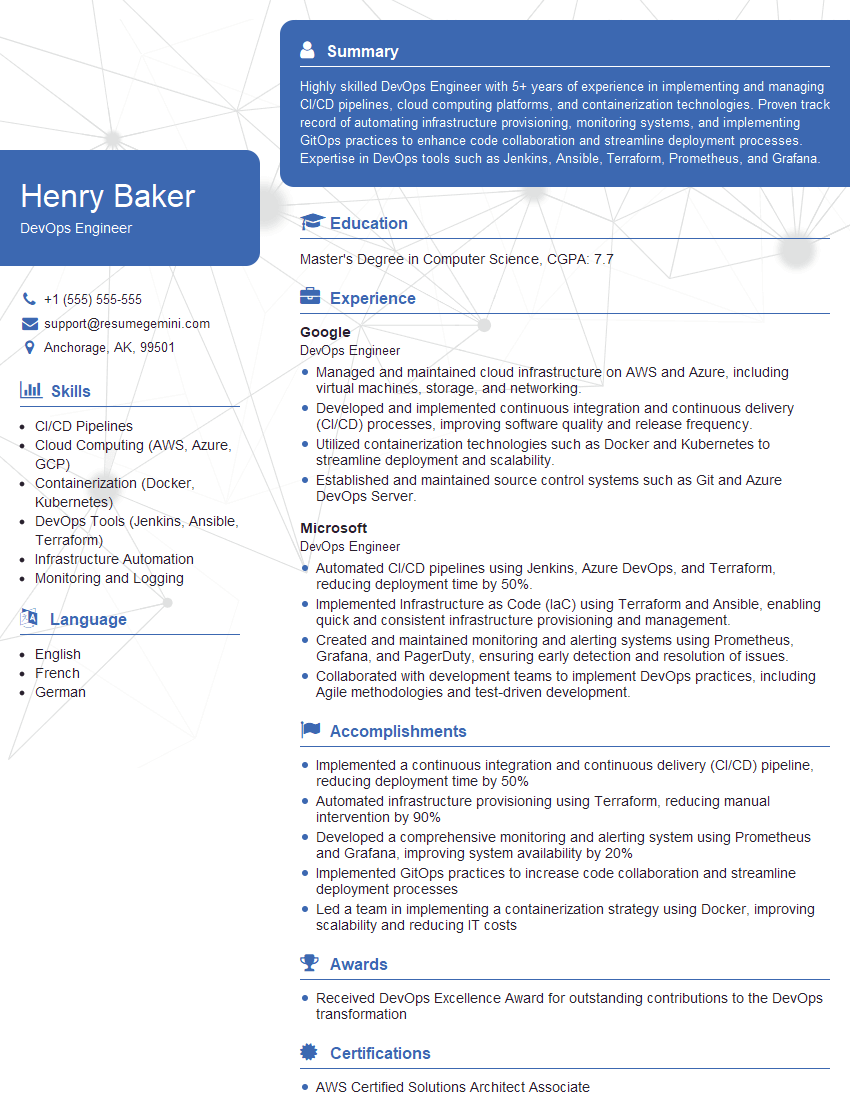
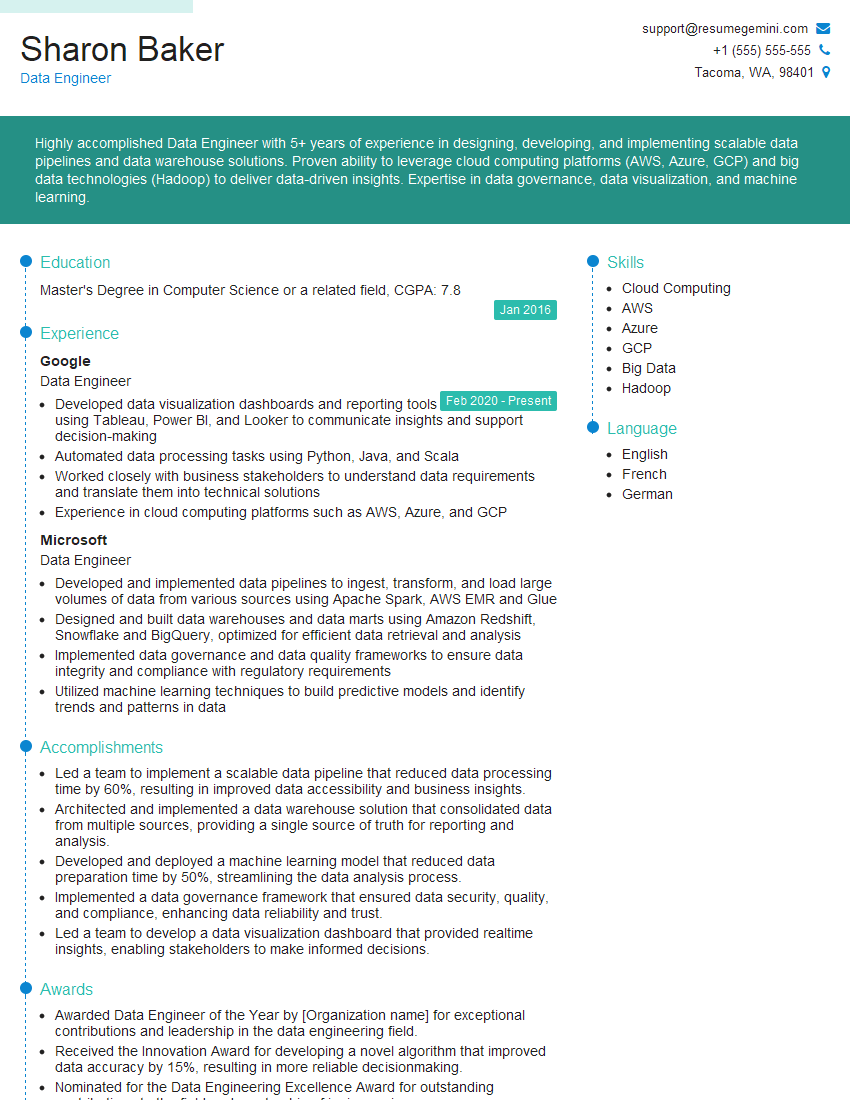
Mastering Production Metrics Monitoring is crucial for career advancement in today’s tech landscape. Proficiency in this area demonstrates valuable skills in system reliability, performance optimization, and problem-solving – highly sought-after qualities by employers. To significantly boost your job prospects, create a compelling and ATS-friendly resume that highlights your expertise. ResumeGemini is a trusted resource that can help you craft a professional and effective resume tailored to your specific skills and experience. Examples of resumes tailored to Production Metrics Monitoring are available through ResumeGemini to guide you in showcasing your abilities effectively.

Explore more articles
Users Rating of Our Blogs
Share Your Experience
We value your feedback! Please rate our content and share your thoughts (optional).
What Readers Say About Our Blog
Very informative content, great job.
good